← The Foundr Podcast with Nathan Chan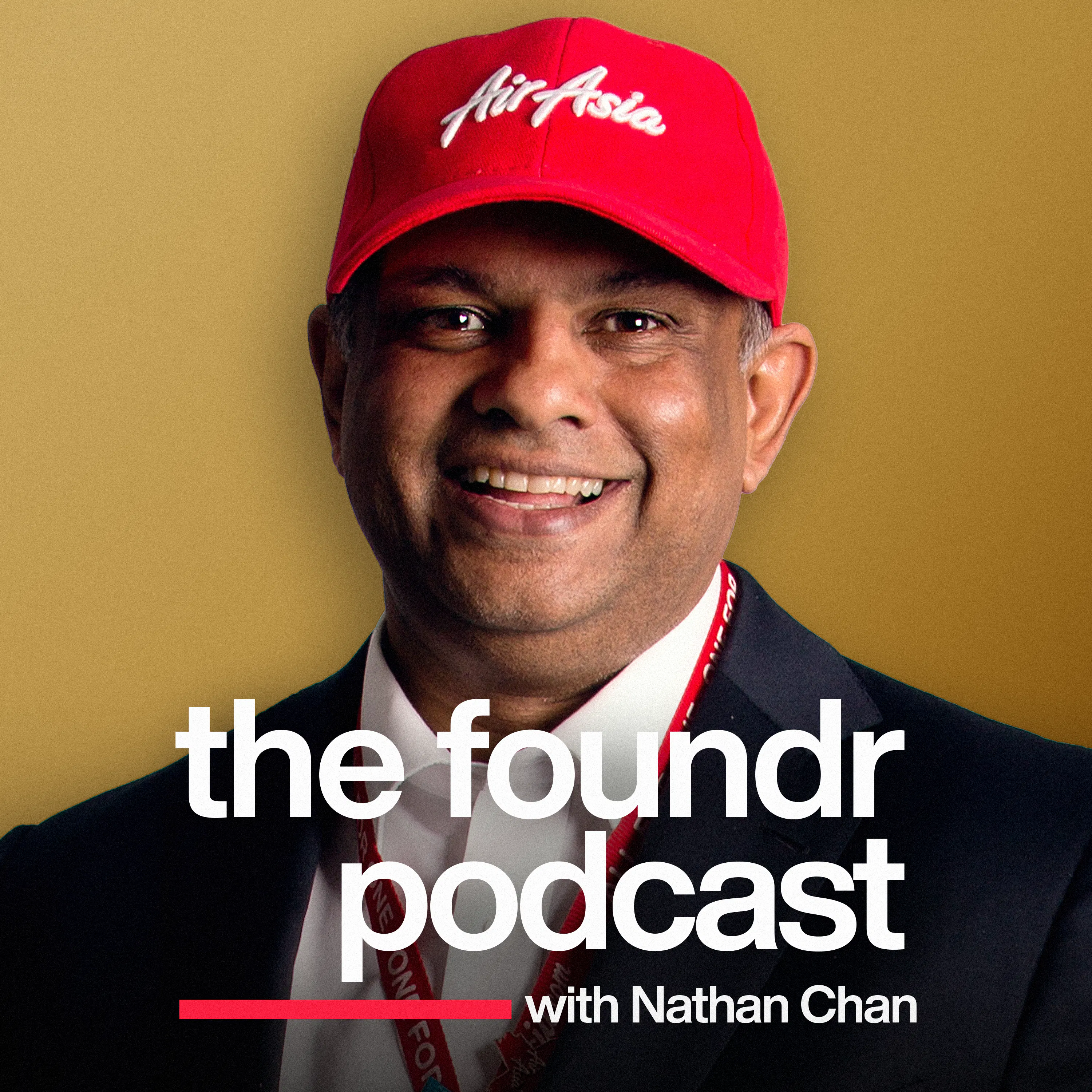
The Foundr Podcast with Nathan Chan
605: He Bought an Airline for $0.30 (and made BILLIONS) | Tony Fernendes (Best of Foundr)
00:41:21
Tony Fernandes turned a failing airline into a billion-dollar business and built AirAsia into one of the most recognized brands in Asia.
Loading summary
Transcript98 lines
- [00:02]
Nathan Chan
Hey, founder fam.
- [00:03]
Podcast Host / Announcer
I want to talk to you about something super exciting. We're officially partnered with Omnisend, the email marketing and SMS platform built specifically for e commerce founders. We've been recommending Omnisend to founder students for a while now because it just works. Whether you're launching your first store or you're scaling to seven figures, it really helps you automate your marketing and get real results. Did you know, on average, OMNISEND customers make $68 for every $1 they spend, which is an insanely good return. And because you're part of the founder community, you get 50% off your first three months with the code. Founder50. Just head to omnisend.com founder without the e to get started. All right, now let's jump back into the show.
- [00:49]
Nathan Chan
Hey, guys, welcome back to the show.
- [00:51]
Podcast Host / Announcer
Imagine buying an airline for just 30 cents and $10 million in debt three days before 9 11, and then somehow turning it into one of the largest carriers in Asia. Today I'm joined by Tony Fernandez, the visionary founder who transformed Air Asia into a powerhouse brand, serving nearly 100 million passengers a year. From a background in music and media to reinventing air travel across Southeast Asia, Tony's story is one of bold bets, resilience and relentless focus on culture and growth. So in this episode, you're going to learn how Tony spotted opportunities others overlooked, the unconventional growth strategies he used to scale fast without outside capital, and how he thinks about branding and focus and leadership in a way very few entrepreneurs ever do.
- [01:40]
Tony Fernandes
Hear the stories, learn the proven methods, and accelerate your growth and future through entrepreneurship. Welcome to the Founder Podcast with Nathan Chan.
- [01:54]
Nathan Chan
The first question that I ask everyone that comes on is, how did you get your job?
- [01:59]
Tony Fernandes
Wow. Well, I was in the music business for 12 years. I was an accountant before that, and I was in 2001. It was the beginning of this digital age and Napster had come along and Spotify was just starting, and I thought, wow, this is super exciting for the music industry. But I was a lone voice. No one at Morning Music or Time Warner, which became aol, which was an Internet company, thought it was a good idea. They thought the Internet would destroy music. My premise, which was that you can't hold technology back and that this was a fantastic distribution model to create more revenue. I was a lone voice, as I said earlier. So I decided that, you know, cutting. Long story short, I also was very against the AOL merger and I just quit in New York. I flew to London singing the bar, having some alcohol, thinking, what am I going to do for the rest of my life. Shall I set up Founder magazine or shall I become an accountant again or shall I start my own record label? Right. And while I was there I saw Stelios, who owns an airline called EasyJet in the UK. I didn't see him, I saw him on TV.
- [03:33]
Nathan Chan
Yep.
- [03:33]
Tony Fernandes
And I always liked planes. I always, from a very, very young age, I told my dad, I'm gonna own an airline one day. Now it's one of those things you say that you're not entirely convinced you're gonna do. But I said it and so I thought, well, this could be the time that, you know, when I told my father I was five years old, I want to start an airline. So I took a bus from, I was in a pub in Hampstead up to Luton Airport and was blown away. People were flying to Barcelona for eight pounds, to Paris for six pounds. Everything was orange. And I had never heard of a low cost airline. Right. I thought, what an amazing concept. And so there's a very fine line between brilliance and stupidity. It's very narrow. And I thought, I'm going to do this. You only live once. If I fail, I fail. It's okay, I'll go get a job doing something else. But I didn't want to sit there at 55 and say, I wish I did it. So I came back to Malaysia, got a meeting to see the Prime Minister along with a couple of my other partners. And he gave his blessing and, but he said, no new license, you got to go buy an airline, which is the best thing ever because we had no money to start an airline anyway. So we ended up buying AirAsia three days before 911 for one ringgit, which is about 30 Australian cents and about 10 million of debt. And on December 8, 2001, we took over AirAsia with 265 terrified staff because they'd only seen me on music TV shows. And now as the owner of their airline, I'd taken over from a very large company in, in Malaysia which made cars and all kinds of things. So I think there was a lot of nerves of who is this character? You know, going from a very solid base, we're not doing anything, we're not making any money, but we're getting paid every month to some guy who's got no experience in the airline business, no money. And I think they were very nervous. But you know, we've had a great run since then.
- [05:45]
Nathan Chan
Yeah. So talk to me around like, what has been kind of some of the fundamental growth strategies that you've been able to apply to, you know. You know, in 2017, you flew over 70 million passengers.
- [05:58]
Tony Fernandes
Yeah, yeah. Actually, we'll do 90 as a group, which to me, I mean, the fourth largest airline in Asia, only the Chinese airlines are bigger, but they have an inherent advantage of 1.3 billion people in their country. So that's a slight advantage. But, yeah, I mean, I think two bits to growth, which I think may be useful to your listeners, which is not directly answering your question, but the first thing is growth is critical in a startup because ideas are never exclusive and you can't patent everything. Anyway, this is not my idea. It came from Southwest and Ryanair and EasyJet. So it was very clear to me once we started moving that this wasn't something I was going to pussyfoot around. I had to put the foot in the accelerator because there were some big mamas around me in Sia and Malaysia and who could replicate this model and put us out of business. So while it's not answering your question directly, I think it's useful for your viewers that when you have something, scaling up is important. Where did I see the growth? There was one figure that hit me when I started this airline. Only 6% of Malaysians flew. So I had a market of 94%, apart from the 6% who may have flown once a year or once every two years. Right. Second was I saw a fantastic market which no one else saw, which was Southeast Asia, asean.
- [07:29]
Nathan Chan
Yeah.
- [07:30]
Tony Fernandes
Everyone was fixated about China and India and I was like, we got like 700 million people here. So that's where I predicated my story right from very early days, I talked about asean, asean, asean. And a lot of our growth has come from destinations that no one did before.
- [07:50]
Nathan Chan
See, so when you took over the company, you didn't know anything about zero.
- [07:56]
Tony Fernandes
So only stewardesses.
- [07:59]
Nathan Chan
So did you look at companies like Southwest?
- [08:02]
Tony Fernandes
Yeah, 100.
- [08:02]
Nathan Chan
And you're like, this is a good model.
- [08:04]
Tony Fernandes
Yeah, Well, I was. EasyJet was the first start.
- [08:07]
Nathan Chan
Yeah.
- [08:08]
Tony Fernandes
And then I, through my music contacts. Yeah. You know, I know you two very well. And they mentioned Ryanair to me, Edge mentioned Ryanair to me, and I went over to Dublin, stayed in their hotel, the Clarence Hotel, and flew Ryanair. And I thought this was even better model. I had bought Herb Kelleher's book, so those were the kind of three inspirations. I never read books. This was the only book I ever had read since Wilbur Smith and Jeffrey Archer when I was 15. And coupled with flying on Ryanair, which I thought was an incredible model. And obviously EasyJet.
- [08:56]
Nathan Chan
And, and how'd you learn? Like, besides, like, did you have mentors or anyone that.
- [09:00]
Tony Fernandes
Yeah, well, I had, I had. Well, you learned the ability to learn is the ability for you to want to learn. So I really threw myself in. Right. I mean, I was sitting with engineers, I was sitting with pilots, I went to simulators, I, I learned how to change a wheel. I, you know, hang out with cabin crew. So I was a sponge. Yeah, I took everything in. But look, I had a great mentor in Connor McCarthy who was CEO of Ryanair and had left to set up his consultancy and GE Capital had introduced me to him and he was a fantastic teacher. Mentor, lesser mentor, more a teacher in terms of giving me the model and a fantastic partner. He became a shareholder in AirAsia.
- [09:51]
Nathan Chan
Yeah. And to fuel growth, you talked about, you know, when you, when you're first starting, you're building this startup, you got to grow, you've got to scale this.
- [09:59]
Tony Fernandes
Yeah.
- [10:00]
Nathan Chan
Have you guys accepted outside capital funding to scale or.
- [10:05]
Tony Fernandes
No, we didn't. I mean, look at today and you see some of these business models. I mean, let's be real, right? You, you, three guys from the music business coming to start an airline. It's not the most convincing business case. Right. So, you know, I, I was involved with Ruad and Wendy Matthews and In Excess and Crowded House and suddenly I'm talking about an airline. So no bank gave me a cup of coffee. Did we want capital? Of course, but we didn't have it. But again, that should be motivational to any of your listeners that we built a massive airline with very little capital. Now when I look at all these unicorns, now look at Grab, I was with Anthony Tan Yesterday, it's raised 6.8 billion. I mean, that's more than my market cap right now. We did, we did one $30 million after about three years.
- [11:02]
Nathan Chan
Yep.
- [11:04]
Tony Fernandes
And then we did the IPO. That's it. We've never raised capital since then.
- [11:08]
Nathan Chan
And do you think that startups should look more to self fund and just sacrifice profit for growth?
- [11:15]
Tony Fernandes
Yeah, I'm, I'm, I'm old fashioned.
- [11:18]
Nathan Chan
Yeah.
- [11:19]
Tony Fernandes
In that aspect, this new business model is subsidized growth. Right. You give away things to build up customers. And we're going into that model with some of our digital ventures, but we have customers from AirAsia, so that, but I also, I'm an old fashioned guy. I believe in cash. I, I, I believe in making some profits. Right. Yeah. I don't understand some of these tech models. Obviously a lot of them have gone on to create things like Amazon etc, but I sit there and look at some of these food delivery services and look at their valuations and I think, wow, it's scary because where's the profitability going to come from? And yet people are throwing money at it. Crazy. So if you have a model that you can make money, make money and of course reinvest some of that money, which we did. Yeah, we could have been, you know, we were investing in building an academy, but you can have all the metal you want, but if you don't. Right. People, then forget it. We reinvested in, you know, sponsoring to make our brand bigger, etc. So. But it's not always about outside capital, but build a business that's robust and can stand on its own two feet without outside funding.
- [12:34]
Nathan Chan
So talking about the digital side, you guys are starting to kind of go vertical and you know, look at your existing customer base and how can you further serve them?
- [12:46]
Tony Fernandes
Yeah, yeah. I mean, there's, there's two parts to this digital strategy. One is digitizing everything that's in our company. Right. So we make processes and make it more efficient to work here and digitize it so our passengers have a better experience. The third part of this digital strategy is to develop new businesses using the data and creating a travel ecosystem that people will use us for things that they may have used other people for. Whether it's booking train tickets when you arrive in Melbourne or a concert ticket, or having financial services, you know, foreign exchange, etc. So we're using and building platforms that will provide more value to my customer. Not necessarily linked to the airline, but linked to the travel ecosystem. And it's exciting vision. Implementation is, you know, it's easy to talk an idea, so I rather do it and then talk about it. But there's a huge potential if we can execute well.
- [13:49]
Nathan Chan
Yeah. So you guys are spending a significant amount of improving and digitizing internally here and then turning that cost center into a profit center by using that.
- [13:58]
Tony Fernandes
Correct, Correct. So I think, yeah, the first thing is to get the data right. So we spent over the last two years with Palantir and Google getting all the data right.
- [14:08]
Nathan Chan
Yep.
- [14:08]
Tony Fernandes
And then we start using that data now. You know, it's a phenomenal time to start a business and be in business. But the cost of entering a business has come down so radically with digital tools. Yeah. Even in my old business in music, you know, you can record an album at home now with Pro Tools and your own a very simple board. And if you think of AirAsia, what was the key differentiator from us and all the other airlines? We use the Internet. Back in 2001, most people didn't even have Internet here. But I said, trust me, when I put a fare at two Australian dollars, people are going to find their way to an Internet. I created the demand. Right. And if everyone said to me, oh, no one's going to use the Internet, you know, you put the right offer, people will find a way there. And. And so, and, and I was very religious about keeping our data and I didn't have the foresight that we're going to have this huge data revolution. But I wanted to keep the contact with my customer.
- [15:13]
Nathan Chan
Yep.
- [15:13]
Tony Fernandes
I didn't want to be a middleman. I didn't want to have the travel agent have the relationship. I wanted to have the relationship. And that's good and bad. If you look at our Facebook, we'll have. I don't think it's bad, by the way, but we have thousands of complaints. There's. Yeah, because we're very accessible. And I tell my staff, why are you complaining? Because that's free market research. That's telling you what's wrong with our airline and you should be fixing those issues. And my TV screen, which is down at the moment, is the complaints board, because I keep telling my staff, that's free, free market research. So we were early into the game with data through the Internet. Why I say it's a great thing is we were seven generations ahead of Qantas and MAS and Sia, who had huge legacy systems, so we could be very nimble. And so again, for entrepreneurs now, the tech world has given a huge opportunity to start doing some great things. And coupled with. I'm going away from your question, but kind of relating to your audience, great ideas are great ideas only and they stay as great ideas until people know about them. And too many great businesses don't spend enough time on marketing and branding. Right. And I think keep a budget for that. Keep, you know, because the world has a lot of things happening right now and a lot of distraction points where last time you could just go and advertise on TV or do a newspaper interview and everyone would know about you. It's dispersed and I see too many great companies who don't put enough into branding and marketing.
- [16:53]
Nathan Chan
In the early days, what kind of percentage or split could you say, like just an estimate?
- [16:57]
Tony Fernandes
Well, we didn't have much money, but it's not always about money. I mean, you know, where this came from was. It wasn't My idea. But our head of marketing then said, look, Tony, you know, wear this cap everywhere and say controversial things and then the press will take pictures of you. Right? I said, okay. That was quite easy. Came natural to me. I'm good at pissing off people. So that's how the hat came, right?
- [17:25]
Podcast Host / Announcer
Yeah.
- [17:25]
Tony Fernandes
I don't wear it often now because anywhere I walk, someone says, can I have it? So it becomes costly now. But that was the simplicity of marketing. And when we saw social media, we leaped on it before anyone knew what it was. We saw Facebook as enormous opportunity. And I have 1.3 million followers on Twitter. And I started that very early on. I thought social media was immensely popular. It's not always about dollars and cents, but invariably you do have to spend. We sponsored Manchester United, you know, when we were a tiny little brand, you know, which was painful was, I hate that football club. But you got to be a prostitute once in a while. So, you know, you. They're very. I think PR is a great way of. Of getting efficient brand spend. Right. So I can't remember the exact percentage, but we were always, from a revenue standpoint, 5, 6%. But the PR value and the sponsorship value was much greater.
- [18:34]
Nathan Chan
I see. One thing that I've seen, and this is a common one across our audience, is yet one product out. It's doing well. Right. But then how do you know when to take focus and add on another product? Because focus is so keen and, you know, with the way that you guys are expanding and doing all these different things, had and so many opportunities to grow Asia, how do you know which is the right one?
- [19:03]
Tony Fernandes
That is, you don't, ultimately. So let me take. So we have so many products now, but let's take. When I first started, we had four destinations, right? That was our product.
- [19:15]
Nathan Chan
Yeah.
- [19:16]
Tony Fernandes
Flying to these four places. And so the first big decision is adding another frequency. I mean, that was a big decision, right? Kodakina, Bali. We fly twice a week, twice a day. And we were like, oh, third time. Can we do it right?
- [19:29]
Nathan Chan
Yeah.
- [19:30]
Tony Fernandes
And you can do all the market research you want, but you just got to go with your heart sometimes and do it right. Now we have 20 flights a day now. But, you know, sometimes you can be paralysis by analysis and do too much research. So you've got to go with your gut sometimes, but you got to keep reinventing yourself, right? So we couldn't stand still. We kept adding routes and adding new, new new destinations. And the product for us was going to places that no one else wanted to go. Now we're doing it in Australia.
- [20:06]
Nathan Chan
Yeah.
- [20:06]
Tony Fernandes
We're going to go to Avalon. Right. And most people, I don't understand people in Melbourne because it's like, they say it's far away. I'm like, come to Jakarta. I know, I know. You guys are spoiled. You can walk everywhere. You don't know what traffic is like. Right. So, like, Avalon, it's like, wow, the way someone in Melbourne says, it's like it's in another universe. Right?
- [20:29]
Nathan Chan
Yeah.
- [20:29]
Tony Fernandes
And I went there, like, it's like 25 minutes. So, okay, go through a few farm fields. But we're doing that. Yeah, we're doing that. We're not worried about it, we're excited about it. I know some of the guys in Australia are a bit nervous, but I think it's going to be a big hit. And so product is about doing things differently as well. It's about reinventing yourselves. So we had a product going to Melbourne and we decided, well, we're going to take that product and be more adventurous and have the ability to lower the fares and hopefully grow the market even more by going to Avalon. So. But you have to keep renewing yourself. The world is littered with products that didn't reinvent themselves. Right. BlackBerry, I mean, that was the king.
- [21:17]
Nathan Chan
Yeah.
- [21:18]
Tony Fernandes
Nokia. Who can believe a world without Nokia phones? Right. They were it. So, you know, I think it's important that you keep looking. And it's hard. It's hard to. You're making good money. It's like, whoa, why do I want to take that money and reinvest? But if you don't, you die. Was you only as good as tomorrow?
- [21:41]
Nathan Chan
Talk to me about culture.
- [21:43]
Tony Fernandes
Sorry, Going back. It's important. I'm also not saying that do25,000 products. Right?
- [21:49]
Podcast Host / Announcer
Yeah.
- [21:49]
Tony Fernandes
Focus is key. And my life has been anything but focused in some ways, and I failed miserably. You know, go start football team, go do Formula One. And, you know, when you try to do it yourself, it fails. The football club's doing better now because there are other people running it, as opposed to me trying to do an airline N and a football club. So focus is important. Yeah, it is important. You have to live within your means and live within your resources, but you also can't stand still. It's a balance. But life is a balance. Everything you do is a balance. Right? Yeah.
- [22:24]
Nathan Chan
So coming back, just talking about Colt Aid and team, like, oh, it's the 100.
- [22:28]
Tony Fernandes
It's the most important thing in AirAsia. It is, you know, and everyone's going to talk about it. And when I say it, people, I'm gonna sound like Miss World, right? That Nelson Mandela or something. But it's. It is what it is, the culture. We have 24,000 people, you know, Alan Joyce or Robert Milton came to visit me once.
- [22:53]
Nathan Chan
Yep.
- [22:54]
Tony Fernandes
And they were walking around the. Walking around the office and pilots were coming up to me and shaking my hands and taking my pictures and they were like, wow, this is a new experience. And I said, what do you mean? He said, your pilots actually like you. They want to kill us. So I was like, oh, really? And so culture is really important to me. We have, As I said, 24,000 staff, no unions. There's transparency, there's trust. It is by complete choice that we're open plan. Because when you have an office, you create all these invisible walls. People say, I have an open door policy, but the door's closed, Right. And some guy will say, oh, his office is bigger, this is wider, and this faces the sun. So one day I just came in and smashed all the offices. I brought a contractor in and just tore them all down. And then we've been open plan ever since. So culture is, I think, the single most important thing in the success of AirAsia.
- [24:00]
Nathan Chan
Yes.
- [24:00]
Tony Fernandes
What is culture in AirAsia? Transparency, openness. 20,000 brains working for us, as opposed to 10. Chris told me nothing about this interview. I was just commanded to come here. You're an important magazine, they like you, they think it's great I came. Right. I mean, I see other CEOs, we get briefing this that. I mean, you know, he's basically telling me, hurry up with your interview, they're waiting. He's pointing time. He said, so, you know, we're a fairly flat structure in that aspect.
- [24:33]
Nathan Chan
Yeah.
- [24:35]
Tony Fernandes
And I think most Asian companies, the top 10 decides everything and the rest are implementers. I like to think that we utilize everyone's brain. Teamwork is critical. It's a problem in AirAsia because, you know, we've got big and politics and bureaucracy creeps in. You know, there's 20 camps in Australia and there are only 20 people. It's, you know, trying to keep everyone together is a problem, but it's not something I want to run away from. Yeah, I confront it because bureaucracy and politics is. Is the cancer of any organization. So we confront it, we deal with it. We have a culture department, we have lots of parties, because alcohol is a great leveler in bringing everyone together. We put everyone in the same office. Right. I don't think there are many airlines when you walk around, you've got pilots, cabin crew, accountants. Everyone's in the same building. Everyone eats in the same place. Yeah. Everyone goes to the same gym, you know, so I want people who believe they can do a lot more and grow and develop in this company. We have boys who've carried bags for us are now pilots. We have the largest percentage of female pilots of any airline in the world. When I joined, there were no female pilots. And I said, why are there no female pilots? And it can never be repeated what my chief pilot said. And I said, if a woman can run a country, she can certainly fly a plane. Right. And so, you know, we have many. We embrace diversity. We don't care what race, creed, color, sexual preference you are. And I think that's a strength because that gives us a huge diversity in our workplace and a huge ability to attract great talent and great ideas. So the culture is the single most important thing. I could spend 20 episodes on it. From turning raw diamonds into diamonds, from, you know, going outside of the box in terms of recruiting and giving people the ability to find talent in themselves that they didn't even know themselves. You know, just to. To really grow that. That whole talent pool that we have.
- [26:59]
Nathan Chan
Can you. That's actually a good one, like, because for a lot of our audience, you know, they're just getting started. They're starting to build their founding team. Like, you know, what advice would you have to. To a founder or CEO watching this?
- [27:10]
Tony Fernandes
Yeah.
- [27:11]
Nathan Chan
And wanting to help their team do their best work in the early days. Because that's critical, right?
- [27:15]
Tony Fernandes
Yeah. I think the number one vice is you, as a founder CEO, don't know everything, and you got to surround yourself with good people, and you got to be prepared to listen. Too many founder CEOs think they know it all, and that's where they lose good people. Or they just have yes men, you know, because they're passionate about what they do. I'm super passionate about everything I do, but I also know I don't know everything. And so I surround myself with good people. People is you can have all the ideas you want in the world, but execution is what it's about, and you need a good team. So the advice, you know, and this is very. I hate advising people because everyone has their own ideas, but I can only tell you my own experience is that I have hired people who add value, who are good communicators, who are team players, and give them the platform to be the very best and don't feel intimidated and don't hold them Back. You know, I think most of the people who started AirAsia with me are still here and a lot have developed are into bigger and greater things.
- [28:30]
Nathan Chan
And with your personal brand, you know, you have the Apprentice, Asia, can you tell me about that?
- [28:37]
Tony Fernandes
And yeah, that was done by the commercial department for many years. I turned it down because I don't think I was Donald Trump. Right. By the way, he stole my red cap. He saw it when I was wearing it and when we, we all had an Apprentice get together and I came in with my AirAsia cap. So I think he took the idea from me, the Make America Great one. And they. And where was I? I lost my mind when you mentioned Donald Trump, Apprentice. Yeah. So the guys wanted me to do it. As I said two, three years, I kind of turned it down. And then they said it was great for AirAsia, great for marketing. So I did it and I told the producers, look, I can't be Donald Trump and I can't be Alan Sugar. So I said, just be yourself. But you do become a little bit of an asshole when you're in that room. You know, people say, wow, you're really scary in there. And I really, I watch myself and you are a bit of an asshole. So, yeah, then it was fun. They wanted me to do it again, and I've kind of stalled a little bit on it, but, yeah, maybe.
- [29:52]
Nathan Chan
Okay. And, you know, one thing that I've noticed as well with in today's day and age is consumers are much more interested and concerned with the people and the, you know, leadership team or the CEO or founder behind the company. And you see a massive rise in, in personal brands and, and all that side of things. Do you think this is something that founders should be focused on in the early days, or were you, because you had a bit of like a, you know, a bit of a personal brand.
- [30:19]
Tony Fernandes
Beforehand, Like, I, I, I, you know, other. Each their own. Right. Yeah. Some people can carry it, some people can't. Some people feel comfortable with it. Yep. Some people can't. So it's definitely worked in our favor. They may not agree, but it's helped. I think it's dangerous because sometimes you come too synonymous with a brand. And yeah, when you go, it's like there's a big void. Right.
- [30:51]
Nathan Chan
Yeah.
- [30:51]
Tony Fernandes
So I'm very conscious of succession management. Yep. And, you know, like, we had a press conference today and I made sure I didn't speak and other guys speak and I tried to do less on that front now, but I think it, I think it's Important. There's never ever a press release in AirAsia that I'm aware of, which doesn't put a name there. I think you have to. People want to know who's behind it, right? You want to know the captain flying the plane. You want to know who is behind this, right? So when we had the worst day of my life when we lost the plane, the lawyer said, I don't have to go there. And I said, are you crazy? I have to go. I have to go for my staff and I have to go for the families because I'm the leader of the company and I can't hide behind it. I can't just say the good things. So I think it's important that people know who you are and you know, you stand behind your brand. I think it's better, but it really depends on the individual whether they can carry it. But I think if you stand behind your brand, you give it a little bit more confidence, right? You stand behind your brand, good or bad, you're there. And you know, and I've had a lot of bad as well, right? So. But people know that I'm there.
- [32:17]
Nathan Chan
Have you ever failed?
- [32:19]
Tony Fernandes
Oh, yeah, loads of times. Loads of times. But failure doesn't worry me because I rather fail than not try at all. Many people are too worried about failure, so they don't do anything, right? You know, how many women did you regret not going up and approaching? They think, damn, I should have done that, right? But at least if you approached her and she said, go to hell, you knew, right? So I think there's a. I have had many failures too long for this program, but two things about me in that I don't have any regrets because if I didn't try, I wouldn't know. And to as soon as I know it's wrong, stick your hand up and admit it and say you screwed up and move on. Too many guys hang in there and don't want to. Their ego doesn't allow them. Guys and girls don't allow them to make that mistake and then they carry on and add more to that error, Right?
- [33:22]
Nathan Chan
It's an interesting one, like persistence versus giving up and moving on. Know there's a lot of people, oh.
- [33:28]
Tony Fernandes
Yeah, I'm not saying you give up straight away, but, you know, realize when you need to give up. I always say never say no for an answer and dare to dream and go for it and all those kind of things. So, no, I'm not saying, you know, give up straight away, but know when you should give up and Stick your hand up and say, I give up.
- [33:46]
Nathan Chan
How do you know though, when to keep going and when to give up?
- [33:51]
Tony Fernandes
You know, it's, you know, you know, in your heart. Yeah, that's not difficult for me.
- [34:02]
Nathan Chan
Well, look, we have to work towards wrapping up. I'm curious what's exciting for you right now? Everything that's going on with Asia and.
- [34:09]
Tony Fernandes
Yeah, you know, I, I, this whole digital side is exciting. It's, it's a challenge. We're up against big guys, fintech, you know, you've got Alipay and you know, I'm like, I don't mind, I'll take them on. And everyone thinks I'm mad, right? I mean, they got a billion users and I got 500,000. But hey, I started an airline with two planes again, Singapore Airlines and Malaysian Airlines and all these other big guys. So, you know, I'm not worried about that. That's exciting. I love that challenge, right. I could fail. But hey, we'll give it a shot. So that side's exciting. The digital side is really exciting for me. And you know, a strange way I'm, you know, we've had a tough time in Australia, tough time. You know, I, I, I, Qantas and all these guys have not made it easy for us. Of course they'll say, no, we had nothing to do with anything. But everything gets blown out of proportion when it's AirAsia. I mean, really blown out of proportion. And that's because we're good and so people don't really want us to come in. So I love that challenge. I love the fact we're doing Avalon. That's a big thing for me to do that. And we'd like to do more in Australia. We've hired some Australian crew, we hired some Australian pilots. It's a natural part to be in. So that's exciting for me. You know, doing tying out with the surfers in Gold coast was fantastic. So. But if you push me, this whole digital revolution in AirAsia is exciting. It's irritating some of my guys because I suddenly say, we're not going to use Microsoft anymore, we're doing Google tomorrow. And they all stab my doll and say, he's an asshole. But that's part of the advantage of being the owner, that you can do it. And, you know, ASEANization, creating one airline. I hate race and religion and cultures and I want to create a multi ethnic company that, you know, if you look at Emirates and you see they have all kinds of nationalities but they all gang up together, right? You'll see the Bulgarians on one side and the Australians on another side, et cetera, et cetera. So I want to have a fantastic, multi ethnic diverse company. And I think we're not far from that. And that's exciting to me to show the world what we can do as an Asian company.
- [36:42]
Nathan Chan
Amazing. And when it comes to your vision, has it changed since the early days?
- [36:46]
Tony Fernandes
No.
- [36:47]
Nathan Chan
Or it's still.
- [36:49]
Tony Fernandes
Still the same. It was all about. I thought in the shower my tagline was, now everyone can fly. So it's still that I wanted to build a brand that was as big as Coca Cola, which is a huge, lofty ambition. I think we've succeeded in parts of Asia that were as well known as Coca Cola. And my vision was to create a great place to work, a fair place to work, a place where didn't matter where you went to university, you'd be given a chance. Didn't matter whether you had money and didn't get a great education, but if you had a great brain and you had the will and belief, you could achieve anything in this airline, you know, to turn a raw diamond into a diamond is. And we have so many of those. That is, if you ask me, what do I be remembered for? Is building a great working environment that created a lot of people's dreams come true, coupled with the other two things and make sure we have fun. Right. That was a fun place to work. We do crazy things like build slides and rooftops with running tracks up there and all kinds of crazy things. But. So we've got to have fun coming to work. But I think if you were to really push me, it is allowing a lot of my staff here to live their dreams. That would be something that I'd be most proud about. You know, to see Coogan, who was a dispatch boy, who's now a first officer and about to be a captain. Money can't buy that kind of satisfaction. When you see that, you know, wow, you know, we. I change his life and that's. That's worth more than all the dollars anyone can give me.
- [38:37]
Nathan Chan
Amazing. Well, look, thank you so much for your time. Tony.
- [38:41]
Tony Fernandes
Pleasure.
- [38:41]
Nathan Chan
Last question. What advice would you. Two more. What advice would you love to just give to finish off to our audience? Anyone that wants to start a business doesn't know where to start or anyone's just launched or just found product market fit. And then the last one is, where can people find out more about yourself and Asia?
- [38:58]
Tony Fernandes
Oh, wow. There's enough articles out there, both good and bad. Search Google, buy my book I think advice I'd give to. To any budding entrepreneur is follow your heart. Advice from Tony Fernandez or yourself or anyone is useful. I got advice from books, et cetera, et cetera. But 90% is just, you got to do what you want to do, and if anyone wants to advise you, then they would have done it themselves. You've got to follow your heart and do it, and you've got to be determined to do it and make that difference. As Nike says, just do it. Second, I re emphasize keep some money for Brandy. It's really important. And surround yourself with great people and have fun. Because it's fun coming to work, right? You don't want to get up in the morning and think, oh, my God, you know, I got to see Chris. Fun. Yeah, great. Chris is here and he's going to drive me mad and say, you're late. Come here. Be on time. I've got a very important PR contact here, so you know that. That. I think too many business leaders take life too seriously. Too many entrepreneurs get too stressed and have a balance. You don't have to work 18 hours a day. You know, make sure you give time to your family and your kids and your friends.
- [40:27]
Nathan Chan
You haven't worked 18 hours a day to get.
- [40:29]
Tony Fernandes
Yeah, I have. I have, but not every day. Y. I had fun. Yeah, maybe too much.
- [40:36]
Podcast Host / Announcer
Hey, Founder fam. Thank you so much for tuning in today, and if you enjoyed this episode, please take the time to leave us a review and let us know what you think. This podcast is 100% free. We work so hard to go out and find the most successful entrepreneurs and founders in the world. Your feedback helps us grow, improve, and even bring on more incredible guests and insights. So if you have a second, please take a moment. Leave us a review. It really makes a difference. Thanks again for listening and I'll catch you on the next show.