← The Foundr Podcast with Nathan Chan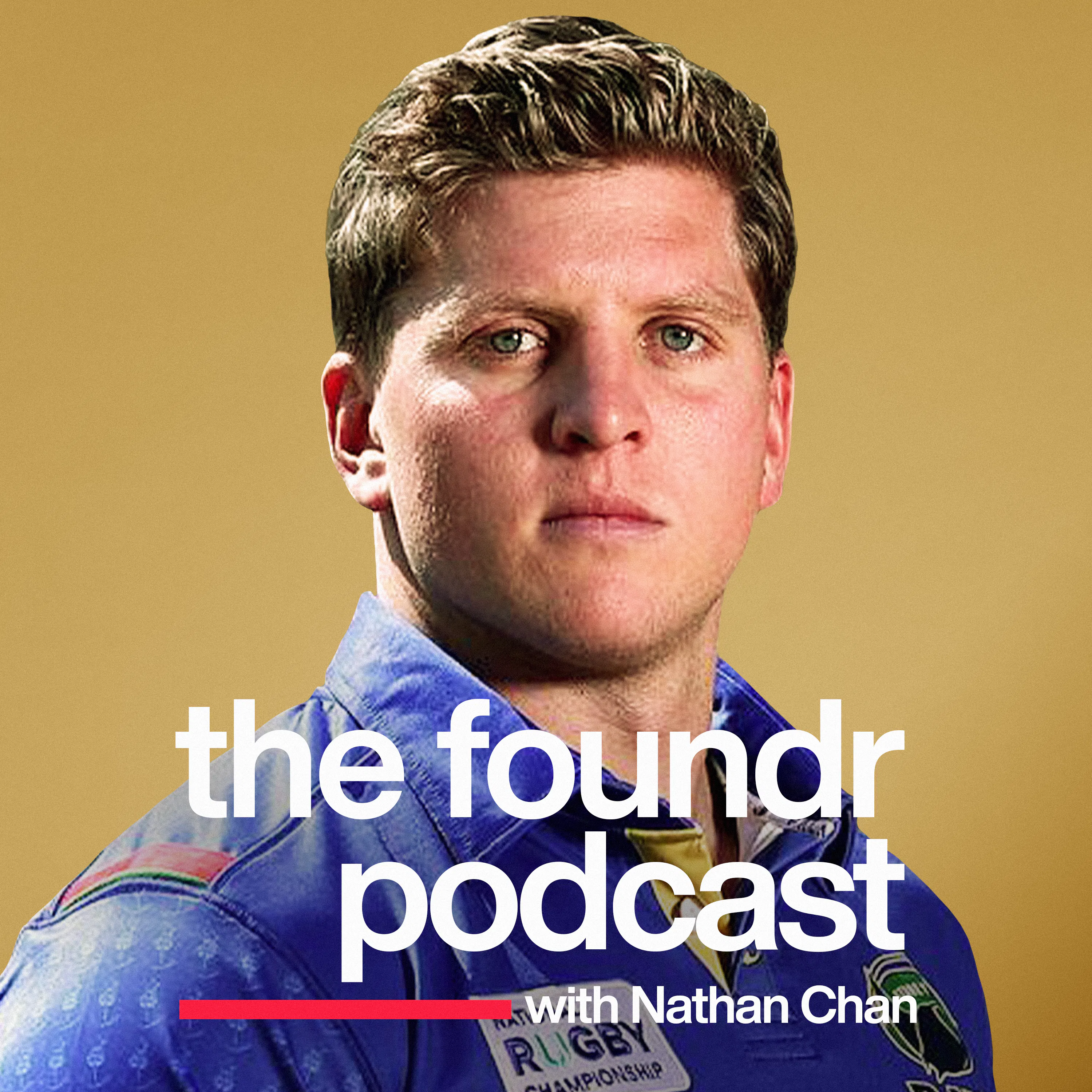
The Foundr Podcast with Nathan Chan
609: From $0 to $20M in 3 Years Selling Suppliments | Damien Fitzpatrick
01:04:36
From professional rugby player to successful entrepreneur, Damien Fitzpatrick built a sports recovery brand trusted by elite athletes around the world.
Loading summary
Transcript86 lines
- [00:02]
A
Hey, founder fam. I want to talk to you about something super exciting. We're officially partnered with Omnisend, the email marketing and SMS platform built specifically for e commerce founders. We've been recommending Omnisend to founder students for a while now because it just works. Whether you're launching your first store or you're scaling to seven figures, it really helps you automate your marketing and get real results. Did you know on average OMNISEND customers make $68 for every $1 they spend, which is an insanely good return. And because you're part of the founder community, you get 50% off your first three months with the code FOUNDER50. Just head to omnisend.com founder without the e to get started. All right, now let's jump back into the show. Welcome back to the Founder Podcast. So what if three back to back career ending knee injuries became the catalyst for building a multi million dollar supplement brand that's now sold in over 50 different countries worldwide, all within just under five years? Well, today's guest, Damen Fitzpatrick, former professional rugby player and founder of the supplement brand Pillar Performance, has done exactly that. After spending years as a citizen scientist desperately searching for products that could keep him on the field, Damien realized the gap he was facing. And it wasn't just his problem, it was an entire category waiting to be reinvented. So in this conversation, you're going to discover how to navigate the world of complex science, supplement manufacturing, global regulations as a first time founder, why? Starting with retail and pivoting based on where customers actually want to buy your product can unlock insane exponential growth and the counterintuitive strategy of cost neutral marketing that built this multi million dollar brand. This is a crazy story about turning adversity into expertise and building a global performance health brand by solving a problem nobody wanted to tackle.
- [01:58]
B
Hear the stories, learn the proven methods and accelerate your growth and future through entrepreneurship. Welcome to the Founder podcast with Nathan Chan.
- [02:12]
A
Damien, welcome to the Founder podcast.
- [02:14]
B
Nathan, thank you for having me.
- [02:16]
A
So first question I want to ask you is after a 13 year successful rugby career, what made you leave and fully go into starting a crazy supplement brand that is growing super fast? You know, you only started what five years ago on track to do, you know, over $20 million in annual revenue, super fast growth, super competitive space as well. Why'd you leave? Talk us through.
- [02:46]
B
Thank you. Yeah, 13 years successful, I would say. Look, there were moments, I mean, I wish, I think part of the, I suppose part of my journey within that 13 years is exactly the reason That I made the jump basically straight from the field into the life of an entrepreneur, which to your audience, we obviously a lot of people realize how big that jump is. To some people, you roll out of a sport and you start your own business, that's great. It is quite a leap. But the reason for that was because unfortunately across that 13 years, I would love to be really, really well known for my time on the field, I would say. And you know, I'm, I'm happy to laugh about it now, but there I'm probably more well known for the times that I spent off the field middle of my career. It's really well documented. I, I suffered three knee like ACL reconstructions back to back to back. So like literally 24. I was kind of came out of high school, signed directly with professional rugby as an 18 year old. 19 made my professional debut, you know, did all the steps played that season, you know, probably fast tracked, was on track to, you know, play for Australia really early, do all the things and it was kind of like everything was going nicely. Hit kind of 23 in the first big injury happened. It was, you know, I was coming off the back of probably my best preseason and I did an acl, which is not uncommon. It happens. It's contact sport and everyone said, you know, you can come back from this, you can be stronger, etc. Which I did put my mind to. It just got to work, did the rehab. Only unfortunate thing, then step back on the field. Day one of preseason, after returning, same knee goes again, fast forward, okay, Pick yourself back up, go again. You're 24 and a half now. You've done nearly 12, you know, 18 months out of the game, still on contract. So we're still obviously had enough legacy in my ability that teams wanted me to stay. Decided to make a move personally and went over to France, signed with a professional team in Lyon over, over there and unfortunately same knee went again within 10 games. And at that stage, that was the kind of the moment where I was like, wow, this is, this is not normal. We went through a huge amount of intervention in the time, had to find a surgeon that would detect what was the problem, which was a kind of a genetic, I suppose angle. It was a misalignment in my tibia. So we had to go through a full procedure to realign that tibia and I was able to get back on the field. I was famously now the first rugby player to do a tibial, tibial osteotomy is the surgery. Very thankful that we found a surgeon In Europe that was able to do it got me back on the field. I was able to continue my career for another five to six years. But what it did do was it really did limit my physical ability, I suppose, to reach my maximum potential. And it was what led me into, during those five years of being on the field and being really grateful for the journey. But supplements and interventions and anything I could do to make the journey as easy and as pain free as possible, I was doing. So when the time came that my knee was getting to the point where it was no longer enjoyable to keep playing. I'd done significant amounts of tertiary education and I kind of knew that what I was looking at was there was a space there that needed probably my full time and attention and energy and at that moment in time, and there was a number of things going on in the world at that time, Covid being one of them, that I knew that my time and energy would be best spent diving into solving this problem. And that is where we are now and kind of got to work straight out of one and into the other. And there's a lot of journey, journey in between here. Five years later.
- [06:40]
A
Okay, so jump straight in. What did that look like? Right, so Covid obviously was a great reset for many people with their career. Right. I found it. We lost a lot of great people because they're like, okay, I'm going to start my own business now. I mean, you know, like, oh, I'm going to move to another company. Like there was a great reset. So obviously this forced you as well to kind of rethink things you wanted to did, you know, straight away you wanted to do something in the supplement space?
- [07:11]
B
I did, yeah. I was, I was looking at this space and I knew there was a gap there from the last two years of my career. I was really, I was finishing my MBA and I was just always, always in, you know, MBAs. I'm sure you've interviewed a lot of people that have done them. There's always two schools of cohorts. Half of them are going to go off and, and change the world through their own means and ideas and the other half are going to stay in the corporate world with that qualification and progress up the ladder. I was always draw and I was a strange professional athlete in the middle of this cohort. So wasn't, didn't, wasn't really bringing anything to the group work. Besides, I can do team culture and team building and you know, I could, I could do the work but I wasn't bringing real knowledge. I Was like, yeah, I could, you know, throw a ball pretty straight but I was always drawn to these people. So when, when I was coming out of these classes, going back to training and looking at the gaps that I was seeing and that particularly on the, on the supplement side, there was just this huge gap in what I actually needed from my knee, from, from like I suppose a prevention perspective in terms of how much pain I was going through. And right then and there it actually wasn't the sports supplement products that we were taking, it was the micronutrient or the pharmaceutical products. So things like high strength curcumin amigas, anything that could remove my need and reliance on like anti inflammatory products, anything that was natural was what I was really needing to stay on the field. Obviously we have, there are protein and not only macronutrient and the traditional sports supplement sides that existed in sport. Um, but what I was looking at as I desperately needed it with our medical team, with the dietitians to, in our, in our codes was a strength and class of product that would actually match the amount of information that I was needing to be removing out of my system. And we just couldn't find it. And by this stage professional sport had moved away from, even over the counter, like you know, in front of the counter brands we say, to the practitioner category in pharmacy. And even then there was a gap in terms of the level of potency of the product we needed and what was available. And that really bugged me. And I was always a bit of a citizen scientist. I was, I was testing products, bringing them in from different places. The team had a budget so I was allowed to go shopping in different parts of the world, bring products in. There was, it was really difficult to get products that were athlete safe. So that was the space where I was like, well this is. And I was listening at that stage I was, I was also being able to kind of confide in our dietitians who was talking to dietitians across the AFL and the NRL that were facing the same problems with some of their aging players that I knew. I was like, okay, there is, there's an interesting space here and if, if there was the opportunity, it'd be interesting to devote a little bit more time into this. Fast forward those two years. Covid HITS middle of the season I knew I was ending the end like twilight of my career and the competition just kind of drastically stopped and it gave me a four month window sitting at home to just put my energy and time and thinking into, into something and that's Kind of where I got to work on this space. And it was during those four months that I knew that this is what I was going to go and do, that this is actually where my passion and energy lied. So I needed to inform the team that I won't be coming back once the competition restarted and I actually did. I retired. I didn't actually come back after the competition, just kind of re sprung after Covid and I got into building and raising and, and everything on that journey. But it was during those four months where I got to really build the business case, understood the problem that we were going to solve, work out the layers that we're going to solve them with and then get to work. But it was going to require my full time attention. It couldn't have been a side hustle.
- [11:00]
A
Yeah, 100%. So talk me through what did the first product for Pillar look like? You said you raised some money. How much did you raise? How did you find a manufacturer? Like talk me through those details because even like one of my best mates, you know, he still probably has some supplements that he was trying to just sell on ebay. Like, like it's. There's a lot of people that want to start supplement brands.
- [11:25]
B
Yeah, I, I was pretty. I'm still very ambitious in terms of, and we are as a company, we're very ambitious in terms of where we can go horizontally with, with the amount of gaps that we can solve in our. What is our category of performance health now? Pillar, we call ourselves a performance supplement company. We call our category performance health. We think that terminology definitely aligns more now to where the consumer between health and performance are going to exist five years from now. Like we, you know, we were talking about it off air, people who are wearing, you know, wearables, looking into personalization of health. This new consumer that is going to adapt a performance and health lifestyle will be starting to look for products that traditionally would have sat in sports nutrition retailers but look very, very different. And we're trying to make that navigation a lot easier. So where we wanted to start was a really difficult. The gap that I saw was that essentially the pharmaceutical or practitioner only category within pharmaceuticals. So in Australia we call the category vitamins and minerals. And that was one of the first things that really bothered me because that category that isn't macronutrients is not just defined by vitamins and minerals, but in our retail channels here in Australia, in the UK the same US they're called supplements if you go into a pharmacy, but we call it vitamins and minerals. Except when you, when you actually look at the category like the, it's. That literally only defines maybe 1 to maybe 30% of the products that actually sit in there. There's nothing in there from a hormone perspective. Like, it's a hugely vast area of preventative health. That was the area I wanted to solve. The first products from a need state perspective, I wanted to solve for inflammation. So I said, no, there needs to be a solution that can come, be able to get people like me that have severe arthritic pain, severe inflammation, pain. So from what I wanted to solve for, I said, okay, I want to solve for inflammation and injury first. That was my greatest passion was then I was like, okay, if we're going to be known for that, recovery is clearly one of these spaces that we want to solve for. Top of the hierarchy of recovery is sleep. How do we, how do we actually start to think about recovery? Okay, during sleep? What happens during sleep? Okay, physiologically we want to actually get people to be recovered. From a muscular perspective, it's deep sleep, a soul from there. So when we asked what the first product was, it was a product actually I formulated. And when I realized, when I looked into this pharmaceutical category, it was one thing wanting to try and disrupt some of the biggest companies in the country and you know, a space of a retail channel, be it practitioner pharmacy, that is almost untouchable for an entrepreneur. It's like, how do you get in there? It's like decades of science. And I went up to, you know, and I would just walk into pharmacists and ask them, I say, how if I was like, you know, if a brand was to go there and in this part of the pharmacy and I wanted to go here, how would they do that? They'd be like, oh, well, you need to do X. And I said, okay, we'll go and work out, okay, how do we, how do we go and solve that? But that was the space that I wanted to do, was to actually go and try and create a new opportunity, a new space where consumers that had the lifestyle or problems that I was facing could actually find them in that practitioner channel. And what we learned was that to go and do that we had to firstly be TGA listed. We had to use manufacturers that were TGA manual, like TGA certified, the pharmaceutical. And the practitioner category was at a completely different spectrum to just over the counter supplements. And when we found manufacturers that firstly, okay, when I spoke to manufacturers that weren't any of those things, they said, no, no, we can't do that. So like, okay, problem first and then the second problem, obviously once we found them, realizing that the minimum water quantities of what we had to do was huge. So like how much like 4 or 5000 units for a single SKU and.
- [15:16]
A
Sort of cost like per unit.
- [15:18]
B
Oh, you know, it can range anywhere. And this was the other thing because we were, we weren't trying to compromise on when we'll come into the space. We had to, you know, what we were going to do was to create a greater product and a highly more highly formulated product than what was existing. So I was actually thankful. Being a rugby player, I was, I did my research, I was actually able to go and get on LinkedIn like every entrepreneur should. LinkedIn is an amazing network of meetings and information. But when and reached out to a number of the formulation teams from these bigger companies in the big pharma space and just said, hi, I'm from, I'm Damien, I play X. Could we meet for a coffee and I want to chat about the products. And went and just listed a bunch of, you know, a bunch of questions and I said, hey, why, why does your amiga stop here? Why haven't you informed sports certified the product so us as athletes can take it? And one by one these formula like the formulation teams basically gave me the, they gave me the blueprint. They said, oh well, we can't take the products too high because we're, you know, we're owned by X company and explain the whole corporate structure. I said, I understand how that works, you know, but I said, okay, so you guys are actually margin driven which is why you won't take your formulas higher because you need to reach a margin ceiling based on, you know, X, Y board has told you so. And that was the, you know, as an entrepreneur you go, okay, ah, how do I get around? How do I get around this? You know, okay, come up with a, come up with a strategy that potentially doesn't have to compromise on the margin, pick channels that won't be affected at a lower scale on that margin, which is what essentially we ended up doing. So we had to formulate the first run of product was going to probably cost 800,000, like a lot of money. So I raised, yeah, so I raised, I raised a mil and a half from friends and family in our first, in our first round. And still to those days, many of those people are still on the cap table. Amazing. My brother who was an instrumental partner in filling the early rounds, he's not from a health or wellness or consumer CPG background. He was from banking, but had a he himself personally kind of kick started the round. He said, Damon, I believe, you know, I believe in you and the space and what we're doing. And I, you know, think I've got some, some mates who will also be the same. So a lot of our angel investors came through networks of just our friends and family, you know, mothers in law, all, all the lists and you know, it's, it's, it's very comm to how people usually get their pre seed or seed done. But a majority of that money went to stock. And you've had my time again, probably would have. You know, we launched. I wanted to essentially disrupt an entire shelf so we had to have a pretty dominant range of product for my time again probably would have made it half, kept some further money for acquisition, you know, everything and all the mistakes. And we did like early doors, you know, you, you go hard. I think some advice is, you know, you kind of have to go hard or go home a little bit in this space if you want to make a dent in a short period of time. And that's what I wanted to do. And there were some stressful times there with cash flow. But yeah.
- [18:25]
A
So how did you find a manufacturer effectively to create something that didn't exist and because I get it now around kind of the pharmaceutical grade. Yeah. So how did. And then even the approval side that, like how long did that take and how did you find someone that could help you there?
- [18:47]
B
Yeah, huge amounts of time. Huge amounts. Just hours and hours. In the beginning you have to do it yourself. Like you can use consultants but they, they are very expensive and that's not where I wanted to put the best use of capital. I said, well, you know, if my time and my wife's time was, was, was money, that's where we have to, we have to work out the regs, we have to go and work out how to discuss with the suppliers. So that was kind of what I took on personally. My wife really did a lot of the background and homework on the regulation front, all the labeling, everything like that. She was from a product design background as well. So. But from the supplier perspective, it's one thing to get through the regs, learn the regs, know how to do that, but then to be able to convince some of these like. And in Australia we have an amazing history of contract manufacturing but we have very minimal choice. So it's really dominated by three to four major players in terms of manufacturing. You go to the us there's one on the corner of Every street and you have to be very careful. But here in Australia, basically every product that you can find in Health Wellness in the major retailers are manufactured by pretty much four players. Because of that, they don't, they don't really need new brands to come in. And so I learned that. And realistically, what you have to do and what I was thankfully able to do was to, to tell them what the vision was to show them that there is a new movement happening and this is the customer we're going after and to take a chance on us, like. And we had to. They were, you know, originally it was 5,000 units. I think I got them down to two and a half, scratching and clawing and begging and then, you know, hope that they believe in the vision to give you a shot because, you know, without, I suppose, new brands as well, that, you know, they can't keep filling the pipeline. But that's what you have to do. You have to just do what you can to, you know, you firstly have to almost before you sell a retail, before you sell a customer to D2C, you actually have to sell your supplier to give you a chance to make the damn product.
- [20:36]
A
Yeah.
- [20:37]
B
And it's not going to, you know, sink the ship before it happens.
- [20:39]
A
Yeah, yeah. Look, the amount of times I've heard that story, it is so common where this, you know, if this supplier didn't take a chance on us, we wouldn't exist. And that's something that's really interesting. Right. Like, what did it look like from a negotiation standpoint?
- [20:57]
B
Difficult. It's. I always look, and I think there aren't that many things of being a professional athlete that are really that translatable. And I get asked this question, I used to, you know, we do a lot of speaking like, what is translatable from professional sport into business? From a skill set perspective, almost nothing. Like, literally almost nothing. But from a, like a soft skill perspective, the ability to be able to speak, you know, and have confidence in kind of your opinion, particularly if you're that way inclined. Like, you get used to being able. Once you really believe in something, people can hear it in your voice because you've had to kind of have a voice in those, in those kind of really tense environments. And I would say one of the best things about, I suppose also being an athlete is the fact that you've got. You're an athlete. So it does. It was able to get me into a room, which maybe I wasn't able to do if I was just coming out of, you know, MBA School as, as, as someone else. Because the end of the day, a lot of people love sport and they find athletes interesting and they love the athlete's mindset. They love the, I suppose, point of view coming from somewhere very, let's say raw, almost coming out of an athletic environment into a business environment. It is very raw. So I think people are quite interested to see the mindset of that which I use to my advantage. I will be honest. I, you know, leveraged the fact that there was, you know, people in these companies that really, they want to believe in athletes, they want to support. They, you know, they love probably what you did on the field and felt some sort of aspirational tie to it. Use it to your advantage.
- [22:30]
A
Yeah, 100%. I respect that. So I'm curious, what products did you launch with? How did the launch go? You said you probably would have had half the amount of stock and varied SKUs, I assume. And how did it go? And how did you get. Did you get shelf space off the gate? How did you do that? Like, talk me through.
- [22:52]
B
Great question. Original plan was. And with a lot we. I've always envisioned this brand and our space and our community where it is. It's got to be built in/d2c and online in retail. So we are very, very much an omnichannel brand, if not almost more of a retail brand. Now where the, where in retail it sits today looks very different to where I thought it was going to sit before launch. So as I said, I wanted to disrupt the practitioner and pillar is right as it stands today is sits and regulated as a pharmaceutical category. But we are a sports supplement brand. We just happen to have a line of micronutrition that can compete anywhere with any practitioner brand in the world, if not stronger. So it's a unique place to be where I. Where we. Where you often need to be able to create shelf space, you actually do need to fill a shelf. And so what I wanted to do was to solve this problem for performance health from micronutrition first. That was the space where I felt was desperately needed to be innovated. Needed to be innovated from a formula, but also a brand like a brand. You know, you look at the pillar brand, everything about it was deliberate. The glass jar, the black packaging, black without being colorful. Like we wanted to be clinical, not clinical in white where the traditional pharmaceutical category sat and not black and gold and bright. Where sports supplements, we needed to be somewhere in the middle that was aspirational for male, female, but was uniquely different and we. What we wanted to do was come in with micronutrition that covered let's say the big, the big rocks of. Of the category Bones, joints, sleep. So magnesium. We had product called motion Armor which was a mix of curcumin and eggshell membrane. Very high strength calcium product in there. We had the vitamin B complex family. We had vitamin C, we had zinc. We split a number of the products out. Now when we. And so I actually pre. Before we launched I had actually pre sold the range into three out of the four major pharmacy groups. So I won't mention names but they bought into what the vision was. I said guys we're going to come in, there is a space here. And the head officers they, they, they agreed. They said you are right. We can, we know it's going to happen. There's going to be a brand that will come. There's this performance health customer that's going to come in loves running marathons. Much more serious about their products that will identify with this brand. So yeah, so I was actually very in that instance was able to almost but then because I was able to sell it off a pitch deck with a product wasn't even available. So like the brand that I was pitching didn't even look like the logo was different what we ended up going with. But again it's, it's. It's not so much what, it's how and who you're selling it to that the retailers are really interested in. Yes. But then we had, so we got accepted and we had a deadline to hit and this is where things became really difficult and this is where Covid made. This was probably the most stressful part and I think the launch of anything is stressful. But so we had one group that was 130 pharmacies range the product across 90 of them. So about 70% out of the range had to deliver on a certain date. And what happens in the pharmacy channel is you actually do the deal with head office. It goes into a D like DC and then it gets sent out to all the pharmacies. So we actually did the deal. We're able to get the money which was able to conserve our cash flow. So we actually got paid from the, from the, from the retailer which was able, we'll then able to pay our manufacturer. But what happened was the product then just sat in the D.C. because at the same time Covid hit and everyone got locked down. So okay, yeah I was able to solve the problem here because I had a little, I had a, you know, pool of money that I was able to pay the manufacturer of. Great. The product wasn't sell. I knew it was just sitting there and I would look into these, going to these pharmacies and be like the product's meant to be there, it's not there. They're like, well, sorry, you know, we're busy putting Covid injections in people's arms. And I was thinking we're going to have a major problem here because yes, we've paid for the first lot but the product's now sitting there with a shelf life, just eating away at shelf life. And we have no, we're not selling in our major channels that we're meant to sell in. So yes, we had a short, short term win and early revenue look great and we covered the cost of the manufacturing but we were getting no data. We weren't being able to build the brand. We weren't being able to like there was really stunted, I suppose the launch of the product, which made us pivot and that's where we really then okay, if this is going to happen, we need to start to educate online and start to rethink the channel strategy. And that was really the moment where people probably thought pillar started as a D2C brand. It actually didn't. It was actually ranged and the vision of the brand was we wanted to and still do the brand competes against the big pharma companies. But we, we, because of COVID we had to get very clever at how we started to talk to our customers and educate them as to what we were doing. That was different. And that's when we turned to D2C really to start to do that.
- [28:02]
A
So when did you launch?
- [28:04]
B
Launched in May. Like I was looking at this with the head of finance the other day. So first invoice got that. We always say like let's say launch June 2021. Yeah, June 2021. So I had half a year and then basically from June 2021 so we had revenue coming in like if you look at that half year, it actually looks half decent.
- [28:23]
A
Yeah.
- [28:23]
B
But didn't mean the product actually went anywhere. Just kind of sat there. Yeah. And then we kind of really like we always put 2022 as our kind of first year. Going for it.
- [28:34]
A
Yeah. And so talk me through the D2C side. Right. So you raise that money. You said you wish you probably put some more money aside for acquisition. So obviously paid advertising, all of that kind of stuff has been a compo. A key component of your brand. But talk me through, like how'd you get your first customer online, what happened? What was the channel that worked? Like how. Because it's a very competitive space.
- [29:03]
B
There are a lot of supplements, very competitive space. We were two things we did before launch as well that was helpful. But if we go back to that story with the, with the retailers, the products. So over that six months, products did start to find their way onto shelf. Now, one of the problems, you kind of say, what product did we launch with? The product that I took the risk on or the bet that I knew if we would so if we could solve it. And I knew that if we were going to get this right and we were able to get it into people's mouths, that there was going to be a need that was going to be filled really quickly, and that was to be able to solve for sleep with a powdered magnesium that didn't taste foul. Really simple concept like, but way harder to execute when you dive into it. So it's like, well, why didn't another brand sort this out? Well, the big reason is it is very, very difficult at a clinical level. So plus 300 milligrams of glycinate magnesium, which is probably the most sour form of magnetic, like, sour in, like raw taste. If you were to put it without any flavoring or anything, you. It would be unpalatable. So which is why any other brand had not never done it, always kept it in tablet form. So I saw from my own teammates that tablets were just. It was just at the time pill fatigue was really, really prominent five years ago. I think it has changed. People are far more function focused over form. But back five years ago, even 10 years ago, it was all about. It was all about form. So flavor. You know, people wanted powders over tablets. So what we, what I saw was that my own teammates just wouldn't take tablets. Dietitians were giving them products that they knew were going to help them perform. They just wouldn't do that because they were in tablet form. I said, okay, well, if we can solve for that. And we really, really pushed a lot of R and D trying to find the silver bullet to powdered magnesium. Thankfully, we did. We found a way to block that neutral, that really sour taste of magnesium, which meant when we went onto the market, we actually provided the strongest magnesium at a glycinate level, which can affect deep sleep, which can then solve for the biggest thing that everyone was trying to solve for, which was sleep in recovery. But the question was, how do we get that product? And so we knew the flavor was right. Once it hit there. We're like. And so all the manufacturer. When we got ranged, it was actually that product that I went, sold the vision of the brand to the retailers. But when that was our only powdered product, the rest of the nine were tablets. When the retailers tasted that product, they said this, that, that is a game changer, that's the one we're going to lead with. And yet you can bring the rest of these nine in. But that was the product they wanted. So we knew that that was the product there. That somehow if we were going to start to make name for the brand and start to get real viral, viral traction, we needed to get that product in people's mouths. It was very difficult in the early stages because the first six months everyone was on lockdown. So what we had to do was start to just educate deep sleep. So we went online, we really did try. We were creating a new category, a sports performance brand and skin, but in a pharmaceutical, through a pharmaceutical lens and a clinical lens. And we had to do it the hard way, start to show people, okay, like there's that law of familiarity. I really worked hard on it was this idea of magnesium is not new a lot. And thanks to many brands in Australia, we have had like quite a large history of vitamins, minerals. Being educated, I knew, okay, most of the population is aware that what magnesium does and has probably had a bad experience because magnesium actually doesn't. When you put a different form in your body, that's not what you're trying to solve for, say, sleep. And if you go put another form of magnesium in there, that wouldn't do that, you don't get the result you want. So you stop taking the product and you have a bad experience and you tell other people that it's expensive. We. But the biggest difference about actual micronutrient, when you get the formula and the timing right is it will work. So we actually just had to be really deliberate about. Okay, you guys all know what magnesium is. Now let me just take you the rest of the way on this journey now you just need to learn exactly what form of magnesium you need for that particular problem. And what we are solving is for sleep and recovery, putting you to sleep, because when you're in deep sleep, your muscles recover. Simple. And just we, we just went all in on that message and we got, we got lucky, I must admit. We got the first customers D2C doing the traditional paid media, built some hype with professional teams because we were able to get professional teams immediately onto the brand, which also really Helped.
- [33:29]
A
Yes.
- [33:30]
B
Because we were the only ones doing what we were doing.
- [33:31]
A
Yes.
- [33:32]
B
That was my network. I was able to, you know, we partnered with the Roosters from launch, which is a huge, huge team in the country. Did the same thing with, with the Giants. Did you know, a number of AFL teams, which gets a little bit of credibility. It doesn't, you know, you don't build million dollar brands just launching a logo, but it gets you a little bit of the way.
- [33:50]
A
Yes. Just before you go into that, like, what did that look like? What did that partnership look like? Like, talk me through.
- [33:56]
B
Yeah.
- [33:57]
A
What can you share?
- [33:58]
B
Well, it was the biggest gap. Like that was part of the way I knew that there was. If we were to fill this space of all these products, we would be unopposed. And we still, today we are the only brand, the first brand that's ever been 100% informed, sport certified. So that's the certification that allows an athlete to be confident that the products have zero, like no water band substances in there. So we knew that if we solved for that there's an. And we had teams before this. Like because I had the dietitians all on board with the idea before I had investors and anything like that. I said, guys, okay, I'm going to go and do this. I'm going to keep you guys informed and when I do it, I need you to come and get me into the room with the teams. And they said, absolutely. Because I was solving a problem for the dietitians, technically, they're my biggest advocates. They said, damien, can let's together try and solve this. And you know, my early dietitian in the company, she was a dietitian for the Brisbane Lions. So we had like pro sport has been, you know, it's in the fabric of the business. Everyone who works in the business has come from some form of professional sport. And so that there we, you know, we use those logos to build credibility. Probably helped with the early attribution on ads, early creative. We really lent into that team credibility side because it's the only thing that we had that was different to pharmaceutical brand A. And then what happened was the magnesium definitely was. It was clearly the product that people wanted. It was the people people started buying and then the reviews started to come back. And the real moment for us was when. And again, sometimes you just get lucky in business and when it does, you got to run with it and you're wearing the double watch just like I do. Usually when people started to rewrite their reviews in on the product, it was just one after the other people weren't just writing their reviews, they were taking the photo of their HRV scores, of their deep sleep scores on their watch. So it didn't matter whether they were wearing a whoop like you and I or they're wearing an OURA ring, or they had a Garmin. They all, instead of writing review would be like, this product works. Look at my deep sleep. And so from there we went, okay. And then I think if anyone's seen a Pillar ad, now you'll see we. We ran with that and everything is around measurability. Don't believe us for it. Measure it and you'll see the difference. And because the product started to work, and it does work, because from there you can run with it in so many directions. So that was the actual viral moment that we realized this product here is in. To this day, it's one of the stickiest products. It's the gateway into the brand everybody wants to solve for sleep. Whether you're a seasoned marathoner, you're someone who's just looking to be the best version yourself for business or kids. Sleep is the undeniable top of the hierarchy for health and wellness. And we're lucky that the product that we're, you know, that everyone globally now is using for Pillar. It's a product that's in. I think we've got it in over 50 countries now. We have 18 different regional licensee distributors. Is it the triple magnesium? Not all the products around the world, but that particular product is. And then kind of long story. Okay, go full. We had the silver bullet, meaning be it measurable. So in supplements, it's been very difficult to have anything attachable to measurability. It's one of the things that I think the supplement industry in general really suffers from. You can't do before and after with protein because you either feel sore or you don't feel sore. You know, you have a carb gel. You either run well or you kind of run crap. And who knows what it was because a bunch of things could go wrong with magnesium. Like when people using the product, you can almost get a result 24 hours later. And the beautiful thing about the rise of, you know, Virgil saying thank you to people like Will Ahmed from whoop, People are actually then able to measure whether the product worked. So then we went on the sample from that. When we could get out into the community, we just went on a sampling overdrive.
- [37:50]
A
Yeah. Got you.
- [37:51]
B
Was just. Yeah.
- [37:52]
A
So a big part of your DTC play now is your samples and from.
- [37:58]
B
That moment, the minute we were able to get back out to the community, I said, okay guys, we're going to be this brand. We're going to hide behind a website. We, we've, we've got an education. We always saw our D2C and website as a. And we're very like research led. So we run our own internal PhD program now. So we have PhD students doing research for the company like we want to be. There's, there's definitely a level where we believe Pillar wants to get to and can get to customers that is different to anything else that's happening in the performance supplement space. That's why we call ourselves Performance Health Brand. But what we wanted to do was to say, okay, how do we get in front of our customer? So we literally went every marathon, every, every gym, every, like every place that we can get to. And the brand has been built from their realist on the probably the growth of endurance out of COVID Naturally it wasn't my background, but it was just that customer that was so aligned to what we were doing. Anyone that was, you know, endurance focused also had this nexus crossover of health. So we, that's, that's where we went to. We would show up at every Ironman, every triathlon, every cycling event, every marathon. And the product just through word of mouth and virality just took off to the point where we had customers in Germany, central Europe, uk, mainly endurance athletes just wanting to get their hands on the, on the magnesium product. And our big strategy was just magnesium in mouths. That's what we needed. And it was just every time someone would try the product, the more and more people would take photos of their watch, take photos of their watch to the point where it got whoop. They contacted us, said why people keep tagging whoop? And it got me an invitation to go meet the team in Boston, which was an amazing experience. They're like, why people keep tagging whoop on your post. And it was, it was one of these things where that, you know, sometimes you get lucky but at the same time the product has to work 100% right.
- [39:49]
A
I think oftentimes people are attracted to perhaps starting a business for what it does mainly for them. But the people that are always sitting across from me on the microphone, they've done incredible things. But first and foremost they're focused on creating an exceptional product that truly works and solves a big problem. And usually more often than not, it's something that doesn't exist. It's not just copying something else. You've Made it better, you've made it different in some way, unique shape or form. So one thing that a lot of people get caught up on, and I have to ask you this is selling globally, getting the licensing, all the T's and C's. How did you work through that with a pharmaceutical grade product?
- [40:41]
B
Yeah, great question. And it was a big strategic moment because we did, we did jump a few steps. So we've got the product that we know we can scale. There was market fit in a small segment of the, you know, of the endurance market, be it Australia, let's probably just say even east coast Australia. At the same time that was happening, the brand had. We decided, you know what we actually learned very quickly that actually pharmacy is not the place for pillar. Pillar customers are aspirational. People want to buy pillar where they associate with the activity that they're taking it for. Not where people who potentially are sick or looking for prevention are shopping. Because what we actually found when we rolled out of COVID and this was an amazing learning, painful lesson, but it was good. We could not once triple magnesium took off in the market, we could not keep it in stock. It was. And to the point where sound. That sounds great. No, no, that was actually got to the point where it was painful because we knew we were leaving revenue on the table. We couldn't pay bill. Like it was becoming a problem. But when it went into pharmacy, eventually it wouldn't like it just, it just didn't move like it would when it was going on D to C or when it was in a sports supplement store. And it was this immediate like people were literally scratching themselves to find triple magnesium. People were buying multiples online, but yet they wouldn't walk into their local pharmacy to buy it. That was the moment for me where we knew and that was where we completely pivoted. And that was after 12 months. I kind of said to our investors, said, you know, the vision I had and one day, you know, it'll go back there. And I still see the brand will have its place in pharmacy and preventive health and the brand will service a lot of people. But I said, guys, we can clearly see here where people that the shift of what people want to do and where they want to buy the product needs to match how they feel about it. And so we went on a complete channel shift. And that's why you'll see pillar products now in your local running store. Your local cycling store in downtown Berlin will be in a high end map store. And it's so unique that and it could be in a, in a, probably, let's say a traditional bodybuilding store because the product there sits aligned to where people want to and are thinking about why they're taking the product, what they're actually getting their recovery for, not sickness and health. And so like my point being there is it's as much about how do you scale it. So then I decided with our investors, I said we have two choices here. Keep dipping into the pool that we've got to right now or because we're getting all this inbound international, international demand. And it is, I think every founder has this moment. What do we do? Do you chase the shiny things overseas or do you double down on your market? We decided that making the product and we always, I always visioned the brand to be, to be a global brand. And I just decided that early on and it was not agreed with by all investors. But I said, guys, the strategy for us is going to be if endurance is going to be where we're going to build the brand because that customer understands the product. They were just willing to read more science, which is, was our point of difference. I said we have to go and find them in where they are and that's around the world. And but the unique thing about that customer is you don't have to change your, your strategy in terms of your marketing because by this stage we'd had global athletes using the brand and a global athlete in running is still the best runner in the world. Whether he's sitting in Africa, whether he's sitting in Germany, whether you're seeing in France or the US you can still use the same athletes image. So it wasn't like we were doing large scale product launches. We just had to make the distribution available. So we did the painful decision to go and you asked about regs. We had to go and reg. When we decided we had to regulate the product in Europe first. So we did what a lot of you Australian brands don't do. We actually did Central Europe after Australia. We have a German entity, a team over in Germany because a lot of our ingredients are coming in from Germany. Very, very high quality raw ingredients come out of Central Europe and Germany. So we said, okay, we're going to base our European team there. But what it meant was we had to actually regulate the product in nine different regions. So when you go to Europe and you pick up a pillar product off a shelf, there's six different languages on it, there's nine different regulations. I have an amazing head of operations, she's been with me from day one, she single handedly has worked this out and went through some, we went through some really painful days to the point where we like we, we have purposely not flown out to you know, say a 50 million revenue run rate because it's, we wanted to get this infrastructure right, had to find manufacturing over there and then had to do the same thing in the US So we actually have three different layers of manufacturing. So Australia manufactures for Australia and our APAC customers. Europe is the same, US is the same. So three different manufacturing plants which enables three different levels of regulation because while triple magnesium might be the product, each region only allows a certain amount of product, you know, a certain amount of formulation in there. And it was just easy to set it up with manufacturing that way. So no other way around it is just, it's painful and, but it was an investment we wanted to make which I, Yeah, which I still think to this day I don't think I'd do differently.
- [46:01]
A
Yeah, look, I think it's smart. You, you, you want to build a business that through the power of the Internet can reach as many people as possible.
- [46:09]
B
It's a great, yeah, it's a great way of saying it like yeah, if.
- [46:11]
A
You'Re only selling to Australia, it's a very, very small.
- [46:15]
B
Yep.
- [46:15]
A
Island on, in the pond. Right. Like it, is it the States, Europe, this massive. Massive. Like massive amounts of people that you want to be able to get leverage for the work that you're doing. Right. If you make creative, whether it's organic or paid, you want to be able to share that in to as many people as possible and not be limited. So I think it's a really smart play.
- [46:40]
B
I think it's, that's such a good point. I actually haven't heard anyone put it like that because that is what happened with us. We were getting so much earned, like just so many positive earned touch points because of the, you know, the measurability. It goes back to every person that was doing an endurance sport had a Garmin on at least a Garmin or at least maybe let's say the very entry level of wearable was Apple Watch. And we could kind of see the level of like how, like I suppose how into their endurance journey they were based on the wearable. They were, you know, so left someone with maybe ended like the most experience, maybe had the double watch, had the, had the whoop and the Garmin. But Apple Watch was the beginning and there was just so much. We just felt that there was such an opportunity that if we made the Product available in these markets that. That work that we were doing from the measurability and the virality of who. Who was posting what. What blogs it was showing up on. We went really aggressive on podcast strategy. It's probably one of the biggest spends that we've done because we felt that it was actually one of the best. A product is more technical.
- [47:42]
A
Yes.
- [47:42]
B
So we find that still creative is actually quite difficult. It's great, you know, for brand touch points. And we use still, still creative really just in brand campaigns.
- [47:51]
A
Yes.
- [47:51]
B
Highlight great athletes, highlight product launches. Highlight just the key parts of the brand, but really difficult for us to convert because the product is. When you see just a. Still creative, it's just. It's just a product on a page. What really works for us is have it. And that's why sampling and getting to events works, because our sales team, we're able to actually spend two, three minutes with a person and explain the difference. Podcast, you don't get three, but you might get 60 seconds, which is enough. And we always try and, you know, you always try and break it, even if you have a code at the end of it. But then again, say there's, you know, the podcaster has 10,000 listeners. You might get, you know, 300 sales, but you're still getting 9,700 ears on your brand. That might come later when they see the team at another marathon, or they then might see it on a retail shelf somewhere. We find it as a really effective way for a technical product to educate.
- [48:45]
A
You said something interesting. You're happy to break even on the first sale?
- [48:50]
B
No, we were happy to break even on the podcast.
- [48:53]
A
Okay.
- [48:54]
B
So we would always look at the cost of a. As best as possible, and they're not always even. And we think about events like this as well, because we have a consumer product. We have a tangible product that when someone goes to a trade show or an event, we can actually sell a product. I always give the team, like, we will try and we call it cost neutral marketing. So say a podcaster cost $100. We would like to, as close as possible, get $100 worth of sales. Doesn't always happen, obviously, and sometimes they will exceed that. Same thing with events as well. Um, but that is how we've scaled it manageably without. We haven't, you know, we've raised $4 million in our lifetime, which in our space, it's considerably small compared to, you know, some of the other. Some of the other brands in the US Raise a lot more money. And we've Been able to do it by being quite strategic about where we invest. I suppose our attribution and acquisition marketing, which has always been around events and podcasting.
- [49:50]
A
Got you. And when you say podcasting, that's going on shows or sponsoring shows.
- [49:55]
B
Sponsoring shows.
- [49:56]
A
Interesting.
- [49:57]
B
Yeah, it's. And it's. It's a. Yeah, it's. It's far too obvious when you're also, like, on. You know, like, if I go on a podcast or out. My head of research goes on a podcast, they're often the ones that we don't. Well, we'll sponsor six months later. Because it's just. It's just too in, you know, inauthentic.
- [50:12]
A
Yes.
- [50:12]
B
Yeah. Okay. Guest is on there, and now there's an ad there. It's like, like, so if we get invited onto a show, it's actually like, we tell the show, look, and. And often we'll get invited on there after we've been doing the ad. So we try and never put them in the same.
- [50:24]
A
Yes.
- [50:24]
B
Because otherwise you just. You just. You lose very quickly. Audiences are very smart.
- [50:28]
A
Yeah. 100%. We don't. Like you're not here because. Right. Like, we want to hear about your journey. So. Okay, well, look, this is crazy, man. Super impressive growth. You know, 2025 on track, multiple eight figures. Brand is going super fast. You know, this is your first business. Tell me, kind of what hasn't gone right because you've got this product. It's a superior product in the marketplace. There's some things that are really working well on the. On the acquisition side, the global expansion side. What is not. What has been some of your biggest challenges? What is not? Like, even just cash flow, like.
- [51:13]
B
Yeah, cash. I mean, I don't enjoy. Enjoy fundraising.
- [51:17]
A
Yeah.
- [51:18]
B
Some people love it. Some people might look at me and think, he's very good at fundraising. I don't. I don't naturally enjoy that. I. So those times. And I've had to do it now three times, or I always find it very distracting and stressful. And that's not. I know that's not. That's not new news to some people. But I also felt that, like, I was rather critical in terms of the operations. The business is a little bit different today. I've got a fantastic. Building a fantastic team. But back when I was raising the capital, it was just so stressful because it was like there was a couple of. There was probably the middle capital raise where I brought in, you know, our strongest partner to this day that'll be with us on the journey is a, this is when we did a VC round. But that journey there was like we're actually really requiring the money because as I said when we launched we had such a large range product, didn't move out of the D.C. and we were edging to that point of, you know, there was a cliff time there. But in that VC round, you know, that it was new to me. I had never done a VC round. Very different, you know, friends and family that they really just believed in me as a person. Legal docs were much simpler and then you bring a VC in who just wants to make sure everything is, you know, cleaned up and I suppose enable the business to then scale forward. And it was marrying up those, those two times which was very, very stressful. And I don't. Yeah, I think it's still to this day like we've been through this like a, we've been through acquisition offers already which is way earlier than would have ever thought. But a great learning experience. That is when you really need a great group of people who have been there, done that before. I must admit it was a, it was a really, really, really big learning curve for myself and my wife who's obviously been, been in the business from day one as well. And as a founder, like, you know, you can get an offer and you know, the money can be life changing but it's not always as glossy as it seems and it sometimes just really does tear the vision for what you want to do and I'm glad that we got those early. So we've been through that now and we've got, I've got a lot of Kevlar. I feel from these first five years, I feel I've lived 10 in them. We had challenges like we, we had the biggest product challenge. We've, we had two major product challenges. We had, we had a container of product. This is how we knew that we weren't going to be shipping product around the world in this category. But a container of product ceased and almost destroyed over in Europe. So tick the wrong, very simply tick the wrong box on a, on an animal product import. We're importing fish oil, sending them. So essentially manufacturing it in Australia, sending it over to Europe. Got the regulatory, I got the regulatory wrong on that one. Have that product turn around basically. And in that process ran out of shelf life. Basically dead. That was, that was a painful re forecasting of a lot nearly, you know, could have had we not been in a stronger financial position would have been enough to sink the brand.
- [54:24]
A
How much we talking?
- [54:26]
B
Hundreds.
- [54:27]
A
Okay. Yeah.
- [54:28]
B
To re. And then we had to move those around. Yeah, yeah. I can't remember the exact amount, but it would have been. Yeah, over 100. Yeah, that was. That was an expensive mistake. And then at the beginning, right at the beginning, I remember the. Probably the most stood. And the cool thing about going through these things because you become just so immune to problems. And that's the thing, like, it's just what, like athletes have as well. I think we just get used to setbacks as an athlete, you know, have more lows than highs. Everyone always said in professional sport and, you know, in business it's the same. But right before we're about to launch the brand manufacturer calls and I remember them showing me this photo. They said, damien, we're really sorry. You have this beautiful glass packaging. I know you love it, but the label will just not go on this packaging because it came. The packaging had a slight concur, like concave in the glass. Every glass jar is not flush straight. And so the ones we must have tested were flush straight. But then the real. The large batch came and the label was just pooling and it just was not. And so basically we had to pull off. And the manufacturers are, look, we're huge. Get these jars out of here. We had a delivery date in 10 days. They're like, we won't be able to get you back on the line for three months. I'm meant to be delivering this product to get paid by the retailer. I was saying we literally had to drive out to manufacturer, take these glass jars up, find a co packing agent that was able to put the label on the jar to send back to the manufacturer. Because then you. A tga, the manufacturer has to be the one that puts the. The product in the jar and that lid on. And so that there was probably that. That was the. I remember that was the moment I felt sick. There was that day where I just felt like if I don't deliver this product, the whole dream is dead before it even starts. And all of those very close friends and family at the beginning who trusted their money with me. Yeah, I will have let them down before we even got to see if the brand would work. That was probably the sickest I ever felt right at the beginning.
- [56:18]
A
It's a lot of pressure at times.
- [56:20]
B
A massive. Yeah, yeah, yeah.
- [56:23]
A
Do you think what you've done previously in your career through sports has enabled you to be able to handle a high amount of pressure?
- [56:36]
B
I think so, definitely. Definitely. I think in, like, in. In anything in life, it's. And I try, I try and tell a lot of people this. My wife and I talk about a lot and she's, she's in the very unfortunate position that we have to live together and live and breathe the business together. But we've set up the structure of her and I within the team that we do. We tend, we try not to cross over too much. She works in the product team and very deep in product design and regs and I'm obviously out there more running the sales, marketing and obviously company structure and that works well for us. But the, when we leave the, you know, the, the office, so to speak, I kind of have it, you know, have my moment where, where things get very stressful that like you have a rant and I, we always have this thing that we try and warn each other just by the way, like, there's no, you can't solve this problem for. I'm just gonna, I'm gonna give you a 10 minute rant here. Can you please just listen? And it's like, and it's not really even a rant. It's just 10 minutes of feeling sorry for yourself about a problem that you know, you're the only one that can fix. So just stop. You know, at the end of it once we always go, we think you're finished. Yeah, we're finished. Okay, I'll solve that problem tomorrow. But it's like give yourself that moment to just feel sorry for you, you know, like, yeah, you got a problem. It's not the greatest problem in the world, but only by the way. No one's going to like by you whinging to me. You're still going to have to solve it yourself, but once it's out of your system, go and solve it. And I always find it quite helpful. It's not like a process where you go through, feel sorry for yourself for 20 minutes, go have a walk, come back to what you got to do and solve the problem because it is on you to solve.
- [58:12]
A
And oftentimes it's not as bad as your mind. Like your mind goes to like if this happens, then this happens and you spoil and it's just like, oh my God, you know what I mean? But oftentimes when you look back, it's never as bad as you think. It's.
- [58:26]
B
That's emotion, isn't it though? Yeah, you know, we're emotional beings. It's what also makes probably the best entrepreneurs great. I think if, you know, and I think early stage, when you're in the trenches with your team, if you are too neutral in your emotion, which, you know, they say the best CEOs in the world should be, you know, neutral at all times. I'm actually not sure if that is, if that's the best place to be for early stage business. Because your team needs to feel the emotion. They need to see that you care up and down the, you know, the spectrum of wins and losses. If you lose, they need to see it really stings. And if you win, everyone needs to celebrate. But it goes against kind of everything that, you know, you hear later as businesses evolve into larger, larger businesses that you need to be very stable, very forecasted, very planned. It's just not the reality in the early stages. But yeah, emotion, emotions, you can use it. It's a powerful tool.
- [59:23]
A
You said also in the early stages there's not a lot of fun. What do you mean by that?
- [59:29]
B
Yeah, I think the first. And I'm getting better at it. I actually just came from a meeting with one of my investors and close friend now and he literally stopped me. And we're at this stage now with the business. We're doing some amazing collabs coming up. We've got one launching this weekend and we're at the stage of this business now where it's like we can actually really start to do amazing things, take high stake bets still. But at some point we've got to really enjoy the journey because fun is, is what keeps the longevity in the brand, in your energy, in your team. And what I meant by the, there wasn't a lot of fun the first three years. I think I probably wasn't very good at celebrating the wins and it wasn't, yeah, some of it wasn't very fun. Like we, as I said, we went through the, we probably did, we probably did the boring stuff first. As I said, like a lot of regs, a lot of product, a lot of manufacturing, a lot of money costs, a lot of finance, a lot of spreadsheets, a lot of planning. And as I said, like it probably spent like, you know, 23, 24. We spent a lot of time like building out the infrastructure of where we're now allows us to go basically any direction up, you know, north, south, east, west, product, region, doesn't really matter. There's no, there's nothing stopping the brand now, which is very exciting and we got to enjoy that. But during those other times it's just, it was problem solved, problem solve, problem solve. And so, yeah, didn't. But we still got some, you know, getting, getting regulated, getting. They're all Wins, albeit strange because it was just we're doing so much at the time. You just, we just didn't have time to stop and have as much fun. And yeah, I think there's, there's one of those times where it's like, how do you manage that? You, you can, it's hard until someone pulls you out of it or you're able to pull yourself out of it. You just don't know. I think it's pretty natural.
- [61:24]
A
Yeah. 100.
- [61:25]
B
Yeah.
- [61:26]
A
The highs are high, the lows are low. That's, that's natural. Like every single fad I've spoken to has a crate. So many war stories. Right. So I appreciate your transparency around this. So we have to work towards wrapping up. Final question. What words of advice would you give to a founder looking to build a cutting edge product, physical product space, something that perhaps doesn't exist. It's going to make an industry change. What advice would you give?
- [62:00]
B
I would always say spend equal parts on the product and the brand. So from what I've learned, at least in the like, let's just say the product is a consumer product. That's, you know, that's what I know. Now your pro there is, there is a sea of amazing products, let's just even say nutrition, led by the best scientists with the best science. But if they cannot get, if they haven't found that way to educate the product to be able to build a brand that people can aspire to attach themselves to you, I find it will be, you know, essentially difficult to scale the product because at the end of the day you might have product A versus product B. In A, as you say, in a very competitive landscape and every industry is competitive at the end of the day, what you can really hang your hat on be it if someone comes along with a product because someone will, there'll always be competition. But at the end of it it'll be my brand versus your brand. And that there is becomes a moat that you really get to control yourself sometimes. You don't get to control the product side of things. You don't get to control who's going to copy you. Might even be one of your retailers one day. If you're in, if you're in consumer product, that most likely will be if you're in, you know, big supermarket chains, your products doing well, they'll have a home brand next to it. But what are your brand versus own brand? It's all built on how your brand makes someone feel the loyalty behind it and really getting that strategy right. You can't build a brand on a bad product. That's my opinion. So you have to spend the first part of it getting the product right, then an equal part of it building how people are going to feel long term about it and tell people about it. And it always comes back to, if you can build a brand that people want to talk about, you'll be able to save a lot of money and survive.
- [63:50]
A
All right, Damien, thank you so much. Pleasure, mate.
- [63:54]
B
Thanks, Nathan.
- [63:55]
A
All right, so if you love this episode, make sure to check out my interview with Alex Hormozi on how he scales companies from zero straight to $2 million a month in less than a year.
- [64:07]
B
You were like, how have you achieved? Like, there's five years of my life that disappeared. In fact, I lost all the money, which I talk about in the book. I had all the gyms, I did the turnarounds, and then I had $0 five years later because of mistakes that I made. But the things that I was gaining was not the money, it was the skills. It was the character traits and the beliefs.