← The Foundr Podcast with Nathan Chan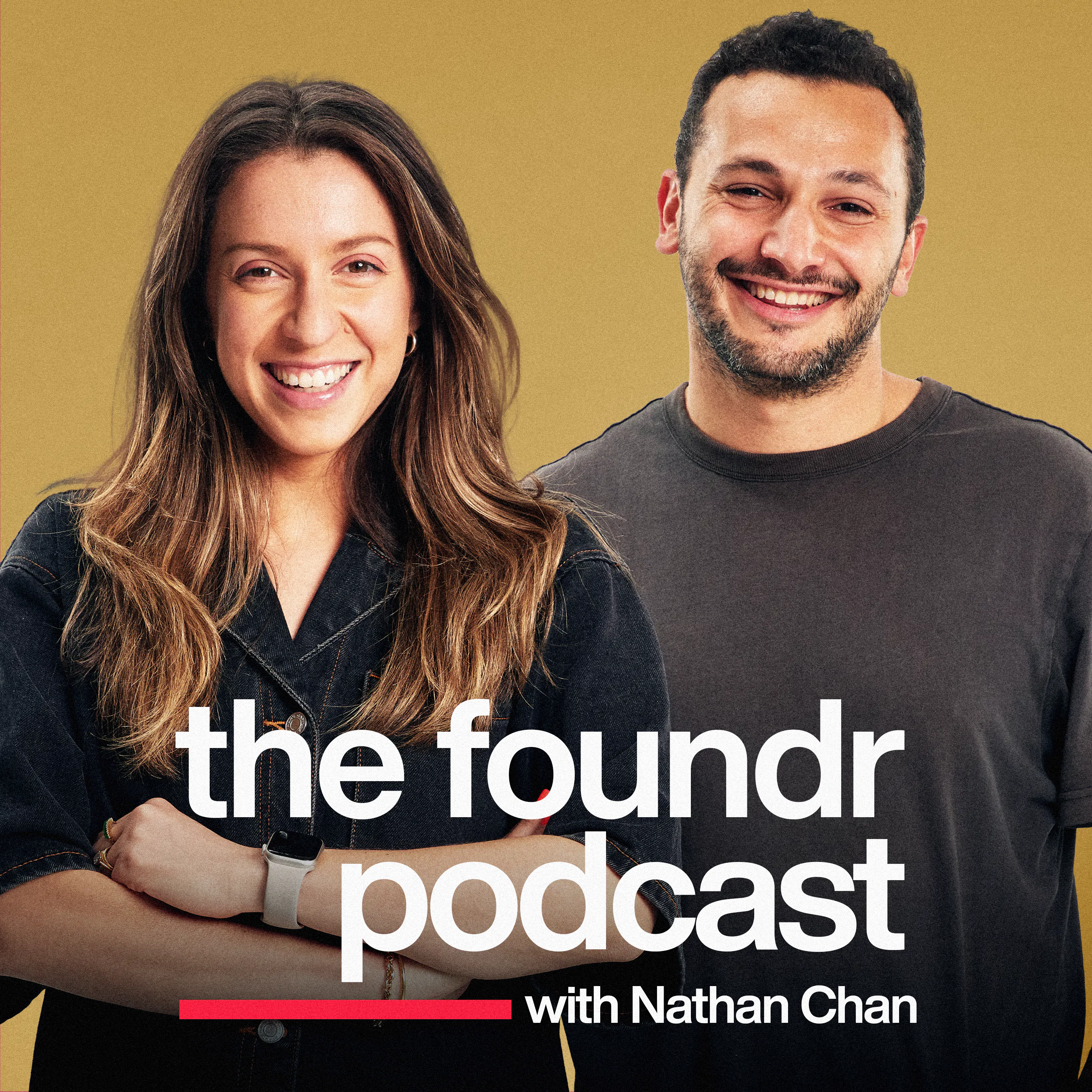
The Foundr Podcast with Nathan Chan
621: We Bet $200K on Bras Before Making a Single Sale — Sold 400,000 in 2 Years | Nala
00:49:59
Nala was built by two founders with no fashion background who invested $200,000 before making a single sale and went on to sell over 400,000 pieces in just two years. In this interview, Chloe and Phil Derwent break down how they identified a gap in the intimates market, validated demand with fewer than 300 survey responses, and scaled an Australian lingerie brand into a cult favourite with a 70% repeat purchase rate and a national retail partnership with David Jones.
Loading summary
Transcript146 lines
- [00:02]
A
Hey, founder fam. I want to talk to you about something super exciting. We're officially partnered with Omnisend, the email marketing and SMS platform built specifically for e commerce founders. We've been recommending Omnisend to founder students for a while now because it just works. Whether you're launching your first store or you're scaling to seven figures, it really helps you automate your marketing and get real results. Did you know on average, OMNISEND customers make $68 for every $1 they spend, which is an insane, insanely good return on investment. And because you're part of the founder community, you get 50% off your first three months with the code. Founder50. Just head to omnisend.com forward/founder without the e to get started. All right, now let's jump back into the show. $200,000. That's how much today's guests invested in their very first product order before making a single sale. And they'd never worked in fashion before. I want you to meet Chloe and Phil De Winter. They're the co founders of Nala, Australian intimates brand that sold over 400,000 pieces in just two years. Partnered with David Jones after revolutionizing how women shop for bras online. So in this episode you're going to discover how they validated their entire product line, which is.250 survey responses. The gorilla marketing stunt that put G strings on hundreds of car windshields in Bondi that went viral. And why spending 30% of their revenue on marketing with a single 70% repeat purchase rate became their secret to hyper growth without raising a single dollar. This is an incredibly honest conversation of what it truly takes to build and launch a product based business with massive MOQs, negative platform bands and scaling without losing your sanity.
- [01:51]
B
Hear the stories, learn the proven methods and accelerate your growth and future through entrepreneurship. Welcome to the founder podcast with Nathan Chan.
- [02:05]
A
First and foremost, thank you so much for taking the time to be here. How'd you start this brand?
- [02:11]
C
Yeah, so never thought we'd end up here, to be honest. I'm a physio and Phil's background is in sports tech. So very different to browse and underwear. And we now or we we launched in 2022. Back in 2021, I was just on the hunt for some bras and underwear and looking around, didn't really find anything that suited me. I was looking for something comfortable, sustainable, affordable, but also cool. That sort of spoke to me. And at the time Phil was working out what he wanted to do next. I was doing which I still do an online Pilates business, which was a result very much my little Covid business. And we really recognized that there was just a gap in the market here in Australia and there was a real opportunity. So that's where why we really went for it. And yeah, that's when the idea of Nala was born.
- [03:05]
A
Yeah. Okay, so talk me through. So you had your own personal problem. You saw a gap in the market. This was 2021. Ish. You launched in October 2022. So how long did it take to bring the product to life? What was moq? How much did you outlay? All the juicy stuff that people want to know.
- [03:27]
B
So I think the first thing that we did was Chloe was lucky enough to have this like online Pilates platform where she probably had about, I think it was 5,000 people in her database, mostly women. And so she sent out a survey and asked, you know, what problems they have with buying underwear.
- [03:43]
C
And a lot of like, very general, like, if, if I could solve one problem in the world of bras and underwear, what would it be?
- [03:50]
A
Yeah.
- [03:50]
B
And the insights that we got from that really form the product roadmap. You mentioned the support wire Free Bralette, that's been one of our best sellers and keeps selling out. That one came from the insights that we got from that survey. And so once we had a vision for what we wanted to do, the biggest, one of the biggest challenges we had was the MOQs on bras and underwear are really high. So most sort of, you know, high level suppliers will quote, you know, a thousand moqs per color, per style. And so if all of a sudden you want to build a range of, you know, five or six different bras, five or six different undies, three or four colors each, all of a sudden you're looking at thousands and tens of thousands of units. And so I think in our very first order we outlayed just over 200 grand, which is like a big, big investment. We really, we went for it and we, we knew that we wanted to go all in.
- [04:40]
C
We also didn't want to come out with just one or two products. We knew we wanted to come out with a whole collection that spoke to different people, different needs. We had a vision for that as a whole. And yeah, I guess we really invested in that.
- [04:56]
B
And I think on that first order maybe we were able to negotiate down to like 500 units per color, per style moqs. But then like with, with the view that it would go to a thousand for our follow up orders. And so it was A big undertaking. And I think it's a big barrier to entry for like competitors that want to get into the space. Like, you can't just come in and be like, it's not a T shirt where you can go, all right, I'm going to order 50 black, 50 white and be done with it. And so, yeah, it was a big undertaking, but luckily enough for us, I guess, you know, paid off.
- [05:23]
A
Yeah. Okay. So I'm curious, how many survey responses did you get? This is a common one that comes up. You know, someone like.
- [05:32]
C
Yeah, it wasn't that many. I think it was like a couple of hundred. I looked recently. I think it was like 200 or two. No, it wasn't that many. In my mind. I think we'd like. I was the same. I thought it was more as well. And I went back and had a look and then I was like, oh, it was just that. But out of a survey like that, okay, call it 250. It's not a huge pool of people, but everyone there was quite a universal response to that. It was like pretty clear. A lot of, A lot of the women who have struggles when it comes to bras. Bigger busted. It was bigger busted women who were saying, I just want a wire free bralette that actually fits, that's actually supportive and looks good. And looks good. Yeah, that. It's just. I think there are other brands out there say like cotton on body and other brands who make bralettes, but nothing was really catering to bigger busts. And so that was like a huge thing that came out of that. And the other thing that was. Is universal. I'd say, like amongst all women, I'm going to even say that is I just want a strapless bra that's comfortable. And even though there were only 250 people, we got like at least 100 people say, I want a strapless that's comfortable. So that, that gave us such clear direction on two products that we needed to make. And those two products were really successful from the first day.
- [06:45]
A
Yeah. Yep. So from this survey, from this insights that gave you guys the confidence to drop a couple hundred thousand on product.
- [06:53]
C
Yeah, it sounds ridiculous when you say actually it wasn't just the survey. Yeah.
- [07:00]
A
Okay.
- [07:01]
C
What else was it? I would say like delving into the industry as a whole. When you look at, when you look at the bra and underwear industry in Australia specifically, it's filled with a lot of really great brands, but they're legacy department store brands that have been around for many, many years who have been doing the same thing for many, many years and maybe haven't modernized or don't have such a strong online presence. There are some ecom brands out there, but nothing. When we looked at it as a whole, we really thought there was an opportunity, not just from a product point of view, but also from a marketing point of view. A marketing strategy that really spoke to women in a new way. And one of our pillars is inclusivity, and I can talk more about that, but a brand that really spoke to women in a way that spoke to them that they could see themselves reflected through marketing and see themselves reflected through the product as well. We saw an opportunity there. That was where the real opportunity was. And the survey, yeah, definitely helped. But we, we saw it from a. Yeah. Bigger picture. Holistically. Yeah.
- [08:00]
B
Also I think it's important just like point out that like, we were in a lucky position. Like, Chloe had another business that was doing really well. My previous company that I'd been working at for eight years and I was the second employee, had exited. So we had a bit of like a financial buffer. We had some family support. And so we were able to take a bit of a punch. And we were at the stage in our life with no kids that we were like, okay, this is the right moment for us to like build something and really go for it. And we believed in the idea and did that, but also want to like put on the table that not everyone can, can do that, of course, from the outset. So we were in a. We were in a good position to take that kind of risk. I wouldn't necessarily recommend that that's what every founder should go and go and do.
- [08:37]
A
Yeah, of course. But like, these are the real stories. Right. Like, this is what it takes. You know, some people start, you know, we've done interviews with people that have started with $10,000, $20,000 to launch, you know, a physical product business that I exited, Healthish, the water bottle that cost 20,000 Australian dollars. So it just depends. It depends on the product. Right. That's very, very telling around how much it's going to cost to start an E Commerce brand.
- [09:01]
B
If we would have wanted to have launched with like a 20 grand product budget, for example, we would probably had one bra, two briefs or something like that. Right. And it just wouldn't have been enough to get cut through in the market. And so that's, you know, how we kind of.
- [09:11]
A
Yeah, got you. So you both have kind of come from very different backgrounds. Not backgrounds in fashion. The question that some people will be thinking or Asking is, how did you work out how to design these products? How did you work out to. You know, obviously we talked about the functionality of the product, but what about the design? Is that. Is that not a concern or.
- [09:33]
C
Oh, yeah, yeah. That's where we. We outsourced other people to help us.
- [09:37]
A
Okay.
- [09:38]
C
I think we learned early on that bra construction is incredibly technical and. Exactly what you said. A physio and sports tech business development man over here.
- [09:51]
A
Yes.
- [09:52]
C
I don't know what to call you.
- [09:53]
B
Sorry, sales.
- [09:55]
C
Sorry. Yeah, we knew we needed help, so, yeah, we. We. We work with a team of bra designers, so we think about the vision, we think about what we want to do, what we want to create, and then we work with people who are specifically skilled in that area who can help us actually construct them. Because, yeah, you need help. It's more technical than I ever imagined. And I. I think pretty early on, we realized that's why there aren't more bra businesses out there because of exactly how technical it is. Like our support wife, Free bralette comes in 71 sizes now. Soon to be 75. Right? Soon to be 75 sizes. So, yeah, a lot of skus. And creating a bra across so many sizes is so challenging and requires a lot of work and time and energy that goes into it. And, yeah, we. We outsource to get help with that.
- [10:50]
A
Yeah, got you. So how'd you find that help and how for those that are looking, you know, working at creating a product and they need to use, like, someone to help with formulation or, you know, the wife, all that kind of stuff. How did you find and how did, you know the right personal group to go with?
- [11:09]
B
Yeah, so we had some family connections in the rag trade, and I think was part of the reason we kind of set ourselves on this was a good fit for us. So that helped finding the designers, I think, like, in terms of, like, signing off on product. Very hard for me to sign off on a bra, but, like, you know, Chloe. And then, like, we have, like, a team of test wearers. Like, we're about to launch a sports bra range in January. I think we've done probably 300 fit sessions on those sports bras because, again, they're not going to come in 71 sizes to begin with. It might be 50, but you've got to get it right across the whole size curve. And we're just absolutely, you know, dogmatic on making sure that the products fit properly. It's kind of like a. It's probably one of the second. The second most technical product you wear behind a shoe and like, you know what it's like with a shoe. If a shoe doesn't fit, then you won't wear it. It's the same with a bra. If it doesn't fit properly, people aren't going to come back and buy again.
- [11:57]
A
Yeah, got you. So tell me through launch, because you guys have had incredible growth these past couple of years since you've launched a lot of E commerce businesses post Covid boom, experienced a lot of challenges. This hasn't been the case for you guys. You've built an incredible product, you've done some crazy cool marketing, which I want to talk about. But talk me through launch, what did that look like? What was your wait list? How did the marketing like, talk me through that part?
- [12:25]
B
We. A couple things that we did. Firstly, we did like a very heavy influencer gifting campaign and I think we had a couple of paid influencers as well from the outset. But the good thing about bras and undies is, like, the cost of goods is low and the cost of shipping is low. So I think on that very first week we sent out like maybe like two or 300 influencer packages to get the brand out there. But what was probably the thing that we were sort of most famous for at launch and really got us some cut through was we did a guerrilla campaign in Bondi where we put a bunch of G strings on cars. So people woke up in the morning, they came out, out of their house and there was a G string on their car with a note saying, hey.
- [13:02]
C
Wild thing, you left this at my place last night. Xx nala.
- [13:06]
B
And then we. And then we like seeded it in like the local Facebook groups and to the media.
- [13:11]
C
And a lot of, I want to say a lot of them, we, I think most of them were red G strings just to like make a bigger impact. Yeah. And we got a photographer there to take photos. So there were photos of like guys like holding up a G string. Like, like, what is this at Bondi Beach? It was amazing. And yeah, the post went like viral in these local Facebook groups. At first, like, really got, like built some traction. And then I got picked up by the Daily Mail, which was amazing. Like, people were. People were writing hilarious comments like, you almost caused me a divorce, which is hilarious but also so great. Like, it just amplified it so much, the message so much. People were like, who is this brand who's.
- [13:47]
B
I don't think they were actually getting divorced. And like, it honestly just got us off to a really good start. Like, we were really Lucky that we never had that day where we were, like, scratching around being like, is anyone going to order? Or, like, you know, is this going to work? Like, really, from the very first day, we just had this momentum in the brand and. And the business that, like, has carried through till till now. So, yeah, like, it was a sort of scrappy way to launch, but, like, it really worked out. And the cost of doing that was, you know, not much. Like, a lot of, you know, G Strings are our cheapest product, which is why we. We chose to leave them. Part of the reason we chose to leave them on the cars.
- [14:20]
A
And. Yeah, it's clever. So how many? How many cars?
- [14:24]
B
A few hundred.
- [14:24]
C
Yeah, a few hundred.
- [14:25]
A
A few hundred. Okay. Okay. And what were the Facebook groups that were just Local.
- [14:30]
C
Bondi Local Grace. Yeah, exactly. It's like, I'm gonna get the name Bondi. Apologies. Yeah, Bondi people. I think it's Bondi Local Loop. But these Facebook groups are very active Facebook groups. And it was from there that it got picked up by the Daily Mail. Like, there was, like, screenshots of comments from this group in the Daily Mail article.
- [14:50]
B
And we should shout out our PR agency movement, who we still work with today. And we're part of that campaign. It was their idea, and they have been a huge part of our success and helped execute that. That campaign.
- [15:01]
C
They actually. That was one of the ideas. Like, when they pitched us before we launched, that was one of the ideas that they had. And as soon as I saw it, I was like, this is the best idea I've ever seen.
- [15:14]
A
Yeah, that's really clever. Okay, so you guys went all out. You even invested in a PR agency. You gotta be dangerous. A lot of these PR agencies are hard to trust.
- [15:22]
B
Yeah. I mean, again with Shout out movement, they've been amazing for us. Like, they've, you know, particularly on, like, those kind of guerrilla activations. We've done, I don't know, be close to half a dozen of them now. And, you know, either their idea or our idea that we've executed with them. And they've. Yeah, it's been a really key, integral part of our marketing strategy.
- [15:40]
A
How did you know that they were the real deal and you want to work with them?
- [15:43]
B
I found them on TikTok.
- [15:46]
C
Isn't that how you find people that are the real deal? Yeah.
- [15:51]
B
I found them on TikTok. I saw they'd been doing some cool things. I think they did a similar kind of stunt for maybe Chargirl Charlie's or how you pronounce the name. Yeah. And we met with them a few like, you know, a handful of times and we're really impressed. They were just had this kind of creative flair that most other agencies we were talking to didn't.
- [16:09]
C
They also really understood the brand. I mean, we had a. Phil and I had a really clear vision of what we wanted Nala to be. We weren't going in, we didn't want to be safe. We wanted to do some really out there things to really stand out. The brand is cheeky and confident out there. We wanted to work with people who understood that. And yeah, from the get go, they really understood it.
- [16:30]
A
And yeah, well done because, yeah, look, I hear the other side of the table where it's like, oh, I'm just about to launch. I've paid this PR agency like, you know, three grand a month, five grand a month. They've locked me in for six months and they said they can get me here. And then you hear oftentimes they can't or it does nothing or it's a paid placement.
- [16:51]
B
You know what I mean?
- [16:52]
C
Like 100%. Yeah.
- [16:53]
B
I think traditional PR has really changed. Like, obviously media has really changed and so that's kind of why we've gone down this activation path more so than like, you know, let's get on the news or be on the front page of the paper or whatever it is. And like, you know, those things are obviously nice too. But yeah, it's been much more a guerrilla style PR play as opposed to like a traditional press.
- [17:14]
A
Yeah. So talk me through launch day. What can you share? Numbers? Like what can you share? Like what? Tell me. Talking about time you got to that.
- [17:23]
C
I actually had a look. I actually had a look. I looked a couple of weeks ago. So I'm getting exactly right. We launched. Our first launch date was like friends and family launch day. And then the next day was like our hard launch where we went out.
- [17:37]
A
Yeah.
- [17:37]
C
So the friends and family launch day, we did just under 10k in sales that day. And I just, I mean, good friends and family.
- [17:44]
A
Yeah.
- [17:48]
C
Probably like half of that was your mum. Yeah, it was amazing. I remember, like we all sat there. I remember in our house, four of us. It was four of us at that time. Yeah. And we were so nervous. Like I found it hard to even enjoy the day because I was like, is anyone going to buy a bra?
- [18:08]
B
I think it's one of the only days you and I had a fight about work as well.
- [18:11]
C
Did we? I don't remember that.
- [18:12]
B
I think it was about packaging.
- [18:14]
C
There you go. There you go, and then the next day we launched and it was like 5 1/2 K on the first proper day.
- [18:22]
A
Yes.
- [18:22]
C
And then from then it was like, we. That was enough momentum to then, like, we were able to just build on that, which was amazing. I mean, once you did that, then we started running ads and we said everything was. Started moving, you know.
- [18:34]
B
So I remember those first couple days, the biggest tell to me that we were like, onto something was we sent out all these influencer orders that I just mentioned, and we started seeing those influencers ordering and we were like, okay, we've just gifted this person four or five pieces or however many we'd given them, and they've just gone and ordered five more. And to us, that was like, okay, the product's good. They obviously like it. We're onto something. And from there there was just, yeah, that, that momentum. And they'll get like. It wasn't just people like, posting, oh, like, I've got this package. Look at the package. It was like, they've put the product on. They're talking about how much they love it. And that for me was like, okay, we.
- [19:07]
C
Before we launched, I held a whole meeting. I was convinced no one was going to post in their bras and underwear. I was like, we need to have a meeting because we need to send out briefs to influencers and customers in general with ideas of how they can post their underwear without putting it on. Because I was. I was honestly convinced that was going to be our biggest issue. I was thinking we could put it on clotheslines and, like, in cute ways and things like that. And then when we launched, everyone was posting selfies of themselves in Nala, in the mirror, mirror selfies here, there, like everywhere. We were just like, the content was like flooding in. And content is, as, you know, like the hardest. One of the hardest parts when it comes to a business. And we were so lucky with an influencer strategy that from day one, we had content. It was there and we could use that. We could reuse that, repost that. It was. Yeah, it was great.
- [19:55]
A
Wow. So before we move on to kind of the growth side and all the other things, you've done some really cool stuff on the marketing side. I want to talk about some of the gross stuff, but I'm curious, what would have you done differently if there was anything for the launch? Because it sound like it went with a bang. Would it be anything we've done differently?
- [20:16]
B
If you go, I think we got our launch pretty bang on. Like, obviously we ordered some products that ended up being dogs. And like we.
- [20:21]
C
But you couldn't really avoid that.
- [20:23]
B
Yeah, yeah, like, you know, and like we no longer sell those products or whatever. But you know, you know, the ones that did the best were the ones that we got those insights from the survey that we spoke of. And so we doubled down on what was working for us and, but you know, really like from a marketing go to market point of view, I wouldn't change a huge amount. Like we got it pretty, pretty spot on.
- [20:42]
C
We put everything into it.
- [20:43]
B
Yeah, we like, we really, you know, for the year leading up to launch, like I left my previous role so like I was full time focused on launching the brand. So we like left no stone unturned and like really went for it.
- [20:56]
A
Yeah, okay, you guys went all in. So you left your job. Like it had to work well.
- [21:00]
B
So basically as I mentioned, there was a startup that I was at that exited and that was great. And then I went to a company, I won't mention the name, but I really didn't like it and kind of quit not knowing what I was going to do next. And then we decided we were going to do, do Nala. And so rather than taking another job for six to 12 months, whatever, I was like, okay, let's go for it. And we'd have that sort of financial security to be able to do it. And so yeah, went, went all in and like there were weeks where like, you know, there wasn't 40 hours of work for me to do a week and I was playing more golf than I've played the rest of my life and things, you know, definitely made up for it now. But we went, by the time we got to launch, like we'd given it everything and we'd put our hearts and souls into it. And like, you know, there's this famous story about, you know, this famous battle about there's a French commander, I'm going to get the name wrong. And he had his army on these boats. They got to a beach and they're about to get into this big battle. And he turned to like his commanders and he said, burn the six ships that we've come on. And they go, you know, why would we do that? He goes, there's no other way out of this other than to win. And I think we kind of went in with that mentality of like, you know, there is no plan B. This is plan A. We're going to go for it and it has to work.
- [22:07]
A
Yeah, yeah. And how long like did you go? Because sometimes, you know, we see some of our students in our community, they want to launch straight away. And then others, it's a six month kind of build up. How long was your timeline from having the product ready to actually launching?
- [22:26]
B
I think from idea to Launch was about 12 months.
- [22:29]
A
Yeah, yeah.
- [22:29]
C
But the product, it takes that long. We didn't have the product ready six months before that ready to go. The product design, construction, testing, all of that until it's ready to go from like conception to like in the warehouse ready to send out is minimum a year. So we worked really hard in that 12 months to get it to that point. And then once the product was ready, we were ready to launch.
- [22:53]
B
In hindsight, like, we actually got to market quite quickly, like now.
- [22:57]
C
Oh, my God.
- [22:58]
B
It takes us longer to develop new products than what it took us to develop our initial range. Maybe because we do it in so many more sizes and stuff now.
- [23:04]
C
Maybe, I don't know. But now it takes. I feel like it's like if we get a new. If we couldn't create a whole new collection in 12 months now, I don't know why, how we did it then. But like, sports bras have been delayed too many times that I want to mention. But like now it's 18 months. We were working on those products to perfect them.
- [23:23]
A
Yep. Yeah. So since, you know, you've launched, you've sold over 400,000 pieces in two years, which a lot. And your cult favorite, which is the wire free bralette, is sold out nine times. So how did you navigate kind of securing suppliers, moq planning for scale and demand when you have no fashion background?
- [23:49]
B
That's our biggest challenge. You know, up until now, staying in stock when we've had the kind of growth trajectory that we have had, you know, that style, I think we launched it maybe three or four colors at the start and maybe it was 40 sizes. But now it's. I think we've probably got 10 or 11 colors on the website and 71 sizes. So you've got 710 SKUs just before you've even blinked in one style. Right. And so it's been an enormous challenge, to be honest. Like, this hopefully will be our first summer where we get through with like, no massive stock challenges. You know, like by the end of last summer, our stock was so patchy and like, probably the most stressful time I've had personally in the business was like, I think it was February, March of this year where we'd had like this amazing summer. And then our stock got really patchy. We were probably a bit slow to pick up on them that I got patchy. But we were still pumping money into advertising and marketing, and all of a sudden our conversion rate was dropping and we were kind of burning more money than we should have been. And, you know, took us till the end of the month to be like, hey, what happened here? And, you know, it was a good lesson. We won't make that mistake again. But yeah, it was all. The core issue was that we had run out of stock in our bestsellers and we were still advertising as if we hadn't. And, you know, we were lucky. We picked up on it within a month. But if you do that for two, three, four, five months, it's in a lot of trouble.
- [25:09]
C
We've now. Yeah, I mean, the brand's now been. It's three years old. We just had our third birthday. I'd say the first year, like, especially when you launch, you don't know what your best sellers are going to be. So we would have ordered the same amount of all of those 13 products that we launched with. And then it became very clear quickly that some were going to sell really well and others were really not. And so that. Okay, say our bestsellers, we want to buy more stock, get more stock, get it, like, get it making. Get it in the warehouse. It's not like a week process from the time you order it to the time it's in the warehouse, Even if it's a product that's already been perfected. It's like, what, four months minimum?
- [25:47]
B
Yeah, four months. And we try obviously to avoid air freight from cost and environmental purposes. So it's. Yeah, from us placing an order to getting the stock into the warehouse is about four months. So.
- [25:56]
C
Yeah, and like, that's all customers that, like, if you're out of stock for that long, like, they're all potential customers that you're losing. Like you're building momentum on these products, the words getting out about your brand, and you're losing all these customers. And you can try your best to not lose them. Pre orders, wait lists, like keep. Keep them. Keep them in the loop with email marketing, but you probably lose them the end of the day. So, yeah, it was stressful, but now, three years in, we haven't got a perfect.
- [26:24]
B
It's a lot better.
- [26:25]
C
And what's hard as well now is, is when we launch new products because we launched new products. And as much as we believe in those products, you don't really know until you start selling it if that product's going to be a success or not. So we Want to buy enough that okay, if it is a success then it's, you're selling enough product. But then also you don't want to be in a position where you're sitting on 1000s of SKUs of this product that isn't selling because that's, that can be detrimental to a business as well. So yeah, it's an ongoing challenge for sure.
- [26:55]
A
Yeah, yeah. And you guys actually have quite a aggressive growth strategy. You spend approximately 30% of your total revenue on marketing operations. Can you guys walk us through? There's a technical question, but I think it'll be helpful for founders kind of your take on, you know, gross margin. Explain how you, you model your cactus ltv. You spend a bit on ads, you know, you have an aggressive burn rate but you have a 70% repeat purchase rate. So how did you work that out? And yeah, that, that technical kind of hyper growth.
- [27:27]
B
Yeah, so we didn't start that way. I think like we've sort of, it's evolved over time. We're lucky that like our margins on product and shipping costs are quite low. So that allows us to be a little bit more aggressive on the advertising front. Like I might not go into like the exact LTV numbers and cack and all, but from a philosophical point of view, the way we approach it is like we never want to lose money on a first time purchase, but we want to like either break even or make it make a little bit knowing that we've got a really loyal customer base. People love our products as you said, like our returning customer rate is amazing. And so we know once we have won a customer over and like they've tried the NALA products, they're very likely to love it and then they're going to come back and buy and they sort of become, we can become their first place of choice when they need to get a new bra or new undies or whatever. And so that's kind of philosophically been how we approach it. Never to lose money on the first purchase. It's probably been one or two months where we've made that mistake. But again just slightly and then you know, make sure that we continually bring them back.
- [28:34]
A
Yeah. So with economics like that, have you guys looked at raising money?
- [28:38]
B
Like we haven't seriously looked at it. I think we've got some big plans for the next few years and so it might be a conversation that we think about. But for now I think if for as long as we can hold on to as much of the business as we can, that's kind of the preference. I, I think also in G2C there's some more stories of brands that have raised money and I think you get in some really bad habits about how you spend your money and, and.
- [29:09]
C
So.
- [29:10]
B
We'Ve just always been cautious of it.
- [29:11]
A
Yeah, of course. I totally understand. And I read somewhere that you guys are using hyper personalization. Can you talk through that?
- [29:20]
C
So we have a fit guide on our website. I don't know if you've seen it. You would probably remember if you had, would look more embarrassed. Basically, it's a library of 100 bare naked breasts and chest and customers can go online and scroll through a library of bodies and choose a body that looks like theirs and then see that body in Nala products that suit that size and that body and whatever that person needs. So we, the reason why we made that firstly was because we felt like there was a real challenge with buying bras online and we wanted to make it as easy as possible for people to understand what to buy, what their size was and things like that. So that we actually did a whole relaunch of our figure. We launched with a figure, but it was 35 bodies. But then we wanted to make it bigger. So this year, just a few months ago, we relaunched it with 100 different bodies, which is amazing. And, but utilizing that, we are able to capture more data about our customers because suddenly we know what size they are. And that combined with also their recent purchases or if they're not, if they're not a customer yet, we can then target them with specific emails that recommend certain products that suit their body and their needs. So it really just. Yeah, it helps.
- [30:34]
A
Clever. And how do you come up with that idea for the fit guide?
- [30:38]
C
It was just for that reason, I think, I think when we were working on like before launch, there were so many people that we encountered just anecdotally that would say I would never buy a bra online or I have no idea what size I am. So that was a really big fear for us going into it, that people weren't going to buy bras online. We didn't really feel like there were any brands out there with really strong stories, like from an E comm perspective of selling bras, especially at our size curve, as opposed to just like a standard, like small, medium, large kind of approach.
- [31:09]
B
That was our biggest fear going into it was like, are people going to be willing to buy a bra online? And we just did everything we could to like reduce any barrier to entry.
- [31:18]
C
Totally.
- [31:18]
B
Possibly, yeah.
- [31:19]
C
So this was just one of the things we did to try and make it easy. I mean we, like, I remember we were brainstorming early on, like, is there some sort of, I mean this was kind of before I boom. But we were like, is there some sort of technology that like someone could stand there and it could scan their body and tell them what size there is? I mean, maybe one day we'll get there. That would be really cool. And yeah, I'll be the first one to try it. But this was just our way of doing that. And also from a brand marketing point of view as well. It works so well for us because our brand is all about welcoming all different shapes and sizes and bodies and. And what better way than with bare naked boobs in your face of all different sizes. So, so women and people at home also like the gender diverse community. We have a real representation of lots of different bodies. People can truly feel represented in what they see as opposed to just seeing the product on a model.
- [32:10]
A
So there's also like, this is a genius move, but there's also another side of this one. I want to talk to you guys about where you guys were permanently banned on TikTok, shadowed banned on Instagram. So how did you overturn that and negotiate new policies to champion real bodies without triggering automated flags?
- [32:31]
C
Firstly, don't believe it when they say you're permanently banned. There's always a way is the best thing to learn.
- [32:38]
B
So that was a big challenge in those first few months is like we had some mesh products that you can see, I guess, nipples through. And so putting those are not like TikTok does not like nipples, neither does Google. And so yeah, we were getting like a lot of bans for violating policy guidelines where we hadn't really done anything wrong but just sort of AI was picking up on certain things. And so when we got permanently banned from TikTok, we got really scrappy. Like we were begging our account rep over there. And honestly, to her credit, she really fought the fight where I was DMing people on LinkedIn, like GM of Australia. We met people at events and yeah.
- [33:20]
C
Someone, I remember someone telling me I was at this random. She was like, yeah, I work at TikTok. I was like, you work at TikTok? Tell me what can you do? Can you help me? This. I had like her number at her email. Like my Cousin worked at TikTok at the time in London. Like bit hard. She was like trying to get in there back end. Like it was, we were trying to hustle so hard.
- [33:36]
B
And then eventually like they came to the party And I think. I think maybe we told them how much we were spending on Meta and then they were like, their eyes lit up and they were like, okay. And then we've got, like, really strict policies now with them where, like, any bit of content that we upload has to be approved by them before it even, like, goes live.
- [33:55]
A
Yep.
- [33:55]
B
And that way we never find ourselves in that situation again. It's been, I think, 18 months now where we haven't had a band.
- [34:00]
C
So we do other stuff as well. Like, are there other things we do from an. From an advertising perspective, Extra precautions what we take that we don't take on our organic socials, not TikTok, more specifically Instagram, but like, definitely, like no nipples in content. Like we. Other tactics like hiding with your hands or styling it in a certain way. We also built custom landing pages so that. Because what was happening as well is that we. We would have an ad that didn't have any sexually explicit content in quotation marks, but then it would direct to a landing page of, say, a mesh product. And because that model was in mesh and you could see nipples, it was being flagged as it was once. I think Google flagged it as pornographic and that's why it was banned. So we had to build custom landing pages that were safe for these platforms.
- [34:47]
A
Yes.
- [34:47]
B
We've been on some calls with some of these big US tech companies where if, like, we recorded some of the things that have been said, like, honestly, I don't know what would happen, but it would go viral. Like, things I don't want to name, like which companies, but, like, things like you can only use smaller busted women in your ads because the bigger busted women have too much cleavage and then that's going to trigger the AI to like, make it pornographic. It's like, how do you ever get representation if, like, that's, you know, these guys hold all the power when it comes to, you know, modern media. Like, how do you. How do you change the narrative when that's the. That's the case?
- [35:19]
A
Yeah. Can you talk me through about inclusivity? Because you've mentioned that that's a really important thing to you guys. Not a trend is built into every scene.
- [35:28]
C
Yeah. So when we launched, I think, like, the. The word inclusivity gets thrown around a lot. It's quite tokenistic. And you see a lot of brands at the time when we were talking about Nala and the values we wanted to instill in the brand, we saw a lot of brands who were using maybe like an inclusive range of models. In their marketing, but it wasn't reflected through their product. And we didn't want to do that. We wanted to build it into the product as well so that, that a range of different diverse customers could actually purchase products that were designed for their body. So that was a few different ways we did that. So from a size inclusive range, which is probably what most people know us for these days, we, when we launched, we went up to a G Cup. Now we go up to a K Cup. We got to a 6xl as well. And that is for customers in those bigger cup sizes. It's actually, they can't access bras that fit their bodies off the rack. It's something that they have to get customers made for their bodies that they have to pay sometimes 150, $200 for. So for them to be able to access products like that at $59 that are actually cool and that they actually like is was a new revolutionary experience for them. And that's really cool for us to be able to do. But we also launched customers leave test.
- [36:44]
B
Wearing sessions in tears because they're like.
- [36:46]
C
Literally, yeah, we've had customers come in for fit wearing sessions. Like one of our. It was one of our J Cup customers. And I remember the sample was all wrong. It needed fixing. And we were fixing and we were like, oh, we'll fix it for you. And she was like, you're going to take it from me. Can I take it home, please? Can I take it like it was. And we were like, yeah, if you want. Like, to us, it was so not perfect. But for her, she never, she never had anything like that before. So it's pretty cool. So there's that side of things, but then there's also our gender inclusive product. So we launched with an everybody collection, which we, which we designed specifically for the gender diverse community. And we worked with the Equality Project, who are an amazing organization who they work to create safe spaces for the LGBTQIA community. And we work really closely with them to develop these products which were gender neutral, but also briefs out everybody tack brief, which is designed for trans women, which was a real challenge to create because obviously it was really new for us. It was new for the designers we were working with as well. But we worked in partnership with these amazing women and were able to create a product that they actually felt like there was a need for, as opposed to us being like, oh, how about this? Maybe this is what you need, which has been amazing. And you know what? It's not our best selling product, but it's a product that will always make. And yeah, it's, we're really proud to be able to offer that.
- [38:07]
A
Yeah. And I'm curious as well, you guys now working with national retailers, how do you work out who you want to work with and when you're ready for that as a brand?
- [38:23]
C
Yeah, we knew we wanted to partner with a retailer from very early on because it was clear that while we learned that people do in fact buy bras online, there are a proportion of people who also won't. Also a lot of people don't know their size. Like you ask women what bra size there are, I'd say half of them know and half of them are like, oh, I don't know, depends on the time of the month. Or I had a baby last year, now I don't know. Or I lost a few kilos or gained a few years. No one really knows. So that was a big challenge for us. We knew that we wanted to have an in store presence somewhere to give women the opportunity to try on the products themselves, to know what styles they like, to know what size they are, but also to have the experience of touching and feeling the quality of the product before committing to purchasing. So we knew that we wanted to do that at some stage. We launched with David Jones in February. So it was after just over two years of being a brand. After launching we chose David Jones because we just thought that they were, I don't know what, they have a really boutique, beautiful offering and we felt like they could represent our brand really well. And we had a really, we have a really still have an amazing partnership with them. And you gonna say something, they're probably.
- [39:41]
B
Like the least discount focused of the major retailers in Australia and we don't discount a lot. It's funny saying that just after Black Friday, but we generally it's our one sale of the year. And then the only other thing I'd say like, you know, Chloe spoke of her story when she, the very start of the brand when she went out shopping and looking for bras. Like, you know, David Jones has some amazing brands and like, you know, in their new stores or they've major stores, like there's, you know, some modern brands as well. But like I went into one of their stores, I think it was in Auckland, right. And I was looking around the shelves and I'm like, I reckon we're the only brand that was founded this century on the shelves here. Right. And I think that speaks to the category like skims is in David Jones and they do an incredible job. But outside of skims and us, there wouldn't be a huge amount of brands in there in the lingerie department, like, you know, literally been founded in the last 25 years. So for us, we also felt like there was an opportunity for fresh also.
- [40:33]
C
For sizing as well. Not only being fresh, but the size curve that we launched for David Jones was bigger than any other size curve of other brands that they stock in the lingerie department. So we were able to go in with this offering of. I mean, we didn't go in with all of our sizing.
- [40:49]
B
You would have loved to.
- [40:49]
C
We would have loved to, but yet we couldn't. But like H cups now being on the, on the racks for customers who could never buy a bra that they love in David Joe's, like, that was amazing. It was. It's great to bring that product to customers as well. Yeah.
- [41:04]
A
So what about international? Do you guys sell internationally right now? And why not launch selling worldwide?
- [41:15]
B
Do you come to our board meeting next week?
- [41:19]
A
So.
- [41:21]
B
So we sell to New Zealand. For the Last sort of 18 months, we've been shipping from Australia to New Zealand. That's gone really well and it's definitely wet our appetite for. For overseas. I think we spoke of before the amount of stock that you need to have in a business like ours. With the amount of SKUs and at our price point, it's not feasible to ship to Europe or to America from Australia. So for us to launch into any of the other major markets, we're going to have to hold stock over there, find a new, you know, three pl and so it's a big financial undertaking. And you asked the question before about raising money and things like that. Like, we've always tried not to do that. And so, you know, I'd be surprised if in the next couple of years we don't give it a go. If you come to the board meeting on Tuesday, I'll let you know exactly the timing.
- [42:06]
C
We definitely want to. Yeah, we definitely feel like there's an opportunity there, but we're not really quite done here yet. And we want to make sure we're in a good position here before really focusing on other markets.
- [42:18]
A
Yeah, that makes sense. The reason I asked that question is because you think E Comm. A product like yours, you're talking about skims, cutting edge product. I think you just, you do really, really well and you know, you. I'm sure you guys are attracting people that ask you every day, I want to buy this product. I'm in the States. I want to buy this product, I'm in the uk, like this massive markets compared to Australia.
- [42:41]
B
Yeah, we'd love to do it.
- [42:42]
C
So love to do it. We totally agree with you. We'd love to do it. Yeah.
- [42:50]
B
Quite a few advisors and they've just sort of helped with like strategy, finance and they've been really helpful just to keep us honest. I think it's like a good, really good practice. And I encourage any founder know how big or small your business is. Get some outside people that aren't in the day to day business that have experience and runs on the board that can kind of guide you in the right direction because, you know, sometimes, you know, we can be cavalier and want to do everything all at once and sometimes some wise heads can just be like, just take a breath.
- [43:24]
A
Yeah, no, I agree. That's, that's why founder exists. We put out a lot of content but we have a massive education, coaching arm of the business, mentorship arm. So I agree wholeheartedly. I'm curious though, how did you guys find your advisors, the two that you have on your board and how did you know that they were the. And how did you know that they were the ones to work with?
- [43:45]
B
So combination. There are people that like I've known for a long time through, you know, previous business dealings that are involved and then also more recently someone that I went to an event, they were speaking, I went up to them after the event and asked them a few questions and we ended up catching up for coffee. I think we caught up for about half a dozen coffees and then we said, look, would you like just to be sort of a, you know, I think we called it like a guest advisor or something and came to a couple of board meetings just to test each other out and we really like it. And you know, he's provided us with some really amazing feedback and guidance. So it's been just kind of a mix of different ways.
- [44:24]
A
Yeah, yeah, that's awesome. So all right, we have to work towards wrapping up. This has been a fantastic interview. You guys have been so giving and open and honest about your journey thus far and I feel like in many ways you guys are just getting started. What's next? And if you were to share any words of wisdom for early stage startup founders, especially launching an E comm brand, what would you say?
- [44:51]
C
Okay, what's next? We're always working on what's next. I want to say that first off, as we touched on before, from a product point of view, we work on these products for a year to 18 months. So we're always working that far in advance on new collections, new ranges. We already have the whole of next year mapped out. And so in terms of new things, we've got sports bras we're going to delve into swim, which we've teased a little bit through our Instagram, which has been a whole new thing which is going to be big for us. That's. Yeah, that'll be hopefully next year. Don't quote me, don't quote me on that because, yeah, the moment, I'm not so sure that's next from a product point of view. And I mean, hopefully we come back here in, I don't know, a couple of years and tell you about our international launch. But I can't put that in writing just yet.
- [45:47]
B
Yeah. In terms of advice for other founders, I said it before, but I'll give two bits of advice. I think. I know it's not always practical for always for people to go all in, but I think as much as you can, like, give it, you know, fully commit to whatever you're trying to start up and, you know, act as if there's no other option, I think will give you the right mentality to succeed. And I think, like, there is no. People often ask, like, what's the secret sauce or what? You know? You know, there is no secret sauce. Like all the things you hear on these podcasts and you read about, like, they're the basic things. And if you do all the basic things right and you work hard, like, honestly, you're ahead of 95% of people and like, you just got to do the work, it's not sexy to say that, but it's the reality.
- [46:32]
C
I think my advice would be to understand the personal sacrifice that comes with starting a business. We're in a unique position because we're in it together. But we started the business, we didn't have a family yet. But then while we were launching, Nala went through an 18 month fertility journey which ended in IVF. We now have a baby. I then was had a hard pregnancy, a birth. I'm now pregnant with my second. It's. It's messy and it's complicated and life is messy and complicated. And when you're trying to navigate that alongside a new business, it can feel very heavy and very full and very challenging at times. And I think people should understand that sacrifice before going into it and just understand that they might have that pressure in their lives. Depending on where you're at in life. I mean, everyone's lives are messy and complicated. I think, but for us, that's been a challenge that I don't think we saw coming. And so when we were faced with that running alongside Nala, it. It was hard. It was hard. I mean, easier that we had each other to support each other through it, but it's not really something I had thought about that deeply before going into it.
- [47:41]
A
Yeah. And would you say to build a company that's as successful as yours, you need to work 70, 80 hour weeks in the early days?
- [47:55]
B
So some weeks, yeah, that's probably a really good answer. Some weeks, but not always. Last month I worked 70, 80 hour weeks and like, you know, people in our team, you know, have worked really hard as well. And, you know, you need to make sure that you have the right work life balance. I think there's always been, over the last maybe decade, there's been a real narrative around work life balance. I don't think you hear a huge amount of, like, really successful people talk that much about it and, like, a lot of them have grinded really hard to get to where they have. And, you know, it's. I'm not. I'm not pretending like I'm perfect. I wish I'd spent more time with my son over the last month and with my friends who I've barely seen in probably in the last two months. But, you know, sometimes you make sacrifices in life and for us at the moment, it feels like it's going to be worth it. And it is worth it, but there's also no guarantee of that either. Right.
- [48:52]
A
Awesome. Well, look, Phil and Chloe, thank you so much for your time. Congratulations on your success thus far. Far. I. As I said before, I think you guys are just getting started, just scratching the surface. So you're welcome back anytime to share, but I look forward to continuing what your journey. Thank you.
- [49:08]
C
Thanks so much for having us.
- [49:09]
B
Thanks. Really appreciate it.
- [49:11]
A
Hey, founder fam. Thank you so much for tuning in today and if you enjoyed this episode, please take the time to leave us a review and let us know what you think. This podcast is 100% free with. We work so hard to go out and find the most successful founders and entrepreneurs all around the globe. So your feedback helps us grow, improve, and even bring on more incredible guests and insights. So if you have a second, please take a moment and leave us a review. It really means a lot to me and the founder team. It makes so much of a difference. Thank you again for listening and I'll catch you on the next episode.