← The Foundr Podcast with Nathan Chan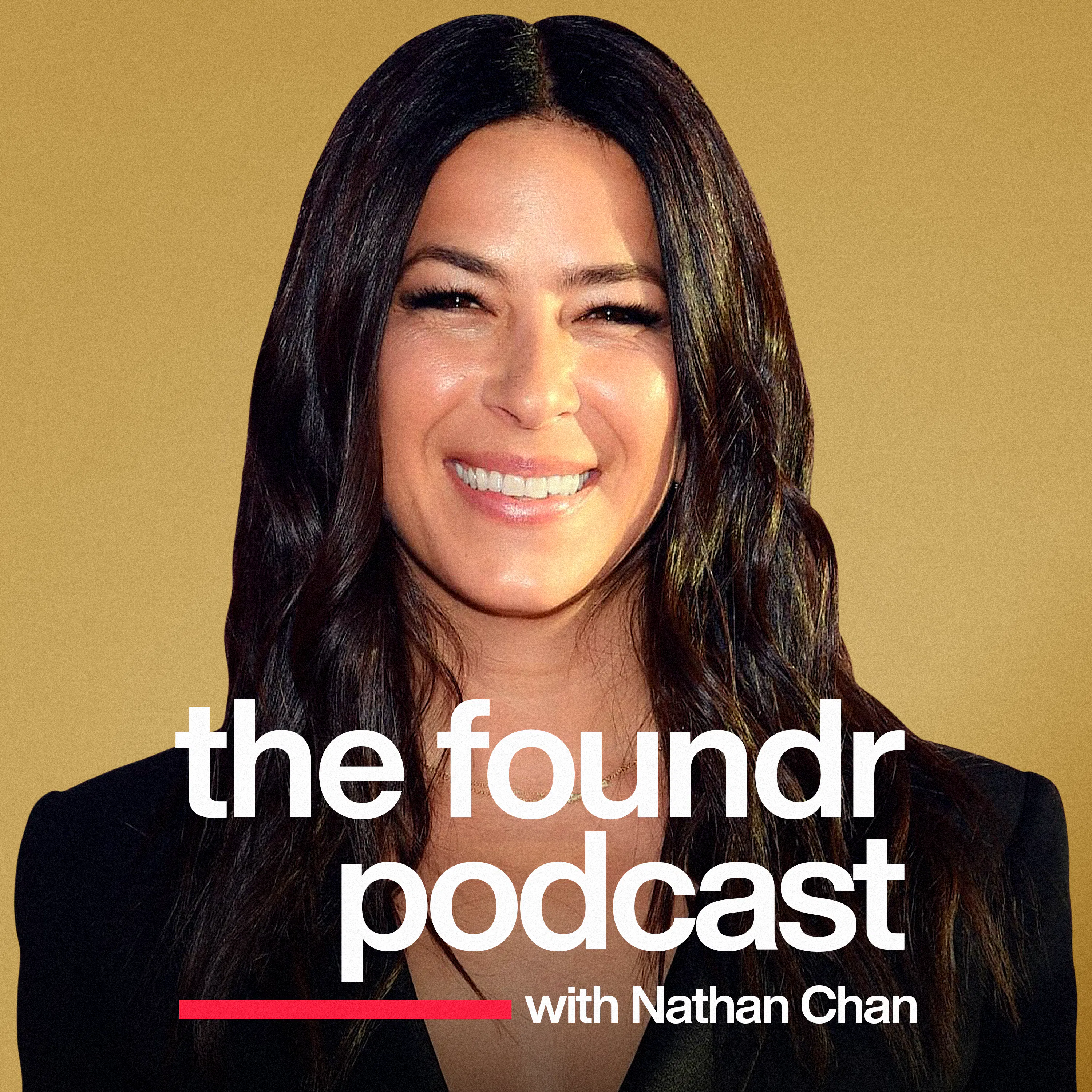
The Foundr Podcast with Nathan Chan
639: From $60K in Debt to ICONIC $100M Fashion Label | Rebecca Minkoff
00:57:31
Rebecca Minkoff arrived in New York City at 18 with no money, no degree, and a low-paid internship that paid $3 an hour. She lived in a relative's playroom just to make it work. Twenty-one years later, she's built a globally recognized fashion empire and become one of the most influential voices in the fashion and entrepreneurial world.
Loading summary
Transcript97 lines
- [00:02]
Nathan Chan
Hey, founder fam. I want to talk to you about something super exciting. We're officially partnered with Omnisend, the email marketing and SMS platform built specifically for e commerce founders. We've been recommending Omnisend to founder students for a while now because it just works. Whether you're launching your first store or you're scaling to seven figures, it really helps you automate your marketing and get real results. Did you know on average, OMNISEND customers make $68 for every $1 they spend, which is an insanely good return. And because you're part of the founder community, you get 50% off your first three months with the code. Founder50. Just head to omnisend.com founder without the e to get started. All right, now let's jump back into the show. What does it really take to survive 21 years in one of the most brutal industries on earth? And how do you rebuild after mistakes that cost you everything, not just once, but over and over again? Well, today's guest, Rebecca Minkoff, the designer who will went from making $3 an hour and sleeping in a relative's playroom to building a globally recognized fashion empire that's crossed over 100 million in revenue. But Rebecca's story isn't the glamorous fairy tale that the industry sells. It's raw, it's messy, and it's filled with near death moments that almost killed the company she spent two decades building. And in this unfiltered raw conversation, you're going to hear how Rebecca made critical costing mistakes early that set the business up for struggle. Why she's now telling founders to ditch expensive digital market and go back to house parties and grassroots tactics. How supply chain collapse and Covid nearly destroyed everything before she made the difficult decision to sell. So after 21 years of fighting through financial pressure, bad advice, partnerships gone wrong, and an industry designed to churn through brands, Rebecca Minkoff is still standing and she's got an incredible story to tell and she's not holding back. All right, now let's jump in,
- [02:06]
Rebecca Minkoff
hear the stories, learn the proven methods, and accelerate your growth and future through entrepreneurship. Welcome to the Founder podcast with Nathan Chan.
- [02:20]
Nathan Chan
Rebecca, I want to start off this podcast by saying first and foremost, thank you for taking the time. You arrived in New York City at 18 years old, no money, no degree, a low paid internship, living in a relative's playroom just to make it work. What was that moment like, that period of financial pressure? I think I read that you were making like $3 an hour. If that's Correct. Like what, what made you commit to staying to New York instead of going home? This is, you know, 20 years ago.
- [02:59]
Rebecca Minkoff
Oh, man, 27 years ago. I think that when you have a dream and you are so excited to be at the doorstep of it, you're not. And you're 18 years old, you're not thinking about money the way that I might think about it now with the pressures of a family and, you know, a lifestyle. I think that for me, I had always been raised in my home, that everything I wanted, I had to earn. So I didn't live like some overly plentiful life that. Then I got to New York and it was a stark contrast to me, the city was like my playground and I felt so lucky to be there. I felt so lucky to be hired and work in soho on Green street for a designer. So for me, like, I didn't care. I was just excited and blinded by like, oh, my God. I get to work for a designer every day and I get to live in New York City.
- [03:54]
Nathan Chan
It's. It's a very special place. Like, New York is one of my favorite places in the world. It's. Besides Melbourne, where I'm based, I could live in New York, except friends and family are too important to me that I don't. But I travel there a lot. I love New York. There's something so special about the city. So. So take us back. You started this internship, you wanted to become a designer. What did your first line look like?
- [04:20]
Rebecca Minkoff
So I waited about three years. I got, you know, through the job, I got hired officially as a design assistant and I started making things on the side about two and a half years in. My first line was a denim suit with some leather trim. It was like a tuxedo type belt with a, you know, a draped silk top and I love New York shirt that I cut up and, you know, made my own kind of rock and roll feel to it. And I think there was one other. Oh, then there was like another, like, suit. I really liked suiting. Don't ask me why, but that was kind of like this six piece collection. And what I knew in terms of design, style, form was great, but what I didn't know at all was costing margin. The business of actually when you make a product, you know, when do you go into production on it? All that were things I learned the hard way with a lot of wrong decisions and mistakes.
- [05:23]
Nathan Chan
Can you tell us a little bit more about that?
- [05:25]
Rebecca Minkoff
Yeah, I mean, I. I think that in the mixture of naivety and blind passion, I was so certain that the entire world was going to buy my collection that I decided before I ever had one order that I was going to make all the patterns for every size.
- [05:43]
Nathan Chan
So.
- [05:43]
Rebecca Minkoff
So pay for a pattern maker to make a size 0, a 2, a 4, or. Or in, you know, Australian terms of, you know, a 36, 38, 40. Spent probably $10,000 on that. I didn't need to do, you know, did a photo shoot with friends, but then made really fancy lookbooks that probably weren't needed. So I think then when I started getting orders, I didn't know how to cost a garment. You know, Like, I just was like, well, it's 40 yards. You know, $40 a yard. I need two yards. You know, I'm free, so I'll make it 80 bucks, you know, and so I made a lot of mistakes that either had I worked in the business longer or, you know, went to school for business skills, basic business skills, probably would have avoided a lot of those mistakes.
- [06:32]
Nathan Chan
Yeah. And you talk about mistakes before. I want to talk about kind of you. You landed in $60,000 in credit debt, credit card debt. But before I do, tell me about your first order. Who was the first person to ever believe in you? What did that feel like? And did you think you would make it this far?
- [06:52]
Rebecca Minkoff
Oh, my gosh. So the first person that ever believed in me was a man named Michael Sin. He had an East Village boutique. He took my little tuxedo shirt on consignment. He said, I'll try to. Consignment means. Not a consignment store, but consignment means if I sell it, I'll pay you. And so the first thing, when I dropped off the two items that he bought, I said, I gotta figure out how to sell this thing. I need to get Traffic into his store. And so my big idea was printing postcards with the shirt on it and then directing everyone to his store. And I stood in Union Square and I passed out these postcards until he would call me and say, the shirt sold. The shirt sold. And then I'd go make more. And that was. That was the first store. And then shortly thereafter, a store called the Apartment, which was a great store, called and wanted the shirt as well.
- [07:47]
Nathan Chan
Yeah. Wow. Okay. There you go. So the old fashioned way.
- [07:51]
Rebecca Minkoff
The old fashioned way. And funnily enough, we're back there now. Do you know what I mean? Like, I feel like with digital marketing costs and all these fancy tools, it's almost like I'm telling women that I'm advising, like, go Back to the Tupperware party, go back to the house parties where women are there to shop and meet them face to face.
- [08:11]
Nathan Chan
Why? Why is that?
- [08:13]
Rebecca Minkoff
I think that when you are a brand that's not only trying to tell a story, but building community, I think digital only goes so far. And I think people are looking for connection and meeting and to touch and feel a product, but not go into a department store where you get like a watered down version of the brand. And so I think that for these up and coming brands, I'm saying get out there, it's annoying, but go on a city tour and get all your friends to host these parties for you where you can meet your customer, you can acquire a mailing list, you can hear feedback in real time and, and start like grassroots. Like I'm telling every single person I talk to, sorry, go back to basics.
- [09:00]
Nathan Chan
I like that because that's how good product is built. Like, you know, I've, I've interviewed over 500, 600 founders now and the biggest through line I see when it comes to success is obviously, you know, there's a lot of pieces of that puzzle, but when it always starts and ends with a great product and it always starts with speaking to your customer, right? And agree it is annoying, but there is a definite through line that, you know, the, the founder that does over a thousand interviews with potential customers, you know, it just, it is so common. Like it is a common thread that I see. So why do you think it is that people don't want to speak to a customer? Is it because it's just fun to create? But then when the, the real hard stuff is actually finding out if this is something people want and why they want it and what makes them buy it and what they don't like and hearing the hard truths and, you know, why do you think that is?
- [09:58]
Rebecca Minkoff
I think that to this younger generation where the phone was in their face first as a means of communicating that it's uncomfortable to stand in front of someone and have them give you feedback or, or the discomfort of having them try it on, you think they're going to buy it and they're like, thank you so much. Like, that is the most humbling thing that I've had to see firsthand over and over and over again. And I think people can't stomach that. Or it's even as simple as sometimes I don't know if you notice this, but like watching a creator who was really good at taking pictures of themselves and then meta switches to interview and video and they're like oh my God, you're painful to watch. You know, like they have no charisma whatsoever. Or you, you're excited to meet them at an event and you're like, wow, you are boring. Your skill is taking good photos, you know, so I think that a lot of people are probably like, I don't have those people skills, nor am I a salesperson. And so you sort of have to push yourself to get through that or hire someone to help you, you know, who, who is that type of person?
- [11:02]
Nathan Chan
But that's if you can afford it.
- [11:04]
Rebecca Minkoff
Correct. So guess what? Until you can, it's all you, baby.
- [11:08]
Nathan Chan
Yep. So talk us through. Right? So you kind of stumbled through inconsistent traction. Early years, found yourself in $60,000 in credit debt. You had the, you know, you had the hit your first kind of big break with the I love New York shirt. I want to talk about that. But yeah, what, what, what happened? How did you get to that, to that place? And, and yeah, talk us through that.
- [11:37]
Rebecca Minkoff
The place of debt or the first hit shirt?
- [11:40]
Nathan Chan
Both, but in the order that you would like to share.
- [11:43]
Rebecca Minkoff
Okay, well the shirt came first. So the shirt was a part of the collection. That was what people loved most. It was also, if I look back, opening price point versus buying a full suit. And people love New York. So to be able to have the I love New York, the classic famous logo with my spin on it, people loved. So my sister in law was wearing it. She had dinner with a well known actress and the actress asked for it. I sent it to her before 9 11. She wore it on Jay Leno after 9 11. And for those listening, this was pre social media. This was just when magazines and TV could sell things beautifully. And when she sold my name, when she sold my name, when she said my name, I just had an inbound of all these people that wanted it. And I had one nascent e commerce site called Ravenstyle that agreed to carry it. And so I sent all the traffic to her and then she would just call me when she was running low. And then I'd go to Canal street, buy more shirts, come home, bedazzle them, cut them up. I did that for like nine months. It was wild and I still couldn't pay my rent. So to think you're in this duality, which happens a lot as an entrepreneur and that's another lesson that I'm still trying to get used to, is like can't pay rent. Hit T shirt have been making them for nine months.
- [13:03]
Nathan Chan
Yeah. Okay, so like what, what, what happened?
- [13:07]
Rebecca Minkoff
Well, I Moved out of the apartment, out of the room I couldn't afford. I moved in at a much lower rent. I continued the momentum with working on the side as a stylist and just trying to get my name out there. So I, you know, started an apparel business, essentially, and made almost everything myself. Then when I got busy, I hired someone to help me. And that's when the $60,000 in debt began. Because while my dad refused to give me money, he said, I'll co sign a credit card for you. Which means he's like, I'm not responsible for the payments. That's on you. But I'm. I'm the fall guy if you abandon ship. And so over the next couple of years, you know, taking the cash advance on a credit card was definitely something that happened weekly when I needed to meet ends or do a production order or ship something. And, yeah, it just added up.
- [14:07]
Nathan Chan
Yep. And at what point did you realize that this was unsustainable?
- [14:13]
Rebecca Minkoff
I realized it was unsustainable when I had no idea how I was going to pay it back. I was doing around 250 to 300,000 a year in sales, and because I was the bottleneck, because I was making almost everything and I was also selling everything, it just became impossible. And I said, something's got to give here. And ironically, the actress Jenna came back to me and said, do you design bags? So in that same moment of insanity where I didn't know what I was going to do to get out of my hole, I said, yes, I make bags, which I didn't. But I never say no to an opportunity and so made the bag. And it's sort of a long. A long story about, you know, how it, you know, got well known. But when that took off in a way that the clothing hadn't is when I said, okay, there's something here. And I got it. I got to get organized, and I got to pivot and figure out how to make this go, because this is the star that I need to hitch my wagon to.
- [15:09]
Nathan Chan
Yeah. And that was the morning after bag, Right?
- [15:11]
Rebecca Minkoff
That was the morning after bag. It was 2005. Sex in the City was like what we were all, you know, hoping our lives would be like. So it really resonated with women. It resonated with this strong, independent woman, and it was at a price point that almost anyone could afford at the time. I'll prophesy with at the time. Not anymore.
- [15:31]
Nathan Chan
Y. Okay. And how did that go viral again? Like, it was something to do with a shipping mistake. Right.
- [15:38]
Rebecca Minkoff
Yes. The shipping did not. So I shipped the sample to Jenna for the film. FedEx misdelivered it by two hours, and they started filming without it. And I was devastated. So I had a sample, she had a sample, and I just started wearing it and doing a lot of walking around town with it going, what am I gonna do now? But what started happening is women would come up to me on the street and say, I love your bag. Who makes your bag? And there was enough of that that I was like, maybe I should try this. And that's what, you know, that's what. The beginning of Rebecca Minkoff as we know it today. How it began.
- [16:15]
Nathan Chan
Yes. Okay. And so that's when you start to get real traction. Or was it when your brother Yuri got involved? So talk me through that piece of the puzzle. Right. Because he really kind of. Yeah. Helped you in a big way. He's more of a CTO type, right?
- [16:33]
Rebecca Minkoff
Yeah. Yeah. So he was minding his own business. He was happy with his software company doing very well. And when I called my dad to be like, I still don't know how I'm going to pay you back. I'm making the minimum payments, but, man, this is a daunting number. Oh, by the way, can you loan me some money now in advance of the, you know, instead of the credit card? Because this bag thing's really taking off. And he said, absolutely not. Call your brother. He might be able to help you. And so I called my brother. He kind of asked me a hundred questions. You know, do you have a bank account? Very simple question, you know. No, I have my personal. It's all intermingled because there's not enough to split it, you know? And so for a while, it was just great advice and really, like, business 101, tax ID, all the fun things about business. And then when he could see the numbers increasing, when a showroom came on and said, we want to represent you, when the press was just going, when a magazine in Japan covered it and then stores came from Japan like wildfire, he could see that this was something. So he agreed initially to come up once a month, and then it was twice a month. And when we hit around 20 million in sales, I was like, you have to move here, because I don't know how to do this by myself. And he did, and he became the CEO. And he really helped, you know, shape and build the business so that I could focus on what I did best, which was design and PR and really connecting with my customer.
- [18:07]
Nathan Chan
Yeah. Wow. So you got to 20 million in sales. And it was mainly like what, what really catapulted was, was the money after bag.
- [18:16]
Rebecca Minkoff
Yeah. So obviously it wasn't, you know, it took I would say four or five years to reach 20 million in sales. It was the morning after bag. And things were so much slower back then. The cycle for a designer was longer. You weren't needing a new bag every five minutes. So I had morning after bag. That's all I offered for the first year in different colors. And then it was two bags the next year. And then the next year after that it was three styles. And so you could build a very large business on very little skus. And today it's kind of like, you know, the, the dope we have to give someone daily of a new arrival and a new thing. It just, the landscape didn't look like that then.
- [18:58]
Nathan Chan
Yeah, very interesting. So that was your hero product, effectively, quote unquote. And how did you manage production, Talk us through that side of things and keep up with scale.
- [19:12]
Rebecca Minkoff
So we had a factory that was New York City based. They're still around. They're called Baikal if you're looking to make handbags. And after visiting several factories, he was basically able to get us. I would say he started to crack when it was about 25 million in sales and we had to start looking elsewhere. And so around 2009 we started looking at overseas production because he was at max capacity. And I think that our vendors, you know, the Sachs and the Neiman's of the world, while they loved the handmade look and feel of a New York City product, and I still love that more today, they wanted a uniformness to the products that you can only get at these bigger factories with crazy machines and stuff.
- [20:00]
Nathan Chan
Yeah, wow, interesting.
- [20:01]
Rebecca Minkoff
And I, ironically, I found my first overseas factory from a phone book looking for, I wanted made someone to help me make clutches. So Minod is what they're called. And so opened the yellow pages and called a guy and then he's like, you know, I don't just make Minot, I make for Marc Jacobs, I make for Michael Kors, I make for Kate Spade. And I was like, I've hit a gold mine. Like how did this happen? And so he was our manufacturer for many years for the first, you know, in helping us scale.
- [20:28]
Nathan Chan
Yeah, there you go. And so people. And also, you know, high end. You wouldn't, you wouldn't, you wouldn't even touch China or go overseas right back then. Well, still like. Yeah, because I don't know this space that well.
- [20:40]
Rebecca Minkoff
We went to China. China still had sort of a bad rap. I don't think it does anymore. And then you ask your customer, okay. And I did this many times because I had a lot of loyal customers on certain blogs and forums like, well, I'm no longer, you know, supporting the brand. Can't believe she makes in China. And I said two things. I said, I've personally visited every single factory. I can attest that these people are treated well and fairly. And I, you know, have seen their children in school there and there's a basketball court and like, you want to see pictures? Here's the pictures. So that sort of handled the. The sort of ick of what China, they thought China was. And then I also said, okay, I can make in the US for you. This is the price. Can you pay? Can you pay that? No. Okay, good. We're going to China. So at the end of the day, it was purely business. I mean, we, we even tried at one point to buy the factory from him. And maybe that would have worked, but it only would have taken us so far.
- [21:41]
Nathan Chan
Got you and fully bootstrapped all those years. You know, we read, heard, listened. You know, during that time, you guys were growing, you know, 20 million, 25 plus. But there were still kind of, I guess, maxed out Amex's mortgage homes, all that kind of stuff as you grew the business still, right?
- [22:06]
Rebecca Minkoff
Yeah. So I had nothing except like one ring with like a string of emeralds and diamonds that was probably worth a couple hundred bucks. So I had nothing to give in that moment. My brother really took one for the team and, you know, maxed out his Amex mortgage, his home because he had done well with his software company. And so that got us far enough to then take on a type of capital that is called a factor. So they do purchase order financing, they do inventory financing, and fun personal guarantee financing. And so they sort of bridged the gap for us until we were able. At the time, private equity was what people were doing. So then seven years in, we took our first investment.
- [22:52]
Nathan Chan
Yeah, okay. So, yeah, with the scale, obviously, cash flow, it's, you know, people would look at this outside and go, wow, okay, you're making $20 million a year. That's amazing. That's so much money. Like, why, why would you need to, you know, mortgage your home? Like, like, why. Why would you need to take on factor financing? Like, can you talk us through that? Because I think sometimes people aren't really kind of that aware that with scale you do run into cash flow problems, right? And it can be very difficult. Yes, you might have a really profitable business, but doesn't mean that you're taking all of that home.
- [23:28]
Rebecca Minkoff
Yeah, that's another one of those moments where you're doing 20 million and you still have trouble paying rent. So. Or, or you're making $23,000 a year living in New York City, which, if anyone has lived there, knows it's almost impossible. But that was me. You know, when you look at it, a factory in China is a little bit, you know, if you're working with them for the first time, they want you to pay 50% upfront. Your sales cycle, you know, sales to shipping cycle is nine months. So you're going to advance, let's just say, on a PO of a million dollars, you know, a quarter of that, that's 250k that you've just advanced. And then you have to do payroll, pay for rent, all the things. And then you think that when you ship a million dollars, and at the time most of our business was department stores, that they're going to pay you a million. So not only do they pay you 90 to 120 days past the date of the invoice, if you want to be paid on time, they take a percentage off to pay on time. They also take a percentage off to have you in their catalog. They take a percentage off if the box was not labeled correctly. They take a percentage off if you want to be a hero featured in their email. So you just keep, you know, chipping away at this million and then maybe it's more like 750 and then they pay you late. But then, guess what, you have orders again, right? And if you're growing, your orders are now way bigger than they were before. So now you're laying out more money before you ever got paid from the first one. And so it's that leapfrog cycle that you just never have cash. And while it's a blessing, it's also the most stressful thing. Oh, and then because you're growing, you need more team members. Right. So your salary increases, your payroll taxes. I could go on and on, but it just, you know, the moment that it, it sort of catches up with itself is such a higher level of revenue that until you get there, I think it's, it's really painful.
- [25:34]
Nathan Chan
And you know, typically fashion businesses, really high margin businesses too. Right. I'm sure, you know, you guys had great margins as well, but yeah, it's. You did not.
- [25:47]
Rebecca Minkoff
We did not.
- [25:48]
Nathan Chan
Why?
- [25:50]
Rebecca Minkoff
So clothing has a very high margin. Bags typically do not. And the reason why we were able to grow as fast as we did is two things. When the recession hit, we had every single. In 2008, 2009, we had every single department store come to us and said, you can't sell a bag for 5, 95 and 495. She just lost everything. Her 401k is gone. You know, her salary was cut. If you want to stay in business, you have to drop your prices but keep the quality. Okay. Don't, don't change anything. And so overnight, literally on Christmas day, we had to make these decisions of like cutting our margins just to stay alive. And once you've done that price adjustment, it's really hard to like go back to the customer when the recession's over and say, just kidding, now we're going to raise our prices. And so, you know, while that did contribute to insane growth, we never recovered that margin.
- [26:49]
Nathan Chan
Okay, okay, this is interesting. So what, what advice there would you give to founders with this lesson that
- [26:59]
Rebecca Minkoff
the most precious and holy thing you have is your margin. And you need to include for anything any disaster in that margin. And you know, today it's tariffs or tomorrow it's a flood or a boat stuck in a Canal or FedEx. Rising prices of shipping. Like build a very rich margin if you can and hopefully the product market fit and value matches that, but never sacrifice that because we couldn't get it back yet. We were growing because of it. And then we got stuck in this place where the margin didn't allow for a lot of these disasters that we had no, nothing to do with.
- [27:44]
Nathan Chan
Yeah, yeah. So have, have a high enough margin so there's room for error, room for mistakes, room for things that can happen. So what you, you recommend founders to, if you are in D2C, aim for what, 60, 70% plus?
- [28:05]
Rebecca Minkoff
Yeah, I mean, I just spoke to a brand the other day, an accessories brand that they're at 76 and they're like, we're aiming for 90. And I was like, if you can get 90, like, I applaud you. 76 is amazing. So I think especially for D2C because you want to have a little room to open a pop up shop or your own brick and mortar or have the funds to do an experience where you can't really measure an ROI. And so I think it's, you know, 76 to me would be like baseline.
- [28:36]
Nathan Chan
Yep. Now your business though, like at the time, private equity, these guys aren't stupid. It still must have been a great business. Right. Because like these guys Are Savages like they, they come in and typically they are in the business that to make money and like they are very, very good at it. So how did that all come about?
- [28:58]
Rebecca Minkoff
So I think you have to understand that at different times, the Savages have different preferences. During our time, the Savages were looking at the most insane exits from or growth from a Michael Kors or a Kate Spade. You know, Michael Kors lost $40 million, I think almost went bankrupt before then he got an infusion of over I think a hundred and then had the billion dollar thing. It's not just like he was cute and plugging along like $100 million is not nothing to then, you know, give investors back a great multiple. And so our investors and the trend at the time was profitability does not matter. It's about how quickly you're growing. And if you're growing more than 15% year over year, we don't care. And I think that that was the worst thing that someone could tell you because every decision that was made, we didn't matter if there was a profit or a margin behind it. It was just solely about optimizing year over year growth. And then when the wind changes, you know, and they say actually we need you to be profitable, that's not easy to go change all your behavior.
- [30:18]
Nathan Chan
Yeah, that's interesting you say that because, you know, a mentor always said to me, Nathan, you can, you can really only focus on optimizing for one thing. If you want to optimize for growth, then it's very difficult to optimize for growth and profit at the same time. If you're optimizing for profit, it's hard to optimize for growth. And you got to really kind of choose. It's either one or the other. So you would say that would be
- [30:44]
Rebecca Minkoff
true a hundred percent. And it makes me sick when I hear that someone is like continuing to have to raise because they haven't figured out profitability because eventually someone's going to ask that question. And when you don't know how to do it or you're not used to operating that way, it's, it's very painful. We, we went through it. It was, it's painful.
- [31:05]
Nathan Chan
Yeah. So you guys did grow a lot though. You, you passed annually nine figures in annual revenue. So you definitely did grow drastically. What did you guys do to, to still grow? Because DTC was, was like up and coming and up and coming channel, you know, early 2000 and tens time period.
- [31:27]
Rebecca Minkoff
Yeah, yeah. So we grew to over a hundred million. I would say by 28, I'd say like 2017, 2018. So a good 15 years in, my brother was like a whiz at overseeing the E Comm business and so was instrumental in that growth. And then we had a president who was a killer salesperson. And so we were in all the Nordstrom, all the Bloomingdale's, all the Saks, all the Neiman Marcus's. But what was hiding in that number, which I like to be transparent about, was yeah, we got to say we hit this big number. But when you're again working with wholesale, if they don't have the, you know, there are sell through agreements. So we need a 58% margin going in or we're going to charge it back or we're going to send the goods back or we're going to mark them down and the designer pays for that. So when we did an analysis on our profitability by cutting off, just taking out the fact that we would agree on a margin of sell out to a department store, we took that away and all of our stores said, well, we just won't buy as much. And we said that's fine because shrunk us by around 30 million. But our profitability went way up because we weren't doing all these give backs. So like don't get drunk on the number, get drunk on how profitable you are.
- [32:56]
Nathan Chan
Yeah, and I think it is a trap though, like, and it is kind of some somewhat of a rite of passage because I know I've definitely felt that it feels nice to say your business is doing 20 million a year or 30 million a year. I know we're only doing five or we're only doing three or, you know what I mean? But like, I think you've gone through that, that rite of passage too, that you'd rather have a $10 million a year business with, you know, 30% EBITDA versus a hundred million dollar business with a 3% EBITDA, you know what I mean?
- [33:30]
Rebecca Minkoff
Or a negative EBITDA.
- [33:31]
Nathan Chan
Yeah, yeah, that's right, that's right. But it's not nice to say, you know, it's cooler to say you run a nine figure brand or an eight figure brand.
- [33:41]
Rebecca Minkoff
And yeah, I want to make it cool to say I run a profitable business that provides a great lifestyle for me and my team. I think that's very sexy. That's what people should go for, not hundreds of millions losing money. Cool. Wow, good job. You spent more money than you had, you know.
- [34:00]
Nathan Chan
Yep, I agree. I'm with you there. So Grew the brand, eventually had an exec team, you know, over time, build up your leadership team. There was an interesting thing that happened that I want to talk about where an exec kind of tried to reposition the brand away from your personal voice. What impact did that have? We see now more than ever, more than ever, it seems like every founder is trying to build a personal brand. Founder led content, you know, it's, it's not a nice to have. It feels like it's basically required if you want any kind of cut through, especially online, especially really in D2C, not so much tech, but D2C consumer facing. So how'd you reclaim control? You know, this was back in 2018. You have a very strong personal brand, you know, if you know, well over a million followers all over social media. So yeah, talk us through that. And, and how is that? Have you seen that change too?
- [35:12]
Rebecca Minkoff
Yeah. So I think that most people would only point a finger at the person that did that. And I point the finger here because I let her do that because I was going through a period in my life of doubts and what do I know? And I thought, oh, she knows, she's got a doctorate, she studied people, she's this and that. And I don't have a degree. So I let my own personal doubts on myself and my confidence of whatever was happening in my life affect a decision that really took our company in an entirely different and very unhealthy direction. It wasn't just that she took away me from it, but also the look and feel of the brand, who we were serving, the customer. We said bye bye to everyone who loves us. We're going to look entirely different. And it wasn't until I could really clearly point out the damage and then see that that was because I let it happen, that I said never. I would rather go down in flames thinking that this is the most important thing than ever give up that idea that what I have to say doesn't matter or that I don't know something and I have to trust my, trust my gut. And you know, knowing that, I mean, you see the value and the power of these personal brands, I go, oh my gosh, what if I hadn't let that happen for a year of my life? How much further would we be now? So I think whether anyone wants to admit it now or not, you know, like we talked about, you have to be okay with a personal brand and a personality. And we are a media company in essence. And they expect you to entertain them and educate them and give them your Favorite vitamins, you know, like, it's not just selling a bag. It's a whole lifestyle that they want to buy into.
- [37:09]
Nathan Chan
Yeah, it's also funny. Maybe it's also a rite of passage. I'm not sure how you can give away your power so easily to high flying execs in your business because they have built or supposedly built a much larger business than yours and you kind of, you want them to just kind of go and take that away and, and how you can lose your power and lose your influence. And yeah, I've, once again I can, I can resonate with that.
- [37:45]
Rebecca Minkoff
It's awful when the person that you have to blame and you, you look in the mirror, you know, there's.
- [37:50]
Nathan Chan
Yeah, yeah, yeah, yeah, no, I agree, I agree. Look, and that's leadership. Right? Starts and falls. Starts. Right. Leadership rises and falls with the leader.
- [38:03]
Rebecca Minkoff
That's right. And that is a lesson I tell a lot of people. Like, admit it when you're wrong, especially to your team, because you can't earn their trust if you're always, you know, blaming it on somebody else.
- [38:17]
Nathan Chan
Yep, agree, agree. I like, yeah, I like the book Extreme Ownership by Jocker. It's a great book.
- [38:24]
Rebecca Minkoff
I'll have to read it.
- [38:25]
Nathan Chan
Oh, very, very, very good. Extreme Ownership by Jocko Wilnick. Yeah, great book. So great leadership book. So, okay, so Covid hit March 20, 20, roughly. Yes. Okay.
- [38:43]
Rebecca Minkoff
Friday the 13th. A disaster.
- [38:45]
Nathan Chan
Yep. Okay, so I remember that time. I remember that time like, so founder, I'm not sure how much you know about us, but you know, we have a media company on the front, but then kind of our monetization business model is really online education, coaching. We have membership platform, all these different things. Right. So a lot, a lot of education, we connect founders with other successful founders and teach and give back. And I remember like, you know, someone might have spent like they bought like every one of our programs, spent like maybe 10 grand like in March. And they literally like just saw us as an atmosphere. They bought from like a couple years ago. Over the years, obviously a strong customer spent like 10 grand or something or like a lot of money. Right. And as soon as covert hit, like that early March, I don't remember the exact date, like you March 13th. But as soon as covert hit, they're like, yep, I'm just like, I want a refund, otherwise I'm going to plast you guys all over. And I was like, look, I care about our reputation. So we just like refunded that money like. And they were like, this was multiple people that just come to us and we've got, you know, well over 50,000, you know, I've lost count how many plus customers and students. But like, like not a lot. But people were just like that afraid that they were like going to get money wherever they could to hoard as much as they could. Like that was the time, like. And I was like, geez, like what would I do? Like, you know. So you guys lost 70% of your revenue overnight. What did you do?
- [40:19]
Rebecca Minkoff
We had a really unsexy name. It was called Operation Melt the pile. The pile being a pile of bags in a warehouse that no one. We had just brought in our spring goods. So we had all the goods to ship out for that 70% of our business. And we didn't have a customer for it. We just had our E comm site. So you know, overnight your cutting 40 people off your payroll. We had about 60 at the time. We cut it down to about 20. Those 20, some of them took a pay cut. My brother and I took the biggest pay cuts that we could afford. Then you go, okay, good. What are the immediate bills that have to be paid? What is everything else? They're gonna be like, we'll get, we'll get back to you. We have no idea how we're gonna pay you. And it was really like day trading on our site. It was truly, what do we do today? We all had a 10am call and we all really owned our areas. I felt like it was important to be in front of the customer in all different kind of ways. Whether it was my evening happy hours, live streams, whether it was group zooms with customers, whether it was I became the chief content officer because we needed to keep going and selling products. So they would ship me stuff and I would photograph it on a tripod by myself. And it was scrappy. It was like starting over. And I said, you know what? All the scrappy stuff worked once, it has to work again. And so, you know, we did a lot of lives. There's a lot of Chinese people that live in the US that live stream like on shop shops to China. So we would find all of them and we would be like, okay, Chicago, great. We're shipping you one of everything. You sell it great. And then California, we had probably 10 to 15 of those people that we couldn't believe. 40, $50,000 in a couple hours that they would order. We found people in South America that wanted to buy goods. We were just like, get this inventory out. But I think on the flip side, we really, for the first Time focus on our customer in a way we hadn't since the beginning. Because for all that time, our focus was where the biggest orders were coming from. It was, what is Nordstrom need? What does Bloomingdale's need? What does Saks need? And they all wanted very different things. And, you know, that's a lot of work. And so for the first time, we said, what do we want to do as a brand for our customer? And so while it was the worst thing that could happen to a business and like, you know, businesses, it really made us very clear on who we were. Our brand voice, our brand aesthetic, our brand promise. And we just said, no matter what happens, when things open up, we will not go back. We are the first thing we talk about every morning.
- [43:09]
Nathan Chan
Yep. So you guys survived then there was this kind of period where, you know, and you see it in the stock market as well, like where everyone, like online started to boom. Everyone thought this was going to last forever. There was a lot of supply chain issues as well. And yeah, you guys experienced that as well. You know, you're left with 3,000 units instead of 300,000 expected for Q4. How did that happen? And then, unfortunately, yeah, you had to sell the company.
- [43:50]
Rebecca Minkoff
Yeah, we were getting, you know, told by our factories that there was just this uncertainty of when they would be allowed to open, how many workers could come in. Or right after Chinese New Year, they expected X amount of workers back. But then they didn't come back. They just decided, like, I hate my job, I'm not coming back to work. So there was just this real uncertainty with inventory and what you were going to get or not. And clearly our factories were prioritizing way bigger brands. You know, we were kind of not the last in line, but maybe, maybe close to the last. Because even though we were producing 300,000 units into someone listening, that sounds amazing for Q4, that's tiny compared to some of the billion dollar brands. And so we found out, okay, good, we're going to get 3,000 units. We found this out in the summertime. I would say for, you know, for Q4, this is the final capacity of what we're able to do. And then we started having very honest and serious talks with our bank. Okay, there's going to be a cash flow crunch. You know, what do we do? Do we go back to our private equity investors and ask for a bridge loan? Oh, we don't do that. Okay, cool. Do you know anyone who does that? You know, and then at that time, people were scared to loan money because Again, Covid unleashed an uncertainty. So we get to this point in December of 2021, where, you know, basically, with our supply chain, where it was, we were like, we need a strategic partner here who has offices in China, sourcing capability beyond China that can take us to Indonesia and Vietnam, but also has much more fluid abilities to pivot and negotiate. And we had been speaking with someone for almost a year about partnering. And so at a Hail Mary over Christmas, we called, you know, we called him, we said, do you want to become our strategic partner? Because we have tried everything we know, and I can't make bags fast enough. So. And he said, I've been waiting for you to call me. Let's do it. And so it was a transaction that happened very quickly. By February, we were. The deal was done, and we were able to continue and ship goods and products, and they helped get products here that we could have never afforded to, whether it was air or, you know, other factories. So they really. They really saved us.
- [46:28]
Nathan Chan
And this is Sunrise, right? Yeah, yeah. Yep. So you still remain chief creative officer. Obviously, you sold the business at a valuation that was below its peak in its. Its peak revenue years. How did you process that?
- [46:48]
Rebecca Minkoff
I think that we processed it as, this is not the end. This is not what we had hoped for. But I think prior to that, let's say March 2020, when you think you're just going to go out of business, you're not mad at, like, okay, didn't get what I wanted. But, hey, we'll figure it out. Because we already looked at oblivion. We already looked at the easy thing. My brother and I had a very honest conversation in March. He said, the easy thing to do is to go out of business. It'll. It's effortless. We just shut the doors. We go bankrupt. Bye. He said, the hard thing to do is to get up every day and fight and fight like dogs to keep this thing that you and I have put 17 years of our lives on in. And then the team that's left, and he's like, I'm committed to fighting. Are you? And I was like, hell, yeah, I'm committed to fighting. And so once you've kind of gone through that, then I think everything's gravy.
- [47:52]
Nathan Chan
Yeah, he sounds. Yeah, what a great speech. That's a great lady.
- [47:57]
Rebecca Minkoff
What a good speech is. You could have him on.
- [48:00]
Nathan Chan
Okay, so you've since pivoted towards a licensing model for handbags and apparel. Talk us through that thinking, you know, moving away, because it's interesting, from a. From a Commerce perspective. Right. You know, talk us through that.
- [48:19]
Rebecca Minkoff
So this was not a decision that I made. One of the owners of Sunrise strategically made this decision after the last tariffs were announced because the business with the price point that we occupy and what our customer expects of us with a lot of these tariffs was going to become another scenario once again of raising prices and it not being something that was sustainable. And so when I was presented with, hey, we're going to move towards a much lighter footprint. And it's not just bags and apparel and shoes, it's eyewear, it's jewelry, it's. It's the full lifestyle. But now we have 16 partners. Instead of us again, funding, being on the hook, having the inventory, and then a disaster comes like a tariff and you're dealing with it. And so it took me a good probably two months to become okay with the idea that I'm one step sort of removed from being able to control this. But once I looked at how it freed us up to be better at creation of assets and lifestyle and storytelling, and I still get to design every day. Me and my creative director are still in every single licensing design meeting. It's just the load of the weight of inventory and the sales team and all these back office functions are now with each partner. And so for me, where you can move a lot quicker, swifter, and at the end of the day, like, if you look at our spring collection, our editorial, to me it doesn't look like there's 16 partners. It looks like one unified brand. And I'm committed to ensuring that that vision really stays intact. So it was very scary. And now I'm like, maybe, maybe we get our stamp of innovation back. This is the future.
- [50:14]
Nathan Chan
And I have to ask you, you join the Real Housewives of New York again for one season as a strategic move? Yeah, word, keyword, key to it. Strategic move. Talk me through that. Did you see a measurable impact in sales and, you know, brand awareness? Like, talk me through that.
- [50:38]
Rebecca Minkoff
It was something I would have never considered. And when I brought the idea to my CEO, she's like, no, no, no, we're going to consider this. You are going to be on over. I don't know if they're down, you know, their streams are half a million, you know, you know, people an episode or whatever. Every night, every Tuesday night, half a million households. And to me, I knew it was my demo. It was our anniversary year of 20 years in business. I didn't have the ad spend. I had pre Covid, you know, so to me, I was Like, I get to be on people's TVs, you know, every Tuesday night, looking great and wearing my stuff, like, sign me up. But also, the story I was told from production was very different. It was going to be a new, revised show that was fun and funny with a little bit of drama. And I was like, I'm all for fun and funny. I'm a fun person. Even though you didn't get to see that side of me on the show. And so I felt like looking at all the things, it would be a net positive. And there were positives and negatives. So the positives were every Tuesday night, our website traffic would triple and it would stay doubled Wednesday and Thursday. To the customer that had started with me 20 years ago. I got to connect with her again because she watches the show. Brand awareness is up 40%. So it's not surprising to me that when we launched our diffusion line, the sellout of that is extraordinary across different channels that we sell to. And then the flip side is, for the first time in my life, I dealt with trolls, you know, and. And people just eating you alive online or media, twisting your words. And so mentally and personally, that was a toll. But for the business, it was great. So. And then upon seeing that the show was not what they said it would be, if, you know me with my female founder collective and my podcast Superwomen, and what I stand for, I don't stand for taking women down and diminishing them. So once I saw that, oh, the format isn't changing, and I'm not signing up for that, it was just very clear that I wouldn't never go back.
- [52:54]
Nathan Chan
So I haven't seen it. Sorry, but you got.
- [52:58]
Rebecca Minkoff
Don't be. You saved a lot of nerves from being damaged.
- [53:02]
Nathan Chan
Okay, but you got a bit of a rough edit at times. It sounds like it.
- [53:07]
Rebecca Minkoff
Yeah, I think it was. It was very obvious to me that when I wouldn't play ball, that the edit became, she's boring or she's quirky, but in a weird way, or she doesn't talk. And I was like, that's funny. I was participating. You know, I would just remember what we filmed. And even castmates were like, you were so vocal, you know, or when one girl made a silly remark at my business and people expected me to, like, flip the table. And instead I was like, she didn't build $100 million brand. I did. Like, I don't need to respond to her stupidity. And people thought, you know, that I'm being walked all over for behaving in A. In a gracious manner. And I'm like, actually, that's just called being smart, you know? So I think it was that kind of stuff.
- [53:51]
Nathan Chan
Yeah. Okay. Yeah, look, I. I used to watch Real Housewives of Melbourne. Like it. It's a fun show. Like, it is a fun show. I love. In Australia, we have something called Married at First Sight. Very, very different concept, but reality tv. Yeah, I love that stuff. So, yeah, look, thank you for sharing. Look, we have to work towards wrapping up. One last question, but you've been just so open. Honest, gracious, and just really open, like, around your journey. What's next? What are you excited about? Right. You. You. 20 years in business. Almost. Pretty much. Right? Pretty much 20 years in business. No, you said 21. 21. Okay.
- [54:37]
Rebecca Minkoff
Yeah.
- [54:39]
Nathan Chan
What are you looking at? Thinking about A.I. looks like it's taking over the world. Like, what's. What's going through Rebecca Minkoff's mind? Where are you going?
- [54:51]
Rebecca Minkoff
So we are launching Kids Loungewear, Home Intimates, sleepwear, Jewelry. That's just this year. So my focus is really on how we're bringing all that to life, experientially, storytelling, getting the customer excited. I might consider writing another book. I never thought I would, but I was brainstorming with a friend, and they said, you know, women in their 40s is where they really enter their prime. And I think there's a story to be told of the next chapter. You know, what is 40 look like? So I probably am gonna write a book. I've just. Just hit number 22 in my category for my podcast. So I'm excited to, like, explode that with our new YouTube channel that we're launching. And I'm just like, I'm hoping that even though all that sounds like taking on a lot, I just want a year of stability where there's no new taxes or tariffs or shipping disasters. You know, I saw a meme, and it was like, 2018, 2019 was a linear line. And then 2020 to 2026 was like someone was scribbling. And then 2026, they did, like, a nice little smooth line. And I was like, that's what this year is going to be. It's just like a nice, smooth line. Like, I don't need anything crazy.
- [56:18]
Nathan Chan
Yep, yep, I'm with you there. Well, look, Rebecca, thank you so much for your time. Thank you for being so open, honest, vulnerable, sharing all your incredible lessons and experiences, building this incredible brand. Congratulations on all of your success thus far. Far. You're welcome back anytime. But it was great to connect and hopefully next time in New York we can catch up further.
- [56:41]
Rebecca Minkoff
That would be great. Thanks for having me.
- [56:43]
Nathan Chan
Hey Founder Fam. Thank you so much for tuning in today and if you enjoyed this episode, please take the time to leave us a review and let us know what you think. This podcast is 100% free. We work so hard to go out and find the most successful foundation founders and entrepreneurs all around the globe, so your feedback helps us grow, improve, and even bring on more incredible guests and insights. So if you have a second, please take a moment and leave us a review. It really means a lot to me and the founder team. It makes so much of a difference. Thank you again for listening and I'll catch you on the next episode.