← The Fr. Mike Schmitz Catholic Podcast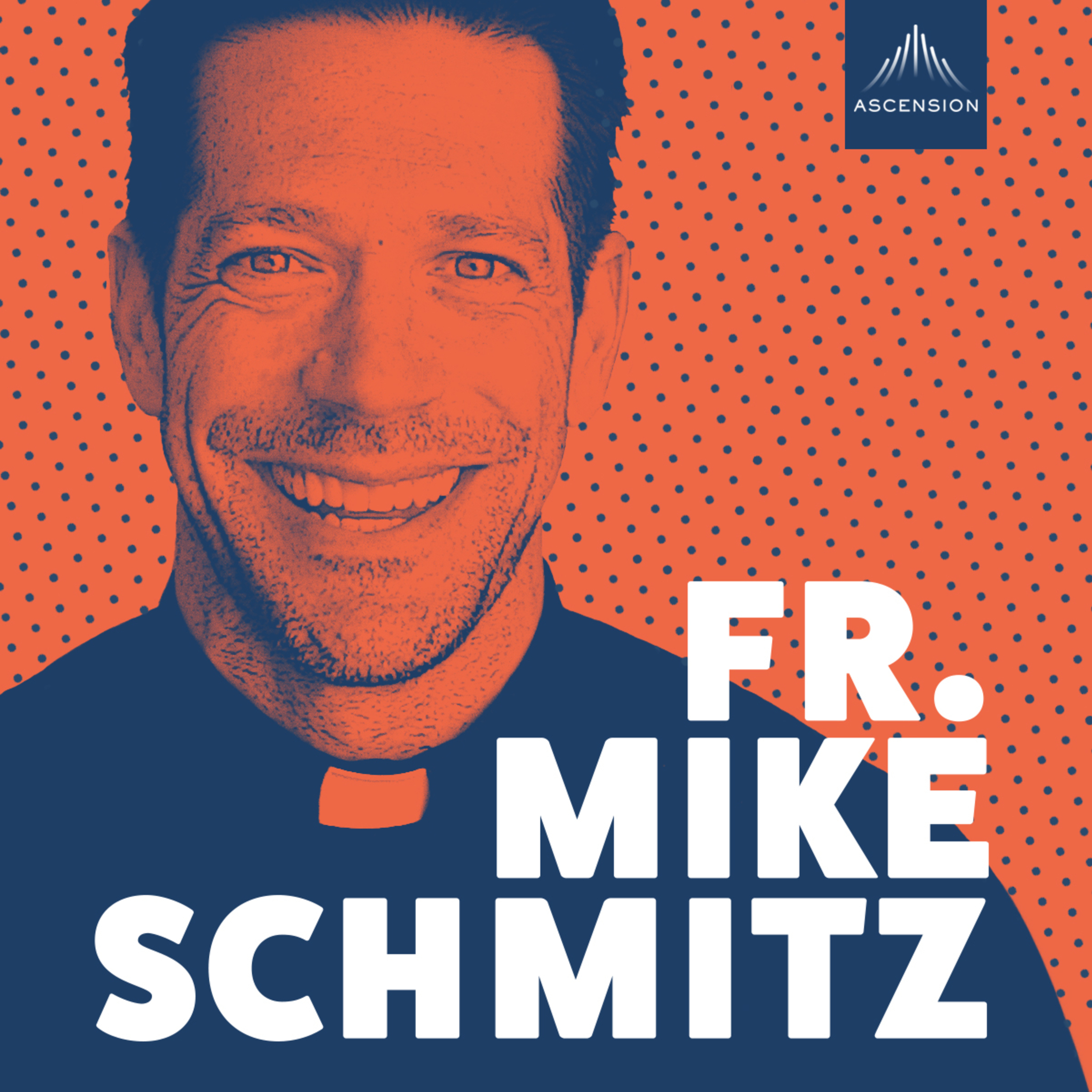
The Fr. Mike Schmitz Catholic Podcast
Healing in the Gaze of Jesus (with Sr. Miriam James Heidland, SOLT)
00:48:37
In this 3-part series filmed backstage at the 2024 Good News Conference, Fr. Mike sits down with 3 special guests to discuss prayer, the sacraments, and how to prepare to meet Jesus "face to face" this coming Advent. Fr. Mike and Sr. Miriam examine our needs for healing from sin, trauma, and a broken past, and uncover the luminous power of God's loving gaze on our hearts, minds, and souls. Want to go deeper this Advent? Join Fr. Mike Schmitz in a journey through the daily readings as he confronts our doubts and reveals God's love with Ascension-app-exclusive daily video reflections and scripture passages: https://link.ascension-app.com/caouRw13GNb Too often, we live life by "default". We forget that we are on a journey to an eternal destination of joy that we were made for. We are burdened by fears and questions: what if I am not worthy? What if I am not enough? Live Advent differently this year. Prepare to meet God, face to face. Only available on the Ascension App.
Loading summary
Transcript121 lines
- [00:00]
Sister Miriam James Heidland
Time heals some of our wounds, but time does not heal all wounds. It's love that heals all of our wounds. Jesus is a man who's fully alive. And so when I look at Him, I can look at my life and say, well, where are the places I don't love like Jesus? And then that's where I'm called to grow. Christ likeness.
- [00:14]
Father Mike Schmitz
And that's what this Advent is meant to be about. How do I live this Advent in such a way that I'm actually prepared to see the Lord face to face? So healing involves or means bringing my brokenness, my shame to the Lord and letting him see me as I am?
- [00:29]
Sister Miriam James Heidland
Yes.
- [00:30]
Father Mike Schmitz
Are you afraid of death? Which, and I don't mean to be overly personal, I think about it every day.
- [00:35]
Sister Miriam James Heidland
It's okay. I don't want to have anything between me and Jesus.
- [00:43]
Father Mike Schmitz
Hi, my name is Father Mike Schmitz, and I'd like to invite you to join me this upcoming Advent on the Ascension app. Here's a question. What if you knew that December 25th, Christmas Day was the day that you were going to wake up dead? I know that sounds morbid, but. But there's a reality of our life would have to change, right? The way we would live Advent would have to change. We'd have to live it with intentionality. We have to live it with purpose. We have to live it with grace. If you want to join me every day of this upcoming advent from December 1st to December 25th, download the Ascension app and join the waitlist. Or you could go to ascensionpress.com Father Mike Advent to join download the Ascension app today. Hi, my name is Father Mike Schmitz and we are talking with three special guests as we have this series leading into Advent about how we can prepare to see the Lord face to face. So it's to prepare ourselves to celebrate his first coming at Christmas is to prepare ourselves to receive him now in our daily lives. Ultimately, it is to prepare to see Jesus when He comes to us at the end of time or when we come to him at the end of our lives. And so today, as we prepare to enter into Advent, is Sister Miriam James Heidland. Now, Sister, some people would know about you. Many people do. But for those who don't know, would you mind just introducing a little bit of yourself or introducing yourself a little bit to us and to our guests?
- [02:02]
Sister Miriam James Heidland
It's delightful to be here. So good to see you again. It's always a joy to be with you and you do these projects and it's an Honor to be part of them. And I'm a member of the Society of Our lady of the Most Holy Trinity, the salt community. I have been in my community about 26 years now. I had an encounter with a priest who loved Jesus. He loved his priesthood, and he loved me. And that love, my parents, were very wonderful, and that's certainly a major part of it. But really the. I think the focal point in my heart that transformed my heart was meeting this priest who'd been a priest a long time. And I had, up until that moment, I had never met anybody who loved God like that. And he wasn't perfect. I think we have this idea of saints that, you know, they kind of float around and they're real people. And which is why I love what we're gonna talk about today. Cause it's the. The real stuff of real people. And Father was absolutely delightful. He'd been a priest a long time, and God just gave me to him. And that man just loved me. And watching how he loved Jesus and watching how he loved his priesthood, it awakened something in me to allow Jesus to love me. And it was from that encounter, over time, as many good things take a lot of time, that I heard the Lord call me to be his bride. And that was about 26 years ago. Wow.
- [03:12]
Father Mike Schmitz
How do you discern salt as a. The community you're part of?
- [03:16]
Sister Miriam James Heidland
Well, God was very kind to me. And part of my journey is, you know, I've suffered a lot of trauma and I had an addiction and things like that. And I was pretty much a hot mess. And so I would have never survived a convent, like a nun run. I was so fragile. I mean, I was barely going to mass on Sunday. And God, in his kindness, when he revealed a call to become his bride. He also revealed to me it was a salt community. And Father was a member of our community. He passed away about 10 years ago, but he was a member of our community. And my community is very familial. We have pre sisters in laity working together. And I loved it. And so for me, it felt like home. And that's kind of how we know when it's a good fit, is when we feel like home.
- [03:51]
Father Mike Schmitz
That's so good. Did I ever tell you I discerned salt a little bit?
- [03:55]
Sister Miriam James Heidland
I love that. I don't know if people know that. I love when you tell that part of the story.
- [03:58]
Father Mike Schmitz
So even in college, I did some spring break mission trips, and they're almost always with salt community in Texas.
- [04:06]
Sister Miriam James Heidland
Oh, I love that.
- [04:06]
Father Mike Schmitz
And then in Louisiana, too. Maybe just Texas. And then I lived in Central America, in Belize. In Belize. On the border of Guatemala. In Belize, Venque Viejo del Carmen, and taught at their school. And that's where I had a massively important, like the. A conversion that saved my life again. I encountered the Lord as a high schooler and then hardened my heart over the course of the next number of years to the Lord, even though I. I was serving him on my own terms, loving him on my own terms. And then went down to the mission in Belize and it was. I remember stepping off the plane and this was a. This mission was Catholic with a capital C. Yeah. I was like, oh, my gosh, what are these people? They're crazy. And they just were so good and just loved the Lord so well, loved me kind of very similarly. But like a hard love. Yeah, it wasn't. It wasn't soft. There was nothing soft about that. That how I was loved, because I needed that. And I'm just so grateful to. Well, the Lord, but also to the salt community. And so Even I remember Mr. Tim Robinson. I'm sure Tim had said, well, you know, Mike, would you want to. Maybe you should be a soul priest. And I was like, Mr. Tim, I would want to because you guys are the most intense community that exists. But I grew up praying for vocations in the Diocese of Duluth, and I thought it'd be really short sighted of me maybe, or maybe selfish of me to. If I didn't actually feel explicit call to SALT to pray for vocations in Duluth and then leave. And so I was like, well, I'm going to try Duluth first, and if it doesn't work out, maybe I'll try salt. And it worked out. So see where we are. Yeah. So I love your community.
- [05:40]
Sister Miriam James Heidland
That's beautiful.
- [05:41]
Father Mike Schmitz
I'm so grateful. Your ministry, particularly is largely focused on healing. Can you say more about that? How did that happen?
- [05:48]
Sister Miriam James Heidland
Sure. Well, it happened through a breakdown in my own heart, as most good things do. Kind of a cliched saying that with a breakdown comes a breakthrough. And it was early on in my religious life that I just kind of had an interior breakdown where my personal resources had ended. And I knew that what I was being asked to carry, I couldn't carry it. And I remember sitting on the floor during adoration one time and I had my head against the wall and I just was looking at Jesus and I had a lot of shame and a lot of, you know, just. Just a lot of pain in my heart. And I just remember looking at Jesus saying, I don't know what to do, but I can't do this. Like I can't go on. Like I can't. Whatever's happening, I can't go on the way I've been going on. And it was a great mercy from the Lord, because at that moment the Holy Spirit revealed to me that the things that I had been running from my entire life were actually affecting me in my day to day adult life. Because a lot of times what we say is what happened a long time ago, it's not a big deal. It's a big deal. Everything we've ever experienced lies within our bodies, even in our hearts and in our minds. And I really believe all of our addictions, whether it's whatever it is to alcohol or to Instagram or to food or to being right or to being self righteous, all of our addictions are our trauma responses to our sorrowful mysteries. And most of us spend most of our life running away from our sorrowful mysteries. And thank God, Father Mike, God would not let me run away anymore from my sorrowful mysteries. And that was almost 20 years ago.
- [07:05]
Father Mike Schmitz
Wow. Really?
- [07:06]
Sister Miriam James Heidland
And I've been on a very serious, very intense healing as a sister. Yeah, so I came to the convent, like, yeah, like I said, I was coming out of addiction, all kinds of stuff. So much unhealed trauma. And I think your listeners can appreciate that. I just was gonna be holy. I'm just gonna.
- [07:20]
Father Mike Schmitz
Yes, you're gonna do it.
- [07:21]
Sister Miriam James Heidland
Be holy. And as sister, you're gonna be like Our lady and it's gonna be wonderful. And you're gonna get a tar and you're gonna like in the mountains and sing. And I'm like, lord have mercy. Honestly, that's not what happened. And thank God I didn't know what it was in the convent that I received deep healing. And I. Yeah, had I not made that decision, had the Lord not called me and I don't know where I would be today. But I can honestly say I'm so grateful for this path of religious life and I'm grateful for steadfast, authentic love. Because that love is ultimately, and we'll talk about that today, love is what heals us. Time. Time heals some of our wounds, but time does not heal all wounds. It's love that heals all of our wounds.
- [07:56]
Father Mike Schmitz
You're saying I'm going to become a religious sister and I'm just going to be holy?
- [08:00]
Sister Miriam James Heidland
Yeah.
- [08:02]
Father Mike Schmitz
But can we be holy without healing? Or is it more? This is. In order to be holy, I have to Be willing to step out from behind where I'm hiding. So it was, it was that. Was it. Was it the hiding my wounds, hiding your sorrowful mysteries or hiding from your sorrowful mysteries? Or was it like, no, this is this. I don't know. Is that a real, real question?
- [08:26]
Sister Miriam James Heidland
Yeah, that is. And I think defining healing is gonna be very important for us because so even holiness, holiness is Christ likeness. So I look at Jesus and I know you know this very well. Jesus is a man who's fully alive. He's ordered, he's integrated mentally, emotionally, spiritually, physically as a man. Everything lies in integration. And so when I look at him, I can look at my life and say, well, where are the places I don't love like Jesus? And then that's where I'm called to grow in Christlikeness. So how you and I do that through. There's a wonderful definition that Dr. Bob Schutz from the John Paul II Healing center gives for healing, which I love. And he said, healing is an ongoing encounter with God's love and truth that brings us into wholeness and communion. Healing is an ongoing encounter with God's love and truth that brings us into wholeness and communion. So healing is not fixing, it's not sin management, it's not minimizing, it's not pretending it didn't happen. It is the agonizing, at times encounter with God's love in all the places where I am not whole and I'm not in communion that brings me to become like him because it brings me literally into his own beautiful life. And that's a daily journey. That's all of us. We could all admit, even if we don't have capital, big T trauma. All of us have ruptures of love, which is trauma, it's wounds. And all of us have places in our heart where we know that we don't love like Jesus where we want to, but we can't. Where we want to forgive, but we can't. That one person in our family that we're probably going to see this Christmas that we don't want to see. And it's difficult for us to be in the same room with them. And we just try to say, like, I'm just going to try harder this time. And there's a whole system that's happening underneath. And I think when we can touch that, it's gives our heart freedom to be able to see what's happening and to feel what's happening and then to allow Jesus to come there. And that's how transformation happens.
- [10:04]
Father Mike Schmitz
Wow. Could you say that's. You always said healing is not fixing.
- [10:09]
Sister Miriam James Heidland
No, it's not fixing. Yeah.
- [10:11]
Father Mike Schmitz
Say more about that if you.
- [10:12]
Sister Miriam James Heidland
Yeah, because I think that's what we think it is at times. And I think part of it is because many times we experience our wounds, the things we take to confession, you know, And I think sometimes we want to. We want to deal with them over here. And I'm gonna deal with it by myself. So then I'm not seen here. Then I'm gonna be like, hi. But Jesus is like, no, let's bring it here. Which is a terrifying level of intimacy. And so I think fixing is like, just fix me, and then I'm gonna be fine. Fix me. You know, one of the priests we teach with says that healing is often looked at as like a search and destroy mission. Like, I'm gonna find the one thing that makes me unlovable, and I'm gonna destroy that, and then I'm gonna be fine.
- [10:45]
Father Mike Schmitz
I'll be lovable.
- [10:46]
Sister Miriam James Heidland
Yeah. Then I'll be lovable. And Christ doesn't see us like that. And so he's not coming to fix us as if we're kind of a tool or broken. So then Lord, fix me, and then I can go back to my life. What he's demanding, which is radical intimacy, is an ongoing relationship where everything is brought out and everything is seen and everything is, if not dealt with, but faced, in love. And that's how healing happens. I mean, we know that in our families. We know that in our deepest desires of our heart, none of us want to be dealt with. None of us. We ache. We ache and we are terrified of it at the same time of being seen and loved. But that's the kind of love our hearts ache for. And that's when it's not happening. That's why we're like. Like, oh, I want. I want this. You know, I'm afraid of it, but I want it. Yeah.
- [11:25]
Father Mike Schmitz
So that. What you're saying is. I think I'm so grateful that you said we have to define healing first.
- [11:29]
Sister Miriam James Heidland
Yes. Yeah.
- [11:30]
Father Mike Schmitz
Because I think as we talk today, we're gonna talk about what needs to be healed, what needs to. What needs to happen in me so that I can see the Lord face to face and without hiding, without shame and to be able to. I really am so grateful you said that. Healing is not fixing. I don't know if I shared this with you before, but years ago, there was. We have a household on campus at St. John household. So six or seven women live in this household. And one year, a bunch of years ago, some of them really had a devotion to Saint Catherine of Siena and just loved her. She was their confirmation saint. And at one point, I remember them calling or texting because there was a big emergency. Sos, get over to the house. Like, okay, what is it? Well, one of them had started reading a book. That was. The theory of the book was that here is St. Catherine, who died at an early age, young age. She had had heavy fasts and all these kind of penances. But the theory was that she did all these fasts and penances not because she was holy, but because she had an eating disorder and that she had some kind of swing out of that, and that was it. And that one of our students had a couple of maybe had. That was one of their wounds. And so this then ends up like, wait a second. We thought she was holy. We thought that St Catherine Siena was the amazing, incredible saint, but maybe she had this eating disorder, and that actually led to an early death. And so they were just, like, kind of freaked out. Like, we thought she was a hero instead of being this broken person. And what do we do? And I'm like, so I reached out to my spiritual director, because this is so many years ago. I know better now. I reached my spiritual director. I'm just like, father, what do you think? What would you say that they say that she died with this eating disorder. It actually contributed to her early death. And he said, so God made her holy in the midst of her wounds, and God made her holy in the midst of her weakness. He didn't have to take it away in order for her to be Saint Catherine of Siena. There's no actual evidence that that was something that she experienced. This is someone's projecting on her. But even if it were true, that God can make us holy even without fixing us, yes. It would mean that she allowed God to love her in her brokenness. She allowed God to love her and use her and be close to her. That's what it sounds like you're saying, is that, okay, God, here is the shadow, here's the broken in my heart. I once again surrender it to you. Is that accurate? That ongoing bringing this before the Lord?
- [13:56]
Sister Miriam James Heidland
And that's really what St. Paul says. I was given a thorn in my flesh. And I think we love theoretical poverty. And other people, we're like, oh, just let God love you there. But our own poverty, we're like, ooh. And my spiritual director, who's so wonderful, I've Known him forever. And he said, so he said, you, poverty is the seedbed of God's glory.
- [14:13]
Father Mike Schmitz
Yeah.
- [14:14]
Sister Miriam James Heidland
Your poverty is the seedbed. And we're talking the real stuff that we don't want anyone to know about ourselves. Like, the real stuff where we're like, why do I keep doing that? Or what is that tendency? And it's in those very places. I mean, I don't know, but those places bring me to my knees. Literally. I'm like, lord, I can't fix myself. And this is mortifying to me, Lord. And I don't know what to do sometimes. And I do what I don't wanna do, and I don't do what I wanna do. I don't know what to do. And that's the common lot of our human nature, our fragmented human nature. And in those very places, the Lord, in those places where maybe other people have shamed us or minimized or didn't want to be with us there in communion, those are the very places where Jesus comes to bring us into Communion. It is St. Peter by the second charcoal fire where in his deepest shame, the Lord draws close and, oh, that kind of love, Father, like that is so disarming and it's so reparative and so healing like that. That's the kind of love we want to before we die, because that's the kind of love that we're going to experience the rest of eternity is that kind of encompassing love, a love that knows everything and a love that loves and whew, that is the real stuff.
- [15:19]
Father Mike Schmitz
Well, so you said that's the kind of love we have to face, because that's what we'll face when we die. And that's what this Advent is meant to be about, is that sense of, okay, how do I live this Advent in such a way that I'm actually prepared to see the Lord face to face? So healing involves or means bringing my brokenness, my shame to the Lord and letting him see me as I am.
- [15:42]
Sister Miriam James Heidland
Yes.
- [15:44]
Father Mike Schmitz
How do I do that when forgiveness is like we talk about forgiveness today. How would I do that when either I haven't received God's forgiveness or haven't offered God's forgiveness? Is it even possible? And if it's not, what do I need to do? And it's kind of a pivot corner.
- [16:03]
Sister Miriam James Heidland
Sure, sure. Yeah. I think all of us have those places, but I think that part of our journey. Yeah, part of our journey is coming to a decision. And so part of what we're gonna talk about is a choice that we make. And we talk about choices. I know you talk about choices a lot that you and I have a lot of feelings and a lot of emotions that take us a lot of different places. But what is the choice? What is the Holy Spirit inviting me to in my life? And most beautifully, that our passions, you know, we usually do follow along when our intellect and our wills are healed. Our passions. But that you and I can choose forgiveness, and you and I can choose the path of healing whether we feel it or not. And I learned a great prayer many years ago that we can actually ask for the willingness to be willing.
- [16:42]
Father Mike Schmitz
Yeah, exactly.
- [16:42]
Sister Miriam James Heidland
Of like, Lord, I don't like even right now. So maybe we're thinking about somebody that we're gonna see this Advent season or something in our life that we're not proud of. Like, Lord, I don't know what to do, but give me the willingness to be willing to allow you to love me, Lord, I don't know what. I don't know what the next right step is, Lord, but please bring me. And the Lord is faithful to that. And he. Well, maybe sometimes we don't want the next step that he brings us, but I think even just opening our heart of and allowing ourselves to feel, not just to intellectually call to mind, but. All right, what's happening in my life? What are my pressing symptoms? What is my area of distress? Is there a rupture in my family? Are there things that I don't want to talk about, things I don't want to face? Because that affects everything in our life. And, you know, you and I know. Well, when we're living an authentic, transparent life, we relate to people differently. We relate to God differently. And then when we start to hide things or where there's areas of our life that we've closed the door on, and we say it's in the past, but the past doesn't stay in the past. It's always bleeding into the present. And so, yeah, kind of like the spiritual masters say, you know, Father Jacques Philippe says, you know, the spiritually mature person asks, how will I respond now? Not why is this happening to me? Okay, here's the things that have happened to us. Here's what's. Here's what our family's facing. Here's where I'm at this Advent season. How will I respond? How will I respond now? And that choice is continually ours.
- [17:49]
Father Mike Schmitz
Wow. So. Wow. That's. Yes, I love that. Because how will I respond now? Yeah, because it asks a different question. It doesn't seek to blame. No, it doesn't even necessarily sounds like. Because I think sometimes when we think about our wounds or even trauma, it's okay, where does this come from? I need to be able to grab. Wrap my arms around it, my hands around it. I need to find out the source and the one to blame, as opposed to saying, I'm not going to ask those questions. I can trust God. God, what do you want me to do with this? How do you want me to respond to this? So when it comes to hurt and the temptation to blame, how do we escape the temptation to blame or resentment, unforgiveness, and offer forgiveness? So, question before we go. Like we had to define healing or you defined healing. What is forgiveness?
- [18:40]
Sister Miriam James Heidland
Yeah, I think a very simple definition of forgiveness is choosing to let go of a debt that is owed to us. So that's a very strict kind of. I mean, it's under the virtue of mercy, under the virtue of charity. But it really is. It's choosing. It's an act of the will. Forgiveness ultimately is an act of the will, choosing to let go, to release. Which is why the parable of the unforgiving servant is so rich visually, because he chokes the fellow servants. So this is what you and I were doing when there's an injustice, because anger. St. Thomas Aquinas talks about how anger is about injustice. And so the anger arises because there's been an injustice and the hurt comes and there's a debt incurred. And so my.
- [19:17]
Father Mike Schmitz
And that's just.
- [19:18]
Sister Miriam James Heidland
And that's true.
- [19:19]
Father Mike Schmitz
So the pain we feel is actually. It makes sense. It's not like I should be a bigger person.
- [19:24]
Sister Miriam James Heidland
No.
- [19:24]
Father Mike Schmitz
If. If I've been hurt, I'm hurt now. Yes. If they've cost me something, they've actually cost me something.
- [19:29]
Sister Miriam James Heidland
Yes, they have. And that's really important because I think we can feel very guilty about that. There's a difference between the healthy emotion of anger and then the deadly sin of anger, which is about control. And that deadly sin is me wanting to exact justice on my own terms, which is destructive, and it's about control, but a healthy emotion of anger. Christ was angry. And I think we're very uncomfortable with that based on the stories that we've had in our own childhoods about anger. Like, what was anger like for your family? What was it like when your mom and dad were angry? What does it feel like to you to be angry? There's all kinds of things about that. But Dr. Robert Enright, who travels the world speaking about forgiveness, he said the first step is admitting that you're angry. Yeah, because there's no anger without appreciating hurt or an injustice. And so understanding that, I think it gives us great space in our hearts that if we're struggling to forgive somebody, it's telling us that our hearts have been hurt. It's not that we didn't try hard enough. So that hurt that keeps coming to the surface is telling us about where there's a real or perceived injustice that the Lord wants to bring to the root system. And he wants to spend time with us there to release that, to understand what's happening there. And then we can walk forward. But God made us so beautifully, just honoring the way that God has made us. Because resentment. Resentment is a result of places where injustice has not been solved or hasn't been restored. In a way, we think so, and we've been trying to do it on our own. And so resentment we know. When I feel resentful, it's recentere, which means to feel over and over and over again. It is our resentment wants to seek revenge and. Right. We wanna order justice. So you can hear the deadly sin of anger in that we want to exact justice on. But really, when I feel resentment, when I'm ruminating, have you ever fallen asleep at night or you're laying on your bed, like, thinking about what you're gonna say to that person and you say this. Oh, you just replay it over. Yeah. And then you're like, no, I'm gonna say it like this. No, no, no. And then you, like, replay. It's amazing. Brain scientists show that every time we ruminate, we release the same chemical composition of, like, the chemicals that flood our brains. And they harden our neural pathways really toward negativity. So there's something that's happening. But when that happens to me, what I'm noticing is, like, when I'm really honest, like, actually, my heart is hurting. So these are great signs. Like, when we see people that are. It's hard for us to bear. There's a hurt that's happened, and that that's the place to which we must go. Not. Why don't you. What's happening here? Because God takes that very seriously. And that's why forgiveness is a process. That act of letting go is a process. And it's okay that it's a process. I just want to say to everybody, like, sometimes we feel like it's a failure. Like, you see that person at Thanksgiving or Christmas, you get mad all over again, and you're like, oh, I didn't forget. That's not helpful. What it tells us is that there's still deeper communion Christ wants to bring us to. And that's a very humbling journey because it's much more vulnerable to admit that I'm hurt than using anger to control you.
- [22:00]
Father Mike Schmitz
Well, it sounds like grief.
- [22:02]
Sister Miriam James Heidland
In some ways it is. That's exactly. Yep.
- [22:04]
Father Mike Schmitz
So, like, grief is. Here's the moment of loss.
- [22:06]
Sister Miriam James Heidland
Yes.
- [22:07]
Father Mike Schmitz
And I've experienced the grief, and then I'm like, okay, now I've kind of recovered, maybe in the sense of, like, I've reconciled with this grief. And then another thing happens, and I realize I have to encounter that loss again. So here is. It's. It's someone. People watching this, listening to this is, okay, so I've lost someone in my life in the summertime, and now it's Thanksgiving, and I've lost them again because they're. Now they're not here for Thanksgiving, and I see Christmas coming, and I realize, oh, they're not here at Christmas, and I lose them again. And so grief is a process. And you don't get. Hopefully, don't get mad at yourself for that ongoing grief because it's another marker of the fact that they're not here, that there's been a wound, there's been an injury. And I'm experiencing that because this new moment uncovers that in a new way. So similarly, I imagine, not imagine. I know anger is that, okay, I think I've forgiven them. I think I've released that debt. But then I see them again. Yeah. Because. And it comes back up because once again, it's cost me something, you know, and so that sense of, like, here's a new day. Wow, that's. So it makes sense to give your. Give person permission that it's not an event. Forgiveness is not an event. It is a process.
- [23:20]
Sister Miriam James Heidland
Yes. Grief is part of the healing process, and that requires us to feel it. And what does it feel like in our bodies? What is it like to miss that person? What is it like to. Maybe your dad's an alcoholic and he wasn't around for 30 years and he's taken something from you. How can he pay that back? And there's a grief in the childhood that was lost. And understanding that that comes at very inopportune times for us, many times. And to allow ourselves the nature to cry, to grieve, to name the loss, we have to be able to name and lament. There's a whole book of lamentations of lamenting the loss and offering it to God, because ultimately that process is what we do is not just letting it go into the abyss, but it's letting it go to God. And justice will be served. Every single person that's ever hurt us, every single person that's ever heard us, is one day going to know when they see God face to face, there will not be any minimizing. There will not be any kind of sweeping that under the rug. There won't be any elephants in the room. Every single person who's ever heard us, whether they know at this side of heaven or not, one day will know. And, like, we will, too.
- [24:18]
Father Mike Schmitz
We will too. Yeah. I mean, that's in the catechism. It talks about that at the second or final judgment.
- [24:23]
Sister Miriam James Heidland
Yes.
- [24:24]
Father Mike Schmitz
When the whole story is written, we will see to the furthest and the consequences of all of our actions. That sense of all the times you chose virtue and that radiated through history and all the times we chose evil and radiated through history. You're going back to how that. Because of that, we have to weigh up what it's cost us. One of the things I'll talk about this later on tonight, actually, in my talk is in that parable of the unforgiving servant, is that it says in the nab. I think in the American Bible it says, who owed him a huge amount.
- [24:57]
Sister Miriam James Heidland
Yes.
- [24:58]
Father Mike Schmitz
But the original Greek says they owed him 10,000 talents, which not only is a huge amount and impossible to pay back, but at some point here is the king or the Lord, the master, who added it up and said, no, this is literally exactly. This is exactly what you owe me. This is exactly what you cost me. And one of the things I think a process of forgiveness would entail is taking that time. And I invite people to do it in the presence of Jesus because the resentment could to just take over that place of, okay, Lord, I know you're real. I know you're good. I know you love me. I'm in a place of being loved. What has this person cost me?
- [25:38]
Sister Miriam James Heidland
Yes.
- [25:39]
Father Mike Schmitz
And like you say, okay, dad, your decisions cost me. You ruined Christmas this year. But it also. Every Christmas I've experienced has been this fear or every. Every time I pass the liquor store, I just won't feel this thing or whatever the. Whatever that. And to be able to write that down, I don't trust so and so, you know, I don't trust the father figure, the mother figure, whatever that thing is. And then to be. Because if I don't write it down, I just think it's a huge nebulous amount. How can I release someone from A debt that's like, it's a bunch, as opposed to, okay, you cost me 10,000 talents, and now I'm not going to make you pay me back. Like, now. Your debt is not forgotten and not diminished. Right? Not. Not dismissed. Not. You said that so clearly, too. Like, I'm not dismissing or diminishing the hurt. And I think sometimes, again, the temptation for, like, holy people or quote, unquote, holy people is, oh, no, no, no, I'm fine, I'm fine. I can take it. Jesus would just take it on the chin, that kind of idea. As opposed to, yeah, Jesus allowed himself, but he felt every punch.
- [26:50]
Sister Miriam James Heidland
That's the very part that you've just named Father Mike, that perhaps even listeners as you start to name that can kind of feel that, like, that's courageous, because that's part of the healing process, is I actually have to take a full inventory of what was taken from me and how it affected me, how it distorted my identity. And that's not blaming. I mean, I've heard a speaker once say that in order to heal, we have to be honoring and honest, and we have to honor the people in our life, and we have to. Blaming is not ever gonna heal us. This is not throwing your parents under the bus. It's nothing like this. Not throwing your spouse under the bus. Honoring the people in our life who've hurt us as the image and likeness of God, and also being honest, telling the truth. And that can be daunting for us because then we really have to feel, we have to name, and that gets us into deep places, and it's much easier. It seems to be, like, you know, it's not a big deal. I used to give a lot of parish missions, and the second night of my parish mission, I used to give a whole talk on forgiveness and lead them through forgiveness meditation. And I'll never forget this several years ago. On the third night, I was getting ready to finish the mission, and this older man came up to me and he said, sister, it was a really great talk on forgiveness. And I said, oh, thank you, sir. He said, and I'm not making fun of him. It just. It was quite telling. He said, I don't have anybody to forgive. But that was a great talk. And I said, oh, do you tell? And he said, yeah, I don't have anybody to forgive. I just simply avoid everybody I don't like. And he said, sister, I'm serious. He's like, there's people in my family. There's races of people. There's classes of People. There are groups that are people that I don't like and I just simply avoid them. And I was like, I was speechless and I was like, well, you might want to take a look at that. But I thought, you know what? I think for a lot of us, that's our motive. Oh, I forgave. And we secretly, sanctimoniously judged them, that we're like the, you know, the Pharisee, oh, thank God I'm not like them. And we look down on them and we may not be able to name anger, but we could name being irritated or annoyed or nitpicking. I'm all passive aggressive, like criticism, like all those things are like closet anger. That if that's our idea of kind of what forgiveness is. And that's. I look at Jesus and who has no self defense mechanisms and who is naked on the cross, he's teaching us, he's giving, he's an efficacious model of how we heal. And so if we want to be well, that is the degree to which we must go. And when we do that, Father Mike, with the Lord, what happens is those emotions run through us. We can name them, we can grieve them, and they come out of our system. And what naturally arises from that, as the Lord shows us ourselves and the person who hurt us, who's really not so different than us.
- [29:07]
Father Mike Schmitz
I just think of that man's impulse to say, the way I deal with this is I don't deal with it like the way I deal with it is through avoidance. And so, as you know, I think of John Paul ii. The opposite of love is not hate, it's use. Another way to say it is indifference. And so, yeah, I don't hate them, but I also don't love them. I don't hate them, but I also, they're not in my life in any way, shape or form. And I just wonder now, there's times, and I think this is pretty valuable where there's a difference between forgiveness and reconciliation.
- [29:43]
Sister Miriam James Heidland
There's a huge difference. Yes.
- [29:44]
Father Mike Schmitz
But it sounds like in this particular case it's just, I'm avoiding love, not I'm avoiding pain, I'm avoiding distrust, or I'm avoiding what's gonna further hurt me. I'm simply avoiding what annoys me. And I think that's okay. When it comes to news channels or websites, I avoid that because it just makes me mad. Great. But when it comes to family, that might not be the best way to deal.
- [30:12]
Sister Miriam James Heidland
And we're not talking about healthy boundaries. There are Some people that are so good to help cannot be in our life. And so. But what is my heart toward that person even? Is it one of compassion? And maybe just that it's just too tense, it's too volatile. So there's space. But there's a difference between amputation and avoidance versus Lord, this is really hard for me. I don't know what to do. Please help me. I just need some space like that you could even feel that it feels different. And so, yeah, I think a lot of us cope with. That's what we do. So I think one of the things I think is really good news is there's a book called the Catechism. Maybe you've heard of it.
- [30:44]
Father Mike Schmitz
I have. I have. I really do have. I want to read it one day. I want to read it someday. Do you recommend it?
- [30:51]
Sister Miriam James Heidland
Reading it? It's okay if you like that kind of Catholic sort of thing. But this is one of my favorite quotes from the entire catechism. This comes from the Our Father, so the Christian prayer, the pillar on Christian prayer, and from the Our Father. And this is such good news for us because it's 2843. And so it's talking about forgiveness from the heart, which is not lip service. So forgiveness from the heart is the daunting thing, like the parable, the unforgiving servant. It's like, we're gonna talk about that. And so I love that the Church says this. And I just offer this to everybody who. We all have places in our heart. So it talks about how we have to forgive from the heart. And it says, it is not in our power not to feel or to forget an offense. And I just wanna stop right there because many times we are ashamed for our feelings. We're like, lord, I feel such hatred. I feel such disappointment. And I love that the Church is telling us and that silly saying, like, just forgive and forget, it doesn't happen. And it's not in our power not to feel or to forget an offense. But here's the true journey. But the heart that offers itself to the Holy Spirit, turns injury into compassion and purifies the memory in transforming the hurt into intercession. Wow, I'll read that again. The heart that offers itself to the Holy Spirit turns injury into compassion and purifies the memory in transforming the hurt into intercession. That, to me, that's love, that's freedom. So could you imagine being so free, Father? Like, if you and I had a problem and you hurt me deeply, and I, in my journey, forgiveness, imagine that the pain that you inflicted upon me, I could be so free that I could stand at the foot of your cross with Mary and offer the pain that you inflicted back to me for your healing.
- [32:29]
Father Mike Schmitz
Wow.
- [32:30]
Sister Miriam James Heidland
I mean, that's a lot of freedom. That's freedom. And that's where we're going to understand, like, in the divine mystery of God. Why does God allow things to happen to us? I don't know. Like, people ask you that, I'm sure. Why did this happen? I don't know. But I do believe that the Lord, in his sovereignty, he has to be able to make all things well and make them new. And. And when I can notice, it says, through the Holy Spirit, it doesn't say, by your own accord. Cause the Holy Spirit does for us what we cannot do for ourselves. But in our journey, this advent, as these things come up, we can say, lord, I don't know what to do, but I give this to you, Lord, please help me to bring this to compassion. Lord, I just offer this for that person. I mean, these are really. This is spiritual maturity and this is the path to freedom. Because then, you know what? Then we're free. And then we can bless and then our hearts become like Christ. And that's what Jesus does. He doesn't offer us back what we give him. He offers us love, we offer him sin, we offer him sorrow, and he gives us back love. And that stops the transmission of suffering in the world. And it gives us back communion and wholeness.
- [33:26]
Father Mike Schmitz
Wow. It seems even just like the wisdom and the authority of the Church saying, that's great. If you feel this, that's what you feel. And so that then. But that we're not helpless.
- [33:36]
Sister Miriam James Heidland
No.
- [33:37]
Father Mike Schmitz
We're not hopeless.
- [33:38]
Sister Miriam James Heidland
No.
- [33:38]
Father Mike Schmitz
But the power of the Spirit, Holy Spirit, we can allow the Lord to change that injury into compassion and transform the hurt into intercession. So we're not hopeless and not powerless in all of this. And so it's not. So a person is. If a person forgives, they're not being a victim. No, because you're being transformed and not a doormat. And that's. I think it's so important. That's one of the reasons why I think it's so important. You mentioned it's okay to be angry because if injustice has been done. Right. If justice has been violated, then you have a dignity and you have a worth. And even your anger is a sign that you recognize your worth. Right. Even that fact that. So if you try to dismiss your feelings, if you try to dismiss what you're Going through it might even be an attempt to dismiss your very dignity, the dignity that you have.
- [34:30]
Sister Miriam James Heidland
I love that you said that. Because many times in our healing journey, when we go to deeper places in our heart, we're gonna find seasons where a tremendous amount of anger comes out. And if we don't know what to do, or if the people walking with us don't know what to do, we're gonna think I went backwards. But actually, because a lot of times in our trauma, we blame ourselves. And it's like it's safer to blame myself than to actually have to feel the violation or to feel what happened and then place the truth, not blame, but say, actually that was you. And we can go through a tremendous amount of anger and that's part of our hearts waking up. Because when that is named and then when that is brought into the light, not that goes underground into resentment or bitterness or rage or all those kind of things, but when that's brought out into the light, that's the agony, that's the agony in the garden, that's the crucifixion of the lamentation, then that can be transformed. But that is part of the journey. It's a very important part.
- [35:18]
Father Mike Schmitz
Well, so honesty.
- [35:19]
Sister Miriam James Heidland
Yes, honesty.
- [35:20]
Father Mike Schmitz
And that being willing to acknowledge the whole truth, which is such a challenge for everyone, especially when it comes to forgiveness. Because there's that piece that you say, okay, I was hurt and this is actually the truth. The truth is this action of yours hurt me. And so again, not blame, but it's telling the truth. It also is if I'm really willing to step into the truth, it's here's what I did. So it's not self blaming, it's not safe. It's accusation either. It's that sense of responsibility, the truth, right? The honesty. If I'm going to truly forgive without any kind of self accusation, but with self responsibility, okay, Lord, let me know the whole truth.
- [36:02]
Sister Miriam James Heidland
Amen.
- [36:03]
Father Mike Schmitz
So this person really hurt me and here's how I hurt them. What's the whole story? How do we get there?
- [36:13]
Sister Miriam James Heidland
I think that is, that's such a great. Yeah. Part of the healing journey, part of forgiveness is allowing God to show us his divine perspective of the other person. And what is my response? I may not be responsible for how you hurt me, but what are my responses? You know, many times in our hearts, like from the hurts we've received, especially as children, part of our heart is a guardedness. And then we get married or we become priests or sisters and there's a part of Our heart is guarded because of the pain. And in that, I'm robbing you of a deeper area of love, because my heart is guarded because I don't trust. So it's understandably so. But I think that's been my prayer for, like, last year. Lord, I want to know the truth, the whole truth, and nothing but the truth. And I'm like Lord Jesus because I want to be well, like Lord, not condemn me, like Lord, convict me. I want to know because I want my heart to be fully alive. And I, you know, I know, like, in my own journeys and, you know, the people in my life that have hurt me the most, when I really allow Jesus to show me their hearts, they're not so different than I am. And hurt people, hurt people. And we all. And we all do it. And I think making that prayer to the Holy Spirit. All right, Lord, how have I responded to this? That's been harmful, maybe. Of course, I wasn't responsible for the abuse or anything like that. But, Lord, are there ways that I have from this pain, believed things that are not true and harmed others from that pain? And Lord, please heal. I pray all the time for people that I've hurt in my life. Like, Lord, please heal them. I may never see them again, but I know I'm not perfect and I have a long way to go. And I. Lord, please, I just, like, I don't know what to do. But, like, please. And I think that's part of injury into compassion to suffer with. Because we see that, you know, we all at times do that to people. And the Lord comes to heal that. For the places we've wounded other people, the Lord comes to heal that as well. So there's nothing outside of his limits.
- [37:53]
Father Mike Schmitz
Well, that's. I love what you're saying. That sounds like in order to see the Lord face to face, I have to be willing to forgive. Yes. I just have to. And that's not forgetting. It's not dismissing or diminishing. It is saying, this is what you owe, and now I release you from your debt. But also I have to, to some degree, ask for forgiveness and take responsibility. One of my first opportunities to do ministry as a seminarian was I worked at a VA hospital and I worked with hospice men. These were men who were in World War II, Korea, Vietnam, and then the other half of my time was spent in the chemical dependency wing. And so as an honor, like, I was maybe 24 years old, and I got to hear all these men's fifth steps, and it was just remarkable because it was so humbling for me, as these men just were. Like, here is where I am taking an accounting of my life. Here. I'm taking an accounting of how I hurt people. And then what do they do after that? Fifth step is then they go and they try to make amends. And there's that sense of, okay, so I'm the one who's aggrieved. Like, I'm the one who's been hurt, which is true. But then that. How do I take responsibility and acknowledge who I've hurt? So years ago, on a campus, we did this. That notion of, what if on December 25 was the day you were going to die? What would you need to do to be ready to see the Lord face to face? And one Sunday after Mass, this young woman came up to me. She said, after last Sunday, I knew what I had to do. And she said, there were two women in my high school that I know I treated poorly. I bullied them, and I was mean to them. And I called them and I told them, I know what I've done. I know I hurt you. I know I took. I ruined your high school. Whatever the thing was, I don't know the depths. And I just need you to know that I am sorry and ask for your forgiveness. And I just thought two things. I thought, that is bold and that is so, so honest, just courageous. But she was like, no. If I were to. If I were going to see God on December 25th, if this isn't the day I'm going to see the Lord face to face on my death, and I haven't asked these people for forgiveness, I wouldn't be ready. And so that sense of not only a willingness to ask or offer forgiveness, but to ask forgiveness. Now here's a question for you. What should someone in that position be? What should someone in that position do? Like, so here I am, and I take my fifth step, and now it's time to make amends. Or it's this student I have, or it's us. And there's a big risk in reaching out any counsel for someone who might say, I'm convicted. I know that I've hurt. What's my next step?
- [40:46]
Sister Miriam James Heidland
Yeah, I think the first step is always prayer, praying for that person. And the rest of that step says, make direct amends where possible, except when to do so would cause harm.
- [40:55]
Father Mike Schmitz
Yes, I'm glad you said that. That's a great clarification.
- [40:57]
Sister Miriam James Heidland
And so really praying to the Holy Spirit of like, lord, what are you asking here? Because sometimes it would not be helpful for us to contact an old boyfriend or something, or a girlfriend, because that just. But I can offer restitution. I can offer. St. Thomas Aquinas says that forgiveness is offering an undeserved gift. And you think about Advent being a gift. And so what if every day of Advent I offered a gift? Whether that's a prayer, that's a sacrifice, whether that's a letter I'm not gonna send or a letter I do need to send. I think it depends on the nature of the relationship. And maybe having a good spiritual director or a friend in your life that can help bounce things off of. But. But what if it was offering an undeserved gift to somebody every day? And that is how healing happens. But I think, yeah, I think I really do believe the Holy Spirit will tell us what we need to do and also to be prudent in those regards too. So, like, whatever the Lord's inviting, but all of us have places in our life where we know the Holy Spirit saying, it is time. It is time. And not out of fear, but it is time to live more fully alive. It is time to have a heart more like Christ. It's time to be more honest. And if we're really about the ministry of reconciliation, like St. Paul says, we've been given a ministry and a mission of reconciliation or a message of reconciliation, then that needs to begin now. And we can always forgive like we can't always with God. We can always reconcile because of his will, right? We come into immediate reconciliation, but reconciliation requires two parties, right? And so sometimes the other person is not ready, sometimes they're not willing, sometimes it's too dangerous. But we. The beautiful thing about forgiveness is that we can always forgive that at any time. Like when you find yourself, little resentments start to fester where you're avoiding somebody, where you're like, oh, you start to criticize them in your mind. Wonderful, right? Then like, Lord, it's a whole forgiveness meditation. Lord, come into my heart, help me to forgive. That's such a freedom that we're not a victim to other people's response, whether they admit it or not, whether this side of heaven, they even know, even realize. Yes. And that what a tremendous gift that makes us more like Christ. Like, it's the most. It's at the heart of our Father for a reason. It's because it goes right to the heart and it transforms everything.
- [42:49]
Father Mike Schmitz
I have a friend, Nick Davidson, who says that love is a one way street, meaning I just will the good of the other. It's a one way street. He says relationships are a two way street. Love is a one way street. And I think similarly, forgiveness is a one way street.
- [43:01]
Sister Miriam James Heidland
Yes.
- [43:02]
Father Mike Schmitz
I can release you from your debt. Reconciliation would be that you receive that. And now we're interested in building trust again. We're now interested in healing something that's been ruptured as opposed to just like, no, I'm not going to resent, I'm not going to have this unforgiveness. Because that can be so brutal. But so one way street. That's what I can do. Even if they never know or even if they. People always ask, they say like, what if they don't acknowledge that they did something wrong? Or what if they don't even have any idea? You can still forgive. You might not be able to reconcile, but you can still forgive.
- [43:35]
Sister Miriam James Heidland
Yes, you can.
- [43:36]
Father Mike Schmitz
Like you can always love even if you're not loved back. You can't have a relationship and relationship unless you're loved back.
- [43:41]
Sister Miriam James Heidland
There's something there. Yeah. Which is such good news. Yeah.
- [43:43]
Father Mike Schmitz
You know, because you're never, we're never powerless with the Holy Spirit. We can do this. So preparing preparation. Advent of all preparation. One of the things we need to do to prepare to see the Lord face to face is allow forgiveness to touch our hearts.
- [43:58]
Sister Miriam James Heidland
Yes.
- [43:58]
Father Mike Schmitz
And to be able to be instruments of forgiveness to others. But at the same time, there comes that moment where we will see the Lord face to face.
- [44:08]
Sister Miriam James Heidland
Yes.
- [44:09]
Father Mike Schmitz
When it comes to our death. So sister, I just can maybe one or two kind of like reflections of when it comes to your preparing for death. Which, and I don't mean to be overly personal, I think about it every day.
- [44:25]
Sister Miriam James Heidland
It's okay.
- [44:26]
Father Mike Schmitz
Are you afraid of death? And if so, or if not, how do you envision, how do you prepare for a happy death?
- [44:40]
Sister Miriam James Heidland
I think there's a natural fear of death because you've never done it before. I know people who've gone through, like, I don't. So I think there's always, as a human person, you're like, I'm a newbie. It's the first time I've died.
- [44:51]
Father Mike Schmitz
Literally is my first rodeo.
- [44:53]
Sister Miriam James Heidland
So I think there's like that, like, wow, okay. And you know, we, you know, as we get older, we see people that are our age or younger. I mean, it's just always kind of like, okay. But I think, yeah. I just, I think if St. Paul says that we will finally see as we are seen and know as we are known and love as we are loved. And I Think part of that journey is the daily. It is the daily journey of healing and holiness. I don't want to. I don't want to have anything between me and Jesus.
- [45:24]
Father Mike Schmitz
Yeah.
- [45:25]
Sister Miriam James Heidland
I want everything to be seen. And the day I see him face to face, I don't want anything that I. That I know of to be hidden or to be the Lord. I can say, like, I've given everything to you and everything is yours, and you are mine, and this is forever. So I think that's like, the real work. I'm very serious about that work of, like, I want to know the truth, the whole truth, and nothing but the truth. And that you and I are offering kindness to people. We're offering truth. We're offering goodness. We're like this. This journey to become like Christ is not just like a nice thing that we tell people or that it's a nice. It's not a theoretical idea. It's real life. And I think for me, that preparation is the daily journey. The preparation for death is a daily journey of life, of how am I living today? What do I need to do? How do I need to make amends? What is God asking of me? And I think as we take that journey face to face, then the gap between kind of like, what could be or what is, but also the fear, it lessens because then I know more about Christ. I'm like, oh, I'm going to go see the one I love and everybody that I love. And how blessed is that? Like, we get to spend forever with God who loves us. So we can, in that regard, look forward to. Even though there's a natural fear of, like, I don't know. But we can look forward to it because it's the joy that never ends. Yeah, yeah, Yeah.
- [46:37]
Father Mike Schmitz
I don't need to be fixed to be ready.
- [46:39]
Sister Miriam James Heidland
No.
- [46:41]
Father Mike Schmitz
It's just. That sounds like that. That practice of letting yourself be seen.
- [46:46]
Sister Miriam James Heidland
Yeah.
- [46:47]
Father Mike Schmitz
Like, truly.
- [46:48]
Sister Miriam James Heidland
Yes.
- [46:50]
Father Mike Schmitz
Would be the. And, yeah. Truly wounds and everything is part of the healing process. But that healing ultimately leads to allowing yourself to be seen as you are. Yeah. When we stand before the Lord without any other illusions. Any other. Yeah. We don't see clearly now, but we will.
- [47:14]
Sister Miriam James Heidland
Yeah.
- [47:15]
Father Mike Schmitz
That's awesome. That's amazing. Thank you, sister. Any last thoughts or any things you'd say, like, okay, here's whether this is healing or forgiveness or.
- [47:27]
Sister Miriam James Heidland
I guess the only thing that comes to me is that the journey is worth it. It's worth it. It's worth it to live in the truth of who we are. It's worth it to have our hearts fully alive. We're not on a healing journey so we can get back into control. We're on a healing journey to become like Christ. And that's the best gift of all.
- [47:43]
Father Mike Schmitz
That's the goal.
- [47:43]
Sister Miriam James Heidland
It's worth it.
- [47:44]
Father Mike Schmitz
Yeah. Amen. Thank you so much. I thank you so much for your time and thank you so much for your heart. I know that I've shared this before, but there are so many people in my life, so many students on our campus, that whenever you've come, they have. Their lives have been so transformed. There's been a healing just in your presence and you allowing the Lord to work through you. And that's not just them, that's also me. So I'm so grateful for your time, as I said, for your heart and for who you are, not only to the church, but to me personally. Just thank you. And please know I'm praying for you. And we pray for all the people who are joining us this advent as they prepare to see the Lord face to face.
- [48:22]
Sister Miriam James Heidland
Amen. Thank you.