Podcast
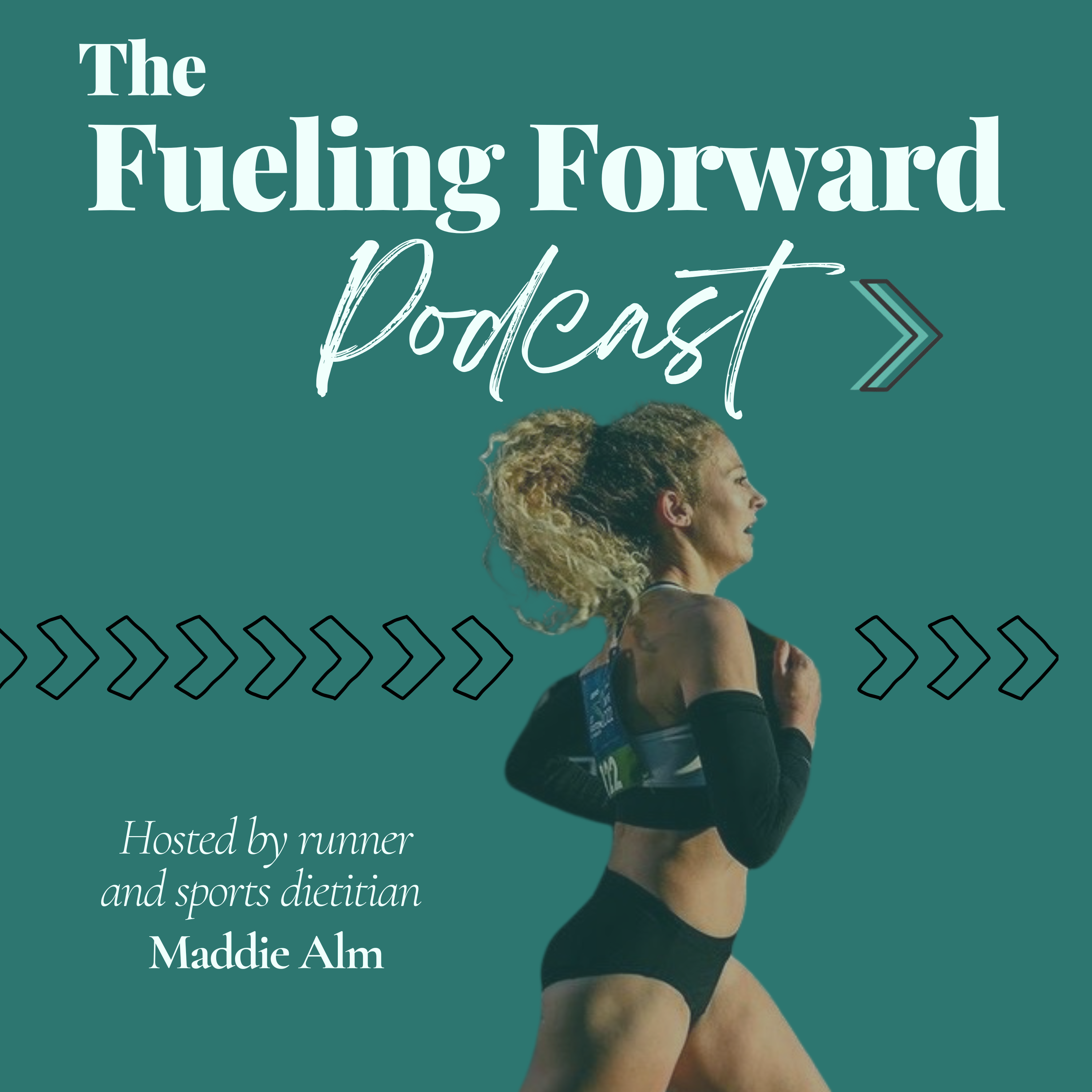
The Fueling Forward Podcast
Hosted by Maddie Alm · EN
Hosted by Maddie Alm, sports dietitian and elite runner, The Fueling Forward Podcast is the place to go for all things running and sports nutrition. Learn from other runners as they discuss their own experiences with nutrition and performance and learn from Maddie, a registered dietitian and runner. Through these conversations, we will bust common nutrition myths and misconceptions around fueling for performance, so you can find an approach to fueling that will allow you to feel and perform your best without taking short cuts. Here at Fueling Forward, we believe in fueling your body for the long run!
45episodes
Episodes
Newest firstAll episodes
37. Maryann Gong
4d ago01:03:53Tap to summarizeThis episode is an interview with app developer and marathon OTQ hopeful, Maryann Gong. Maryann is an NYC local and California native. She went to MIT where she got her bachelor's degree in computer sciences and her master's degree in AI. While at MIT, she ran on the track and xc team, becoming an All-American and a D3 champion in the indoor 3k. She struggled on and off with fueling and an injury cycle after her junior year, and her experience with this inspired her to create a training app for runners called Toga. She found her way to the marathon and is currently a member of Central Park Track Club chasing an OTQ in the marathon at Chicago this fall.In this episode, we talk about:How Maryann got into the sport of running in high school after transitioning from soccerWhat it was like transitioning from high school to running at an academically rigorous school like MIT, and why D3 was a good fit for herHer struggles with fueling that led to episodes of bulimia and an injury cycle, and how she found her way back from that to focus on fueling for performanceHer new AI powered app for runners, Toga, and why it was important to her to include a feature that helps hold runners back to reduce risk of injury or burnoutHow she discovered high carb fueling during runs, and why she feels like it has changed the game for her to get 120g of carbs per hour during training and marathonsIf you would like to keep up with Maryann, you can find her on Instagram at @maryanngong. If you are interested in Toga, you can follow them on Instagram at @trainwithtoga and you can try it out free for 30 days using the code FUELINGFORWARD. You can find Toga in the app store HERE.
Transcribe →
Q&A with Alexa -1
2w ago00:40:52Tap to summarizeWhile Maddie is on maternity leave, Alexa Gusman, the newest dietitian at Fueling Forward, is taking over to answer your questions! This episode is a Q&A episode where Alexa answers questions that have been submitted by listeners.Questions for today’s episode include:I'm a high school track and cross-country athlete and definitely have a sweet tooth. My training load is relatively light compared to many other distance runners, and as the postseason approaches, my family has been encouraging me to cut back on sweets. What are your thoughts on this?I'm recovering from an eating disorder and working to get my period back. Since gaining weight, I've been struggling to hit my usual times on the track and have lost some of my motivation and enjoyment for running. Is this more of a mindset shift I need to work through, or could I still be experiencing physical effects from my past restriction?What tips would you give a high school athlete who wants to start fueling during long runs? How do you navigate the belief that "thinner equals faster," especially when that message is coming from your coach?Thanks so much to everyone who has submitted questions so far! If you would like to submit a question for future episodes, you can do so on my website HERE or email me at fuelingforwardpodcast@gmail.com.
Transcribe →
36. Rachel Cliff
3w ago00:54:59Tap to summarizeThis episode is an interview with former elite Canadian runner, Rachel Cliff. Rachel is the former Canadian record holder in the marathon and half marathon, and she also represented Team Canada at the 2017 and 2019 World Championships in the 10k and 5k respectively, the 2018 Commonwealth Games in the 10k, the 2018 NACAC Championships (she was the bronze medalist in the 10k), and the Pan Am Games (she was the bronze medalist in the 10k). She is currently the elite athlete advisor for Hettas and mom of 2.In this episode, we talk about:How she discovered running as a kid growing up in Canada, and how the Canadian high school running scene differs from the USWhat it was like growing up with a mom who was a dietitian, and how her mom stepping in when she lost her period in high school played a big role in her long term health in the sportHer transition from high school to collegiate running, how she struggled for a bit running slower than she did in high school while her body shifted, and how trusting the process allowed her to come back strongerWhy periodization and prioritizing weight gain in the off season has been key for her, and how she found herself struggling in the years she didn’t do thatHer transition to elite running, and how getting left off the Olympic team led to her going all in on trainingHow pushing herself too hard towards her Olympic dream led to a mysterious career ending injury, and how she had to advocate for herself to get to the bottom of itIf you would like to keep up with Rachel, you can find her on Instagram at @raecliff
Transcribe →
Q&A With Maddie - 33
4w ago00:49:37Tap to summarizeThis episode is a Q&A episode where I answer questions that have been submitted by listeners.Questions for today’s episode include:How do you know if you’re eating enough when you’re recovering from RED-S? Is getting your period back the only way to know, or will there be other signs?I’m a marathoner and have a family history of Type 2 diabetes. My A1C has been increasing, and I’m not sure how to balance managing my A1C and weight with fueling for performance. Do you have any advice?I just finished my high school senior track season and am getting ready for cross country in the fall, but I have a break between seasons. Should I fuel differently during this time or should I keep my intake up?I’ve been struggling with chronic IT band issues. Do you have thoughts on some nutrition changes I could make to better address this issue?Thanks so much to everyone who has submitted questions so far! If you would like to submit a question for future episodes, you can do so on my website HERE or email me at fuelingforwardpodcast@gmail.com.
Transcribe →
35. Vanessa Fraser
Jun 2601:05:58Tap to summarizeThis episode is an interview with professional runner for Saucony, Vanessa Fraser. Vanessa grew up in Northern California where she discovered and fell in love with running through Girls on the Run. She went on to run at Stanford University where she became a 10x All-American and the PAC-12 champion in the 10k. While at Stanford, she received her bachelor's degree in symbolic systems and her master’s degree management science and engineering. After college, she went on to run professionally, signing a contract with Nike and joining Bowerman Track Club right out of college. Vanessa has competed in multiple US championships in the 5k and 10k, and has a 5k time of 14:48. In addition to running professionally, she also works full time as a partnerships manager at a health care tech company.In this episode, we talk about:How she found the sport of running through Girls on the Run and what her progression looked likeHow an assignment to track calories from a middle school health teacher led to hospitalization, and what she learned from the experienceWhat it was like going through periods of weight restoration and why she’s thankful her coaches, parents and doctors put her health firstHow she ended up running for Stanford, her dream school, despite not earning a scholarship right awayHer transition to becoming a pro runner and advice for being patient during periods of lack of progress and injuriesHow increasing her carb intake has been instrumental to her success, and why fueling on long runs has been a big part of thatWhy working in addition to being a pro runner has helped her mindset around the sport and finding life balanceYou can keep up with Vanessa on Instagram or TikTok @nessafraser.
Transcribe →
Q&A With Maddie - 32
Jun 1900:49:26Tap to summarizeThis episode is a Q&A episode where I answer questions that have been submitted by listeners.Questions for today’s episode include:As a pre-med student, I feel like I’ve turned to running and training as a coping mechanism to handle stress. How do you know if a training load is too high and inching towards overtraining? I’m a high school senior who runs track and xc and I’ve been working on getting my period back for over a year. I’ve gotten one cycle, but haven’t had any since. I feel like I’m doing all the right things, but also feel like I can’t stop gaining weight. Do you have any tips or advice for how to get and keep my period?I’m a high school track athlete and mostly compete in field events, but I will also do the 800. How would my fueling differ from an endurance runner?I’m a former collegiate runner and current dietitian working in an athletic department with the track/xc teams. My body has changed over the past year since I’m no longer training at a high level, and I find myself struggling with comparison and body image. Do you have any advice on how to navigate this?Thanks so much to everyone who has submitted questions so far! If you would like to submit a question for future episodes, you can do so on my website HERE or email me at fuelingforwardpodcast@gmail.com.
Transcribe →
34. Danae Halliday (Recipe Runner)
Jun 1200:55:40Tap to summarizeThis episode is an interview with the food blogger and recipe developer behind Recipe Runner, Danae Halliday. Danae grew up in Arizona, where she discovered running through her older sister. She ran throughout high school, but found herself burnt out and took a break from the sport when she went to Arizona State University. When her sister started training for marathons, Danae found herself inspired to pick it up again and fell in love with the longer distance.Despite her love of food and recipe developing, Danae found herself struggling with an eating disorder. This led to a vicious injury cycle that she couldn’t find her way out of. She eventually reached out for help, and has been in treatment and active recovery since 2022. She hopes to get healthy enough to line up to race again soon!In this episode, we talk about:How her sister inspired her to start running in high schoolWhy she took a break from the sport in college and how she found her way back to runningHow a comment from a coworker about her body led to restriction around food that resulted in an eating disorderWhy she finally decided to seek help and what that has looked like for herAdvice on how to be there for someone in your life struggling with an eating disorderWhy it’s important to approach recovery and treatment from a way that works for youHow she founded Recipe Runner and why developing recipes has been a healing tool for her throughout her eating disorder recoveryYou can keep up with Danae on Instagram at @reciperunner, and you can find her recipes and food blog on her website https://reciperunner.com/***A trigger warning for this episode: we do talk about an active eating disorder and eating disorder behaviors. If you are not in a place to hear that, you may want to skip this episode***
Transcribe →
Q&A With Maddie - 31
Jun 500:48:14Tap to summarizeThis episode is a Q&A episode where I answer questions that have been submitted by listeners.Questions for today’s episode include:A running influencer that I follow recently got a stress fracture but blamed it on biomechanics. This got me wondering if bone stress injuries are ever not related to fueling and overtraining in some way? Do you have any thoughts on this in the running culture?I’m a collegiate runner running 50-55 miles per week and am trying to put on weight. I’ve been drinking ensure drinks, but do you have any other tips for meals and snacks for weight gain?I recently experienced my first bone stress injury and I’ve also been dealing with chronically low ferritin. I’m in a healthcare system that is reluctant to provide more care than they deem necessary. How do I make sure that I’m getting all of the information I need to treat my injury with limited access to tests and treatment? How do I know which tests are important and worth advocating for?What are your thoughts on meal kits and how to navigate healthier options?Thanks so much to everyone who has submitted questions so far! If you would like to submit a question for future episodes, you can do so on my website HERE or email me at fuelingforwardpodcast@gmail.com.
Transcribe →
33. Lennie Waite
May 2901:05:34Tap to summarizeThis episode is an interview with sports psychologist and former professional runner, Lennie Waite.Lennie grew up abroad, where she primarily played soccer. She was recruited to play D1 soccer at Rice University, but after her sophomore year ended up switching to running and became a 2x All-American. She went on to run post-collegiately and represented Great Britain at 3 Commonwealth Games, the World Championships in 2017, and the 2016 Olympic Games in the steeplechase.Lennie did all of this while completing her PhD in Industrial-Organizational Psychology and becoming a Certified Mental Performance Consultant. She currently works with athletes and is also the chief science officer at Hite EQ, while being a mom to her 2 daughters.In this episode, we talk about:What it was like growing up abroad and how different the rhetoric is around food and sportHow being good at a sport from a young age automatically creates pressure and expectations, and how she dealt with thisWhy she decided to pursue soccer instead of running initially in college and what led her to make that shiftHer tips for helping athletes navigate pressure and comparison when it comes to racingWhat she sees athletes struggle with when it comes to fueling as a sports psych and some tips to work through those emotionsIf you would like to learn more about Lennie's and her services as a sports psychologist, you can go to her website HERE.
Transcribe →
Q&A With Maddie - 30
May 2200:48:58Tap to summarizeThis episode is a Q&A episode where I answer questions that have been submitted by listeners.Questions for today’s episode include:In college I experienced a stress fracture, and since then I’ve been stuck in an injury cycle. Can you talk more about the science behind fueling to help heal injuries?What are your go to meals and snacks for track meets? I don’t have many resources at the meets and I’m someone who often runs 3 distance events.Is there a connection between motivation and energy levels, especially in a race? I notice lower motivation on days I don’t fuel as well, could these be related?You mentioned in a previous podcast that high cholesterol can be a sign of RED-S. What would you recommend for an athlete who tests high in cholesterol?Thanks so much to everyone who has submitted questions so far! If you would like to submit a question for future episodes, you can do so on my website HERE or email me at fuelingforwardpodcast@gmail.com.
Transcribe →