Podcast
The Uncertainty E.D.G.E.
Hosted by Sam Sivarajan · EN
The Uncertainty E.D.G.E. Podcast reveals what judgment looks like when certainty doesn't exist—and waiting isn't an option.
Hosted by Sam Sivarajan—former investment banker ($40B+ in M&A), three-time wealth firm leader ($80B+ AUM), and behavioral scientist—each episode explores how people navigate decisions when outcomes aren't clear, tradeoffs feel unavoidable, and responsibility can't easily be delegated—the kind of uncertainty leaders face in the real world.
These aren't polished success stories. They're honest explorations of how people make high-stakes decisions when:
- The data is incomplete
- Stakeholders demand clarity
- Delay carries its own cost
- And acting feels just as risky as waiting
Through conversations with executives, investors, and experts who've made and lived with consequential decisions, the podcast surfaces:
- What couldn't be known at the time
- What pressures shaped the decision
- What tradeoffs were actually on the table
- How judgment was exercised without guarantees
This is decision-making as it actually happens—not as it's modeled in hindsight.
The Uncertainty E.D.G.E. Podcast is for people accountable for decisions that matter: senior leaders, business unit heads, investors, and operators who must act with clarity when certainty is impossible.
No best practices. No leadership slogans. No predictions.
Just the reality of deciding when the stakes are real.
Want practical tools for navigating uncertainty? Subscribe to The Uncertainty E.D.G.E. newsletter at www.theuncertaintyedge.com for frameworks you can use immediately.
31episodes
Episodes
Newest firstAll episodes
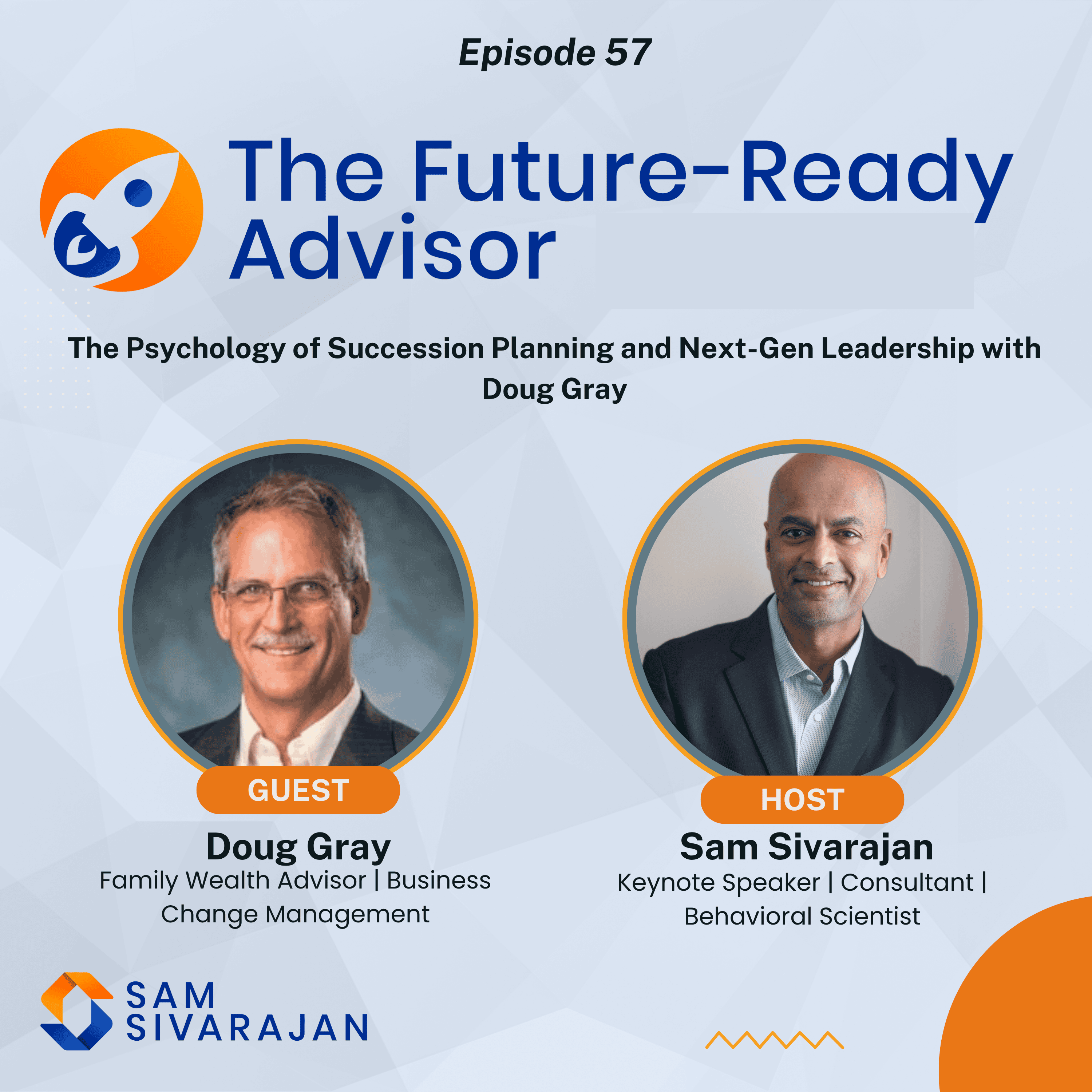
The Psychology of Succession Planning and Next-Gen Leadership with Doug Gray
Oct 2800:45:27Tap to summarizeEpisode OverviewIn this episode of The Future-Ready Advisor, host Sam Sivarajan sits down with Doug Gray, a business psychologist and executive coach with over 30 years of experience helping leaders navigate complex organizational and family dynamics. Doug is the founder of Action Learning Associates and author of "Objectives Plus Key Results Leadership."They explore the critical intersection of psychology and wealth management, discussing how advisors can better serve multi-generational families through team-based approaches, emotional intelligence, and curiosity-driven engagement. Doug shares his AdFit framework for outcome-based solutions and dispels common myths about generational wealth transfer, offering practical strategies for building the social and emotional capital essential for successful succession planning.Key Quote"Curiosity is the currency of learning. When advisors encourage clients to practice their curiosity, amazing things are going to happen." — Doug GrayKey TakeawaysTeam-based advisory approaches are essential for complex family wealth situations, similar to healthcare teams solving medical problemsThe AdFit framework (Assess, Define, Focus, Interventions, Takeaways) provides structure for outcome-based client engagementsSocial and emotional capital is a bigger driver of succession success than written plans or legal documentationThe "three generations" wealth loss myth is overstated—proactive planning and learning mindsets enable multi-generational successCuriosity and open-ended questioning are powerful tools for engaging next-generation leaders and improving advisor effectivenessSound Bites"Leaders often require guidance from mentors to grow—we all need those sherpas in our professional journeys.""Don't we bring teams of advisors just like we do in healthcare to solve the most complex problems?""Social and emotional capital is a bigger driver of succession success than any written plan.""The three generations myth is not a reality—it's a mythology that we need to move beyond.""When we practice curiosity and we're comfortable with silence, amazing conversations happen."Topics Discussed01:06 — Doug's journey from educator to business psychologist and executive coach07:15 — The AdFit framework for outcome-based client solutions13:27 — Navigating confidentiality and family dynamics in wealth management20:35 — Debunking the "three generations" wealth transfer mythology29:29 — Applying positive psychology principles to financial advisory38:15 — Engaging next-generation leaders through curiosity and mentorship45:46 — Practical tips for advisors: The power of open-ended questionsResources MentionedLearn more about Doug Gray and Action Learning Associates: action-learning.comVIA Character Strengths Assessment: viacharacter.orgStay Connected with The Future-Ready AdvisorSubscribe on your favorite podcast platform to never miss an episodeJoin the conversation on LinkedIn—share your thoughts and connect with other forward-thinking advisors
Transcribe →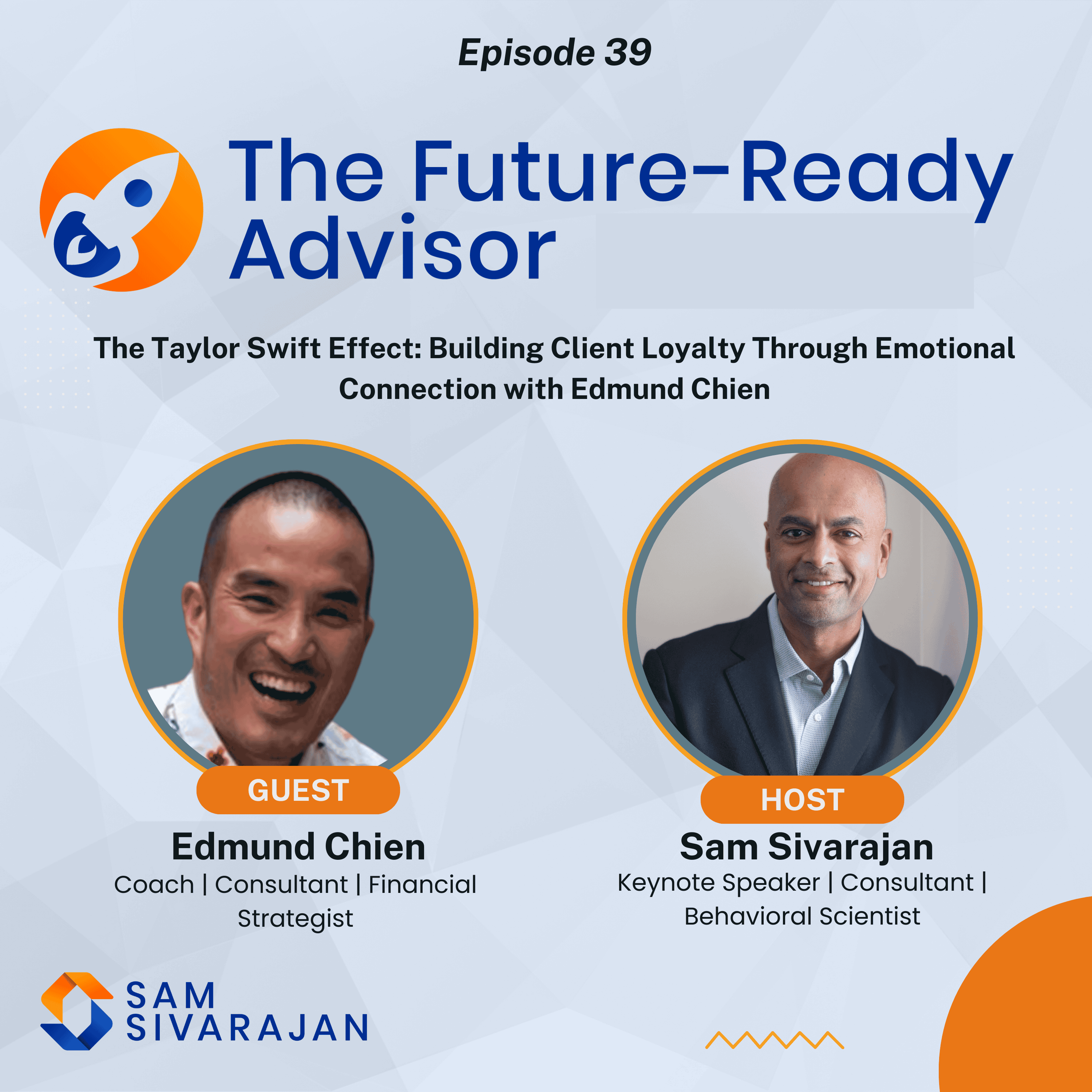
The Taylor Swift Effect: Building Client Loyalty Through Emotional Connection with Edmund Chien
Feb 18, 202500:47:41Tap to summarizeEpisode 39: The Taylor Swift Effect: Building Client Loyalty Through Emotional Connection with Edmund ChienEpisode OverviewIn this episode of The Future-Ready Advisor, host Sam Sivarajan welcomes Edmund Chien, a former financial advisor and now coach to capital raisers and executives. Edmund draws a compelling analogy between financial advising and Taylor Swift's ability to build deep emotional connections with her fans, showing how advisors can leverage emotional intelligence to create lasting client loyalty.Drawing from his military background and financial advisory experience, Edmund shares how the EDI framework (Explain, Demonstrate, Imitate) fosters professional growth and trust. The conversation uncovers how empathy, adaptability, and continuous learning can transform client relationships, turning them into a "tribe" that remains loyal through market fluctuations.Key Quote"Logic will get people to think; emotion will get people to act. The more emotionally resonant you are, the more clients will see themselves in you—and stay loyal." — Edmund ChienKey TakeawaysEmotional Bonds Drive Loyalty: Strong connections lead to fewer client complaints, more referrals, and enduring trust.Learn from Taylor Swift: Emotionally resonate with clients by understanding and mirroring their needs.The EDI Framework: A proven method for mastering skills and building mentorships.Empathy and Subtext: Reading between the lines is as crucial as understanding the spoken word.Continuous Growth: Always strive for improvement through mentorship, curiosity, and self-reflection.Sound Bites"Think of your clients like your tribe—build trust and belonging.""Emotional bonds aren’t just connections; they’re currency.""Seen, heard, understood: The recipe for empathy.""Great advisors are like Taylor Swift—they connect on an emotional level."Topics Discussed00:00 – Introduction and Edmund’s Career Journey: From military discipline to financial coaching.04:11 – The EDI Framework: Explain, Demonstrate, Imitate—enhancing skills and relationships.11:32 – Building Emotional Bonds: Why empathy is the secret to client loyalty.19:41 – Lessons from Taylor Swift: Emotional intelligence as a tool for trust and connection.30:52 – Continuous Growth and Adaptability: Why advisors must remain curious and flexible.Resources MentionedExtreme Ownership by Jocko WillinkA Curious Mind by Brian GrazerArticles and frameworks on EDI learning methodshttps://www.linkedin.com/in/edmundchien/Stay Connected with The Future-Ready AdvisorSubscribe on your favorite podcast platform to never miss an episode.Join the conversation on LinkedIn—share your thoughts and connect with other forward-thinking advisors.Explore more insights on Sam’s website.
Transcribe →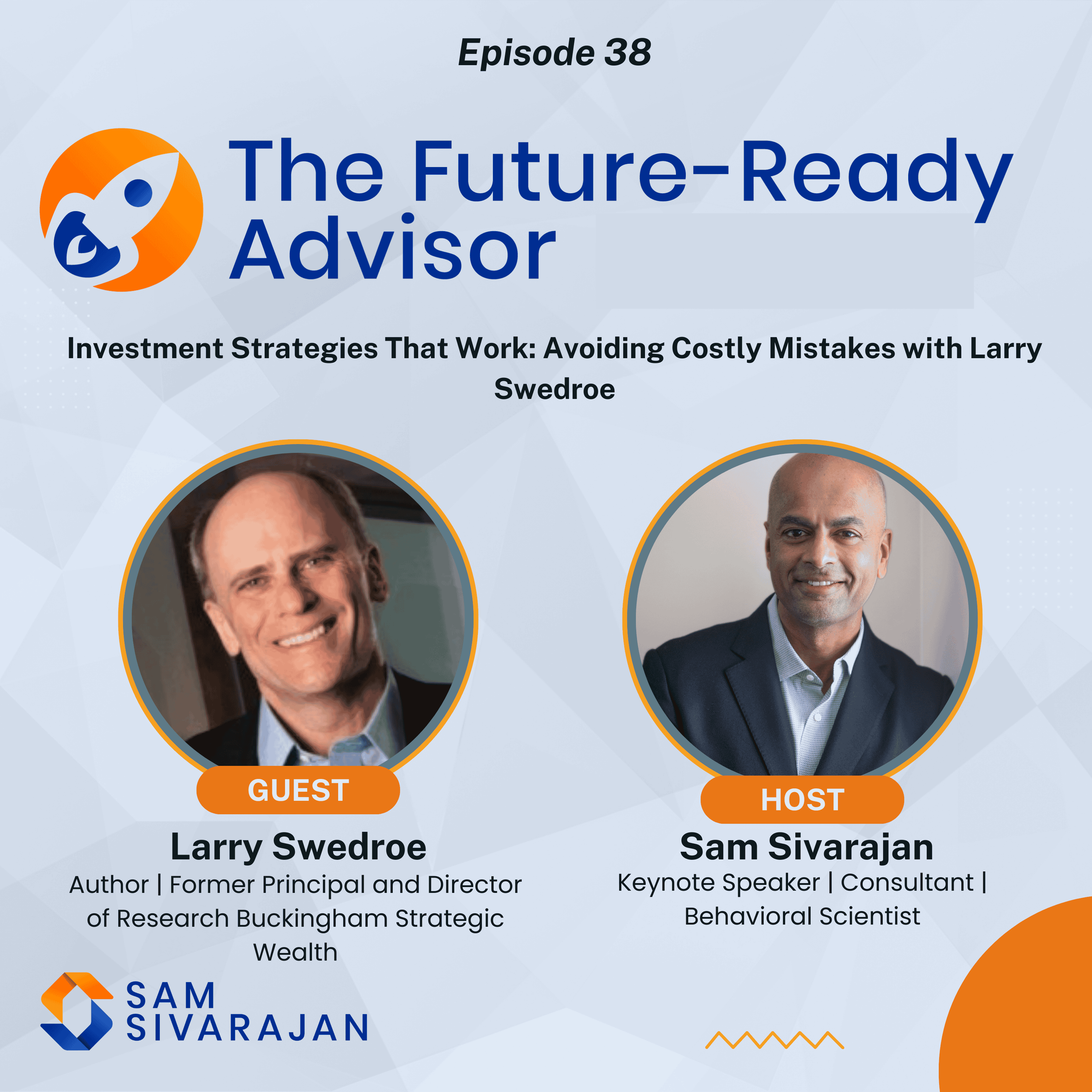
Investment Strategies That Work: Avoiding Costly Mistakes with Larry Swedroe
Feb 4, 202500:57:53Tap to summarizeEpisode 38: Investment Strategies That Work: Avoiding Costly Mistakes with Larry SwedroeIn this episode of The Future-Ready Advisor, Sam sits down with Larry Swedroe, a renowned advocate for evidence-based investing, to explore the principles behind successful investment strategies and the critical role behavioral finance plays in shaping investor outcomes. The discussion highlights Larry's career, the importance of diversification, and practical strategies for advisors to help clients build resilient portfolios in uncertain markets.Key Quote:"Never judge a strategy by the outcome—it’s the process that matters."Key Takeaways:1. Evidence-based investing minimizes emotional decisions and reliance on market predictions.2. Behavioral pitfalls, like overconfidence and recency bias, can derail long-term goals.3. Diversification and rebalancing are essential for managing risk and maintaining portfolio health.4. Advisors must educate clients on historical evidence to foster informed decision-making.5. Building resilient portfolios ensures investors can weather market shocks and uncertainty.Sound Bites:"Overconfidence leads to poor investment decisions.""Every risk asset will go through long periods of underperformance.""The market has self-healing mechanisms that investors often overlook.""Diversification isn’t just a strategy; it’s a necessity.""Educating clients on history makes them better decision-makers."Chapters:00:00 Introduction to Evidence-Based Investing: Overview of the principles behind evidence-based strategies and their relevance today.15:07 Understanding Evidence-Based Investing: Larry shares the key elements of evidence-based strategies and their evolution.20:07 Behavioral Pitfalls in Investing: The impact of biases like overconfidence, political bias, and recency on investment decisions.31:01 The Importance of Diversification and Rebalancing: Why maintaining a balanced portfolio is crucial for long-term success.36:54 Distinguishing Between Risk and Uncertainty: A deep dive into planning for unknowns and managing tail risks effectively.Resources Mentioned in This Episode:The Only Guide to a Winning Investment Strategy You'll Ever Need by Larry SwedroeYour Complete Guide to a Successful and Secure Retirement by Larry SwedroeLarry Swedroe’s articles on Evidence-Based InvestingStay Connected with The Future-Ready AdvisorSubscribe on your favorite podcast platform to never miss an episode.Join the conversation on LinkedIn—share your thoughts and connect with other forward-thinking advisors.Explore more insights on Sam’s website.Keywords:evidence-based investing, behavioral finance, investment strategies, risk management, diversification, rebalancing, portfolio management, financial education, market dynamics, resilient portfolios, Larry Swedroe, investment mistakes, advisor-client relationship, historical evidence, uncertainty, tail risks
Transcribe →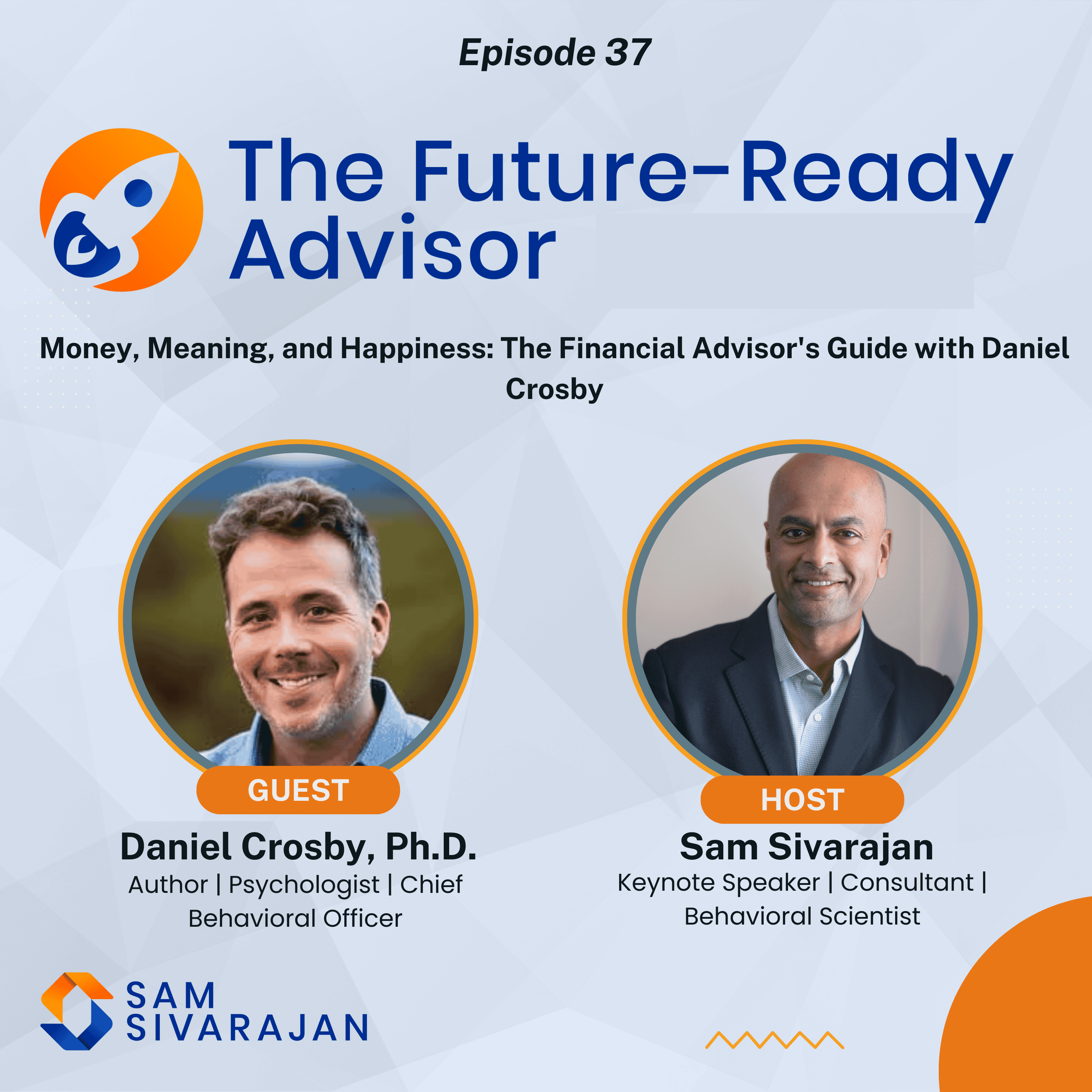
Money, Meaning, and Happiness: The Financial Advisor's Guide with Daniel Crosby
Jan 21, 202500:53:42Tap to summarizeEpisode SummaryIn this insightful conversation, Dr. Daniel Crosby, a psychologist and behavioral finance expert, explores the intersection of psychology and finance. Dr. Crosby shares his journey from clinical psychology to behavioral finance, emphasizing how financial advisors can deepen client relationships by understanding the emotional and psychological drivers behind financial decisions.The discussion highlights aligning financial goals with core values, the paradox of wealth and happiness, and the importance of authenticity in financial advising. Practical insights are provided on visualization techniques, gratitude practices, and helping clients navigate their financial journeys toward personal growth and fulfillment.Top 5 TakeawaysThe Connection Between Money and Meaning – Financial planning should help clients align their money with their core values.Wealth Doesn’t Equal Happiness – Emotional well-being and fulfillment are more critical than financial metrics alone.The Importance of Authenticity – Genuine client relationships build trust and foster deeper conversations.Visualization Techniques – These can enhance clients' financial decision-making and goal-setting processes.Understanding the ‘Why’ – Advisors should uncover the deeper motivations behind clients’ financial goals.Top 5 Chapters00:00 – Introduction to Behavioral Finance and Psychology06:36 – The Connection Between Money and Meaning12:53 – Aligning Financial Decisions with Values25:19 – The Human Element in Financial Advisory38:42 – Values, Money, and Client ConversationsTop Quotes“Wealth does not automatically lead to happiness; understanding your values does.”“Financial advisors should not just ask ‘how much?’ but also ‘why?’”“Money is a means to an end, not the end itself.”Resources Mentioned• Dr. Daniel Crosby’s Books: The Laws of Wealth, The Behavioral Investor, the Soul of Wealth.• Tools for Advisors: Visualization exercises and values assessments.Connect with Dr. Daniel Crosby• LinkedIn: https://www.linkedin.com/in/danielcrosby/Stay Connected with The Future-Ready Advisor• Subscribe on your favorite podcast platform.• Join the conversation on https://www.linkedin.com/in/samsivarajan/.• More Insights on www.samsivarajan.com.KeywordsBehavioral finance, psychology, wealth management, financial decisions, money and meaning, financial planning, emotional intelligence, client relationships, financial advisor, happiness, authenticity, values, personal growth, financial wisdom.
Transcribe →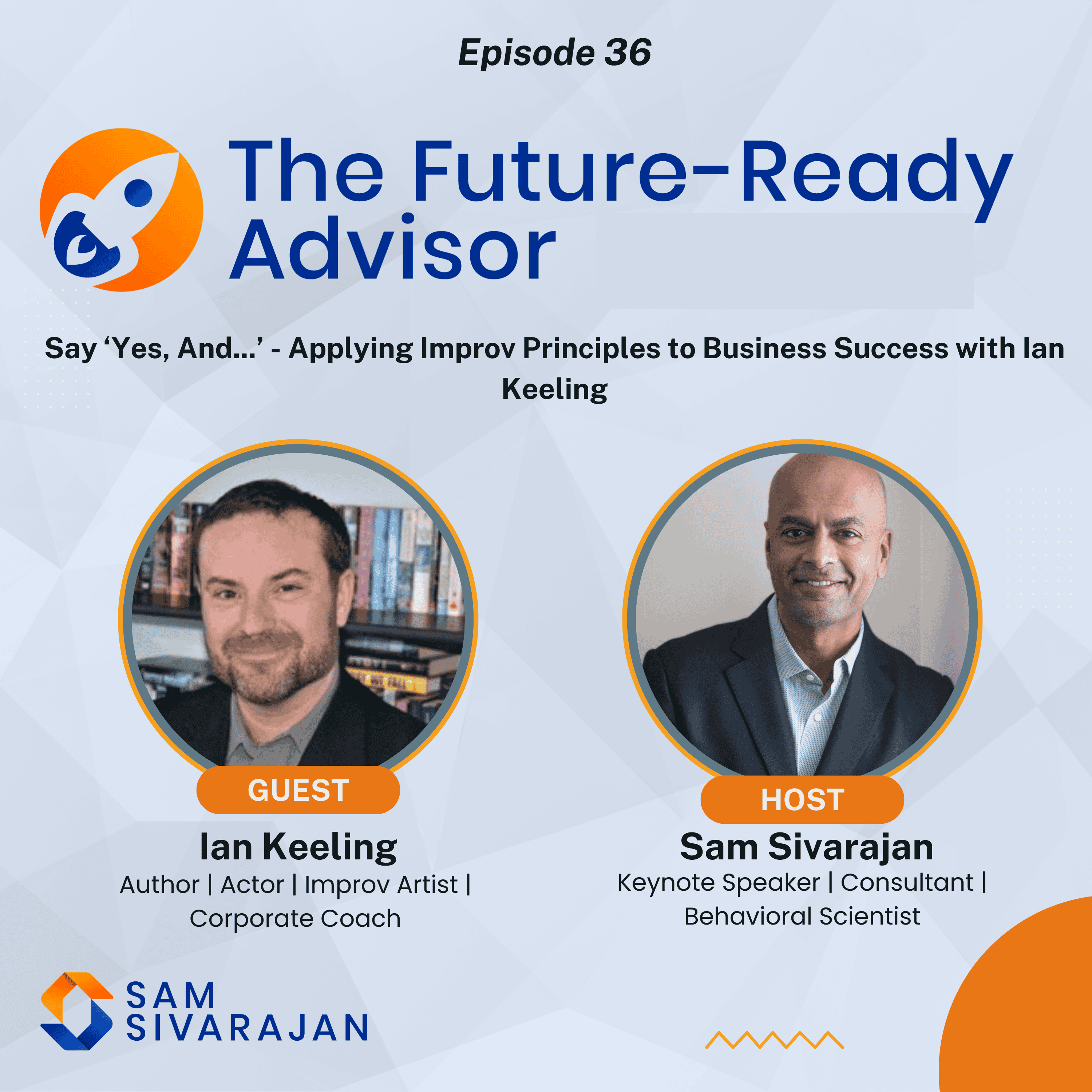
Say ‘Yes, And...’ - Applying Improv Principles to Business Success with Ian Keeling
Jan 7, 202500:53:33Tap to summarizeEpisode 36: Say ‘Yes, And...’ - Applying Improv Principles to Business Success with Ian Keeling Episode SummaryIn this episode of The Future-Ready Advisor, host Sam Sivarajan welcomes Ian Keeling, an actor, author, improv artist, and corporate coach. Together, they explore how the improv mindset can help us adapt, collaborate, and thrive in today’s unpredictable world. Ian shares how his journey into improv transformed his life and work, leading him to develop powerful tools for professionals to embrace change and foster deeper connections.The conversation dives into key improv principles, like starting with "yes, and," suspending judgment, and being present. Ian emphasizes that success isn’t about perfection—it’s about consistently achieving good outcomes. He shares memorable stories from his career, lessons learned, and actionable advice to help listeners integrate improv skills into their professional and personal lives.Key TakeawaysAdaptability and collaboration are essential skills in a fast-changing world.Improv techniques like starting with "yes, and" and suspending judgment foster creativity, engagement, and better communication.Letting go of failures and successes helps you stay open-minded and present, creating stronger client relationships.Key Quote“Improv is basically the ability to adapt to change with other people. It's collaborative.”Sound Bites“Starting with ‘yes, and’ and suspending judgment fosters creativity and efficiency.”“Sometimes it’s okay to be average. It’s okay to be okay.”“Adapting to change isn’t just about survival—it’s about thriving in uncertainty.” – Sam Sivarajan“When we stop trying to control every outcome, we leave space for genuine connection.”“Slowing down and being present are underrated skills in business.” – Sam SivarajanTopics Covered[00:00] Introduction to Ian Keeling[03:16] The Power of the Improv Mindset[10:53] Adapting to Change and Collaborating with Others[13:46] Starting with "Yes, And..." and Suspending Judgment[17:33] Active Listening and Understanding Others[20:00] Fostering Creativity, Engagement, and Deeper Connections[23:28] Improv Skills for Everyone[27:06] Memorable Experience and Valuable Lesson[32:55] Embracing Imperfection and Letting Go[37:32] Adapting to Change and Suspending Judgment[44:16] Being Present in Client Engagements[46:53] Following Your Instincts and Taking Opportunities[49:50] Slowing Down and Giving Yourself Permission to Pause[51:19] Building Trusted Relationships with Clients[48:43] Applying Improv Principles to Life and WorkResources MentionedIan Keeling’s website and workshopsStay Connected with The Future-Ready AdvisorSubscribe on your favorite podcast platform to never miss an episode.Join the conversation on LinkedIn—share your thoughts and connect with other forward-thinking advisors.Explore more insights on Sam’s website.KeywordsImprov mindset, adaptability, collaboration, active listening, suspending judgment, deeper connections, business success, Ian Keeling, client engagement, trusted relationships, letting go of failures and successes, applying improv principles
Transcribe →
A Firm Worth Building - The Digital Family Office with Michael Clarke
Dec 17, 202400:43:18Tap to summarizeEpisode 35: A Firm Worth Building - The Digital Family Office with Michael ClarkeEpisode SummaryIn this episode of The Future-Ready Advisor, host Sam Sivarajan sits down with Michael Clarke, veteran financial advisor and author of A Firm Worth Building. Michael shares his journey from surviving the early years of the financial industry to creating a thriving advisory firm. He discusses the evolution of financial advisory practices, including the concept of digital family offices, and emphasizes the importance of structured client engagement.Michael also dives into actionable insights for financial advisors, including the value of genuine referral networks, the transformative potential of a client bill of rights, and the importance of deliberate and methodical work. This conversation is packed with strategies to help advisors innovate, build meaningful client relationships, and thrive in a dynamic industry.Key TakeawaysRelationships matter—genuine partnerships lead to better outcomes in referral networks.Digital family offices can democratize wealth management and make it accessible to more clients.A client bill of rights builds trust, accountability, and quality referrals.Key Quote"The foundation of any thriving firm is built on genuine relationships and deliberate work."Sound Bites“Survival in the early years lays the foundation for long-term success.”“Structured client engagement is key to building retention and deeper relationships.”“Digital family offices democratize wealth management and bring it to a wider audience.”“When you focus on understanding clients’ needs, expertise follows naturally.” – Sam Sivarajan“Advisors who prioritize genuine connections outperform those who chase perfection.”Topics Covered[00:00] Introduction and Background[06:09] The Importance of Building Infrastructure[12:12] The Concept of a Digital Family Office[19:02] Building Strong Referral Networks and Partnerships[21:45] A Structured Intake Process for New Clients[29:48] Creating a Client Bill of Rights[33:50] Advice for Innovation and Building Future-Ready Practices[38:47] Conclusion and Where to Learn MoreResources MentionedA Firm Worth Building by Michael Clarke Stay Connected with The Future-Ready AdvisorSubscribe on your favorite podcast platform to never miss an episode.Join the conversation on LinkedIn—share your thoughts and connect with other forward-thinking advisors.Explore more insights on Sam’s website.KeywordsFinancial advisory, digital family office, referral networks, client engagement, business growth, accountability, client bill of rights, innovation, wealth management, Michael Clarke, trusted relationships, deliberate work, client retention
Transcribe →
Health Meets Wealth - A Future-Ready Guide to Aging Gracefully with Scott Fulton
Dec 3, 202400:49:40Tap to summarizeEpisode 34: Health Meets Wealth - A Future-Ready Guide to Aging Gracefully with Scott Fulton Episode SummaryIn this episode of The Future-Ready Advisor, host Sam Sivarajan speaks with Scott Fulton, author of Wealthspan, about the intersection of health, wealth, and housing in creating a fulfilling future. Scott shares why “aging well” is an art, blending financial planning, positive aging, and proactive design.The conversation explores key strategies for preparing for lifetime housing needs, addressing the financial implications of health, and embracing a future-ready mindset. Scott challenges common misconceptions about wealth and health, emphasizing the importance of holistic financial planning and the power of asking better questions.Key TakeawaysWealth is more than money—it’s about health, housing, and finances combined.Aging gracefully starts with proactive planning and an open mindset.Financial advisors can lead with a holistic financial planning approach by asking the right questions.Designing homes for lifetime use can improve quality of life and reduce long-term costs.Normalizing the connection between health and wealth paves the way for better planning and outcomes.Changes in life are often scarier than market volatility, but both require resilience and preparation. Key Quote“Nothing will impact financial outcomes more than health and housing.” Sound Bites“Wealth is not just about money.”“Volatility isn’t as scary as change.”“Designing a home for lifetime use is as much about quality of life as it is about financial planning.”“Aging isn’t a problem to solve; it’s an opportunity to create.” – Sam Sivarajan“A future-ready mindset helps clients see aging as a new chapter, not an ending.”Topics Covered[00:00] Introduction to Scott Fulton and Background[03:05] The Intersection of Health and Wealth[07:46] The Art of Aging Well[19:21] Preparing for Housing Needs in Later Years[25:25] Key Considerations for Financial Advisors[32:14] Challenging Misconceptions Between Wealth and Health[44:02] Embracing Change in Financial PlanningResources MentionedWhealthspan by Scott Fulton Stay Connected with The Future-Ready AdvisorSubscribe on your favorite podcast platform to never miss an episode.Join the conversation on LinkedIn—share your thoughts and connect with other forward-thinking advisors.Explore more insights on Sam’s website.KeywordsHealth and wealth, aging well, financial planning, lifetime housing, holistic approach, proactive design, wealthspan, Scott Fulton, client engagement, future-ready mindset, trusted relationships, financial advisors, positive aging
Transcribe →
Enhancing Retirement Advice Delivery and Digital Tools with Ryan Donovan
Nov 19, 202400:36:38Tap to summarizeEpisode 33: Enhancing Retirement Advice Delivery and Digital Tools with Ryan DonovanEpisode SummaryIn this episode of The Future-Ready Advisor, host Sam Sivarajan welcomes Ryan Donovan, founder of Retirement.ca, to discuss the non-financial aspects of retirement planning and how digital tools are transforming the industry. Ryan shares how platforms like his provide resources to help clients navigate lifestyle and psychological readiness alongside financial planning.The conversation highlights the importance of preparing for retirement’s emotional and social transitions, understanding the ‘disenchantment valley,’ and the value of goal-based investing. Ryan also discusses trends like certified retirement planners and the role of advisors in integrating holistic planning into their services.Key TakeawaysRetirement planning must include lifestyle and psychological readiness, not just financial milestones.Digital tools enhance the delivery of retirement advice while maintaining the human element.Preparing clients for transitions like the ‘disenchantment valley’ ensures a smoother and more fulfilling retirement.Key Quote"Retirement is more than a financial milestone—it’s a transition to a new way of life."Sound Bites“Retirement planning isn’t just numbers—it’s about creating a meaningful life.”“Digital tools enhance advice delivery, but the human element remains irreplaceable.”“Advisors need to prepare clients for the emotional phases of retirement, not just the financial ones.”“Planning early helps clients avoid the disenchantment valley and enjoy a purposeful retirement.” – Sam Sivarajan“The role of advisors is expanding beyond portfolios to guiding clients through life transitions.”Topics Covered[00:00] Introduction to Ryan Donovan and Retirement.ca[03:01] Why Retirement is Different Today: Changing Perspectives[08:13] Enhancing Retirement Advice Delivery with Digital Tools[12:38] The Emotional Transition: Preparing for the Disenchantment Valley[19:52] Practical Steps for Advisors to Integrate Lifestyle Planning[27:09] Future Trends in Retirement Planning[29:25] The Vision for Retirement.caResources MentionedRetiremint.ca by Ryan DonovanStay Connected with The Future-Ready AdvisorSubscribe on your favorite podcast platform to never miss an episode.Join the conversation on LinkedIn—share your thoughts and connect with other forward-thinking advisors.Explore more insights on Sam’s website.KeywordsRetirement planning, non-financial aspects, lifestyle readiness, psychological readiness, digital tools, disenchantment valley, goal-based investing, certified retirement planners, Ryan Donovan, holistic planning, client engagement, future trends, meaningful retirement
Transcribe →
How to Engage Clients 150 Times a Year: Strategies from John Prendergast
Nov 5, 202400:40:25Tap to summarizeEpisode #32: How to Engage Clients 150 Times a Year: Strategies from John PrendergastSummaryIn this episode of The Future-Ready Advisor, Sam Sivarajan speaks with John Prendergast, founder and CEO of Blue Leaf, a pioneering wealth management software firm that's reshaping client engagement. John shares his unique career journey and insights on using technology to enhance client experiences, offering a fresh look at what it means to be truly client-centered. This conversation dives into actionable strategies for increasing touchpoints, implementing a "noisy service" approach, and creating engagement loops that make clients feel connected, understood, and valued year-round.Key Quote"The most important lesson about client engagement is that clients don't register all of the messages you think you're sending." [33:44] Main Topics CoveredBlue Leaf’s Mission to Enhance Client Engagement – Learn about the inception of Blue Leaf and its focus on transforming client interactions in wealth management [2:46].150+ Client Engagements Annually – Shifting from traditional touchpoints to achieve meaningful, consistent client contact throughout the year [6:16]."Noisy Service" Strategy – Why regular, value-driven client communications can boost satisfaction and loyalty [10:28].Creating Engagement Loops – Leveraging technology to establish continuous, impactful engagement with clients [12:50].Building a Strong Client Narrative – Techniques to strengthen client relationships and counter external influences with a unified message [18:04].The Role of Humility in Product Design – How humility and testing improve product design and client interactions [26:37].Resources MentionedThe Fifth Discipline by Peter Senge – A recommended read on systems thinking for advisors aiming to deepen client relationships [40:31].Blue Leaf Software – Discover how Blue Leaf’s tools enhance automated, personalized client engagement [41:15].Calls to ActionSubscribe to The Future-Ready Advisor – Don’t miss new episodes packed with insights for forward-thinking advisors! Subscribe on your preferred podcast platform.Connect on LinkedIn – Join Sam Sivarajan and like-minded professionals to discuss the latest in client engagement and future-ready strategies.Explore More Resources – Visit www.samsivarajan.com for additional tools, insights, and past episodes.
Transcribe →
Breaking the Optimism Bias in Financial Advisory with John De Goey
Oct 22, 202400:47:17Tap to summarizeIn this episode, host Sam Sivarajan interviews John De Goey, a wealth advisor and consumer advocate, discussing his journey in the financial advisory industry, the concept of optimism bias, and its implications for investors. They explore the role of financial advisors in managing client expectations, the importance of diversification, and the impact of technology on financial decision-making. John shares practical strategies for advisors to help clients navigate biases and make informed investment choices, emphasizing the need for critical thinking and evidence-based practices in the industry.takeawaysJohn De Goey's journey began in public service, leading to a career in financial advising.Optimism bias can lead investors to underestimate risks.Financial advisors must balance optimism with realistic expectations for clients.Expected returns for traditional investments are declining, necessitating new strategies.Diversification is crucial in managing risk in investment portfolios.Technology can enhance risk assessment and client suitability in financial advising.The financial advisory industry is slowly professionalizing, but challenges remain.Misguided beliefs among advisors can lead to poor investment decisions.Pre-commitment strategies can help clients stick to their investment plans.Continuous education in behavioral finance is essential for both advisors and clients.Sound Bites"I wanted to work in the public service.""Optimism bias is when people think bad things won't happen to them.""The less you touch it, the more it grows."Chapters00:00 Introduction to John De Goey and His Journey02:49 Understanding Optimism Bias in Investing06:03 The Role of Financial Advisors in Managing Biases08:56 Strategies for Managing Client Expectations12:01 The Impact of Market Conditions on Investment Strategies14:49 The Importance of Diversification and Risk Management18:05 The Role of Technology in Financial Advisory20:48 Challenges and Opportunities for Financial Advisors24:02 Practical Examples of Managing Optimism Bias27:03 Final Thoughts and Recommendationskeywordsfinancial advisory, optimism bias, investment strategies, client management, behavioral finance, financial literacy, risk management, technology in finance, market conditions, advisor-client relationship
Transcribe →