
Podcast
The Geek In Review
Hosted by Greg Lambert & Marlene Gebauer · EN
Welcome to The Geek in Review, where podcast hosts, Marlene Gebauer and Greg Lambert discuss innovation and creativity in legal profession.
51episodes
Episodes
Newest firstAll episodes

Tiara Time and Data Center Politics: Vanderbilt’s AI Governance Playbook with Cat Moon and Mark Williams
Jan 1201:12:59Tap to summarizeCat Moon and Mark Williams return to The Geek in Review wearing two hats, plus one tiara. The conversation starts at Vanderbilt’s inaugural AI Governance Symposium, where “governance” means wildly different things depending on who shows up. Judges, policy folks, technologists, in-house leaders, and law firm teams all brought separate definitions, then bumped into each other during generous hallway breaks. Those collisions led to new research threads and fresh coursework, which feels like the real product of a symposium, beyond any single panel.One surprise thread moved from wonky sidebar to dinner-table topic fast, AI’s energy appetite and the rise of data centers as a local political wedge issue. Mark describes needing to justify the topic months earlier, then watching the news cycle catch up until no justification was needed. Greg connects the dots to Texas, where energy access, on-site generation, and data-center buildouts keep lawyers busy. The point lands, AI governance lives upstream from prompts and policies, down in grids, zoning fights, and infrastructure decisions.From there, the episode pivots to training, law students, and the messy transition from “don’t touch AI” to “your platforms already baked AI into the buttons.” Mark shares how students now return from summer programs having seen tools like Harvey, even if firms still look like teams building the plane during takeoff. Cat frames the real need as basic, course-by-course guidance so students gain confidence instead of fear. Greg adds a perfect artifact from the academic arms race, Exam Blue Book sales jumping because handwritten exams keep AI out of finals, while AI still helps study through tools like NotebookLM quiz generation.Governance talk gets practical fast, procurement, contract language, standards, and the sneaky problem of feature drift inside approved tools. Mark flags how smaller firms face a brutal constraint problem, limited budget, limited time, one shot to pick from hundreds of products, and no dedicated procurement bench. ISO 42001 shows up as a shorthand signal for vendor maturity, though standards still lag behind modern generative systems. Marlene brings the day-to-day friction, outside counsel guidelines, client consent, and repeated approvals slow adoption even after a tool passes internal reviews. Greg nails the operational pain, vendors ship new capabilities weekly, sometimes pushing teams from “closed universe” to “open internet” without much warning.The closing crystal ball lands on collaboration and humility. Cat argues for a future shaped by co-creation across firms, schools, and students, not a demand-and-defend standoff about “practice-ready” graduates. Mark zooms out to the broader shift in the knowledge-work apprenticeship model, fewer beginner reps, earlier specialization pressure, and new ownership models knocking on the door in places like Tennessee. Along the way, Cat previews Women + AI Summit 2.0, with co-created content, travel stipends for speakers, workshops built around take-home artifacts, plus a short story fiction challenge to write women into the future narrative, tiara energy optional but encouraged.Listen on mobile platforms: Apple Podcasts | Spotify | YouTube[Special Thanks to Legal Technology Hub for their sponsoring this episode.]
Transcribe →
Bot Overlords, Deepfakes, and the Weight of the Robe: Judge Scott Schlegel on AI in the Courts
Jan 500:38:52Tap to summarizeJudge Scott Schlegel of the Louisiana Fifth Circuit Court of Appeal joins The Geek in Review for a candid, funny, and unflinchingly practical conversation about AI inside the judicial system. Schlegel wears multiple hats, appellate judge, former prosecutor, reform-minded builder, plus a podcaster and Substack writer who speaks plainly about what works and what fails when technology hits real people on real timelines. The throughline stays consistent, courts do not need more hype, courts need competence, guardrails, and a process mindset.Judge Schlegel tackles the messy reality of AI disclosures, certifications, and uneven court rules across jurisdictions. His core message lands fast, judicial authority lives with the judge, not an AI system. From there, he outlines why chambers guidance matters, along with a structured, step-by-step approach for responsible drafting support, including prompt discipline and workflow thinking. The goal stays simple, faster decisions without surrendering judgment to “bot overlords.”The discussion then shifts to constraints judges live with every day, budgets, procurement rules, security anxiety, and the gap between shiny vendor demos and courthouse reality. Schlegel argues for a scrappy, process-first approach using small pilots, one chambers, one workflow, one measurable result. He compares the moment to early “cloud” adoption lessons, pay for the right security, avoid free tools where the user becomes the product, and treat sensitive records with strict care. Courts will see broader adoption as enterprise-grade options become attainable and baked into trusted platforms.Then comes the part that lingers in your head after the episode ends, deepfakes and voice cloning as a near-term threat to due process, especially in domestic violence and protective order contexts. Schlegel explains why judges tend to err on the side of safety, and why “damage done” shows up long before expert testimony arrives. His practical recommendation focuses on pretrial practice, require disclosure, surface manipulation concerns early, and reduce surprises at trial. He even shares a simple family safety habit, a private “secret word” to confirm identity during urgent calls, since voice cloning tools lower the barrier for fraud.Finally, Schlegel offers a sharp warning about confirmation bias, large language models often aim to please the user, which benefits advocates and harms neutral decision-making. His answer: an “AI alignment test” mindset, deliberate prompting, and refusal to outsource the white-page moment to a model. For the future, he points toward structural change courts rarely receive funding for, true legal technologists who redesign case management and public-facing guidance at scale. If courts stop printing emails and living in wire baskets, progress follows, and yes, somewhere in a parallel universe, Schlegel still wants a hologram machine.Judge Schlegel, his court, and his workJudge Schlegel bio page. Judge Scott SchlegelLouisiana Fifth Circuit Court of Appeal profile page for Judge Schlegel. Fifth Circuit Court of AppealJudge Schlegel’s Tech & Gavel landing page. Judge Scott SchlegelTech & Gavel on Apple Podcasts. Apple PodcastsAI-in-courts guidance, plus his newsletter“AI in Chambers: A Framework for Judicial AI Use” (includes the download link). Judge Scott SchlegelSchlegel Tech Substack newsletter. [sch]Legal Tech SubstackDeepfakes, provenance, and content credentialsC2PA, Coalition for Content Provenance and Authenticity, “About” page. C2PAListen on mobile platforms: Apple Podcasts | Spotify | YouTube[Special Thanks to Legal Technology Hub for their sponsoring this episode.] Email: geekinreviewpodcast@gmail.comMusic: Jerry David DeCicca
Transcribe →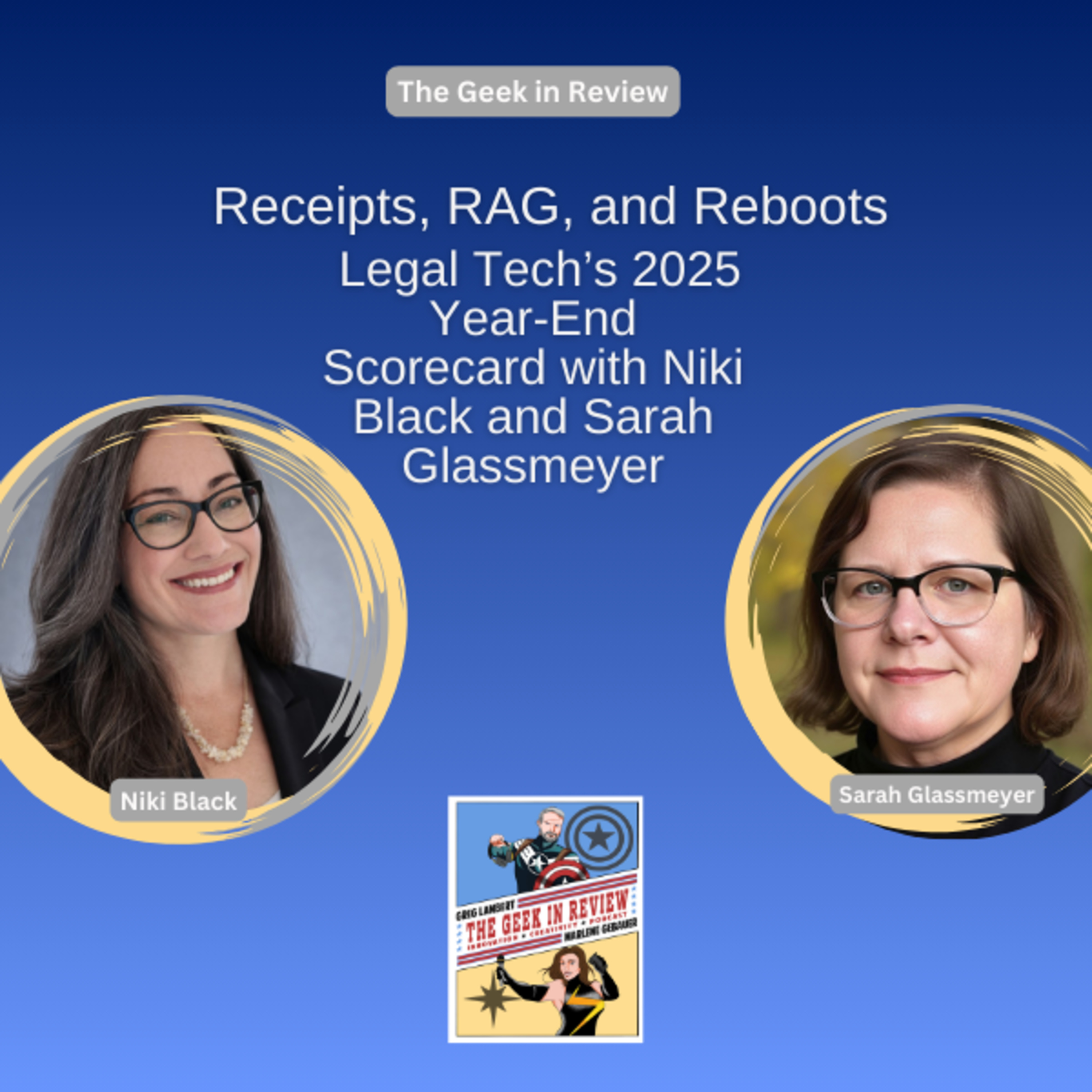
Receipts, RAG, and Reboots: Legal Tech’s 2025 Year-End Scorecard with Niki Black and Sarah Glassmeyer
Dec 2901:12:03Tap to summarizeThe Geek in Review closes 2025 with Greg Lambert and Marlene Gebauer welcoming back Sarah Glassmeyer and Niki Black for round two of the annual scorecard, equal parts receipts, reality check, and forward look into 2026. The conversation opens with a heartfelt remembrance of Kim Stein, a beloved KM community builder whose generosity showed up in conference dinners, happy hours, and day to day support across vendors and firms. With Kim’s spirit in mind, the panel steps into the year-end ritual: name the surprises, own the misses, and offer a few grounded bets for what comes next.Last year’s thesis predicted a shift from novelty to utility, yet 2025 felt closer to a rolling hype loop. Glassmeyer frames generative AI as a multi-purpose knife dropped on every desk at once, which left many teams unsure where to start, even when budgets already committed. Black brings the data lens: general-purpose gen AI use surged among lawyers, especially solos and small firms, while law firm adoption rose fast compared with earlier waves such as cloud computing, which crawled for years before pandemic pressure moved the needle. The group also flags a new social dynamic, status-driven tool chasing, plus a quiet trend toward business-tier ChatGPT, Gemini, and Claude as practical options for many matters when price tags for legal-only platforms sit out of reach for smaller shops.Hallucinations stay on the agenda, with the panel resisting both extremes: doom posts and fan club hype. Glassmeyer recounts a founder’s quip, “hallucinations are a feature, not a bug,” then pivots to an older lesson from KeyCite and Shepard’s training: verification never goes away, and lawyers always owed diligence, even before LLMs. Black adds a cautionary tale from recent sanctions, where a lawyer ran the same research through a stack of tools, creating a telephone effect and a document nobody fully controlled. Lambert notes a bright spot from the past six months: legal research outputs improved as vendors paired vector retrieval with legal hierarchy data, including court relationships and citation treatment, reducing off-target answers even while perfection stays out of reach.From there, the conversation turns to mashups across the market. Clio’s acquisition of vLex becomes a headline example, raising questions about platform ecosystems, pricing power, and whether law drifts toward an Apple versus Android split. Black predicts integration work across billing, practice management, and research will matter as much as M&A, with general tech giants looming behind the scenes. Glassmeyer cheers broader access for smaller firms, while still warning about consolidation scars from legal publishing history and the risk of feature decay once startups enter corporate layers. The panel lands on a simple preference: interoperability, standards, and clean APIs beat a future where a handful of owners dictate terms.On governance, Black rejects surveillance fantasies and argues for damage control, strong training, and safe experimentation spaces, since shadow usage already happens on personal devices. Gebauer pushes for clearer value stories, and the guests agree early ROI shows up first in back office workflows, with longer-run upside tied to pricing models, AFAs, and buyer pushback on inflated hours. For staying oriented amid fractured social channels, the crew trades resources: AI Law Librarians, Legal Tech Week, Carolyn Elefant’s how-to posts, Moonshots, Nate B. Jones, plus Ed Zitron’s newsletter for a wider business lens. The crystal ball segment closes with a shared unease around AI finance, a likely shakeout among thinly funded tools, and a reminder to keep the human network strong as 2026 arrives.
Transcribe →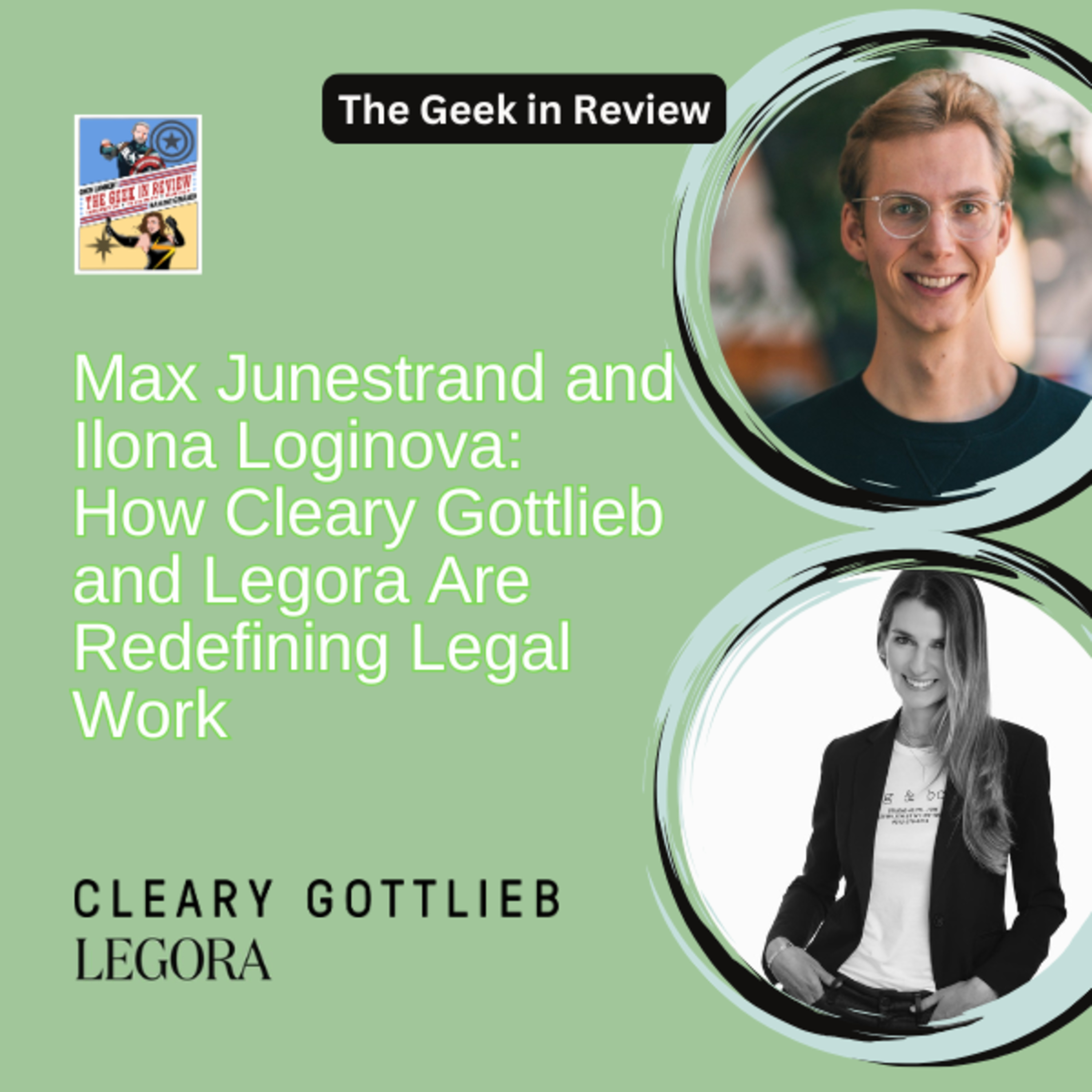
Max Junestrand and Ilona Loginova: How Cleary Gottlieb & Legora Are Redefining Legal Work
Jul 21, 2025Summary readyThis week, we sit down with Ilona Logvinova, Director of Practice Innovation at Cleary Gottlieb, and Max Junestrand, CEO and Founder of Legora, for a deep dive into how their partnership is reshaping the legal landscape through AI-driven innovation. The conversation kicks off with the origin story behind Cleary’s strategic alliance with Legora, a legal tech platform focused on collaborative, AI-first workflows. The two share how this relationship, built on a year-long pilot and mutual alignment in vision, is now delivering real-world benefits across Cleary’s legal teams.Max walks listeners through the evolution of Legora’s product suite, which includes a general-purpose assistant, tabular contract review, and a Microsoft Word plugin, all wrapped into a seamless collaborative workspace. Ilona elaborates on Cleary’s multi-pronged AI strategy, emphasizing a hybrid approach that integrates both in-house tools (such as Springbok AI) and external partnerships like Legora. This merger of internal and external capabilities reflects a broader shift in legal innovation—from static solutions to agile, embedded systems designed for continuous learning and adaptation.One major theme explored is the shift in legal AI from isolated tools to interoperable ecosystems. Max stresses the importance of collaboration and avoiding silos, pointing to a future where legal tech isn’t just smarter, but also more connected. Ilona reinforces this by describing Cleary’s vision of AI as a co-worker, not a replacement, likening AI oversight to supervising junior associates. The goal, they argue, isn’t to eliminate human involvement, but to elevate it—using AI to take over repetitive tasks while freeing lawyers to focus on high-value strategy and creativity.The episode also covers practical aspects of deployment and adoption, offering insight into why Cleary's rollout has been so successful. Ilona credits the intuitive design and high-value use cases as key drivers of firmwide engagement. From Zoom calls with 1,000 attendees to chatbots that feel more like using Google than enterprise software, Cleary’s AI integration strategy is centered on simplicity, accessibility, and a relentless focus on user experience. The team’s use of analytics and continuous feedback loops further ensures the platform evolves to meet real-world needs.In the crystal ball finale, Max and Ilona speculate on what’s next. Max anticipates a dramatic consolidation in user experience across legal tech platforms, driven by agents and large language models that enable seamless workflows. Ilona envisions a future shaped by AI-native infrastructure and even screenless computing environments, where collaboration is immersive and spatial rather than tethered to screens. Their shared message is clear: the future of legal work is collaborative, AI-enhanced, and closer than we think. Whether you're a tech-savvy partner or a cautious associate, this episode offers a compelling look at how forward-thinking firms are already building the legal practice of tomorrow.Listen on mobile platforms: Apple Podcasts | Spotify | YouTube[Special Thanks to Legal Technology Hub for their sponsoring this episode.] Blue Sky: @geeklawblog.com @marlgebEmail: geekinreviewpodcast@gmail.comMusic: Jerry David DeCiccaTranscript
Summary
What Does ChatGPT Think of Our 2025 Episodes? We Ask 'Her'
Jun 16, 202500:14:53Tap to summarizeIn this special episode of The Geek in Review, we take the new ChatGPT Advanced Voice Mode for a spin, inviting it to analyze and discuss all 23 episodes from the podcast’s 2025 season. The episode kicks off with a high-level overview of the biggest legal tech themes from the year so far. ChatGPT Voice quickly identifies a significant shift toward agentic AI tools—those that go beyond automation to become integrated partners in the legal workflow. These tools are helping firms reimagine service delivery, improve access to justice, and rethink the very structure of their businesses.Throughout the episode, the trio explores consistent trends shared by legal tech leaders in recent episodes. These include the integration of AI into core legal tasks, such as contract review and litigation support; the rise of new business models like value-based pricing; and the ongoing focus on ethical AI use. Specific guests like Feargus MacDaeid and Nnamdi Emelifeonwu (Definely), Atena Reihani (ContractPodAI), and Raghu Ramanathan (Thomson Reuters) are spotlighted for their insights into embedding AI directly into lawyers' existing toolsets to streamline and elevate legal workflows.The conversation then turns to the importance of human oversight in maintaining trust and legality as AI becomes more embedded in legal systems. ChatGPT Voice references Garfield AI’s regulated model and various RAG-based solutions to illustrate how combining AI efficiency with human judgment creates responsible innovation. The emergence of AI-native law firms and more flexible pricing models reflects an industry on the cusp of transformation, driven by both technological advancement and client-centered thinking.Marlene and Greg also take a moment to reflect on the human stories behind the tech. They highlight episodes featuring guests like Laura Clayton McDonald, Kenzo Toshima, Wendy Jepsen, and Gabriela Izturiz, who bring servant leadership, change management, behavioral science, and personal purpose into their work. These conversations remind us that innovation in legal tech is as much about people and values as it is about platforms and code.To close out the episode, the hosts pose their signature "crystal ball" question. ChatGPT predicts the legal tech breakthrough of 2025 will be the mainstream adoption of agentic AI systems that proactively support legal professionals in real time. It also shares that its favorite episode was the one featuring Garfield AI and their bold vision of a fully AI-powered law firm handling small claims—a true glimpse of the future. Whether you're curious about cutting-edge workflows or inspired by legal professionals integrating their personal passions into practice, this episode captures a compelling snapshot of where legal tech is headed.Listen on mobile platforms: Apple Podcasts | Spotify | YouTube[Special Thanks to Legal Technology Hub for their sponsoring this episode.] Blue Sky: @geeklawblog.com @marlgebEmail: geekinreviewpodcast@gmail.comMusic: Jerry David DeCicca Transcript
Transcribe →
Guardians of Truth: AALL's Cornell Winston and Jenny Silbiger on Transparency, Advocacy, and the Road to Portland
Jun 9, 202500:32:13Tap to summarizeThis week, we welcome Cornell Winston (current President of the American Association of Law Libraries) and Jenny Silbiger (President‑Elect). Speaking from sunny San Diego and O‘ahu’s courthouse halls, the duo joins the show to preview AALL’s 2025 Annual Meeting in Portland, Oregon—and to talk candidly about the challenges and opportunities facing the legal‑information profession during a time of rapid technological and political flux.Cornell and Jenny explain why open communication has become a strategic imperative for AALL. Although board books have long been public, they are doubling down on proactive updates—through e‑briefings, “Know‑It‑AALL” newsletters, and 80‑plus committee channels—because members crave clarity when the profession feels under siege. Their message is simple: phone numbers and inboxes are open; no question is off‑limits. The leaders frame transparency not as a defensive posture, but as an invitation to pull every member into the conversation and decision‑making process.The discussion then turns to the vacant Government Relations role—often seen as AALL’s front line in Washington. Cornell reassures listeners that, despite the hiring gap, advocacy has never left the stage: the Government Relations Committee partners with ALA and other allies, tracks executive‑order whiplash, and issues public statements on IMLS funding or Library of Congress appointments. While lobby dynamics have shifted since COVID‑era restrictions, AALL continues to file comments, weigh amicus briefs, and equip members to speak up in their own jurisdictions until the position is refilled.Next, the hosts probe changes to the volunteer pipeline. Under the new process, virtually every member who raises a hand gets a seat—whether on a jury, committee, or the coveted Annual Meeting Program Committee. Headquarters now monitors overlapping appointments to spread opportunities and ensure early‑career librarians experience the career‑shaping mentorship Greg once received from the late Bob Oakley. Jenny underscores that engagement options range from micro‑tasks to multi‑year leadership roles, accommodating both time‑pressed newcomers and seasoned veterans.Turning to the July 19‑22 conference itself, Cornell shares upbeat registration numbers, hotel tips, and—importantly—news of no late‑registration fee increase. Portland’s light‑rail pass, tax‑free shopping, and Nike/Columbia/Adidas discounts sweeten the trip, but the intellectual draw is formidable: 65‑plus programs, four pre‑conference workshops, and a cross‑pollinated AI track that unites academic and private‑sector librarians. Keynote speaker Roosevelt Weeks, renowned for transforming Austin Public Library into a nationally acclaimed, radically welcoming space, will challenge attendees to double down on access and inclusion.Asked for their “biggest challenge” predictions, Jenny cites the breakneck pace of AI and the resulting imperative to preserve integrity in an era of deepfakes and data deluge. Cornell echoes the warning: librarians must remain society’s trusted validators and proclaim that expertise without apology. As the gavel passes in Portland, Jenny’s presidential agenda crystallizes around three goals—meeting members where they are, converting dialogue into strategic action, and leaving the profession stronger for the next generation. Whether you are a long‑time AALL stalwart or a first‑time volunteer, this episode is a reminder that the future of legal information will be shaped by those who show up, speak up, and keep the channels open.Listen on mobile platforms: Apple Podcasts | Spotify | YouTube[Special Thanks to Legal Technology Hub for their sponsoring this episode.] Blue Sky: @geeklawblog.com @marlgebEmail: geekinreviewpodcast@gmail.comMusic: Jerry David DeCicca Transcript
Transcribe →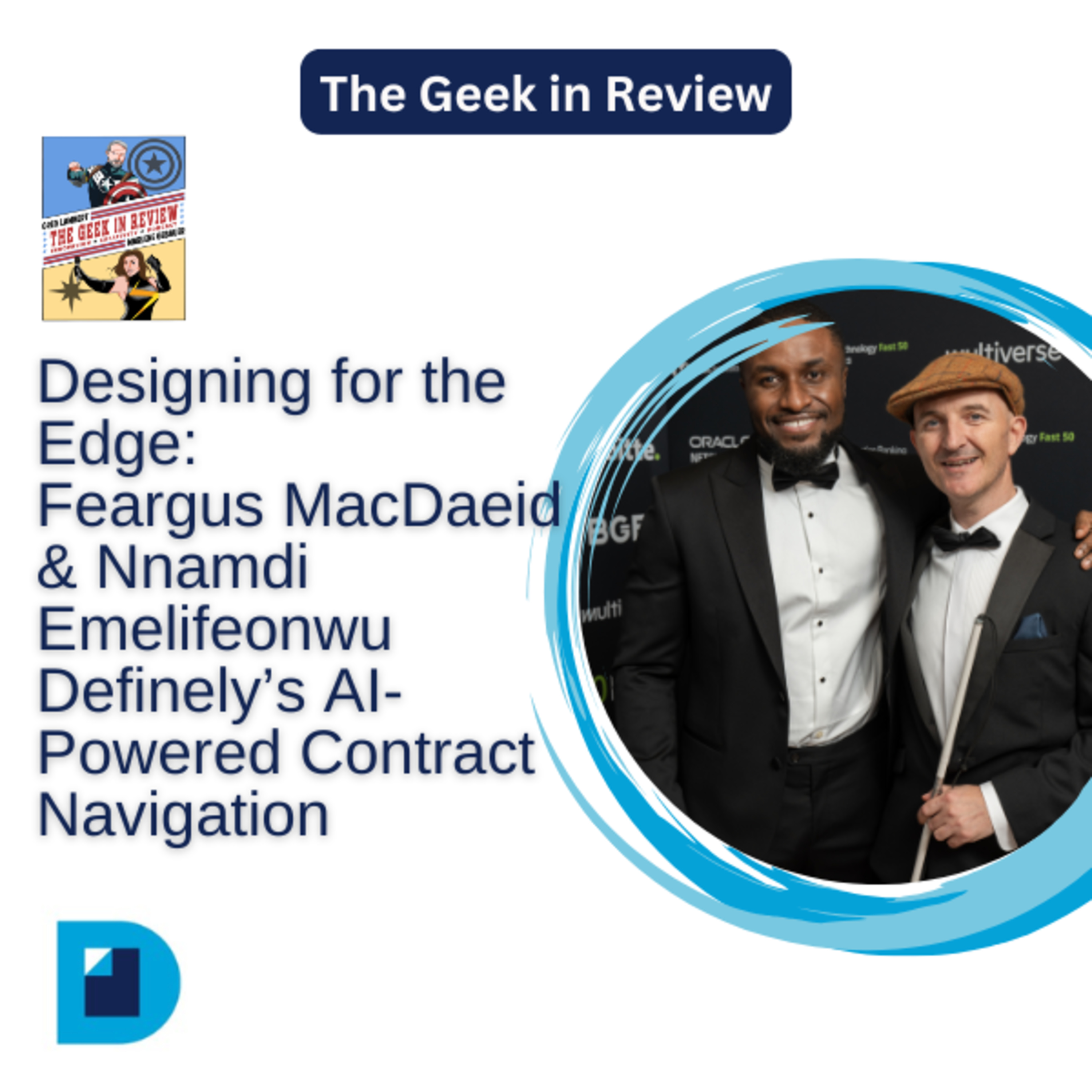
Designing for the Edge: Feargus MacDaeid and Nnamdi Emelifeonwu on Definely’s AI-Powered Contract Navigation
Jun 2, 202500:54:11Tap to summarizeIn this episode of The Geek in Review, we welcome Feargus MacDaeid and Nnamdi Emelifeonwu, co-founders of Definely, to discuss how their shared experiences as practicing lawyers shaped a groundbreaking accessibility solution for contract review. Feargus, who is visually impaired, and Nnamdi, his former colleague at Freshfields, describe how their friendship and professional collaboration led to a tool designed not only for those with disabilities but for all attorneys grappling with voluminous transactional documents. Listeners learn that Definely began as a way to help Feargus navigate complex contracts more efficiently, and through iterative prototyping, evolved into a productivity suite that addresses universal pain points in the pre-execution stages of contract life cycles.Feargus explains that his journey to co-founding Definely began with personal necessity: having gone blind from a degenerative condition by his early twenties, he pivoted from a computer science career at Microsoft to law school, relying on assistive technology and immense personal support. Once at Allen & Overy, the limitations of existing tools became starkly apparent—searching for defined terms meant losing one’s place in a 300-page agreement and juggling layers of nested definitions by reading aloud via text-to-speech. The cognitive load was immense. By collaborating with Nnamdi, who recognized that if a solution could serve Feargus, it would benefit everyone, they embraced the principle of “designing for the edge”—creating a platform that brought definitions, clauses, and cross-references into context without interrupting a lawyer’s focus.Nnamdi takes listeners on a tour of Definely’s three core components: Vault, Draft, and Proof. Vault functions as a dynamic repository for templates, clauses, and precedent documents, enabling users to pull in the most relevant resources from connected document management systems. Draft keeps the user anchored in the current clause while instantly displaying any linked provisions or schedules in a sidebar, eliminating the need to scroll, split screens, or flip between pages. Proof automates common pre-signing checks—verifying cross-references, punctuation, and legal grammar—to ensure a polished final draft. Together, these tools exemplify how Definely streamlines contract creation by surfacing precisely the needed information in a lawyer’s line of sight, thereby maintaining context and reducing manual navigation.The conversation shifts to quantifying Definely’s impact on law firms. Nnamdi cites a study indicating that attorneys save up to 45 minutes per day—roughly a 90 percent reduction in time spent on tedious tasks—by using Definely’s context-aware navigation. Beyond hard metrics, the founders emphasize “soft benefits” such as reduced cognitive fatigue, higher morale, and improved client value. To capture these less tangible gains, Definely’s customer success team works closely with firms to customize usage dashboards and collect feedback. Feargus and Nnamdi also reflect on the broader legal tech landscape, noting that firms are experimenting with in-house development, acquisitions, and partnerships. They believe collaboration between vendors and firms will ultimately prevail, as specialized expertise in areas like machine learning ops and user experience is hard to cultivate internally and essential for maintaining cutting-edge tools.Listen on mobile platforms: Apple Podcasts | Spotify | YouTube[Special Thanks to Legal Technology Hub for their sponsoring this episode.]Blue Sky: @geeklawblog.com @marlgebEmail: geekinreviewpodcast@gmail.comMusic: Jerry David DeCicca
Transcribe →
Philip Young of Garfield.AI: The World’s First AI Law Firm Gets the Green Light
May 26, 202500:49:56Tap to summarizeOn this episode of The Geek in Review, we welcome Philip Young, co-founder and CEO of Garfield AI, the first AI-powered law firm approved for practice by the UK’s Solicitors Regulation Authority (SRA). The episode kicks off with a discussion of recent stories that explore AI’s evolving role in legal proceedings, such as avatars testifying in court and the ethical challenges that arise when deepfakes and synthetic personas enter the legal process. Philip, a seasoned litigator and technologist, draws from his 25 years of legal experience to weigh in on the potential and perils of AI-driven courtrooms, emphasizing the importance of authenticity and trust in legal proceedings.Young shares the backstory behind Garfield AI, which was inspired by a real-world problem faced by his brother-in-law, a plumber who struggled to recover small debts from non-paying clients. Seeing an opportunity to help small businesses navigate the small claims process efficiently, affordably, and with minimal friction, Philip set out to build a system that mirrors what a traditional law firm would do—without the high cost or time burden. Garfield reads invoices and contracts, verifies the legitimacy of claims, guides users through pre-action letters, claim filings, and even court preparation, all while remaining compliant with UK legal standards.One of the most unique features of Garfield AI is its dual design: it serves both pro se claimants and can be white-labeled for use by traditional law firms. Young explains how legal professionals can integrate Garfield into their workflows, using it to generate documents under their own branding while Garfield handles the backend. This hybrid approach provides flexibility for users, whether they prefer a self-service platform or seek a human-in-the-loop experience. Garfield’s early success has sparked interest across the legal spectrum—from solo practitioners to regulatory bodies—demonstrating that AI can support, rather than displace, the legal profession.The conversation also delves into Garfield’s journey to regulatory approval. Young describes the rigorous process of working with the SRA, ensuring the platform aligned with legal duties to clients and the courts. He highlights the importance of maintaining accountability and explains how Garfield was rolled out cautiously, with layers of human oversight and a roadmap toward data-driven, risk-based review. With increasing inquiries from international regulators and courts, Young sees the platform as a potential blueprint for improving access to justice beyond the UK, although he notes that success depends on a supportive regulatory environment, judicial openness, and sufficient technological infrastructure.Beyond the tech, the episode emphasizes the human element of law. Young passionately advocates for AI as a tool that enhances legal practice rather than replaces it—freeing lawyers from mundane tasks and enabling them to focus on strategy, advocacy, and client care. He shares his hope that Garfield AI and similar innovations will close the access-to-justice gap by enabling small-value claims to be pursued cost-effectively and fairly. As he notes, AI may never replace the human lawyer’s emotional intelligence and presence in court, but it can certainly help more people get there.To learn more about Garfield AI and its innovative approach to legal automation, listeners can visit www.garfield.law. This episode is a must-listen for anyone interested in the intersection of law, technology, and the future of justice. Listen on mobile platforms: Apple Podcasts | Spotify | YouTube[Special Thanks to Legal Technology Hub for their sponsoring this episode.]Blue Sky: @geeklawblog.com @marlgebEmail: geekinreviewpodcast@gmail.comMusic: Jerry David DeCicca
Transcribe →
Solving Mobile Discovery with ModeOne’s Matt Rasmussen
May 19, 202500:34:01Tap to summarizeThis week we sit down with Matt Rasmussen, Founder and CEO of ModeOne, to dive into the evolving challenges and solutions around mobile device discovery. What started as a frustration-fueled “passion project” has grown into a powerful, cloud-based legal tech tool that dramatically speeds up mobile data collections while safeguarding user privacy. Rasmussen brings over two decades of litigation tech experience, and his team is focused on automating the traditionally slow, invasive, and expensive process of mobile forensic collection.Matt shares the lightbulb moment that led to ModeOne’s founding—after nearly being hit with a book by an executive unwilling to hand over their entire phone during an M&A data collection. That experience crystallized a need for a targeted, remote, and custodian-friendly solution. ModeOne’s approach allows for precise data extraction, filtering out personal messages, and narrowing collection to relevant participants or timeframes—thereby reducing friction, legal risk, and cost. The tool shrinks a two-week process into a matter of hours and removes the need for shipping hardware or dispatching personnel.The conversation then turns to the power of cloud scalability and how ModeOne’s architecture enables parallel processing of hundreds of phones simultaneously without ballooning costs. Matt recounts a case involving over 400 phones processed in just two weeks—compared to the seven-month timeline it would’ve required using traditional methods. He explains how operating directly on devices with lightweight agents and leveraging cloud resources allows them to outperform older queue-based systems and ensure defensibility through record-level audits.Beyond litigation, the use cases for ModeOne are growing fast, particularly in corporate compliance and legal holds. With recent updates from the DOJ and FTC increasing expectations for mobile data preservation, companies are now compelled to treat phones with the same seriousness as emails and cloud documents. ModeOne’s ability to preserve data in a scalable, minimally invasive way makes it a key player in this regulatory shift. Rasmussen also highlights that while AI may not be the focus of this episode, ModeOne is quietly integrating features like sentiment analysis, emoji flagging, and communication mapping through a partnership with StreamView.As the episode wraps up, Rasmussen discusses the startup journey—from bootstrapping to being named Legal Tech Startup of the Year in 2024. While initial adoption faced the usual “wait-and-see” mentality common in legal tech, ModeOne is now working with several Fortune 10 companies, AMLaw 25 firms, and leading LSPs. Looking forward, Rasmussen predicts mobile data will only grow more central to investigations and legal matters. With privacy and policy changes ahead, ModeOne is doubling down on mobile—not diversifying away from it. As he puts it: “We’re digging deep on phones.”Listen on mobile platforms: Apple Podcasts | Spotify | YouTube[Special Thanks to Legal Technology Hub for their sponsoring this episode.] Blue Sky: @geeklawblog.com @marlgebEmail: geekinreviewpodcast@gmail.comMusic: Jerry David DeCicca Transcript:
Transcribe →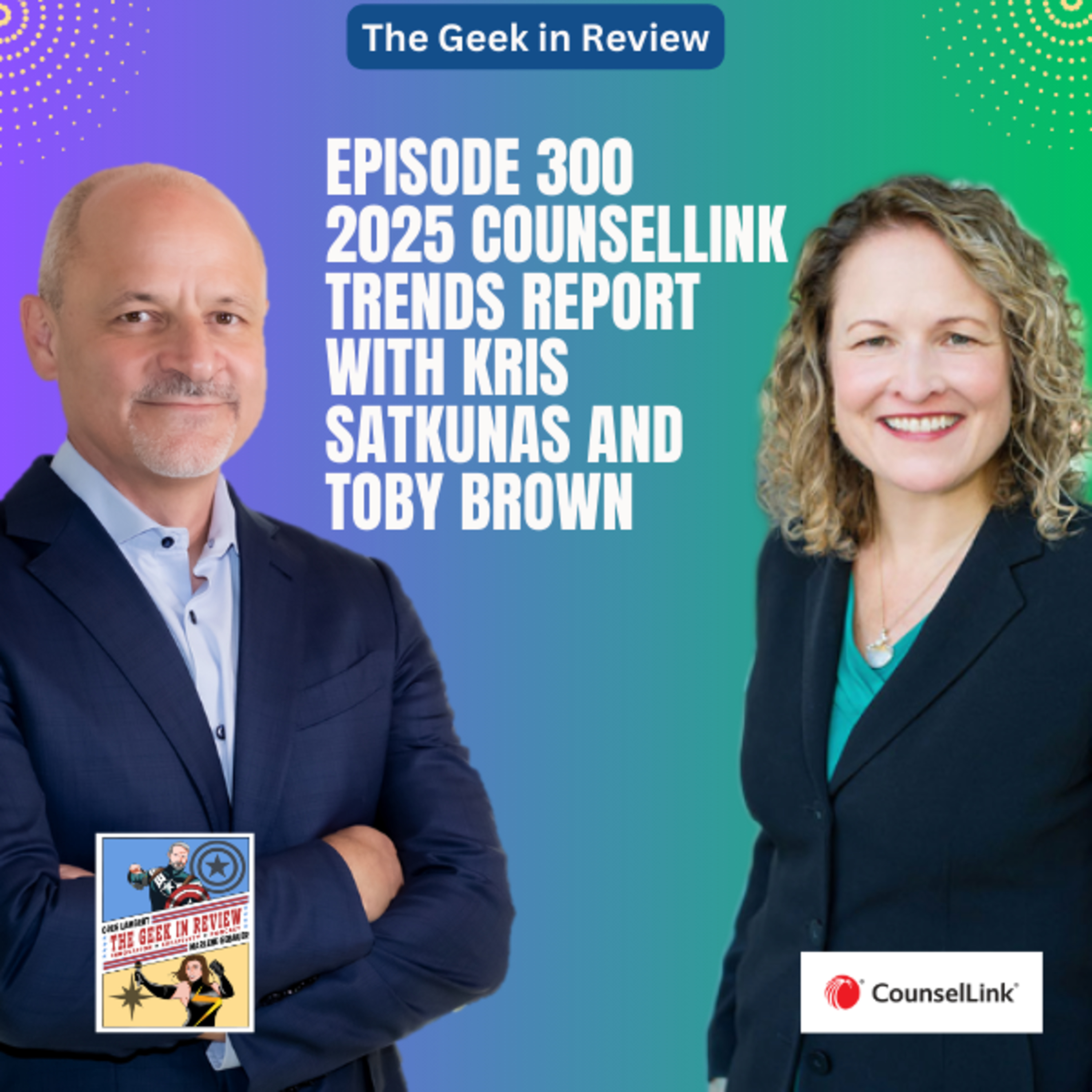
Episode 300: 2025 CounselLink Trends Report with Kris Satkunas and Toby Brown
May 12, 202500:40:54Tap to summarizeFor the 300th episode of The Geek in Review, we celebrate in true “three geeks” fashion by bringing back two familiar voices: Kris Satkunas, Director of Strategic Consulting at LexisNexis, and legal pricing expert Toby Brown, CEO at DV8 Legal Strategies. Kris joins to walk through highlights from the newly released 2025 CounselLink Trends Report, and Toby brings his trademark insight… and a touch of skepticism to the discussion. Together, they explore what the latest data reveals about legal pricing, client behavior, firm strategy, and the evolving landscape of law firm-client relationships.The conversation opens with a focus on the headline trend: partner billing rates continue to rise steeply, particularly in high-value areas like M&A and regulatory work. Despite clients claiming to negotiate hard on pricing, the data on effective rates, what clients actually pay, suggests those increases are sticking. Kris points out that clients are becoming more sophisticated in managing blended rates and staffing strategies, using analytics and technology to influence outcomes, even if hourly billing still dominates.A recurring theme is the widening rate gap between large and mid-sized firms, now a staggering 61%. Kris attributes this to the concentration of high-rate work in large firms and their dominance in practices like M&A and regulatory. Toby adds that the presence of pricing professionals at larger firms contributes to more strategic rate setting—something mid-sized firms often lack. The team also discusses a new report metric analyzing new matter spend, which reveals that even fresh legal work is increasingly flowing to the largest firms, countering narratives that mid-sized firms are winning market share.When the conversation shifts to Alternative Fee Arrangements (AFAs), Kris cautiously celebrates a slight uptick in usage, while Toby remains doubtful about long-term momentum. They agree that lawyers’ difficulty in scoping matters remains a key barrier. The role of project management professionals is highlighted as crucial for moving the industry forward on AFAs—but adoption is still slow, especially outside of established comfort zones like IP and employment law.Greg brings up another area ripe for disruption: ALSPs and their potential to absorb high-volume, low-risk work. While Kris hasn’t yet seen a data-supported shift toward ALSPs, Toby sees tremendous opportunity—particularly when ALSPs combine process standardization and AI tools. The hosts also discuss specific use cases, like LegalMation for employment litigation, where existing tech could already reduce cost and inefficiency, if only firms were willing to change.The episode closes with a look ahead. Kris notes the eye-popping rate growth among associates—some nearing $2,000/hour—as a surprising trend, while urging caution in interpreting conflicting data from different sources. Her “crystal ball” prediction? Legal rates will likely continue to climb, especially in high-stakes practice areas, while AFAs may finally gain ground if firms invest in the infrastructure to scope and manage work properly. As always, the team ends with good humor, mutual respect, and a shared love for data—exactly the energy you’d expect for The Geek in Review’s milestone 300th episode.Listen on mobile platforms: Apple Podcasts | Spotify | YouTube[Special Thanks to Legal Technology Hub for their sponsoring this episode.]Blue Sky: @geeklawblog.com @marlgebEmail: geekinreviewpodcast@gmail.comMusic: Jerry David DeCicca Transcript:
Transcribe →