
Podcast
The Geneva Learning Foundation
Hosted by The Geneva Learning Foundation · EN
The Geneva Learning Foundation is a Swiss non-profit with the mission to develop, trial, and scale up new ways to lead change to tackle the challenges that threaten our societies.
The Foundation’s unique approach to education as a philosophy for change fosters the emergence of self-motivated learners who become leaders for change. The podcast is a crossroads for a new kind of dialogue – and an opportunity to listen in.
A broad range of topics are covered, ranging from immunization to women's health, noncommunicable diseases (NCDs), neglected tropical diseases (NTD), humanitarian response, digital communication, and leadership for learning.
The common thread is the Foundation’s mission to support practitioners to find better ways to learn and lead to face the threats to our societies.
Our podcast includes the best of our live-streamed content in a convenient, low-bandwidth audio format that you can listen to anywhere, any time.
25episodes
Episodes
Newest firstAll episodes
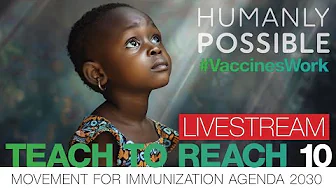
Teach to Reach 10: #VaccinesWork EPI at 50 #HumanlyPossible livestream in English (20 June 2024)
Jul 4, 2024Tap to summarizeThis is the livestream for the afternoon sessions in English of Teach to Reach 10 on 20 June 2024. #Vaccineswork #HumanlyPossible #EPIat50 #DigitalHealth Welcome back to the livestream of Teach to Reach 10, a groundbreaking conference connecting over 21,000 health workers from more than 80 countries to share knowledge, foster collaboration, and drive global health action. As we move into the afternoon sessions, we shift our focus to celebrating the 50th anniversary of the Expanded Programme on Immunization (EPI), exploring neglected needs in women’s health, and showcasing digital innovations in health. In the first session, “EPI at 50,” we will honor the incredible achievements of this global initiative that has saved millions of lives since its inception in 1974. Immunization leaders from over 80 countries will share their greatest successes and toughest challenges over the past 50 years. We will also mark this milestone by launching the Nigeria Immunization Collaborative, a partnership between the Geneva Learning Foundation, UNICEF, and Nigeria’s National Primary Health Care Development Agency (NPHCDA), aimed at strengthening routine immunization in the country. Throughout this session, we will draw inspiration from the Movement for Immunization Agenda 2030 (IA2030), harnessing the collective energy of health workers worldwide to achieve our ambitious goals. By reflecting on EPI’s legacy and igniting new collaborations, we will chart a bold path forward for the next 50 years of immunization, driven by visionary leadership, innovative integration, and the unstoppable momentum of a global movement. We will explore strategies for integrating immunization with other primary care interventions, empowering communities to take control of their health, and advocating for policies that prioritize children’s and families’ well-being. We will showcase the transformative potential of digital health technologies. eHealth Africa, a leading organization in this field, will conduct a workshop demonstrating how their innovative tools are revolutionizing healthcare delivery in resource-limited settings. From mobile health apps to telemedicine platforms, these technologies are breaking down barriers to access, improving quality of care, and empowering health workers to provide better services to their communities. Throughout the afternoon, participants will have the opportunity to network with their peers from around the world, sharing experiences, challenges, and best practices. These connections are at the heart of Teach to Reach’s unique model, which recognizes that the most effective solutions often emerge from the collective wisdom of those on the frontlines. For those tuning in for the first time, Teach to Reach is more than just a conference - it’s a movement that amplifies the voices of frontline health workers and promotes locally-led action for global health. By fostering peer learning, cross-border collaboration, and leadership development, Teach to Reach is transforming the way we approach global health challenges. So join us for this inspiring afternoon of learning, celebration, and innovation. As we honor EPI’s legacy, advance women’s health, and embrace the power of digital technologies, we invite you to be part of this global movement for change. Together, we can build a healthier, more equitable world for all.
Transcribe →
#TeachToReach Partner eHealth Africa and EHA Clinics: Digital health solutions for health
Jul 4, 2024Tap to summarizeThis session is part of Teach to Reach 10, a groundbreaking two-day massive peer learning event bringing together over 21,000 health workers from more than 80 countries to share knowledge, foster collaboration, and drive global health action. Request your invitation for Teach to Reach https://www.learning.foundation/teachtoreach In this plenary session, we’ll explore the transformative potential of digital health solutions in addressing community health challenges and supporting frontline health workers. Through the insights of eHealth Africa, EHA Clinics, and health professionals from diverse contexts, we’ll gain a deeper understanding of how digital tools can bridge gaps, improve access, and drive sustainable change. 📱💉 Health workers will share their firsthand experiences using digital platforms to engage communities, disseminate vital information, and ensure no one is left behind in vaccination efforts. We’ll learn how these tools are enabling more timely, targeted, and effective outreach, even in remote areas. 📲🌍 We’ll also hear from eHealth Africa about their groundbreaking LoMIS Suite, a digital solution tackling stockouts and data challenges in Nigeria’s medical supply chain. By tracking vaccine deliveries and providing actionable insights, LoMIS is driving down stockout rates and empowering informed decision-making to improve healthcare access for underserved populations. 📊💡 After the plenary, join eHealth Africa and EHA Clinics for workshops that will dive deeper into leveraging digital health solutions in various contexts. Join these sessions to share your own experiences, learn from peers, and collaboratively envision a future where digital tools help us achieve health for all. 💻🤝 Whether you’re a health worker, policymaker, or innovator, this plenary and the accompanying workshops will leave you inspired and equipped with new ideas and connections to harness the power of digital health in your work. Together, let’s unlock the potential of technology to empower health workers and transform communities! 💪🌟 LoMIS: Digital Solutions to Routine Immunization Challenges in Nigeria The medical logistics supply chain in Nigeria faces several challenges that prevent the country from achieving universal health coverage by 2030 and the health-related Sustainable Development Goals. These challenges include a lack of infrastructure, inadequate government investment in healthcare, a lack of data to assist healthcare providers in making informed decisions, and a lack of end-to-end transparency in the supply chain. These challenges result in issues such as stockouts of essential medical supplies, inefficiencies in the supply chain, and increased costs. The lack of access to quality healthcare disproportionately affects the country's underserved populations, particularly in remote areas. The LoMIS Suite is a digital solution that addresses these stockouts and lack of data challenges by tracking and monitoring vaccine deliveries to drive the stockout rates down to near zero and also provides insights for informed decision making
Transcribe →
#TeachToReach Lightning Chat: Meet David Akpan, Deputy Director at eHealth Africa
Jul 4, 2024Tap to summarizeWe are pleased to introduce Teach to Reach Partners eHealth Africa and EHA Clinics. Ahead of #TeachToReach, meet David Akpan, a pioneer in the field of #digitalhealth. David is the Deputy Director at eHealth Africa with the Partnership and Programs Directorate, #climate #health In the face of the accelerating health impacts of climate change, digital technologies offer immense potential to strengthen resilience, improve access to services, and empower frontline health workers. But how can we ensure that these technologies are inclusive, context-specific, and grounded in local realities? Teach to Reach is a massive open peer learning platform that connects over 20,000 frontline health workers from more than 80 countries to share experiences, learn from each other, and co-create solutions to pressing health challenges. Request your invitation to Teach to Reach https://www.learning.foundation/teachtoreach With David Akpan, we will explore how we can leverage digital tools to support those on the ground in navigating health challenges faced by health workers participating in Teach to Reach. The Chat will also highlight the exciting partnership between eHealth Africa, EHA Clinics, and The Geneva Learning Foundation for Teach to Reach, and how this collaboration can help amplify the voices and experiences of health workers in driving digital transformation to strengthen the resilience and health of local communities. This Lightning Chat is a preview of the critical health topics that will be explored in-depth at the 10th Teach to Reach global conference on 20-21 June 2024. Join us for this engaging dialogue on how we can harness the power of digital technologies, guided by the wisdom and leadership of frontline health workers, to build resilient and responsive health systems in the face of climate change.
Transcribe →
#TeachToReach coordination meeting for Partners and Leaders (13 June 2024)
Jul 4, 2024Tap to summarizeThe partner coordination call on June 13, 2024, served as a "dress rehearsal" for the upcoming Teach to Reach 10 global conference, set to take place on June 20-21. Reda Sadki, Charlotte Mbuh, and María Fernanda Monzón, the "Teach to Reach Trio," hosted the call, which aimed to provide practical information and guidance for partners and participants. Key highlights from the call include: 1. Participation: As of the call, 21,161 people had registered for Teach to Reach 10, a significant increase from previous editions. 2. Partner recognition: Organizations that met specific requirements, such as attending partner briefings, sharing the Teach to Reach invitation, and providing logos, were recognized as official partners. A diverse range of organizations from various sectors and countries were represented. 3. Lightning Chats: Upcoming Lightning Chats featuring global health leaders such as Maria Nera (WHO), David Akpan (eHealth Africa), and Kate O'Brien (WHO) were announced. Participants were encouraged to subscribe to the calendar to stay informed. 4. RingCentral platform: A tutorial was provided on how to register and navigate the RingCentral platform, where the conference will be hosted. Key features such as networking, scheduling, and interactive sessions were highlighted. 5. Conference schedule: The detailed schedule for June 20 (English) and June 21 (French) was presented, including the opening ceremony, partner showcases, workshops, and networking sessions. 6. Celebration of milestones: The conference will celebrate 50 years of the Expanded Program on Immunization (EPI) and its impact on saving children's lives. 7. Workshops and future plans: Due to the overwhelming response from partners, the organizers are planning to provide more opportunities for partner organizations to showcase their work in future Teach to Reach events. 8. Social media engagement: Participants were encouraged to actively share and engage with Teach to Reach content on social media platforms to increase visibility and participation. The call emphasized the importance of participants' experiences, stories, and contributions in shaping the learning and networking experience at Teach to Reach. With one week left until the conference, the organizers expressed their excitement and anticipation for the event, which aims to foster meaningful connections and knowledge-sharing among health professionals worldwide.
Transcribe →
Teach to Reach 10 Partner coordination call (5 June 2024)
Jul 4, 2024Tap to summarizeThe Teach to Reach 10 Partner Coordination call, held 15 days before the main event on June 20-21, 2024, brought together partners from various organizations to discuss the event's progress and dissemination efforts. Key points from the call include: 1. As of the morning of the call, 21,050 participants had registered for Teach to Reach 10, with 9,323 French speakers and 11,727 English speakers. This number has been increasing steadily since previous editions. 2. Partners were encouraged to continue disseminating the event invitation to their staff, members, and communities. Success stories of dissemination were shared, with many partners reaching hundreds or thousands of people through social media, WhatsApp, and word of mouth. 3. The Geneva Learning Foundation recognized 291 individuals and their organizations who have been actively sharing the Teach to Reach invitation, contributing to the event's exponential growth. 4. Partners were guided through the process of completing their registration on the RingCentral platform, which will host the main conference interactions during Teach to Reach 10. 5. The event will feature sessions on climate change and health, neglected tropical diseases (NTDs), and digital health, with Guides on the side from global organizations like the World Health Organization, Roll Back Malaria, Uniting to Combat NTDs, and eHealth Africa. 6. Partners are supporting Teach to Reach Questions by sharing with their staff, membership, volunteers, and communities. Teach to Reach questions have been sent to registered participants, covering topics such as learning culture, immunization, climate change, and NTDs. Responses are being curated and shared back with the community to facilitate learning and exchange of experiences. 7. Partners were encouraged to continue engaging with and sharing Teach to Reach content on social media platforms like LinkedIn and Facebook to further increase the event's reach and impact. The call highlighted the growing momentum and excitement surrounding Teach to Reach 10, with partners playing a crucial role in disseminating the event and contributing to its success through their active participation and engagement.
Transcribe →