Loading summary
Transcript27 lines
- [00:04]
A
Today's episode is brought to you by Alhena. In E commerce, customers rarely walk away due to lack of interest. They walk away because something's missing. A shade match. They can't confirm size. They're unsure about an ingredient question no one answered. Small gaps that quietly break conversion. Every day, Alhena helps brands turn these moments into growth. Their AI Shopping assistant gives every customer a personalized path to the right product, answers questions instantly, and removes friction at checkout. Brands like Victoria, Beckham and Tatcha are already using it to create more revenue through increased average order values and conversion rate optimization. If you want to know more, visit Alhena AI. Hello and welcome back to the Glossy Podcast. I'm your host, senior fashion reporter Danny Parisi, and I'm here with our international reporter, Zofia Zvyglinska. Hello, Zofia, how are you?
- [01:03]
B
Yeah, very good, thank you. Excited for the topic today?
- [01:06]
A
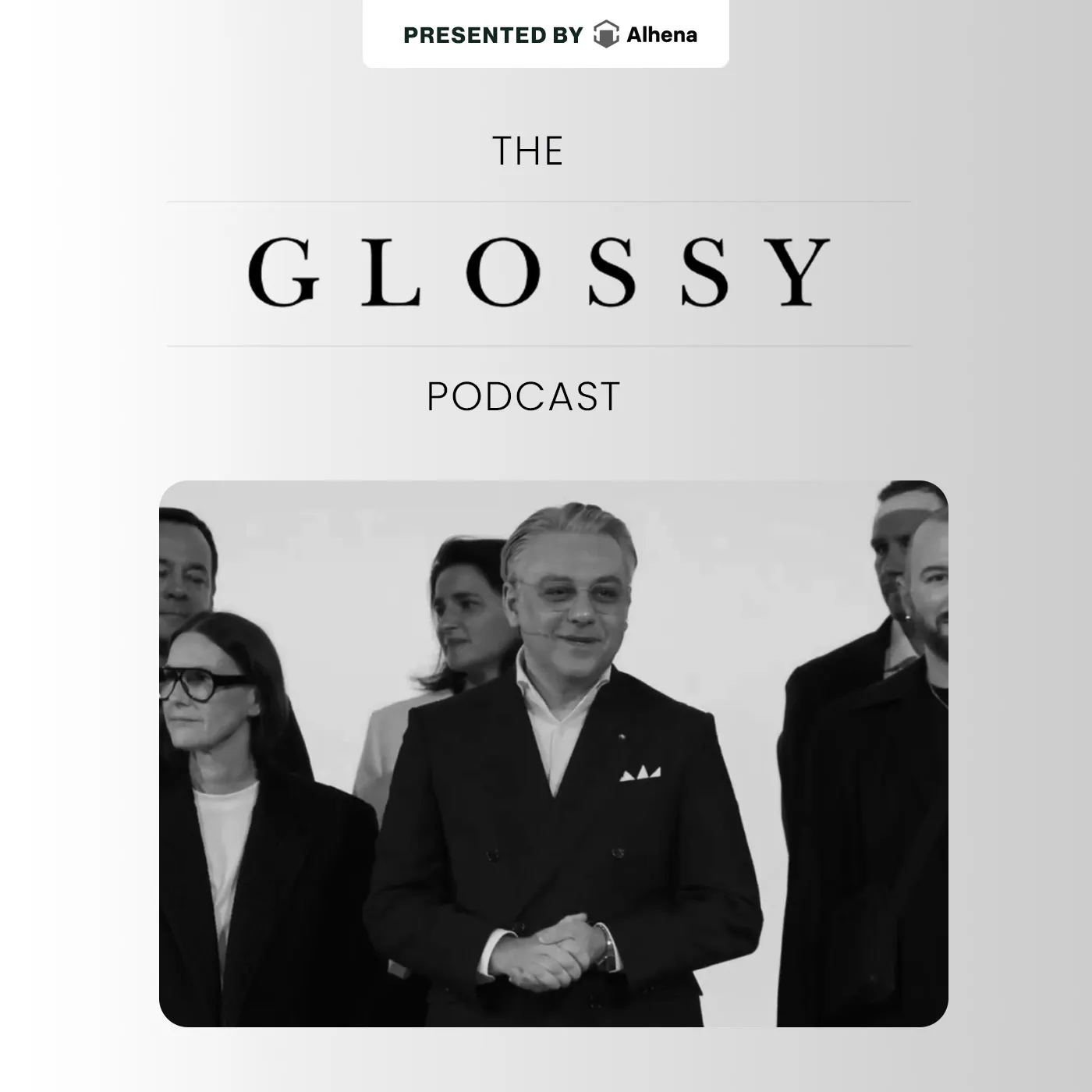
Yes, we have a really good topic. I also wanted to say it's nice to have just the two of us talking. I feel like we've had a lot of guests, which is great. I love having our guests on. We haven't had a focused conversation with just the two of us in a while, so I'm excited to dive in. We are talking about Kering and specifically Recon Caring, which is Kering CEO Luca DeMaio's plan to revitalize the company, which Zofia, you wrote about last week. Last Thursday, Kering's capital markets day, Luca DiMeo broke down the strategy. He's calling Recon Kering. This is Kering's kind of crossroads moment. They have really been struggling, as a lot of the big luxury groups are, but they, Kering in particular has seen their sales going down significantly, particularly at Gucci, which is not good because Gucci is a significant portion of their revenue. They need to turn things around at this event. DeMaio said the model of the last 10 years doesn't work anymore and laid out this kind of broad ranging, comprehensive plan. I wanted to talk with you, Zofia, about what is not working for Kering from the last 10 years, why it's not working. And then I want to go through this plan, Recon Caring and kind of discuss what exactly Luca de Meo is planning for the company. Do we think it's going to work? Can it turn things around for them? All of the above. There's so many specifics and he laid out a, a really specific plan and also goals. And I just want to break it all down for our Listeners to start off, though. So since you wrote about it, I was just. Off the top of your head, what was your initial take on the plan? Did it inspire confidence in you if you were an investor in caring?
- [02:48]
B
I mean, Demayer does speak very, very well. And I think the fact that he held on, I think speaking for three hours nonstop was quite a feat in itself. But from what I understand, the markets a little bit disappointed by his announcement, and I think that they expected a little bit more faster change. A lot of the timelines that were set in the capital markets day were looking at 2028, 2030. I think especially when it comes to Gucci, a lot of the analysts and investors are probably looking at it as if it's basically a growth machine and something that needs to be adjusted very, very quickly. Granted, on the DiMeo and the creative directors of all the houses, which was also quite interesting, the fact that they were all there did inspire some confidence, but maybe not so much that people were thinking, okay, well, this brand turnaround is going to be happening this year, which for an investor, you want to see immediate returns. So that's not something they're going to be getting anytime soon.
- [03:53]
A
Yes, it was a very forceful presentation, I think, like you said, having all the creative directors there speaking at length for multiple hours. I think he did take a short break, but he took a lot of questions. I think it was meant to be a really kind of, you know, pull out all the stops kind of presentation. Let's talk a little bit about what hasn't been working for Kering. So first off, I want to say sales in the last quarter for Gucci dropped 8%, and sales have almost halved at Gucci in the last four years. And Gucci is, you know, 40% of their revenue or something. It is a really, really, like, centrally important brand for the whole group. So that's obviously, you know, a big problem for them, and we can get to what they have planned for Gucci in the future. But the other big problem for Kering that I want to talk about is they have a lot of debt. I believe at the end of 2025, they had 8 billion euros of debt, which is down a little bit from, I think, 10 billion in 2024. But it's still a lot. Some of that has to do with acquisitions like Valentino, which they spent a lot of money on, although we can get into what they're doing there. Luca De Meo has paused that acquisition. I also think debt is a lot scarier now than it was a Few years ago when we were in a more globally low interest environment and money was flowing around really easily, it was not as scary to have a ton of money owed. Things have obviously tightened up a lot since then and having a huge amount of debt hanging over your company is much worse now than it was five years ago. So I think that's a big stressor for the entire business. I'll pause there. What do you think of the debt situation and any other problems that Kering has seen in the last couple of years?
- [05:33]
B
Yeah, I mean, I think the debt obviously is a big issue and as they've kind of done it over the last 10 years or so, I don't think that debt pool's gotten any smaller. They've felt like they've needed to keep up with the competition, mainly with LVMH in terms of acquisitions, in terms of new brands. Valentino obviously is one of those. But I think that there's been some kind of structural issues too in terms of how currencies have played out, how they're thinking about store expansion. I think that's something that DiMeo highlighted in the presentation was just the fact that there was too many SKUs, too many stores and they tried to speaking to too many customers at once. So there was just basically too much happening. And I think that that debt is kind of connected to how I guess stretch they were. A lot of the brands have had so many stores opening that maybe some weren't in the best locations, some of them weren't suited for the kind of customer that they wanted to bring in. And he really focused on that as a kind of way of cost saving with the whole kind of presentation was focusing on cost savings and efficiencies across all of the brands. But mainly the kind of big one was the retail footprint and how much smaller it could be and how much more efficient it it could be for the brands. And that's not just Gucci, although Gucci was highlighted. I think they said that there was going to be about 250 fewer stores by 2030 across all of the brands. And I think There was about 125 stores which were just going to be closed down for Gucci. So I think that shows that, you know, how over indexed they were on that store side and I guess how much they're thinking about, you know, reducing that over the next couple of years to, to make it a better business.
- [07:23]
A
Yeah, I think I saw the number of 1700 stores globally for all the caring brands together, which is a lot and a lot of Those stores are big and expensive and in the fanciest part of whatever town or city they're into. So, yeah, I definitely think the retail footprint was a big drag on the finances. Also, to go back to Gucci, I mean, I think they really relied. They rely and relied heavily on Gucci. And I think because of that, whatever, whenever there was a problem with Gucci, that also became a problem for Kering in a much bigger way than a problem at, like, Bottega Veneta or something. I think they've relied heavily on the Gucci customer, and then they kept raising their prices and expanding the Gucci SKU count, you know, to milk as much from that customer as possible. And then, you know, when that slows down, it's a huge problem for the whole company. There's a couple other things we could talk about. I had written in my notes that some talent staleness was maybe a problem for them. I don't think they talked about that specifically, but that's something we've talked about in general in luxury is hiring the same small pool of creative talent and drawing from the same handful of designers that just get shuffled around. I'm not sure how much of a major impact that has, but just thinking about the luxury model from the last 10 years, that's something I've noticed. Any other things you want to say about the problems facing Kering before we jump into the plan?
- [08:49]
B
Yeah, I mean, I think that what you're saying there in terms of the hiring and obviously, I think the fact that Demna's there at Gucci and kind of reviving these classics, and Gucci has had so many different identities through these years. That's something that the Bernstein analyst, for example, pointed out after the presentation that first it was Tom Ford Gucci, and then it was Alessandro Michele Gucci, and now it's kind of Demna Gucci. The fact that the brand has had so many different identities kind of makes it a little bit harder to profile effectively and to make it kind of work with the times every single time. So I think that's going to be a little bit of a problem. Something that was kind of called out as maybe something that DiMeo didn't address really properly. It was quite funny, actually. He described the brand as being, it's not vanilla ice cream. It's kind of sexy. And he said that Americans understand what Gucci is and that they understand this, like, Gucci feeling. We spoke with our editor after this, and she had no idea what he was talking about. So I don't think it's something that's maybe quite as universally known as he's saying it, but there is a little bit of a warning marker there in terms of what Gucci is doing and maybe how it perceives itself. And maybe that's not quite accurate in terms of how actually other people are thinking about the brand.
- [10:11]
A
It's interesting because the vanilla ice cream analogy, it's like vanilla ice cream is extremely popular. It's popular because it's inoffensive and acceptable to a broad array of people. And so I feel like there's a little bit of contradiction where it's like we want it to be not vanilla ice cream, something spicy and unique, but you also want it to be the biggest brand that makes up most of your sales and is sold all around the world. It's a little bit like, well, something that huge and omnipresent has to be a little bit vanilla or vice versa. But let's get into the plan recon caring, because like I said up top, there was a lot of specifics and I want to get to some of the goals they laid out and the strategies for reaching that goal. But speaking of debt, one of the first ones was just bringing down that debt. And I think this has already been kind of underway. Luca DiMeo put a pause on the Valentino acquisition and they also sold, kind of made an alliance with l' Oreal with the caring beauty side, which I may ask you to explain the details of how that is going to work. But I know it's going to bring in 4 billion euros worth of cash for Kering, which is like half of their debt. So in terms of bringing down the debt, that is a really strong start. It's definitely a little bit of a short term solution, it seems like to me. But what's your take on the deal around Kering Beauty and what that's going to do for their debt?
- [11:35]
B
Yeah, so this was something that was announced last year. They basically started a partnership with l'. Oreal. It's not something they're kind of exiting or deprioritizing as like a sector like beauty is still a very important part of Kering. And the fact that so many of these high fashion brands basically have like massive beauty kind of businesses, especially in perfume still makes them like a big part of that business. So Kering has basically now got this long term licensing agreement with l'. Oreal. L' Oreal ends up handling the beauty product development side manufacturing and global distribution. And that applies to brands like Yves Saint Laurent Beauty and others in the portfolio. And what Kering is doing now is keeping l' Oreal for scale because they bring that reach, the infrastructure and the speed to market. But they're also kind of launching their own kind of arm which is going to be more focused on higher end beauty, on wellness, on longevity, and on subscription kind of type health services through luxury experiences. I mean, we've known that there's been so much kind of noise around wellness and longevity, especially in the US and everything from peptides to massive body scans where you step into this huge machine and it basically tells you everything that's wrong with you. And it looks like Kering is trying to get a little bit of that pie now. I don't know obviously if that's not going to come a little bit too late, because a lot of the industry has already moved forward in that way. But Kering is a big player and the fact that it has this kind of l' Oreal partnership as well might make people take it a little bit more seriously in that kind of longevity space. But it does seem like they're still very interested in the sector and they're just focusing a tiny bit more now on extending wealthy people's lives, basically.
- [13:27]
A
Yeah, it's interesting, the beauty element, from what I understand, and if one of the glossy beauty reporters was here, they could probably explain it even better than you or I could. But. But from what I understand, beauty is a pretty high profit margin category. And an interesting element from the plan is that it also includes doubling the jewelry category across Kering's brands. And jewelry also a notably high profit margin category. And Kering has dedicated jewelry brands like Boucheron, but they also have their fashion brands with jewelry categories like Gucci and Saint Laurent both have jewelry. And I think that's really interesting shift. They want to. I forget if I said this already. They want to. They want the jewelry category to be a billion dollars in revenue in the next four years to reach a billion dollars in annual revenue. Obviously they'd be competing with. Richemont is a big one, another big luxury group that has a ton of very iconic, very famous jewelry brands like Cartier. But also LVMH has Tiffany. So jewelry to me, much like beauty, is very profitable, very high margin, but also very competitive. There's a lot of other big, big companies in that space. So it's interesting to me that Kering wants that or identifies that as a growth opportunity. I think they can do it. I think they have the brands and they have the scale and operations to do it. But it's definitely very competitive. What do you think about the jewelry plan?
- [14:47]
B
Yeah, I mean I think that jewelry is an interesting segment for them because obviously you're talking about pieces that are quite, I guess like flexible price wise. Like you could get something which is super cheap, almost like costume jewelry from a brand, but, but you could also get something that's made in, you know, precious stones and sits on like the higher end of the bracket. I think that that's something that they'll be able to sell to both maybe an entry level customer, a mid customer and the luxury customer. And it does feel like jewelry in general across the brands has been relatively under penetrated, like watches, I think maybe slightly more. So there's kind of a bigger focus on, on Gucci in particular. I think they mentioned a, a kind of sum of 500 million by 2030 for Gucci Cross jewelry and watches. So I think that there's going to be a bigger focus for that brand but also the others. And I don't know if jewellery in itself is something that is super popular right now from luxury brands. So I'm guessing they're going to have to put a lot of marketing behind it to actually make it more feasible. The other side of it is obviously it's not just jewellery and watches, but also eyewear. And that is already something that is a massive part of their business and something they're actually going to be investing even more into, especially kind of across the brands and also with the tech partnerships that they have with Google that they announced last year.
- [16:19]
A
I want to talk about something many retail leaders quietly admit, but rarely say out loud. Most e commerce sites today still leave shoppers to figure things out on their own. And and in beauty and fashion, that gap is expensive. Uncertain shades, uncertain sizes, endless search loops and support cues that bottleneck the whole experience. This is where Alhena steps in. Alhena builds AI assistants that act like a product expert, a stylist and a support rep. In one place, customers can ask for an outfit, a skincare routine, a shade match or help with an order. The assistant handles it immediately in the brand's tone on any channel. The interesting part is how teams use it. Some reduce support volume, others drive higher AOV through guided discovery. Many do both. And once it goes live, brands often realize how much revenue was left on the table because shoppers simply did not know what to choose. If you're thinking about how to improve conversion this quarter or how to scale support without hiring, go to Alhena AI. You can see real examples Actual outcomes and whether your store is ready for an AI assistant. Yeah, I'm glad you mentioned the 500 million euro plan for the jewelry business that I think that's at Gucci specifically. They actually had a pretty specific breakdown of where they want Gucci's revenues to come from by category, which we can maybe we get to that in a minute when we talk about Gucci specifically. There is another, bigger topic from the plan I wanted to talk about, though, which is their geographic investments. Kering's sales in Asia fell by 16% last year. And China has obviously been a big investment target, not just for Kering, but all of the big luxury groups. They've already put a lot of money into China specifically, and I think they want to make that investment worth it. A really interesting announcement from the press conference was that Kering had taken an investment in a Chinese fashion brand called Icicle. I think that was announced at the event, which I just thought was super interesting because there's been a lot of European luxury groups exporting their brands to China with. With varying levels of success. And I've. For a while, I have wondered when those. Those groups are going to acquire or invest in or try to partner with homegrown Chinese fashion brands, because I feel like the Chinese market has. There has been growing bubbling demand for more local luxury brands for a while, and there have been some that have kind of broken through from outside the market. I remember seeing Angel Chen at New York Fashion Week a couple of years ago and thinking her designs were very cool. So it's really interesting that Kering is now investing in a Chinese brand. So I don't know. What do you take on that?
- [19:02]
B
Yeah, by the way, I think it's pronounced Icycle. It's really weird.
- [19:05]
A
It's Icycle. Wow. That's very. It's spelled exactly like the word Icicle, for the record, but I believe you,
- [19:16]
B
and I do think it's an interesting acquisition. It's actually something that it looks like they're going to be learning from across all of the brands. So not only are they acquiring or investing in icycle, but also they're going to be learning more about the manufacturing, the kind of systems from the brand and potentially applying it to some of the brands that they have in their portfolio. The more European ones that have had maybe a little bit of a harder time getting to grips with China. You know, Gucci in particular was very overexposed in China. Ultimately, that kind of market was a major growth engine for Gucci back in, like, 2016. However, you know, post Covid as with most luxury brands and the fact that there was a big focus on Chinese brands becoming popular with local customers too, and there was a bit like a shunning of luxury brands from abroad. Like that has become a bit of a kind of an issue for luxury brands because it's not something that, you know, as a small market, you're talking about literally one of the largest markets out there. And especially for luxury, there was, you know, brand fatigue kind of set in, demand slowed and especially from aspirational customers like brands like Gucci were just not as popular anymore. So I think it's interesting that they're trying to learn from a local brand and then applying that to the rest of their brands and kind of wondering what that will mean in terms of how they're going to be showing up. But there have been multiple brands like Moncler for example, that have been very successful recently in the kind of local markets because they're very, very localized. I think this is something that we spoke about, but they mentioned during the presentation that the Gucci La Familia presentation where they basically had these archetypes for each of these like very stereotypical Italian characters that was launched by Demna. You know, that was something that was really popular and it was also popular in China where they did it with local celebrities and kols. So it was like a completely different set of characters, all kind of specified for the Chinese market. And that was the only country where they did basically a different version of that campaign. So it's interesting they're already trying to localize it and I'm wondering how they're going to do it next.
- [21:39]
A
Yeah, and the other thing on that note is I think a lot of the changes we're talking about or the strategies are short to medium term. Pausing. The Valentino acquisition and the deal with l' Oreal I think are great in the short term bringing revenue back in Asia and China are medium term. I think investing in I cycle is more of a long term and then another long term strategy is investing more heavily in some emerging markets outside of Asia. They talked about India, Brazil, Nigeria, Mexico, several countries in and around South Asia. Demayo said he wanted Kering to play a catalytic role in those markets. Meaning they're maybe not the biggest luxury market now, but through investment from Kering and they can sort of help create this already emerging luxury market in places like that. I thought that was a really interesting one and it showed that the the plan has ideas for immediate staunching the bleeding from some of the Brands, but also more of a long term vision, which again, if I was an investor in Kering, I would be happy to hear that.
- [22:49]
B
I think localization strategies have been very popular with luxury brands, especially in terms of the store layouts, specific products. That's something that's really worked. When you have a lot of these luxury customers actually coming from these areas, the main way that they're going to be doing their shopping is by, you know, doing their shopping in like the main capitals, whether that's New York or London or Paris. So I think the fact that they're focusing on bringing that back to local markets is also just to drive a little bit more of that, like cultural engagement and conversation. I mean, India's been a market that like every brand has been trying to go after, you know, from, from Dior to others. Like, it's just been a really big part of, I guess like the luxury conversation. Like the fact that they have so many events that, you know, western cultures don't, that you need special occasion type of clothing for. Like, that's something that has been a big kind of growth lever. And beauty brands are the same, you know, going after India. I have heard a little bit more around openings in Brazil and kind of South America as well. It seems like there's a kind of burgeoning luxury market, you know, brands that may be slightly under the radar or a little bit more niche. So I think it's interesting that Kering is trying to approach these before maybe some of the other big players get in there. But I do think that right now, especially when a lot of the other markets are stagnant, you kind of want to invest in new areas of growth, even if it might be a little bit more risky. A lot of these places could potentially have a slowdown depending on the economic situation. So I think the fact that they're investing so early in it is a little bit of a risk.
- [24:30]
A
Yeah, I agree. Okay. And then last thing from the plan I wanted to talk about from Recon Caring, and then we can talk about our feelings on whether all this is going to work and also tell me if I forgot anything that you wanted to talk about. But the last one is Gucci, which DeMeo said he wants Gucci to reclaim its spot as the most desirable brand in the world. Two interesting things from that. So you mentioned earlier, they specifically said they want watches and jewelry to be 500 million euros. They also said they want ready to wear to be 600 million euros. Ready to wear and shoes and leather goods to be 1 billion euros. That's like the specific goal they have. One thing I thought was interesting though is they are reducing the SKU count at Gucci by about 20%. I think they've already done it just to make a more focused, concentrated, exclusive brand like we were talking about earlier. I think they wanted Gucci to be both this like super cool, hip brand that's really interesting and unusual, but they also want it to be this world dominating number one brand that everyone and their mother loves and it can't really be both. So I think the reducing the SKU count is one way to do that, to make it more exclusive is just have less of it out there and try to stop some of the dilution. What did you think of that and then any other strategies about Gucci?
- [25:51]
B
Yeah, I mean, I think that over indexing on certain product, especially with Gucci, when so much of the branding is so iconic, I think ends up with, you know, an oversaturation, like not even touching the fact that, you know, you have a whole secondhand market that is clamoring for kind of old season Gucci or something from Tom Ford Gucci. Like that is in itself kind of driving a separate part of the business. But I think if you want people to perceive your product as quality, you have to reduce the amount of product you're basically making and most likely you know, where it's available. Basically following the, the Hermes model. You know, they've said that they're going to be shutting down stores, they're going to be refurbishing stores. You know, I think they're like the selling space itself is going to be reduced, outlets being reduced by a third and then obviously like the footprint is also going to be streamlined. So they're basically trying to get more output from less like retail kind of store unit. And I think it'll be the same for the product where even though they'll have less kind of SKUs, it's just going to be something where they're going to get more out of it for fewer things and probably make more hero items. The One thing that DiMeo talked about in the presentation is the differentiation between the hero items, the legendary items, and the more everyday things. Things that, for example, everyday ready to wear that Gucci doesn't really invest in that much. YSL doesn't really invest in that much. He wants day wear to be a thing from brands. Typically that's not an area that most brands invest in. You get evening wear, you get accessories, but day wear is kind of held out on.
- [27:34]
A
Yeah. And the Other interesting thing is that they want to shorten the lead times at Gucci. At the recent Gucci spring Show, they had 77 products on the Runway that were then available for sale right after. And it was kind of interesting because at the presentation Demayo was like, they call it See now, Buy now, which is funny because it's like, yeah, I've heard that's a not uncommon strategy, you know, so it was interesting that they're going to that. I mean, I think it is a good strategy. It's just, it's not super new or groundbreaking, but maybe new for Gucci. Did you have any thoughts on that on the see now, buy now element?
- [28:10]
B
Yeah, I mean, I think actually like Damayo seems very keen on technology in general, which I think was quite interesting considering I thought, you know, carrying was doing quite a good job with AI, but it seemed like he's focusing on it even more. He's going to be getting execs to do more AI and technology training. They've input at Gucci, for example, something called an augmented twin where they basically have digital replicas of customers. It allows teams to test how customers are behaving across sites, across retail. And they did a media pilot for Boucheron, for example, with that where there was like a 30 to 50% increase in ROI. And then they're going to be using new client telling tools which apparently generated two times more sales. So he's very into the flashy tech and I think some of that has also got to do with what you talked about. I think it's more about tech investment and kind of tech interest in that too.
- [29:13]
A
Yeah, absolutely. And I think his kind of outsider status we discussed dimeo comes from the world of luxury automotives, I think has been a benefit. You know, like, I think a lot of the higher up leadership at Kering has been excited about that. And the tech element, I am, yeah, interested to see what else he brings to the table. We should also spend our final few minutes giving our take on like if we think all of this is going to work because it's a lot of stuff, it's a lot of goals, it's a lot of strategies covering a lot of different brands and a lot of different categories. I don't know, I think there's some inertia involved. You know, Kering has been on a downward trajectory for a couple years and I think that's hard to shake. Also, luxury in general has been going through a sort of a slowdown and then now we have the conflict in the middle east, which is having a really big negative impact on luxury sales. I saw the conflict has already reduced the sales of the big luxury companies by 10% across the whole region. So that's Hermes carrying LVMH, like all of them. So it's kind of a hard time to be making big changes because there's this sort of big crisis happening. I do think that it seems like DiMeo has a very specific. It doesn't seem like a bunch of random ideas, you know, like reading through it before this and talking it out with you. I can see the logic behind all of them and I think that's good. A lot of times in my conversations with people, whenever a company's not doing well or company folds or something, a lot of times after the fact, people are saying to me it was like a lack of coherent leadership or lack of coherent vision. It was random. We were playing whack a mole, all that kind of stuff. I think the strongest element from this plan to me was that it felt very cohesive and he had a plan for a holistic plan for how all these different strategies are all kind of moving in the same direction. That was my feeling. But I don't know if you disagree.
- [31:11]
B
No, I definitely agree. I think the fact that he's focusing so much on defining these brand identities on one, not relying so much on Gucci. I think they talked about, for example, having Saint Laurent be 30% of the revenue by 2030 just shows that they're not trying to make it a system which is over reliant on one brand. Because I'm not going to lie, that does seem a little bit stupid when you're talking about a whole kind of plethora of brands that could be bringing in a lot more to you. He was also focusing on the non apparel brands that Kering owns. So ones like Ginori, for example, that's something that could drive more interest for them. Brioni was a focus. McQueen, obviously they're going to be reducing the store counts for because they want to sharpen up the brand. So it feels like he went down pretty deep on each of the brands. And he also is going to be changing some organizational things around there too. A lot of the kind of Kering system that wasn't working before essentially kind of siloed the brands and how they operated from each other. So if you worked at one brand, for example, you couldn't really move over to another one in Kering's portfolio. And now it looks like it's something that he is going to be Enabling and not just at the kind of exec or kind of management level, but also for store associates. He's going to be moving some of those around from maybe a Gucci to a St. Laurent if the store opening, for example, isn't working for one brand. So I think that's quite interesting. It's flexible. Obviously the fact that none of this is particularly immediate is a little bit of a downer for investors, but I do think it sounds sensible. And as long as he has people who believe in his vision for it, I think there is a chance that this can work out. It just might take a little bit longer than people expect.
- [33:07]
A
Yeah, nothing, nothing about it strikes me as, as bird brained. I think sensible is exactly right. It all sounds, you know, it sounds expansive, but also it's all kind of common sense stuff. I think you're right about the sharing resources between the brands is interesting. I think they also talked about sharing supply chains, which they don't always do now, which I think is also a, a financial thing. You're, you have multiple supply chains for multiple brands instead of, of sharing some of that stuff. The flip side of that is it sounds like there might be a little less independence for some of the brands, a little more centralization, which if we're talking about potential risks, creative alienation, angering your lieutenants by taking away some of their autonomy is possible. That's really internal politics that I don't really know much about. But as far as risk go, that, that definitely sounds like something. The other interesting thing for me is just seeing how the other big luxury giants respond. I don't think any of them have. I don't think any of them were in the same position as Kering. But also none of them have laid out something quite so comprehensive as this. So it will be interesting to see if any of the changes that Kering makes inspire any operational changes at LVMH or Richemont or Hermes or Prada or Chanel, all these big luxury companies which are all competing at a time when luxury is under some contraction. Well, if there's nothing else, I think that's all the time we have for this conversation. Zofia, thank you for being here and giving us your thoughts.
- [34:38]
B
Thank you so much, Danny. It was a pleasure to be on.
- [34:46]
A
And thank you for listening to the Glossy Podcast. Don't forget to give us a rating and a review on Apple Podcasts or Spotify, wherever you listen to this, because that helps us out so much. And don't forget to subscribe to the Glossy podcast to hear interviews with industry insiders, and we can review segments where we break down the news. The new episodes come out every Friday. Until the next time. Thanks for listening.