← The Glossy Podcast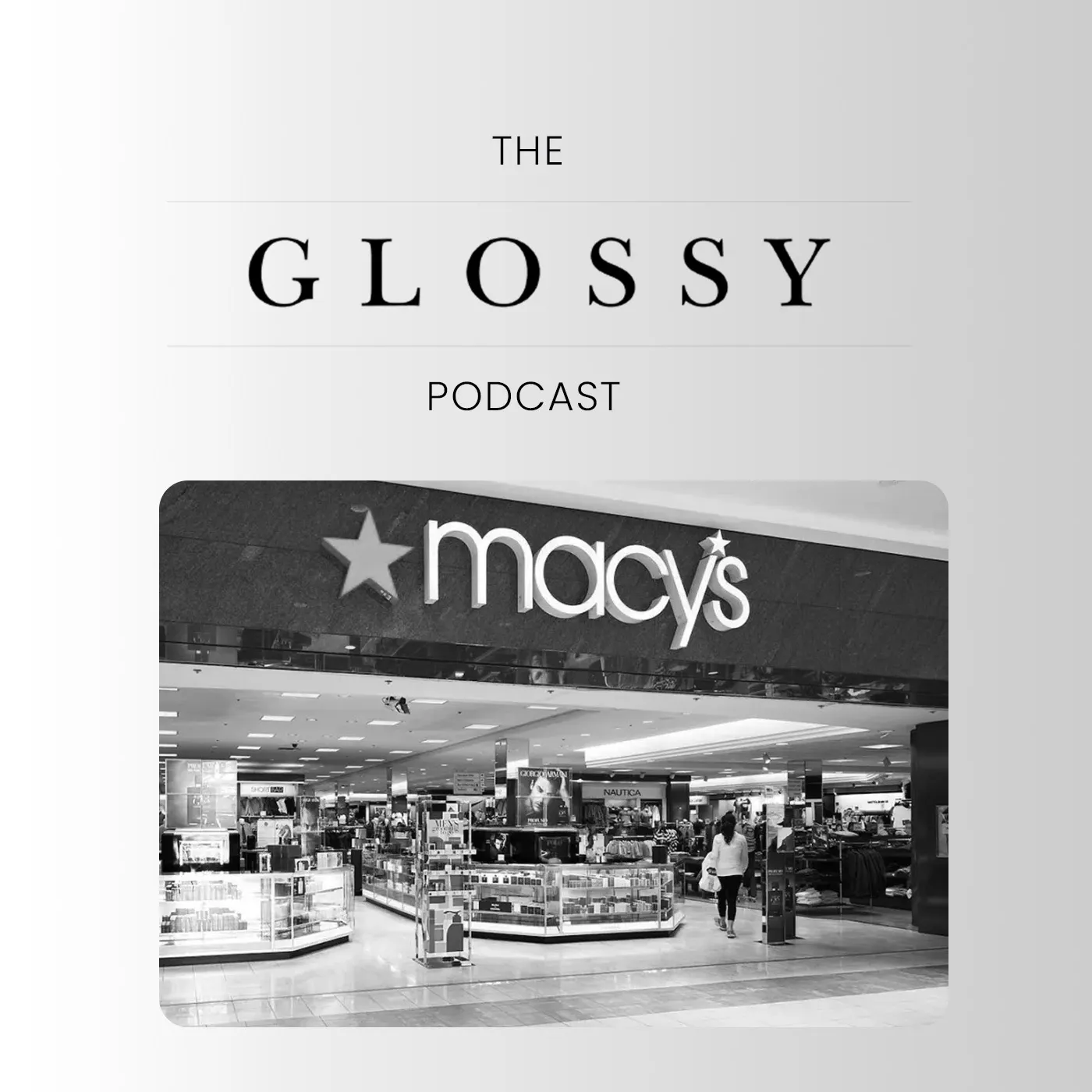
The Glossy Podcast
Macy’s reset: Bloomingdale’s momentum, beauty bets and the new department store model
00:25:06
Loading summary
Transcript26 lines
- [00:02]
A
Join Glossy sister brand Modern Retail for their annual marketing Summit taking place April 20th through 22nd in Huntington Beach, California, where brand leaders from Amica Beauty, Thredup, Pacsun and many more will dive into how they're navigating a marketing landscape that is changing more quickly than ever before. This summit will equip you with the knowledge, strategies and connections you need through our one on one meetings, working groups, casual networking and more. Don't wait. We're offering $200 off with the promo code summit2026 no spaces. Again, that's S u m m I t2026 no spaces. Go to Modern Retail Co MarketingSummit to learn more and secure your pass. Brands and retailers may be eligible for a complimentary pass, so apply on the event page to see if you qualify.
- [01:05]
B
Hello everyone, this is the Glossy Podcast and I'm international fashion reporter Zafirz Baglinska. This week we're talking about Macy's and its success. Macy's had a very interesting earnings call a couple of weeks back and one of our reporters at Glossy, Emily Jensen from, wrote a great piece about it. And I'm here this week to talk about that piece and to talk about kind of what's been happening with Macy's. I know that they've had a couple of good quarters. There's a lot of movement in the department store space and I'm here with our editor in chief, Jill Manoff as well to talk a little bit about that department store aspect. I know that it's something that we've been tracking for a long time, right, Jill?
- [01:45]
A
Oh, definitely. And it's interesting that, you know, Macy's is showing some, some good signs I think is the takeaway. And they're definitely, they've been working hard. They've tried a lot of things for sure over the last couple of years. But what really stuck out, stood out to me in these earnings and in recent conversations is kind of pitting them against or comparing them to the luxury department stores and whether or not they can take market share specific, specifically their Bloomingdale's retail store. Did you guys talk about that? And I hope so.
- [02:21]
B
Yeah, we did. We went into Bloomingdale's, we spoke about Saks obviously, because that's the big comparison one. And we went into a lot more detail. You know, there has been some news from Macy's as well. They've launched that new chat bot that they talked about during the earnings. So we got into all of that and so much more with Emily. So hope you enjoy the Conversation excited.
- [02:41]
A
Thanks so much.
- [02:48]
B
Today we're joined by senior beauty reporter Emily Jensen, who wrote the story after the earnings about Macy's. So welcome, Emily.
- [02:58]
C
Hi, Sophia.
- [03:00]
B
Lovely to have you on. And I know that you wrote a great article about the earnings and listened into the call itself. So, you know, in terms of first things, what are some of the takeaways that you heard on the earnings call? And I guess what does it say about where Macy's sits in that kind of department store environment?
- [03:19]
C
Yeah, so I think the main takeaway looking at Macy's Inc. As a whole is they are showing positive growth and positive momentum. Obviously, as we've reported on at Glossy, there's been a lot of shakeups in the department store landscape. And Macy's, what, you know, we saw with 2025 as a whole is that they reported a 1.5% growth in comparable sales. And a lot of that growth came specifically from Bloomingdale's. And I think it's interesting to kind of see how, you know, with Saks and even Marcus obviously going through bankruptcy, there's a lot of uncertainty there. Bloomingdale's has maybe been able to take advantage of that market share. So they've had multiple quarters now of consecutive growth. Macy's nameplate stores as well, they've been kind of been going through a bit of a shakeup. It was two years ago that Macy's announced this bold new chapter to kind of reinvigorate the department store where they've been closing stores. They're putting more emphasis on their higher performing stores and kind of reducing their fleet to invest more in what they're calling these Macy's reimagined store where they're renovating them to put more focus on customer experience. They're bringing in new brands. They're still in the middle of this kind of revamp. They're still closing an additional 65 Macy's stores this year. And they're also introducing this Macy's reimagined plan to an additional 75 stores, which will take that total fleet to 200.
- [04:50]
B
Wow. Yeah, that's going to be a lot of stores, but obviously a bigger focus on some of these niche ones and especially this kind of new concept that you were talking about. Tell me a little bit more about that. I guess how it works. I know that there's been a couple of retailers that have been moving to smaller format stores. Especially if they're thinking about kind of quality and assortment. It's something that's more important than maybe having a whole Floor dedicated to one area and not really being able to edit that assortment as well.
- [05:19]
C
Yeah, no, I think that's a good word to use here. It's more of an edited assortment. I think with Macy's and a lot of these big department stores is they're having to take a more editorialized approach to what they're offering, especially with this kind of in person experience. Because as we know, obviously you can buy most of these brands and items almost anywhere now on places like Amazon or in some of these big box retailers. And beauty, of course, I think department stores, they lost all their market share to the specialty retailers like Sephora or Ulta over the past few years. So now it's like, well, what are we actually offering our consumers? And I think as an example of this in here in New York City, we saw quite a lot of shakeups in the department stores with regards to their beauty selection, like putting more emphasis on the beauty selection. We saw that here with the Macy's Herald Square flagship, with Nordstrom's store here as well. They kind of moved like the handbags and accessories that used to be at the front of the store when you first walked in. Those have been moved to a different floor to make way for beauty. So now you're seeing more displays of like again perfume, more kind of high end perfume brands. Macy's has brought in like Maison Francis Kirchen, you know, a more luxury kind of perfume brand. Brands like Mac are getting more of these kind of in store displays as well. They're offering more beauty services as well, like within the store. So again, making it a more kind of heightened experience and offering maybe something that appeals as well to a more kind of middle or higher income shopper kind of looking in to discover these brands and have more than just a place to kind of have a giant assortment but have more maybe editorialized approach.
- [06:57]
B
Yeah. And I guess all that beauty right at the front will also increase dwell time. Whenever someone has a little bit of a gander around a new place, I think that the first thing they go to is trying a lipstick or seeing what fragrances are going. I know I definitely do that. I guess with the Bloomingdales in particular, what I've also heard is that it's leaning into that newness, the brand partnership side, that exclusivity you mentioned. And it's also benefiting from that disruption elsewhere. I think on the earnings call, some of the management said that the disruption in the marketplace specifically only gives more fuel to the fire. So they're definitely taking advantage of the Saks global situation. And it feels like some of this focus on these niche stores is also part of that. Saks has typically been known for having this absolute echelon assortment of the best kind of luxury brands. I'm wondering now that things are changing and there is a bit of a shakeup if these other players are also pulling that away. The other thing that also was mentioned on that earnings call is that vendors are also investing more into Bloomingdale's and Macy's is too. I think there's increased capex going towards Bloomingdale's this year, signaling that this is the company's kind of main growth engine. But it's not the only one. I know that Bloomingdales is obviously the big thing, but there's also Blue Mercury, which is part of Macy's on the beauty side. You've definitely got more expertise there. Tell me a little bit more about how that functions within that group and I guess what the performance was like in this earnings quarter.
- [08:34]
C
Yeah, yeah. And also just to like put a number on, you know, how well Bloomingdale's is doing because to your point, I think they are kind of reaping the benefits maybe of some of these stacks struggles. Bloomingdale's specifically in the fourth quarter posted an 8.5% growth in knit sales and a 7.4% increase in sales for the full year of 2025. So just, you know, to kind of paint a picture of how that compares to Macy's as a whole, where we're looking more the low sales, single digits. Bloomingdale's has clearly been doing well and Blue Mercury as well, as you mentioned, Blue Mercury is a more high end prestige beauty chain owned by Macy's. They reported a 1.6% growth in comparable annual sales in 2025. And on Blue Mercury specifically, where they're really seeing growth is in fragrance and dermatological skincare. So again, these are more higher priced items. I would say some of the brands that they shouted out in their earnings call this past week were skinceuticals, Sicily, Paris, Parfum de Marley. So I think with Blue Mercury as well, it's kind of maybe a few steps ahead of what we've seen maybe Macy's trying to roll out which is this more curation, more high end brands. Blue Mercury, it's not really department store experience, of course, it's a much smaller footprint. You can have more personalized attention from, you know, knowledgeable sales representatives. Again, a bit more of a smaller assortment, more high end than what you might see at like a Sephora or an Ulta as well. Of course, one thing too that was interesting, I thought is that they mentioned in the earnings call they didn't really get into the specifics. So I'm curious how this will maybe roll out in quarters to come or months to come is they want to leverage more artificial intelligence across bluemercury and I think across Macy's as a whole. The CEO Tony Spring had mentioned that Blue Mercury team has walked him through 35 different AI use cases which are kind of helping staff in terms of how they're supporting consumers and serving those customers. Again, they didn't share more details, but kind of curious how they might utilize that.
- [10:42]
B
Yeah, I think that's actually a really interesting point because obviously we talk a lot about AI and I think with department stores they've typically been a little bit slower in terms of adoption. I think some of the areas that they mentioned on the call was around the supply chain, the merchandising, marketing, some of the call center aspects and also customer facing kind of omnichannel tools. So I'm guessing something that you might see on their E Comm, perhaps some kind of an assistant to help you look for what you're looking for. I think they quoted saying that we're not buying shiny objects, we are solving problems with AI Which I guess is the common refrain right now around kind of AI use cases. But it does feel like their investment in particular is something to watch because as we all know, department stores have typically been a little bit slower on that kind of technology uptake. So that's been really, really interesting and I'd love to kind of get a little bit more of that in person feel. As to what it actually feels like to be in one of these new reimagined stores, I know that you visited one and it would be really interesting to kind of see how that differs compared to maybe a traditional store. Tell me about your visit.
- [11:52]
C
Yeah, well there is this kind of interesting interplay between, yeah, this tech like we're talking about with again a kind of in person physical experience. The Macy's Herald Square, which as most listeners probably know is a massive, massive, very storied location. And when you walk in, as I said, you know, beauty is now front and center. They're having more kind of dedicated shops for these individual beauty brands. Again like a Kiehl's or a Mac or Maison Francisco Kirchen, higher end brands like Creed, another, you know, perfume brand. We're seeing new designer beauty brands Like Prada. And there's kind of both an emphasis on these, like curated in person kind of experiences. Like if you're buying, you know, Prada or Valentino perfume, you can get those engraved or get gift wrapping. But there's also like more emphasis on some of these, like smart mirrors. Like if you're sitting down at some of the skincare booths, like you should be able to like consult this smart mirror. And it can kind of tell you what skincare products you might need or what might work for your skin types. And like you said, I think we haven't always seen department stores adopt these kind of new initiatives or maybe new technologies. So it's kind of trying to make it maybe more interactive and not maybe that traditional department store experience we might think of where it's kind of there's a counter between you and the salesperson. You're kind of waiting for them to bring you things and tell you things. There's more like ability for the consumer to kind of come in and pick and play with things, but with more of these expert sales associates as well to kind of help guide you a bit and offer you more kind of perks while you're in store. The rollout, you know, when I visited it wasn't totally complete yet. There was still a lot of renovations happening. But again, I think just putting more emphasis on these luxury brands and maybe less emphasis on some of the more mass or prestige level brands that we used to see at Macy's. I think be front and center. There was also kind of, it wasn't quite unveiled yet when I visited in person, a spa experience that they had said would be free for all customers as well. Not free with purchase, they said, but free. So you hop in and get kind of skincare services while on site shopping. So again, I think to that point of just giving people a reason to kind of be in the store, let them try things, let them test things, make it feel like a more pampered experience, more of a destination than just like, oh, here's the place where I come and get these refills maybe of products or just kind of pick something up, but trying to make it feel more high end.
- [14:32]
B
We know of course, that in the last couple of months consumer sentiment in the US has been pretty low. And I think that this might be one of the reasons why a lot of these department stores are also changing up some of their formats. It's interesting. I guess the way that they're thinking about beauty is almost like an entryway into these luxury brands. Beauty Products typically have some of the lowest price points in a luxury brand's assortment. Most of the times they're actually separate than maybe like a clothing segment. So Prada beauty and Prada fashion actually run by two completely different sets of executives. But for a consumer, it's probably looking like an easy consumer journey where if they pick up maybe a Prada lipstick or lip balm, I think one of those has been really popular in the last couple of months. They will end up, you know, potentially going upstairs into one of these floors and looking at the rest of the Prada fashion assortment, which has historically, at least in the last couple of months, been maybe a harder sell than maybe some of these beauty items. I'm wondering, you know, do you think that this kind of strategy is something that other stores will now adopt as well? You know, it's not just Macy's, but maybe, you know, Nordstrom also has a strong kind of beauty presence as well.
- [15:44]
C
Yeah, no, absolutely. I think. And we've already seen this kind of happen, like with Nordstrom, specifically with their Columbus Circle store. They also similarly last fall around the same time actually unveiled kind of a new beauty layout giving more square footage to beauty, also bringing in more kind of services. Like they have a space where you can get like manicures as well, brow services. Bringing in more. I think with Nordstrom they were putting more emphasis too on some of these like niche fragrance brands. Like not totally like indie indie, but smaller brands you don't see as often like DS and Durga or Troye Sivan's brand Suling your again, more kind of higher end beauty as well, like Victoria Beckham Beauty. More kind of dedicated space for these brands to kind of have more of a showcase as well. I think too what something I'm seeing with department stores that I've heard from like sources here in New York City who are very familiar with stores that no longer exist here. Like Barney's back in the day is they recall, you know, department stores used to really have a lot of perfume. Founders come in and give like talks and give kind of masterclasses for just consumers and do these kind of events. And I think now I'm seeing department stores again, like Saks as well, bring in more of these events. Events as well. Like Nordstrom has more kind of space for this to like bring in some of these brands to talk to consumers, like give them some insight to what's going on and again, just make it more of this experience where consumers are like excited to go into the store and maybe learn something, maybe Get a sample, different kind of proposal, but Prawn Temp, which is I guess about a year old now here in New York City they have a store way downtown in the financial district and that's an even more kind of less traditional department store experience. They don't even want it to be called a department store actually. But again they have like this very high design, kind of high touch sort of space with lots of different brands that you don't really see elsewhere. Here in New York with their beauty counter, they have very free form space where you can come and go and touch things, try things, try on fragrances, do walkthroughs. And they have tons and tons of events as well kind of coming in throughout the year. They where they have this beautiful space again very beautifully designed for founders to come in and kind of give talks and sort of do installations and activations to reach people that way.
- [18:07]
B
Yeah, so interesting that kind of events are being the main point for contact I guess with customers. But when they're not looking to purchase a whole lot, maybe department store like Footprint is more about them actually just coming in, experiencing something in store and seeing kind of what they do from there. I know that, you know, obviously Printemps being French, they do have a very kind of strong existing model in France already. But it's not the only kind of department stores that are doing well, you know, in London in particular. On my side, both Selfridges and Harrods have both integrated beauty just as much in the last couple of months to kind of bring customers in on the bottom floor so that when they kind of first experience the store, they're hit with some of the lower price points and then everything else is kind of moving through the top floors. I the corner store concept in Selfridges right now has become almost like the gold standard for activations globally. I think there's a format where you have different activations happening in the same space that allows you to make it suitable for different brands. I think that that's something that a lot of these American department stores are now learning from and especially to your point around events having, I guess like a multi use space that brand founders can use, that brands can use, that they can design themselves. I think there's a pretty successful Thom Browne one right now in Selfridges, but there's also been one from Uggs and Skims. And it's interesting how it almost lends itself to both slightly more mass brands who are looking to kind of elevate their experience as well as luxury brands. I Imagine that this is something that Macy's is going to be doing as well with these reimagine stores and kind of doing that a little bit more as expands its fleet as well. Was there anything else from the earnings that you think people should be watching in the months to come? I know that the department store environment is still a little bit shaky, but it's kind of good to know what's coming up ahead.
- [20:13]
C
No, I think we hit on to the major points. What I would say is that while Macy's had showed good growth in these in 2025 and again especially in Bloomingdale's, they're still staying somewhat cautious for 2026 as a whole. They're projecting annual sales to reach between 21.4 billion and 21.65 billion. And that will represent between a 0.5% decrease to a 0.5% increase compared to 2025. So they're kind of keeping, I guess a more realistic outlook for this year. Even though again there is this opportunity. It seems with Sachs and Niemann in this very uncertain kind of state. They are showing positive growth with these reimagined locations, with these revamps. But again, it's still, there's still just so much competition out there. I mean with places like, as we said, Sephora and Ulta on the beauty sphere, there's a lot of these brands opening mono brand stores and boutiques here in New York and elsewhere. There is obviously Amazon, as we've written about many places moving into a more luxury kind of high end facing consumer. So you really have to give your consumers reason to go into the store. When a lot of these products, they can buy them anywhere, they can buy them dtc, they can buy them from other retailers. Why should they come into the store? It's still something they have to figure out.
- [21:39]
B
Yeah, and I think that's actually another thing that was interesting from the earnings calls that Macy's itself is kind of reorientating itself around the media opportunity for the brand and especially events like the Thanksgiving parade. And we've already talked about events in beauty and fashion. But it seems like they're going to have more brand partners for these kind of events which already have a huge following, huge viewership every time it happens. And it's the same with the store windows and kind of other opportunities throughout the year that I think they're almost treating as these media moments rather than just kind of brand sale opportunities. And I think that more brands, both kind of in the luxury, fashion and beauty spheres will be looking to get in on those. I know that they've got big plans for the Thanksgiving parade this year.
- [22:27]
C
Yes, that's a good point to bring up. 2026 is the 100th anniversary of the Macy's Thanksgiving Day Parade. Last year, they brought in a record 34 million viewers. So, yeah, definitely would be curious to see how they capitalize on that opportunity this year.
- [22:45]
B
Yeah. Well, thank you, Emily. I think that that's everything that we have time for today.
- [22:51]
C
Awesome. Thank you, Sophia.
- [22:59]
B
And that's all the time that we have this week.
- [23:01]
C
Don't forget to give us a rating
- [23:02]
B
and a review on Apple Podcasts, Spotify, wherever you're listening. Listening to this, it really helps us out a lot. Thanks for listening.