Loading summary
Transcript43 lines
- [00:01]
Glossy Newsletter Announcer
10 years of glossy calls for something new. To celebrate a decade of covering the business of beauty, fashion and wellness, we're revamping the Glossy daily newsletter with more reporting, more industry insights and expanded coverage of Glossy events, awards and the trends shaping the industry. Sign up for the new Glossy Daily at Glossy Co Newsletters. Again, that's Glossy Co Newsletters. If you're already signed up, keep an eye on your inbox. The new daily newsletter hits inboxes on June 1st.
- [00:37]
Sofia
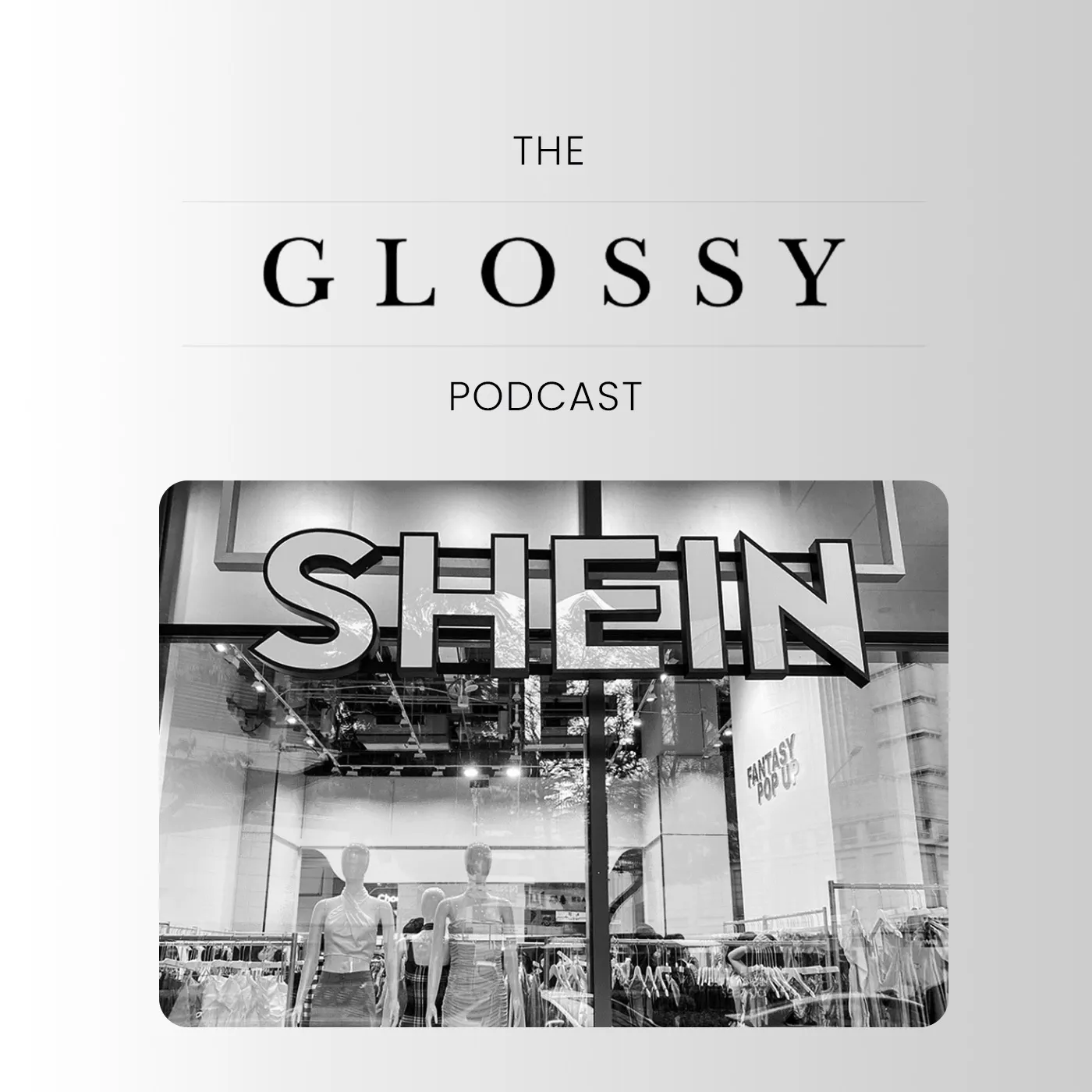
Hi and welcome to the Glossy Podcast. I'm your host for this week, Zafirz Boglinska, international reporter at Glossy. Today we're talking about the very unlikely or is it sale of sustainability first brand Everlane to Shein, the fast fashion behemoth that has become more well known for its dark, dark pattern exploitation and rock bottom prices than any kind of link to sustainability. And to join us in the conversation today is Jasmine Malik Trois, the climate and labour editor at Sourcing Journal, where she covers the apparel and footwear supply chain through sustainability, labor rights and human rights. And she has written extensively on Shein and Temu, forced labor, textile recycling, garment worker protection, sustainability, regulation and climate risk. If there's one person I know who's going to be writing about it very, very well, it's Jasmin. Welcome to the show.
- [01:26]
Jasmine Malik Trois
Thank you so much, Sophia.
- [01:28]
Sofia
And obviously we're here to talk a little bit about Eveline's sale to Shein as you wrote it in the Sourcing Journal today. One Instagram reaction summed up the mood. This is like if SeaWorld bought Peter and Eveline built its identity around this kind of radical transparency idea and Shein has become the shorthand for Ultra Fast fashion. So first takes, why do you think this happened?
- [01:53]
Jasmine Malik Trois
Yeah, that's a really good question. So I spoke to several experts for a story, as you mentioned, that we published in a Sourcing journal. So Xing Lu, the professor of fashion and apparel studies at the University of Delaware, said that acquiring Everlane would be strategic for Shein because it would help the company expand beyond Ultra Fast Fashion, which mainly targets Gen Z slightly less moneyed demographic, although it's growing. The acquisition could also give Shein more legitimacy as it navigates with ongoing reputational and regulatory backlash in North America and Europe. We're talking specifically about the United states, where its IPO's hopes were shattered because Congress was questioning it about potential forced labor and worker rights and so on. And in Europe, in France, where there was that controversy about childlike sex dolls and weapons being sold on its platform and how the French government is still very much, very keen on putting guardrails on Shein. And then Neil Saunders, managing director of retail at the analytics firm Global Data, said that Shein may want to turn Everlane into its own version of Quince, which, you know, as everyone knows, it's this online only retailer that touts affordable luxury apparel, home goods and accessories, much like Everlane's own elevated basics. And I think Quince is doing very well right now. And the hope is that Everlane could follow suit, I suppose.
- [03:31]
Sofia
Yeah. And what's your take on it? Because obviously, like, you've been covering the space for so long, Eveline, you've been covering for I don't know how many years now, but it's charted quite a rise. And there's been many kind of pitfalls over the years, many changes in ownership, CEOs. The strategy has changed as well. What do you think this is happening and why do you think this is happening now?
- [03:54]
Jasmine Malik Trois
Yeah, so when I first saw the news from Puck News on Instagram, I think I just screamed inside for like two hours. It was really shocking. It was just like when Allbirds announced its pivot to AI. And I was like, is this a really late April Fool's joke? Because it's just so contrary to the values that they supposedly started out with. But Everlane hasn't been profitable for a really long time. I know that Puck News reported in March that the private equity firm that owns it, Elle Catterton, has been seeking an investor to tackle $90 million in debt. And there have been rumblings so far that we've heard there were claims of overdue rent totaling about $171,000 at two of its offices in San Francisco. I think in the end, it was just carrying too much debt. And venture capital is also impatient capital, and it was just not willing to ride out the uncertainty that's going on today. And I guess it was, you know, like an albatross that it wanted to get rid of.
- [05:12]
Sofia
Yeah, I think that's a really good point. That that kind of D2C darling that, you know, got bought up by investors is actually, I think, part of a pattern that you see, you know, both with Allbirds, but also other companies. You know, Everlane, Allbirds, Outdoor Voices, Glossier and others. They all came out of this era where investors kind of treated D2C brands almost like software companies. You know, there was a strong branding element. There was direct access to consumers and a very kind of large addressable market where they were supposed to to kind of Translate that into growth. And obviously for investors, that's the most important thing for them. But I think that fashion has different economics. And I think your coverage says that best of all, these companies are still dealing with inventory risk, with sourcing complexity, returns, markdowns, paid acquisition costs as well, and changing tastes and consumer behavior. So once that growth slowed at those companies, the capital structure basically became a bigger bit of a problem. And I think that's happening a lot with these D2C brands. You mentioned, Allbirds, which was the kind of sustainability led D2C darling. They very briefly reached this 4 billion valuation after going public in 21. Then they sold its footwear brand assets to American Exchange Group for 39 million earlier this year. I think Outdoor Voices lost momentum after early hype. Glossier had to reset, you know, and the brands that have held up, which I would say maybe Reformation, Warby, Parker, Doan, maybe and Stout, I think like those brands have only done that because they've had more resilience and slightly different, like backing structures. You know, you've been covering the sustainability space for so long and a lot of that is mixed up with investor capital. What's your kind of personal take on that? Like, is it a good thing that these investors are bringing in so much money into these companies and then expecting overnight growth?
- [07:08]
Jasmine Malik Trois
Yeah, I mean, it's fundamentally at odds with the whole slow fashion movement. So the hard truth is that when conditions in the industry are as uncertain as they are, and I'm throwing in the geopolitical and tariff turmoil as well, it's very hard to plan for the long term. And so it becomes essential to prioritize economic survival over something that might be nice to have, like sustainable sourcing. And the truth is, due diligence is a cost for companies. Doing the right thing doesn't come cheap. And I think we're going to see three outcomes. More companies throwing in the towel but maintaining their pride like Mara Hoffman did, really distill their core purpose in this crucible right now and lean into the small but dedicated customer base. And I'm thinking someone like Eileen Fisher might be doing this or Reformation or sell out in the end, because ultimately business is business.
- [08:10]
Sofia
Yeah, absolutely. And I think this is really interesting. So this kind of plays into that sustainability angle and kind of what Eveline was doing for a very long time. I think Everlane was more about transparency rather than sustainability. And I think that you reported it did have sustainability credentials. We've both spoken to Katina Buters, who is the former kind of head of Sustainability. At Everlane, you said that the brand had achieved a 52% reduction in absolute carbon emissions. So there was significant results coming from that sustainability side. And they disclosed factories, which a lot of brands still don't do. But I don't know. Do you think that was enough on the sustainability side? Did that kind of come through? Was that something that investors cared about long term?
- [08:59]
Jasmine Malik Trois
Yeah, you know, that's a really hard question. I mean, there's this saying, right? There's no ethical consumption under capitalism, which you can dismiss as being an extreme stance. But the news like this kind of confirms it. We've heard a million times that consumers want sustainability, consumers are willing to pay more for sustainability. But there's also this tremendous, say, do gap. And the truth is that being more ethical as a value proposition isn't enough. Shoppers choose based on aesthetics, they choose based on fit and value. And it was interesting. I was looking at Everlane the other day because I heard about Katina's layoff last week as a bit of gossip during Copenhagen. So I was looking at Everlane, and their lineup had just exploded from its original conceit, which was to provide an elevated capsule wardrobe. And for me, it seemed like there were just too many SKUs. And when I was scanning Reddit yesterday as well, to get a beat on what people were thinking, it seems that people were also complaining there was a drop in quality. And I think back to the VC conversation, Maxine Bedet, executive director of the New Standard Institute, and she used to own an ethical label called Zadie back in the day. She said something really remarkable on LinkedIn that has really stuck with me. She said, if it can't be translated immediately into a KPI, it's not worth it from a VC perspective. And I think that's really what happened.
- [10:38]
Sofia
Yeah, absolutely. I spoke with her for the piece today and she said basically the same thing, that it's very tough for these companies to get this kind of growth and then correlate that with maybe a slower production cycle or something that doesn't align itself with trends, especially, I think the one thing that we haven't mentioned here yet, and I guess you've mentioned the Quince part, but the fact that Uniqlo, Amazon, Quince all offer these basics right now, that is making consumers choose those rather than going to companies like Everlane. And if they're more squeezed, which US customers in particular right now are definitely more squeezed on disposable income, isn't that something they're going to be considering as well?
- [11:22]
Jasmine Malik Trois
Yeah, Exactly. I mean, it's easy to convince ourselves, like, oh, they say they're ethical and not really interrogate that too closely so that there isn't that cognitive dissonance in the way we shop with or against our values. It's just rough out there for a fashion brand right now. Even the biggest players are struggling. So as I wrote in my story yesterday, which I will shamelessly quote, it's one thing to have values, but what happens when those values collide with the pressures of scale, competition and shareholder expectations? What happens when so called doing the right thing stops being profitable? And I think that also gets to the heart of the fashion industry. If you think about it, historically, prices of clothing haven't kept up with inflation. So I remember, to paraphrase the great Dana Thomas in her book Fashionopolis, I think a dozen eggs in the 1930s cost like 45 cents, and now they're more than $2, $3. But an off the peg dress that was known as the secretary special during the Great Depression cost $19.99. And that's the same price we're paying at age in them today. So what does it say? They were still paying Great Depression prices?
- [12:51]
Sofia
Yeah, exactly. I mean, that's the thing. If inflation hasn't kept up with the fashion prices, then consumers are basically buying at a major discount and they've learned to buy that. And I think this is where companies like Shein have really stepped in, because rock bottom prices is basically the whole kind of ethos of the company. A lot of the times they're dropping hundreds, if not thousands of items a day. They're doing small production runs, but everything is very, very cheaply produced. The quality is not great. And I'm wondering, especially with this Everlane buy, and I'm assuming this might be a pattern going forward with Shein buying other companies that help boost its reputation. But do you think this is what it is, that Everlane is being bought out for the name and the association and the trust it has with customers by Shein?
- [13:44]
Jasmine Malik Trois
You know, I would say 99%. It's because of its reputation, its supply chain. But it's also so almost antithesis of what Shein is, because Everlane has known for its radical transparency ethos, as you mentioned, reveals its supplier lists, you know, including like where they locate it, you know, what products they produce, you know, what sustainable certifications they have. And Shein doesn't, it doesn't even make public its first tier suppliers, which a lot of, you know, labor activists have criticized it about. So you're wondering, it's like, is Everlane going to influence Shein to do more of what, you know, the sustainability movement wants it to do, or is she in going to, you know, work its own pressures on Everlane? So, you know.
- [14:44]
Sofia
Yeah, exactly. And just explain for our listeners what is first tier, you know, supplier lists, because obviously third tier is typically the ones where, you know, most brands have to address. But, you know, first tier to only list that, like, that is a kind of bare minimum.
- [14:59]
Jasmine Malik Trois
Yeah, yeah, it's totally the bare minimum. It's the cut and sewing factories. So they're the factories that have a direct relationship with the. With the brands themselves. Because when you're talking about textile processing, dyeing, you know, and down to the farm, which is tier four, you know, brands start losing more control over those segments of the supply chain. But with first tier, they're completely in control. They. They call all the shots. The pricing, you know, what fabrics they use, you know, the, what, how much wages workers are paid or not paid, as the case may be. Yeah. So it really is the very bare minimum that you can do.
- [15:44]
Sofia
I know that Shein has also been making a lot of moves over the last couple of years to clean up its reputation. One, hiring a sustainability officer, two, also putting out sustainability reports. Have you looked through those and maybe spoken to anyone over there about what they're doing around transparency and sustainability? Because I don't think it's moved much in the last five to seven years.
- [16:12]
Jasmine Malik Trois
No, not really. I mean, it's a lot of word salad without any actual substance in it. And if you look at their carbon emissions, they're actually rising. And I think they generate as much emissions as a small European country, I think was what was last year. Right now, they're the worst polluting fashion company in the entire industry. And that is very hard to square when you're talking about that kind of scale. No matter how technologically advanced you are, if you keep churning and churning out, overproduction is not going to, you know, measure up to whatever sustainability efforts that you're doing, because it just can. The. Just the physics of it doesn't work out. The mathematics doesn't work out.
- [17:04]
Sofia
Yeah, of course. And I think one thing that I in particular remember with Shein is its investment in the OR Foundation. That happened during the Global Fashion Summit a couple of years back. I know that, you know, you and I were both there. Tell me about that. And I guess, like, also the way that maybe events like the Global Fashion Summit give a little bit of a stage to companies who might not have the best intentions when it comes to sustainability. Yeah.
- [17:33]
Jasmine Malik Trois
So the Shein so called Extended Producer Responsibility Fund that provided the OR foundation has been transformational for the OR foundation because it's been able to help them fund research projects to go into textile to textile recycling. It's been able to help them do weekly cleanups of the Jamestown beach in Accra where it's completely inundated with these textile tentacles. So what happens is that clothing waste that's dumped gets washed out into the waterways, into the oceans. The oceans churn them up into these twisted Cthulhu like forms and it just spits them out onto the beaches. And so they can be so deeply embedded in the sand that you need a machete to cut them out. And so the money, despite the criticism, money is money. Right. And Shein has been the only company that's been willing to do this. I mean, the OR foundation publishes a list of the labels that it finds on the beaches and you have all kinds of big names like H and M Gap, you know, Marks and Spencer being listed on those labels of those clothing that's being found all the time. And we're not seeing them contribute any kind of the same kind of money to the cleanup operations that their clothing is responsible for in the end.
- [19:05]
Sofia
That's true. That's very true. And I think that this is the big kind of criticism against these companies is that even though Shein has donated, I think it was the total was 15 million over three years to the OR Foundation. Granted, the global revenue for shein is 38 billion. So it is a tiny fraction overall from its revenue. It still is doing a little bit more on that side, contributing to the kind of basic levels of, I guess climate, but also sustainability focuses like the oil foundation and the can tomato market, which I think has been one of the biggest things in the press over the last couple of years, showing how many big brands have their clothes washing up on beaches, how many masses of. I think it's bales, right? How many bales turn up at Cantomato every week and how little of it is actually sold. Essentially a lot of these people actually living on top of these clothes. So it makes for a very sad and kind of depressing picture. It's interesting that Shein is actually interested in that and I'm wondering once that I guess deal finishes because obviously it was only a three year deal, whether there's going to be any further developments and any further investment in the oil market. But I do think that the whole issue with companies like Shein is that with revenue like that, they can essentially invest in foundations or initiatives like this without any kind of larger impact to its bottom line. I think it would be silly not to, I guess, interrogate also the way that this applies to regulation because a lot of the times when companies sell in Europe, for example, they're going to have to align themselves with new regulations for brands. And even though a lot of those regulation have been watered down over the last couple of years, there are still significant impacts for companies of that size. Can you tell me how maybe the Everlane sale might play into that?
- [21:19]
Jasmine Malik Trois
I don't know. It's a good question. Is Shein going to be scrutinized more closely or is Everlane going to be scrutinized more closely rather because of the Shein influence? But I think Sheng Lu said also in that story I wrote yesterday that Chinese ownership of a recognizable American consumer brand is still a sensitive issue for China itself. So is Beijing going to be looking more closely at Shein because it now owns a US Brand like Everlane? That scrutiny cuts both ways, I think.
- [22:01]
Sofia
Yeah, definitely. And I think that that's the thing that a lot of these brands now are trying to make moves. There's been these goals of 2030 for a lot of emissions kind of cut downs. A lot of the times brands are thinking about rejigging their supply chain. Whether that's near shoring or doing other things, whether that's tariff or regulation related, we will see. But it does seem like there's certain moves that brands are doing to advance because of regulation. And Shein has been on the butt end of that for a long. Whether that's in France with the fast fashion bill, which I think it ended up getting quashed. Is that right?
- [22:38]
Jasmine Malik Trois
Well, it's kind of in the middle. It's kind of in limbo right now because the EU has said that it's not compatible with its laws. So France has to tweak the legislation or drop it altogether. Or they could just go for broke and implement it and then they'll wind up getting tied up in court.
- [23:02]
Sofia
Yeah, exactly. Because the idea was that behind this bill was that France would essentially ban fast fashion in the country and that obviously companies like Temu and Shein would be on the biggest receiving end of that. So I'm also wondering how that kind of plays into this sale because I don't know, would it affect them? And does that mean that also Eveline might not be end up sold in France as well? Like if something like this goes through.
- [23:30]
Jasmine Malik Trois
Yeah, I think one of the criticisms of the bill, especially from the European Commission side, is that there's no real definition of what fast fashion involves. I mean, when France is talking about fast fashion, they're really talking about ultra fast fashion. And if you drill down, they're talking about Shein and Timu.
- [23:51]
Sofia
So.
- [23:52]
Jasmine Malik Trois
And you know, banning things like advertising, you know, requiring an ecosystem eco modulated fee. So, you know, would Everlane qualify under that? You know, is it because of their ownership structure? I think there are a lot of questions that are still up in the air and, you know, still being worked out.
- [24:13]
Sofia
Yeah, absolutely. And I think Shein has also been the kind of focus, as you mentioned, because of advertising and I guess the way that it puts, you know, the kind of shopping environment forward. It has its own app, it offers extreme discounts on a daily basis. Basically. It analyzes customer clicks, social media trends, and kind of other demand signals for production. And it moves at an incredibly fast pace. I think that one thing that has been criticized here when it comes to Everlane is the fact that it didn't move as fast as was necessary for a D2C brand. And obviously if, if Shein was to include Everlane in its brands and then produce at the same rate, then maybe operationally it would improve, investors would be happy. But I kind of feel like Eveline doesn't stay Evelyn at that point. It should change its brand name or something. And obviously that's not what Shein has bought it for.
- [25:12]
Jasmine Malik Trois
Yeah, I think ultimately Everlane wanted to be Gap with an ethical halo, but that didn't work out. And I think at some point, when do you betray your original purpose? How far do you get away from that, from the elevated basics, from the radical transparency if you're not radically transparent anymore?
- [25:35]
Sofia
Yeah, of course. And I know that obviously you've reported widely on sustainability led brands, but has the conversation changed at all now that so many brands are using AI for production and design? Does that change how these sustainability LED brands are operating?
- [25:54]
Jasmine Malik Trois
Oh, that's something you have to ask. You have to ask them. I mean, I was at the Reformation factory in Los Angeles last year and they have these like tiny little robots that help them with, you know, packaging and in the distribution center. And that was really interesting to see. You know, things like that can help save costs, more automation. But also when we were talking about automation, we had to make sure that workers are being trained up so they're not being left behind in this so called just transition. I think especially if you do anything in a high, in a country with a high minimum wage, you have to start resorting to tools like automation, like AI, but also bring up the workforce so that they're being paid more for more sophisticated skills that they're employing. And that's the only way to make the math work, really. Yeah.
- [26:53]
Sofia
And so much of that is actually happening behind the scenes when people are conducting these sustainability reports, things that Eveline has essentially built the brand on. You have a lot of automation, a lot of auditing that has huge amounts of data that needs to be processed using tech tools. And I think in many ways Everlane was trying to boost itself, its workforce, improve that tech kind of literacy. And it feels like a lot of brands that are D2C LED are having to do that maybe because of pressure from investors. So ultimately, to wrap it up, I think with brands like Everlane being bought out by Shein, do you think that this is a pattern? Do you expect that more brands will end up getting bought out by massive kind of brands like Shein?
- [27:43]
Jasmine Malik Trois
Oh, that's so depressing.
- [27:45]
Sofia
I'm so sorry. I know we always tend to end it on a depressing note, but it does feel like that's kind of where things are going to go, especially because so many of sustainability brands have kind of run out of money. You've mentioned brands that have closed. There's fashion, kind of tech innovators like Peanut X and others that have closed as well. Do you expect that maybe the money will come from maybe slightly blacker sources?
- [28:12]
Jasmine Malik Trois
Yeah, I don't know. Your guess is as good as mine. I know there's been a movement from the likes of H and M Foundation to imbue the industry with more patient capital. Because things like innovation, they do take a long time to scale. And if we're just looking for short term returns, you know nothing's going to happen. You need things need time to grow. And I think at this point nothing will shock me anymore. Between Allbirds and Everlane, I think, I hope that's my limit of being shocked. But I don't know. It's such a weird world that we're living in right now. Everything feels like a black mirror episode. So I don't know.
- [29:02]
Sofia
Yeah, I think that's a great point and it's a good point to think about kind of long term investing. I know that coach is working with Gen Phoenix over a number of years to kind of boost that innovation and kind of material innovation in particular. So maybe VCs do need to slow down and kind of think about the long term investing roadmap rather than thinking about growth at all costs.
- [29:26]
Jasmine Malik Trois
Yes.
- [29:28]
Sofia
So I think that that's all the time that we have this week. But thank you so much Jasmin for joining the Glossy podcast.
- [29:35]
Jasmine Malik Trois
Thank you so much, Sofia.
- [29:41]
Sofia
And that's all the time that we have this week. Don't forget to give us a rating and a review on Apple Podcasts, Spotify, wherever you're listening to this, it really helps us out a lot. Thanks for listening.
- [29:53]
Jasmine Malik Trois
Sa.