← The Great Wall of China: Defense, Fear, and Imperial Power — Fexingo History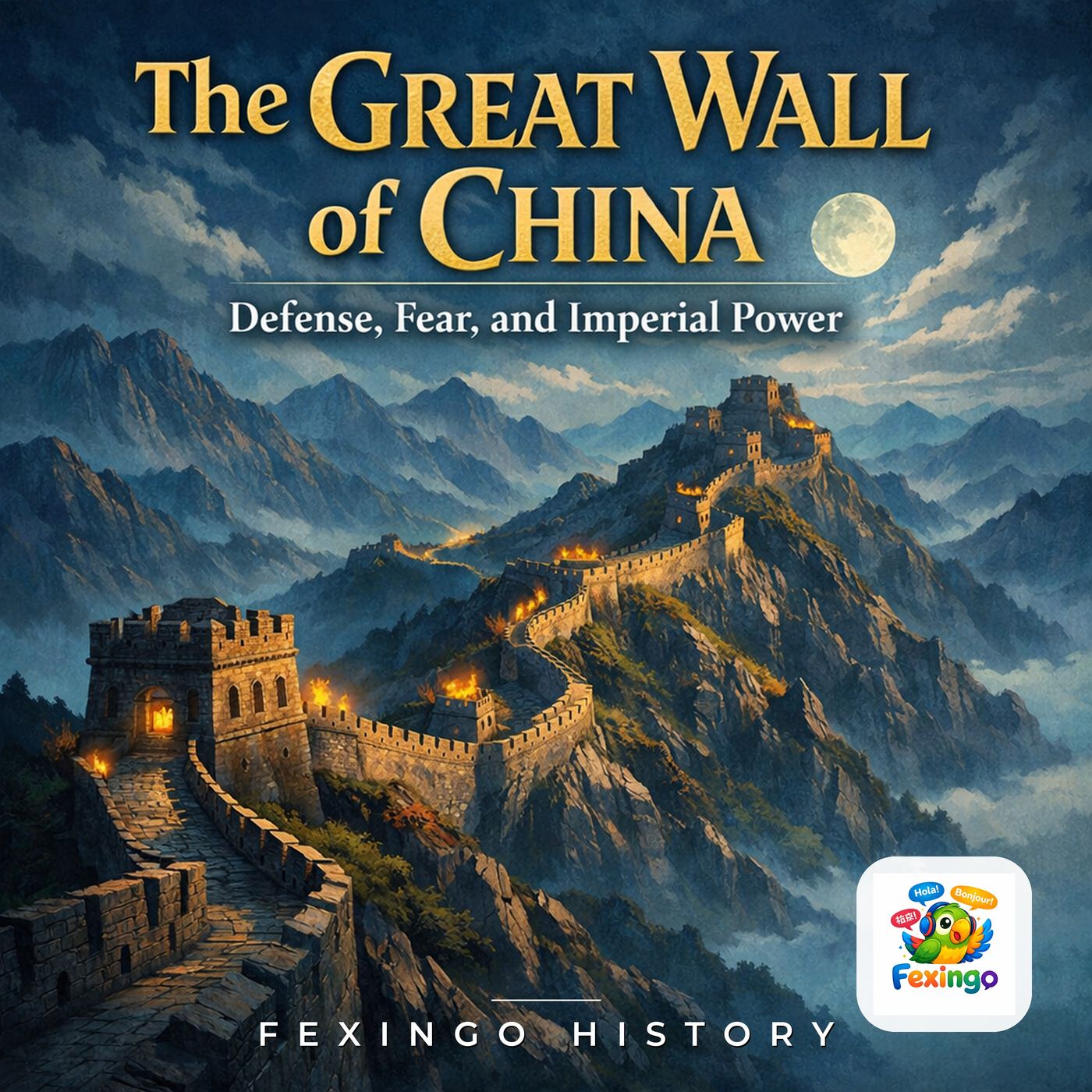
The Great Wall of China: Defense, Fear, and Imperial Power — Fexingo History
The Great Wall's Forgotten Fortress: Zhenbeibao and the Mongol Threat — Fexingo History
00:04:49
In this episode, Lucas and Luna explore the story of Zhenbeibao, a key Ming Dynasty fortress in the Ningxia region that guarded against Mongol incursions. They discuss its construction under the Yongle Emperor, its role in the Ordos Loop defense, and...
Loading summary
Transcript18 lines
- [00:02]
A
So we've talked a lot about the big, famous sections of the Great Wall. Jinshenling, Shanhai Pass, Jiaguan. But today I want to take us to a place that's almost completely forgotten now, a fortress that was absolutely critical for centuries. Zenbeibo.
- [00:17]
B
Zenbebo. I don't think I've heard that name before.
- [00:21]
A
Most people haven't. It's in what's now Ningxia, right in the Ordos loop of the Yellow River. This was the frontier. The Ming called it the hedge of the Empire. The fortress was built in the early 1400s under the Yongle Emperor. And it wasn't just a single wall. It was a whole complex of walls, beacon towers, and garrisons designed to block Mongol raids coming south.
- [00:46]
B
So it's like a mini fortress system within the Great Wall.
- [00:50]
A
Exactly. The Ming strategy in the Ordos was to create a layered defense. The Yellow river itself was a natural moat, but it froze in winter, so they built Zenbabo to guard the crossing points. The fortress sat on a hill overlooking the river plain, and its walls were made of rammed earth, the same technique used on the earliest Great Wall sections, but refined over centuries. Some of those walls are still standing today, and they're incredibly solid.
- [01:20]
B
How big was the garrison there at its peak?
- [01:23]
A
Probably around a thousand soldiers with their families. They lived inside the fortress. There were barracks, granaries, wells, and even a temple. The soldiers were part of the weisuo system, hereditary military households. They farmed land outside the walls during peacetime using the tonsian system we've mentioned before. But when the beacon fires lit up, they had to drop everything and man the walls.
- [01:49]
B
It sounds like a tough life, but constantly on alert.
- [01:53]
A
It was, and the threat was very real. In the 16th century, under the Jiajing Emperor, Mongol raids intensified. Altan Khan, we've talked about him in earlier episodes, he led massive incursions that bypassed some fortresses but were stopped by others. Zenbabo was one of the linchpins. There's a record from 1542 where a Mongol army of 10,000 horsemen approached, and the garrison commander, a guy named Wang Hong, managed to hold them off by using cannons and fire lances. The Ming government sent him a commendation.
- [02:28]
B
Wait, cannons in a remote fortress like that?
- [02:32]
A
Yes. By the mid Ming, even frontier garrisons had gunpowder weapons. The Zenbabo armory inventory from 1570 lists 200 hand cannons, 50 matchlock muskets, and a dozen larger cannons called Hong' I Pa, Red Barbarian cannon. They were mostly cast in local foundries. So the fortress wasn't just Walls and arrows. It was a firepower platform.
- [02:57]
B
That's impressive. But then why is it forgotten?
- [03:02]
A
Because the Ming eventually lost the Ordos. By the late 16th century, the frontier shifted north and Zimbabwe was no longer on the front line. After the ming fell in 1644, the Qing dynasty had different priorities. They made peace with the Mongols through marriage and alliances. So fortresses like Zimbabwe became obsolete over time. It was abandoned. The walls crumbled, the wells dried up, and the local people took the bricks for their own houses. By the 20th century, it was just a mound on the landscape.
- [03:38]
B
It's sad, but also kind of inevitable. Empires change.
- [03:43]
A
Exactly. But here's the thing. Archaeologists have been rediscovering these forgotten fortresses in recent decades. In the 2000s, a team from Ningxia University surveyed the site and found the foundation stones, the remains of the gate, and even some pottery from the Ming era. They also discovered that the fortress was of part. Part of a larger network. There were smaller beacon towers spaced every five li, about 2.5 kilometers, connecting Zenbebo to other forts along the Yellow River.
- [04:15]
B
So the whole region was like a web of defenses.
- [04:19]
A
Precisely. And each fortress had its own story. Zimbabwe's story is one of vigilance, adaptation, and ultimately, abandonment. It reminds us that the Great Wall wasn't just a single wall. It was a living, breathing system of human effort, built and maintained by people who lived and died on that frontier.
- [04:40]
B
It really puts the human scale back into the Great Wall. Thanks for sharing that. L.