← The Great Wall of China: Defense, Fear, and Imperial Power — Fexingo History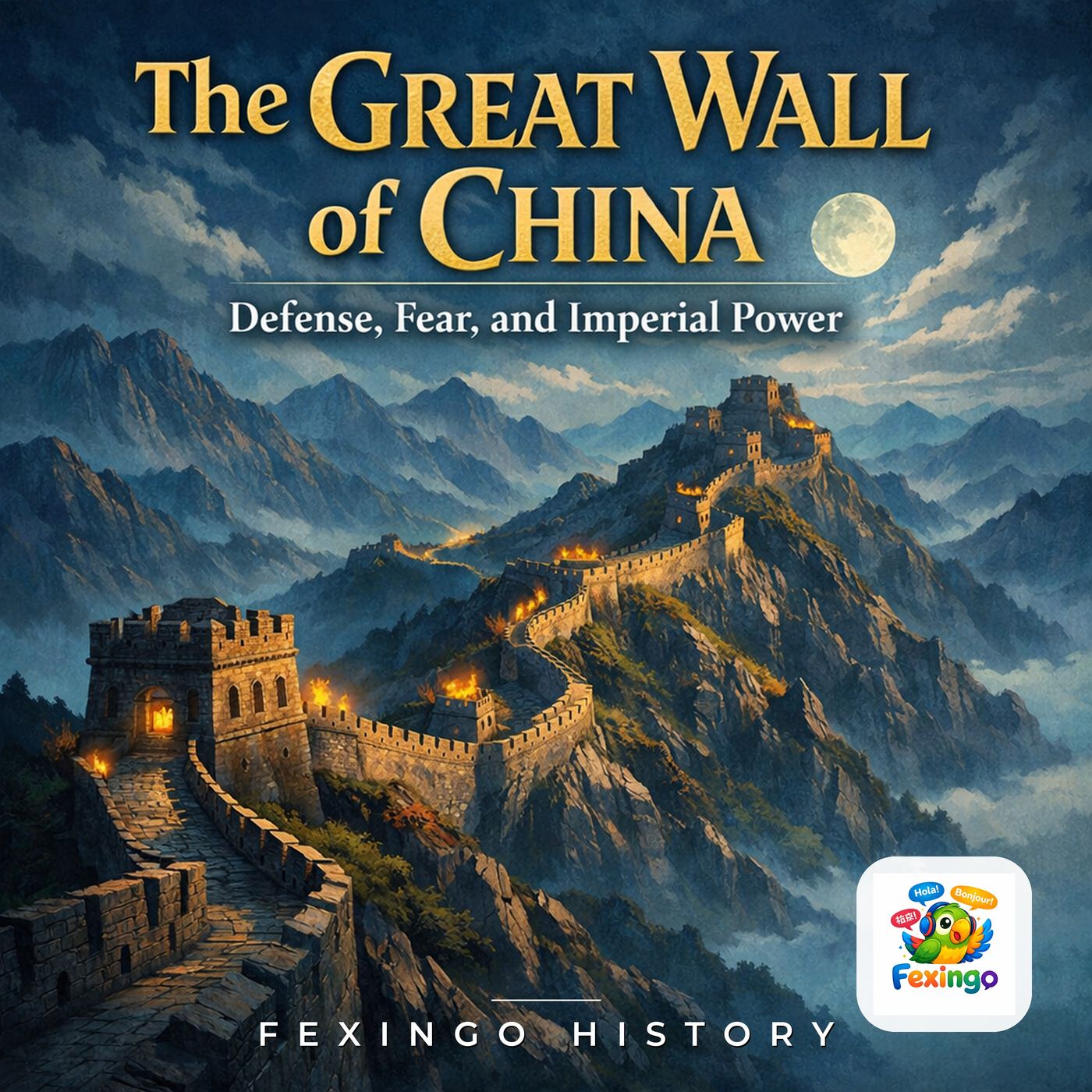
The Great Wall of China: Defense, Fear, and Imperial Power — Fexingo History
The Great Wall's Illicit Opium: Smugglers and the Qing Fall — Fexingo History
00:06:38
In this episode of The Great Wall of China: Defense, Fear, and Imperial Power, Lucas and Luna explore a controversial chapter in the Wall's history: its role in the opium trade during the Qing Dynasty. Far from being just a defensive barrier, the Wall...
Loading summary
Transcript22 lines
- [00:02]
A
So we've talked a lot about the Great Wall as a military defense, but today I want to look at a very different role it played, one that's a bit darker and maybe more surprising. By the 19th century, the wall was being used not to keep enemies out, but to smuggle opium in.
- [00:18]
B
Wait, the Wall was part of the opium trade? I thought that was all via sea through Guangzhou.
- [00:24]
A
That's the common story. The British East India Company shipping chests of opium to the southern coast. But by the 1820s, the Qing government was cracking down hard on maritime smuggling. So the trade started shifting overland and the Great Wall became a key transit corridor. Think about it. The Wall has these fortified passes like Shanhaiguan and Jiaguan. They were checkpoints for goods and people moving in and out of China proper. And with the right bribes, those checkpoints became open doors.
- [00:56]
B
So the very people paid to guard the wall were letting opium through?
- [01:00]
A
Exactly. The Green Standard army that was the Qing's provincial military force manned many of these garrisons. But their pay was often months late and commanders were notoriously corrupt. A British merchant's diary from the 1830s describes how at Shanhaiguin, you could negotiate a bribe per chest of opium right at the gate. The soldiers just looked the other way. One official in 1838 reported that in a single year, over 40,000 chests of opium, roughly 4 million poundspassed, through the wall's northern passes, mostly bound for Inner Mongolia and even Russia.
- [01:38]
B
So the Wall wasn't defending, it was enabling.
- [01:42]
A
That irony isn't lost on historians. The same wall that the Ming Dynasty built to control movement had become, under the Qing, a smuggling highway. The Qing had actually banned opium earlier, in some 1729 and again in 1799, but they couldn't enforce it. And the overland route through the Wall was harder to police than the coast. The smugglers used caravans of camels and mules, sometimes disguised as tea traders. They'd pack opium balls inside chests of brick tea, a product that was legitimately traded with Mongols.
- [02:17]
B
Did the imperial court know about this?
- [02:20]
A
Oh, they knew. But. But there was a lot of denial. Commissioner Lin Zexu, who's famous for his anti opium campaign in Guangzhou in 1839, actually sent secret investigators to the north. They found that at Jiaeguan, the western terminus of the Wall, the local garrison commander was running a protection racket. He charged smugglers a fee per chest and then split the profits with the district magistrate. Lin's report to the Daoguang Emperor was scathing, but he couldn't do Much the corruption was too entrenched.
- [02:53]
B
So Lin's famous crackdown in the south just pushed the trade north.
- [02:57]
A
That's exactly what happened. After the First Opium War and the Treaty of Nanjing in 1842, the British got Hong Kong and five treaty ports. But opium smuggling didn't stop, it just changed routes. The Wall became even more important because the treaty didn't open the northern ports like Tianjin until later. So for a decade, the overland route through the Great Wall was the main pipeline. And it wasn't just British merchants. Chinese smugglers from Fujian and Guangdong moved north and partnered with Mongol traders who knew the passes.
- [03:30]
B
What about the impact on the people living near the Wall?
- [03:34]
A
It was devastating. There are local gazetteers from Hebei and Shanxi that record a spike in opium addiction in the 1840s and 1850s. Villages that had previously been poor but self sufficient now had farmers selling their land to buy opium. Some women turned to prostitution in garrison towns. The Wall's watchtowers, once used to light signal fires against Mongols, were sometimes used as hideouts for smugglers or as places for addicts to smoke. A Christian missionary named William Muirhead wrote in 1855 about visiting a tower near Shanhaguan and finding dozens of pipes and a sickening swarm sweet smell.
- [04:13]
B
So the Great Wall became a symbol of imperial decay.
- [04:17]
A
Exactly. By the late 19th century, the wall was no longer a serious military installation. It was a relic. But its infrastructure, the gates, the roads, the garrisons, was still there. And it was being used for something the Qin couldn't control. There's a great study by historian Chen Ping that looks at the opium economy of the Wall Corridor. He shows that local officials often had to choose between enforcing the ban and keeping the peace. If they crack down too hard, smugglers turn to violence. There were shootouts at Yenmen Pass in 1847, for example. So many just looked the other way.
- [04:55]
B
Did anyone try to stop it? Effectively, a few.
- [04:59]
A
One was Zhang Guo Fan, the great Confucian statesman who later led the fight against against the Taiping rebellion in the 1850s when he was governor of Liangjiang, he tried to reform the Green Standard army and root out corruption at the Wall garrisons. He executed at least two commanders for smuggling, but he was fighting a losing battle. The trade was too profitable. And after the Arrow war in the 1860s, the Qing legalized opium, which made the smuggling routes obsolete. But by then, the damage was done.
- [05:31]
B
So the Wall's story isn't just about builders and warriors. It's also about addicts and profiteers, right?
- [05:39]
A
And that's a side of history we don't always think about. The Wall is often presented as this symbol of Chinese resilience and ingenuity, and it is. But it's also a mirror of China's vulnerabilities, its porous borders, its corrupt officials, its struggle with globalization. The opium trade through the Wall is a reminder that even the most impressive defenses can be undermined from within.
- [06:05]
B
I've never heard that angle before. It makes the Wall feel more human somehow.
- [06:11]
A
That's what I love about history, the layers. Next time we're at a bookstore or online, look for a book called the Great Wall and the Opium Trade by Zhu Weisheng. It's a deep dive, but it really changes how you see those stone walls. Anyway, that's our story for today. Thanks for listening, Luna.
- [06:30]
B
Thanks, Lucas. I'll be thinking about those watchtowers, different.