← The Great Wall of China: Defense, Fear, and Imperial Power — Fexingo History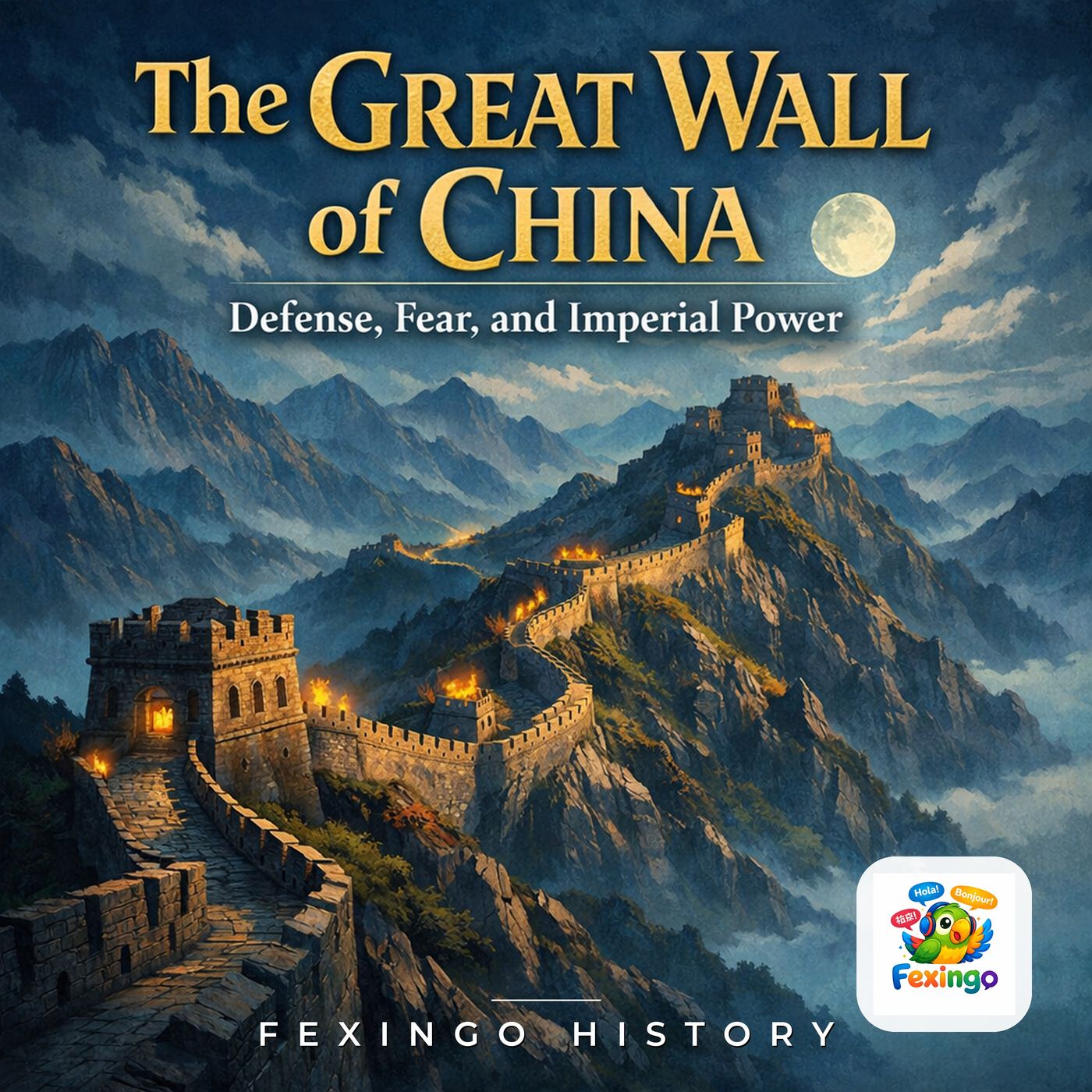
The Great Wall of China: Defense, Fear, and Imperial Power — Fexingo History
The Great Wall's Secret Weapon: Zhang Juzheng's Grand Strategy — Fexingo History
00:05:53
In this episode, Lucas and Luna explore the often-overlooked role of Zhang Juzheng, the Ming Dynasty's Grand Secretary who transformed the Great Wall from a static barrier into a coordinated defense system. We delve into his reforms of the Nine...
Loading summary
Transcript17 lines
- [00:02]
A
So, Luna, we've talked a lot about the Wall's builders, its soldiers, its enemies, but there's one figure who ties it all together. A man who never built a single watchtower himself, yet shaped the Great Wall more than almost anyone. I'm talking about Zhang Juing, the Grand Secretary who ran the Ming Dynasty for a decade.
- [00:22]
B
Zhang Juzheng. Wasn't he the one who basically ruled while the Wanli Emperor was a child?
- [00:28]
A
Exactly. He became grand secretary in 1572, when the Wanli Emperor was just nine years old. And for the next 10 years, Zhang was the de facto ruler of China. He's often called the Ming Dynasty's last great reformer. And his biggest project? Transforming the Great Wall from a crumbling, underfunded line of forts into a coordinated modern defense network. To understand why that was necessary, we have to look at the state of the Wall when Zhang took power. The Tummu crisis of 1449 was over a century in the past. But the Mongol threat had never really gone away. Altan Khan had sacked Beijing in 1550, and even after peace talks, raids continued. The Nine Garrisons, the Ming's military districts along the frontier, were chronically underfunded, poorly supplied, and riddled with corruption.
- [01:25]
B
So how did Zhang fix it? He wasn't a general.
- [01:28]
A
No, but he was a brilliant administrator. His first move was to reform the tax system. He introduced what's called the single whip tax. Basically, instead of collecting taxes in grain, labor and goods separately, everything was converted into silver. Sounds dry, but it was revolutionary. It meant that the government could reliably budget for defense. The old system was inefficient. Officials could pocket grain or demand extra labor from peasants. With silver, there was a standard measure, and Zhang made sure that a significant portion of that silver went straight to the nine garrisons.
- [02:07]
B
So he essentially created a dedicated funding stream for the Wall.
- [02:12]
A
Exactly. And with that funding, he backed the right people. His most important ally was General Qi Jiguang. We've talked about him before. Zhang gave Chi the resources to rebuild the Ji town garrison, which guarded the approaches to Beijing. Che oversaw the construction of over a thousand watchtowers, each one a mini fortress with brick walls and gun platforms. But Zhang didn't just throw money at the problem. He also reformed how the garrisons were commanded. Before him, many garrison commanders were hereditary nobles who had no real military skill. Zhang started promoting based on merit. He even demoted or executed corrupt officers.
- [02:55]
B
That must have made enemies.
- [02:58]
A
It did. Zhang was authoritarian, even ruthless. He centralized power in his own hands, bypassing traditional checks and balances. But it worked. For the first time in decades, the northern frontier was stable. Mongol raids dropped dramatically. Altan Khan, after years of conflict, accepted a peace deal in 1571 that allowed limited trade. Zhang saw that diplomacy was cheaper than war. And that's the key to Zhang's strategy. He understood that the Wall wasn't just a physical barrier. It was a system. You needed good intelligence, well paid soldiers, modern weapons. Chi Jiguang introduced firearms like the matchlock musket. And you needed to negotiate with enemies when possible.
- [03:44]
B
So he combined hard power with soft power.
- [03:48]
A
Exactly. The peace with Altun Khan freed up resources that Zhang then used to shore up coastal defenses against Japanese pirates, the Woku. He didn't just focus on the wall. He saw the whole empire's defense fence as interconnected. But here's the tragedy. Zhang died in 1582, and the Wanli Emperor, now an adult, turned against him. He posthumously stripped Zhang of his titles, confiscated his property, and even exiled his family. Many of Zhang's reforms were rolled back.
- [04:23]
B
Why he had been such an effective ruler.
- [04:26]
A
Partly, it was personal. The Wanli emperor resented being controlled by Zhang for so long. But also Zhang's centralized power had created many enemies among the nobility and bureaucrats. After his death, they clamored for revenge. The emperor, eager to assert his own authority, gave in. The result, the nine garrisons gradually declined. Funding dried up. Corruption crept back. By the early 1600s, the wall was again in disrepair, precisely when a new threat was rising in Manchuria. The later Jin, led by Nurhasai. You could argue that if Zhang's system had been maintained, the Ming might have survived longer.
- [05:11]
B
So his reforms were a kind of golden age for the Great Wall.
- [05:15]
A
A brief one, but it shows that the wall wasn't just about bricks and mortar. It was about organization, funding, and political will. Zhang Juzheng provided that. And when he was gone, the Wall became a shadow of what it had been. And that's the lesson. The Great Wall was only as strong as the empire that supported it.
- [05:37]
B
I never thought about it that way. It's not just a structure, it's a mirror of the state that built it.
- [05:43]
A
Exactly. And Zhang Juzheng, for all his flaws, understood that better than almost anyone.