Loading summary
Transcript194 lines
- [00:01]
A
Get the ice cream. Love big freezer. It's by the peas. Some things are really best not to put off, like defrosting the freezer. Or if you're a landlord, sending a copy of the new government information sheet to your existing tenants. You must do this by 31 May or risk a fine. Make sure you're up to date with the new laws. Find the information sheet@gov.uk rentingischanging this episode is brought to you by Prime Obsession is in session. And this summer, Prime Originals have everything you want. Steamy romances, irresistible love stories and the book to screen favorites you've already read twice off campus. Elle every year after the Love Hypothesis, Sterling Point and more slow burns, second chances, chemistry you can feel through the screen. Your next obsession is waiting. Watch only on Prime Girl. Winter is so last season and now spring's got you looking at pictures of tank tops with hungry eyes. Your algorithm is feeding you cutoffs. You're thirsty for the sun on your shoulders that perfect hang on the patio sundress. Those sandals you can wear all day and all night. And you've had enough of shopping from your couch. Done. Hoping it looks anything like the picture when you tear open that envelope. It's time for a little in person spring treat. It's time for a trip to Ross. Work your magic.
- [01:30]
B
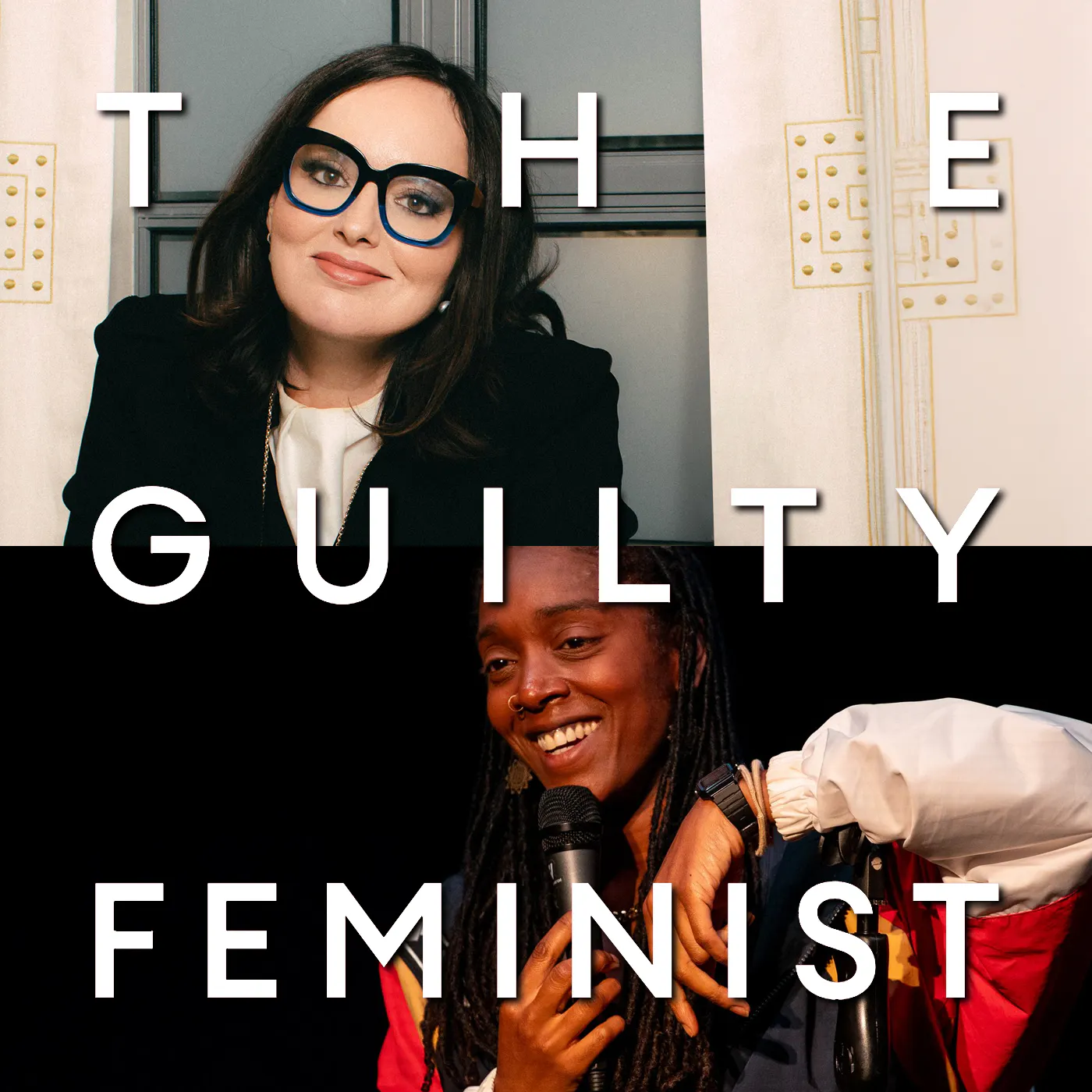
Hello guilty feminists. Before the podcast, just to let you know, we have a live show in Cardiff as a Welsh election emergency Special on Sunday 12th April. It's at the New Theatre. Our very special guest is Carol Vorderman, Welsh political commentator and all around national treasure, the wonderful Kiri Prichard Maclean is co hosting. There's also comedy from Priya hall and we'll also have some political candidates there and some music. It's extremely important we do not allow the far right into Wales. It'll be a really close run thing between plied and reform and in some seats the greens and reform. So we really, really want to make sure that we are out boots on the ground. This is a rabble rousing event. We're going to come together, we're going to talk about tactics, strategy, morale, all of those wonderful things you are going to feel very, very later at this show and after the show and you can keep an eye on our website as the bill expands. But I would get tickets now. There are 100 tickets available at £15 and that's for students and those on low or no incomes. Once they're gone, they're gone. So grab one of those now if you need it. If you don't need it, buy a regular price ticket. We really hope to sell this out. Please bring people who may be less political than you and get them talking and engaged. We're also doing a very exciting show in London with the Nerve News who provide a brilliant journalist service. Carol Cadwallader from the Nerve News is coming on to talk about the Epstein files and many of you will know her journalists on this has been peerless. She is bringing on Lucia Osborne Crowley, who has written widely about the survivors, many of whom she knows personally. And her books include My Body Keeps your Secrets and the Lasting Witnessing the Trial of Ghislaine Maxwell. This is a show not to be missed. It. It will be on the 30th of April at Leicester Square Theatre. If you would like to see more about these and other shows, go to guiltyfeminist.com and click on Live shows. Get your tickets now before they all go. Live from London, the Spontaneity Shop presents the guilty feminist. 10 for 10 with me, Deborah Frances White and my very special guest, Athena Kablenu. Athena Kablenio, welcome to my home and welcome to 10 for 10.
- [04:09]
A
Thank you.
- [04:10]
B
Where we are hosting 10 of our guilty Feminist faves over the years to talk about the last 10 years and maybe what we're hoping for for the next 10. Thank you for coming.
- [04:19]
A
Thank you for having me. I'm super flattered to be here.
- [04:21]
B
Oh, delighted to have you. It's 10 years of the Guilty Feminist and we want to celebrate that with 10 people who we associate with the Guilty Feminist. What's your first memory of the Guilty Feminist?
- [04:32]
A
So it would be actually not the Guilty Feminist. It would be working with you on your podcast, Global Pillage. Yes.
- [04:38]
B
You were a Global Pillage regular first. That's.
- [04:40]
A
Yeah. And you actually, you probably don't know this, but when I did Global Pillage in Edinburgh and it would have probably been like my first like, quote unquote panel show, kind of like, come and be yourself on a thing. And I was shitting myself, I swear. Because if I've got. If I've got imposter syndrome now, I bloody had it back then when I still have my day job. So it was a very scary thing for me. So thank you for, you know, just like allowing me to do that and, you know, break through that, whatever barriers I was putting up in front of myself. But that's my first memory of working with you.
- [05:12]
B
Wow.
- [05:12]
A
And I remember listening back to it and thinking, why do I have a lisp? Just materialized Some kind of weird thing because I was so nervous, but it was a big deal for me at the time.
- [05:25]
B
For the listeners who don't know what Global Pillage is, it's two teams of comedians versus the hive mind of the audience answering questions about cultural differences around the world. And we always have panelists on who have different cultures and heritages because then they can also ask questions that people might not know. So you could say maybe an idiom from Ghana or a cultural, you know, Sindhu V. I remember asking, why at my wedding did my husband have to carry flip flops and an umbrella and things like that? It was something like that. I hope I've got that right. And it's around where the audience. Someone in the audience can say, I'm French. And in France, we always, you know, why do we have a mouse, a tooth mouse instead of a tooth fairy or something like that? So it's a. It's a delightful show. And I always just remember it being so playful and joyful because people can bring things from their own heritage as well.
- [06:27]
A
Yeah. And it's so funny. Like, honestly, I have the best time taping it. It makes me laugh so much.
- [06:31]
B
Oh, no, you're making me want to bring it back.
- [06:33]
A
But it is funny. And obviously idioms, which I always look forward to this. Shouting out of the word. Idioms.
- [06:38]
B
Shouting out of the word.
- [06:39]
A
It's a great show.
- [06:40]
B
We haven't had time to do the mo. I think it died a bit in the. Because in the pandemic, there was no real way of doing a panel show.
- [06:47]
A
Yeah.
- [06:48]
B
And so we didn't do them for a while. And then after the pandemic, we were trying to get the Guilty Feminist back up as a live show, and I was doing too many scripted projects. But I do miss Global Pillage, and I think we should maybe do a few this summer.
- [07:03]
A
It's good crack and it's. That's a great format. And it should be on telly.
- [07:06]
B
Yeah, it should be.
- [07:07]
A
It should be on telly. Should be on radio. It should be somewhere.
- [07:09]
B
I think it should be on Radio 4.
- [07:11]
A
Yeah. Well, it's perfect for Radio 4. I don't know why. Why haven't they slapped off already? I don't know. It's perfect. Perfect. Okay.
- [07:16]
B
We're definitely going to bring it back now. Maybe we should do it in Edinburgh then. You were invited on the Guilty Feminist, and so I already knew you because of Global Pillage. I knew you were great. Do you remember the theme of the first Guilty Feminist episode? And why it was chosen.
- [07:32]
A
I did it with Susan, didn't I?
- [07:36]
B
That's right. Susan McComb was co host.
- [07:37]
A
Yes. And I. I remember talking about running. So it was just about women in our bodies, right?
- [07:42]
B
Yes, it was body capability. I think you and Susan chose it together. Maybe because you were saying, we. We want to talk about the capability of our body rather than the way that women are often trained by society to think about how their body looks or is it desirable or. And you both. I think Susan had run a marathon. You were a runner and you both wanted to talk about. No, but what my. What is my body capable of and what can I train it to be capable of from wherever different individuals come.
- [08:17]
A
I sound so young, but if you ask me that. But let's talk about lying down and doing nothing. That's hilarious. That sounds exactly like something I would have said back then.
- [08:27]
B
Before you had children.
- [08:28]
A
Yeah, before I just decided I just like sitting down and drinking tea and not staring out the window. Yeah. It's funny actually, the way, I mean, not to be poncy about it, but your art does change with you over time. And what your. Your politics changes with you. And whilst I still believe in those things, like I have other priorities now.
- [08:46]
B
Yeah.
- [08:46]
A
And I think I would. I think I had my. I had one. I had my daughter then, but I still had memories of what. Who I used to be. So I was still pretending to be that person. Which truthfully.
- [08:55]
B
Did you have your daughter that I don't remember you.
- [08:57]
A
Oh, I might not. I might not have. Oh, my gosh.
- [09:01]
B
I think you were single. Oh, my God. And you were single and you were going running every day.
- [09:05]
A
I was single and ready to mingle.
- [09:07]
B
I remember you having your first baby. You definitely didn't have a baby at that point. I didn't. Let's hear a clip and see if it brings anything back. But when I had the builders in recently, I asked one of them to hang a picture up for me next time. He came and when he returned, he said, I've bought you a little lady hammer so you can do it for yourself. And I was outraged until I saw it and it was so cute.
- [09:34]
A
I think I remember this.
- [09:35]
B
Do you want to see it?
- [09:36]
A
Yes.
- [09:37]
B
Little lady Hammer.
- [09:38]
A
Is it pink? Is it pink?
- [09:39]
B
No, no, but it's just fucking adorable. Wait, Tanisa, you're thinking it's just a hammer?
- [09:43]
A
No. Can I have a. Yeah. You can't kill a man with this. Okay. Not that I. You know, just saying I'm a feminist, but I went out on A date the other week, and I offered to split the bill. And then when the guy said okay, I was like, I didn't mean it. I didn't say out loud. I said it in my head. But, you know, I purposely pulled out the visa electron, like the crappy card. So you think I was poor. And he still said, yeah, okay. Oh, my God. Yeah. So I was single then. I wasn't dating whilst living. My partner, in case he's listening to this,
- [10:33]
B
I was gonna say. I was gonna say, yeah, when you. You were out on the scene and you were very into your athletics. I remember that. And, yeah, it was well before motherhood. And it's really interesting that you say that. How do you think your feminism has changed since you've become a mother?
- [10:48]
A
I've realized how hard it is to kind of understand that something's unfair but also do something about it. So in my personal life, everything you read about the load that is put onto women in heteronormative families is completely true.
- [11:07]
B
Right.
- [11:07]
A
Whether it's the parenting, the cooking, the household chores, whatever, and negotiating that reality with also trying to challenge it whilst maintaining your relationship whilst actually going. But I enjoy it as well. You know, that is giving me a perspective that I might not have if I was on the outside looking in. And, yeah, like, you know, my partner's a lovely guy. He's not a misogynist that just go, get out. Get into the kitchen. He's not like that at all. It's just circumstances. I'm a freelancer. He's a lawyer. The kids are just attracted to me like a magnet. They won't leave me alone. And then on top of that society trying to untangle that from the outside, you'd be like, well, surely you wouldn't. You wouldn't put up with that. And actually, it's like, I do. And there are advantages to putting up with it as well in terms of how it's affecting my children and also how it supports my partner, too, because he's not a man. He is a human that I live with. And there are lots of dynamics at play that I might not have understood if I wasn't in it. You just realize the habits men get into. And it's not because they're bad people. It's because we live in a bad world. And so I have a lot of empathy, I think, for individuals who participate in unfairness and understand that in their world, it's actually not unfairness. It's just. It's how things are. And it works sort of, yeah, that makes sense.
- [12:31]
B
So many women talk about this that there's all these unseen things. And the thing is, yes, you're freelance but you, you sometimes freelancers end up working more hours. It's just that you can do them from home and you can stay up late and you can, you know, go to a coffee shop while you're waiting on the school run and quickly do those emails. So you end up doing a lot more. But as you say, if someone else has got like a 9 till 6 job, you'll pick up that slack and the children come to you and you gave birth to them and all of that sort of stuff. But I think being aware of it and knowing and understanding and keeping that conversation going is the main thing.
- [13:09]
A
Oh yeah, it's, it's constantly spoken about and what I would say is the onus is always on us to be like, don't do this, don't do that. Well, actually it needs to be done so. But actually the owner should be on the volunteering of that change. And that's where I, I think that's ultimately like, I can do it. I fairly when it comes to the parenting, I enjoy it too much, possibly to the detriment of my career, you know, but I do enjoy it too much. So it's like, I see it, I see with that aspect, yo, he's missing out, you know, and, and we have this conversation a lot. And that's what I would say to any man in a situation where their partner who is a woman is doing more of the workload. Like maybe there are things that she's doing that you might want to get in on now. And we, we often see it as like the laborious things, you know, like. But actually there's a lot of fun things that guys are missing out on too.
- [13:58]
B
Yes, I agree with that. I think that the way that our world is set up for men to leave the home and do lots of work and come back and for women to have more flexible hours or more of a work home hybrid does leave men as well as overworking women. It does leave men out in the coldest.
- [14:16]
A
Massively. Yeah.
- [14:17]
B
Like how much connection they end up with their children.
- [14:19]
A
You know, my kids can ride bikes because of me. That moment I have, that's my moment now. Chasing them like, I'm not wearing my sports bra, my boobs are flying out everywhere. But I'm like, yes, you've done it. That's my moment. Yeah. You know, and I think we, we often, because we always talk negatively about the labor of women, we actually need to talk about positively, like, what. What we contribute and what we get to. The fun we get to have.
- [14:43]
B
And it's funding, the connection, the joy.
- [14:45]
A
It's so much fun. Like, I love cooking for my kids, man. Like, I think it's. I love it. And I love sitting down and eating with them, you know, And I. Yeah, I do think if men don't do this, it's. It's like, it's. You are. It's not just about the work. You're missing out, man. They're eating. When your kids eat couscous, you just want to give yourself an. You know what I mean? You're like, oh, my God, this is a leper icon. You know, I made them eat kiskus, you know, and. And stuff like that. So I'd love the conversation to be more about the positives and the joys of kind of like, you know, people talk about homemaking and home labor and all this, but it's also. It is good crack as well. Yeah.
- [15:22]
B
It's home joy, home satisfaction.
- [15:23]
A
Doing puzzles with these kids. So fun.
- [15:26]
B
There's sort of nothing more important or exciting than watching a child develop because their brains change every week, and they're learning, they're curious, they're learning new skills. It must be fascinating to watch a child grow up.
- [15:38]
A
It's sort of fascinating. And also, like, we are equipped to do this. If you're 4 years old, I'm equipped to educate you because, you know, I'm very qualified to explain to you that you shouldn't put your finger in a pug socket, you know, and when they get older, you're not equipped. Right. They come home with equations and homework that you can't do. So these are the years you want to embrace your own.
- [15:58]
B
Absolutely, absolutely. It's your. At least you know all the answers to all the questions they're going to
- [16:01]
A
ask at that age.
- [16:03]
B
And it's helped you as well, I think, in your career, you say maybe to the detriment of your career, but in another way, you have written illustrated children's books.
- [16:12]
A
Yeah.
- [16:12]
B
And presumably you understand what kind of books your children need or want, and that's made you able to write those books, I think.
- [16:18]
A
Yeah. Two things. Yes, absolutely. Being around children and being around the education system helps. And also needing to be home more has forced me to write. And I appreciate that pressure, actually. That pressure has. So, yeah, maybe to the detriment of my performing career, but actually to the advantage of my writing career. Yeah.
- [16:34]
B
So you've written history's most epic fibs and history's most epic fails. Can you give us one fib and one fail?
- [16:39]
A
Okay, one fib. So Walter Raleigh did not bring the potato to the United Kingdom. He did not do it. No one knows it's a vegetable. Who knows? Who brings vegetables to countries? Think about it. It's a vegetable that was farmed for 10 years.
- [16:51]
B
So why do we think that he did?
- [16:52]
A
We don't know. We do know that at some point we had the potato when there was a point where we didn't. We do know that they had it in, like, Mediterranean countries like Spain for a long time, for obvious reasons. They were in South America first. And we do know that one day we got it and we liked it. But we don't know who the we and we. We couldn't possibly know. When you think of. Think of it, when we really think about it, how could we?
- [17:11]
B
Well, if it was written down that he did, then we don't know.
- [17:14]
A
Well, we don't. We can't. We don't know who wrote it down first. But we. It's received wisdom, right?
- [17:19]
B
There's no actual source for it.
- [17:20]
A
There's no source for it.
- [17:21]
B
There's no source for the potatoes. You have to have them dry. And an epic failure.
- [17:26]
A
An epic fail. Oh, let me do a Berlin wall. So we fell down.
- [17:33]
B
I think they took a turn.
- [17:35]
A
I always have to remind myself when I talk to kids, I've got to say, it's still there. Because I kept fell down. And someone came up to me, said, actually, the wall's still there. So I was like, that's a good point. Especially because it's cool to visit. But anyway, Burning wall fell down. At the time of it coming. At the time, the border. It wasn't the wall that came down. The border came down. Everyone wanted it to come down, but it came down faster.
- [17:55]
B
But I remember it on the news.
- [17:57]
A
A German politician went on TV and told everybody in 1989 they could cross the border when they couldn't. Oh, people crossed the border anyway. Then they were just like, oh, yeah, the border's gone. But an actual fact at that point, there had been no agreement that, you know.
- [18:11]
B
But a bit of the wall was pulled down because we saw the footage,
- [18:13]
A
the point at which people crossed the border. The border was still there. But so many people heard this broadcast and got the rung under the stick. They ended up just letting them through. So all that footage was the result. And sadly, this civil. He was a politician. His name was Gonta Chabowski. He never lived it down. It was a very embarrassing thing for him.
- [18:31]
B
But actually I need his books, never mind children, but pictures.
- [18:34]
A
But pictures taken of that day. I always say to young people, we celebrate that as a high point in European history. Total accident.
- [18:43]
B
So if you want something to happen, you should just go on the news and say it's happened.
- [18:47]
A
Listen, I say to people, if Clive Meyrey goes on the news and says, we're back in the eu, like maybe.
- [18:52]
B
Very good.
- [18:52]
A
Maybe it's gonna happen, you know, I don't know.
- [18:54]
B
But very good.
- [18:55]
A
But it also powered the people. Like so many people tried to cross the border after hearing that.
- [18:59]
B
Very good.
- [19:00]
A
They were like, oh, let's just speed up a bit.
- [19:02]
B
Yeah, yeah. I would love to take you back to the first time you did the Guilty Feminist after you'd had a child. And Ned has just told me he has a clip.
- [19:13]
A
Oh my gosh, I bet I sound tired.
- [19:16]
B
Tell me more, tell me more.
- [19:17]
A
Well, I feel a bit guilty today because I left my 6 week old at home, but don't worry, I spent all morning expressing milk for her.
- [19:27]
B
Both of those sound guilty and also feminist.
- [19:31]
A
Yeah, well, it's quite a feminist thing I think, to do. Sit at home watching Come Dine With Me and Politics Live whilst odoing yourself. Is udoing a verb? Milking whilst milking yourself. I'm quite new to motherhood. It's my first child. I didn't know this is what you did, first of all. I didn't know it squirted out of you. Did you guys know this? Like a cow. Like I've seen Country File and I was like, that's how it works on cow. That's amazing. I didn't realize she was that young when I came out.
- [20:02]
B
Six weeks old. Yeah. Was. Was that the first time you'd.
- [20:05]
A
That might have been the first job I did, yeah. Wow, that's incredible. But yeah, I've not been around babies before. Really. We don't have any babies in our family. It's just me and my mum, my brother in London and I was, I wasn't with my partner then. I was living in my mum's house. So everything was like, I have no idea what I'm doing. Like, literally this is pure instinct. So, yeah, that's really funny.
- [20:27]
B
Wow.
- [20:28]
A
Yeah.
- [20:28]
B
So they. You've got them to a pretty good.
- [20:31]
A
They're self sufficient, Deborah. They can, they can get dressed in the morning, they can brush their teeth. The girl can make sandwiches now and she says, mom, I'm hungry. I can just put my earplugs in. I need to hear this. This has nothing to do with me. You can make a sandwich. So it's okay?
- [20:45]
B
Yeah. That's great. That's really, really great. One of the most important lockdown episodes we did was the episode on Black Women and Girl Lives Matter. In it, you said this about the movement and the protest. Can we hear a clip?
- [21:03]
A
What I want to talk about is why I don't march for Black Lives Matter. I didn't march four or five years ago. I didn't march this time around. And it's not because I'm not an activist, although I'm a very bad activist. All I do is give money. I struggle to give time. It's not because I don't believe in equality and in the erasure of racism and particularly anti black racism. All these things are things I'm passionate about and have been for a long time. But I've always struggled with, with the term Black Lives Matter. I don't feel like I want to pay. I live in London. It costs money to get into town. It cost £12 return for me. You know, I'm in, I'm in a city area of London. I have a tube station. And I don't want to pay all that money to get into town, you know, buy snacks, you know, buy water to hold up a sign to tell people about my life matters like it mattered from the day I was conceived. If it had to get that basic, then I will take myself out of that conversation and people have that conversation with themselves. Yeah, I still stand by that. Yeah.
- [21:56]
B
And how do you feel like the movement has moved on? Because I remember, I always remember that you saying that, that just like it should be really obvious that our lives matter and that you felt it was too low a bar and you understood why it was happening, but you also felt object. You objected to the kind of the concept, which I totally got. How do you feel that movement has moved on? Do you feel we're further on?
- [22:19]
A
No. So I'll, I'll. The statistic. We all know 14 million Sudanese people displaced. 14. There were 8 million people in London. So that's one and a half Londons. Right. Am I doing my maths right?
- [22:32]
B
Almost.
- [22:33]
A
So, you know, if it's inconceivable that if those bodies were white that this wouldn't be forcing a global recognism with, with all the systems that enable this. It's inconceivable. And until we have that conversation, we have that conversation until we really Reconcile with the enormity of the challenge. I'll always struggle with kind of like the concept with. I'll always struggle with fighting for basic recognition of basic concepts. The crazy thing is, is it's known now what we have is exposure. So Gaza is a great example. I don't think Gaza was an unreported, an underreported issue. I think everything that has been happening to Palestinians, particularly in the last two years is probably been recorded more than any other devastation than I could think of. And it seems to have not actually moved an either at all. So what we're facing is even bigger than what we can imagine because in years before we could have said, well, we just don't know. They don't know. The people in power don't know. Don't worry. As soon as they know, things will change. Well, now they know. Okay, there's a crazy. I'm reading a lot about obviously what's happening in Iran right now and now apparent. Well, I, I don't want to go. I'm not going to go on record. But with, with the way Iran is, is now deciding to attack targets in the Middle east that is now affecting the war in Sudan. So the people we were asking to be dealt with in the Middle east who are financing and resourcing this war, Sudan, are now being attacked because the Iranian regime is attacking American targets. It's this weird circle now where you don't even know who the good guys or bad guys are anymore because the bad guys are inadvertently doing something to help the good guys. Right. And this is all a mess because this has been allowed to happen. That's just one example. So do black lives matter? I think, I think to a point where people are policing what happens to black Western lives a bit more, but I actually think black non western lives, you know, in the Congo, like minds are just collapsing. They just collapse and hundreds of people die. And, and then it's like I said that I'm a bad activist. I'm a terrible activist because even I know what can I do? I just give people money. I might, I might share, I might retweet, but I don't. I have no ideas how to make people understand. We are probably further away from whatever goal we were heading towards.
- [24:48]
B
How do you think feminism intersects with that? In the last 10 years, do you feel like we were getting somewhere with women's rights? Do you feel like we're going backwards? Where, where do you think we are with feminism?
- [24:59]
A
It's so hard because I think we are going Globally backwards. So Afghanistan would be the biggest example of that. Like, we literally justified disagreement with the Taliban and also with deciding that Osama bin Army was based there to wage war in Afghanistan. So on the one hand it was like it was a political thing, and the other hand it was like, by the way, we're going to liberate women. And then it was like, when the political thing disappeared, we were like, well, but it's not. We don't need to liberate the women anymore. They're not an existence. There's no threat here to us, to a world order. And I think until we have feminists in charge, actually, these, these issues won't resolve themselves. I think feminism is probably as present as it's ever been. More. More so, but not in the places it needs to be. You know, are feminists in charge is. Is the question we need to ask ourselves. And with Black Lives Matter, like, it's great, but are people who believe that in charge? And how do we get them in charge? That's the question.
- [26:15]
B
Ready to soundtrack your summer with Red
- [26:17]
A
Bull Summer All Day Play. You choose a playlist that fits your summer vibe the best. Are you a festival fanatic, a deep end dj, a road dog, or a trail mixer? Just add a song to your chosen playlist and put your summer on track. Red Bull Summer All Day Play.
- [26:33]
B
Red Bull gives you wings.
- [26:35]
A
Visit red bull.com brightsummerahead to learn more. See you this summer.
- [26:42]
B
What hope do you see for the future for the next 10 years?
- [26:46]
A
Oh, wow. Okay. What hope? Okay. Actually, I do feel, hopefully, hope hopeful. I think we're using social media less. I think this is helping us engage with the real world more. I think we are with people like the Green Party, like Zach Polanski and the party itself, mobilizing more effective opposition that, you know, we just haven't had effective opposition in this country for about 15 years. So that gives me hope that now, if you are passionate, you've got something to affiliate yourself with that can make you useful. You know, I would love to door knock. I've just had nobody to door lock on behalf of, you know, and now I do. Yeah, this is amazing. So that gives me hope. But the reason why I'm reluctant, I found it hard to answer that question. It's sort of one party and this is one country, you know, and there was a long, steep road to climb to get to that, for that to turn into people with meaningful power, being able to make meaningful decisions. We're in a good place to start. But We've got a long way before we end this, somewhere meaningful with it. But that's great. But what makes me sad is that I think we're consumers more than ever in society. The one thing people can do to help this world is to consume less. Oh, stop buying stuff. That social media exists to collect our data, so then we can then be sold stuff. And that's it. It was the only thing in the beginning that ever made Google money. It's the only thing that makes TikTok and Instagram money. People paying to advertise their stuff. So we buy it. Stop buying. And if you're going to keep, if you've got an, if you've got to spend money, buy books. You know what I mean? Like just, just buy books or give your money to GoFundMe.
- [28:27]
B
Buy experiences.
- [28:28]
A
But, but then it's like lots of people use that dynamic to lift themselves out of their own individual circumstances. So for example, you build a following online. Someone says, here's 10 grand, sell my trainers. And then it's like, okay. And it's like, I really want that person to make that 10 grand. But then I really don't want people to buy trainers.
- [28:47]
B
Right?
- [28:47]
A
So. And that's the kind of the thing, the situation that we're in. So how can we give opportunities to people to take advantage of their audiences and their talents and their creativity without using it just to sell us stuff? Then we need the creative industries to pay us to make work. Yes, right. We have gone too far away from being paid to make work. We're being paid to build audiences that we can sell stuff to. And I'd love to move away from that. If I see that direction of travel changing, maybe I'll be more optimistic.
- [29:10]
B
That's a really good point. I worry about that too. Now that everybody's expected to have a side hustle. So they now say like, oh, well, we're giving you exposure so that you can, as an artist, sell your makeup line or sell your athletic leisure wear line. And like, why do actors and writers and people like that have to have an athletic leisure wear line? That's not for us. What we need to be doing is putting on a performance or writing a book. And people pay for that and engage with that work. It should be a reasonable price. And. But I do think I am, I am hopeful because I do see around the world, I've seen celebrations around the world lately of more socialist and left wing parties. We've just seen big celebrations on the street in France and in Italy and I Feel like there is a real uprising of people going, hold on. We've been sold this isolation screens. It's all the immigrants fault. Women should be in the kitchen. We've been sold these ideas, but actually when we just come together as human beings and get away from that, we don't have to listen to this billionaire class.
- [30:19]
A
I think that for a lot of people, the acquisition of material items is a signal of success or somehow beating the system. But I have always seen it as actually just joining the system. There's a reason why not to get too political, but there's a reason why Fred Hampton died at 21. Right. Because if he had survived, we wouldn't have people saying, look, I pulled myself out of poverty and now I've got gold teeth. We'd have a very difficult conversation.
- [30:47]
B
And so asking yourself, like, can I have certain experiences and what are my goals for making my world better? And the world better, I think is so much better.
- [30:59]
A
Yeah. And also, if we start to get interested. Interested in these things, the brands are all too right.
- [31:04]
B
Yeah.
- [31:04]
A
Corporate social responsibility, I think, is something that these businesses don't do so much anymore because we've. We've let them not be. They've been able to say, oh, we don't support LGBTQI rights anymore. We don't do it anymore. And they. And then their profits didn't go down. Hold on a minute. So, you know, sometimes it's like, how can we hold brands more to account by disempowering them. How can we disempower them by not seeking acquisition of their shit? But anyway, this is. This was all to answer your question is, are things getting better? And I think yes, but also, there are things that aren't. Consumerism, for me, is a massive thing. And the power of brand. Can we disempower brands and inspire them to just be better?
- [31:42]
B
Yes.
- [31:43]
A
Yeah.
- [31:43]
B
And just. We need fewer things, we need less stuff. It's. There's just too much stuff in the world.
- [31:48]
A
Wow. Yeah.
- [31:49]
B
It's so shocking when you look on Amazon at how many things that are available and if you wanted to order 100 of them, you could.
- [31:55]
A
And people do. The rats driving around boxes everywhere like, what I want.
- [32:00]
B
I just.
- [32:01]
A
I'd love to know what are people buying on my street? Every. I know the Amazon guy, he's always carrying something. What. What do I have? I realized something a long time ago, and it changed my life to realize my life is materially complete. And it became materially complete about 20 years ago.
- [32:17]
B
Wow.
- [32:17]
A
And not because I'm Wealthy, not because I'm rich, not because I'm successful, actually, like, you know, but about 20 years ago, they. A phone came out and that's pretty much the phone we need, you know, that's 20 years ago. You know, we stopped using CDs, so I didn't know those anymore. But my life became materially complete 20 years ago. So everything I acquire now, is it. Well, not everything. I mean, please, if you need a hearing aid, buy it. Do you know what I mean? She needs that. But. Yeah, but not everything. But generally speaking.
- [32:46]
B
But most of what we get.
- [32:47]
A
Yeah. Yeah.
- [32:48]
B
That's a great. It's a great reminder to just think, do I really need it? And if I don't really need it, don't buy it. Yeah. Can I remind you about a guilty feminist memory that's important to me, which is the Royal Albert Hall?
- [33:04]
A
Yes. Yeah.
- [33:06]
B
Ned, do we have a clip from the Royal Albert Hall?
- [33:12]
A
I'm a feminist, but even though I swore I'd dress my baby as gender neutrally as possible, she's currently at home wearing a little pink headband with a massive flower, a pink leotard, a tutu, fairy wings and a wand that I don't think is child friendly.
- [33:40]
B
What's your memories of the night at the Royal Albert Hall? Cause that was our biggest show I think we've ever done.
- [33:44]
A
Just feeling really. Always flattered to be there, but also thinking, to the Royal Albert Hall. I watched tennis there once. Oh, my God, what's. Greg Grzetski and Tim Henman, they used to play masters, like old people. Tennis venues like that are a dream to play. What's cool about projects like the Guilty Feminist is the space it creates. So many people do things because the space has been made and it's there. Like, who else is creating space for people to be funny whilst talking about the kind of subjects that the Guilty Feminist allows you to talk about?
- [34:20]
B
What I loved about the Royal Albert hall is it's the. I think the first time we've had 5,000 guilty feminists in the same room with that energy. Where we are a community, we know we share the same value set. And there's. Sometimes you're at a comedy club and you don't know what kind of comedians are going to come on and whether or not they're going to say things that are so far outside your value set, you feel uncomfortable laughing or you feel surrounded by people who are laughing at something, where you go, actually, this is quite unpleasant. And at the Guilty Feminist, we share values, so that's unlikely to happen. Of course it can. And I mean, or any of us can misstep. In fact, Ned has told me he's queued up something now. I don't remember this, so this could be really embarrassing for me. He has queued up something where I apparently said the wrong thing. And your first show, and it was you and Susie maybe corrected me. I don't know. I haven't heard this clip.
- [35:15]
A
I'm very excited to hear this.
- [35:16]
B
I'm not sure I want to hear it.
- [35:17]
A
Are we cancelling Deborah Frances White today?
- [35:19]
B
I think this is going to be my last gig.
- [35:21]
A
It's been. It's been emotional. One of the reasons why I found it difficult to start running was because a lot of the people that I would see that would run on the street didn't look like me ever.
- [35:31]
B
But I think for me, that I think a famous athlete. I always think of famous black athletes.
- [35:36]
A
Yeah. But they don't look like me. There is diversity within black women and sometimes that's very operating. We're talking outside fitness. People go, oh, you know, there's Oprah and there's, you know, there's.
- [35:51]
B
Who else?
- [35:53]
A
Oprah, Michelle Obama. And I just go, oh, Halle Berry. I'm like, yeah, awesome. I don't see myself in Halle Berry, but you should, because she's half black. I'm like, no, no, it doesn't work like that. It is specific. There has to be diversity in what you see. Yeah. I look at Serena Williams, I think she's amazing. And Venus, but they're still not like me. There's a real mythology about black people, specifically African people, being naturally athletic. Like, we're not. Like, we're no more likely to be athletes than anyone else. It's just like there are fewer barriers to athletic achievement if you're black. So that tends to be why we overachieve in the sport in arena. Because if you're a black boy and you can kick a football, guess what? They'll be like, oi, Dave, you keep doing that, you might go far. Whereas if, you know, if you're not black and you kick a football, it's like, well, when you finish, go inside and do your maths homework. Being flippant. But that's generally what happens. And so we're not more likely to be athletes because of anything genetic. It's more social. So that is off putting, especially if you're a woman, because, you know, my role model as a young person was Denise Lewis. What was the faux pas?
- [36:53]
B
I don't think that was a faux pas. Ned, do it. Faux fo. Yeah, I think what I was saying is. I see what you're saying. Yeah. Susie said, I don't see many people like me running. And I'm like, well, when I think of the most famous athletes and runners, I think of black people. And she went, yeah, but they're an athletic black person. And she said, we come in all shapes and sizes. So maybe that was the thing.
- [37:14]
A
But it's also a case of like, for example, like using that example, like generally speaking, like swimmers and rowers are white, but people aren't going to. People that aren't using that as motivation to see themselves as athletic people. Because it's kind of like, well, so what? Like a really good point.
- [37:31]
B
I never look at the boat race. Yeah. I never go to the boat or watch the boat race on TV and go, I see myself represented in that boat. I'm white, I should be a rower.
- [37:40]
A
It's very true.
- [37:41]
B
But I do see black runners and
- [37:43]
A
think, yeah, over that overrepresentation does like, as role models for discipline, maybe, definitely. But not like, but I definitely, you know, I'm not planking going, yeah, this is easy. It never gets easy. Ever, ever, ever. Well, that wasn't really a faux pas.
- [38:01]
B
It was a, it was, yeah, it was, it was an assumption, I think.
- [38:05]
A
And I think I've been in so many situations in writers rooms where I'm the only black person and you have to kind of, oh my God, I've got to say this again, right? Because, yeah, I'll either be the only one who's seen it or I'll have the responsibility to say it because if I don't say it, there'll be a consequence. But I also think that like, we all, we, we never give people enough permission to say the wrong thing, you know, like, and I think that's really important because most, most people are good. I've decided I've met so many people in my life now. I'm lucky enough to have met people in real life. I'm lucky enough to have met people like online and socially. Most people are actually good and well intentioned, but like, we're all capable of saying the, the wrong thing or something that isn't quite right. And I think all we, all we need is to just also have the space to be able to say, well, actually, and also for, for if we said the wrong thing, to be able to like, wow, I'm glad I had this conversation. You know, and this is like a normal human interaction that should really be able to happen without. Without someone saying, it's a faux pas. I'm gonna put it in a podcast and cancel them. But, you know, that's actually a really good example of it. And I think that, you know, sports, a really great example of this idea. What is representation? What is it and what should it look like and what it isn't, is just a society that encourages black people to pull themselves out of a situation by being good at sport. Because for everyone that succeeds, that there are literally. I mean, the Premier League is a great example. So for every person that gets the Premier League, there's like a hundred thousand boys that don't. And that's not an exaggeration. A hundred thousand. Wow. Right? So, like, we're talking about a huge amount of failure that comes with that ambition to be in the Premier League. Obviously you can. There are lots of leagues and you can pay around the world, but specifically that league, you have zero chance getting into that league. If we're talking mathematically, it is zero. But how many black boys have that aspiration? And how many you get to 16. And they spent 16 years of their life doing that, not studying science, not reading books, not doing X, Y or Z. So we don't want representation. We want opportunity in society. We want people to have opportunity to make choices where they believe they can have a fair chance of success in what they do. And that's where the conversation, I think, should be.
- [40:07]
B
Do you think that's why also there's so many black people in music, because it's something you can practice at home, Whereas if you don't have the opportunities with education in the same way, because you're in a very crowded inner city school or you've in some way been excluded from school, you don't have that same opportunity.
- [40:24]
A
Yeah, massively so. Like, the chances are low in success in those fields, but then the reward is high. And not only is the reward high, the exposure is high. So that will then make society think a certain thing is happening, when actually it's not that thing at all. But for every, you know, the music industry is massive, but in terms of the superstars, you know, if you're constantly seeing the same 20, even 30 black British superstars who are all millionaires making money, but there's, you know, there's a couple million of us in this country, that's. That's. You're pointing at 30 people. And we're not all running around trying to be footballers. And this. We, our parents desperately don't. Do not want us to do these things. Our parents are dying for us to be heart surgeons. Literally, like, you know, throwing textbooks at us. And also, it's Black parents keeping W.H. smith alive. Just buying all the textbooks for our kids. But, yeah, the overrepresentation of black people in arts and sports is about the removal of barriers for our participation, which then just increases the odds of us being successful.
- [41:23]
B
So in the next 10 years, what are you hoping for? If I gave you the magic wand, what one big thing would you change?
- [41:32]
A
So more progressive governments that are progressive in action and not just in thought, massively, we. We desperately need it. But more progressive corporations. As we've seen in the last few years, it's actually the people with money. And I don't just mean money. I mean money. You know, like in coming to America, when the dad is like, I mean, he's got real money and it's got. And the guy's got. And he shows currency with this king's face on it. He's got his own money. Like, these are the people that are really shaping society now. And they have done. They've changed the way we tell the time. They've changed the way we shop. They've changed how we watch movies. Right. All these things we are passionate about.
- [42:11]
B
They've changed the way we date. They've changed the way. They've changed. Literally changed brain patterning for sexual urges with porn and dating sites.
- [42:19]
A
Yeah. They've changed the way we order food. You know, if someone told me 20 years ago that people would willingly order McDonald's to their house, I'd be like, but after. After 30 seconds, those fries don't take. But it's normalized that and there's no judgment. Obviously, we have access to it and we do it. But this is a change that has been enforced by incredibly rich people. And so we now need these incredibly rich people to be progressive. I don't know how we do that. I have no idea how you. How do you incentivize a billionaire to not have the qualities that made that person a billionaire? But in a dream world, yeah, we'd have progressive. Well, can you have a progressive billionaire? I don't know. But we'd have an environment that forced them to be progressive.
- [42:55]
B
I think regulation is the answer, because Regulation, Yeah. I don't think billionaires are going to suddenly have the scales fall from their eyes and have a Road to Damascus moment. I think we need regulation. Regulation, regulation, regulation. Because inequality is getting sky high. And what freaks me out is when I first moved to Camden in the year 2000, every restaurant was owned or cafe was owned by a family or somebody who I knew. There was a lovely couple. They owned a sandwich shop and they rented the shop, but that was their business. And they did catering for all the local, you know, offices, sandwiches and things like that. And you'd go in, you'd build your own salad. It was a great place and we knew them and we loved them. And at the. If you went in at five o' clock and got a cup of tea, they'd give you a free brownie because it was end of day, that kind of thing. Knew everyone's names and they got pushed out. Because what happens is these conglomerates of billionaires who live abroad and just investors own a sort of. Like, there's a whole thing about how they own Gales and they just wait to see where bakeries and shops like Gales are doing really well. They wait for them to create the business and then they move in next door and they undercut or they say, we'll pay five times the rent for that shop. So the local people who are just saving for their retirement, putting their kids through uni, moved out.
- [44:18]
A
Yeah.
- [44:18]
B
And then the only job they can get if they can't afford their own business anymore is working for that company, but they're not paid well enough that they can afford a flat, have a family holiday, put their kids through uni. So that's where the inequality is coming from. And now I barely know any shops in Camden. All the shops were indie and now I. Except Waterstones, but Waterston's paid their staff well and people really wanted those jobs. You know, there was the ode and things like that, but most of them were all independence and now they're almost all chains.
- [44:47]
A
Yeah, yeah, that's the problem I have. And also this is also because of the decline of kind of like Western wealth. It's all kind of like. It's like Petro state wealth now. So people welcome it because it's. We welcome money. And what you're describing isn't novel. Barcelona is doing it. Barcelona, for example, has banned Uber. There's no Uber in Barcelona. They. I can't remember when they got to it, but the mayor of Barcelona was trying to limit the number of Airbnbs, so lots of people who have Airbnbs had to sell them and. Oh, it's a tax, I think. So I forget what the legislation is, but that the. Because it was becoming unsustainable.
- [45:26]
B
And all these things can start. Well, like, the idea of Airbnb originally Was really nice. It was sort of like, yeah, hey,
- [45:32]
A
stay in someone's couch.
- [45:33]
B
You could stay in somebody's spare room and they would say, oh, and there's a local restaurant down the street and yeah, come and stay here for a couple of nights. Until it got to the point where it built so quickly into every flat in the street is now not for rent. It's for rent to holiday makers for crazy pounds a night.
- [45:52]
A
Well, it became people's livelihoods, you know, and I think that, that. And because we don't have livelihoods, we are using the Internet to create our own businesses. It's a bit like vinted. Like, you know, lots of people now we sell secondhand stuff as their job. Right. And by the way, this is. That is probably a good thing, but it's just an example of how, like, because we're all looking for a side hustle sometimes then these fairly innocuous things then have these social consequences. And yeah, I remember the early days of Airbnb. I remember when I was still on, on the circuit, just like just being in these random people's normal houses. Like now you go to Airbnb and it's like a hotel. Right, Right. But I just remember, like, this is just someone's yard.
- [46:31]
B
Yes, yes.
- [46:32]
A
And it was like this. This doesn't feel safe at all. But it's 30 pounds. But Ubers going to stay in a
- [46:38]
B
man's house, like, that's the whole thing we were told not to do.
- [46:41]
A
Do you remember when Ubers were just people in their normal cars? Yes, but in the beginning it wasn't professional taxi drivers. But even then they've had to, like, now they are licensed in London because it turned into this vocation rather than a side hustle. I forgot how we got onto this. But yeah, these billionaires, they are, they are shaping our lives more than governments are shaping our lives. And that is not the social contract. That is not. When I vote for somebody, I expect them to run my life, to run the country and then to influence people who are nefarious. And, and that's. So at 10 years time, I'd like that social contract returned to. That's that.
- [47:15]
B
I would much prefer that than to living in the United Kingdom of Palantir, which is the.
- [47:20]
A
I mean, but what's crazy about this is it's transparent. We know who they are, we know what they do.
- [47:26]
B
They're saying who they are. They're not, they're not even lying about.
- [47:28]
A
There are no secrets here. And also, I'm not sure what the advantage. I'm lost now as to what we gain from, from their involvement in our healthcare system anyway. And this is what I was talking about, like, if feminists aren't in government, if progressive people aren't in government, if anti racists aren't in government, if people who don't prioritize money, because for all these decisions that are being made to protect our economy, the economy's so like, it hasn't worked, has it? So, you know, but generally speaking, when you protect people, you protect the economy.
- [48:00]
B
Yeah.
- [48:01]
A
So if in 10 years time those people are in positions of power and they are held accountable for their decisions and we tax these billionaires and we disable their ability to make money without that money going back into the countries that are basically exploiting, then that would make me happy. Fingers crossed.
- [48:19]
B
Athena Koblenio. I hope that happens. Thank you so much for joining us on 10 for 10.
- [48:23]
A
My pleasure.
- [48:31]
B
You have been listening to the Guilty Feminist with me, Deborah Frances White and my very special guest, Athena Kablenio. The Guilty Feminist theme tune was composed by Mark Hodge. The producers for the Spontaneity Shop were Tom Szalinski and Ned Sedgwick. Thanks to Gina, Dicio, Zainab, Mohamed and all of you for listening. For more information about this and other episodes, visit guiltyfeminist.com.