← The High Performance Podcast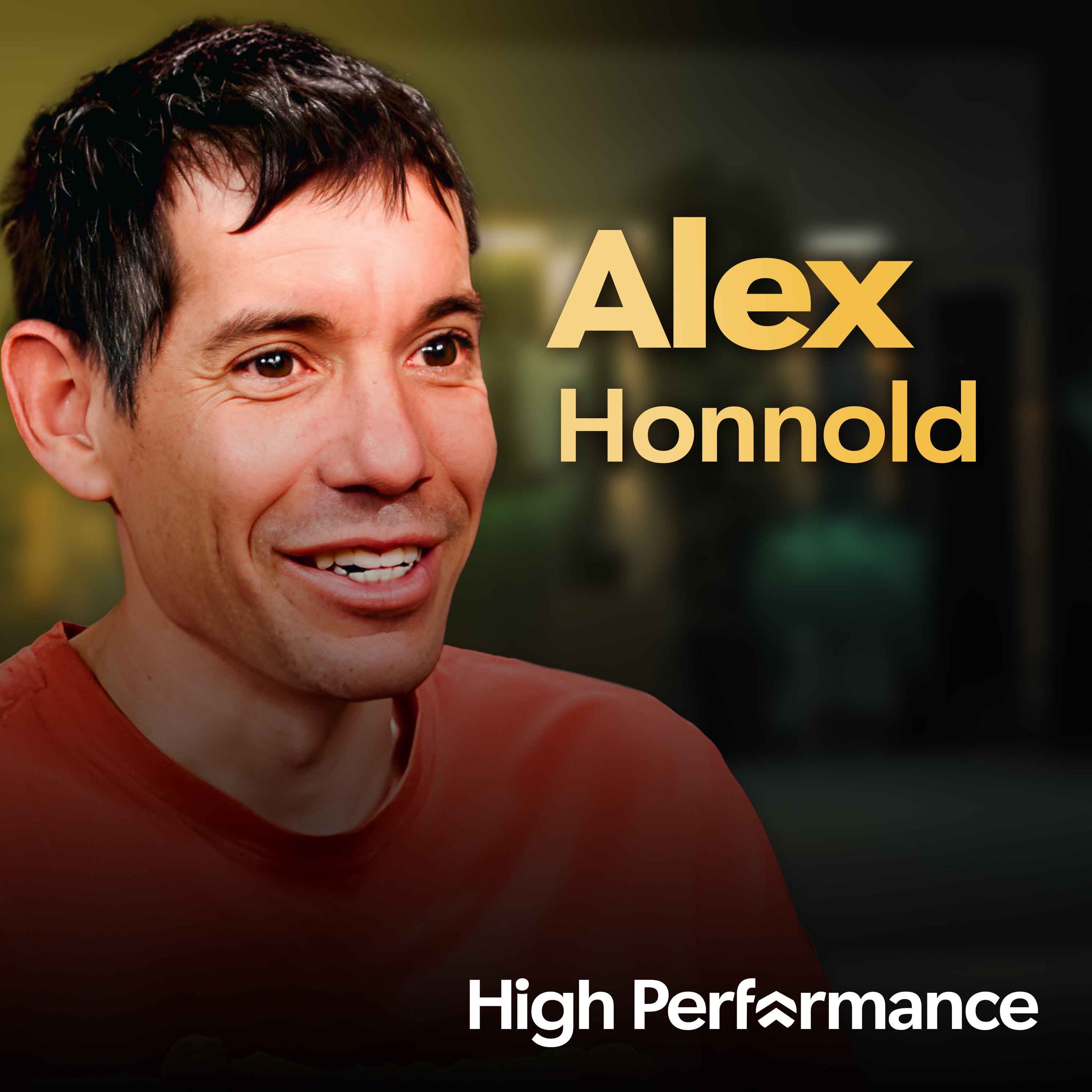
The High Performance Podcast
Free Solo Legend Alex Honnold: What Conquering Fear Actually Looks Like
00:45:17
Loading summary
Transcript155 lines
- [00:03]
Alex Honnold
If I know anything about fear, it's from having experienced it a ton. Ten years later, 10 years of consistent training and practice and preparation, all that, I finally felt ready to actually do it without a rope. Like I have to just perform, you know, I just have to trust my feet and my feet slip. I'm going to die. And that's it. Now it's like it's on. If you're really trying to think about leading a high performance life, I would think honestly about what's holding you back from it. Like maybe you should just do the thing you've been wanting to do. What's to lose?
- [00:30]
Interviewer 1 (possibly Damien or Jake)
On January 23, Alex Honnold will attempt something most of us can't even comprehend. Climbing up the outside of a skyscraper, thousands of feet above the ground with nothing but his hands and feet. He's also the man who became the first person to free solo El capitan. Climbing Yosemite's 3,000 foot granite wall without ropes. A feat many considered impossible and one that National Geographic documented in the Oscar winning film Free Solo. But, but here's the thing about Alex. He doesn't eliminate fear from his life, he just transforms it. And in this episode he takes us inside the mind of someone who's mastered what the rest of us spend our lives avoiding. From his legendary ascent of El Capitan to the everyday Moments of terror 2000ft up a rock face. He reveals the mental techniques that allow him to turn paralyzing fear into perfect execution. This is not about being fearless. It's about understanding fear so deeply you can climb through it. Welcome to high performance, Alex Honnold.
- [01:33]
Alex Honnold
Obviously I'm afraid sometimes, but then you build up to it. You train, you practice, you do whatever. I mean the, the ideal is to have a good experience and not be afraid. I mean, I think part of the pleasure of free soling, of difficult free soling is to take something that should be really scary and that basically is really scary and then to make it feel comfortable through enough practice or training or whatever, you know, like basically go through the whole process until it feels. Because then you get to be in some of the most incredible places on earth, you know, that should be so scary and feel totally comfortable. And I mean, I suppose in climbing that is kind of the feeling of mastery. To be in a position that you're like this should be really scary. But instead I feel great.
- [02:09]
Interviewer 2
You use that really interesting term there, mastery, Alex. Like what do you see mastery as for people listening to this? What, like what does that mean for you?
- [02:19]
Alex Honnold
You know to truly feel comfortable doing something at a very high level, like perfectly executing something.
- [02:25]
Interviewer 1 (possibly Damien or Jake)
And when did you first in your life have this desire for mastery?
- [02:31]
Alex Honnold
Oh, I don't know. I mean, honestly, I think that the. Even the term mastery has come to me later. Having done so many interviews about, about free soloing and about this type of stuff and trying to search for what the appropriate words are for the feeling and blah, blah. It's like, I mean, I would say that this is all part of post hoc, you know, like sort of afterward. I've come up with the terms to describe the sensation that you're sort of seeking.
- [02:50]
Interviewer 1 (possibly Damien or Jake)
So let's go back to when before you'd realized it was mastery and it was just a feeling or a sensation.
- [02:56]
Alex Honnold
Well, the feeling is just. No, I mean the feeling is feeling like the man. Because you're like, I'm doing something challenging and I'm doing it really well. You know that. I mean, sometimes you just know that, that you're doing something and it can't be done better than you're doing it right in that moment. And I think that's true for any discipline in life. You know, like sometimes you're. I mean, things. I'm not really skilled enough at anything else to experience that. But. But I presume that somebody in the kitchen, you know, could be like chopping, just like doing it, you know, like going so well and be like, nobody else could be doing this better in this moment.
- [03:24]
Interviewer 2
But I'm interested because like Steven Kotler, the author, talks about how when you hit a state of flow, we tend to be 10 times more productive or snipers tend to be 230 times faster at learning. I'm interested in the conditions that you've learned when you look back on this mastery that you've achieved, on how you achieved the conditions for flow.
- [03:50]
Alex Honnold
Well, first off, I wouldn't say that I've achieved any kind of mastery. I think it's more like an ephemeral state that you occasionally experience, which is sort of the definition of flow. And I mean, I'm actually pretty skeptical of all the sort of like life hacky book things where it's like tap into flow and type 20 times faster and get your emails done. Get. At least in my experience, I've only really experienced, you know, I mean, I don't know if you want to call it flow, but basically, you know, basically flow in very specific times brought on in very specific ways. You know, I mean, basically even free soling, a lot of the time you're not feeling flow. Per se. You're just climbing and it's comfortable and it's fun and it's nice. And then every once in a while you sort of flip the switch and you're. And you're sort of an autopilot and you're just really performing. And I've really only experienced that on the hardest things, you know, I mean, I guess because it requires a certain level of difficulty to sort of force you into that, into that mindset.
- [04:43]
Interviewer 1 (possibly Damien or Jake)
Would you take us to a moment then, when you experienced flow and tell us the story of it?
- [04:47]
Alex Honnold
Okay. I feel like this is the sort of podcast where we're going deeper. So, I mean, I'll try to actually break it down. So I mean, just with free soling, el cap, let's say starting off the ground, definitely not in flow, like jittery, sort of nervous. It's slightly cold, you're still warming up. And the first. Now, do you guys know anything about climbing? Do you guys know, like, grades and so, like difficulty grades and things? So the first pitch, the first section of climbing, the first 50 meters of the route is relatively easy in American grades, like 10C, which for me is something that I can easily overpower. Like, I can make it feel safe so I don't have to trust my feet, really. It's the kind of thing where, like, if my foot slipped, I could probably hold on, just be like. And like, it'd be fine.
- [05:25]
Interviewer 2
Right.
- [05:25]
Alex Honnold
But then the second pitch, which is now, you know, 60 meters off the ground, high enough that if you fell off, you'd probably die. The difficulty goes up a little bit, and there are a few moves where there are basically no handholds. You have to trust your feet. And this isn't the part you see in the film that they sort of hype up as the Free Blast Labs, which is similar style. But nobody's filming this first little section 60 meters off the ground because it's just. It's like a ho hum little thing. But you have to pitter patter across this little thing with your feet holding nothing for your hands. And to me, that's where I sort of switch into, like, this is now. I can't overpower it. Like, I have to just perform. And so for me, with free soling, there's like a flip that switches when I have to be fully committed to it. It's like, now if, you know, I just have to trust my feet and my feet slip. I'm going to die. And that's it. Now it's like it's on you know, because at an easier level than that, then you can just kind of overpower it. You can, you can stay out of full commitment. You can kind of keep half assing it. You're like, I'm climbing, but I'm climbing with a little bit more muscle than required because, you know, I want to feel safe. It's like surrendering to the experience in a way.
- [06:32]
Interviewer 1 (possibly Damien or Jake)
Right.
- [06:32]
Alex Honnold
You know, like up to a point you can, you can just overpower it. And then a certain point you just have to surrender to, I'm doing this thing and see what happens.
- [06:40]
Interviewer 1 (possibly Damien or Jake)
You're trusting things go okay, aren't you? They kind of. There has to be a moment where you, you don't really know.
- [06:46]
Alex Honnold
Yeah. I mean, you're trusting your preparation, you're trusting your footwork, your, you know, your self belief. You're like, I know I can do this and now I just need to actually do it.
- [06:55]
Interviewer 1 (possibly Damien or Jake)
And in what part of the explanation you've just given us, which was fantastic. Where's the flow moment?
- [06:59]
Alex Honnold
The flow moment is after you surrender to the experience. Now you're flowing basically.
- [07:04]
Interviewer 1 (possibly Damien or Jake)
And so are you then still consciously making decisions or are things just kind of almost happening?
- [07:10]
Alex Honnold
I mean, ideally things are mostly just happening. Yeah. Though sometimes you still have to make decisions. And with something like El Cap is almost a four hour climb. So you kind of go in and out of moments because you know what I just described, I'm like, okay, now I'm in flow. And I was like, cool, cruising for a while. But then they're easier sections where it's pretty chill again and you kind of go out of that mode a little bit. And then, you know, I stop in places and pop my shoes off. I like pee off ledges and stuff. So I mean, it's not like you're just in it the whole time. And you wouldn't want to be because you can't really maintain that kind of focus for four hours.
- [07:39]
Interviewer 1 (possibly Damien or Jake)
But there is often a moment doing what you do where I imagine fear comes in.
- [07:47]
Alex Honnold
Yeah, yeah, yeah, for sure.
- [07:49]
Interviewer 1 (possibly Damien or Jake)
How do you put away the fear? Then what, what do you say to yourself when the fear begins to rise and everyone watching or listening to this will have experienced that moment for various reasons, where it kind of comes ground up, doesn't it? And you're like, oh my goodness, what's happening?
- [08:01]
Alex Honnold
Yeah, I mean, that's hard. I think that's a big part of what you learn as a climber is how to differentiate those types of sort of well founded fears and sort of the general anxiety, like unfounded fears and when to ignore them and when not to. In this particular case, what I was describing, I think I just kind of reminded myself, this is warming up. Like you're supposed to be getting pumped. And I trained so much, I'd practice so much. I was like, I knew that I could handle a high level of pump. You know, it's just kind of like, oh, this is, this is warming up. Relax. You know. And I just kept climbing. And sure enough, you know, over the next two or 300 meters worth of climbing, it's kind of like moderate through the middle of the wall, you know, I just settled in and it was all fine.
- [08:41]
Interviewer 1 (possibly Damien or Jake)
Amazing.
- [08:48]
Commercial Announcer
In a world where January is supposed to be boring, one staple of the holidays refuses to end the great deals At Verizon, the joy just keeps on coming. Right now you can save on four new phones and four lines. Critics agree it's the deal that keeps on giving. Come into Verizon and save on foreign use phones in four lines on unlimited. Welcome additional terms applied. See verizon.com for details.
- [09:17]
Interviewer 2
Close your eyes. Listen to Monday.com feel the sensation of.
- [09:22]
Alex Honnold
An AI work platform so flexible and.
- [09:25]
Interviewer 2
Intuitive it feels like it was built just for you.
- [09:28]
Interviewer 1 (possibly Damien or Jake)
Now open your eyes, go to Monday.com.
- [09:30]
Interviewer 2
Start for free, and finally, breathe.
- [09:34]
Interviewer 1 (possibly Damien or Jake)
Are you a trailblazer? A risk taker? Maybe someone with countless tales of epic adventure possession? Well, I'm not quite there yet, but I'm working on it. Even the boldest among us started off small, right? Daring themselves to reach greater goals every day. And if you're looking to take on a challenge like that, the Defender is too. Now, I've driven a Defender for a few years. It's the best car I've ever owned. It's a vehicle built for drivers capable of great things, whether they're heading towards uncharted territory or just fancy a weekend getaway. Defender was engineered to meet challenges head on so you can explore with confidence. It's the legendary icon of adventure, reimagined through modern design, fit for a new generation of explorers. My kids love it as much as me. It also has a tough, rigid body, tested to the extreme, a modern functional interior built for comfort. It's a vehicle that, like you, is capable of great things. And with next gen technology, from 3D surround cameras to clear sight ground view, it will help you embrace the impossible. Explore the full Defender lineup@land roverusa.com Tell.
- [10:37]
Interviewer 2
Us about that inner voice, because it sounds to me that that moment of surrender, there seems to be a stillness that you talk about where you just let go.
- [10:48]
Alex Honnold
Ideally, it's like an autopilot where your body just does what it's supposed to do and you don't think about it anymore. Yeah, I guess.
- [10:53]
Interviewer 2
But I'm interested in the bit where that internal chatter is very obvious. So when it's. I'm getting pumped and. Yeah, I've got to remind yourself, what are the techniques that you've learned in terms of to work with that inner voice rather than let that inner voice work against you and convince you that what you're doing is literally terrifying.
- [11:15]
Alex Honnold
Yeah, I don't know if I've really, I mean, the, the obvious things. Take a deep breath, compose yourself. Um, sometimes that means literally relaxing your grip a little bit. I mean, as a climber, you often over grip and your vision kind of narrows and you'll just be like tunnel vision. Like it's really common in climbing. Like when people are climbing with ropes, they'll get really scared. They'll hold super tightly, then they'll finally get in a piece of gear, like clip the rope to something and suddenly feel safe and then notice that there's a giant foothold below them. They can step down and be like, oh, relax. You know, things like that. It's like often your whole world contracts too much because you're like so tense. And then as soon as you feel safe again, you're like, oh, there's a huge thing I can just stand on. This is totally chill. And then you relax again. You're like, why was I so scared? And I mean, that's a pretty common experience in climbing. Like just at a normal, safe day at the sport, Craig, you feel that all the time.
- [11:59]
Interviewer 2
Yeah.
- [11:59]
Alex Honnold
And so you sort of train yourself that even in moments of stress, to relax a little bit, take the deep breath, compose, look around and then process. You know, none of that clear cut. It's like you're up there just doing your best. Never like, here's my checklist to like manage fear. You're up there just being like this is a lot, you know.
- [12:18]
Interviewer 1 (possibly Damien or Jake)
Yeah, I think that's really interesting you say that actually, because I think when people watch Free Solo, they go, well, this guy's different to us. He's just able to do this thing. And I think for you to be really honest about the fact that there are moments of fear. You're, you know, you're, you're ticking things off. You're doing what everyone else does in normal everyday life to stay.
- [12:35]
Alex Honnold
Yeah. I think the difference though is that I've had To do it freaking five days a week for 20 years, you know, because, like, it's climbing. You just. In climbing, you get scared all the time. And especially in free soling, like, it is just fundamentally scary. Even climbing with a rope, you get scared all the time just because you're looking at big falls and it's. It's scary. Yeah. I mean, I think that. That if I know anything about fear, it's from having experienced a ton.
- [12:56]
Interviewer 2
But there's something like, beyond the fear is your appetite for risk that I'd like to explore, Alex, because I think the way you've described it, as you're looking down the abyss, is almost one end of the scale. But then there's the exhilaration of getting to the top of it or conquering El Cap and having. And having that sense of achievement that you've gone beyond your comfort zone. Would you tell us what you've learned about risk that our audience could maybe take away and apply in their own world?
- [13:29]
Alex Honnold
I mean, I think the key thing in managing risk is have a frank evaluation. Like, is it actually risky? And how risky is it, like, trying to be rational about. I mean, so much of free soling is knowing when. I mean, you always have to stay within your own capabilities. So you have to be really honest about what your capabilities are. And, you know, no matter how rad you want to be, you know, are you actually that rad? Like, it's kind of the main thing. And so there are tons of things that you'd like to do, but realistically, you shouldn't and you can't. Because that's kind of the interesting thing is that within the context of rock climbing, my free soling is very conservative compared to my climbing with a rope. You know what I mean? Like, when you're free soling, you stay well within your abilities. You keep it comfortable. You know, you're many grades below your actual physical max. Like, you're okay, you know, in general, free solo as. I mean, you don't want to call it conservative because obviously it sounds totally insane. And. And, you know, you're. Yeah, it's harrowing and all that, but really, compared to what you're able to do with the rope, you're trying to keep it pretty safe.
- [14:29]
Interviewer 2
But there's like, that. Those stats that, you know, 50% of us believe that we're above average drivers or like, eight, like, 80% of us believe that we're better in bed than most people.
- [14:40]
Interviewer 1 (possibly Damien or Jake)
That.
- [14:40]
Interviewer 2
That kind of delusional stats.
- [14:45]
Alex Honnold
But.
- [14:46]
Interviewer 2
But what I'm interested In is how do you avoid delusion? Because you're obviously risking life and limb.
- [14:52]
Alex Honnold
I think you just have to be honest with yourself. Can you do this? And then also make sure you're not. You're not overextending yourself. You're not trying things that are too hard. I mean, one way to think about it. So with LCAP, specifically. So I freestyled El Cap in 2017. I free climbed El Cap for the first time, which means with a rope, with a partner, all that. I think for the first time in 2007, maybe 2006. But the first time I climbed it with the rope, I think I took one fall on the correct pitch and then did a second go. So basically, you know, it's like almost like free soling. You know, I'd only actually waited the rope once, and then 10 years later, 10 years of consistent training and practice and preparation, all that, I finally felt ready to actually do it without a rope. And so when you think of it that way, you're like, well, that's pretty conservative. You know, like, you could almost do it back then, and then 10 years later, you finally actually do it.
- [15:35]
Interviewer 2
Well, why did you wait 10 years then? Because it must have been. Okay.
- [15:39]
Alex Honnold
So freaking scary. Because every time you look at El Cap, you're like, that is impossible. It's totally insane.
- [15:43]
Interviewer 1 (possibly Damien or Jake)
How many times did you visit it in that?
- [15:46]
Alex Honnold
Like, every season. So, like, in those 10 years, I was going to Yosemite every spring and fall for probably six weeks each time. So I was in Yosemite maybe three months a year for the. For the next 10 years and starting well. So in 2008, I freestyle at Half Dome, which is a wall next to El Cap, which is sort of one of my first big free solos. And so from then on, basically 2009 onward, every season, I would be like, maybe this is my year. And for the first. I guess for the first six years or so, I kind of kept hoping that it would just happen, you know, like, this is going to be my year. I'm going to drive in, it's going to look easy, and I'm going to do it. And after six years, I was like, it's just never going to look easy. You know, every year you drive in and you're like, that looks totally impossible. It's really scary. Like, just thinking about it would make your stomach turn a little bit. You're like, oh, geez.
- [16:30]
Interviewer 2
I often think of our ability to do so. If you think about expectation, ability and consequences, that for us to perform our capability we need to almost have the expectation we're capable of it, the confidence in our ability to know we can, but then to almost have the ability to manage the consequences of not being able to do it. Would you talk us through those three areas then? So the expectation you had in 2007 was, that's too hard. You go back in 2009, you still, like, that was too hard. And every year after that, how did you start to make the expectation something that you could conquer?
- [17:10]
Alex Honnold
Yeah. So I think for me, the thing that I finally decided after the six years or so was that, well, basically, I realized that I was gonna have to do all the prep work, like, start acting as if I was going to free solo cap, even though I wasn't really sure if I could or not.
- [17:23]
Interviewer 2
Okay.
- [17:24]
Alex Honnold
Start doing all the preparation, do the training, do everything, and then see if it's possible, you know, because with everything else at Solid, I'd kind of come into it thinking, like, I can do this. I just need to prep for it, you know? Like, I had trained and practiced for some other free solos, but none to the scale. And I'd always gone into them thinking, like, I'm gonna solo that. And then kind of making it happen with El Cap. I was like, you know what? I don't know if I'm gonna solve that. Like, I'd like to solve that, but I don't know if I can. But I realized that I was gonna have to basically jump through all the hoops first before determining whether or not I could. So, I mean, you know, that's kind of like a fake it till you make it kind of thing, where I was like, okay, I'm just gonna start doing all the things, like, as if I'm going to do it. So, you know, memorizing the sequences, training, whatever, all the. The things you need to do to feel comfortable on it and then sort of make a decision later.
- [18:09]
Interviewer 2
So when you say, like, again, you said I had to learn a sequence. I appreciate there's almost the technical element of making sure you understand where your movements are, but I'm interested in the visualization side of that as well.
- [18:23]
Alex Honnold
You know, in. In some ways, that's kind of the secret sauce to free soloing, I think, because memorizing the sequence is sort of the physical side, and that's. That's the same as what you do if you're climbing with a rope. You just left hand here, right hand there, and memorize it. Though, actually, I soloed it quite a bit differently than I climbed with a Rope. Cause I tried to make it all feel more secure. Like there are a bunch of sections. So that actually I've gone back up there in the year since climbing with a rope for various reasons, climbing different parts of the wall and trying to do different things. And a few of the sections, when I tried to do them again with a rope, I was like, God damn, this is kind of strenuous, you know, because I was basically doing things that were harder because they feel safer. And so from a soloing perspective, I was like, this is definitely the way I want to solo this. But then when you go back with your rope, you're like, wow, this is terrifically inefficient. You're like, yeah, I'm so tired. But anyway, that's. That's a different thing. The visualization though, I mean really, that's what differentiates free soling from rope climbing is, is this belief that you can do it without a rope, but there's no real way to practice that if you're only going to do it the one time. So visualization is the only way to practice ahead of time. And so that's imagining what it'll feel like without a rope, imagining even the psychological side, like how you'll feel when you look down and see your foot over the abyss. You know, because the thing is, you're looking down at your feet all the time. So you're frequently just looking at this 2500 foot drop or, you know, like 800 meters. You're like, oh, that's, that's a lot of air. So thinking about all that stuff ahead of time. So when you get there, you're not taken by surprise or anything.
- [19:45]
Interviewer 2
We interviewed an explorer in the UK called Ash Dykes, who. One of the techniques that he does when he does expeditions is he looks at what could kill me. What are the moments on this expedition where I could actually die? And then it not only does the visualization that you describe, he then sort of ladles it in Technicolor with how, how am I going to feel? How am I going to get out of this?
- [20:09]
Alex Honnold
No, I mean, I definitely think about all that as well. Like, where are the places where if my foot slipped, I would just die. And then also what would happen if my foot did slip? Because, you know, most people when they're visualizing like, oh, and then you slip and you fall and like, and you just fall. But on El Cap, you don't just fall. I mean, you basically ragged all down the wall because most of it is less than vertical. So you're basically bouncing down a less than vertical wall and, and occasionally hitting ledges and bouncing off things. And I mean, you know, and there have been people who have fallen off El Cap in various ways, like when ropes get cut and accidents happen and things. And so you know that it's like a complete disaster. So visualizing that appropriately, it's like the, the crux boulder problem. If you've seen the film with the, the karate kick and all that stuff, you know, that's 2,300ft up the wall or something. But if you miss the move, you're only gonna fall like 30ish meters, basically clean, until you bounce off this ledge where you'll break both your legs and hopefully pass out. And then it's all disaster from there. I mean, you're gonna, you know, explode like a water balloon at the base after bouncing off a bunch of things. Like, it's horrible. And so, you know, I think for me visualizing all of that so that, so that you really know basically because you just don't want to be up there and then for the first time be like, man, if I fell here, I'd hit that ledge down there. Like, you want to know that you're going to hit that ledge already. Like you wouldn't have already thought it through and, and still have decided to do it despite knowing exactly what would happen.
- [21:26]
Interviewer 1 (possibly Damien or Jake)
You're really visualizing there the single worst thing that could happen to you.
- [21:29]
Alex Honnold
Yeah. And also the best, though. I mean, you also visualize getting to the summer being like, I'm the man. Yeah, I mean, of course you, you visualize the full spectrum of possibility, but.
- [21:37]
Interviewer 1 (possibly Damien or Jake)
The, on, on the negative side, if you've visualized it in the detail that you have, does that mean those thoughts don't come into your head when you're up there?
- [21:45]
Alex Honnold
At least for me, I'm less likely to have those thoughts. When I'm up there. I'm less likely to have sort of intrusive thoughts where I'm like, oh, I never thought about that. Like, that's crazy. Cause you're like, you know, I've thought about all the things that could happen. I've thought about all the worst case scenarios. I've set that aside. Like, I've, I've processed that already and now I can focus on, I mean, in, in the case of the boulder problem, it allowed me to basically think about nothing. When I did it, I just climbed, which was kind of the ideal, the flow state, whatever, but like autopilot, I just did what I was supposed to do.
- [22:12]
Interviewer 1 (possibly Damien or Jake)
I love this idea of visualizing that you're a man as well.
- [22:15]
Alex Honnold
I mean, you don't, you don't set out on a multi year project like that without imagining like how good it'll feel to finish it. You know, to get to the top and be like, yes.
- [22:23]
Interviewer 1 (possibly Damien or Jake)
What went through your head as you come over the top then?
- [22:26]
Alex Honnold
Well, it was more like over the last 20 minutes or so it gets kind of easier toward the last couple hundred feet are relatively easy. And so it was kind of like a victory lap, you know, and you're just like, you're running your last little thing. Being like, I'm so psyched. So in a way, when I crested the summit, it wasn't like all at once. I'm like, oh, late it, you know, it was like basically the last half hour. I was like steadily getting more and more like, this is so great. I'm so psyched.
- [22:49]
Interviewer 1 (possibly Damien or Jake)
And was that the mastery that you were seeking?
- [22:52]
Alex Honnold
I mean. Yeah, yeah, yeah, basically. I mean, El Cap probably is the most positive climbing experience I've ever had. And that's largely because I put so much effort into it, so much time into it. And that's partially because there was the film crew involved and because I think had it been just me, there's a decent chance I would have just forced it sooner. Because I think when you're by yourself, you're a little, I'm at least a little bit more prone to just roll the dice a little bit when I'm totally by myself to be like, ah, this doesn't feel comfortable, but I'll just force it, you know, Whereas when there are people watching you and filming you, you're a little more like, I should, I should do this properly. Like, this is slightly, you know, I don't want to be embarrassed, but, but so I think because of the whole process of the foamers and all that, I wound up putting more effort into it than I maybe would have otherwise. And as a result it felt incredible.
- [23:36]
Interviewer 2
So that's the granular level of looking at a moment as you scale it. I'd like to zoom out and talk about the fact that this was a several year project before you ended up doing it. The goal of scaling it is obvious that you want to be the guy that gets to the top and free solo in it. And you have your I am the man moment. But I'm interested in how did you go about setting targets or goals for yourself to sustain your enthusiasm for this over the several years?
- [24:05]
Alex Honnold
You know, I mean, so free Soling all CAP was obviously a multi year goal. But and this is kind of an interesting thing that, that because free soling is so psychological, I didn't want to build it up too big because, you know, I didn't want to put it on too high of a pedestal. It's like, this is the most important thing I'll ever do because I didn't want to overweight it in a way, you know, like it already was, was a huge undertaking. I didn't need to make it even bigger in my mind. And. And so part of the way that I tried to avoid that was by keeping it in the broader context of, of professional climbing, like expeditions throughout the year, other trips, other goals, like other things that I was trying to do. And so freeze All CAP was something that mattered a lot to me, but I was still planning other things around it. So the year that I sold it all cap, basically right after I sold it all cap, like the week later, I went to Alaska for this expedition with some friends of mine. And then we climbed some new routes in Alaska. And that was kind of training for an expedition I did later in the year where we went to Antarctica and climbed a bunch of walls. And so it's kind of like, oh, which is normal as a professional climber to sort of set, like, I'll go to Alaska to sort of practice some things, which would be good training for this other trip later in the year. And so obviously I wanted to solo El cap, but I already had the whole rest of my year sort of planned out with other trips, other expeditions, like things going on. And so it kept it sort of in its proper place. Yeah. You know, I was like, I really want to do this, but if I don't, I'm still going to Alaska and I'm still training for Antarctica. I'm still doing these other things. And so I think that helped keep it from becoming too big in my mind.
- [25:26]
Interviewer 1 (possibly Damien or Jake)
You've spoken a lot, a lot, but very briefly about. I did the preparation, I did the training, I got myself ready. Would you take us inside that, that side of things, away from climbing, to prepare yourself physically for.
- [25:39]
Alex Honnold
For what else? Well, it still is climbing. I mean, the physical preparation is still just climbing. I mean, for freestyling on cap, I also got a little tighter with my diet. I was eating like mostly vegan diet with eggs. I cut dessert mostly. You know, basically I was just eating well, like very well, you know, getting my sleep, like doing extra core, stretching all the time, doing all that kind of stuff. But mostly I was climbing all the time.
- [26:03]
Interviewer 1 (possibly Damien or Jake)
And that was the preparation.
- [26:04]
Alex Honnold
Yeah, that's the preparation. Like I was climbing as hard as I could all the time. Like as a climber, I typically climb two on one off. Like two hard days. One rest day. Two hard days, one rest day. And part of that's cuz your skin gets worked and you know, there are a lot of things, but. But then on my rest days I was going and soloing big easy routes like cardio soling, like scrambling up mountains and things like that and just doing a ton of volume. So I was like climbing all the time.
- [26:28]
Interviewer 1 (possibly Damien or Jake)
And were there specific moments in the climb that you had to, you had to kind of train for and just get yourself ready for? I. I saw you talk somewhere about you practiced a specific stretch.
- [26:40]
Alex Honnold
So like the karate kick on the boulder prom, you span your left foot like way over to a corner over there and basically the, the more limber your leg feels, the easier it is to reach out to the corner. So I've been doing a ton of stretching. I was. I'm still not particularly flexible and. Or actually I'm probably average. Like I'm not, I'm not inflexible. I think you're okay, actually. I'm probably better than average, but I'm not flexible, you know what I mean? Like, I'm not like some of my friends just busting in the splits and I'm like, I can't do that. But bs I was stretching all the time for that specific move. There's actually, there's this thing, the monster off with in the middle of the wall that's this big gaping wide crack that you have to sort of worm your way up. You like wedge half your body and then push really hard. It takes a ton of counter pressure and just kind of like opposition muscles, that thing. I was doing some like TRX style workouts and sort of like core workouts because I found that when I climbed that section with a rope, I would normally come out the top feeling like a, like a limp noodle, you know, I feel like jello. I'd feel like all my joints were like loose and. And then the hardest climbing is all above that. And so I was like, I knew that for so long I needed to come out the top and feel whole, you know, I feel normal and so, so I did a bunch of core and stuff to make sure my body would like stay tight when I got through that.
- [27:48]
Interviewer 2
I mean, a lot of the stuff we're talking about here, Alex, is the nurture, how you develop the mindset. And the physical capabilities to do something so extraordinary. I'd like to switch focus to the nature element of it and think a little bit about. You were born to climb mountains. In many ways it sounds like, like, what was your background that ignited this spark of interest for you to do that?
- [28:13]
Alex Honnold
I think. Well, I've been. I now have two daughters, so I've been thinking about this kind of thing a lot, you know, like, nature versus nurture and how much. And like, what I have, you know, what do I have that is. That is natural? Like, that just comes to me. I mean, I think that the biggest thing is that I've just always loved climbing, and I love the movement of it. I love the sensation of it. Like, I love being up high. Like, I love the exposure. Like, I like air blowing. You know, I like standing on top of play structures and, like, getting up on roofs and things like that. And so I think that's natural, like an innate desire to be in those kinds of positions. And I think that that innate desire has sort of allowed me to do the volume of training required to. To actually do some of the hard things. Yeah. Um, because I just love, you know, I love the grind. Like, I love doing it every day, but I love the process of it. And I think that's what's really. And then combined with maybe some psychological sides of, like, if you're going to do something, do it well. And things, you know, like. Which maybe is perfectionism. I mean, some of that's probably my mom basically speaking through me because she's kind of a. She's kind of a psycho. So I think I ingrained some of that.
- [29:13]
Interviewer 1 (possibly Damien or Jake)
Explain more on that, you know, like.
- [29:16]
Alex Honnold
Like a pressing. A compa. Like, she only speaks French to us, but it means, you know, like, almost doesn't count, you know, like sayings like that. Like all these little, like, ingrained sayings, like, good enough isn't. You know, things like that. Like all these little. Like, now as an adult, you're like, that's psycho. But it does instill a sense of perfectionism, or whatever you want to call it.
- [29:36]
Interviewer 1 (possibly Damien or Jake)
And at what age were you getting those messages from your mom?
- [29:39]
Alex Honnold
Probably from freaking birth, you know, like, I don't know. I don't remember.
- [29:41]
Interviewer 2
But can you give us an example of where. Where as a child you heard that that isn't good enough?
- [29:48]
Alex Honnold
I mean, I honestly don't really remember. You know, it's weird too, because my sister and I both got perfect grades, like, did all the things, you know, I was. I was a Nationally ranked. You know, I was a climber, but I went to some of the youth competitions and things. So, I mean, I don't think there was actually a ton of, like, criticism at home or anything, you know, because we were both doing great. But that was just sort of the expectation, like, you're going to do really well.
- [30:10]
Interviewer 1 (possibly Damien or Jake)
Was there a lot of love?
- [30:11]
Alex Honnold
I mean, not. Not really. It's hard to say. But part of it's because my parents, like, stayed married for the kids for too long, which, in retro, you know, like the sort of thing where they're in a bad place, they're not in a good relationship, but they're just kind of like, dragging it out because they're like, oh, we're going to stay together until the kids get through high school. And in retrospect, you're like, they should have divorced when you're like six. And they had happier lives and probably would have been better.
- [30:35]
Interviewer 2
What was the consequences of growing up in a household like that?
- [30:38]
Alex Honnold
Well, I don't know. I mean, you know, shape me into the man, like, who knows? But I mean, now being in a happy marriage myself and seeing my wife's family and how. How loving they are and how supportive they are, I'm sort of like, wow, that's really different than the way we were raised.
- [30:51]
Interviewer 1 (possibly Damien or Jake)
But that's the interesting thing, you know, you would have had. If love was lacking in your household. You probably had no idea because you.
- [30:57]
Alex Honnold
Yeah, that's your only life. No, that's exactly. And I thought it was totally normal. That's all. It's only as an adult that you look back and you're like, huh, that seems really different.
- [31:05]
Interviewer 2
So when you. So looking back as an adult, what's the thing you look back on that period and think, that was really different?
- [31:13]
Alex Honnold
Oh, just like, nobody hugged, nobody exchanged kisses, nobody. I mean, there's like, no touching the house. There's very little. No words of affection. You know, I mean, there's basically no. No signs of. It was very sterile home environment, you know, but.
- [31:26]
Interviewer 1 (possibly Damien or Jake)
And how's that impacted or how did that impact your relationship with other people as you got older, needed to form your own relationships?
- [31:35]
Alex Honnold
I don't know. But I mean, specifically to climbing, though. I mean, I was. And this is probably innate. I was very shy and. And just very introverted and not great with people. And so I think, I mean, part of that helped steer me towards soloing a little bit, just because as I started climbing full time, I was very hesitant to talk to strangers. And so then you're much more likely to go out by yourself and just scramble like figure it out yourself.
- [32:03]
Interviewer 1 (possibly Damien or Jake)
Now the holidays are over, you might be feeling a spending hangover. The events, the gifts, the food, it all adds up. And I started looking at ways I could cut back on spending in the new year and my phone bill was the place I started. And luckily Mint Mobile is here to help you cut back on overspending. This January I switched from a big wireless provider and the service has been just as good. Same phone, same number, same contacts, just a lot less money leaving my account every month. This January, quit overspending on Wireless with 50% off. Unlimited Premium Wireless plans start at $15 a month at mintmobile.com HPP that's mintmobile.com HPP Limited Time offer upfront payment of $45 for three months, $90 for six months or $180 for 12 months. Plan required $15 a month equivalent taxes and fees Extra initial plan term only above 50 gig may slower network is busy Capable device required Availability, speed and coverage varies. See mintmobile.com Are you a trailblazer? A risk taker? Maybe someone with countless tales of epic adventure? Well, I'm not quite there yet, but I'm working on it. Even the boldest among us started off small, right? Daring themselves to reach greater goals every day. And if you're looking to take on a challenge like that, the Defender is, too. Now, I've driven a Defender for a few years. It's the best car I've ever owned. It's a vehicle, but built for drivers capable of great things, whether they're heading towards uncharted territory or just fancy a weekend getaway. Defender was engineered to meet challenges head on, so you can explore with confidence. It's the legendary icon of adventure, reimagined through modern design, fit for a new generation of Explorers. My kids love it as much as me. It also has a tough, rigid body tested to the extreme, a modern, functional interior built for comfort. It's a vehicle that, like you, is capable of great things. And with next gen technology, from 3D surround cameras to clear sight ground view, it will help you embrace the impossible. Explore the full Defender lineup@land roverusa.com.
- [33:58]
Commercial Announcer
In a world where January is supposed to be boring, one staple of the holidays refuses to end the great deals. At Verizon, the joy just keeps on coming. Right now you can save on four new phones and four lines. Critics agree it's the deal that keeps on giving. Come into Verizon and save on four new phones and four lines. On unlimited. Welcome. Additional terms apply. See verizon.com for details.
- [34:32]
Interviewer 1 (possibly Damien or Jake)
Sometimes we can look at our upbringing or things that happened in our past and. And see all the negative or all the stuff that we're not happy about. But it's probably a pretty fair argument that the type of upbringing that you had is pretty vital to the life that you're living now.
- [34:49]
Alex Honnold
Yeah, no, I wouldn't complain at all. And I wouldn't change anything either. I'm like, I'm great. I'm happy. I'm leading exactly the life that I'd love to live. I think it's all great. And my parents did provide a ton of very positive things for my lifestyle as well, like outdoor experiences, going camping, going to the mountains. I went to Yosemite as a kid. I grew up in Sacramento, so it's only three or four hours away, and just, I mean, my dad taking me to the gym all the time. Like, Starting at age 10, I was going to the climbing gym all the time. And he wasn't a climber, but he would belay me and then he would climb a little bit just to sort of. So I could rest immediately. You know, he'd blame me, like, three or four routes, and he would do one just to, like, break it up, and then I would do a couple more, and then I was like, you know, I mean, they. They put a lot, you know, and we didn't want for anything, you know, like, we, you know, we were taken care of and well educated. Your Legos, basically. It's a great life that I wouldn't change. But I think when you start to examine the psychological underpinning of free soloing, you're sort of like, oh, there's probably something there. Sure.
- [35:44]
Interviewer 1 (possibly Damien or Jake)
Thanks.
- [35:45]
Interviewer 2
What's the one thing you do differently with your own children than what you experienced?
- [35:52]
Alex Honnold
I mean, the main difference is maintaining a good relation with my wife. Because my wife is incredible and she's like, you know, in some ways, even if. Even if I acted exactly like my parents, if I can maintain a good relationship with my wife, then it's like, going to be balanced enough. You know what I mean? It's like as long as you have somebody in the house that's. That deeply loves the children and, I don't know, it's like good yin and yang. Well, no, but I'm. But I'm really. I'm good with the kids. I'm supportive. I, you know, I snuggle, I play.
- [36:19]
Interviewer 1 (possibly Damien or Jake)
There's hugs in the.
- [36:19]
Alex Honnold
Yeah, there are household. Yeah, they're actually My, my two year old is like really not into she, like she'll never snuggle or anything really. She always like jumps up and runs away and does stuff.
- [36:29]
Interviewer 1 (possibly Damien or Jake)
I'm interested in the role your, your wife's played in this. What do you reflect is the, the biggest lessons that she's taught you about life?
- [36:37]
Alex Honnold
The biggest lesson maybe that I've gotten from my wife is kind of this. And I think maybe she, there might be some quote to this effect in Free Solo I kind of forget or she explores the idea in the film but, but kind of like, why not have it all? A lot of my free soloing in the past has been sort of based on this like angsty, like you just need to get into this dark tormented artist kind of mindset and just like do this thing. And she was like, why not do the same things but be happy? I was like, you know, like I never really considered doing that. Like, why not come at it from a positive perspective and just, you know, do the exact same things but have a stable relationship and a good home life and be happy while you do it? I was like, that's somehow less glamorous, but it is a lot nicer.
- [37:17]
Interviewer 1 (possibly Damien or Jake)
So what would the approach have been like before she said that?
- [37:20]
Interviewer 2
Then?
- [37:20]
Alex Honnold
I think before, before I dated and then married my wife, I often like I blew up several good relationships sort of just as a way of generating angst or sort of like, or maybe, you know, who knows why. I only get too psychological but like not thinking that you deserve it. Nothing, you're worth it. Like nothing. Who knows why but just like blowing up things that like didn't need to be blown up.
- [37:40]
Interviewer 2
How many times did you do that?
- [37:42]
Alex Honnold
Oh, I had this on and off girlfriend that we both like blew things up for like years, you know, like at least once a year somebody would blow it up and there'd be like a couple months of drama and like, and I often sort of chann that drama intentionally to go do things that I wanted to do. And so it wasn't totally okay because actually within climbing lore, like within climbing history, there are tons of examples of people who like break up with significant others and then go out and solo things as like, don't care if I live or die kind of thing.
- [38:07]
Interviewer 2
There's that old quote from the boxer Marvin Hagler that said it's, it's difficult to get up and run when you wear in silk pajamas. So is it difficult to free solo when you've got a happy family life and, and all, and all the chop Ins of domestic bliss.
- [38:23]
Alex Honnold
Yeah. I mean, a little bit, though sometimes I wonder if it actually will make it easier because I'll just be like, oh, thank God. Like a good, good change of pace from toddlers and just me and a wall and just doing the thing I love to do. It's hard to say, though, because I wonder about that because I often wonder, like, oh, am I getting soft in middle age? You know, it's like, is this all the. The stereotypical. You have kids and you get soft. But I think for me, part of it is that I have actually free soloed most of the things that I want to free solo, at least in the Western U.S. like, all the things within range I've kind of done, I think. You know, you don't, like, sound douchey, but I'm like, I mostly have done my life list. And so if I moved to Europe, let's say, if I was, like, living near the Dolomites, if I was near somewhere that had, like, a rich history of soloing and tons of things too solo, I'd probably be more into it. But like, here in Red Rock, I don't know if you guys saw. You know, we're in. We're in Vegas. Red Rock is nearby. I've soloed all the classic things in Red Rock. And a year or two ago, I went to start dabbling on this thing that sort of like B team or maybe C team, you know, it's not classic. It's cool. It's good. I'd like to SOL it. I tried it a few times, and I was like, this just isn't worth it, you know, I was like, this is like B team at best, maybe C team. I was like, the rock quality is not that great. And I'm like, I just don't want to fall to my death off something that I don't really care about.
- [39:37]
Interviewer 1 (possibly Damien or Jake)
So do you think having children has changed your relationship with free soloing?
- [39:42]
Alex Honnold
Having children has definitely changed my relationship with time, you know, because I'm trying to be at home for bedtime and, and. And, you know, mornings and basically, like, way more time at home. And so then I set my climbing goals a little bit differently because I want to set goals that are sort of attainable with the lifestyle that I'm trying to live right now.
- [40:01]
Interviewer 1 (possibly Damien or Jake)
We're about to move on to our quick fire questions, but before we get there, I just want to just sort of find out where you are now psychologically and mentally, because, you know, we've spoken about this young guy lacking a Bit of love and affection in his home life. And then a guy that maybe channeled that into some early relationships and exploding them and needing to go and solo incredible things to. To sort things out in your head at times. Now you're. You've achieved more than any climber has ever achieved in history. Your notoriety is incredible. You're a father of two. So where are you at now in your head, like your self worth, your happiness, your. Your serenity?
- [40:43]
Alex Honnold
Oh, I think all a lot healthier. I mean, just all. Yeah, all a lot better. I mean, a lot of that, I think is a product of the healthy relationship with my wife for the last eight years. I mean, I think much, much more stable, much more relaxed, much. Which in some ways makes the climbing almost more fun. I don't know. I mean, sometimes it makes you worry that you've lost the edge, but I'm like, I don't know, you know, I mean, just last week, yeah, I climbed one of the hardest things that I' in a long time and climbing well. So you're sort of like, maybe you don't need the angst in order to climb. Well, it's hard to know.
- [41:13]
Interviewer 1 (possibly Damien or Jake)
But you also need to be comfortable with the fact that one day the edge will go. One day you will not have the physical ability to climb those. And you're still you. You're far more than a guy that free solos.
- [41:24]
Alex Honnold
Yeah, I mean, I think that that part I'm still coming to grips with. Just the whole coming terms. The. Yeah. Aging. I mean, I think I'm not quite. No, I mean, obviously I'm already a lot older than I was in my 20s and like, I already feel it, like, just not recovering quite as fast. But I don't think that I've begun the full decline yet. I'm gonna shoot for like Tom Brady style, you know. Yeah. A couple more years. It's just.
- [41:48]
Interviewer 2
So if I was to ask you in terms of identity and there's. There's almost. There's three titles we've heard. We spoke about you as a. As a partner, as a parent, and as a climber, where would you rank those three in order of importance?
- [42:04]
Alex Honnold
Oh, I still think of myself as a climber first, Family man second sort of relationship and. And parenting to me are kind of the same right now. Just because the kids are so small and. Yeah, but no, I mean. I mean, I actually sort of think of my life as. As climbing, work and family. Sort of like the three things in that order. Oh, no. Climbing, family and work. Or maybe. Or Maybe family climbing and work works or I mean, you know, it's like, I mean work is really to support the family and the climbing habit. I mean the reason I have sponsors and all that stuff is so that I can climb full time. But climbing has always been first and I suspect the family will overtake it at some point. Maybe they're sort of neck and neck at this point.
- [42:45]
Interviewer 2
Right.
- [42:45]
Interviewer 1 (possibly Damien or Jake)
Some quick fire questions. The three non negotiable behaviors that you and ideally the people around you should buy into.
- [42:56]
Alex Honnold
Attention to detail.
- [42:57]
Interviewer 1 (possibly Damien or Jake)
Yeah, quite important.
- [42:59]
Alex Honnold
Yeah. My wife and I both sort of hark on that. We're both pretty detail oriented, doing things right, having a good time. I mean it's like, you know, I like all, I mean all my client partners. Like people you're gonna spend a lot of time with. Like people who are light hearted about it that you can like have fun with.
- [43:14]
Interviewer 2
What advice would you give to a teenage Alex, just starting out specifically to.
- [43:19]
Alex Honnold
Me as a teenager it would have been to do some specific types of training sooner and, and to not. I went to university for a year. I just shouldn't have bothered, you know, I should have just carried on doing what I was doing.
- [43:30]
Interviewer 1 (possibly Damien or Jake)
No sort of psychological advice for your younger self to deal with the world and what's about to come?
- [43:35]
Alex Honnold
Oh no, I don't think so. I think the journey is important. You know, it's like I think it all, it all went fine.
- [43:40]
Interviewer 1 (possibly Damien or Jake)
What's your biggest strength? What's your greatest weakness?
- [43:43]
Alex Honnold
I think my greatest strength is maybe consistency. Just doing the things, I don't know, just, just grinding away like continuing to do it day in and day out and try and. Greatest weakness. I mean it's maybe, maybe been the tendency to sort of blow things up from time to time or like, like sort of self destructive behavior like and not in a big sense because I've never done like drugs or alcohol and I don't, I don't actually self destruct in the way that a lot of people self destruct. Yes, but you know like binge on desserts or stay up too late and like random things from time to time where you're just kind of like. And then, and you know that you just shouldn't, you know that you should just go to bed at 8 and get your night's sleep. But instead you're like but I just want to finish watching the show or whatever. And you're like, you know, it's dumb but you do it anyway. I think I've done a lot of things like that where I'm like, you know, it's not the right choice, but you just do it anyway because you're like, f the man. I'm going to do what I want. And then later you're like, I should have just done what the man told me.
- [44:35]
Interviewer 2
What's the single best piece of advice you've ever received and why?
- [44:39]
Alex Honnold
I mean, since we were just talking about climbing, work, family, as, as the three aspects of life. I mean, I have some friends who have always talked about juggling the balls and that realistically, you can only ever keep two in the air at the same time. Yeah. When you're juggling. So you can do two of those three things well, but you can't do all three well. And now as I'm more of a family man and working more and all those things I think about all the time where I'm sort of like, I can maintain one and do the other two well if I try really hard, or I can do one well and sort of maintain two, but you just can't do all three well at the same time. So you kind of have to choose your seasons.
- [45:12]
Interviewer 1 (possibly Damien or Jake)
And finally, a bit of advice from you to our audience. From the incredible things you've experienced and the life you've lived, what would you leave people thinking about as your one golden rule to living a high performance life?
- [45:26]
Alex Honnold
If you're really trying to think about leading a high performance life, I would think honestly about what's holding you back from it and then sort of rationally evaluate whether or not, I mean, because so many people are held back by fear in different ways. Is that fear founded? Does that matter? Like, maybe you should just do the thing you've been wanting to do. It's like, what's, what's to lose? Yeah. Like you've been wanting to sign up for a marathon, but you're sort of afraid because whatever. You're like, who freaking cares? Sign up. You can literally walk the whole way. It doesn't make any difference, like, just, just do the thing. Just like take that step forward.
- [45:56]
Interviewer 1 (possibly Damien or Jake)
Alex, thank you so much.
- [45:57]
Alex Honnold
Yeah, thank you, guys.
- [45:59]
Interviewer 1 (possibly Damien or Jake)
Love that conversation. Damien, Jake. There was a moment very early in the interview where Alex, he kind of just went, oh, it's that. It's that sort of conversation. And I think he realized that, you know, he'd never heard high performance before, wasn't aware of it, and realised this isn't just another floating over the surface chat about what life is like for him, that it was a bit deeper than that and that was a really important moment. I think because you almost saw him, his eyes lit up and he thought, oh, I can go deep on this stuff. I can get technical, I can get really honest. I can go into the granular elements of my life. And he obviously doesn't get to do that very often. And I think that's really why he offered us such incredibly rich value in that conversation.
- [46:44]
Interviewer 2
No, I thought it was incredible. I. I love the bit where we spoke about just what fear gives you. I think often we see it as something to run away from or to immunize ourselves against. Whereas what fear gives you is a sense of being able to not make mountains out of molehills, to have a sense of perspective and to deal with life's challenges on their own terms. And he's a guy scaling incredible mountains, but we all have our own mountains to scale, and I think exposing ourselves to those extreme emotions is really valuable. And he offered a masterclass in how to do that.
- [47:22]
Interviewer 1 (possibly Damien or Jake)
And I was one of those people that when I watched Free Solo for the first time, I thought, be nice to your partner. Like, don't be so intense about stuff. And it's only now that he acknowledges that. And we spoke to Alex there in a very different part of his life, he's in a different season. He's able to acknowledge that, yes, I was super intense, but at the same time, I was trying to do something that was going to be life defining for me and a lot of people around me. Having kids has changed his mindset. He's now able to reflect really honestly about his. His parents and his upbringing and, you know, again, him saying, I wouldn't change it. I'm grateful for the fact that I was. I had challenges in my upbringing is a lot of the reason why he's sitting in that chair today. And it's a good reminder for all of us that there are challenges, but it's up to us to find a way through.
- [48:07]
Interviewer 2
Yeah. Again, to quote him, he said it's about the journey. It's not just getting to the top of the mountain, it's the journey to get up there. And I think that's worth remembering for us and for people listening to this and watching it, that the journey is what we need to enjoy. And he's a man that is in love with the journey.
- [48:29]
Interviewer 1 (possibly Damien or Jake)
So there you have it, Alex Arnold's masterclass in fear management. The key takeaway, Fear is not your enemy. Fear is simply information. And Alex has trained himself over 20 years to read that information accurately, to know when to trust it, when to override it and how to turn terror into flow. And for all of us, whether we're facing a rock wall or a difficult conversation, the lesson is just the same. You don't need to eliminate fear, you just need to practice until you can perform through it. If you want a deeper dive into high performance psychology, please check out our other episodes on YouTube or wherever you get your podcasts. And if this resonated with you, please leave us a review. It genuinely helps other people find these conversations and it would change the game for us if you did. It would take you just a couple of moments. Thank you so much and thanks for listening.
- [49:37]
Commercial Announcer
In a world where January is supposed to be boring, one staple of the holidays refuses to end the great deals At Verizon, the joy just keeps on coming. Right now you can save on four new phones and four lines. Critics agree it's the deal that keeps on giving. Come into Verizon and save on four new phones and four lines on unlimited. Welcome. Additional terms apply@seeverizon.com for details.
- [50:06]
Alex Honnold
If you're not using Ironclad for contracts, you could be leaving millions on the table without knowing it. Every contract holds renewal dates, pricing terms, and obligations you can't afford to miss. But good luck finding them when it matters. Ironclad's AI instantly surfaces what matters so you can act before opportunities slip away. That's why they're trusted by OpenAI, L', Oreal, and Salesforce. Find the savings hiding in your contracts@ironcladapp.com podcast that's ironcladapp.com podcast, guys.
- [50:40]
Interviewer 1 (possibly Damien or Jake)
It's no use putting it off.
- [50:41]
Alex Honnold
The best time for an underwear refresh is now. Tommy John Underwear is designed for a.
- [50:46]
Interviewer 1 (possibly Damien or Jake)
Perfect fit that stays put all day. There's zero chafe, thanks to four times more stretch than competing brands and their innovative horizontal quickdraw fly is a game changer. With over 30 million pairs sold, there.
- [50:59]
Alex Honnold
Are thousands of men out there more comfortable than you.
- [51:01]
Interviewer 1 (possibly Damien or Jake)
Don't settle for less.
- [51:02]
Alex Honnold
Go to tommyjohn.com today for 25% off your first order with code comfort. That's TommyJohn comfort. Tommy John Comfort Perfected.