← The High Performance Podcast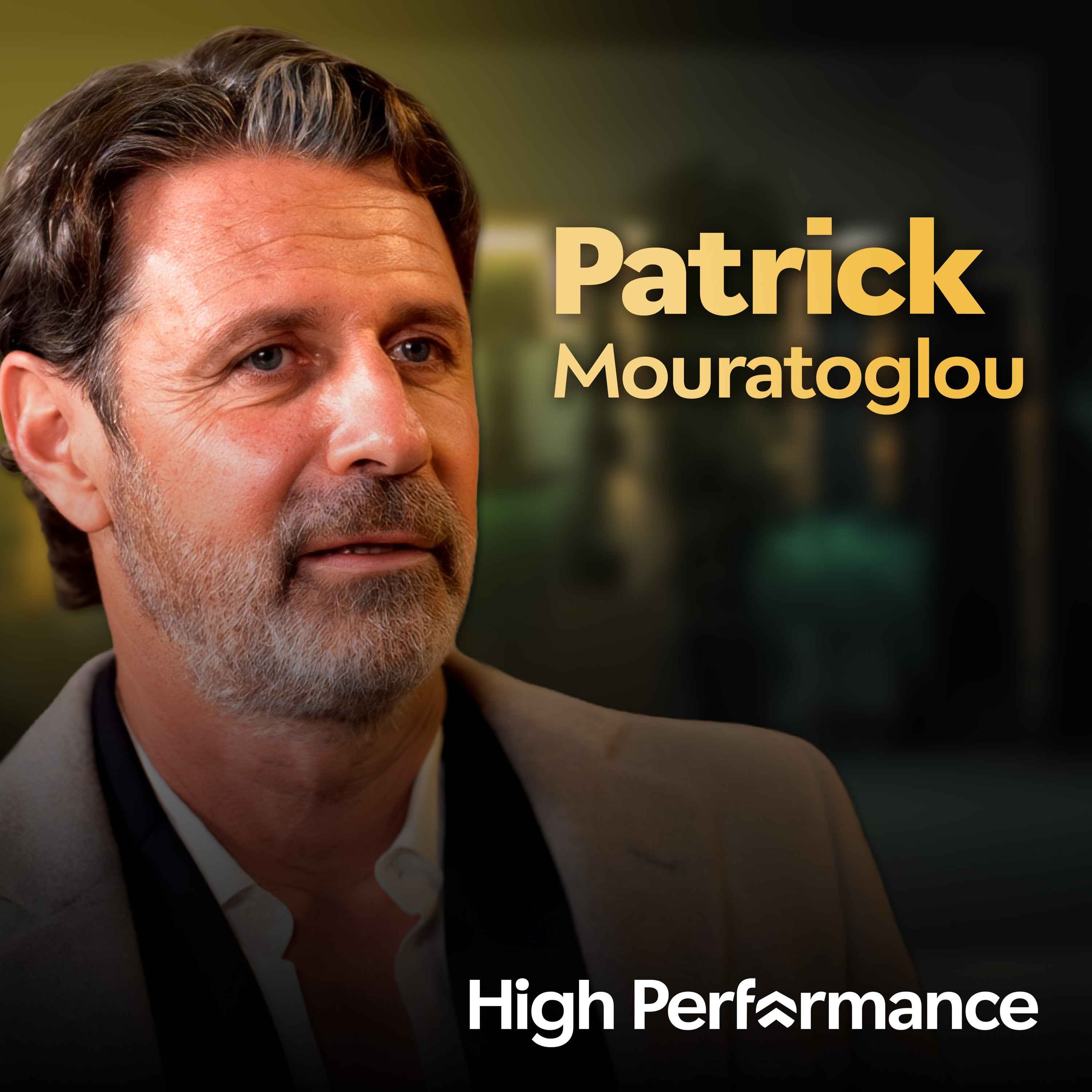
The High Performance Podcast
How I Coached Serena Williams to 10 Grand Slams & Built Champion Mindset | Patrick Mouratoglou (E388)
01:01:21
Loading summary
Transcript108 lines
- [00:02]
Patrick Mouratoglou
With Serena, I told her things that nobody on that planet would have told her. I said, you know what I think? I think you're an underachiever. There is what people think and there is what people say. I always define my job as I don't listen to what people say. I hear what they think. Protecting your children is the worst thing you can do. Never kill the dreams of your kids. Never. That's their dreams. Respect them. Let them do.
- [00:29]
Damien Jay
You're listening to High Performance. Thanks to everyone who's already subscribed. If you've not, right now is the time, because you'll get new episodes the moment they drop. And your support helps us bring more world class guests onto the show. Tap. Subscribe right now and keep growing with High Performance. Patrick, welcome to High Performance.
- [00:51]
Patrick Mouratoglou
Thank you. I'm very happy to be here.
- [00:53]
Damien Jay
We're happy to have you here. We would love to go straight into how you managed to do what you did with Serena Williams. You took her to 10 Grand Slam Slam titles. We want to know what separates the great tennis players from the greatest tennis players.
- [01:07]
Patrick Mouratoglou
Well, only one thing. And people make the mistake to think it's about talent. It's about weapons. Some players have bigger weapons than others. And it has nothing to do with that. It's only the mindset. And I think the best example of this, it's Novak Djokovic, because he's the greatest of all times. I mean, there is no discussion. The only discussion is because people are fans of other guys. But he is. I mean, in terms of achievement, he did more than any other player in the history on every level. And if you look at his game and you look at Roger Federer's game, you look at Rafael Nadal's game, he doesn't have half of what they have. Roger is a genius. He has. I mean, he hits the ball and the ball flies so fast. He has genius volley. He has so many things. Rafa is a physical monster. His forehand is like bouncing like crazy. So difficult to control. If you think of Novak, I mean, he does everything well, but he doesn't have anything outstanding. And he's the greatest of all times because he's the most professional by far. Attention to details. Unbelievable. And he has this extra thing that makes him really different in terms of he wants to dominate, he wants to be the best. He came to tennis at a time when Roger and Rafa were winning everything. And all the players were thinking, it's impossible to win a Grand Slam. And he came in and he said, going to beat those guys and actually had bad press at the start because everybody said, who's this guy? Who does. I think he is. He's cocky. And actually bit later he answered that because he's been asked, he said, no, I'm not cocky, but I have an incredible confidence in myself, which is one of the qualities. Mindset wise, incredible ambition. As I said, attention to every single detail. You know, now that you have a lot of technology, so you have new things coming out, whenever anything is coming out, he's the first one to buy it, test it, Can I use it? Is it going to make me even 0.1% better? If yes, he's going to use it. So, yeah, the, the mindset, the. I would say the confidence in your own abilities is one of the things that differentiates them from any other player. And if you look at the evolution of the guys in terms of ranking, the guys who are going to be at the top of the game, they go straight to the top, which means that they don't see any player better than them, because those mental boundaries that you have, they're going to stop you. They're going to not slow you down, you're going to lose matches, not because you can't win them, but because you see the opponent as maybe a bit better. Or maybe you might think at some point in the match, you know, soon I will beat potentially this guy. But for the moment, it's not for me. I mean, the champions never think like this. And I give you one example that I lived was with Sirena 2015 Rangeros. Since the first day of the tournament, she has 40 degrees fever. Not 39, 40. She's in the bed and she just cannot get out of the bed. Impossible. So we don't practice. We can practice before the tournament. She's dead. She has to play a match. So we go to the stadium. I don't know how she gets out of the bed, but she goes to the stadium. Cannot warm up. 0. Goes straight to the center court. So from the hotel room, not from, from the hotel bed to the center court of Rangeros, she plays. She loses the first set because she cannot play. And then there is this rage inside her that tells her, you're not going to lose that match. Impossible. And she finds a way to win it. Spends one hour crying in the, in the locker room because she's completely exhausted. Goes back to the bed. Day after, no practice. She can't. Day after match, again, 40 degrees fever, straight from the bed to the court. She did this the whole tournament and she won it. Is it possible? No, but she did it.
- [05:29]
Damien Jay
If that's what you can do, if your mindset is right. How can we all build a mindset like that? Is it something that you think is available to anyone?
- [05:40]
Patrick Mouratoglou
I don't think so. I think those people, because of their education, because of their experiences they went through, because, you know, what you think about yourself and what I think about myself is the result of one. How you were raised, how your parents were seeing you, and then all the experiences that you live every single day in your life. You have, I don't know, 20, 50 experiences, little ones per day. That gives you an opinion that you have about who you are, what you're able to do, what you're not able to do. And I'm not saying this is static. It's dynamic. Like, you can change, you can evolve. And that's my job. When I work with a player, my number one focus is to make their mindset evolve in the right direction. But to think like Serena, I mean, she's 1,000 miles away. So are you going to reach that level of thinking? Probably not. And if I refer to tennis, because that's a sport that I know the best, the champions, they have experienced many times being in trouble, being down a set and a break, and finally winning the match. It happened one time, two times, three times. And because it happened many times when they're in trouble, they have this voice telling them, you're gonna find a way. And they keep believing, and most of the time, they end up winning. Where all the other players had so many experiences of being down a set on a break and losing. So when this happens again, they think, oh, it's not my day or anything else. And it's funny, I had this question that was interesting. Do you think that Sinner, Alcaraz would beat Roger and Rafa? And I answered this. If I. If I look at the level that they play today, yes, they would beat them, the level they play today, because tennis evolves. So the level. If I compare just the level, they are better. I think I can be wrong, but I think they're better than Roger and Rafa and Novak. But if they would have played at the same time time, I don't think they would have been as good as them, because I don't think that Rafa and Roger would have led them. What I mean is, a few years back, Alcaraz, Sinner were not playing that level. They were great, but they were not. They're playing that level because they've won so much. So they have this feeling inside that the only way to think this way is to have experienced it. And they have. When they were coming up, if Rafa and Roger and Novak were there, they would have beaten them because they were beatable at that time, and because they would have beaten them at that time, those two guys would have never reached the level they have today. And this happened with many generations in the past. You know, Roger, Rafa, Novak were winning everything. And a lot of generations of great players, Dimitrov, Raonic, Nishikori, I can name a lot. They're not as famous, for sure, because they never could reach that level because they were stopped by them. So they never get the confidence that they were able to play that level and win those tournaments. So they never did. So it just comes back to what I was saying. Experiences that you go through gives you a feel of who you are, what you can achieve and have the confidence to do it, but you know, it has to start somewhere. So some young players, some young people have a level of confidence about their ability to achieve big things that is way bigger than others. And actually, when I scout young players, I don't scout so much their forehand, their backhand. No, I look at how, how much driven they are, because I think the best people in the world in. I mean, the best in what they're doing, whether it's tennis or anything else.
- [09:38]
Damien Jay
And how would you define driven?
- [09:40]
Patrick Mouratoglou
The more passionate passion. I think the biggest musicians, they just live for their music day and night, and that's an obsession. The best tennis player, same.
- [09:57]
Verizon Ad Voice
In a world where January is supposed to be boring, one staple of the holidays refuses to end the great deals at Verizon. The joy just keeps on coming. Right now you can save on four new phones and four lines. Critics agree it's the deal that keeps on giving. Come into Verizon and save on four new phones and four lines on unlimited. Welcome. Additional terms apply@seeverizon.com for details.
- [10:26]
Workday/MeUndies Ad Voice
When you're a forward thinker, you don't just bring your A game, you bring your AI game. Workday is the AI platform that transforms the way you manage your people. Money, money and agents. So you can transform tomorrow Workday, moving business forever forward.
- [10:43]
Damien Jay
Are you a trailblazer? A risk taker? Maybe someone with countless tales of epic adventure? Well, I'm not quite there yet, but I'm working on it. Even the boldest among us started off small, right? Daring themselves to reach greater goals every day. And if you're looking to take on a challenge like that, the Defender is too. Now, I've driven a Defender for a few years. It's the best car I've ever owned. It's a vehicle built for drivers capable of great things, whether they're heading towards uncharted territory or just fancy a weekend getaway. Defender was engineered to meet challenges head on, so you can explore with confidence. It's the legendary icon of adventure, reimagined through modern design, fit for a new generation of Explorers. My kids love it as much as me. It also has a tough, rigid body, tested to the extreme, a modern functional interior built for comfort. It's a vehicle that, like you, is capable of great things. And with next gen technology, from 3D surround cameras to clear sight ground view, it will help you embrace the impossible. Explore the full Defender lineup@land roverusa.com.
- [11:46]
Patrick Mouratoglou
Tell.
- [11:46]
Interviewer
Us about your relationship with Serena then. Because you had a long, successful relationship.
- [11:51]
Patrick Mouratoglou
And we also had some bad moments, but yeah.
- [11:53]
Interviewer
So you were exposed to her at those two moments of success and difficulty.
- [11:58]
Patrick Mouratoglou
Yeah. And she always tells me, you are the person in the world that knows me the best by far. I mean, I don't know now, I don't want to say now because she's married, she has kids, so I guess her husband knows her really well. But I mean, she always told me more than my parents. I know her better than her parents know her because I really heard her, you know, I heard what she think and what she feels.
- [12:24]
Damien Jay
What did you hear when you first worked with her? Because she'd just been beaten in the first round of the French Open.
- [12:29]
Patrick Mouratoglou
Yeah, in two years. Two years without winning a Grand Slam. Also, it's long for Serena. It's very long.
- [12:34]
Damien Jay
So what did you find when you first worked with Serena?
- [12:39]
Patrick Mouratoglou
First of all, I feel it's funny what I'm going to say. I always felt I knew her before I knew her. I mean, she was a public person and she was an incredible tennis player. Before I started to work with her, she had 13 grand slams. I always was extremely impressed. Always. I valued her a lot before knowing her. For me, the values of high level, she had all of them. And you know, when you think about champion mindset, she's the ultimate champion in terms of mindset. Crazy. So I had this opinion already because I felt I knew her. And I always thought one day, and I had this dream, one day she's going to knock at the door of my academy and she's going to enter. And I could see the scene, really, I could see it. And believe it or not, but it Happened exactly that way. She called me after the French Open loss in the first round. And she said, can I come to your academy? I want to get ready for Wimbledon. And she didn't know me. I mean, barely. We spoke one or two times, but five minutes. We know everybody knows each other on tour, but not really know. She was in Paris, my academy was in Paris. She knew I had an academy. She called me, I said, yeah, sure, of course. So she came to my academy. She entered the academy exactly how I imagined it in my dreams. That was crazy. And then she just asked me to have a court, two guys to hit with, and that's it. I said, sure. So I gave her the court and the two guys. That's it. And I was just standing out of the court because it was my tennis academy. So I wanted to be sure everything was right and she didn't need anything or you know what, Serena, come on. Had to be careful that everything would go well, so maybe she would come back the day after. So she hid for 45 minutes. She sat down, she turned to me, I was out of the court. She turned to me and she said, talk to me. And I talked to her for 10 years.
- [14:37]
Damien Jay
What was the first thing you asked or said?
- [14:39]
Patrick Mouratoglou
First of all, I watched a 45 minutes practice and I saw she was struggling as I saw the match she lost in Rangero's first round. And she same mistakes. I just. That's what I said. I said, I watched your match, I watched your practice, and you're doing exactly the same mistakes. So it's not going to go. It's not going to go any better if you keep doing the same mistakes. I knew I was a bit provocative, but I did it on purpose. I knew she would react well to that. So she said, what? I said, you do this and you do that, so you should do this and this instead. And then she said, can we do it? Sure. So I stepped on the court, took the basket, and I said, okay, let's do it. And we did it. That's exactly how it started. Completely unexpected.
- [15:23]
Damien Jay
Was the issue her tennis or was the issue her. Her mind?
- [15:26]
Patrick Mouratoglou
At that point, everything is always come together. You can't. You. That's the mistake that people do a lot saying what's more important in tennis? Is it the mental? Is it the. The. The tennis? Is it the physical? Everything is linked. You can't separate things. If you have a technical problem, this will have mental consequences and maybe probably physical consequences. But it's true. I mean, everything's connected. Now if you ask me what's the most important. I mean, of course it's the head. It's the mindset by far, miles away. Anything else? For sure.
- [16:01]
Interviewer
You've described her as the CEO of her career. So how did you come in here as an equal, rather than seeing yourself as being a subservient to her?
- [16:11]
Patrick Mouratoglou
Well, the most important to coach someone, and I always explain that to coaches who jump too fast to other things, is to have the confidence of your player, that the player trusts you. That's number one. If you don't have that, you can't work because you can give the best advice in the world. If the player is not convinced that you. What you're saying is right, it's not going to work. First, she's not going to do it. And even if she does it, she's not going to believe in it, and it's not going to work. And sometimes it's better to give a bad advice, but to have the player believe in it 100% than to give a good advice that the player believes 50%, right? So the trust. You have to create the trust.
- [16:51]
Interviewer
And how do you do that?
- [16:52]
Patrick Mouratoglou
Lead by example. First of all, I showed that I was not someone that would accept to be dominated. And she tried. For example, she always does that because she's. I think she's feeling comfortable when she dominates. That's why she became who she became also. But she likes to dominate. She likes to be in charge, to be the boss. So she's at the very start. So that was at my academy, but there was no plans of coaching. I was coaching Grigor Dimitrov at that time. She was coached by her father since she was a kid. So. Well, she just asked me for help. I did. But then Wimbledon comes and she calls me. She's still in the U.S. right? Because after being in Paris with me for practice, she went back to the US I'm already in Wimbledon with Dimitrov practicing for the tournament. And then she calls me from the US and she says, I'm arriving tomorrow. Can we meet? I said, yeah, sure. We're going to meet the day after tomorrow. I said, no, no. She said, no, no. I arrive tomorrow. We meet tomorrow. Okay. So we went to a cafe, and she said to me, I really love the week that we had. I never trusted anyone else than my father, but I can feel that maybe I can win another Grand Slam with you. So I would like to try Wimbledon with you. Are you prepared to do it? So I said, I'm gonna ask Grigor because I'm with him. So is he okay that I do both of you at the same time? If not, I'm not going to do it because I have to be fair. Grigor said yes. And even in that meeting, I already showed who I was to her. So she asked me, what do you think about my game? What do you think about me as a player? And I told her things that nobody on that planet would have told her. Nobody would dare sing this to her. I said, you know what I think? I think you're an underachiever. She had 13 grand slams. She was shocked. I said, yeah, I think you're an underachiever because you're so good. How can you lose so many matches every year? You should not. There is no reason to lose those matches. So imagine you would have won all of those matches. Maybe not all of them, but the majority of the ones you lost. How many grand Slams would you have today? And it's funny, because 10 years later, she said to me, if I had met you 10 years, years before, I would have 40 grand slams. I don't know if it's true, but that's the feeling she has. Because when I said this to her, she was shocked. But she thought, oh, this guy. Sorry to say that. That way, this guy has walls. First of all, he sees me so good. Which I believed what I said, huh? I would not say something I don't believe unless I think it's very helpful for the player. A good lie is better than a bad truth, by far, if it helps the player. But I really meant it, and I have no problem. I see Rena Williams in front of me, and I tell her she's an underachiever, which sounds crazy, but she liked it. And then we went on the court because Grigor said yes. So I went on the court, and when she entered the court, first day, she's right in front of me. I say, good morning. Good morning. She doesn't look at me. She doesn't answer. Then we start practice. After 10 minutes, I tell her something about her game. She doesn't look at me. She doesn't answer. She's just telling me, I don't care about you. She wants to take the power. That's what she's trying to do. So I was tough.
- [20:17]
Damien Jay
How did you deal with that moment?
- [20:19]
Patrick Mouratoglou
Well, same. I thought I need to build a trust. If I show that I accept that she treats me like this, she will never trust me. She will never respect me. So there will be no trust. I mean, I'd better stop now to coach her. It's not gonna work. She has to respect me. If she respects me, if she likes me, if she trusts me, we're gonna do something incredible. But if one of those three things is missing, not gonna work. So what I'm gonna do what I did at that moment, on the moment, she's not gonna like me, but she will like me because I'm really likable, and I really like her. So she's gonna like me. I have no doubt. I can take that risk. And if I don't take that risk, I'm going to fail anyway. So she sat down and I. She had a cap, and I really hit the cap really hard. Not her head, but the visor of the cap. So the. The. I mean, it almost fell the cap. I did like this. And I looked at her and I said, I have rules, and you're going to respect the rules. Rule number one, when you enter the court every day, you look at me and you say, good morning. Rule number two, when I speak to you, you look at me and you answer me. And I said, is it clear? And then she said, and what's rule number three? And I forgot the rule number three. So I said, I don't remember, but I'll tell you when I remember. That was it. But a few months later, she said, when you did this, you had me.
- [21:44]
Interviewer
Can you share an example, though, say, working with Serena, where you watched her in a game and you thought, that's my input rather than just her talent, her ability, all the lessons that had shaped her to be who she was?
- [21:59]
Patrick Mouratoglou
I mean, it's so complex that I cannot say it's my input. You know what I said when I started with her? A lot of. I did a lot of interviews, and the journalist was telling me, wow, what an achievement to work with Serena. And I said, every time I was saying, no, it's not an achievement. I'm lucky. I'm blessed that she shows me. But you can talk about achievements. If her results with me are much better than her results before. I was talking about someone who had 13 grand slams, but I really meant it. And you look at all the statistics when I worked with her, they are way, way, way better than before. She was never more than eight months number one in a row before. Three and a half months, three and a half years in a row when we were together. I mean, 10 grand slams in five years, 13 in 12 years. And the statistic number percentage of matches won, way higher. So she did better. Now in details. Yeah, I saw all this. We worked on stuff like that. Yes, of course. The thing I'm very happy with is that she won Rangarros, because that was after. After coming back to number one. So 2012, we start 2013, she's back to number one, having won Wimbledon, US Open, and the Masters and two Olympic gold medals. Sorry. In six months of time. And then she says to me, I can't win Orangarros. You know, I won it only once in 2002. We're in 2013, and I still won it only in 2002. So 10 years without winning it. I can't. Can you please? I mean, I'm struggling. She never says I can't. She always thinks she can. Can you please make a plan for me to win Ryan Garros? And we did. I did a plan. We worked. And in 2013, not only she won regulars, but she didn't lose one match on clay the whole season. Unbelievable. A dominance on clay like this. I don't think this ever existed. I mean, we're talking about someone that all the tennis world and journalists would say, oh, she's not good on clay. She didn't lose one match the whole season on clay. And she ended up winning Rangeros and winning it again in 2015 with 40 degrees fever.
- [24:04]
Damien Jay
She did well.
- [24:05]
Interviewer
Go on.
- [24:06]
Damien Jay
I'd like to talk about that moment where you hit the cap. Cause it's an intense moment.
- [24:11]
Patrick Mouratoglou
Right.
- [24:11]
Damien Jay
It's physical, it's confrontational. It's quite aggressive. And I think that we always think if we're gonna get the best out of people, whether it's our partners or our children or our friends or our tennis players, it all has to be kind and friendly and smiley and in flow and everything's great. But really what you're saying there is that clashes are okay. You clashed with Serena. Two powerful personalities, and that was all right.
- [24:35]
Patrick Mouratoglou
We did clash a few other times. Huh? We had some clashes. It's part of life. I mean, if you have a wife, you never clash with your wife. You do. Do you love your wife? Of course you do. It's part of life. It's okay to clash. Of course, what is bad would be to feel, to think, this person doesn't understand me. It's different. You said, oh, everybody thinks. Has to be gentle and nice and know everybody's different. And like I would say, in most of the cases, you have to be positive and think positive and. And value your player and. And, yeah, of course. But in some cases, it's not true. And I had this with one player because she had been educated completely differently. And I found out that when I was positive, she would lose confidence, and when I was negative, she would gain confidence. I know it sounds crazy, but it's true. And I can explain you why. I give you one example. So this player, same, same top hundred all her life, like between 60 and 124 years old. And suddenly we start working together. And she did the best eight months of. She earned more money in eight months than all the rest of her career combined. She played so well. But because I understood her, she started to play crazy good. And whenever I was congratulating her or saying, oh, this was really good, she was feeling, oh, I'm doing well, it's enough. And she would lose. Her motivation was enough for her. It was easy for her to be, because she never had a compliment in her life, only criticism. And she associated criticism with respect for her potential. She associated nice things said to her or positive things said to her to, you're not that good. And this example, you're going to understand. So she beats Justin Henin. You Remember this player? First round, Masters 1000, first round. She plays her, and I tell her, great, perfect bad luck for her. That's what I said. She beats her. At that moment, I know how to speak to her. So I tell her, okay, I'm not happy with that match. I said this to her, I'm not happy. Not a good match, because you were not disciplined at 40, 30. You didn't do the tactics. We said this was wrong. I mean, the percentage of first serve is not big enough, and it's just up to you. Just slow down the pace and all the things that she did wrong. I said, you know what she thought? I know exactly what. She had a smile she couldn't control. While I was saying all those negative things, she was so happy because she was thinking, I beat Justin Henin and I didn't even do the right thing and I didn't play well. Fuck, I'm so good. That's exactly what she thought. I know it sounds crazy, but if you don't understand the person, you're not going to do the right thing. After eight months, I stopped with her. She was number 12 in the world. She beat number one, number two, number three, number four, number five in the world, and won a Masters 1000, beating Justin Henning and Venus Williams in the final. I stopped because she doesn't want to work anymore. She's not prepared to do the same efforts. And I said to her, this is my rules. If you start to do things like this, I stop. So I did exactly what I said. Eight months later, she's completely dropped in the ranking. And she calls me and she says, my coach doesn't believe in me. I said, why would you say that? And she said this and listen carefully. She said, because I lost the match. And she told me I played well. She was trying to be positive. So, yeah, if I lose, playing well means I'm not good.
- [28:16]
Damien Jay
So interesting what you said there about you realized she wasn't making the effort and you walked away. Obviously, you also walked away from working with Serena Williams, which is a huge decision.
- [28:26]
Patrick Mouratoglou
Right.
- [28:27]
Damien Jay
How did you come to the decision that it was time for you two to part ways and for you to go and take on new challenges?
- [28:33]
Patrick Mouratoglou
Well, I mean, with Serena was complicated situation because, you know, she didn't hit a ball for eight months at that time. Yeah, she was 39 or 40 years old. She didn't want to play. And three times during this eight month, I. I called her and I said, are you. Do you want to retire or you want to keep playing? You have to take a decision. I don't know. I say, you don't know, but you're not playing, you're not hitting a ball. So if you stay too long in that situation, it's a retirement. And it's better to say, okay, I'm done. I don't know one time, two times, three. And for me, it was tough because that's my passion. I want to coach. I don't want to be here waiting. I can't be patient. But eight months without hitting a tennis ball, it's a lot. And a player came to me and I said, I can't. I'm coaching Serena. Sorry. But she was at my academy, so she was practicing there, and she said, can you at least. Can you just come and watch? I said, okay, I'll come, but I stay out of the court and not giving advice, nothing. So that's what I did. And I had a connection with this player. And, you know, I did this a few days and then I entered the court and I just gave her one or two advice. And I really felt I was back to life after eight months without. So I said, okay, I'm going to call Serena. So I called Serena and I said, I'm coming to see you. She was in LA at the time. As far I was in south of France, no problem. So I came, we sat, we had lunch, and I said, tell me what's the situation? So still Same. I don't know. I said, listen, Serena, I want a coach. That's my passion. That's my job. It's not about money at all. It's just about. I want to do my job. I want to, you know, it's my passion. So if you tell me you want to play, I'm with you 100%, without any doubt. But if you don't, I want to keep coaching, and I want to work with other players. And she didn't want to answer me. She can be really difficult. I said, listen, eight months without playing. There is Rongaros coming, Wimbledon coming, US Open. You know, it's such a short period of time. You will need at least eight weeks to be ready, especially after not playing for eight months. Monday, next Monday. It's eight weeks away from Orangaros. I wait for you Monday at practice. If you don't show up, I consider you retiring, and I'm gonna. I consider myself free to work with somebody else. If you're here, I'm with you 100%. She said, I won't be there. Okay. That's how I took the decision. Was it a good decision? No, it was not a good decision. I make a lot of mistakes. This was a big mistake. And I didn't understand her at that time, even though I know her so well, because I was also excited with the new challenge. To be honest, if I'm hon. If I'm honest with myself, that was the truth. And we had a. We had a. After that, we had a long, long discussion with Serena and. And I realized I didn't at that time, and I didn't do what I should have done. So it was a mistake.
- [31:46]
Interviewer
And what should you have done?
- [31:48]
Patrick Mouratoglou
I should have said during those eight months, before eight months, I should have said, okay, we have to practice. I should have showed up in Florida, where she lives, and say, okay, tomorrow, 9 o'. Clock. Let's go on the court. And she would have practiced, and maybe she would have won a few or the Grand Slams, who knows? But I didn't do it, so. And that's what she expected. Yeah, because she needed it at that time. Not that she needs it in general, because she's. She's, you know, she's incredibly driven. But it was a period of time that was difficult for her, and she needed a push, and I didn't give her the push. So.
- [32:21]
Interviewer
So can I pick up then and combine a few areas that you've spoken about, Patrick, that we were looking at a survey that around the role of parents and the progress of young tennis players, where the stats indicate that 36% of parents negatively affect a child's progress in the sport. So my question to you is that if you were designing an education, parents for parents, and we have lots of them listening, what are the three top tips that you would pass on that would allow a child, whether it's in tennis or not, just to flourish and achieve the confidence that you eventually found?
- [32:56]
Patrick Mouratoglou
Well, first of all, I would probably tell parents, don't have any kind of judgment on your child. Zero. And we all judge because everybody judges around us all the time, has opinion on people, has even certainties about people. And when you listen to parents, oh, he's not good at that. Oh, he's good at that. His judgment, why you judge them, let them do that, would be number one. Zero. Judgment. Zero. I would say. Second, instill in them the value of work, which is the only one that is worth. Never value talent. Never, never. And I would say it's even worse to have talent. I feel bad for people who have talent. I really feel bad because talent gives people who have it a feeling that they can achieve things without working, which, in to a certain point, it's true. But when you look at the big picture, like really big people, it's never true. It's not about talent. And they never really work because first, they have this feeling from all their experiences. Again, we come back to experiences that, okay, it's working even if I don't work. Why would I work? And second, talent defines them. People who are talented since a young age, what do they hear about them? Wow, you're so talented. Wow. Oh, it's so easy for you. They hear this and they like it, and they hear it all the time. They think, I am talented. That's my identity. I'm a talented person. And because it's something that values them, that's how they see it. They're scared to lose that label of being talented. If they work and it doesn't, they don't succeed. Maybe they're not talented anymore. If they play a player who's not talented and they lose, maybe they're not talented. So what do they do? They don't fight at matches. Most of the time, they give up very easily. And after they can say, yeah, I didn't try. So there is a voice themselves.
- [35:05]
Interviewer
Yeah.
- [35:05]
Patrick Mouratoglou
Yes. It's protection all the time. So talent is dangerous. So I would tell parents to come back to your question. Never value people who are talented around your kids because they will want to be talented. Too value people who work, value people who fight, who are resilient. All those qualities that are the most important to succeed in life in general. So that's a trap. So I would say that what I.
- [35:29]
Damien Jay
See from a lot of parents is they're trying to protect their children by saying, no, you can't be a professional footballer because no one makes it as a professional footballer. Oh, no, you can't dream of that job. You can't be an astronaut because the chances aren't very likely. They are doing it because they love their children, because they want to protect their children, because they don't want their kids to be disappointed that the thing they dreamed of never happened.
- [35:48]
Patrick Mouratoglou
Huge mistake. Never kill the dreams of your kids. Never. That's their dreams. Respect them. Let them do. You know what? If they're confident and they, first of all, they will succeed. But even if they don't succeed, if they're confident they can do anything in life, no problem, they'll do something else and they'll be successful. Actually, I had this discussion with the father of Serena and Venus a long time ago. And he told me my job was to make them confident. That's all I worked about, that was all about it. And once I knew I succeeded and they were both incredibly confident people, I knew that whatever they would do, they would succeed. And he was right. So, yeah, don't never kill the dreams of anybody. Anybody. Protecting your children is the worst thing you can do because they need to experience life. I have a lot of friends who come from a very poor background, made incredible success in business, for example. And they tell me, I don't want my kids to go through what I had to go through. And I said, why are you saying this? You are who you are because of what you went through. You think that if you make things easy for them, you're going to help them for sure. Not you're going to feel good, you're going to feel like, oh, they're happy. I make their life easy. Yeah, but you're hurting them when you do this. I'm not saying you have to torture them at all, but life is life. You know, of course, when you're four years old, you cannot show all life. It has to be according to. But don't make things easy for them, because if it's difficult, you know, they have problem at school, they can't solve something if you do it for them, they're not learning first. It gives them the impression that they're not good enough to do it because you do it for them, imagine they fight to solve a problem they have and they end up winning. I mean, it's a boost for their confidence. Let that happen. Don't make things easy. Never. I mean, all the champions, they had a tough life, all of them. And I will tell you something that is very interesting. When you are in the most difficult position, there are so many opportunities that you don't see because you're suffering from your situation. For example, I mean, this is not that bad. But losing a match or losing several matches in a row and feeling like, oh, wow, I. I'm struggling, I don't know how to win anymore, et cetera. This is great opportunities. During COVID like, all the companies were in big trouble, like really big trouble opportunities. And I know it by experience. So whenever things are going bad, I'm happy. I think, okay, I'm going to have a great opportunity. So when I was young and I couldn't speak to anybody, I could not. I was going to school every day because I needed socialization, like, we are humans, we need this. And I couldn't have. What I was doing to have some kind of socialization was to look at people interact. So two people were talking. I was listening to their interaction. I was, of course, not with them. I was back, but I was listening and I was looking at every detail of each of them, looking at their face expressions, their clothing, their body language. And I was thinking, what does these people think about what the other guy is saying? And I was trying to put myself in the shoes of one, then in the shoes of the other one, et cetera, et cetera. And I was doing this all day long because I was not speaking. By doing that, I learned to read people. I didn't do this for that at all. I did this because I needed to survive and I couldn't have interactions. And that was my way to have some kind of interactions. And I developed an incredible ability that was so useful after when I started to coach. So imagine I'm in the worst place I can be. I cannot talk to anyone. And I develop something that not many people have because in real life I see, you know, how people perceive the other people's emotion. And I think they're completely wrong. I mean, I had so many experiences. We do an interview, I'm with a guy, like high profile, profile gal who's working with me. We finished the interview and I said, what do you think about this guy? And he says, oh, he's. He's like this, he's like this, he's like this. Not at all. He said, for example, he's very humble. I remember this one. I say, why do you say that? Because I think he's zero humble, which is okay. But he's not humble. This is wrong. So I say, why you think this? Oh, because he said it. And do everybody says what he thinks? No, there is what people think and there is what people say. It's two different things. And I always define my job as I don't listen to what people say. I hear what they think. That's my job. So I developed this ability at a moment when I could do nothing so I would not be.
- [40:51]
Damien Jay
So your trauma became your superpower. In many ways, yes. Are you a trailblazer, a risk taker? Maybe someone with countless tales of epic adventure? Well, I'm not quite there yet, but I'm working on it. Even the boldest among us started off small, right? Daring themselves to reach greater goals every day. And if you're looking to take on a challenge like that, the Defender is too. Now, I've driven a Defender for a few years. It's the best car I've ever owned. It's a vehicle built for drivers capable of great things, whether they're heading towards uncharted territory or just fancy a weekend getaway. Defender was engineered to meet challenges head on, so you can explore with confidence. It's the legendary icon of adventure, reimagined through modern design, fit for a new generation of explorers. My kids love it as much as me. It also has a tough, rigid body, tested to the extreme, a modern functional interior built for comfort. It's a vehicle that, like you, is capable of great things. And with next gen technology, from 3D surround cameras to clear sight ground view, it will help you embrace the impossible. Explore the full Defender lineup@land roverusa.com now the holidays are over, you might be feeling a spending hangover. The events, the gifts, the food, it all adds up. And I started looking at ways I could cut back on spending in the new year. And my phone bill was the place I started. And luckily, Mint Mobile is here to help you cut back on overspending. This January, I switched from a big wireless provider and the service has been just as good. Same phone, same number, same contacts, just a lot less money leaving my account every month. This January, quit overspending on Wireless with 50% off. Unlimited premium wireless plans start at $15 a month at mintmobile.com HPP that's mintmobile.com HPP Limited time offer upfront payment of $45 for three months. $90 for six months or $180 for 12 months. Plan required $15 a month equivalent taxes and fees Extra initial plan term only above 50 gig may slow when network is busy. Capable device required. Availability, speed and coverage varies. See mintmobile.com.
- [42:53]
Verizon Ad Voice
In a world where January is supposed to be boring, one staple of the holidays Reflect refuses to end the great deals at Verizon. The joy just keeps on coming. Right now you can save on four new phones and four lines. Critics agree it's the deal that keeps on giving. Come into Verizon and save on four new phones and four lines on unlimited. Welcome. Additional terms apply@seeverizon.com for details.
- [43:28]
Interviewer
Just expand on that really beautiful line, though. I don't listen to what they say. I hear what they think. How do you do that?
- [43:34]
Patrick Mouratoglou
I look at every detail and I try to listen beyond the words. I mean, we all know we live in a society where people don't say what they think you think they say what they think. I mean, on social media, zero, like zero is probably the opposite of what they think. They just say what people want to hear that all the time. But even in interaction, even with friends, there are things they don't want you to know. They want to show their best face, probably a lot of them. So they don't say what they think. And if you don't know what they think and feel, you don't know them. It's not to judge that you have to know. It's to understand them. Because life, I think life is a lot about understanding people. When you understand people, you stop judging them. When you don't understand, you judge. And you have a completely wrong impression about life and people and the people that you know and the people that you see on TV or on social media, you have a completely wrong opinion. But if you really pay attention, it's not easy to do. It takes a. And it takes time. I don't know people in two minutes. That's not true. It takes me sometimes months. My players, I always say it takes me three, three to six months to really know my player. When you see how people deal with situations, you get to know them better. And my business partner, who's like my best friend for 20 years now, always is an unbelievable coach. By the way, he's not in sports, but he's an unbelievable coach. Always tells me, and he's right. You really know people in two situations. When they have success and when they're in trouble, their real personality will show up, will show up then. Otherwise, it's easy to kind of lie about who you are, but when you're in trouble, really, then the real you will show up. And when you're successful also, you'll see people change a lot.
- [45:24]
Interviewer
You said, Patrick, that you see your role as being almost a mindset coach as well as a tennis coach. And those two qualities of having that passion and the drive and then almost that high level of self belief, how can you enhance those qualities?
- [45:40]
Patrick Mouratoglou
Well, passion is not easy because some people don't have a passion. So you have to make it very interesting. I've worked with players who are not passionate about tennis in the past. So I was going to the matches with them, I was explaining stuff to make it more and more interesting for them because I think it's easy to get passionate about tennis because I mean, the fan base of tennis, when you fall in love with tennis, it's for life. And the fan base of tennis is 61 years old, average. And there is a reason for that. Two reasons. The first one is because the format of tennis is not appealing to the young generation. It's too long, it's too slow, it doesn't, doesn't fit the criteria. But the second reason is the fans, the original fans of the 70s and the 80s are still fans today because, you know, it's for life. So it's easy to love tennis, but for that you need to understand how subtle it is. There are a lot of things that people don't get. So I would spend time with the player, tell them stuff they didn't think about, and then they will say, oh, wow, that's great. You know, and also I think it's contagious to passion. If you live with someone who's passionate and you have a great connection with that person, I think you can get more and more. It works or it doesn't work. But passion is one thing. The second thing I think is even I think it's more interesting. How do you help people believe in themselves more? As I said earlier, it's all about your experiences. And most of the people have had bad experiences. They lost a lot of matches in their life. And when it comes to real life, not tennis, you know, one day you had to make a speech in front of four people and you were so scared and you messed up. And then you think, oh, I'm very bad at talking in front of people because this bad experience made you think that. Or parents told you and people around, all parents do it, oh, my son is good at this. But this, oh, no, it's not for him, you go back to where you're not supposed to be good and you have a positive experience. So I basically do this with them. I was on Nick Kyrgios podcast a few months ago, and he said to me, okay, if you had to coach me tomorrow, which advice would you give me? And I said to him, I don't give advice. I'm not a professor giving a lesson. That's not me. And I don't think it's coaching. It's called masterclass. It's not coaching. What I would do, I would embark with you on the journey. We're going to go through good and bad things. There will be challenges. We're going to find solutions together. So we basically embark together. Life gives you the challenges, and most of the challenges is because you have mental limits in some situations because of what you went through. And because we're together, we're going to go through it and we're going to change the outcome compared to what the previous one. And then slowly, you're going to change your opinion on yourself. I did it for myself when I was younger, from the least confident person in the world. I cannot say from the most confident because it's not the case. There are many people way more confident than me, but I think I am confident in myself. I couldn't even speak to someone because I was so shy and my opinion about myself was so bad. I was always thinking, when I was young, if I open my mouth, they're going to see how not interesting I am.
- [49:14]
Damien Jay
People will be listening to this, thinking, hold on. Patrick couldn't even talk to people because he had such challenges mentally as a child, and now he suddenly believes that he can win a grand slam as a coach. Please explain what the moment that that changed or the journey from one to the other, because there were people listening to this who are where you once were and would love to be where.
- [49:36]
Patrick Mouratoglou
You are now, taking decisions. I took big decisions that gave me a lot of confidence. Like one when I was 16, I was really under control, which is normal with my parents. My parents were controlling me a lot, which is normal. We control our kids. We don't want them to do stupid things. Nothing bad about it. But, you know, I was dominated, and I was even way more dominated because I had no confidence. So, you know, I was like a soldier. Okay, I go right, I go left. I couldn't do well in school, even though I was trying. So I was very sad because I know I was not doing what my parents would expect me to do, even though I was trying. So this didn't help my confidence. So at some point I thought, it's enough. I'm going to take control. It was easy because it was my parents. I mean, when you say, I'm going to take control of, you know, in a situation where you don't know the people is more. You need more confidence. But. And this was a. Maybe one of the biggest decisions I took. I was 16 then. I never went out, you know, parties and this zero. Because I was focused on tennis. I didn't care about going out. But when my parents took tennis away from me because they didn't want me to become a professional tennis player because they thought, no, it's better to study, I felt they took my life away from me. And I was angry, really angry. So I started to go. I wanted to do all the stupid things in the world, like a revenge. Yeah. And I used this anger to, you know, dominate my parents rather than to be dominated. When I was 16, this anger helped me a lot to do it. So I said to her. One night, we were after dinner, I was in the living room with my brother and my parents, and I said, I'm going to go out tonight. So my father looks at me and said, I don't think so. And I said to him, you see the door behind you? I'm going to stand up, I'm going to walk, I'm going to open the door, and I'm going to get out of this apartment. And if you don't want me to do it, you will have to stop me. But if I was you, I wouldn't try. He could feel that I was not joking. I stood up, I walked, I opened the door, I left, came over. I had control. This was big for me. This gave me a really boost of confidence. Then one year later, I was still very shy. I mean, more than shy. When you spend your whole day talking to nobody and literally hoping nobody's going to talk to you because you know you're going to panic. You even try to not cross anybody's eyes, because if you cross somebody's eyes, the person might start to talk. So I was looking at nobody. Also, I went to my mom and I said, okay, I cannot live like this all my life. I want to do great things in my life. I can do nothing. So this cannot be my life. What can I do? She said, because he was psychologist, actually was psychoanalyst. So it was a deeper thing than psychologist. So I said, okay, whatever I have to do, I'm going to do. So I Started this, which was so difficult for me because of my shyness. I spent one year going every week to see this guy. For one year, I couldn't say one word. One year going every week sitting like this in front of the guy, and not one sound was getting out of my mouth. One year.
- [52:57]
Damien Jay
You must have been so determined to change your life because not many people would carry on doing that for a year.
- [53:03]
Patrick Mouratoglou
You're right. And I think there was a voice in me telling me I have something special, but I just cannot express it. I can't. I carry way too heavy burden to be able to express what I have inside. And I have to find a way to express it. You know, since I was very young, I knew we would. I mean, we all know we're going to die one day. But I have this feeling really deep inside me when I was 6, 7 already, and I was terrified by the idea that I'm going to die one day. It's scary, I think, for everyone. And I thought it's going to be very short. It's going to go fast. I mean, I knew it will go fast. And now I'm 55, and I can tell you because I see you much younger than me, it's fast. It's crazy fast. So I thought, you know, it's so fast, it's going to happen once you have one life. That's what I think can be wrong, but that's what I think. So it has to be something really special to me. I always thought that, but I just couldn't do it. But I think this voice gave me the strength to win battles that I would not even try to win if this voice didn't push me. But I don't think it's me. Like, I think really that everyone can do things that they don't even think about. People don't have any idea of the potential. They have zero idea. Why? Because they don't try. They just don't try. And they don't have the confidence. I mean, if I had the power to give something to someone that I love, it would be confidence. With confidence, you can do anything.
- [54:41]
Damien Jay
We've almost reached our quick five questions to round off the interview. But we can't have you in the chair and not just talk for a moment. And you've already mentioned their names, Alcaraz and Sinna, how impressed you are with what they've done and how they've taken the game seemingly onto another level.
- [54:55]
Patrick Mouratoglou
I mean, they're crazy impressive. The quality of the tennis they play is unreal after tennis is funny because after Sun Price won 14 Grand Slams, the entire tennis industry said this record will never, ever be beaten. Next generation, three guys not only beat him, but destroy him. More than 20 grand slams. Three guys, 20 or more. So that's crazy. And after those three guys, everybody said, nobody's going to play tennis like this ever. They reach heights that are impossible to reach. Next generation, boom. Two guys play. I think they play better tennis because tennis evolves. I don't think they would have been better than them if they would play at the same time, but I think that because tennis is always evolving, I think they play faster. I mean, if you look at Wimbledon at a time, it was final Roger Rafa, and now you look at Wimbledon final this year, they play faster. I think they play way faster. And if you look at them one after the other one, you see it. So that's crazy. The level they play. And what is crazy also is their domination. The points they have says it all. So, you know, it's the ranking is because of the points. So you have Alkar, Sinner. They have almost the same number of points. I mean, very close. Very close. Number three, Zveref. The difference of points between those two guys and Zveref is as big as the difference of points between zveref and number 1000 in the world. That's nuts. Nuts.
- [56:30]
Damien Jay
Is it good for tennis?
- [56:31]
Patrick Mouratoglou
I think it's. The rivalry is unbelievable for tennis. The level of play is great. The fact that they dominate so much the field, it's not a problem. They're too. They're so exciting, you know, I mean, Roger Novak, Rafa, they dominated the same way for a decade. Was it good for tennis? Everybody was saying it's the best time ever for tennis. So I think the quality of what they. They produce is so huge. And their personalities also, they're so different. I think that brings the rivalry to a point that is extremely exciting. And the level of play is just unreal. This Rangaros final is best final of all times to me, by far. And best match this year by far. Also on tour.
- [57:13]
Damien Jay
And prime Alcaraz and Prime Sinna, do they beat? Prime Federer, Prime Djokovic, Prime Nadal, Prime Borg, Prime Sampras.
- [57:22]
Patrick Mouratoglou
Borg. I think so was a different era.
- [57:26]
Damien Jay
A different era. But you think in their prime, these are the two greatest we've ever seen?
- [57:30]
Patrick Mouratoglou
Well, I don't like to compare because I feel it's degrading for the previous generation. I think they would win. Alcaraz and Sinur would win. But I think if they had played at the same time, I don't think they would have played that level because I think the three others would not have let them play that level because they would have beaten them a lot. So they could. They could never reach that level. And I think if they would, if they play better than the previous ones who are playing, it's just because again, tennis evolves and probably the next generation is going to play better than Alcaraz and Sinner. Probably because tennis season sports is moving all the time. Look at the records of 100 meters. You think it's impossible to beat it. And then next generation the guy play run faster.
- [58:18]
Interviewer
We'll talk about other sports. Given the sort of physical and mental demands of elite tennis players, do you think they're the greatest athletes on the planet?
- [58:28]
Patrick Mouratoglou
Yeah, I think tennis is the most complete sport in the planet. Yes, I think so. Because I think mentally those individual sports are the most difficult. I think the battles are long and you have to keep catching up with your mental strength for so long. So mentally, I think it's one of the most difficult sports, if not the most difficult. Frustration is crazy and you have to deal with so many emotions and keep your focus. And when people criticize players who lose it, I always think, come on, those guys are normal. The other ones are not normal. The one who don't lose it and they're exceptional, they're just normal. They're just. They show that they're humans. So this. The physicality is crazy. It's. You need to have a crazy good cardio. You need to be able to be fast moving every kind of direction. You need to jump high, you need to be on the first two, three steps. You need to be explosive with the lower body and with the upper body. I mean, it's one of the most complete sport. I think that this. That needs so many different qualities. It's an incredible technical game. I mean, for all those who have tried to play tennis before one year, you cannot hit a ball to be. I mean, that's why Padel is so successful, because you take a racket and you have fun. Denis, you take a racket for the first time, you don't have fun. You need to cover the court. You're not going to cover it. And you need to hit the ball on the other side. It's going to go. I mean, if you hit the ball, good job. But to hit it inside the court, so, so technical and so tactical. It's so interesting tactically. There is thousands of things to say so such a difficult and complex sport that makes it so interesting.
- [60:24]
Damien Jay
By the way, I think you quite like tennis.
- [60:27]
Patrick Mouratoglou
I think so.
- [60:29]
Damien Jay
Right, we've got some quick fire questions.
- [60:30]
Patrick Mouratoglou
Yeah.
- [60:34]
Damien Jay
What are the three non negotiable behaviors that are most important to you?
- [60:39]
Patrick Mouratoglou
I mean respect, number one. Yeah, number one, honesty. But being honest. Being honest, like not cheating or lying or. Yeah, or you can lie but for the good of the person, not for your own benefit. Not stealing, you know.
- [60:56]
Interviewer
Yeah.
- [60:57]
Patrick Mouratoglou
You need to be able to trust a person. So honesty. So what do you say first? I forgot it already. Respect, honesty, kindness.
- [61:05]
Damien Jay
Yeah, very good.
- [61:07]
Patrick Mouratoglou
If you're not a kind person, I mean, actually I was happy to hear from Elon Musk. That's what he said. But someone asked him, what's the biggest mistake you've made? He said to hire people for their talent and didn't pay attention about their kindness. And coming from him, who is all about efficiency. Yeah, that was a good call. And I, and I 100% agree.
- [61:36]
Damien Jay
Love it.
- [61:37]
Interviewer
What's the greatest piece of advice you've ever received? And why?
- [61:40]
Patrick Mouratoglou
Don't fight every battle, choose your battles.
- [61:44]
Damien Jay
What is your biggest strength?
- [61:46]
Patrick Mouratoglou
My enthusiasm.
- [61:48]
Interviewer
And your greatest weakness?
- [61:50]
Patrick Mouratoglou
I'm better at talking about my qualities and I never like to show my weaknesses. I don't show my cards. But I'm going to try to answer the question. Still my greatest weakness to not wanting to see my weakness.
- [62:07]
Damien Jay
Very good. What advice would you give to a 10 year old, Patrick?
- [62:11]
Patrick Mouratoglou
Follow your dreams.
- [62:14]
Interviewer
And finally, what's your one golden rule? To live a high performance life.
- [62:18]
Patrick Mouratoglou
Be yourself. Everybody else is already taken.
- [62:22]
Damien Jay
Well, you've done that, you've done it successfully. And for people that haven't read it, both of us would highly recommend your amazing book, Champion Mindset. So much of the things that you've spoken about today, they can read about more in the book is it's a brilliant insight into your career. And on behalf of all of us, thank you so much for sharing so much value.
- [62:40]
Patrick Mouratoglou
Thank you very much for the invitation and I had a lot of fun. It was really cool. Very interesting. Thank you, Patrick.
- [62:49]
Damien Jay
Damien Jay. One of those rare moments where we get to go inside the life of one of the greatest athletes alongside one of the greatest coaches. And I particularly loved actually the lessons about life. Not the stuff really about tennis or Grand Slams or coaching, but how to talk to your kids better, how to relate to your partner better. Why trust really matters for people.
- [63:11]
Interviewer
Go on.
- [63:11]
Guest Commentator
Like what bits resonated out of that.
- [63:13]
Damien Jay
The thing about making your kids dream big because again, we just spend all our time telling Florence she's probably not going to be on, on the West End as an actor and tell Sebi's probably not going to make it as a professional footballer. And now I listen to that and think, what shit information I've been giving my kids. Like, what's the point telling them that stuff? Killing, he said, don't kill their dreams.
- [63:32]
Guest Commentator
Yeah, I, I see that. As a son of a coach, I love this trifecta of like, trust and respect for the best. Relationships are getting the best out of anybody. You have to like them first of all, then you have to respect them. And this is all two way. But then you have to build that trust up where when you give, you know, like there's little kernels, like a good lie is better than a bad truth. You know, sometimes you do need to give some confidence.
- [63:56]
Damien Jay
Or we could actually make a really good 10 biggest lessons from Patrick Morator, couldn't we? Oh, socials or for somewhere and do a real, like, breakdown of his one liners, which were amazing.
- [64:06]
Interviewer
Yeah.
- [64:07]
Guest Commentator
But what I love about it is that this is a real privilege you're taking into the holy of holies. This is a guy that's like that wisdom is hard won. You know, going into Grand Slam finals and those conversations with Serena Williams, when you tell them the truth that nobody else is prepared to do, that takes real courage. So for him to share that is a real privilege.
- [64:28]
Damien Jay
And look at the challenges he had in his own upbringing. I thought that's, you know, that frames his whole story. Thank you so much, mate.
- [64:34]
Guest Commentator
Loved it, mate. Thank you.
- [64:38]
Damien Jay
What a story. And as Patrick said, you need to follow your dreams. And if you don't have the confidence to start, start anyway and build one small victory at a time until you become the person you need to be. I thought it was a real honor, a real pleasure to have that conversation. If you enjoyed it, please make sure you hit subscribe so you never miss an episode from High Performance. We've got so many incredible guests lined up for you this year from the worlds of sport, entertainment and beyond. People who have reached the absolute peak of their fields and yet are willing to sit down with us and share what it really has taken. Don't forget, we release new conversations every Monday. You can find us on YouTube or wherever you get your podcasts. Thanks for listening.
- [65:41]
Verizon Ad Voice
In a world where January is supposed to be boring, one staple of the holidays refuses to end the great deals at Verizon. The joy just keeps on coming. Right now, you can save on four new phones and four lines. Critics agree it's the deal that keeps on giving. Come into Verizon and save on four new phones and four lines on unlimited. Welcome additional terms applied. See verizon.com for details.
- [66:10]
Ironclad Ad Voice
If you're not using Ironclad for contracts, you could be leaving millions on the table without knowing it. Every contract holds renewal dates, pricing terms, and obligations you can't afford to miss. But good luck finding them when it matters. Ironclad's AI instantly surfaces what matters so you can act before opportunities slip away. That's why they're trusted by OpenAI, L', Oreal, and Salesforce. Find the savings hiding in your contracts@ironcladapp.com podcast that's ironcladapp.com podcast flowers die in.
- [66:44]
Workday/MeUndies Ad Voice
Three days matching underwear from me undies. That's a gift that lasts. Meundies creates matching prints for couples and friends. Same adorable designs and different cuts for each of you, all made from their signature ultramodal fabric that feels impossibly soft. With 30 million pairs sold and 90,000 five star reviews, MeUndies matching prints are the perfect gift. Valentine's Day is February 14th, so don't wait. Get exclusive deals up to 50% off at Meundies.com acast code acast that's Meundies.com acast Code acast.