← The High Performance Podcast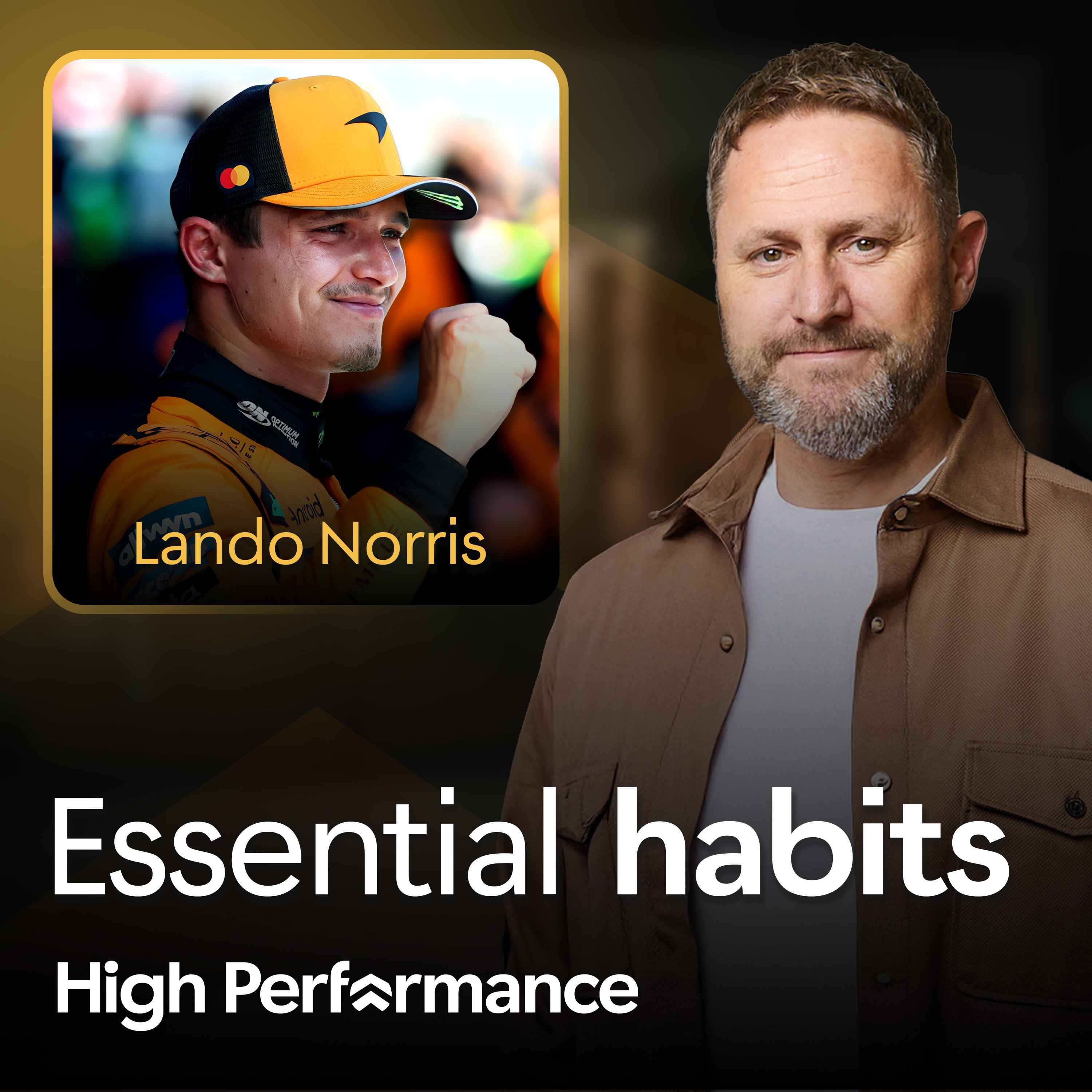
Loading summary
Transcript66 lines
- [00:00]
Robert Mays
Hi, this is Robert Mays from the Athletic. This time of year always gets busy, but that's when having Peloton in my life really makes a difference. The new Peloton Cross Training Tread plus, powered by Peloton iq, helps me fit in great workouts no matter what's on my schedule. It's Peloton's most advanced equipment yet, giving you real time guidance and endless ways to move. Peloton IQ plans your workouts, tracks your progress and corrects your form so you can train smarter and make the most of your time. Let yourself run, lift, flex, push and go. Explore the new peloton cross training Tread.
- [00:31]
Workday/Mint Mobile/Peloton Ad Voice
Plus@Onepelaton.Com When you're a forward thinker, you don't just bring your A game, you bring your AI game. Workday is the AI platform that transforms the way you manage your people, money and agents so you can transform tomorrow. Workday moving business forever forward.
- [00:48]
Robert Mays
You hired a new employee. Time to get to work, right?
- [00:52]
Damian Hughes
Not quite.
- [00:52]
Robert Mays
First comes HR software for payroll and benefits. Then IT tools to manage devices and app access and finance software for expenses. Oh, and none of these softwares work together. That's sad. Software as a disservice, Rippling lets you run hr, IT and finance on one unified platform with automations that save time and connect your workflows for a limited time. You can get six months of rippling free when you sign up at rippling.com podcast. That's R-I P P L-I N- Dot com podcast terms and conditions apply.
- [01:33]
Lando Norris
Before I was the driver race driver for McLaren, then I would stay with the mechanics. I would pack up the garage and take the car apart after the races and stuff like that. I just love so I knew like the values of people and how much of a difference that can make.
- [01:50]
Damian Hughes
Welcome back to the Essential Habits of High Performance, a place where we explore what separates the good from the truly great. And let me begin with a question for you. Do you see your work as a job, a career or a calling? The way you answer reveals something powerful about how you approach life, how you handle setbacks and how you sustain motivation. Today we're going to explore that question through the lens of Formula one driver Lando Norris and the psychology of how we all relate to the work we do. In this episode we'll explore how senior work as a calling, not just a career or a job, can unlock deeper meaning, build stronger bonds and create the foundation for long term high performance. I'm Damian Hughes and I've spent the last two Decades studying high performing cultures. I've worked alongside elite leaders from sport and business. And now I'm fortunate enough to bring those lessons here so we can all learn how to live and work at our very best. Lando Norris is not just one of the brightest stars in Formula one, he's also someone who models what it means to contribute before you lead. At 17, before he was even given a race seat at McLaren, he was showing up after race weekends to help the crew dismantle the cars.
- [03:17]
Lando Norris
Before I was the driver, race driver for McLaren, then I would stay with the mechanics, I would pack up the garage and take the car apart after the races and stuff like that.
- [03:26]
Damian Hughes
I just love, just picture that, the 17 year old Lando, his sleeves rolled up, his hands greasy, lifting equipment, unscrewing panels and helping the team dismantle a car after a long weekend. Not because he had to or not because anyone was watching, but because he knew that those invisible hours mattered.
- [03:46]
Lando Norris
I mean, I was what, 7, 17 at the time? 17, 18. So I knew like the values of people and how much of a difference that can make, how much if I help them, how much they can help me, and just the improvements you can get from doing that.
- [04:01]
Damian Hughes
This wasn't Xbox in a hotel room. This wasn't waiting for his chance. It was showing up, investing and building trust with the very mechanics who would one day hold his life in their hands when he was strapped into the cockpit racing at 200 miles per hour. And here's the key. Norris didn't know at the time that he would end up in the driver's seat. He wasn't playing politics, he wasn't chasing promotion. He was doing something much deeper. He was reframing work. That framing is exactly what the psychologist Dr. Amy Wieschefnesky @ Yale has spent decades studying. She discovered that people typically view work in one of three ways. A job, a career, or a calling. Let me just explain the difference. For some people, work is a job. It's the pay slip at the end of a month. It's the way you keep the lights on or put food on the table, or fund the life that you really care about outside the office. When you're in this mindset, work is a means to an end. You clock in, you clock out, and your identity doesn't live there. And that can be really healthy. Many people who view work as a job often have stronger boundaries. They protect their evenings and their weekends and their family time better. But there is a trade off. If it is just a job, then when stress comes, when setbacks arrive, for example, there isn't much inner fuel to keep you going because the work itself doesn't hold any deep meaning for you. Other people, however, see work as a career. Here, the motivation isn't just the paycheck, it's the progress. You could make the sense of climbing a ladder where each rung matters. A career orientation means you're driven by promotions, milestones and recognition. Your identity is often tied to where you are in the hierarchy of an organization, and more importantly, where you're heading next. This mindset fuels ambition. It creates resilience in the face of obstacles, but it also comes with a pressure. If the climb up the ladder slows down, if the next promotion doesn't arrive, motivation can evaporate. Then a career orientation can deliver success. But it can also leave people burnt out if progress is the only source of meaning for you. And then there's a third category, the most powerful of all, a calling. This is where work is not just what you do or where you're going, it's who you are. A calling orientation makes work feel like an end in itself. It's intrinsically meaningful. You're not just turning up to get paid or promoted. You're turning up because it matters to you and often to other people. Think of the teacher who says, I was born to shape young minds. Or the nurse who says, I couldn't imagine doing anything else. Or the artist who would keep creating even if no one was watching their work. Well, this is precisely what Lando Norris was tapping into before he ever took the wheel. Packing boxes wasn't glamorous. This Manson Cars wasn't fast tracking him onto the podium, but he saw it as part of something bigger. Trust, belonging and culture. Now think of those garages again. From the outside, dismantling car parts and stacking boxes may look like a job, it's grunt work. But Lando treated it as something more, something he loved to do.
- [07:34]
Lando Norris
Like, what else are you gonna do? You're gonna go home and play on the Xbox in the hotel for a bit or just go and grab dinner a couple hours earlier? Like, there's no gain from even doing that. And for my own career and what I knew, there was enjoyment in it. And there's the bonus of working with the team more, you know, and our relationships improving and so on, and knowing that I'm. I didn't know at the time, but I guess more likely to be in the racing seat a couple of years later. It's only going to be a good thing for me that we have that relationship and bond together.
- [08:01]
Damian Hughes
Now that's the difference between seeing work as a job and seeing it as a calling. You don't wait for meaning to show up. Instead you create it in the way that you approach the work. Now here's the best news of all. You don't need to be a Formula one driver or even love your job to make this shift. Dr. Wischevniewski's research shows that calling orientated people aren't necessarily in glamorous roles. You can be a cleaner in a hospital, a mechanic in a garage, a teacher or a CEO. What matters is the mindset. I'm not just doing this for money or advancement. I'm doing this because it matters, because it connects to something bigger. It's not the role that decides which category you're in, it's your mindset. And you can reframe the work you already do. Dr. Vyscheb Nevsky refers to this as job crafting. Take a hospital cleaner, for example. With a job orientation, they'll say I'll mop the floors. With a career orientation, they'll say, I'm building experience to one day maybe become a supervisor. With a call in orientation, they'll say, I'm helping create a sterile, safe environment that saves patients lives. Same role, different perspective, and a radically different sense of meaning. That's precisely what Lando Norris did. On the surface, packing up tires and dismantling car parts looks like grunt work. But he rewrote the script. Think of a call centre worker. For some, it's just answering phones. But for others it's about providing reassurance, solving problems and being the voice that turns someone's frustration into relief. This is the essence of job crafting. Taking the tasks that you've been given and seeing them through a different lens. And the science shows that this works. People who reframe their jobs in this way report higher levels of satisfaction, better performance and even, even lower rates of burnout. They're not waiting for someone else to give their work purpose, they're actively making it meaningful. Job crafting is all about being proactive. It's about recognizing that your mindset is just as important as your role. When you do this, you don't just transform your own experience, but you begin to change how others see you as well. You become the person who lifts the team, who brings the energy, who makes things better. That's precisely how Lando Norris turned packing up the garage into building the foundations for trust on the track. That's how A hospital cleaner can feel like a healer. And that's how you can transform whatever job you're in right now into something that feels far more meaningful. So how do we do this? You might be wondering. Well, here are three simple practices that you can adopt. One, rewrite your job description. Take the most mundane task that you do now. Imagine writing about it as if it was part of a calling. Instead of answering emails, maybe it's creating clarity and connection. Instead of cleaning rooms, maybe it's making people feel at home. Second idea, find the why behind every task. Ask yourself, who benefits if I do this? Well, when Lando Norris was lifting boxes, the mechanics felt respected and supported by him. So who feels the impact of your hidden work? And the third idea? Invest in relationships. Meaning isn't just found in tasks, it's found in people. Lando understood that the bond he was building with mechanics wasn't transactional, it was trust. Who could you serve today in a way that builds long term loyalty? So, job, career or calling? Lando Norris taught us that the answer isn't about what's written on your contract. It's about the story that you tell yourself about the work you do. When you see your work as a calling, even the smallest task can become infused with purpose. Even the most overlooked role can become a foundation for greatness. And that is the essence of High performance. Because high performance isn't only about being on the podium or winning titles. It's also about how you show up in the moments when no one is watching, whether that's in garages, in late nights or in conversations that others might dismiss. Now, I'm going to be joined by Will, our producer here on High Performance. Together we're going to unpack some more lessons contained in Lando's story. These include sacrifices he's made to drive in Formula 1, how self doubt has affected him during his career, and why enjoyment and not pressure is the secret fuel that drives his own high performance journey.
- [13:04]
Land Rover/Mint Mobile Ad Voice
Are you a trailblazer? A risk taker? Maybe someone with countless tales of epic adventure? Well, I'm not quite there yet, but I'm working on it. Even the boldest among us started off small, right? Daring themselves to reach greater goals every day. And if you're looking to take on a challenge like that, the Defender is too. Now, I've driven a Defender for a few years. It's the best car I've ever owned. It's a vehicle built for drivers capable of great things, whether they're heading towards uncharted territory or just fancy a Weekend getaway Defender was engineered to meet challenges head on so you can explore with confidence. It's the legendary icon of adventure and reimagined through modern design. Fit for a new generation of explorers. My kids love it as much as me. It also has a tough rigid body tested to the extreme, a modern functional interior built for comfort. It's a vehicle that like you, is capable of great things. And with next gen technology from 3D surround cameras to clear sight ground view, it will help you embrace the impossible. Explore the full Defender lineup@land roverusa.com if you're still overpaying for wireless, it's time to say yes to saying no. Because at Mint Mobile, their favorite word is actually no. No contracts, no monthly bills, no overages, no hidden fees, no bs. Look for me, switching was a no brainer, okay? I was fed up with ridiculous bills and endless small print. With Mint, I now get premium wireless for just $15 a month and honestly the quality just as good as my old provider, if not better. All plans come with high speed data and limited talk and text and it runs on the nation's largest 5G network. You can even keep your own phone and number so the switch is quick and and painless. So if you're ready to say yes to saying no, no to contracts, no to overpaying, make the switch@mintmobile.com HPP that's mintmobile.com HPP upfront payment of $45 required equivalent to $15 a month limited time new customer offer for first three months only. Speeds may slow above 35 gig on unlimited plan taxes and fees extra. See Mint Mobile for details.
- [15:06]
Workday/Mint Mobile/Peloton Ad Voice
When you're a forward thinker, you don't just bring your A game, you bring your AI game. Workday is the AI platform that transforms the way you manage your people, money and agents so you can transform tomorrow Workday, moving business forever forward.
- [15:20]
Damian Hughes
If you're a maintenance supervisor at a manufacturing facility and your machinery isn't working right, Grainger knows you need to understand what's wrong as soon as possible. So when a conveyor motor falters, Grainger offers diagnostic tools like calibration kits and multimeters to help you identify and fix the problem. With Grainger, you can be confident you have everything you need to keep your facility running smoothly. Call 1-800-GRAINGER clickgrainger.com or just stop by Grainger for the ones who get it done.
- [15:56]
Lando Norris
Hey Will.
- [15:57]
Will (Producer)
Hey Damo. How are you?
- [15:58]
Damian Hughes
I'm good mate. How are you?
- [16:00]
Will (Producer)
I'm very good. Lando. Lando, I Like Lando, like I warm to Lando as a person. He's one of my favorite drivers. I'm going to put it out there at the top.
- [16:09]
Damian Hughes
I've been lucky enough to meet him a couple of times, haven't we? Not just on the recording, but when he came to the High Performance foundation dinner and gave a really lovely speech, didn't it?
- [16:20]
Will (Producer)
It was a lovely speech, but, you know, it was also like, I remember we were talking to him off camera or outside of that and he was, you know, he's honest and open about his feelings. He seems quite a vulnerable person and an open person. We found that in the interview. And you know, that it's hard to. It's hard to talk about the hardships of a sport like F1 because it's, you know, lathered with excess. It's a sport that's reserved for people who normally have a price to pay to get in and a wealth that gets them there. And he's probably no exception to that.
- [16:54]
Damian Hughes
I agree with you, I see that. But I also think there's something really interesting about him because he obviously does come from real wealth and privilege. But I remember when we were preparing for this, saying to Jake that there was almost a pattern that we'd got into that when somebody came along and spoke about, say, coming from poverty or struggle, we would often lean into it and go and explore it in detail. But when it came to somebody that might have come from privilege or wealth, we tended just to skate over it almost. And I think there was like a unspoken assumption that those people didn't have challenges to face. And I think we decided very consciously that when we spoke to Lando we were going to lean into that and explore what was it like when your dad's a millionaire. Again, I don't think they'll mind me saying that. I remember when one of the team from McLaren listening to this was talking to us off camera and she recounted how for the. Anyone that's in the sort of Formula One driving seat for McLaren gets a250,000 pound streetcar from the company's part of the contract. And she recounted how Lando's mum had phoned up and suggested that that wasn't given to her son by the basis that no 19 year old boy should be given a car worth that amount of money. So I think there's something really interesting here, that there is privilege and wealth, but there's something about values and lessons that have been passed on to him as well. And I think that came across really, really well in. In his interview.
- [18:24]
Will (Producer)
Really does. And I think that's, you know, why you warm to him. And sometimes maybe people would say to a detriment, he's open and honest about his failings as much as his successes, but actually that's a likable trait.
- [18:37]
Damian Hughes
Yeah, definitely. You know, and. And I think in a world like this where you see drivers with the helmets on and you don't really see much about the person, or it certainly has been until the Drive to Survive series, I think people buy into him, don't they, as a. As a lad, because he is vulnerable. He is emotionally intelligent. You know, he is somebody that's able to articulate what's going on in quite vivid terms. So I think there's something really, really likable about him that people want to see him succeed.
- [19:06]
Will (Producer)
It was an episode that I remember we went to. I said, do you know what? It's an impressive place.
- [19:11]
Damian Hughes
Oh, yeah, yeah. It's like being the James Bond, like going into a James Bond villains lair, isn't it?
- [19:16]
Will (Producer)
It's exactly like going into James Bond villains lair. It's like you go kind of like underground. Like you're in like some kind of secret compartment of some superhero's house, and you expect the costumes and the Batmobile to show up. And it's not dissimilar to that because there are these kind of elaborate cars all around you, and it's a beautiful place on a beautiful setting. And we traveled there.
- [19:41]
Lando Norris
Yeah.
- [19:43]
Will (Producer)
To set up in front of a car. Do you remember? We did it in front of a car in the middle of the auditorium. And we got, you know, actually a privilege to get quite a few. Quite a few hours with Lando to talk about it. Where do you want to focus first?
- [19:56]
Damian Hughes
Where.
- [19:57]
Will (Producer)
What's the. What's the lesson we want to pull out from the interview?
- [20:00]
Damian Hughes
I think I'd like to talk a little bit around that theme of sacrifices, like you say, it doesn't lend itself to. We often think of it as a world of privilege and entitlement, but there is a price to be paid. And I think Lando telling us around what that bill looks like is really interesting.
- [20:16]
Lando Norris
I guess, like, the social life of school is probably the initial one, and you probably don't really realize that until you're a bit more mature and you kind of hit 20 or more like 18, I would say when you think, like, I don't really have any friends from school and from growing up. Like, all my friends are now from. Just from racing, from Karting and so on. You know, every now and then I maybe get a message from some of my mates from school. But it's not like we're best mates anymore. It's just like we knew each other and that was all. So, yeah, I kind of like missed that side of it. I didn't know, like, I guess I miss what I don't know about life. From living up, you know, and going to uni and going out every night, all those kind of things. That's the life I didn't live. But I never changed that for what I got now.
- [21:02]
Will (Producer)
Yeah, there was a tinge of sadness to that clip. You know when he says that he doesn't have any friends from school, all of his friends now are just in racing and from karting and so on. And is that trade off in pursuit of, you know, in pursuit of winning a world championship or in the pursuit of excellence, is that a healthy trade off?
- [21:23]
Damian Hughes
I think the thing I'd encourage anyone to think about that is that there is a price. There's always a price that comes and you have to be aware of it. Do you remember when we spoke to Adam Peaty when he spoke about the breakdown he'd had in preparation for the Paris Olympics? And the head of British women sat down with him and told him, here's the bill. This bill will land on your desk if you're going to go to Paris. This is the price that you need to pay. Now the question you need to ask is, is it one that you're willing to do so? And I think for Lando as well, I think there's a certain period in his life where maybe it is being willing to pay. The danger is that you keep doing it without keep reflecting on whether you're getting value for money.
- [22:08]
Will (Producer)
Yeah. And there's a clip coming up that I think gives another insight into his psyche. But I think the one should go to next is that in pursuit of trying to get to F1, he, he talks about, you know, actually what was the pressure and self doubt he felt when he first got there. Something again, that not a lot of people have kind of drivers, especially when they're still competing against people have been very open enough to talk about. So let's listen to Landa talk about this and let's see what you think.
- [22:36]
Lando Norris
I struggled a lot in like the final few years to get into Formula one, so Formula three, Formula two, having that belief of, am I better than them? Am I the same as them? Am I a little bit worse? Like, am I good enough to be in Formula one. And that kind of stays even when I was in that first year of Formula one, like, am I good enough to go around Monaco and deliver that lap in Q3 when it comes? Or if I'm in a position to be on the podium or on top of the podium, am I there? Am I going to be able to deliver it when. When it counts? But that's okay. And I. I could live with that quite easily. On when maybe I've made those little mistakes and so on, but when people add to it and you see comments, that's when you, like, start to feel a lot worse about yourself. And especially when I'm in my first year, it's like, I know my parents have put so much effort into helping me get to there. The team have all the expectations. The whole world are watching. And then you just think, like, if this goes wrong, you know, it's my first year in Formula one, if this goes wrong, you know, what am I going to do if I'm not in Formula one? Because this is all I've lived for my whole life. I wasn't smartest guy in school, and I struggled quite a bit in school. Like, what am I going to fool on?
- [23:45]
Damian Hughes
When we've been to some of these Formula one teams, I think it becomes really apparent, doesn't it, that you're the tip of the arrow, but there's so many other people that you represent when you're driving in that cockpit. Remember James Vowles at Williams, putting the name of every member of his team on the nose of the car so that everybody realises that they're part of the journey. So I think for Lando to come and talk about the pressure he feels of representing McLaren like that, and to be not only competing against other drivers at the top of their game, but also to be carrying the weight of expectation for those hundreds of people behind you is really, really open and honest. And I think all the research tells us that people love leaders when they're willing to be vulnerable. You know, it creates a sense of psychological safety that when mistakes happen, people tend to be more forgiving because you're willing to own up to it rather than try to present this invulnerability. So I think for him to share that with us is really compelling, but also really, really honest and personal from him.
- [24:58]
Will (Producer)
Do you remember what Mark Weber said when we went to his house, talked to him?
- [25:02]
Damian Hughes
Oh, yeah.
- [25:03]
Will (Producer)
And they said, like, what they used to refer to drivers, what they called them?
- [25:08]
Damian Hughes
Yeah, go on. What was the title? What was the Name light bulbs outside. Yeah.
- [25:13]
Will (Producer)
He's like, you screw them in and you screw them out. And that's just like, you know, I think it's good to your point that, you know, we're in a different era, obviously, but there's so much more around it. They're a bigger team. They're just the person in the car driving it, which is, you know, not to be diminished at all. But the pressure, like you say, the pressure of delivering in those moments, like you said, with sports like this and like, you know, Olympians and things like that, where the eyes of everybody are fixed on you and, you know, and you have to deliver at like 200 miles an hour with 19 others next to you. I mean, it's. It blows your mind, really.
- [25:53]
Damian Hughes
There's a really interesting distinction there, isn't it, between being self critical and being self compassionate. You know, I think we assume that the best way to get a result for Lando is to sort of be lacerating about yourself. You need to go faster, you need to do more. But I think what he's showing is there's a different approach. You can be compassionate. You can say, I feel nervous, but I'm still gonna drive as well as I can. You know, I feel responsible for the futures of all these other people I'm representing, but. But I'm still gonna be selfish in the way that I do it. I think it's not so black and white. It's either or. And I think he really embraces that subtlety and nuance.
- [26:32]
Will (Producer)
There's the last clip I wanna play that kind of links this all together. And it'd be interesting to hear your take on this because, you know, it's kind of relevant to what we're seeing play out right now. Like, Lando is now has a car, he's battling for a world championship, something that he's dreamt about his whole life. And he talks around actually how the role of enjoyment is used for motivation. And I'll be interested to hear your thoughts on what he says.
- [27:00]
Lando Norris
Well, I think, like, one thing I've not really mentioned as much or I mentioned a little bit earlier, was the one thing for me that motivates me more than anything is. Is enjoyment and just fun. Like it's. It's a nice little word, but it's maybe like an immature word to use, but it's fun and enjoyment. Like, if I'm enjoying something, it makes me work harder and makes me want it more. And then it's that a positive spiral of if I work hard I reward myself more, I enjoy it more, and I work harder. And it's just, you know, you keep going up. And I say, maybe I got to a point where I wasn't enjoying it as much, really. And can you remember when that.
- [27:32]
Damian Hughes
When that point was?
- [27:34]
Lando Norris
I can't exactly.
- [27:35]
Damian Hughes
It's in the first season.
- [27:36]
Lando Norris
It'll be in the first season, like, maybe halfway towards three quarters of the way through. And I just was like, you know, like, because you're thinking of so many things, you're not just thinking of, like, I'm driving a Formula one car in America or Japan or whatever it is, which is. Which is just awesome. And you start thinking about it and just clouds your judgment, like you said. So the first few things are like, maybe, which I would say sparked it off, is I need to enjoy it, you know, And I think even, like, my manager and my trainer could kind of tell what was going on a little bit at this point. And there was a little bit more time spent on having some days away, enjoying my life and maximizing my days at home, you know, with my family or my friends, whatever it was, going out a little bit, going out to dinners again, and that kind of just frees your mind up a little bit. So I think maybe the first key point is enjoyment. You know, are you enjoying it? Yes or no? And kind of understanding, can you enjoy it? Like, it's maybe not easy for people to enjoy the job that they have or whatever they're doing, but I know I could enjoy Formula one and the job I'm in.
- [28:38]
Damian Hughes
How great is that? That even under the greatest of pressures, you. You can still remember that you've chosen to be here, you've chosen to be sat in this sea. And therefore, if you've chosen to do it, you can choose how you view it. You can either see this as something to be endured or something that can be enjoyed. And I love the fact that he's choosing Joy. Because what we know is that the work of Barbara Fredrickson on this tells us that when we enjoy something, like enjoyment is often seen as like an evolutionary puzzle. What are the benefits of enjoyment or positive emotions? But the research Barbara Fredrickson tells it allows us to see the world with greater perspective. So it broadens our view of the world, and then it allows us to build on that and come up with new ideas or to innovate and be creative. So rather than just be singular and see nothing else outside your visor, Lando's got that ability to recognize that there's a bigger picture at play here, which probably helps him be able to deal with the pressure because he can see it in the wider context of his life. So I think there's something really powerful there. We often think of high performers as looking very serious and po faced, and yet his willingness to say no, no, even. Even in those moments, it's still about playing, it's still about enjoyment. There's something very powerful.
- [29:56]
Will (Producer)
Do you think, though, that critics would use that as. In a way to. When it doesn't go your way and when things aren't, you know, going as you want them to be, that, oh, you, you know, you lacked a killer instinct for this, or, you know, like, we can look at some sportsmen who, Who. Who don't look like that is the most serious thing in the world. And then let's just use as an excuse to. So what we. What do you. What are you laughing about? Why are you so happy? You know, you don't see, you know, like, often people reference how Mo Salah is always happy on the pitch and he's smiling and things like that, and it's almost seen as a negative. Not. Not a positive.
- [30:29]
Damian Hughes
Yeah, I think, like, you hear it a lot, don't you? Like Roy Keane in the football studio being angry about players saying hello to each other before a game. And his view is that you go into war, so you shouldn't even acknowledge your competitor. It's a legitimate way. You know what I mean? Some people do have that thing in the focus of. I don't want to allow those kind of emotions to cloud the way that I've got to be to get myself in that state of preparedness. I need to view this as a battle. That is one way and it's legitimate, but it's not the only way. And I think we do a disservice to the likes of Lando, but to so many other people that are watching him, to assume that this has to be a serious endeavor, that joy and moments of happiness can't be part of it. You know, I think it's actually damaging. I read a great line the other day that said, you know, 1% of kids that play sport or go on and do it professionally, but 100% of kids that play sport will go on to become adults, or. You know what I mean? And it's almost like, I think sometimes we see this serious nature and think that we have to start imbuing that in and we have to criticize anyone that looks like they're enjoying it. But I think there's something really lovely about bringing that childhood sense of wonder and awe and enjoyment into these moments that when the world is watching him.
- [31:53]
Will (Producer)
Yeah. Who was it that we had on that said, look, take it sincerely, not seriously?
- [31:58]
Damian Hughes
Ali Abdul. It's a great line. Yeah. He said that nobody wants to play a board game with somebody that can't be bothered and he's just messing about, but nobody wants to play a board game with somebody that has to win at all costs and they'll fall out and start screaming and shouting when they don't get their own way. So I think that's. I mean, that's a lovely line, Will, because I think that really captures it, that it's not about enjoying it and not taking it seriously, it's about being sincere in the moment, but not taking it seriously so that you forget you've got a life outside of the sport as well.
- [32:30]
Will (Producer)
Yeah, I totally agree. And you know, you can still put in genuine effort, passion and be present at the same time. It doesn't negate that.
- [32:39]
Damian Hughes
No, definitely. Well, I. I sometimes think about. Think about the lessons when you were at school that you enjoyed the most and I guarantee you were having fun in them. I guarantee the lessons that you enjoyed and that you learned most in. There was an element of levity to it. It wasn't just the serious grind of working. And I think Lando's interview gives us a brilliant reminder of that. And if you've enjoyed listening to Lando's wisdom and today's episode has resonated with you, maybe consider sharing it with someone who might need a reminder that whilst their work can matter, it's not just a job, it's not just a career, but it can be a calling. This has been the essential habits of high performance. I'm Damien Hughes and until next time, find the meaning, reframe the task and keep crafting your own high performance story.
- [33:44]
Workday/Mint Mobile/Peloton Ad Voice
When you're a forward thinker, you don't just bring your A game, you bring your AI game. Workday is the AI platform that transforms the way you manage your people, money and agents so you can transform. Tomorrow Workday, moving business forever forward.
- [33:59]
Robert Mays
Hi, this is Robert Mays from the Athletic. This time of year always gets busy, but that's when having Peloton in my life really makes a difference. The new Peloton Cross training Tread plus, powered by Peloton iq, helps me fit in great workouts no matter what's on my schedule. It's Peloton's most advanced equipment yet, giving you real time, guidance and endless ways to move. Peloton IQ plans your workouts, tracks your progress and corrects your form so you can train smarter and make the most of your time. Let yourself run, lift, flex, push and go. Explore the new peloton cross training tread plus@1peloton.com why choose a sleep Number Smart.
- [34:34]
Damian Hughes
Bed Can I make my sight softer?
- [34:35]
Robert Mays
Can I make my sight firmer?
- [34:37]
Damian Hughes
Can we sleep cooler?
- [34:39]
Workday/Mint Mobile/Peloton Ad Voice
Sleep Number does that cools up to eight times faster and lets you choose your ideal comfort on either side. Your Sleep Number setting Enjoy personalized comfort for better sleep night after night. It's our Black Friday Sale. Recharge this season with a bundle of cozy, soothing comfort. Now only 1799 for our C2 mattress and base plus free premium delivery prices higher in Alaska and Hawaii.
- [34:59]
Robert Mays
Check it out at a Sleep Number.
- [35:00]
Workday/Mint Mobile/Peloton Ad Voice
Store or sleepnumber.com today.