← The High Performance Podcast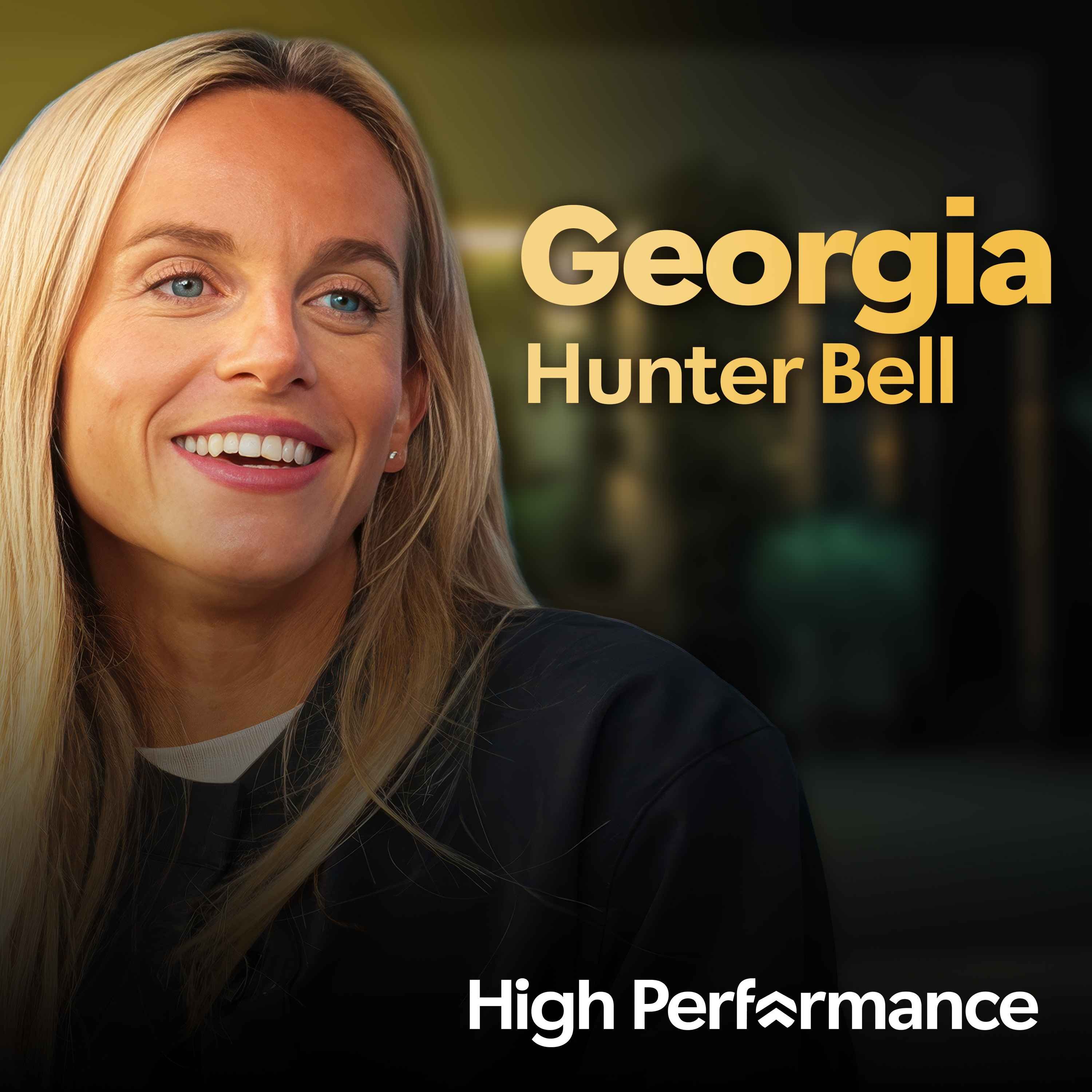
The High Performance Podcast
Inside The Secret Struggles of a Running Superstar | Georgia Hunter Bell (E411)
00:45:14
Loading summary
Transcript196 lines
- [00:03]
A
Welcome to a very special episode of High Performance made possible by our partners at Vauxhall. Now, today, we're doing things a little bit differently, so we've left the studio behind and we've hit the road. We packed up our Vauxhall Combo Electric with all the production gear that we need, and we've headed down to Crystal palace to meet Team GB athlete Georgia Hunter Bell. And I've waited so long for a conversation with an athlete who has a story like no other. And, you know, the only reason we
- [00:26]
B
could just pick up our studio like
- [00:27]
A
this and move it a few miles through central London is because of the team at Vauxhall who are doing some something that I think is so impressive, investing £100 million into electric production right here in the UK and making electric vehicle charging more accessible to all with their Electric Streets campaign. In fact, the Vauxhall Combo Electric, which I was lucky enough to drive, has been proudly made in Britain, built at Vauxhall's Ellesmere port plant, the first manufacturing site in the country to exclusively build all electric vans. And why are we talking to Georgia? Well, Vauxhall are the official automotive partner for Team GB through to the 2028 LA Olympics, so they helped line up this fantastic convers. Don't let the small size of the van fool you. Because the payload was generous, we managed to get all of our stuff, multiple cameras, light, all the recording equipment in their 4.4 meter cube load space, and the van handled everything with ease. It kind of felt more like a car than a van, if I'm being honest. Carpeted floor, built in sat nav, 10 inch touchscreen with Apple CarPlay and Android Auto with some solid safety features as well. So, anyway, I got there, which is the good news, and then myself and Georgia Hunter Bell had a really special conversation where she opened up and told us something about her live that she's never publicly revealed. So this is us having a chat at the Crystal Palace National Sports Center.
- [01:39]
B
Thanks to Vauxhall.
- [01:40]
A
Hope you enjoy the conversation.
- [01:43]
B
Georgia.
- [01:44]
C
Hi.
- [01:44]
B
Nice to meet you.
- [01:45]
C
How are you doing?
- [01:46]
B
Good, thank you. Do you like my van?
- [01:47]
C
Love it.
- [01:48]
B
Yeah. I think you deserve to drive that far more than me actually being in Team gb. Should we go for a walk?
- [01:54]
C
Yeah, let's do it.
- [01:54]
B
Oh, thanks for doing this. I really appreciate it. I am so excited to have a conversation with you about the moment where you actually walked away. Is that cool?
- [02:04]
C
It is cool. I mean, I feel like I've had a bit of a different journey in the sport in general because, yeah, as you say, was a very good junior, had all this promise and definitely thought I was going to make it as an athlete, but then had this big dip and completely gave up. And so to come back and actually make an Olympic team and get a medal, pretty crazy.
- [02:25]
B
Yeah, it's quite cool. Can we rewind to when you went to the States?
- [02:28]
C
Yeah.
- [02:29]
B
And you thought, this is the next step on my road to sporting glory. And then, as you've just mentioned, you walked away. I'd love to go deep on that moment.
- [02:35]
C
Was there.
- [02:36]
B
Was there a day where you, like, woke up and thought, I don't feel the same about athletics? And I can imagine that could be quite scary.
- [02:43]
C
It was quite scary because I think, you know, when you're young, you feel like the world's your oyster and you achieve anything, you can achieve anything, and then you grow up. And Suddenly I was 23, graduating from university in the States on a track scholarship, and I hadn't made it as an athlete. And it was like, right.
- [03:02]
B
What do you mean, hadn't made it?
- [03:03]
C
I had only my times and my performances had only got worse since taking the track scholarship. So I had never really delivered on the potential that I'd seen as a junior. So went over to the US Thinking, this is going to be the making of me. I'm going to become a professional athlete. And injuries, illness, I just got worse and worse and worse. And that was pretty tough to swallow just to accept that, you know, this isn't going to happen. Or so I thought.
- [03:31]
B
Man, I can't imagine how that is when it's been the thing you've done since you were a little kid.
- [03:37]
C
Yeah. Literally, my identity, like, I'm one of three girls, and it was like, oh, you're the runner. You're the runner. Like, that's how people would identify me at school, family. And then suddenly I wasn't the runner. I think everyone around could see that I was kind of on this decline. And so it was kind of an unspoken elephant in the room that things aren't going as well as planned. And so when I did make the decision towards the end of my running career in the us, it wasn't a surprise, I don't think, to many people, but obviously they were disappointed for me and I was disappointed in myself. But in a way, it was actually quite a big relief. I was like, I'm. I'm not enjoying this anymore. Like, I do need to step back. And now, having the benefit of hindsight, I think that was a really good thing for me because I think if I tried to keep slogging on, not achieving what I once had, I would have just been a really, really miserable human. And now coming to the track and racing and having this kind of second chance with running, I actually think it's kind of my biggest strength, the perspective that I have, because who else on the start line has had the journey that I've had? Who else has sat in an office and worked a 9 to 5 or given up and come back like, no one. And so I think that brings something really unique that I have over my competitors.
- [04:55]
B
Yeah, I think that's a really interesting angle. I do want to talk about that in detail, but before we get there, this moment where you decided to stop, was there an event or a competition or a meet that you were at and you were like, no, I'm done. Can you remember how that felt?
- [05:11]
C
Yeah, it was probably in the NCAA, so the American system. I was doing the 1500 meters, and I think I knew going into it it was going to be my last race. It was the last event on the calendar.
- [05:23]
B
How old were you?
- [05:24]
C
I was 21, 23. So I went over when I was 21. I was 23 years old. And, yeah, it was just like, this is going to be the last one. I'll literally never put on spikes ever again.
- [05:37]
B
No way.
- [05:38]
C
Yeah, I knew going into it that would be the case, or I thought it would be the case, because I just said, how am I ever going to run track again after this experience? And it's time to walk away.
- [05:49]
B
And what happened in that race?
- [05:50]
C
I can't remember where I came, but it was bad. I just didn't want to be out there. The thing that I really noticed, actually was on start line, I just felt numb. And now when I race, I've got the nerves. Like, even when I think about racing particular events, I get that just standing there. And that, I think, is a really good indicator. To me, it means that I care. It means that I'm up for it. And, like, before that race, I was just checked out. Let's get this over with. And that's where my head was. Not in the right place to be an athlete, because it takes so much as I'm sure, you know, speaking to people.
- [06:21]
B
Absolutely. And it's really interesting what you say about if you're nervous or you've got imposter syndrome, if you've got doubt or you've got fear, then that's a great thing, because I think so many people live a life where they think if those Are the emotions, then they're on the wrong path. And actually, so often, as you've just said, you're on the right path if you've got anxiety because you care about what you're doing. Whereas you just felt numb ahead of that race.
- [06:42]
C
Exactly. And I feel like as soon as that goes again, if that happened in like a year's time, that would be a real indicator to me that I'm not connecting with the purpose of this, I'm not enjoying it. And you need that to be able to be fighting for medals for Team GB when you're on the bigger stages, because those other competitors are.
- [06:59]
B
So you finish that last race, as you cross the line in your head,
- [07:03]
C
you're thinking, thank God this is over. Yeah.
- [07:07]
B
Not just that race, but your career. You were like, thank God my career is over.
- [07:10]
C
Yeah. I just said, it's time. Yeah, it's time to move on. This feels so familiar to me, but it's time to shut the door. And honestly, for probably like six months, I was pretty happy living the life of closing the chapter of being an athlete. I could go out for dinner with my friends, I could go to Coachella. I was living in the States, I was just able to be a normal 20 year old, which was really fun. And then it was only when I moved back to London that I started to really feel the loss of that identity and really feel like I was missing a lot of purpose in my life. I was working a job in tech sales, which I did really like, but I just didn't have the same passion drive every day. And that's when I really started to think, oh my God, I really miss, really miss running. Not just necessarily competing, but just what it gave me on a day to day. And I want to get that back.
- [08:05]
B
So when, when you finished, did you, what, go to a coach or call your parents or. Like, how, how do you make that decision? Because I'd imagine a lot of people would have been like, no, no, I can convince you to carry on. Don't worry, we'll get through this together. And you maybe had to fight to allow people to allow you to stop.
- [08:23]
C
I actually think that people were quite understanding. I think that I had come to graduate in the university system, so the next step was either you go professional or you get a proper job. So I wasn't good enough to be professional? You bet you were, though, at a certain point.
- [08:41]
B
But you were, because you are.
- [08:42]
C
Yeah, I am now.
- [08:44]
B
The competitor you are now was in you then.
- [08:47]
C
Sure.
- [08:48]
B
So I wonder whether it was Actually just something that was psychological rather than physical.
- [08:52]
C
I think it was psychological. It was probably a mix of both. You know, physically, I wasn't in my best shape, but I do think the athlete I am now is very different to the athlete I was then. And I do think having that benefit of hindsight and, you know, seeing what life's like away from running really gave me a bigger hunger for when I step on the track. And I think that I go into races having this unique perspective of knowing what the other side of life is like and knowing how lucky I am to be there, but also knowing life is bigger than just running in circles. So it gives me this kind of, like, freedom as well as the hunger. And I think that mix just works really well for racing.
- [09:34]
B
It's so interesting because I think that people sometimes look at high performance as total obsession. And if you're not totally obsessed, then you're not fully committed. And if you're not fully committed, then you won't get the results. You know, we criticise and deride elite athletes who have anything else going on in their life apart from running or playing football or playing golf, but what you're saying is actually having other things in your life is the very thing that can make you a better athlete.
- [09:57]
C
I really do believe that. And I think in my training group as well, we do see that. I think the happiest athletes are the best athletes. Doesn't mean that, you know, we're not all in when we go to training or how we live our life. But, you know, you do need to have strong relationships around you that support you. You do need to have things that you're excited about off the track so that you can switch off completely and then turn it on for the big moments. You can't keep that intensity throughout every aspect of your life and expect to peak in these Olympic or World championship moments.
- [10:28]
B
Should we carry on the conversation sitting down out of the wind?
- [10:30]
C
Yeah.
- [10:31]
B
I mean, it's not a problem for my hair.
- [10:32]
C
The hair, yeah. Might have something to say about it.
- [10:36]
B
So I'm just interested in, you know, the walk away moment. Did you speak to a sports psychologist or a therapist or a counsellor or anything at that point?
- [10:45]
C
I had seen. It took a while, but I think that period where I got home and I was really struggling, I saw a therapist for about five months and it was working every week with them just to kind of work back from who I am without running and trying to find purpose of my day to day. So it was kind of almost reconciling with the fact that I was going to move away from running. But strangely, it kind of pushed me back into it because it just made me see that I wanted to go back to being an athlete, if not a professional athlete, but just someone who runs all the time because it's my identity.
- [11:25]
B
What did they say that really helped you to realize how you truly felt?
- [11:30]
C
It was just kind of understanding what life looked like away from it. And nothing really seemed to excite me that much. And then even just going back to easy jogs, park runs small, things like that just got my competitive juices flowing again and I just started to feel more like myself. And then things started to go better in my personal life as well. I started to have better relationships. I started to better at my corporate job. And I could just really see the impact that was having on me was beneficial. And so that's why I just wanted to keep doing it.
- [12:05]
B
You know, when you said you. When you were really struggling, can you tell us what that looked like? Because so far it kind of sounds like you competed, you ran, you did really well. Then you had a period where it wasn't so good and thought, I'm going to quit now because it's not working. Where does the struggle come in? What did that feel like and look like on a daily basis?
- [12:23]
C
I think I wasn't a great person, to be honest. Like, when I look back, I don't think I was a very good friend. I don't think I was a very good daughter. I think I wasn't a very good employee. I wasn't. I didn't have any drive to do things well. I just wasn't a very good version of myself at all. And I think I was definitely very unhappy. Like, I just remember I would go out a lot. I would not wake up in the mornings. I would just stay in bed. And just because I wouldn't be excited for what was going to come that day. And I think there was a period of about six months of that before I started to work through it in therapy. And that was probably like the lowest point.
- [13:08]
B
Did you realize at the time before you went to therapy that you weren't a great friend, weren't a great daughter, or were you kind of ignoring all of that?
- [13:15]
C
I was kind of in my own bubble, which I think you can be when you get into a bit of a dark place because you're just thinking about yourself all the time. And it was only later I was starting to have, like, friction with my parents, with my friends, and like, at Work, there'd be a few things. So I did feel that there were signs. And then only when I was a little bit past of it, can I look back and be like, that was just. Yeah, that was a bad time all around.
- [13:42]
B
Don't you think you were, like, totally understandably, a bit depressed?
- [13:46]
C
Yeah, I think I. I think I was. I mean, yeah, I mean, looking back, it's like I. I look back at even. Even, like photos or talking about it sometimes people, and I'm like, oh, I feel bad for that version of Georgia because she had all this hope and expectation for herself and it. It didn't work out. And, you know, she was really struggling through that. But then I do feel kind of proud to have made it through that, found who I was again, and then obviously had this kind of second chapter.
- [14:17]
B
This is what I think is so interesting because amongst all of this, the disappointment, the depression, the issues with, like, not feeling that you were great going to see a therapist, like, there's real humility as well, because there's a moment where you go, right now, I go back to a normal job. And I think a lot of athletes early on, they think, well, I'm now an athlete. I never need to have a normal job because I'm not in that world.
- [14:40]
C
Yeah.
- [14:40]
B
What was that moment, like, where you walked into an office for the first day with a lanyard around your neck and kind of clocked in for a job that wasn't being a professional competitor on a track?
- [14:50]
C
Yeah, it was interesting, but I was kind of excited for it because it was different. And I think the role I went into, I was in a tech sales job and they hire pretty much a lot of ex athletes because it is a competitive environment. You have a quota to hit, there's leaderboards, everyone's trying to, yeah. Achieve the highest numbers. So it kind of translated nicely. And I think, yeah, for a little bit I was getting fulfillment from that, but it wasn't the same as a true passion like running or your sport. So, yeah, a bit of. A bit of humility, but also I think quite a few transferable skills.
- [15:29]
B
I love the fact that you were able to relate to the. The clear parameters for what success and failure look like. You either won or you didn't.
- [15:36]
C
Yeah. And it's funny because it's like, for some people that just wouldn't bother them, like, why would a leaderboard in the office? They just don't care. Whereas for me, I was like, I need to be top of that. Like, I need to be the best performer this month. Like, it matters that I see my name on the top of the board. So I feel like sometimes those things are just instilled in you.
- [15:55]
B
And how was that period when the people that you would have been training with and competing against in the States were then going to major events? And I guess you still followed them on socials and you saw what they were doing. How did that sit with you in that time?
- [16:08]
C
Well, I do remember very vividly looking back at the Tokyo Olympics and seeing lots of people that I used to beat as a kid competing for Team GB.
- [16:19]
B
Yeah.
- [16:19]
C
So there was Alex Bell in the 800 meters. There was Katie Snowden in the 1500. And I just remember thinking, like, wow, like, they're at the Olympics now, and I used to beat them back in the day. And that kind of ignited something in me to think, like, well, if they made it, then surely if I had carried on, I could have made it. And that was right at the time that I saw this upcoming Keely Hodgkinson get a silver medal. And she was coached by my old coach at the time. And I just thought that was the most incredible thing I'd seen. And that's what led me to reach back out to Trev, my old coach, and say, you know, I know we broke up when I moved to America, but I would love to start training again, and I've got myself into decent shape on my own. But I'd love to follow your plan. I know you're one of the best coaches in the world, and would you kind of take me back? And luckily you did.
- [17:14]
B
I think this is the most interesting part of your story now, because you just said I was training on my own. So you didn't ever stop running, right?
- [17:22]
C
I did have a period where I did that. That period right when I finished college in America. That was a period where I had some time off. I look a little different. I gained a little bit of weight. I was just being a normal, normal human. And then after about a year, I was back into running, cycling, not track running, but just 5Ks, 10Ks runs, things to build my fitness. But not. Not the same elite level of track. No.
- [17:52]
B
So I'm gonna have to ask for real honesty at this point. Right.
- [17:54]
C
Okay.
- [17:55]
B
You pick up the phone to Trevor. He says, okay, I'll train you again. Yeah, you go back and do.
- [17:58]
C
Which was a conversation, by the way, his wife thought. His wife Jenny, who's part of the training team thought. I think her exact words were, hasn't that ship sailed? And Trev Kind of put his foot down a little bit and was like, yeah, you know, she was really good back in the day. Like, why not? Let's give it a go. So we laugh about that now in the team. But, yeah, if that conversation had gone differently, I'm sure I wouldn't be sitting here with loads of World medals.
- [18:24]
B
But even that is interesting because I think sometimes people are so used to the world as they see it, and the world as people see it in the world of athletics is you start young and you never leave. And you get to a point where you either compete at the very, very top at an Olympics or Commonwealth or Worlds, or at that point, you stop. No one's done what you've done. So I can kind of understand that. Her thought was, well, that ship sailed, because people don't do this. Like, this is not a path that has been trodden before.
- [18:53]
C
I get that completely. Yeah. And when she said that, like, I laughed because I was like, I would have probably had the same reaction. But I think now it's opened up our minds as a group in general, depending on, you know, who wants to get back into athletics or who doesn't matter what age they are, it's like, okay, let's look at the potential and your journey, because everyone is just different.
- [19:15]
B
And this links so closely to so many things we talk about on high performance, which is about flexible thinking, about exploring, about understanding that the world for you is unique and can be different to everyone else's journey. You know, when she said, hasn't that ship sailed? Did that make you go, oh, yeah, maybe it has? Or did it make you go, okay, now I'm gonna show you that ship hasn't sailed.
- [19:37]
C
Well, luckily, they only told me that later I won my Olympic medal. That's when they kind of shared that, which I thought was really funny. But I think at that point, I wasn't trying to necessarily make an Olympic team. I just wanted to see how far I could push my body, get back to Trev's training, which I knew was really good. And every week I could see myself improving. So we kind of went from being like, oh, I'm just gonna get back to seeing how fast I can run, to maybe I can make a team, to maybe I can get a medal. And it just kind of escalated from there.
- [20:11]
B
So could we talk about Georgia version 2.0? Because a few years ago, I had a message out of the blue from the Newcastle manager, Eddie Howe.
- [20:19]
C
Oh, yeah.
- [20:20]
B
He'd left Bournemouth a few months before, and he basically messaged to say he'd been listening to high performance and the period of not being a manager had been the most valuable part of his whole life. I wonder what you learned in the period where you weren't an athlete that equipped you for going again. If we go back to that period of not running and working in an office, what did that do for you in a positive way?
- [20:44]
C
I think it just showed me that there is a world outside of the sport that you're in. And I think professional athletes, you can really be in your own bubble. And sometimes that's great.
- [20:54]
B
Yeah.
- [20:55]
C
But also sometimes it means that you can really let the moments get the better of you because, say, you've trained four years to make it to an Olympics and maybe that might overwhelm you. Whereas I just saw it as, whatever happens, you know, I'm going to be okay and I'm just going to seize this and kind of punch above my weight and really go for it. And I think that's what it allows me to do with running. It gives me that kind of freedom that maybe others haven't been exposed to.
- [21:24]
B
And more joy now.
- [21:26]
C
Definitely more joy. Yeah. I think it's no surprise that the happier an athlete is, the better they perform. We definitely see that in track and field. And I find that at the moment I am very fulfilled with running, but I'm also just a very content person now. Hopefully, you know, you'll have ups and downs, but overall, I know who I am. I have a great team and family around me and I just go into every opportunity willing to give absolutely everything.
- [21:58]
B
I've got little kids, right. And it's really interesting, this conversation for me because I see them doing sport. My daughter loves athletics. My son plays football. She dances as well. They talk all the time about fitness and training and all the other things, all the hard skills of what it takes to compete. Yeah, they don't talk about joy very often.
- [22:16]
C
To them, that scares me with young kids because I get a lot of that actually. Like parents will come up to me and they'll say, oh, my son's run 19 minutes for a 5k and he just really can't get past the 19 minute mark. I'm like these. When you're a kid, you should not be thinking about times, you should just be focusing on the feeling of running a race, winning a race and the joy of it. And I think that's probably, yeah, you don't want to. That thing is so important to capture the joy. Once that goes, they're much more likely to Drop out. And girls in the UK have such a high dropout rate from sport. I'm one of the few that made it back. But I was part of that statistic obviously for a while. And so I do feel like that touches a bit of a nerve when I hear, I hear they're not enjoying it.
- [23:02]
B
So you had stopped competing. The closest you came to running was park run at the weekend. You were working in an office. You then start training with Trevor again. But you've said it wasn't to compete at an Olympics or be a world champion, it was just to compete again or it was just to train again. When did the moment arrive where you thought, okay, let's go?
- [23:24]
C
Yeah, I had taken my annual leave because this time I'm still, you know, working full time. But I decided to take some annual leave to join them on training camp in South Africa. So to join Keely and Sarah and other girls in the group who are phenomenal world class athletes. And that's when it really showed me where I stacked up against the best in the world.
- [23:44]
B
And where was that?
- [23:45]
C
Pretty close actually. Like obviously they were still, you know, beating me in reps, but I wasn't that far off. And that's when Jen and Trev both pulled me and said, okay, right, like this is, this is very interesting and you can run the Olympic qualifying time, like you can make the Olympic team. And that was all I needed to hear. To have someone that knew the sport very well, someone who I really trusted, turn to me and say, you can do this. And I think, you know, it's important to have that self belief and I definitely built it from there. But I also think it's very important to have people in your life telling you that you can do things. I'm sure you have it as a dad where you want to let your kids know they can do anything they put their mind to, but also in a way that's realistic. And so when they say it to me, you know, they'll also tell me harshly when things are not good. So I take it very seriously when they say you can do this and let's go get a medal.
- [24:42]
B
And what's the balance like with Keely and some of the other competitors who are in your group where it's like, we're kind of mates and we inspire each other but I want to beat them as well. How does that balance work out?
- [24:55]
C
Yeah, it's really funny, isn't it? With me, like there's been a lot of chat about it with me and Keely. And I think we find it interesting because everyone else finds it so interesting of, like, how can you be friends when you're rivals? And it's like, well, we're definitely faster because we train together. That is 100% a fact. Like, we're able to share reps in sessions, whereas if it was just us on our own, we would be doing that session a lot slower. So we're able to be so good. And I think maybe that's an interesting part of high performance. Like, how many athletes out there would be willing to train with their rivals to get better? Because you kind of have to open up and be vulnerable. And we're very good friends.
- [25:38]
B
So would you genuinely tell her everything?
- [25:41]
C
She knows a lot about me. Yeah, but what about.
- [25:45]
B
I don't know, on the day of a competition, you wake up and you're not feeling quite on it. You wouldn't tell her?
- [25:50]
C
I don't know. Like, as in, we had lunch together. Tokyo final. We had lunch together that day. Both of us were experiencing some fun stomach issues from the food out there, and we told each other that. So, I don't know. I mean, we'll see if it comes up again. But I think racing, when we step on the track, it's no secret that both of us want to win, so there's not really anything to hide there.
- [26:15]
B
Do you think that the original Georgia would have had the same approach to her rival? Or do you think the period away from running has given you this freedom?
- [26:23]
C
That's a really good question. I think I probably would have been maybe a bit nicer. Almost like, as in I'd kind of say, oh, you're better than me. Like, you go the old Georgia, I think. But then maybe coming back and being like, you know, this is a short period of time where you're an athlete. I've had a second chance. Like, I am going to. If I feel like I can win a race, I'm going to push to the line and make sure that I do my very best. And I think sometimes that has really helped me in races because athletes can sometimes put themselves in a box and be thinking, oh, I always finish behind you, or this is usually where I finish. Whereas I'm like, I have no idea where I'm going to finish, so I'm going to race. Like, it's kind of a respect everyone, fear no one mindset.
- [27:10]
B
And after your coach said, look, we can aim for the Olympics, obviously that was the moment for you. You're now a world indoor champion, you have an Olympic medal There's lots of exciting things around the corner as well.
- [27:22]
C
Yeah.
- [27:23]
B
When you reflect on the last 18 months, what was the moment where everything just made sense?
- [27:30]
C
I think it has to be Paris. Like, Paris for me was the Olympic final, where, you know, I had worked so hard to get there. And pretty much every week, the momentum was building and building and building, and it went from being such an unlikely event to something almost so inevitable. Like, waking up that morning, I truly felt like, didn't matter how the race went, I was going to get a medal that day. I had.
- [27:56]
B
Why?
- [27:57]
C
I just felt like coming back after such a period of time off. I was born in Paris 30 years prior, and for me, it was just such, like, a magical fairytale season. And I knew I was in the shape of my life, and I just had a calmness to me that day that I just thought, this is gonna happen. And I almost wish I could have that, like, moving forward forever because just, yeah, the mindset that I had that day. And even in the home straight, you know, like, I was fourth, and it was quite a big gap, and I was just like, I'm. I'm getting medal. Like, I just know I will. And I did it by the skin of my teeth. But for me, that bronze felt like gold. And just the feeling in the stadium when, you know, you got, like, 90,000 people screaming around you. And I looked up and saw how fast the time was as well, because it was. There was a British record, and it was faster than I ever thought I'd run. And it just was like, yeah, this just makes sense.
- [28:55]
B
And did you think back to the young Georgia struggling out in America at that point?
- [29:00]
C
Yeah, probably not at that point, because I was just so tired. I collapsed on the floor quite soon afterwards and saw my family and stuff. But then later, when I had time to reflect, I was like, everything has led me to this moment. And I think, yeah, the journey is important. And proud of that little kid, Georgia, who started running, but probably more proud of the young adult who struggled with, you know, finding her identity and actually was able to come back and. And make it happen.
- [29:33]
B
So if I ask you to. To tell me your identity now.
- [29:36]
C
Yeah.
- [29:37]
B
How would you describe yourself?
- [29:38]
C
Yeah, that's a good question. I mean, I think I am. I will always be a runner. Like, I think if professional. My professional career stopped tomorrow, like, hopefully not the case, but I would still be going for runs all the time. I wouldn't block myself off from it how I. How I did in the past. But I am also a cyclist you know, like, I do a lot of riding on the bike. I'm also a wife, a friend, so I just feel like I'm a lot of other things as well as the running, But I feel like, yeah, I'm. I'm more well rounded and, like, know myself better than I ever have.
- [30:12]
B
Yeah. So you are a woman who runs rather than a runner who's also a woman. Right.
- [30:18]
C
Yeah.
- [30:18]
B
There is a difference to those two things, I think.
- [30:20]
C
I agree. Yeah.
- [30:21]
B
And, I mean, I definitely. When I was younger, I had this idea that things that were hard for you were bad for you. And I now sit here with a complete understanding. And your story reinforces this, that sometimes in life, what is hard for you is also so good for you.
- [30:35]
C
Yeah, totally. And I think you kind of do need to go through those tough times to make the good times worth it. I know it's a bit of a cliche, but, yeah, I think, you know, if you won a gold medal at 19 years old in the Olympics, life would be really hard afterwards. And almost like the journey to get to, hopefully, a gold medal in the Olympics one day is what makes it feel so special. It's definitely what made Paris feel special for me. And winning world championships last month was also just an accumulation of, you know, all the hard work.
- [31:10]
B
I think it's also cool that you vocalize that an Olympic gold is what you want.
- [31:14]
C
Yeah, you know, it's every. I don't think that's too much of a secret, because if you ask any single track and field athlete what's the number one thing that you would want in this sport, they would say an Olympic gold. And I've had Olympic bronze, I've had world championship silver. I've had a world indoor championship gold now. And so I've really had the taste of what it's like to go from being a medalist to being a champion. And, yeah, that's a. That's an interesting difference that you only, I think, realize once you get it that then you just want to keep winning and winning and winning. Like, I used to think getting a medal was the best thing, and now I think I'd be pretty disappointed, probably, if I got a medal
- [31:59]
B
that's not gold.
- [32:00]
C
That's not gold.
- [32:02]
B
So when you do pick up a medal, regardless of the color, how long do you allow yourself to feel the joyful?
- [32:08]
C
Not too long is the short answer, because you can't get too high off the highs and too low off the lows. Like, I think that in itself is quite a skill because it is amazing. And, you know, after getting the medal in to run, winning, I was able to kind of celebrate, but then I had a race six days later. And I think you've always got to be looking forward to what's coming next. We've got a long season of racing, so equally, if you have a bad race, give yourself 24, 48 hours to be sad about it, to, you know, moan about it, whatever you want to do, but then you need to snap back into action quite quickly because there's work to be done.
- [32:49]
B
We had a great interview a few years ago now with Hector Bayern, who used to be a fullback for Arsenal. He now plays so Real Betis in the ligo, and he said his advice for life is live like a candle. And what he meant by that was, when things go well, the flame can't grow.
- [33:02]
C
Yeah.
- [33:03]
B
Because otherwise, when things go badly, the flame has to shrink.
- [33:05]
C
Right.
- [33:05]
B
He said everything happens to you, but it shouldn't affect you, so your flame remains steady regardless of the good or the bad times. But equally, sometimes I feel a bit heartbroken when I have conversations with elite athletes. Like, Johnny Wilkinson told me he was happy for 30 seconds after winning the Rugby World Cup.
- [33:23]
C
That's crazy.
- [33:25]
B
That can't be the. There has to be more joy than that, surely.
- [33:28]
C
And I think, you know, I give myself more than 30 seconds.
- [33:31]
B
45.
- [33:32]
C
Yeah. I think, like, that perspective of having time out of running, I think has been helpful because, yeah, I do take the moments. Like what? The moment, the period that evening or that day when you win a medal is the. The best time or win a race, it is so fun. You're seeing family and friends, you're seeing your physios who have been keeping you whole, seeing your coaches. And, like, that celebration, that moment is so special, which is why it is so brutal. If you ever miss out on a medal because of, you know, incidents with doping, if you don't get to celebrate that moment and you retrospectively get upgraded, like, that's what you live for as an athlete is those moments, because they are so fleeting. And, yeah, that's what's the most important thing, I think.
- [34:18]
B
And with things like doping, how do you reconcile that mentally when it's something that is totally out of your control?
- [34:25]
C
Yeah, I've had my first experience of it recently. I got an upgrade from last year from bronze to silver, and it was strange thing to grapple with, but I think it was okay for me to accept because I still was able to be on the podium that day. But I think if I'D come forth and hadn't got to share that moment, that would have been really, really tough. At the end of the day, you just have to focus on yourself. Like, you have to just leave it to the people that are running that to believe that they are catching people that are doing things wrong. And I'm not going to let it detract from my joy and my purpose of training every day with the team. And yeah, we might have complaints about it, but what can you do?
- [35:12]
B
I understand people want to win, but I honestly think doping is one of the strangest things, because there will be athletes who. The world lords, they're walking around with a bunch of gold and silvers and only they know in their head that none of it must be a very odd feeling. Do you know what I mean?
- [35:26]
C
Absolutely.
- [35:27]
B
All your joy comes from the fact it's real.
- [35:29]
C
Yeah, exactly. That goes back to the whole purpose. Like, I felt like I was the most lost when I just didn't have purpose. So having part of the struggle and the training and the losses. So then when you do have that big moment, that's what makes it all feel worthwhile. Obviously, I'm sure those people don't get that. So. Yeah, I agree with you.
- [35:48]
B
So LA 2028 is the big goal.
- [35:50]
C
Yeah.
- [35:52]
B
I loved it when we spoke with Tom Daly and he said he was only a kid when his coach said to him, having the goal is actually not what matters. It's the daily behaviors that get you to that goal. Like, it's fine to have the dream. Like, no one says you shouldn't dream about a golden LA28.
- [36:05]
C
Yeah.
- [36:06]
B
But the dream won't get you there. You don't control the result. Right.
- [36:10]
C
Yeah.
- [36:11]
B
But you do control your daily behaviors. What are the daily behaviors that you believe will get you to that gold medal in la?
- [36:18]
C
Yeah, I mean, a lot of stuff. A lot of. Of course, the training. So, you know, today is a day. I'll have three different sessions today, between gym, run and bike. So, of course, the training and doing every session to the best of your ability. Every time. A lot of sleep, a lot of.
- [36:37]
B
How many hours are we talking?
- [36:38]
C
I mean, if I don't get nine hours of sleep, I'm not able to train well.
- [36:42]
B
I'm running on like six a night.
- [36:44]
C
I don't know how you do that. Yeah, I don't know how I do that.
- [36:47]
B
How do you get nine hours sleep? Do you just sleep?
- [36:50]
C
Well, this is one of the things as well. You actually have to say no to a lot of stuff. Like, no to even going to dinner or just anything that you think is gonna impact your sleep. The other day, I was at the theatre. Like, my mum had got me a present, and she actually might hear me say this, and I haven't told her this, but I laughed at half time. It was a great performance, but I was just like, I'm exhausted. I'm not gonna get enough sleep if I stay till the end. I've had a lovely time, but for me, sleep is more important than me seeing part two of this. So I get that lots of people won't understand that, but for me, it's what I have to do to be able to train my best. So, yeah, of course, the training, of course the recovery, but also just making sure that you're healthy and happy. A lot of that healthy stuff comes around with making sure you're not injured. There's lots of stuff you could do to prevent that. Not getting enough sleep, not eating right, and then trying to train hard. It's a recipe for getting injured. So that's part of the. That's almost half the battle for track athletes. How do you stay healthy? So you're on the start line, ready to go.
- [37:55]
B
Okay, the next one. With Vauxhall backing Team GB and Britain, I'm so interested to know what it feels like to pull on the Team GB kit.
- [38:03]
C
It's so cool. It's honestly so cool. Like, going. Finding out that you've made the Olympic team. Getting the call up and then you go and have your fitting where you get all of the kit is just such an exciting day. And you kind of watch this video where you have former legends that, like, talk to you about how significant it is to wear the kit and the legacy that you become a part of. And it's just, yeah, such a special feeling. Very unique.
- [38:30]
B
Who was the legend that spoke to you about the kit?
- [38:32]
C
It was Dame Jess Ennis.
- [38:34]
B
What did she say?
- [38:35]
C
She just said that, you know, wearing the kit, it is something that is not just about you, it's about something bigger than you. And it goes through, like, legends that have gone before you for Team gb, and it makes you really want to contribute. I think it makes you just think, oh, like, they've been able to achieve something special. I want to do it for me, but I want to do it for the team and for the country as well.
- [38:57]
B
I've loved this conversation. I think your story is one of the most remarkable in world athletics. Anyone that watches this will be, like, rooting for you for the next couple of years. Hopefully watching the progress, I suppose before we finish with some quick fire questions, if I could rewind the clock to you, age 23 and I gave you a choice at this point.
- [39:17]
C
Yeah.
- [39:18]
B
You either fly in the States and you carry on with your career on a linear path that you would have dreamed as a kid, or you have to go through the anxiety, the disappointment, the depression, the therapy, the rebuild. Which would you choose?
- [39:34]
C
I would choose my path that I've gone through now. So all of the. Yeah, option B with all of its struggles. Because I just think the stuff you learn along the way about life, about yourself, that is a way stronger person, which translates to a way stronger athlete on the start line. And I think if I hadn't gone through all of that and kind of built myself from the bottom up again, then I wouldn't be able to get the results that I'm getting now.
- [40:03]
B
Amazing. Thank you so much. Ready for some quick fire questions?
- [40:06]
C
Okay, let's do it.
- [40:07]
B
The three non negotiable behaviors that are most important to you as an athlete or as a person. Your call. The three behaviors that stand out.
- [40:18]
C
Okay, so sleep I've mentioned that's a non negotiable for me. Put it before family and friends. Sometimes I think just the accountability and the discipline. When I was working full time, I would still be waking up and doing my sessions and getting it done early or getting it done late. And that is day on day on day, which stacks over the years. So just holding yourself accountable, like are you actually doing the work? And then three is probably that, that purpose piece. So like making sure that you are feeling the connection to what you're doing, the purpose, because then everything else is going to come and if you are in a situation, be it in sport or life, where you're just not feeling that purpose, I think that's a non negotiable because that's going to drive. That's like your North Star.
- [41:11]
B
What is the best piece of advice you've ever been given and why?
- [41:15]
C
It's actually not to do with the sport, if that's okay. It was during that period of time where I was really struggling and like probably the worst. Yeah, six months of my life where I wasn't in a relationship and I wanted to meet someone and someone said to me, well, like be the person that you want to meet. And it made me do a bit of reflecting and thought, okay, well I want to be with someone who's driven. It's like, well, I'm not actually very driven at the moment. Like I'm kind of slacking on my commitments. I want to be with someone who cares about their health. And I was like, well, I'm not really doing that. I'm not working out, I'm not eating healthy. And it kind of made me reflect on myself and become a better version of myself, which then allowed me to meet a partner that. Yeah, my husband is. Yeah, probably one of the good things about me. And I think that really stuck with me. So, yeah, bit of self reflection that led to better relationships.
- [42:09]
B
That's cool. And that applies, by the way, to friends, colleagues. How you act totally controls the kind of people that you attract. Exactly what is your biggest strength?
- [42:19]
C
I think my perspective, walking away, coming back, it is. That's my biggest strength. When I stand on the start line, I feel like I am fearless, but I also race freely.
- [42:32]
B
Your greatest weakness.
- [42:34]
C
I have a lot.
- [42:36]
B
Pick just one.
- [42:37]
C
I'm really. I always spill things on myself. Quite messy.
- [42:42]
B
Right.
- [42:42]
C
I always have to throw clothes in the wash, make a lot of crumbs, like. Yeah.
- [42:46]
B
Next time you're competing, I'll look for some food down your training top. And the final question, to leave people reflecting on your golden rule, if you like, for living a high performance life.
- [42:56]
C
I think golden rule for living a high performance life is to find that purpose, that passion, and then be committed to being really committed and excellent at it. Don't slack off, don't try and take shortcuts. Just that consistency every day is what will lead to, in the big moments, you being able to do your very best.
- [43:24]
B
So cool. I've loved that chat. And, you know, when we first started talking, I thought that you went through a period where the flame went out.
- [43:29]
C
Yeah, it did, but it was always
- [43:32]
B
just burning a little bit.
- [43:33]
C
Yeah.
- [43:33]
B
And that was just that. Yes, just that tiny little spark was still there. And then you just, you know, it's an amazing story.
- [43:41]
C
Thank you so much.
- [43:42]
B
And I will be cheering at the television or maybe in the stands in LA in 2028, who knows? But thank you so much for your time.
- [43:48]
C
Thank you.
- [43:48]
B
It was great. Thank you.
- [43:50]
C
Thank you.
- [43:50]
B
It was brilliant. I really hope you enjoyed that conversation as much as I did. I think it's so interesting when you speak to an elite athlete away from competition when they can actually be genuinely reflective. And for Georgia to open up that it wasn't just a difficult period or a dark period, you know, she was depressed and it was going through that difficult time. It was walking away from the sport she loved. It was not being involved in the thing that had defined her identity for so many years. That actually meant when she came back as version 2.0, as we called it in the conversation, it meant that she was able to finally have real perspective about what it takes to be an elite athlete. And after that conversation, I'll be watching very closely to see what happens in LA in 2028 and between now and then, I think her story is going to be fascinating. So I hope that you enjoyed it as much as I did. And that is us done. I've loved coming down here to Crystal palace today to meet Georgia. And I have to say, the Vauxhall combo Electric made it so effortless just to take an entire podcast studio, put it in the back and of this awesome van and get it down here. It was effortless, it was easy, and I really, really enjoyed it. And if you're interested in finding out how maybe making the switch to Electric could work for you, why don't you visit your local Vauxhall dealer or search Vauxhall van range to see how you or your business could benefit Vauxhall, proud partners of Team G.