← The High Performance Podcast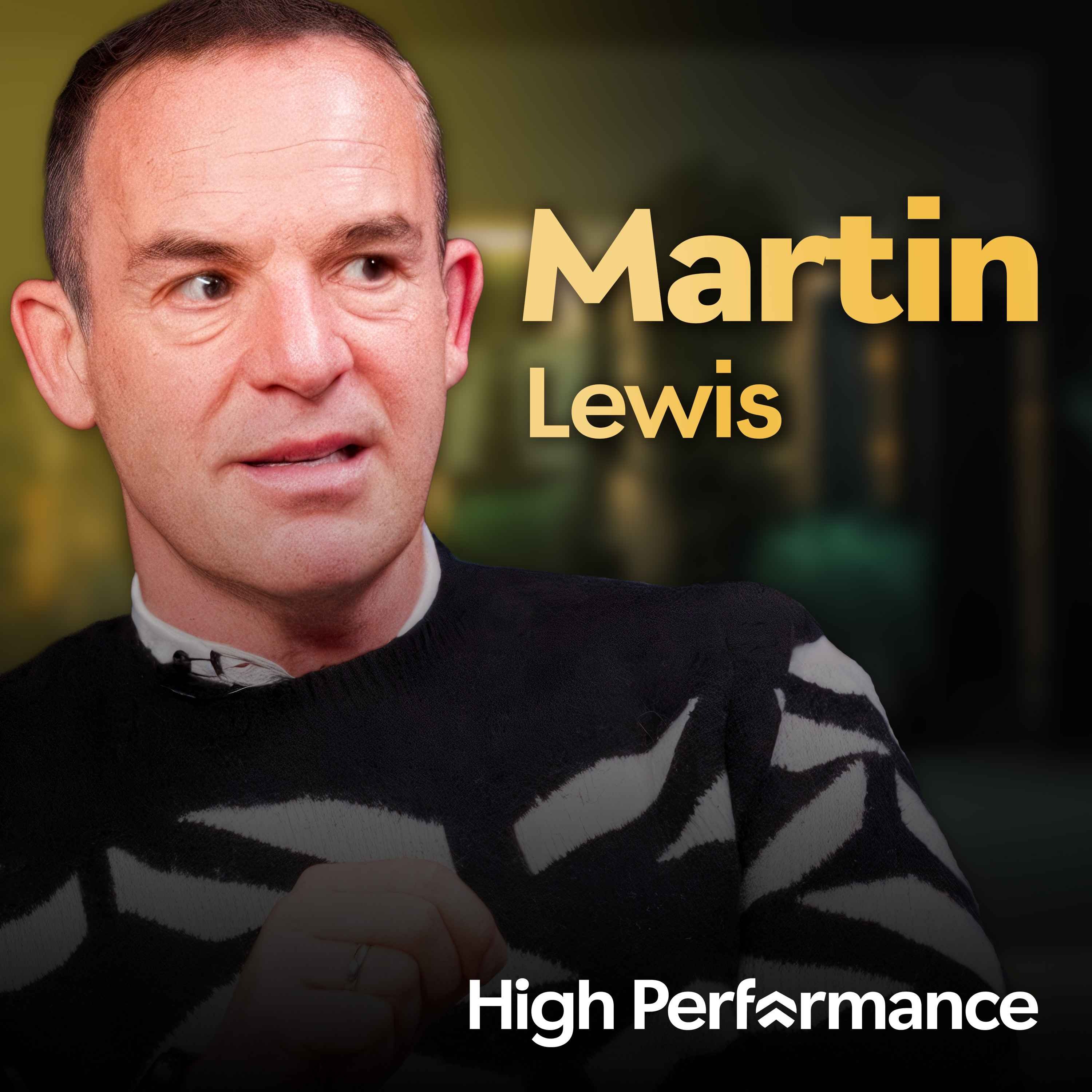
The High Performance Podcast
Martin Lewis: How I Built Britain's Most Trusted Brand — and the Price I Paid
00:52:04
Loading summary
Transcript460 lines
- [00:03]
Martin Lewis
You cannot market trust. Trust only comes from being trustworthy. When a struggling 90 year old grandmother with onset dementia is paying the maximum for her energy bills because she can't access the system and doesn't understand what to do, that is all of our problem. That is society's problem. How hard do you want to push? How much do you really want to be the number one? Do you really want to be that successful?
- [00:28]
Because there's a cost to it.
- [00:32]
Podcast Host
What does it feel like to be the most trusted person in Britain and to understand better than anyone what that trust actually demands? If high performance stands for anything, it really is all about trust. You trust us to go beyond the success stories, to get behind the achievement and to find the truth about what it really costs. And there's no better guess to explore that with than today's Martin Lewis, the campaigning journalist. And that's exactly how he describes himself. Not an entrepreneur, not a website owner, a campaigning journalist who built Money Saving Expert into the most trusted consumer platform in the country and who spent his career putting billions of pounds back into the pockets of ordinary people. But where does that drive come from? What made him so determined to put trust at the heart of everything he does? And what has carrying that mission and that responsibility really cost him? This is the story behind that mission and the man behind the Money Saving Expert.
- [01:38]
Martin Lewis
So one of the things that I try and do in everything is, you know, I talk to my team when
- [01:44]
we're writing something and I explain to them that we must always consider that anybody reading or watching is selfish.
- [01:50]
Not in a pejorative way of selfishness, but in the idea that.
- [01:54]
But no one's actually that interested in money stuff, but they're interested in their money stuff.
- [01:59]
So for me, high performance is getting people to do things that improve their lives and also trying to get policymakers
- [02:06]
and regulators to do things that improves their lives at the same time. And achieving that would be my definition of where I am right now, of high performance.
- [02:13]
Podcast Host
So where did you learn that trick about talking to the individual, not talking to the masses?
- [02:17]
Martin Lewis
I made it up. Did you? Most of what I did was made
- [02:20]
up and look after university I worked in City PR and then I trained,
- [02:28]
got a post credit in broadcast journalism.
- [02:29]
I am a journalist by trade, very
- [02:31]
proudly a journalist, a broadcast journalist by trade.
- [02:35]
But then I came up with the concept of money saving on a very
- [02:39]
tiny little tele channel, built this little web platform and I'd worked it and
- [02:42]
I'd used all of that to really build the research that went on and what had been going on before in
- [02:48]
my world of personal finance journalism?
- [02:50]
Well, there'd been Alvin hall had been
- [02:52]
around, who some people may remember, who was very much a stop spending expert,
- [02:56]
whereas I am a how to play
- [02:58]
the system, how it works, make sure you understand it, embrace the complexity.
- [03:02]
That's always, especially in the early days,
- [03:04]
that was my motto.
- [03:05]
It's complex, so let's embrace that and turn it back on them. And that was what turned me on then. Now more it's about the consumer campaigning. And so I did that and I built that and I had to make it all up. I never read anybody else's books, I, I still don't look at other websites so to try not to take ideas
- [03:23]
that are coming elsewhere. And when I first set up the website, if you're talking about where it
- [03:27]
all came from, I remember I spoke
- [03:28]
to a good friend of mine who dines out on this now, cause he's in that industry about the site. And he said, oh, you got two things wrong. I said what have I got wrong?
- [03:36]
I said first of all, nobody wants
- [03:38]
to see a face on the front of the money website. These are meant to be professional.
- [03:43]
And I was like, but I think people want to see the whites of
- [03:46]
the eyes of the person who's doing it.
- [03:48]
And he said and you haven't got any adverts?
- [03:50]
I said I'm not having anyone pay me what to say.
- [03:53]
And so those was his advice. I didn't listen as I never do and it happened.
- [03:59]
Podcast Host
But I think that speaks to that really intangible but incredibly powerful force of trust. People trust you. So when we were researching this I was struck by the COVID example of what trust means, which was reliability, credibility and intimacy. People feel they know you and that's then divided by the self awareness of where you spend your time. Is it about making yourself rich or is it about helping other people? And I think you tick all of those boxes in an incredibly powerful way that for listeners, if we understand that trust can make you happier, it makes you more productive, it helps in relationships. I think it's a topic worth exploring, if you don't mind.
- [04:43]
Martin Lewis
So I sat at an energy summit
- [04:46]
run by David Cameron when energy prices
- [04:49]
were going up, if only they were going up where they were then. Now this is a fraction of what we have today. And one of the bosses of the
- [04:58]
big energy firms said, Prime Minister, we need your help. People don't trust us and therefore we're not getting the information across that we need.
- [05:11]
And we need your help.
- [05:13]
And we need everybody in this room to help make sure that customers trust their energy firms. And David Cameron nodded and said, yes, yes, absolutely, we need to look at that. And I put my hand up and I was at the end of the room. I wasn't quite as big as I am now, if you know what I mean. I was at the end of the room, put my hand up and I was ignored and I kept my hand up. Then nothing came on and I kept my hand up. And then eventually he turned to me and he said, yes.
- [05:35]
And I said, I just want to
- [05:38]
say, having heard the call on trust,
- [05:42]
I will do everything I possibly can to ensure that nobody trusts you because you are not trustworthy. The Latest data shows 56% or whatever it was, of people who come to your call centres are given incorrect information. I will not tell people to trust you until you become trustworthy. For me, you cannot market trust. Trust only comes from being trustworthy. It only comes from a track record of doing the right thing or at least trying to do the right thing. And there is a differentiation between the two. As long as people are trying to do the right thing, that's good enough, because there's a perfection. And actually, I do actually think energy
- [06:28]
companies have become more trustworthy since then because they've had to. The way regulation works and things that
- [06:32]
go on, they're charging way too much. But at least. I mean, I'm not saying they are
- [06:36]
trustworthy, but they become more.
- [06:38]
It's all relative in terms of when they say something to you.
- [06:41]
It now works in that way round.
- [06:43]
And I've talked before about the fact I have a professional paranoia. And to anybody starting out in an enterprise, I would really say this. I once did a talk for a
- [06:53]
friend with some young entrepreneurs and they were starting out and someone asked me about what shortcuts, and I went, whoa,
- [06:59]
whoa, whoa, whoa, whoa, stop, stop. Shortcuts might help a small business to
- [07:05]
be a bigger business, but if you
- [07:07]
want to be a big business and
- [07:09]
you've taken shortcuts, you're going to kill yourself for future.
- [07:12]
Because if you are throwing away that trust early, you have to be trustworthy from day one. Do not think that if you get really big in 20 years time, people aren't going to look back and say, but hold on, in the first year, didn't you do that? That's what you really are. So you have to do it right from the moment that you start. If you're setting out to have an entity or be trustworthy in that way, I have A massive professional paranoia to a ridiculous level that drives my team mad, drives me mad. The best example I can give you, we had a deal with the telecoms provider once it was best in market
- [07:50]
deal, it was a broadband firm. I won't give the firm. It's not fair to say
- [07:55]
when we negotiate a voucher incentive to sign up for the site, it must always be one that is paid automatically or not
- [08:02]
claimed or I won't have it.
- [08:05]
So we negotiated a voucher incentive for the site, but the company was also giving its own voucher which was a standard deal for non direct. So for going to any other site which had another voucher which you had to claim, so you had a voucher you had to claim and then you had the extra one on top. We had negotiated that you didn't have to claim. Fine, we live with that.
- [08:28]
That's a standard term and condition.
- [08:30]
I then found out because somebody told me that the amount that we got paid, if somebody clicked through us and didn't claim their voucher from the broadband
- [08:42]
firm, we'd get more.
- [08:45]
So we would be paid more money if people didn't claim their voucher. Even though of course we go and
- [08:50]
tell people to claim voucher.
- [08:52]
And I said we can't do the deal.
- [08:53]
And they said, what do you mean? And they said, you're not going to incentive, you're going to encourage people to claim.
- [08:56]
I said we can't do the deal. I do not want anybody thinking we have a perverse incentive. And even though over my dead body will we act in a way to discourage people from claiming their voucher, the fact that and they're like, nobody will know, it doesn't matter, Someone somewhere will know. And that is not right for us. Now that rule still stands. I'm not saying at some point because I don't vet every single deal that goes through something like that hasn't gone through. But when I heard of it, it was a red line for me. And so actually we just said we won't take that extra money.
- [09:36]
Commercial Voice
Introducing Home Care Plus, a new subscription service from Lowe's that helps make life easier by giving members a with home maintenance. Let Lowe's tackle the tasks you keep meaning to do, like electric dryer, vent cleaning, replacing hard to reach light bulbs and more. Subscribe to Home Care plus for just 99 a year and consider your to do list done. Members get more at Lowe's. Available in select zip codes only. Cancel anytime. Non refundable fee. Product purchase required terms and service restrictions apply. Details@lowe's.com terms subject to change with endless
- [10:05]
scroll algorithms and AI flooding feeds, podcasting stands out. They're sought, not served. Audiences actively choose to hear trusted voices on topics they care about. In fact, 72% of listeners say podcasts shape cultural conversations for marketers. That means podcasts shift brand perception like no other channel. Acast's Podcast Pulse 2025 report has the proof. Get all the insights at podcastpulse2025.com.
- [10:41]
Podcast Host
How did you come to this realization that trust is almost the. That is the thing that people.
- [10:47]
Martin Lewis
Because I didn't set the website up to make money, had no way of making money when I set it up in the first place. That was never what the intention was.
- [10:54]
I never said I. You know, I get asked to do talks as an entrepreneur all the time.
- [10:57]
I rarely do it. And if I do, I call myself an accidental entrepreneur.
- [11:00]
It just wasn't my goal, you know, and I think I am. My goal was to be a campaigning broadcast journalist, and it came through the financial sector. That's what I do. You ask me, what do I do? I'm a journalist. I'm not an entrepreneur. I'm not a website owner. I'm not any of those things. I'm a journalist and I'm a campaigning journalist. That's who I am. So it's not that I went, how
- [11:24]
do I manufacture to be the most trusted person out there?
- [11:27]
It's just that I'm a campaigning journalist and I act like a campaigning journalist and I try and be a party political, very political, but a party political. And those are that paranoia.
- [11:41]
I hate people saying I've done something wrong.
- [11:43]
Nothing upsets me more than when someone questions my motives.
- [11:47]
I don't care if people call me the C word. Right.
- [11:50]
But when someone questions, you're only doing
- [11:53]
this because you've got a vested interest or something. I mean, that's what makes me see red.
- [11:58]
Podcast Host
And the nature of the site and the nature of your work now, as you say about the campaigning, is very much around what I see about righting wrongs. And I'm interested in going back to that early age where you noticed inequality around you, partly because of the school that you grew up in.
- [12:18]
Martin Lewis
Yeah, so I rather bizarrely grew up
- [12:21]
in a special education school because my father was the headmaster and it was a boarding school and we lived on top of it.
- [12:27]
So I did learn at a very early age privilege, you know, the privilege
- [12:34]
that I had to have good mental capacity and to be able to learn and not to struggle.
- [12:39]
I remember crying at the age of 15, I won't mention the individual's name
- [12:45]
because it's not fair.
- [12:46]
There was a boy who had spent
- [12:50]
three years learning to tie shoelaces. He had severe restricted mental capacity and he tied his shoelaces. And I was there the first time he did it. And I think there are very few people in this world who will climb a mountain that high. Right. I mean, I could still feel it now.
- [13:08]
And you know that you want a
- [13:12]
definition of high performance, that individual, three years to tie his own shoelaces, and the day he did it, he just went, yes. And most of us who were there, who were not, one of our eyes went, as my eyes are going now, at the memory of it.
- [13:27]
So that's high performance. And high performance is always an individual
- [13:31]
thing, what you're prepared to do, and it's based on your aptitude, your capacity and how much you want to do. So.
- [13:36]
So, yeah, growing up in that environment taught me a lot, as I say, about privilege. The birth look that I'd been born with, that I didn't have to struggle
- [13:46]
to learn to tie my shoelaces. You know, I could never learn to play the piano. I wasn't born with that gift.
- [13:50]
But tying my shoelaces were fine and
- [13:51]
other things were fine. I wasn't a consumer campaigner when I first started the money saving stuff. When I first started Money Saving Expert,
- [13:59]
my view was
- [14:02]
we had a car sticker that said it.
- [14:04]
You know, a company's job is to
- [14:06]
screw you, Our job is to screw them back.
- [14:09]
It was really adversarial.
- [14:10]
Podcast Host
And is that what you've really felt?
- [14:12]
Martin Lewis
You know, companies spend billions of pounds on advertising and marketing and teaching their staff to sell. And consumers get no buyer's training and no financial education. And it's an imbalanced market. So actually, a little bit of aggression from consumers, never personal aggression, I don't mean it in a bad way, but instead of saying, no, I'm not going to let them do that to me,
- [14:31]
I'm going to find.
- [14:32]
I mean, there was one bank account,
- [14:33]
I think it was Barclays, it was
- [14:35]
a terrible bank account, but they were paying people £100 to sign up from
- [14:41]
it, even if you didn't switch properly,
- [14:43]
because this was before they put in
- [14:45]
all the criteria that stops me doing things like this.
- [14:47]
So I put in my email and this was in the early days before
- [14:49]
we hit a million people, but it's still pretty big.
- [14:51]
I said, everybody go and do this.
- [14:53]
And we closed that bank account in three hours, which meant all the people
- [14:56]
it wasn't a good bank account for didn't get it, but everyone got the 100 quid and that was the use of the information to go there. Then I had a shift and the shift came. I met a friend of a friend
- [15:10]
who was a mental health caseworker who told me they loved my website. I said, I don't use it for me, I use it for my clients.
- [15:15]
And that was a bit of an epiphany moment. In the early days, my view was, look, if you do this and you succeed, you win, and if you don't, that's your problem.
- [15:25]
You lose and you'll get ripped off.
- [15:28]
And I have a very different view on that now with, you know, one in four people in the country having
- [15:33]
a mental health problem at some point in their life, and people who have mental capacity issues, you know, and stress
- [15:39]
because you've had a new baby or
- [15:40]
the onset of dementia, or you just,
- [15:42]
you know, work is really hard at
- [15:43]
the moment, or you've just suffered a breakdown.
- [15:45]
And there are all those moments in all of our lives where we're not as capable as we usually are. And actually, I'm now a much greater believer that there has to be systemic change to protect people rather than just relying on some individuals to protect themselves. And that's been a shift since probably
- [16:03]
about 2000 when I first started.
- [16:05]
Podcast Host
How did we end up in this position then, where society is kind of stacked against people in so many ways? We have to be rely on people like you and be really agile and really smart, not to sort of get turned over.
- [16:21]
Martin Lewis
I think it's always been like that. I think we're just more aware of it now. And I think some of that is the democratization the Internet brought.
- [16:28]
I think the Internet was incredible for
- [16:31]
enabling people to look up instant resources and find out information about what they want. I mean, it's been an incredible force for good as well as a force for bad, the Internet out there.
- [16:40]
And I do think that that awareness, you know, you had programs like that's
- [16:44]
Life, which were consumer empowerment.
- [16:46]
You had Watchdog, which I was a big fan of.
- [16:47]
And I think it's an absolute tragedy that the BBC, our public service broadcaster, has reduced that to a concession on the One Show. I mean, I think it's a disgrace during the Cost of Living crisis that there is now no mainstream consumer program that is in primetime BBC.
- [17:02]
There is on itv, but there isn't on BBC. And I would love the competition. And it always did something different.
- [17:08]
Watchdog's curative it looks at people who've had problems. I'm preventative.
- [17:12]
My whole aim is to try and
- [17:13]
prevent the problems in the first place or get redress when they have happened.
- [17:17]
When there is injustice by design and it's bred into the system and they're doing it full knowledge, that's when I
- [17:25]
kick into action and that's when it's
- [17:27]
a story, you know, PPI, 40 billion pounds. Systemic, scripted mis selling to rip off the most vulnerable in society. Deliberate, deliberate, calculated. Selling people a near worthless product, doing through scripted, very clever mis selling, not even telling people they got the product saying when people ask for a loan, you'll be told, yes, you're fully insured loan. And the fully insured meant we're sending you a second product on top. That's actually where all the profit is. And we're not even breaking out the fact we're selling you a second product on top. And that's why £40 billion was paid back on that. That's where I like to kick off. Human error.
- [18:03]
Podcast Host
No, but then when we hear the passion in your voice around like the anger at that kind of systemic injustice, I'm interested in the source of it for you, of what ignites that anger to want to put yourself out there and challenge the system.
- [18:21]
Martin Lewis
I think sometimes when you understand it, you know, when you, when you steep
- [18:27]
yourself in it and live and breathe
- [18:29]
and you know that the people who design these systems are also steeped in it.
- [18:33]
And then you just think, you bastards,
- [18:36]
you've deliberately, deliberately done something to profiteer and you're taking that off many people
- [18:47]
whose lives are going to have a much worse impact.
- [18:50]
I'm not anti capitalist, I believe in making money, I believe in entrepreneurship, I
- [18:56]
believe in all of those things.
- [18:57]
But I think you want to be
- [18:59]
able to sleep at night.
- [19:00]
So when I did bank charge reclaiming,
- [19:02]
which we got a billion pounds back, which was like the predecessor to PPI
- [19:05]
reclaiming, which was even bigger, and in the early days of both of those
- [19:08]
they were running simultaneously. And I did template letters at the time rather than the tools we use now. I think we did 6 million template letters for bank charges and more on PPI. I mean enormous numbers.
- [19:18]
And I met someone later who worked
- [19:19]
for a debt charity, so it probably met them in about 2010, 2011 and they said they had worked at the banks in the early days of my bank charges and PPI template letters. And what she said to me that was fascinating. She said, do you know that about 20% of your letters and they know what mine are about 20% of your
- [19:37]
letters where it says your name, your address, your details. People would leave that in. They wouldn't delete the your name, your
- [19:45]
address, your details and 5% of your letters. People would just send the letter in without adding their details.
- [19:54]
So people would post a template letter,
- [19:57]
they'd print it off the site, they'd
- [19:59]
say your name, your address, nothing personal, your case, and they'd post it. And I find that one of the most fundamentally depressing things of my entire career. So here we are with Britain's biggest financial institutions having deliberately, systemically, and no one's gone to prison for it, no one's been prosecuted criminally for it, deliberately, systemically ripped millions of everyday people off who were already needing to borrow at that time. And 5% of the people who had
- [20:32]
those products who were trying to get
- [20:33]
their money back had such limited mental capacity or functional literacy that they did not understand that they needed to put their details in a template letter. I mean, that is criminal. That is criminal. And you sit there going, well, someone, someone has to do something. Someone, you know. And I remember in the later days of ppi, alongside which we negotiated to make sure that when they were putting a close on it, the FCA made sure the firms put money and to help the vulnerable people claim because it's just too difficult for some people. But I mean, I don't know about you, but I find that just that is a tragedy. And we have to.
- [21:12]
I talk about lots of things, I talk about energy. We don't have a social tariff in this country right now.
- [21:17]
I'm a great supporter of a social tariff.
- [21:19]
What that does, it says, look, we've gone for a competitive model, we've gone for a model of market competition where energy switching should make it cheaper.
- [21:25]
Now, without being rude to you two chaps, if you could save 20% on your energy bill and you had to take action and you two didn't, well, that's your problem. You're both perfectly capable of doing it. But when a struggling 90 year old grandmother with onset dementia is paying the maximum for her energy bills because she can't access the system and doesn't understand what to do and therefore she pays more to boil a kettle than I do, that is all of our problem. That is society's problem. And the easier the finances on the
- [21:57]
surface of my life gets, the more I feel the injustice for people who are going the other way around. So I think that's probably the correlated relationship.
- [22:05]
Podcast Host
It's very interesting. You feel like that though, because most people feel more content, happier, more relaxed if they've got a few bob in the bank and they've been perceived as successful by the outside world. It's very interesting that your emotion is quite different.
- [22:19]
Martin Lewis
I. Look, having money in the bank is great. It doesn't make you happy, but it
- [22:24]
certainly takes away many of the negatives and it gives you a safety net
- [22:27]
and it enables you to look after those that you love.
- [22:29]
And that's incredibly important.
- [22:32]
It's not about the money so much. It's probably a weird bit of me
- [22:37]
fighting that there's an injustice, that people can be as wealthy as me in the world.
- [22:41]
Right. But, I mean, I'm very glad.
- [22:43]
I am.
- [22:44]
I'm not saying not. And it's. It's what means that I choose what I do. I don't have to work, I never have to work a day again in my life.
- [22:51]
So nothing I do anymore has anything to do with.
- [22:54]
Because I need to go and make money. I choose what I do and why I do.
- [22:59]
And that's the greatest luxury and the greatest freedom that you can possibly have,
- [23:02]
that your life is your control. And interestingly, I do tend to think most people who've made a lot of
- [23:07]
money tend to be the ones who won't stop work because they're driven. So there's a virtuous circle going on there.
- [23:13]
I think some of the guilt comes because, you know, I remember in the pandemic, my head on my desk crying,
- [23:19]
you know, weeks on end and the messages that were coming in and the
- [23:24]
desperation at people's lives, and there'll be
- [23:26]
people sitting out there and I go, why don't you just give them money? Because it doesn't work. Because no matter how much money you've got, it'd take you five minutes, it'll all be gone.
- [23:35]
I put money into charities and organizations
- [23:37]
to try and help, and I work it that way. My big charity, my money mental health charity, is all about trying to change the system to improve people's lives.
- [23:44]
Direct handouts to a few individuals is
- [23:47]
just spitting in the sea. It's nothing.
- [23:49]
But I do feel when you're reading that, and because I'm the money saving expert, because I'm steep with dealing with people's financial issues and I don't have them myself, I think that helps drive
- [23:59]
some of the guilt that comes from it.
- [24:00]
When I sold the website and I
- [24:02]
still in charge of all the content and the strategy, people think I'm still
- [24:06]
there, still drive them all mad every day.
- [24:09]
As executive Chair these days.
- [24:11]
But when I sold it and I
- [24:13]
was going to be publicly rich, and I phrased that quite deliberately because I
- [24:19]
mean, I had an asset worth many
- [24:21]
millions of pounds and I crystallized that asset de risked and then had cash of the same amount.
- [24:27]
I wasn't any richer. The next day I just had it in a different asset class. And the site had already been very profitable beforehand. So I was already, you know, doing very well financially. But the knowledge. Cause I'd grown up, I hadn't. I don't come from a rich background in any way. The knowledge I was publicly going to be very wealthy. And I was worried what people would say. You know, I was torn between would I have a reaction from people that great, I want the guy who talks to me about what to do with my money to have done really well with his money or are they going to say, well, how can he, how can he have any clue about our lives? And it makes me laugh these days. Cause I'll get people who talk about.
- [25:04]
But they'll talk to me about politics.
- [25:05]
Oh, you get it, Martin.
- [25:07]
But then Rishi Sunak or whatever else
- [25:08]
with all their millions in the bank and they, you know, how can they ever understand it?
- [25:12]
And I go, well, it doesn't preclude you from understanding.
- [25:16]
Doesn't preclude you as long as you work hard and you care, you know, and you also gives you the ability to put money into trying to help people. That which I do, both in my day job and in my charity funds.
- [25:25]
Podcast Host
Was there ever a moment where someone came to you and said, look, you can make three times the money on this website by doing this?
- [25:30]
Martin Lewis
Yeah, loads. I mean, people talk about when I sold, I refused and I sold not to make money.
- [25:40]
Which will people say, yeah, of course you do.
- [25:42]
I didn't, I didn't.
- [25:43]
The pressure was too big.
- [25:44]
I couldn't run it, I couldn't control it. I wanted to focus on what I was doing. I wanted to de risk. So that was probably the biggest financial incentive with de risking as opposed to making money. It was a de risk, but also, I mean, it was just too much. I couldn't cope. My mental health was struggling from it. I just needed to get some of the pressure away. And selling was incredibly pressured. But I went to Corporate Finance Advisor,
- [26:08]
which is what you do in these circumstances.
- [26:10]
I know he wanted to do a beauty parade. And I was like, whoa, whoa, whoa, whoa, whoa. I'm not interested into selling anybody who sells products. I'm not interested in selling anybody who's Got products and a parent down the line. I want somebody who will sign up to my editorial code, which is effectively an ethical charter that says money saving expert. And as long as I'm there, it's still valid and still legally bound. Will always do what's in its user's interest first ahead of its own financial concerns. We will never data mine. We will always be free to talk even about the parent entity. And all of those things were in my absolute red lines for sale. We only had one buyer because all the others, and some of them, the talk was four or five times what I got. And I got a lot of money and four or five times a lot
- [26:55]
of money is a shed load of money.
- [26:56]
But that was. I didn't want to know. When he said, do you want. I'm like, don't tell me. Don't tell me how much they want to give because I'm not interested.
- [27:05]
Podcast Host
Can we explore the topic there that you said about the weight of responsibility that you bore? Because I'm interested in that trust element that we spoke about. As you grew the business and you started to have to trust other people to have the similar ethics and the similar drive and desire for red lines that you had. How did you learn to do that? To cascade the idea that it's your reputation that you're putting in other people's hands?
- [27:31]
Martin Lewis
I tell you what. Very interesting. One of my former senior staff who
- [27:35]
came from a very commercial place. It's not as difficult as you think, actually.
- [27:38]
Podcast Host
Okay.
- [27:40]
Martin Lewis
And I think this is probably a more important.
- [27:42]
His lesson's more important than mine.
- [27:44]
I want MSE and the work I
- [27:46]
do to be trusted because that's my core belief set. Right. Which is pretty inarguable.
- [27:52]
That's what I believe in.
- [27:52]
That's why I do it. That's what it's about. Simple. I wanted to be very successful financially as well.
- [27:57]
Core belief set, do the right thing. So hard guy came in very senior.
- [28:01]
I'm not sure he'd want me to mention his name, so I won't do it.
- [28:03]
But he came in from a very
- [28:05]
commercial place and he was very senior in the organization.
- [28:08]
And we talked after being in two
- [28:10]
or three months and I said, look,
- [28:13]
you need to understand that my most
- [28:14]
important thing is we always do what is right.
- [28:17]
We always do what is right for
- [28:18]
our users and we must protect that above everything.
- [28:21]
And I was expecting this hugely, voraciously commercial person.
- [28:26]
He said, well, my view is we
- [28:30]
must always do what is right for
- [28:33]
our users ahead of anything else.
- [28:35]
He said, because our biggest financial asset is the trust that people have in the site. And therefore we cannot. We cannot do anything that breaches that. So from his purely commercial perspective, his idea was that for longevity of the brand.
- [28:53]
I hate thinking of the brand, but
- [28:54]
the longevity of the brand and the organization and the site, he came to the same conclusion as me. And we worked incredibly well together because we had this really shared aim, even though we had entirely different belief sets
- [29:08]
which were driving us to it.
- [29:10]
So that was never that difficult on the trust. I mean, the stress basis, the responsibility is. I mean, I find it very difficult. I'm always very careful how I talk
- [29:20]
about my mental health. So I don't go into my mental
- [29:22]
health in detail, but often I'm very well.
- [29:26]
And then I have periods where I'm not very well.
- [29:28]
And one of the first periods where
- [29:30]
I wasn't very well.
- [29:31]
In fact, the first period where I
- [29:32]
wasn't very well was actually coincided with bank charges that we talked about earlier.
- [29:37]
And I had three people in a
- [29:38]
week call me a God.
- [29:41]
And they kept going on the tube.
- [29:43]
You're a God to me. I do everything you say. I've got everything back from bank charges. And it broke me when you talk about the compliments. Absolutely broke me. I just.
- [29:51]
I couldn't breathe. I couldn't breathe.
- [29:53]
I kept saying, you're a God. I do whatever you say. I couldn't cope with it.
- [29:59]
And I know it sounds.
- [30:01]
It's just. It's a lot of pressure to throw on somebody.
- [30:04]
These people you've never met, you know nothing about. And I want to do that. And you're going, but you're not even telling me. I read everything and I made my decision.
- [30:12]
You're just telling me I'd do it.
- [30:14]
And I'm always about empowering in my head. I try and empower people to give them the information and guidance to make the right decision, but I don't want to make that decision for them. The pandemic was very difficult. And coming out in the cost of living crisis, they were very difficult for that reason. I mean, the number of people, the phrases, you know, killer phrases. I rely on you.
- [30:34]
I do everything you say.
- [30:35]
You know, I mean, I find it. I hope there's not an arrogance in me saying it, but I find that so difficult. And then I go through everything I've done wrong in my life. Cause I'm a human being, I've done
- [30:51]
lots of things wrong.
- [30:51]
I mean, nothing, what, you know, but lots of things I feel guilty about.
- [30:55]
I remember the person I was really shitty to at university, right. And I just think, oh God, that was a horrible thing I did to that person.
- [31:02]
I remember this and that and I thought, oh my God, they're gonna start talking about and everyone, you know, so the more people put you up on a pedestal, the more you think, oh God, they're just gonna not, you know, something's gonna happen that breaks that. And I don't wanna break that trust because what I do, I think is really important and I would, you know, I wish. And the bigger I've got, the more difficult that is. So there is an incredible pressure and I find it struggle to difficult with
- [31:27]
it is an under exaggeration. I can't deal with it at times. I can't deal with it.
- [31:31]
Podcast Host
So would you share with us though? Because I think there's lots of people listening to this will feel pressure in different guises however it shows up. Would you tell us some of the methods you have learned of coping under pressure?
- [31:43]
Martin Lewis
I've been asked that question before and honestly, no, I won't. Because I'm crap at it, right? And I don't want anybody to learn from me. I do what I can.
- [31:50]
Podcast Host
What about your biggest mistakes then?
- [31:52]
Martin Lewis
Look, I try and learn the breathing stuff. I'm not very. I try my breathing.
- [31:56]
I can't do meditation, right?
- [31:59]
I mean sleeping is quite tough, all of those things. I try and talk myself through it. I've had therapy, I've done all of those things.
- [32:06]
But when it's bad, it's bad.
- [32:08]
My main coping mechanisms, huge amounts of exercise, lots of walking on top of the exercise. Always being a book.
- [32:17]
That's one of my big rules.
- [32:18]
So for me it has to be. I only have two types of books. It must be either science fiction or
- [32:25]
fantasy or historic fiction.
- [32:26]
It cannot be anything that could trigger thoughts about my world. And I must always be in a book. What I mean by that is if I'm struggling and I'm stressed, I can't start a book. So my rule is at any one time I must be in a book
- [32:41]
that I'm enjoying because then if I'm struggling and stressed, I can stay in it.
- [32:44]
So whenever I finish a book, I always get into another book. Absolutely, as a priority. Someone with in the middle of a book. That's one of the few tips that works. And find distraction. Find anything that can take your brain away. I don't care if it's playing a
- [32:58]
game on your phone, which is something I do. I'll find a game that will buzz your brain but distraction is very important.
- [33:03]
But the problem with that is that's
- [33:05]
personal to what I deal with. You know, some people have depression, I don't have depression. Mine is anxiety based. I have anxiety.
- [33:12]
And we all need to find our own different things. I've been to universities and I've done
- [33:17]
talks on how to be successful. And one of the things, you know, I say there are four things, talent. But I think a lot more people have talent than they know hard work.
- [33:27]
And all those people who say, oh,
- [33:29]
I only do four hours a day and I've been really successful, I just think it's bullshit. I think most people who are really successful work really hard. I mean, I spent a decade working 90 hours a week. You know, that was just what I did. That's how I got here. When I was building the website myself, that was what I was doing.
- [33:43]
Focus, I think is incredibly important. Laser like, focus.
- [33:45]
You can't be the best at everything. Try and be the best at one thing.
- [33:48]
And then the final one I say,
- [33:50]
which is absolutely unquestionably the most important one, luck. And anyone tells you there isn't an element in luck in what they do, again is just lying to you.
- [34:02]
And there's all the, the harder I
- [34:03]
work, the luckier I get. Well, it's not true.
- [34:06]
There are lots of incredibly hard working, talented, focused people who have not been successful. And that's another reason for the whole pay it back cause I'm aware I've been incredibly lucky. But the tip that I need to say within all that is, do you
- [34:22]
really want to be that successful? Because there's a cost to it. There's a cost to pushing as hard as I've pushed and as hard as other people have pushed.
- [34:28]
And I look at some of my
- [34:30]
incredibly bright contemporaries from university who haven't on paper been as successful as I
- [34:35]
have and who, perhaps everybody. When we were leaving I was at
- [34:40]
the lsc, there were lots of people who were really driven there. Everyone as we were leaving thought they really wanted to be successful.
- [34:45]
And there were many who within probably
- [34:46]
three or four years, something went, actually,
- [34:49]
I can make a good income and I can work 9 to 5 and get a good income and I can
- [34:54]
have a nice life afterwards. And that's all gonna.
- [34:56]
And that's pretty good for me. I'm not sure I want to push. And I was there going, zone, zone, zone.
- [35:04]
I think in balance, at the age
- [35:06]
of 51, if I were to compare
- [35:08]
myself to some of them, I think
- [35:09]
if you add up the total happiness
- [35:12]
that each of them have had, they're ahead on the happiness score.
- [35:14]
So I think people need to. How hard you want to push, how much do you really want to be the number one in what you do on the big picture? Most people can't be. So a lot of people will fail. And even if you do get it,
- [35:29]
I'm sure there are some people you'll
- [35:31]
have met who've had great journeys to
- [35:32]
top level success and high performance and
- [35:35]
haven't had to pay for it. But I've certainly paid for it in
- [35:38]
quite a lot of ways in, you
- [35:39]
know, locking yourself away doing spreadsheets for many hours when other people weren't, missing
- [35:44]
out on social life, missing out on interactions with family. Certainly my 30s, in the drive stage
- [35:49]
of my career and the impact it's
- [35:50]
had on my mental health with the responsibility that's come with it.
- [35:52]
I'm not asking anyone to be sorry, feel sorry for me.
- [35:54]
I just think it's a choice thing.
- [35:55]
Podcast Host
I also think it's a really important thing to talk about because we're a podcast that tries to peel back the layers to reveal the truth. There are plenty of other podcasts and social media platforms telling young people, work 24 hours a day, don't take a break, be relentless, have the hustle, you know, do something on the side, push yourself to the limit, work up, be the hardest worker in the room. And I think it never takes into account luck. And then it leaves us in a position where there are people saying, well, I've done all those things and I still haven't achieved anything. And then it actually leaves people feeling far worse than feeling better. It's not a form of empowerment to tell everyone else that it worked for me. It's a form of empowerment, as you're saying, to say that actually this comes at a price.
- [36:38]
Martin Lewis
It does. And I can only talk from my experience. I'm not saying it will be that way for everyone. I'm sure there are some people who've made that path through, but most people I meet who've been successful have had real sacrifice for doing it. You need to just make that choice of whether that's right for you and, you know, happiness. I don't think there's enough focus on
- [36:58]
happiness as a form of success.
- [37:02]
Commercial Voice
Are you a trailblazer, a risk taker, maybe someone with countless tales of epic adventure? Well, I'm not quite there yet, but I'm working on it. Even the boldest among us started off small, right? Daring themselves to reach greater goals every day. And if you're looking to take on a challenge like that. The Defender is too. Now I've driven a Defender for a few years. It's the best car I've ever owned. It's a vehicle built for drivers capable of great things, whether they're heading towards uncharted territory or just fancy a weekend getaway. Defender was engineered to meet challenges head on, so you can explore with confidence. It's the legendary icon of adventure, reimagined through modern design, fit for a new generation of explorers. My kids love it as much as me. It also has a tough, rigid body, tested to the extreme, a modern functional interior built for comfort. It's a vehicle that, like you, is capable of great things. And with next gen technology, from 3D surround cameras to clear sight ground view, it will help you embrace the impossible. Explore the full Defender lineup@land roverusa.com
- [38:03]
it's tax season. And at Lifelock, we know you're tired of numbers, but here's a big one you need to hear. Billions. That's the amount of money in refunds the IRS has flagged for possible identity fraud. Now here's another big number. 100 million. That's how many data points LifeLock monitors every second. If your identity is stolen, we'll fix it. Guaranteed. One last big number. Save up to 40% your first year. Visit lifelock.com special offer for the threats you can't control Terms apply.
- [38:39]
Podcast Host
So when you look back at you leaving LSE with that peer group you described, did you consciously decide that you were going to sacrifice happiness to go after this? And I'm interested in if you were to go back there then?
- [38:51]
Martin Lewis
I was incredibly driven at that point. I mean, people who went to university
- [38:57]
with me, some of them I'm sure will say I was unbearable while I was at university.
- [39:01]
So I left school.
- [39:04]
I was relatively shy and quiet at school.
- [39:08]
I had never been diagnosed this, but
- [39:11]
I was post traumatic stress for many years.
- [39:14]
I didn't never left the home really
- [39:16]
until I was 18.
- [39:17]
So I didn't go out, didn't go to party.
- [39:19]
Podcast Host
Did you have help?
- [39:20]
Martin Lewis
No, it was the 80s. It was the 80s, you know. I went back to school after my
- [39:28]
mum had been killed and nobody said a word to me. It was the 80s, you know, so I couldn't leave the house because I
- [39:34]
hadn't been in the house when she was killed.
- [39:36]
So, no, I didn't. And I had no life.
- [39:40]
I had no teenage years until I was 18. Nothing.
- [39:43]
I mean, this is not an exaggerate. I think I went, I'll Tell just so you.
- [39:48]
It's worth saying. The story. The story. And I saw.
- [39:52]
I never been to a party.
- [39:54]
I'd always made excuses why I was busy and I wasn't. I was sitting at home because I couldn't. And I got to about 17, and I was just coming out of my
- [40:00]
shell and thinking, actually, I want to
- [40:03]
go and socialize and be with people. And I got invited to a party by a girl I shared the bus with and who. You know. And she said, why don't you come and you'll know people. So I really wanted to go to her party. And then I thought, what do you wear to a party? I'm 17. I'm like, I don't know. Am I meant to wear a suit? Am I meant to wear jeans?
- [40:30]
I just. It sounds. I did not know because I had never been. Because since two days before I was 12, I had not been anywhere. And I didn't know. And my sister wasn't living at home, and I didn't trust my father and my stepmother, right?
- [40:46]
I didn't think they would know because I'm 17 and thinking, well, you won't know.
- [40:50]
And they were like, we'll drive you. Let us know.
- [40:53]
What? Because clearly I'm not in a good place as I look back on it now. And I bottled it. Didn't go. Couldn't go. I was too scared.
- [41:03]
So when I was 18, I mean, I really, really had no experience of
- [41:09]
anything other than going to school and being depressed, right? Not clinical depression depression. Causal depression.
- [41:16]
And so I left at 18. And then I had this sort of eclectic year where I went to Camp
- [41:21]
America and worked on a summer camp,
- [41:24]
which was pretty hard.
- [41:26]
I was incredibly homesick until the last couple of weeks.
- [41:28]
Had this wonderful moment in a pantomime they did where I was meant to be the backstage sound guy and the. That one of the women from the camp who was going to be playing the fairy godmother wasn't there. This was a week to go. And they said, could you just read her lines?
- [41:41]
And I was very shy. And I'm still very shy. I'm just now a performer. There's a difference. And they asked her, will you read the lines? And I went. I said, okay, I'll read the lines. And something broke in me.
- [41:50]
And instead of going staccato, so I said. I went, poof. And I came out and I performed it, and everyone was fooling around, laughing. And they said, will you do that tomorrow?
- [42:01]
Will you do it? So I went, okay.
- [42:03]
I'd never been on stage before. Never done anything like that. And I did that and I just thought, wow. And then I worked as a VDU operator with a lovely group of graduates who took me out to pubs and
- [42:16]
nightclubs for my first time.
- [42:18]
I mean, I didn't know what you
- [42:19]
did in the pub.
- [42:19]
So I had. And I was quite honest with them,
- [42:21]
which I wouldn't have been with my school friends. And they took me out of civil. Come with us.
- [42:25]
And then I worked as a salesman, which is. I mean, I think anyone who wants
- [42:32]
to work in business should have to do compulsory service as a salesman. I think it should be mandated.
- [42:35]
Podcast Host
What were you selling?
- [42:36]
Martin Lewis
Caravan, awnings.
- [42:38]
Doesn't matter what you're selling, you're selling, right?
- [42:40]
And it was all about learning to communicate. Incredible communications lesson. And just before that, I'd worked in a bar to learn more about. So I worked in a bar and then I went back to Camp America, second time with a totally different confidence level. Became head of staff entertainment, doing shows all the time, doing that type of stuff. And then, then I turned up at university and I had flipped like a pancake. So from having been this shy person who'd never been out, I was flooded with this exuberance and confidence. I would say bordering on arrogance, but it wasn't bordering, it was just arrogance, right? And I could do anything. In first week of university, I put myself up to be rag chair of the uni and I got it. And I put myself up to be up to three other posts. So I had three posts within my first week at university, you know, and I was into the student politics and by the end I was student president and I was, you know, the loudest and, you know, overbearing person in the university. I mean, I cared about what I did, I loved what I did, but, boy, was, was I out there. And so I was a. It was a very different trace, but the flip, like a pancake is the
- [43:43]
best way I can describe it.
- [43:44]
Podcast Host
But you aren't kind enough to yourself, right? And that's obvious the way that you sort of talk and little things that you say when you talk about being arrogant in university. I sit here listening to that harrowing story of the previous years and think, oh, my God, you deserved to be that person. You were making up for lost time.
- [44:01]
Martin Lewis
Nobody knew it.
- [44:02]
Podcast Host
Yeah, but we now know it, don't we? So you can actually look back on that now and go, yes, I was out there. Yes, I was loud. Yes, I was brash. Yes, my voice was heard. Yes, I impacted the people around me because you'd spent five years not leaving your house like. No, that was the, that was the moment. You deserve that man.
- [44:18]
Martin Lewis
It stayed with me. The best example I can give you because you should always have some colour for this. This was slightly later when I went to do my broadcast journalism post grad and again, I'd been president of my
- [44:27]
uni at this point and I'd been
- [44:28]
quite successful so I had some more confidence but I was still on that absolute, you know, nothing can touch me phase. Whereas we went and my friend Kerry tells this story and they all laugh at me, all the people who did my course, who were still many of my great friends. So we went on the course and it's a broadcast journalism course and where it meets. All the journalists are signing up.
- [44:46]
There's about 2, 300 people in the
- [44:48]
room and we're going.
- [44:50]
And it's just a sign up day, the course starts the next day.
- [44:53]
So I said, I met one of
- [44:54]
the other persons sign up saying. I said it's a shame we can't all go and meet each other, isn't it? And he said, yeah, but I mean, how are we meant to know there's no mobiles or WhatsApp or anything like that this time? Well, I think there were mobiles but there's no commute. And he said how we meant to do it. I said, oh, it's fine.
- [45:07]
I stood up, I said, everybody on the broadcast course with. I have a very loud voice, I'm not doing everybody on the broadcast course in 30 minutes we're going and I name the local pub, we will be there, we'll see you there. So we can all beat before the start of the course and just everyone stopped and looked and they were. And they all go, how did you do that? I mean, obviously it's easy.
- [45:30]
Podcast Host
And how many people turned up?
- [45:31]
Martin Lewis
Everyone.
- [45:32]
Podcast Host
There you go. There are loads of lovely things for people to think about from this conversation. I think one of them is that we're not fixed. You know, there will be people listening to this who are maybe more towards the broken than the okay place. Right. And I think it is important for them to hear your story and to understand that things don't last forever necessarily and that you can not necessarily fully recover, but you can get back to a place of happiness.
- [45:58]
Martin Lewis
But more so than that, and you know, I'm a patron of a bereavement
- [46:04]
charity for young children and I've unfortunately had seen children who are the children of some friends of mine who lost their parents very Sadly.
- [46:15]
And one of my messages now, when I look back at what happened to
- [46:18]
me, I mean, apart from the fact, get counseling. Well, for heaven's sake, get counseling. Have someone to talk about. There are great techniques for dealing with grief.
- [46:24]
Nothing will fix it, but they will
- [46:26]
enable you to handle it better.
- [46:29]
But a lesson I have for anyone with grief at any age
- [46:34]
Commercial Voice
is do
- [46:34]
Martin Lewis
not tell yourself off for smiling. I cannot tell you enough.
- [46:40]
You know, you lose someone yesterday, you've
- [46:42]
had the biggest tragedy in your life. If something happens that makes you smile,
- [46:48]
the reaction on that day is to
- [46:50]
stop yourself, because I shouldn't be styling.
- [46:52]
Screw that. Screw that. The most important thing, you know, as someone who went through childhood trauma, the most important thing is grab every smile you can grab every. And if it comes, do not fight your smiles down. Do not ever try and make yourself
- [47:10]
less happy than you could be.
- [47:11]
And do not feel guilty about being happy.
- [47:14]
I mean, make sure it's appropriate. If there's somebody else there who's having a different moment, but don't fight your smiles down.
- [47:19]
And if I could go back and tell you that hideously hurt young boy,
- [47:24]
anything, it was like, just go and try and be happy.
- [47:27]
You know, don't feel. And I did.
- [47:29]
I felt my responsibility was to mourn and be miserable. And I think we need to change our attitudes and we need to be open and we need to talk. I'll give you one final story, if you like. When I worked on a summer camp, and I'm Jewish, and it was a Jewish summer camp, I worked on the
- [47:46]
summer camp and unbelievably, there was a little boy in the division that I was working on. This is the next year I went
- [47:55]
and I was a senior counselor.
- [47:56]
And we got a call, the division
- [47:58]
head and I, and we were told that unfortunately his mother had just passed away of cancer and his father had passed away the year before and the new parents, and he was. He was 11, nearly 12, which is exactly the same age as me and
- [48:13]
myself and Keith, who was the division head, they said, one of you needs, because of the way the rules, one
- [48:18]
of you needs to be with when
- [48:19]
he's told, and one of you needs
- [48:20]
to pack for him. So we tossed a coin for it and I won. I got to pack, right. Which I was very grateful for.
- [48:26]
So packed for him, and we packed him away. And then he came back to the
- [48:31]
camp a week later.
- [48:32]
Then the next thing, on the Friday
- [48:35]
night, they did this very low end religious service. And the rabbi who was taking the service
- [48:42]
said, now some of you will
- [48:44]
know that this boy has come back, you know, and said his name. Every eye, there's 400 kids there turns to him. And I'd all like to stand up and do an 11 year old boy and be silent. And I was sat near him and I saw his face just crumple and
- [49:02]
I got a wave of anger.
- [49:04]
I just walked over and I picked him up, picked him up, carried him and just walked him out of there. And, you know, I apologized to the rabbi later, who was fine, but it finally realized and I just, I said the last thing he needed was 400 people pointing at him.
- [49:20]
You know, I had nobody talk to me, but nor do you want to
- [49:22]
be standing up and saying, oh, there's a boy who's now an orphan, which is effectively what was said. And we just went and sat and chat, chatted. So, you know, smile when you can.
- [49:34]
Podcast Host
Yeah, absolutely.
- [49:36]
Thank you so much for sharing so much with us that you started this conversation saying you've got as well. I have gone. Yeah, about five times so far. I do think, though, you know, this podcast is called High Performance and I think sometimes people come to it for serious life lessons. And how do I better myself? I think sometimes just open, honest vulnerability is actually what High Performance is. And I think you are a perfect example of someone who's willing to sit and share as much as you have, because I think it is really valuable for other people.
- [50:09]
Martin Lewis
Thank you for having me. Thank you.
- [50:11]
Podcast Host
It's a real pleasure.
- [50:16]
Martin Lewis
Damien.
- [50:16]
Podcast Host
Jake, what a fascinating and special guy he is.
- [50:21]
I feel really privileged that he was prepared to make himself so vulnerable in our company.
- [50:26]
Martin Lewis
Yeah.
- [50:26]
Podcast Host
I mean, first of all, huge thanks to him for opening up in the way that he did. But also, I think it's a great reminder that we can have an opinion of someone because they've sold a business for millions. We can have an opinion of someone because they've been outwardly successful or they're on the telly and we see a lot of them. But actually, let's just lean into everyone around us because so many of us are struggling in ways that no one sees as Martin is, as Martin has. You know, we're all kind of multi layered, multifaceted individuals. So the best thing we can do is just be kind and put empathy at the forefront to understand other people.
- [51:01]
I know the line that really resonated with you when we sat down with Dr. Wong and chattered you was you would make the same decision if you'd lived the same life they had. And I think when you look At Martin, you can see all the outward signs of success, but actually, you've got to have lived the life he's lived, of the childhood trauma, that sacrificing of his teenage years, the drive and the relentless ambition he had in his 20s and 30s to get where he's got. And like he said, you've got to ask yourself, is that a price you're prepared to pay? And I think when we witness to the price that he's paid, it allows us to have a very different perspective on traditional views on high performance.
- [51:43]
It's a reminder that if you're going to chase those traditional views, often what Martin's talking about there is the cost. And he said it at the end there, didn't he? You know, high performance doesn't come for free. And if we can find happiness, if we can find calm, understanding, empathy, then I think that's high performance. And I'm really pleased, actually, that when you look at the person that he described, who didn't go to parties and didn't have any friends and was a broken child, and he might never be fully mended, as he admits, but the person who's in front of us today, to be able to talk in the way that he is, I think it's testament to just how far he's come. And, I mean, I was moved throughout that whole thing.
- [52:23]
Martin Lewis
Yeah.
- [52:23]
Podcast Host
And I think if there was a message I want people to take away from here was what Martin embodies is the power of trust. And you can relate to trust in lots of different ways. Like, he's trusted us to come and sit and share his story in an honest, responsible way, just as people trust him to give information about their financial security in an honest, consistent way. And I think when you start looking at the stats on this, there's a great neuroscientist called Paul Zak that's done a lot of research on it that says businesses tend to be more profitable when people trust each other. There's one stat that says when people feel just 10% more trust in their bosses, that's the equivalent of having a 36% pay rise. Relationships are healthier, personal and professional, when trust is there. And I think there's a big part of that, which is that intimacy, letting people see you for you on your terms. And Martin's demonstrated that. But I think that's a lesson that any of us can take away and apply in our own world, be who we're supposed to be.
- [53:28]
Absolutely. And as he said, he wasn't the young, broken boy he is the person we see in front of us today and he's an impressive individual. Thanks to him. Thanks to you.
- [53:37]
No, thank you, mate. I've loved it.
- [53:40]
Thank you to Martin. Honestly, I didn't expect to be moved in the way that I was during that conversation, especially when he spoke about the drive of losing his mother. And the campaign for justice runs through everything that he's done in his adult life. I think what it shows is the things that drive us the hardest are usually rooted in something very personal and very human. And it was his advice about grief, that you shouldn't tell yourself off for smiling and you should grab every smile you can. That's one of the most quietly powerful things I've ever heard on this show. If this one's moved you, why not consider sharing it? Someone in your life may need to hear it. Until next time. Thanks for joining us. Here on High Performance.
- [54:46]
Commercial Voice
Liberty Mutual customizes your car and home insurance. And now we're customizing this rush hour ad to keep you calm, which could help your driving. And science says therapy is great for a healthy mindset. So enjoy this 14 second session on us. I think you've done everything right and absolutely nothing wrong. In fact, anything that hasn't gone your way could probably be blamed on your father not being emotionally available because his father wasn't emotionally available and so on. And now that you're calm and healing, you're probably driving better, too.
- [55:13]
Martin Lewis
Liberty. Liberty. Liberty. Liberty.