← The High Performance Podcast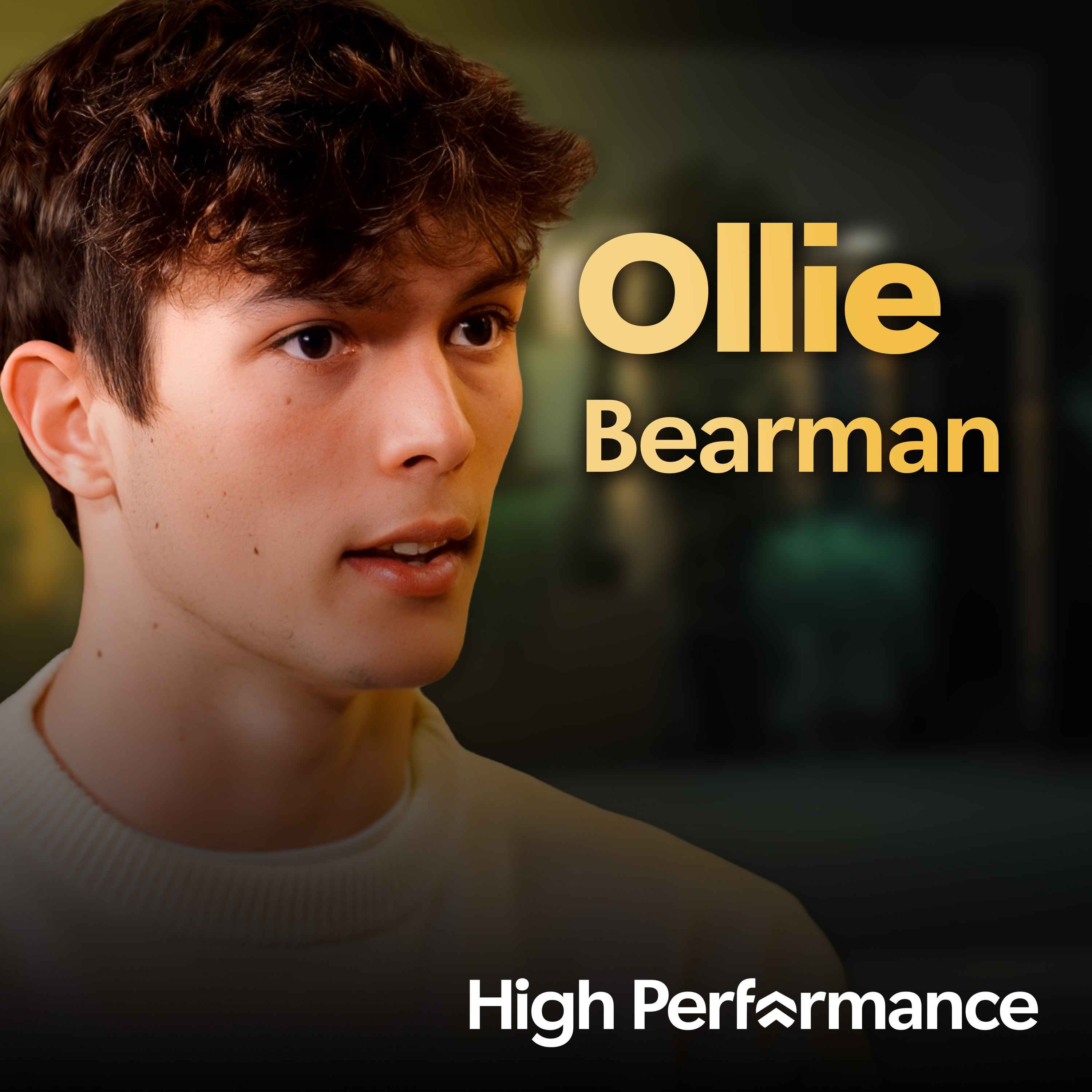
The High Performance Podcast
Ollie Bearman: The 10 Minute Change That Saved My F1 Career (E396)
00:58:52
Loading summary
Transcript195 lines
- [00:00]
Pharmaceutical Advertiser
When everything is moving all at once,
- [00:02]
Olli Caldwell
your workforce, your tech stack, your business, you don't need more tools, you need one solution. That's why Paylocity built a single platform to connect hr, finance and IT with
- [00:14]
Interviewer (David Croft)
AI driven insights and automated workflows that
- [00:17]
Olli Caldwell
simplify the complex and power what's next.
- [00:19]
Interviewer (David Croft)
Because when everything comes together in one
- [00:22]
Sean and Linda (Walmart Business Advertisers)
place, growth comes easy experience.
- [00:24]
Interviewer (David Croft)
One place for all your HCM needs.
- [00:26]
Olli Caldwell
Start now at paylocity.com 1 hi friends,
- [00:31]
Sean and Linda (Walmart Business Advertisers)
Sean, Linda from two black guys with good credit here. Whether you're running a non profit, a school or a small business, Walmart business is here to support your mission. They make it easy to order what you need, from tech and cleaning supplies to everyday essentials, all at low prices and with helpful tools like spend tracking and tax exempt purchasing for eligible organizations. Because when your operations are smooth, your impact can be bigger. Visit business.walmart.com to get started at Charmin
- [00:57]
Co-Interviewer/Commentator (Jake)
we heard you shouldn't talk about going
- [00:58]
Olli Caldwell
to the bathroom in public, so we decided to sing about it. Light a candle, pour some wine grab a roll the soft kind for a
- [01:06]
Interviewer (David Croft)
little me time Charmin Ultra Soft smooth hair wavy edges for my rear so
- [01:12]
Olli Caldwell
let the softness caress your soul Just relax, you're on a roll Let her rip. Charmin Ultra Soft Smooth tear Charmin Ultra Soft Smooth tear has the same softness
- [01:22]
Co-Interviewer/Commentator (Jake)
you love now with wavy edges that
- [01:23]
Olli Caldwell
tear better than the leading one ply brand enjoy the go with charming. If I told 10 year old me what I'm doing now, I think he'd be pretty happy. But when the visor goes down, things change because F1 is cutthroat. One thing I was doing was bottling up my emotions a bit at the start of the year.
- [01:40]
Interviewer (David Croft)
See, what was done especially I think was really difficult.
- [01:42]
Olli Caldwell
I kind of went into that race wanting to prove something with Ferrari. They've believed in me from a very early stage. I was in Formula 4 when they picked me up. They've invested a lot in me.
- [01:51]
Interviewer (David Croft)
Your dream remains when they should drive
- [01:53]
Olli Caldwell
for Ferrari, I think.
- [02:00]
Interviewer (David Croft)
Well, welcome back.
- [02:01]
Olli Caldwell
Yeah, 12 months on, it's nice to be back actually. I feel like I've changed so much.
- [02:06]
Interviewer (David Croft)
Let's talk then about the season just gone because I was thinking actually like when we last sat in here and you were playing on Mario Kart with my son. Do you remember?
- [02:13]
Olli Caldwell
Yeah, yeah. He still talks about that. I think you beat me.
- [02:15]
Interviewer (David Croft)
I'm afraid so. But since then you've actually beaten your teammate over the course of a season. Your fellow drivers voted you the best rookie 2025, you had that brilliant fourth place finishing Mexico. You've now had time to sort of reflect on what happened to you last year. So if I was to ask you to give your rookie season in F1amark out of 10, what would you go for?
- [02:36]
Olli Caldwell
I don't know what mark I'd give it out of 10, but I was happy. Overall, it finished my, like, my best few races in terms of performance were the final four or five, which is really the target of a rookie season. Right. You want to. To learn. You want to make mistakes and learn from them and not repeat mistakes. That's the most important thing. And one thing that I think I did well was I took all of the learnings from the first half of the season, put them into practice and, and really made a difference in the second half. So there's really, when I look back at that year, there's kind of two sides to that season. You can almost split it into pre summer break and post summer break, and I feel like I really made a step.
- [03:14]
Interviewer (David Croft)
Okay, so you've grown up in motor racing. You know, you've been brilliant in the feeder series. You had that amazing debut with Ferrari, and then there you are in your debut season and you are having a tough time in that first half of the season. Can you take us inside what you think was going on with you physically, mentally, the car? Like, what was happening in that period?
- [03:36]
Olli Caldwell
Yeah, there were a few tough races. I went on a run of like four or five 11th places in a row. And that was also really challenging because even if 11th, you know, you're so close. But at some point I was just saying, like, what do I need to do? I'm missing out on the points by one position for the last month or month and a half in a row. And even I had a few races, I think Miami, I finished in the points and got a penalty and took me out. And you're like, okay, it's just not going how you want at this stage, you know. And yeah, those kind of races prior to the summer break were really challenging. I. We were at a time when the car was on a bit of a knife edge. Really hard to get in the perfect setup window. And I just wasn't accounting for that enough. I was trying to push as if the car was exactly where I wanted it and it would work three times out of five. But on those other two occasions, I would make a mistake, run wide, run off track, and make myself look silly, basically.
- [04:44]
Co-Interviewer/Commentator (Jake)
And you said you were asking yourself, like, what do I need to do. Who were you asking that of?
- [04:49]
Olli Caldwell
So I was. I had time off over the. Over the summer break, and that was really an opportunity to talk with my team, as in not the Haas Engineers, but my mental coach, my manager, my physio. Understand what went wrong in the first half. Try and just sit there, everybody. I want you all to go back and say, where could we have improved? You know, where could my physio have done better? Where could my manager have done better? Where could I have done better? And then at the end of the summer break, we all came together and said, this is what we need to put in place to make the second half a marked improvement from the first half of the year. And I think I was just not. It's also a first year thing, you know, in my opinion, I was not. I was not sure what I wanted. What did I want from my physio? What role did my physio have to play and what role did my mental coach have to play even? What did I want from the engineers prior to a weekend, during a weekend to put me in the best situation to qualify the car or to drive the car. And I just wasn't sure. So I needed the those first 10, 12 races to understand, okay, this works, but this doesn't. And basically note that all down, get to the summer break, have a time off to first of all not think about racing and then come back and say, okay, this is the structure we need. This is what we're going to do for the second half. And the second half was such a big improvement.
- [06:20]
Interviewer (David Croft)
So would you give us a specific example of something in that first half of the season where it just wasn't what you needed? You didn't know at the time. But on reflection, when you all got together in the summer, you're like, yes, that is exactly. We all missed that. How did we all miss that?
- [06:35]
Olli Caldwell
Yeah, and it's also those things. You're kind of stepping over the most obvious points and then you think back and you're like, God, it's so obvious. But you have to remember, you know, it wasn't just my first season as a rookie. It was my manager's first season as an F1 driver, manager physio's first season with a rookie F1 driver. It was my mental coach's first season in F1 as well. So we're all learning as we go, and therefore we weren't harsh on each other, but some of the things that we weren't maybe paying attention to, and one thing that I Kind of. Remember, one thing that stood out to me was I was, you know, we were at a stage where the car performance was challenging and we weren't quite able to get the most out of it. It was a bit unpredictable, on a knife edge, like I said. And I was trying everything to try and get the most out of this car. I was working with the engineers on the setup. I was even dipping into the strategy, you know, what tyres are we going to use this session and how are we going to plan the session? Spending no time thinking about, where am I before getting into the car?
- [07:39]
Interviewer (David Croft)
Mentally.
- [07:39]
Olli Caldwell
Mentally. So I would get in the car and be like, wait a second. I haven't thought for one second about my personal objectives. What am I going to do to build up the session? How am I going to approach the session? What's the goal of the session? And so I would get in and just almost be freestyling it and have not planned it at all. So at the summer break, we said, okay, prior to every session, because you need to do all of the engineering stuff. You need to optimize the setup and everything. But if the driver is not in a position to drive the car perfectly, then. Then all of that is a waste of time, you know. So we said, let's do all the engineering stuff as normal, but instead of going from the office straight into the car and just driving out the garage, come back to your driver room. Let's spend 10 minutes and everyone align ourselves prior to driving the car. So the car's goals and then the driver's goals, setting that up.
- [08:35]
Interviewer (David Croft)
Just 10 minutes was all you needed.
- [08:37]
Olli Caldwell
Literally 10 minutes even less. Sometimes, you know, we would sit there, we would. While I was warming up with my physio, we'd be speaking with my coach and we'd say, okay, these are the things we need to look out for. You know, this corner on this track doesn't necessarily suit our car, so let's really build into that one and feel what the car is all about. Also another thing for me, you come from Formula 2, Formula 3, Formula 4, even. You have one free practice and then you go and qualify the car. So the goal of free practice is to put the car on the limit, because the next time you drive it, it's qualifying. So then you get to F1 and you've had that mindset in every single car you've driven, right? And you get to F1 and suddenly you've got Friday, which is all laid back, and you're just learning about the car and there's no competitive session on Friday, right? You're just doing free practice. And it took me a good few races to make that shift and say, actually, Friday is not for me. Of course I'm learning the track and everything. But Friday is about optimizing the car setup. So if you can find out exactly what the car's limitations are while driving at 90% instead of at 100%, do that. You're not taking any risks, then you're not gonna do any mistakes, and then you're in a better place.
- [09:51]
Interviewer (David Croft)
The other thing that I think is interesting with that is when you're a rookie, you're like, well, my mechanics are going to decide if I'm fast in FP1 of Australia, and the media are going to write where I was in that. So you're like, it's not just. It's not just like being any other driver. It's like, these are the first few sessions of your F1 career. And, you know, people are going to be making judgments about you. So that I imagine increased the pressure even further in those sessions a little bit.
- [10:16]
Olli Caldwell
But I don't even think it was a precious thing like Australia. I didn't feel any extra pressure than normal to drive once you're in the car, maybe before getting in the car, but once you're in the car and driving, you're doing what you'd normally do. Of course, the car's a decent amount faster than Formula 2, but. But you're driving the car as fast as your body and mind will allow you at that specific point. But I kind of changed my mindset in the second half and said, FP1 is not about putting the car on the absolute limit like I was at the start of the year in F2 and F3. It is, because you need to know exactly what's going to happen by the time you get to quali. FP1 is about, first of all, wait for the track to get better. You know, you're on a street track, it's five seconds off in FP1, so the lap time is irrelevant. The setup is nowhere near what you're going to be running in qualifying. So the car is totally different. And, you know, you just need to slowly build into it. There's no rush. You've got so much track time compared to what I was used to, and that shift is not something that happens overnight. It's, you know, five years or even more karting. You know, you're doing the same thing. So it's my whole career with one mindset and One way of driving ingrained into me and asking to get rid of it overnight. It's just not. Not possible.
- [11:31]
Co-Interviewer/Commentator (Jake)
Can I ask you about that moment you described, though, where up until you had this realization, when you sit in the car and realize that you've not given yourself that 10 minute buffer to stop and think, how did you control your emotions at that moment?
- [11:46]
Olli Caldwell
I mean, you always have an idea of what you're going to do, but it's. You get in the car and you realize you haven't actually, you know, you've compared the data to your teammate, but you're looking only for differences in car setup. For example, you're not looking at differences in driving style, which is so important. And, you know, then you're going out there and you're not really sure what to do. So you're like, okay, I'm just gonna keep pushing and keep building up. And of course it works for the majority of the time, but it can result in more mistakes. So, you know, and. And I think it can also lead to inconsistency as well. So that was really. Yeah, a big challenge for me to overcome. And it's also. You come from F2 with a team of 12 people, and you come to F1 and the team is almost 10 times bigger just of the people at the track, you know, and you've got so much more things to do that you've got. Your brain is full, there's no capacity left, almost.
- [12:49]
Interviewer (David Croft)
Remember when. When you came on the show last time and we spoke about your route to F1 and those lonely periods where you even questioned, do I carry on with this? Like, I'm lonely, I'm away from home. Did you find F1 lonely in your first season?
- [13:05]
Olli Caldwell
Yes. Yeah. Even to. To more of an extreme because you're often traveling for longer. You're traveling to further places. You're going to places where people don't speak English as well. Sometimes, you know, you can be in Japan or China and the language barrier is there as well. And even just not hearing your own language around you is a bit of a strange thing as well. I'm very lucky that my dad has made a big effort to come to a lot of races for me last year. And that is almost a bit of continuity for me. But especially at the start of the year, I found the travel to be really challenging just because F1 is 10 more races than F2. But those extra 10 are all of the furthest away destinations on the calendar, you know, so all of that extra travel, traveling alone, all the time. And you know, you go from one extreme of being at the track and being with hundreds of people, having no time to dedicate to yourself. And then you get home into your hotel room and it's just you. Yeah, and it's just such a juxtaposition. You start overthinking and it's crazy. I can. Yeah, it's extreme.
- [14:15]
Co-Interviewer/Commentator (Jake)
Take us into that hotel room, you close the door to silence.
- [14:19]
Olli Caldwell
Silence. Yeah. It's interesting, particularly after a tough race. It's a challenge and you'd rather be anywhere else. And there were times like after a difficult race where you just wanted to be with your family or with someone that, that you loved. Like I said, I was very lucky to have my dad at a lot of races, but he couldn't do all of them. And there were some tough events where you wish you had someone to, you know, someone to, to, to be with and, and describe your feelings to, but I guess it's part of the game.
- [14:58]
Co-Interviewer/Commentator (Jake)
So what would you do then if you don't have that?
- [15:02]
Olli Caldwell
Yeah, I mean, generally I was. One thing I was doing was bottling up my emotions a bit at the start of the year, so I found that quite challenging. And then I would get home and it would also be empty, you know, and when at the start of the year I was just in Monaco by myself with my girlfriend and my family wasn't living there. So I was also getting home and almost just waiting to go to the next race. And I felt like I was just like life was revolving around racing and it was non stop and I found it quite a lot at the beginning as well.
- [15:37]
Co-Interviewer/Commentator (Jake)
So what have you learned to do to be able to remedy that?
- [15:41]
Olli Caldwell
So I spent a bit of time with a coach at the start of the year once I realized that I was not overwhelmed, but struggling a bit with, I think the juxtaposition between being so busy at the track, coming home and being having nothing to do, nothing in your schedule, nothing. You know, it's just one extreme to the other. And I was struggling to kind of cope with that. And one thing that I've really understood or paid attention to this year was to be grateful and to take a step back because I think perspective is important as well. I mean, times can be tough, but at the end I'm, you know, if I told 10 year old me what I'm doing now, I think you'd be pretty happy, you know, and putting things into perspective and appreciating everything around you I think is an incredibly important attribute.
- [16:39]
Co-Interviewer/Commentator (Jake)
So how do you do that? How do you remind yourself to stay grateful and to have perspective?
- [16:46]
Olli Caldwell
I think I'm always aware of how fortunate I am because I'm not here just on talent. I mean, there's a lot more talented drivers in the world than the 20 or 22 of us in Formula One. Timing is such an important thing, so I understand that. I don't take it for granted that I'm an F1 driver. It's not that I'm here now, that it's a forever thing. There's no guarantees, and that also keeps me motivated. So I think that's the way I try to remain grateful. And, you know, I would be cycling a lot to try and just give me something to do, you know, it was great training, and it gets me around, and it takes a few hours, you know, would get me through the day. And, I mean, you just take a step back, look where you are. You're in the sun, there's mountains all around you. I mean, what a great life. How can I complain in that scenario?
- [17:45]
Interviewer (David Croft)
But it's also a great lesson, I think, in actually what life is like, because everyone will have an opinion of F1 drivers from the outside. Right. It looks glamorous, looks well paid, looks fun, looks permanently positive. You also would have had a view of what being an F1 driver would have been like two or three years ago when it was your greatest dream, and then you're in it and you're
- [18:02]
Olli Caldwell
like, oh, it's not quite what I. Yeah. Chalked it up to me.
- [18:06]
Interviewer (David Croft)
Is this what it is? I didn't think of. Are you particularly close to anyone else on the grid?
- [18:11]
Olli Caldwell
I would say more the rookies, the more, you know, the people who I was moving into F1 with. So Gabriel, for sure, I'm pretty close with. He's also my neighbor, so we live. We live pretty close.
- [18:24]
Interviewer (David Croft)
Could you talk to him about how you were feeling?
- [18:26]
Olli Caldwell
Not really. Not really. I. I tend to bottle things up, like I said before, so I wouldn't really talk about my feelings to many people, first of all, which. Which I understand it's a weakness of mine, but I think to some extent, everyone's going through a similar thing, because you look at F1 from the outside, what a great life. It's amazing. And of course, it is amazing. I'm not denying that. But there's so many more challenges in it, and the pressure, the attention as well, and the fact that everyone has such a short memory. You know, you can have a great race two races later if you've had two bad ones, then you're, you're back at the, at the start, you know, so those things are challenging. I didn't really ever. It's also kind of, you know, at the end, I see Gabriel as a great friend and I have good friends in F1, but I don't think it's. I don't think you show signs of weakness to your competitors. You know, if you turn around and say, you know, I'm struggling with this, it's just not in my. I don't think I would do that in my nature.
- [19:36]
Interviewer (David Croft)
This is the first challenge, right? The year one. Internal loneliness and internal struggles. But if you're in a title fight, the challenges will be just as big, but very different. If you've, you know, if you're running out of time and you're going to lose your seat at the end of the season again, it'll be a very different challenge. If you've got the biggest teams fighting over you, another different challenge. I do think, like, there are drivers that have been through it all and I do think, you know, if you went to someone who was at the other end of their career and just said, look, can I just have you as a mentor? Can we, Can I just share with you some of the things that I just don't have the answers to? I do think you'd be surprised that they would turn around and say, of course you can.
- [20:09]
Olli Caldwell
I agree, actually. I, I have heard a lot of great things about the people who, like you say, are on, on the other side of their career. They've had the successes, the championships, the race wins. I've heard Lewis, how much advice he was giving to, to Isaac at the start of the year. Fernando and Gabriel as well, you know, it's. It's his manager and, and I actually, it's. It's nice that the drivers on the other side, because they were once on our side, you know, coming into the sport, looking up at all these big stars and racing against them. It's nice that they take the role of, you know, I'm. If you ask for help, I'm going to give it to you because I've been in that scenario and I know how it was. I think it's a really important quality.
- [20:49]
Interviewer (David Croft)
And how did that come up, the Isaac Lewis thing? Did they know each other before or do you think Isaac just literally went to him and asked?
- [20:54]
Olli Caldwell
I think he actually went and spoke to him, which is step one. Right.
- [20:58]
Co-Interviewer/Commentator (Jake)
Who would you like to approach?
- [21:01]
Olli Caldwell
Definitely the guys with more experience. Probably Fernando, actually. I feel like he's been through it all, you know, he's. He's so highly rated on the grid by everyone. I've listened to his podcast when he sat here and heard, you know, a lot of great stories. And he's been through hardships as well. You know, he was at Ferrari and I think some of those years were some of his best years in terms of his performances, but. But the car wasn't quite enough to win. And I think he's been through it all, you know, and that is a great mentor to have.
- [21:33]
Co-Interviewer/Commentator (Jake)
What question would you ask him if he only had one?
- [21:37]
Olli Caldwell
What advice would you give to 20 year old Fernando? Because that's my position. You know, I'm new to Formula one. I'm going through all of these experiences for the first time. What does Fernando regret? What does he wish that he did or knew back then? I think those are important questions. If he's watching, he can.
- [21:57]
Interviewer (David Croft)
Yeah, exactly. Come on, Fernando, send it in. I'll tell you someone who I think would be brilliant for you, actually. Carlos Sainz.
- [22:02]
Olli Caldwell
Yeah, mate.
- [22:04]
Interviewer (David Croft)
You know him very well. Yeah, so nice, so friendly. You know, he's already looking to the future. He loves leaning down and lifting people up. He's been through a great time at Ferrari. He's been through a really bad time, as you know, at Ferrari. He's raced in those rookie seasons up against Max Verstappen. He's had the pressure. He's now the other end. He's trying to lift a team up. I think there'd be a lot of value, actually.
- [22:24]
Olli Caldwell
I rate him very, very highly. I mean, when I was at the, I was a reserve driver with Ferrari and I was listening in on all the debriefs and the detail and the, the way he's able to describe what he feels in the car is incredible because it's one thing feeling it, and often I was finding, okay, I'm feeling the same thing as this guy or Esteban, for example. But Carlos was able to describe it to the engineers in a way that they could improve the car. I think that's such an important quality to have. And one thing that I've improved a lot through the year and definitely I'm nowhere near the point where I need to be. But it's a big benefit.
- [23:06]
Interviewer (David Croft)
Silverstone especially, I think was really difficult. What was IO like after that race after you and your teammate obviously collided? That's like a. Another big. No, no. Along with crashing under red flags. It's like there's two things you don't want to do in a race weekend. It's those two things. Right.
- [23:20]
Olli Caldwell
Two things you never want to do. Yeah. Take them both off in, in two days. No.
- [23:25]
Interviewer (David Croft)
your home race.
- [23:26]
Olli Caldwell
Exactly. The best place to do it. Right. No, it was a challenging weekend for sure. And it was the main frustration, I think, especially from his side, particularly after the FP3 grid penalty was in that session. I think we were fifth fastest. So we were really quick that weekend. We bought an upgrade to the car and it was working. You know, we were, we were incredibly fast. And then I do something like that going into the pits. Absolute throwaway for the weekend, you know, totally unnecessary and stupid. Absolutely stupid. And that is the annoying thing for myself and even more for someone like him, watching, seeing the potential, seeing what was possible and throwing it away over, over something. So, so, you know, such a nothing event that weekend was, was a really, really challenging one for me. After that, I, I, we had a bit of time away and I was able to, to really get away from, from racing. I went on on vacation for a week and I think that came at a great time because it was a tough period of the season for me, especially being the home race.
- [24:37]
Interviewer (David Croft)
There's a lot of psychological overwhelm in a Formula one car.
- [24:40]
Olli Caldwell
Yeah. And that, that's part of it. You know that generally on the, in lap of FP3, you push the pit entry to prepare for qualifying, to prepare for the race. Sorry, but under red flag, don't push the pit entry. And it's just those things that are unnecessary and I, I'm harsh on myself. I don't think that's overly harsh. That that was the moment that I look back, if there's one moment that I could have taken away from that season, it would have been that. So for me, it was the number one worst point or worst because it
- [25:10]
Interviewer (David Croft)
was all on you.
- [25:11]
Olli Caldwell
It's totally my fault. It was totally unnecessary. I didn't gain anything by doing it. There was no, you know, if you think of the risk reward ratio, it's purely negative now under every scenario. And even, you know, even pushing the pit entry for the sake of gaining a few tenths of a second, I don't see the benefit. You know, so back then I was trying to gain every little tenth of a second and if I could push the pit entry a little bit more, it meant I could maybe come out just in front of the guy in the race. So I was saying, okay, I'm going to be absolutely on the limit. I want to arrive at 80 at the line, no earlier. And that's the risk that you take by doing those things, you know, and it's just scaling back those things because it's unnecessary risk and for very small reward, particularly on the red flag.
- [26:00]
Co-Interviewer/Commentator (Jake)
And yourself and Esteban had a clear the air meeting after that. As somebody that you said bottles things up naturally. How did that meeting go?
- [26:10]
Olli Caldwell
Well, we had slightly different opinions on what happened, but that's normal. Given we hadn't looked at the incident, you know, we'd just taken our perspectives from the car. I think we'd probably still disagree on the incident, given our views, even though there's no emotion anymore. We've looked back on it, but I think that was the best way to handle such an incident there in that race. And I think also I kind of went into that race in a way wanting to prove something, having done such a silly error the day before. So I was pushing like an animal and not thinking about the bigger picture. And that's something again. At the summer break, I always try to keep in mind the bigger picture. You know, is this overtake worth it? You know, we're fighting for whatever position we're fighting for. What's the risk, especially with your teammate, totally unnecessary. Those are mistakes that you make once and you vow to never do them again.
- [27:14]
Interviewer (David Croft)
And what sort of leader are you in those situations? Like, how does he run a meeting like that?
- [27:20]
Olli Caldwell
Very well, I think. I think there's plenty of ways that he could have gone about it. He could have walked in there and started shouting at us for the way that things panned out. But his first, you know, goal was to get an understanding of our views. And that's really important. You know, he sees it and he, of course, I'm sure, had his view, but he hasn't heard the full picture. So there was no prejudice. It was simply. Let's talk about it. Clearly, we didn't come to agreement at that time, but before the next race, we were all in agreement again. And it's so important to remember that his job is about making this team as fast as possible. So if we're fighting for P6 and P7 and crashing and finishing outside the points, he doesn't want us in the team. You know, he wants two people who are going to do it well, and that's the most important thing. And despite that incident, we continue with a good relationship for the rest of the year. And that's mainly thanks to the way that it was handled by our boss.
- [28:19]
Interviewer (David Croft)
We'll be right back after a quick word from our partner
- [28:25]
Workday and Creon Advertiser
Could AI help you do more of what you love? Workday is the next gen ERP powered by AI that actually knows your business. We help you handle the have to dos so you can focus on the can't wait to do's. It's a new workday.
- [28:39]
Sean and Linda (Walmart Business Advertisers)
What's up? It's Sean Linda from two Black Guys of Good credit. If Managed supply runs is still on your to do list, here's your science upgrade. Walmart Business has the tech tools and services that make it ridiculously easy to stock up for your office or team. Think scheduled deliveries, multi user accounts and even IT setup bonus. With a Walmart Business plus membership you get free shipping, spend analytics and 2% rewards. Join the smart way to shop at business.walmart.com Terms apply Lunch was great, but
- [29:11]
Workday and Creon Advertiser
this traffic is awful. Can we stop at a bathroom? Are you alright? I keep having stomach issues after eating like diarrhea, gas and bloating, abdominal pain and sometimes oily stools. Sound familiar? Those stomach issues may actually be a pancreas issue called exocrine pancreatic insufficiency or epi. Creon pancrelipase may help manage epi. Creon is a prescription medicine used to treat people who can't digest food normally because their pancreas doesn't make enough enzymes.
- [29:38]
Pharmaceutical Advertiser
Creon may increase your chance of fibrosing colonopathy, a rare bowel disorder. Tell your doctor if you have a history of intestinal blockage or scarring or thickening of your bowel wall, if you are allergic to pork or if you have gout, kidney problems or worsening of painful swollen joints. Call your doctor if you have any unusual or severe gastrointestinal symptoms or allergic reactions. Take Creon as directed by your doctor and always with food. Do not chew capsules as this may cause mouth irritation. Other side effects may include blood sugar changes, gas, dizziness, sore throat and cough. These are not all the side effects of Creon. Call 800-63391. Visit creoninfo.com to learn more. That's C R E O-ninfo.com I'm asking
- [30:06]
Workday and Creon Advertiser
my doctor about EPI and if Creon could help.
- [30:13]
Interviewer (David Croft)
And you know, we've spoken to F1 drivers who've talked about this moment and said actually the best thing that happened was when we hit each other because we both had to accept responsibility. We both had to try and understand each other a little bit further. We were like weirdly brought us closer together. I don't know whether you experienced that With Esteban.
- [30:30]
Olli Caldwell
Yeah, I think, you know, like I said, I think we still have slightly differing opinions, but what's clear and what we can both agree on is that it was, we both have a part to play in that incident and it was unnecessary. Those are two points which are, you know, unarguable. And it, I think it made us see the bigger picture. It also made me understand a bit more. In F2 and F3, your teammate is important. You still want to beat them and it's one thing, but in F1, you're actually working together with your teammate to improve the car. You know, your feedback directly impacts the next upgrade on the car, the future developments of the car, what direction do we take? So it's a very different role being a teammate to a guy in F2 versus F1. So that collision really made me appreciate how important it is to have a good relationship with a teammate and never to lose that. I think the last thing you can do is have a bad relationship with your teammate. It's game over after that.
- [31:28]
Co-Interviewer/Commentator (Jake)
So what would you advise if anyone was listening or watching this, Holly? That maybe it is not in Formula one, but in their own world where they need to cooperate better with somebody to get the best out of each other.
- [31:40]
Olli Caldwell
Yeah, I mean, as drivers, we're competitive and with that brings a bit of stubbornness. And of course, like I said, we were biased in our own ways, but what we agreed on was the things that it was unnecessary and that we can't have a bad relationship. You know, we needed a good bond to then continue to develop the car correctly. If we start to create a split, we're not going to be as efficient. You know, we need the engineers to work together and for that to happen, the teammates need to have a good relationship. And for me, it's non negotiable that you have a good relationship with your teammates. So you kind of have to put your pride and ego to the side and clear the air. I think you have to have some tough conversations, ones that you don't maybe want to hear, ones that maybe they don't want to hear. But you have to, like I said, put your biased view to the side as much as possible. Say, okay, I could have done a better job in this sense. And by coming clean and making it clear that, that you accept wrongdoing, they do the same as well. In. In that situation, be vulnerable.
- [32:51]
Interviewer (David Croft)
Yeah, you've grown up so much in the last year and a half. This is like talking to a 30 year old, not a 20 year old.
- [32:59]
Olli Caldwell
10 years in there in 12 months.
- [33:00]
Interviewer (David Croft)
Exactly.
- [33:01]
Olli Caldwell
That's. Exactly.
- [33:02]
Interviewer (David Croft)
That's the title of this episode. I grew up. 10 years in 12 months.
- [33:06]
Olli Caldwell
We want to talk about Mexico.
- [33:07]
Interviewer (David Croft)
We want to talk about amazing moment and your incredible end to the season. But when I don't think we're doing justice to this part of the season and really telling your story, unless you just share with us your emotions as you drove away from Budapest and the Hungarian Grand Prix before the summer break, with all of the things that we've discussed kind of in your head still, I imagine, still all bottled up, still inside you. What was that journey away from the Budapest circuit like?
- [33:32]
Olli Caldwell
Yeah, so we came, I think Budapest was directly after Spa, and Spa was. Was a tough weekend where I scored points in the sprint race. In the main race, we had a problem with the engine, which is totally out of our hands, and it put us out of a top 10 position. And I scored 11th again for I think the fifth weekend in a row of the fourth. So, you know, it's just another one of those occasions where, okay, this time the weekend went better from our side. We did things mostly right. And there was another thing out of our hands that took us away from, from the top 10. And so we get to Budapest, last race before the summer break. And I think in that scenario I had this. I had this kind of feeling or motivation to, okay, I'm finishing. P11. I need to push a bit more to finish in the top 10. You know, I arrived in Budapest and I think I remember after the first round in FP1 that the driver coach came on the radio and said, okay, turn four, you're. You're in the top three in terms of the minimum speed in that high speed corner. And I was like, okay, well, you know, clearly I'm pushing. But I kept going, I kept pushing and I ran wide and I damaged the floor in FP1. And, you know, then it has to be. It was. It was damaged and had to be repaired. That kind of puts you a bit on the back foot for FP2. And then we got into FP3. I did the same thing again, damaged the floor in turn four. And I just had this mindset. I'm not scoring points as I'm. As this is going, I need to push a bit more. Keep pushing a bit more. Keep going, keep going. And just these small errors kept creeping in and I did another one in the race and damaged the car again and we had to retire. And, you know, that was the worst possible end to the first Half of the year that was already a challenging point for me because whatever I was doing, I was P11, you know, and then I tried to give it that little bit more, that 1% more, and it finished like that. And basically I just left the circuit with question marks everywhere. You know, it's not going to plan. This is not how I intended to finish my first half of the season. I'm not seeing any progression here and it's just challenging. And I had to have a really tough conversation with myself and a tough conversation with my, my mental coach. And we said, look this, if we continue, like at that point I was last in the championship as well of all the drivers that have scored points. So there was people below me, but they'd scored zero points. And you know, we sat down and we were like, look, this, this isn't going to, this isn't going to work. You know, you'll be, you'll be packing your bags if you continue driving like this and making these decisions.
- [36:26]
Interviewer (David Croft)
You genuinely feared for your future at that point.
- [36:28]
Olli Caldwell
For sure, for sure. Because F1 is cutthroat, you know, and I had four or five races where it just wasn't working. I had this stupid Silverstone thing I had this weekend in Budapest and you don't see progression, you know, so the people deciding my future don't see improvement. And what do you do when you don't see improvement? You get rid, you know, so that start to the summer break, I was like, okay, I really need to tie my shoes up and get this together, you know. And that tough conversation really woke me up and made me understand first of all how cutthroat this sport is. And second of all how with a small change at the end, I didn't need to change, you know, flip my world upside down. I just needed a bit of structure and then I could perform at a level which was, which was much higher.
- [37:24]
Interviewer (David Croft)
Brilliant. I've got something to show you. By the magic of modern technology. Go on, have a look.
- [37:32]
Olli Caldwell
Oh, there we go. What I regret for sure was not to enjoy more my time, my career, you know, I know that I'm at the end of it and there is a new life, you know, in few years time for me without driving, I would tell myself, even my 10 year old self the same because you're always looking at the next goal, you know. I can hardly remember what I did after my first F1 race because I was straight back home and straight on the sim the next day.
- [38:04]
Interviewer (David Croft)
Fernando said to us he has no memory of winning The Formula one world title.
- [38:09]
Olli Caldwell
Really?
- [38:09]
Interviewer (David Croft)
I said, what did you do afterwards? He goes, I have no memory. I have no memory of that moment. I mean, imagine.
- [38:13]
Olli Caldwell
So sad. Yeah.
- [38:14]
Interviewer (David Croft)
On to the next thing.
- [38:16]
Olli Caldwell
Yeah, it's, it's something because there's all you're always looking at. The next thing you know, you win your first F3 racing like, okay, I need to win another one now.
- [38:23]
Co-Interviewer/Commentator (Jake)
Yeah.
- [38:24]
Olli Caldwell
There's no time to sit back and think, wow, how far have I come in the last however many years? You know, I would give myself that advice even though I'm 20, you know,
- [38:33]
Interviewer (David Croft)
so well, I think it's great advice.
- [38:34]
Olli Caldwell
I hope I don't turn, you know, get to the later stage of my career and still have that advice for myself.
- [38:40]
Co-Interviewer/Commentator (Jake)
So how are you doing it then? Because you recognize in it you sound like you've had some pretty brave conversations with your inner circle, your physio, your mentor, coach, your manager. To create boundaries, to learn how to create that buffer zone before you get in the car. How are you creating space to just enjoy what you're doing?
- [39:01]
Olli Caldwell
I, I think it's, it's about perspective again. I, I always, I, I don't wish away the moments that I'm in the car ever because that is my number one passion in, in life. So I, I try my very best to savor every single lap because I, I certainly don't take it for granted. I know it's not, it's not a guarantee. And this is exactly what 10 year old me was dreaming about, you know, So I think by savoring and putting things into perspective how lucky I am, I try to enjoy things.
- [39:34]
Co-Interviewer/Commentator (Jake)
You've spoke about that race in Mexico though, where you said it was the most pressure you've ever felt in a race when you had Lewis and Max.
- [39:41]
Olli Caldwell
When Max was behind me.
- [39:43]
Co-Interviewer/Commentator (Jake)
Right. So how do you get to savor a moment like that when you feel in that acute levels of pressure?
- [39:50]
Olli Caldwell
Well, I was thinking like, this is my first time I've gone side by side with Lewis, with Max, with, you know, even George and Piastri, all of these drivers who, some of them I've grown up watching. You know, Max has been on TV even now, 2016, I was 11. So every F1 race I can remember has Max in it and certainly Lewis as well. So I'm racing with these guys side by side. I had Max behind me. I had goosebumps driving around. I was like, how cool is this? This is insane. This guy is the best F1 driver ever. And he's chasing me Down. You know, he's putting me under so much pressure. And I was like, this is what I'm living for. This is my life.
- [40:33]
Interviewer (David Croft)
But that shows an immediate change in your psyche because I reckon earlier in the season you would have been like, oh, I can't let him get past me. People are going to judge me. It's going to be a bad moment. Whereas suddenly there's a bit of freedom there. You're enjoying the fact that you're getting chased down by Max.
- [40:45]
Olli Caldwell
That was amazing. I mean, I was side by side with him and that feeling in your stomach is that's what we live for, right? That's awesome. It was incredible.
- [40:54]
Interviewer (David Croft)
So you're in this really unique position where you have had Max Verstappen in your wing mirrors trying to get past you. What does Max Verstappen do in those situations? What are you experiencing? That sounds like it's kind of F1 wheel to wheel racing xxx like it's just multiplied in that situation.
- [41:13]
Olli Caldwell
I don't think it's that he does anything necessarily differently. And Mexico is a specific track because of the altitude that you can't necessarily follow that close because your car overheats. But Max found the way. What was the way?
- [41:25]
Interviewer (David Croft)
What did he do?
- [41:26]
Olli Caldwell
It's not that he was putting me under any more pressure than any other time. You know, when I went side by side with him, he was just another car on the track. But you know who it is and you know that the way he holds himself is differently to the others. You know how aggressive he is. You know that if you give him an inch too much, he's going to take it and he's not going to let you get away with even the smallest mistake. So it's not that he did anything differently. It's just the perception of Max is. It's Max, he's the best, you know, it's him, you know, And I was side by side with him and I was like, normally I would have, you know, tried to open up that corner to prepare myself the best exit. But I said, no, I have Max next to me. So if I give him a bit more space on the entry, he's going to take it and overtake me. So I don't have that opportunity. I need to literally be as close as I can to don't give him any more space than I can.
- [42:23]
Interviewer (David Croft)
So interesting. So when you are racing with him and people talk about him and you've already said the best ever, like, do you see why he's so good when you're racing against him or not?
- [42:32]
Olli Caldwell
Well, I mean in that situation
- [42:35]
Co-Interviewer/Commentator (Jake)
it
- [42:35]
Olli Caldwell
was one corner that we were side by side. But I really wish to race against him more and tell you so.
- [42:45]
Co-Interviewer/Commentator (Jake)
Yeah, I think this is amazing. To go from being a rookie to racing against these giants. What do you think is the biggest step you need to make to see yourself in the same category as them?
- [43:02]
Olli Caldwell
I think working on some areas of my game are still needed and some of that comes with experience, but some of that also comes with being aware and having these conversations with yourself. So I think some aspects where I want to improve, for example, emotional control, I think that's quite an important point and a lot of people say that I'm this measured person and quite in control of my emotions, but when the visor goes down, things change. That's my, my feeling and I think remaining level headed is a super important
- [43:46]
Co-Interviewer/Commentator (Jake)
quality to have with that.
- [43:48]
Olli Caldwell
So I'm, I think the first thing is talking about it. I think that's the first step to understanding that you have a weakness and you want to improve it. Because you know, if someone would ask me where, where's your weakness? I think a bit, it's also a bit of an athlete, a competitive person thing. You're like, where is my weakness? You don't even think about having a weakness, you know. And I think step one of fixing it or working on it is to understand it's there, which, which I'm aware of. And then the rest is, is, is basically noting it down, understanding what was the circumstance that changed what happened in my periphery that caused this emotional change from within the cockpit. And when you can see all these, you know, case studies and these different versions of me, this is when I got angry or this is when the emotions got in the way. There is a bit of a pattern when, when, when people do me wrong, you know, if someone pushes me off the track, I can, I can get the red mist a little bit. And then you make silly errors, you know, and it's always when that happens to you, I'm trying to tell myself, okay, remember this has happened. This is your normal response. This is not a healthy response. And that's not the best, that's not putting you in the best scenario to respond. You know, you were really honest about
- [45:12]
Interviewer (David Croft)
your emotions after Hungary. I'd love to get your honest emotions about Mexico. And if those early races were chipping away at your self belief and your confidence, what did those final few races do for you? Particularly that P4 in Mexico.
- [45:26]
Olli Caldwell
Honestly, back to the first point I never lost at any point my self belief or self confidence. I always understood that this was a tough period. This isn't me, this isn't what I'm capable of. I have the talent to get through this. I think that's also an important point of getting through tough moments. But I always, at no point did I ever doubt my ability or my belonging in Formula one. That never was a question mark in my head. But Mexico was great. It came at a point. So end of the year, it's been a really tough period. It was a double header between Austin and Mexico. Round 20, I think. Mechanics incredibly tired, the engineers incredibly tired as well, and myself. And we just bought an upgrade on the previous race. So that was the last upgrade of the year, the last upgrade out of anyone. And it was a big risk to take for our team. And that weekend, P4 crossing the line, it was the best feeling of my life. It was such a proud moment getting out the car and seeing how much it meant to my family, but also to the mechanics, to the engineers. For us it was a race win, a team like Cass. And it reminds you all of those early mornings, getting up at 5am to go to the CART track, to traveling across the world, you know, leaving your family to move to Italy. All of those moments flash back through your head and you're like, this is why, this is why I love this, this life.
- [47:01]
Interviewer (David Croft)
And what was the conversation with your psychologist and your team, your personal team like after that having gone back to the conversation you had over the summer?
- [47:09]
Olli Caldwell
Yeah, I mean, so actually my, my manager wrote down a few of his like predictions at the summer break, you know, given that, okay, we're going to implement this thing, let's see, what can we achieve. I think he wrote down a podium. So I was just one, one spot away, unfortunately. But it was nice to see. And then we could kind of use that, that weekend as a reference almost because everything went well. I missed FP1 that weekend, which is tough as well. You know, I gave the car to a rookie, which is strange to say.
- [47:41]
Interviewer (David Croft)
He's bloody rookies.
- [47:42]
Olli Caldwell
I know, so annoying. And yeah, so I, that was another challenge and everything just went well. We worked well through qualifying. I maximized the car performance, even if we were still not that quick in quali. And, and from there, even if it wasn't necessarily my, my best single performance because actually I think my best performance came in, in Brazil the weekend after. Even if it wasn't my single best performance, it was a great example of, okay, we've implemented this structure, and that's what we can do when we achieve exactly what I'm capable of. And. And that's really good.
- [48:20]
Interviewer (David Croft)
Well, we've got something to gift you. Those.
- [48:24]
Olli Caldwell
Those.
- [48:25]
Interviewer (David Croft)
That's David Croft's commentary notes.
- [48:27]
Olli Caldwell
Wow.
- [48:27]
Interviewer (David Croft)
That he has for each Grand Prix. And those are his Mexico grand Prix notes.
- [48:32]
Olli Caldwell
The red. That is so cool. Thank you so much. That's really, really so nice.
- [48:40]
Interviewer (David Croft)
It's a pleasure, man. It's a pleasure. Listen, talking about a little bit more. We can't talk to you and your F1 career and your future without talking about Ferrari. When you're in the position you're in, where you're racing for a team and you're really well settled at Haas and loving it, but you remain a Ferrari driver. How much of your communication is still happening with them throughout good and bad times?
- [49:01]
Olli Caldwell
Yeah, the dialogue remained very open throughout the year and will continue to stay like that as long as I'm affiliated with Ferrari. And I think it was very important for me to make clear what I was going through at Haas. There are some differences between a team like Ferrari and Haas. You know, the scale is on a different level. And, for example, coming from having done that race in Ferrari and having what is a lot of support, you know, you have some extra staff in the team and some extra help in a way, and then you go to Haas, it's a bit of a different structure. And especially as a rookie, I felt like I was having to learn on the job a bit more than a team like Ferrari. And that's a given, given the size of the teams. But I felt like I had to make clear the struggles that I was going through with Haas to Ferrari to Ferrari, because you see the result and that doesn't tell the full story.
- [49:58]
Pharmaceutical Advertiser
Not.
- [49:58]
Olli Caldwell
Not even half of it, you know, so that was important. And then, of course, what they want, that. What they tell me is what they want to see from me, where they want to see me improve, what. What they're looking for, which is what you can imagine, just drive a bit quicker every weekend.
- [50:16]
Interviewer (David Croft)
Are they looking at results, do you think? And you're trying to get them to look beyond the results?
- [50:20]
Olli Caldwell
No, no, no. I think they take a very good view of everything and they're in contact a lot with. With Ayala as well. So there's always a good dialogue.
- [50:29]
Co-Interviewer/Commentator (Jake)
Was there anything that surprised you that they were asking for from you?
- [50:34]
Olli Caldwell
No, nothing that I was not expecting. It was just. There was some tough moments, and it was just important for me to get across what I was going through. Because, you know, of course, being with a bigger team is a huge challenge. A team that can fight at the front, you're expected to perform on any given day, the pressure is much higher. But, for example, they have a bit more structure in place to help you learn and grow. So there's pros and cons to both, but I was just trying to make them understand the issues that I was going through. And, yeah, of course, they want me to do the absolute best at all times. They want me to be ready in a moment's notice, and that's my job, to try and be that.
- [51:19]
Interviewer (David Croft)
And your dream remains one day to drive for Ferrari in Formula one?
- [51:22]
Olli Caldwell
Yeah, of course, they've trusted me, first of all, with their car last year, two years ago now. But they've also believed in me from a very early stage. I was in Formula 4 when they picked me up. They've invested a lot in me, and my dream is to put the red suit back on and be in a red car one day. But I also think that this year is such a great opportunity with Haas. With the new regulations, I feel like we can do a lot. So, first of all, that.
- [51:49]
Interviewer (David Croft)
Let's talk about that then, because as much as it's a massive technical challenge creating these new Formula one cars, it's also a huge opportunity for Haas to find a little something. You've driven the car, albeit at the very start of pre season. What were your initial feelings when you were behind the wheel of that car?
- [52:08]
Olli Caldwell
Yeah, first of all, I agree it's a great opportunity, and it's also the first time I've been involved in a car from the ground up. It's our car, it's mine and Esteban's car, as opposed to inheriting a car with tendencies that previous drivers were asking for and things. So this is to the best of their ability, what. What we've asked for, you know, and that's really cool. Also, we've seen the car, from the first designs to the wind tunnel model six months ago, and see it develop through that process is really, really cool. And it's been my first experience doing that. And then finally, we get to drive the car. I pulled out the pits for the first time in it in Fiorano in Italy, and that's really, really special. We got to do the shakedown there, and we have a lot of Haas designers based in Maranello. So actually, for the first time ever, they were able to see their creation, their baby, pulling out of the pits. And I Gave them a big wave as I went past. It was amazing. But actually, you know, given these regulations, the size of the regulation overhaul and the difference and you know, the engine side of things, which is a lot more complicated now, I was expecting it to be a bit, to feel a bit more different, a bit more, a bit less refined and things, but I was positively surprised by the drivability straight away. It was good. Of course we have less downforce with this year's car, but it's still F1 for sure. It's still neck breakingly fast. So it's really fun to drive. And like I said, we're very early stages. It's a very immature car and we're going to make big developments throughout this year and in future years as well. But I'm just really proud to be at the real forefront of a project and like you say, great opportunities.
- [53:54]
Interviewer (David Croft)
So what does success look like in 2026?
- [53:57]
Olli Caldwell
I think building on what we did last year, last year was our highest points tally in that era of the ground effect era. And if you look at our relative gap to the leaders, the closest race in terms of gap was Abu Dhabi. That was our best race in terms of car performance in the last five years. So it means that we've developed correctly, we've understood our car, the wind tunnel models have lined up well to the real car and we've learned and grown over time. I think success this year will be continuing to fight in the midfield. I think we were middle of the midfield, even back of the midfield at the start of the year and slowly worked our way up. And I think success would look like starting from where we left off in Abu Dhabi.
- [54:41]
Interviewer (David Croft)
And how much attention do you pay to the Ferrari rumors about you could go into that seat halfway through 2026 or if they struggle again, you might get a call earlier.
- [54:50]
Olli Caldwell
Zero, nothing really because I think I've been lucky in a way to have gotten that call two years ago to do the race. And ever since then there've been those rumors and those things coming out. So it's kind of just normal. First of all, I don't even see them because I don't, you know, you have to go on Autosport or whatever to find them. So I don't go out looking for them and you know, that's the best way. My focus is not on those, it's on the current project and hopefully we can do good things in 2026.
- [55:25]
Interviewer (David Croft)
I love it. Have you got time for a few very quick fire questions? Of course, after that amazing season last year. What do you look for now as your three non negotiables for a successful Formula one career?
- [55:37]
Olli Caldwell
Alignment is very important.
- [55:39]
Co-Interviewer/Commentator (Jake)
Yeah.
- [55:39]
Olli Caldwell
So having a clear idea of the goal, not only from my side, also from the team side of every time you get in the car, what is the target of this session? Everyone needs to be clear on what their target is, otherwise things get missed. Discipline, I would say, is also critical to continuing to build on, you know, what you're doing. And last but not least, I feel like it's a vague term, but maturity is somewhere. I came a long way last year, you know, I learned how to become a driver where you're leading the team in a way. You know, you're developing the car. So having feedback and being sure of your feedback is critical. And maturity is an important word.
- [56:32]
Co-Interviewer/Commentator (Jake)
What's the best piece of advice you've received and why?
- [56:35]
Olli Caldwell
I think one thing that I spoke very openly about with my mental coach at the start of this year was to make sure to appreciate all of those moments. And there were times, like I said, that I was wishing away, for example, a week off. I would. I would hate the sight of a week off because I'd have nothing to do, you know? And I think as time goes on, I've learned to appreciate those moments, appreciate the quiet, appreciate the silence, appreciate the time alone more. And I feel so much happier in myself to have taken that advice.
- [57:11]
Interviewer (David Croft)
Great. And finally, what is your one bit of advice to someone watching this now if they're searching for their own version of high performance?
- [57:18]
Olli Caldwell
I would say dealing with pressure. There were times where I would get. I would have those butterflies or that feeling of pressure, and it would keep me up at night, or it would make me start overthinking and getting in my head a little bit. But now I've come to realize that that feeling, those goosebumps, those butterflies that you feel before a race or before a big moment, that's a privilege. I mean, how lucky are you to be in a scenario where you're under pressure like that? And when I get that feeling now, I. For me, it has connotations to good things. With pressure comes opportunity, and. And for me, that's a really critical point.
- [58:03]
Interviewer (David Croft)
I love it. I mean, as we say so often on this show, if you didn't have that feeling, then it means you're not doing something that you love or care about.
- [58:10]
Olli Caldwell
Exactly.
- [58:11]
Interviewer (David Croft)
You absolutely are.
- [58:12]
Olli Caldwell
Passion and motivation as well. For sure, mate.
- [58:14]
Interviewer (David Croft)
We wish you all the best for 2026. We're rooting for you. At high performance.
- [58:18]
Olli Caldwell
Thank you.
- [58:18]
Interviewer (David Croft)
You're a top man.
- [58:19]
Olli Caldwell
Thank you. See you next year.
- [58:21]
Interviewer (David Croft)
Damian.
- [58:22]
Co-Interviewer/Commentator (Jake)
Jake.
- [58:23]
Interviewer (David Croft)
It's always lovely to welcome a Formula one driver to open up. I'd obviously interviewed Oli before, a year and a half ago. Your first time meeting him, what did you think?
- [58:30]
Co-Interviewer/Commentator (Jake)
I loved him. I thought he was really sincere, really genuine and sort of just very honest. I think when somebody comes and makes themselves vulnerable, talks about loneliness, talks about struggle, imposter syndrome, stuff like that, just makes me really warm to them. No, you're in a better position than me. What did you think was a big difference?
- [58:50]
Interviewer (David Croft)
Without question, his neck is about five times the size as it was a year ago. But his maturity, his ability, like, I could tell when we spoke the first time, I could tell that he knew what he wanted to say, but he kind of wasn't in a position to really explain it. And actually, I think that he had to go through some good times, like Mexico in the back end of the season and go through some tough times, like before the summer break, and go through the kind of evaluation process with his team to really work out who he is in Formula one. Because otherwise you're just a person driving a car. Right. And I think when you stop and go, right, why am I here? Yeah, what do I need to get out of this? As well as just pick up points for a team, you know, okay, I'll get a good paycheck, but what's left at the end of my career? I think he's kind of answered all of those questions. And, you know, the nicest thing is I have, and I will obviously name the names, But I've known F1 drivers before. They've got into F1, and then I've met them a year later when they've done a season and they're just basically a monumental bellend. And he was not that, like, he came in, shook everyone's hands, was really like. And it. And it is sincere. It's sincere. You know, he wanted to speak to everyone. He spent ages afterwards chatting to the team, having photos with anyone that would have a photo with him. It was just. He's just a nice, well brought up, well rounded, stable guy.
- [60:08]
Co-Interviewer/Commentator (Jake)
Well, that's a bit that really jumped, like when we were chatting afterwards and said, you can tell he's been brought up well. Like, just the manners, just the eye contacts, even talking to his partner outside of the room that came with him, you know, like, she's shared many of the same values and had a similar outlook of the world. You can See, he's a man that's grounded.
- [60:26]
Interviewer (David Croft)
Yes, he is. But I also think he's not able to be vulnerable unless he comes from a background or a family where it's okay to talk about your feelings. So, you know, like his dad wildly celebrating and being emotional, knowing there's a camera there, wanting to talk to him on the team radio after a race, like this stuff comes from his family. And I think that's a really important thing to remember. And I think ahead of the new season is going to be fascinating. I'm interested in your take on the whole struggling, evaluating it, getting together with his team and then the results were transformational after that summer break.
- [60:59]
Co-Interviewer/Commentator (Jake)
Well, it's a brilliant insight into him because I think often we operate without stopping. It's like that Sherlock Holmes quote, you know, like we, like, we eat without tasting, like we sort of hear without listening. Yeah. And we, and we act without thinking. So he's found himself in a car, driving, reacting to things going on without ever making the time to stop and think. And what was really interesting to me was it was all about stuff that was off the track. It was learning about setting boundaries, it was learning to say no. It was about time management, it was about delegation. It was skills that you wouldn't necessarily attribute to a Formula one driver was the fact that as a young teenager growing into a young adult, he's having to learn, you know, and that to me shows his humility, but also gives you an idea of the challenges of a role like this, that it's not just what we see on the track, it's the stuff that goes on behind it.
- [61:56]
Interviewer (David Croft)
Brilliant. Well, thanks a lot, mate.
- [61:57]
Co-Interviewer/Commentator (Jake)
Thank you, mate. I absolutely loved it.
- [62:01]
Interviewer (David Croft)
I loved it.
- [62:15]
Workday and Creon Advertiser
Could AI help you do more of what you love? Workday is the next gen ERP powered by AI that actually knows your business. We help you handle the have to dos so you can focus on the can't wait to do's. It's a new workday. Mazda. Once you discover the Mazda CX5 Mazda
- [62:34]
Sean and Linda (Walmart Business Advertisers)
it doesn't take long to get it.
- [62:36]
Workday and Creon Advertiser
With standard all wheel drive, a premium interior and advanced safety features, it's an SUV that gives you more at every turn. It will have you saying Mazda.
- [62:45]
Sean and Linda (Walmart Business Advertisers)
The Mazda CX5.
- [62:47]
Olli Caldwell
It's made to move you.
- [62:49]
Pharmaceutical Advertiser
Every Mazda SUV offers you an elevated driving experience. Experience and refined performance. Discover it at your local Mazda dealer today.
- [62:59]
Workday and Creon Advertiser
Lunch was great, but this traffic is awful. Can we stop at a bathroom? Are you alright? And keep having stomach issues after eating like diarrhea, gas and bloating, abdominal pain and sometimes oily stools. Sound familiar? Those stomach issues may actually be a pancreas issue called exocrine pancreatic insufficiency, or epi. Creon pancrelipase may help manage epi. Creon is a prescription medicine used to treat people digest food normally because their pancreas doesn't make enough enzymes.
- [63:28]
Pharmaceutical Advertiser
Creon may increase your chance of fibrosing colonopathy, a rare bowel disorder. Tell your doctor if you have a history of intestinal blockage or scarring or thickening of your bowel wall, if you are allergic to pork or if you have gout, kidney problems or worsening of painful swollen joints. Call your doctor if you have any unusual or severe gastrointestinal symptoms or allergic reactions. Take Creon as directed by your doctor and always with food. Do not chew capsules, as this may cause mouth irritation. Other side effects may include blood sugar changes, gas, dizziness, sore throat and cough. These are not all the side effects of Creon. Call 800-633-9110 or visit creoninfo.com to learn more. That's C R E O N info.com
- [63:56]
Workday and Creon Advertiser
I'm asking my doctor about EPI and if Creon could help.