← The High Performance Podcast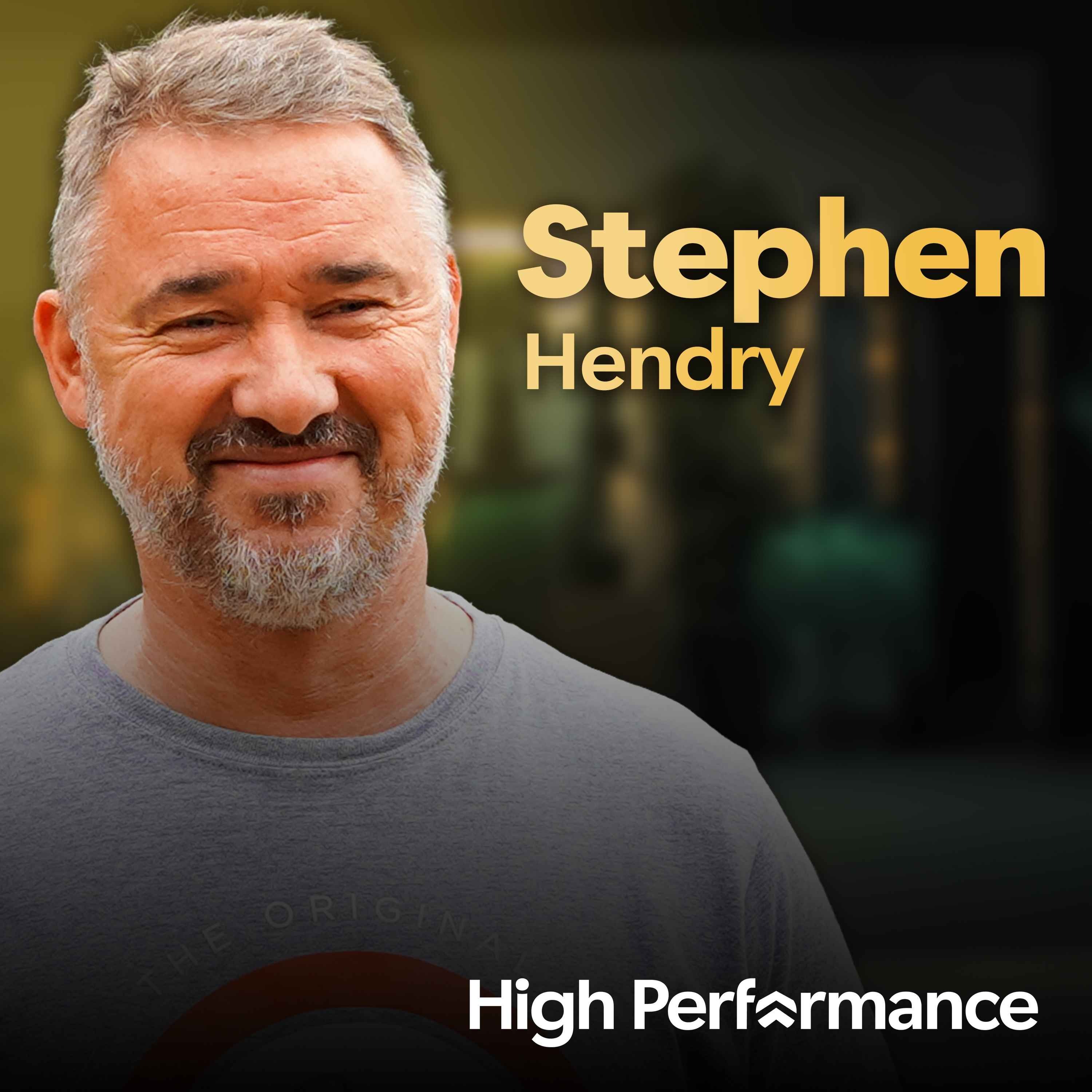
Loading summary
Transcript136 lines
- [00:03]
Stephen Hendry
The reason why there's so few people can win relentlessly is they sacrifice even family to get to, you know, snookers. My life is number one that came first, even before my wife, my kids, everything, obviously they ended to detriment of a marriage and everything, you know, it was all about me. It's very cold, but it has to be that
- [00:23]
Jake
for many people, Stephen Hendry is the greatest snooker player who's ever lived. Seven world titles in nine years. Seven in nine years. But Stephen didn't just win, he made winning look inevitable and losing look impossible. But you know what? Behind that cold, unreadable face was a story of obsession, of sacrifice, of a man who gave everything, his social life, his teenage years, even his marriage was given away to be the best. So what does it actually take to dominate a sport so completely? Who do you become in the process? And if you had the chance to live all over again, would you still make so many sacrifices for success? This is a fascinating conversation about what high performance can actually cost you. Welcome. Snooker legend Stephen Hendry.
- [01:18]
Stephen Hendry
Sometimes found it difficult to put on a genuine smile after I won big titles because to me it was the, it was the, the climax of all the work I'd put in and it was my job to go there and win. And, and sometimes after I won on a Sunday night, I'd be back practicing the Monday for the next one, because I was. I had that greed which I think individual sportsmen, if they're going to be serial winners, have to have. They can never be satisfied, and I was never satisfied.
- [01:42]
Jake
So do you think that anyone can learn to have that, that greed, as you call it, or do you think that was something that you were. You have. It's an innate part of you that meant not only could you get there and be the world champion, you could get there relentlessly, consistently.
- [01:57]
Stephen Hendry
I don't think that's something you can teach. No, I think it's why very few in all sport, especially individual sports, can keep winning and winning and winning and dominate. Because I've seen so many players in snooker, and I mean, golf's my other favorite sport. Watching a lot of golf, they win a tournament, then they disappear. You say, what happened to that, that player? Then? You know, they haven't kept on winning, so I don't know where it came from, to be honest, but.
- [02:25]
Jake
And when you say it, what do you, what do you describe as it, what is the thing that meant it kept happening?
- [02:31]
Stephen Hendry
That greed that never been satisfied, that always wanting to win another one, you know, as I said, before you're winning on a Sunday night and being back in the practice table the next day. Very few people can do that. I mean, granted, in the beginning I had a manager who cracked a whip and made sure I was not going to take a holiday or relax. But when I started to get success, then it was in me. I wanted to win the next one. I wanted to win the next one. I wanted to win, you know, every tournament. And I think the reason why, you know, in snooker over the past 20, 30 years, 40 years, there's only really been Steve Davis, then myself and, you know, Ronnie to an extent, John Higgins to an extent, Mark. But they've kind of. Because they've been in an era with themselves, they've not wanted. Not one of them has dominated the way Steve and I did.
- [03:16]
Damien
But if we go back to the origins of it, Stephen, I know that you started playing when you were 13. You described how you got that table at a relatively young age. So you're describing that almost mechanical nature of winning at a world level. When did the seeds of the, like, needing to win, needing to dominate start? Before that?
- [03:36]
Stephen Hendry
I got this small table two weeks before my 13th birthday and just literally spent every minute that I could on that table. I just loved it. It was just something that clicked.
- [03:45]
Damien
And what was it you loved about it?
- [03:46]
Stephen Hendry
I don't know. It's very difficult to understand it. At 13, it was just like, I just. I found I could just get down on the table and naturally, you know, you see beginners and go in clubs and they're, you know, after they've searched for a queue that's straight and for half an hour, and then they just get down and they just don't look like they belong there. But I just felt comfortable on the table. I knew, you know, my dad didn't have to tell me or anything. Basically just put my left hand down the table, I put the cue on and it just felt natural. Within a couple of weeks, I was making 50 breaks, just playing. Then I started watching on TV, learning from the players. But I started to get pleasure from being better than people, even if it was just family, friends. I got this thing, I'm actually better than people at something. And that sort of, I think, put something in there.
- [04:27]
Damien
And had you had that experience of being exceptional or better than people before that? I was snooker the first place you found that feeling?
- [04:36]
Stephen Hendry
Yeah, snooker was definitely the first. I played football in badminton at primary school. Been part of teams, but never excelled, never stood out. Not the bottom, but not the top. So Snooker was the first thing in my life that, you know, I was a bit different to everyone else.
- [04:49]
Jake
That's interesting, isn't it? It's almost like it gave you a feeling you'd never had before and so you stuck with snooker because you wanted more of that feeling. Like a drug, I guess, yeah.
- [04:59]
Stephen Hendry
And I think all through my teenage years, I mean, people always say, do you regret you missed out on what normal teenage boys do? You know, parties, girlfriends, drinking for the first time, whatever it is. And I never felt I missed out. I just wanted to play snooker, you know, as soon as school was finished. Sometimes before school finished, you know, I just wanted to play. The only thing in my mind was getting on that table. Wow.
- [05:20]
Jake
Was it necessary though, that sacrifice? Look, all three of us having this conversation are parents, right? All three of us want our kids to live an amazing life and basically do what you did find. We'd all love our kids to find their thing, wouldn't we, and excel at it. And we keep watching them do things and go, oh, that's not quite for them, but maybe they'll find something eventually. So was it necessary for you to have the sacrifice to go along with finding your thing?
- [05:44]
Stephen Hendry
I think so, yeah. Again, as parents, you probably wouldn't give the same advice again. But I was fortunate that I had parents who didn't really say, stop playing snooker. You got homework to do, you got exact. They, you know, whether that makes them bad parents, I don't know. But I think very early on my dad, especially through taking me around clubs and stuff and people talking, I think he had, he knew there was something there. So it didn't stop me playing snooker. Didn't say, no, you're only going to play at weekends because you need to study and all that. So yeah, I didn't. The sacrifice was probably necessary to keep improving quickly because obviously 33 years later I turned pro. So I did improve very, very quickly through the sort of junior and amateur scene. And if I not played as much snooker to study or do other stuff, then possibly the rise wouldn't have been as quick.
- [06:38]
Ad Voice
This is a Monday.com ad, the same
- [06:40]
Stephen Hendry
Monday.com designed for every team.
- [06:42]
Ad Voice
The same Monday.com with built in AI
- [06:45]
Stephen Hendry
scaling your work from day one. The same Monday.comwith an easy and intuitive setup. Go to Monday.com and try it for free.
- [06:54]
Ad Voice
Hey honey, it's mom. Did you know if we switch to Verizon we can get four phones for $0 plus four lines for $25 a line. Call me back. Me again. That's just a hundred dollars a month for four lines on unlimited welcome plus four phones. No trade in needed. Call me. It's mom. America's best network Verizon, that's the one we're talking about. I'll send you text.
- [07:15]
Stephen Hendry
America's best network based on RootMetric's best overall mobile network performance US second half 2025 four new lines and unlimited welcome and autopay. See verizon.com for details.
- [07:29]
Damien
We can focus on the sacrifices you made. What I'm interested in Stephen, is what did it give you so this enhanced status of being exceptional at something and being recognized. What do you feel that offered you as an individual?
- [07:44]
Stephen Hendry
Different things really. It does give you a bit of confidence in yourself in that in those days in snooker you're, you're mixing with people are much older than you. You know, I was playing in clubs sometimes in kind of British Legion clubs where I wasn't supposed to be in you, you know, playing league matches. They basically smuggle me in, play my two frames and straight back out again. You had to be 18 to be in. But I think spending your. The whole of my teenage life and young life around older people made me sort of a bit more street wise or, or more, you know, wise, wiser than my age in terms of just life basically. Not in terms of academical stuff because I left school with no qual know so that's. That, that, that went out the window. But spending life with, with like older people and stuff and then just experiencing things, competition, winning things, it makes you feel like you've got something that's. Yeah, gives you that little bit of inner confidence.
- [08:34]
Damien
You've gone from being a middle of the road kid at school to finding a place where you're suddenly exceptional. You've got adults acknowledging your talent. How did you make that transition? Because I imagine that was more difficult for people around you to deal with your success than for you personally.
- [08:53]
Stephen Hendry
I mean I didn't really take it in a lot. I was just playing snooker. There's a time obviously in the beginning there's a transition where snooker stops being a hobby and starts becoming a job. But at that time, through my teenage years, I was just loving what I was doing. I mean I was just playing snooker. I was getting to leave school on a Friday night to go down to London or whatever to play in pro ams and not come back on a Monday. I was getting allowed to do this. I was fortunate, fortunate again my parents. But the school was quite, you know, because they'd seen Me in the papers, the local papers, winning things. And I mean financially, I support myself since I was 13 and at 14, yeah, my parents haven't had to buy me anything, you know, because I was winning monies and, and just buying my own clothes and stuff. And so it makes you independent, makes you feel independent. And it was quite surreal. I suppose when you're looking back on
- [09:37]
Jake
it, I feel like it almost happened to you rather than you made it happen. Do you know what I mean by that? Like you just were playing snooker and this thing, you just almost stepped onto this roller coaster ride and you were just, in your mind. I was just playing snooker. Yeah, taking you incredible places.
- [09:51]
Stephen Hendry
I wasn't thinking at that stage that, wow, this is going to be a career. I'm going to be win world championships. There was no strategy at this age, not at all. It was just, basically it was my dad and I traveling around the country, playing pro ams, playing amateur tournaments. I was just loving it because I was playing snooker. I had no thoughts of I'm not getting any qualifications, what am I going to do in my life? I wasn't thinking ahead to the next tournament, the next weekend. That was all. That was my only, my only thoughts. Yeah, it was, I was just kind of like going along with it, basically.
- [10:19]
Jake
But that can't happen forever though, can it? Because the number of people that we speak to who have not done what you've done even once, not been a world champion even once, and they say, ah, you know, I really enjoyed being a young racing driver or a young snooker player or a young footballer, but I never realized that to carry on that trajectory, at one point the hard work had to kick in as well. So when was the moment that you realized it had to be about more than just playing Snooka and enjoying it?
- [10:48]
Stephen Hendry
I won the Scottish Amateur senior title at 14 and then again at 15. And in those days, the only way getting your professional ticket was to either win your national championship, which I did, or win the World Amateur championship. So at 15 I won it. The second time I had a choice whether to enter the World Amateur Championship, which I thought I could win, but then I might not win and miss a chance to turn pro, and then I might not win the next year. So this, this guy, Ian Doyle, who had a snooker club in Stirling, who had been to play some junior tournaments, was getting into snooker. He's sponsored the Scottish Amateur Senior title. He had a kind of meeting with my dad. He wanted to get into snooker and he wanted to take over my career, basically. Be a manager, take care of sponsorship, all that sort of stuff. So between my dad, Ian and I, and my mum always saying, had to take a decision whether should we turn pro now or stay as an amateur, we made the decision that I couldn't learn any more as an amateur. Let's just get in with the big boys. And I'd always played my best snooker on the biggest occasions. So we turned pro at 16, but I was still practicing a place called Millers in Broxburn where my mates were. So we were kind of like, I was there all day, but we'd go in and maybe have a couple hours, it wouldn't be serious, we'd have a few laughs, stop for a couple hours, maybe play some three car brag and play the fruit machines and just. It wasn't a structured thing. And unbeknownst to me, my manager had come into the club just to see what I was doing. And very quickly he basically said, if I'm going to back you, you know you're going to work your bollocks off. I've done it through my career and the only way you're going to get there is, in his opinion at the time, is to properly work at this game. My dad didn't totally agree, he thought I could do it without this, this regimen of work. So. But basically Ian took me out of the club where I was to his club in Stirling, which is probably 30 miles away from where I was. So my dad had to take me there every day, drop me off at 10 in the morning and I'd stay there till 6 at night with an hour for lunch and I just practice on my own seven days a week. Wow. I hated it for sure. I just hated it because this was just like, this is, you know, talk about stop being a hobby and becoming a job. This became a job. This wasn't like playing snooker because I wanted to. This was, you had to be there at this time and you had to leave at that time. And it was, it was, yeah, it was just so hard to play.
- [13:05]
Damien
But did you have a coach, Stephen, when you were in this club?
- [13:09]
Stephen Hendry
No, and I didn't have a coach until later on in my career. In the beginning, I learned everything from watching TV on my small table to try and do the shots you couldn't because small tables are rubbish, you can't play. But that's how I learned basically from watching likes of Jimmy, Steve Davis and stuff. But this, this sort of relentless work ethic. I mean, his office was like connected. He had hardware, business Connected. Half the building was that and half the building was a snooker club. And he used to come out every half an hour, check I was practicing, you know, just put Pokey's head through the door and check. I was still there. But literally within a month or two months, I could feel my game getting sharper. And although it was hard, you know, after about, you know, a few, I started to feel that like my game was this, I was getting better. And the first tournament I played in was a Scottish Professional championship. I'd had various sort of exhibitions with the top players and I'd always get beat. And this was the Scottish Professional was my first tournament after this job started and I won it comfortably. And it was just like, wow, this is taking my game to another level.
- [14:10]
Jake
And we, we speak a lot about this. You do that. One of the most crucial aspects for anyone in life is evidence. So it's pretty shitty to spend hours and hours and hours on your own knocking snooker balls around. Yeah, but it's not shitty when you then go and win a tournament because of that. And it feels like as soon as Steven, Steven saw the evidence, that's when it made a difference.
- [14:29]
Damien
Well, this is where the research comes from that is often been sort of misappropriated about the 10,000 hours rule. So the guy, I don't know if you're familiar with it, Stephen around. There's a guy called Anders Ericsson that studied violinists and he found that to be world class, you needed to invest 10,000 hours in it. And I think people misappropriate it and think that it's just about hard work. But I think for a static sport like where you're learning technique like snook around and dynamic like football, there is some relevance in the 10,000 hours. And it sounds like that was your first immersion in proper hard work, of investing those hours in it, that you saw immediate results from it.
- [15:12]
Stephen Hendry
Absolutely. I mean, my manager, there's no way he had any scientific reason for behind it. He was just this Scottish businessman who'd worked his nuts off throughout his life and he thought, well, that's the way everyone else must do it to get success. There was no, as I say, I don't think he'd put any research into it. Basically, I think he thought, if I'm going to back you and sponsor you, you're going to work. I'm putting in. So you're going to put it in. You know, the practice can only work. I think you need the, the three ingredients and you need the obviously natural Talent to go with it. And you need the ability to play under pressure. You need those three things together. Well, that was a phrase, enjoy the pressure.
- [15:45]
Damien
Yeah, but there was a phrase that you used quite casually in, in that last bit where you were explaining that journey where you said, I always played my best when I came under pressure. And you said that very matter of fact. And yet that isn't a matter of fact statement that when you come under pressure, you rise to the occasion. Would you explain where you learned that ability just to be able to turn it on in those big moments?
- [16:10]
Stephen Hendry
I have no idea is the honest answer where that came from because none of my parents were, you know, done anything in front of crowds or anything excelled or anything. But yeah, even this Scottish Amateur Senior title, you know, you play the tournament through the, through clubs and by the time you got to final, they put it in a venue, put a table and put seating around it. And I saw it was played bright. I just, I just loved it, you know, just, I just felt comfortable there. You know, my first tournament, I think I played a guy called Barry west and obviously you've got to have full, you know, evening wear on the table's perfect, the cloth's perfect, you got a referee and you know, I felt a little bit, I thought, you know, this is different. But I loved it. But I was, I just, I couldn't. It took me, you know, my first season, you know, I lost more matches than, than, than I won. Simple fact. They were better players than me at that stage. You know, they were, they were professionals and I was still, I just turned pro. So that there was obviously that reason. Jimmy White was my idol. When I first started playing, when I first got in the Wheaton, I watched it because the way he played, the flare, the shots. And there was a tournament every year where the Scottish professional champion got a sort of token entry into the Scottish this. So the seven best players in the world would play and won. Scotsman. So the eight man tournament, invitation, tournament. And I was drawn against Jimmy White in the first round at 16 or 17 and I got beat five nil. And basically I just sat in my chair in awe of Jimmy because he was my hero. And oh my God, when I got off, did I get a bollockin from my dad and my manager for like, you know, if this is what you're going to do, just sit and like watch, like you're just, you may as well finish now. And it was a, it was a wake up call straight away that, that if I was to be A success. You know, I've got to get out of this, like, them and me kind of thing. And that was one of the best things. I think my manager did that everywhere we went. Even in my first season, we stayed in the same hotels as the top players. So I was around that because a lot of the players that turned pro would stay in bed and breakfast and stuff, and then the play come and play Steve Davis, you know, and they'd be. They'll be above them already because they're all, he's staying a better hotel, he's got a better everything. So that was a very clever thing to do, to put me on a sort of level playing field in that respect.
- [18:20]
Damien
I've read that you famously didn't associate with other players once you were dominating the sport. So when did you make the decision to do that, as opposed to hoovering up as much information around them and understanding their lifestyle and habits?
- [18:35]
Stephen Hendry
Again, it was a sort of joint thing with my manager and I, you know, I said that Jimmy White was my hero, but when I started watching snooker more and more, Steve Davis was the guy that was winning. And I thought, that's the guy who I want to beat. I don't want to be. Jimmy plays all the good shots, but he's the man, this one. And so we kind of looked at, you know, Steve and Barry Hearn's approach, where Steve, you know, that the practice, the dedicating your whole life, you know, having no outside interest, no, you know, girls, parties, whatever, and just keeping yourself apart from everyone else, keeping yourself, like, aloof. So when people did come to play, they had no connection with you at all. They seen you as someone who was above them because you didn't associate with them.
- [19:13]
Damien
So you were playing psychological mind games before you ever got the bays.
- [19:17]
Stephen Hendry
Yeah, I think it's very important, I think later on in my career when I start to, you know, relax a bit and have, you know, go out for dinner stuff, that there was definitely a part of my downfall was, was becoming friends with friends with people. It's difficult sometimes because later on the career there was so much travel and you'd end up being in the same plane, you'd be in the same hotels, whatever, and it's. It would get more. More difficult. But, yeah, in the. In the beginning, it was a definite thing. It was just Ian, the guy who was my road manager, and me would eat together, we'd just go back to practice and then go back to the hotel, and we wouldn't mix with anyone else.
- [19:49]
Jake
What I like about this is that it obviously had an effect on the people you were playing because they were looking at you like you're an enigma, thinking, I don't know who this guy is, I don't know where he stayed, I don't know what he eats before he plays or how he's going to play. I can't sort of break the facade. But it feels like it was also quite an important thing from your perspective as well. It gave you a bit of armor to know that they knew nothing about you. It felt moved you in your head above them.
- [20:13]
Stephen Hendry
Yeah, I think so. And there was part of me that thought I'm missing out and stuff because like a little bit more into my professional career, maybe 17, 18, 19, I could see players going out for, for dinner and having a drink and everything. And a little part of me was thinking I'm missing out a bit. But then I was winning, you know, Jimmy White again, going, again going back to him. But like, you know, he was, he didn't win. Yeah, he did one, of course he won events through his career, but he wasn't.
- [20:37]
Jake
He famously lost all the finals that he competed in, didn't he? That was the sort of big thing for him.
- [20:41]
Stephen Hendry
Yeah. And you talk about people who don't realize, I mean he's been in six finals and not converted once. There has to be something that's not, that's missing there. If I'd been in six World Finals, not won one of them, I'd want to know why.
- [20:51]
Damien
But I've heard people that have worked with Jimmy White in the past talk about this idea that it almost reconciled him with that sense that that's just what he does. He like it blows the big moment that chaos is.
- [21:03]
Jake
And people love him for it as well. Yeah, you know, that's part of his job.
- [21:07]
Damien
What was your identity? So how would you have described your identity then?
- [21:11]
Stephen Hendry
Pretty cold really. I mean, yeah, I mean miserable is a word that gets decision.
- [21:17]
Jake
That cold, aloof.
- [21:18]
Stephen Hendry
No, that, that was just my natural at the table.
- [21:21]
Jake
Was it?
- [21:21]
Stephen Hendry
That was just my natural way. I didn't, you know, I wasn't there to laugh and joke and, and have you. I knew, I knew I had personality. Insane. But when I was on the table I wasn't there to do, to do that sort of stuff. I was there to win. And I think if you look at snooker nowadays and, and I think most sports actually the competitors getting a lot younger and more like single minded, they're just there, there to win. People always say to me there's no personalities in the game anymore. There is, but just when they're on the table, they're there to. They're there to win. And I think Steve Davis was that. And I think after Steve Davis, again, I kind of learned a bit of, of Steve and just having this. Not show any emotion. In practice, I would show emotion. If I missed a shot, I'd, you know, bang my cue and swear, whatever. But when you got in that, that table, in the ring, you can't show your opponent any, any weakness.
- [22:07]
Damien
And you learned that yourself because I remember hearing Andre Agassi talk about his dad had drilled him relentlessly that he wasn't allowed to show emotion and things like that. And that was somebody exerting influence on him.
- [22:19]
Jake
But.
- [22:19]
Damien
But you came to that conclusion on your own during those hours in the, in the snookahl.
- [22:24]
Stephen Hendry
Yeah, again from, you know, watching tv, learning, watching Steve Davis learning, watching the way he was at the table, not if he missed the ball, he just turned around, walk back to his seat. There was times where I have shown and you sometimes just can't help it. It's human nature just, you know, you're not a robot. You can't just program it and that nothing's going to affect you. But in time, that's something that you can work on, I believe. I don't think you can work on being able to play your best under pressure, but I think you can work on trying not show, you know, as. As much emotion. You know, even go through junior events and. And, you know, I would see fathers like, you know, just castigating their sons and that from missing and like. And my dad never did. The only thing my dad ever done was I was probably not even 14 in a junior event and I missed a shot and I went back and I had my head down and he just went, get your head up. And that's the only thing he ever, ever. He never, he never, never criticized me, ever. If I played a bad match or in the car going home, he would never say anything. That's the only one thing he ever did was just keep your head up.
- [23:25]
Jake
It feels to me like control is a real recurring theme in your career. Whether it's the hours and hours on the bays, practicing, getting yourself ready, whether it's making sure you're not going out for drinks with your fellow pros the night before a game, whether it's not smiling and showing emotion when you play an incredible shot in the final of the world's NUKA Championship. At all times, emotional control was kind of at the center, I think, of your success, Was it.
- [23:48]
Stephen Hendry
Yeah, definitely.
- [23:49]
Jake
So did you enjoy it?
- [23:50]
Stephen Hendry
Enjoy the.
- [23:51]
Jake
The process? You enjoyed the winning, the moment you lifted the trophy or the moment you potted the winning shot, but did you enjoy the process getting to that point?
- [23:59]
Stephen Hendry
I think the practice was always hard to do. I mean, if you. A snooker table never changes. And that's one thing later on in my career where I stopped practicing as much, because even in golf practice it must be boring, hitting hundreds and hundreds of balls, but on a given day, the wind could be in a different direction, so it's still different. And the snooker table never changes. So you're doing the same routines for 30, 40 years. That's one of the reasons why, why I stopped playing. I just couldn't do that anymore. So I don't think you ever. You have. Someone says to me, oh, I just love playing seven hours a day, seven days a week on my own. I don't think they do. I don't think you, you do it because, you see, I, I was fortunate, I see I got an end, I got a, you know, result from it, you know, I was winning. But, you know, you see this, you know, hate is the word. Journeyman pros, it's to still do that and don't get how they. I always admire people who can keep doing it.
- [24:47]
Jake
Yeah.
- [24:47]
Stephen Hendry
When there's nothing coming at the end of it, you know, I was getting success and, and, and that made me want to practice more. If I didn't get the success, then would I be able to keep doing that? I don't know.
- [24:58]
Jake
So how hard was it then when you didn't get the success the first time? You were doing exactly what you've always done and you weren't winning games of snooker.
- [25:07]
Stephen Hendry
If I take it forward to when I started winning, yeah, if I had a loss, it would be very difficult to go in the next day, and in the odd time I would. If I played really well, I wouldn't go in the next day, but I'd go in the day after that. And I just, you just had to, you know, that again, you know, this is my job, I'm a professional snooker player, I've got to practice. And again, I had a manager who cracked a whip and said, you know, you got to keep doing it, keep doing it, keep doing it. And then I would win the next one. And then. So every time you had a disappointment and then you came back from that one, that would give you even more satisfaction.
- [25:41]
Jake
So you became comfortable with failure.
- [25:43]
Stephen Hendry
No, never. I was Never comfortable with failure. Really?
- [25:46]
Jake
You never saw it as part of a process of learning?
- [25:49]
Stephen Hendry
No. Everything. Time I lost a match, it was the end of the world. And, you know, I still, you know, I used to say in press conferences, a disaster. And people say, no, there's. That worst things happen in the world and everything. But I always hate that when people say that because I think as a sportsman, that is the worst thing that's happening in the world at that precise moment that you've lost a match or you've lost, you've lost. That isn't. I mean, it's just, it's, it's horrific. And I've done press corners where literally one word answers and just get out of there and, and sulk for three or four days, not speak to anyone. So, yeah, losing was. Is the hardest part for me and being a sportsman.
- [26:25]
Damien
The fact that you can sit here now, though, Stephen, and, and you're so eloquent and you're rounded and you do seem to have a greater perspective on life than just what happened on, on a snooker table is obviously testimony to the fact that you have learned to process defeat in some way or the end of a career. When did you learn to do that then?
- [26:47]
Stephen Hendry
I won my last World Championship in 99, and I think the following. The rest of my career, I won. I, I retired in 2012. I think the rest of my career, I won maybe half a dozen events from then to the end of my career. And I think my whole process relaxed from, from, from the beginning, the practice was more sporadic. I mean, I would still do. If I felt there's a tournament coming up, I still do that, you know, but I'd only do it maybe four or five days before. Really put hours where it was my whole life before. Sure, it was seven days a week, four weeks, you know, every month. You do get used to defeat. It doesn't. It doesn't. And it's a different kind of hurt, really. I don't read many books. I read Agassiz's book and he says that the pain of defeat is a bigger sensation than the thrill of winning. And it is, it's far more. Winning I would take for granted. Defeat, I would suffer for days. But there's a difference between it sort of hurting and you want to do something about it to near the end of the career when you get used to it. And it's a kind more of a depression gets in where you think, I can't win anymore. And that's. And this is. And then you get used to defeats, used to playing badly. And that was when, at the end, I thought, I can't take this anymore.
- [27:58]
Damien
So when did you make the decision to stop referring to yourself as a snooker player then?
- [28:03]
Stephen Hendry
I don't know. I mean, I still think I'm a snooker player now. I mean, people say, what do you do? I'm a snooker player, you know, I mean, snooker is what I do, it's what I'm best at. I still see myself as a snooker player.
- [28:13]
Damien
The reason I ask that question is my sense is that if we'd had spoken to you during your 20s, you would have been singular a snooker player. Whereas I think it's a both and perspective now. You're a snooker player and you're a father, you're an amateur golfer. There's things like that.
- [28:29]
Stephen Hendry
Yeah.
- [28:29]
Damien
And I'm wondering, when did you start to add on those other aspects of,
- [28:34]
Stephen Hendry
I think, obviously, you know, normal life, things like, you know, you had a girlfriend who became a wife, then you have a family, life changes. And I always, I always fought against that. People say, oh, you're gonna get mad, that's it, that's the end of your career and all that's, you know, the have kids, that's it. And I always fought against that. I was, I, I still kept practice, determined to keep practicing. The reason why there's so few people can win relentlessly is, is they sacrifice, even family, to get to, you know, snookers. My life is number one, and that came first, even before my wife, my kids, everything. Obviously they ended to detriment of my marriage and everything, you know, it was all about me. It's very cold, but it has to be that. If I look at all the top sportsmen, individual sportsmen, many of them are still married to the same women. Very, very few, Very few, very few.
- [29:20]
Jake
Obviously it ended up the breakdown of your marriage, and you probably don't see your children as often as you would have done when you were in a house with them every single day. Would you still have that same approach to life if you did it all over again? Do you think you couldn't have achieved what you did as a snooker player without that?
- [29:35]
Stephen Hendry
Yeah, definitely, I couldn't have achieved. I couldn't have been the winner. I was. And, and being there as well as.
- [29:43]
Jake
So here's an interesting one then. If you had your time again, would you win less games of snooker, be at home more and be married to your wife still and have a sort of family life, or is the winning, which we spoke about right at the Beginning the thing that you feel you were put on this earth to do, to be a winner.
- [30:00]
Stephen Hendry
Definitely. I mean there's going to be a lot of people watching this thinking what an absolute cold son of a bitch. But that's, yeah, that's what I was putting, I was putting us out to win snooker match, to win world titles and be as dedicated as I was to be the best and yeah, given the same decisions and I'd make the same decisions again, whether that makes me a horrible person or not, you know, other people can decide that, but I, for me that's, I made that decision.
- [30:27]
Jake
You couldn't have done both, who can tell?
- [30:29]
Stephen Hendry
But I don't think so. Yeah, I don't think so. Only looking at myself, looking at the other people that I admired. You know, the Tiger woods is, the Faldos, Steve Davis, they wanted to be the best and dominate the sport and to everything else. Not that we didn't care or love these people, but casualties that has to come second if you want to do what I did.
- [30:50]
Damien
Yeah, I think it's really refreshing, Jake, to, to hear that honesty. You know, I think we, we live in a world where people think you can be everything and the reality is it's a world where you have to prioritize and, and your decisions are pretty clear.
- [31:05]
Jake
I do really want to talk to you about the period where you struggled with your snooker because you're so in control all the time. You're someone that knows if you can control everything, you can keep on winning games of snooker. So when you didn't win for a long period and eventually decided to walk away from the game, how did you reconcile that in your own brain? Because the evidence was still there that you have the natural ability. You were a multiple world champion, how did you cope with that and what strategies did you use to try and recover from the issues when playing?
- [31:39]
Stephen Hendry
It was very difficult because I became an also run. You know, I used to enjoy in the 90s being people talking about you being the favourite, but you were special
- [31:47]
Jake
from the moment you started playing, weren't you?
- [31:49]
Stephen Hendry
Yeah, exactly. So then it wasn't. So then I'm not special, you know, I'm used to people saying, who's the favorite for this? So Steven's going to win, Steven's going to win. Steven's the best player in the world, Steven's world champion, Steven's world number one. So all of a sudden, oh, Steven, he can't play anymore, he's not the same player anymore, you know, he's never going to win another tournament, he's slipping down the rankings. So you're getting all that positive feedback, then all of a sudden you get all this negative feedback constantly. And whenever you lose another match, then it's another like, you know, is he gone? He's gone. And that's all this positive is feeding you, it's feeding your confidence on the way up. I mean, and then obviously the negative is feeding you as well, but it's keeping you down. So it's, for me, that was very, it was very difficult just to not become, you know, competitive was, was, was the thing for me. You know, people always said, you know, why did you retire? And so, you know, when you were still, you could play. For me, winning was the enjoyment. You know, I once, Steve kept on playing after me, long after me, and I said, what are you doing? I says, you're losing the people who shouldn't be in the same table as you. And he said, I just treat it as a day out and, and see what I couldn't do that. I think when you look at someone like Ronnie o' Sullivan who, you know, people say he's had such longevity in the game, he's won world championships in different decades, perhaps almost. I don't know whether that's a better way of being that he's not. His whole life hasn't been snooker. Like, like me, I mean my, my world champion, they all came within 10 years. My domination was that a 10 year period where he's been at the top since, you know, when he came in 92, I was, I was still the number one player and he's come through and he's still winning now. The fact that he's not snooker isn't his be all and end all, but whether I could have done that, I don't know, I'd never know that. So, yeah, it's, it's as you say that they're doing it as I did, like totally in with that intensity. You know, you think it would be impossible for that to last as long as up to now.
- [33:44]
Damien
But when do you think you'd be able to watch some of these seven World Championship victories and actually just go, you know what? I was good and I'm happy that I was good.
- [33:54]
Stephen Hendry
I think, I think I did, I did my book and I had to watch all that stuff back and I never watched my own stuff and going through YouTube and stuff and, and I actually seen things I'd forgotten about and I did, I said to Tom, who was my ghostwriter, I said I was pretty Good. When I was like, you know, I was doing things, I was surprised, you know, I couldn't. I'd forgotten myself because I think I used to tend to, you know, people ask me about a World Test, I wouldn't be able to tell them what year. I wouldn't be able to tell them because I just. But if it's say a shot you missed, then all of a sudden I think, yeah, but that, that was, that, that was that one kind of thing. But yeah, no, I think that was the first time I sort of watched back and thought, yeah, you know, it was, I was, I was pretty good.
- [34:33]
Damien
Because it sounds like it's, it's a pretty relentless, unkind place your head at times.
- [34:41]
Stephen Hendry
Very. Yeah, yeah. I mean the last, the last World Championship I played In, I lost 13 2. I think it was to Maguire. And I'd made very much made a 147 in the first round against Stuart Bingham and I beat John Higgins in the second round. Granted wasn't Brown, but then the last match I just. And all matches sort of like for the years up to that, I was just sitting my chair and I just slaughter myself basically. Basically. Like the Twitter said, look how shit you become. You can't even play this, you can't even beat this guy.
- [35:08]
Damien
Yeah.
- [35:09]
Stephen Hendry
You know, and that, that was that and that was. Yeah, I was, I was always pretty hard.
- [35:13]
Jake
So you're not. You're basically an all in kind of person, which is very difficult because then when you're winning games and you're 20 and you're coming through and you're winning world titles, you are invincible, you are untouchable, you are bulletproof. No one can tell you you're not great because the evidence is in front of you that you're fine. Because you're all in and you're believing that.
- [35:30]
Stephen Hendry
Yeah, yeah.
- [35:30]
Jake
I mean, high on your own supply.
- [35:32]
Stephen Hendry
Yeah. There's one World Championship I went, I went before the first round and told my wife to bring a jacket for the party after the final.
- [35:38]
Jake
I love that story.
- [35:39]
Stephen Hendry
Wow.
- [35:40]
Jake
But the problem is when you're all in like that. Yeah, when you're losing.
- [35:43]
Stephen Hendry
Exactly. Yeah.
- [35:43]
Jake
You're all into the losing.
- [35:44]
Stephen Hendry
You got further to fall.
- [35:45]
Jake
Listen, we're going to finish with our quick fire questions. Three non negotiable behaviors that you and the people around you have to buy into.
- [35:58]
Stephen Hendry
Selfishness.
- [36:00]
Jake
Can I just say, I love the fact that's your first one, by the way. Yeah, we've done a lot of these. No one's ever mentioned that as Their
- [36:04]
Stephen Hendry
first negotiation and I've been told that enough and like determined self criticism.
- [36:11]
Jake
They're good ones, they're not easy ones, by the way. Most people just say, turn up on time. Yes.
- [36:17]
Damien
What advice would you give to a teenage Stephen just starting out on this journey?
- [36:21]
Stephen Hendry
Work, I think, I think that's. Yeah. I mean, people talk about talent is enough, talent's not enough work.
- [36:26]
Jake
I think very briefly, how low do you go? Or did you go with. With failure, with big, big defeats?
- [36:32]
Stephen Hendry
I think that the worst I got, I lost to a guy called Robert Milkins in the second last season. I think of my career in Shanghai and in China, they call me the Emperor of Snooker, the King of Snooker. And I'm, you know, fortunate. I have so much support there, even, even now when I go. But I'd lost 5 nil to this guy and I went back to the hotel and I cried. It's the only time I've ever cried win or lose a snooker match, so. And that was the worst I ever felt. I just felt embarrassed to feel everything.
- [36:59]
Damien
I thought, can I just jump in on that, Stephen, what drove you then? A love of winning or a fear of losing?
- [37:04]
Stephen Hendry
Oh, definitely. A love of winning, was it? Yeah, definitely winning. Yeah. That's, that's what motivated me, motivated me to practice. Yeah.
- [37:11]
Damien
How important is legacy to you?
- [37:13]
Stephen Hendry
Yeah, it's important. As I said, you know, I'm still, you know, in China, I'm still seen as like, you know, the most successful, you know, because I've won seven world titles. Obviously it's debatable whether Ronnie will. Will overtake that or not. We just have to wait and see. But, but yeah, yeah, I think, I think it's. I think it's. I think it's important. Yeah, I'm still, you know, people, the great debates, who's the greatest, Mia, Ronnie. And I think, you know, as Tag used to say, as long as you're in that conversation, you know, you sure,
- [37:41]
Damien
but how would you like to be remembered when, when you, like, when you're dead and gone? How would you like.
- [37:46]
Stephen Hendry
I think, I think I like to be. Remember someone who changed snooker, changed the way it was played to be successful. You know, it was all about aggressive snooker. Just go for your shots, clear the table. That was, that was the way I played. Go for it. You go forever. Obviously you have to temper a bit when you get old. You don't go for everything when, when you get into Prometheus. But yeah, I'd like to think I changed the way snooker was played and
- [38:06]
Jake
finally, your one golden rule for people listening to this, to living a high performance life.
- [38:12]
Stephen Hendry
Agreed.
- [38:14]
Jake
And on that we shall end it. Thank you so much for being with us. I think sound like Gordon Gecko. It's brilliant to sit here and have a. To have someone talk to us who's so self reflective and as honest as you are is, is, is amazing for us. And I think that, you know, I look at it and I think that the, that honesty is the reason why you were so successful, but also that honesty is the reason why you found it so difficult when you weren't winning. Because you don't lie to yourself, do you? No, you're, you're totally honest with yourself.
- [38:41]
Damien
Thanks very much.
- [38:41]
Stephen Hendry
You're welcome.
- [38:42]
Ad Voice
Thank you, Damien.
- [38:48]
Damien
Jake.
- [38:49]
Jake
Well, that was an absolutely remarkable conversation, I felt with Stephen. First of all, I want to applaud his honesty, but also I kind of almost feel that I feel a bit sorry for him, that he is so one extreme and then another. He admitted he was all in. And I think that's fine when you're winning constantly, but to be all in and to find that you're not as invincible as you perhaps thought you were at some point in your life when it comes to sport. Must have been a very difficult pill for him to swallow.
- [39:19]
Damien
Absolutely. I mean, the honesty is stunning and I really applaud him for that. You know, the conversation he had about putting snooker above family and relationships, I think whether you agree with it or not, it still takes real searing honesty to admit it. I think you're right, though. I think the idea of marrying up, that being all in nature with almost like the cruel, relentless inner voice that he had, he said that that's what had stopped him in the end. It had worn him down. The fact that he kept believing he was shit, that he wasn't capable, is a real, a real insight into what it takes in his world to be successful.
- [39:57]
Jake
Fascinating. Thanks to him. Thanks to you.
- [39:59]
Damien
Yeah. No, thank you, Jake. It was brilliant, that one.
- [40:03]
Jake
Well, huge thanks to Stephen for his time. And what I take from that classic conversation is that those trophies didn't come for free. Not in practice, not in terms of relationships, not in terms of peace of mind either. He was all in, all of the time, completely, ruthlessly, all in. And what makes this one of the most remarkable conversations we've ever had on the show was the moment when we asked him whether he'd do it all over again. And did you notice, zero hesitation, no regrets, just total honesty. He said yes. He was raw, he was unflinching and I'm not sure that kind of honesty is shared by people that often. Even when sitting in a chair talking to us on high performance, people always hold a little bit back. And I really don't believe that Stephen did that. And if this conversation makes you think differently about what greatness really is, maybe share it with someone who you think needs to hear it. And we'll see you next time on high Performance.
- [41:14]
Ad Voice
Hey, honey, it's mom. Did you know if we switch to Verizon, we can get four phones for $0 plus four lines for $25 a line? Call me back me again. That's just $100 a month for four lines on unlimited welcome plus four phones. No trade in needed. Call me. It's mom. America's best network, Verizon. That's the one we're talking about. I'll send you text.
- [41:35]
Stephen Hendry
America's best network based on root metric's best overall mobile network performance US second half 2025. Four new lines and a limited welcome and autopay. See verizon.com for details.