← The High Performance Podcast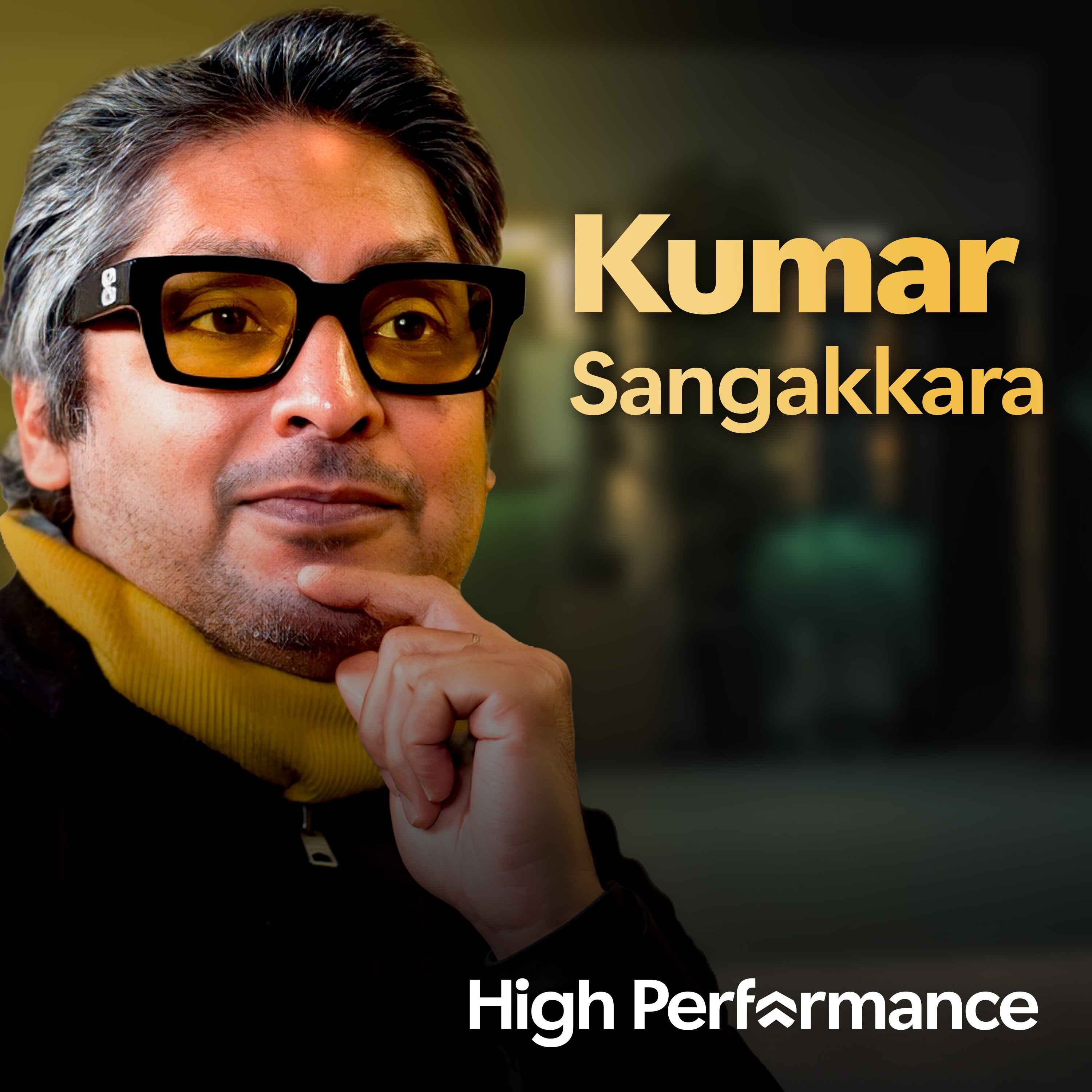
The High Performance Podcast
Cricket Legend Kumar Sangakkara: What You Do Is Not Who You Are (E399)
00:50:46
Loading summary
Transcript63 lines
- [00:00]
Kumar Sangakkara
What's up? It's Sean Linda from Two Black Guys of Good Credit. If Managed supply runs is still on your to do list, here's your science upgrade. Walmart Business has the tech tools and services that make it ridiculously easy to stock up for your office or team. Think scheduled deliveries, multi user accounts and even IT setup. Bonus with a Walmart Business plus membership, you get free shipping, spend analytics and 2% rewards. Join the smart way to shop at business.walmart.com Terms apply Lunch was great, but this traffic is awful. Can we stop at a bathroom? Are you alright? And keep having stomach issues after eating like diarrhea, gas and bloating, abdominal pain and sometimes oily stools. Sound familiar? Those stomach issues may actually be a pancreas issue called Exocrine Pancreatic insufficiency or epi. Creon may help manage EPI Creon is a prescription medicine used to treat people who can't digest food normally because their pancreas. Creon may increase your chance of fibrosing colonopathy, a rare bowel disorder. Tell your doctor if you have a history of intestinal blockage or scarring or thickening of your bowel wall, if you are allergic to pork, or if you have gout, kidney problems or worsening of painful swollen joints. Call your doctor if you have any unusual or severe gastrointestinal symptoms or allergic reactions. Take Creon as directed by your doctor and always with food. Do not chew capsules as this may cause mouth irritation. Other side effects may include blood sugar changes, gas, dizziness, sore throat and cough. These are not all the side effects of Creon. Call 800-633-9110 or visit creoninfo.com to learn more. That's C R-O-N-Info.com I'm asking my doctor about EPI and if could help Dell
- [01:33]
Damian
PCs with intel inside are built for the moments that matter, for the moments you plan and the ones you don't. They're built for the busy days that turn into all night study sessions. The moment you're working from a cafe and realize that every outlet's taken the times you're deep in your flow and the absolute last thing you need is an auto update throwing off your momentum. Well, that's why Dell builds tech that adapts to the way that you actually work, built with a long lasting battery so you're not scrambling for the closest outlet and built in intelligence that makes updates around your schedule, not in the middle of it. They don't build tech for tech's sake. They build it for you. Find technology built for the way you work@dell.com XPS built for you.
- [02:23]
Kumar Sangakkara
And unfortunately, I'd be more known more for being a cricketer rather than anything else. The greatest in the game, Kumar Zakara finally gets his opportunity under the lights here at no one ever tells a high performing athlete, just be yourself. My father's advice all the time was if you're doing something, you have to learn to do it properly. There were times when I scored 100 and he'd call me and say, oh, that is terrible. Batting. We have these terrorists who shoot at the bus, throw grenades. Helicopters were forced to airlift the Sri Lankan cricket team from a stadium in eastern Pakistan. And Suddenly we experienced two minutes of what our country's been going through for 20 plus years.
- [03:02]
Damian
Welcome to the show. We wanted to start today's conversation talking about your trophies and your memorabilia because you don't keep them at home.
- [03:09]
Kumar Sangakkara
Yeah, I don't have a memorabilia room or a bar around which there are T shirts and stuff just, you know, hung around. So I have no bats, no medals. Yeah, nothing at home.
- [03:23]
Jake
And why do you put such little store in that kind of memorabilia?
- [03:27]
Kumar Sangakkara
It's never really moved me. I have three or four T shirts that I kind of treasure, but I haven't really hung them up. They're all of Murali's kind of record breaking T shirts, including his 800th wicket, the shirt he wore for that. And then I think I have Chaminda Vaas 300th Wicket T shirt but I haven't really hung them up. I don't know, I think a lot of the time I was very comfortable in kind of thinking, you know, you're a cricketer for a while. And this is something I think my parents also kind of indoctrinated in into me and all of all of my siblings as well that, you know, you're different things at different times of your life and rather than hanging on to one phase of it, it's probably better to just kind of just move on. It's tough because I'm still involved in cricket. I still commentate, I'm still involved with the Rajasthan Royals, involved in coaching and so on and so forth. But I think also with my children, you know, they never got got into cricket. Right. I think because of the ipl. My daughter watches a little bit now, but they've never had interest. They don't really talk about the game as much or me as a cricketer unless it's brought up by someone. So I think the Importance of memorabilia at home was never there. My wife was also, you know, I've known her since I was. I was 17. So, you know, we've been through all of the whole. No, cricket, cricket, moving on from cricket, all of that. So it doesn't really have pride of place at home and never did. It was important for a while during that time, but now it's nice to be kind of free of that clutter at times.
- [05:05]
Jake
Cause you mentioned the role of your parents there and your dad's influence really intrigued me when we were reading about the background, the fact that he almost encouraged you to have that late bloomer mentality of. To be interested in lots of other things rather. Rather than just be solely fixated on cricket.
- [05:24]
Kumar Sangakkara
Both my parents were very insistent that all of us, you know, my mother was very insistent on academics. My father was like, yeah, you'll get to it at the right time. You know, A levels, that's the most important thing. Everything else prior to that is just noise. I played cricket and tennis. So my father coached us in every sport that we did. And then I think my brother and my older sister, seeing the pressure and the kind of torture we went through with my father, who's kind of a perfectionist, thank you very much, but just leave us alone and just keep doing what you're doing with them. And my mother was very much a homemaker and her job was all about discipline, keeping us focused, making sure that we studied properly, had time for things that were not just sports related, very strict on discipline. So it was kind of this push and pull in two various directions and they kind of balanced us out really well. I always used to joke to my parents and to my friends saying that if I was American, I'd be in therapy, having gone through that kind of the childhood and upbringing and that kind of the. Not the overbearing parent, but the parents who kind of were very, very insistent that you either did the right thing or did as many things properly as possible. And my father's advice all the time was, if you are spending enough time or a lot of time doing something, you have to learn to do it properly. All the way till almost to the end of my career, that influence of my parents stayed, especially with my father's coaching. And I always say this, tell people this story. I was in Australia once and playing a Test match and I was woken up very early in the morning. Hotel reception called and said, there's an urgent fax from home. And I got up in a panic signal someone's ill. Something's happened. I was worried about my parents. And then I stopped and think, in the age of mobile phones, who in the hell would send a fax? And I admit that's my father. It has to be my father. So I said, yeah, please send it up. And they do in this big manila brown envelope. And there's four, four, I think a four sheets tucked into it. I took it out. It is just a few underlined chapters from Bradman's book on batting, saying underlined passages, saying, read this before you go out to bat tomorrow. But my mother's influence on the opposite side has stayed the same and been that kind of really important. I think that was a really important grounding for us. And I always go back to the fact that when you're a kid, you go through different stages of how you understand your parents. You listen to them at the start, then you doubt everything that they say. You know more than they ever will, especially in your teens. And I think it was Mark Twain. I always, I remember reading this and saying, you know, When I was 16, my father was embarrassing, he was a stupid old man. But by the time I was 21, I was amazed at what he's learned in five years. You know, it's a kind of look back that you have now and you think how lucky I was to have that in my life from both my parents. And they took so much time out of their lives to spend it with me and my other siblings. And that influence is really a cornerstone of who I am today.
- [08:36]
Jake
See, that puts into some real interesting context because I was going to ask you a question about your dad's famous tweet when you retired.
- [08:45]
Kumar Sangakkara
But how I achieved potential.
- [08:48]
Jake
Not, not quite. But do you think he was viewing that as more than a cricketer?
- [08:54]
Kumar Sangakkara
Yes, I, I, I, I think so. I, I think it gets, it's, it gets quoted in various ways. And then there were journalists who wrote about, oh, you know, imagine having the pressure of, you know, carrying all of these expectations. And maybe that's why he, you know, really didn't explode in his battings, in, in his batting styles or various things. I think they all miss, miss, miss the point. Potential is always, I think no one really achieves their maximum potential. You always end up somewhere achieving some part of it. And your potential in one field doesn't equate to your potential in other fields. You're a human being, you're capable of many things. And unfortunately, in my life for various things, I'd be known more for being a cricketer rather than anything else. But that doesn't mean I can't do anything else you say.
- [09:48]
Damian
Unfortunately.
- [09:50]
Kumar Sangakkara
Yeah, unfortunately, I, I think it is, isn't it? I mean, when you are a pigeonholed or estimated to be just one. And, and this is, this is another, another part of being in the limelight, doing something that, you know, hundreds of thousands of millions in the way of cricket, people watch and appreciate. It's, it could be in any sport or any, in any sphere that is in the public eye. And all of them really don't know you. They know what you do, they know who you are a little bit about with interviews and probably a little bit more so with reality TV and cameras now in personal spaces, social media, where people tend to put out their lives quite publicly and personal aspects of their life. But in reality, there are very few people who really get to know you. And the people who really know me don't really care whether I played cricket or not. They understand that it's just one part of who I am and there are lots of other things that they value about me or they dislike about me. And it's, you know, not everything is about, you know, not everything is, is, is perfect or nice about everyone. And cricket opens a lot of doors and it has created a lot of opportunities for me after retirement as well. But I, I do always think that it is unfortunate that, that the whole world will view you or remember you through your life and beyond as having been a cricketer. Because, you know, when you're a human being and you have so much, as you say, potential to do so many things, you end up spending quite a small part of Your life isn't 15 years of professional, 16 years of professional cricket. That I play defines the rest of your life and how you remembered. So I always consider it being unfortunate because sometimes it does restrict you from exploring other avenues because, okay, you go like, okay, fine. I'm used to a certain lifestyle. I had to provide X for my family, so let's keep milk in this for quite a few more years and keep kind of being entrenched in that same cycle of being a cricket and doing things in cricket. So I consider myself very fortunate in one way to be able to do that, but also unfortunate in the way that that would be the sum of who I am to many people. So I do consider it sometimes unfortunate
- [12:07]
Damian
when you talk about it. And even though it's in jest, you talk about the torture or you talk about, if I was American, I'd be in therapy. Was there ever a period where you said to Your dad. Look, just be a dad. Like, you don't need to be a coach all the time. Let's just be in flow and love each other and sort of explore the world.
- [12:24]
Kumar Sangakkara
I think that was always there. I mean, there was never a period of time when I or my siblings would ever doubt that they loved us. I think in Sri Lanka, you know, there are various ways that your parents show it. You know, it's not always saying, oh, I love you, or always, you know, giving you a big hug. There are various ways that you show it. And, you know, in the modern world, I look at it how I am with my children. You know, I tell them I love them constantly and, you know, hug them or try to hug my son. And he's always pushing me away. And I get, you know, this early teenager. But, you know, looking back, I think as children, I think you have to understand or as members of a family, you must understand how love is shown. And you have to be very comfortable with that because it's not about setting demands. And there's a certain way of showing it. There are various different ways of showing it. Sometimes it doesn't have to be said. And that was very much the case when I was growing up. Whether it was at any, any single time that when we needed our parents, they were always there. Yeah, all the luxuries that they didn't have when they were growing up. I mean, we had. I grew up in a very comfortable environment, economically, very, very. And financially very stable. My father worked really hard to provide us, you know, all the, all the nice things that we wanted. I never wanted for equipment to play cricket or tennis, and none of my, my, my, my siblings did. When I was, when I was young and starting on cricket or tennis, you know, I would be woken up at, on a weekend, six in the morning, and he'd come and, you know, badger me until I woke up. I'd pretend to be asleep, so I would kind of delay the inevitable, but then I'd be up off the bed. At the back of the house, he's built half a tennis wall, what was a badminton court, which then doubled up as, as a throwdown kind of area for cricket. And he'd throw tennis balls at me and have me doing shadow cricket or tennis or both. And it would be sometimes three and a half, four hours at a stretch. And his clients who had appointments with him would come and my mother would come and say, you know, why don't you let the poor boy have some breakfast? Yeah, we will get to it. But he's got to get these things right. And then his clients would be waiting, and he said, listen, tell them I'm spending time with my. My son. And his clients would sometimes get annoyed. Or he'd say, if they don't want to stay, they can come back another day. When I look back now, I mean, if someone didn't love their children that much, they wouldn't spend that much time with them. And it was never a question with my father that he was trying to live his dreams vicariously through me or achieve something through me. He said, it doesn't matter whether you play for your country or you do this professionally or not. If you're doing something, learn about it. Learn the culture, learn the history, learn the technique, and do it really well. So there were times when I scored 100, and he'd call me and say, oh, that is hard, terrible batting. And there'd be times when I scored 20 runs. He said, you know, that's the best you've ever batted. So it is never about the runs. It's always about the method, about, in his words, perfection. I always now very strongly believe perfection is impossible. Excellence is very possible. And that's what you. You should chase. And he was a man of many interests. On Tuesdays, I had to do British history with him. And on Thursdays, he tried to teach me a bit of Latin. He'd throw me a book on Monday when I was growing up, and he'd say questions on Friday, so I had to finish reading it. So I was, like, pushed and pulled through various things. Not just sport. He'd sometimes come and tell me if he's traveling to another city for one of his cases. He'd say, what are you doing today? I'm going to school. No, no, forget going to school. Get in the back of my car. We're going. So he'd take me to school.
- [16:01]
Damian
I love that.
- [16:02]
Kumar Sangakkara
Take me out. And then he'd feed me, you know, wild boar or venison. I said, don't tell your mother. And, you know, and show me kind of all these kind of historical things in Sri Lanka, historical sites. He'd take us all on family trips to various places. And he. And both he and my mother, I think, filled each other minute of their day with purpose. And it is really funny and really moving to my son asked my mother, because he believes that my mother has this secret genetic cheat code for youth. Because my mother is 84 and touch would, you know, she looks very young. 84. So my mother, my son always says, I hope I'VE got her genes. And so he asked her once, you know, how do you stay so young and how do you stay so active? And she told my son, you know, all I do is I wake up and I want to fill my day with purpose. And everything I do, I need to have purpose. And I thought that was great advice. It's very simple advice. And my mother was a homemaker, raised four children, and still, you know, when we go, she'll entertain us, our friends, our families, our children. And she loves doing it. And all of those things that she does gives her purpose in life. And I know that's a great life lesson for my children as well and for all of us, even at this age, to look and say, yeah, that's, that's great. You don't have to do. You know, purpose is found in what really moves you, keeps you interested, that you're passionate about and that you want to do well. And sometimes they're small things, sometimes they're big things. It doesn't really matter. And so it's a very personal thing about how you look at life and what you do.
- [17:45]
Jake
There was a 2023 study on identity work in athletes that showed that when an athlete's sense of self is tied too tightly to performance, it means they're more likely to struggle with injuries. Transitions when they face retirement, they seem to get caught in a bit of a web. If there was somebody listening to this that needs to face a transition in any career or any aspect of their life, what have you learned about how to do that so elegantly?
- [18:14]
Kumar Sangakkara
I grew up in a Buddhist household, but I'm married to a Christian. My wife is a very devout spiritual Christian. An Anglican, she goes to any church and she's gone to evangelical churches of charismatic Christianity. And I went to an Anglican school, Trinity College in Kandy. So I've been to church service more than I've probably gone to the Buddhist temple. There was this really key moment at one stage some years ago, I'm not sure how many years ago, and she was at one of her friends houses and there was this pastor. I believe the pastor was from South India. And I remember very clearly this pastor saying how important it is to know the difference between skill and identity, what you do and who you are. And that really stayed with me. And I think coming back to your question about that, separation to me is vital. So when I'm now my coach and I'm director of cricket for Rajasthan Royals, I spend a lot of time talking to young cricketers who are with me about this difference about skill and identity. Who you are is vitally important because it impacts the way you do what you do. And keeping who you are really separate from your skill. And understanding that there is a difference gives you perspective and allows you the freedom to be more than just tied to your skill. And that's a very important differentiation to me. It's something I talk to my children about, it's something I talk to young cricketers about. And I believe that gives you a sense of calm, it gives you, as I said, perspective. And it gives you the ability to know that all of these things are finite. You know, they end, there's an expiry date and it's okay. And it also gives you the ability to really look at what you do and understand how you can do it better. Because sometimes it really frustrates me when I think about people who come and tell me, let's talk about cricket, this is how I play. And I'm thinking, what does that mean? This is how you play? Are you telling me that this is it for you? You can't change. There's no beyond this. There's no one more step beyond it. Now, I played cricket, I changed every single fundamental about my game because my father brought me up saying, change is inevitable, get ahead of it. Because if you stay still, you stagnate. So I've had teammates asking, why are you changing a grip? Why are you changing your stance? Why are you changing your, your, your, your tapping off the bat, that is your basis. Why are you doing this? Right? And sometimes I, I'm just curious. I want to see if there's anything else I can do. Sometimes it's just a technique to try and get my mind off something that's really worrying me about my technique and I'll just try something else. And other times it's like, well, what I'm doing right now doesn't feel as you know, I'm not in rhythm, so I need to do something to get through this little period of time, so I need to change. But a lot of the changes I made has always driven me forward. Okay, so that, that self awareness of, like, it's the same as a person. You keep changing and you have your fundamental core values, but around it, you change, you develop, you improve, you, you can, you can regress as well, but you're always trying to drive it forward. So there's nothing in life that you can say that you can't change. My players and my management and my coaching staff laugh at me sometimes because I started my Last three seasons of coaching in IPL with a phrase by Heraclitus, no one ever steps in the same river twice because it's not the same man and it's not the same river.
- [21:56]
Damian
That's my favorite quote. Because all of us are so fixed. We live like trees, right?
- [22:01]
Kumar Sangakkara
Correct.
- [22:02]
Damian
We're rigid. I love the phrase hold your beliefs lightly.
- [22:05]
Kumar Sangakkara
And this is the thing, right? We turn up, I always bring it to the IPL and I always say, listen, we're playing the same tournament, but it is not the same tournament this year. And you're not the same person you were six months ago or a year ago. And that's good, it's not a bad thing. But we've got to find those are the things that we have to understand. That's the difference between skill and identity. But if you are secure in your identity, then it impacts powerfully what you do and how you do it. I always think the people who improve the fastest in any field that they do are the people who are the most self aware, who understand not just their strengths but also their weaknesses. How challenge either motivates them or cows them or how you react under pressure. How does being emotional work for you or not? And these are. How do you compartmentalize? I always think professional athletes at any level have certain things that are off kilter, that are not really, really good in a healthy human being. Because you have to be ruthless, you have to be selfish, you have to have all the good stuff in you, but you have to have some sort of edge that really drives you at the expense of a lot of things in your life. To be able to perform at a level that is required to be called excellent or to be recognized as one of the best, if that's your goal, and it's great, if you can have balance off the field where you can relate really healthily to your family and your friends and to other human beings. But that is not what you do on, you know, on the field, on a tennis court. It is very much how driven you are to succeed in that moment and do it relentlessly over and over and over again.
- [23:47]
Jake
So you made that distinction before that. You said your dad demanded perfection. You said that's not possible. But chasing excellence says, so what are the dark side of chasing excellence that you've seen athletes have to embrace? And then the second question is, how do you learn to uncouple that, to leave that on the field so it doesn't impact?
- [24:09]
Kumar Sangakkara
It all depends on coping mechanisms and your support structure. I always believe Everyone has different mental capacities to deal with both the good and the adversities that come with this. And you need to really develop that and be really focused on it. I kind of learn things by accident, by trial and error, error and experience. And the greatest thing is expectation. Your own others. The frustration at not being able to achieve what you believe that you can achieve. The ending of things either prematurely or even at what is our day of your own choosing. The fear of, who am I? What do I do next? What's left? So coping mechanisms are absolutely important. And to be able to have a support structure that allows you time away from the sport so that you're not overwhelmed, so that you have something that takes you away from the sport, that allows you to come back refreshed, to be able to focus completely on the sport. I grew up with a lot of ex cricketers saying you have to be able to live and breathe and eat and drink 24 hours a day to be able to be successful. And I think that's the worst advice you can ever get, because you're asking someone to completely immerse their self, their personality, everything about themselves into being measured by how successful they are on the field or not. And that's such a dangerous place, in my view. Support structure in having good people around you, healthy relationships, whether it's with your families, with your friends, it's with mentors, whoever it is in your life, you need to have a small circle of people that you can turn to. They feel safe and you feel as if there are no conditions attached to their relationship to you and how they relate to you and how they see you and how they value you. And that's very important. And those are things that are very difficult to find in the modern day and in the field in professional sports, or things that you do in the limelight. So those two things to me are critically important. And you see why people turn to things. Escapism is why a lot of people watch sport, right? It's fun, it's enjoyable, it makes us forget the humdrum, mundane things in life. And you watch this incredible display of athleticism, sportsmanship, Jeopardy. You feel drawn to some people you hate, other people, you don't know why you hate them. You know, and the athletes that are on the court, they need escapism as well. So you see people turn into various things, whether it's drugs or alcohol or other unhealthy, and then you get people who have both the healthy and unhealthy, and then you have people who have a more healthy relationship to things that give them relief from that relentless drive. And everyone's different. I mean, sports people around the world, men and women, are held to a very high standard, thought to be icons and all of that. Human beings, you know, and that pressure to live up to expectations, not just of being a great performer, but being this wholesome, wonderful person of it, you know, it all adds up.
- [27:30]
Damian
We'll be right back after a quick word from our partners. I don't know about you, but I really love keeping my money where I can actually see it. Unfortunately, traditional big wireless companies seem to like hanging onto my money for me. For years I was overpaying for wireless simply because it's what I used to do. I didn't really question the high monthly bill, the extra fees, or those free perks that somehow end up costing me. Eventually I realized it didn't make sense. So I switched to Mint Mobile. Mint exists so that you can save money on your phone bill. Plans start for just 15 bucks a month. You get high speed data and unlimited talk and text on the nation's largest 5G network. Honestly, the wireless service is just as good as the traditional big carriers. You can keep your own phone and your number, activate with ESIM in minutes and start saving right away. So if you like your money, Mint Mobile is for you. Shop plans@mintmobile.com HPP that's mintmobile.com HPP upfront payment of $45 for three months five gigabyte plan required equivalent to $15 a month new customer offer for first three months only, then full price plan options available, taxes and fees extra. See Mint Mobile for details.
- [28:41]
Kumar Sangakkara
Hi friends, Sean, Linda from two black guys with good credit here. Whether you're running a non profit, a school or small business, Walmart Business is here to support your mission. They make it easy to order what you need, from tech and cleaning supplies to everyday essentials, all at low prices and with helpful tools like spend tracking and tax exempt purchasing for eligible organizations. Because when your operations are smooth, your impact can be bigger. Visit business.walmart.com to get started. Tires matter. They're the only part of your vehicle that touches the road. Tread confidently with new tires from Tire Rack Whether you're looking for expert recommendations or know exactly what you want, Tire Rack makes it easy fast. Free shipping, free road hazard protection and convenient installation options. Go to tirerack.com to see Tire test results, tire ratings and consumer reviews and be sure to check out all the special offers. Tirerack.com the way Tire buying should be no One ever tells a high performing athlete, just be yourself. Just being themselves. You might find them to be a bit of a dick, annoying, you know, not nice. But if you meet the same person who's just like that on the street, you might be like, yeah, yeah, that's, that's who he is. But you expect so much more from people because you're thinking, children watch them and they'll grow up. And I believe that everyone carries a great sense of responsibility to people who watch them and how you are and how you behave. And sometimes when you are with people that you feel completely safe, you might not be as likable as you might be in the public eye, but those are all okay as long as I think you have a healthy relationship with what you do and what you do away from your central skill that actually feeds good, positive things into you and to those around you. And that's not an easy thing always in the modern world.
- [30:36]
Damian
This is one of the challenges with people looking for escapism from their life. This is a clip from one of our other podcasts here called on the Mend. And this has had 11 million views in the last few days. And I think this will resonate with exactly what you've just said.
- [30:51]
Kumar Sangakkara
Porn equals loneliness sold as sex. Alcohol equals escape sold as fun. Drugs equal numbness sold as peace. Scrolling equals distractions sold as rest. Fast food equals poison sold as pleasure. Luxury equals emptiness sold as purpose. Fucking hell. Smoking equals addiction sold as relaxation. Notifications equal control sold as importance. And social media equals validation sold as friendship. Don't feed the best parts of being human with artificial fuel. The real thing about you know that that clip is if you are completely unaware when you do subscribe to some of the things that he said or you could be aware and you say, yeah, I know that this is control. I know as long as it doesn't consume your life, whether that's what you choose to do or not is up to really you. But I think the really important thing is to understand what it means because a lot of the times when you subsume yourself, your identity to what you do to what you consume, I think that's when you, you kind of don't really understand that you are being like, you know, what, what these addictions or what this, what, what these things that are sold to you are couched in and you just, just, you just kind of lose yourself, self in it and, and, and, and it is true, right? I mean you see the, the stories of, of so many incredible athletes and ultimately all the great Stories and also kind of the not so great, maybe the tragedies. I mean, in cricket, there was a time when post career suicides were extremely high in cricket. But it's all part of the human condition. And these are not things that you don't see in other spheres of life. Maybe in just, you know, what you might say is a more mundane existence. It's just that you notice these highs and lows and tragedies and successes a lot more in people that are in the public eye. We sometimes forget that for a lot of us, we're not in extremes. We're not the best of the best or the worst of the worst. We exist in between all of that and a lot of these experiences in others go unnoticed. And we take lessons from, from the best and the worst. And if those lessons are good and they add something and they help you understand your life more or help you with dealing with your life more, it's great. But I don't see anything unique in some of the life experiences that professional sportsmen and women go through. I think it is all part of the human condition. You are just doing something that people watch, notice and consume a lot more than, you know, compared to other careers or other lives of other people.
- [34:11]
Damian
So, I mean, really we're talking about identity. And if you don't have identity, the rest of your life really can be a struggle. So whether you're working with your own children or with young cricketers, or people in a business setting or anyone listening to this, if they don't even know how to begin working out what their identity is, what should they do? What questions should they be asking themselves?
- [34:31]
Kumar Sangakkara
I think the key is to be comfortable with being who you are, the good and the bad, the weaknesses and the strengths. And really look at how does it impact me and as importantly, how does it impact those in my life that I deem very important? The good and the positive has to outweigh the rest. But you can't escape the negatives.
- [34:51]
Damian
I think we should pause at this moment to reflect on the fact that the modern human existence is algorithms showing you only the things that you believe in. Therefore you build your beliefs around that. And a total inability to hear someone else's point of view. Look at what happens around the world. As soon as someone has a different point of view, it turns to aggression and anger and horrendous acts, which we're seeing all the time. It's absolutely fascinating the way that the modern world is not geared up for what you've just said, which is about tolerance and understanding.
- [35:21]
Kumar Sangakkara
Yeah, I mean, I mean I grew up in Sri Lanka. Yeah, well, I mean I. And it's had a very tumultuous kind of history all the way through. But even in my lifetime, you know, we got our independence in 1948. I was born in 1977. In 1983, we had anti Tamil riots. You know, that was not just the first time, but political turmoil from, you know, from when we got our independence till, you know, 83, then the start of a war that finished only in 2009. I grew up at a time where we had so much strife in the country between fellow Sri Lankans and racism in Sri Lanka was not about the color of the skin. We had natural disasters, hundreds of thousands of hundred thousand plus people on every side dying. We had civil insurgencies. And it ingrained a huge amount of civic responsibility. Especially when I started playing cricket. When my parents in 1983 had a huge number of our closest friends who were Tamil, hidden in our house away from the goon squads in Sri Lanka, it kind of ingrained in you that you had a responsibility to others as well. And those are things you can't escape in life. It is constant no matter what you do, whichever country you live in. Cricket was something that really united the country. And you think really a sport like cricket. What are you talking about? You're too full of yourself. But I grew up in a country where whatever ethnicity you belong to when you played cricket, it's almost as if there was no war, there was no trouble. Everyone would watch this and would celebrate together because they felt that this is how our country should live as well. You know, we had different people in our team with different religions, different ethnicities, all playing together. Even though as Sri Lankans we haven't learned everything from those lessons and we are still a very tumultuous, volatile, divided country. We have a large part of our population who have learned and are trying to do things differently and, and be better to each other. And when we played cricket, we always had that sense of civic duty ingrained in us that when you played cricket for Sri Lanka, you were doing something a little bit more different than just playing cricket. So do what you can off the field as much as possible. You don't have to be in the public eye, but do things that help others.
- [37:57]
Jake
I mean, there's that great line that you once said that when you played for Sri Lanka, you weren't playing for a team, you were playing for 20 million people. For anyone watching or listening to this, Kumar how can you take a team and leave it better then because you did that under the magnifying glass of 20 million eyes watching you?
- [38:16]
Kumar Sangakkara
It is interesting and I think it differs to each kind of context and situation that you're in. And when I played cricket, it's very different to the team that is playing now. And I think the context under which they play is very different. And I think it's harder now with so much scrutiny and so much social media and so much being amplified around them. When we played, it was a lot quieter. The external noise was quieter for me, in an international side or national side, defining your culture becomes much easier. So you have your values, you have your identity as a side, the style of play, everything. So your identity, who you are as a unit, all these different individuals coming together, finding a common cause, and being able to bring their own perspectives and own value to it, is really important how you define that, how you get everyone to buy in and you underpin it with really good values when you can.
- [39:15]
Jake
So what were the values that you had at Sri Lanka?
- [39:17]
Kumar Sangakkara
In Sri Lanka, I think when you look back, we didn't have a defined culture. I wouldn't say so. At Rajasthan Royals, I did an exercise in culture and we came up with, we think, okay, what is it that we do from an Indian context and a global context with the ipl, it's, we want to help people dream, dream big, right? And look at this and say, yeah, I want to do that. So what are the values that underpin that? So for us, it's care, it's courage and trust. And it defines who we as individuals, how we want to play, how we relate to each other, how we relate to the fans, how we do. Everything that we do when we're in the iplate is defined by those three values and the behaviors that come under it. So what are the do's, what are the don'ts? And I think in a franchise, when you have so many different people from different backgrounds and different countries coming together, it's very important to really define that because the franchise owns the culture. And once you define that culture and you have that and everyone bought into it and it comes from the players, you just don't change your culture every season. You don't. Anyone who comes in goes, we value you as you are. But when you come in here, this is who we are. And that cultural fit is as important as your skill. Even though in sport the biggest mover of the needle is your skill, within that cultural framework, you can carry net neutrals. You can carry net positives and perhaps one or two net negatives because everyone else, you know, kind of offsets it. In a national side, sometimes because you are from one kind of country, your experiences are not hugely different. Of course, there could be difference in your economic or financial status, how you grew up, but you kind of have this, you know, in Sri Lanka, it's 20 million people. It's not a huge amount when you really think about it. And we interact with each other all the time. As a national side, you know, it's not that you have to fly in to train. We're all based in and around Colombo, even though I'm from Kennedy, and you see each other all the week, so you spend a lot of time together and you kind of have that innate understanding of each other. So when you come into a team and we start talking about what we wanted to do in 2007, going to the World cup, we actually said, okay, who are we? What are we going to do? That was the first time we started kind of defining it. How do we want to train? How do we want to carry ourselves off the field? How do we want to play? And we had a little slogan that said, you know, we are for ourselves. You know, we are there for each other. You know, not just us as a team, but the whole country. This is what we wanted to go and play the World cup like. But I think we've always had that kind of that undefined culture. And I think if you do an exercise, it's very easy to kind of then distill it and get to a place where everyone agrees. I think you'll have very little disagreement, which is very different. And once you have that and you have that kind of purpose, that's a little bit beyond just winning a trophy. But, you know, your short term goal is to win the trophy. But how you do it, how you play and what you want to really leave behind, the influence, it defines something a lot more, I think when you play with that purpose and you understand, actually if I start this journey off and I can't get to the end of it, it's okay, because you've left the kind of the roadmap for others to keep going. That to me is leadership and that
- [42:52]
Damian
is service in this creation of culture. Can I just ask you briefly about the sort of, the more hard skills, the sledging, the wit, the communication with your teammates. Which hard skill do you think was the thing that did the most for the Sri Lankan team?
- [43:08]
Kumar Sangakkara
I think the catalyst for what brought us really together was an external event in. I think it was 95 first when Murali was called for chucking. And you had Arjuna Ranathunga almost take the people off the field in Australia. Daryl Hare or Emerson. It happened twice. But the first time it happened was pre World Cup, I think. And that was the first time, I think, that the entire country. Remuri is Tamil. The first time, I think suddenly you looked at this side, you had Sinhalese, you had Tamil, you had this, you had that. You had from different schools, you're from, you know, different backgrounds, all this. I think that was the first time the country's kind of set. No, no, no, hold on a minute. What are you doing to our player? He's our boy. He's our. He's ours. This player is ours. You had this country suddenly kind of embrace this team as like, no one's gonna do this to our team. It's so unfair. You can't, you know. And that was kind of the rallying call, the first time where you had this kind of identity, this separation of being kind of this colonial heirloom cricket to being. No, no, no, this is now ours. This is ours. That 95, 96, brought us together. Brought us together. And really, like said, this sport is for everyone. And every Sri Lankan loves this team and every single player, irrespective of ethnicity, religion, background, social status, they're ours. We're gonna love them the same, we're gonna back them the same. And I think that really brought the team together and that really brought the country behind the team. And that kind of identity that we suddenly saw because of that issue was, I think, the most important catalyst in setting that forward. So I think we never forgot that. We never forgot that when we played because that was always something. I remember that 96 World cup and the two years leading up to it, what the team went through and then how we kind of evolved from there onwards. But that grounding that. That kind of embracing of us from our country was. I would say that was a single. I don't know whether it's soft or hard skill, but I think that was what always resonated. So that led to Arjuna Ranatunga saying, you know, what the hell, man? Fuck you. To you. To kind of being dominated on the field and being sledged at. We are like, no, no, we are more than equal to doing the same to you, you know, and we are more than capable of beating the best in the world as long as we believe now we do.
- [45:48]
Damian
So it lit a fire Lit a
- [45:50]
Kumar Sangakkara
fire, you know, and that's what led to us being sajamin. To me going in, I, you know, I was a little bit too much into that, into kind of the verbals, because that was kind of. Yeah, hold on a minute. I'm carrying on a legacy until I realized it's better to keep your mouth shut and get your work done. I think that is what really set us off onto that, because, I mean, from 2003, my first World cup, until I retired in 2014, I mean, we made five World cup finals, a couple of semi finals, and we were probably the most consistent side. And we won1 in 2014. I mean, that was an incredible run for us. It's all driven by that.
- [46:25]
Jake
And not just like that incredible run and your incredible set of achievements. The thing that jumped out for me, Kumar, when I was reading about your story, was the incident in Lahore where a bullet whizzes past your head. Now, we've met with different soldiers, different people that have been at the sharp end of conflict. On this podcast that some of them talk about the very different reactions to it. Some get stuck in that moment for a long time. Some of them, it gives them a greater sense of perspective. I'm interested in your own reaction to it.
- [46:59]
Kumar Sangakkara
It was. Yeah, it was quite, quite interesting. I mean, luckily for me, I haven't been stuck in that moment. I remember it with gratitude because no one died. I had Tilan Samaravira, who was lying on the. Who got really badly injured, shot through his leg. I had Taranga Parvitana sitting in front of me, who got a bullet lodged in his chest, luckily in his sternum. It's incredible that out of all those bullets that were shot at the bus, that no one really died. We had Ajahn demendis with shrapnel. We had other injuries.
- [47:29]
Damian
And for people listening or watching that don't know the story. Would you just explain?
- [47:32]
Kumar Sangakkara
Yeah. So 2009, we were playing, I think, the first testing Karachi on an absolute road. It was, I think, 600 play 500. We get to Lahore at the end of the second day, we were 555 declared, and they have 100 for one that's also run out and which is again another road. And we're in the hotel, third day, going to the ground, and Fastballer seated in front says, this is terrible. This is, you know, my back's gonna break on these fat tracks. I hope a bomb goes off and we go home. Not even like a minute later, we get attacked and everyone's on the bus, we have these terrorists who shoot at the bus, throw grenades, shoot an rpg, a rocket, propeller, grenade that misses us. Few of us get injured. I had shrapnel down in my right shoulder, and I still have shrapnel down my right side. You know, we were airlifted. The tour, of course, was canceled. We were airlifted to the Air Force base, and a few hours later we were flown to. We have flown into Sri Lanka. I remember. You know, I mean, of course, there were some of us who were emotional. Suranga Lakmal, who was a fast, but this is his debut tour, and it really affected him badly. We had a few scars. Emotional, of course, as to be expected with Tilan and Paul Farbrace, who was also injured, who was our assistant coach at the time. I haven't had any nightmares or, you know, visitations back to what could have happened or waking up in cold sweatshirt. But what it did give me was. Was. Was this sense of deep gratitude and perspective on what was happening in Sri Lanka at the time. I mean, we were going through a war, the last stages of the war in 2009, and this happened to us for two minutes and we made headline news. And this has been happening to so many people in Sri Lanka on both sides with, you know, soldiers, civilians, who are caught between the LTT and the Sri Lanka army. And, you know, unfortunately in this war, and all these people were going through this, you know, daily in their lives. And it gives you a real sense of appreciation for the lives of people, the lives that were lost, what the country was going through. And I remember a few weeks after he came back, I was driving through Colombo and I was stopped by. I think it was either Air Force or Navy officer who was manning a roadblock. And in those days, roadblocks. And before that, roadblocks were everywhere. And they would search cars for suicide bombs and so checking for. It's a crazy job to have to be manning a roadblock, because if you stop the right vehicle.
- [50:13]
Jake
Yeah.
- [50:16]
Kumar Sangakkara
More often than not, you're dead. Yeah. And the officer stopped the car and he saw me and he cared. First question he asked me, oh, my God, how are you? I said, I'm okay. And he goes, you know, I. We watched the news and we were. We were so shocked, and we were, you know, we were so, so upset and sad, you know, like, for you guys to get shot. And I. I made this comment saying, yeah, but, you know, it happened. It happens to you and your unit and your fellow soldiers all the time. And he looked at me and said, yeah, but that's what we've signed up for. You guys are our heroes. This shouldn't happen to you. And I'm thinking, how in the world are we, you know, we play cricket, we play this game, we paid well for it, we traveled the world, and Suddenly we experience two minutes of what our country's been going through for 20 plus years, 26 years, and suddenly we are heroes. You know, it really brings home to you. And gratitude has formed a great part of who we are, who I am, who we are as a family. And my wife always tells our children this. She always tells them, when you wake up, think of things that you are grateful for. Think of three things, four things every day that you are really grateful for in your life. I said, that's a great way to start your day off. And I was reading up on gratitude, and I strongly believe that it's one of the greatest tools to help you deal with pressure in performance. When you're on the cusp of a game going either way and you're feeling, if you're able to stand there and think, how great is it that I am here, that I have this opportunity and if I don't do it, yeah, it's fine. But, but to be able to have this opportunity, I think it really grounds you and brings you back to kind of understanding what you have to do and how you want to do it. And I think gratitude is such a powerful tool to take away fear and take away those weight of expectations and take away pressure, performance or otherwise, where you're sitting there thinking, wow, I love that.
- [52:24]
Damian
What an incredible conversation. What a lovely way to finish. Would you finish with one thing that you're grateful for?
- [52:29]
Kumar Sangakkara
I'm very, very grateful for, for my family and, and everyone who shared my life. My wife, my children, my parents, my siblings and all my friends. I think that's been the greatest privilege of my life to be able to share my entire journey with people that I love and who love me in return.
- [52:47]
Damian
Amazing. Kumar Sangakara, thank you so much.
- [52:51]
Kumar Sangakkara
Thank you.
- [52:54]
Damian
Damian.
- [52:55]
Jake
Jake.
- [52:55]
Damian
I thought that was a really interesting conversation with one of the greatest cricketers the world's ever seen, but pretty much nothing to do with cricket, which I loved. And you know, the fact that that phrase he used, no man steps in the same river twice, for the man has changed and so has the river. That is basically my entire take on life. And I think he's got a really smart, sensible, grounded approach to what life is really about.
- [53:21]
Jake
One of my favorite books I've read over the last 10 years is by a science writer called David Epstein. And the book's called Range. So anyone listening to this is interested in this topic, go and get it. Because he talks about this idea of if you have a variety of interests, especially for young athletes, he talks about go and play different sports, go and do different things, go and read different books. And it's been proven that you have a longer, more successful career over the long run because you've just got this sense of perspective, you've got this ability to adapt, you've got a greater level
- [53:53]
Damian
of psychology, backs up the things that Kumar is talking about.
- [53:56]
Jake
Exactly what Kumar's talking about and what his dad was teaching him about. Don't. If you're going to do something, do it well for the time you're doing it, but also have a variety of other interests. I think this early specialization is a dangerous road that we're going down. And I think what Kumar offers us here is that really fascinating insight of being interested and having a variety of other options. So it allows you to not only change in the sport, but then to be able to make that transition out of sport and still be a happy, healthy, grounded individual.
- [54:25]
Damian
I really enjoyed it. Thank you, mate.
- [54:27]
Jake
No, that was, to me, really, really special. To hear somebody that's been at the sharp end of performance for a long time, but equally has made that transition to be successful in other aspects of his life.
- [54:39]
Damian
Fully agree and I hope you enjoyed the conversation. If you like these spiritual chats, there's plenty of them from us here on High Performance. So please make sure that you hit subscribe and maybe there's someone who's your life that you think they just need to hear what Kumar had to say. Send them the episode and I'm sure they'd be grateful. Thanks for watching and we'll see you next time. Here on High Performance,
- [55:09]
Kumar Sangakkara
AI is transforming customer service. It's real and it works. And with fin, we've built the number one AI agent for customer service. We're seeing lots of cases where it's solving up to 90 of real queries for real businesses. This includes the real world, complex stuff like issuing a refund or canceling an order. And we also see it when FIN goes up against competitors. It's top of all the performance benchmarks, top of the G2 leaderboard. And if you're not happy, we'll refund you up to a million dollars, which I think says it all. Check it out for yourself at fin.AI, eating healthy doesn't mean you have to eat out at a pricey restaurant. Healthy Choice Simply Steamers Grilled Chicken and Broccoli Alfredo is an easy, high protein meal with nothing artificial. The steam tray keeps the sauce separate so you get crisp broccoli, creamy Alfredo sauce and tender grilled chicken. That's delicious every time and it's a satisfying meal with 28 grams of protein. You can find it in the frozen aisle. Healthy Choice what having it all taste like Lunch was great but this traffic is awful. Um, can we stop at a bathroom? Are you alright? I keep having stomach issues after eating like diarrhea, gas and bloating, abdominal pain and sometimes oily stools. Sound familiar? Those stomach issues may actually be a pancreas issue called exocrine pancreatic insufficiency or epi. Creon pancrelipase may help manage epi. Creon is a prescription medicine used to treat people who can't digest food normally because their pancreas doesn't make enough enzymes. Creon may increase your chance of fibrosing colonopathy, a rare bowel disorder. Tell your doctor if you have a history of intestinal blockage or scarring or thickening of your bowel wall, if you are allergic to pork or if you have gout, kidney problems or worsening of painful swollen joints. Call your doctor if you have any unusual or severe gastrointestinal symptoms or allergic react. Take Creon as directed by your doctor and always with food. Do not chew capsules as this may cause mouth irritation. Other side effects may include blood sugar changes, gas, dizziness in a sore throat and cough. These are not all the side effects of Creon. Call 863-9110 or visit creoninfo.com to learn more. That's C R E O N info. Com. I'm asking my doctor about EPI and if Creon could help.