← The High Performance Podcast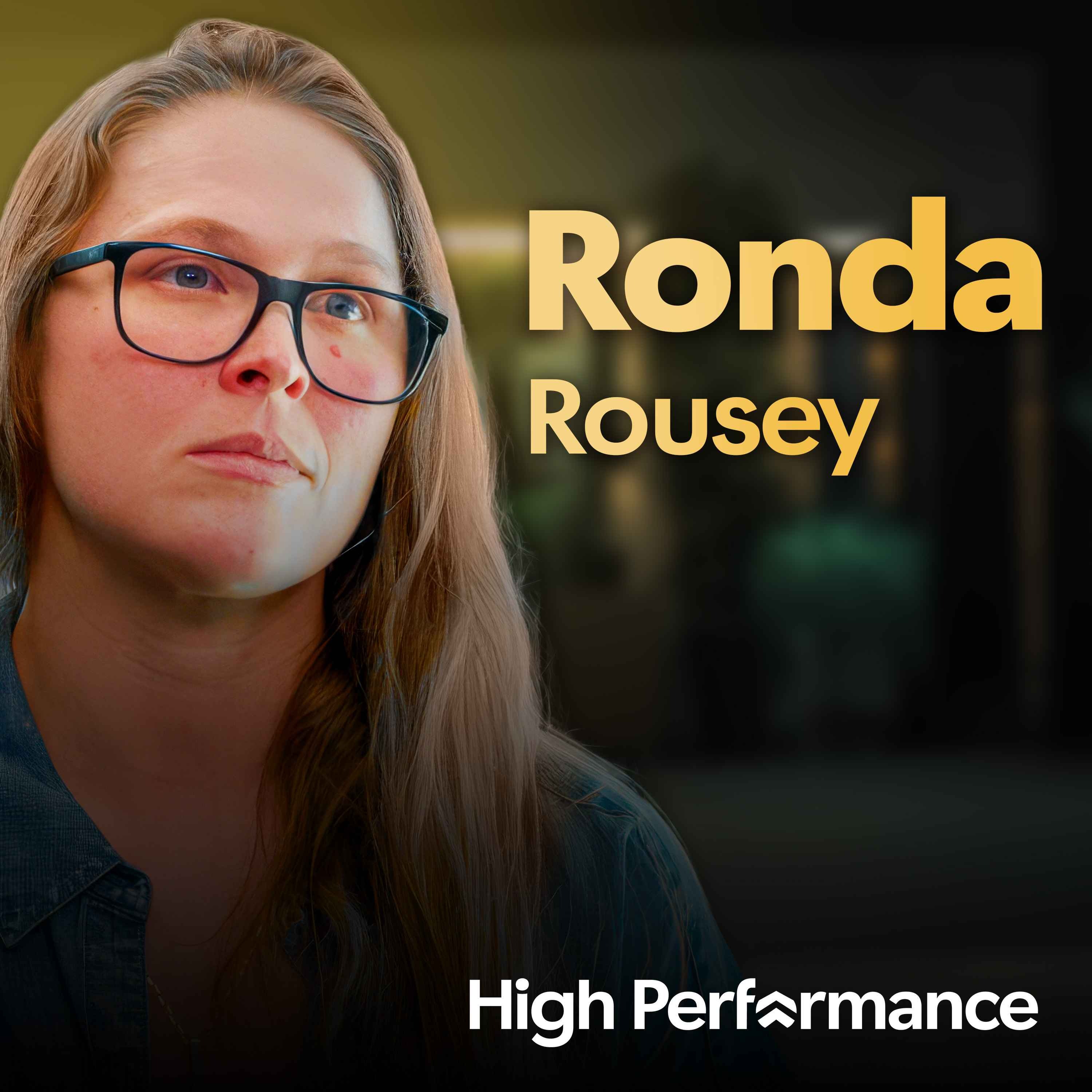
Loading summary
Transcript154 lines
- [00:03]
Ronda Rousey
I don't touch gloves. At the beginning of the fight, the bell rings, it's go. It's the person who wants it most that's going to reach out and grab that victory in that moment. If you're the kind of person that's willing to do anything to win, you're the kind of person that's willing to put up with anything to win. You know, I feel like I'm really vilified by MMA media at this point. I'm pretty sure if I walked into the arena, I'd be booed. Foreign
- [00:31]
Narrator/Host
is back in the spotlight on Netflix fighting Gina Carano.
- [00:35]
So I think you should really hear
- [00:36]
this conversation we had with her in Hollywood, because when most people talk about Rhonda, they talk about the knockouts, the titles, the losses. They rarely talk about the fact she walked into the final fights of her career already concussed, that she taught herself a submission that had never been done before in ufc history in 14 seconds, while secretly hiding a brain she was terrified was breaking down. This is Rhonda. Beautifully unfiltered.
- [01:04]
Interviewer 1
Enjoy. Would you mind just describing the mindset of a young Ronda Rousey competing in judo at a young age? Like, what was happening in that brain? What was happening on that mat?
- [01:19]
Ronda Rousey
Well, yeah, the fuck you mentality. I could write novels on it, but, yeah, there's certain things that I feel like fighters need to have, and it's like, strength, skill, work ethic, and there's gotta be, like, some fuck you in you. And you can tell when you see someone who's just competing and someone that's really trying to hurt somebody. I think it's just a safe environment where those things are allowed and you don't have to control yourself. You have a referee or someone else there to stop you. You know, when you have that much, like, pent up frustration, anger at what's unfair in the world. I don't know. It's something that I love and I'm great at in a kind of way. And I don't have to feel guilty about it. I'm actually praised for it, and I'm able to do amazing things with that. And that's one reason why I feel like combat sports are one of the best outlets for kids going through a really troubled time, because you're always taught that any kind of negative emotion or action is bad, and it's just such a great way to channel all those things into something, you know, productive and positive. But, you know, at that age, I just wanted to, like, be, like, respected and Be great at something, you know, I was like the littlest of all my sisters and as a swimmer, I was just like mediocre, you know, I wasn't winning anything. And so once I won my first judo tournament, I got like addicted to that feeling of like I won and, and it was kind of weird when judo is not a big sport here. So at school it was like I had an alter ego. I was like this nerd at school and then I would go to judo on the weekends and I was like this up and coming prodigy of judo. And then I'd go back to school and be a nerd, you know. So it became like the place where I had not just the most self respect, but outsider respect and status and stuff like that.
- [03:17]
Interviewer 2
See, I'm interested to hear you talk about the addiction to winning because I'm the son of a boxing coach. And the bits in your book that I found most painful to read were when you spoke about the relationship you had with some of those coaches. And I'm wondering about whether that addiction put you in those situations that in normal circumstances would be unacceptable, but you decided to find a way of normalizing them. And I'm interested if you tell us a little bit about those relationships.
- [03:51]
Ronda Rousey
If you're the kind of person that's willing to do anything to win, you're the kind of person that's willing to put up with anything to win. And especially in a obscure sport like judo, there's not a lot of high quality coaches in the United States and there's so many people vying for the very limited time and attention. And so in order to get that, you're willing to, you know, put up with behaviors normally wouldn't put up with or not speak up when you see other people, you know, being talked to or being treated in a way.
- [04:24]
Interviewer 1
What sort of behaviors? Like what would you say with your judo coach was the lowest?
- [04:29]
Ronda Rousey
They're allowed to yell at you, they're allowed to insult you, and you can't say anything back. My coach when I was 16 years old, dislocated my jaw. Like you shouldn't have been putting that kind of force on a 16 year old girl's jaw. But at the time I was like, oh, this is just what I need to be tough. You know, this is what I need to be able. Or, you know, it's just like, this is what I have to put up with to get the best training that there is. And we had like a coach, Big Jim, who would like go on these rants about how Women can't defend themselves against men and would, like, grab us by the neck and be like, well, Celia, what would you do? Like. Like, kind of like part of his grant. And he even did the same thing, like, you know, to my mom once at a judo clinic, and she, like, yelled at him on the spot. But, like, this is someone who did this publicly in front of people. I'm not making this up.
- [05:14]
Interviewer 1
He felt safe to do that in some ways.
- [05:16]
Ronda Rousey
Well, I think it was because no one could stand up to them because they're like the kings of their little fiefdoms and there's no oversight, there's no anything. They're the national coach, so this is what you have to put up with. So when he would go on these rants, I would literally be inwardly rolling my eyes, like, here goes Big Jim on his rant about how women can't defend themselves. And he's grabbing my neck and I'm just having to sit through this so he can just shut up and train me. And I know that I could kill him right now, but what is that gonna do? If I mouth off at him, he's gonna kick me out or whatever. And then where else am I gonna train? And so you're kind of stuck in a position with no options, and then you're conditioned at a very young age to accept whatever behavior you have to in order to get the best training later. Like with my coach, Edmund, in mma, he'd become a father figure and a sibling and then also a coach. And we became too much control over my life and wanting to know where I was and what I was doing at all times, and just. It got to a point where, you know, me and my family literally had to stage an intervention and be like, these are the boundaries in black and white. And we either adhere to these boundaries or we can't continue on as player and coach. But it was because I was professional in bringing in large amounts of money that I could put my foot down and I could dictate the boundaries. Whereas when I was an amateur athlete and working with the national coaches, where there was no choice, I just had to put up with it, or.
- [06:50]
Interviewer 2
What advice would you give to anybody watching this now that might find themselves in a situation where those kind of unacceptable behaviours, maybe not as extreme as someone dislocating your jaw, but where they feel, this is a little bit uncomfortable, this is a bit unacceptable.
- [07:07]
Ronda Rousey
I would always have a plan B. I would always be. I would always have an alternative in mind. And at that point in my life, I felt like there was no alternative. And if there. If you feel like there isn't, you should be piecing one together at all times and always have something that you could fall back on or a change of plan so you don't feel like you're trapped in a situation.
- [07:31]
Interviewer 1
Did you ever feel like walking away?
- [07:33]
Ronda Rousey
I mean, I did at one point after the 2008 Olympics, I was like, you know what? I'm just gonna, you know, get an apartment and a dog and be a bartender, and I'll be happy with that. And I wanted so badly to be happy with that, but after a while, I just. I don't know. I couldn't force contentment upon myself, which I desperately wanted to, but. But you know what people watch in the bars a lot is mma. So I was sitting in a bar, watching mma, being like, I just want to be a bartender. And I'd be watching this on TV and think, like, oh, he did that wrong. Oh, no, you should have done that. And so I would. I would basically call these matches and correct the fighters while I was standing behind a bar. And people would be like, you don't know what you're talking about. You're. You're some dumb chick. I'm like, I got a Olympic medal at judo. And they were like, judo doesn't really work in a fight. So I was like. I felt like I had a chip on my shoulder not to prove that. Not only to prove that I am a great fighter, but also that judo is a really effective martial art and that women can do it. And I don't know why I found these things personally offensive. I was personally offended by people thinking these things. And, I don't know. I tried. I tried to not do it is basically what I'm saying, but I couldn't not fight.
- [09:03]
Interviewer 2
Close your eyes. Listen to Monday.com. feel the sensation of an AI work platform so flexible and intuitive, it feels like it was built just for you. Now open your eyes, go to Monday.com, start for free, and finally breathe.
- [09:17]
Verizon Advertiser
Now more people than ever can bring in their bill for a better deal at Verizon. Got AT&T or T Mobile. We got you Xfinity or Spectrum. You too. So tell your friends, your family, your quirky neighbor, Jeff, grab your megaphone and yell it from the rooftop. Get a better deal at Verizon, because chances are anyone in shouting distance is included. Bring in your at&t. T Mobile, Xfinity or Spectrum bill, and we'll give you a better deal on the best Network. Come by Verizon today. Best network based on RootMetrics. Best overall mobile network performance US second half 2025. All rights reserved. Must provide recent consumer mobile bill in the name of the person redeeming the deal. Additional terms, conditions and restrictions apply.
- [09:49]
Lowe's Advertiser
Pool days call for cookouts and lots of laundry. This Memorial Day at Lowe's, save $80 on a Char Broil Performance Series 4 burner gas grill. Now just $199 plus get up to 45% off. Select major appliances to keep dishes, clothes and food fresh. Having fun in the sun is easy with us in your corner. Our best lineup is here at Lowe's. Valid through 527 while supplies last selection varies by location. See associate@lowe's.com for details.
- [10:23]
Interviewer 1
So how do you go from sitting in that bar watching MMA to becoming the most famous female MMA fighter that we've ever known? How did it begin? What did you do?
- [10:36]
Ronda Rousey
Well, it actually started when I was doing judo. Cause on Thursdays the coaches wouldn't show up. I would just fucking destroy everybody. In the ufc. Not in the ufc, all the guys. I was just tapping at everybody and throwing everybody. And, you know, judo, Maximum efficiency, minimum effort. I'm a fucking ninja, you know.
- [10:56]
Interviewer 1
What I'm intrigued with here though is like wanting to fight in the UFC is one thing, but making it happen is another. Like what do you do? Do you pick up the phone to Dana White? Do you like, how, how does it happen? Like you've broken down doors for other women to walk through for the rest of all time?
- [11:11]
Ronda Rousey
Well, the. Since there was like a glass ceiling there, the spot below the glass ceiling was a Strikeforce championship, which basically only there because Gina Carano, her dad was connected with the Las Vegas Athletic Commission and started sanctioning women's MMA fights just for her. And she ended up getting, you know, so much support and everything with her matches that they basically created the Strikeforce 145 division championship for her to fight for. And you know, one division, they ended up adding 135 pound division later as well. But I had fought previously at 154 because we weighed in the day before for judo. And I had like years of battling like eating disorders and stuff like that. And after I was vegan for a while, it really helped like reset my relationship with food.
- [12:14]
Interviewer 1
And, and what damaged that relationship with
- [12:16]
Ronda Rousey
food, it was just having to make weight on a deadline since a very young age and not doing it healthily. You know, like you're 14 years old and you're expected to lose £5 by the end of the week. I'm like, I'm gonna eat 10 cookies this morning and then not eat for the rest of the day. You know, I wasn't getting any help. So I started to, yeah, not have a healthy relationship with food. I was training somewhere where I didn't feel wanted. The best part of my day was when I was eating, basically. And so then it just fostered a dysfunctional relationship with food. And then I was starting to do all these different kinds of training and stuff like that. Boxing really made me drop a bunch of weight. And so once I started doing mma, my weight was dropping to where I was walking around at my fighting weight, I was walking around below my fighting weight. And then this chick Misha comes along and wins the 135 championship title. And I was like, oh, my God, this girl's actually cute. Like, she actually, like, looks cute. And it wasn't very common in MMA back then. And so I was like, there's an opportunity here. Like two hot chicks fighting, like, everyone's gonna go nuts. Especially if, like, the match is awesome and we create some drama with it. And I was just, you know, I saw an opportunity there and I seized it. And I was really afraid of her losing if she defended against anybody first, and she was the one that I needed to beat. So then I basically started like a social media media campaign of, like, I should be able to have the next title shot because I'm hot. And so then she was like, you know, like all the other women at the time playing the Miss America role of trying not to offend anybody and take, you know, be as non controversial as possible. And was saying, oh, you know, Rhonda doesn't deserve the shot. She's Never fought at 135. You know, Sarah Coffin deserves the next shot. She'd beat Misha before. She was the previous champion. She was number one contender. It all makes sense. So then we were basically on an MMA podcast. We were invited to debate our points live.
- [14:36]
Interviewer 2
But can I jump in? Because I think for people listening to this conversation, there's also the context that Dana White, the head of the MMA of ufc, has also come out and said that no women would ever fight on a ufc.
- [14:51]
Ronda Rousey
Didn't he?
- [14:52]
Interviewer 1
He said, like never, didn't he?
- [14:53]
Ronda Rousey
So going back to that, we got on for this podcast. I completely obliterated her in the argument, had her agreeing with me. By the end of it, match was set. But when I finally spoke to Dana, he was wearing a picture of me naked. On his shirt when I met him the first time. No. And I was like, foot in the door. Is that true? Yeah. Cause I was on the COVID of ESPN Body, and nothing. I mean, I had hand wraps. They were pink. He had that on his T shirt when I met him.
- [15:22]
Interviewer 1
Did he know he was meeting you?
- [15:24]
Ronda Rousey
No. Maybe.
- [15:25]
Interviewer 2
Did you point it out?
- [15:28]
Ronda Rousey
It was kind of like one of those Spider man memes. I was like. But then I knew I was funny. I was like, can I talk to you? I need to ask your advice about something. After. It was, I was there for Manny Gamburian's way in. I was, like, holding his water bottle. Maybe he knew I'd be there. I don't know. But when I talked to him, he said he couldn't look at MMA news anywhere without seeing my name on it. I made sure to be on everybody's basement blog to speak as controversially and be as polarizing as possible. And so he couldn't escape seeing media about me constantly. He couldn't escape seeing my face on ESPN Body. And so I made it so he couldn't get away from me. So by the time that I actually, coincidentally ran away, ran into him, he was primed to be convinced that I was the one. But, yeah, we didn't even talk about the UFC or getting me into the ufc. I just asked his advice about different things at the time, because I figured if you ask somebody for advice and they give it to you, then you become a reflection. Your success becomes a reflection of them.
- [16:33]
Interviewer 2
Yeah.
- [16:34]
Interviewer 1
So you wanted him to feel like he'd had a big part to play in what happened to you.
- [16:39]
Ronda Rousey
I just want him to feel like he was invested in my success.
- [16:42]
Interviewer 1
Yeah.
- [16:43]
Ronda Rousey
And what I'd learned from bartending is people don't tip you because they like alcohol. They tip you because they like you. And you have a very short amount of time to convince this person, I'm awesome. Give me $20. And so I kind of took those skills of, you know, how can I, like, get this person to be my friend very quickly? Along with, how can I get this person to invest my success? Along with, how can I even get an audience with this person in the first place and think that I'm a good investment all at the same time.
- [17:14]
Interviewer 1
Do you remember what you said to Dana?
- [17:16]
Ronda Rousey
I asked him, because I was, like, dealing with increased notoriety and stuff like that, being on espn, Bodi and stuff like that. And I asked him, how does he deal with it? How do you deal with all of this scrutiny and being in the public Eye. And all this stuff is very new
- [17:32]
Interviewer 1
to me, very flattering.
- [17:35]
Ronda Rousey
But he also gave me some great advice as well. And he said that he was in the Time magazine's ranking of most influential people. And Time magazine told him that it wasn't because the most people voted for him. It's because he had more people than anyone else write into Time magazine about how it was a terrible idea for even him even to be considered. And he said that the time and energy and influence you're having on this person's life to make them type out this long letter about why you shouldn't be on the list is a lot more influence than someone just clicking yes. And it's not.
- [18:16]
Interviewer 2
That's a brilliant judo move, isn't it? Using the momentum.
- [18:19]
Interviewer 1
Exactly.
- [18:19]
Interviewer 2
Using momentum for you.
- [18:21]
Ronda Rousey
Yes. And so he was saying, like, influence doesn't only have to be, you know, approval and stuff like that. So. And I was like, oh, my God, that's so awesome. You're so smart. No, I didn't say it like that. It's much less, you know, patronizing. I meant it. It was really cool advice. And, yeah, he said that. He told me later that after I left the room, never talked about MMA or UFC or me being the UFC at all, is that I left the room and he called Lorenzo right away, and he was like, I think I'm going to have to do this. I'm going to think I'm going to have to sign this chick. Cause we were supposed to talk for 15 minutes. We talked for, like, 45 minutes. Yeah, but it was just bartending. You know, it happened at this point.
- [19:01]
Interviewer 1
I want to. I want to share a line that you've got in your book. Your time in ufc.
- [19:07]
Narrator/Host
You said.
- [19:08]
Interviewer 1
And this is about the kind of fighter that you were in ufc. You said, a lot of people run from their limits. If you're a champion, you're supposed to be chasing your limits with a vengeance. So how did you decide what kind of fighter to be? Because I look at your time as a fighter in UFC and just think you were like a whirlwind from minute one till the exit, constantly fighting, constantly doing the media, constantly keeping people on their toes. How do you describe your approach to ufc?
- [19:37]
Ronda Rousey
How I would describe it, I guess it was just the way that I thought, which had to just be constant pressure and offense to constantly keep the other person reacting to me. Because if I'm standing over here and you're standing over there, then the amount of things that you could do is near infinite. But if I'm doing something to you. The amount of reactions you have to that are much more finite. If you watch me fight, I'd never like reset and bounce around and then come back in again. It's all one long exchange. I don't allow the other person to reset. I don't touch gloves. At the beginning of the fight, the bell rings, let's go. And that was something that I learned from judo, that my mom taught me, that most fights are won within the first exchange. The first time you touch someone and she would teach throw off the grip. Second you touch them, you throw it. Second you go. Because other people need a moment to get ready and that's the moment that you take them out. And plus, I had to have a bunch of fights in one day. You're trying to be as fresh as possible for the finals. So I was always trying to finish quickly, as fast as I, I could. And a lot of people, they think, oh, this is, I have a fight. This is the only fight I have today. I have 25 minutes for this fight. Whereas, you know, I was working with the limitation of having a decade of experiencing concussion symptoms. More often than not, I couldn't take that kind of punishment. So I had to end fights quickly. I had to constantly keep the person reacting to me, which is, you know, offense is the best defense kind of a thing. And so that was the way that it had to be. But it also forced me to create the most efficient fighting style that I think has ever existed.
- [21:21]
Interviewer 1
You mentioned really briefly there, you know, not getting hit was important for you because you were experiencing concussion symptoms. Would you mind just sharing that story with people that haven't read the book and don't realize actually what was going on in your world at that time?
- [21:34]
Ronda Rousey
There wasn't a lot of research about CTE and long term effects of repeated concussions when I was a kid. And so here's the kind of thing, if you had a concussion, you would just be told to push through it and tough it out and to don't be a wuss. And so if you keep training through a concussion and keep taking these impacts over and over again, you re aggravate it over and over again. So a concussion, if you just rested afterward, you would probably get over it in a couple days. I would keep experiencing those symptoms for weeks, even months on end.
- [22:09]
Interviewer 2
What symptoms?
- [22:10]
Ronda Rousey
Symptoms like photovision, like spots in your vision, like someone took a picture of you. Headaches, nausea, numbness. I would get my fingers, my lips and my tongue would get numb, even blacking Out. You could even black out for hours. I think my worst concussion, I got thrown on the back of my head at the finals of the Pan American Championships in Argentina. And I completely blacked out from the fight until I woke up the next morning. I lost that whole chunk of time. And, you know, these are things that I didn't rest after that. I kept training after that and kept taking falls and impacts every night until weeks later, I finally started to feel better. And so every time you get a concussion, it's easier to get the next one. And so by the time I got into mma, standing in the pocket and banging it out like a Diaz brother was just not in the cards for me. Like any significant strike that was landed on me, I would end up seeing stars and getting concussion symptoms afterward. And so I was playing a game of zero errors from the very beginning. And even though my fight's very fast, there's 50 rounds of sparring that goes into every fight. And so then it started to be that hits that were less and less significant were starting to give me concussions. And then right before my first loss, I slipped downstairs, knocked myself out on stairs while tearing my knee out at the same time, and went into that fight already concussed. And then, you know, after that match, I just. It was like a tipping point where even, like, a jab, a slap would give me a concussion. And then I went in for another match, and same thing. First time I got touched, I was completely out on my feet. And I just knew that even though I'd never been faster or stronger or better mixed martial artist, I just didn't have the hardware to continue taking those hits and fighting at the top level. So I had to make the decision to leave while not really having the freedom to talk about it, because I wanted to go into the wwe, and they already have a complicated history of concussions. And if they knew, I don't think they would have hired me. And if they knew how often I was getting concussions while working for them, they wouldn't have allowed me to perform as much as I did.
- [24:40]
Interviewer 2
But what upset me when I was reading some of the details of those concussions you were going through is I made reference before that. My dad was a boxing coach, and one of his mantras was that it wasn't his job to be brave on behalf of his athlete, so he'd often intervene if he could see what they couldn't. And I'm interested that. Did anybody ever try and step in for you? I get that you wanted to keep fighting and your nature. But where was the people around you that were trying to protect you? And look at the long game for you.
- [25:15]
Ronda Rousey
The thing is, I was very good at hiding it. Hiding that I was hurt. You know, I also came from a sport where there was decisions from the referee, so you had to make it look like if you're hurt, you were never hurt. If you were tired, you're never tired. And, like, you know, sparring and stuff like that. If someone hit me and I was, like, seeing stars or had photo vision, I didn't want anyone to know that. I was, like, embarrassed that anyone could hurt me and kind of, like, ashamed of it and maybe in denial.
- [25:44]
Interviewer 1
Did you lie to doctors?
- [25:46]
Ronda Rousey
I mean, yeah, I didn't tell them, as you know. I certainly didn't say I was going and concussed to a fight when I was, you know, they were like, how are you feeling? Fine. That's the end of the questioning. I did ask Edmund if he ever noticed anything, and he said now that I'd spoken up about it, he was like, you know what? You would go to the locker room. Like, there was like a small little locker room with just a shower and a bench. And you would shut yourself in the locker room and turn off the lights, and you would say, you just. The lights were bothering you. And I would shut myself in the room and be in the dark for a while and then come out and say I was fine.
- [26:21]
Interviewer 1
Does it worry you now? Because we know so much about head injuries and concussions and stuff. Is it something that you've thought about or do you. Do not.
- [26:30]
Ronda Rousey
I mean, before I went to WWE and had to get all those brain scans and everything checked out, I was literally crying every single time that I lost my keys or my phone, my husband. I was like, oh, my God, it's that I don't know where my phone is. I couldn't think of this word. It's like, you know. And I was constantly, like, crying, really upset about it. But then when I finally got scanned for wwe, which I was really, really nervous about, they were like. And they were like, wow, we're really surprised at how good your brain looks. We do have. There's Alzheimer's and dementia in my family from family members that were not, you know, taking all the impacts that I was. So for now, everything looks great, but for the future, I've just, you know, I'm just really appreciating all the time that I have with my family. And, you know, I never wanted to put a perfect body in the ground. I wanted to use everything that I had while I had it, and I didn't feel like I was saving myself for a long life. I just wanted to, like, your body is the greatest tool you'll ever own. And I wanted to use it until it was down to a nub, you know, like the hammer. That was my body. I wanted to do everything and build everything that I could. And so, I mean, I don't regret anything at all. And if I end up paying for it later, that's the price that I'm willing to pay.
- [27:59]
Interviewer 2
Can I ask you about your attitude to being a champion, though? Sure, because there's no. Yeah, well, I think there's a really interesting analogy that you use about watching the documentary of a polar bear.
- [28:12]
Ronda Rousey
The polar bear. I was going to say. You're about to say the polar bear. I can't. Tell me about the polar bear.
- [28:16]
Interviewer 2
No, you tell us about the polar bear.
- [28:19]
Ronda Rousey
So the polar bear. Well, this is so funny coming from me because I'm a woman, but I was watching this documentary about polar bear, and it was basically saying that the beginning of their breeding season, the male polar bear will find a female and basically fend off any other males that come for the entire breeding season. And it starts off and he's looking all white and fluffy and all jacked from eating seals. And every single male that comes, he's got to fight again and again and again and again, and he can't go to eat and he can't rest. You can't anything. All these other male polar bears are all eating seals and coming in all fresh. And this guy has been fighting for weeks, and as it goes on, his fur is, like, covered in blood, and he is, like, really thin and emaciated. And by the end of the breeding season, you know, he's like, okay, bye. And then the girl polar bear goes off. But, like, I always thought, like, that's what a champion looks like. You know, you're defending the top of the mountain, and you don't wait until it's the optimal time for you. When you're feeling great. You defend against all comers at all times.
- [29:36]
Interviewer 1
How much pride do you have when you reflect on that period where there's no question it's undeniable that you were being put under huge pressure by ufc, by Dana White, to keep fighting? You were the girl that always said, yes. You were always there. You were always accepting any fight that came your way. You must be so proud of what you managed, the places you managed to take yourself to in that Period.
- [30:01]
Ronda Rousey
Yeah, I am. I mean, now more in hindsight, it's just so, like, in it at the time. That's why I got this tattoo. This is how many seconds it took me to win all my fights.
- [30:12]
Narrator/Host
Go on, read them out.
- [30:15]
Ronda Rousey
26, 57, 25, 25, 49, 25, 39, 267. That was still not.
- [30:25]
Interviewer 1
You have to make excuses for that, by the way.
- [30:27]
Interviewer 2
Oh, my goodness.
- [30:28]
Interviewer 1
You still won the fight.
- [30:29]
Ronda Rousey
I was still in the first round. All right, all right. 267, 54, 289, 658, 66, 16, 14, and 34.
- [30:39]
Interviewer 1
And which of all those numbers are you Most proud of?
- [30:42]
Ronda Rousey
14.
- [30:44]
Interviewer 2
Talk us about that.
- [30:46]
Ronda Rousey
Well, that was against Kat, who was actually my only opponent who I still keep in contact with. I think she's fantastic. She actually came out with a flying knee. She just came out right at me, which I was like, balls good on you. She came out with a flying knee. I sidestepped. She got me in a headlock, and she was taking me down with a headlock. And it was only because of all the years of judo and knocking myself in the head, giving me all those concussions that I had to round off off of my head to get. She was on her all fours, and I had been practicing this arm bar that I basically looped my arm through backwards, but I'd been passing it the other way around. So I did it for the first time ever upside down, in 14 seconds at Staples center in my hometown. Yeah, every single moment that happened in that fight had never happened before in the ufc, but that's like the fighting style that I created for myself. It's all concepts and being able to not reciting things that you memorized, but being able to make decisions based on the situation that you're in, and the most effective way to get where you want to go. And so I felt like it was the perfect example of what my fighting style is, and that's being able to invent something that's never been done before on the spot and win a fight in 14 seconds, and it's still the fastest ever title submission in history. Thank you. Thank you.
- [32:10]
Interviewer 2
Go on joining in on that one.
- [32:12]
Ronda Rousey
Thanks.
- [32:15]
Narrator/Host
When your business starts growing quickly, one of the things that can really slow you down is fulfillment. But that's where shipstation comes in. It basically puts everything you need in one place. Orders, inventory, returns, analytics, and connects with over 200 sales channels, so you're not jumping between loads of different tools. It also compares rates across carriers like USPS, UPS and FedEx, including your own discounted rates, so you always get the best option. And what I like is the automation side of shipstation. They pack, they pick the best carrier, they find the best rate, they print the labels in bulk, they send tracking updates automatically returns management gives you data on what items come back and why, and analytics show where to optimize. One million businesses have trusted ShipStation, and if I were running an ecom business, this is exactly what I would use. Because the time you save on shipping is time you can spend growing the business that you love and doing the things you really enjoy. Try Shipstation Free for 60 days with full access to all features. No credit card needed. Go to shipstation.com and use the code HPP for 60 days for free. 60 days gives you plenty of time to see exactly how much time and money you're saving on every shipment. That's shipstation.com code HPP shipstation.com code HPP what if the real question isn't where you're going but the adventures you experience along the way? It's time to set your sights higher, on peaks still to be climbed, rivers still to be crossed, and greater dreams to pursue. It's time to embrace the impossible with Defender, a family of vehicles built around capability, durability tested on some of the most difficult terrain. Defender defines tough luxury, and I should know. I've driven one for the past three years. I have the Defender 130, but from the compact confidence of the Defender 90 to the versatility of the 110 through to mine the Defender 130 with seating for up to eight, there's endless potential. You feel it in the details as well. The rugged body design, the robust materials all working together so you can head out with confidence. And inside Clearsight technology helps you see the world around you in a new way. While the PV Pro keeps your navigation routes and playlists flowing seamlessly as you go. And with up to 89 cubic feet of cargo space, there's room for everything you need on your journey. Explore the full Defender lineup@land roverusa.com.
- [34:19]
Lowe's Advertiser
Pool days call for cookouts and lots of laundry this Memorial Day at Lowe's. Save $80 on a Char Broil Performance Series 4 burner gas grill. Now just $199 plus get up to 45% off. Select major appliances to keep dishes, clothes and food fresh. Having fun in the sun is easy with us in your corner. Our best lineup is is here at Lowe's, valid through 527, while supplies last selection varies by Location. See associate or lowe's.com for details.
- [34:52]
Interviewer 2
I was interested in a concept, I don't know if you're familiar with something called the Dave Chappelle coup. And what it means is there was a guy, I think it's in the 18th century that when he used to play chess, I think Dave Chappelle. No, not Dave Chappelle. No, the Deschapelle. And so when he would play chess he would always have to give his opponent an advantage because psychologically what that meant was if he was defeated, he almost had the safety net of going, you only beat me because you started at an advantage. Whereas if he won, it was a sign of his own superiority that even though I handicapped myself, I was still able to come out on top. And you don't refer to it as that, you refer to it as the contender's luxury where you were going up against these women that almost had advantages over you. They didn't have to drive the PR machine. They weren't the ones that were under the weight of expectation that you were experiencing. And I'm wondering if you tell us a little bit around how you used the contenders luxury or the Deschapelle coup to your advantage.
- [35:59]
Ronda Rousey
Well, I think it was more. I knew it was never going to be fair and I was winning unfair fights all the time. And it was that you had to be the best, not just the best on your worst day, but you have to be able to win every match twice on your worst day. Which is what my mom taught me at a very young age of not wallowing in self pity if a call doesn't go your way or something. You get screwed over at a match and she'd be like, it's your fault you lost. Who cares? The referee screwed you over. You had five minutes to throw that girl and you didn't.
- [36:33]
Interviewer 1
Why?
- [36:33]
Ronda Rousey
You already threw her. You didn't throw her twice. And so it just reminded me that I'm not supposed to just be better, I'm supposed to be leagues better. And so every time I was able to beat somebody that had those advantages over me, it wasn't like I'm not just better, I'm leagues better than you.
- [36:49]
Interviewer 2
Well then tell us about that. Because you're a mum now and there'll be lots of parents watching this that'll be thinking, how do I get my kids to understand that life isn't fair and it's how you play the hand you dealt with. You gave us some examples of what your mum had said of she wouldn't allow you to moan or complain. It was still your fault you got beat. How would you advise any parents then, to be able to inculcate that way of thinking into their own children?
- [37:20]
Ronda Rousey
Um. Man, that's a tough one. Cause my girl hasn't started doing sports yet. You know, I only experienced what my mom did with me. Winning is a bitch, but revenge is a motherfucker. That I was 11, she would tell me that I would always get so devastated when I lost. This isn't like a new thing. It would break my heart. And my first Junior Nationals, I lost. And I shut myself in my room and cried for a week. I wouldn't come out. I was 12, and my mom never told me not to be upset, Never told me that it's okay to lose. She told me that it's a huge advantage that I have and that I let it hurt me and still keep doing it over and over again. She would say, you want it more than anybody else. And that's why in every match, there's a moment where it's up for grabs, and it's the person who wants it most that's going to reach out and grab that victory in that moment. It taught me that being willing to get your heart broken over and over and over again and not allowing yourself to care any less and not guarding yourself from that hurt or becoming callous to it is a huge advantage. And so, yeah, that's why I take losses really, really hard. But it's also why I train so much harder than anyone else.
- [38:48]
Interviewer 1
Your big defeat in Australia clearly hurt. I mean, we've both read many books over the years. I haven't read very many books that have shared the searing. It's not even pain. It felt like so much more than that for you. I mean, there was a line in your book after your defeat to Holly holm. This is November 2015. The phrase in your book is, dying would be better than this. It really hurt that much?
- [39:16]
Ronda Rousey
Yeah. I mean, no one else will get it. Everyone will be like, you made such a big deal of it. You should just get over it and all these things. But those are all said by people that would never be in that situation. So there's a reason for that. And the only reason I'm in that situation is because I allow things to hurt that bud. And that I allow something like that to be that important to me. And, you know, no one is ever going to get it. And the pursuit of being understood by strangers is a futile one.
- [39:52]
Interviewer 1
And for those that haven't read the book, would you describe the pain for them.
- [39:56]
Ronda Rousey
I didn't want to leave my house. I didn't want to do anything. And my husband, now boyfriend, then, was like, you gotta leave the house. It's been two weeks. I'm like, no, I am Gotham. I live in the house. And he was like, no, just get coffee. Let's just go get coffee. Drags me out of the house to get some coffee. All the paparazzi that have been camped outside of my house show up, start snap, snippeting away. Wanted to, like, you know, let us get footage of a real loser in the wild. You know, like, oh, God, this is the worst. So after I'd knocked all my teeth loose, I had to go get root canals on all my bottom teeth at once. And I'm literally sitting there after getting shot by paparazzi all morning, getting four root canals at once. Being forced to watch television and can't talk. And on TV comes TMZ sports. Ronda Rousey comes out of hiding, and it's this footage of me and, like, footage of me getting knocked out on repeat while I'm getting my teeth drilled into, getting four root canals at once, can't talk, fucking stuck into the sea and being like, this is the darkest timeline. I am in hell right now. This is the worst. And it was so bad that I was, like, literally laughing to myself. I was like, this is, like the humor of the universe is trying to, like, you know, kick me while I'm down, like, four root canals while watching your humiliation play out on TV for millions. It was. It wasn't fun.
- [41:32]
Interviewer 1
And how much of that pain do you still feel today? Not the root canals.
- [41:35]
Ronda Rousey
Not the root canals. I took the nerves out.
- [41:37]
Interviewer 2
Yeah.
- [41:38]
Ronda Rousey
You know, now I just kind of laugh at it also. Just kind of like it's just dulled over time, but it's kind of like. It used to bother me a lot how much people reveled in it and how much people enjoyed it, but now I'm just.
- [41:56]
Interviewer 1
Did they revel in it?
- [41:58]
Ronda Rousey
Yeah, they did.
- [41:59]
Interviewer 1
You know what I struggled with a bit around this time was I was reading the book written by someone that had been the greatest. They had won their fights, as you've just read on your arm with your tattoos, so quickly. They dominated so brilliantly. They had promoted the sport so wonderfully. No one had ever done it before. That one defeat didn't take away all of that success. And I was. I struggled reading the book, thinking, why did you allow that defeat to define you so much when what had gone before was many, many, many more times over success.
- [42:40]
Ronda Rousey
I think I had it in my mind that I had to make me being the greatest fighter of all time, something that couldn't be disputed even by the biggest idiot. And then it got to the point where everyone thought that I was exposed and a fraud and all hype and that everything that I'd done had meant nothing. I had to go back and watch some of my old fights because I was. I got into screenplays and stuff, and someone asked me to write my own biopic screenplay. So I was like, all right, why not? I'll give it a crack. And I hadn't watched my old fights in forever. God damn, so fucking good. And I don't even want to, like, say, like, every single little motion was like. And. And I was, like, inventing all these little things in the moment that, like, someone who doesn't know fighting wouldn't even realize how awesome it was. Like, I would backflip around somebody's guard or, like, flip from one side of the side, control to the other. Like these little things. Like, there was one fight where I stacked this chick with her legs with my arms one way and then came around backwards around her guard and then, like, trapped her arm with my shin without looking at it. And just, like, little things that people that sit around watching UFC's greatest knockouts over and over, they're not gonna realize how, like, brilliant, like, every little iota of movement was. And yeah, now I'm just like, oh, well, only the great can recognize greatness. And so, like, it made me realize that I'm at such a higher level than everybody else and everything was so efficient and so well done that unless you know what you're looking at, it just all looks the same to you. I look back at that because it was just like, you know, you can't tell in my house that I was a fighter. There's no, like, pictures of me and my husband doing MMA or wrestling or anything like that. It's a very normal looking house. I don't sit around thinking about, like, hey, remember when he did that thing? And so when I was forced to go back and look at it, I was like, God damn, you're the fucking greatest. And I'm so fucking proud because I was forced to go and look at it. I don't wake up and think it, but when I watched it, I was just like, damn.
- [44:59]
Interviewer 2
But what strikes me there is, like, the mental space you had in the moment to be able to think two or three steps ahead in terms of, I'M gonna. I'm gonna need this arm in a second to do that. But it also strikes me that you had the mental space to actually stop and go back and look at your fights afterwards. Do you think you'd have benefited from having more time between the fights to do precisely that rather than keep saying yes? When Dana White was announcing in the press conference after one fight that you're gonna fight again eight weeks later, do you feel if you'd had learned to say no to the demands and give yourself that space, you could have extended your career?
- [45:42]
Ronda Rousey
Well, I didn't learn to say no. I didn't learn to say yes. I made a deal that you bring me into the ufc, I will be your fucking girl. I will fight whenever you need me to fight, whoever you need me to fight, and that was part of the deal. And, no, I don't wish that I reneged on my deal. And I am happy that all the women after me don't feel beholden to that, that he took a risk on me. In hindsight, it looks like it wasn't a risk at all, but he was a huge risk at the time, especially with MMA already being illegal in several states. It might being a bad look on the UFC to have, like, woman cut up and bleeding and getting beat on television when they were calling it human cock fighting and. And stuff like that. It was a big risk. And so, no, I don't regret promising to do that, and I don't regret making good on my promise.
- [46:35]
Interviewer 1
Let me ask you this. Did you leave anything on the table at the end of your UFC career?
- [46:41]
Ronda Rousey
No. I literally left when my body couldn't fight anymore. You know, I gave it every single iota of my being that I had, and for a lot of people, that wasn't enough, but for me, that's the only thing that would be enough.
- [46:58]
Interviewer 1
You said in your book, my body took as much as it could until it broke, and they hated me because I didn't have more to give.
- [47:07]
Ronda Rousey
It's pretty accurate in my mind.
- [47:09]
Interviewer 1
They hated you because you didn't have more to give.
- [47:12]
Ronda Rousey
Well, you didn't experience it, but, yeah, explain that. Explain what it's like to have everyone hate you.
- [47:21]
Interviewer 1
Surely there was. They were saying, you know what? You've done everything. I can't think of a champion that gave more than you. So why were people not able to go at that point, you know what? You've given your everything.
- [47:31]
Ronda Rousey
I ask the MMA media that. They're the ones saying it.
- [47:34]
Interviewer 1
What were they saying then?
- [47:36]
Ronda Rousey
That I was A fraud. And I was hype and I was exposed and I was never anything and just lucky and all of these things, and that I wasn't gracious or a good loser or, you know, every other thing that I just assume at this point because I don't take the time to read it.
- [47:57]
Interviewer 2
Yeah.
- [47:58]
Ronda Rousey
But, yeah, everything that could be said that was negative was said. And, you know, I feel like I'm really vilified by MMA media at this point. And I'm not really, you know, well, welcome back. Which is why I haven't gone to a UFC fight since. Cause I'm pretty sure if I walked into the arena, I'd be booed.
- [48:20]
Interviewer 1
No.
- [48:21]
Ronda Rousey
Yeah, that's how it feels.
- [48:26]
Interviewer 1
But I don't understand that. Do you understand that?
- [48:31]
Ronda Rousey
I mean, I live it.
- [48:33]
Interviewer 2
And why does that. Why does that bother you?
- [48:35]
Ronda Rousey
Why? I guess I wish it didn't, but, you know, I gave them everything I had and it wasn't enough. But that's why a lot of people don't give everything that they have, because they don't want to face if it wasn't enough. But I realized it was enough for me, but not for people on the outside, but it really wasn't for them.
- [49:01]
Interviewer 1
You know, I've never experienced anything like you, but in a much smaller world. Back in the uk, I've had loads of shit and criticism that feels unjust, and it's given me the hardest, most difficult things I've ever been through in my life. And if it wasn't for my family around me, I would have really struggled. But I think that I see it differently to how everyone else sees it. And when I speak to others about it, they go, no, I don't really, but. And I'm like, well, no, I've lived it. I know that that's how what I've had. Because I've read the fucking messages. And I wonder whether I'd almost say the same to you, not to trample all over your lived experience, but you would have seen the negative and the horrible. But there is so much great and so much love out there for what you did.
- [49:46]
Ronda Rousey
I'm sure it's out there. I'm just saying. And I appreciate it. But specifically in the MMA community, I feel like not so much outside of it. I've seen that the average person on the street, people that I meet, like, at the grocery store and playground with my kid, everyone's so nice and gracious. But I'm just saying from, like, from the world that I came from, I don't think that is the way that I'm really viewed, but I don't really read their media or their comments or anything like that anymore.
- [50:21]
Interviewer 2
But is there a particular comment that you did read at the time that you can recall that stays with you?
- [50:29]
Ronda Rousey
No. I went like cold turkey on. I used to, like, it was really bad. I used to wake up in the morning and like, look at my tagged pictures and read my comments like the morning newspaper. But I had to, you know why? Why? Because I don't know, I wanted that, like, that hit of outside validation that I'm so happy that I don't seek that anymore. And I feel like maybe that's the only way that I would have been able to broken from it. But I think it's. It feels like everybody in the world loves you and is putting you on this pedestal. It like you feel like you have to keep that going. And when I felt like I. I lost it, then it was, oh, I can't look at it anymore. And every tagged picture, you know, I have people that literally are mentally unwell and spend hours out of their day basically coming after me and my family and my friends, like, posting negative stuff on their pages. My pages, if I have tagged pictures open, it's just completely flooded with images of me, you know, and any kind of embarrassing picture of me, like, getting knocked out, me covering my face when it was all messed up at the airport. People literally like, hound me with that so that I don't look at anything online anymore because that's all it ever is. I can't look at the comments, I can't look at the pictures, because it's just a wall of negativity waiting for me.
- [52:04]
Interviewer 2
See, what interests me about that is there's two bits in your story. One of them I thought was a really fascinating competitive advantage, and the other one just made me laugh out loud if I couldn't recount them. There was one when you were fighting that you used to not allow footage out there of what you were doing so you'd surprise your opponent. And I love that from a competitive point of view. So you were happy to be anonymous. And then the other one that made me laugh was when you remember recounting the sad death of Robin Williams, and you described being sat on a park bench deciding what you were gonna post on Twitter and then thinking, who gives a fuck about my opinion?
- [52:43]
Ronda Rousey
Yeah, get over yourself. Sit the fuck down. Sit down.
- [52:47]
Interviewer 2
Yeah, but they were two moments when I sensed in the book that you were actually happier in the shadows, not having to Be front and center, not telling people what you were doing, not giving people your opinion.
- [53:01]
Ronda Rousey
I was forced to realize the difference between outside validation and things that are validating in themselves. And, yeah, I realized that I was pandering to people after a while, like, getting attention to MMA and what I was doing. It was from promotion. It was for a purpose, it was for what I was doing. And it kind of got out of control to the point where I was constantly looking towards that, and my outside perception became intertwined with my, you know, my personal. My perception of myself. And once I was kind of forced to quit that cold turkey and just be in my day, I realized that I get a lot more satisfaction out of cleaning the algae out of a duck pond and watching my ducks get like, oh, my God, this is the best ever than being on a red carpet and then getting a bunch of hot pictures taken of me and putting it on my Instagram and, like, watching the likes go up to the millions, you know, it was. But I feel like I wouldn't have ever ripped that band aid off if I wasn't forced to.
- [54:13]
Interviewer 1
And we can't come towards the end of this conversation without talking about your husband. I mean, I think one of the most moving parts of the book is when you just had that defeat, and you're sitting there and you beautifully describe how no one really knew what to do apart from one person who was just staring at you, and you felt like, without even a word being said, he had your back. And that moment when Travis whispered in your ear, like, you've always been more than just a fighter. He obviously is a wise guy, and I'd love to know what you think he's done for you that's been so important.
- [54:47]
Ronda Rousey
Oh, God. He's like, we saved each other, what he did. I think he just always saw me as more than the fraction of myself that everybody else wanted to see. And I tell him all the time it was the best thing that ever happened to me because it wasn't just him. He gave me, like, a family and, I don't know, like, real love. And, I mean, I. I could go on and on about him all day. I don't know what. What else there is to say besides that. Like, you know, I feel like more at rest and recovered when he's around. You know, I don't ever feel like I have to be alone and to have my time, you know, like, our time is my time. And, yeah, I couldn't imagine getting through all of that without him, but he was just so Patient and so kind to me. And he never tried to rush me through anything, but he also never tried to enable the worst in me. But he just kept like the crepes and the chocolate coming and I was just like into smoking a bunch of weed and playing World of Warcraft and he was just like, I'll get a World of Warcraft count too. Okay, I'm gonna run raids with you and he's gonna help me get all these mounts. And he went through it with me and he didn't try to rush me through being depressed or anything like that, but he also didn't let me wallow in it.
- [56:25]
Interviewer 1
We've got some quick fire questions before we let you go and join your sisters in the bar. What are the three non negotiable behaviors that you and the people around you would ideally buy into? The sort of three things that really matter the most to you?
- [56:42]
Ronda Rousey
Oh, God. Honesty, I guess. Gratitude's one.
- [56:46]
Interviewer 1
Yeah.
- [56:48]
Ronda Rousey
Tolerance.
- [56:49]
Interviewer 2
What advice would you give to a teenage Rhonda just starting out?
- [56:53]
Ronda Rousey
I don't know, because I don't want to mess with my timeline. I'll just be like, you're, you're gorgeous. You're so beautiful. You're so much prettier than you think you are. Like a lot of, you know, insecurity about that. But everything else, I'd be like, oh, you just gotta figure it out. I don't know.
- [57:10]
Interviewer 1
What's your biggest strength? What's your greatest weakness?
- [57:13]
Ronda Rousey
My biggest strength is stick to itiveness. My biggest weakness is stick to itiveness.
- [57:22]
Interviewer 2
What's the single best piece of advice you've ever received? And why?
- [57:26]
Ronda Rousey
Oh, Lord. Best piece of advice? I don't know. The Travis Brown, you're more than just a fighter was pretty clutch at the moment. And why it came at the moment that I needed it the most.
- [57:43]
Interviewer 1
And the final message for people that have listened to this incredible conversation, something to leave ringing in their ears. Really. Your one golden rule, if you like, for living a high performance life, you
- [57:55]
Ronda Rousey
gotta be the best on your worst day. Because it's just you're not always gonna be on a good day when you need to be at your best and you can't be like, oh, I just had a bad day, you know, my mom would say all the time, whatever, what if the Olympics happens on a bad day? What if you break your leg in a normal match? What if you're sick? What if this, this or that? Because you have this one day that your whole life, everything you're training for, comes down to. You need to be able to dig deep and still be the best.
- [58:27]
Interviewer 1
Anyway, Rhonda, thank you so much. Damien. Jake, what a fascinating lady. A ball of energy, very emotional, massively talented, loads to say. I love that.
- [58:47]
Interviewer 2
Yeah. I thought it was a real privilege just to be in the presence of a force of nature. Yeah.
- [58:52]
Interviewer 1
And one of the greatest fighters that the world has ever seen. Someone that has done something that so few people, even if they have the innate talent to do, don't have the mental resolve to do. And I think my sort of overriding feeling is one of sadness, really, that she's done so much in her life, she achieved such highs, and yet feels she's not welcomed by fans of ufc and, you know, obviously is very emotional about it. And I just. I really kind of want her to understand that there are many, many, many reasons to be proud and positive and very few to be sad about.
- [59:29]
Interviewer 2
Yeah. Well, when we're doing the prep for this, weren't we? You found that great quote that said, a pioneer. You can always spot them. They're the ones with the arrows in the back. You know, she's been breaking boundaries, glass ceilings, however you want to describe it for women in combat sports since she first emerged. So that comes at a price, you know, and people don't like it. People do celebrate her demise in the sport, but that doesn't mean that she has to buy into that narrative. She's writing her own incredible story, and it was a privilege to hear some of it. The bit I took away was, I love that idea of just be your best on your worst day, because I think any of us, whatever we do, we don't have to be in the Octagon to be able to understand that. We all have our bad days, but how we still show up and do our best is still a defining characteristic.
- [60:17]
Interviewer 1
And she's funny as well, isn't she? Great sense of humour.
- [60:20]
Interviewer 2
Yeah. Well, in a book, she says, doesn't she, that she likes using profane language quite a lot. And I think you could see a moment where she said, can I swear? And then she relaxed and then started.
- [60:31]
Interviewer 1
Floodgates were open at that point. Yeah, apologies about that. I really enjoyed that, and I wish her all the best. She is one of my favorite guests for a long time.
- [60:39]
Interviewer 2
She was great. Yeah. Like I say, I hope the force of her nature comes through. For anybody that's been kind enough to come and join us in listening.
- [60:48]
Interviewer 1
Absolutely.
- [60:49]
Interviewer 2
Thanks, mate.
- [60:52]
Narrator/Host
Well, that was the incredible Ronda Rousey. And look, whatever you think about her story, in the cage. I really hope this conversation made you see another side to her. She gave everything she had, every single last drop of dedication. Sweat, blood, and then people still decided it wasn't enough. But actually, here she is going back into the Octagon happier than she's ever been. Surely she's found high performance on her terms. And if you enjoyed this conversation, please share it with someone that you think would love it and we'll see you next time. On high Performance.
- [61:46]
Lowe's Advertiser
Pool Days Call for cookouts and lots of laundry this Memorial Day at Lowe's. Save $80 on a Char Broil Performance Series 4 burner gas grill. Now just 100 plus get up to 45% off. Select major appliances to keep dishes, clothes and food fresh. Having fun in the sun is easy with us in your corner. Our best lineup is here at Lowe's battle through 527 while supplies last selection varies by location. See associate or lowe's.com for details.
- [62:15]
Verizon Advertiser
Now more people than ever can bring in their bill for a better deal at Verizon. Got AT&T or T Mobile? We got you Xfinity or Spectrum? You too. So tell your friends, your family, your quirky neighbor. Jeff, grab your megaphone and yellow from the rooftop. Get a better deal at Verizon because chances are anyone in shouting distance is included. Bring in your at&t t Mobile, Xfinity or Spectrum bill and we'll give you a better deal on the best network Come by Verizon today. Best Network based on RootMetric's best overall mobile network performance US 2nd/2025 all rights reserved. Must provide recent Consumer Mobile bill in the name of the person redeeming the deal. Additional terms, conditions and restrictions apply.
- [62:46]
McDonald's Advertiser
You may think you know McDonald's drinks, but you don't know them like this. From fruity refreshers like the Strawberry Watermelon Refresher and the Mango Pineapple Refresher with Popping Boba to crafted sodas like the Sprite Berry Blast with Berry flavored Sprite topped with cold foam. Who knew ice cold drinks could be so fire six? All new drinks are here. Try them all now at McDonald's. Refreshers contain caffeine.