← The High Performance Podcast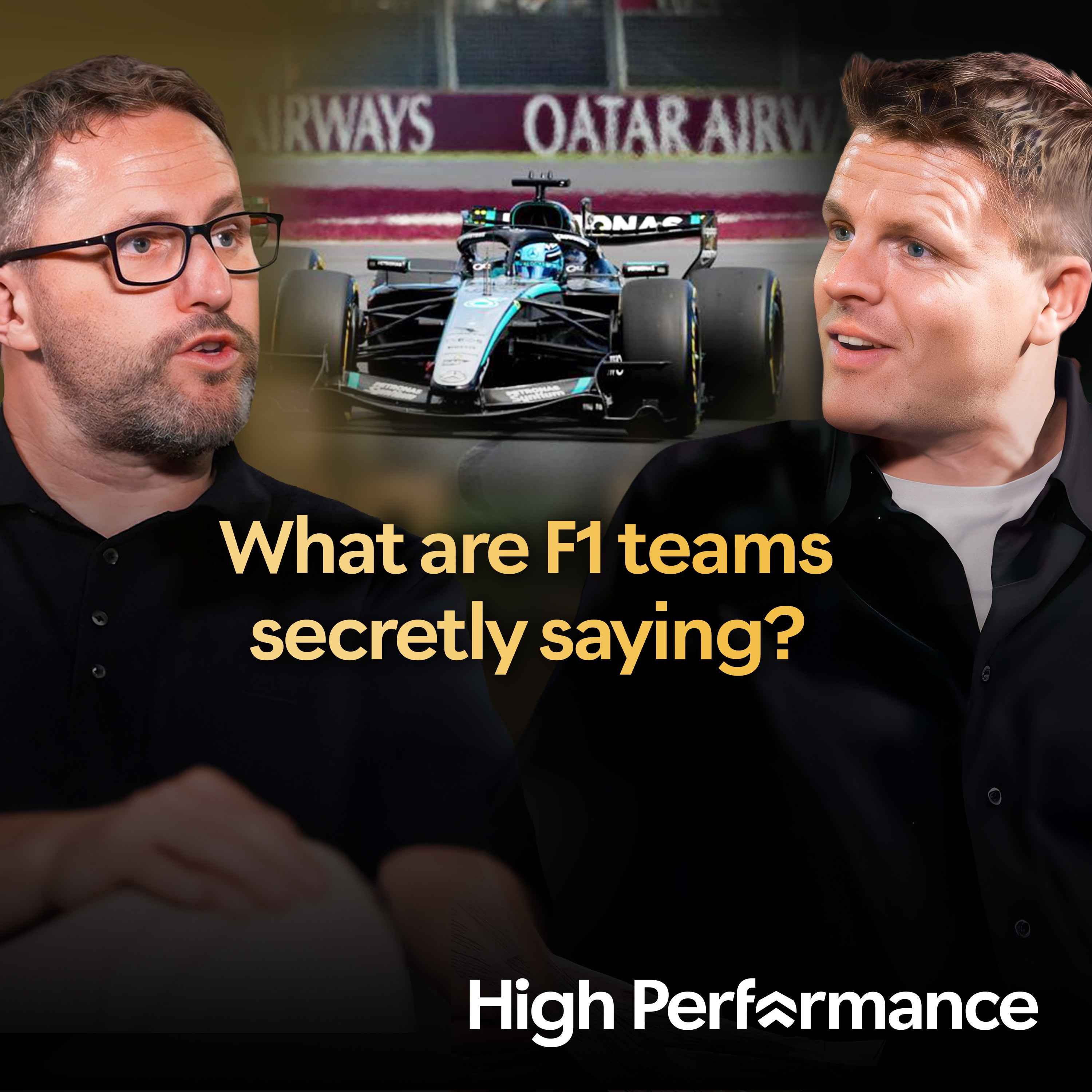
Loading summary
Transcript81 lines
- [00:00]
Sean Linda
What's up? It's Sean Linda from two Black Guys of Good credit. If managed supply runs is still on your to do list, here's your science upgrade. Walmart Business has the tech tools and services that make it ridiculously easy to stock up for your office or team. Think scheduled deliveries, multi user accounts and even it setup bonus with a Walmart business plus membership you get free shipping, spend analytics and 2% rewards. Join the smart way to shop at business.walmart.com terms apply.
- [00:31]
Workday/Acast Advertiser
Could AI help you do more of what you love? Workday is the next gen ERP powered by AI that actually knows your business. We help you handle the have to dos so you can focus on the can't wait to do's. It's a new workday.
- [00:47]
Jake
Dell PCs with Intel inside are built for the moments that matter. For the moments you plan and the ones you don't. They're built for the busy days that turn into all night study sessions. The moment you're working from a cafe cafe and realize that every outlet's taken the times you're deep in your flow and the absolute last thing you need is an auto update throwing off your momentum. Well that's why Dell builds tech that adapts to the way that you actually work. Built with a long lasting battery so you're not scrambling for the closest outlet and built in intelligence that makes updates around your schedule not in the middle of it. They don't build tech for tech's sake, they build it for you. Find technology built for the way you work@dell.com XPS built for you. Hi everyone. Welcome along to another episode of High Performance where myself and my co host Damian Hughes are just going to sit and talk about something that we know you are talking about at the moment today Damian the Australian Grand Prix, the first race of the 2026 Formula One season. But our plan is to take people into a part of this sport that they don't normally get to see. So I've got a voice message that I'm going to play from a former Formula One team principal. I've got a WhatsApp from a current F1 team principal. I've got a couple of messages and text messages from some mechanics and engineers who were working on the cars over the weekend. And it is so interesting sort of seeing everyone's different takes and trying to work out how they're, how they're trying to deal with the uncertainty of of modern Formula one. It was a race like no other.
- [02:20]
Damian Hughes
So did you enjoy it as a fan though?
- [02:21]
Jake
Jake It's a really good question, actually. And so early on in the race, we. We saw the two front runners, Charles Leclerc and George Russell, were going at it, wheel to wheel, over a few laps, and there were way more overtakes in this race. So there was about, I think, 45 in the 20, 20, 20, 25 Australian Grand Prix. There was well over like, 160 or something in this race. But here's what I want people to understand, right? There's overtakes in Formula One that matter because it is all the things that we love on high performance, it's skill, it's determination, it's talent, it's experience, it's effort, it's bravery. But then there are overtakes where you can just press a button on your steering wheel and drive past the next person, right? And those two, they're still an overtake, but they're so different. And, yeah, I love the fact that we saw wheel to wheel battling. Lewis Hamilton come out and said he absolutely loved the race. He said it was brilliant fun. And I think overall, yes, I enjoyed the spectacle. But I do think that we need to really tell the story to people at home that this is a different type of Formula One. We can't start talking about Michael Schumacher and David Coulthard from the 90s. We can't start talking about Ayrton Senna and Alan prost from the 1980s. This is not the sort of the heyday of wheel to wheel, all out, balls out, super brave racing. We're now entering an era where the technology on the cars is like, the number one thing in the sport. And actually, Damien, I'm interested, for someone who is not a Formula One aficionado, when a sport changes to this extent, what does it make you think about from your perspective?
- [03:56]
Damian Hughes
Well, what's intrigued me, as we've been speaking to some of the people that are at the sharp end of it, say, like Zak Brown when we met him at the end of last season. I'm intrigued as to how these guys are going to deal with change in their world, because as I understand it, the change is significant, that it's a completely different world that they're competing in. And I think in business, we often talk about a Vuca world where things are volatile, uncertain, complex and ambiguous. And I'm intrigued from a leadership and a cultural point of view, how these leaders and their teams are going to navigate this Vuca world to be able to come out on top.
- [04:37]
Jake
What world? Vuca.
- [04:38]
Damian Hughes
Vuca.
- [04:39]
Jake
Why vuca?
- [04:40]
Damian Hughes
Yeah, because it Translates as. It's an acronym that says, when the world is volatile, uncertain, complex or ambiguous, it creates its own challenges because we like certainty. Like, I'll be honest with you, it reminded me of. There's a. If you Google this or anyone listening to it, have a look at 3rd September 1967. It's called HD and in Sweden they changed where people will drive from the left onto the right side of the road. And it came about at 5 o' clock in the morning on the 3rd of September in 1967. Have a look at some of the Google images for it because you see people. There's basically like gridlock in all the major city centers where people are confused because they've had years of doing one thing and then they're having to navigate something different. And to me this is like a similar challenge. But then you add in the complexities and the high pressure of elite sport as well. I think it's going to be fascinating from a human point of view.
- [05:40]
Jake
I mean, you know, this was. I, I've. I honestly think that this weekend is like no weekend that we have seen before or since. I mean, there was a moment where Max Verstappen was. Oh, this is Max Verstappen, by the way.
- [05:50]
Damian Hughes
Yeah.
- [05:51]
Jake
And as he's driving along and he's making his way through one of the turns, like the rear axle, it looks like it just locked up and just spat him into the wall. We had Nico Hulkenberg, who is one of the most experienced drivers in Formula one, I think the third most behind Lewis Hamilton and Fernando Alonso on the grid at the moment, not even managing to take to the track and do a single lap because there was an issue with his car because they're now so complicated. We had Carlos Sainz in the Williams. I mean, it was a bad weekend for Williams. We could talk about that. Carlos Sainz finished 15th, a couple of laps down, but they didn't even think that his car was going to be able to take part. I mean, it sat out the whole of third practice and Saturday qualifying because the car just suddenly came up with a fault that basically killed like all of the electrics in the car. And this was a, this was an issue that they were finding not just in Williams, but right up and down the grid. And then Oscar Piastri making his way round on the, on, on his way to the grid to line up to start the race, crashed the car. And again, I heard him and he was sort of being careful about what he said, but the word on the street that I've heard is that he just had way more power in a certain corner than he was expecting. So the whole thing was different. You've got Cadillac coming in. I mean, the fact that, you know, that both cars started the race is. Is probably a success for them. The fact that Sergio Perez got to the end was. Was important, although he was a few laps down, had a nice text message from Graham Loudon. But you've just got people in the sport trying to deal with stuff they've never had to deal with before. And what makes a good team principal and a good driver and a good mechanic and a good engineer doesn't necessarily make you someone who's good at coping with and dealing with change. And I just wonder what you've learned over your years in your world, that maybe if someone who's currently traveling with the Formula one circus and making their way right now to China for the second race, they can hear you say that maybe with the sort of fear and the doubt around change and a bit of uncertainty can maybe help them.
- [07:46]
Damian Hughes
Well, it's a brilliant question because that applies well beyond sort of the world of Formula one, I think when things change. I often think of that famous quote, it gets attributed regularly to Jeff Bezos that he talks about that when you look at 10 years out and everyone says, what's going to change in the next 10 years? He says it's far more helpful to start with the question, what's going to stay the same? And if we start by looking at what's going to stay the same, we can then build on the foundations of what we know and what we have some degree of certainty about. So if I was working within that world of Formula one, at the moment, I'd be looking at what are the elements that we do get to control that are the same. And when Toto Wolff, when we first asked him that question of how much of your success at Mercedes is about the people and how much of it is about the engineering, his answer was unequivocal. He went, It's 100% people. Get the people right, and the engineering solutions will follow. So if I was in that world at this moment in time, that's where I would be investing most of my time and energy, sort of reminding people of what they're good at, reminding people of how far they've come to get this far. You know, to remind them of their ability to work well together, to communicate, to reinvest in each other's confidence, make sure cohesion's good, and you do all that by that phrase that we often use here, Jake, success leaves clues. Go back and revisit your successes and work out what are the controllable, repeatable factors. And they're often about behaviors that you can take, use and apply within this world.
- [09:23]
Jake
See, it's so interesting you say this because one of my favourite team principals in Formula one is Ayo Komatsu. You know, when Gunther Steiner was running the Haas Formula one team, communication was such a challenge. There was a moment where IU was just going to quit on the pit wall during a race weekend, right? It got that bad. So I think when he became the team principal of Haas, one of the big things that he wanted to sort out in that team was the communication was the openness, was the vulnerability, was the honesty. And I actually sent him a message over the weekend and I just said, look, Ayo, for our audience on High Performance, the lessons and learnings you've taken from how to deal with uncertainty will be so valuable for people to take into their own lives. Is there anything that you can tell us? And for those of you that are watching this on video, look at the reply. Damien, can you see, like, he sent me, didn't just send me a couple of lines, he sent me an entire message. And I think, what's an essay? Well, I think I should read it out because I do think it's really interesting. So this is a guy who's a current team principal in Formula one. One of his drivers had a really good race weekend. Ollie Bearman, who's done a couple of episodes with us on High Performance, he finished seventh. He was a lap down, but he was only just behind Max Verstappen in the Red Bull. It was a slightly more challenging weekend for Esteban Ocon, who finished just outside the points. But this is what he said regarding the changes and the unknowns. The challenge for us at Haas is to focus and control what we can control. Exactly what you just said, Damien. He said, what I've worked hard to do is provide clarity for the team and to share that clarity and align everyone along it. So, for example, we have a Ferrari power unit. There's no point in me worrying whether our Ferrari power unit is going to be competitive or not. That's out of my control. And by the way, the Ferrari power unit is competitive. They're not having a Honda situation. We can talk about that in a moment. He said, so what I need to do is focus on how we use Ferrari, how we work with Ferrari, how I can give them the best feedback so they can improve for us as fast as possible. He then goes on to say, I've also been preparing the team for potentially a really tough start to the season because of these huge changes. There are certain things I was doing with the team last year purely to build up unity and confidence so that if we know we're at the beginning of this season, I can turn around and say to everyone, we already know that if we stick together, we can solve anything because we proved that in the last couple of seasons. Again, success leaves clues, right? He's shown them, they can do it. He then finally says, changes are also a huge opportunity for a small team like Haas. We're agile, we're nimble. We need to embrace these changes so we can move fast. We to need got to simplify them and do the basics to an extremely high level. We've got to be there to capitalize on any opportunities. And one last thing in general, going back to control what you can control. Process is the biggest thing that we can control in Formula One. So focus on that rather than results. Especially in our sport, results are not something you can totally control. So focus on your process, don't force anything and the results will come. Those are my thoughts and mindset on how we take on this huge challenge. He then says, hope it's useful. Let me know anytime if I can be of any help at all. I mean, that's a guy who travelling the world running a Formula one team, by the way, who still took the time and the effort to share that for the audience of high performance. So thank you, iu. And what about the bit at the end of Damien where he talks about, you know, all of us, me included. As a Formula one fan, I'm obsessing about the results. So I'm looking at the best lap time, I'm looking at the long run pace, I'm looking at how the cars held onto their tyres. I'm basically saying that it was a really good weekend for George Russell because he won it, and a really crap weekend for Nico Hulkenberg because he didn't start the race. But actually there's so much more to it than that. The teams will know whether they've got the processes in place for eventual success, rather than just kind of being blinkered, if you like, by the fact that they've either won or lost on a given weekend.
- [13:12]
Damian Hughes
Yeah, I mean, what a really elegant response from. From him. But that was captured in that interview that you did with him, wasn't it? That was a guy that like just embodies humility And I think, again, what's interesting for him is that his story, you know, like, coming from quite difficult circumstances, like he shared with you on the podcast, this is a guy that has got it in a sense of perspective. You can hear that in the language that he's using. This isn't life or death to him. This is a bloke that is able to look at it with a degree of detachment. But that last point he makes there about the process, it reminds me of the research that was done by Teresa Amabile and Stephen Kramer. They wrote a brilliant book on it called the Progress Principle, where when they've studied successful people, it's the people that focus on the small steps, taking the next right thing, rather than the people that get fixated on the outcomes. Because as. As he's describing there, for Haas, if you get fixated on the outcomes, you're going to be fairly demoralized pretty quickly.
- [14:16]
Jake
So funny.
- [14:17]
Damian Hughes
But I think there's one other thing, though, that jumped out in his answer there, which is around their internal narrative. Do you know what I mean? Like, he's embracing that underdog mentality. Because we're an underdog. It means that we're not bound by history. We can. We can adapt really quickly. And I think you're getting a clue there as to the kind of communication he's putting out within his team. And that'll be fascinating to see how that underdog mentality plays out over. Over the course of a season. I've got a few questions for you that. Having looked at the results from this weekend and some of the outcomes, because the obvious story for me this weekend was Aston Martin, when I was looking at the headlines, that they were dominating the narrative. What? Like, can you tell us a bit more about that story and what you think they'll have learned from this weekend?
- [15:06]
Jake
Yeah, I mean, look, the biggest headline, really, okay, is. Is the state of the engine. So when they first drove the engine, the drivers reported such incredible shaking from the engine, from the power unit, I suppose we should call it a power unit, not an engine. It was shaking so violently that they said before the race that Fernando Alonso could manage 25 laps before he got nerve damage in his hands. And Lance Stroll reckoned he could manage 15 laps before he ended up with nerve damage in his hands. That's the level at which the car was bouncing around the driver. So the big problem here, right, is that Honda had a Formula one program. Honda then scaled back the Formula one program because the regulations were stable and there wasn't Huge change. And then this new. This new regulation came in and a lot of the really experienced, really talented people from Honda were reportedly no longer involved. Now, one of the issues is that the reports on Aston Martin only found out about the changes at Honda and the fact they were lacking experience. And there were issues at the very back end of 2025. So, like, November time. Well, there's absolutely no way with cars as complex and challenging as this that you could solve a problem in three months from realizing that Honda haven't got their house in order to having solved the problem. So you're ready to go for the start of the new season. So that was obviously a massive problem. And I think it's a really like. It's so indicative of the world that we live in, right, that the easiest thing to do is just to lay the blame at the door of Adrian Newey, because he's the highly paid Formula One legend that's gone into that team to design a car the like. If Adrian Newey doesn't have a Honda power unit that can deliver the performance that the other power units from Ferrari and Mercedes and the other teams can deliver, then it doesn't matter how amazing his design is, it doesn't matter the culture that he's created, it doesn't matter the people that he's hired. He simply isn't going to be able to get that car to win a race until they sort out the problems with the power unit. There was a moment early on where Fernando Alonso was running in the top 10. It didn't last, but I actually looked at that and thought, that's a mark of how good Adrian Newey is at designing cars. There's like a romantic sadness in me that it's a chance for us not to see the full performance of something that Adrian Newey has designed. Because I'm pretty sure that if you gave that car the best engine, I think it would just win a Grand Prix. I believe in the work of Adrian Newey to that extent, but there's also something here which is definitely worth Lawrence Stroll, the owner and other leaders in big teams thinking about. And I'd love to get your take on this, which is when you are creating a culture, it's so hard to create a winning culture purely born from the best people put together and told to be the best. And you've studied different cultures over the years, and I think, you know, we've seen it in football. Real Madrid, with the Galacticos, tried to do exactly the same thing. They just took the very best of the best tried to make it work. We recently spoke to Maurizio Pochettino when he had Neymar, Messi and Mbappe in his team at Paris Saint Germain and didn't win the Champions League. And he was telling us that you had three people that wanted to be the megastar and it was just an impossible situation. Again, there's so much for Lawrence and for Aston Martin, I think, to learn from the fact this has happened in the history of sport, in the history of business, in the history of life, and you can't rush and you can't buy success at this level. I don't believe it's going to take time and we should all accept that it's going to take time, I think.
- [18:30]
Damian Hughes
Well, that captures brilliantly, like, the research on it is like, the most cited professors on this are two guys called Baron and Hanan at Stanford. And they. They describe exactly what you've just articulated, Jake. It's. It said star culture, and the evidence has a star culture of recruiting the best talent, giving them the best facilities, paying them the highest salaries, and then just waiting for that talent to come together. If it works, the alchemy is huge. It'll be spectacularly successful, but the risk factor of it being successful is huge, that only 2% of star cultures do tend to thrive. The failure and fallout when it goes wrong is probably the most common one. So I think that this is going to be a really interesting season for Aston Martin to see what they do for it, how they do respond in adversity, because if they get it right, you say, as you say, all the ingredients are there for them to be spectacularly successful, but it's no guarantee of it. On paper, it looks like it's obvious that two plus two equals. Equals four in that world, but the reality is that often it actually is less than the sum of its parts.
- [19:41]
Jake
I've actually got a little DM that I think it would be nice to share with the audience as well. Mikey Brown, who is Fernando Alonso's number one mechanic. So he is like the number one main mechanic that works on Fernando Alonso's car, which is kind of like an honor, but also petrifying at the same time. Right. And again, I messaged him about how they're all feeling ahead of the new season and he said, mate, it's a really fantastic topic for an episode. Obviously, safety and wellbeing is a top priority. So therefore, we've got to adapt. We've got to adapt to this in exactly the same way as we adapted when Covid shut down the world for 12 weeks and we carried on flying around the world. So many companies adapted amazingly well and as did their staff. And 2026 is similar because it's got so many unknowns with the regulations, the cars, the rules, and also, of course, what's going on in the world currently. And, you know, we also. Damien shouldn't forget about the fact this is a global sport that's due to race in the Middle east in just a few races time. And it looks like the Qatar and the Saudi Grand Prix are both going to have to be cancelled at the moment because it's just not possible for them to reschedule them because there's uncertainty. They can't just take the races somewhere else. So it looks like Formula one gets hit with two races not happening as well, which is obviously not the biggest concern. But it is if you're working in a Formula one team, trying to do logistics. So we said, the thing I want people to understand is they're all focused on a race weekend. But we're not only thinking about this weekend and what's happening now, we're also thinking about what happens next. We're also thinking about the upcoming weeks. We're thinking about travel, we're thinking about safety, we're thinking about kit, we're thinking about Sea freight, we're thinking about personnel. Therefore, the biggest thing for us at Aston Martin is unity. Unity as a group is huge. Communication is key and it actually makes the uncomfortable. A better place to manage. I'm trying to think of something that would be okay for you. I hope that's all right. Basically, in the unknown, the process and the culture becomes more important than the performance, because performance is going to fluctuate. Culture is what keeps you steady through the season. So there we go. A very similar message to what IO said. Whereas we're getting obsessed with the performance. But it looks like the Formula one teams have understood that actually, if they get their culture right, then eventually you'll be okay throughout the season, whether you have highs and lows and successful or unsuccessful race weekends.
- [21:59]
Damian Hughes
Yeah, but what jumped out for me there from that message from Mikey Jake was. Was that idea that his brain has gone back to find evidence of how they've adapted in the past, like during COVID So he's got the confidence that we can do this and we're fine. That then gives him the confidence to be able to face into the unknown and know that you've got the resources and the minerals to be able to deal with it. As Adrian Newey come out and said anything around this because obviously his name is attached to this. This first weekend's underperformance. Yeah.
- [22:32]
Jake
And, you know, Adrian Newey is fully invested, right? He's gone there on a big deal. He's actually a shareholder in the Aston Martin Formula one team. So this is like. This is also. There will also, you know, be an element, I think, of Adrian where, like, legacy is something that he's thinking about as well. He won't want this to be his final car, the final kind of sign off from Formula One for him. And he will be acutely aware that in the history of life, in the history of sport, you know, you've seen people who build up this incredible body of work, and then one thing that doesn't work, like, sort of removes all of that. It, like, demolishes their legacy. That won't happen with Adrian because what he's done is so incredible. But I think there'll be a thought process from him there. I think what I would say is I've loved his honesty. I think Adrian is not the. Like, Adrian is not. Not a game player. Right? There are people in Formula One who are really political. There are people in Formula One who will not say things because it's the truth, but they will say things because they want you to think this and this will be the consequence, and then this will lead to that, and it might turn this into that. You know, there are people in that world who are thinking that far ahead, like five or six steps ahead. If I can just say something, it might just derail someone else and give me success. That's not Adrian Newey. Adrian is honest, simple, straightforward, incredibly bright. He doesn't need to play games, right? And what I love is that he hasn't been playing games. So he's come out and said, we won't be ready for a while. He's come out and just said we're not where we want to be. He's come out and said there are definitely issues with the power unit. You know, he has definitely kind of laid the blame at the door of. Of Honda. He's also come out and said he reckons it's the fifth best chassis in Formula One. I read that yesterday, and I think, again, that's him being really honest, and I think he's done his job well. But one of the challenges that Adrian Newey's got is that when you're now the boss, the team principal as he is, rather than just the designer, like the buck stops at your door and there's not someone above Adrian, whose job it is to get the power unit to be better. It's kind of. It's down to him, but I think actually he's dealing with it really well. But if without doubt, a challenging situation for a man who really gets his thrills from doing the work in the shadows, from designing that car, like, you know, some team bosses, we don't even need to name them, just love being in front of the camera. Right? That's not Adrian Newey. That is not him. But I think he's done really well.
- [24:53]
Damian Hughes
But I love, again, what I'm hearing there is the way that if you think of the three questions that invite pressure, what are the expectations? Do you have the ability to meet them? And what are the consequences of failure? And at the minute, the weight of expectation must be feeling fairly heavy for Aston Martin. And I like the fact that he's gone middle of the season, start assessing us. You know, he's addressed the abilities. Maybe the chassis or maybe the engine isn't powerful enough, but. But he's owning those two elements. And I can see how that message from Mikey, again, around the power of culture here, that's entirely consistent with what Adrian's talking about. Can I ask you, though, about. We've spoken about Aston Martin and their difficulties. What did Mercedes get so right this weekend?
- [25:43]
Jake
So I think it's a number of things that Mercedes have got right. I mean, the first thing is, I have to say I am hugely impressed by both their drivers. You know, George Russell dominated in. In that race, but actually, for me, the man who finished second, Kimi Antonelli, I think, was arguably more impressive because he had a huge shunt at the end of the final practice session on Saturday morning. It was in a really swift turnaround to get the car ready for qualifying. Thankfully for him, there was an incident in qualifying that slowed things down. It was a red flag, gave them more time to work on the car and get the car out. He then came out and delivered, like, the most blistering lap. And that is the. That is the heady era of a Fernando Alonso, a Lewis Hamilton, a Max Verstappen, a Michael Schumacher and Ayrton Senna.
- [26:27]
Damian Hughes
That's.
- [26:27]
Jake
That's the kind of thing they would do. No time in the car, a big crash that kills your confidence, all the pressure on the line. Couple of minutes left to get through the session and he comes out and bang, he puts in a fast lap. And you can't discount the importance of the drivers right this season. This is a whole new era of Formula one. And I mean, a really good example is that the way a driver uses their energy in the proceeding straight to give them maximum deployment in the following straight, especially if it's on a long straight, it's like a really important factor. So what we're seeing now in qualifying, we're seeing drivers before their first lap, before their hot lap. Sorry, they would fly over the line. They're actually not doing that now. They're actually start finishing their previous lap, slowing the car right down, building up as much energy in the battery, because there's now a huge battery element as well as a combustion element. And then they're trying to make sure. So the drivers are doing, like, harvesting energy, building up energy, not deploying energy in the same way, they're doing the kind of work that Formula one driver from even five years ago would just have their mind blown by.
- [27:29]
Damian Hughes
Wow. But, like, again, what jumps out for me on that, though, is, like, the mental bandwidth of a driver to be able to take on all these new skills, make all these new decisions. You know, like, I remember you telling me about your conversation years ago with David Coultard, where he was talking about some of the best drivers that he'd come up against and the fact that they were able to almost see minuscule levels of detail that other drivers weren't capable of. Yeah, just like, just remind me of that one.
- [28:02]
Jake
So I remember saying to him, like, what? Why? So David won 13 Grand Prix but never won the world title. I remember saying to him, what was the reason why you didn't win the World championship and others did? And he said, spare capacity. And I said, what do you mean? And he said, if you just put me in a car and just sent me out like, I. I could drive a car well, but when you put me in the heat of battle with the rain coming down and the tires degrading and trying to conserve fuel, but also trying to drive the car really well and going wheel to wheel with someone legendary like Michael Schumacher through a rouge. There was just. And it's only a half a percent, right? There was just a half a percent difference between David Coulthard in that situation and Michael Schumacher. And it just meant that Michael Schumacher was the guy that had the edge, which meant that he ended up, you know, dominating the sport and winning the world titles in that time. And so it's. It really is a. It's a very, very small margin between the haves and the have nots in a sport like Formula one, you know, the margin is. Is so minuscule and David, I think is, is really honest about that and, you know, we hear it a lot. I remember when we spoke to Ollie Bearman, he knew what was going on in one of the races because he was watching the big screen while he was driving around the track. So it's incredible. And it was also interesting how, like, different drivers felt differently about the races. Lando Norris said, we've come from the best cars ever made in Formula One and the nicest to drive to probably the worst. He said, it sucks, but you have to live with it and maximize what you get. Given Max Verstappen, I mean, obviously he, like, forever keeps teasing the fact that he's going to leave Formula One if he's not happy. He told the Dutch media that he felt no emotion inside the cockpit halfway through the weekend. So I think some drivers feel like that. I mean, someone talked about it as Formula E on steroids. I think that might have been Max, actually after, after the early season practice, before the season actually started properly. But then Lewis Hamilton at the end of this weekend said he absolutely loved it. He said the car was really fun to drive. He was. He finished fourth in the Grand Prix. He said it was really fun. He said it felt great. So as he said that before, that,
- [30:08]
Damian Hughes
like, he's a, like, I don't associate Lewis Hamilton talking about having fun when he's in the car.
- [30:14]
Jake
In his heyday, absolutely. Like when he was a young guy and I was working in the sport and he was at McLaren, he just. I remember going with him once to Silverstone and actually he was driving me around Silverstone in a Mercedes road car. Then I got the chance to drive him and Jenson Button and Michael Schumacher and they're all very different. And I've driven Fernando Alonso. I can talk one time about what it was like to do that. But Lewis, I remember we were sitting in this, it was one of the gull wing Mercedes cars and he was young. So this was in 09, probably like his third year in the sport, and someone's trying to explain to him what he needs to do. And he leaves the gullwing door open and he lights up the rear tyres and goes off down the start finish straight at Silverstone and the speed, like, slams the door and he's just laughing his head off. And I said, mate, like, you seem so happy. And he said, I just. I drive a car around a track, like the best car in the world around the track and get paid millions of pounds to do it. How can I not be happy? And then I actually think that over the last few seasons, basically since 2021, I think he hasn't actually been that happy. And I think Lewis Hamilton is the kind of driver who, when he is happy, he drives the car in such a different way. Like he needs to feel comfortable. And I'm not talking about comfortable behind the wheel of the car. I'm talking about comfortable in his private life, comfortable with himself, comfortable with where his head is at. I think that makes a massive difference to Lewis and I'm very excited that he finished fourth, that the car looks good, that he got out of it and said that he loved it. I can't tell you how much I'd love him to be fighting for the world title. We'll be right back after a quick word from our partners. I don't know about you, but I really love keeping my money where I can actually see it. Unfortunately, traditional big wireless companies seem to like hanging onto my money for me. For years I was overpaying for wireless simply because it's what I used to do. I didn't really question the high monthly bill, the extra fees, or those free perks that somehow end up costing me. Eventually I realized it didn't make sense, so I switched to Mint Mobile. Mint exists so that you can save money on your phone bill. Plans start for just 15 bucks a month. You get high speed data and unlimited talk and text on the nation's largest 5G network. Honestly, the wireless service is just as good as the traditional big carriers. You can keep your own phone and your number, activate with ESIM in minutes and start saving right away. So if you like your money, Mint Mobile is for you. Shop plans@mintmobile.com HPP that's mintmobile.com HPP upfront payment of $45 for 3 months 5 gigabyte plan required equivalent to $15 a month new customer offer for first 3 months only, then full price plan options available, taxes and fees extra. See Mint Mobile for details. At high performance, we talk a lot about performing at your best physically and mentally. But I'm going to be honest, high performance should also include the bedroom as well. And you know ED is more common than you might think. Thankfully, it's also easier than ever. Through himss, you can access personalized treatment options for ED if prescribed. HIMSS offers access to ED treatment options ranging from personalized products to trusted generics that cost 95% less than brand names if prescribed. No awkward waiting rooms, no complicated appointments. Hims brings expert care straight to you with 100% online access to personalized treatments that put your goals first. To get simple online access to personalised affordable care for ed, hair loss, weight loss and more, visit hims.comperformance that's hims.comperformance for your free online visit hims.comperformance featured products include compounded drug products which the FDA does not approve or verify for safety, effectiveness or quality. Prescription required. See website for details, restrictions and important safety information. Actual price will depend on product and subscription plan.
- [33:54]
Sean Linda
What's up? It's Sean Linda from two Black Guys of Good Credit. If Managed Supply Runs is still on your to do list, here's your science upgrade. Walmart Business has the tech tools and services that make it ridiculously easy to stock up for your office or team. Think scheduled deliveries, multi user accounts and even it setup bonus with a Walmart Business plus membership, you get free shipping, spend, analytics and 2% rewards. Join the smart way to shop at business.walmart.com Terms apply.
- [34:27]
Damian Hughes
What's your view on Lando then? As a current world champion, are you worried about that?
- [34:34]
Jake
The only thing I would be worried about with Lando. Well, actually there's a couple of things. Obviously his teammate having that issue before the race and not even starting the race would cause I think a little bit of uncertainty from the drivers about what's actually what's the deal with this car? Like, is that going to happen to me when I'm in the middle of a Grand Prix? Can I trust the car? He started sixth, he finished fifth. He was almost a minute off the pace of the Mercedes that won the race. I think the big concern for him, right, is that George, Kimmy, Charles and Lewis were separated by 16 seconds. It was then another like 35 seconds down the road. Fernando Alonso was fighting with max Verstappen. So McLaren or Red Bull have probably got the third fastest car in the field, but it's third fastest by a long way. But they know they've got the same engine as the Mercedes so therefore that should be a reason for them to be positive. I think one of the biggest things, and we've spoken about this before on our podcast, he's been on the show, he's a great guy but he thinks a lot and arguably at times can overthink. I wonder how it will feel for Lando to have the number one on the car. I think someone like Max Verstappen, Sebastian Vettel, Kimi Reichen and Fernando Alonso, Michael Schumacher, I think they loved the number one. They loved being chased, they loved being a target, they loved creating in their heads that there's some sort of battle that they're fighting. I don't know how it will be for Lando, but I want to win.
- [36:09]
Damian Hughes
That's really interesting, though, isn't it? Because I wondered. Because, again, it's that old. Remember Paul McGinley telling us about when he went to meet Alex Ferguson when he took over the Ryder cup team for Europe, and Ferguson said to him, you should always be the hunter and not the hunted, because the mentality of a shark attacking from underneath is far more dangerous than waiting for that attack to come where you're looking over your shoulder and I wonder if Lando has done any work on this idea of, you've got a target on your back now, and that puts you in a very different psychological place.
- [36:42]
Jake
Yeah, you're totally right. And. And it's one of those things where. Who knows? But, you know, Lando has had many times in his career where he's been the fastest guy, where he's been the champion, where he's been chased. It just hasn't happened yet in Formula One. So let's see how he responds.
- [36:58]
Damian Hughes
And the one, like, the one team I did want to ask you about, because I've been sort of. I've circled it in my diary this season to look out for it, is when we spoke to James Vowles when he first went into Williams, he. He told his team, didn't he? Remember, like, don't worry about the next two years. We need to break all the rules because 20, 26 is when we're going to make our mark.
- [37:18]
Jake
Yeah.
- [37:19]
Damian Hughes
What's going on with those guys?
- [37:20]
Jake
Well, mate, I think actually they're unlucky because we have to give James Vowles credit here for the fact that sometimes, you know, people will come on a podcast like ours and they will say things, and you and I have felt this in the past and you listen to them and you hear them, but you think, we know the truth here. Like, you're just saying what you want the world to think about you. But we know the truth is something else with James Vowles. He came on high performance and said, I've asked the team to break everything. We actively want to break stuff. And then you kind. It's easy to go, do you really, though? Do you really want to break stuff? Because that's a challenge for a lot of people to cope with. Now, they had this issue on Carlos Sainz's car in the opening race weekend, and I know for a fact that in qualifying, in testing, before the season started, his message to the Team was, please break the car. So get the drivers to do stuff behind the wheel that is going to stress the engine, stress the chassis, stress all the components, you know, do things that you wouldn't normally do that you know are going to create a challenge for the car and see what happens. And the car look bulletproof, like they were doing stuff to try and break it and it wouldn't break. They then come to this opening race weekend, they try and do all the things that are right, and suddenly what looked like a rock solid bulletproof car is not. And they had issues. And obviously the big problem there, right, is if you can't get the car out on track and you can't be doing a lot of laps in free practice, 1, 2 and 3, then it's hard to improve the car. If you've got issues that are slowing the car down, you have to solve the issues before you can drive the car to its maximum and work out where to improve the car and make the car faster. Because you might think that you can make the car faster by doing X, but if you then solve an issue and actually X didn't improve the car or even made it slower, it's like you almost have to solve all the riddles and then you can start solving the bigger puzzle. So I feel. I do really feel for Williams. I had high hopes for them this season. Hey. Actually, I had a. I had a voice message from Claire Williams, obviously former owner of the team. Well, again, I reached out to her and just said, look, with all of the uncertainty around the new season of F1, have you got any stories from your time in charge of Williams that you think would be interesting? And she actually sent me a voice note. So should we just play the voice note?
- [39:39]
Damian Hughes
Yeah, let's listen to it.
- [39:41]
Claire Williams
Hi, Jake. Hope you're well. A little bit of a challenge for Monday morning, no? How busy we can, man. Anyway, I have given your request some thought and I wondered whether the example of COVID in F1 might be a good one. Certainly for me, it was probably one of the biggest challenges that we faced, and not least for Williams, in that it came off the back of losing our title sponsor. So clearly that environment financially in Formula one at the time was pretty tricky as it was. And we had a whole load of shenanigans going on with Rocket over the winter, trying to get their money from them, contracted income, and it never materialized. And that in itself was a challenge, you know, just not knowing. We spent three months not knowing whether 25 million, which was a fifth of our budget was going to arrive or not. And, you know, in the beginning, you kind of just hope and think, well, of course it will, it's contracted. And then. But I suppose in those scenarios, I just always kind of had a blind faith and always believed that something would come up to save us. I suppose that was always my moi, which I inherited from my dad. But then Covid, we resolved that. And then Covid was probably one of those moments where we just really had, like the rest of the world, no knowledge of this kind of situation and how to handle it. You know, unlike when we didn't get our car to testing, when you kind of know how to get out of. Out of it and get your car on track, Covid, no one had had any experience of. And so trying to deal with that in what was quite a quick time frame, because it all did happen really quite fast, was really challenging. Not just as a leader of Williams, but I suppose a leader in the sport and how we had to really quickly galvanize as an industry to come together to try and navigate what were really unchartered waters. Waking up each and every day, just going in and doing your best to try and negotiate the best way out of it, bearing in mind, you know, with your employees at the forefront and keeping your business alive. It was like every single day fighting for survival. And I suppose I always had quite a strong survival instinct. I think as a leader, you need to. I think you needed. We all needed a level of ingenuity at that time and creativeness and being open to coming up with new ways of working and embracing that change. I think in those kinds of scenarios, if you're fearful of change, you shy away from it, you're going to sink. And that was not a scenario that we could find ourselves in at Williams. It was making, I suppose, making do with the best that we had and rolling our sleeves up and just getting on with it. And I think Formula One is one of those industries where not only does it manage to find solutions to deal with those kinds of issues, but it actually tries to bring something positive to bear out of it. You know, Formula One teams didn't just sit and do nothing. They were the people that were supporting hospitals at that time, building respirators because the NHS didn't have enough. You know, I think that's, you know, a brilliant sign of what Formula One did in those moments of complete uncertainty. Anyway, I'm sorry for the long voice note, but I hope that helps. I look forward to listening to that episode. Take care, Happy Monday.
- [43:30]
Jake
Such an interesting message from there because obviously there was a lot of uncertainty around the time of COVID but when she talks about the fact that they had £25 million not being paid by a sponsor at that point, you actually forget about Formula one. You forget about improving a car or getting to a Grand Prix. Formula one teams are made up of human beings who have mortgages to pay and kids to feed and various, you know, things in their personal life that they have to service. And I just think the pressure that Claire has on her shoulders at that point was absolutely incredible. I think she probably is still recovering, actually, from the sort of level of stress that that time in Formula one put her under. I feel sad for her because I know that if they'd have just held on a little bit longer, this influx of money from drive to survive in the American ownership of F1 would have made the team that she could still own worth billions. I still think that will be a sadness within her. But what I would say if she ever listens to this, is, look, Claire, what do we say on high performance? In life, you can only do three things. The best you can where you are, with what you've got. And at the time, the best she could do where she was, with what she had, was to sell that team to someone who was able to take it to where it is. And that's what they've done. But I think the spirit that Claire spoke about there of just rolling up your sleeves, doing the best you can, remaining optimistic, having a positive outlook, looking after people, I think that is how Williams under James vowles looks in 2020.
- [44:56]
Damian Hughes
Well, that's in the corporate memory, isn't it? That. That is their corporate memory. That's part of their. Their narrative of they survive Covid by pivoting, by doing the best they can, prioritizing people like that stuff doesn't go out of fashion, and it'd be interesting to see how this season plays out. But I'm with you. I'd love the fact that James was brave enough to be so candid with us two years ago and tell us the whole approach that he was taking about breaking the rules and trying to be innovative. And I'd love to see them get the rewards from that kind of courage.
- [45:29]
Jake
You're totally right. You're totally right. So there you go, Damien. That's our little conversation around the opening race. Mercedes, amazing. Ferrari, very good. McLaren have got some issues. Max isn't happy. Haas, I think, did fine. I think racing bulls won't be pleased with the Fact, only one of their drivers finished in the points. Audi. Having a car not start is far from ideal. Williams. I think it was a concerning first weekend for Williams, as it was for Alpine. By the way, a shout out to Graham Loudon and Cadillac. He came on the podcast a few weeks ago. The fact they were there. In fact, I sent him a text message today, Graham Loudon, who's the team principal of Cadillac, and I just said to him, I'll tell you what I said. I said, graham, congratulations on the opening weekend. No one will ever really understand what an incredible challenge you've undertaken as established team showed us. It's such a big change. So many challenges this season. I hope you've had a moment to take stock and realize you've done something incredible by just getting Cadillac onto the grid. Well played. Here's to a great next few months. And Aston Martin. Well, I do believe very much in, in Adrian. If anyone can, Adrian can. But my goodness, I honestly don't believe that gets unpicked until after the summer break. I wouldn't expect them to be winning a race at all this season. I wouldn't expect them to be picking up major points until the middle of the season. Listen, before go on, I love having change. You are by Formula one today.
- [46:54]
Damian Hughes
No, no, no, I am. But like, so we're talking about Adrian there and unpicking the problems. Aston Martin, he obviously works for temperamental, volatile, occasionally volatile character. In terms of Lance, in terms of Lawrence Stroll, how do you think he's. So how do you think Stroll Senior will be dealing with this?
- [47:20]
Jake
I think it's a really good question. I mean, I think, I think, yes, you know, I've, I've heard him described in the media as volcanic or as demanding. Didn't Zach Brown wants to call him a billionaire steamroller? Like, I actually think that he will be understanding that. You don't. You don't turn around a situation like this by being like that. I think the. Like there is. The hard thing is I don't think you get the success that he's had without patience by being patient. I think being demanding is the reason why Lawrence Stroll has had the success he's had. I mean, I, I've been desperate to get him on high performance for years. Like, for me, he's one of the most fascinating characters in sport, in business, around the world. I mean, you know, he takes risks. You know, the Aston Martin brand, they face loads of, you know, significant financial challenges. It's like. But he seems to take it all in his stride. I think that he will feel wounded by where the car is and what's going on, but I think that he will understand that wanting a quick fix is not possible. I think he'll be demanding. I think he should be demanding. It's a lot of his money going into this. But, oh, mate, I mean, it's a long, long winded way of saying, I wish I could be a fly on the wall of some of those conversations and drive. 65 in 12 months will be amazing.
- [48:44]
Damian Hughes
Well, do you remember when we went and interviewed Fernando Alonso, we went into the Aston Martin headquarters and we were right next to his office, weren't we?
- [48:50]
Claire Williams
Yeah.
- [48:51]
Jake
And it looked lush, didn't it? Yeah.
- [48:53]
Damian Hughes
And people were sort of, like, tiptoeing past it, weren't they? And I remember thinking, this is a guy that we need to get on and chat to him and understand his leads. You know what?
- [49:02]
Jake
I think sometimes we have this opinion that people are, you know, let's say, volcanic or demanding, but it's so often the people around them that. That are demanding on the behalf of the actual person. I think the word I would use to describe Lawrence, rather than any of the ones that we've already said, is just straightforward. I think he just tells you what he expects. He pays you well to deliver what he expects, and he lets you know if you don't deliver to the standard that he expects. And I think, like, sometimes that level of clarity is actually what people need. And I think in the modern world, I think we've. I think too often we're disappointed by people's reaction to a situation, but we haven't been clear enough, because we do actually tiptoe around people. We do just sort of say the things because we don't want to offend them or annoy them or frustrate them. And sometimes, like, this is not good enough. This is what you need to do, is exactly what we need. But, you know, all in all, what Lawrence has done for Formula One and done for Aston Martin, as a big Aston Martin fan and a big Formula one fan, I think it's fantastic. And I don't know, I'm intrigued by the guy. I would love to interview him. I think he's cool. Listen, before we wrap up, rugby is far more your sport than Formula One. It's also much less my sport than Formula One. But I have been watching England's results and I have been thinking, what's going on? But also, I just want to say how amazing Scotland have been during this six nations. I would love to get a bit of insight from you. You've worked with the Scotland team, you've worked with the England team. You know, people at the heart of the both of those camps.
- [50:33]
Damian Hughes
Y.
- [50:33]
Jake
What is your take on what is going on behind the scenes? Why does one team look disjointed, confused and underperforming? And what has happened with Gregor Townsend and Scotland, where they just look like they could win the freaking World cup if it was played for this week?
- [50:48]
Damian Hughes
I know, yeah, it's been a really good example of. Of. I think the word that use for both of these situations is patience. I think for Gregor, he's. I think he's eight or nine years in into his tenure there. I think he's got, you know, he's had the support of the board at Scotland. He came under an awful lot of pressure in the autumn and again at the start of this when they got beat to Italy. And people have just been consistent in terms of backing him and understanding that the reason they appointed him is the reason that he's still doing the job. And I think a lack of patience is what you can almost define what's going on with England at the moment. You know, for Steve Borfwick, all the reasons that he was appointed after Eddie Jones, people are now using those same reasons as a stick to beat him with. You know, he's been straightforward. He's a guy that's fairly pragmatic. He communicates really well. So I think we're seeing sort of a lack of patience when it comes to England. But they're in that classic stage, aren't they, that the couple of years into his tenure, people are now doubting whether they're going to win the World Cup. You have to give him a full cycle. And I think this is. He's sort of just in that messy middle where you're not far enough to see the results, but you're too far away to go back. And I think that's why there's elements of doubt. But I've seen Steve actually in the dressing room. I've seen him deliver. He's honestly one of the most impressive guys I've seen. Being able to succinctly nail a message really quickly and using quite, quite vivid language, like, I think he's an elite coach. I think at the moment, he's just going through that. That messy middle. And I'd like to see people just give him the. Give him the patience that it deserves.
- [52:36]
Jake
It's really interesting. There's a couple of things I'd like to ask you about. So obviously England have gone with a sort of a revamped side. Right. So they're looking towards the future. At what moment do England have to go? Actually we're not going to keep faith with this side. We're going to go back to some more established names and maybe like a combination of the two. Because I feel like the England's final game is against France, right, in Paris. Like they lose that, I just wonder what it does to those young players that have been brought in. I just wonder whether they'll then carry some kind of a scar that means they never actually could reach where they could if we just brought back a few established names, still gave them the opportunity along some players that sort of know their way around the Six Nations a bit.
- [53:19]
Damian Hughes
Yeah, again, it's really good question, Jake. I think, I think what you. I don't think a defeat leaves scars. I think the, the. It's the review afterwards about what we can learn from it, how we can improve and how we can get better. So I think 12 months ago they were coming off the back of sort of narrow defeats that, where they'd lost to Australia, New Zealand and South Africa all in sort of like that last 20 minutes. And I think what you saw on the back of that was that Steve and his team went away and worked really hard on how did they get better at closing out games. So 12 months later in the autumn, they ended up being on the winning side of results like that. I think this Six nations, if the review is done really well, I think they'll actually come out of it a lot stronger. They'll realise that maybe their ability to adapt in the game and change a game plan isn't good enough so they can work on it. Maybe they'll realise that their discipline, which costs them at the end of the game against Italy, isn't good enough so they can work on it. I think Steve Borfwick's demonstrated repeatedly this capacity to fail to learn and then get better afterwards. And I think if you view this through the lens of they've got a World cup in 18 months time, I think some of these experiences will actually serve them really well for those pressure situations in games. It's just really interesting that he's hit that messy middle stage of where patience wears thin and cynicism rises because results aren't quite there yet. But he's a, he's a, he's a great leader. I know he's incredibly passionate about doing a good job for England and I just hope that we sort of Keep the faith in the reason he was selected. They're all the reasons that we remind ourselves of why he deserves to go a full cycle.
- [55:06]
Jake
And you know Michael Antonio, who's been on High Performance before, right. He's. He's got a new book coming out called Humans Not Robots, which I think is interesting. Right. When we talk about the way that we treat elite sports people. And I was thinking about this in the. In the context of Marobatoji. Like, he's played every minute of 30 consecutive England Six nations matches from the start of 2020. I know. He went back to Nigeria, didn't he, for his late.
- [55:31]
Damian Hughes
Yeah, he lost his mum. His mum passed away before the tournament.
- [55:34]
Jake
And then I did see an interview with him a few weeks ago where he said his workload is probably not sustainable. Like, I think when a current elite sports person says that, I think someone needs to listen. And I just wonder whether rugby on the whole, not necessarily England, is guilty of. Of treating someone like Marrow more as a robot than as a human being. And that's in the way he's playing.
- [55:57]
Claire Williams
Yeah.
- [55:58]
Damian Hughes
But again, you know, like, we spoke recently, didn't we, with. About the death of Diego Jota and how you can sort of look at Liverpool's performances this year and go how much we actually are like, acknowledging the trauma that those players have been through of losing the teammate. I think for him, you know, like losing your mother and having to go back there and then coming straight back into the pressure of leading England in the Six nations tournament. I think we need to cut the guy an awful lot of slack and give him the empathy to go. You're probably grieving and not had the time to process that, you know, rather than just judge him for a momentary lack of discipline on a rugby field.
- [56:40]
Jake
Interesting. Right, we're just about done. Hey, there's one last story that I want to mention to you. Did you see over the weekend in the. In the Bundesliga, two in the German second division, Munster got beaten by Herta Berlin. Did you see what happened?
- [56:56]
Damian Hughes
I heard about it on the news this morning that I was listening to it with my son George, and we were wondering who on earth has got access to be able to unplug that var?
- [57:05]
Jake
So for those of you that don't know, a masked fan, as the referee ran over to check a VAR decision on the pitch side monitor, a fan unplugged the monitor. I thought it's brilliant.
- [57:15]
Damian Hughes
Oh, did he have a mask on? I didn't know that bit.
- [57:18]
Jake
He was masked. Yeah. So you. So they Couldn't identify.
- [57:21]
Damian Hughes
Fantastic. I'll tell you what, like, I was a. I was at. I was at the Manchester United game a couple of weeks ago when they. Yeah, sorry, but I was at that game against the Crystal palace when they beat them. Old Trafford and the delays on Var and the lack of communication, it's sort of like it's a game of spontaneity and joy and those moments. And I think the fact that it takes it out of it is a killer, isn't it? I think football needs to have a serious look at the VAR and what it's doing in terms of. To those moments of joy.
- [57:59]
Jake
I think you're probably right. What is the world without joy? And now we're talking about football. I'm going to wrap up the conversation before we move on to the subject of Norwich City. Damien, thank you so much. Love that and it's great to get your thoughts on the world of rugby and I hope that you know we know lots of you Formula one fans enjoy. What I meant to say was I know a lot of you high performance fans enjoy Formula One. I'm sure lots of you Formula one fans also enjoy high performance. But I hope that the way that we heard from some of the people in the paddock and just gave you a different. A slightly different look at the challenges for the teams and the drivers at the start of 2026 was interesting. I hope the Chinese Grand Prix proves just as interesting, just as eventful and yeah, if only Ferrari had pitted, who knows, they could have won the race. But a conversation about strategy, Damien, in the heat of battle, it's a conversation for another episode of Hyperbole.
- [58:51]
Damian Hughes
Yeah, let's do that another time.
- [58:52]
Jake
We'll do that. Thanks a lot, mate.
- [58:54]
Damian Hughes
Cheers, mate. Loved it.
- [58:55]
Jake
And don't forget, if you enjoyed this conversation, then please make sure that you hit subscribe or pass it to a friend of yours that you think would love to gain from listening to myself and Damian or any of the amazing guests that we have on the high performance hit. Subscribe. See you again soon.
- [59:19]
Workday/Acast Advertiser
Could AI help you do more of what you love? Workday is the next gen erp powered by AI that actually knows your business. We help you handle the have to dos so you can focus on the can't wait to dos. It's a new workday.
- [59:33]
Jake
Say hello to Samantha.
- [59:34]
Workday/Acast Advertiser
Hi there.
- [59:35]
Jake
Samantha built a SaaS platform that helps small businesses manage their workflow. But she needed a smarter way to reach decision makers.
- [59:42]
Workday/Acast Advertiser
That's where Acast came in. They helped me produce a professional audio ad, which played to business owners and ops leads using their audience attributes targeting tools. Suddenly my platform was showing up in the ears of the exact people I needed to reach.
- [59:54]
Jake
Now that's streamlined marketing. Samantha, what's your tip for scaling smart?
- [59:58]
Workday/Acast Advertiser
Solve a real problem and make sure the right people hear about it.
- [60:02]
Jake
Promote your business with podcast ads on Acast. Get started@goacast.com Advertisement.