← The High Performance Podcast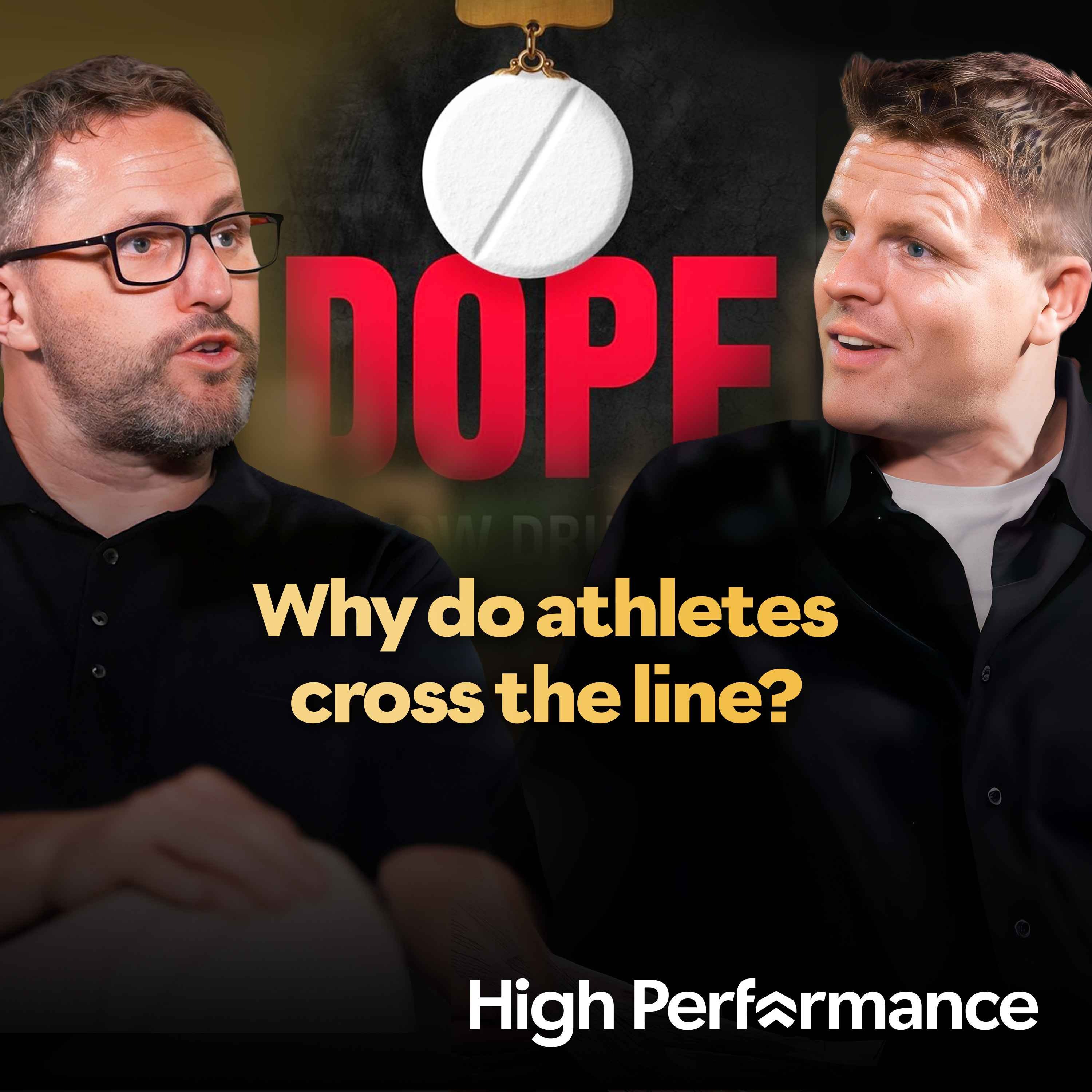
Loading summary
Transcript179 lines
- [00:02]
Damien
Damien.
- [00:03]
Jake
Jake.
- [00:04]
Damien
Well, here we go with another episode of High Performance. And this month it's the Enhanced Games. And so we thought we would have a bit of a conversation about, I guess, doping sport, but with the umbrella view of what happens in life where you start out in your career, regardless of whether it's sport or something else, with a really kind of fixed set of rules that you want to operate by. And then what happens to your moral compass as your career progresses? That means those things get impacted. And we've got a really cool guest we're about to hear from. Right?
- [00:34]
Jay
Yeah.
- [00:35]
Jake
So you used the phrase there, Jay, the moral compass. I think that's really what this. This episode is about, about how. How do you keep your moral compass pointing to a true north in a world that will constantly try and take you off course? And I was lucky enough to speak to James Witts. He's a billion journalist that's written a book that comes out called Dope. And it's about the culture that surrounds elite sport, where young athletes often get tempted to look for shortcuts, look for hacks, look for a quick route to the top that gets them onto that podium. But it also involves injecting or imbibing different substances that are illegal. And I wanted to talk around. How can you keep your moral compass true.
- [01:18]
Damien
Great. Well, we'll hear from James in just a couple of moments, but I think how about we start the episode by delving into some of the previous guests who've joined us who have had a clear moral compass, but actually it's impacted their careers.
- [01:30]
Jake
Yeah. So, again, this is the thing that, like, how do you be a patient man in an impatient world? How do you be a clean athlete in a world where, you know, other athletes are doping? That's not a free decision to make. I mean, it was a conversation we had with Usain Bolt, if you remember, when we sat down with him, we asked him about in the world that he operates in, so many elite sprinters, he's competed against the failed doping tests. And what was his advice? For any young athlete that thought that that was a path to. To tread, it's worth listening to what he told us.
- [02:04]
Usain Bolt
I, I could. I can never understand why. You know what I mean? A lot of people don't want to wait their time, I think because
- [02:15]
Jay
you.
- [02:16]
Usain Bolt
I, I personally feel that, yo, I got a talent. God gave me a God given talent. And I think if you work on your talent and you're really dedicated and figure out, how can I get better? And I think a Lot of people didn't take the time out to figure out, what did I do wrong or what can I do better? You know what I mean? To get to the level, because that's what I did, because I struggled throughout the years to get to where I'm at. But I figured it out, like, oh, this is what I need to do. This is what's gonna get me better. And I think a lot of times that a lot of athletes, the work is so hard because it's not easy. It's very intense. You know what I mean? And as I said, it's full of injuries at times, and some people just don't want to put the work in, so it's tough. And sometimes it's a mental area that really drives you to go, you know what? Let me try this instead of doing the work.
- [03:17]
Damien
See, one of the challenges here, Damien, is that we exist in a world now where there are shortcuts for other areas of life. You know, people are constantly looking on social media and seeing success coming easy to other people. Everybody is sharing perfection rather than the struggles in life. So I can understand how, for all of us listening to this episode, we're looking for shortcuts. You know, what's the most common question you and I get asked? What's the one thing that links all of your guests on high performance? And people are asking that question because they think there's a shortcut to it. And I guess I'm reminded of the time when we were on tour and we were in Manchester, and we spoke to the absolutely hilarious Russell Cain, who said that people would come up to him and go, oh, I really want to be a comedian. Can I be on your. Can I be on your ticket for the next gig and maybe just be on your undercard and be your warmup guy? And he would say to them, listen, you know, when you see someone with massive muscles, right, you don't just assume that they got them easily, or you
- [04:12]
Russell Cain
don't ask if you can have their muscles.
- [04:13]
Damien
You get in the gym and you do the work. And he would always remind those people that he's had to perform to empty
- [04:18]
Russell Cain
clubs for 25 years with no one
- [04:20]
Damien
laughing to get where he is now. And I think it's a real challenge, particularly for young people growing up in this comparison culture, that they only see other people's success. And, of course, there are also lots of people willing to sell you a shortcut. There are grifters everywhere telling you that they have the secret to doing it quicker, easier, faster, cheaper than Everybody else. So in many ways, the cards are stacked against people who are patient, people who do the right thing, people who have those strong morals.
- [04:47]
Jake
Yeah, massively well. So, as you'll hear in the interview with James, he talks about how the Enhanced Games is now selling kits that you can buy online. Anybody can do it, that contain the substances that the athletes in the Games are taking, so you can get a similar physique to those athletes out there. It's literally selling you this get fit, quick message that is, that is at the heart of so much of our society. People thinking that you can become a multimillionaire overnight. You write best sellers in a couple of months, that everything comes to you easy. When we know, because 400 guests have told us, that what comes easy doesn't last. What lasts doesn't necessarily come easy. And I think sometimes going back to your first principles of going, well, actually, I'm going to be patient, I'm going to enjoy learning my craft rather than just being fixated on the outcomes are so key.
- [05:44]
Damien
What about, though, people who are listening to this and they're listening to it because they've spent years trying to get to a place they want to get to and they haven't got to that place and they actually know that there is a shortcut they can take, there is a quick route. There is the real world equivalent of juicing. What do we say to those people?
- [06:02]
Jake
Well, again, this is where I think you have to fall back on your own values. This is the stuff that says, am I able to wake up in the morning and look at myself in the mirror knowing what I'm going to do? And more importantly, when I put my head on the pillow at night, can I reflect on how I've behaved and still feel that I've been congruent to my values? I think the conversation with James and people really encourage them to tune in and listen to it. When we speak to him about how do you stay hopeful, having sort of immersed yourself in this world of cheats and people sort of blurring the lines. The only real answer that he offers us is that, like education, now, that's a bit of a cliche because we often say that education is the key to improving all situations, but the essence of it is educating people about their values, what's important to them, how they want to be remembered. We talk about, there's plenty of athletes that have subsequently been found out later on and the shame, the stigma that sticks to them. They talk about how it just wasn't worth it. There's an interview with an Ironman champion who James went and interviewed for his book who admitted he was tempted by that decision of chasing shortcuts because he thought others were doing it. And then when he got caught, he just held his hands up. He made no excuses. He didn't claim he'd been eating an excess of eggs. He just said, no, no, I was taking EPO because I wanted to get to that number one spot on the podium. And he talks about the, like, the social cost of that, the shame, the stigma that sticks to him long afterwards that like, there's no shortcut that comes for free.
- [07:39]
Damien
Well, we will hear from him in just a moment. Before we do, I want to go back into the archives one final time and hear from Michael Johnson. This is a great reminder to everyone that even if you decide that actually the shortcut is the thing that you want to take, there may well be other victims along the way. This is what Michael Johnson told us when he decided to give back one of his medals. Take a listen.
- [08:01]
Michael Johnson
I had always been outspoken about doping in our sport and still am and just didn't want to have my name associated with that medal. And so, yeah, so I gave it back.
- [08:14]
Jake
Hard decision.
- [08:15]
Michael Johnson
It wasn't a hard decision. I gave it back knowing that, you know, this is the right thing to do. I don't want to have anything to do with it. A little bit harder, I guess in the sense that I knew that they were going to come after that medal and I knew that the U.S. olympic Committee was going to fight it and they would have had a better chance fighting it if I was, was there, you know, with them on that fight. And so when I chose not to go on that fight, that meant the other two relay members on there who probably wanted to fight it probably weren't going to have a very good chance at that point. But I didn't. It was not that hard for me. It was just, it was disappointing. I was very angry for a while because, yeah, now I'm four time Olympic gold medalist, not a five time Olympic gold medalist, through no fault of my own.
- [09:06]
Damien
And I think that's really interesting, isn't it? Because the athlete in question thought that he was doing this almost in a silo. He was deciding that he was going to dope for his own success in his competition. And as Michael Johnson reveals there, when you're in a relay, it's a team sport. And the devastation that that created actually in America for both Michael, but also for the athlete who doped, I mean, it was, it was really, really, really dark.
- [09:33]
Jay
Yeah.
- [09:34]
Jake
But again, there's an interesting sort of dynamic that I think is worthy of us exploring here. Like, on the podcast, we often try and shine a light in the shadows rather than just necessarily fall into this binary way of if you dope in your bad, and if you do it clean, you're good. I think when we understand the culture that so many people will often find themselves in, whether it's the comparison culture of convincing yourself that everyone else is on this, that for many years it sounds like elite cycling had this sense of omerta that everybody is cheating to. So if you're not gonna join them, they're only gonna beat you. Some people, it's almost like their identity gets too tightly wrapped up in the sense of being an athlete or being a winner, and therefore, you try and prolong your career or you try and find those little shortcuts, those little hacks to why you do it. Sometimes it's coaches, Sometimes it's the adults in your life that turn a blind eye to it or facilitate it. I think the thing about it is it's like an ecosystem. There's no one reason why people don't. There's lots of different factors, and I think if we can come at it from a place of understanding and empathy, you can help people make better decisions.
- [10:49]
Damien
Okay. Well, shall we hear from James Witts, the author of the book Dope?
- [10:52]
Jake
I'd love to. And the book's out now if anybody wants to explore it a little bit deeper. But I hope you enjoy this conversation as much as I did.
- [11:01]
Damien
Excellent. Here he is, James Witts, talking to Damien.
- [11:06]
Monday.com Ad Voice
Close your eyes.
- [11:07]
Jake
Focus.
- [11:09]
Monday.com Ad Voice
Listen to work getting done with Monday dot com. Relax as AI does the manual work while your teams are aligned on a single source of truth? Feel the sensation of an AI work platform. So flexible and intuitive it feels like it was built just for you. Notice you're limitless. Limitless. Now open your eyes, go to Monday.com, start for free, and finally, breathe.
- [11:36]
VRBO Ad Voice
A vacation rental should come with support, not surprises. That's why VRBO comes with a VRBoCare guarantee and 24. 7 life support from Real people. So if something goes sideways, Verbo Care can help it if the host cancels verbo Care. If the listing says heated pool, but there's actually no pool to heat. Definitely a Verbo care thing. If my teenager starts calling me Leslie instead of mom, that's a family thing.
- [11:56]
James Witts
Leslie. That makes sense.
- [11:58]
Jake
Sorry.
- [11:58]
VRBO Ad Voice
Book with support, not surprises. Verbo Care and 24. 7 Life Support. If you know you VRBO terms apply. Seevirbo.com Trust for details.
- [12:06]
Acast Ad Voice
Do you keep hearing podcast ads like this one, for example, but always wonder how you actually get involved with them for your own brand or organization? Well, it's easier than you think. We're acast and we give you the platform to do it all yourself. Browse thousands of popular podcasts, choose the shows that match your perfect audience, set your budget and launch. And if you want a hand, our podcast specialists are there to help you launch with confidence. This is podcast advertising without barriers. Get started@acast.com Advertisement James, it's a pleasure
- [12:45]
Jay
to have you with us here and I absolutely loved your new book. I'm interested what surprised you the most in the writing of it?
- [12:53]
James Witts
That's a very good question, Damien. Thank you very much for inviting me on, by the way. It's a privilege and very much appreciated. I mean surprise. I guess one of the standout was I starting early of sort of what the potential problem or perceived problem of taking performance drugs in sport is. What are the figures around this, what research, what studies have been undertaken, taken and the figure ranges wildly from up to 50% of one study in like 2011. I think they covered at the world athletics champs, I think it was called the Turbingen study of athletes who'd filled in the survey had reported taking a prohibited substance in the previous 12 months. So that was a bit of a shock when you compare that to the amount of tests that come back positive from wada, the World Anti Doping Agency, which I think the adverse analytical findings they have is about 0.7%. And that really is testing, you know, something is showing up in the blood or urine that is on their prohibited list. So I guess that was one of the biggest surprises that was early on of like, well, there's a real disconnect there between okay, how many people are being caught or testing positive to maybe some of the the numbers of that are coming out of people saying what they, you know, they are actually crossing the line, but they're not being caught. Yeah.
- [14:17]
Jay
And was it specific sports and where that where this disconnect was highest?
- [14:25]
James Witts
I mean it was interesting across the sports because my background, Damien, is I do a lot of writing and road cycling and anyone who has followed sport really is probably aware of the naughty Mr. Lance Armstrong. But you had the Faustina affair, the late 90s, where I think it was the soigneur Willie vault of one of the teams. Basically he was stopped at. I think it was on the Ferris customs. I think the race Started in Dublin that year and they basically checked his boot and he basically had a medical cabinet in there. You had vials and fields of stuff, epo, which is the blood booster. So that was. My background in sport is like, I know cycling's historically had an issue. I know that there is far fewer positive tests in cycling now, sort of high profile wise. So in that respect, I sort of had a background. Okay, there's cycling, but what about, like you said, the other sports? Obviously, football is huge. You have cricket, you have rugby and, yeah, there was a sort of. It's very hard to get specific figures, Damien, to be honest. There's so much sort of, sort of misinformation out there. But what was clear is that the funding that some of these sports are throwing into the anti doping varies wildly. So in cycling now, the international governing body put 17% of their budget towards anti doping. Now, it was a report, I think it was, by the Times, where they got the information of other sports. And I think football, like from the Premier League actually towards anti doping to the United Kingdom anti dope was basically zero, whereas The FA was 0.3% of their budget. It's not to say footballers aren't being tested, but the Premier League are very much. This is the FA's domain. And rugby and cricket, they were similarly low levels of funding for the United Kingdom anti doping to actually test athletes. So that was probably more. That was an explicit sort of find of like, well, you. How seriously are these sports taking doping and anti doping? Because there is an issue of that. This whole, you know, as I cover in the book, that you have the same people who are promoting sport as policing the sport.
- [16:47]
Jake
Yeah.
- [16:48]
James Witts
So naturally you've got a disconnect there. You know, if you've got people on the International Olympic Committee board who are also pretty high up at the World Anti Doping Agency, they could be the most honest people in the world. But obviously, perception wise, it's not a good look. Yeah, no sport wants a doping case because it's really just not good for the image. So, yeah, I think the funding issue or disparity was quite a stark one. Wow.
- [17:15]
Jay
Okay. Because your book reminded me of, I remember reading, many years ago, a book by Tyler Hamilton, the cyclist who. Who, like, revealed that he had been doping. And that book, so was the first time I'd had real empathy with somebody that dubbed. He spoke about how, I think he was a painter and decorator from Colorado. When he spoke about this Panayagua that, like bread and water, he cycled in the sort of European Tour clean and was coming bottom and was being risked having his funding cut and having to go back to being a painter and decorator and then having the opportunity to dope meant that he got to carry on living his dream. And I think what your book shows, James, is that doping's rarely just about one bad decision. It seems to be a mix of pressure, ambition, culture, opportunity. When have you seen the desire to win tips over into crossing this ethical line?
- [18:16]
James Witts
Well, I did speak to a chap, chap called Rocco, I forget his surname now, sorry, Rocco, but over at Oxford Brooks University, and he looked into this issue, why do athletes dope? Which on a basic level, it seems obvious, doesn't it, where you want to go sort of higher, faster, stronger, you know, you want to get to the finish line quicker. But it is more nuanced and more complicated than that, as like you said, as Tyler's book sort of really revealingly showed, I mean, Wilder have. So you've almost got categories of, like, vulnerable populations. One of them is injury. So if you've got an athlete coming back from injury, they've shown that actually your commercial value, if you're injured, the longer you're off, the longer you spell on the sidelines, the lower your commercial value and obviously all the repercussions that has for an athlete. So that is a vulnerable area. Older athletes. So if you've tipped over 30 and it's not necessarily performance enhancing, I think they would categorize it as almost performance continuing. You know, you're. You're reaching, you know, you can see the end of the career, you know, it's on the horizon. And I guess your identity is so wrapped up in competition, in elite sport, in schedules and following these itineraries, actually, to see the end of that is like, well, that is your identity. Where. Where is that going to go? So that's certainly a vulnerable sort of population. I mean, just general reasons why people were dope and when people wouldn't. You can have the coaching environment again, going back to cycling. And I'm sure Tyler would have mentioned it in his book about the imerta. So the culture of the sport of, like the Imerter is basically keeping silent. So everyone knew they were doing it, but no one, you know, it was the unbroken or the unwritten code famous
- [20:15]
Jay
instant one they like. Well, on Armstrong, like, publicly denounced somebody that had broken that omerta. Is that right?
- [20:23]
James Witts
Yes, it was. And forgive me, I can't remember, then it might have been Christophe Bass on I Could Be completely Wrong. There So I apologize if so. But, yeah, he. Absolutely. This. This rider was like, no, they're all taking it, I'm not. And he. He would basically come up to him on a race just right beside. Beside him, and generally be quite threatening of like, what are you doing? Why are you breaking this. This code rule on it? But I mean that on the flip side, there was a rider called Graham Obree. Now, Graham Obry I've spoken to several times. Graham's a fascinating chap. I mean, he could speak to you hours upon hours. And I don't know if you remember this thing. And years ago, there was this big hour record. Yeah, which was a challenge almost to Graham Obrey and Chris Boardman. So on one side you had Chris Boardman, who was deemed, like, the scientist. I think he had Lotus behind him. You know, there's a lot of money spent on him, on the equipment and the science. Whereas Graham Obrey, he became famous for creating his own bike, including parts from, like, a dishwasher or washing machine. And they were both incredible, you know, human beings, athletes. But I remember speaking to Graham Obry and he. Again, it was a time when amateur and professionalism, you know, you're going from one to the other. And he was offered to contract with French cycling team. And basically they explicitly said, you will have to follow our regime. And he was like, well, clearly, I'm not going to do that. So he never became professional. Boardman did. And that's not to say Boardman, you know, took drugs at all, but he. His. His values were so strong that he wasn't going to do it. And that is another thing. It's like, well, if. If your. Maybe your background, your values aren't as solid as some others, because it's a big decision, isn't it? You know, you don't. As one of the ladies at WADA said, you don't wake up wanting to take steroids. You know, when you're eight years old and you're playing with your mates on the football pitch, you don't dream of taking EPO to run better. So something happens on that timeline that encourages you to make that shift. And like I said, it's just. It's not as black and white as you might be led to believe. And that was part of the reasoning for the book. You know, it's so black and white. Seemingly doping.
- [22:47]
Jay
Yeah, yeah. We present it in such binary terms that I think your book shines a light in the shadows to go. But none of this is so obviously right or wrong or good or Bad. It's so subtle. Which led me to reflect, like, do you think sports become too reliant on the idea that testing alone is almost like the bulwark against fairness and all things being equal?
- [23:18]
James Witts
Yeah, it is a tricky one. I mean, you do have. You have various pillars, so you have the testing side, you have the education side. And again, I go into detail about various things. You have the legal side, the intelligence side of. Actually, Wilder are trying to increase their links with like, Interpol, Europa, with the law enforcement or enforcement agencies to try and sort of stop it, you know, lower down or the chain or. And they're looking at underground chemists and dark web. But the problem is that it's. It's so easy to get hold of. Yeah. Hold of these, these drugs, which makes it such a hard battle on that intelligent side.
- [24:04]
Damien
And.
- [24:04]
James Witts
But it's also very dangerous. I know a chap at. Dan Burke over at usada, which is the United States Anti Doping. He was saying they've sort of broken crime rings of performance enhancing drugs and they open up the material, the solutions, and basically they're not steroids, they're basically moldy water, you know, and people are injecting this into their. Their bodies. You know, a lot of amateur athletes as well. Yeah, yeah. So which is pretty horrendous, sort of, sort of thought, isn't it, of just like you've got this sort of bacteria and you're just injecting it. But. So I'm going off on a tangent slightly, but. Yeah, back to the, the testing. I think you're right that the testing is only one part of it, but the testing is also. It's so hard to still catch the athletes. I mean, the, the. Probably one of the biggest defenses they have in the testing world is the biological passport. Right. So I'm not sure how much, you
- [25:04]
Jay
know, go and tell us more about that.
- [25:06]
James Witts
Yeah, so it's basically. It's. It was created to. It went live. Should we say 2008, 2009. It's 2008 in cycling, 2009 in global sports, basically.
- [25:17]
Jay
Yeah.
- [25:18]
James Witts
And really it came from. So going back years, there's a drug called epo, so that stands for erythropoietin. Apologies if my pronunciation's not very good. But it, it's basically, it's a blood booster, so you produce it naturally in your body. That's what produces the red blood cells. In an endurance sport, for example, red blood cells carry oxygen, so oxygen is nectar for the endurance athlete. If you're doing the Tour de France, you know, you're burning through oxygen to keep going and going. So the more red blood cells you've got, the more oxygen, the harder you can race. So you've got it naturally. But then it was invented, I think it was the 80s, a synthetic version to treat people who were suffering from anemia. Anyway, it's a long winded way of saying the top coaches and sports scientists picked up on this EPO became a big problem. So they created a direct test for epo.
- [26:18]
Damien
But.
- [26:19]
James Witts
So that still exists. But the problem is once the patent ran out, you suddenly, instead of one EPO product, you've got hundreds of them. So to keep up with it, they were like, well, we, we haven't got the resources to find the test for each EPO or each specific. So they came up with this biological passport. So instead of testing it directly, what they're doing is testing it indirectly. So you're looking for the markers of taking the cpo. And what it is, is when you take it, you produce new red blood cells.
- [26:51]
Jay
Right.
- [26:51]
James Witts
So they're measuring sort of the reticular sites, it's called the new red blood cells. You can see a skew on your blood profile over time. You also see a skew high and see a skew low because you have an off phase. So once you take it, it goes up, then it goes down and levels out.
- [27:08]
Jake
Okay.
- [27:08]
James Witts
So you're trying to, once it's up, you're trying to get the benefits through the training. So what it is is the biological passport. It's measuring against your own norm over time. So if they see a skew, you know, if it's like September, we've tested someone in Mexico, or these blood values, you know, that's higher than normal, that would ring the bells of the testers who then might try and do a direct test. But the problem with this biological test is some athletes might do one test a year. I think Wilder aim for free test per athlete. Someone like Tadi Bagacha in cycling who's really successful, he'll be tested loads and loads and loads.
- [27:51]
Jay
Right.
- [27:51]
James Witts
So, which is a strange, because sometimes you're getting lower level athletes who are testing positive and it's like, well, how can they not be then as good as the higher level athletes who are tested loads and loads. So, but, yeah, so that's probably the main defense. But the problem with all these tests is that they're very expensive.
- [28:06]
Jay
Yeah. And can I just ask you about something like the epo, like, what is that worth in sort of seconds like on a bike, if you've got higher levels in your system, what does that translate to?
- [28:22]
James Witts
Well, there have actually been studies on this, which actually is unusual because getting it past the Ethics committee of anything which is on the prohibited list, which a healthy individual doesn't need, can be tricky. But I think the figure was around 4%. 4, 5%. That was from the labs. But I spoke to a chap called Joe Papp. Now, Pap, I think, actually rode with Armstrong. He testified against Armstrong years ago.
- [28:50]
Jake
Yeah.
- [28:50]
James Witts
So Joe Papp, he was actually suspended for taking testing positive for EPO and several other drugs. As it turns out, he then became a drug dealer as well. So he was, you know, he took that extra step and now he was all. Then, yeah, he went for it. He's fully on. But Joe said he was great. He's very interested in Joe. And now he's more, you know, anti doping advocate. And he was saying EPO was the one. I think he said in the book, it gave him wings, should we say? And it was like he said it reckoned it helped him 10, 10, 12%.
- [29:28]
Damien
Wow.
- [29:29]
James Witts
EPO was the one that sort of just sent you, you know, to another level, and not necessarily on the day.
- [29:37]
Jay
Yeah.
- [29:38]
James Witts
And this is, you know, one of the big sort of wins, shall we say, for some of these illegal drugs is the recovery. You know, it was if you're racing hard, you know, for example, a Grand Tour like the Giro d' Italia or Tour de France, where you're racing 21 hard stages in 23 days, you know, it's all very well racing well on day one, but if you wake up on day two and like, limey, I'm absolutely exhausted. I don't think I'll bother today. Yeah, you're not going to do very well. So it's that recovery of sort of crossing the finish line and then leaving the start town. So, yeah, it does have a significant impact on performance.
- [30:17]
Jay
Wow. Because that's, I mean, that's far, far beyond the marginal gains. You know, like you hear about bringing your own mattress or having a certain pillow and can offer you versus, like rolling the dice and. And sort of start injecting epo. There's no contest, is it? So what was your view then, when you heard about the Enhanced Games?
- [30:41]
James Witts
Well, yeah, it's. I mean, that's. That's a good question. It was, yeah, confusing, I guess, because it just seemed so light, almost dystopian idea of like, wow, this is where we've come as a society, that we are going to Have a, you know, a games where these illegal performance enhancers are allowed. I mean, I spoke to the founder, Dr. Aaron D' Souza a couple times of the Enhanced Games. And I mean, very charming. He's a lawyer, very successful lawyer and it was, you know, his idea of this like. Well, you know, we're in a world now in professional sport, aren't we, where science, innovation is, you know, omnipresent. At the top level we see in football, you know, everything's measured to within an ounce of its life, isn't it? It's sort of like the stat sports. You've got your heart rate variability, you know, everything is micromanaged. So it is really an extension of that. And it started off, it almost felt like an ultra libertarian viewpoint of wow. So, okay, yeah, it's up to you as individual what you put in your body. You know, it's not up to anyone else. But that has been tempered slightly. Now there are only certain drugs that you can't.
- [31:59]
Jay
Right, okay. But based on what you were talking about there, sort of like wilder chasing down people and like the, like the constant innovations of these sort of illegal substances that people are doing, you could argue that at least it's transparent, the Enhanced Games, you know, at least they're telling you that, that people are cheating or sort of crossing that, that ethical line.
- [32:24]
James Witts
Yeah. And that, that is one of their strongest arguments. I think it was like because the same way a, you're, you're putting it out there so they're monitoring it. You know, you're going to either have a. Medical teams will be well recently. So I don't know if the athletes are still there. I think they still are. So the enhanced games, May 24, I think is the end of May. So it's just a day's competition now in Vegas of swimming, sprinting and weightlifting. So you just have the free sports, various disciplines in each. But all the athletes who have signed up for the Enhanced Games, I think they've been over in Abu Dhabi since January. February.
- [33:03]
Jay
Right.
- [33:03]
James Witts
And you don't have to go on a course of performance enhancing drugs. I can't, I've. I apologize, I can't recall. There was one athlete, I think it might have been the British sprinter, maybe Reese, I've forgotten his surname, but I think he said he wasn't going to take performance enhancing drugs. But most of them will be. But they're going to be monitored by a team. So you're going to have doctors there. They're going to be keeping an eye on loads of different metrics. So it might be okay, I'm taking peptides. How's my body reacting to it? I'm taking testosterone. So they are. Like you said, there's an argument they're going to be the safest doped athletes who have ever performed. I think part of the. My skepticism, I guess, would come from when I first spoke to Dr. D'. Souza. It was very much along those lines. It was like, well, this is all libertarian. They're going to be safely monitored. This is far safer than people going underground. But then when I spoke to again, they'd added this extra strand that actually, the Enhanced Games, to a degree, are almost a marketing tool now because the enhanced team is selling. I don't know if it's gone live yet, but these performance packs. So it's going to be about $500 a month where you can sign up and you'll be able to get peptides, testosterone, various amateur athletes.
- [34:28]
Jay
She's talking about athletes.
- [34:30]
James Witts
Yeah, for amateur athletes. So I don't know the duty of care that they'll be applying because I don't know if you. Then they'll send you blood tests each month where you've got, you know, their. Their doctors will assess how well you're doing. So I don't even know if that has been formalized yet and put out there. But yeah, so it went from this one idea to the next. And I've at one point that they were calling it like the. They want to become the Amazon of enhancement. And I think this is why. And I don't know how much you know about the Enhanced Games, Damon, but they've received a lot of funding from people like Donald Trump Jr.
- [35:08]
Jake
Right.
- [35:09]
James Witts
Peter feel or Peter Thiel, I think you pronounce with PayPal. So you're getting almost these. These, you know, tech billionaires who are coming on board. Yeah. And I was originally, I was like, that's interesting. What. What's the appeal to them? And that subsequently it's become that actually they're going to be trying to sell a lot of product off the back of this, which. And for me, that is where a slight danger does come into it. Yeah, of course, you know, because you're going to get a lot of youngsters who. They might just see it as like, well, this is the norm then. Yeah, Ford 500amonth. So I'm gonna go underground, go on Telegraph.
- [35:53]
Jay
Yeah. And then you've got that dirty bacterial water that you've injected instead of.
- [35:57]
James Witts
Yeah, absolutely. And I spoke to one chap, Josh Torrance, over in Bristol, where I live near Bristol. And he used to work at the Bristol Drug Center. He's still involved in that world. And he was showing me his telegram and he was like, yep, okay, James, what do you want? And it was like, okay, we got steroids, 130 there. Yeah, 130 quid to get you three months of whatever it is they're selling. And he was saying, yeah, whenever you get a corporate interest involving image enhancing drugs or performance enhancing drugs is going to lead to deaths. So it sounds obviously quite dramatic, but I think it probably would if you're encouraging people to take drugs that we know, it's like, as well. If it's like, oh, wow, okay, I ran 15 seconds, 100 meters on the prescribed dose, but what if I take a heavier dose?
- [36:49]
Jay
Yeah, yeah.
- [36:49]
James Witts
Then they're saying. And that tends to be how it works, isn't it? Because especially if you've got people who are looking, you try to run faster or look.
- [36:56]
Jay
But there's something for me about as you talk about some of the stuff, if it's sprinting or if it's cycling, then you go, well, the question there is, the personal risk there is to you, you might cheat. But when you get sports, like boxing, for example, where the whole purpose is to render your opponent in a position where he can't continue the fight, the idea of allowing people to get away or have these loopholes to take drugs where you can render somebody damaged as a consequence of it, it really starts to turn my stomach.
- [37:32]
James Witts
Yeah, yeah, absolutely. And I. I mean, subsequently he was exonerated, if that's the right word. But there was the case of Connor, Ben, if you remember a few years ago, where, yeah, he, he tested positive for. I think it was clomifying.
- [37:49]
Jay
Was it clenbuterol?
- [37:51]
James Witts
Well, his wasn't clenbuterol, I don't think. But clenbuterol is a common one. I could be wrong there, Damien. You could be right. But basically he'd gone over the threshold. Right.
- [38:00]
Jay
And what was the consequence of that for someone that wouldn't. That would hear this and almost tune out of it, like. Yeah, like for what he tested positive for. What would that mean in terms of. For his ability as a fighter?
- [38:14]
James Witts
Well, I guess on a real basic level, probably just stronger. So a lot of these, as an aside, some of these drugs, like you said, clenbuterol. Clenbuterol is a very common drug that has been cited in contamination cases.
- [38:27]
Jay
Yeah.
- [38:27]
James Witts
Because in the black market in South America, in the cattle industry, to create greater yields of meat. So, yeah, so what's happening is say clenbuterol, there's been many, many cases where now clenbuterol, they have done studies and there's one in the book, I think it was only four weeks on Clenbutel, which is basically a growth hormone. And the athletes, the subjects taking it, their, their strength and muscle mass increased significantly just over a four week period. So you can see its benefits for many sports, including boxing. Yeah, but then there is this slight loophole of clenbuteral is in the. Yeah, like I said, the meat system basically in some countries it's illegal, but that hasn't stopped known countries in for example, South America. It's also in the Far East. A lot of athletes, if they go to the Far east, won't eat meat because there's just, there's stuff in the meat that will show up on the prohibited list. So but going back to the Connor Ben case, he had sort of cited that he'd come up for this prohibited substance which makes him stronger, more dangerous like you said. And they actually sort of let him off because they, if you had a significant amount of eggs, it could tip over the threshold. I think it was a very, you know, it was over 20 eggs in a day or something or over 30. So it's a high number of eggs. But as we know, you know, athletes do have a lot of eggs. But yeah, going back to the danger aspect, I know Chris Eubank senior. Yeah, he was, he was like, he didn't want his son to fight. You know, I think Ben, at one point he was like, well, no, this is dangerous. If you're, if you're basically, you're taking drugs, you're trying to turn yourself into a superhuman, aren't you? And like you said, if you're running, that doesn't really harm anyone. It might professionally and you know, you obviously cross the ethical line. But when it comes to boxing. Yeah, that's when it can become extremely, extremely dangerous.
- [40:33]
Jay
The question that sort of jumps out for me, James, and I'm listening to this is have we reached a point where the biggest danger for sport isn't in the shadows? It's almost like this normalization of winning at all costs.
- [40:47]
James Witts
Yeah, absolutely. And I think that is also now seen through a lens where life certainly in the western world is just seen through far more of like a pharmaceutical lens. You know, people are having Botox injections. You know, there's, it's becoming part of life. And I, I think this is where the Enhanced Games are coming in it's like, well, you know, this won't you, you won't be able to jump, you know, off this sort of train. Now it's, you know, to mix metaphors. The genie's out the bottle.
- [41:17]
Jay
Yeah, yeah.
- [41:18]
James Witts
And I think it's all tied in, you know, the longevity movement. Again going back to these tech billionaires. I think that's becoming more and more explicit, like trying to live longer and healthier. And I think that's, I don't know. On one hand I feel there is a concern there that actually what will enhance games do. Will it, you know, will it be like a free for all? I don't think it'll ever reach that stage and I, I think ultimately it might just become down to, you know, the ethics and looking at again, youngsters, you know, if you're a parent, do you really want, you know, your, your child to have posters of, you know, 100 meter runner on the wall who has openly taken drugs? You know, they're on the podium with their doctor. It doesn't quite sit right, I don't think. I mean, who knows, in 50 years if it continues with the longevity movement and the impact of drugs on society, then this might seem such an archaic conversation. And they're like, why on earth did we not take drugs? Because on the flip side, and it's been argued by many physicians before, Certainly in the 50s and 60s, I think of taking steroids is safer or you might be able to recover better because actually being an elite athlete is actually quite an unhealthy profession.
- [42:34]
Jay
Yeah.
- [42:35]
James Witts
You know, if you're, especially in some of these sports where you're training 30, you know, upwards of 30 hours a week, you're really battering your body beyond what is probably human. You know, it's quite unusual to train that much.
- [42:49]
Russell Cain
What if the real question isn't where you're going but the adventures you experience along the way? It's time to set your sights higher on peaks still to be climbed, rivers still to be crossed, and greater dreams to pursue. It's time to embrace the impossible with Defender, a family of vehicles built around capability, durability tested on some of the most difficult terrain. Defender defines tough luxury. And I should know, I've driven one for the past three years. I have the Defender 130, but from the compact confidence of the Defender 90 to the versatility of the 110 through to mind the Defender 130 with seating for up to eight, there's endless potential. You feel it in the details as well. The rugged body design, the robust materials all working together so you can head out with confidence and inside Clearsight technology helps you see the world around you in a new way, while the PV Pro keeps your navigation routes and playlists flowing seamlessly as you go. And with up to 89 cubic feet of cargo space, there's room for everything you need on your journey. Explore the full Defender lineup@land roverusa.com if
- [43:46]
Damien
something's been a bit off in the bedroom, you're definitely not alone, and a lot of guys put off doing anything about it for longer than they need to. With hims, it's easy to take action. Everything's fully handled online. No awkward appointments, no pharmacy queues. You fill out a quick online intake and a licensed healthcare provider will see if treatment is right for you.
- [44:04]
Russell Cain
If prescribed, your treatment's delivered in a discreet package. This includes Sildenafil generic for Viagra, available through HIMS up to 95% less than the brand name. And if that's not the right fit, there are other options available so you can find what works best for you.
- [44:17]
Damien
To get simple online access to personalized, affordable care for ED, hair loss, weight loss, and more, visit hims.comperformance that's hims.comperformance for your free online visit hims.comperformance Prescription required.
- [44:30]
Russell Cain
See website for details and important safety information. Sildenafil is the generic version of Viagra. Viagra is a registered trademark of Viatris Speciality llc. HIMS is not affiliated with or endorsed by Viatris.
- [44:40]
Damien
I don't know about you, but I really love keeping my money where I can actually see it. Unfortunately, traditional big wireless companies seem to like hanging onto my money for me. For years I was overpaying for wireless simply because it's what I used to do. I didn't really question the high monthly bill, the extra fees, or those free perks that somehow end up costing me. Eventually I realized it didn't make sense, so I switched to Mint Mobile. Most people just accept overpaying for their phone bill, but you don't have to, thanks to Mint Mobile. With premium wireless plans Starting at just 15 bucks a month, you still get high speed data, unlimited talk and text, all on the nation's largest 5G network. Honestly, the wireless service is just as good as the traditional big carriers. It's easy to switch too. Keep your phone, your number, and get set up in minutes with esim. No contracts, no hassle. If you like your money, Mint Mobile is for you. Shop plans@mintmobile.com HPP that's mintmobile.com HPP upfront payment of $45 for three months. Five gigabyte plan required equivalent to $15 a month. New customer offer for first three months only. Then full price plan options available, taxes and fees extra. CMINT mobile for.
- [45:45]
Jay
So let's try and twist it to a more hopeful lens. In your book, can you tell us the human cost that you saw for both the cheetah and the clean athlete?
- [45:59]
James Witts
Yeah, but there was, I guess, the starkest example. There's a chapter on mental health, and I spoke to an Ironman athlete called Colin Chartier. So Iron man, if the listeners aren't really aware, is a triathlon. So swim, bike, run, but you swim 3.8km, you cycle for 180km and then you run a marathon. So in itself, it's an extreme sport. Now, Chartier was professional and he'd had a really good season, but he. He what, as he said to me in the interview, he always wanted something now. So even if he was successful, if he could be more successful, you know, he wants it now. So that's when he said he made the decision two or three Novembers ago to start taking epo. And it was only four or five months later, I think he was over in Girona on a training camp, and he got. The doping officers came along, tested him, and he tested positive for epo. Now, unlike the many, many other athletes who have been caught taking epo, he put his hands up immediately and said, yeah, I took epo. And as he said to me, he's like, I'm not blaming that on a burrito like some other cases, again, going back to the contamination cases. So he was like, yeah, it was a fair cop, but his was. His case I thought was really interesting. And again, I guess how much you believe him or not, I mean, he's been shown that he's dope, so he's cheated, but there was also no reason. Now he's put his hands up to sort of lie. He was sort of saying just his personality was. He said he got really messed up his identity in triathlon. An Iron man, he said, you know, when he was younger, he was sort of homeschooled, and he just felt he was always an outsider, a bit of a loner.
- [47:54]
Jay
Right.
- [47:55]
James Witts
And he, interestingly, he was saying for him, his actually, when he looks back, his biggest training effect was actually training with others. You know, he'd go cycling with them. He said he was dangerous when he was on his own because he basically, he felt he had demons in his head. So he wasn't sure what he would do with himself. So actually, he had a hard period, but now he says he's happier than he's ever been. In a way, he's pleased he did take EPO because he's disentangled himself from his identity, which he perceived as very unhealthy. And then that led me to. There was a Kenyan study and I spoke to the author who'd spoken to Kenyan athletes who had been banned for taking drugs.
- [48:36]
Jay
Yeah.
- [48:37]
James Witts
And, yeah, he was saying they were like, suicidal thoughts, you know, were common amongst these athletes. Because he said in Kenya especially, you know, that obviously the. The athletes, the runners are sort of idolized, you know, and. And, yeah, he said they're really hard interviews. He said they would take two or three hours and he would have to sort of. He would go all around Kenya to speak to them because he said it wouldn't work if he was doing like me and you. Now it's just like, right, tell me about your EPO experience. He's like, no, you needed to get to know them. You really needed to sit down with them, get to know the family. And then they would say, well, what's happened to them since? Been shunned by society. And again, going back to earlier, doping is, you know, it's almost seen as like they were murder. It's so black and white.
- [49:24]
Jay
Yeah.
- [49:25]
James Witts
And actually, there's so nuances, you know, I think it was David Hellman, the chair of the Athletics Integrity Unit, had said, you know, it shouldn't be just the athlete to a band. You know, you can have 20 people implicitly or, or explicitly applying pressure to a young athlete. You know, some of these athletes might only be 20. You know, that's nothing, is it, really? You might think you're mature, you're not, you're still growing. They might be putting pressure on them, thinking, well, you need to earn money because you're going to pay for your family. So it wasn't like, oh, wow, no, they're the devil incarnate. They've just decided to do that. There could be a collective pressure on this, ultimately young person to take these illegal performance in drugs because it would help out a lot of people.
- [50:09]
Jay
So what do you think we could do then, in the culture around these athletes? Because, you know, as an athlete yourself, you're a risk taker, you're putting yourself in the arena. So I can see a lot of the arguments for why, if you can extend your career, if it makes that 12% difference you described, the EPO can Give you. I can see why as an athlete you'd be seduced. But for those of us that are not on that starting line but are around these often young people, what do you think the cultural changes that we could all contribute to could start to shift the dial on this?
- [50:46]
James Witts
Oh, that's a good big question that Damien. I mean education is obviously it's bandied about obviously education, you improve everything. Yeah, I guess it has got to start with that. And I know there are certainly campaigns at a more, you know, the wider level of the youngsters just really explaining why actually taking performance enhancing drugs are bad, you know, ethically. So that it's just not cricket as they would say, isn't it? I know that certainly usada, when I spoke to the chap at the United States Antidot, you see Dan Burke as the intelligence they're trying to link up with like TikTok Instagram, just trying to run campaigns because the problem is like TikTok, if you like search steroids, you know, you get so many sort of ads coming up or peptides and I think this is the concern and I guess like a lot of the problems these days, that's where I guess these bigger tech outfits, you'd hope there'd be some responsibility. You can't just have carte blanche to sort of like say well let take steroids and y. So there's an educational side on that aspect. I think the slight concern as well in the book was like, you know, doping does happen at the amateur level as well and, and I think this is where it's really hard. It's like, well, what do you do to sort of, you know, stop the rising tide of these cases? Because like in amateur sport it's like why are you taking drugs? There's not the financial incentive, you know, you're not going to be secure. Your latest mid season holiday in Abu Dhabi in amateur sport. And I think one of the people I spoke to is like saying just on a basic level, yes, it's. It's ego and pride, you know, it's just that sort of, it's such a driver. Isn't all great drivers of like competition of being the best and certain sports, you know, you attract people who are, I guess they would say type A. I think there are various terms, you know more than me Damon, about the, the definitions but they have those personality traits, you know, I guess like we all as it the dark triad or something. Narcissism, psychopathy.
- [53:03]
Jay
That's right.
- [53:04]
James Witts
We all have them to a degree. So actually the Finances go at the, you know, so whilst ultimately, if you're human, you're already on the back foot, I guess. I guess it's like a graphic equalizer. It's like, well, how high are each of these traits? You know, will they lend you more to doping? So, yeah, I guess education is like anything. There's only so much you, you can do. I mean, you can try and cut off the supply lines, which I know Wilder are doing. But again, it's a very pharmaceutical led world. And also, you know, supplements, there's an argument they're seen as like the gateway to performance.
- [53:42]
Jay
Yeah.
- [53:42]
James Witts
Drugs, it's that next step. Mentally, you've taken that, you've made the hurdle, haven't you? Of like, okay, well, I'm taking that. I'm used to taking a pill, so I'm taking this other pill. I'm not even thinking it's illegal, I'm just taking a pill.
- [53:54]
Jay
Yeah.
- [53:55]
James Witts
So I think we've just got to hope that people, you know, that their ethics remain sound. You know, the values there. And the sports have got to preach this and really try and get the, the dopers. I mean, speaking to Dave Howman again of the Athletes Integrity Unit, the Athletes Integrity Unit as sort of now seen as one of the best anti doping bodies there are.
- [54:23]
Jay
Okay.
- [54:24]
James Witts
Just through the, the investment from athletics and various other reasons. And I sort of said to David, you know, why do you feel you're getting compliments? And he said, James is like, we're one of the few bodies who actually go after the top athletes.
- [54:39]
Michael Johnson
Right.
- [54:40]
James Witts
He said, you know, the implication being a lot of sports, they might sacrifice a few lower level sportsmen or lower profile, but they're not really, they don't want to catch people. Again, going back to what I said about you've got the same people promoting and policing the sport, which is an inherent sort of conflict.
- [54:58]
Jay
Yeah. It's fascinating. Like, as you're saying it there, I'm thinking, like, because I still think it's true. It's. It like Lance Armstrong has never failed a drugs test in the sport. It's his own admission. But that was funded by, was it the CIA going after him at the time?
- [55:13]
Jake
Rather than, rather than the doping off,
- [55:16]
James Witts
it got to the, like the Fed level, I think, of investigative. Yeah. Because he was, I think his famous quote was, yeah, I've been tested 500 times and I've, you know, I've never, never tested positive. Which obviously isn't saying you haven't taken drugs. Yeah, yeah, you've been tested so.
- [55:34]
Jay
So as. As researching and writing this billiard book as it has it spoiled your enjoyment of. Of elite level sport?
- [55:43]
James Witts
Well, it's funny you say that actually, Damon, because Ranier and Shirley, the whistleblower, the Jamaican, late. Oh, spoke to you earlier about it. Off.
- [55:52]
Jake
Yeah.
- [55:52]
James Witts
Off record.
- [55:53]
Jake
Yeah.
- [55:54]
Jay
Tell us a story about that.
- [55:55]
James Witts
Yeah, so I interview. There's a chapter on whistleblowers who are absolutely vital for the anti doping system to work, of basically saying, yep, this is going on, you know, and they take big risks in doing this. I spoke to a lady called Rennie Anne Shirley, who was quite high up at Jamaican anti doping in 2010s, and she basically got frustrated with the paucity of testing on a domestic level. And she sort of flagged up to me, this isn't good enough. We're not testing our home athletes, the Jamaican athletes, enough. We're not doing a good enough job. And she wasn't getting anywhere. So she ended up writing to Sports Illustrated and basically saying, you know, in the six months up to London, 2012 Olympics, this was that on a domestic level. I think the Jamaican athletes have been tested like a handful of times.
- [56:49]
Jay
Right.
- [56:49]
James Witts
You know, maybe a few more, but nothing really. It was risally. And she was basically just absolutely shunned because, you know, she. She sort of. She was getting death threats. She had to move out of her home because people didn't really. Yeah, they. They didn't really want to. They don't really want to know that some of these performances might be through nefarious means.
- [57:15]
Jay
Right.
- [57:16]
James Witts
So, yeah, she was. I mean, she. She's fine now, unfortunately. Her mum passed away. He was 96. But she said, james, I'm such an organized person. I'm nowhere really. I don't know where my life is going. But yeah, she sort of signed off by saying, james, I hope by the time you finish book, writing this book, you're not as disenchanted with sport as I am. And actually, I don't think I am. I mean, at the end of the day, I guess Rennie had a different view. You know, she was in a different world than I am. Sort of. Through all the research and interviews, I. I think I spoke to one chap, Edmund Willison, who runs this really interesting substack called Honest Sport.
- [57:57]
Usain Bolt
Okay.
- [57:57]
James Witts
It's all about doping and anti doping in sport. And I think he summed it up well to me. He was, you know, saying, well, I don't you. Aren't you disenchanted? Because your, your whole profession is about doping you're finding about dope. And he said. He said he was a bit to start with, but he said, actually it's just. He finds it more sort of almost a philosophical question now. He said, you know, you have all these interviews about the science of training, and I've written books on the science of cycling. And there's. You look at the training, you're looking at the nutrition, you're looking at the technology, the gear, but you've got this sort of elephant in the room of which these surveys mentioned earlier could be up to 50% pragmat. You know, some of the experts said to me it's probably more like 20%, say a professional athletes might be taking a prohibited substance. You've almost got this elephant in the room that is never mentioned. So his was more like. Well, he sees it as philosophical things, like, he's not judging, it's just like you don't mention it. So I think that's. That's been the interesting thing and that's the whole thing. It's not like I'm saying this is a big expose of xyz. It's more like saying, well, this is the. The landscape and professional sport and amateur sport as well, is that these people are taking the drugs. And then I guess it's up to the reader or the listener to then, like, is that an issue for them? If you're watching the sport that some people might be taking drugs, will it not impact it at all? You know, it's up to the individual, isn't it, really? So, yeah, I don't feel disenchanted. But, you know, I tend to watch amateur football locally, so maybe that's. That's my way of saying, like, okay, I'm mentally keeping clean, or it might just be budgetary reasons.
- [59:40]
Jay
Well, James, honestly, it's been an absolute pleasure to speak to you on this, and I think your book, if nothing else, it makes you think, you know what I mean? And rather than just unquestioningly accepting what we're told from the main protagonists, I think giving you the chance to stop and think and reflect is. Is a valuable service. So congratulations on it and thank you for sharing some of the. Some of the insights and the research and the stories from it.
- [60:06]
James Witts
Oh, no, thank you, Damon. And thank you again for your Manchester United, the Ferguson book from years ago.
- [60:13]
Jay
Oh, yeah, okay. Thank you.
- [60:14]
James Witts
That was a cracker. But no, thank you for your time. I think it's been fascinating speaking to you.
- [60:20]
Damien
Would you be watching the Enhanced games, Damien?
- [60:23]
Jake
Yeah, I will, but with sort of like a curious intrigue. I think as. As that conversation with James says it was saying that at least it's transparent. At least they're telling you that these people are cheating and seeing how far the human body can be pushed.
- [60:38]
Damien
This is the interesting thing, I think, in the Enhanced Games, they're not cheating, are they? No, they're cheating in the Olympics or they're cheating in the Commonwealth Games. But for the Enhanced Games, I think it's. Personally, I think it's fascinating that we're in an era now where athletes are saying, I'm gonna do everything I can to be as fast, as strong, as powerful, as quick, as explosive as is humanly possible. I do not want to see those people going up against Keely Hodgkinson.
- [61:04]
Russell Cain
Right.
- [61:05]
Damien
In the Olympics. But I will be seeing what the human body can achieve with additional help.
- [61:10]
Russell Cain
Right?
- [61:11]
Jake
Yeah, definitely not. Yeah, exactly. These people are playing just by a different set of rules. It doesn't mean that they're right or wrong. It just means that they know that they know the risks that they're, that they're taking on. So let them crack on with it.
- [61:24]
Damien
But the message for the high performance audience is if you have your own moral guide for your life, it can help you make the right decisions at the right time. Because I think that often it's only when there's genuine pressure that your morals get tested.
- [61:36]
James Witts
Yeah.
- [61:36]
Jake
You know, there's that lovely quote in there that your purpose gets you up in the morning, your values allows you to sleep at night. And I think if you have a clear idea of, of what you're here to achieve, but more importantly, how you want to go about achieving it, you can. You're a high performer in your. In that definition.
- [61:54]
Damien
Well, I hope that you at home enjoyed hearing from Damien. Talking to James. The book Dope is out now. The Enhanced game starts later on this month. Got a few questions from the high performance audience, Damien. Oh, go on. We had a nice message from Mike who said an amazing podcast interview with Bjorn Mansverk. He's obviously the coach of Bedo Glimt. It was out a couple of days ago. What an amazing guy. Just goes to show that how the training and disciplines from the armed forces can be transposed to a sporting team, especially the mental experience, strategies and tactics. I'm really interested in what he was like off camera because I think people will always be on their best behavior when they're on the podcast. What was Bjorn like when he kind of arrived, how he left? Did he have a big Entourage. Was he nice to the team around you?
- [62:35]
Jay
Yeah.
- [62:36]
Jake
Yeah. Great question turned up with his wife. He was over in London doing a corporate job for a Norwegian oil company. So he was keen to fit it in around that. He was actually really, really unassuming. I think the fact that he doesn't like football, he's not sort of steeped in that culture of getting too high on his own successes, meant that I think there was a little bit of bemusement of why we were so intrigued to talk about it, because it's like, it's just what I do. I've spent my whole life in the Air Force using these techniques, so why wouldn't it be transferable to different cultures? So he was great because I don't think he quite appreciated just how valuable his insights were.
- [63:19]
Damien
So interesting. And another message from Ross, who says, interesting to hear that the relationship between Oscar and Lando didn't really change that much, which shows that the media have a great way of shaping people's views on matters like this, creating drama.
- [63:32]
Jake
So you went out to walk in to go and see Oscar, didn't you?
- [63:34]
James Witts
Yeah.
- [63:35]
Jake
What was your take on that relationship with him and Lando?
- [63:39]
Damien
I definitely think there's more than is being said. There was a moment in the interview where Oscar just said, look, one of us could have not been wearing orange this season. In other words, one of us could have left the team. I do think no one said it, but there was a moment where there was a real breakdown in relations. I think it was in Monza where the team swapped Lando and Oscar on the track because of various reasons, including a slow pit stop for Lando. And I think that's why Oscar then had a bad weekend the following weekend in Azerbaijan, because I think he felt like he had to be in front of Oscar.
- [64:10]
Usain Bolt
Right.
- [64:10]
Damien
If he was behind him, then it was up to the team to make decisions he didn't want them to make. If he could just qualify in front and stay in front, it was in his hands that caused him to push too hard. But again, I think in. In the moment, it was difficult for him. But I think in the future, Oscar Piastri is going to be a stronger driver for the fact that he went through that. But he's up against it now. You know, Max is driving fast again. The McLarens are fast. His teammate out drove him in Miami a couple days ago. So you know what Oscar has learned, we're going to find out this season. Listen, before we wrap up, anything you've watched, seen, enjoyed that you'd recommend to our audience for the next few days.
- [64:45]
Jake
Oh, that's a good question.
- [64:46]
Damien
Can I share one?
- [64:47]
James Witts
Go on.
- [64:48]
Damien
A documentary on Netflix about Hulk Hogan. So basically a documentary team were given access to Hulk or Terry to give him his real name in the year leading up to his death, not knowing that he was passed away from a cardiac arrest. Obviously not knowing that he was gonna die. It was an amazing documentary about his life in wrestling, his sacrifices, his mistakes. It's like, even if you're not into wrestling, it just teaches you the way that sport operates. And we obviously speak to quite a few wrestlers here on the podcast. I'd recommend it for you because you understand the way the sport works.
- [65:20]
Jake
Yeah, yeah.
- [65:21]
Damien
And how they can make or break people at any time. How they've tried to make people and it hasn't happen. How they've tried to break people and those people have returned. Why Hulk could never stop. How he was totally caught up with his own character. Yeah, it's a really, really good documentary.
- [65:36]
Jake
Oh, I like that. I watched that. As you talk about Hulk Hogan, I always think of when we chatted with Billy Billingham, who worked as a Hulk's bodyguard for a while, and he said like, the size disparity was huge. And Billy told the story how he decided he needed to impose himself on Hulk Hogan by just walking in and staring at him with a manic intensity. And he said, Hulk Hogan eventually went, you were either crazy or you're amazing at your job. I want to trust that you're going to be amazing at your job, so I'm going to trust you. And I like that because it must have been that Terry Bolia was sort of spending his life meeting people all the time, but he was obviously a decent judge of character as well.
- [66:14]
Damien
Interesting. I love that. Anything from you? A book you've read, something that you've seen.
- [66:19]
Jake
I've really been enjoying. Can I talk about a non fiction book?
- [66:22]
James Witts
Yeah, yeah.
- [66:23]
Jake
I've really been enjoying a book that I've. I've. It's called Yesteryear. It's come out. I've read that Anne Hathaway has bought the rights to it and it'll come out. But the reason I like it is because it's about an ins. It's an Instagrammer who basically. So it's an Instagrammer that sort of like has curated a life as if it's in some. In like an early pioneer of a Mary of the American west. And then she finds herself cast back into those days that she sort of created the world around. It's really good, really interesting.
- [66:54]
Damien
I love that. Very good. Listen, mate, thank you very much for today.
- [66:57]
Jake
Yeah, thank you. I've really enjoyed it. And I enjoyed chatting with James as well. He's. His insights sort of really opened my eyes.
- [67:04]
Damien
His book Dope is out now. Thank you very much for checking out High Performance. Don't forget you can watch as well as listen on our platform podcasts. You can check us out on YouTube or listen wherever you get your shows from. Damien and I will see you next time for another episode of High Performance.
- [67:34]
Acast Ad Voice
Do you keep hearing podcast ads like this one, for example, but always wonder how you actually get involved with them for your own brand or organization? Well, it's easier than you think. We're acast and we give you the platform to do it all yourself. Browse thousands of popular podcasts, choose the shows that match your perfect audience, set your budget and launch. And if you want a hand, our podcast specialists are there to help you launch with confidence. This is podcast advertising without barriers. Get started@acast.com advertise.