← The High Performance Podcast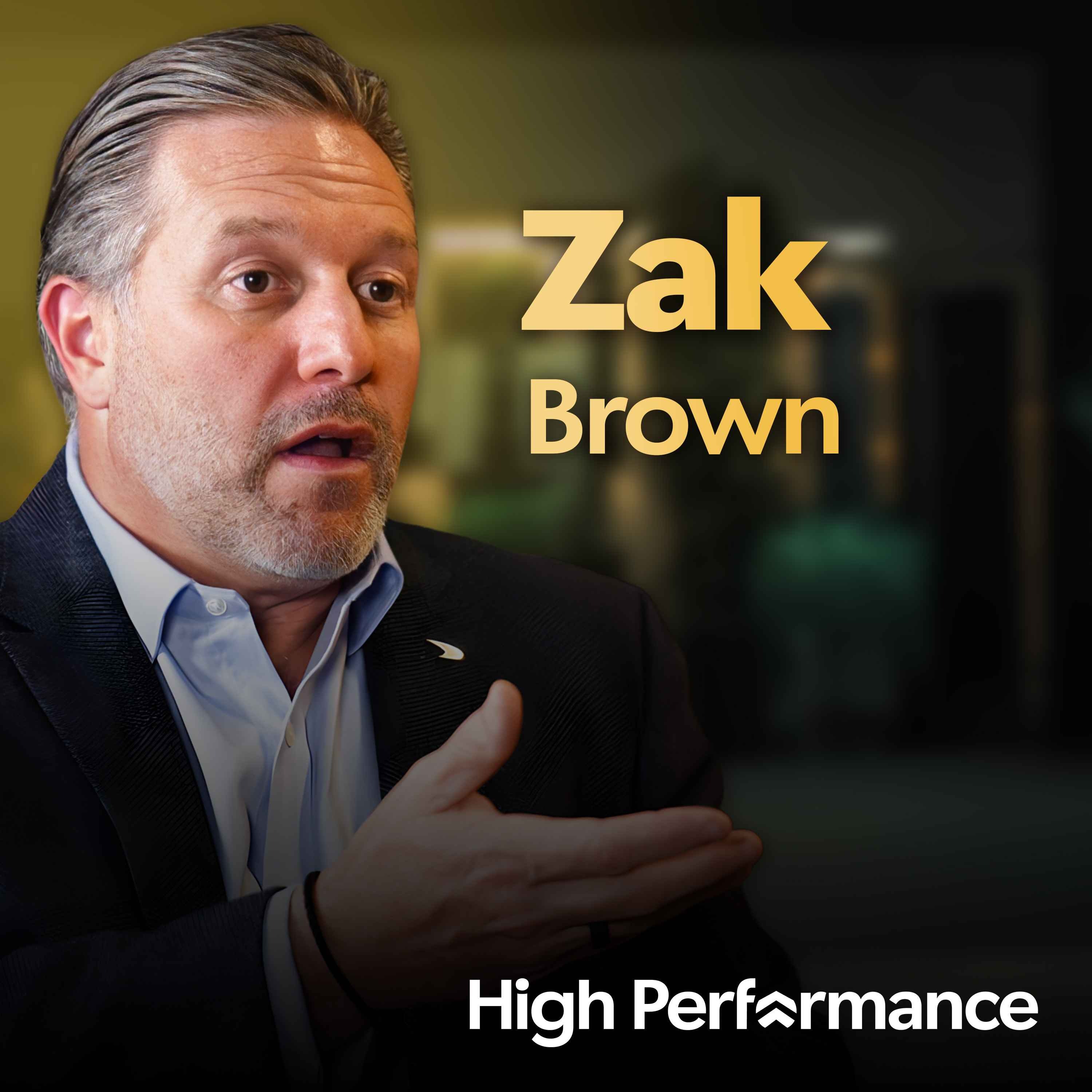
The High Performance Podcast
Zak Brown: The Deal That Kept McLaren Alive and How I Rebuilt the Team (E379)
01:00:48
Loading summary
Transcript152 lines
- [00:00]
Damian
Unlock it early on the High performance app Gareth Southgate, England's former manager who opens up about life leading his country.
- [00:11]
Verizon Advertiser
This holiday, Verizon is helping you bundle up incredible gifts and savings. You'll get the latest phone with a new line on my plan and a brand new smartwatch and tablet. No trade in needed even on our lowest price plan. That's two gifts for your family and one for you or two for you and one for someone else. Or three gifts for you and only you. Either way, you save big on three amazing gifts at Verizon, all on the best 5G network. Visit Verizon today. Rankings based on Root Metric Truth score report dated 1 each 2025. Your results may vary. Service plan required for watch and tablet. Additional terms apply.
- [00:41]
Grainger Advertiser
If you're a custodial supervisor at a local high school, you know that cleanliness is key and that the best place to get cleaning supplies is from Grainger. Grainger helps you stay fully stocked on the products you trust, from paper towels and disinfectants to floor scrubbers. Plus, you can rely on Grainger for EAs ordering so you never run out.
- [01:01]
Verizon Advertiser
Of what you need.
- [01:02]
Grainger Advertiser
Call 1-800-granger. Click granger.com or just stop by Granger for the ones who get it done.
- [01:11]
Paige DeSorbo
Hey guys, let me let you in on a little secret. I've obviously turned staying into bed into an art form. It's my happy place. It's my shopping sanctuary. And honestly, it's the perfect place to hang out with all my favorite people. So join me and some of the most interesting people I know for shopping, some laughs and maybe a few secrets. All from the comfort of my bed. The best part? You can watch from your bed. My show in bed with Paige Desorbo returns Monday, November 17th at 8:00pm Eastern Standard Time on Amazon Live. Just open Prime Video on your TV and search Amazon Live to cozy up. Because why get out of bed if you don't have to?
- [01:57]
Zak Brown
2023, we have the worst car on the grid. A few leadership changes. Now we win two Constructors Championships back to back Singapore, we clinch the Constructors Championship, get the team up on the podium first thing. When we got up there, Lando and I went, man, Oscar's not up here. This is going to look terrible. The only way he beats us is if we beat ourselves. We're prepared to take that risk. I would be very surprised if this was just four boring races to the end.
- [02:25]
Damian
That is the voice of zak Brown, the CEO of McLaren Racing, the man who walked into a Formula One team that was failing. And a few years later, they are back to back constructors champions.
- [02:37]
Jake
Zach walked into the famous doors of the McLaren Technology Centre and found grumpy sponsors, grumpy fans and grumpy employees. This episode's a masterclass in honest assessment and cultural change about how you can fix the machine by fixing the people and the toxic blame culture. First.
- [02:55]
Damian
Look, you're about to get a blueprint for turning around a business from Zak, as he shares with us that McLaren were losing 125 million pounds a season when he arrived. The mind games in Formula One, from tire water to CVs, landing on his desk from other teams, why Zach would rather be the hunter than the hunted. And of course, we're in the midst of the most titanic championship battle. With his two drivers going for the title, he's about to explain to you how he's currently managing two number one drivers, how their relationship works, why there hasn't been a single fallout between Lando and Oscar. Despite what everyone on social media believes and tells us why he's had to learn to have difficult conversations, how often he has those with his drivers, but also how he learned to have hard conversations.
- [03:41]
Jake
Zak's insights are essential listening for anyone who's in a leadership position or anyone who simply struggling to define their purpose. He makes a really powerful case for why knowing who you are and what you stand for is the only way to succeed, especially when the spotlight burns brightest.
- [03:59]
Damian
And this conversation is also about taking the biggest risk in Formula One, allowing two teammates to fight equally for the World Championship whilst knowing it could cost you everything. And look, we're in the middle of the season, so for Zac to come into our studio with just a few races left this season and share with us what's happened recently with Oscar and Lando, the very latest news from inside the team. It was a special record, so let's get straight to it and welcome the Boss of the McLaren Formula One team, Zak Brown, to High Performance. Well, Zak, welcome back to High Performance.
- [04:35]
Zak Brown
Thanks for having me on.
- [04:36]
Damian
Can we rewind the clock to the day that you walked through the famous glass doors of the McLaren Technology Centre as their new CEO?
- [04:43]
Zak Brown
I was mega excited and I came in actually as executive director, but. But as the boss, so to speak. What I quickly found. Well, it wasn't even that quickly because I had to kind of unwind this whole Honda thing. What I quickly found was grumpy sponsors, grumpy fans, grumpy employees. Other than that, everything was great and everything kind of pointed at. It's Honda's fault. That's what I walked into. As you started to unpick that, it was like, I'm not so sure how we treat our partners has anything to do with that. I'm not sure the lack of transparency with our employee, like you start unpicking it and it's like, okay, yes, we had issues with the engine and that definitely contributed to our lack of on track performance. But you go put the Renault in, which was a more advanced engine, and we go to P6, not P1. So it's like, okay, now what's the problem? Because we're not a P6 team and clearly we've just put an engine in the back that's been winning a lot of races with, you know, Red Bull not long ago. And so what I did know we have was a great brand with a great history and we must have had, which turns out we did lots of great people because there's a lot of championships and race wins in that building. What we totally lacked was leadership and a vision of where we were going. And that's what we were able to kind of put together that's built all this momentum.
- [06:30]
Damian
And it's fair to say that some people doubted you when you got that job. You write really nicely in the book about Bernie Eccleston having a bet with you.
- [06:36]
Zak Brown
Yeah, yeah, yeah. Two years, you take the over under and he's always been a great character.
- [06:43]
Damian
So did he say you wouldn't last two years?
- [06:44]
Zak Brown
Yeah, I wouldn't last two years. He wouldn't last two years.
- [06:46]
Damian
Did he pay out on the bet?
- [06:48]
Zak Brown
No. We should have actually made a bet, but I'm not sure I would have bet against him. I mean, because if you think about it, prior to myself joining, you kind of had five different leaders, right? You had Ron had kind of stepped aside from the day to day leadership of the team, then you had Martin in, then you had Ron back in, and then they hired Eric and then they hired Yoast in like, forget about those individual people, some of them really good, some of them not. But beyond that, what racing team, sports team or even business can survive a who's the boss this week? And so that was what really needed to be fixed was bring stability and leadership. Not just me, but the leadership team. So the team kind of we could set some direction and guidance and get everyone kind of row in the same direction.
- [07:39]
Damian
And it's fair to say that there were some financial challenges. Did you know the financial position when you took the job?
- [07:48]
Zak Brown
No, I Knew we were losing a lot of money because I'd seen the books, but I didn't know how bad. And then when we took the decision to leave Honda, that dug another hole. Right, because that was fiscally a very lucrative deal. Free engines, a lot of financial contributions. So we're losing money, we're struggling. And then we take a conscious decision to let's dig a deeper hole because we need to dig out of this. And that was huge. And then when we put the new engine in and it wasn't lights on, we're back on the front. It took a lot of time to rebuild, but I always had a lot of comfort from Paul Walsh, my chairman and mom telecat the owners that as dire as things were, and they were, they wouldn't let things go south. So even though I was staring at the light at the end of the tunnel and not the good light, I ultimately had confidence in Mumtalakat and Paul Walsh that we would get through it. And we did it.
- [08:49]
Damian
And just to be really clear for people you write in the book about the numbers, I mean, it was losing 125 million a season.
- [08:56]
Zak Brown
Yeah. A lot of money.
- [08:57]
Damian
And to get through the financial challenges that came your way, you worked out you needed to find 185 million.
- [09:03]
Zak Brown
Correct? Correct. And ultimately then you had Covid hit, which didn't make anyone's life any easier financially. And so what the shareholders decided, because they're racers, they just, they want to win. They're in this for. They love the brand, they love winning. And they ultimately, because they had a lot of investment going into automotive, was we'd rather own the majority of the racing team and sell a minority stake to fully fund our business plan, then live within our means, which would be not funding what we need. And then that in Formula one, that's just a slow death, isn't it? If, if you can't compete at the front, you're just, you know, you live within your means, but then you don't get the results. You get less sponsorship, you get less prize money. Now you gotta lower again and like, you just, you eventually just starve yourself of, of oxygen. So they took the let's play offense, let's go raise the money necessary to give this team every opportunity. That's what we did. And then not long ago, they announced that they, along with Simon from Abu Dhabi, bought it back in happy days.
- [10:12]
Damian
I think there's a quote from the book that Damian wants to read out about what you were like at school. Are you?
- [10:16]
Zak Brown
Yeah.
- [10:17]
Damian
I mean, It's a cracking quote.
- [10:20]
Jake
If you'd see me at school, you'd think I'm going to be a bust. You think I'm going to amount to nothing. I am troubled.
- [10:27]
Zak Brown
Yeah. That was. One of my report cards is in there. I wish we would have put in the one that had some handwritten notes, you know, from the teachers. And one was great. I really like Zach. I want Zach to succeed. What's wrong?
- [10:43]
Damian
That's what fascinated us, was like, the disconnect between this guy who was told at school, it isn't gonna work out for you. And also, we should talk about sort of the aggressive side of your life at school and the trouble you got yourself into. How does that marry up with this guy that walks into a business? Failing on the track, failing off the track, Difficult challenges in terms of the culture at the business, difficult financial situation, and turn it around makes me wonder whether we just write people off too early in life.
- [11:08]
Zak Brown
Sometimes I think, in my case, it's interesting. I learned a lot about myself writing the book, reflecting, and I've always had massive passion. If I always had massive energy. I've always wanted to kind of get ahead. And I think what I didn't get in school was other than baseball, which I got an A in, and work experience, funny enough, I didn't have a passion for those subjects. And so I just. I didn't care. It wasn't like I failed at school because I tried really hard, studied, and couldn't do it. I just didn't show up. I just wasn't interested. So I think I've always been massively passionate about baseball or ice hockey or motor racing. Now I've. I think I've matured, but I was always massively passionate and wanted to kind of hustle and. And. And I was always on the move. I always had a lot of energy. I always liked to have fun. I just. There wasn't anything that kept me entertained at school. It was baseball and racing and other sports. And I think that's why I kind of checked out and focused on that stuff so early. I would have continued, and I was quite good in baseball. But someone pointed out to me, zach, if you want to be on the high school baseball team, you have to go high school.
- [12:26]
Jake
So if we spun it, then. So rather than ask, how clever are you? If we spun it and asked, how are you clever, what would you have answered?
- [12:32]
Zak Brown
At school, I was always pretty good at figuring out how to be entrepreneurial. Now I use that in a more business sense. I think entrepreneurial when you're a punk kid, you're kind of wheeling and dealing and talking your way out of getting in trouble with the principal, your family, you know, but, you know, ducking and diving, I don't think I duck and dive today. I think today it's more business entrepreneurial is how I would phrase it. But I think always being on the go, always kind of hustling, always wheeling and dealing. And that's kind of what you do today, right? You know, you're working with your partners and you're wheeling and dealing, or whether it's with your team, you know, you're just so. I've always been high energy. I've just found something that I'm absolutely been in love with for a long time.
- [13:18]
Damian
So how did that inform the way that you managed when you walked in through the door at McLaren? Because you would have had two not very happy drivers to look after. You would have had people in the engineering and the design team, people in the marketing team, people who are traveling to races, giving their lives to this team, and it was failing.
- [13:33]
Zak Brown
Right.
- [13:34]
Damian
How did you decide what the first thing was that you had to do to try and turn McLaren around?
- [13:38]
Zak Brown
I knew. So when I came in, I came in with the. Let me just kind of learn, you know, while I was comfortable with 1400 employees, because my previous company that was about the same size and I was very comfortable the racing, I was very uncomfortable with the racing team because I'm not technical and it's such a technical sport. I was like, I'm not going to be able to sit in technical meetings and even know what these guys and gals are saying. I have no. No idea. So that was quite intimidating. The commercial side, I was very comfortable with. So the first thing I did was kind of assess the leadership team and recognized I needed to make some changes there.
- [14:20]
Damian
And how, when you're doing that, how do you know whether you need to make a change or whether someone can actually be turned around, if that makes sense.
- [14:28]
Zak Brown
Yeah, well, so a couple people on the leadership team were promoted because I actually thought and have been proven right.
- [14:36]
Damian
But what are you looking for?
- [14:38]
Zak Brown
I'm looking for, do we speak the same language? Do we run at the same pace? Do we have the same passion? Do we think creatively? Do we think entrepreneurially? Are we prepared to do things differently? And I could tell after kind of working with all of them very successful people, a couple people left kind of, hey, I know there's going to be a regime change here. So it wasn't Personal. And there were some superstars there, but, you know, we needed to kind of do things a new way. So made a variety of changes. There wasn't anyone from the leadership team that's on the leadership team today. Laura and Lou Louise were both promoted. One Laura CFO. Lou is our CMO. They are brilliant. So those were the only two people that were inside McLaren. Then I brought in a few people I'd worked with at my previous company, and then some headhunters helped me find, you know, Daniel, our head of hr, et cetera. And I put together this awesome team. I mean, I love them and we all love working together and we challenge each other. They're all up workaholics, you know, Definitely. So we're pinging emails kind of 24 7. If we need to do a call on a Saturday, Sunday, like, like, no problem. Then, you know, often they're calling me and it's like, hey, it's Saturday. Like, well, yeah, but you said call. And so, you know, I think you have to get everyone rowing the same direction, have the same amount of energy then. I think they're really awesome experts in their disciplines. And I think sometimes when you have a company where people have been around for a while, sometimes they get put in positions because they were kind of there, or if they've been there too long, they don't have enough perspective from. So I didn't want. I wanted some, you know, Daniel came from football and airports. What I liked about that HR is airports are frantic. Someone's always yelling and screaming. It's 24 set, like. So I like the energy of kind of what's going on in an airport. And then he worked on a football team, so he knew how to deal with players and trainers and owners. And so you kind of looked at. That's a perspective we don't have from inside here right now. So I brought in a bunch of people from kind of different skill sets. We challenge each other. We. We have difference of opinions, but once we align, even if the alignment is actually, I would have done it a little bit differently, but I'm going with the group. You'd never know when we walk out the door who would have voted what direction. And I think that's the sign of a really united team. And then once you start setting direction and they can get their respective leadership teams acting in the same way, you know, they get the whole organization going. Yeah, we like where we're going. And it's amazing, you know, I know we'll eventually come onto it. 20, 23, we have the worst car on the grid, second worst car on the grid, make a few leadership changes, and now we win two Constructors championships back to back. Same wind tunnel, same drivers, 98%, same people, some different leadership, and a new culture and ways of working. Look at the difference. You know, as I say, in Formula one, even the worst team is great. Right? I mean, the competition in Formula one is immense. So if you don't kind of run and run fast, you know, I've got a phrase in there. We kind of use the DEFCON system, which Daniel, at first was like, zach, I'm not sure. I love DEFCON system. That's like nuclear war. It's like, well. But everyone kind of knows what I mean, right? So DEFCON 5 is kind of sitting back. There's no DEFCON 5. Right. If you think about a pit crew, the helmet's always on. They're always ready for a pit stop. And that's kind of the energy, the passion that I think any business needs to have. Forget about whether it's Formula one or a business, right? Because all these businesses are massively competitive. And so you got to have a burning desire to want to win, get up every day, dust yourself off when you've crashed or had a bad day, because we all have them, and we're going to have them again in the future. But I think it's that energy and fun is something that I think is a key ingredient, at least in my style. Because if you're going to kind of get people to hustle and be pretty hard on them, you kind of need to do it with a little bit of a smile and a little bit of. A little bit of love. Otherwise, it's like, man, this guy's just on me all the time.
- [19:16]
Jake
But can I ask you, Zach, like, how do you protect your energy? Because you described how it's a leadership team that have turned performance around. That's something that needs to be protected as well as nurtured. How do you go about doing that?
- [19:28]
Zak Brown
I get a lot of energy from other people, whether it's our fans, our partners, or our employees. I like sitting down and having conversations. I get energy from people, and I think hopefully they get energy from me. And we all kind of share a common goal. We know it's not easy, and I think over the years, I've learned the power of family and friends and how important it is that they come along on the journey. So we just did at McLaren a family day, we had 4,000 people out, and it was awesome to See the energy and the appreciation of the families because we all live on the road and get to go race in Monaco. But you sometimes take for granted that actually, I mean, I've missed birthdays and holidays and sometimes, you know, that's what business does. But you're never happy about it and you look back on it. So to be able to share how cool our job is and our life with their family, I think gave them a lot of energy and just created a big buzz at the mtc.
- [20:32]
Jake
And there'll be a lot of people listening to this that maybe are thinking about, like hearing about the dynamic of your leadership team that you have. And you said that we learn to disagree agreeably. Can you tell us how you go about doing that?
- [20:44]
Zak Brown
Yeah.
- [20:45]
Paige DeSorbo
So I'll.
- [20:46]
Zak Brown
Depending on what the topic is, I'll come with a view. Sometimes I'll lead with the view. Sometimes I'll wait to see others, but. And I can feel pretty strongly about a view and I can walk out of that room, change my mind because they changed my. My mind. I don't have a kind of pride of authorship or it's my idea. I don't care whose idea it is. I just want the right idea. So if we're going to go through a topic, I might put something on the table to get the conversation going. I want to hear from everybody and really hear from them. Not kind of like I want to pretend I'm listening so I can just. We're going to do what I said. It took a little bit of time for my leadership team. Those that hadn't been around me long to be comfortable challenging me. And I'm disappointed if they don't challenge me. So now they have no problem challenging me. I just got off a call and I was like, hey, steady, I'm your boss.
- [21:44]
Jake
Can you give us an example then of where. Where you've changed your mind on something down to that challenge?
- [21:51]
Damian
Are you a trailblazer, a risk taker? Maybe someone with countless tales of epic adventure? Well, I'm not quite there yet, but I'm working on it. Even the boldest among us started off small, right? Daring themselves to reach greater goals every day. And if you're looking to take on a challenge like that, the Defender is too. Now, I've driven a Defender for a few years. It's the best car I've ever owned. It's a vehicle built for drivers capable of great things, whether they're heading towards uncharted territory or. Or just fancy a weekend getaway. Defender was engineered to meet challenges head on so you can explore with confidence. It's the legendary icon of adventure, reimagined through modern design, fit for a new generation of explorers. My kids love it as much as me. It also has a tough, rigid body tested to the extreme, a modern functional interior built for comfort. It's a vehicle that, like you, is capable of great things. And with next gen technology from 3D surround cameras to clear sight ground view, it will help you embrace the impossible. Explore the full Defender lineup@land roverusa.com youm know, we talk a lot about confidence on this show, whether it's business, sport or life. But there's one area a lot of men struggle with and don't talk about confidence in the bedroom. The truth is, erectile dysfunction is a lot more common than people think. According to the National Institutes of Health, as many as 30 million men in the US experience it. But it doesn't have to be stressful because this is where Hims comes in. Through Hims, you can access personalized prescription treatment options for ED like hard mints and SexRx plus climax control. If prescribed, it's expert care that's 100% online. No waiting rooms, no awkward chats, just straightforward, affordable treatment designed around you because when you take the stress out of performance, you can actually enjoy the moment. To get simple online access to personalized, affordable care for ED, hair loss, weight loss and more, visit himss.comperformance that's himss.comperformance for your free online visit himss.comperformance actual price will depend on products and subscription plan Feature Products include compounded drug products which the FDA does not approve or verify for safety, effectiveness or quality. Prescription required. See website for details, restrictions and important safety information. If you're still overpaying for wireless, it's time to say yes to saying no. Because at Mint Mobile, their favorite word is actually no. No contracts, no monthly bills, no overages, no hidden fees, no bs. Look, for me, switching was a no brainer, okay? I was fed up with ridiculous bills and endless small print. With Mint, I now get premium wireless for just $15 a month and honestly, the quality just as good as my old provider, if not better. All plans come with high speed data and limited talk and text, and it runs on the nation's largest 5G network. You can even keep your own phone and number, so the switch is quick and painless. So if you're ready to say yes to saying no, no to contracts, no to overpaying, make the switch@mintmobile.com HPP that's mintmobile.com HPP Upfront payment of $45 required, equivalent to $15 a month limited time. New customer offer for first three months only. Speeds may slow above 35 gig on unlimited plan. Taxes and fees extra. See Mint Mobile for details.
- [25:02]
Verizon Advertiser
This holiday, Verizon is helping you bundle up incredible gifts and savings. You'll get the latest phone with a new line on MyPlan and a brand new smartwatch and tablet. No trade in needed even on our lowest price plan. That's two gifts for your family and one for you or two for you and one for someone else or three gifts for you and only you. Either way, you save big on three amazing gifts at Verizon, all on the best 5G network. Visit Verizon today. Rankings based on root metric truth score report dated 1 2025. Your results may vary. Service plan required for watch and tablet. Additional terms apply.
- [25:38]
Zak Brown
Well, I do it a lot, whether it's a commercial on, on a sponsorship arrangement and Matt Nick are coming to me saying we think we should structure it this way. I'm not so sure. And it's like, I'll follow your, follow your lead, Lou. On the, on the, the brand side, I'll kind of come up because I, I'm not creative, but I think I'm creative and that's what they all tell me. So I'll come in with a what about, you know, this idea of doing this at a fan line or on the calm side. And you know, I always want to share and my comms team will kind of have to be like, zach, be careful. Because here's another way people could look at that. So there's a, lots of, it's almost kind of daily. And then there's times where if I feel really firm on something, I'll listen to everyone and I'll say, heard you. But here's we're gonna do it this way and here's why. And they'll get on board. And then if I've got it wrong, I'll say, hey, you know what? I got that wrong. I can't remember the last time that happened, though.
- [26:41]
Damian
One of the things that comes to on the book that I like is the importance of also knowing when not to talk. And there's this great line where you say that Tom Stallard, one of the race engineers, says to you, zack, you're brilliant on the pit wall. And at this point, Zach's going, oh, really? What do I do that's so good? And Tom goes, well, you don't. And I think knowing when not to talk is such an important skill in leadership. So would you take us through, like, what you see your role as during a race?
- [27:06]
Zak Brown
Yeah. So it was a funny conversation with Tom. I think leaders need to know how to communicate, but communicating isn't just talking. It's listening. I also think leaders need to know when to lead and when to follow. And you can lead by following. You know, let others lead. And so I think those are important characteristics with the racing team. I feel like I work for the racing team. They don't work for me. I'm here to help Tom Stallard be the best engineer he can be, or Randy to be the best strategist, or Andrea to be the best team principal. So I feel much at a race weekend, what can I do to help you? And in. I'm not going to be able to help tomorrow in the middle of a race on something that's engineering or stress. So I'm going to shut up. That's the best thing I can do, is not be a distraction or as I've seen others do, get on the radio because, you know, Netflix is listening, and I want to make it look like I'm calling the Pit Stop stretch. So I. I last thing I want to do is be something that I'm not to other people and have my own team look at me and be like, that's not what Zach does. He's just acting.
- [28:20]
Damian
That's ego driven.
- [28:21]
Zak Brown
Right? That's ego driven. That is just, you know, I'm. I'm. And so when I started at McLaren, I wanted to make sure I built the loyalty and the trust of the racing team. So the last thing I was going to do was come out with something where it's like, oh, God, here we go again. And so that respect that I have for them and their roles and knowing I can't do everyone's job, I can do some of the what we do at McLaren. There's a lot I can't do. So I'm not gonna pretend I can do all things. My job is to build the best team, not to be the guy who does it all. And so that's what I'm most proud of, is the people that I've been able to recruit or help grow or get work together, bringing the team together to me, that is super exciting. So on the pit wall, I only talk to Andrea, and it's usually more questions. I'm not giving him any advice. I'll throw something out there. I saw this thought about that. I just stand back at a race weekend and there to make sure I support everyone. The work that I'm doing is more with our sponsors and our fans and just making sure we've got a good environment. I do lean into the drivers quite a bit. That's an area I'm very comfortable. But again, not on kind of giving them technical talks on how to enhance the race car. That's Andrea. I'm trying to bring an environment of fun, trust, hard work. Everyone can feel good about going racing and what we've got going on right now, four races to go, you know, we're getting all these commentary on what we should be doing or not doing or favoring or not favoring or we are favoring. We've got two drivers who get along great. Four races to go. Pretty awesome. So, you know, I'm kind of feel like a mama bear at times because the commentary out there, especially on social media, is brutal, but it's uninformed. It doesn't bother me, but I'm sure it bothers others inside McLaren. So I want to kind of protect them from all that noise and, you know, let the lightning rods come my way. You guys just stay focused on what you're doing because you're doing a great job. Ignore what everyone's saying. Fact of the matter is we're 12 in the championship. Got this Max guy chasing us who's not far away, but we're sticking to our racing values.
- [30:37]
Damian
So how have you done this and how have you got two drivers with a handful of races toward the end of the season with a four time champion chasing them down and getting closer every weekend and there hasn't been a huge fallout.
- [30:48]
Zak Brown
Yeah, there hasn't even been a fallout.
- [30:50]
Damian
Has there not been anything?
- [30:51]
Zak Brown
Nope, nope.
- [30:52]
Damian
Now, even after the little touch in.
- [30:53]
Zak Brown
Singapore, not between them. Really. Yeah, they. Not once, you know, when you can walk into a room and you can kind of feel the tension? Yeah, not once. Not once. Even when they've touched each other. They may not have been totally aligned around what Andrea and I and the team have, you know, come up with kind of the. But they've never done. Lando did that, Oscar did that. Anytime they get grumpy, it's a little bit actually towards me and me and Andrea because we're trying to be, you know, fair and balanced. And I think the fact that they've both been a little bit grumpy at times with us actually tells you things have been fair and balanced because, you know, we're trying to make sure they race clean and they are, you know, all the incidents that they've had, which isn't that many, have all just been kind of at the end of the day racing incidents. But we want to kind of make sure the championship's decided on the track and not through that. I think we're lucky that we have the two drivers that we have. I'm not sure that Andrea and I and the team would be able to manage other drivers in the way we can, Oscar and Lando. So I think a lot of credit due to just who they are as individuals, and that's part of our kind of recruiting process of drivers is character and do they think like. Like us. And we're just. We talk about the elephant in the room all the time. We have massive communications, transparency. We talk about it all the time. So it's not one of these things like, oh, let's. Let's pretend it's not.
- [32:17]
Damian
And is. Is Max the elephant in the room at the moment?
- [32:20]
Zak Brown
No. Elephant room. More being, you know, you guys both want to beat each other and did you guys like each other? But I know from once, having driven, the first thing Oscar's got to be doing when he sees the time shift, where's Lando? And when Lando comes in, the first thing he's got to be going is, where's Oscar? Like, of course.
- [32:38]
Jake
Tell us about that meeting, then. What do you do to.
- [32:40]
Zak Brown
Well, we have it all the time. We do it going into a race weekend. We do it Sunday morning after we know qualifying so we can talk about tire strategies. You know, you don't want to surprise the driver in the race with some piece of information that's new. So hopefully you've discussed, hey, if this happens, we might look to do this. So they don't feel surprised to have a tremendous amount of trust with us because we've never broken their trust. We have a tremendous amount of trust with them because they've never broken our trust. So we just talk those things through. It was interesting when we had Daniel Carlos join us from other teams. I'd say, how often did you do the dinner with team boss? Once a year. Once a year. I'm like, golfing with Lando all the time. Dinner with Oscar, going, driving. I was surprised how transactional some of the relationships have been between racing driver and team boss at some other teams. I'm sure that's not how every team is, but when I asked, I was just surprised. There wasn't like a real close relationship. I'm talking to Lando and Oscar every week. I'm trading texts with Them, you know, if not every day. Every couple days, we're going. I've probably done 15 rounds of golf with Lando, been out driving race cars with Oscar, and so there's a real relationship there. Great communication. And I think it's been difficult in the sense of the whole world is looking on us, but. But nothing's been difficult with Lando, Oscar and Andrea and I, we sit down, we're all on the. We're all on the same page.
- [34:22]
Damian
I think what's really interesting here is that it sounds to us like you've totally normalized having big conversations about big things with your drivers.
- [34:30]
Zak Brown
Like, yeah, I think that's. Well, it's funny. I've learned something that you just picked up on. Glad my book kind of worked. But to your point, like, it's a difficult conversation. Yeah, we're totally comfortable, but it's only.
- [34:42]
Damian
Difficult if you never have it. If you. If you have these conversations every single week and you say how you're feeling about the fact your teammate's one point behind you, it doesn't blindside them because this is the open communication that you've created.
- [34:52]
Zak Brown
Communication, transparency, fairness. And that's what we've done with the racing team. I'd rather over communicate. You know, we. We stand up and we've had a few people join us from other teams who were surprised at how open Andrea is with the intensity entire racing team. When we do debriefs, technical information, etc. We trust everyone in the racing team. And to have, you know, we've got 1400 people in total, not all of those in F1, to be able to be confident and go, look, you're not letting me down if something leaves this building, but you're letting your teammate down. And so the respect everyone has for McLaren and our teammates, and the more trusting they are with us, the more trusting we are with them. And it just kind of feeds a bond. And. And because the more information they have, ultimately, the better they can do in their job. And. And, you know, we've also made sure that everybody understands how important they are to the success of our racing team. So. And what I mean by that is everyone kind of. The race car is mega, and the race car is mega, and the people that have touched and designed the race car have done a mega job. But if you kind of look at what has to happen, first you have to have unbelievable fans. You have a great communications team because that's how you're talking to them, who. Then you have to have a great brand Team led by Lou, where all the fans feel engaged and heard. Then once you've got that great brand brand and great fan base, your commercial team steps in to go find the Googles and the mastercards of the world who want to be part of the McLaren environment, right? So we're not even into the racing department yet. You got to do all that stuff, right? Then we're in a cost cap world. So you have to spend very wisely. You can't just chuck money at problems like you used to be able to pre cost caps. You got to have an unbelievable finance department. Laura understands Formula one. So, you know, when you get into big investments, it's not, you know, no, no, no, don't spend, right? It's like, no, that's a good investment, that's a good ROI on that. And so you got to have a great finance team and we've talked all about culture. So you got to have an awesome HR team, got to have a great general counsel, chief of business affairs, because, you know, we're a big business, right? All that has to happen and then you hand it over to the race team, then you gotta design and develop, have a great wind tunnel, great technology. And so when everyone understands that when you break the record and you do a 1.8 second pit stop, yes, it's everyone on the guns and the pit stop, but who paid for the guns? Where did that go? And you can tie everything back. And then this is also why fans are so important to us. It all starts with the fan, right? That's where I started. It started with, you got to have awesome fans. And then everything else kind of falls in place in the ecosystem. So I think once everyone knows that there used to be an us and them between the commercial and the racing department, the racing team now, and the team isn't just that at the track, but back at the back, they know without commercial success, they don't get the tools to be successful. Commercial team knows without the race team being successful, so they need each other. And where that comes to life, which might seem like a small thing, we're all trying to get into weight saving. Used to be when we need to take some branding off the car, some papaya, they're ruining the design of our car. I was like, well, this. Just wait. Now they work together and they're proud when they can kind of redesign a livery that fits the commercial needs, but fits the racing team's need from a weight standpoint. And they're like holding hands, going racing together. And once you create that Environment. It's so powerful.
- [38:53]
Damian
So the whole world, right, has been trying to work out how you and McLaren have done what you've done over the last 24, 36, 48 months. Right? And I think you've probably just described it perfectly in the last five minutes. Everyone on the outside, on social media, on YouTube, everywhere else, they're looking for chinks in the armor. They're looking for a conflict, they're looking for an issue. They think there's things going on that we're not being told. They can't wait to hear about repercussions for Lando or what. And then what you're describing is under the surface, regardless of what everyone else is thinking and what the world is saying, you've managed to just create stability in a sport that is famous for instability. It thrives on confrontation and aggression and fallout and silly season and all these other things. And you seem to have quietly just created real cohesion in the whole business.
- [39:39]
Zak Brown
It's been awesome. I'll give you two examples. Both happened in. In Singapore, and this is how kind of strong I think we are as a team, because we also know when we see something, we'll bring it to each other's attention. So two examples of that. Singapore, we clinch the Constructors Championship. Lando's on the podium, Oscar's in the media pen, which is down the road. Formula One impromptu, says, get the team up on the podium first thing. When we got up there, Lando and I went, man, Oscar's not up here. This is going to look terrible. But, like, we know how that happened. He's in the media pen. This wasn't something planned. So we get up there and do it, and let's. First thing Lando and I said was, ah, man. Like, where's Oscar? But, of course, the media narrative was Oscar's boycotting. We didn't want him there. And it was like, what are you talking about? And then when I was thanking Oscar on the radio, I didn't see where he was on the track, and he was in park for Maine in the process of shutting down the car. So when I was thanking him, it looked like he unplugged, you know, like he hung up the phone on me. It's not what happened. I didn't even notice it. And then you get all the Oscars, this, that, and Oscar noticed it and went, hey, make sure Zach knows I didn't hear him. So, like, we got each other's back. Like, when we see something and it's not true, we kind of don't care what everybody else thinks, but we care what each other thinks. And so we'll, you know, Oscar, when I went, hey, make sure Oscar knows this is how this happened on the podium. And he went, yeah, I figured it out. And then he kind of reciprocated and hey, make sure I kind of just saw this. Zach knows I didn't hang up the phone.
- [41:17]
Damian
Is it not draining, though, that the world is desperate for there to be a problem that doesn't exist?
- [41:22]
Zak Brown
It's. It keeps our comms team on the, on their feet. You know, I think we're in a huge sport. The world's watching us. You know, if you're watching Formula one, it is frustrating because you see stuff that is just so wide of the mark and, and I don't mind people having a difference of opinion. And it's sport. What really does matter is what our papaya fans, the, the, you know, the media that, that we know are doing a good job. Our sponsors, our employees and our families, that too matters to us.
- [41:58]
Damian
What about when it's people who can do your job? And I'm thinking here of the rivalries you've had in the spot. I remember seeing an early episode of Drive to Survive and I, I actually quite enjoyed you and Christian sort of locking horns over things.
- [42:10]
Zak Brown
I've known him a long, long time, used to race, race against them. And you know, I think sport, there's some rivalries that are healthy, some that are unhealthy, but I kind of put all the rivalry stuff in a different category because there's also an aspect to our sport of trying to destabilize. You know, it's probably one sport and I wouldn't claim to be an expert on other sports, so maybe I'm wrong here, but the mind games that go into our sport where you're trying to destabilize other teams by creating politics in their own environment, I don't know that they do that as much in football or, you know, pick a, pick a sport where they're just trying to be the best team they can be and they're just trying to beat the other team on the field. Our sport. You're trying to create lack of stability in other teams so it's part of the game so that, that doesn't bother me. And I kind of put that in a different category. I think that's just how our sport works.
- [43:09]
Damian
Do you miss him?
- [43:12]
Zak Brown
He's fun to arm wrestle with. So miss. But, you know, I think the sport needs a lot of characters. I mean, what he achieved was remarkable. Right. So, you know, love him, hate him, whatever his results were, were, were awesome. And I think really strong competitors make you better. I didn't like some of the ways we jousted because that's not who I am. But, you know, kind of going back to racing, you kind of race people the way they race you on track. If they're going to put you two wheels off, then you got to put them two wheels off. If they're going to put your four wheels off. Sometimes only with a race, almost put four wheels off. I'd like to think I'm a two wheels off guy, not a four wheels off guy. And I had to go four wheels off with him a few times.
- [44:01]
Damian
Yeah, but look at what he did. Look what you've done at McLaren. But he took that team as a young guy and turned into amazing what he accomplished. Best in the world for a long period of time.
- [44:11]
Zak Brown
Tons of respect for what he accomplished. You can't take that away from him. And I'm not going to sit here and go, oh, he was lucky. I mean, I now know from having done it twice how damn hard it is. And he did a lot more than twice. So no, hats off to him.
- [44:27]
Jake
Can you give us an example of those mind games that have you played them?
- [44:31]
Zak Brown
Oh, yeah.
- [44:32]
Jake
Can you give us an example of it?
- [44:39]
Verizon Advertiser
This holiday, Verizon is helping you bundle up incredible gifts and savings. You'll get the latest phone with a new line on my plan and a brand new smartwatch and tablet. No trade in needed even on our lowest price plan. That's two gifts for your family and one for you. Or two for you and one for someone else or three gifts for you and only you. Either way, you save big on three amazing gifts at Verizon. All on the best 5G network. Visit Verizon today. Rankings based on root metric truth score report dated 1 2025. Your results may vary. Service plan required for watch and tablet. Additional terms apply.
- [45:15]
Zak Brown
Yeah, and it was, it was true. When I commented that Red Bull, I had a kind of more than normal amount of CVs coming across my desk. I did, but I mentioned it. You know, what does that do? If I was people were leaving my team and I'm kind of hearing a lot of CVs are out, I'd be like, hey, I know I don't have a contract with you yet. Are you talking to other team? Right? And now all of a sudden, instead of us having a very healthy, I'm not sure I can totally trust you and are you telling me, like, you know, and you start creating some. And then instead of you and I talking about how we're gonna go racing next week, I'm like, is he gonna leave? Where's he going? And so that's an example of. It was. It was true. But I commented on it at a time where we were jousting at each other. But, you know, I think in that environment, if I was, you know, the CEO and I'm kind of see some people leaving, and I know there's some kind of lack of stability that would get me focused not on thinking about my game, but thinking about kind of who's on side here, who's not. Are they gonna leave? And do I need to start thinking about a replay? And it's a distraction.
- [46:29]
Jake
But how much of that is strategic as opposed to just in the moment being a bit devilish?
- [46:33]
Damian
Bit of both.
- [46:34]
Zak Brown
I mean, definitely strategic. You know, the devilish was the fun stuff, like the. The. The tire water bottle.
- [46:41]
Damian
Tell us the story of the tire water.
- [46:43]
Zak Brown
So we were. It was reported that we had some sort of tire water, which is ridiculous because obviously we're really good on.
- [46:55]
Damian
And this was Christian or Red Bull saying you were cooling your tires with water during a Grand Prix.
- [47:01]
Zak Brown
It was also. And it didn't make Netflix as far as draft one. And it was commentary that, hey, go investigate them. We know they've got some sort of tire water. And whether they believed that or were just trying to get like, it's crazy. It expands, it's uncontrollable. Like, I'll give you 50 reasons why that makes no sense. So that was probably a distraction tactic. Fair enough. To kind of have everyone kind of come look at our cars and have the FIA and what's that? And, you know, to distract us. And so that's, I think, a good example of another team doing it to us, and it's kind of fair game. It was totally inaccurate because I thought it was such a ridiculous, you know, of all the things you could pick and choose, it was like, actually, let me kind of come right back at you with a bit of two fingers up, if you'd like, with the tire water. But trying to do it in a funny, humorous way of also kind of sending a message of, keep trying, but we're focused. I'm going to make light heart of it, as opposed to take it really serious and get angry about it.
- [48:14]
Damian
Can I also ask you about how much you do listen and learn from some of the criticism that comes your way, whether it's like Japan this year when people said, you know what, you should have just been more aggressive with how you approached it. Or Silverstone last year when people thought you got the. The strategy call wrong. Or even last year, should you have sided with Lando early and given him more of a chance to win the world title? When you actually reflect on some of the conversations that are happening online and you think, yeah, maybe there's a bit of truth in that. How do you go about resolving that in not just for you, but for the team?
- [48:46]
Zak Brown
Yeah, no, we. You know, we've never, ever, ever said we're perfect. And we. We listen. We listen to constructive criticism. We listen to, you know, good example of. I was hot under the collar when Nico and Oscar touched in Austin, and this guy came on to me two seconds later. And I was, you know, I was pissed. I took a step back, I looked at it, I spoke with people. I mean, and it was like, I got that wrong. But, you know, I apologized. I apologize.
- [49:22]
Damian
Did you go see Nico?
- [49:23]
Zak Brown
I went and saw Nico. I sent Jonathan Wheatley a note immediately saying, I got that wrong. I sent Nico a note, I got that wrong. I went live on air and went, I got that wrong. And then I went and saw Nico on the grid and said, sorry, dude. And then I get criticized for apologizing and you buy. And it was like, who criticized you for. I just know it just no, you know, noise in social media. But it was like, yeah, I got it wrong. I've never said, I'm perfect, I'm human, I can get it wrong. And so we do listen. And in fact, when we lead our debriefs, and I remember one that stuck out with me this year was Spain. We finished first and second, and we opened the debrief with the 10 things that we can improve upon that were close calls.
- [50:09]
Jake
So had you done that before or was that the first time?
- [50:12]
Zak Brown
Yeah, yeah, no, we have. But that was one where it was like, you know, because Spain was a big one because that was when all the rule changes were coming out and we were all going to get found out. So we were quite proud to win Spain because that was the, you know, everyone was gearing up towards flexi this and flexi that. The truth's going to come out in Spain. And so that was one. But I remember sitting down and instead of, like, we showed them, it was like, here's 10 things we could have done better.
- [50:37]
Jake
And what was the impact of that on the team that seeing they loved.
- [50:41]
Zak Brown
It because it wasn't Insulting. We weren't, you know, it's your fault. We could have done that better. It was like, hey, there's no such thing as a perfect lap, right? In Formula one, you're trying to seek perfection, but even when you get it really good, you can still make it better, right? Like our race car right now. Give us some time. We can still make it better. Talk to a racing driver. Lando thought, you know, his last lap in Mexico was close to perfect, but if you said to him, could you have found a little bit more time? Yeah, I could have breaked a little bit later here. So we're in the mindset where we know we're not perfect even when we have a perfect result, that we left something on the table somewhere, and we want to learn from that. We want to know we could have done that differently next time. We had some risk there. That was unnecessary risk. So, yeah, we. We usually figure it out our own on our, you know, ourselves. We don't kind of need the noise. Like, we know we could have done Silverstone differently. We. We. We hesitated. We actually had a game plan. We kind of didn't follow through with that game plan. So. But. But we. We listen, we're not arrogant.
- [51:55]
Damian
Why would you not follow through if you had the plan there?
- [51:59]
Zak Brown
Well, we. We. I think we lacked a little bit of confidence because our plan was a little bit different than everyone else's plan. And I think in hindsight, we kind of went, let's just do what the others are doing. And I think now we've got more confidence to, you know, where before. You know, you're always wondering who's gonna have what tires on.
- [52:24]
Damian
What about Japan this year?
- [52:28]
Zak Brown
Could have maybe done that differently? That's not one. You know, Silverstone's one that sticks out that I think we made a few mistakes there. I think we lost that race a couple times. Not just once, Japan. I think a bit more of a marginal call and letting drivers pass and things of that nature early in the season. But I think Silverstone's one that we would all sit there and go, actually, we made a few mistakes, not just one.
- [52:53]
Jake
So you talk about you lack confidence, and now you've gained it. How have you done that?
- [52:58]
Zak Brown
By trusting ourselves and. And going, actually, that was the right decision. And then if it wasn't the right decision, learning from it. So I think we've just gotten more confident. You know, it's been a while since we'd won races, and, you know, now we've gone from being the hunter to the Hunted. And that takes a little bit of a different mindset, but I think it's just confidence, communication, trust and trusting our instinct.
- [53:24]
Jake
See, that's a really interesting phrase, that idea. Going from the hunted to being the hunter or vice versa. What's the biggest difference that's, that's led.
- [53:32]
Zak Brown
To this is for me, this isn't necessarily how the team thinks, but for me it's like being the hunter. It's more because you're the underdog and you're just playing offense the whole time. Being the hunted. For me personally, I feel like I'm playing defense and you're looking behind and you know, there's almost like a paranoia and that's not.
- [53:56]
Damian
Zach Brown feels to me more like a hunter.
- [53:58]
Zak Brown
Yeah, it's, it's just, it's more, it's more your instinct. It's more my instinct and it's just forward looking and it's aggressive and like, you know, kind of don't screw it up, you know, is like that's a. And then you end up not playing offense because you're playing defense. You don't want to get past because you're in front where when you're in second you want to do the passing. So it's just purely mindset. There's actually zero difference whether you're racing for the lead as the hunted or second for the hunter or you're running around in 15th, you're making the same decisions so it actually shouldn't be any different. But you get the pressure and there's a lot on the line and you get expectations and it's all a mental game.
- [54:41]
Jake
So do you talk about that then?
- [54:42]
Zak Brown
Yeah, yeah, we talk about it quite, quite a bit. And it's, you know, there's a huge mental aspect to, to sport. Right. When you get players in slumps, you know, take a sport, it's like, here's a great player instead of slump. I haven't forgotten how to play, just something's going on there and they need to get out of the slump. And I think sports teams can do the same thing.
- [55:02]
Jake
So what do you do then to help?
- [55:04]
Zak Brown
I try and stay calm and not get emotional, which is something that I've had to work on over the years. If I look back at my racing career, I was emotional in the race car. So I think what I've tried to do is kind of get the data, have the conversations. I'm also a big fan of not tackling issues in the moment unless you have to tackle them in the moment. Right Sunday Night after a race is almost like other than you, of course you want to do a hot debrief, but that's like the worst time to tackle issues the race has happened. You can't change anything. Trying to figure out at Silverstone Sunday night, you have your debrief. But you know what? Go sleep, get more data, talk it through. There's usually way more to the story than meets the eye. And then you can make a calm. You've slept, the adrenaline's out of the system. So that's what I've tried to do to kind of balance the emotion that sport creates. Because that's what makes sport awesome. Right. It's just raw emotion, whether you're on the field or you're in the grandstand. That's what we love about sport is, you know, the World Series which just ended, what an unbelievable. Just full of emotion both ways. Gonna win, gonna lose, extra any. Like that's awesome. But you gotta be able to embrace it in the moment and then reflect back when you're kind of non emotional to really make some learnings from it.
- [56:32]
Damian
But obviously we know a few races from the end of the season. There's very little between your two drivers. Have you sort of prepared yourself for the fact that something's going to happen over the next few weeks and how you're kind of ready to deal with whatever that thing is?
- [56:45]
Zak Brown
Yeah, because I'm under. I would be very surprised if this was just four boring races to the end. What I don't know is like, what's going to happen, what's going to be exciting, what's going to be drama. So all I can do is kind of draw on what's worked because we've had drama this year. So this might be magnified because of what's at stake with so few races left. But we'll just keep doing what we're doing. We're so focused and we're not going to let emotion pull us off of. Just keep doing what you're doing. So if something pops up in Brazil or Abu Dhabi or pick a race. It was the same thing in Abu Dhabi last year. Seven tenths of a second. You know, on Saturday we were looking pretty good. First and second on the grid. Carlos was what, P3, P4. Charles is back in P17, P18. It's like turn one. Our whole world changed, but we just. Lando's on fire. Oscar, you got to come up. We can't control what Ferrari is going to do. So it's just. Let's just go Win this race and Oscar make up as much ground as you can, and let's just. Let's just do what we've done all year. And that's what we did. We didn't change our game. We didn't panic. We just, you know, and when it came down to the final pit stop, which is my seven tenths of a second, we did a two second pit stop. Had we done a 2.7 second pit stop, Lando comes out in front of Carlos. But Carlos in his Drs, which is very powerful in the second sector, Carlos would have definitely got by him. Would Lando have got him back? I would have liked to have thought so, but I'm so happy I didn't have to find out. And so here you have 24 races, all this going on, and it came down to seven tenths of a second may have been the difference, because if Carlos wins and Lando doesn't win, we don't win the world championship. So that just shows also the attention to detail and every millisecond and every incremental gain, how much it counts, because you spend hundreds of millions of dollars, thousands of people, and 7/10 of a second was the.
- [58:57]
Damian
And it might be that tight again. I mean, it could be, you know, your brilliant management approach of let's just be really honest, open and talk about the way the world is. What conversations are you having about the return to form of Max Verstappen and the fact that it's gone from over 100 points to not very many in just a few races?
- [59:15]
Zak Brown
I think with that, you know, in this conversations we've had with Oscar and Lando, just keep doing what you're doing. You know, we know the only way he beats us is if we beat ourselves. You know, we've got the car, we've got the drivers, we've got the team. So does he. But he's 35, 36 points behind us. If we just all run our races, I think I'll have a hard time. If we wipe each other out, he's coming right through the front door, right? You know, 25 points for a win. You go have a bad Brazil, he wins. It's a different ball game, but we want to look forward and play offense. So we've had a lot of one twos this year. So the best way to keep Max out of the game, just go do another one two. Just, you know, when you guys figure out who's one two. So that's the conversation we're having is actually forget about him because you can't control. He's an unbelievable driver. A great team. Just go out, go lock up.
- [60:17]
Damian
That you would take this pressure over the Red Bull approach of a team based around one driver all day long, rather because obviously it was in 2000-8007 we tied. When McLaren tied both drivers on the same number of points. Fernando and Lewis lost the title.
- [60:37]
Zak Brown
In comes Kimi.
- [60:38]
Damian
To Kimi Raikkin. That's the risk here, right?
- [60:40]
Zak Brown
That is a risk.
- [60:41]
Damian
The shared point could cost you the drivers.
- [60:44]
Zak Brown
We're prepared to take that risk for the fairness of our two drivers, for the purity of two drivers fighting equally for the championship. We think it's what the fans want. We know it's what our drivers want. It's what our race team wants. It's what our sponsors want. We want. You know, my view is if you have two drivers fighting for the World championship, that's your best chance to win the constructors, if you can finish first and second. And I'd rather have two drivers fighting for the driver's championship than one. And I realize that maybe be seen as putting them at a disadvantage because they're taking points off each other. But that's, that's, that's racing. It's the pureness of racing. We're a two car team and so we are prepared. And all we want is to have known we've done our best. We know we're not perfect. We gave him equal opportunities and may the best man win. And I just hope that's, you know, Papaya won too.
- [61:40]
Damian
Amazing. Look, you've. You've turned the team around. I think the biggest thing that you'll be remembered for, I think, is to take a car that was the worst on the grid and the following season it wins the Constructors. You'll be remembered for the fact the team was almost going bust when you arrived and you saved it. You'll be remembered for the fact that you had Fernando Alonso in a car that couldn't win anything. And he still describes you as the best team boss he ever had. I mean, you've done some amazing things. So to finish with, what do you look back on your time at McLaren? Although I know it's not over yet and think, you know what the thing that maybe the thing the public don't understand, actually that I'm most proud of, that you want us to realize, I.
- [62:14]
Zak Brown
Think it's the team we've created and the two drivers. Here we are, four races from the end, 1.7. I mean, nothing. And we're so united As a team, that's what I'm most proud to forget about. I mean, I love the trophies and the spraying the champagne in Monaco. I get such a charge off of being part of the team. So I want people to think about McLaren. Zach was just on the team, but when you think of the great dynasties, there might have been bigger names and smaller names and different names on the team, but you think of the New York Yankees. And yes, they had some great team, but I want people to think about what McLaren did. And yes, Andrea was on the team, and Pete Padromo and Zach Brown and Laura Bowden and Chloe, Todd, and all the. Because we all have made each other stronger. And that's why I think we're all operating at such a high level, is because of how well we're working together.
- [63:20]
Damian
Zach, we wish you all the luck in the world.
- [63:22]
Zak Brown
Thank you very much. We'll need it.
- [63:28]
Damian
Damian.
- [63:29]
Jake
Jake.
- [63:29]
Damian
Keeping people happy in a Formula one team is so rare. Keeping them happy when they're separated by hardly any points towards the end of a Formula one season is. I'm not sure it's even happened before. Like Alonso and Hamilton, massive fallout. Senna and Prost, massive fallout. Coulthard and Hakonen, massive fallouts. You know, these elite drivers, when they're sharing a fast car, just don't get on. And whatever Zach's managed to do, it's highly impressive. But I think, as you alluded to in the conversation, it stems from what he learned as a young hustler trying to keep everyone happy at the same time, which is what marketing is about, keeping everyone happy. Everyone's a winner, right?
- [64:08]
Jake
Well, yeah. And there's a couple of lines there that he spoke about to me that really stood out. One was this idea of don't communicate over communicate. So just get everything on the table and keep telling people and having the conversation. And the other one was just the importance of trust. You have to prove it by. If I tell you something and then I do it, and he talks about, they have the drivers trust me, but I trust them as well. I think they're two really, really powerful commodities. And he's given some really good ideas on how anyone in any team, in any world could. Could adopt them.
- [64:41]
Damian
Did you enjoy it?
- [64:42]
Jake
As we said at the start, this is our third interview, and I really. This was the occasion where I really warmed to him more than on the previous two.
- [64:51]
Damian
And I agree. I think the second time he just won the world title, and it was over zoom from his house. And it was all a Bit rushed the first time he was in his team kit at the factory and things weren't as rosy as they are now. I wonder whether winning back to back Constructors Championships has just calmed the fire a bit. You know, he's basically proven himself as a Formula one team boss.
- [65:12]
Jake
What stood out for you?
- [65:13]
Damian
I think the biggest thing for me was when he gave us the insights into the conversations they're having. What I like actually is that nothing's off the table. Let's talk about the fact you're competing against each other. Let's talk about the threat for Max Verstappen, let's talk about the threats that might come our way. And like, I don't think he'd even twigged that the regularity with which he's having those conversations makes them really normal. Which means that no one gets derailed by talking about battling against their teammate in a race in two hours time because, oh, we do this every week. Whereas when other drivers say, I never spoke to the team boss, you realize why things were going wrong for them.
- [65:49]
Jake
Yeah, well, that's a trait that anyone can learn, isn't it? That's. That's something that whatever you're business in, that willingness to be, to lean into the difficult conversations, to have them make a real tangible difference.
- [66:00]
Damian
Thank you, brother.
- [66:01]
Jake
Thank you, mate.
- [66:04]
Damian
Zak, thanks for taking time out of a brilliant and busy season to have that conversation with us. From that troubled kid at school to the CEO of one of the most iconic teams in motorsport. What a remarkable journey. And if the conversation resonated with you, whether it was leadership, building, culture, finding courage, please just forward this episode to someone that you think would love to hear from it. And if you love your Formula one, there's episodes with Toto Wolff, Susie Wolff, Christian Horner, Claire Williams, Gunther Steiner and so many more. You can find them on the high performance app. That's also the place that you can go to for early access and get episodes before anyone else find it in the App Store. From myself, Damien and the whole team, thanks for joining us.
- [67:05]
Verizon Advertiser
This holiday, Verizon is helping you bundle up incredible gifts and savings. You'll get the latest phone with a new line on my plan and a brand new smartwatch and tablet. No trade in needed even on our lowest price plan. That's two gifts for your family and one for you. Or two for you and one for someone else. Or three gifts for you and only you. Either way, you save big on three amazing gifts at Verizon, all on the best 5G network. Visit Verizon Today Rankings based on Root metric Truth score report dated 1 2025. Your results may vary. Service plan required for watch and tablet. Additional terms apply.
- [67:35]
Sleep Number Advertiser
Why CHOOSE a Sleep Number Smart Bed.
- [67:36]
Paige DeSorbo
Can I make my site softer?
- [67:38]
Damian
Can I make my site firmer?
- [67:40]
Zak Brown
Can we sleep cooler?
- [67:42]
Sleep Number Advertiser
Sleep Number does that cools up to times faster and lets you choose your ideal comfort on either side your Sleep Number setting. Enjoy personalized comfort for better sleep night after night. It's our Black Friday sale. Recharge this season with a bundle of cozy, soothing comfort. Now only $17.99 for our C2 mattress and base plus free premium delivery price is higher in Alaska and Hawaii. Check it out at a Sleep number store or sleepnumber.com today.
- [68:05]
Grainger Advertiser
If you're a custodial supervisor at a local high school, you know that cleanliness is key and that the best place to get cleaning supplies is from Grainger. Grainger helps you stay fully stocked on the products you trust, from paper towels and disinfectants to floor scrubbers. Plus, you can rely on Grainger for easy reordering, so you never run out.
- [68:25]
Verizon Advertiser
Of what you need.
- [68:26]
Grainger Advertiser
Call 1-800-GRAINGER Click grainger.com or just stop by Grainger for the ones who get it done.