
Podcast
The History of Egypt Podcast
Hosted by Dominic Perry · EN
Ancient Egypt, from Creation to Cleopatra. This podcast tells the story of pharaonic Egypt "in their own words." Using archaeology, ancient texts, and up-to-date scholarship, we uncover the world of the Nile Valley and its people. Hosted on the Airwave Media Network.
45episodes
Episodes
Newest firstAll episodes
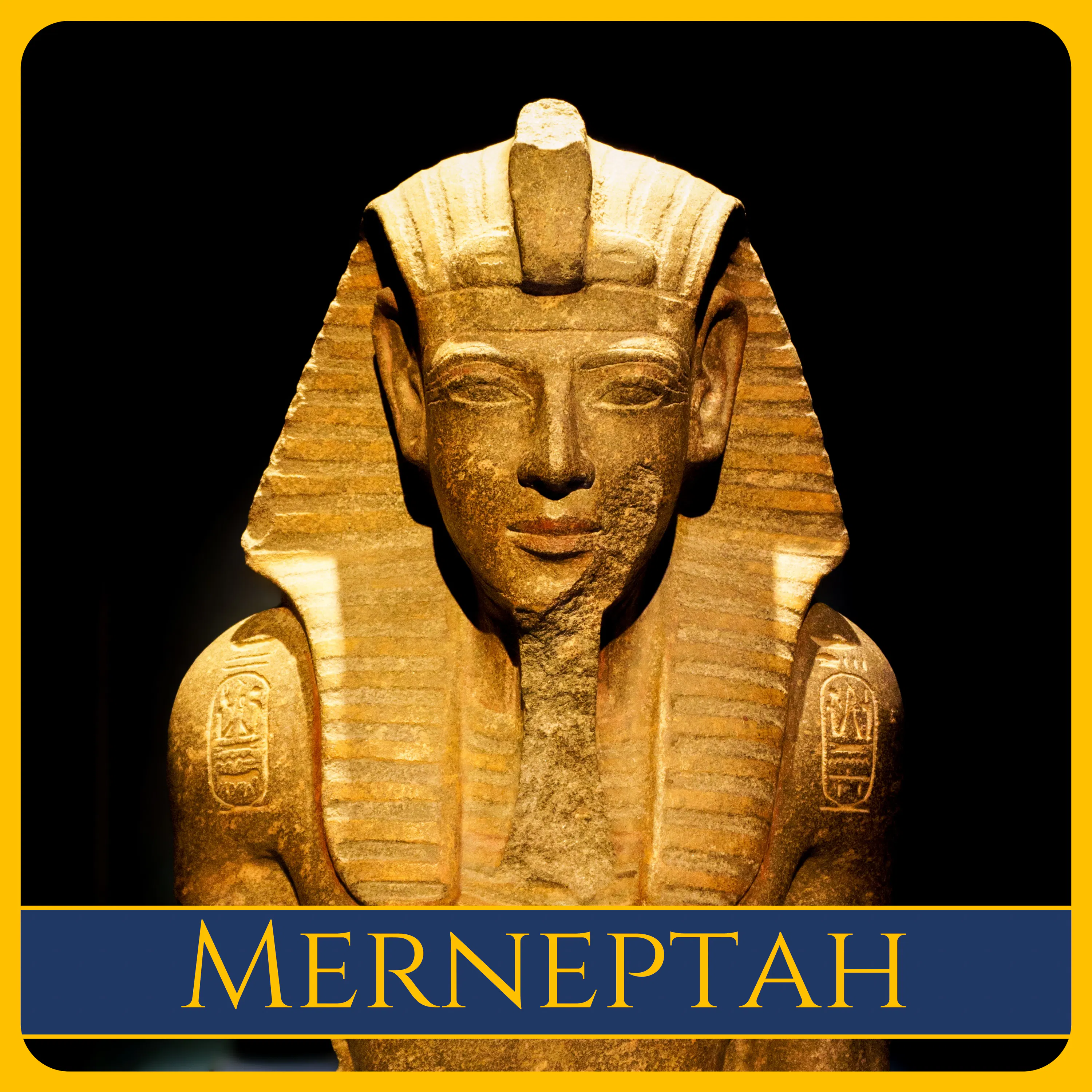
238: Merneptah Seizes Canaan (feat. A Tribe Called Israel)
6d ago00:35:20Tap to summarizeMerneptah started his reign aggressively, striking a belligerent tone in his royal names and launching an expedition to Canaan in the first few years. In the process, his troops captured Ashkelon, Gezer, and Yenoam, and dealt with a tribe called "Israel." Simultaneously, Merneptah achieved a great diplomatic coup when we brought Ugarit back into the Egyptian sphere. Music by Keith Zizza & Luke Chaos. Video version available at www.patreon.com/egyptpodcast Merneptah General Dodson, A. (2016). Poisoned Legacy: The Decline and Fall of the Nineteenth Egyptian Dynasty (Revised edn). Iskander, S. (2002). The Reign of Merneptah [Unpublished PhD. Thesis]. Kitchen, K. A. (1987). The Titularies of the Ramesside Kings as Expression of their Ideal Kingship. Annales Du Service Des Antiquités de l’Égypte, 71, 131--141. Servajean, F. (2014). Mérenptah et la fin de la XIXe dynastie. Sourouzian, H. (1989). Les Monuments du roi Merenptah. Canaan, Ugarit, Proto-Israelites (Summary) Cline, E. H. (2021). 1177 B.C. The Year Civilization Collapsed (Revised edn). Dever, W. G. (2017). Beyond the texts: An archaeological portrait of ancient Israel and Judah. Hasel, M. G. (1998). Domination & Resistance: Egyptian Military Activity in the Southern Levant, ca. 1300-1185 BC. Higginbotham, C. R. (2000). Egyptianization and Elite Emulation in Ramesside Palestine: Governance and Accommodation on the Imperial Periphery. Kahn, D. (2024). The order of Merenptah’s reliefs at the Cour de la Cachette, Karnak and its implications. JSSEA, 51, 15-43 online. Killebrew, A. E. (2020). Early Israel’s Origins, Settlement, and Ethnogenesis. In B. E. Kelle & B. A. Strawn (Eds.), The Oxford Handbook of the Historical Books of the Hebrew Bible (pp. 79--93). https://www.academia.edu/101675394/Early_Israels_Origins_Settlement_and_Ethnogenesis_by_Ann_E_Killebrew_2020 Kitchen, K. A. (2004). The Victories of Merenptah, and the Nature of their Record. Journal for the Study of the Old Testament, 28(3), 259--272. https://doi.org/10.1177/030908920402800301 Lackenbacher, S. (1995). Une Correspondence entre l’administration du pharaon Merneptah et le roi d’Ougarit. In Le pays d’Ougarit autour de 1200 av. J.-C.: Histoire et archéologie (pp. 77--84). https://www.mission-ougarit.fr/parutions/serie-ras-shamra-ougarit/ Maeir, A. M. (1988). Remarks on a Supposed “Egyptian Residency” at Gezer. Tel Aviv, 15, 65--67. https://doi.org/10.1179/tav.1988.1988.1.65 Morris, E. F. (2005). The Architecture of Imperialism: Military Bases and the Evolution of Foreign Policy in Egypt’s New Kingdom. Morris, E. F. (2015). Egypt, Ugarit, the God Ba’al, and the Puzzle of a Royal Rebuff. In J. Mynářová, P. Onderka, & P. Pavúk (Eds.), There and Back Again—The Crossroads II (pp. 315--351). Charles University. https://academiccommons.columbia.edu/doi/10.7916/D8WW9154 Rainey, A. F. (2001). Israel in Merenptah’s Inscription and Reliefs. Israel Exploration Journal, 51(1), 57–75. https://www.jstor.org/stable/27926956 Singer, I. (1988). Merneptah’s Campaign to Canaan and the Egyptian Occupation of the Southern Coastal Plain of Palestine in the Ramesside Period. Bulletin of the American Schools of Oriental Research, 269, 1--10. https://doi.org/10.2307/1356946 Singer, I. (2011). The Calm Before the Storm: Selected Writings of Itamar Singer on the late Bronze Age in Anatolia and the Levant. Steiner, R. C. (2024). Merenptah’s Israel, His Shasu Militiamen, His Copper Caravan Route, and the Watering Stations Bearing His Name at Kadesh-Barnea and Me-Nephtoah: Part One. In B. P. Muhs & F. D. Scalf (Eds.), A Master of Secrets in the Chamber of Darkness: Egyptological Studies in Honor of Robert K. Ritner (pp. 329--402). https://www.academia.edu/123986155/Merenptahs_Israel_his_Shasu_militiamen_his_copper_caravan_route_and_the_watering_stations_bearing_his_name_at_Kadesh_barnea_and_Me_nephtoah_Part_One Yurco, F. J. (1986). Merenptah’s Canaanite Campaign. Journal of the American Research Center in Egypt, 23, 189--215. https://doi.org/10.2307/40001099 Learn more about your ad choices. Visit megaphone.fm/adchoices
Transcribe →
The Odyssey (2026) First Impressions
2w ago00:15:45Tap to summarizeA few slightly rambling thoughts (NOT A FULL REVIEW) Video version available free on Patreon and YouTube https://youtu.be/5GYyfqFq__E Learn more about your ad choices. Visit megaphone.fm/adchoices
Transcribe →
Preserving Howard Carter & Tutankhamun (An Appeal from The Griffith Institute)
3w ago00:09:45Tap to summarizeThe Griffith Institute preserves thousands of documents, plate photographs, and records of Howard Carter's excavation in the tomb of Tutankhamun. But funding cuts are threatening their work to digitise and preserve this archive for future generations. Please consider supporting the Griffith Institute today Donate at https://tutankhamun.griffith.ox.ac.uk/support-us Explore the Tutankhamun Spatial Archive at https://tutankhamun.griffith.ox.ac.uk/ Learn more about your ad choices. Visit megaphone.fm/adchoices
Transcribe →
237: Drinking with Khonsu / The Dream Book
4w ago00:26:11Tap to summarizeRamessid Daily Life (Part 2). Why did a tomb-builder skip work for “drinking with Khonsu”? Why was Parahotep never invited to parties? And what did it mean if you dreamed about drinking wine? Records from Deir el-Medina, in the reign of Ramesses II, illuminate aspects of daily life and the concerns of ordinary folks. In this episode, we explore the Absentee List (Ostracon EA 5634) and the Dream Book of Qen-her-khopeshef (Papyrus Chester Beatty III). Support the show at www.patreon.com/egyptpodcast to get extended episodes, bonus video content, and much more. Follow our YouTube channel @historyegyptpodcast Episode References Černý, J. (2001). A Community of Workmen at Thebes in the Ramesside Period (2nd edn). Davies, B. G. (1999). Who’s Who at Deir el-Medina: A Prosopographic Study of the Royal Workmen’s Community. https://www.nino-leiden.nl/publication/whos-who-at-deir-el-medina Davies, B. G. (2018). Life Within the Five Walls: A Handbook to Deir el-Medina. Donker van Heel, K. (2016). Mrs. Naunakhte & Family: The Women of Ramesside Deir el-Medina. Edwards, I. E. S. (1968). Ḳenḥikhopshef’s Prophylactic Charm. The Journal of Egyptian Archaeology, 54, 155--160. https://doi.org/10.2307/3855919 Gardiner, A. H. (1935). Hieratic Papyri in the British Museum, Third Series: Chester Beatty Gift (Vols. 1–2). Janssen, Jac. J. (1980). Absence from work by the necropolis workmen of Thebes. Studien Zur Altägyptischen Kultur, 8, 127--152. https://www.jstor.org/stable/pdf/25150069.pdf Szpakowska, K. M. (2003). Behind Closed Eyes: Dreams and Nightmares in Ancient Egypt. Wente, E. F. (1990). Letters from Ancient Egypt. Learn more about your ad choices. Visit megaphone.fm/adchoices
Transcribe →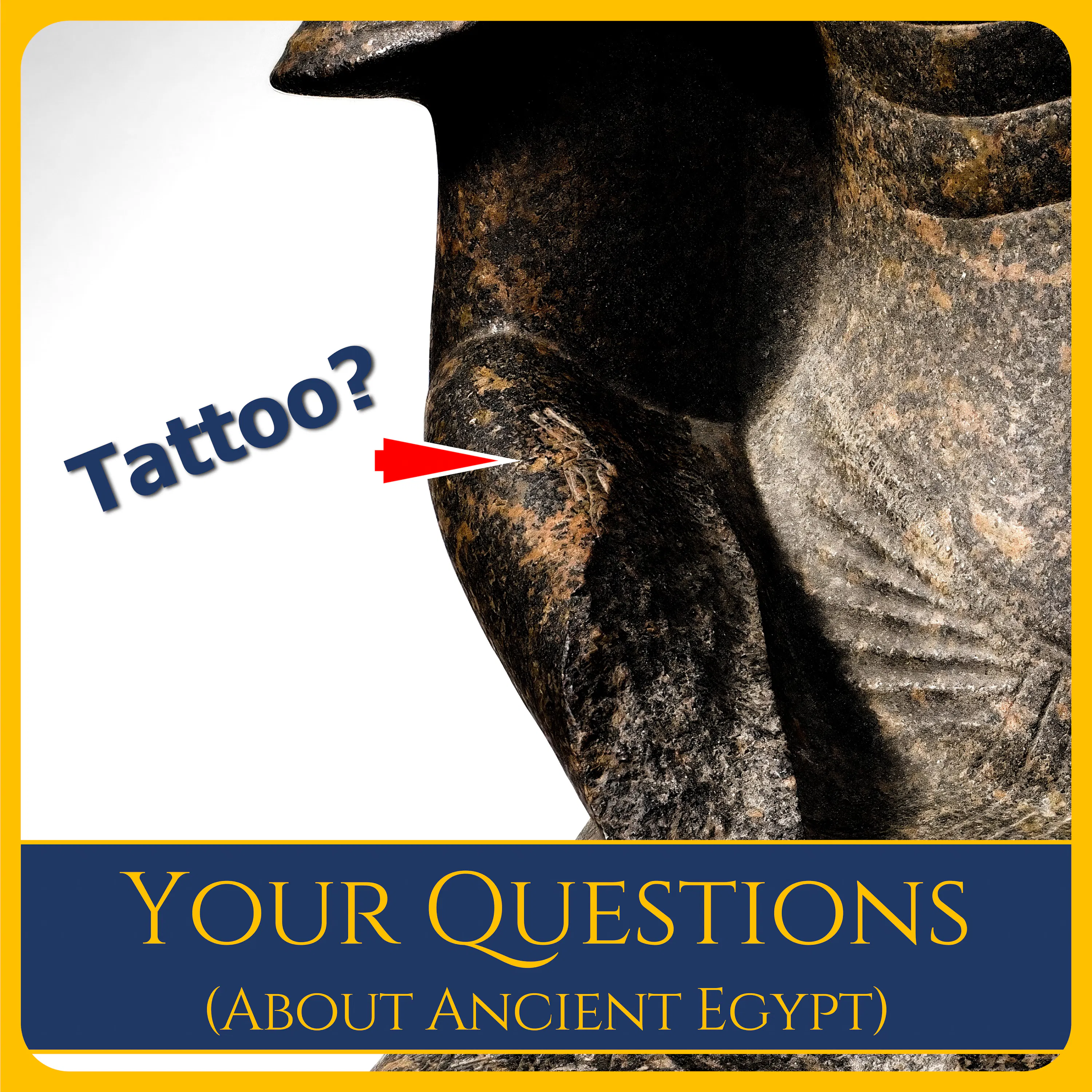
Was Pharaoh literally a god? Listener Questions 1
Jun 3000:52:02Tap to summarizeBonus episode. I took some listener questions in a livestream, and here they are. We cover topics like: Was pharaoh literally a god? How common was tattooing? Was there an ancient canal between the Nile and Red Sea? What are my recommended Egyptology books? And much more... If you'd like to join future Q-and-A sessions you can find them at www.patreon.com/egyptpodcast. If you would like to submit a question, drop it in the comments! There is a (shorter) video version of this QnA available at https://www.patreon.com/egyptpodcast/posts/qna-ask-me-june-162481450 Questions Top 3 Egyptology books: 00:55 Royal family tombs (like KV5): 06:50 Tattooing? 09:55 Was Pharaoh literally a god? 13:21 Linen - who made it and how? 18:50 What is the biggest misconception people have about ancient Egypt? 20:44 Perfumes: What do we know about them? 23:58 How long do you need at the GEM? 27:01 Best book about gods/mythology? 29:38 How do you pronounce Ra (or Re?) 30:56 What happened to Mortuary Temples after their owner died? 31:46 What role did dwarfs / little people play in ancient Egyptian society? 34:01 What role did foreigners play? Could they reach high status? 35:14 Could Beketaten be the mother of Tutankhamun? 39:05 Did Canaanite religion influence Egypt more, or vice versa? 39:52 Did Egyptian solar religion influence the Roman cult of Sol Invictus? 42:34 Gods and Goddesses: how prominent are the LOCAL deities in different regions? 44:20 When was the "Canal of the Pharaohs" connecting the Nile and Red Sea? 47:34 What are the most common biases in Egyptology? 49:01 The Oxford Encyclopedia The Oxford Encyclopedia of Ancient Egypt on Internet Archive: Vol.1 (A-F); Vol. 2 (G-O); Vol. 3 (P-Z). Tattooing Booth, C. (2001). Possible tattooing instruments in the Petrie Museum. Journal of Egyptian Archaeology, 87, 172--175. http://www.jstor.org/stable/pdfplus/3822379.pdf Fletcher, J. (2005). The decorated body in ancient Egypt: Hairstyles, cosmetics and tattoos. In L. Cleland, M. Harlow, & L. Llewellyn-Jones (Eds.), The clothed body in the ancient world (pp. 3--13). Oxbow. Also, researcher Anne Austin has done some work on tattooing in ancient Egypt, and has uploaded some of it to YouTube (link) and her website: http://www.anneeaustin.com/tattooing-in-ancient-egypt/ Perfumes Perfumes: I recommend the work of Dora Goldsmith: Academia.edu and Instagram Learn more about your ad choices. Visit megaphone.fm/adchoices
Transcribe →
Ramesses Eternal with Prof. Peter Brand
Jun 2200:19:29Tap to summarizeProf. Peter Brand joins us for one final conversation about Ramesses II: Egypt's "Ultimate Pharaoh." If you haven't read it, I highly recommend Peter's book Ramesses II: Egypt’s Ultimate Pharaoh (2023). It covers everything I discussed, and much more, in exceptional detail. Learn more about your ad choices. Visit megaphone.fm/adchoices
Transcribe →
236: Legends of Ramesses "the Great"
Jun 1500:30:59Tap to summarizeHow does Ramesses II stack up to his predecessors? Why did ancient writers connect him with the Trojan War? In this episode we explore tales of Ramesses, told in antiquity, and consider his legacy in the modern world. Music: Keith Zizza and Luke Chaos. Bibliography Brand, P. (2010a). Reuse and Restoration. In W. Wendrich (Ed.), UCLA Encyclopedia of Egyptology. https://escholarship.org/uc/item/2vp6065d Brand, P. (2010b). Usurpation of Monuments. In W. Wendrich (Ed.), UCLA Encyclopedia of Egyptology. https://escholarship.org/uc/item/5gj996k5 Brand, P. J. (2023). Ramesses II: Egypt’s Ultimate Pharaoh. Breasted, J. H. (1912). A History of Egypt. Bunsen, C. C. J. von. (1848). Egypt’s place in universal history: An historical investigation in five books (C. H. Cottrell, Trans.; Vols. 1–5). https://hdl.handle.net/2027/mdp.39015050932519 Cooney, K. M. (2022). The New Kingdom of Egypt Under the Ramesside Dynasty. In D. T. Potts, N. Moeller, & K. Radner (Eds.), The Oxford History of the Ancient Near East, Volume III: From the Hyksos to the Late Second Millennium BC (pp. 251--366). https://doi.org/10.1093/oso/9780190687601.003.0027 Davies, B. G. (1997). Egyptian Historical Inscriptions of the Nineteenth Dynasty. Edwards, A. B. (1899). A Thousand Miles up the Nile (2nd edn). https://archive.org/details/thousandmilesupn0000edwa_e0y7/page/n9/mode/2up Kelly, B. (2010). Tacitus, Germanicus and the Kings of Egypt (tac. Ann. 2.59–61). The Classical Quarterly, 60(1), 221–237. https://www.jstor.org/stable/40984750 Kitchen, K. A. (1982). Pharaoh Triumphant: The Life and Times of Ramesses II, King of Egypt. Lietzelman, H. (2014). Pharaonism: Decolonizing Historical Identity. Prized Writing 2014-2015, 46–51. Neville, J. W. (1977). Herodotus on the Trojan War. Greece & Rome, 24(1), 3–12. https://www.jstor.org/stable/642683 Said, S. (2012). 2 Herodotus and the ‘Myth’ of the Trojan War. In E. Baragwanath & M. de Bakker (Eds.), Myth, Truth, and Narrative in Herodotus (pp. 87--106). https://doi.org/10.1093/acprof:oso/9780199693979.003.0003 Sourouzian, H. (1988). Standing Royal Colossi of the Middle Kingdom Reused by Ramesses II. Mitteilungen Des Deutschen Archäologischen Instituts, Abteilung Kairo, 44, 229--254. Sourouzian, H. (2019a). Catalogue de la statuaire royale de la XIXe dynastie [Database]. https://www.ifao.egnet.net/bases/publications/bietud177/ Sourouzian, H. (2019b). Catalogue de la statuaire royale de la XIXe dynastie. https://www.ifao.egnet.net/publications/catalogue/9782724707571/ Tyldesley, J. (2001). Ramesses: Egypt’s Greatest Pharaoh. Wilkinson, T. (2023). Ramesses the Great: Egypt’s King of Kings. Learn more about your ad choices. Visit megaphone.fm/adchoices
Transcribe →
235: Ramesses the Great God
Jun 800:30:38Tap to summarizeIn 1226 BCE, his sixty-seventh year of rule, the long life of Ramesses II finally ended. We explore his final decades, the difficult life revealed by his mummy, his ascent to status of "living god," and the aftermath of his reign. Music: Luke Chaos. Support the History of Egypt at www.patreon.com/egyptpodcast Select References: Balout, L., Roubet, C., & Desroches-Noblecourt, C. (1985). La momie de Ramsès: Contribution scientifique à l’Egyptologie. Brand, P. (2010). Reuse and Restoration. In W. Wendrich (Ed.), UCLA Encyclopedia of Egyptology online. Brand, P. J. (2023). Ramesses II: Egypt’s Ultimate Pharaoh. Demarée, R. J. (2016). Announcement of the passing of Ramesses II. JEOL, 46, 121--125. Academia.edu. Gallet, L. (2013). Karnak: The Temple of Amun-Ra-Who-Hears-Prayers. In W. Wendrich (Ed.), UCLA Encyclopedia of Egyptology online. Hawass, Z. A., & Saleem, S. N. (2016). Scanning the Pharaohs: CT Imaging in the New Kingdom Royal Mummies. Hornung, E., Krauss, R., & Warburton, D. (Eds.). (2006). Ancient Egyptian Chronology. Shehab El-Din, T. (1997). The title, “mdw jAwj”: “the staff of old age” “ 'ukkāza aš-šayḫuḫa.” Discussions in Egyptology, 37, 59--64. Academia.edu. Learn more about your ad choices. Visit megaphone.fm/adchoices
Transcribe →
234: Destroying Amarna / Splitting Heirs
May 2500:28:20Tap to summarizeSometime in Ramesses II's reign, royal artisans dismantled the city of Akhet-Aten (Amarna). Carefully, methodically, they removed the talatat blocks and carted them away to the nearby town Hemenu (Hermopolis) for reuse in a temple. This demolition of the Horizon of Aten remains a matter of debate among scholars: why now, and what motivated it? Meanwhile, Ramesses II has a problem. His sons keep dying. Between regnal years 25--55, at least twelve princes "passed to the west." We meet the designated heirs (and the spares), and see who finally got the top job... The funerary mask (of Khaemwaset?) in the Louvre and Wikimedia. Extended version available at www.patreon.com/egyptpodcast Music: Keith Zizza and Luke Chaos. Select References Brand, P. J. (2023). Ramesses II: Egypt’s Ultimate Pharaoh. Fisher, M. M. (2001). The Sons of Ramesses II (Vols. 1–2). Hanke, R. (1978). Amarna-Reliefs aus Hermopolis: Neue Veröffentlichungen und Studien. Iskander, S. (2002). The Reign of Merneptah [Unpublished PhD. Thesis]. Kemp, B. J. (2013). The City of Akhenaten and Nefertiti: Amarna and Its People. Kitchen, K. A. (1975). Ramesside Inscriptions Historical and Biographical (Vol. 2). Kitchen, K. A. (1993a). Ramesside Inscriptions Translated and Annotated: Notes and Comments (Vol. 2). Kitchen, K. A. (1993b). Ramesside Inscriptions Translated and Annotated: Translations (Vol. 2). Reeves, N. (2019). Akhenaten: Egypt’s False Prophet (2nd edn). Roeder, G. (1959). Hermopolis 1929-1939. Servajean, F. (2014). Mérenptah et la fin de la XIXe dynastie. . Sourouzian, H. (1989). Les Monuments du roi Merenptah. Learn more about your ad choices. Visit megaphone.fm/adchoices
Transcribe →
233: Friendship in Dark Times (The Bronze Age Collapse Begins?)
May 1800:34:51Tap to summarizeRamesses and Hattusili (Part 2). After the marriage to a Hittite princess in Year 34, Ramesses II had much to offer his northern family. A visit from the King of Hatti's son, seeking food supplies, may relate to repeated hunger crises in Syria and Hatti. Pharaoh's support brought the two kingdoms closer together, although we must wonder if the Bronze Age Collapse has now begun... Finally a text known as the Bentresh Stela offers a fairytale memory of Ramesses' relations with Hatti. Music: Keith Zizza. Music: Luke Chaos. == Select References - Hattusili and Ramesses Brand, P. J. (2023). Ramesses II: Egypt’s Ultimate Pharaoh. Bryce, T. (2003). Letters of the Great Kings of the Ancient Near East: The Royal Correspondence of the Late Bronze Age. Bryce, T. (2005). The Kingdom of the Hittites (2nd ed.). Divon, S. A. (2008). A Survey of the Textual Evidence for “Food Shortage” from the Late Hittite Empire. In The City of Emar Among the Late Bronze Age Empires (pp. 101--109). Online. Drews, R. (1993). The End of the Bronze Age. Edel, E. (1994). Die ägyptisch-hethitische Korrespondenz aus Boghazköi in babylonischer und hethitischer Sprache I. Hoffner Jr., H. A. (2009). Letters from the Hittite Kingdom. Kaniewski, D., et al. (2020). Climate Change and Social Unrest: A 6,000‐Year Chronicle From the Eastern Mediterranean. Geophysical Research Letters, 47. https://doi.org/10.1029/2020GL087496 Klengel, H. (1974). “Hungerjahre” in Hatti. Altorientalische Forschungen, 1, 165—174. Kuslu, Y., & Sahin, U. (2009). Water Structures in Anatolia from Past to Present. Journal of Applied Sciences Research, 5, 2109--2116. Nougayrol, E., et al. (1968). Ugaritica V. Owen, D. I. (1981). An Akkadian Letter from Ugarit at Tel Aphek. Tel Aviv, 8, 1--17. Online. Singer, I. (2011). The Calm Before the Storm: Selected Writings of Itamar Singer on the Late Bronze Age in Anatolia and the Levant. Select References - The Bentresh Stela Erman, A. (1883). Die Bentreschstele. Zeitschrift Für Ägyptische Sprache Und Altertumskunde, 21, 54–60. Kitchen, K. A. (1975). Ramesside Inscriptions Historical and Biographical (Vol. 2). Kitchen, K. A. (1993a). Ramesside Inscriptions Translated and Annotated: Notes and Comments (Vol. 2). Kitchen, K. A. (1993b). Ramesside Inscriptions Translated and Annotated: Translations (Vol. 2). Posener, G. (1934). À propos de la stèle de Bentresh. Bulletin de l’Institut Français d’Archéologie Orientale, 34, 75--81. https://www.ifao.egnet.net/bifao/34/ Spalinger, A. (1977). On the Bentresh stela and related problems. Journal of the Society for the Study of Egyptian Antiquities, 8, 11--18. Online. Witthuhn, O., et al. (2015). Die Bentresch-Stele: Ein Quellen- und Lesebuch. Online. Learn more about your ad choices. Visit megaphone.fm/adchoices
Transcribe →