← The HoneyDew with Ryan Sickler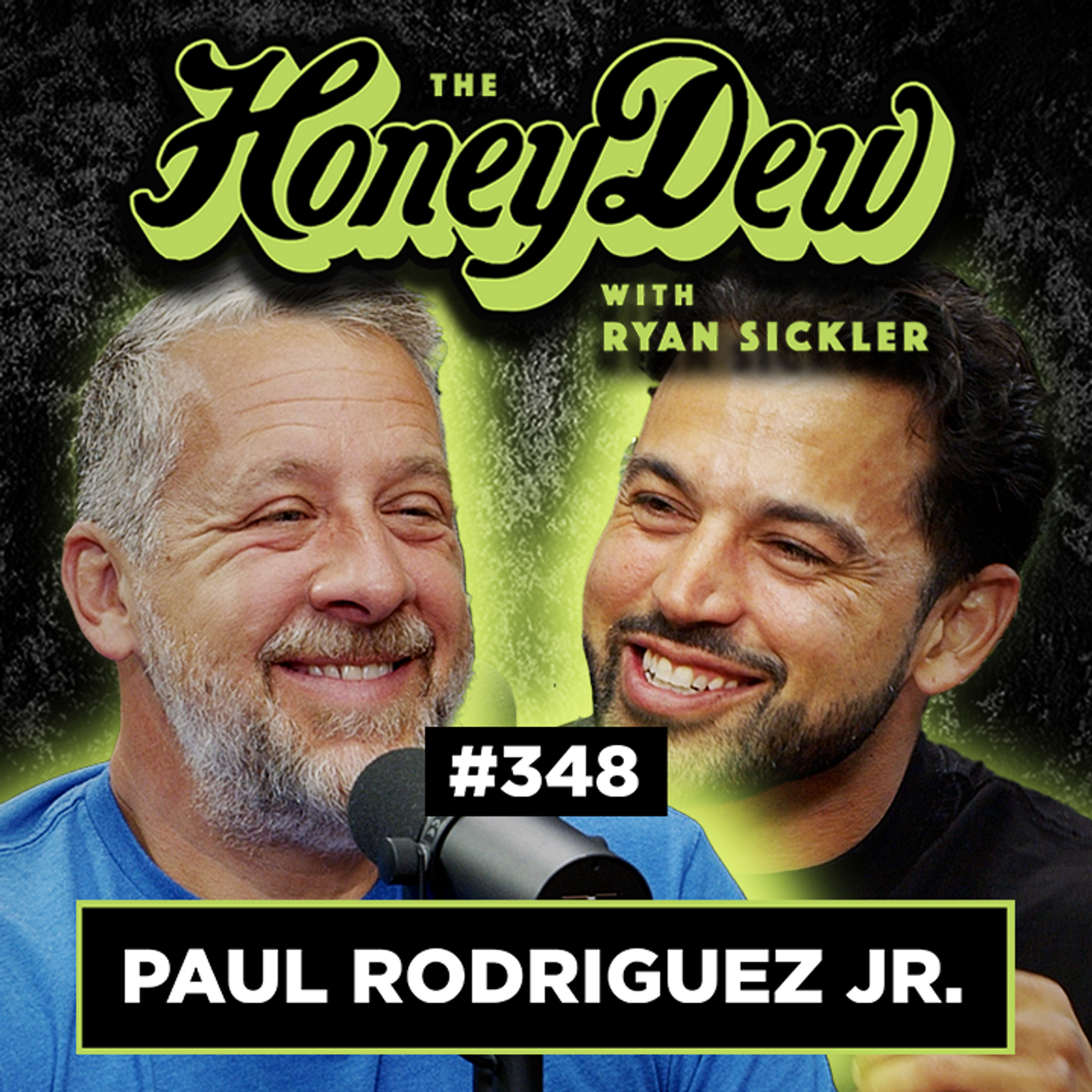
Loading summary
Transcript299 lines
- [00:01]
A
Class is now in session and the.
- [00:04]
B
UPS store is here to help you ace arriving on campus.
- [00:07]
A
Our certified packing experts can pack everything.
- [00:10]
B
You need from desktops to decor.
- [00:13]
A
Plus, when you pack and ship with.
- [00:15]
B
Us, you get our exclusive pack and ship guarantee. Your items arrive safe or your money back. Restrictions and limitations apply. To get a 20% off packing coupon.
- [00:25]
A
And for full details, visit theupsstore.com packing the honeydew with Ryan Sickler. Welcome back to the Honeydew, y'. All. We're over here doing it in the night pants studios. I'm Ryan Sickler. Ryan Sickler.com Ryan Sickler, on all your social media, starting this episode like I start them all by saying thank you. Thank you for watching this show. Thank you, thank you for subscribing to this channel. Thank you for supporting anything I do. You guys are the best. And if you got to have more, listen, you got to have stop around, you got to have the Patreon. All right, it's five bucks a month and it's this show with you all. And I'm telling you, you all have the craziest stories on the Internet. All right? If you or someone you know has a story that has to be heard, please submit it to honeydew podcastmail.com. hopefully we can get to do your episode. If you send it in before, send it again. We want to do your episode and it's five bucks a month. If you're like, I don't know, go watch the free episodes we put on right here on this channel with Josh Wolf where we highlight best of episodes and I promise you, you're in like that. All right, that's the biz. You know what we do here? We highlight the low lights. I always say that these are the stories behind the storytellers and I'm very excited to have this guest on here. Ladies and gentlemen, first time on the Honeydew, Paul Rodriguez junior. Welcome to the honey.
- [01:55]
B
Hello. Hello. Thank you for the, for the applause, brother.
- [01:58]
A
Thank you for being here.
- [01:58]
B
Thank you for having me. Yeah, I'm hyped to be here.
- [02:01]
A
Well, before get into your story, please promote everything and anything you would like.
- [02:05]
B
Oh, okay. So Paul Rus, I'm professional skateboarder. Am I looking here? Here? Right. Okay.
- [02:14]
A
That's you. That's us.
- [02:15]
B
Okay. Paul Rodriguez, professional skateboarder. Some of you might know me as P Rod. Recently in May, I just re released my first ever signature shoe with Nike SB for the 20 year anniversary. So that is out in stores now and we'll be dropping A new colorway. September, October. So I'm really excited about that. I can't believe 20 years has already gone by. And also I have my, my lovely brand, Primitive. We make skateboards and apparel. Any of your local skate shops will have it. Zoomies, Tilly's, come check us out. I think that's all I got right now, dude. All.
- [02:56]
A
First of all, before we get into this, I know I told you we're going to talk about the, like. You got a Nike shoe?
- [03:01]
B
Yeah, man.
- [03:01]
A
At. How old were you? 20 years. So how old were you when you got a 20?
- [03:05]
B
I was 20 when it, when it, when it came out. I signed with Nike at 19.
- [03:08]
A
I mean, that's Jordan level shit. Legitimately. Jordan level shit. You know what I mean? What is that? Can we talk about that for a second? Nike shoe deal at 20. And now they're bringing it back. Like, they, they don't bring it back if it doesn't do well, you know?
- [03:24]
B
Yes, sir. Yes, sir. It's like the more I think about it, it literally blows my mind. I wake up and I just thank God every day because, like, first of all, in skateboarding, Nike wasn't even a brand.
- [03:37]
A
That's a good point of fans and even Airwalk.
- [03:41]
B
I skated for another brand that was like my Nike to me. It was called S. Some people might know it as Es. And I was skating for that brand at that time and that was my dream. And you know, skateboarding world was really small and I thought I was doing it the biggest possible. And I didn't even think Nike was ever a thing to aspire for.
- [03:58]
A
What were you skating in to start? Not.
- [04:00]
B
Not when I first started my first pair of like airwalks, bands.
- [04:05]
A
What most people.
- [04:06]
B
Yeah, your typical ones. Etne.
- [04:10]
A
So how does Nike come into the.
- [04:11]
B
Picture then one day I'm just literally sleeping in, you know, 18, 19 years old, I'm staying up all night skating and I'll sleep until 12, one in the afternoon.
- [04:21]
A
This is the worst story for people, parents right now. Like, I can't let my kids.
- [04:26]
B
I know, I know, but that's the facts.
- [04:29]
A
Yeah, let's.
- [04:30]
B
My friend, he was my roommate at the time and he worked at the local skate shop that we, that we were all sponsored by. And a guy, a rep from Nike, a sales rep from Nike came in and knew that we were close friends and asked him about me. Like, hey, this guy, Sandy Bodecker, he's big wig over at Nike. He's in charge of running up the skate program at Nike.
- [04:50]
A
And were they just starting that skate program?
- [04:54]
B
It was like a year or two in, but they were really like trying to make a big run because the skate community is really protective. And we're like, like, nah, you know, these corporate brands, you know, that you can't come in our, come, come in our world. So they were very protective and they, they, they, they did it very stealthily, but then they, they got a little momentum and they're like, all right, now we need our big guy. And at this time, I was like, really hitting my stride, really on the scene. And so, long story short, my friend calls me, wakes me up, he's like, hey, what are you doing? I was like, just in bed. He's like, can you come down to the shop? I got, I got Robbie here from Nike. He's a sales rep and he wants to talk to you. I think Nike's interested in doing something with you. And I was like, okay, cool, I'll come down. And at this time, I'm like skating samples of my signature shoe with this other brand. And I'm thinking, I already hit the top of the top in the industry. And next thing you know, they flew me out to Portland. I'm in Beaverton, Oregon, at the Nike campus. Like something like, I've never seen, like the companies I wrote for at that time. You know, you go to their offices, they have a warehouse and back they give you some product. Like, we go there. It's a campus. It's literally like ucla.
- [06:00]
A
But I know people have, they said there's a full on, like football stadium.
- [06:04]
B
Football field, soccer field, you know, you know, golf, freaking driving range, a whole lake, restaurants, cafeteria. They have their own fire department, you know, like, it's, it's, it's literally like if you went to ucla, every building that's a different athlete's name. You got the Jerry Rice building, the Michael Jordan building, Tiger Woods Arena, Everybody, like, they have their own buildings.
- [06:29]
A
It's a little city. It's like Westwood.
- [06:31]
B
Not even, I wouldn't say even little.
- [06:33]
A
Okay, fair enough.
- [06:34]
B
Yeah, they probably have, you know, I would guess 20,000 people on campus at any given time. Maybe employees. That could even be low. Maybe.
- [06:43]
A
I don't even know.
- [06:45]
B
It's huge.
- [06:45]
A
Yeah.
- [06:47]
B
So they take me there, they give me the whole tour, and they take me to Sandy Bodecker's office. I'm sitting in his office and boom, they give me the spiel. Long story short, they tell me they want me to ride for Nike. And the reason why, this shoe for me, obviously having a Signature shoe, Especially with somebody like Nike. And 20 years later, obviously, it's going to be special. But the reason why it really hits for me is because at. At 19, when I first signed with them, I was naive enough and ballsy enough to deny them because I wanted to ride for Nike. But my manager called me after we went. Came back home from the trip. Tell me all the, you know, the specifics of the deal, and I'm like, wow, this is crazy. You know, I'm 19. These numbers you're telling me. I'm like, this is insane. And. But then they're like. Then I. I was like, wait a minute, but are they going to give me a signature shoe? She's like, no, they're not. They're not doing signature shoes for skateboarders.
- [07:48]
A
Oh, so they were just wanting to sponsor you, Wear our clothes, wear our gear.
- [07:52]
B
Yeah.
- [07:53]
A
Oh, okay.
- [07:54]
B
And, you know, as a skateboarder, your dream is complete when you have your signature.
- [07:59]
A
You think, I don't want a shoe. I have no reason to have a shoe. And I want to.
- [08:04]
B
Right, right. But, like, that's. That's. The actual dream is, like, you're not official until you have the shoe and the board. And I was already skating samples of the. From the other company I was with with my name on it. Shoes with my name on it. So I was. She was like, yeah, they're not planning on doing signature shoes with skaters. And I was like, dang it. I was like, everything else sounds great, but, like, I have to have a signature shoe. I'm already skating my shoe. And tell them, thank you very much, but if they're not doing signature shoes, and I just. I can't do it. And she went back to them, told them, and long story short, she came back to me and said. They said, all right, they'll do it. And I was like, really? And that was it. That, like, there was nothing else to think about.
- [08:46]
A
You and the board.
- [08:47]
B
Yeah. So I was already pro with the board at that time, and. And then they came back and said, all right, I guess we'll do it. You know, it showed that that's how interested they were in me. And I'm just grateful that that kid at that time had the vision clear enough and stuck to his guns, strong enough to, like, potentially walk away from that. I can't even imagine if they were just like, all right, well, sorry it didn't work out. Like, we're just not gonna do that. I can't imagine what my career life would have been. I don't Want to imagine too hard. But. So that's why this is special to me, because that right there, bro, that dividend forever. Here we are 20 years later, that I've had 10 signature shoes as well over those 20 years. But now, going back to the one, and this is also the first ever retro shoe that Nike has ever done for skateboarding as well. So, like, for so many reasons, it's really special to me. And I look back on that story, and I can't believe how it's unfolded.
- [09:52]
A
Dude, that's fucking great. Good for you.
- [09:54]
B
Thank you.
- [09:55]
A
Can we jump back to the very beginning?
- [09:57]
B
Yeah.
- [09:58]
A
So obviously you're the son of a famous comedian. Me being a comedian, I love Jeff. I know you might be sick of hearing it, maybe you're not, but, you know, loved your father. I says. I said I was a big fan of DC Cab, all the shit. Your dad, he was great. And I want to know, like, coming up as the son of a famous person, you just get pushed into the spotlight already. So you're young, you're around all this celebrity stuff, and you're trying to carve out your own path. Are you ever encouraged to go into entertainment?
- [10:30]
B
Yeah. Yeah.
- [10:31]
A
You are?
- [10:32]
B
Yeah, I was for sure. You know, when I was a little kid, if I don't say. If I do say so myself, I was cute. I was real cute. Appreciate it. And my dad and my mom were just like, we got to get this kid in commercials and acting and whatever. So I remember very young, I had an agent, which is my dad's agent, and they would send me out on auditions all the time after school. I grew up in the Valley, and all the auditions are on this side of the hill. So every day after school, like, traffic, rush hour time, I had to get in the car, my mom go to these auditions, and I hated it. I hated it so bad. And I really wasn't that interested in it. But, like, you know, are you telling them that?
- [11:10]
A
Are you just sort of swallowing it at this point?
- [11:12]
B
Early on, at first, I was excited about the idea, but after realizing that, we got to go to these auditions every single day, all the time. And, like, I was a really shy kid, too. And you go in there every and audition, especially with kids. All these little kids are all bubbly and corny and like, hey, how you doing? I'm just like, you know, like, hi, I'm Paul. You know, so just like, I didn't have that outgoing personality immediately. Like, I get outgoing once I warm up with somebody.
- [11:39]
A
Sure.
- [11:40]
B
But from the. From the start, I'm, like, still feeling. Feeling things out. So it was hard for me to really stand out in auditions. And after a while, I was just like. Like, I just want to. After school, I just want to go play with my friends. I want to go out, ride my bike. Like, I'm an active kid. I was a physical kid. I wanted to play baseball. I want to, you know, do sports. And so finally, after a while, I just started throwing little temper tantrums and, like, crying. Like, I don't want to go. Mama's like, come on, we gotta go. This audition, your. Your agent, you know, do all this work to book this audition for you. And then finally, I just went to one audition. I just stood there. Hi, I'm Paul 10. And, like, the. The casting person was like, you know, if you don't want to be here, you shouldn't be here. I was like, I don't. She's like, well, don't waste everybody's time. That's not polite. I was like, off. I was like, cool.
- [12:30]
A
Yeah. Like, I'm doing this. Like, you drove this?
- [12:33]
B
Yeah, yeah. Like, it was like, what are you talking about? If anything, you're wasting my time, you.
- [12:39]
A
Know, Like, I could be riding my bike right now.
- [12:42]
B
Yeah. Like, I could be at karate class. I could do whatever at that. At that time. So that. That faded out pretty quickly early on. But I did like the idea of it because as a kid, I would go. You know, my dad used to have this series that he was on called Hardball, where he was, like, a detective. Him and this other white guy were a detective group, and they would, you know, chase down bad guys, whatever, like late 80s, early 90s. And I remember going on set and being so fascinated by the movie sets and, like, seeing them shoot scenes. And I like the idea of being on a set and doing the work, but, like, the process to get there was, like, just not where I was at at 7, 8 years old, whatever it was. So that bug didn't hit me until later on.
- [13:30]
A
When does skating come into your life? Then?
- [13:32]
B
Skating came into my life just before I turned 12. So around holiday time, 1996, I was in seventh grade. I went to a new school that year. Before that, I went to the same school my whole life. It was a private school from preschool all the way to sixth grade. I grew up with all the same kids. I knew everybody. I was comfortable. And my dad, you know, he grew up in Compton, and he knew that, you know, he was giving me a privileged life that he didn't have. And he was just, like, telling my mom, like, he needs to go to public school. I can't. I don't want him to be just so soft. We got to put him in public school. The kids got to, like, toughen up, and so they put me in public school.
- [14:13]
A
Because you're crying at all this?
- [14:15]
B
Yeah. Like, I wasn't crying because I was scared. I was like, I was crying.
- [14:20]
A
I want to go outside, rough around.
- [14:22]
B
Yeah. Like, just sat at school all day hating my life, and now I gotta.
- [14:26]
A
Sit in the car bumper to bumper traff.
- [14:28]
B
Yeah.
- [14:28]
A
Listen to my mom's.
- [14:33]
B
My mom's bumping Bonnie Ray. And I'm just like, I gotta see.
- [14:36]
A
You know, that's what you're getting fired up.
- [14:38]
B
Yeah.
- [14:40]
A
Soundtrack on the.
- [14:43]
B
So. Yeah. So that, like, that'll make anybody cry. I'll cry now.
- [14:49]
A
I love it. It is real for you, bro. You remember the music?
- [14:52]
B
It's vivid. Yeah, it's vivid. You know what I'm saying? Okay. So anyways, I got. I go to this junior high again. I'm shy kid, and at 11 years old, I look like I'm 8 years old. And I go to this new school and I'm like, I have. I have a little ponytail, too, because I was super into rock and roll music. I love the movie the Crow. And I want to look like Brandon Lee. So I had my little ponytail. I played guitar and I was taking guitar lessons. I wanted to be a rock star at that time. And Jimmy was my favorite guitarist. And so I go to this school. I'm kind of like, you know, like, I wouldn't say emo, but I was in that like. Like, kind of like quiet, rocker, kind of grunge type of space. And so I would go there and I seen. I would walk to school in the mornings because it was close to my house. And every morning there was this group of kids skating in the parking lot. Every morning they're doing tricks. And I just found myself in the morning standing there before school. The bell would ring and I just, like, be mesmerized. Like, they would just jump and land and flip the board. And, you know, they weren't that good, but compared to what I knew, they were amazing. And, like, if a kid flipped the board and landed back on and kept running, I was just like, a little bit by little. Every day before and after school, I'd catch myself watching them, and I was just like, becoming more and more obsessed with. How the hell do you do that?
- [16:18]
A
And you hadn't skated at all really yet. Just a little.
- [16:21]
B
As a kid, I ridden bicycles. I rode on a skateboard, like, on my butt down the driveway, but never thought about it in that.
- [16:27]
A
None of that stuff.
- [16:29]
B
Yeah. So I'm just, like, finding myself, like, starting to obsess about how it's done. Like, if you see a magician do a magic trick and you're just like, no, no, no. How did you do that? I need to know. I need. It was like they were magic tricks to me. So eventually, I worked up a little courage, and I walked up to one of the guys, and I was like, hey, can I try standing on your board? And he was like, yeah, he was riding an Eric Coston girl board. And I try to stand on it, you know, like, push and, like, see if I can, you know, balance. And I felt like I just. As soon as I stepped on the board and roll, I just. Like, something in my soul just screamed out to me, like, no, no, this is it.
- [17:13]
A
Like, you were plugged in. Literally stepped on and got plugged in. Yeah. Do you still know that guy?
- [17:17]
B
Yeah.
- [17:18]
A
Dana Bobby, I was gonna say, man, how about this kid's like, you know, Paul Rodriguez Jr. Wrote, I'd be Telling Everybody first board me.
- [17:26]
B
Yeah.
- [17:27]
A
No, I did that.
- [17:28]
B
Yeah. Dan. Dan was one of my best friends. I mean, he's still a great friend of mine, but, like, we're not as tight these days. But he was one of my best friends, and he followed with me through the whole trajectory of everything. He was a cameraman of mine for a long time. He was a really good skater himself. So, yeah, I still know Dan to this day.
- [17:49]
A
And that was the moment.
- [17:51]
B
That was it. And so that was close to Christmas time and my birthdays on December 31st. So, like, everyone was asking me, like, what do you want for Christmas? What do you want for your birthday? And I was just like, can I have some money? Like, I want to go to the skate shop and pick out my own skateboard. And so that year, I just saved up all the money everybody gave me. I went, picked out my own board, and that was it. And I was.
- [18:12]
A
Is dad our dad? Mom supporting this transition into skating? Are they still wanting you to know?
- [18:20]
B
Mom was super supportive. Like, if I wanted to take karate class, she'll sign me up. If I wanted to do gymnastics, just sign me. If I want to play Little League, she signed me up. So it was just another thing of, like, I want to skateboard, and I just want to skate. Okay, cool. She's like. She was really good about just, like, he's A boy, he wants to just do stuff and be active with his friends. So she was really good about that. And my mom always, from a young age would tell me, like, you know, you're an old soul. You know, there's something about you, something special you could do what you. She always like, planted it really early. Like a certain level of confidence in myself. My dad was just in the height of his career. I didn't see him often. You know, he's always touring or shooting something, filming. He just, you know, he's living his dream. And so to him it was like, I'm 12 years old, I'm riding a skateboard. It's no different than me playing Little League. Timmy just like, he's just being a kid. So he didn't, it wasn't like supportive or not supportive. He was just like, he's just being a kid. That was until I started telling him, like, I'm going to be pro, I'm going to be pro. Then he started not supporting, but he just wasn't, didn't know about it and he was skeptical about it, you know, and he was just like, son, like, I get you're having fun, but like, you should really focus on what you really want to do with your life. You know, you could, you could do smacking, you should do acting. It's like dad not doing that.
- [19:42]
A
And then what's the moment? He was like, oh, oh, damn.
- [19:47]
B
When I, when I got into the Tony Hawk game on the video games.
- [19:51]
A
That'S what did it for him. Yeah, you got to be busting your ass for a long time to get in that goddamn.
- [19:58]
B
Yeah.
- [19:58]
A
So like, that was like his family seeing him on tv. Oh, you really went and did something.
- [20:03]
B
The only time I outwitted a comedian was one time. And it was just my dad telling me, like, son, like, there's no career in this. You can't make money in this. Like, I get you're having fun, but like, you need to think about what you're doing. And I just was like, dad, like, your parents are straight out of Mexico, you're a son of migrant farm workers, you grew up in Compton, you guys are broke and you're a stand up comedian. What did your parents say to you when you told them that's what you wanted to do? And he was just like, ever since I said that to him, he never good discouraged it ever again. Okay, what can I say?
- [20:48]
A
What can you say?
- [20:49]
B
And now being a parent, I get it. Because the last thing you want to see is your, your kids dreams Getting shattered and seeing them heartbroken. So I understand that because I mean, for him to be successful, what he was doing from where he came from was like a one in a trillion shot. Especially in the 80s, you know, at that time and him being. Him being Mexican.
- [21:10]
A
And just think about your dad and Eric Estrada a lot, because they were just before that, J. Lo, Ricky Martin, Latin boom, explosion.
- [21:19]
B
Before that.
- [21:20]
A
They're like the old school NFL players that still had to have a job in off season. These guys on the sideline are making 10 million now.
- [21:28]
B
Yeah, exactly. They were the first Indians over the hill, you know, and so that was the. The first that. So after that, he. He chilled out and.
- [21:41]
A
And you get in the game and.
- [21:42]
B
He was like, okay, yeah, put a battery in my back. Like, all right, okay, you're gonna see, I'm gonna show you. And so then he had this assistant at that time named Morgan. Sweetheart, love Morgan. Shout out to Morgan. And she would just keep him up to date on what I was doing. He had no idea what I was doing. Like, I'm just skating. If I was in a magazine, she would, like, get the magazine, cut out the picture and show him. She was like, oh, did you know your son has a skateboard? Oh, did you know your son's doing this? Oh, cool, cool, cool. And then one day, I get a call from him. Hey, dad. Hey, what's up? What's this I hear about you in a video game? Like, oh, yeah. He's like, you're on the Tony Hawk video game.
- [22:20]
A
I'm like, yeah, so he knew Tony Hawk, though?
- [22:23]
B
Yeah, he knew Tony Hawk is. But Morgan told him, like, you know, Paulie's in a video game. They call me Paulie, you know, and he's like, what's this? You're in a video game? I'm like, oh, yeah, I'm in the game now. He's like, how come you didn't tell me? I was like, I don't know. Like, just. I don't know. I just didn't. I don't know. Sorry. It's like, this is crazy. It's incredible. You need to tell me. Like, just like, oh, now you want to know. So when that hit, I can't remember what year that was, but that's when he was like, okay, I think the kids onto something.
- [22:56]
A
So you mentioned parents not wanting to see their kids dreams shatter. What about bones and shit? I mean, you're not.
- [23:01]
B
You're.
- [23:02]
A
You're in a business that's not easy on the body either.
- [23:05]
B
Yeah, yeah, yeah.
- [23:06]
A
I'VE been some of your worst injuries?
- [23:09]
B
Well, I have one major injury which was on my right knee in 2018. I blew out my right knee. They call it, the doctor called the terrible triad. I had never heard of it, but it was. I blew up the acl, ripped both meniscuses, and tore my mcl, which is the ligament on the inside of the knee. And then the. The. The tibia and the. I don't remember the bone names.
- [23:38]
A
Fibula, fibula, whatever.
- [23:41]
B
I don't know. The top half of my knee. I mean, top half of my leg and the bottom half, my leg. The. The bone. It was a bone contusion, they said. So I guess whatever happened, it made them basically bruise each other. So, long story short, I tore it up all at once. I was doing it trying to half cab flip down a nine stair, and I missed my pop, and the board went crazy. And I thought, like, the board was flipping, and I lost control of it. And I'm coming down in the air and it's under my feet, and I know that, like, I need to get away from it because, like, I was about to fall, like, the way the board was. I was. I felt like I was gonna land, like, the board would land like this, and then I would land on my.
- [24:19]
A
Wrist on your ribs.
- [24:20]
B
And so, like, I was trying to, like, avoid that happening, which in hindsight, I'd rather have a broken rib than whatever happened, but. So I stuck my right leg out to, like, to like, you know, it happened so fast. You're just instinct is trying. And I tried to just put my right leg out to halt me from falling all the way down to my body on the board. And the momentum of my upper body was going this way, but my leg was over here. And the way the pressure was just made my knee just go like that. I felt it all in one motion. The top part went this way, the bottom part went this way. It just went. And I was. I made some crazy noise I never heard myself make ever. And I immediately knew right then I was like, that's it. I'm. That's it. It's over.
- [25:12]
A
You're thinking on this immediately. Career is over. Not just I. My knee up. You think it's over.
- [25:18]
B
I thought it was over. I was like, that's it. Like, that was bad. Like, my knees. My leg is. Is gonna just, like, felt like, just like a string, you know, like, it was just like, just dangling like a marionette or something. And. Yeah. So immediately everything flashed before my eyes. Like, you know, everything from A kid. All the way up into that point, like, everything in my career, everything, I was like, it's just gone like that. It was like such the most depressing, heartbreaking moment and feeling. And then.
- [25:54]
A
And you hadn't even got the diagnosis yet or anything. You're on the ground.
- [25:58]
B
It was, it was bad. And the worst part is this guy and his son who were. It was like this, this park that we were at, and we were skating these benches to a set of stairs that were like right next to where a basketball court was. Dad and his kid were just shooting around or whatever, and they happened to just be leaving and walking to their car. And they were parked kind of near where the landing was. And I'm just there, like, having the worst moment of my life. As far as I'm concerned, my life is over. Oh, hey, the dad's. Oh, hey. What's going on there? You got, you got a boo boo. What happened there, huh? Yeah, like this. That's dangerous stuff. You should be careful. Like, thanks. Like, just like, oh, my gosh. It was like, you know, like just the worst timing, bro. Like, take me while I'm down. It was, it was shitty. So that's what I remember about that. And then that was like, long story short, two full years until I was able to like, skate again properly.
- [27:01]
A
Years.
- [27:02]
B
Yeah.
- [27:03]
A
Why drop a fortune on basics when you don't have to? Quince has the good stuff. High quality fabrics, classic fits and lightweight layers for warm weather. All at prices that make sense. Quince has closet staples you want to wear over and over, like cozy cotton and cashmere sweaters, breathable flow knit polos, and comfortable, lightweight pants that work for both casual weekend hangs and dressed up dinners. The best part, everything with Quince is half the cost of similar brands. By working directly with top artisans and cutting out the middlemen, Quince gives you luxury pieces without the markup. And Quince only works with factories that use safe, ethical and responsible manufacturing practices in premium fabrics and finishes. Quinn sent me some great polos, some new sweats, some shirts. Look, this is a Quinn shirt right here I'm wearing right now. I love it. It's lightweight. It's hot out today. This thing feels great on me. You can still look nice. You still look professional. I'm podcasting in this stuff. Let me show you some stuff. Got this one right here. Bam. Another nice looking Polo right here. It's great stuff. It's great stuff. It's light, feels good, looks good. Keep it classic and cool with long lasting staples from quince. Go to quince.comhoneydew for free shipping on your order and 365 day returns. That's Q-U-I-N-C-E.comhoneydew to get free shipping and 365 day returns. Quint.comhoneydew now let's get back to the dip. Yeah, talk to me about that mental hurdle because yeah, you gotta, not only you gotta get back on this thing with wheels, you got to get back to a X Games gold medal level. Yeah, what's that like?
- [28:52]
B
It was at very, at the very first. I had a girlfriend at the time. And I remember like going home, I'm riding home in the car. I had to leave my car there because I drove and it was my right leg so I couldn't even use the gas pedal. So I left my car there and rode home with the cameraman. And my leg is just swelling and throbbing. It was on a Sunday too. So like my, my, my physical therapist, my trainer, I called him but like there wasn't much he could do until Monday. He was like, don't go to the er, do anything like that. Like they're just going to treat you like a normal person. You need to go to like a sports specific somebody, you know. So, So I was like, okay, okay. So he just like go home, put it up and put ice on it and just tomorrow morning I'll get you an appointment. So throbbing. I'm on the way home and I'm just like, just everything's going through my mind. I get home, I tell my girlfriend, listen, just give me 24 hours. I'm going to feel very sorry for myself. I'm going to be very emotional. Just give me 24 hours to just soak in my sadness. But after that, no more. Don't let me. So I freaking. She went and got me a six pack of beer and I ordered my favorite Thai food and I just drank the whole six pack and ate stuff my face while I'm laying there on in bed watching TV with my leg elevated, iced and, and I'm just like, it's dawning on me like this is it. Like what if they tell? Because I don't know what the diagnosis is going to be, but I know it's bad. I'm like, what if they just like say like you're never gonna be the same, you can never come back. Like I'm just like fighting off tears. And then that night when I'm sleeping, I had to go to the bathroom. I just drank a six Pack of beer. And I had a pee so bad. I wake up middle night and I. And I forget, you know, like, you just wake up and go. And I go to stand. And then I realized. And I like. And then I realized I had to crawl. And I'm like, I'm on the ground and I'm crying to the bathroom and I'm crying. I'm crying. I'm like, just, what is this? You know, Like, I'm just like, what is. Like, I can't believe this, you know? And I finally get to the toilet, get myself up there. I'm sitting down, I'm peeing sitting down. I'm just like. I'm just. This is the way. I'm just literally gushing tears, crying like a baby.
- [31:16]
A
Sitting and peeing.
- [31:17]
B
Sitting and peeing in pain. And then crying my way back, crawling back into bed, get back in bed, and just like, whimpered all night. And then, you know, after I went. Got an X ray the next morning, went to the physical therapist, Dr. Eddie. Shout to Dr. Eddie. I love him. He's been with me forever. And so he got me appointment to go get an X ray. Immediately. I went from the X ray to his office. They gave me. They give you a little CD of the X ray, of the CAT scan or whatever, mri. And I take it to him, and he's like, sitting at his computer. And I'm in the gym where I work out every day, you know, and to get my mind off it, I'm just like, like, just like, sitting in a chair, like, lifting weights. Just like, well, if I'm gonna be hurt, I'm still gonna work out. I don't want my body to go to. I'm gonna be ready when my. My leg is ready, you know? And he comes out, he's like, let's go over here into this office. I go. And I can see in his face. Oh, man, I could even cry now. And he sits there, I sit down, and he was just like, so it's not good. And he starts explaining to me everything. And then it was all of a sudden, like. Like in Charlie Brown when the adults start talking. And he was talking, and immediately I had a cold sweat, and I. I felt like I was gonna throw up. And I would just say he was talking. I'm like, getting dizzy. I thought I was gonna faint. And I was like, you got a trash can? And he. Yeah, pull over the trash can. I just throw up. I was like, I can't. Like, my body physically can't accept the information. And I just Again, I go, I start crying. I'm like, what, what does this mean? Like, you know. And so he explains, like, yeah, you know, you can probably need surgery or you're definitely gonna need surgery. I got the, you know, best doctors we can refer to you. Curlin job doctor for topless. They do all the high end athletes, the Rams, the Dodgers, all these guys, you know, so like they do this. It's good, like they got you taken care of. I was like, okay, get the guy.
- [33:27]
A
That did RG3's knee.
- [33:29]
B
Yeah, we need, you know, and, and so, so that, you know, throws me for a whirlwind. So that night again, I'm, I'm like, you know, tell me.
- [33:39]
A
Okay, but does he say the words, you're never going to be able to skate again?
- [33:42]
B
No, never. He doesn't say that.
- [33:44]
A
He doesn't like this. He said, it's gonna be a while.
- [33:47]
B
He said, yeah, it's gonna be tough surgery. And I was just like, how long does the ACL surgery, you know, take? He's typically, you know, eight, nine months. Typically, you know, but you have, you know, don't forget you have the MCL tear and the meniscus tear. So we have to see what the specialist says about that and blah, blah. He's telling me eight, nine months. I was like, all right, I'm doing in six, doing in six. In my mind I'm just like.
- [34:09]
A
And I'm assuming also that eight to nine months is for just a regular Joe to get back to life, not a pro athlete.
- [34:16]
B
Right. And, and just, that's just the ACL tear with everything else being right.
- [34:21]
A
You got all the other going on. So I'm just like, bruise in there too. Yeah, yeah.
- [34:25]
B
So in my mind I'm just like, that's it. Like, okay, cool. Six months, no problem. I'm in the gym every day. We got this. Getting surgery in three days. I'm go to the doctor, he's going to schedule me for surgery. I'm ready. So I'm like, like gassing myself up until I get the doctor appointment a couple days later. So the whole time I'm just like, oh, I got this. Eight, nine months, six months. I'm fine. I'll be back to it. Killing it. Because I have tons of friends who blow their knees out, you know, But I don't recall having any other friends blow it as severe as I have. Maybe one guy, Danny way, but he's just like a bionic man. He's blown everything in his body out, but outside of him I've known a lot of friends who've hurt their knees, and it's kind of like a 50, 50 draw. Some of them, mentally, they never come back. They're. They're shook. Some of them, like, you know, even though the doctor tell you it's stronger than before, like, they can't mentally, I.
- [35:19]
A
Believe the metals get back to it.
- [35:21]
B
And then some of them come back, and you're like, oh, listen, I'm on.
- [35:24]
A
Top of that X Games ramp.
- [35:28]
B
Yeah, for sure. Yeah. And so I just was determined to be a guy who mentally will come back. And so I go to the doctor's appointment a few days later, and I'm expecting him to schedule me, like, that week. And he's like, all right, so, you know, your mcl, it's tore, but it's hanging on by a little thread. It's still. It's still hanging on. It's not completely severed. And he's like, but the good thing about the inside of your leg is it gets good blood flow. So I think the MCL can heal on its own. I was like, all right, cool. He's like, okay, so I want to see you in three weeks, and then we'll reassess. I was like, what do you mean, three weeks? Like, what about surgery? He's like, no, no, I. I can't do surgery until the MCL's healed. I'm like, what?
- [36:12]
A
I'm like, can we just go in there? Yeah, snip it and fix it then?
- [36:16]
B
And he was like. He was like, I'd really like to see. Heal naturally. That'd be the best way. So, like, again, I start getting sweaty, and I'm like, three weeks? What? So he. And he tells me, for three weeks, he gives me this brace that locks my leg. He's like, you cannot bend your knee at all for the whole time. He's like, I want this. This. It's like. He's like, the ligament, if you bend it, it's going to be loose. You have to keep it straight so that when it bent, when it. As it's healing, it heals tight. It's taught, you know, so that if you bend it, it's going to be stringy. And I was like, fox. Three weeks I have, I'm sleeping with this brace on. I'm, like, putting a bag over my leg to try to shower, crawling to the fucking toilet every day. And, you know, and it's just. It's just weird. Like, if I have to do anything, I'm ubering everywhere. It was just Inconvenient. And so I go back. I see him in three weeks. He's like, it's. I think it's starting to heal a little bit. You know, they had me go do another mri. He's looking at starting to heal a little bit. Let me see in another three weeks. Long story short, it took four months until he finally scheduled me for surgery. So.
- [37:28]
A
Four.
- [37:28]
B
Four months. And are you locked?
- [37:30]
A
Leg locked. That whole time?
- [37:32]
B
Not the whole time. So after. I want to say after the second one, so maybe like, six weeks of being locked, he was like, okay, it's. It's. It's healed enough where, like, you can, like, put a little bend into the brace. So I still have the brace on, but, like, I'm. I'm like, you know, able to, like, kind of walk on it, which is a little better. And then maybe a month after that, I was able to bend it even further. By the time I get to surgery, I had been working with a physical therapist and training five days a week. I was like, well, I can't skate, so my job is now just to be a gym rat. So I worked. I would work with Dr. Eddie on my upper body to keep my core right, everything good, strong, my left leg going. And then right after him, I would have appointment with the physical therapist, and then he would work on my right leg. Just all the physical therapy stuff. But by the time I get to surgery, my muscle atrophy is built back up. So my. My. My quad is starting to build back up.
- [38:30]
A
My.
- [38:30]
B
My muscle looks good. And I'm like, I'm gonna eat this surgery up. I'm gonna. I'm. I'm coming back. Like, I was so excited. So go to surgery. I do it, and then it's, like, all over again. It starts all over again. I had to lay in bed for. I forget how long was it for at least the three weeks. They give you this machine, and you have to put your knee in, and this was the opposite. He was like, from day one, I want you bending your knee as much as possible in this machine that you have to lay in at least six hours a day. And all it does is just move your leg back and forth.
- [39:04]
A
Like the machine does that. And you just lay there?
- [39:06]
B
Yeah, I would just lay there. And my lip. My legs is doing that. I'm just watching tv, watching movies, whatever, and just all damn day. And every week, he would be like, I wanted to. He would give me a certain amount of degrees every week to make the machine go further and further. And then he Would give the physical therapist, like the goals that he wants for me to reach. And in the timeline for that. And I just went, I just went back in. But like, by the time. But I couldn't start physical therapy for that. For that first month, it was like three, three, three to six weeks. I can't remember exactly till he would even allow me to start physical therapy. So that felt like another, you know, lifetime. And so I did that. And of course my leg shrunk all over again.
- [39:57]
A
Yeah.
- [39:58]
B
So the. All that work I did to build it back up, it looked like like this mic stand. And. And so we start working the physical therapist and I'm just in the gym every single day for four hours a day, you know, doing my, my regular body workout, then my physical therapy workout. I'm just going at it, going at it, going at it. Six months, seven months. You know, I'm not wearing a brace anymore at that point. And I'm like jumping up on boxes. I'm doing everything. And they're just telling me like, just don't, don't skate. And I was just like, okay, I gotta listen, gotta listen, I gotta listen. But I was pushing it every day. The, the doc only said do three days of physical therapy a week. I was just doing Monday through Friday. And long story short, it took from surgery about 13 months until they okayed me just to step on my board. Just to push around. Yeah, just to push around. Just to like. So I would go in my backyard every single morning. I have a little half court basketball.
- [40:57]
A
You stayed true to that. You never got on and around early?
- [41:01]
B
No, no, no, I was not even.
- [41:02]
A
Little tic tacs out there.
- [41:04]
B
I knew, I knew I would, I would hate myself if I blew this, all that work. And you know, at that time when it happened, I was 33, you know, so I was like, bro, I don't have years to waste.
- [41:16]
A
So do you feel like. Or did you have to like, not fully learn how to skate again? But I guess you had to learn how to skate again?
- [41:23]
B
Yeah. Yes and no.
- [41:26]
A
Tell me mentally, what's the first full on trick you did?
- [41:32]
B
I mean, it had to be ollie. Oh, but mentally, I was skating since the day of the injury. Mentally, I'm visualized, I'm thinking about like, oh, when I get back, here's the tricks I want to work on.
- [41:41]
A
Did you go do the nine steps again?
- [41:44]
B
I mean, I've skated many steps since that. I never went back to that.
- [41:47]
A
You never conquered the one that took you down?
- [41:49]
B
I never went back to that same spot. But I've skated much bigger things since then.
- [41:55]
A
So you get on the board the first day, and you're just standing there and.
- [41:58]
B
Yeah.
- [41:58]
A
Are you thinking I'm pushing this?
- [42:01]
B
Yeah, I'm pushing because I. I was in such good shape. I was probably in best shape I've ever been in my life because I'm working out Monday through Friday. It's all I'm doing. And so I feel strong, I feel sturdy. And, you know, by this time, it's 13 months later, so my leg is strong, too. And so I'm just pushing, you know, I'm doing little manual stuff. They told me, don't jump, don't pop the board, don't ollie, don't do it. Okay. Okay. So I'm, like, just going back and forth on my basketball court. There's the, you know, the key, and I'm just, like, manually across the key, using it as my little manual pad. I'm, like, just doing my balance, trying to get balance. And, like, I'm doing this every day for multiple hours a day just all by myself just to, like, my proprioception is coming back and I'm feeling good. And then little by little, I start introducing a little trick here and there. But, like, it took probably another year from there to, like, be back full on, like, confident mentally, everything. Yeah. So it was. It was a long haul, man. It was a solid two years before, like, before I was, like, back physically and mentally. But the mental battle was the hardest. When they told me, after surgery, 13 months. Like, I'm looking at it like it's an eternity. And I would. But then I just told myself, look, every hero I have, in whatever genre there is, has this chapter. They have this adversity. You can't be the hero without adversity. Otherwise, what's there to be a hero.
- [43:24]
A
Of if you don't have any setbacks? What the. What are we rooting for?
- [43:28]
B
Exactly. So up until that point, career wise, it was just a smooth road.
- [43:34]
A
Okay.
- [43:34]
B
And I was very blessed. So I don't know if that's better or worse, because you go. You get so used to everything just working out so smooth that you hit this one abrupt, big hurdle. Thankfully, mentally, I was, you know, 33. I was a little more mentally mature than if it would have happened at 23. So I think that, like, I was able to, like, really buckle down, you know, I believe in God. So a lot of prayer and just a lot of, like, nah, bro. Kobe had to go through this. All my heroes had to Go through this like every.
- [44:05]
A
Jordan had to go play minor league baseball.
- [44:07]
B
Yeah. Jordan had to. Didn't have. I don't know what.
- [44:12]
A
But he had to go.
- [44:13]
B
But he had. You know, everybody. Everybody has. Has to pay their dues. So I was like, dude, this is just your. Your part. You always wanted to be great. You always want to be one of the greats. Well, this is what the greats go through.
- [44:24]
A
I want to. You talked about mental health or. Excuse me, mental strength during that. What about growing up? Like, you're balancing. You're early on in the spotlight, just being there around your dad.
- [44:38]
B
Yeah.
- [44:38]
A
And then you're going into your own spotlight. So how do you deal with that? Just growing up as a kid, like, do you. Did you ever struggle with that? Did I ever with you or just wish you could be not in the spotlight for a minute?
- [44:54]
B
No. You know, I'm very grateful because I think I have just the right amount of fame like. Like, just to write an amount to where, like, occasionally I'll be out somewhere or whatever. Like, oh, what's up, He Rod. Hey, how you doing? Oh, B. Rod. What's good? Oh, hey, how's it going? Good.
- [45:11]
A
People not. Not coming over and with.
- [45:13]
B
Yeah. Like a quick photo or a signature or something. But then, like, most of the time, nobody knows who the hell I am most. So I'm, you know, I go wherever, restaurants, mall. I live my life.
- [45:23]
A
When you're laying there on the ground, like, that's B. Rod.
- [45:28]
B
A boo boo buddy. Yeah, exactly, exactly. So be more careful. So it's like, just enough to like, give you that little, like, ego boost on occasion, but not too much to where, like, you can't live. So that. That part has been really good. But what was I saying? And. And also I learned a lot from my dad growing up. You know, he was much in his heyday, he was much more famous than me. And he. Everywhere we went, bro, everybody wanted a picture, autograph, everywhere. I hated going to Disneyland with this guy was the worst.
- [45:59]
A
I didn't think about.
- [46:00]
B
No. Like, I couldn't get to any rise because people were just constant. I'm just sitting there like a little kid. I'm pouting. Like, it's like, come on. Like. But what I did, what I was picking up subconsciously then was that he took his time. Every time take a photo, he was signature to everyone, talk to everybody. Everybody. Like, he was like. And I would sit there and I'll be so pissed off. But, like, as it started kind of happening to me in my career that was implanted into me without me knowing that that was going to be my future. So I try to make sure that I do that nowadays. So I learned a lot by observing him in that situation. So I. I kind of was, like, a little bit prepared for it growing up, so.
- [46:43]
A
And how old are you now again?
- [46:45]
B
40.
- [46:45]
A
40. And you're still skate?
- [46:47]
B
Still skate.
- [46:47]
A
Talk to me about the challenges of that.
- [46:49]
B
That's.
- [46:50]
A
I mean, is it still a young man's game?
- [46:53]
B
Yeah, for sure.
- [46:54]
A
You know.
- [46:54]
B
Yeah, absolutely.
- [46:55]
A
You got, like, guys like you and Tony and. And Bucky, you're still. You've been doing it a long time. There's just a few things. Like, first of all, you got to stay relevant. Like, again, have that shoe come back. That's huge. You also got to stay healthy.
- [47:09]
B
Yeah.
- [47:10]
A
And you got to stay in, like, not mentally healthy, but you guys got to be physically in shape.
- [47:16]
B
Yeah.
- [47:17]
A
How are you? Like, how much harder is it these days to skate than it was in your 20s?
- [47:22]
B
And, like, infinitely harder. Like, I thank God, you know, with the exception of the big knee injury, like, I have been relatively healthy. Like, and, you know, my. At that time, maybe now it's developed, but at that time, when they were doing X rays on me, on my knee and everything, they're like, well, yep, the good news is you don't have any arthritis. I was like, okay, that's a plus.
- [47:45]
A
But you. I'm sure you probably always have a broken finger or something.
- [47:49]
B
Yeah, my wrist is broken. Yeah, it's been broken since I was 19.
- [47:51]
A
At that time, no skater, I feel like that is like, hey, I don't have any injuries.
- [47:58]
B
You're bull riders. That's. That's. Those guys. Are those guys outrageous? It's. It's much harder. I work out five days a week still. I got a trainer two days of those, two days of the week. And then the other three days, I go to this place called F45, which I love. And then I know that's Mark Wahlberg. Yes.
- [48:18]
A
Wahlberg's joint.
- [48:19]
B
Like, I love it. So shout out to Wahlberg, man, I love F45. And then I'm skating at least, I don't know, four or five days a week.
- [48:28]
A
You do? Where?
- [48:29]
B
I have a. I have a warehouse where I built my own private skate park in there. And I'm skating during the week there. And then on the weekends, if I have a good spot in mind, I go out and I street skate and try to try to film my tricks.
- [48:41]
A
Are there any tricks at 40 you can do now or do now that you didn't do?
- [48:47]
B
Yeah, surprisingly there's a lot of stuff that I can do now that I couldn't do then.
- [48:51]
A
And is that for. Because of experience or why?
- [48:54]
B
Yeah, experience. Just the board control that you develop over the years, certain things develop more. It's just like my endurance and my ability like to take impact is much different and when I fall it hurts more. So like there's some trade offs. But now I have to be very strategic when I skate. I know that probably around the 2 hour mark I'm going to my gas tank is just going to go like that. Where before it was like, like five, six, seven hours a day. Like I would skate for a couple hours, go eat, go skate a couple more and go eat. Like now it's one session and that's it for the. If I cool down, there ain't no warming back up, you know, so.
- [49:34]
A
And then you get tired and everything and that's when you get hurt.
- [49:36]
B
So I, yeah, exactly. So I strategically, I like, I go into most of my sessions of like, okay, like here's what I'm planning to work on today. I'm gonna focus on that today. So I'm gonna just do a quick warm up and save as much of that energy for what I want to focus on that day and, and get straight to it and utilize all the energy I have for that. So I have to be more methodical and thought out about my sessions, especially street skating. I have to know where I'm going, what I want to try, what I want to do. It's not just like, oh, let's just go out and see what happens. Because like it's most of the time that's counterproductive for me. So that's much harder. But I definitely have more board control than I did maybe, you know, whenever I was in my 20s, you know.
- [50:21]
A
Well also you've stayed in the public eye too. And I just know as a comedian when I started there was. The Internet was brand new for me, you know, so we're just doing spots and then next thing you know we got to learn WordPress for a website and I'm like, what? And then it becomes the myspaces and the Facebooks and Instagrams and algorithms and podcasts and audio and video and self produced specials and blah blah, blah. For if you've been doing this as long as you've been doing this, you've had to grow with that industry as well. So how, how are you for the last 20 years staying relevant in not Only in the skate world, but in the public eye.
- [50:58]
B
Yeah. So, you know, I think because of also having seen my dad growing up, I just like, like, for instance, like right now, any opportunity like this is a probably reach an audience that probably knows nothing about me, it's at least going to reach some people, won't know nothing about me. So, like, I'm always just like looking to cross promote myself. Like, even growing up before the Internet was like prevalent, you know, if a certain magazine wanted to do an article with me and it was not in the skate industry, I'm. I'm sure I'm down. Like, I'm just down to like go out and talk and like just, I guess get publicity, hopefully for good stuff. And so as the Internet came along, luckily I have a friend, Heath Brinkley, and he was the one first telling me, like, there's this thing called Instagram you got to get on. And I'm just like, I don't care. Like, I don't even use a computer to this day. I pretty much strictly use my phone. So whatever the phone can do, even emails, I rarely do unless I absolutely have to. Not a technological guy. So he was like, dude, I'm telling you, you got to do this. Blah, blah. So he started my Instagram account. I was one of the early Instagram adopters in the skateboarding. And he would just be with me everywhere. He was my cameraman, filmer, content guy. Take a picture post for me. I wouldn't even look at it on my own phone. He would just have it. And so little by little, once I realized, oh, there's something to this, and it became the thing, then I was like, oh, let me get on this Instagram, you know, and stories and everything started coming out. But I just realized the value of it because after you get certain amount of followers, I was like, wait, I have more followers than, you know, Thrasher magazine has circulation. So I was like, if I post a photo of me skating, that's like having the COVID of a magazine. I could post one photo a day. I can have seven covers a week. You know, that's the way I started thinking about it. So, like, then I just realized that's the way to grow. And then you have your audience right there. They're right there. That especially your diehards, they're right there and you can directly communicate with them. And so from there is when I. It clicked. And now, you know, I have my guy Mike, who's here with me today. He's my cameraman, my editor. Like, we do YouTube channel together. Like he films all my YouTube edit edits. He just started a Twitch channel for me the other day. So now we're doing like live stream skate sessions.
- [53:18]
A
What are you like, teaching people how to do or.
- [53:20]
B
No, just like a fly on the wall. Like me and my pro skater friends in my skate park, just skating. Watch us watch our session.
- [53:27]
A
And you can just stream live watch on, on Twitch.
- [53:30]
B
Yeah. So like when I was a kid, if I, like, anytime I would see a pro skateboarder out in the wild, rarely, you know, I would just sit there and watch. I wouldn't, I didn't even want to skate because I just want to see like them do their thing. And so I figured like, you know, I'm sure there's kids out there now who, aspiring pro skaters or just skate enthusiasts who want to see their favorite skater skate because it's different than like you see a video of your favorite skater skating. That's, that's an edit. That's their successful attempts. Like now you get to see like you're just seeing the session raw. Like from the warm up to the end.
- [54:03]
A
Mistakes and all the falls, all the.
- [54:05]
B
Mistakes, more mistakes than lands. That's how skateboarding is.
- [54:08]
A
Well, Jerry Seinfeld has always said that about skating.
- [54:11]
B
And yeah, I saw that on, on Comedians and Cars. He's my favorite.
- [54:15]
A
Watching those guys, you guys do the same. We do. We tell the same joke over and over until we get it right.
- [54:20]
B
So it's dialed.
- [54:21]
A
Yeah.
- [54:21]
B
And I would argue that your guys's pain is worse than ours.
- [54:25]
A
I don't know. I'll take humiliation over that.
- [54:29]
B
I've seen seen pops come off stage so heartbroken if he felt like he bombed. But then if he felt like he knocked out the park, you can't get a better feeling than that.
- [54:38]
A
What point do you stop being Paul Rodriguez's son and becoming Paul Rodriguez Jr.
- [54:49]
B
That's an interesting question. I feel like when I started to get stand out on my own was probably, probably around that time when I signed to Nike, like 20ish. Because I think, you know, the kids who skate in, knew me in my world probably weren't too familiar with my dad because they were my age.
- [55:16]
A
Yeah.
- [55:17]
B
But what I would find a lot is like their parents would know my dad, you know, like, you know, like I can't tell you how many people I know or friends or people I've come across. Like if they mentioned me to their parents like that they're a fan. How many people parents would be like, Paul Rodriguez, how Do you know about Paul Drink? It's like, you know what I mean? Like, why would you even know? And the parents are asking the kids, like, what do you know about padrigas? And they're like, what do you mean? Like, and they have to, like, come to this realization that they're talking about two different people.
- [55:46]
A
Yeah.
- [55:46]
B
And so that's kind of cool, I guess we kind of bridge those generations, those gaps.
- [55:53]
A
Did you have the video game before the shoe or after the shoe?
- [55:57]
B
Dude.
- [55:57]
A
I'm trying to remember, because I'm wondering, like, that's a big deal for you to get a Nike.
- [56:01]
B
Yeah.
- [56:02]
A
Still being like, it's all right.
- [56:04]
B
I want to say it was probably, like, around the same time. I can't remember exactly the timeline, but, yeah, like, there's three. Those are the three moments I remember him like, what's this year in a video game? He came to the X Games one year. One of the rare times he came to my contest and I happen to win it.
- [56:27]
A
Yeah.
- [56:28]
B
And.
- [56:29]
A
And crazy.
- [56:30]
B
Yeah. And then also wear your shoe. Yes. So also, when I got the shoe, I was like, dad, we got our name on a shoe. We got a Nike shoe. You know, like. Like, you know, like the same. Same thing. So, like. Yeah, I would always keep him laced up in. In the shoes. And so those are the three, like, things that I remember him, like, really, like, finally getting it and understanding. Yeah. Yeah. And then nowadays, it's really cool because, like, I'm older, and a lot of my fans are, like, around my age now, too, so he runs into a lot of people going to his shows and stuff who are fans of me as well.
- [57:08]
A
So how old's your dad now?
- [57:09]
B
He's 70.
- [57:10]
A
70.
- [57:11]
B
Yeah. Yeah. Yeah. So that's great, man. Yeah. So it's. It's kind of. It's blending nicely now. Yeah, the generations are. Yeah, it's pretty cool.
- [57:22]
A
We were talking off. Mike, you're a Valley guy, and I had mentioned. I went to Northridge. How old were you when that quake hit? 94.
- [57:30]
B
94. I was nine years old. The Northridge earthquake.
- [57:33]
A
And you're in Northridge during that time in Northridge. Where?
- [57:38]
B
On. On 8747. Sorry. Avenue.
- [57:42]
A
Sorry, is that what it was?
- [57:43]
B
A r. I. Yeah. I was living in that house at the time. That was the house I grew up in before I even skated. Nine years old, I had a bunk bed, even though I was the only kid in the house.
- [57:58]
A
Are you on the top or the bottom?
- [58:00]
B
Thank God. That night I was on the Bottom.
- [58:02]
A
Okay.
- [58:03]
B
And I. My mom was out of town. She was in. She's a script supervisor and she was working on a film that was shooting in Vegas. So she was there for a few weeks. And my great grandmother was staying with me and my Uncle Dave, who lived with us. And then at the time, my mom was married, which is another insane story I could go into after this, but time my mom was married, so her husband was there staying. And it was like whatever time in the morning, early in the morning, and I just all of a sudden just like hit the floor.
- [58:36]
A
Damn. You fell out.
- [58:37]
B
I fell out of my bed. It was pretty low to the ground, the bottom bunk, and I fell out of the bed. And I remember just like not being awake. I remember just like, like in that weird in between phase of like awake and not awake and not really knowing what's going on. I'm like shaking around and I can't like, stand up. I can't get my balance. And somehow I end up like, fumbling my way to my bedroom door. And then by this time I'm like waking up and realizing, like, what the is happening? We're gonna die. Like, having this panic. Like, we're gonna die. Oh. And then like, you know, my. The stepdad at the time, he comes out, he like grabs me. Uncle Dave comes out, he's helping. And my great grandmother, the. The frame of the door that she was staying in the room, she was staying like, like tweaked. And the door wasn't. She couldn't open the door. She couldn't get out. She's like, I can't get out. I can't. So I can't remember if it was Uncle Dave or the stepdad who like, kicked it. He's like, back up, kicked the door and open. It got her out. And then we just rushed outside. And it felt like it was shaking forever. I think it was like 45 seconds to a minute long earthquake. And it was like. It was like gnarly. And then, you know, we're all just trying to figure out what the hell's going on. All the neighbors, everybody's coming outside. You hear all kinds of ruckus and nobody knows what to do. And you know, then daylight starts coming. People are like, there's no power. You can't. We can't get any information. There's no Internet, there's no phones. At that time, like, we had no idea, like, what the hell was going on.
- [60:12]
A
Gas lines blowing up the street and everything. It was crazy.
- [60:17]
B
And, you know, everyone's houses is just in disarray. Like. Like all the dishes in the house was crazy, but all the. The brick walls that line the neighborhood all were knocked over. Everything was crazy. And just those. Those days after those week, couple weeks after just freaking aftershock after aftershock after aftershock. And like we were sleeping downstairs in the living room just in case we had to run out.
- [60:43]
A
That's when I. I got here for aftershocks. And then there were even still a few of them. They were like. That was actually a small earthquake. You're like, is this whole place just gonna snap?
- [60:53]
B
Right. Yeah. And then like, you find out later, like, about like apartment buildings that crumbled and people getting trapped and dying inside.
- [61:00]
A
Staying right across from. Because I got accepted to Cal State Northridge. I'm coming out that morning, my friend's mom wakes me up, puts CNN on. I think I'm dreaming. I'm like, what is the school's destroyed. What? And I tell the story because they toyed around with renaming the gym the epicenter, which would have been badass, but there were a few students who died and they thought that would be insensitive. Yeah, insensitive. So they didn't do it.
- [61:27]
B
Yeah.
- [61:27]
A
But I lived on Zelza, right across from the parking structure that was snapped in half and literally looked like someone pushed it over. Like if Godzilla pushed it over, the mall broke in half. Like, it was.
- [61:42]
B
It was mayhem.
- [61:43]
A
It was mayhem. It was mayhem.
- [61:45]
B
Like, you know, the. The police officer riding by himself in the freaking overpass, just falling under him and him just being gone. Like, that's insane. Yeah, it just. It was just like week. It felt like weeks and weeks of just like. Like zombie apocalypse. No power, no nothing.
- [62:06]
A
I remember finally came out here during that. I'm an idiot.
- [62:09]
B
That's crazy. I mean.
- [62:11]
A
I mean.
- [62:11]
B
What?
- [62:11]
A
That worked?
- [62:12]
B
Yeah. Yeah. That's wild. Finally. Go. Sorry.
- [62:17]
A
No, I was gonna wrap up. I know we got to get you out of here. And I wanted to say thank you for doing this before I let. I could talk to you forever. I want advice you'd give to 16 year old P. Rod. That's what I want to know. What are you telling 16 year old Paul Rodriguez Jr.
- [62:33]
B
Man, I would almost reverse it. I would almost want 16 year old Paul to give 40 year old Paul.
- [62:39]
A
The advice no one's ever done that.
- [62:42]
B
I would like 16 year old Paul to give 40 year old Paul kicking the ass. Like, first of all, like, stay focused. Stay focused. Like you're so in love at 16. I was so in love with what I'm doing and I still am. But like at a certain point you make it to a certain level, you start buying into your own bullshit. You, you feel, you get to a little level, level of entitlement, you start coasting and not pushing yourself as hard as you can. Like I would, my 16 year old self would tell me now, like, hey, you need to keep the foot on the gas, stay focused. Like, you have so much potential. I'm working so hard at this age right now for your, for you. Don't let me down. You know what I mean? Like, I trip out on that sometimes. Like I'm a 40 year old man living off the hard work of a teenager, you know what I mean? And yeah, yeah, it just like, just, just keep your head on right, man. Don't get lost in the party scene. Don't get sidetracked by girls.
- [63:48]
A
You seem like you, you seem like you're very.
- [63:52]
B
I'm trying to be.
- [63:53]
A
You seem like you got it together, especially being the son of a celebrity and then being one yourself, I mean, you could be a real piece of.
- [64:00]
B
Yeah, I mean, don't get me wrong, I've had my moments. I, I'm. I'm bringing my best behavior here to you, Ryan. So don't get me wrong. I'm sure there's people out there who, who, who would, who wouldn't have the best things to say about me. But, you know, who are we if we don't learn?
- [64:19]
A
Amen. One more time right there. Promote whatever you'd like, please.
- [64:24]
B
I hope you guys enjoyed the episode once again. You know, well, actually I just started a Twitch channel. I actually don't know the name of my twitch channel off top of my head, but if you Google me, padregas, I'm sure you can find it, you know, on my social medias. @p rod is my Instagram. I have a YouTube channel as well. You know, like I said, my Nike shoe just relaunched. We have new Colorways coming out September, October, and you know, got primitive skateboards and apparel out there at your finest local skate shop. So thank you guys for the love and support and God bless.
- [64:59]
A
Thank you, man. Really appreciate it. Yeah, as always, Ryan Sickler on all your social media. We'll talk to you all next week. Next week.