← The Human Powered Podcast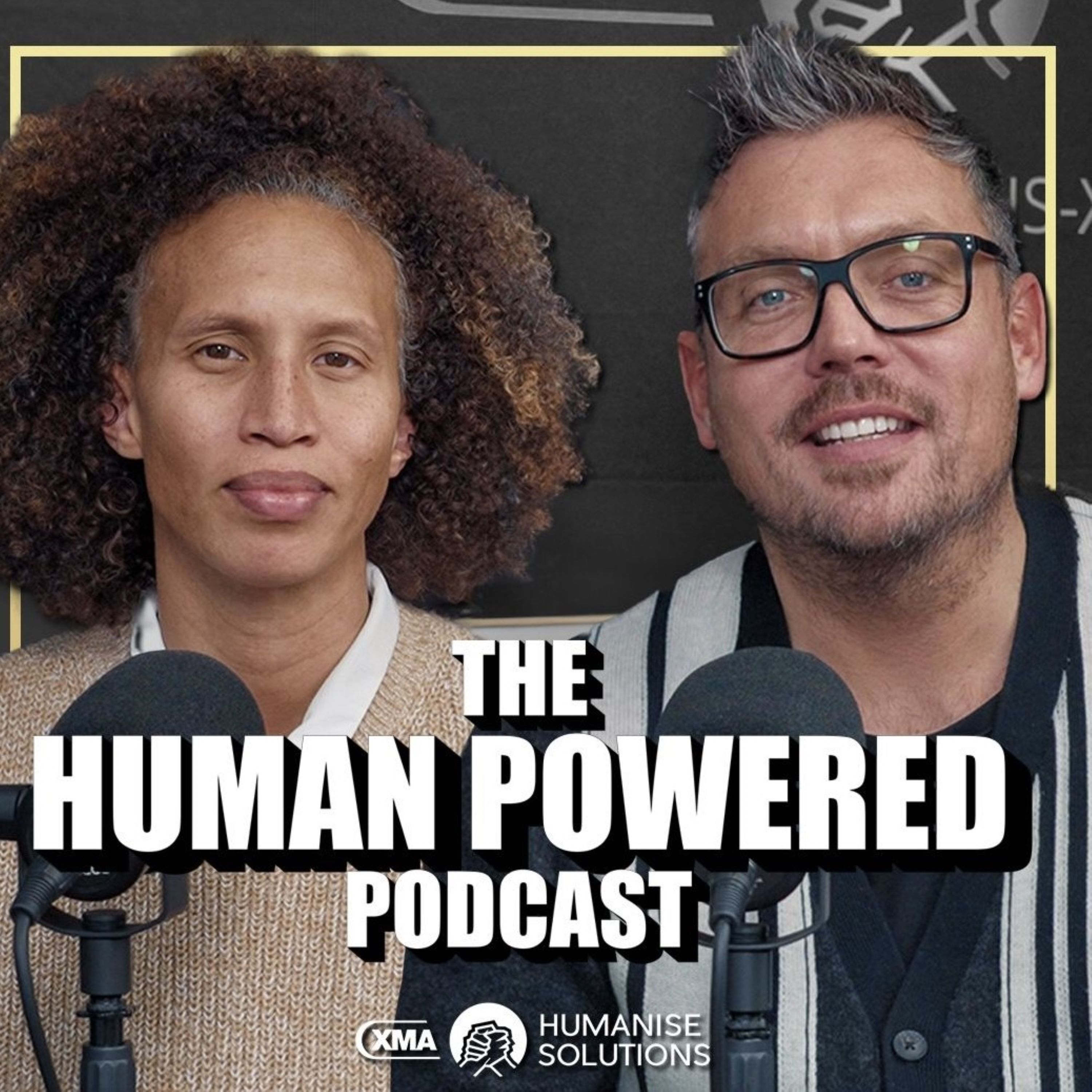
Loading summary
Transcript61 lines
- [00:01]
A
This episode of the Human Powered podcast is sponsored by AMD Ryzen. From small businesses to enterprises, the next generation of AMD Ryzen processors deliver leadership, performance and outstanding power efficiency for a full spectrum of business laptops. AMD Pro Technologies provide cutting edge security features, robust manageability tools and long term stability and reliability. AMD Ryzen Processors and AMD Ryzen Processors with Pro technologies provide you the confidence that your PC will perform quickly and reliably for the ultimate business experience.
- [00:41]
B
Welcome to the Human Power podcast presented by Humaneye Solutions and xma. This is the place where resilience meets personal growth. I'm Scott Ward.
- [00:49]
C
And I'm Serena Kirsten. Each episode we uncover the stories of individuals who have faced life's hurdles head on. Buck the trend of social trends and emerge stronger. We're here to inspire, teach and unlock the secrets to unleashing your potential together.
- [01:05]
B
So let's get ready to dive deep into conversations that illuminate the power of resilience of the human spirit. Let's embark on this journey together. So today we are joined by the exceptional Jonny Nelson.
- [01:18]
A
Welcome to the podcast. Thank you. Thank you. I've walked into the tardis.
- [01:22]
C
Okay, Jonny, so you're a name that echoes through the halls of boxing history and now resonates in the realms of broadcasting and social change projects. You ascended to the pinnacle of your cruiserweight division, defending your title successfully on not just numerous occasions, 13 different occasions. However, Johnny, your story doesn't just end with the gloves coming off. Not you transitioning from an illustrious career in boxing to a respected voice in sports broadcasting. Your deep understanding of the sport of boxing, combined with that natural charisma that you hold and ability to connect with both guests and the audience has made you a beloved figure in the world of the sports community. You've launched your very own foundation, appropriately named the Johnny Nelson foundation, which further enhances your commitment to inspiring youngsters and supporting underprivileged families. Massive welcome today. It's a real privilege to have you on stage.
- [02:13]
A
Thank you. I thought you was talking about somebody else then, until you said the Johnny Nelson Foundation. Oh, yes, that's me.
- [02:19]
B
We're going to start with something that would have really pushed you mentally, physically, emotionally, as a person. It would be a miss of us not to draw on some of those experiences from your boxing career that would have inevitably shaped you and your life moving forward. So it's January 1990.
- [02:35]
A
And you've just.
- [02:36]
B
Fought Carlos De Leon.
- [02:38]
A
Yeah.
- [02:39]
B
For those that may not be aware, can you give us a bit of A clawback on the fight.
- [02:44]
A
Yeah, yeah.
- [02:46]
B
And, yeah, inevitably, the emotions and the feeling that triggered perhaps a new refreshed approach for you.
- [02:53]
A
I think looking back on that fight. Now, looking back on that fight, I can say it was a kiss and a curse. I think I can say it was the worst night of my life and the best night of my life. Now, looking back in hindsight, that being because I was a boy that had to grow up and turn into a man. I was a boy in a man's body when that came about. And I can try and be smart about it now, look back and think, well, if I'd have won that fight, I wouldn't be here today. I wouldn't be the person I am today called. Because being a champion comes with responsibility. And I learned this along the way after that fight, the fight itself against Carlos De Leon, I think I was suffering from imposter syndrome. Anyway, up to that point, I'd become British champion. From my humble beginnings of having 13amateur fights, only winning three, turning professional, losing my first three on the truck, and then becoming British champion, that, to me was a world title. I thought, oh, my God, I never thought I'd do this. Then getting into a position to fight for a world title, I, I realized I was a proper mommy's boy. A boy, a boy, a boy in a man's body. I, I, you know, to me, as far as I was concerned, I didn't want to be a world champion. I didn't want to travel the world. I was just happy to be at home. I was happy to be around my mum. And so the responsibility of it didn't really kick in until I saw how cruel human nature could be. Fight. Before the fight, I had so many people that were my best mates all over me because it was a big deal in Sheffield, it was a big deal in the uk. We were fighting for the WBC world title. And as I said, I think I was suffering from imposter syndrome, because all the way through my career, I didn't think I was good. I just thought the opposition was bad. So my thinking was upside down. I never thought, when I became British champion, I didn't think, I'm the best fighter in Britain. I just thought, they're rubbish. So. And this is how I thought about everything, mainly because I'd never really achieved or done anything of any sort. And I didn't really have any ambition because I was a mummy's boy. I was happy to just, like, I don't know what I was gonna do. I was like a mummy's boy through and through. And so when it come to fighting Carlos de Leon, I knew in my head, this is my day of reckoning. Because this guy was. There's no excuse to say this guy's rubbish. You know, this guy's good. This guy. I think he died. I think he'd only lost one or two before I fought him. And he was from Puerto Rico. He'd done everything. He was a world champion. So I'm like, God, where's my excuse here? This is the real deal. So I knew what was going to happen when we got in there. I thought, I don't deserve to be here. And so I went in there with a wrong attitude. If you want to be world champion, you've got to go in there with a belief that you are the toughest man amongst 8 billion people on this earth. Earth. I didn't. And so when I got in there, I got to the fight, got to the Sheffield City hall, and I looked between through the curtains, and everybody I'd ever seen on TV were there. You know, cast from Coronation Street, Emmerdale, like, everybody. Linda Lusardi. Some of you will know who she is, some of you won't. I'm like, oh, my God, she's gonna see me. So now that's even more pressure. I'm like, everybody's gonna see that. I thought, I can't get knocked out in front of these people. I'm thinking negatively instead of positively. We go back a little bit. We'll go back a few days before. And I always used to dream about the results of my fight. And I used to tell Brendan. Now, thinking about it, Brendan was like, doing me a favor. He said, listen, don't tell anybody. And I dreamt that they had my hand up. But my opponent was smiling and Odileon was smiling. And there was a guy in the. In the. In the. In the audience with a pinstripe suit on, shirt and tie, really smart. He had an afro, so he looked a bit odd. It was a white guy, but he had an Afro. I'm like, so. But that was the dream. Anyway. So I told Brendan the dream two or three days before the. The fight. I'd done it before. And he said, good on you. You win, but just keep it to yourself. Yeah, yeah, Br. No problem. So. So the fight's coming on. I'm thinking, well, I won. I saw it. This fight, just a done deal. But I know what my gut's telling me. I know what my. My soul's telling me. Gone in the ring, Carl Stirling. I, I, I thought I was so scared of embarrassing myself. That's exactly what I did. I ran, I held, I tipped, I tapped. I was so negative in regards to fight, but so was he. He was thinking the same thing about me. And so, so the fight was so boring. It was a, it was a, it was a draw, so he didn't lose his title. But they held both our hands up. So he was, that's why he was still smiling. So in my dream he was still smiling. And the crowd. And I looked in the, into the ringside, there's a guy with a pinstripe suit and an afro putting two fingers up. Rubbish. What a load of rubbish. I saw this stuff in my dream, obviously read it wrong, but that night it changed me. It scarred me. It was the worst night of my life. It was proper dark times because I saw, saw how cruel people could be. The stuff they said and how abusive they were. When you read a newspaper and there's a little joke about someone in the newspaper, you'd laugh at it and you'd not think twice about it for months afterwards. I was that joke in the newspaper. So, so therefore you now think you know what you're talking about. Someone's mother, someone's son, someone's father, someone's brother, sister. And it actually hurts if it's about you. And I'm suffering the consequence of this now when people are saying stuff, you're now paranoid about people's view of you and what they think of you. If they think you're a coward, if you think you're all these things, me telling this story. If you're not into boxing, it's no big deal. But to me, it was my life all of a sudden, because not boxing, it was a personal attack on me, on, on, on who, on my being. So I started to think I was a coward. I started to think I was useless. I started to think I was, I wasn't, I shouldn't, I shouldn't be around. And I really considered actually getting out of here. But because I'm a mummy's boy, that was my saving grace. Because I just want to stay at home.
- [09:01]
B
When you say getting out of here, Johnny, do you mean take your own life?
- [09:05]
A
And that's how sad it got. And so, and it wasn't until years later when I told the story, my sister was gutted. But I just thought to myself, you got to stick this out, you know, I didn't identify myself by boxing. You know, I'm a mummy's Boy, I love being at home with Mum, so I don't care. I didn't want to be world champion anywhere. And I tried to trivialize everything, but I was bothered because of how nasty people were, how nasty they can be. And Brendan could see that. Brendan Ingle, God rest his soul, an amazing man. And this guy, he was so unorthodox about his teachings and how he went about. And he put an advert in a local newspaper about three or four months after, about three months after, was saying, johnny Nelson apologizes to the Sheffield public. I didn't want him to put this in because it kind of. I was bowing down to them. Apologizes to the Sheffield public. Wants them to help him out in preparation for his next fight. And he's offering 700 pound a week for anybody that can come spa with him and help him prepare for his next fight. And I'm like, brendan, man, come on, not again. I just thought, I just want to go beyond under the radar. I didn't want this attention because I'm getting enough stick as it is. And this was on a Friday, on the Sunday, drove up Newman Road. It was packed out. There's a church across the road. And I thought it was a big service in the church. And he walked in a gym. The door hit somebody in the gym. It was that full. I thought, bloody hell, someone must have, you know, must have been, you know, someone must be coming because we've had people come in, like David Beckham. People are. I thought I was coming. So I walked in and I'm like saying hello to people and walking in, said, bren, what's going on? What is that? Your voice said, they've come to answer the ad. And I thought you were joking. There was people there that I knew in the crowd. Jamie Reeves, world's Strongest Man. I knew him. And he was there. I'm like, I was just so. And there were people that I knew in the street. So then all of a sudden I'm thinking, you think I'm that bad that you've come to spy with me? Thinking it's that easy. So now I'm. What's that? Now I'm like someone. I'm a crybaby. So bottom lips going, Brendan said, johnny, straighten yourself forward. He said, go and get ready. So I'm in the corner, like. And so the gyms there, the. The rings up here, getting changed down there, packed out. Brendan's talking to everybody about the fight and. And it's tough and all this sort of stuff and get myself ready and he pulled an envelope out of his pocket. When he pulled the envelope out of his pocket, it was. He pulled three white feathers out the the envelope. And he said, does any. It was like someone holding court. Does anybody know what this means? These are grown ass people. And Han went up, this guy said, it's what you give cowards in the Foreign Legion. And he said, Brendan said, I've been receiving these letters every week since Johnny Nelson, box Carmaster Leon. He said, is the man that sent these feathers here? This guy said, yep, I'm here. So I'm there. Like I'm in the same room. And so I'm looking at this guy thinking, you proper. You take. Excuse my friend, you're taking their piss. This is like, I'm here. I can understand being like doing it behind club, but I'm here. So this guy said, yeah, I did it. So Brendan said, so what you here for? He said, well, we saw the fight, me and my wife, and we need a three piece suite. And my wife said, you could do him. I think I could. So I've come down for the money and I'm sat there, I'm like, I was so angry, I'm like blubbering, thinking, I'm gonna kill him. I'm just gonna kill him. Something don't. Then as I'm tying my shoelace, I think, no, don't knock him out. Cause if you knock him out, that means he's not conscious. Punch him in the throat, he'll swallow his gum shield. I'm thinking, like, and he'll suffer a bit. So I'm just blubbing at the same time. And brain, throw yourself out. Because these people can see.
- [12:46]
B
Yeah, yeah.
- [12:47]
A
So they're not realizing, you know, these are tears of anger.
- [12:50]
B
Yeah.
- [12:51]
A
So Brennan got the guy into the ring, and as the guy got into the ring, put the gloves on him, and I was seething. Brennan looked at me, said, johnny, take it easy. So that means have him, you can have him. So I thought, I'm gonna slaughter this fella. I thought, just punch him right in his throat. And so this guy was that bad. This guy swinging like hell like he was in a movie. It was that bad. I just stood there thinking, oh my God, you are terrible. And he's missing me flying into the ropes. I thought, and I was in shock more than anything else, thinking, you thought you could beat me. And so I'm just moving around, I'm like, is this a Jew this or what? So I thought, stuffed this. I'm getting rid of him. Just thought, wipe Three white feathers. I'm gonna whack him in the throat. And so I pulled back. The guy came rushing on and I pulled back to hit him in the throat. He put his head down, it hit him on the top of the head. And he went, whoa, whoa, whoa, stop, stop. He went down on one knee. Whoa, whoa. I've not come for this. I'm not come for this. And Brendan said, what do you mean? He said, no, no, I've not come for this. Took his head guard off, took his gloves off, ran off. So I chased after him before he got out of the gym. And Brendan shouted, do not let Johnny and Elson out of the gyms. This fella shot off. They all shut the door. And I was about three or four people got in the ring to spa. Then all of a sudden everybody's like, oh, I just came to watch. I didn't really. But it really hurt because the things that were said, the things that were done, how. How people were. Maybe it was myself, my paranoia, thinking people are thinking the worst of me, but I just saw the good and bad of human nature and it just made me. It made me harden. It made me, you know, have that love, that stupid, naive love of human nature to stay in my house rather than come out my house. And then. And then you just think. You just don't trust people. You just think, I can see people can flip in a heartbeat.
- [14:42]
B
I really. I liken it to. Not at the extreme level that you're at, but I signed professional contract before I left school, so I was going to be the next best goalkeeper for England and so on. And I never forget. About four months in, there was a fellow goalkeeper. Now, I'm not forgetting goalkeepers Union and all that is meant to exist. And you look after one another. And he turned around and he said, have a free shot. I said, pardon? He said, have a free shot at me and then I'll hit you one back. And only now I'm 16. At this age, I'm you, Johnny.
- [15:07]
A
Yeah.
- [15:07]
B
I'm a mummy's boy.
- [15:08]
A
Yeah, I'm.
- [15:09]
B
I can look after myself, but I just never want to be in that situation. Fear induces tears. It's just, as Serena knows, I'm quite an emotional guy. And it was at that point I thought, this isn't fun anymore. And clearly this person's threatened by me coming into the building.
- [15:24]
A
But you're not mature enough to understand.
- [15:26]
B
That at the time, this was the point. And I think, and this is something with sport that we're told that when you're ready to go in the ring, when you're ready to go on the pitch, when you're ready for that center pass, you're meant to take on all that expectation of other people and handle it. But unless we process people and facilitate them to be able to do that, they want to hide into nothing. And I think that's what's damaging. In my experience of working with athletes, that's what's damaging a lot of these poor people is that they're taking on all these responsibilities of others, all these expectations of other people, without really understanding.
- [15:56]
A
Themselves or growing up themselves. Having the responsibility of an adult.
- [16:00]
B
That's right.
- [16:00]
A
Even though they're not adults.
- [16:01]
B
And that's what is that lack of personal awareness, accountability, skill set to evolve. Because you're in that bubble of the gym being told where to be, how to be.
- [16:13]
A
And that's because individuals outside of you benefit, profit. And so therefore, we spoke about it earlier, nobody cares about the afterlife. When you finish boxing, when you're not getting cheered and everybody's going mad over your name and you're selling tickets and you're. You're getting a TV deal for the promoter because they're attracted to you. They. That's what they're interested in. They're not interested in when you finished, how it's affecting your life, your relationships, your. Your. Your interaction with, with. With others afterwards. And I, I know so many fighters that were household names that now you would not recognize them as individuals visually, emotionally. And boxing is a lonely sport because when the bell goes, it's only you that gets in the ring. Your coach stays out, your sparring partners, your mates stay out. And when you're doing it day after day after day, it has a physical effect on your being. So, Brendan, his analogy was brilliant. He said, if you're in the gym every day, five days a week, say, training, and you're sparring five days a week, and in those five days a week, you're sparring five rounds, but just rounding it up because it's usually more than that or less than that. So in those five rounds, you get hit 10 times in the head. So if you're getting hit 10 times in the head each day, you're getting hit 50 times a day, each week, you're getting hit 250 times each month, you're getting hit a thousand times in the head each year, you're getting hit 12,000. You got to look at it this way. So all of a sudden you got to think, so why would you not Think people are going to be brain damaged and it's going to be an after effect. When you finish boxing, if you're getting hit that often and that much in the head, the fighters, you look and you can hear their speech going. Some fighters I know and I think, oh my God, I can, I look at them fighting now and I think you're going to be in trouble in three years time. And somebody needs to tell you because the way you're getting hit and the way you're not getting, getting out of the way of these shots, somebody doesn't care and they can see this. If I can see this and I don't know you, what are you doing in the gym? And it worries me.
- [18:17]
B
I think a recent example for those listeners that follow boxing is Joe Joyce. I think he's a boxer who's as his nickname is a juggernaut. The unfortunate thing is with being so big he hasn't been taught to move and the pounding he's taken in a.
- [18:29]
A
Fight, you will not see the offense for a few years time. I was in Saudi when AJ boxed Usyk and I was doing an interview and Derek Chisora, I like Derek. Derek's a tough, tough cookie, tough man, big heart and soul. And we were doing a, an interview for IFL and the day before, they're on about Derek fighting Deontay Wilder when Deontay Wilder was, was still considered to be a dangerous beast. And I said, Derek needs to pack in because, and this is coming from a place of love, not from a bad place. He needs to pack in because he's getting hit too much, too often, too hard and, and it's going to affect his life afterwards. So he don't want to be fighting Deontay Waller. So the interview interviewer, Kugan Cassius told him so the next day. And if I say something today, I'm not going to say it to get clickbait. I'm saying it because I believe it. So if you pull me next year, I'll have the same conversation. I want so it's the truth. And so next day Derek was a bit peed off and Cogan said, he said, you, you should pack in. You shouldn't be fighting Wilder. So again, she's got excuse the French. Derek said, johnny, shut the up. You don't know what you're talking about. I said, derek, listen to me, mate, it's coming from a good place. I said, you don't want to be fighting, man. So I wasn't gonna back down and say, no, no, I Didn't say that because if I was being a coward and if I was trying to be. Be antagonistic, I would do, you know, I'd say, nah, he's winding up. I said, derek, he's coming from a good place. He said, no, no, don't do that. Anyway, he said he ran into rave and everything. He said, I'm gonna box until I can't wipe my own ass. In the interview.
- [20:04]
B
Yeah.
- [20:04]
A
Anyway, the interview was finished and I said to Cogan, I said, corgan, listen to me. Do me a favor. I said, I don't care what you leave in. In regards to how Derek spoke to me interview, I said that last bit, take it out. Because if you leave that in and the boxing board hear that and people hear that, his career's over. But take it out for his own sake, take it out. Hopefully common sense will kick in, his wife will say something or someone says something to him. Take it out for his own good. So, so I, I'm thrown under the bus because the man's disrespecting me, but I'm thinking, it won't be until 5, 10 years time this guy will come back to me. Johnny, you know what? You're right.
- [20:40]
B
Yeah, that's it.
- [20:40]
A
You're right. And I don't mind now because I know tomorrow that's what's gonna happen. And, and I like Derek, I, I've told this story a couple of times and I'm quite sure Derek will hear at one point, but he's coming from a good place because I've seen so many fighters that were coherent, smart, on the ball, fast chatting, then when they finished, you'd think, it's not worth it. At one point when I was fighting, once I became champion, or wanting it enough to be champion, I made a pact with myself. I was willing to die in the ring. And this is what I said. I will die in there before I lose again. I look back now, think, you idiot, why would you make such a promise? And that's the worst mentality, it's the worst kind of thing to do. So you've got to understand, it is not life. It's part of life. It's part of life, but because when you finish, it affects every aspect of the rest of your life. And that's why I try and get the message across.
- [21:36]
C
And I think everything that you're talking about there, Jonny, for me, you know, you're saying that you, you were stupid because you, you were a mummy's boy and you just like being at home. But for me, you strike me as someone where environment is everything.
- [21:47]
A
Yeah.
- [21:47]
C
And I think, you know, Brendan has obviously been a huge, huge influence on. On the understanding that you have of the importance of it, not just before career, but during and most importantly for any kind of athlete after. So I think you speak passionately about it, but it's because you've lived through it. Yeah. So I don't think it's stupid. So many people finish their careers and there's nothing there for them and they have changed and they have got mental health issues and no one has supported them through it and they haven't necessarily been lucky enough to have a Brendan or someone alongside of them to try and instill some of those skill sets that you need.
- [22:23]
A
Well, the only reason why I boxed because. Is because my brother boxed, boxed. And I used to follow him everywhere. I was like a pain in the ass. And he started boxing, so I. I followed him to the gym and. And the deal. And I made friends at the gym. The downside of that was I was in a boxing gym and he had to box. I didn't want to box. My mates were there, so they. So I had to go back. Every day I'd be getting beat up by guys that were that big and I didn't. I hated it. And I didn't care about that because when people laughed and mocked and said, looking at me, rubbish, didn't it say behind my back? They actually said, you're crap. Why are you boxing? And. And so. But this is where my friends were. The downside of going to a boxing club was, I'm the box. So. And, and, and when I was asked about a year, and it just crept up on me, about a year by an interviewer saying, what would you miss about boxing when you retire? It wasn't even a conversation. And I burst out crying. And she said, oh, sorry. She stopped the interview. She said, what? What's wrong? I said, I'll miss this. I miss the camaraderie, I miss my mates. I'll miss Brendan. Wasn't the boxing. Yeah. It was the family. It was that. And so. And that. To me, wealth isn't about what you got in the bank. Wealth isn't about what car you drive, what house you've got. Wealth is about family. Wealth is about that community you've got around you. And if it's not family, it's friends, and that is your wealth. And if you've got two true friends and true family around you, it doesn't matter if you've got five pence in your pocket or five pound or five million pound in your pocket, it. That's wealth. So that's why when I see guys boxing on too far for the money, I say, trust me, the money ain't gonna. The money's not enough. I remember when. When Kell boxed Amir Khan and I was out in Manchester with Ricky Hatton. Ricky Hatton's a very, very wealthy man, but he's got a sad darkness in him as well. And he's well documented, so I'm not speaking out of turn. Ricky had a tipple or two or three or four, and. And we'd gone out a couple of nights before and he was just going on and on and on and on about the Manny Pacquiao fight. That's like 10 years ago. And it's a big. So when fighters come back and they think I'm gonna get paid a big chunk of money, they prioritize that over everything. But trust me, it is when you make money or God, it's the worst thing you can do because it'll turn into a curse.
- [24:44]
B
That leads me into a port around the importance of support systems. How did mentorship and support play a role in your ability to sustain that resilience? And what tips for our listeners can you offer that are seeking or in need of support?
- [24:58]
A
I simplify and say we all need a Brendan. Yeah, a Brendan can come in all shapes and sizes. A brother, a sister, a father, a mother, a friend, a stranger. We all need a mentor, someone that will guide us selflessly where it's only you that benefits, to give you that nudge, you know, David Beckham wouldn't be David Beckham without Sir Alex Ferguson. Prince Nasim Hamid wouldn't have been Princess Neil Hamid without Brendan. So what I'm saying is, even though they had the talent, they needed someone to guide them. And this mirrors life. And if you have somebody just to guide you, just to make that decision, suggestion to nudge you in the right direction, that's all you need. And sometimes the message might come across and you might think they're being negative. They're just telling you from their point of view, from their eyes. So if you like. My mum and dad didn't want me to box. They said, johnny, you can't fight. You know. You know, my dad said, johnny, you're coward, you can't fight. But he wasn't saying it to be mean. He was saying it because that's. He thought I couldn't fight and he thought I was. I was a crybaby. So but so you've got to be. You've got to be smart about who you choose to be your mentor, your advisor, and who you choose to actually say, you know what, maybe that, that, that, that, that negative talk, I need to step away from that and be surround. Surround myself with somebody that has the experience, the wisdom, the calm, the. The understanding to guide the best out of you. And so when it comes to having a mentor, it can be in anything. In anything. Family relationships, professionally, in anything. If you've got a mentor, this is priceless. It's price. And that mentor, as I said, can come in all shapes and sizes. And I know that if I never met Brendan Ingle, that would not be the person sat here today. In a million years, I would not have boxed. He conned me, he talked me into boxing. And we were in the gym once and where Naz said to him, brendan, you're brainwashing us. And he said, correct, I'm positively brainwashing you. Yeah. And he had no shame about that. And so you're thinking, wow, he's owned that one. But he did, I probably think the way I think now, because. No, not probably. I do think. No, I think. No, because of Brendan at his funeral. The hell at the Cathedral in Sheffield. Now, when you see thing of Brendan, he produced six world champions, I think it was 16 British champions, nine European, eight Commonwealth, in that little gym. And so he always said, if you produce one champion, people say, look twice. It's not bad when you start banging them out, left, right and centre, champion after champion, they realise you can do something well. And I know in our gym, Brendan's words were, it was a full of hyperactive underachievers, AKA nutters in our gym. But you didn't have to deal with just the fighters. You have to deal with their family and their friends and their problems as well. So when you came. When I go in the gym and I've not got no money and I've walked from town to Winkerbank or there's some frat, some trouble's going on. Brendan's also a counselor. He's talking to. He's walking with you. He spent so much time teaching me and I didn't know I was being taught. He talked to me about Marcus Aurelius, Genghis Khan, Adolf Hitler, and I'm thinking, why are you telling me about these people? But he talked to me. He talked to me to basically simplify, to say, these are only human, you know, he's telling you the background of all these people, these Amazing things or terrible things, but he's trying to get across that there's no difference between them and you. Same story, different character.
- [28:38]
C
That awful night when obviously the draw happened back in 1990 by the sounds of it, and definitely the looks of it, you mean you came back a different man.
- [28:46]
A
Oh, God.
- [28:46]
C
So, yeah, please tell us about that.
- [28:48]
A
So Brendan understood I was hurting and. And at the end of the day, I think commercially I was probably dead here in the uk because promoters didn't want to put me on their shows and they put it, said it publicly. I don't want Johnny Else in Boston on my show. So he sent me away to spa as a sparring partner in Germany. Now, if you're a sparring partner, you are paid by whoever you're sparring with a certain amount a day, and you're the fresh me. Your job is to survive. And they're going to beat you up, they're going to sharpen their tools up, beating you up, and you've got to do the best you can to survive. He said, don't beat him up, whatever you do, no matter what happens. And every night I'd have to phone him and say, how did spar and go? And I learned how to sometimes lose a battle to win a war. So when you're in the. In the gym, and I'd go there with some guys that were so arrogant, so such bullies, and if they got spying partners, and they'd be. They'd hit the spine partners, the spine's partners be hurt. They'd carry on whacking them and whacking him till they were gone. It was cruel. And I'm thinking I could smash him. Do not beat him up. Do not beat him up. Do not beat him up. And so every night I said, brain, I could do him, basically, Johnny, listen to me. If you beat them up, he said, you're there to learn. If you beat them up, they know who you are. And then when they know who you are, you're never going to get a chance to fight them. So you make sure you behave yourself. Do not beat them up. So now I'm like a hooker. These guys are throwing a shot and I'm riding the shot, but not hard enough for it to hurt. I'm riding it short enough to see how strong they are in the clinch and see how fast they are and just tapping them, just see what I can get away with. But I got to do it smart enough, I've got to act enough for them to believe they got top side of Me, I did this for six years. Six years back and forth in Germany, and it was horrible. I stayed in dirty little bed sets where nobody spoke to you. I was in East Germany, a place called Frankfurt Order on the border of Poland. They still had those little yellow Trivant cars there, and there were no black people there at all. And they said, do not come out of your room. And so where they put me was like a motel where the workers came from the other parts of Germany and Poland, worked there in the week and then went home at the weekends. I was in there and. And the first week I went there on the Friday, I. I thought I wasn't hungry. I'll go down in the morning, get something to eat. I went downstairs to go in the kitchen to get something to eat, to go in the canteen. It was closed. I'm like, all right, it's probably closed today. I'll eat tomorrow. Next day I went down. It's closed. I thought, I need food. So I went to get out. I'm locked inside the building. There's a metal shutter out the front. I'm locked in the building, and I'm like, hello. All of a sudden, I realize I'm the only person in the building. And so I went back up into the room, and I'm like, pull the window. And I'm looking outside thinking, I can see an apple tree in a pear tree. I'm having it. I'm three floors up. There's a drain pipe. I've got a lime green Adidas tracksuit. Six foot three, black guy in East Germany, there's none of us. And I climbed out the window. I'm down this drain pipe, popped over one fence, over another fence. Pilot with pears and apples jumped back over, climb back up again, eating them away. I had to run, obviously, because I'd obviously done all these apples. But then on a Monday, I went to the gym. I said, he's closed at the weekend. He said, and what? They didn't care?
- [32:05]
B
Yeah.
- [32:05]
A
And. And this was done because Brennan wanted me to believe in what I could do. And I was learning and learning. I'm thinking, why? Why is it just not Penning, not just dropping for me? Then one time I was called up to spa in. In Lyon in France against a guy called Fabrice Teoso. Fabrice's World Light heavyweight champion, and he was a God. And every day I'm hitting him, I'm whacking him, I'm hitting this guy. And I couldn't miss him. Anyway, I walked out to go to the Bedsit across the road, there's a white limousine parked outside. Beautiful woman sat in the front with a little white poodle. And I heard a voice behind me saying, see you tomorrow, Johnny. And it was Fabrize. It was his wife in the chauffeur driven limousine. And he got in the car, kissed his wife, stroked the dog. The driver drove off with his hat on, driver drove off. And I'm stood there like, johnny, you're an idiot. Clouds up, started pouring down of rain. I thought, I need you to try and run to get out of the rain. I thought, I am an idiot. I'm the biggest idiot in the world. That was my eureka moment. I thought, you've been battering this guy. You're living as a sparring partner, getting paid 100 pounds a day to spar with these people. You are riding them, if not beating them up without him even knowing. So you're much better than them. If you can beat a man up without him even knowing he's getting beat up, how good are you? You're an idiot. So the only difference between them and you is they can perform in public and you can't. I'm too worried about people, what people think of me, what people's opinion is of me. I'm too worried about looking bad. I'm too. So I'm thinking so much about them instead of thinking about myself, what I actually can do. And that day, I will say that was my eureka moment. That day I stood there in the rain with my bag on my shoulder and I purposely walked slowly in the rain thinking, you deserve to get wet. You deserve every bad thing that I'm seeing. Because you're an idiot. You should never ever lose again. And from that day onwards, I came back. I never lost a fight again. Because then I realized I was good. I believed I was good. I didn't think upside down. I knew what I could do. Once I looked at my journey from where I'd started to where I'd got to in boxing, I thought it wasn't about boxing, it was about me as an individual. Once you had the ingredients, the difference between success and failure is a thin line. The thin line. And it's actually harder staying there than getting there. But everybody getting there thinks, oh my God, I need this, I need to get there. It's actually harder staying there because when you're chasing something, that's the reason why you get up at stupid o'clock in the morning. That's the reason why you'll neglect and you'll be selfish you'll do all the things you want to do to get it enough. But when you've got it, what's your reason for getting up at stupid o'clock in the morning? What's your reason for being having all the discipline that got you there in the first place? So I understand how hard I thought it was and I understand the responsibility of being a champion. And that's the difference.
- [35:00]
C
Yeah, I think. Well, thank you for sharing that again. So, so many key insights I think that our listeners are gonna absolutely love to have heard about today. The next part of this segment we're moving into is around something that we call like a resilience recipe. And you've obviously touched on a few things around, you know, your unique resilience recipe. But our listeners obviously really want to, you know, understand and hear about your secret strategies, lessons or advice that you've got for them that has essentially helped you during some of your most difficult periods. So if you'd just like to share some of those with us, you've got.
- [35:36]
A
To want it enough. And if you want it enough, yes, of course, you know, it might, it might not happen the first time, might happen the second time, might happen the third, fourth, fifth time. But you're learning of the failures as well as learning off the successes along the way. And the journey is as important as the destination. And so whatever you try and do, even the good times out of me thinking, why is this happening to me? This is part of your development. This is part of when you become, when you get where you want to get, this is going to help you stay there because you've dealt with the bad and you've dealt with the good and people get drunk on both of them. The bad can down you. You think, oh, my God. People think this, that, and it makes you bitter. The good, you can think you're Billy, Billy Big Balls, nobody can touch you. And so all of a sudden you think, I don't know, you become complacent. Yeah, I don't, I don't have to do anything. You got to. Brendan always said to us when he writes stuff about in the newspaper, good or bad, don't listen to it because they don't know you. So if someone's saying, Johnny Nelson, an amazing fight, he did XYZ all of a sudden, yeah, I did that to me. Why would those same people, why would you listen to those same people when saying something good about you? When they say something bad about you? You got to know what you can do. You're going to know what you can achieve. And it doesn't mean that you're. It doesn't mean that you're a wrong person. It just means you've just got to be. You've got to want it enough. And that's why I say whatever you want in business, in sport, in relationships, you've got to see it. To achieve it, then you've got to be focused on it. Think, you know what? I might not succeed the first time. I might work on this. I might work on that. Okay, I'll learn from that. All right. I don't like how that feels. That won't happen again. You might make another mistake. Oh, that won't happen again. Oh, something good's happening here. Yes, I'm there. Hold on a minute. I'm becoming complacent. I'm not going to drop the ball. You've got to want it enough.
- [37:31]
B
With humanized solutions, our strap line is unlocking human potential. And a lot of what I'm hearing here, I'm just wondering, is that. Is that the inspiration for you behind your foundation? The wanting to supply people with the opportunity, the foundation.
- [37:47]
A
And the whole point of foundation is because, again, it's no secret that Brendan to me was to Don. He was like a good man. He was a man with, you know, five kids, married. He probably spent more time with us lot than he did with his own wife and kids. And. But this guy, he gave his time, gave his wisdom, gave his unorthodox coaching. And. And so I'd never be Brendan because, you know, I can try and emulate him, try and copy him, but this guy was like, that's who he was. And so to me, I saw how he helped people. Well, he didn't have to help. As I said at his funeral, there was, like, so many people that. That were there that said, oh, Brendan helped me do this, Brendan helped me do that. I'm like, how does he have time to help all these people? And so the foundation, as far as I'm concerned, the foundation is if me being Johnny Nelson attracts one or two people, then, you know, what if they're going to say, we want to put someone in your foundation to help the causes that you're working with. Good. I said earlier, the problem is in sport, you know, when you want it, when you want people to sponsor you, when you want people to give you free kit, when you want people to give you sponsored car, whatever, nobody wants to give it you. It's not until you succeed and you're champion and you can afford it, where People want to give it you. So I still took this when I was at the top and give it to everybody else because I thought I don't need it. But even now, I get a lot of stuff and I give it to people that need it, that'll benefit from it. And so to me, this is what the foundation about. So the foundation, I'm working with a company called the Mama Youth Project, and it helps train up young individuals to get into media. Now, most kids, when I go and speak in schools, they say, oh, how do I get on sky? And I said, no, the power's not here in front of the camera. The power's behind the camera. Mama Youth Project teach you to be producers, directors, editors. That's where the power is. That's where the skill is.
- [39:46]
C
It sounds like to me you're very much values driven. It's not about money. It's never been about money for you anyway, I don't think. But it's all about doing the right thing for the right reasons at the right times, which I think is a huge lesson that we can all take in and around, especially when you. When you're talking about trying to unearth and understand your own resilience and your journey in terms of building your own resilience, because everyone's on a different journey. Some people are fortunate enough to have an early, you know, early life experience where they can start to build on some of those skill sets. For some of us, it takes much longer. You know, there are some adults that don't reach that stage till they're 50, 60, 70 years old, you know, so I think it's been really interesting to hear you share how you've. How those experiences have really shaped you into making or trying to now have a really incredible impact with, with that foundation.
- [40:41]
B
Today's been outstanding. Serena and I have had a whale of a time. Johnny, what's your human power?
- [40:48]
A
Motivation? Inspiration. I am my only example. I want people to look at me and think everything's possible. Because if he can do it, they've heard my story, they've heard my background. They see where I've come from. Wasn't born with a silver spoon in my mouth. I didn't leave school as a smarty pants, went through some tough, odd times is how you deal with it. So I hope I inspire people as my human power. I hope I drive people. I hope my stories and they're my journey. And as I said, every journey, you know, it's not about the, you know, the journey's as important as the destination, the journey I've been through, I think is for me to be at this stage of my life to the left of us. I think that's my human power.
- [41:39]
C
Wow. I can't think of a better way really to start to wrap up, you know, this week's episode and, you know, for me, if we're just to look back on some, you know, key takeaways from today. Jonny, something that, well, a lot of things here that I'm certainly going to take away, but the drawing on the good and bad experiences to shape your own resilience and your own journey and drawing on that inner belief system that you know is only, only you own, essentially no one else owns that piece of you. Choosing and putting yourself in environments where you're, you've got good mentors and good people around you to help you to pave the way that you're trying to and create that life you're trying to create, but also to learn. To learn. So, you know, you don't have to necessarily be the best in those environments immediately. I mean, it sounds like you actually already were, but you didn't realize it. But I know essentially putting yourself in these environments to learn from the best so you can be the best. And I think that's so important when it's, when it comes to building resilience, failure is feedback. It sounds like every kind of stumble block that you've, that you've kind of come across, you've used it and you've used it and turned it into something positive and something to use. And that leads me into my next point around understanding what you're capable of and your own unique skill set. And finally, something that you've been so passionate about today, sharing with our listeners is that transferable skill set when it comes to mindset and applying yourself to the goals and, and yeah, the targets that you want to go out and achieve. So owning your own pathway, that you are the definition of owning your own journey. So, you know, a huge thank you from, from both of us. We truly hope that today's guest has offered you, our listeners, the opportunity to explore your own journey of self reflection, personal empathy and success. Remember, it's important to share your stories of struggle and success with those around you. Let's unlock potential together.
- [43:38]
B
Thanks for tuning in to the human powered podcast. It's been a privilege to share today's journey of resilience empowerment with you. Remember, each story we share is a step towards understanding our own true potential. Follow humanized solutions on social media to become part of our growing community. And don't hesitate to share your own experiences. I'm Scott.
- [43:57]
C
And I'm Serena. Reminding you that within each of us lies untapped strength. Let's unlock it together. Until next time. Keep striving, keep believing, and keep growing.