← The Human Upgrade: Biohacking for Longevity & Performance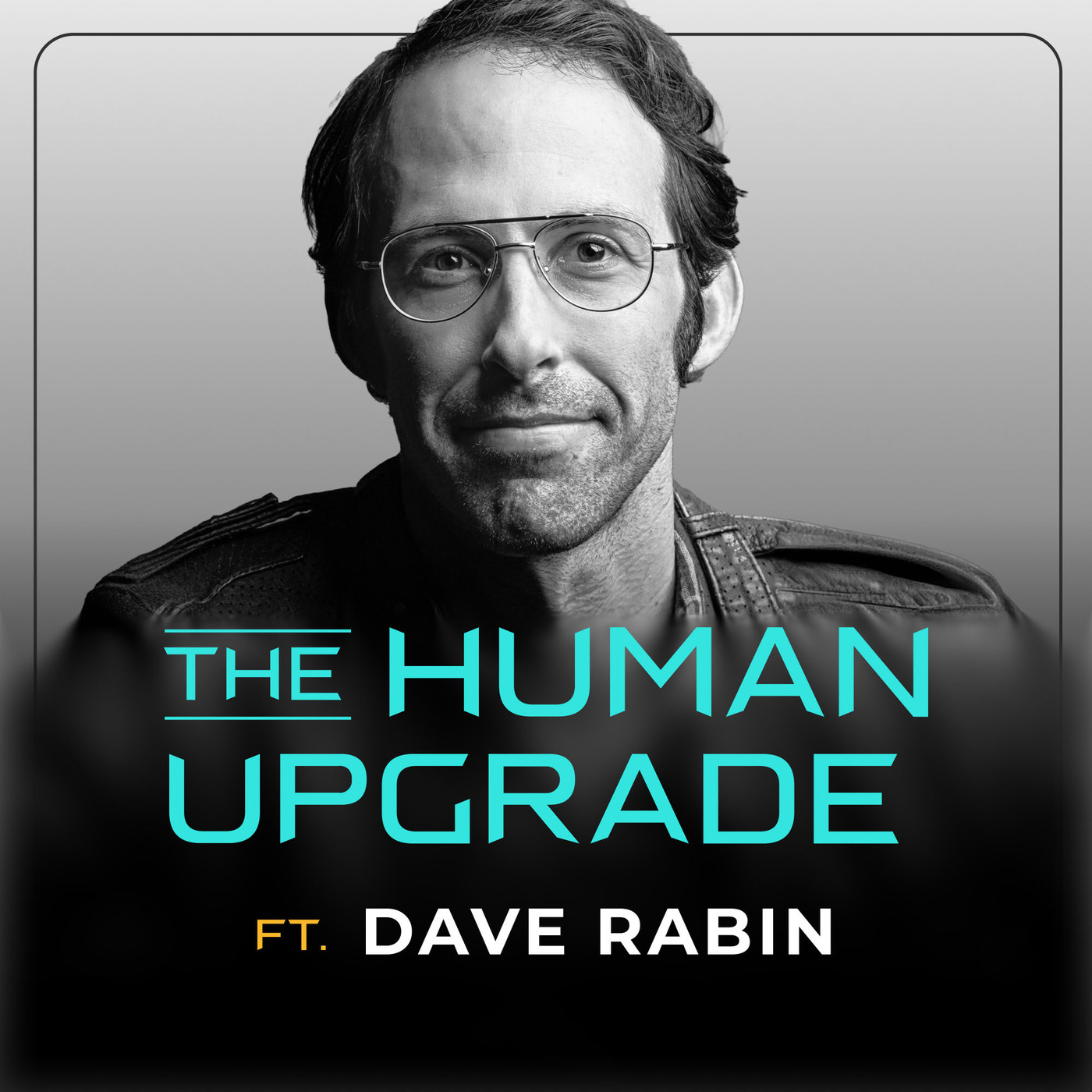
The Human Upgrade: Biohacking for Longevity & Performance
BDNF Superpowers Through MDMA and Ketamine | Dr. Dave Rabin : 1486
01:01:02
Loading summary
Transcript133 lines
- [00:00]
A
Trauma is now repairable and reversible down to the epigenic code. So there's hope for everyone. In the first 30 minutes of every day, you look at your smartphone and you've taken in as much information as the average human being took in in a week of being Alive. In the 1950s. People are getting prescribed medicine for life and people are starting to get tons of terrible side effects from the medicines and they're just not getting better in this. Psychedelic medicines are some of the most powerful tools we've ever had access to in the history of psychiatry. Ketamine is the best starting place for anyone. If you're starting out in this area, it's the easiest, most gentle. It only lasts 60 minutes and you can do, you know, a full course of therapy legally and accessible in basically every state.
- [00:38]
B
You mentioned mdma, you mentioned psilocybin, and you mentioned ketamine. So how would someone know which is the right one for them? You're listening to the Human upgrade with Dave Asprey. There's a youth molecule in all your cells that you're losing every year. It's nad. It repairs your DNA and supports your mitochondria, helps your body convert food into U.S. energy. It keeps your metabolism running. It helps you regulate inflammation. And if you want to live a long time, you're going to need it. But by the time you reach your 40s, your NAD levels are about half what they were when you were age 20. That's if you're even healthy when you're 20. The good news is that you can take supplements that raise your NAD plus levels. Bad news is that a lot of them don't work. And for something as important as my NAD plus levels, I don't want to hope a supplement works. I want to know it does. Some supplements have nothing supporting their claims. Others do a little better with studies on just ingredients in their product. But the the gold standard is when a company runs a clinical study on the product itself. Did you know out of 90,000 supplement products, only about 100 are clinically proven Qualia NAD is one of those. In multiple double blind, placebo controlled studies, it increased NAD levels by 67%. So if you want to take the guesswork out of maintaining high NAD levels as you age, go to qualityolife.com davenad and they'll give you 15% off at checkout. They also have a 100 day money back guarantee. So what do you have to lose? That's qualityolife.com davaindad nad you're losing hair on your head and collagen in your skin right now, even though you probably can't see it yet. That process speeds up as you age and it doesn't reverse on its own. But you can intervene at the cellular level. Studies show that specific wavelengths of red and near infrared light will stimulate your hair follicles and that does support collagen production. Irestore has been making red light therapy devices that actually work for over two decades. And with their summer savings event, it's the perfect time to upgrade your hair and skincare. The Irestore Elite is their most advanced laser hair growth system, using 300 lasers and 200 LEDs which helps you regrow thicker, healthier hair in about three months. And it is really easy to use. You can wear it while you're working, while you're reading or unwinding at night. And The Illumina Face Mask360 medical grade LEDs can turn red, infrared or even blue light at the same time to target all of your different skin concerns. Just 10 minutes a few times a week gives you brighter, smoother and healthier looking skin. I've been using the Iris Elite and the Illumina Face mask while I work at home, but not on video. And they fit into my normal routine with no extra time cost. I really like it because I don't lose any time when I use it. Irestore is so confident you'll love their products that they give you a 12 month money back guarantee. That's because it actually works. You will see more hair. Irestore is kicking off their summer savings event with some huge discounts on their red light therapy devices. You can save on customer favorites like the Irestore Elite helmet and the Illumina face mask. Just head to irestore.com, use code Dave to take advantage of the sale. That's Dave restore.com Please support the show and tell them we sent you. Give your hair and skin the upgrade they deserve so you can feel confident and refreshed. This episode is with my good friend Dr. Dave Rabin. You've heard him on the show before talking about things like trauma or lsd. Okay, not really. Well actually yes. He talks about psychedelics in a scientific and valid way. It talks about nervous system regulation and he's a board certified psychiatrist and neuroscientist and he's looked at chronic stress and trauma and non invasive ways to treat mental illness. And he's also the founder and chief scientist at Apollo Neuroscience. And if you ever seen me walking around with something Strapped to my ankle. It was probably. I'm not saying it was certainly, but it was probably via Apollo Neuro. Either that or it was that one time. Just kidding. It was the Apollo Neuro. Dave, welcome back to the show, my friend.
- [04:43]
A
Thanks so much for having me. It's a pleasure to be here with you, Dave.
- [04:45]
B
I guess I should also mention you host the Psychedelic Report and your brain explained. So if you're into brains and psychedelics, this is your guy. You've had a pretty interesting path. You started studying trauma and you ended up building a wearable. How are those connected?
- [05:02]
A
Well, so they're actually. I mean, it was really. Because when we start. When I started studying trauma and stress, I realized how bad a job we're doing in most western medical settings of actually addressing the burden of stress. So many of our patients struggle with chronic stress prior to ever developing mental illness. And then we see this consistent pattern that people generally get worse mental health symptoms and physical pain when they're more stressed out. Right. And that pattern is kind of hard to ignore. We see it so often. And so seeing this and realizing that, especially in my patient population, this is dating all the way back to originally around. For me, it started around 2012. I started working with more people who had severe PTSD veterans and people who were just real, real sick with mental illnesses that had gone through multiple standard western medication trials and never achieved sustained remission. They were just symptomatic for life. And that was just kind of accepted that they were falling into this category that was being called treatment resistant mental illness, which is a really unfortunate name. And it's very sad when a field, you know, gets to a point where we start creating entire categories of people who are treatment resistant. And it's even sadder when you realize that category is. Starts to get to 50% nearly of patients. When you're looking at depression, anxiety, substance use disorders and you start in PTSD and you combine these together. Most people fail two or more gold standard treatments for these disorders, and that's not good. We still maintain them chronically on symptom management, but they're not actually getting better.
- [06:43]
B
Wow. So it's treatment. Incompetent mental illness is actually what it is.
- [06:47]
A
Yeah, yeah. I mean, basically they're. Yeah, basically. And the treatment. But I think that the challenge with the labeling.
- [06:54]
B
Right.
- [06:54]
A
Is that we end up. The patients end up taking it personally because they often think that there's something wrong with them, that their body is resisting treatment. And that's absolutely not what's happening. You know, it's the wrong treatment. Exactly. It's the wrong. It's the wrong treatment and treatment approach. And the treatments we use are often like almost all the Western medicine. Psychiatric treatments are great for stabilization in the short term, which is what they were designed to do. But then they started being used for chronic symptom management, and they're not good for that at all. And we really need to start. The whole point of stabilizing somebody in the short term with our current medicines is that you stabilize them, then you teach them the therapeutic techniques, and hopefully you stabilize them long enough to learn the therapeutic techniques on their own, and then they start to be able to manage their own symptoms themselves. And that. But that practice just wasn't happening. People are getting prescribed medicine for life and people are starting to get tons of terrible side effects from the medicines, and they're just not getting better in this, you know, suffering through and through. And around that time, I started to realize that psychedelic assisted therapy was available. Right. And it was not as ketamine therapy, but in clinical trials. It was starting to demonstrate through MDMA and psilocybin trials in particular back in 2012, that we were seeing, with just one to three doses of medicine, six to 12 months remission, in some cases, years of sustained remission from just a couple doses of medicine. That's like the opposite of what we were seeing in the clinic with our treatment. So that immediately attracted my neuroscience researcher self, and I started to look into that and realize that those work by activating safety responses in the nervous system and amplifying the safety of therapy. So then we went back to the lab and tried to figure out, well, how do we make safety wearable? And then that led to the invention of Apollo.
- [08:42]
B
That is such a powerful story. The ability to generate safety in yourself is, of course, it's going to treat trauma. It also fixes most relationship problems in men and women. It's kind of a big deal. And I just. I'm still kind of stunned at that, you know, treatment resistant depression. It's like, do you have garlic resistant cancer? Oh, no. Well, garlic didn't treat that kind of cancer. Your cancer wasn't resistant. It was just that we didn't know what the heck we were doing. So, like, that's. I never thought of what a curse that is on. On patients. And I remember having Rick doblin back around 2014 on this show, who's the founder of Maps and runs the largest psychedelic conference and has been.
- [09:26]
A
That was a great episode, by the way.
- [09:28]
B
Oh, thank you. It was early on, and it was a little bit risky. Some people on my team, like, one guy on my team was like, you're promoting illegal drugs. You're a drug dealer. And I'm like, dude, you're going to have to quit, man. And this is a really good, great guy. But, like, we're going to talk about science, and there are no sacred cows here. And Rick is just tirelessly given more than a decade of just relentless work on getting this stuff legalized. And I've used this. Yeah, that's true. That was just the time since I talked to him. He's been on it even longer than that. And you and I both know hundreds of people whose lives have been improved, but we also know some people whose lives maybe haven't been improved by a little too much. LSD and mushrooms and MDMA in particular, or ketamine. I mean, all those have a downside. How do you know how much is too much and how much is enough?
- [10:23]
A
It's a great question. And I think a lot of it has to do with the old famous saying, the dose makes the poison. Right. So with any drug, whether you're talking about a psychedelic medicine or Tylenol or ibuprofen, aspirin. Right. All of those things through the last three that I mentioned, you can purchase over the counter at any CVS or Rite Aid, and you can easily kill yourself with by taking too much in too short.
- [10:52]
B
Except for Tylenol, if you're in a certain political party, Tylenol doesn't hurt you. You didn't see that.
- [10:58]
A
Level eight, Scientology, you know, so Tylenol immunity. But yeah, I mean, the point is that, like, these are all acceptable toxins that, like, all medicines, when taken incorrectly, cause horrible side effects that are worse than almost every psychedelic medicine that we have access to. In terms, this is Tylenol. Totally. Right, Right. And we're just trust that people are going to take these correctly. And I have confidence in that based on the number of people who overdose on ibuprofen and aspirin and Tylenol, which is astoundingly high. But I have confidence that because we can control our consumption of that and follow directions, that we can also do it with psychedelics. And psychedelic medicines have been shown to be extremely safe when used properly at the right doses for the right kind of people who are good candidates for the medicine. Right. Again, you would not prescribe Tylenol to somebody who has liver failure because they could die. So that easily. So that is not.
- [12:01]
B
You would. If you were in a Hospital. As a hospital doctor. Just because that's what happens in hospitals. But otherwise you wouldn't like if you were.
- [12:08]
A
Don't go to those, don't go to those hospitals.
- [12:11]
B
Sorry, Hospital friends. I'm just kidding. It is, it does happen though.
- [12:15]
A
Yes, medical errors, unfortunately, tragically happen. We, I don't.
- [12:20]
B
We're not blaming the doctors, we're blaming the system that they have in place there. That's, that's not enough physicians, not enough time.
- [12:26]
A
Yeah, no, I mean, speaking of medical errors, you know, we hear about the craziest stuff. Like I, I had a patient. We had a. A patient who came into. Not to digress too much, but who came into the er. It was a patient who was a family member of one of my colleagues who I had the privilege and honor of operating on and assisting her brain tumor removal. Wow. And she had a tremendous outcome. Young woman with a terrible, terribly malignant brain tumor. And I was a medical student, so I was so lucky and I had no idea this was my friend's family member. And we removed the brain tumor and she had a successful outcome, but then came into the ER seizing later and needed anti seizure medication during her early on in her recovery period. And they ordered, of course, the ER doctor ordered a milligram or a gram of Keppra and they gave her a gram of Ketamine. And Ketamine dramatically lowers your seizures threshold. And she seized for like an entire day. Ah. And luckily recovered. But like, what a ridiculous medical error, right?
- [13:31]
B
Yeah. Especially when you're in that really so much, man. Yeah, it does happen. And we can always do better on things like AI is going to help with it, but.
- [13:41]
A
Right, but I think. Yeah, the point being is psychedelic medicines are some of the most powerful tools we've ever had access to in the history of psychiatry. And in the book In A Simple Guide to Being Alive. I equate them very specifically to other key discoveries that have been paradigm shifting for us in medicine. Like the discovery of hand washing and antibiotics, which.
- [14:02]
B
Wow, that is a ballsy statement, Dave. And I agree with you 100%. They've been meaningful in my life.
- [14:09]
A
Yeah. No, I mean, it's not just that though. Like think about what the way we thought as a human species about infection and germ theory before antibiotics and hand washing. Like, we didn't believe that infection was caused by germs when Ignaz Semmelweis discovered handwashing and he washed his hands and decreased maternal and fetal death dramatically within a year or three months or something like that. And Then presented it to the medical board and they institutionalized him and laughed him off stage in reverse order, left him off stage, then institutionalized him for calling into question the fallibility of the physician. Male physician's hands.
- [14:44]
B
Yeah. I mean, didn't he die, like, penniless and depressed in an institution of wounds
- [14:50]
A
that were caused by people probably beating him with unwashed hands? You know, like. I mean, like, the irony is. The irony is so tragic. And, and the fact that, you know, when you combine those two discoveries, especially antibiotics, like when we look. We looked at infections as terminal or lifelong illnesses before antibiotics came around. Syphilis was a terminal illness. Right. And then all of a sudden, antibiotics come around. There were no double blind, randomized, placebo controlled crossover studies back then. We just had scientists observing and trial and erroring over and over and over again and just reporting their. Documenting their observations. And then we saw that Alexander Fleming decided to come back from vacation and see bread mold killing bacteria in a dish. Right.
- [15:35]
B
And that's cantaloupe mold, dude. You got to.
- [15:38]
A
Or cantaloupe mold, Whatever it was. But the point. But the point is that, that, that's like. Rather than just throwing that dish out, that observation. Right. Changed humanity forever. It was one of the greatest discoveries. And it changed infections that were invisible to something that was now treatable and curable within 12 weeks. Right. Think about how long it takes MDMA to take PTSD and make it something that's in complete remission. It's 12 weeks. Right. Ketamine 2, psilocybin 2. Right. And it's just about following the protocol.
- [16:08]
B
What a beautiful reframing. Dave. I've never heard anyone think like this or talk like this about psychedelics, but they do have such powerful effects on things that nothing else works on. It's why ketamine's a part of what we do. At 40 years of Zen, I added it two or three years ago as an option. But we're not treating anything. We never do. It's just the neuroplasticity. And people who aren't depressed also benefit from these types of compounds and the fact that they are illegal or even ever have been illegal. It speaks volumes to the fact that governments shouldn't be allowed to tell you what you put in your body. That's your job.
- [16:47]
A
Yeah. And I think it's nice to have guidance. You look at Holland or Portugal as some examples of where strong guidance and education is provided about what you probably do and do not want to put into your body.
- [16:59]
B
Yeah.
- [17:00]
A
And people are allowed to make their own decisions. But, you know, of course, we live in a slightly different world. That being said, we have a lot of freedom over what we put into our bodies, thankfully. And, and, you know, we, we should learn to make the, the best choices there because a lot of the information is known there. I would say, like, you can now figure out what the expected outcome would be from basically anything you put into your body, right. In seconds, you can look that up in your phone. We've never had that ability ever, right?
- [17:31]
B
The best time ever to be a biohacker, to be into longevity, to be into consciousness exploration. You can literally say, here's my genes. What's likely to happen if I take this psychedelic and I'm also brushing my teeth with fluoride. And it'll literally tell you, yeah, it probably won't interact, but the genes might. But the bottom line is there's very few physicians, if any, on earth who could do that without looking up a bunch of stuff. Because you'd have to think, well, is there a pathway here? And so, yeah, I'm incredibly stoked. So let's say that someone is dealing with anxiety or depression or some ptsd. And I've had some pretty serious ptsd and I used to have a lot of anxiety when I was younger. Depression's not my, not my jam most of the time, but having I get that experienced, the PTSD thing is kind of invisible. You sort of think it's real and you're saying, okay, you guys just mentioned all these compounds, lsd, you mentioned mdma, you mentioned psilocybin, and you mentioned ketamine. So how would someone know which is the right one for them? Is this an AI thing or is there a better way?
- [18:37]
A
I mean, at this point, ketamine is the best, the best starting place for anyone if you're starting out in this area. I mean, ideally, you want. Before you start taking anything, I would recommend that you talk to somebody who knows how to guide you through in the space, because these medicines aren't right for everyone. If you have a history of bipolar disorder, psychotic disorder, delusional disorder, or any diagnosed personality disorder, we recommend that you only that you do not touch these medicines at all and that you absolutely work with a psychiatrist if you're want to learn more about why that is the case. But for other folks, ketamine is generally the right place to start. It's the easiest, most gentle. It only lasts 60 minutes and you can do, you know, a full course of therapy legally and accessible in basically every state. Now you can get ketamine assisted therapy where you actually have therapists working with you with the ketamine medicine along the way with preparation sessions before and integration sessions afterwards, and providing a lot of helpful support that makes the experience long lasting. And I think most importantly of all, what most people don't realize is, and this is extremely important caveat for psychedelics, is that almost all psychedelics except ketamine are serotonergic psychedelics, meaning that they specifically activate the serotonin system as a core part of how they function and increase activation of that system. And if you're taking SSRI antidepressants or SNRI antidepressants, which are two of the most common medications prescribed in the entire country, you are at risk of dying if you take one of those serotonergic psychedelics. So a non ketamine or non cannabis psychedelic with your standard medication, your risk of dying. And we've seen it's called serotonin syndrome. And it can happen randomly to anyone who takes these combinations of medicines. And we can't predict when it happens very well. There's a slight dose dependent factor there, but we can't necessarily predict when it happens because I've seen people who microdose with teeny amounts of psychedelic on their Cymbalta or on their Celexa and they wind up in the ER and you must go to the ER to get immediate life support if you start to have signs of serotonin syndrome under the influence of a psychedelic and a serotonin antidepressant. So please, please, please make sure you know that. And that's why in large part because those are so widely prescribed. Ketamine is one of the first best options because it doesn't interfere with those drugs.
- [21:06]
B
You can drink all the water you want and still be dehydrated because water is only part of the equation. You also need the right elect electrolytes to get that water into your cells
- [21:15]
A
so you won't be dehydrated.
- [21:17]
B
Element is an electrolyte drink that contains sodium, magnesium and potassium in the right ratios for your body. And they just came out with their new lemonade iced tea. It's their science backed electrolyte mix. Plus black tea extract light caffeine and calming l theanine from the tea plus hydration from the electrolytes. The result is smooth lasting energy that you actually want to drink. Like all their other formulas, this one has no sugar, no artificial flavors. Give it a try for yourself. Right now you can get a free 8 ounce sample pack of Element's most popular drink. Mix flavors with any purchase@drinkelement.com Dave find your favorite flavor or share it with a friend. That's drinkelement.com Dave what if there was a peptide to make your skin look and feel younger and you didn't have to inject it? There is. A team of PhD longevity researchers spent years studying the biological processes behind visible skin aging. They tested hundreds of compounds before developing OS1, their peptide that addresses a leading driver of visible skin aging. What I personally noticed from their products was how great my skin looked after heavy travel and sun exposure. Especially this time of year. Summer is brutal on your skin. A single day in the sun can visibly impact your skin for days afterward. That's why lately I've been pairing their OS1 face with the SPF every morning. It's simple, lightweight and easy to use every day. Plus Oneskin backs everything with clinical data, multiple peer reviewed studies, more than 10,000 five star reviews, and third party recognition from places like Bloomberg and Fast Company. Born from over a decade of longevity research, OneSkin's OS1 peptide reverses your skin's visible biological age. For skin that looks, feels and behaves younger and healthier as you age. For a limited time, try one skin with 15% off at OneSkin co. Dave that's 15% off. OneSkin co. Dave There's a lot of noise in skincare right now. Oneskin is one of the few brands doing real longevity work. Thank you for bringing that up. And I'm also going to put this out there as unlicensed biohacker. If you're someone who frequents environments where people are doing MDMA or psilocybin or similar stuff like that, but not ketamine. Someone there probably should have some benzodiazepines, Xanax or Ativan. So if someone gets really high blood pressure and racing heart rate as they're coming down, they might want to take that on the way to the hospital because it's the thing that counteracts it. Good advice.
- [24:05]
A
I mean if you can get access to those things. Yeah, you can certainly use those. We also developed this cool wearable that also can do that without drugs. So get.
- [24:14]
B
Wait, no way. Seriously? The Apollo Neuro will calm the high blood pressure from serotonin syndrome?
- [24:19]
A
No, no, not from serotonin syndrome. And benzos won't either? Benzos won't either. They will just help you. They will help decrease your anxiety, but they won't actually like solve the serotonin syndrome problem. Like you gotta just get straight to the er. Apollo will help you with the racing thoughts and the high blood pressure and the, and the unpleasant anxiety that's associated with psychedelic experiences for people. Sometimes benzos will help with that too, but they have side effects.
- [24:43]
B
Okay. Yeah. The reason I'm looking puzzled is that I have a couple family members who get serotonin syndrome every single time genetically from psychedelics and benzos completely reverse it, but they're doing it by hitting some receptor, not just by making them feel
- [25:01]
A
calm, but how are they. But they're getting. Have they ever like had to go to the hospital and been evaluated with their symptoms after taking psychedelics or this is just like self diagnosed serotonin syndrome.
- [25:13]
B
One of them did go to the
- [25:15]
A
hospital and they were diagnosed with actual serotonin syndrome.
- [25:18]
B
Yeah. And did IV benzos to fix it, which is why I'm kind of scratching my head because normally they give you blood pressure lowering medication, I'm assuming.
- [25:26]
A
Yeah.
- [25:27]
B
So yeah,
- [25:31]
A
you can kind of. I mean it depends, right? If it's full blown serotonin syndrome, once you actually get into that state where the body has kicked on the full inflammatory response, those people often need life support immediately. Holy crap.
- [25:47]
B
Yeah.
- [25:47]
A
Maybe this wasn't fully progressing. That's it. Yeah. I'm talking about when people, they're actually. It can. Within 20 to 60 minutes, we can see people rapidly progress into that state. It can look like a panic attack at first. Yeah, right. Which is different. Yeah, which is different. And. And the thing about serotonin syndrome is that people often become, before it reaches panic attack status, they start to become like slightly delirious. So they're angry too. Right. Like confused and like not knowing where they are or like having trouble. And then they also have like the sweating and the profuse like exhaustion like symptoms and things like that that are, that you see flushing and all of that. So this. So panic attacks can exist without any of that other stuff and they can look like serotonin syndrome, but they're not always. Regardless, you can avoid all of this by just not taking SSRIs and serotonin. Serotonergic psychedelics together.
- [26:41]
B
So again, ketamine is the way, my friends, is definitely one of the first
- [26:45]
A
ways in for people that's really safe. And safety is key. Right. Because safety is how you have the best healing experiences with psychedelics. So we want to make sure that we've got that part covered at the foundation.
- [26:58]
B
It's incredibly important. And we talked about safety at the beginning. And one of the things that drives safety Is the vagus nerve, right? And I think a lot of people don't think about that. You're like, well I'm feeling anxious, I'm feeling fearful or a lot of times people don't even know that they don't feel safe because it's just a background state. They've never felt safety. What shifts in the vagus nerve when someone taps into feeling safe?
- [27:22]
A
So the vagus nerve controls basically imbalance in the autonomic nervous system, which is the nervous system that runs in the background when we're not doing paying any attention to it. And it governs like how fast we breathe and how fast our heart beats and how strong our heart beats and how much oxygen goes in and out of our cells and CO2 goes back in. All of those things, our digestion, all that is governed kind of in the background by what's called the autonomic nervous system. And so the autonomic nervous system has two parts. One and they both compete for blood and resources. One part is the fight or flight sympathetic stress response, right? We talk about that a lot. And the other part is the parasympathetic rest and digest nervous system response that's governed by the vagus nerve. And the vagus nerve is really cool because it, it goes all the way up and all the way down throughout the entire body, innervating basically every organ. It's commonly known as the wandering nerve. And because it goes to so many different parts of the body and we can sign it communicates to our organ systems to divert more resources and blood flow to recovery and rest. Organ systems, digestion, immunity, reproduction, creativity, empathy, sleep, metabolism, all of those kinds of things. Get that we want to be active when we're safe and not running from a lion. It gets resources there, healing, being one of those things, learning, being another one of those things, right? Open mindedness, all of those things vanish when we are under stress. Because the amygdala, the core the of the fear regulation brain gets overly activated to communicate to the rest of the stress response system that we might need to fight, do only three actions, right? Fight, flight, flee or play dead. Two out of those three, the most important to fighting and fleeing require a ton of skeletal muscle action to be able to do those things. And so our body immediately, in those moments and for as long as we feel unsafe or under, potentially under a threat of any kind, diverts all blood flow like 80 plus percent of blood flow to skeletal muscles to make sure that we can get out of a situation that could be dangerous or fight back Right. And that's like 80% of blood flow leaves 5% for your blood for your brain, 5% for your lung, for your, for your heart, 5% for your liver and kidneys, and 5% for the rest of your body to share. Right. That's, that's how we're operating most of the time. Most. Like how long would you live if you had 200 calories of food a day and garbage pickup only once every two months? It'd be pretty rough.
- [30:06]
B
Yeah, you're pretty rough. I live for a while, but not, not. It wouldn't be a fun life. Yeah, that's for sure.
- [30:10]
A
Yeah. And that's how our recovery organ systems in our body are living most of the time. So when you do somatic safety and soothing practices like anything that soothes our body, which can include any deep breathing meditation, mindfulness, yoga, variety of the slower variety, and just even starting with tuning into your breath and just saying I'm going to take a slow deep breath right now and feel the air coming in and feel the air going out is enough to immediately activate the vagus nerve because it responds to safety and then soothe and soothing. And as soon as that nerve is activated, we have just diverted blood flow. Like we've just changed blood flow dynamics of the entire body within 60 to 90 seconds of doing an intentional deep breath. Right. Like that's pretty incredible.
- [30:59]
B
It's so incredible. How does a psychedelic change that though?
- [31:02]
A
Psychedelic medicines help people who can't remember. They give people the experience. Right. So we talk about learning in two ways. So this is another thing that I talk about in the book is all the shit that we were never taught properly, one of which is learning. And we expect people to learn stuff, but we don't teach them how to learn properly. So like how do we expect them to learn? It's crazy. So one of those things that I talk about in the beginning of the book is that there's two kinds of learning, one of which is top down learning and one of which is bottom up learning. Top down learning is when you read a book or somebody teaches you something with words and you brain to body, learn it through thinking and understanding. Bottom up learning is like what the famous USC tennis coach talks about in the inner game of tennis. Right. It's learning through body to brain first experiential learning. And so that's like learning how to ride a bike or walking.
- [31:50]
B
Right.
- [31:50]
A
Like you don't learn how to ride a bike by reading instructions. That would be really hard. Right. So this is effectively that we need both bottom up and top down learning to be able to learn new things. Psychedelic medicines are bottom up learning tools because they give us, by taking a psychedelic medicine, it gives us the feeling of what it feels like to be present in the moment with our breath or present in the moment and safe in the moment with our bodies. Because when you take it in the safe set and setting of a therapeutic experience at least, which is something we can control, it's molecularly amplifying safety pathways in the insulate cortex in the brain, which connects directly to the amygdala. It says, hey, amygdala shut the up, you're not gonna die, right? And that, that single direct major highway of inhibitory neural communication between the insula cortex, which is involving all emotional and soothing emotional processing and memory to the amygdala, the fear center, that's been out of control, overreacting for a really long time, not, you know, gets, gets a strong inhibitory signal, says, hey, I'm safe enough to feel calm right now. I know it, I feel it in my body. And I can remember this feeling from some point in my childhood. So I can come back here. And it's a reinvigorating of an old memory of something that's core to our existence and a feeling that's always been there, not something new, which is contrary
- [33:14]
B
to popular opinion that is so accurate. It's the idea that you can recall any state, any feeling you've ever had consciously and replay it. And one of the things that we're constantly teaching at 40 years of Zen is okay, remember this feeling right now and bring it back on demand. And I've had a number of people come through who say, I just realized I never felt safe in my entire life. And these are people, birth trauma, on forward, you know, children of war and things like that. And one time they feel it and then like they've got the code. But man, it's a lot easier when there's, when there's some medicine involved. Usually, but not always, right? It's possible just with the breath work and with quite often, you know, physical touch, you know, they might need a hug to feel safe. And it's, it's kind of sacred work when, you know, so many people don't feel safe and maybe never have. In your professional opinion, as a neuroscientist, what percentage of the population feels unsafe most of the time?
- [34:17]
A
I mean, it's probably most people, if you think about, think about how many. Think about what your smartphone does and social media are designed to do to make you hijack our autonomic nervous system to favor states of notification, alert, alertness, and engagement, all of which are based on triggering that amygdala fear loop in the brain and the reward anticipation loop in the brain. Right. And when you put those together, it's basically everyone who has a smartphone. When you engage with your smartphone in 30 minutes, I talk about this also in the first 30 minutes of every day, you look at your smartphone and you've taken in as much information as the average human being took in in a week of being alive in the 1950s. Right. Like, think about that. In the first half hour, we are that overstimulated. And then multiply that times every half hour of additional smartphone use you have during the day. We are all toxically overstimulated as human beings. And we haven't learned the skills to be able to master our attention, to cope with it, because we can. Right. Like mindfulness meditation, like neurofeedback, the kinds of. Like Apollo. All of these are different tools that help us to learn the skills to adapt to the massive amounts of stimulation. But all of that turns our nervous systems by default, into an unsafe state. So we're working from a deficit at this point.
- [35:42]
B
I want to be really clear. The question was whether they felt unsafe in their nervous system. There are people who actually are unsafe, and of course they're going to feel unsafe. So this has nothing to do with how many people are at risk of food insecurity or physical violence? That's not the question.
- [35:57]
A
No, this does not include that. This is just like, whether you realize it or not, what is your nervous system state in? Yeah. Oh, sorry, go ahead.
- [36:06]
B
It's like a background, really. It's always there. So you're not going to really recognize it. But we can measure it and we can show you it's there. And when you turn it off, you're like. It's like pulling a splinter you didn't know you had. Like, oh, it's supposed to feel like that when I walk. That kind of a feeling.
- [36:21]
A
So can I give you one of my most favorite statistics? That is a common statistic that is exemplifies exactly what we're talking about. So you know how when you go and you look at the doctor, when you go to the doctor and it shows you, when you get your report, your heart rate, that they measured your breath rate, your blood pressure, and it shows you the breath rate, normal range. Right. And when you get there, like most human beings, when you go to the doctor's Office. We're usually breathing somewhere between 14 and 18 breaths per minute or something like that. And you look at the range, it's like, oh, I must be normal, because I'm breathing somewhere between what their range is, which is 12 and 24 breaths per minute, as normal breathing. But 12 to 24 breaths per minute is thoroughly in the stress breathing range. It's like all the way over normal breathing. That we should be breathing at rest is well understood from over 70 years of biofeedback research and more ancient thousands of years of, you know, Tibetan and yogic breathing meditation data that we're supposed to be breathing at five to seven breaths per minute at rest. Right. And we can breathe slower and go deeper into internal, more interoceptive, meditative states, or we can breathe faster and go more outward. Right. And 5 to 7, though, is where we should be at rest. So the average human, as measured at a medical office when they go in for their health check, is breathing stress breathing, which is one of the earliest signals. The body's living in a fear state. Right. Like, it's right there.
- [37:48]
B
Did you miss the class in medical school where they teach you just to move the goalposts if you don't like where the ball is going? Because that's what they're doing with breath rate. It's literally three times, you know, what it ought to be, and oh, yeah, you're fine. And they do it with thyroid and they do it the opposite way with cholesterol. And it's so, like, if a problem's hard, you could label it treatment resistant or you could just redefine the problem or you could fix it. And I'm just finding more and more doctors are just kind of scratching their heads and going, I know they said this was the right range, but it's not.
- [38:20]
A
And, yeah, it doesn't seem right.
- [38:23]
B
Yeah, yeah, yeah. And so I'm. I'm kind of astounded too, because we have white lab coat syndrome, which a lot of people have, including at the psychologist. So you weren't that stressed. You go to your psychologist, psychiatrist or whatever, doctor. And of course you're breathing fast because you're scared of white lab coats. You don't know you're scared of it. You know, there's no reason to be scared. Doesn't matter. Your body is afraid, so it gives you more of the hormones.
- [38:44]
A
Yeah, well, your body's been poked by people wearing those white coats since you were, like, first born, right?
- [38:49]
B
Yep.
- [38:50]
A
Against your will, held upside down.
- [38:54]
B
That's why I caught my that's why I caught both my kids at home. Nobody poked them for quite a while, and I think it was good for them. Well, I'll tell you, in another 10 years, you know, never a B test your kids. This is profound stuff, and I love that you're talking about it from a neuroscience perspective. And you hear similar conversations with Dr. Daniel Amen, who I know is someone you're connected with as well. And, and trauma is such a big thing and it drives our neurochemistry and it drives our neuroelectric things in our bodies. And most of the guys especially I work with, when they're new to this kind of work, they're like, trauma. What do you mean? I didn't have any car accidents. I have any broken bones. What is this? So how do you define trauma? With a lowercase t. Yeah.
- [39:42]
A
Well, so that's part of what is exciting to start talking about, right? Is that as we start to learn all these new things that I'm describing that we've, you know, now discovered about how the nervous system works, we start to realize that it doesn't matter what size t you use to describe your trauma. What matters is the impact that it has on your body afterwards. And the trauma is really something that we can't describe in the moment that it's happening because the way that it unfolds requires time and the time in between what happened, which is anything challenging or intense that happened, any event that changed the way we saw ourselves from a person of agency, someone whose decisions matter and have an outcome when they make them, and people who are victims of circumstance, right? So this is the difference between like growth, mindset. When you see stress coming, you're like, oh boy, what can I learn from this challenge this time? Right? Or the person who asks, which is most of us most commonly, why me? What the heck is wrong with me that this is happening to me today? Right? Same exact Stress can result in one feeling like a complete victim of circumstance and the other one overcoming in growth. Right? And that's what sep. And that perspective shift is tremendously important. So when people experience trauma, trauma fractures self trust. And we learn it's like a broken bone, but the bone is self trust. And we start to question and doubt whether or not we can keep ourselves safe oftentimes, most often because there's a two hit thing going on, right? You have a challenging event happen, but like a cancer, the cancer doesn't just become cancerous because there's a gene mutation. It's a gene mutation that's not corrected with support. So you have a challenging event happen with trauma. And then you have your trusted ally friend that comes in and you're like, hey, this hard thing happened to me. And they turn to you and they say, why the heck did you let that happen to you? Right? What's wrong with you that you let that happen to you? And all of a sudden what happened transforms from something that could have been a moment of great triumph and overcoming. Right? A growth moment. It transforms into a shattered trust, victim mindset moment, right?
- [42:01]
B
Yes.
- [42:02]
A
Because now you're like, oh, I did something wrong that resulted in this happening. Maybe I can't trust myself to keep myself safe if this were to happen again, because I'm not even sure what I did. Because you didn't do anything wrong. You just got victim blamed by somebody that didn't even realize they were probably doing it to you. And they were concreting, like, cementing the trauma all the way into your epigenetics. Like, all the way into your nervous system. It's going all the way down, right?
- [42:32]
B
Why do you think we don't see all this stuff? I remember when I first started doing transpersonal work twenty something years ago. Like, why is this invisible in our daily life? Like, who designed this shit?
- [42:46]
A
Why is it invisible? I mean, it's not. Anything that you don't know to look for is invisible. Right, Fair point.
- [42:53]
B
Right?
- [42:54]
A
So, I mean, it's like, it's a really interesting question. Like, I think the bit better, but to reframe it's more like, why don't we notice it? Right? And I think part of why we don't notice it is because our nervous systems are habituation machines and we automate stuff. And these are old patterns, right? Like these patterns of trauma and deception and like, treating ourselves and each other badly go back far longer than we can remember. Like Rachel Yehuda and others. Epigenetic research on animals and humans shows that trauma passes down for up to 14 generations in certain animals, right? So we don't even know how much of that predisposition we're carrying. The elegant piece of it all is that once we recognize that we are carrying it, whatever the it is, the understanding that there one or multiple intense situations have happened to me that change the way I see myself. As soon as you recognize that you're engaging in that story and that thought process, you can rewrite your story. You can stop the cycle right there and say, nope, that's an old story. Right. I'm rewriting the new story, which is that I actually overcame that. It wasn't my fault. And you don't need psychedelics to rewrite that story. But that's trauma therapy in action. Like that's what we're actually doing with people. Whether you have drugs there or not is we're helping people recognize opportunities to feel safe enough to go back and revise and rewrite their story that, that they live by.
- [44:27]
B
And what works if you don't want to do psychedelics for that?
- [44:31]
A
I mean just having a really good trauma therapist will do it. Right. Like we've been, I've been doing this work long before with patients, before psychedelics were available and we had success. Like people have success. It just takes longer. Right. Like the, and it takes more, more effort on the part of the individual, the patient to, to do practices in their day to day lives which are, which become easier with psychedelic medicines because they're literally amplifying safety learning. And like MDMA amplifies molecularly in the amygdala safety learning and fear extinction directly via a BDNF dependent pathway. Like think about how cool that is, Dave. Think about how cool that is. Like you. Have you seen that study where they injected a BDNF inhibitor into like, I think it was the basil lateral amygdala?
- [45:14]
B
Yes.
- [45:15]
A
And they show that if you block BDNF in this particular part of the amygdala, you block all of the fear extinction learning effects of MDMA that result in the epigenetic changes. So there's a 5H 2A and we're starting to figure out the exact pathway. Right. A5H2A receptor to sending down the intracellular signal to stimulate the epigenetic creation of BDNF that allows neurons to grow into, from identity into safety and safety learning. And that's how the neurons are connecting to each other. We're learning because of science has come so far every step of that pathway that happens from idea to biology. And so we can actually heal from trauma. And the studies that we, that I've been lucky enough to participate in have, have shown that trauma is now repairable and reversible down to the epigenetic code. So there's hope for everyone which is just so exciting for psychiatry.
- [46:11]
B
When you say down to the epigenetic code that those are really important words that may not have landed with everyone listening. So we know that traumatic experiences, they say the body keeps the score, but there's cell danger response. It's not in your mind, it's not even in your entire body. It's like in a part of your body. And during shamanic work, sometimes shamans will do that. And you go in to a certain part of the body and it has the trauma locally. Right, because that's where the rock hit you or whatever. And then there's stuff in the brain and there's a lot of complex interactions. How do you know that you're going down to the epigenetic layer when you remove trauma that way?
- [46:51]
A
I mean, we know it because we measured it in the MDMA trial with maps. In this specific case that I'm talking about, we actually collected samples from patients before and after who had ptsd. And we knew that they had a specific epigenetic change to their cortisol receptor gene that made their cortisol receptor more sensitive to cortisol, which made them overreactive to stress in a lot of ways in their bodies. And this is in people with ptsd, it's very common. And this particular receptor mutation also confers an increased risk to mental illness in your offspring if your offspring inherit it from you. So that was really interesting to know that coming in that these people had that. And then we measured how much MDMA assisted therapy repaired the methylation changes, the epigenetic changes at that specific cortisol gene receptor site, and it not only statistically significantly repaired the cortisol receptor gene. And the epigenetics are the code that's on the cortisol receptor that says, hey, turn this gene up or down. Turn its sensitivity up or down, like tune its functioning. That's what the epigenetics do. And so the long story short, in our studies with MAPS, MDMA assisted therapy was actually shown within 12 weeks. Just three doses is not just inducing clinical symptoms, but it's inducing epigenetic repair of the cortisol receptor gene, that is that is damaged by trauma to a degree that's directly proportionate to the amount of clinical improvement.
- [48:23]
B
Wow.
- [48:24]
A
Right? So that is so cool, because now we're understanding how the cortisol receptor system is so important to how we recover from trauma. And we can start to use that. Not yet, but over the next 10 years, five to 10 years, that will become a really effective biomarker for tracking trauma recovery and mental healing from mental health.
- [48:42]
B
This is pretty technical stuff, but changes in the way your body responds to cortisol and changes in your body secretes cortisol in response to small amounts of environmental stress. Someone said your dress doesn't fit very well. You're like, ah, you lose your mind internally. Very small thing but if your cortisol receptors are not working right, and your cortisol secretion is off, or you just didn't sleep well last night. Night. Right? All those things. So if you fix the receptors and you fix the secretion, you get resilience, right?
- [49:17]
A
Exactly. And it builds over time. It's like doing reps. Right? It's doing reps. So, like, every time you do a rep, you're repairing and changing and modifying not just the way your neurons are talking to each other, but they begin. They talk to each other because of the epigenetic changes that are happening inside them. Them that tell them which direction to grow. And if they. If you practice something that's not serving you, they'll grow in that direction just as easily as they'll grow in the direction of something that serves you. They don't care. They just know reps and they know intensity of experience. And the more meaningful our experiences are, which comes from the more present we are with them, the more strength they grow with as well. Those are the two factors, right, that Kandel won the Nobel Prize for. Repetition reps, like bodybuilding in the gym. And. Meaning. Meaning intensity. Right. Wow.
- [50:05]
B
So I know a lot of people who've done MDMA more than three times who haven't really fixed their cortisol receptors. So what are they doing wrong?
- [50:12]
A
I mean, that's where the therapy comes in, right? So the mdma, like if you ask people who participate in the trials where they're getting the best in class psychotherapy with their MDMA experiences, and you ask the people who had tried the medicine without therapy, who participated in the trials, overwhelmingly, they say that the medicine really represents to them about 20% of the experience. And the therapy and the safety that comes from the bond with the therapists is 80% of the experience. But I. What I. So I think that speaks to this as well. But I think the other piece that I think is really funny is when you. One of the most common responses of those people that is a testament to the power of the safety as the foundation of the therapy when the medicine is ingested. And that what the medicine is amplifying from the experience is that most of the people who had taken MDMA before, who took it in the MAPS trial didn't believe that it was the same drug.
- [51:08]
B
No kidding.
- [51:09]
A
Think about how much more powerful that experience must have been with the Pura MDMA and the MAPS trial with its safety compared to what they took on the street years before, even when they had their first MDMA experience, which was probably amazing like most people's are. And yet it still wasn't nearly as good as what they got from the safe set and setting of the trial and therapeutic setting. So ceremony in the indigenous setting could also provide that, I think. And we see that
- [51:40]
B
most of the times that I do any of these medicines, it's in ceremony. Even if it's in the Austin scene, it's at a party where there's a very intentional, you know, medicine holder and a circle and safe space like. Like that's how parties work in my world now, because it's just not that much fun to. To do it the other way. Except at Burning man. You get a get out of jail free card there. That's. That's how I think it works. But even then, like, there's some sort of community safety that I think isn't there for a lot of people. And I'm. I'm blessed to have that. And I'm. I'm finding psychedelic communities that kind of pop up like that, where it's not an every weekend sort of thing, it's an every now and then. But when an event gets put together like that, it's designed to create safety and closed container and all the things. So maybe listeners can take something from that. But if you've got real trauma, you should work with a actual psychiatrist or psychologist. But there's a little problem. Don't they arrest you guys for using mdma?
- [52:42]
A
I mean, that's why we recommend ketamine first.
- [52:43]
B
Right?
- [52:44]
A
Going back to the, going back to the earlier conversation. You know, we don't, like, we want MBMA to be available for patients. Don't get me wrong. Like, it has more fantastic research behind it than pretty much any psychedelic. Psilocybin is right around the corner. There's ibogaine's right around the corner from that for severe opioid addiction. I mean, there's so many opportunities for psychedelic medicines, when used according to the proper protocols, be able to be implemented successfully. We published one of the most recent updates on the gold standard best practices for psychedelics with some research scientist colleagues of mine in 23 and 2023 in the journal of Affective Disorders. You could check that out@theboardofmedicine.org we have all that work available so people can. There's no. I always say this because I want people to know there's no ambiguity, right? Like, we know what best practice gold standards are for psychedelic assisted therapy. We have it published online. We make it free whenever we can. Like look this stuff up you don't need to work, you don't need to ask to wonder anymore. Right. Like we know. So like we want to make that available to everyone. Our non profit provides that service. And, and so I think we're going to see a lot more of that coming.
- [53:52]
B
What's the URL for that?
- [53:54]
A
The, the board of medicine dot org.
- [53:57]
B
Okay, got it.
- [53:59]
A
Yeah.
- [53:59]
B
And I, I love the certainty with what you speak because we have like 20 years of data and the fact that anyone in the government's resisting this, it's like either they're uninformed or they're working for the dark side of the force and they're probably a Sith Lord with like weird red skin and stuff. I, I just, I don't understand it. It doesn't make any sense. And if, if you just believe in basic human kindness, this is one of those times to take action. But, but something weird happened with mdma. It, you know, it, it was on the path to be approved and then magically it just got kind of body slammed. Why did the FDA reject it after three trials? Said 88% of people were responding.
- [54:44]
A
I was one of the first people to break the stories about this in the Psychedelic Report to try with my best efforts to, to, you know, to inform the FDA that they were being manipulated by a cold. Effectively. Yes. Yeah. The symposia group that was providing blatantly false reports to them and overemphasizing like the one case that actually there was an infraction that was reported, which happens sometimes and it's tragic when it does, but there was one out of like 200 cases where somebody had a, had a bad situation that was managed, which wasn't even from the phase three trial. They managed to draw enough attention to that. And it turns out that they were funded in, in at least in large part it sounds like by different pharmaceutical companies and pharmaceutical investors. So.
- [55:32]
B
Wow. Who would have thought that, that pharmaceutical companies would pay someone to stop a therapy that competed with their drugs that don't work on treatment resistant things?
- [55:45]
A
I mean, I don't see where, I mean like, and I get like. I think a lot of us saw this coming. I don't think it's surprising. I think what's really surprising is the fda, they didn't stop to question, actually look at the evidence with a real, with a real scrutiny and focus on the science because they focused on the politics of it.
- [56:03]
B
And this was the old FDA leadership, though not true. This wouldn't have happened with the FDA that I've come to Know, it's actually kind of a different world now.
- [56:12]
A
Well, maybe they can honor a re review, right?
- [56:16]
B
Hey, Joe Rogan, could you please, could you ask Trump about MDMA too? Just hey, hey, buddy. Forgot mdma.
- [56:24]
A
Yeah, like, give peace a chance, bro. Yeah, absolutely. But like the evidence is there, right? So I think like, that's really exciting. Like people, we know how to use this medicine safely. We could be, you know, if we were, if we created, took the resources necessary and we put together a proposal from the Board of Medicine nonprofit to HHS to talk about this. It's basically like if you do a few things like make wearables and the education about wearable technology more available to the general American public, if you take some of the funding we have that we're putting into other things that don't work and directing it to making, creating the structure around psychedelic assisted therapy to be delivered safely. Just based on the evidence we have today, just based on that, and expanding the training programs through CME and other ways so that we can get, get more educated, trained providers out there to be able to deliver safe psychedelic care, we could start to save over $100 billion a year as a country starting in 2028 if we start to roll this out now. $100 billion a year, that's the low end of what we could save by actually addressing the root cause of mental illness rather than perpetuating it forever.
- [57:42]
B
So, David, I, I, I think you're presenting the problem entirely wrong here. I, I'm sorry. So if there's 100 billion of savings, 10% of the $100 billion is it that's going to go into someone's pocket and they're the ones who are going to bribe all the people to make this happen. So we're only going to save $90 billion. The other 10 billion is yours for the taking. If you just make this legal. There, like is that, that, that wasn't too much of too direct, was it?
- [58:06]
A
I mean, that's one way to put it. Right? Everybody's going to hear what they hear.
- [58:12]
B
Like, we can share this with you is what I'm saying. Like it's, it's, yeah.
- [58:15]
A
Or you can spend money. Yeah.
- [58:17]
B
I mean, like human suffering.
- [58:19]
A
Exactly. But like, the point is, like, I wouldn't, I mean, that's money that we could be spending on like solving real problems that we struggle with. Right. Even if you took 50% of it and spent it on special interests, if you took the other 50% and you spent it on education. Right. And making sure that Kids actually had human to human mentorship so that they don't become the Gen Z doesn't become the quickly the dumbest generation in human history. Right. Like, let's be real here. It's the first time ever there's a name for this effect. It is so disgraceful as a regression for human society to have a generation be less educated and scoring worse on standardized tests than the generation before. Like, that should never happen. It has a name.
- [59:05]
B
And what is the name for this?
- [59:07]
A
I can't remember. I'm terrible with eponyms. But it's like the something McKorsky effect or something. I'll look it up and I'll send it to you.
- [59:15]
B
The Dunning Kruger effect.
- [59:16]
A
Yeah. Dunning Kruger effect. Is that the one? Yeah, I think. Let me check.
- [59:20]
B
If you remove. Let's say we were to use some of these psychedelic tools to remove the trauma of COVID And let's face it, if you grew up with people covering their faces, you are traumatized. That alone would address probably a few IQ points, because traumatized people cannot think effectively. It's. It's just that way. And the data is there, isn't it?
- [59:41]
A
Absolutely. Yeah. I mean, if we, if that's. The body is not in a state, is is. It's in a state that's physiologically opposed to learning, generally speaking. Right. It's. The body is physiologically opposed to learning. When we're in a traumatized or chronically stressed or acutely stressed state, all the blood flow is going to skeletal muscles. There's less than 5% available for anything we want to learn or do. Wow.
- [60:06]
B
Right? This is such a crazy world we live in.
- [60:10]
A
Yeah.
- [60:11]
B
And, you know, there's. This is an easy one to fix. And now that I've had my own experiences with ketamine therapy, when, when the first clinics were opening in the U.S. i went out, I did a podcast. This has to be 10 years ago. And I did ketamine for the first time at a psychiatrist's office in San Diego so I could have a podcast interview about it. I was like, well, this is kind of like the forgiveness drug. Like, I'm. I'm running through. I'm doing the 40 years in resets of like, I'm just relaxed and I'm in a good place and, and you could feel the healing stuff. And since then, we've learned a lot more about BDNF and ketamine releasing that. But now that we've had a lot of clients come through under a doctor's care doing Ketamine as part of their neurofeedback. And I've done it myself. Holy crap, man. This is more effective than transpersonal psychology by itself. And I don't know if it's the BDNF effects or some of the other things we just talked about, but the people who are sitting there going, like, like, I'm angry all the time, but this anger is fueling me, dude. It's not.
- [61:04]
A
It's eating you.
- [61:05]
B
It just feels like it's fueling you. And it's not hard to let it go. It's not going to an analyst and talking to them for the next hundred years for an hour a week, that's like a 1960s trope from Mad Men. It's not like that this is relatively fast progress. You what? But the amount of change that I've seen in people's lives in just a couple months, it almost brings tears to your eyes. Like, wow, I wish I'd have done that when I was 20. If only I would have known it was possible. And it actually wasn't when I was 20. But it is now. So if you're tweaking all the time, it's not a shortage of ssri. Most likely there's some work you can do and maybe you actually do need ssri. I'm not saying that there aren't a few people or that's life saving. It's just way over prescribed. And it's because of Trump.
- [61:55]
A
The concept that I think is really challenging that also was going along with a recent announcement by HHS around acknowledging SSRIs and the issues around them, is that when we talk about the therapeutic process that we're trying to help people learn in the long term, which is an insula mediated, so part of the brain that's governing interoception, feeling and awareness of your body, introspection, self reflection and empathy. The three core parts of the functions of the brain that are involved in all emotional healing and healing from trauma. Those parts of the brain not able to function properly under the influence of SSRIs or SNRIs or benzodiazepines or opiate medication. Because any sedative or serotonin, serotonin flooding drug basically like shuts down and or numbs that part of the brain, which is the feeling part. Like the part where you're supposed to learn to trust, coming back into your body again and feeling your own feelings again, which really is what accounts for most of the withdrawal experiences from those medicines, which is really, it's not withdrawal, anxiety. It's the flooding of feeling when you take the break off and the brain is like, oh my God, this is a lot to feel right now. Like, I have been numb to this for a really long time and I forgot all these feelings were there. Oh, wait, now they're all here. Good, bad, and everything in between. Right. And I have no coping skills to manage them because I've been relying on a pharmaceutical crutch, like a physical crutch for too long. Right. So we have to be really mindful about how we use those kinds of medicines long term so that we can help people learn the skills and use the technology tools like neurofeedback, like Apollo, like anything that helps you come back in touch with your body, which is what reminds you how to feel again. And psychedelics augment that by creating the state, the felt state of quiet mind. And when you're in a quiet observer mind, when you feel safe, you can just watch without attaching. Right. Like that's what neurofeedback is a lot of ways helping to teach as well. And Zen meditation, it's like recognizing and remembering that I am not my thoughts, you are not your thoughts. Right. We are separate from our thoughts. We are the observer of our thoughts thoughts. And when we can remember that we're safe enough to be the observer without engaging the thought, then we've just restored our freedom as human beings.
- [64:17]
B
Right? It all goes back to what they tried to teach me in that monastery in 2004. Like, man, they knew something back then. Dave, you're a light in the field. And your new book, A Simple Guide to Being Alive, is just epic. And for listeners of the show, look, we're going up on almost 1500 episodes. And I've interviewed Nobel laureates and just some of the most fantastic human beings. I've learned incredible amounts, and I know you have too. If you've been listening, read Dave's book. This is one of those books that you want to read because it matters and because he's willing to say some things that very few humans are willing to say. And he's got the research, the science and the credentials and the experience to back it up. So, Dave, consider me one of your biggest fans in addition to a friend.
- [65:07]
A
Thank you, thank you, thank you. I appreciate it. We're all working towards the same cause, right? Like, we can, we can heal, we can get through this. We have a bright future as humans on this earth. I'm not willing to give up yet, personally, and I don't think most of the people I know are either. And we just need to like direct our attention in the right places and you know, we could sustain ideally what is the best quality of life human beings have ever had. Two day shipping on anything you want, anywhere you want in the world, like, give me a break. Like that is one of the best levels of convenience we have ever had on earth in the history of humanity. And we're about to flush down the toilet like, come on guys, we can do this. We can sustain this forever. We just need to get on the same page about what we actually want and let's focus on those priorities, right? And then life will be good and then we can do all the other stuff afterwards.
- [66:05]
B
If you love this episode, it's Dr. Dave IO and there'll be a link in the show Notes the book is a simple guide to being alive. This is one of those books that you're going to keep. See you next time on the Human Upgrade Podcast.
- [66:26]
A
A Human Upgrade, formerly Bulletproof Radio, was created and is hosted by Dave. The information contained in this podcast is provided for informational purposes only and is not intended for the purposes of diagnosing, treating, curing, or preventing any disease. Before using any products referenced on the podcast, consult with your healthcare provider carefully read all labels and heed all directions and cautions that accompany the products. Information found or received through the podcast should not be used in place of a consultation or advice from a healthcare provider. If you suspect you have a medical problem or should you have any healthcare questions, please provide promptly call or see your healthcare provider. This podcast, including Dave Asprey and the producers, disclaim responsibility for any possible adverse effects from the use of information contained herein. Opinions of guests are their own and this podcast does not endorse or accept responsibility for statements made by guests. This podcast does not make any representations or warranties about guest qualifications or credibility. This podcast may contain paid endorsements and advertisements for products or services. Individuals on this podcast may have a direct or indirect financial interest in product, products or services referred to herein. This podcast is owned by Bulletproof Media.