← The Human Upgrade: Biohacking for Longevity & Performance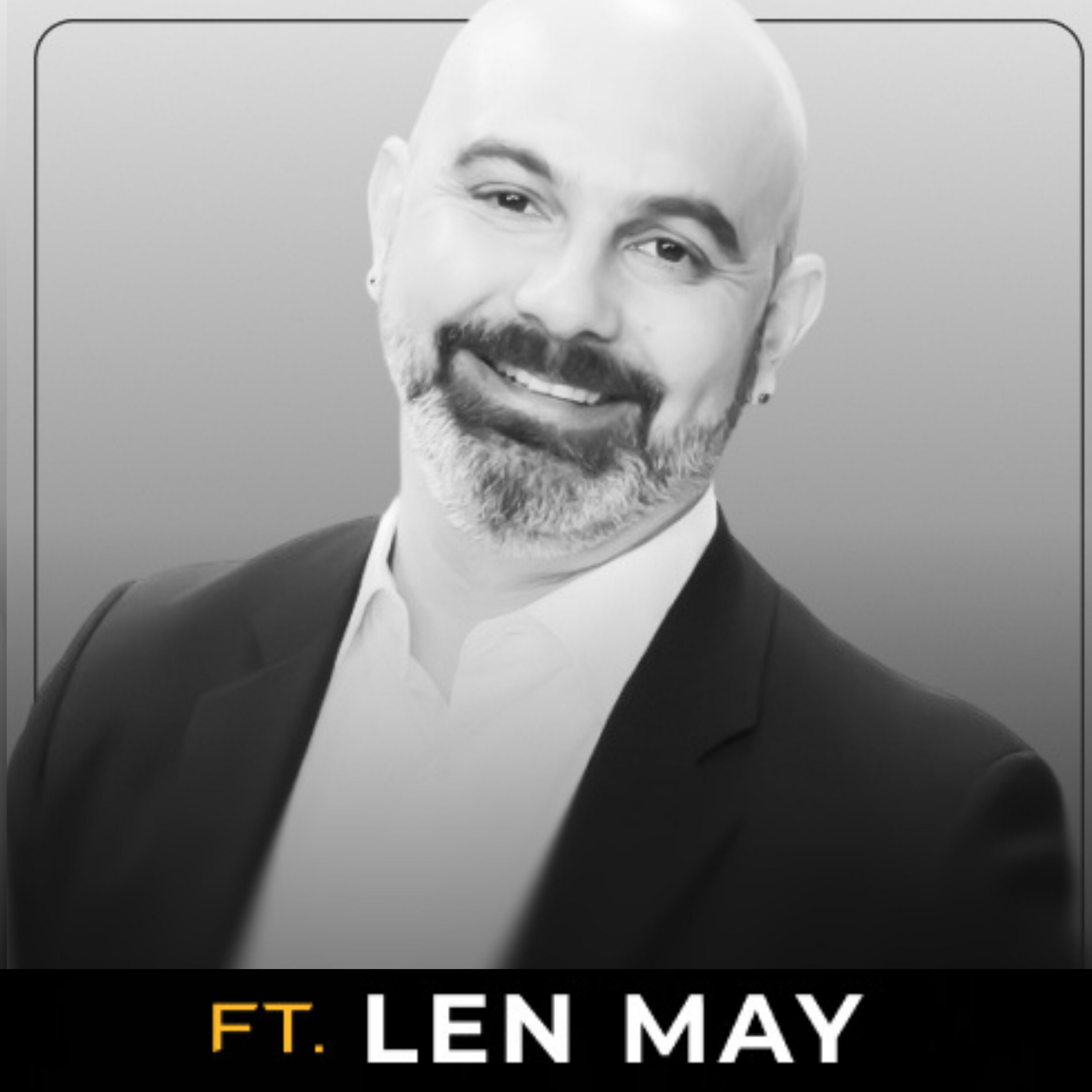
The Human Upgrade: Biohacking for Longevity & Performance
Biohacking Cannabis: The DNA Science of Plant Medicine : 1353
00:43:13
Loading summary
Transcript160 lines
- [00:00]
Dave Asprey
Are there people who are fat because of their genetics?
- [00:02]
Len Mei
There are people that are fat because they're predisposed to being poor, metabolizers of carbohydrates and other things.
- [00:10]
Dave Asprey
Being fat will kill you.
- [00:12]
Len Mei
The one thing that I started seeing is you have, and I live in la, so you have a lot of people that have this, you know, what's that big face?
- [00:19]
Narrator/Advertiser
Len Mei is the CEO of Endo DNA, a company that uses DNA testing.
- [00:26]
Dave Asprey
To make health and lifestyle advice more personal. With decades of experience in cannabis genetics and health tech, he helps people understand.
- [00:33]
Narrator/Advertiser
How their genes affect the way they.
- [00:35]
Dave Asprey
Respond to cannabis and everyday habits that impact their well being.
- [00:39]
Len Mei
Some people want a quick start on, you know, losing weight. Great, but it's not something you should stay on for the rest of your life. And if you're not doing with that, you're not just losing fat, you're losing muscle and you're losing bone density.
- [00:51]
Dave Asprey
GLP1 is a longevity drug and if you take it at high doses, it's shorten your life. If you weigh 300 pounds and you take it at high doses and follow the protocols that I've talked about with multiple doctors to form them, you should do that if you know your genetics will, you know if GLP1s are a good idea. You're listening to the human upgrade with Dave Asprey.
- [01:16]
Narrator/Advertiser
Staring at screens all day is wrecking your vision and your brain. You might just think it's aging, but it's not. It's a broken eye brain connection and it gets worse every hour you spend looking at a screen. If you plan to live to 180 and beyond, you need to protect your dominant sense. Now here's the good news. You can train your visual system just like you train your body or your brain. Screen fit is a science backed method built by Dr. Bryce Applebaum that rebuilds how your brain and eyes work together. No eye drops, no appointments, no gimmicks. Just 15 minutes a day to sharpen focus, reduce fatigue and protect your vision for the long haul. I saw real results in just a week. If you strive for peak performance or plan to live a very long time like I do, you want clear vision to match? Go to screenfit.com Dave or use code Dave to get $200 off and try it for yourself. You'll see what I mean. Literally, you spend a third of your life in bed. If you're sleeping on a toxic mattress, you're sacrificing quality sleep and recovery. Bad sleep isn't just about Feeling tired, It weakens your immune system, raises inflammation, and accelerates aging. I don't risk that. I use an Essentia mattress. I've been sleeping on an Essentia for years. And that's why I teamed up with them to create the Dave Asprey upgrade, an enhanced EMF protection upgrade built right into their performance mattresses. This is next level biohacking for your sleep, protecting your body from emfs. Delivering outrageously comfortable beyond latex organic foam that outperforms memory foam, Doing it all without petrochemicals or chemical flame retardants. The Essentia team designed this to help you spend more time in those crucial REM and deep sleep cycles so your body and brain can perform at their peak. This mattress works. I've tracked it. If you care about recovery, cognitive function and longevity, your mattress is one of the biggest upgrades you can make. Just go to myessentia.com Dave and use code Dave for $100 off to experience the upgrade for yourself.
- [03:30]
Dave Asprey
We got DNA, cannabis precision health. You're a weird guy to interview. Ever hear that before I was introduced.
- [03:38]
Len Mei
Last time I was speaking somewhere as an autodidactic polymath. I had no idea what that was, so I had to look it up and, and get a book on it.
- [03:47]
Dave Asprey
Was it true?
- [03:48]
Len Mei
I think so. I think it's all started with my add. So I always looked at ADD as a disorder before because you're diagnosed with something, but I really found it to be an advantage.
- [03:59]
Dave Asprey
So ADD or adhd, kind of similar sides of the same coin. Or in my case, those plus Asperger's when I was younger, which is curable, at least in some people. It's kind of a superpower because you can't make us pay attention to stupid shit.
- [04:15]
Len Mei
Exactly.
- [04:16]
Dave Asprey
Yeah.
- [04:16]
Len Mei
It is my superpower.
- [04:17]
Dave Asprey
Yeah, I like that snow we're going to talk about here. But I do want to talk about brains. And you are an unusual brain with a pattern matching system. I feel some kind of kinship there. I see patterns the way most normal brains don't. And you've also gone really deep on cannabis. Yeah. Now, cannabis is not my drug. Like, I take it, doesn't matter what strain. I want to go to sleep and eat and that's it. And like, no, no benefits. And I've used CBD and all that kind of stuff. Where. What's wrong with me?
- [04:51]
Len Mei
Where do you want me to start?
- [04:54]
Dave Asprey
With your mother?
- [04:57]
Len Mei
You know, it's the, the biohacking community itself. I find it fascinating that, you know, they talk about cannabis, that Only has to do with Delta 9, tetrahydrocannabinol, THC. But we don't talk about the primary regulating system of our bodies, which is the endocannabinoid system.
- [05:14]
Dave Asprey
It's about 1100 different ones, right?
- [05:15]
Len Mei
Yeah. So I think the idea is. And one of the reasons why I started with cannabis and going back to my add, is when I discovered that cannabis is my medicine.
- [05:26]
Dave Asprey
Yeah, it works for you, it works.
- [05:28]
Len Mei
For me, but it's. Cannabis is broad. There's so many different components to it. Defining your ratio is where your secret sauce is, and it's avoiding those adverse events by finding out what doesn't work for you and doing your genetic test that way. But I think learning what the endocannabinoid system is and how it functions helps people understand that this is an endogenous system that you can use. You don't need phytocannabinoids exogenously. If you have. If your endocannabinoid system is functioning the way it's supposed to, you're good. But if it's not, then you have exogenous. You're lucky. You have a plant that you can get plant medicine and subsidize where you're naturally deficient in. But how do you know that? So you have to find out about yourself. And that's why I launched endo DNA in 2017. That was the first goal, to look at your endocannabinoid system, your genetic predispositions, and see how you can avoid adverse events. And that's the overall goal of the company when we started.
- [06:27]
Dave Asprey
And what are the adverse events from cannabis you're avoiding?
- [06:30]
Len Mei
If you don't mind, can I give, like, an overview of the endocannabinoids?
- [06:32]
Dave Asprey
Please do. Yeah.
- [06:33]
Len Mei
So the endocannabin system is our primary modulating system. Its job is to maintain homeostasis, which is balance. And the way that it does that, it gets signals from the other systems that we have in our body, like our endocrine system. Our immune system sends that information up the central nervous system to the brain. Then your brain gets to decide which neurochemicals to express. And the two that are part of the endocannabinoid system are called an endomite and two ag. So AEA and two ag. And when it secretes those neurochemicals, it helps to modulate if there is something that is out of balance in one of our other systems. So the challenge that a lot of people have, there's genes like fa, fatty acid amide hydrolase. So that gene produces an enzyme that breaks down, metabolizes anandamide. So if you're a person that actually has an AA or a homozygous allele combination of variant in that gene, you're breaking down more anandabite than the average person. So what that means is if there is an event like, you know, I'm crossing the street and a car pulls out of nowhere, almost hits me. So I'm going to have an expression of bunch of neurochemicals. As you know, it's a dopamine, adrenaline, norepinephrine, cortisol. Now, when my brain realizes, no lion chasing me in the jungle, there's going to be a reuptake, those neurochemicals, and my brain is going to release new neurochemicals. One of them happens to be an endomite. But if I'm breaking down an endomide more rapidly than the average person, the that cortisol can stay longer in my bloodstream. So what's it gonna do? Well, it can lower my PH level, make me more acidic. It can actually create an overactive immune response. I'll feel inflammation. So people are treating inflammation and pain. Like, I'm just gonna numb the pain instead of following it to see where it's coming from. So if I'm able to subsidize with phytocannabinoids like anandamide from the plant, then I can bridge that gap where I'm deficient in an anandamide and be able to get my level just right. Now the issue is delta 9 THC, which is what gets us high. That. That one molecule in cannabis has a very narrow therapeutic window. So if you do just enough, great. But if you do too much, which is what most people do now, it triggers those adverse events. So if you have a predisposition to stress reactivity, they'll turn that on. Predisposition of ptsd. Oh, this happened to me, you know, three months ago when I consumed cannabis. Now you're playing that over and over in your brain. And then some people, a predisposition to taking an event, a traumatic event, and storing it in their subconscious. And during duress, it can bring that up to the surface. So now you're having a very intense experience, let's just say cannabis. I want to ask you about your memory, if it works this way, because really. So I remember, like vignettes. Like, I can call my friends up and my friends say, how do you remember? I'm like, I remember what you're wearing that day. I remember the whole Environment. It's like a little movie that plays in my head.
- [09:35]
Dave Asprey
You get that thing when the movie plays in your head, are you outside your body or inside your body?
- [09:40]
Len Mei
Outside my body.
- [09:42]
Dave Asprey
That's because you're just disassociating.
- [09:44]
Len Mei
Yeah.
- [09:45]
Dave Asprey
So you're remembering that because your body flipped. Sympathetic. It's real common in ADHD and all. Yeah, right. And if you were in your body, you would have remembered it from within your eyes.
- [09:55]
Len Mei
Yeah.
- [09:55]
Dave Asprey
So the reason you're remembering those times of stress are things you remember. Yeah, it's the body keeping you safe. So I don't remember those like that anymore, but I used to. Yeah. But I don't leave my body that often. And if I do, it's generally because I plan to. Or an extended journey.
- [10:10]
Len Mei
Exactly.
- [10:11]
Dave Asprey
So what kind of cannabis is going to help me do that better?
- [10:14]
Len Mei
We have to do your DNA test.
- [10:16]
Dave Asprey
The answer might be none.
- [10:18]
Len Mei
You know, it does. It does. Like I have a. We have nine, eight pads and different formulations. One of them is to help focus. So I have certain. It's the terpene. The cannabinoid ratio is one thing that's important, but it's the terpenes that really are important. A lot of people overlook those, which are the essential oils in the plant.
- [10:35]
Dave Asprey
And if you smoke it, the terpenes kind of get damaged, Right?
- [10:38]
Len Mei
It depends. If you smoke it in a combustible like a joint, then they burn at the same exact. At the same exact speed. If you're doing a vape, then they burn off or they convert to other things and cannot be as beneficial, may not be as beneficial.
- [10:54]
Dave Asprey
Vapes are generally bad for you anyway. Right?
- [10:56]
Len Mei
I agree.
- [10:56]
Dave Asprey
So. And so is breathing burning stuff. I'm always torn. So I'm not a huge fan of cannabis just because it doesn't work for me. And I know some people with autism and epilepsy where it's just been life changing and it's medically necessary for some people. I'm also on Daniel Amen's board of directors and he's got half a million brain scans that show, you know, cannabis is not good for the brain. And I think that there's a large number of those people who are taking too much and the wrong strain for their brains. And I think there's almost certainly, if you could take a brain and say for your brain, for this case, this strain, that you wouldn't see the changes. And over time, as you get more data. Well, let's talk with Daniel, Amy. He's one of the more Curious and open minded guys. But he'll tell you regular cannabis use is probably not a great choice and would be willing to additional science. And I love you doing the science because I cannot discard the reports of the people who say cannabis changed my life for the better. There are absolutely people like that.
- [11:58]
Len Mei
I'm in agreement and disagreement with Dr. Amen. Because we've done 10 clinical studies were published on PubMed. Yes, you're absolutely right. There's certain things and I believe that is a free radical of an andamide that you're taking too much. And if you're taking too much, your, your brain and your body is reacting to that. So if you find the right dose of the right neurochemicals or the right phytocannabinoids are right for you, then it works, it fits right in. And then if you're not, then your body's gonna tell you. And that's where you have those adverse events.
- [12:31]
Dave Asprey
It's probably similar for some, like nicotine. You know, up to 10 milligrams of nicotine a day is not particularly addictive. Like that's the very upper limit. Maybe keep it to six or eight if you don't wanna get addicted. And if you do that unless you have weird receptors, it's probably gonna be really beneficial for you. But you go way higher like oh look, I have ED and my hair is falling out. Well, welcome to excessive nicotine time. Right. So does that mean it's good or bad? Oh, and was it smoking or was it nicotine? And that leads to the question for you though with cannabis, what's the best way to take it?
- [13:06]
Len Mei
I believe sublingually is the best way to take it. That way you bypass your liver.
- [13:10]
Dave Asprey
Okay. And an oil.
- [13:11]
Len Mei
An oil? Yes, a tincture.
- [13:14]
Dave Asprey
Got it.
- [13:14]
Len Mei
So sublingual delivery. Sublingual buccal cavity delivery. It'll bypass your first pass. Your liver converts Delta 9 THC to some called 11 Oxy Hydroxide. Delta 9. So it's a metabolite. Then it goes back and attaches to your receptors in your brain and releases an endomite. But it's a different substance that you're consuming if it goes first pass. So sublingual delivery. And it's consistent because when you're smoking you have all these different components to it. But if it's consistent and you want it as a therapeutic formulation now you have to make it consistently every single time. The best way I think to take.
- [13:56]
Dave Asprey
Alcohol hits your body hard, even though it's fun and there's something you can do about it. It's called Zbiotics Pre Alcohol Probiotic. It's the world's first genetically engineered probiotic, and that's a very good thing. PhD scientists invented it to tackle rough mornings after drinking. Here's how it works. When you drink, your gut converts alcohol into a toxic byproduct. Then it builds up, and it's that buildup, that not just dehydration, that you can blame for rough days after drinking zebiotics. Pre alcohol produces an enzyme that breaks that toxic byproduct apart so that it doesn't torture your cells. All you've got to do is remember to make pre alcohol your first drink of the night. And yes, drink responsibly. Remember, alcohol is not good for you, but you're probably going to drink it. You might as well not take the hits and then you'll feel better tomorrow. I don't drink alcohol very often, but when I do, I have Zebiotics Pre alcohol before. In fact, I put it out at parties. If someone brings tequila that way, I know I'm going to wake up the next morning feeling good and so will my guests. This is even more important in the summer when people tend to drink more and you sweat more. So use Zbiotics Pre alcohol and you will feel the difference. Go to zbiotics.com Dave that's Zedbiotics. If you're not from the US and you can learn more and they'll give you 15% off your first order with code. Dave Zbiotics will give you 100% money back guarantee. So if you are unsatisfied for any reason, they'll give you your money back. One of the things that biohackers like is having hair, because as you're dealing with longevity and aging, we're working to stop it, reverse it. But there are things you can do to have thicker, healthier hair that don't even require things like shampoo or serums. Although some of those those work. There's a product that I use called Irestore Elite. These are powerful light therapy for your hair. It's a triple wavelength technology that's actually patented. There's 300 lasers and 200 LEDs, so it penetrates deep into your scalp so that your follicles actually get real stimulation. The idea here is that the specific lumitech red light frequencies they're using can reactivate dormant follicles, so you have a restoration of your thick hair. I've actually used the Irestore and you see a difference even in Like a week you put it on and suddenly your hair, it's just better. And if you use it over time, you actually can grow more hair or grow thicker hair. The cool thing is if you get an Irestore Elite, you get a 12 month money back guarantee so you can use it every night. I usually like to use light derpy on my head right before I go to bed. Well, if after a year you're not seeing any results, you can send it back. That means there's very little risk here. And it is insane how important mitochondria are for the growth of your hair. And if it's just starting to fall out or you're getting thinning hair with perimenopause, just do something about it. Your hairdresser is going to say, what did you just do? Now I have to deal with thick new hair and scraggly old hair. It's that big of a difference. And it's the holidays, so of course you want your hair to look better for all the photos and just hang out with your friends, friends and family. Irestore helps you do that. And of course that means huge Black Friday savings all month long. You can use code dave@irestore.com and they'll give you a discount on the elite. This is one of those cool technologies. You don't have to eat anything, you don't take a supplement. It's a one time expense and it actually works. It's irestore.com code Dave. In my new book and heavily meditated, I'm going through all the ways of entering altered states that are beneficial for people. And there's a chapter on psychedelics and I use ketamine at 40 years as in my neuroscience clinics. I'm not opposed to these things and I go through a list in order of what's least likely to cause short term harm and have some benefit. And cannabis is actually the first one. Like if you're completely naive, you probably should get high with cannabis by eating it and then move down the list. But there's still issues where someone really close to me, quarter tab of acid, things are okay, half a tab, serotonin syndrome, which can kill you. Right. And that doesn't happen with ketamine by the way, but it happens with most of the other psychedelics. So can genetic testing tell people which psychedelic is likely to have the most benefits and the least harm?
- [18:15]
Len Mei
Yeah. So we have a mental health test that looks at your genetic predispositions to the adverse effects of ibogaine, lsd, ketamine MDMA and psilocybin. So if you have genetic predispositions and you're taking too much, it can trigger those adverse effects.
- [18:32]
Dave Asprey
So I've done everything on that list except for ibogaine. Yeah. Which I've been wanting actually to do because of old traumatic brain injuries. But ibogaine has some substantial cardiac risk and I'm only doing that one in a hospital where there's, you know, paddles and someone to say clear just in case. And I've, I've done shamanic training. I'm not talking about recreational use. Yeah. Although I am going to Burning man for the 12th year. I don't oppose to once in a while having fun, but usually I'm taking it for spiritual work. I'm just full disclosure for you and for people on the show. So. All right. I will actually order your test to do that. And I know, I'm sure we asked you for a code here because if you can talk about something cool you're working on, we always strong army to give us a code because listeners want to go. What, you're not going to give a little discount for our people lend 25. Nice. There you go, guys. Endodna.com code len len l e n 25. 25 off. You sure? That's a huge discount for people free.
- [19:34]
Len Mei
Your, your audience, guys.
- [19:36]
Dave Asprey
You can tell this is a definite planned marketing whatever. I actually just wanted to interview Len because he knows a bunch of stuff and this generally anytime someone's selling something cool, I'm like, give our guys, our listeners a little, little bump. So thank you, that's very generous and completely unexpected. So other than usually we at least take. Come on, 10%. There you go. Endodna.com when people get the test that you make, does it talk about other things outside of psychedelics?
- [20:05]
Len Mei
Yeah, it talks about what we do is we do a whole genome.
- [20:08]
Dave Asprey
Okay. So the whole human genome.
- [20:10]
Len Mei
Yeah.
- [20:11]
Dave Asprey
149 bucks.
- [20:12]
Len Mei
Yeah. So. So our, our customer is a health care professional.
- [20:17]
Dave Asprey
Okay, but I can order directly, right?
- [20:18]
Len Mei
You can order directly.
- [20:19]
Dave Asprey
Okay, good.
- [20:20]
Len Mei
But we white label that for healthcare professionals. So what happens is we did our endocannabinoid system test. We did that for several years. Then A doctor named Dr. Jennifer Berman, she's one of the top female sexual health doctors in the country. She reached out and she said, hey, I have two issues with my patients. Number one, there's patients who are young women, late 20s, early 30s, who coming in with perimenopause symptoms. The second thing is I have a lot of women are coming in with really, really adverse effects of menopause like hot flash severity, weight gain, etc. It's like is there a way that we can get ahead of that?
- [20:58]
Dave Asprey
Totally, there's a way. It's all genetic, Right?
- [21:00]
Len Mei
Right. So we developed a menopause biotype test. Did we look at that genome? So what we do now is we do the whole genome and we'll give you, we have a, it's AI based LLM. So we have LLMs, large learning language models specifically for those tests. So you, if you are female and you're ordering your menopause biotype and if the doctor wants to say well what's you, I want to do your nutrigenomic test. You just press a button and you order a nutri genomic test from that genome. But that one's been extremely helpful because we're able to get ahead of those symptomatic conditions that express themselves by doing hormone optimization, personally, supplementation, et cetera. So the doctors are really our customers.
- [21:40]
Dave Asprey
There's kind of two camps. There's the genetic camp where everything is genetic and they'll try to argue cancer is genetic. Dude, it's not. There's no common patterns. Right. And then there's the epigenetic camp which is it's all about the, in the environment. And that's kind of me like biohacking. Change the environment around you to have control of your biology, epigenetics, longevity, consciousness, all that stuff. So the reality is is that if you don't have the switches to turn on or off in your genetics, it doesn't matter what you do in the environment. Right. So you need to know both. But there's been a lot of nonsense out there in the genetic testing realm.
- [22:12]
Len Mei
Yeah.
- [22:13]
Dave Asprey
So how do you know if the genetic test that you already have is nonsense or not?
- [22:18]
Len Mei
Well, what we did was we made sure that every single report has a peer review reference citation of PubMed equivalent to PubMed. So if there's not no research around it, we don't, we don't present it. But you're absolutely right, it has to be both. So your genetics, I always look at it this way, it's sort of your GPS of life. When you do your genome, you know where your own personal potholes are in your own road. You can still. I can, you know, I live in Philly so I can drive from LA to Philly without a gps. Am I going to get there at some point? Am I going to hit some traffic jams, some potholes, accidents? Yes, but If I know that I have my gps, I know what to avoid. So, yes, it gives you information and empowers you with lifestyle choices that are specific to you. So I completely understand and agree. You have to book on that experience with your genome, your lifestyle changes and choices, and then from there, you measure how well that protocol worked for you. So when we were work with doctors, we create a personalized treatment plan based on your genetics. The treatment plan is then given to the patient by the doctor. Then we come back and we measure epigenetic changes. So we measure biomarker changes, we measure biometric expression.
- [23:34]
Dave Asprey
And that's with a doctor. You don't sort of that directly.
- [23:36]
Len Mei
That's with the doctor.
- [23:37]
Dave Asprey
Okay, cool. And this is foundational functional medicine stuff or longevity medicine. And it's kind of, it's kind of weird. Make a hypothesis, set a goal, test it, do the thing, and then test it again to see if it worked. That's a great way to look at it. Or you could say, oh, you have cholesterol, let's give you a statin, and let's just not do anything for 30 years as your mitochondria decline. Like the, the state of, of western medicine is shockingly bad because of this. Right. We just believed it was going to work. And the approach you just described is biohacking or functional medicine. It works in exercise, it works in nutrition, it works in supplements, it works in medicine. But if you don' test results, you're. You're just a witch doctor.
- [24:23]
Len Mei
You're wearing a glucose monitor. So I got two stories. I got two stories. So I, when I get, I get an annual physical, it's the only time I go to a doctor and I get my blood work done.
- [24:33]
Dave Asprey
Yep.
- [24:34]
Len Mei
I'm completely paranoid and scared of when they take my blood.
- [24:39]
Dave Asprey
So you have like needle phobia?
- [24:41]
Len Mei
Well, no, I have a bunch of tattoos.
- [24:43]
Dave Asprey
How's that possible?
- [24:44]
Len Mei
Right? I don't know. I don't know what it is, but my dad had it too. Maybe it's genetic. I should look into that. But I almost pass out.
- [24:51]
Dave Asprey
Oh, wow.
- [24:52]
Len Mei
So when I, when I get my, When I got my results last time I saw that, the doctor's like, your blood glucose level is a little high. I'm like, I don't eat sugar. I don't eat sugar. I don't need me. Like, a lot of you don't have.
- [25:04]
Dave Asprey
To get your sympathetic nervous system turn out a little bit gluconeogenesis, bam.
- [25:08]
Len Mei
Right? So luckily, I have a functional medical professional, and she's like, I think it's probably the cortisol level that you secreted when you were stressed. A normal, like a regular doctor would give you medication for your, your pre diabetic. It doesn't make any sense. If you want, wear a glucose monitor and we'll see. And I did that for several weeks and nothing but that's what I'm talking about, like understanding that who your doctor is, how you're doctoring. So it's specific, it's personalized, it's not this, you know, take two of these and call me in the morning. Why am I taking two? Why not one, why not four? You know, how do you know how to metabolize? You don't know this about me. And I have another quick story of how genetics play a role. So I have a friend of mine, really successful business person and he was an adventurer. Something happened, didn't go well, became really depressed and he went to a doctor and got an antidepressant. So he was driving around LA and driving around the canyons with his son and his wife and he goes, I had an overwhelming desire to drive off the cliff. He goes, it was so real that I had to pull over and I got out of the car. My wife's like, you're okay. He's like, no, I should not be driving. So it went back to the doctor and he asked if he can get a pharmacogenomics test because we did his genome too and it looked all the drug that he was prescribed was red. He shouldn't have been taking that drug in the first place. And he also has treatment resistant depression, so it wouldn't work for him anyway. But he suffered all the side effects, which is suicidal thoughts. And I was doing a talk in front of a bunch of big pharma executives and doctors and I said, can I ask a question? How many of you do a pgx, a pharmacogenomics test prior to prescribing an antidepressant?
- [26:49]
Dave Asprey
Nobody does. And it should be standard of care zero. And so newsflash, if you have a doctor who wants to put you on something for depression, you might want to look at what Daniel Amen says and I say about Saffron, which works much more broadly than a lot of the pharmaceuticals. And you probably should get a genetic test to see which pharmaceuticals might work because otherwise it's literally Russian roulette. And some of those things make you act weird. I mean suicidal ideation is one thing, but there's people drop into weird sex addiction, there's correlations with school shootings, there's some weird stuff. So I got no problem with any pharmaceutical and some people get really mad about that. If I can trigger you, it means you're carrying a loaded gun and my finger's on the trigger. So you should read my new book and unload that crap because. Because there is no moral anything about a shovel or a gun or a statin. Like they do what they do and it's how you use it and where you aim it. So what I. What I would recommend is if you're going to do the big guns, which you may actually benefit from greatly to know what your body can handle. So thank you for bringing this because no one talks about this. I think I've talked about this maybe once in 10 years. So thank you because that's a big deal. What is the most dramatic benefit of properly dosed, genetically chosen cannabis that you've seen in, in your experience here?
- [28:13]
Len Mei
I mean, so many stories. So. Besides my own, because I was put on prescription medication until I found cannabis.
- [28:19]
Dave Asprey
Which one?
- [28:19]
Len Mei
I don't even remember. Like Ritalin, maybe Adderall? No, no, it was before Adderall. Dude, I hate that they're all bad. And I. Look, I can't say it didn't work. It depends how you define work. So it did help me to focus, but it removed my sense of self. There was no emotional feeling. You're just walking through life without love, without any passion of anything. Just not. Not the way people should show up in the world. Yeah, but I'll tell you a couple of stories. So I don't get to interact as much as I used to with. With people. But I was in Brazil, I was speaking in, in Sao Paulo and there was a line of people that was lined up afterwards to meet me because they're doing our genetic testing and our formulations in Brazil. And. And there was these two people. There's one woman with her daughter. Her daughter was in a wheelchair and she has really severe autism. She said for years she was non verbal, but not only non verbal, never communicated with her eyes. She just had a blank stare until we did her DNA test, got a formulation. She actually said thank you and spoke. And she goes, you renewed a completely new relationship with my daughter.
- [29:27]
Dave Asprey
We didn't cure her.
- [29:28]
Len Mei
She's not running a marathon, but it improved her sense of self. And then there was this one guy with his mom and he's like. She couldn't get out of the chair. She was so depressed, she just sat. And now she's cooking in the kitchen.
- [29:43]
Dave Asprey
Again, like meth or something.
- [29:45]
Len Mei
Yeah, math. But it's okay. So at least she's cooking something.
- [29:49]
Dave Asprey
It was a heartfelt story. I'm just like, that was Breaking Bad coming in. But that's amazing. Like, it changes people's lives. And for people who are sitting in judgment of cannabis right now, those things are real. And those patients have a right to try and to see what works. And what if you had the data to try? That seems like a better way to do it. And it might not have worked. But if you stop trying, you'll get those same things where sometimes I'll say, I used to have Asperger's syndrome. And some people get really mad, go, you can't cure Asperger's syndrome. And I'm like, I guess I don't exist then. What does that mean? Right? All these weird beliefs. So there is merit to using cannabis or mushrooms or Amoxicillin.
- [30:37]
Len Mei
Yeah.
- [30:38]
Dave Asprey
Or Modafinil at the right time, or DMT at the right time for the right person, for the right results. And there is no moral judgment on any of these. And if you find yourself getting, oh, my God, I can't believe Dave's promoting cannabis. I'm not. I'm promoting the right tool for you to enter the state that you want to with the minimum harm and ideally no harm at all. And that's all it is. And cannabis has to be on the list. Yeah.
- [31:02]
Len Mei
Well, I think it's also people's misunderstanding of how drugs work in the first place because we have these classifications. Oh, well, this drug is bad. Well, why? Well, because politicians and pharmaceutical industry said it's bad. Well, cocaine. Well, cocaine. Why is cocaine bad? We use it Schedule 2 narcotic. But how does it work? Well, if you're doing the, you know, the ligand, the exogenous cocaine, it'll bind to your dopamine receptors, squirt a bunch of dopamine and it'll block the reuptake of that. So now you're getting that, but it's not, it's not the cocaine, it's your own dopamine. And then your brain says, wait a second, I don't have to produce my own, I can get it from something else. So I'm going to send a signal, give me more of that kind of thing. So this is where people like, what makes this one good, this one bad? If it's effective for you and it's safe and you know how to dose correctly and you're under supervision, why not? Who's going to tell you why one is worse than the other.
- [31:57]
Dave Asprey
Big pharma has been trying to move into cannabis for a long time and so is big tobacco.
- [32:01]
Len Mei
Yes.
- [32:01]
Dave Asprey
What's your take on that? So you got it. I saw the sensor come on. Like they still might want to acquire me. I can't.
- [32:08]
Len Mei
Well, no, because I'm in communication. I'm in. I'm in talks with a tobacco company right now. Very big one that.
- [32:16]
Dave Asprey
But I've met their head of R and D, the one you're talking about, so. Out of Switzerland, so.
- [32:20]
Len Mei
Yes, exactly. So here's a story. It's interesting because they have a tobacco company, they have a vape company. They also have a pharmaceutical company that. That pharmaceutical company specializes in medications specific to the diseases that are caused by their products.
- [32:37]
Dave Asprey
Yeah.
- [32:37]
Len Mei
So I find it fascinating and I believe that, you know, cannabis to actually elevate us out of the dark ages of this is a, you know, this drug listed and all that stuff. You have to work with the pharmaceutical industry, you have to get consistency. Like this is the thing with cannabis really bugs me that if I have a genetic predisposition and I'm in California and I have this tincture and it's the right ratio of cannabis and terpenes. Well, if I go to Pennsylvania, I mean, I get the same thing. It's different everywhere. We don't have that consistency. So we need that pharmaceutical oversight or some sort of oversight to make sure our testing's on point. And so I can get the same supplement in, in every single state no matter where I go. I don't have to worry about it.
- [33:24]
Dave Asprey
I flew out to Switzerland and met with the lead R and D guy from one of the big tobacco companies. I'm not going to name them for just because I don't know if you want to talk about it. But this guy, incredibly brilliant mitochondrial expert.
- [33:39]
Len Mei
Yeah.
- [33:39]
Dave Asprey
And we talked about how nicotine increases mitochondrial function. It's a exercise mimetic, it's a longevity drug, it's neuroprotective. And. And I've been talking about that on the show ever since, for almost a decade now. And he just said we're not allowed to say that. It's like everything we do, we have to say smoking is bad for you. Nicotine is dangerous and deadly. But nicotine and tobacco are not the same thing. And I bring that up because smoking cannabis, which is what almost all studies are on, is not the same as eating a cannabis oil putting in your mouth. And it's not the same for each strain. It drives me Nuts. People are like, well, what's the most important thing you could do? Exercise. Oh, really? What kind of exercise? Right. Or cook. Oh, I should make french fries. No, no, I mean cook something healthy. And you just realize our brains will generalize things to the point of stupidity, Right? And then it doesn't mean anything. And then we try it and we say it didn't work because we didn't actually try it. But with targeted precision medicine, I think we have incredible stuff. And one of the things that I think is most powerful here, you look at something like long Covid or chronic fatigue syndrome, which are the same damn thing caused by different things. Most chronic fatigue is caused by toxic mold exposure. And I've done a big document around that. And there's an interesting thing. If you don't know where your cannabis is from, you might be getting some old toxins in there too. Right? Big problem in the industry. But how's that going to affect you? I interviewed a husband and wife couple. They're in a moldy home. She's full on disabled, and she knows she's not crazy because she has a temperature. So she biopsies every organ in her body to try and figure out what's going on. Eventually they find out it's mold and none of her organs have a problem. The whole time her husband's sitting there was also a medical doctor going, I never felt anything, but I know it's real. And when you do a genetic analysis, you'll find she has HLA, Dr. 4. And most of the people who get mold poisoning, including me, that is hard to treat. We're designed to take an arrow in the back and not bleed to death and to invade your village and steal whatever we want, not get sick from all your weird microbes. Go home, take a shower, and do it again. Right. And that combination of frequent clotting and active immune function means that mold will trash you, sometimes permanently, if you don't know what to do. So knowing that for your kids or for you when you're having weird symptoms means you know what supplements to take, you know what to do to block the markers. And if we would just test everyone. Dude, a third of people have this gene. It's kind of important, right? So do you test that and does anything to do with cannabis? Oh, would you test that in doctor's offices?
- [36:15]
Len Mei
Yeah, okay, in doctor's offices. But it's not even in doctor's offices. You can get a doctor's office and take it home with you and swab. But yeah, we definitely test for that. Does that have something to do with cannabis? Yeah, because spraying cannabis is a big thing in the industry. So it used to be for weight. People would spray with weight and when you spray it, create smoke.
- [36:35]
Dave Asprey
With water.
- [36:35]
Len Mei
With water. Now people spray it with a different flavor or scent. Like you get a strawberry cough, there's.
- [36:42]
Dave Asprey
Going to mess you up.
- [36:43]
Len Mei
Exactly. That's why. That's why we have to have consistency of production. It's one thing to say you want a ratio of cannabinoids and terpenes to be a certain amount, but. But where do you get that product? So we as an industry, the entire cannabis industry, has to treat the actual product like a pharmaceutical product, or at least a nutraceutical, so it's consistent everywhere and safe.
- [37:05]
Dave Asprey
Are there people who are fat because of their genetics?
- [37:07]
Len Mei
There are people that are fat because they're predisposed to being poor metabolizers of carbohydrates and other things.
- [37:16]
Dave Asprey
So you can't call them fat. That was. That was rude. Sorry.
- [37:20]
Len Mei
So rude.
- [37:21]
Narrator/Advertiser
Just kidding.
- [37:22]
Dave Asprey
By the way, guys, I weigh 300 pounds. And if saying the word fat is a problem for you, get a therapist or get some GLP1 agonists and learn how to use them effectively. Being fat will kill you.
- [37:32]
Len Mei
Yeah.
- [37:33]
Dave Asprey
And so anyway, but there are genetics.
- [37:34]
Len Mei
I just assume, of course, and. And then the GLP one, since you bring those up. Because, you know, we work with a lot of companies or. So the one thing that I started seeing is you have. And I live in la, so you have a lot of people that have this, you know, OIC face and stuff. And it's interesting for me to see that people are starting to lose their muscle mass and lose their bone density. Like there's DEXA scans. There are before and after. So if people are doing that, first of all, some people want a quick start on, you know, losing weight. Great. But it's not something you should stay on for the rest of your life. And if you're not doing resistance training with that, you're not just losing fat, you're losing muscle and you're losing bone density. And so I want people to really.
- [38:15]
Dave Asprey
Yeah. Thank you. And guys. Daveasprey.com JLP There's a full protocol and what you just heard, you gotta get enough protein. I don't care if you don't wanna eat it, do it anyway. And then enough of the right minerals and the right. The right resistance training and some mitochondrial support and you can use it very safely at low dose. And every two weeks, I. Inject 10% of the normal dose of retatrutrid, which is a third generation GLP1 just for longevity. And it's a tiny, tiny microdose.
- [38:46]
Len Mei
What does that do?
- [38:47]
Dave Asprey
It's a third generation GLP. So it blocks GLP1 and it also blocks glucagon.
- [38:53]
Len Mei
Got it.
- [38:54]
Dave Asprey
So it's just a more powerful one for weight loss with less side effects and stronger longevity effects. I'm saying that since the very first interview on the show, GLP1 is a longevity drug and if you take it at high doses, it'll shorten your life. If you weigh 300 pounds and you take it at high doses and follow the protocols that I've talked about with multiple doctors to form them and they're free, by the way, like literally. Daveasper.com GLP, it's just, it's free. Get, get that you do that. Not being fat is going to extend your life more, of course. So you should do that. And if you know your genetics will, you know if GLP1s are a good idea.
- [39:35]
Len Mei
Yep.
- [39:36]
Dave Asprey
So what genes affect GLP1 sensitivity?
- [39:38]
Len Mei
Well, it's the, it's the, it's how you metabolize is really important.
- [39:42]
Dave Asprey
So I metabolize fat or carbs, you're saying?
- [39:44]
Len Mei
Oh, you metabolize fan carbs. Yeah. So if you're, if you're a poor metabolizer and also dosing of the GLP1s, how much do you need based on how you metabolize those GLP1s as well? Are you rapid metabolites or you're a slow metabolizer?
- [39:58]
Dave Asprey
Wouldn't it be amazing if every time you had any test loads? Again, why wouldn't it be amazing if every time you had any pharmaceutical, you already had your genetics so you could just look it up and see what to do.
- [40:09]
Len Mei
Hey, the country of Iceland genotypes every single person there. I don't understand why we don't. That's why I started saying, well, a doctor tells you to take two of these. Why is it only two? You never told me. Like you never looked to see how I metabolize. I could be an ultra rapid metabolizer like you brought up. Cbd. I'm an ultra rapid metabolizer. Cbd. So if I take a dropper full, I'm really creating expensive urine. I'm peeing it out really fast. So I need two to three times the amount. But if I don't know that and we talk to people like you take cbi, it doesn't really work for me. How much do you take? A dropper full. Well, how do you know that's the right amount for you if you don't do that? The other thing I wanted to mention that we didn't talk about a little bit is Alzheimer's. So we're in the middle of a clinical trial with a drug called TB006 into. It's a galactin 3 inhibitor. So galactin 3 creates amyloid plaque, the same amyloid plaque that's in our. In our heart, like arteries. It's the same amyloid plaque that's in your brain. And if you have an APOE 4 genetic predisposition, that's the genetic predisposition to Alzheimer's. But you're also lifestyle choices. Create a lot of amyloid plaque, you're more likely to express Alzheimer's. So we're doing this study. But the one thing that in the study, when they did the original phase one, there's a certain genotype that this drug doesn't work for, Rs4644. So they know this for sure. So now we screen everybody for the presence of that genetic predisposition so they know that it's going to be efficacious for them.
- [41:36]
Dave Asprey
One of the cool things you can do is you can upload your genetics to whatever AI you work with.
- [41:42]
Len Mei
Yeah.
- [41:42]
Dave Asprey
And say, hey, take a look at this. Or you can look at the output of the report and it'll provide really good recommendations. And if you work with a system actually designed for that, you'll get even better ones.
- [41:54]
Len Mei
So we do that too. We can take raw data from any like a 23andMe leftover results or ancestry. If you upload it to our site, we'll. We'll interpret that and provide a report.
- [42:05]
Dave Asprey
Super cool. I believe that everyone listening needs to have their genomics. You need to do this for pharmaceuticals. And you more particularly, you need to do this because there's a good chance you have not just mthfr. And Gary Bracket's been on the show and yeah, he talks about that a lot. That was a big, a big focus of mine for my first book on Fertility in 2011. And in fact, I said take folinic acid, not methylfolate. And now they're finding that that's the thing that is making autism symptoms go away in people. It's a different form of folic acid that bypasses methylation stuff better than methyl folate. But anyway, I'm digressing a little bit there. And if you have that, then you know, and you can change your supplements but there's about 20 other things like the way you handle sulfur and nitric, nitric oxide and histamine. The list goes on and on. If you know it's going to create amazing relaxation. Peace going I, you know, I'm not crazy. Every time I eat that it really does mess me up. And you know why. And then you know what to do to counteract it. And it has taken me decades to figure out all my own weird stuff like that. Some of it finally was with genetics. Most of it was with just a deep, deep research and understanding. It doesn't have to take decades and you know, $2 million to reverse your age the way I did. Because it's getting way easier with genetic tests. So go to your functional doctor and ask for it. And who knows what might happen? You know.
- [43:31]
Len Mei
Do you do microbiome testing also?
- [43:34]
Dave Asprey
I was a very early advisor and investor in Biome. I've worked very closely with Naveen and his team for a long time. I do test that and it's amazing. There's, there's things like firmicutes and bacteriodes which are two common species. The bulletproof diet. If you have brain fog and attention issues you probably have too much firmicutes and not enough bacteriadides. So there's one kind of prebiotic you should take. Right. And a common prebiotics actually won't work because they'll feed both. So all of a sudden now you have like a scalpel like control. So what's in your microbiome? You can just go to Viome and say what should I eat to make it better? And they'll just tell you what to eat. Although Naveen, I hate mung beans. I don't care how many times tell me mung beans. No, I'm not doing that.
- [44:20]
Len Mei
It's funny because when I did my biome it said that bell peppers are inflammatory food for me I just wanted people to understand just because something is healthy and it has vitamin. Maybe your microbiome is not set up for that and it's inflammatory.
- [44:33]
Dave Asprey
Yeah. I don't think bell peppers are particularly healthy for anyone. And they're a nightshade.
- [44:38]
Len Mei
Yeah.
- [44:38]
Dave Asprey
But some people can survive on them and they taste good. It doesn't cause a lot of harm for me. Give me a couple bites. The arthritis I was diagnosed with when I was 14 comes back. So genetically those are off. But via is interesting because they're not looking at genetics, they're looking at your biome. And it also says not to everything in my body is like, stay away from the peppers. And then my guts. Inner masochists for dopamine is like, eat the chili. So I got to resolve that. Some kind of deep meditation in a cave or something.
- [45:06]
Len Mei
There you go. Some DMT.
- [45:07]
Dave Asprey
Lynn, you're doing really cool stuff. Endodna.com and what was it called? Len25 Yep. Thanks for that gift. For real, for sure. And I'm really serious, guys. If you're going to do any kind of psychedelics or plant medicine, you really should do this. It's a big discount. You're saving like 50 bucks. And this is not like a sponsored thing. We're just. Just hanging out. But it's not much money and it could save your life. If you have serotonin syndrome, do you know the incidence of that? I know it's more common in Eastern Europeans.
- [45:41]
Len Mei
I'm Eastern European.
- [45:42]
Dave Asprey
I think it's like 1 in 40 if my memory is right. Don't trust me on that entirely. But it's a meaningful number and you don't have to be Eastern European for you to have it. Knowing that, holy crap, you might have a really bad night and ended up in the ER the first time you do psychedelics. If you have that genetic. And it's unlikely, but it's possible and it's cheap to prevent it. So if that's your issue, then do something that doesn't act on serotonin. You can do ketamine or cannabis. You'll be okay. Right?
- [46:11]
Len Mei
I never understood why people, like, don't want to find out as much as they can about themselves. Like, you are here for a short period of time if you're gonna. And you being a biohacker, obviously. But find out as much as you possibly can. Do everything. Do every single test possible so you can learn. Because we're all individuals and if you know what you're genetically predisposed to, what you're epigenetically expressing, all these different things are just information. So if you know this about yourself, you can take measures to prevent things from occurring. And I don't know why people don't. Everybody should do that.
- [46:46]
Dave Asprey
I've talked with a lot of people, feel like I might find something that's a false positive or I might not like what I find. And like, blissful ignorance is a weird strategy for me.
- [46:56]
Len Mei
I know, right?
- [46:57]
Dave Asprey
And to that point, I've had the guys from Pre Nouveau on this is a whole body MRI thing. I went up and got to know the founder when they only had one location. In Vancouver. I was like, this guy is really smart. And we did an episode and I think it's probably Code Dave. Still wouldn't surprise me. But they called me about six months later and said that episode saved 25 lives. So they tracked whoever signed up with the coder, said that they heard about it on the show and they said 13 people had late stage cancer that they could treat. They would have just not known about till it was too late. And the other ones had aneurysms that were about to blow. And lots of people have a small aneurysm, right? And then they get worried. And there's one influencer who's like, you know, forgetting who it was. Was it. Was it. Glucose Goddess saw something online recently. I think that's who it was. She's like, I'm not sure that I'm happy I did this because I had to test this thing. Now I know it's in there. But here's the thing. It could have been a big one about to kill you, right? And knowing you have something and worrying about all the time. If you have a problem with worrying, get your genetics done, figure out what's going on with your catecholamines and stop worrying, or learn the reset process thing, or do EMDR like this is within your control. But I think it's out of integrity. Say I could know how to be more present, how to live longer, and how to honor the gift that is life. So I'm not going to do that because I'm afraid I'm like, that's not all right. No. Well, thanks for doing the hard work on genetics and combining it with psychedelics, which is legally, well, fraught with risk, but doing it anyway because people have a right to know. And I think we're about to open the door on a lot of consciousness and doing it safely because what you're doing, legit. So thanks.
- [48:41]
Len Mei
Thank you. I appreciate it.
- [48:43]
Dave Asprey
See you next time on the Human Upgrade Podcast.
- [48:51]
Podcast Disclaimer Narrator
The Human Upgrade, formerly Bulletproof Radio, was created and is hosted by Dave Asprey. The information contained in this podcast is provided for informational purposes only and is not intended for the purposes of diagnosing, treating, curing, or preventing any disease. Before using any products referenced on the podcast, consult with your healthcare provider carefully, read all labels and heed all directions and cautions that accompany the products. Information found or received through the podcast should not be used in place of a consultation or advice from a healthcare provider. If you suspect you have a medical problem or should you have any healthcare questions, please promptly call or see your healthcare provider. This podcast, including Dave Asprey and the producers, disclaim responsibility for any possible adverse effects from the use of information contained herein. Opinions of guests are their own and this podcast does not endorse or accept responsibility for statements made by guests. This podcast does not make any representations or warranties about guest qualifications or credibility. This podcast may contain paid endorsements and advertisements for products or services. Individuals on this podcast may have a direct or indirect financial interest in products or services referred to herein. This podcast is owned by Bulletproof Media.