← The Human Upgrade: Biohacking for Longevity & Performance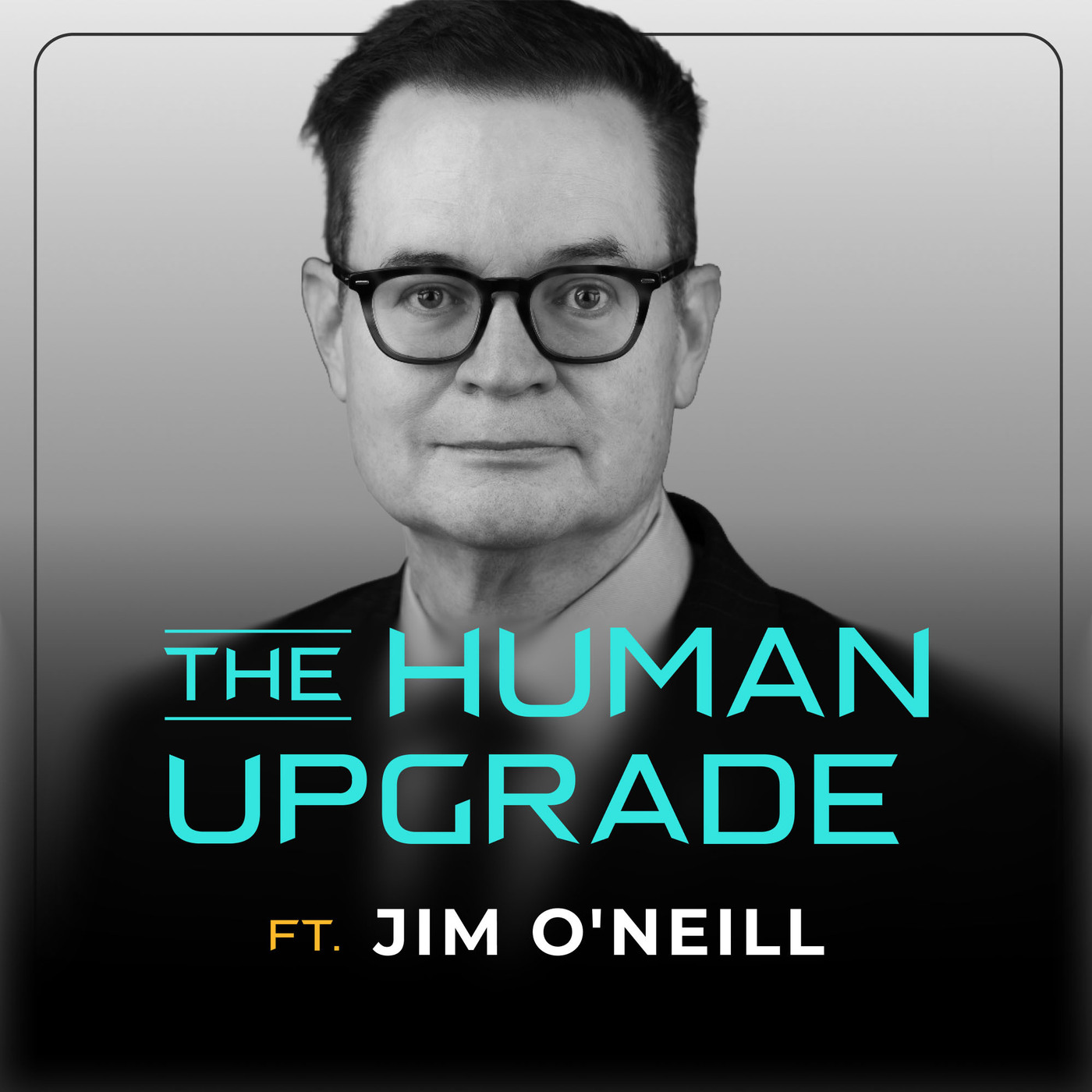
The Human Upgrade: Biohacking for Longevity & Performance
CDC Director Jim O'Neill on Fixing America's Broken Food Policy : 1449
00:36:35
Loading summary
Transcript89 lines
- [00:00]
Dr. Jim O'Neill
It took the government, kind of, from what I followed, 25 years to catch up with stuff like that. The past several decades have been terrible, unscientific, all about, you know, grains. And as a result, we've had, you know, huge rise in a lot of chronic disease, a lot of which is driven by a bad diet. You were the first person to teach me to put butter in coffee and, you know, not be afraid of saturated fats and to eat healthy and focus on real science, not junk science. We're now doing randomized controlled trials on saturated fats because we know they've been unfairly demonized. But there's more to learn, and we want to learn. We can finally, like, for the first time ever, do real science and not be afraid of the consequences and not really care if some entrenched interest doesn't want us to do the science. Terms like misinformation and disinformation, in my experience, are usually used by people that are trying to censor things or shout people down, and I don't have any patience for that. I know it lost a lot of trust in the pandemic. We're rebuilding that trust by being transparent and by focusing.
- [00:57]
Dave Asprey
I never would have imagined five years ago I'd be talking with the guy running the CDC on the podcast. Or that you put butter in your coff. You're listening to the Human Upgrade with Dave Asprey.
- [01:14]
Neuronic Advertiser
What if you could make your brain Sharper in just 10 to 15 minutes a day? Focus comes down to how well your mitochondria are working, because that's how your brain makes energy. When your mitochondria slow down, you get brain fog, fatigue, and low motivation. Light changes how that system behaves. Scientists have been studying near infrared light for years because of how it interacts with mitochondria and supports energy production in your brain. And that's why I've been using Neuronic. It's a wearable light therapy device for your head that uses near infrared light to support clarity, focus, and overall brain performance at home. Without adding another complicated routine. It is simple to use, easy to stick with, and fits into your day in just a few minutes. If you're ready to ditch brain fog or you just want better mental performance, this is a straightforward tool to add. Go to Neuronic online and use code Dave for $100 off.
- [02:10]
Dave Asprey
Your hair is a sign of how healthy you are. So what actually works if you want to grow new hair? There are tons of products that sound good on paper, but they really don't do much in practice. Irestore is different because it is powerful and it's targeted and it's light therapy. Your hair follicles directly absorb the light energy, which means blood flow increases and that means dormant hair follicles wake back up. The Elite delivers that through 300 lasers and 200 LEDs directly to your scalp. And it takes an easy 12 minutes a day. And you can wear it while you're working, while you're doing chores around the house. And the clinical results from it are amazing. Double blind study, 100% of participants grew more hair. In four months, their hair count increased an average of 43.2%. And this thing really works. Plus you get a 12 month money back guarantee. Try it for a year and see what happens and you'll like it. Spring savings is happening right now, so go to irestore.com use code Dave and get an exclusive discount on the elite. That's irestore.com code Dave. This is a amazing opportunity on the Human Upgrade to talk with Jim o', Neill, the Deputy Secretary of Health and Human Services and the Acting Director of the cdc. Now, you might be saying, dave, what are you doing talking with one of these government guys? But I gotta tell you, I met with Jim in November when I was out in D.C. and you wouldn't know this, but Jim led the Sens Research foundation looking at rejuvenating the immune system and getting rid of senescent cells, which I kind of wrote a book about how to regrow the neocortex and how to fix mitochondrial mutations. So we've got a longevity guy who's helping to make policy at hhs, which to me is just a complete breath of fresh air. So, Jim, welcome to the show.
- [04:09]
Dr. Jim O'Neill
Thank you. It's great to be on the show. It's true that we met in the fall, but we also met almost 20 years ago in Silicon Valley. You were the first person to teach me to or the person to teach me to put butter in coffee and not be afraid of saturated fats and to eat healthy and focus on real science, not junk science, promoting junk food. And really, you've been so helpful to so many people and helping people stay healthy.
- [04:44]
Dave Asprey
Jim, I'm honored. And I remember that was a long time ago.
- [04:49]
Dr. Jim O'Neill
So I'm happy to say, like, we're now doing randomized controlled trials on saturated fats because we know they've been unfairly demonized, but there's more to learn and we want to learn. We want to follow the science wherever it goes.
- [05:02]
Dave Asprey
Wow. And you are the acting director for the Centers for Disease Control. And you're doing trials on saturated fats.
- [05:10]
Dr. Jim O'Neill
Yes, that's right.
- [05:12]
Dave Asprey
What do people say if you say that at a bar?
- [05:17]
Dr. Jim O'Neill
Well, I don't really drink a lot, but yeah, fair point either. You know, there's a lot of people just are out of date on science. Right. There was this big, you know, regulatory capture situation going on for decades where it was like, fat is bad and sugar is good and ultra processed foods are great and cholesterol and everything and protein is bad. And if you go back 20 years when very pretty fringe figures like Dr. Atkins were saying things like, you know what, trans fats might not be so good, which the whole mainstream recognizes now. But he was saying it when no one else was, or he's the first person I heard of saying it. And also saying, you know what, maybe fat is not quite as bad as sugar, and maybe the right number of refined carbs is, you know, a small number. And it took the government kind of, from what I followed, 25 years to catch up with stuff like that. So we spent last year. So every five years, the Department of Health and Human Services and the Department of Agriculture are supposed to work together and update dietary guidelines. Happens every five years. And the past several decades have been terrible, unscientific, all about grains. And as a result, we've had huge rise in a lot of chronic disease, a lot of which is driven by a bad diet. What was different this time is President Trump made a lot of things conceivable that used to seem politically impossible. And then Secretary Kennedy brought a whole different MAHA coalition into the MAGA fold. And we can finally, like, for the first time, ever, do real science and not be afraid of the consequences and not really care if some entrenched interest doesn't want us to do this science or doesn't want us talking about it. So we had a great collaboration last year with the Department of Agriculture, with Brooke and Steven and the great team over there, and we pulled together really good scientifically rigorous dietary guidelines. We just announced them at the beginning of the month. And finally we are telling people, whole foods are good, real foods are good. Grain is not a core of a balanced diet. Food dyes are not great, and it's okay to eat meat and it's okay to drink milk, especially full fat milk or heavy cream. And, you know, vegetables are also good. And this is, in a way, it's a revelation to people like you. This is like you've known this for 25 years, but for a Lot of people, it's new. Some people were a little concerned or upset. But we're confident we're standing by it and we're going to make sure everyone knows about it. Because as we've had this surge in chronic disease, what we've also had is a lot of American families saying, I really want to be healthier, I really want to try, but I'm not even sure what I'm supposed to do. Right? You go to the grocery store and like, junk food can be really cheap and it's all around and it's highly processed and yeah, it's shelf stable, but like, it's not really what you want in your body. And you read the ingredient label and you're like, I don't know what this means, I don't know what to do with it. And so we're trying to provide good information that's easy to appreciate, that is accessible so that people that want to, people don't want to try. There's, you know, that's a different problem. But people that want to be healthier, we're giving them better information.
- [08:48]
Dave Asprey
What's the role of the word misinformation in science?
- [08:52]
Dr. Jim O'Neill
I don't really like that word. I think we should talk about what's true and what's not true.
- [08:56]
Dave Asprey
Exactly.
- [08:57]
Dr. Jim O'Neill
Also what's replicated and what's not replicated. So Jay and I are working to make sure that there's more. Replication of science, Right. Is again obvious to you, but if some company has one study showing that, you know, one thing works great, the next step should be to replicate it. See if it replicates, See if some other lab testing the same hypothesis in the same conditions get the same result. Most universities, most scientists don't really have an incentive, right? If they get a result they like, they publish it. If they get a result they don't like, they bury it. Even if they don't have a financial interest in like a particular drug or food, they still have a reputational interest. But the government does have the resources to fund replication studies. And we're doing that because we want to know in sincere good faith what's true. And so that's the way science should be done. So, you know, terms like misinformation, okay, if you're saying it's false, just say it's false and back that up. Right? Or if you're saying it's unproven and untested, that's fine, say that, back it up. But terms like misinformation and disinformation in My experience are usually used by people that are trying to censor things or shout people down. And I don't have any patience for that.
- [10:14]
Dave Asprey
Thank you. Those are bullying terms that say that you know the motivations of the other person.
- [10:20]
Dr. Jim O'Neill
Yes.
- [10:21]
Dave Asprey
Right. It's one thing to say you're a liar, which they could just be wrong or they could not understand something. It doesn't mean they're a liar. But say they're a liar, they're intentionally doing this. So anytime someone says misinformation, I kind of think they might be on mind control. Because unless they're a mind reader, you can't know if something is an intentional misinformation unless you're dealing with maybe, I don't know, a big pharma company who actually had the data and you can show that they, that they did it. And even then, okay, you know, you, you, you lied. But did you have a motive of misinformation that's just a nonsense bullying term. So you must have been accused of that though, by maybe some, some NGOs or something when you came out with these guidelines and all these other recommend you deal with it. When someone says the government now is in charge of misinformation. What, what's the stance on that?
- [11:10]
Dr. Jim O'Neill
Yeah, I have a lot of thoughts. So first of all, I don't love the term ngo because if an organization is funded by the government, we shouldn't call it non government. So let's say government sponsored organizations or something like that. GSOs maybe. Secondly, when you say misinformation and disinformation, my mind instantly goes back to 2020 when you made the right point about motives. Right. When people are using those terms, they're usually trying to shut people down. But there's also an empirical thing, like go back to 2020, you know, search Twitter. What were people calling misinformation five years, six years later? Most of that stuff is now obviously true.
- [11:50]
Dave Asprey
One of the Galileo was a terrible spreader of misinformation in his time, right?
- [11:57]
Dr. Jim O'Neill
Yeah. I mean, yeah, I could say like with an arched eyebrow, like misinformation. That's another word for true, right? Yeah, not always, but not always. Yeah.
- [12:08]
Dave Asprey
Well, I have never been so inspired as being able to sit down with you and Marty and Kyle, who was in charge of the new food guidelines, and just talk backstage about how you're thinking about longevity versus just controlling disease. Is there a difference between controlling disease and longevity?
- [12:30]
Dr. Jim O'Neill
Most chronic diseases accelerate aging. And so we have a dual interest in like figuring out how to prevent and treat and cure chronic disease. One is which. There'll be less suffering in the moment and, you know, less disability and more activity, and you'll be more vigorous and get more things done. But the other is you'll age at a slower rate. You'll stay healthy much longer. So they're basically all the same thing, I would say. The way I would like to say it is like all these diseases we associate with older age, you know, diabetes, obesity, osteoporosis, other long lists, sarcopenia. I like to think of them as pathologies of aging, but they are also chronic disease. It's basically the same thing. And they are a priority for us addressing. They are a big research priority, and we want to cure all of them and prevent all of them. We're doing that with dietary guidelines, we're doing that by promoting fitness. We're doing that with more research and then just to focus specifically on the aging side. So one priority for me since 2019, when I was a private citizen, is there's so much potential to come up with drugs to reverse aging damage. The theory is good. Like, we know stuff's going on at the cellular level. We know the damage is accumulating before you see big pathologies. But in order to. And so in theory, it's possible to reverse that with, you know, plasmapheresis or drugs or other devices. But if we want to have a healthy industry addressing that, we need causal biomarkers of aging. Science needs that. So we are working on building that. I finally am in a position where I can devote resources to finding these causal biomarkers of aging. And we have just launched a program. We're spending $144 million developing these. These causal biomarkers. And that's. That's going to make it. I think if we're successful, like, it will give the industry and. And investors and scientists targets as well as regulators. Everyone will know, okay, if we want to extend lifespan, we don't have to just give people a placebo and a drug and wait 70 years to see if they're still alive. That's pretty inefficient. We're going to find surrogate endpoints that are real, that are causal, that are measurable, and then we can target those.
- [15:02]
Dave Asprey
Your longevity stack is probably missing something important, something that addresses aging where it matters most, right in your mitochondria. They're the engines of your cells, and they do some other stuff, too. They make the energy for your brain, your muscles, your metabolism, and as you age, your mitochondria slows down. So you slow down. And then that's when your strength drops, your recovery takes longer and you start losing your edge. And that's when aging really hits you. So if you're looking for what to do, listen up. Timeline, powered by mitrepure, contains urolithin A, which is a compound that supports your mitochondria like nothing else. Think of those mitochondria like engines or even batteries. And when the battery drains, they stop working. Mito Pure is a full recharge for the battery that powers you. Timeline spent over 15 years and more than $50 million to crack the code and unlock this longevity pathway. Mitopure delivers the exact dose that scientists use in clinical trials. I've used Mitopure since it came out. That means for years. Because I want to live a long time and I want to feel good while I do it. Mitrepure comes in a delicious sugar free gummy that's NSF certified and clean label project verified. So you end up living longer by enjoying delicious gummies. And there are no excuses now. So if you're serious about improving your longevity stack, go to timeline.com Dave get 20% off your mito Pure gummies. They are so good.
- [16:21]
Neuronic Advertiser
You cleaned up the mold, but you're still breathing what it left behind. Remediation removes the mold itself and clears the growth you can see, but it doesn't address the chemical residue residue that mold leaves behind. Mycotoxins settle into your space, on surfaces, in the air, in the places you spend time every day. So even after remediation, that layer can still be there. Superstratum Labs built their whole home detox system for this exact gap. It targets mycotoxins directly. It uses hypochlorous acid, the same chemistry your immune cells use. Third party testing shows it can completely neutralize mycotoxins with a single spray. You can use it across your whole space. Your home, your car, your bathroom, every place you breathe. They also offer an endurance coating that's mold resistant for up to 10 years indoors. It's water resistant and holds up against mold, mildew and algae. If you've done the work and something still feels off, this is the step you might be missing. Go to superstratumlabs.com Dave to learn more.
- [17:28]
Dave Asprey
Do you think things like DNA methylation and the current aging clocks are good enough? Or do we need even more?
- [17:35]
Dr. Jim O'Neill
They're not good enough. They are useful in some ways. I'm glad they exist. They're measurable, but they are not enough. We need Causal biomarkers. So ARPA H, which is one of our divisions here at hhs, it's basically our venture capital fund for life sciences, for the government. They understand it, they have a great leader, Dr. Alicia Jackson. I don't know if you know Alicia, but you might, you might. She also came with me out of Silicon Valley. She gets it. And we are, we are going to start finding causal biomarkers of aging. Then we're going to validate them through FDA's biomarker validation program. And they're going to be, you know, no one's going to own them. They're going to be public. These are targets that the drug industry, the device industry, anyone who cares about aging can start targeting. You'll be able to get, you know, if your therapies work, we'll be able to test them and replicate it and get them approved as approved drugs or devices. It's going to be wonderful. And it's going to, it's going to satisfy people like you and me that, you know, care about lifespan and health span. But for people that, you know, don't even think about those things that way, they're also going to be great at addressing chronic disease.
- [18:50]
Dave Asprey
Wow. Why do you think that the CDC has historically been so focused on infectious diseases and really not paying as much attention to things like diabetes and the other big.
- [19:02]
Dr. Jim O'Neill
I actually think CDC should be refocused on infectious disease. So.
- [19:07]
Dave Asprey
Oh, interesting.
- [19:08]
Dr. Jim O'Neill
When CDC was founded in the 1940s, they were started to focus on malaria. So it was set up in Atlanta because there's a lot more mosquitoes down there than in northern climates. And as they grew over the decades, they took on more and more infectious disease, including surveillance and international cooperation on infectious disease, especially communicable disease. Then they got into mission creep of doing chronic disease, smoking guns, various, you know, left wing causes. Some of those are not really government responsibilities, others are, but they're being done by other parts of hhs. So a lot of this research I've been talking about, we're going to do at NIH or at ARPA H, not necessarily cdc. CDC still has some chronic disease functions, but its core is really infectious disease. It's doing a great job, by the way. It's really turned a corner. I know it lost a lot of trust in the pandemic, but we are rebuilding that trust by being transparent and by focusing. So there was a big Ebola outbreak in the Democratic Republic of the Congo late last summer. Had a lot of good meetings with the health minister there. CDC helped a Lot. They sent a lot of resources into drc, cooperated well with the ministry. They were able to jointly stop that outbreak. Similar pattern with Ethiopia and Marburg virus. There was an outbreak there, same thing. CDC came in, helped the health Ministry of Ethiopia, stopped the Marburg outbreak. That's protecting America. It's great for Africa. It's also protecting Americans because, you know, there's always a risk that if one of these diseases, you know, if an outbreak really grows, it's going to make its way to the United States. And luckily we haven't had that. So CDC has been good at stopping that.
- [21:04]
Dave Asprey
Do you think that there's going to be more openness towards things like ozone therapy that, that may work for things like that? One of the problems that I found during the pandemic is that some of the physicians that I spoke to were getting clinical results, but they couldn't talk about them because they weren't drugs. Is there an openness to these more natural or at least less pharmaceutical options?
- [21:27]
Dr. Jim O'Neill
Yes, absolutely. So, you know, good ideas come from all over, right? So some come from big pharma company hiring a bunch of scientists or frankly AI models and doing drug design or drug discovery. Some come from repurposing older drugs and finding out there's more than one disease they can treat. And some, as we were discussing earlier, kind of come from amateurs, biohackers, hobbyists, fringe scientists, all those sorts of legitimate. What matters is, does it replicate, is it safe, is it healthy, does it work? I haven't dealt in therapy in particular, but like, there's no reason it shouldn't get tested, just like anything else.
- [22:15]
Dave Asprey
That's, that's beautiful. When you said Ebola, I had a guy on the show who's kind of the father of modern ozone therapy saying he actually treated four people with Ebola and got ran out of a country because it wasn't a pharmaceutical. And I have no idea if how successful that was or not, but it just made me think that some of the things that are now more accepted in the world of biohacking, like red and infrared light therapy, when I first started talking about those, people were saying, you know, how dare you? You know, you're selling snake oil. Like, number one, light is not an oil. Number two, it doesn't come from snakes, and if it did, it'd be grass fed snakes. But number three, there's mechanistic evidence. And now this is 15 years later, you can go to Walgreens and buy a red and infrared light therapy thing. So that path for non pharmaceuticals to come in, it feels like it's more open than it was before, and I'm grateful for that. And it seems like a sea change, like we're not fighting against it the way we were. And that includes fitness trackers. So I. I know that there's multiple organizations. You know, we've got fda, we've got nih, we've got cdc, and then there's even, like, USDA on some of the food stuff. That's outside of the whole purvey here. But when it comes to fitness trackers, I was a early backer of Aura and even some companies before that. The first company to get heart rate from the wrist, I was a co founder of, but we were always sort of, like, treated like, how dare you? You know, you're not a big medtech company. But now it seems like everyone has a health tracker. Do you wear a health tracker?
- [23:49]
Dr. Jim O'Neill
Yes, I do. I wear an AURA ring.
- [23:51]
Dave Asprey
What do you like to track? Like, what's your most important metric for your own health?
- [23:55]
Dr. Jim O'Neill
Sleep. The big one for me is sleep. Yeah.
- [23:58]
Dave Asprey
And so what do you target?
- [23:59]
Dr. Jim O'Neill
So it's something very basic, like as soon as I wake up a little bit early and I'm trying to decide should I go back to sleep or should I just get up and get on with my day? And, you know, I could kind of guess based on how I feel. But I just look at the OURA ring and see how many hours did I get? What types of sleep did I get? Make a decision.
- [24:20]
Dave Asprey
I was talking with the former CEO of Aura at the beginning of the pandemic, and he's saying we can predict when someone's getting Covid because of the change. You've seen heart rate variability and their body temperature about a day or two before they get their symptoms. And it seems like for disease surveillance, these health trackers could be really helpful. But from a civil liberties perspective, that's a little bit scary. How do you balance that out?
- [24:46]
Dr. Jim O'Neill
You're dredging up a memory for me. So in 2020, I was wearing an aura. I was worried about COVID and I was alarmed that FDA was not legalizing testing. Right. Lateral flow testing for Covid. People were making it. Other countries are using it. It was illegal here because of fda. It was a little frustrating. And then Aura sent an email saying, do you want to enroll in our Covid experiment? And we'll see if your data pattern matches COVID infection. And the reason I was so excited to do it is it sounded like I would get an actual lateral flow serology COVID test out of it, which was otherwise illegal. Yeah, I think privacy is always a concern, but so many. We're going to find more and more ways, especially as we start to deploy AI, to see weak signals in noisy data. And one of those is going to be earlier disease detection. And it's not really anyone else's business. If you're sick, it's your business. But if there's a way that, you know, data tracking or wearables can help you diagnose yourself, that's really good.
- [26:02]
Dave Asprey
I'd be open to my data after it's fully anonymized. Going into health of the nation sort of system. I just don't want individual tracking because then it opens the door for someone who's maybe a bureaucrat with no medical knowledge to just, with a swipe of a pen say, anyone who has these markers report to this area. And that's not how I roll any.
- [26:27]
Dr. Jim O'Neill
I agree. Patient privacy is essential. We do have the HIPAA privacy rule doesn't cover everyone. The key here is the consumer should be consenting to the ways that their data is shared. When it's shared, how anonymized it is, and as long as the person makes informed consent about sharing data, then it's great.
- [26:50]
Dave Asprey
Are there any HHS or CDC programs that support just n of 1 testing for individual health? Like here's the tests you should do for your individual health. Or is that still in the land of startups?
- [27:04]
Dr. Jim O'Neill
It's mostly the land of startups. It's obviously something that AI is going to make more feasible just economically. So we are promoting AI all across healthcare and all across the department. I chair the AI Governance board for hhs. I think we're. My sense is we're moving faster than all the other parts of the government. So just to cite a couple of great AI things, Utah three weeks ago legalized AI models refilling prescriptions with no human in the loop. That's great. Move forward. By Utah and by that company. We're working with FDA to make it easier to have AI perform decision support. So there, there still is a doctor in the loop, but more efficient use of time. We want doctors and nurses and pharmacists to practice at the top of their license. The more routine, mechanistic, obvious, easy stuff can be more automated and done by AI. We're working with Medicare to create reimbursement models so that AI can be paid for when it's used directly in medical care. So these are like point of care type things, but we're also using AI internally, we've rolled out already two large language models for all 65,000 of our employees to use and accelerate in their work. And we're looking at ways to use AI to, as I said earlier, like, look for weak signals in big, differently structured data sets.
- [28:32]
Dave Asprey
You're running the cdc. What do you eat?
- [28:37]
Dr. Jim O'Neill
Well, I learned a lot from you, actually, back in the day. So I try to eat protein and healthy fats and minimize grain and processed foods and minimize sugar. I drink a lot of water, coffee. Can't always be as strict as I would like because my schedule's a little chaotic, but those are my goals.
- [29:00]
Dave Asprey
Do you take supplements?
- [29:01]
Dr. Jim O'Neill
Yes. My favorite is vitamin D. Every few months I learn about more additional benefits of vitamin D. And you know, it's very cheap. It's also easy to measure your vitamin D levels. Of course, getting it from sunlight is great too, but supplements are helpful. That's my favorite.
- [29:22]
Dave Asprey
The government recommended levels of vitamin D in supplements or at blood levels. Seems like it was made in 1960. Do you see any movement on the recommended upper limit of allowable vitamin D in supplements?
- [29:37]
Dr. Jim O'Neill
We are reviewing that right now. Yeah.
- [29:39]
Dave Asprey
Oh, beautiful. All right, well, yeah, I'm happy to help on that. And as are maybe 100,000 functional medicine doctors who are like, please, please move the accepted levels up a little bit because the data is so overwhelming. That's fantastic. All right, this will be a fun one. If you could change one lever tomorrow. School meals, snap food labeling or procurement. What would move our health forward the quickest?
- [30:08]
Dr. Jim O'Neill
Well, of that list, I would say school meals. But they are getting better. Like because of these dietary guidelines. School meals are getting better, I'm ashamed to say. When I was in high school, I went to a public school. The stuff they plopped onto the trays was very unappetizing. My typical lunch in high school was popcorn and cherry Coke, which they did also sell in the school.
- [30:31]
Dave Asprey
Yeah, we would have this military reject peanut butter that wasn't really peanut butter that our school would get. And yeah, I remember the stuff they'd feed us and man, it was not good. The guidelines that just came out on food are saying your protein should be 1.2 to 1.6 grams per kilo per day, which is a big improvement. But the type of protein seems to matter a lot because there's a lot of tofu and corn protein if you want to, or high protein gluten based snacks where they actually concentrate the gluten. So how do we keep protein washing from being the new junk food?
- [31:09]
Dr. Jim O'Neill
Well, one step at a time. I think we made a lot of progress. We're still doing more research, we're still learning more, we're still helping the food industry catch up with the direction we're going. And I don't personally think it's easy to stay very healthy on like a vegan diet, but there are better and worse ways to do that if you're, if you're committed to that. But yeah, I think, I think natural protein and meat and milk is great.
- [31:40]
Dave Asprey
I'm with you there. And hopefully in the future we'll do a little bit more detail on where your protein comes from as being important. So it's not just total. That'll stop the food companies from protein washing things that really aren't that good for us right now. Should HHS or any of its arms be allowed to set upper levels for acceptable pesticide remnants in food?
- [32:05]
Dr. Jim O'Neill
That is, pesticides are regulated by EPA and not by hhs. We do research, but we're not a regulator of that.
- [32:14]
Dave Asprey
It seems like if something's in food and you're in charge of food, you might have some regulatory.
- [32:19]
Dr. Jim O'Neill
Sorry, you're right. In food, yes. In crops like what's sprayed on crops. That's a, that's other agencies. But again, do research on it. And yes, levels in food are. Levels in fda regulated food are regulated by fda, and I think they're making good progress on that.
- [32:35]
Dave Asprey
Do you think that we will get to a point where we can say this is the maximum allowable level of, say, glyphosate in food?
- [32:42]
Dr. Jim O'Neill
If the research takes us there and we are sure what maximum safe levels are, probably very, very low. That's an evolving process.
- [32:54]
Dave Asprey
Wow. That would drive the behavior of farmers for sure. Because if you can't sell the food because you sprayed stuff on it, even if the stuff is legal, that would kind of solve the problem. So I'm hopeful you guys go there.
- [33:04]
Dr. Jim O'Neill
A lot of this is people learning more about different ways to control crops, different ways to keep food healthy. There's a lot of great collaboration between the food industry and the chemical industry, frankly, and EPA and USDA and us. And I'm always. My first thing here is, let's do more science. Let's find out more about all this.
- [33:33]
Dave Asprey
You know, I could not support that more. The idea that all chemicals are bad is not reasonable. Some chemicals are good for longevity. Right. So I just want to know which ones, and I'd like to have some control over which ones I get in my food, especially if they're not labeled, right?
- [33:49]
Dr. Jim O'Neill
Yeah. As a baseline, as a starting point, like human beings were eating a few thousand years ago is closer to the ideal than what a lot of Americans are eating now. But it's possible that due to science we can find something that's even better than that. And that's of course the goal.
- [34:07]
Dave Asprey
One example there, petroleum based dyes. If they're bad enough to remove, why do we still make them legal today?
- [34:15]
Dr. Jim O'Neill
Not everything that's. That we think is bad should be illegal. Right people?
- [34:21]
Dave Asprey
Shocking. I love that answer.
- [34:23]
Dr. Jim O'Neill
People should be allowed to, you know, waste time if they want, spend time playing video games that other people think are boring, read books that other people don't want. And so, you know, that applies to food as well.
- [34:40]
Dave Asprey
Should that apply to peptides also?
- [34:42]
Dr. Jim O'Neill
Yeah, I think there's probably a lot of valuable peptides out there. A lot of small peptide companies can't afford to do major rigorous clinical trials in three phases. So, you know, we need to keep all those factors in mind.
- [35:00]
Dave Asprey
It's kind of a slippery slope where I'm the ultimate guinea pig, where, you know, I'd like to try that, I'd like the right to try. And at the same time I recognize there isn't a study. How do we support people's right to try? Like right to self experiment?
- [35:16]
Dr. Jim O'Neill
I think what's most valuable is let's find people to run the studies, let's do the studies. A small company can't afford to run a study, or if there's no patent protection around a peptide or some other molecule, maybe we should look at funding the studies elsewhere on a nonprofit basis. Yeah. Secretary Kennedy is a big advocate of informed consent. People being able to make choices. Again, as we were discussing earlier, sometimes very healthy idea or thing starts out on the so called fringe and it's amateur scientists perfecting it before it gets into the mainstream. And that we always need to keep that channel open and be open to that.
- [36:04]
Dave Asprey
I'd love to see some of that 144 million going towards trials of things that aren't patent protected, that probably are good candidates for being healthy. So we can prove this kind of food or this supplement is generally good for people or not. And that's the big issue in the supplement industry, which I'm in, is that sometimes, you know, you would like to have more data. But if a company goes out and puts up $2 million for an unprotected ingredient, everyone else benefits, but the company's out $2 million of studies. So it helps the world, but it harms the innovator. So that seems like a place where government funding could be really helpful because now we know turmeric does this and so everyone can take advantage of that. I really like that model. Do you see us moving in that direction?
- [36:53]
Dr. Jim O'Neill
Yeah, I do.
- [36:53]
Dave Asprey
Okay, that's, that's fantastic. And that follows with, should companies be allowed to just self declare that a new food chemical is safe because they think it is?
- [37:03]
Dr. Jim O'Neill
That's, that's pretty tricky. I mean, that's, that's been a common practice in the past. Some level of self declaration that can be verified later is sometimes the pro innovation way. But, you know, trust but verify.
- [37:17]
Dave Asprey
I would like to see verification on that for sure. And our final question here, what's your take on GLP1s?
- [37:25]
Dr. Jim O'Neill
Well, they're new. They're definitely helping a lot of people lose a lot of weight and help with some other health conditions. Hopefully there'll be more of them, you know, but, yeah, I'm in favor of them. President Trump sees a lot of good in them, as do the rest of us.
- [37:42]
Dave Asprey
Yeah, there's some shaming out there from people today. And I look at the risks of being obese versus the risks of a GLP1 with a proper nutrition program. I would pick the GLP1 every time. If I still weighed 300 pounds. I would be incredibly grateful to be able to lose that because it's a desperate situation. If you could put your hat on in the future, five years from now, what change in the national obesity rate might we expect from all these changes we're making?
- [38:09]
Dr. Jim O'Neill
I'm very optimistic it's going to drop significantly. We've already seen it turn a corner. So GLP1s have been a factor in helping. I think the new dietary guidelines are going to reinforce and extend that. And we're also trying to promote fitness more. So all these things are pointing in the direction of less obesity and less chronic disease and frankly, less aging damage. And at the same time, as we said, we're going to also try to think of more affirmative, you know, interventionist ways to address all these things, too. One more program I'd love to just mention if we have a second, basically print new organs as another way to hold off aging. So we have a program in ARPA H that is taking IPS CS and creating, like, hearts. Right. They've already printed a pediatric heart and vasculature in about four hours that hasn't been implanted in a person yet. But that is one of the most exciting things we're working on. And it's not going to just be hearts, of course, but that, you know, we have such a, such a shortage of, like, donated organs in so many organ systems. People are dying, waiting for organs. We are, we are reforming the organ procurement system, which is going to get better. But that is not the only way to address this. Using, you know, hardcore science to print organs and implant them using the patient's own cells is something we're working on and we're making a lot of progress, and that's going to be wonderful.
- [39:48]
Dave Asprey
Wow, that is. That's just mind blowing. And to see just full government support for that. Yes. I'm so excited to see a longevity guy who's really gone deep with the Sens foundation, which is, well, a storied part of the world of longevity. To see you in this role with that mindset, it's incredibly inspiring. So thank you for your service. Thanks for going to D.C. and jumping into the fray. And I think you're doing great.
- [40:16]
Dr. Jim O'Neill
Good.
- [40:16]
Dave Asprey
And I never would have imagined five years ago I'd be talking with the guy running the CDC on the podcast. Or that you've put butter in your coffee. So the world is changing, guys, and you're part of the change, Jim. So really, truly, from the bottom of my heart, I appreciate the hard work you're putting in, Dave.
- [40:32]
Dr. Jim O'Neill
Thank you. You are part of the change also. I'm glad you're doing what you're doing. Please stay on the front lines of all this. You called it, Fray. I work with wonderful people here. Secretary Kennedy is an amazing visionary leader. We have lots of other great scientists and technologists and data experts and everything else, and we're going to have a lot more to come.
- [40:55]
Dave Asprey
I look forward to it.
- [40:56]
Dr. Jim O'Neill
Me too.
- [40:57]
Dave Asprey
See you next time on the Human Upgrade Podcast.
- [41:06]
Podcast Disclaimer Narrator
The Human Upgrade, formerly Bulletproof Radio, was created and is hosted by Dave Asprey. The information contained in this podcast is provided for informational purposes only and is not intended for the purposes of diagnosing, treating, curing, or preventing any disease. Before using any products referenced on the podcast, consult with your healthcare provider carefully read all labels and heed all directions and cautions that accompany the products. Information found or received through the podcast should not be used in place of a consultation or advice from a healthcare provider. If you suspect you have a medical problem or should you have any healthcare questions, please promptly call or see your healthcare provider. This podcast, including Dave Asprey and the producers, disclaim responsibility for any possible adverse effects from the use of information contained herein. Opinions of guests are their own and this podcast does not endorse or accept responsibility for statements made by guests. This podcast does not make any representations or warranties about guest qualifications or credibility. This podcast may contain paid endorsements and advertisements for products or services. Individuals on this podcast may have a direct or indirect financial interest in products or services referred to herein. This podcast is owned by Bulletproof Media.