← The Human Upgrade: Biohacking for Longevity & Performance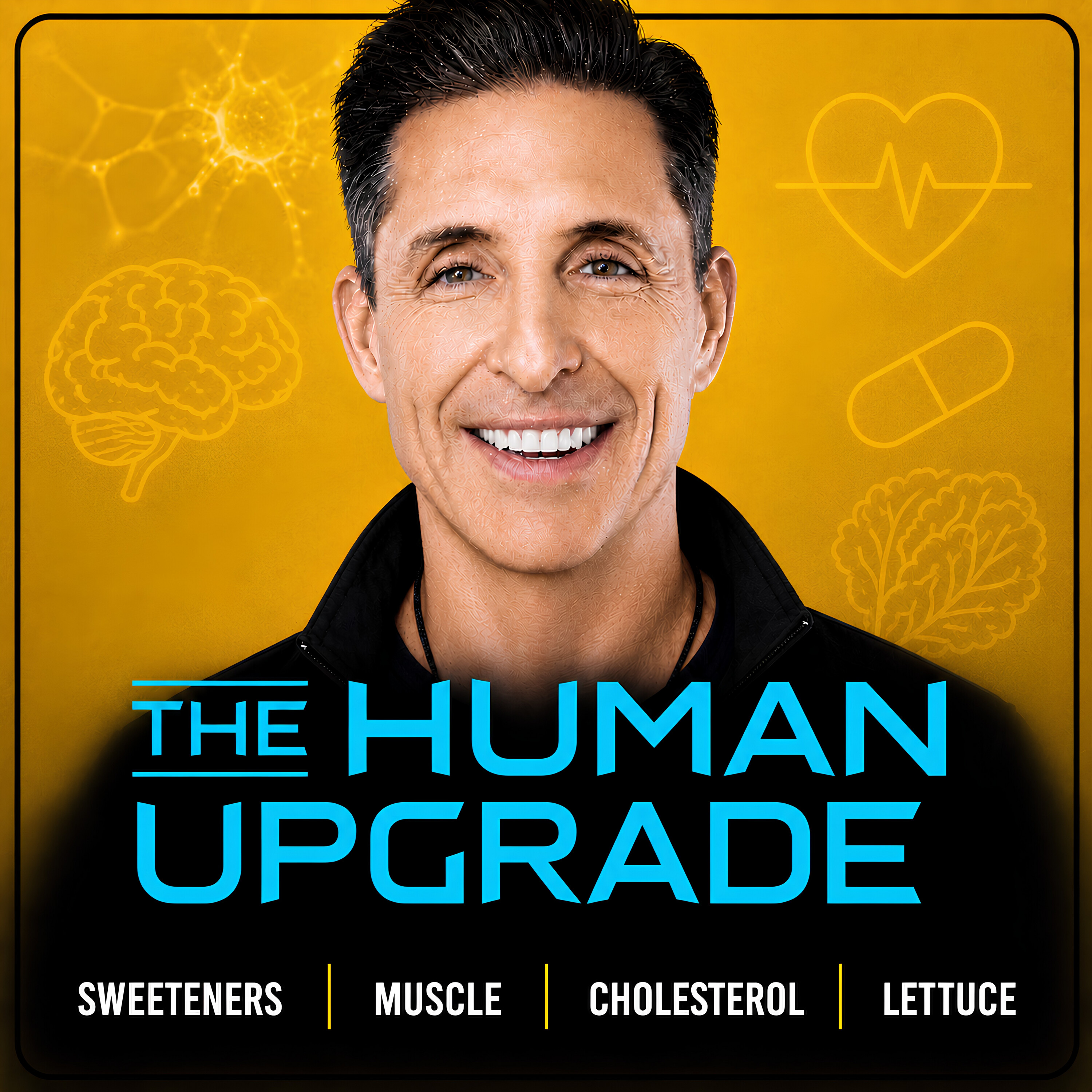
The Human Upgrade: Biohacking for Longevity & Performance
Diet Soda Brain Aging, Hidden Heart Attack Risk, New Cholesterol Pill, Lettuce Recall, and more... : 1507
00:12:11
Loading summary
Transcript16 lines
- [00:01]
A
I'm Dave Asprey. That's Dave spelled D A I V E. And this is your 10 minute weekly upgrade on the biggest stories in biohacking, longevity and the world of health.
- [00:12]
B
Let's go. You're losing hair on your head and collagen in your skin right now, even though you probably can't see it yet. That process speeds up as you age and it doesn't reverse on its own. But you can intervene at the cellular level. Studies show that specific wavelengths of red and near infrared light stimulate your hair follicles and that does support collagen production. Irestore has been making red light therapy devices that actually work for over two decades. And with their summer savings event, it's the perfect time to upgrade your hair in skincare. The Irestore Elite is their most advanced laser hair growth system, using 300 lasers and 200 LEDs, which helps you regrow thicker, healthier hair in about three months. And it is really easy to use. You can wear it while you're working, while you're reading or unwinding at night. And the illumina face mask. 360 medical grade LEDs can turn red, infrared or even blue light at the same time to target all of your different skin concerns. Just 10 minutes a few times a week gives you brighter, smoother and healthier looking skin. I've been using the Irestore Elite and the Illumina face mask while I work at home but not on video and they fit into my normal routine with no extra time cost. I really like it because I don't lose any time when I use it. Irestore is so confident you'll love their products that they give you a 12 month money back guarantee. That's because it actually works. You will see more hair. Irestore is kicking off their summer savings event with some huge discounts on their red light therapy devices. You can save on customer favorites like the Irestore Elite helmet and the Illumina face mask. Just head to irestore.com, use code Dave to take advantage of the sale.
- [01:49]
A
That's Dave.
- [01:50]
B
Restore.com Please support the show and tell them we sent you. Give your hair and skin the upgrade they deserve so you can feel confident and refreshed. Want to know which foods and supplements
- [02:00]
A
work best for your body? Viome takes the guesswork out of it.
- [02:04]
B
Their full body intelligence test reads your
- [02:07]
A
rna, not your DNA, so you see what's happening in your body right now. While standard labs measure around 100 markers, Viome's AI analyzes over 10,000 active pathways across your gut, oral and cellular health. Then it translates that into personalized food and supplement recommendations built for your unique biology. They'll tell you foods to eat and
- [02:31]
B
which ones to avoid.
- [02:32]
A
They even create custom supplements and oral care products based on your results. So what you're getting is what will work for your body, not someone else's. Your results update as your lifestyle changes,
- [02:44]
B
so your plan evolves with you.
- [02:46]
A
Check it out@viome.com and use code 10Dave for 10% off. It's time to stop guessing and start knowing your body. We'll start with this one. Researchers in Brazil followed almost 13,000 people for eight years and tracked how much artificial sweetener they were eating. Stuff like aspartame, saccharin, Ace K, and even the ones marketed as natural like erythritol and xylitol. The people eating the most and we're Talking about roughly one can of diet sodas worth a day showed cognitive decline 62% faster than the people eating the least. That's about a year and a half of extra brain aging from one can of soda a down. I've said for years that if something tastes sweet but delivers zero calories, your body doesn't just shrug it off, it reacts to the mismatch. There are three ways this probably plays out in real it disrupts the gut microbiome. It messes with glucose and insulin signaling even without calories hitting your bloodstream. And there's growing evidence some of these compounds hit neurons directly. Any one of those pathways alone would worry me over decades of daily exposure, and this study only tracked eight years. So extrapolate that forward. The one detail worth watching instead of dismissing is the sweetener Tagatose, the only one out of seven that showed no effect here, and I want more research before anyone starts marketing it as the safe one. My own stance hasn't changed. If I want something sweet, I reach for a small amount of allulose or I skip it because I'm not trading a daily diet soda for a year and a half of my brain. If diet soda or artificially sweetened yogurt is a daily habit for you, swap it out this week and watch how fast your cravings reset. This comes out of the Scott Hard Trial, a well known UK dataset of over 1,700 people who got coronary CT angiograms for chest pain over 10 years. Researchers ran an AI model called total Segmentator against those gans and instead of just reading the arteries, they mapped 25 different structures in the upper body, muscle, bone, organs, fat, all of it. What they were quantifying is something with an actual myosteatosis, fat infiltrating directly into skeletal muscle tissue, measured by how much X ray the muscle absorbs. Dense, lean muscle reads bright fat, marbled muscle reads dark. 10 points brighter on that scale and you get 31% lower heart attack risk and 39% lower all cause mortality over the next decade. Here's the part that actually this predicted risk independent of coronary calcium score. Calcium scoring is the gold standard right now. It's the number everybody in this audience already gets checked and optimizes around. And myosteatosis added prognostic information on top of it, not instead of it. That tells you calcium score isn't capturing the whole cardiovascular risk picture. It's catching arterial calcification and missing a separate metabolic signal running in parallel. And it wasn't an isolated muscle finding either. The same people with worse myosteatosis also showed higher lung attenuation, lower liver attenuation and more torso fat volume, which is the exact pattern you'd expect from someone with liver fat and visceral fat. Meaning myosteatosis isn't really a muscle problem. It's a readout of systemic insulin resistance and fat storage that happens to show up in muscle tissue. Skeletal muscle is your body's largest site of glucose disposal, so when it's infiltrated with fat, glucose uptake craters, insulin resistance climbs and that drives the same inflammatory and metabolic cascade that damages arteries in the first place. Muscle quality is a proxy for whole body insulin sensitivity. If you're already tracking your calcium score, this is your sign to stop treating it as the full picture. Ask about a fasting insulin and an APOB alongside it, because myosteatosis is telling you insulin resistance can be quietly building years before it shows up as arterial calcification. Merck just got FDA approval for the first once daily pill that blocks PCS9, a liver protein that normally tags your LDL receptors for destruction. Block that protein and your liver hangs on to more receptors, which means it pulls more LDL out of your blood. In Trials with almost 3,000 people, it dropped LDL by up to 60%, taking people from over 100 down into the 50s, all in a pill priced around $315 a month instead of a monthly injection. I'm not going to pretend PCS9 inhibitors aren't a valuable tool. The injectable versions already showed they cut heart attacks and strokes in high risk patients and turning that mechanism into a daily pill instead of a shot and is a real convenience win. What bugs me is the framing, because doctors are about to start chasing total LDL down to 50 or 60 without asking the harder question first. I want APOB, I want LDL particle number and I want to know how much of that cholesterol is oxidized because those three numbers tell you far more about actual heart attack risk than a single LDL reading ever will. Cholesterol builds hormones and cell membranes and driving it artificially low with a pill while ignoring particle count and oxidation is optimizing the wrong variable. This is a solid option for the right high risk patient who has already dialed in diet and mitochondrial health. For everyone else it is a shortcut around work that still needs to happen if your doctor is talking cholesterol drugs and ask for APOB and LDL particle number before you agree to a prescription because a single LDL reading doesn't tell you nearly as much as those two numbers do. I'm sure you have heard this by now, but federal investigators traced a cyclospora outbreak spanning 34 states back to Taylor Farms. Shredded iceberg lettuce grown in central Mexico Michigan alone logged more than 5,000 cases and over 100 hospitalizations, and investigators traced much of it to lettuce Taco Bell was using. Cyclospora spreads through fecal contamination and causes weeks of watery explosive diarrhea if you don't catch and treat it. Washing the lettuce doesn't reliably fix it either, since you need heat above roughly 158 degrees to kill the parasite. And nobody's cooking their taco lettuce. This is why I've never trusted pre washed pre cut baked bagged greens. No matter how many times the label says triple washed, the moment you shred lettuce into a bag, you've created a massive amount of surface area for anything nasty to spread across the entire batch. I'd rather buy a whole head of lettuce and wash it myself than trust an industrial process I can't see or verify. This also loops right back into gut health. A cyclospora infection can leave your microbiome disrupted for months after the diarrhea stops, and that disruption carries real downstream effects on mood and brain function. Skip the bagged shredded greens for a while and buy whole heads instead. Your gut will thank you, and so will your grocery bill.
- [10:35]
B
A lot of looking good is about biology. Your hair, your skin, just how you look. It's all a reflection of what's happening inside your body and you can influence that directly. Red light therapy is one of the most powerful ways to do it. The right wavelength of light reactivates mitochondria in your cells. It wakes up dormant hair follicles and it accelerates your collagen production. And it works at the source. Irestore has been building clinical grade devices for this for over two decades. The iRestore Elite uses 300 lasers and 200 LEDs to stimulate hair regrowth across your entire scalp. People start seeing thicker, healthier hair in about three months. The Illumina face mask has 360 medical grade LEDs and provides red, infrared and blue light simultaneously. Red and infrared for collagen, anti aging and blood flow and blue to control bacteria and acne and pore size 10 minutes a few times a week. And it just works. You can get both the Elite and the Illumina as a bundle right now at a big discount. And I use both as part of my longevity protocol. Irestore is so confident in their products that they offer a 12 month money back guarantee. That's a huge deal, but I don't think you'll want to give it back. After you see the results, go to irestore.com, use code Dave for major savings. Again, it's irestore.com Dave. Your doctor said your labs look normal. Okay, then why don't you feel like yourself? Why are you exhausted all the time? Why has your body stopped responding to the things that used to work? That's why Gatlin exists. Gatlin is a physician led optimization program for people who know something is off, even when the conventional system says everything looks fine. It's also for people who want more energy, better recovery, better sleep and long term performance. Because the current system often waits for disease, Most people get 10 minutes with a doctor, a basic blood panel and a vague everything looks normal even when they still feel off. Gatlin does things differently. You speak with a licensed medical provider,
- [12:23]
A
you get comprehensive labs and depending on
- [12:25]
B
your needs, your plan may include hormone support, thyroid support, peptide therapy and longevity focused care personalized around your actual biology. Not one size fits all medicine. Feeling off shouldn't be dismissed just because it's common. Start your journey today@gatlin.com Dave and use code Dave. That's G-A-T L-A-N.com Dave code Dave.
- [12:52]
A
New research on the enteric nervous system, the hundred million neurons living in your gut, found something counterintuitive when your stomach's electrical rhythm locks too tightly onto your brain's. Rhythm, and that tight coupling shows up alongside higher rates of anxiety and depression. Your gut talks to your brain constantly through the vagus nerve, hormones and immune signaling, and it sends more information up to the brain than the brain sends back down. This is the piece most people still get backwards. They treat anxiety as a brain problem and throw a pill at it when the signal might have started in the gut the whole time. I've built a big part of my approach to mood around this idea for years. I fixing the microbiome, fixing digestion, and working on vagal tone through breathwork and cold exposure. Because you're not going to outthink a gut that's sending your brain bad information all day long. I want to know whether this tight coupling is driving the anxiety or whether the anxiety is driving the gut to lock onto the brain's rhythm, because what's described here is a correlation, and the fix looks completely different depending on which direction that arrow points. Either way, this is more evidence that your gut has real steering power over your mental state, whether or not researchers have nailed the direction of causation yet, if you're dealing with anxiety and you've only ever worked on it from the neck up, start looking at your fiber intake, your gut health, and your stress response, because that signal runs in both directions. Rhonda Patrick was recently on Mel Robbins podcast telling people she doesn't put bananas in her berry smoothies, and it comes down to an enzyme in bananas called polyphenol oxidase, which breaks down the exact polyphenols in blueberries that are linked to better memory and vascular health. The data behind this comes from in vitro and food chemistry studies, meaning scientists mix these compounds in a lab, not necessarily tracked what happens once they hit your gut and get absorbed. Still, the food chemistry is straightforward. Mix a banana with your blueberries and you can meaningfully tank the polyphenol content before you even drink it. She uses avocado as her base instead, and she points out that vitamin C from citrus can partially block that enzyme. If you're not willing to give up the banana, I want to flag something before I hand out a verdict here. This is test tube chemistry, not a clinical trial showing people who avoid banana berry smoothies get better memory outcomes than people who don't. That said, the chemistry itself isn't controversial. Polyphenol oxidase is a real enzyme, and it really does degrade polyphenols on contact. So even without a human trial connecting it to outcomes, the mechanism gives me enough to act on you can use avocado as a smoothie base because it delivers good fat and keeps you out of a sugar spike. Call this a low cost, high plausibility swap rather than a proven longevity hack. Next time you build a smoothie, swap the banana for avocado or half a green apple. And if you won't let the banana go, squeeze in some lemon or lime. Since vitamin C is the one variable here that's cheap to test on yourself. Here's my prediction. Within five years, muscle density becomes a standard line on every cardiac scan because the data is already sitting inside scans cardiologists are running right now. Nobody's just reading it yet. And within five years, somebody publishes the paper walking back this new cholesterol pill the same way the statin story eventually needed walking back once particle count and oxidized LDL entered the conversation. Regulators keep approving whatever lowers the number everyone's already watching and keep missing the number that actually predicts the outcome. Write both of those down because I've watched this exact pattern repeat for 20 years and nothing in this week's news breaks it. Alright guys, that is your weekly biohacking roundup. Join me again next Friday for another rundown of the biggest health stories in the news. Enjoy your weekend.
- [17:09]
C
A Human Upgrade Formerly Bulletproof Radio was created and is hosted by Dave Asprey. The information contained in this podcast is provided for informational purposes only and is not intended for the purposes of diagnosing, treating, curing, or preventing any disease. Before using any products referenced on the podcast, consult with your healthcare provider carefully read all labels and heed all directions and cautions that accompany the products. Information found or received through the podcast should not be used in place of a consultation or advice from a healthcare provider. If you suspect you have a medical problem or should you have any healthcare questions, please promptly call or see your healthcare provider. This podcast, including Dave Asprey and the producers, disclaim responsibility for any possible adverse effects from the use of information contained herein. Opinions of guests are their own and this podcast does not endorse or accept responsibility for statements made by guests. This podcast does not make any representations or warranties about guest qualifications or credibility. This podcast may contain paid endorsements and advertisements for products or services. Individuals on this podcast may have a direct or indirect financial interest in products or services referred to herein. This podcast is owned by Bulletproof Media.