← The Human Upgrade: Biohacking for Longevity & Performance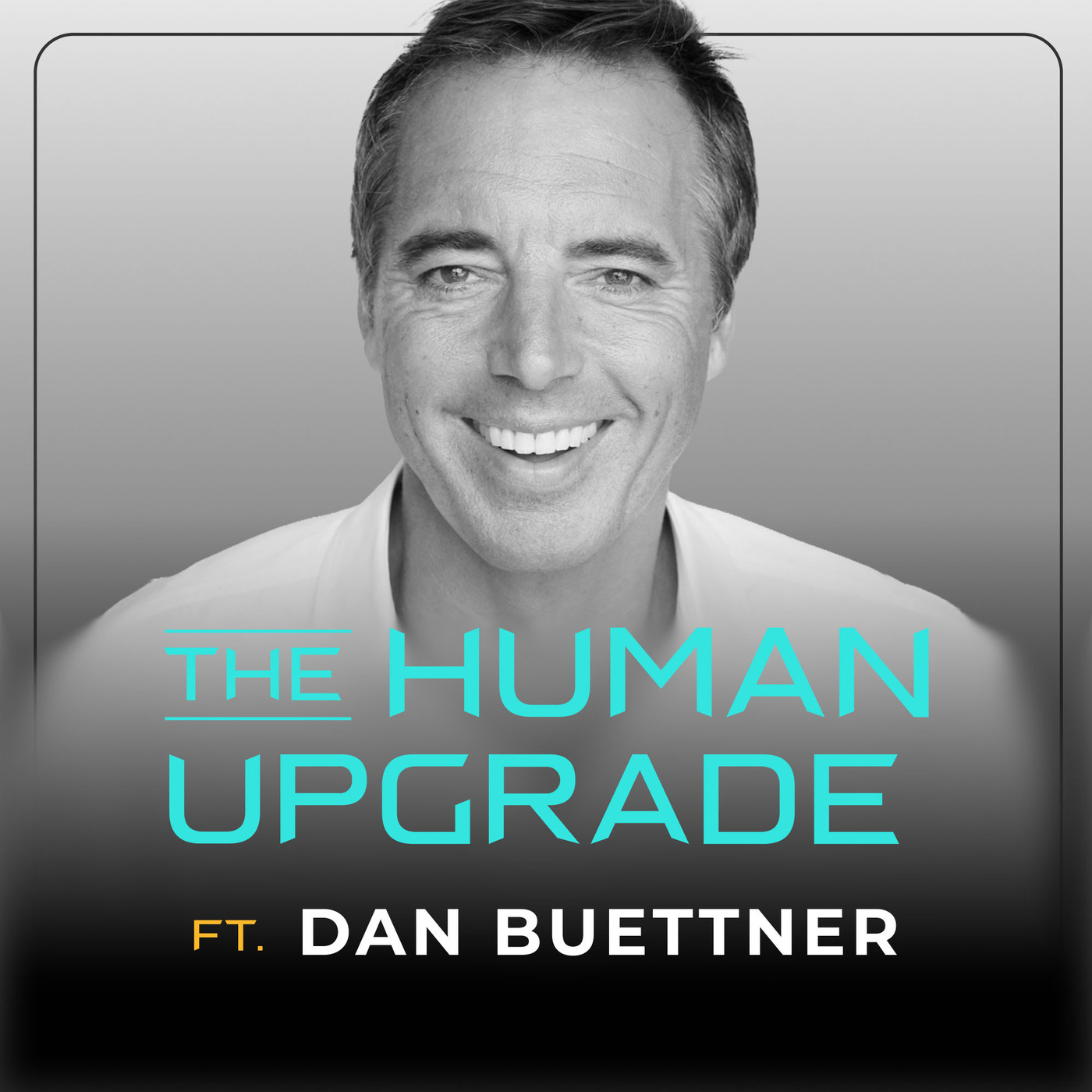
The Human Upgrade: Biohacking for Longevity & Performance
How Long Can Humans Really Live… (with Dan Buettner) : 1393
00:54:24
Loading summary
Transcript213 lines
- [00:00]
Dan Buettner
Why do you feel better when you eat food from Europe?
- [00:03]
Dave Asprey
Europe has so much regulation, appropriate regulation of chemicals in food. So when you eat European food, you don't get fat, bloated and tired.
- [00:11]
Dan Buettner
And this that goes flies right in the face of what health experts been.
- [00:14]
Dave Asprey
Telling us, doesn't it? Species of wheat that grows in Europe is a less aggressive species and it's not treated with and it has far less. So basically it's cleaner food, it's more natural food. If you ever go to Europe, you can eat everything. American wheat is hard red wheat. It's a certain species that's harder on the gut and it's pollute. The government shouldn't be telling us how to be healthy. Have you ever seen a healthy politician?
- [00:37]
Dan Buettner
I can help you get to your mid-90s, largely without chronic disease and with a lot more money in your bank account.
- [00:46]
Dave Asprey
You're listening to the Human Upgrade with Dave Asprey.
- [00:54]
Sponsor/Advertiser Voice
Every time you reach for a healthy snack, you could be sabotaging your energy focus and long term health. That's because even if you think it's healthy, it probably contains seed oils which make up 20% of the average person's daily calories. And recent studies show seed oils can cause metabolic issues and inflammation in your body. Masa decided to do something about it. They created a delicious tortilla chip with just three organic nixtamalized corn, sea salt and 100% grass fed beef tallow and no seed oils. This is one of the few times I'll eat corn because this corn is nixtamalized, which is a process that removes mycotoxins and anti nutrients. Masa chips don't only avoid all the bad stuff, they taste incredible too. Snacking on Masa chips is nothing like eating regular chips. They're crunchier, tastier and sturdier than other chips, so they won't break in your guac. With Masa, you feel satisfied, light and energetic with no crash, bloat or gross sluggishness afterwards. And an added bonus is that the beef tallow makes the chips much more satiating, so you won't find yourself uncontrollably binging and still feeling hungry afterwards. Ready to give Masa a try? Go to masachips.com daveasprey and use code daveasprey for 25% off your first order. That's M A S A chips.com daveasprey & use code daveasprey. You're gonna love these chips. Your phone screen is aging your skin and wrecking your sleep at the same time, artificial blue light goes from your phone screen straight into your eyes and deep into your skin. That light messes with your melatonin levels, interrupts your deep sleep and speeds up skin aging by breaking down collagen. The bodyguard's red light converter fixes this at the source. It's a first of its kind screen protector with real tech that converts blue light into beneficial red light before it hits your face. It turns your scrolling into a skincare routine. It supports healthier skin, reduced eye strain, improved sleep quality and fewer screen related headaches. Third party testing showed a 50% plus increase in red light exposure within the optimal range of 620-770nm. And this comes with zero compromise on your screen. The red light converter preserves your screen's true colors and full touch sensitivity beyond its wellness benefits, the the red light converter provides ultra thin edge to edge protection for your device and bodyguards stands by their quality. Enjoy peace of mind with lifetime replacements, ensuring your red light converter continues to protect and support your biology for the long haul. Visit bodyguards.com and use code Dave for 25% off. That's bodyguards with a Z.com for 25%.
- [03:43]
Dan Buettner
Off. All right, you guys are in for a treat today. We're going to make podcast history. First of all, this is the first sort of co podcast that I'm aware of. So we're going to. We're completely innovating in the podcast front. But also for those of you who follow Dave Asprey on Instagram and podcast and Dan Buettner on Instagram and podcast, you probably know we're kind of at opposite ends of the how to live to 100 spectrum. And we're.
- [04:14]
Dave Asprey
Friends. Just.
- [04:15]
Dan Buettner
100. Okay, 200, Dave. And so we're going to be interviewing each other and in some cases we're going to find a middle, but in other cases we're going to give you two opposite things to think about when it comes to living to 100. And I will say you're 6. You're much taller than I thought you were 6, 4, and you're in great shape. So whatever you're doing is obviously working and you're happy and successful. And I think a lot of people come to you and come to me for advice on longevity. I come from demography which would suggest that this the ceiling, the maximum average life expectancy for the for humans, the human machine is mid 90 and that going beyond that you have to have won the genetic lottery or it's going to require Some intervention that we. We don't exactly know what it is yet. I mean, you could sort of calculate that it's out there, but. So the Dan Buettner formula for longevity would be. I can help you get to your mid-90s, largely without chronic disease and with a lot more money in your bank account because you're not spending on healthcare by not trying too hard to change your behavior, but to shape your environment, to engineer your unconscious behavior, not your conscious behavior. And so that would be my stump speech. How? What's.
- [05:50]
Dave Asprey
Yours? We are so incredibly aligned on it. The definition of biohacking, which is a new word in the English language. It's the art and science of changing the environment around you and inside of you so you have full control of your biology and your state. We're changing our environment with unconscious things that affect you. And that's why you see people wearing truedark glasses, or they're changing their light exposure because it's an environmental.
- [06:15]
Dan Buettner
Variable. That's a great example, by the.
- [06:17]
Dave Asprey
Way.
- [06:18]
Dan Buettner
Yeah. So the light you're receiving is different than the light I'm receiving. What happens when you wear those yellow.
- [06:23]
Dave Asprey
Glasses? These glasses, and not all yellow, will do this. These block only half of the spectrum of blue light. So at 400, did you try them on? Yeah. At 490 nanometers and below, it creates mitochondrial stress. Those look good on.
- [06:37]
Dan Buettner
You. Do I look like a biohacker.
- [06:39]
Dave Asprey
Now? Yeah, you.
- [06:40]
Dan Buettner
Do. Love it. And so. And that somehow protects melatonin, or what are.
- [06:50]
Dave Asprey
The. It turns out, blocking under 490 protects the cells in your eyes from excessive stress, which creates brain stress and creates brain.
- [07:00]
Dan Buettner
Fog. Oh.
- [07:01]
Dave Asprey
Really? Yeah. So during the day you need blue light. This is why blue blockers are actually bad for you. Because during the day you get no wake up signal. But if you get a huge wake up signal, including unnatural spectrums of blue, you don't feel good. So I started True Light 12 years ago when I. Sorry. So I started True Dark, this company about 12 years ago when I was trying to figure out why do these new LED lights make me feel awful at the end of the day. And so I engineered this solution. And the problem is, at nighttime, I used to wear blue blockers, but there's four other colors of light that also affect your sleep. So blue blocking isn't enough at night. And if you go to my house today at nighttime, it's all red lights. Because dim red lights don't affect your sleep at all. They're invisible to your biology. But these white lights we have at night truly are massive change even in the last 20 years, because there are different types of light. So I look at light and food as both nutrients, and darkness is also a nutrient. So we're changing our environment so we have better circadian signaling so we can live.
- [08:07]
Dan Buettner
Longer. And how long do you think we can.
- [08:10]
Dave Asprey
Live? Well, we know that our current best is about 120, right? So that's proven. We have historical documents where people talk about living to 185 in India, 400 in the Bible, 969 for Methuselah. That was a long time ago. And who knows if they even measured time the same way? So we can ignore those. So my bet is that I can do 50% better than our current best. What that means is that I have 100 additional years to do 50% better than our current best. I have AI, I have PubMed, I have the Human Genome Project. We know what mitochondria are and how they behave. And we have antibiotics. Oh, and we have every technology innovation, because 100 years ago, we didn't have any of that. World War I was fought with biplanes and horses. I mean, we're living in a different world than our current record holder. So with all those innovations and the fact that I'm willing to go to the ends of the Earth, I've had gene therapy that increases follistatin levels and the average person gets nine years younger epigenetically. The other part of my bet is that we can measure whether what we're doing works because we've invented these aging clocks that say, well, compared to everyone else, how's your DNA methylation? So there's a chance I'll get hit by a truck. There's a chance one of my experiments will go wrong. But I'm pretty sure, given the innovation happening in our space, that there are enough people working on enough of the different many variables of aging that we can, at least some of us may already be at that point of living 150, 180, 200.
- [09:46]
Dan Buettner
Years. I would agree with you that the pace of discovery is such that something will likely come along for sure in our lifetime and maybe even sooner than that. But we still have seemingly the limitation of the human machine. And most mammals live about two and a half times the age of procreation. So you get to the age where you can have offspring and then multiply by two and a half. And whether you're a mouse or an elephant or a human in between, that's sort of the set point for Biology. We have about 37 trillion cells in our body, each one of which undergo about 2 million chemical processes per second. And the idea that we're going to somehow systematically intervene with all 37 trillion, it just seems mind boggling. And there's no, you know, we talk about metformin and rapamycin and plus and stem cells, and they all maybe do some good in this tiny little piece of real estate on a map the size of the United States, which is the human aging processes. And I'm just not seeing a drug or intervention on the scientific horizon yet that would, that will govern 37 trillion cells and all those chemical.
- [11:03]
Dave Asprey
Processes. Because I have the computer hacker brain. I came into systems biology after learning network engineering. And all we know that there are signaling networks within the body and there are things that control timing. There's a central aging clock in the hippocampus, and then there are peripheral aging clocks and cellular aging clocks. We don't necessarily need to change every single cell. We need to tell the cells what to do, and then they'll all do it at the same time. So this is a signaling problem. It's kind of like in the old days of your computer. If you didn't want to pay for your software license, just change the date on the clock and then the software license keeps working, you could just make it another year. I don't know if you ever did that. I did in.
- [11:45]
Dan Buettner
College. So we won't talk, we won't tell the software, sorry, Microsoft, Dave owes you $8.
- [11:51]
Dave Asprey
Million. Exactly. So what we're looking at doing is saying, how do mitochondria talk to each other? And what we have learned that goes back to circadian biology and to a certain extent, even back to the values of community that we both really share, is an important variable, is that roughly 5% of the cells in the retina of your eye have melanopsin sensors. And these do not go into the visual cortex. They go into the timing clock in the brain. So now we know what are the keys that unlock those cells to tell your body that it's daytime or nighttime. So I could see, I'm just making this up, but I could see a drug that entirely blocks or modifies those. So your body thinks only a day passed when seven days passed. I don't know that that would work. But there's so many ways of telling the body that your duty cycle is much longer than two and a half years. And part of my meditation and part of the way I celebrate my birthday, which actually happened about four days.
- [12:48]
Dan Buettner
Ago. Happy.
- [12:49]
Sponsor/Advertiser Voice
Birthday. Thank.
- [12:50]
Dave Asprey
You. It was my 28 and a half percent.
- [12:52]
Dan Buettner
Birthday. So you're 112.
- [12:54]
Dave Asprey
Now. I'm 35 or I'm dyslexic, which would make it 53. So on the calendar I'm 53. But I really, I celebrate my birthdays in percentage of duty cycle. Because I do believe that your mind does communicate with the body. I also believe the body communicates much more with the mind than we give it credit for. So I do my best to have tons of mitochondria energy, to have appropriate but not excessive free radical formation and to keep my toxins level low and to keep my hormones like that of a young person. And I do neurofeedback. And I've even opened up my blood brain barrier with ultrasound and introduced stem cells into my brain to reset my central aging clock by about 20 years, which lowers immune function. I'm about to go get my third dose of gene therapy. The first two are Follistatin. The other one that's coming up is something called vegf, which increases microcapillary growth throughout the body. And you want that for blood flow. And at this point, I know I have the crappiest genetics ever. I have all sorts of different things that don't work normally, but they're all addressed because I measured.
- [13:57]
Dan Buettner
It. So just to illustrate how different our approach is, my solution for living longer is eat a cup of beans, live in a walkable neighborhood, make three friends who care about you on a bad day and know your sense of purpose and live your sense of purpose. And I will say that yours is a lot sexier and a lot, you know, more lean in.
- [14:19]
Dave Asprey
Interesting. You know, this is something that I do because I love it and I'm curious and I would absolutely endorse your perspective. Maybe not on the beans, but.
- [14:31]
Dan Buettner
I almost got a bean endorsement out of Dave Asprey. I was just ready to do everything and.
- [14:36]
Dave Asprey
Go. If I do that, my three friends don't want to hang out with me. And yes, I know we could pressure cook them, but having one to three really good friends where you can be vulnerable, it massively changes your vasopressin levels as a man, not just oxytocin. And this is important in your relationship. This is Adam Lane Smith's research or Adam Lane Grant, who is just on my podcast and he's talking about attachment theory. So women need three friends where they can talk. Oxytocin goes up and they have energy to bring back to their relationship. And men need three Friends where they can go do stuff and solve problems and then they get their vasopressin to bring back energy to the relationship, which brings up relationships as.
- [15:21]
Dan Buettner
Another. What was that word?
- [15:22]
Dave Asprey
Vasopressin? Yeah, vasopressin. It's a neurotransmitter that's involved in actually in blood flow, but it's also involved in the happiness and energy.
- [15:32]
Dan Buettner
Pathways. And that's what the social connectivity but does for us. But for people out there listening who may not have your level of precision or access to resources or access to innovation, what would be the top three to five biohacks that you think are safest and deliver the most punch for the.
- [15:53]
Dave Asprey
Effort? This actually makes you really happy because some people will say biohacking is just for rich dudes. Number one, 58% of biohackers are women. They always have been. Women are better.
- [16:02]
Dan Buettner
Biohackers. That surprises.
- [16:04]
Dave Asprey
Me. Women generally have more bodily awareness than men because for guys, if there's not a bone sticking out, we're probably fine until we're pretty far along, right? So there's that inherent intuitive sense of interoception, it's called. And then you're asking about things. I know people say, oh, it's only for wealthy people, but every one of my books has here's the principle, here's the free version, here's the cheap version, and here's the crazy billionaire version that illustrates it works. So darkness is such an important nutrient. Everyone who's lived to 100 years old grew up with stars in the sky. They didn't have lights on at night because it just wasn't very common. And if they did, it was a dim light. It wasn't like this incredibly bright that we have now to the point where you can't even see stars in most.
- [16:48]
Dan Buettner
Cities. I just had Kelly Gores on the podcast who just emerged from three days in complete.
- [16:54]
Dave Asprey
Darkness. That's so.
- [16:55]
Dan Buettner
Beautiful. Do you recommend.
- [16:56]
Dave Asprey
That? A darkness retreat is one of the very few mind altering things I haven't done and it's been on my list for 10 years. I just haven't had that much time to go do it lately. So I do highly recommend it. I did fast in a cave for four days, but it wasn't pitch black, so I was getting there. So darkness is a nutrient as important as sunlight in the morning. And these are free. That's.
- [17:19]
Dan Buettner
One. But I don't think of that as a biohack, but I guess it probably.
- [17:22]
Dave Asprey
Is. It's changing the environment around you so you have control of your.
- [17:24]
Dan Buettner
Biology? Yeah, yeah, I guess you think.
- [17:27]
Dave Asprey
Like biohacking's rings and monitors and trackers and all this stuff, you don't have to do any of that. It's just that most of us don't have great bodily awareness. And so if you're waking up in the middle of the night, you might want to know when and where and why and how and whether it's because of blood pressure or carbon dioxide. So you can fix the problem because getting good sleep makes you feel better and be nicer and live longer. So I don't mind using tools to become more self aware, but I don't want to be reliant on tools. So I would say darkness and sunlight are critically important and they're.
- [17:58]
Dan Buettner
Free. I think so many of the problems that we're suffering right now comes from too much comfort and too much.
- [18:06]
Dave Asprey
Convenience.
- [18:06]
Dan Buettner
Amen. We're never more than five steps away from some fatty, sweet, ultra processed food source. We constantly live at either air conditioned, down to or heated up to 72 degrees. Instead of walking place, we spend about three times more time in our cars than we did in 1980s. And it's like in blue zones, they're constantly exposed to a little bit of discomfort. They wake up, it's cold in the morning, they walk out to their garden, they spend a couple hours hoeing, they have to cook their own food and endure a bit of hunger and do their work by hand, et cetera. Well, we don't have any of that.
- [18:48]
Dave Asprey
Anymore. And you know what's interesting? They didn't have a big exposure to natural EMFs or to artificial blue light. And they went outside for a couple hours a day and they moved around because movement is really important for us. And in the west we oftentimes think about exercise instead of just movement. And they're just different things. So structuring your life so you move regularly would be really good for you. And I can't say that I always do that because, well, sometimes I'm on podcasts for eight hours or airplanes for a long period of time. So even if I don't have time to do that, I like to at least do a few squats or because this is what I do. I of course have AI exercise equipment that will give me cardio exercise in 15 minutes that works better than 5 hours of cardio.
- [19:35]
Dan Buettner
Wow. What does that look.
- [19:36]
Sponsor/Advertiser Voice
Like? Your omega 3 index is one of the most reliable markers for your longevity. It measures your EPA and DHA levels in your red blood cells and you can raise your omega 3 index by taking fish.
- [19:49]
Dave Asprey
Oil. Problem is that most fish oil on the market is already rancid by.
- [19:53]
Sponsor/Advertiser Voice
The time you take it. Oxidized fish oil drives inflammation and it accelerates your aging. It's not a good thing. That's why I choose Use Puree fish.
- [20:01]
Dave Asprey
Oil. Puree delivers 2000mg of long chain.
- [20:04]
Sponsor/Advertiser Voice
Omega 3 fatty acids, EPA and DHA in the right forms and the right ratios. For longevity, you take EPA because.
- [20:11]
Dave Asprey
It supports joints, muscles and cardiovascular.
- [20:14]
Sponsor/Advertiser Voice
Function. And you take DHA because it builds and maintains brain and nerve.
- [20:18]
Dave Asprey
Tissue. And here's the best part. Puree tests every batch for more than 2,000 contaminants and for.
- [20:23]
Sponsor/Advertiser Voice
Oxidation. They're the only brand that's third party tested for each batch and they publish their results online. You can scan the QR code on each bottle and see results for.
- [20:33]
Dave Asprey
The exact batch you're taking. So if longevity matters to you.
- [20:37]
Sponsor/Advertiser Voice
And purity matters to you, clean fish.
- [20:39]
Dave Asprey
Oil should be in your.
- [20:40]
Sponsor/Advertiser Voice
Sack. Go to puree.com Dave that's P-U-O-R-I.com Dave to get 32% off puree fish.
- [20:48]
Dave Asprey
Oil when you start a.
- [20:49]
Sponsor/Advertiser Voice
Subscription. That's P-O-R-I.com Dave to get this offer. Your brain is probably underperforming right.
- [20:57]
Dave Asprey
Now. No.
- [20:58]
Sponsor/Advertiser Voice
Judgment. Most brains are. In fact, you're probably not think thinking as clearly, sleeping as deeply or performing as well as you could be. Braintap helps you unlock your full potential. It offers More than 2000 in app audio sessions and an innovative headset that together deliver light pulses, binaural beats, isochronic tones, guided visualizations and 10 cycle holographic music to rewire your brain for higher performance. In just 20 minutes you can achieve deep brainwave states that would take hours through traditional meditation. It also helps regulate your sleep wake cycle, making it easier to fall asleep, stay asleep and wake up refreshed without drugs or dependency. This isn't just some trend. Braintap leads with tons of real science. They've conducted multiple studies proving this works from enhancing memory and focus to accelerating cognitive learning, managing stress and deepening visualization. Braintap is a holistic tool tool for peak performance in work, creativity and daily Life. Go to BrainTap.com Dave to get $100 off the BrainTap power.
- [22:02]
Dan Buettner
Bundle. Well, so we're kind of moving on to number three here. Yeah, you need to have AI assisted physical.
- [22:11]
Dave Asprey
Activity. This comes from Upgrade Labs, which is my AI longevity clinic out of centers and what we have there is A piece of tech that monitors your heart rate and an AI voice tells you, pedal slower. It's really boring. You pedal for one minute, like, and it goes, you're going to die. And then you pedal really hard, and the pedals just won't move. You do that for 20 seconds two times, and that's all you do. And if you do that, it sends exactly the right signal into your body to tell yourself to improve metabolically. And people who do this three times a week experience a 12% VO2 max improvement, which is equal to two years of additional life in the correlation.
- [22:49]
Dan Buettner
Studies.
- [22:50]
Dave Asprey
Amazing. But if you did an hour a day of spin class with Felidian of Leotard yelling at you, you only get 2% improvement. So we're getting six times more results in 15 minutes than five hours. And all I want to do is get the right signal into my body to say, be young and healthy and strong and focused and intelligent and give me the most freedom to do the things that matter in the world to.
- [23:11]
Dan Buettner
Me. So the blue zone shepherd equivalent of that is the. The shepherd is out pasturing his sheep, and the lamb runs away. And he said, I can't lose that lamb. And all of a sudden, he takes off running after.
- [23:24]
Dave Asprey
It. So it is 100 true. And we are so lying down. And I have great respect for. For your work and your perspective. I actually built a regenerative farm on Vancouver island and raised my kids on it.
- [23:36]
Dan Buettner
Because. On Necker.
- [23:37]
Dave Asprey
Island. On Vancouver.
- [23:37]
Dan Buettner
Island. Okay. And they didn't know. Maybe Branson didn't realize you'd moved.
- [23:41]
Dave Asprey
In. Yeah, I snuck in the back door, live in the ceiling tiles. So I recognize changing the environment around you. Well, having a farm and growing up in a forest is really a gift. And it was really hard on me, travel wise, to get off that island. But for my children, it's the most powerful environment I could put them in. So we raised 25 sheep twice a year and 25 pigs and one's three cows and a whole bunch of plants. And, yeah, I've chased pigs and sheep and cows, and you're right, it's a lot of work. But they chase. They're also.
- [24:16]
Dan Buettner
Delicious. So how about the diet of longevity? What's. According to Dave Asprey. What's the. What's the. What should we be eating if we want to hit this 150-year-old.
- [24:27]
Dave Asprey
Mark? All right. Whatever it takes. And I am the first to say, I would love to be a gravel tarian. Actually, I wouldn't love it, but I would do it if I knew very locale. Yeah. If just eating gravel would do it, I would force myself to eat gravel. Like I'm willing to do this.
- [24:40]
Dan Buettner
Stuff. Keep taking that testosterone. I'm sure gravel start tasting.
- [24:45]
Dave Asprey
Good. Yeah. I've been a vegan, I've been a raw vegan, I've been a vegetarian. I've done the zone diet, the Atkins diet and all sorts of other combinations of this and that and meal timing. And just in my quest to lose that 100 pounds of fat and I lost 50 pounds in three months when I added more protein and cut some carbs and cut out gluten which for me was a big trigger. The other 50 pounds took me 10 years to figure out how to lose. And that led to me writing the first big book on intermittent fasting and cyclical clean keto. And when I focused in on the research for longevity, there were kind of two spikes in protein consumption that had good evidence. One of them is 0.6 grams per pound of body weight which is probably in alignment with a good number of, of recent longevity books because there's a lot of data for that. And the reason that we recommend that is that raising a compound called mtor, which you need to build muscles and to, to repair tissues but if it's always elevated, can increase cancer risk. That the theory is that raising MTOR too often would increase cancer risk. So therefore you don't want to do it. So if we minimize our animal protein and minimize our protein then that would be protective. There's just one problem. Carbohydrates raise MTOR more than animal protein. So I did recommend that in my book but I've tried the other spike which is 1 gram per pound of body weight. And the reason that I look like I do is I have adequate but not high testosterone and I get enough animal protein in my diet. If I, if I didn't do animal protein. The plant based protein research that I've seen and I'm willing to be proven wrong shows that these plant based proteins are usually about 30% as effective for amino acid availability in the.
- [26:35]
Dan Buettner
Body. So all of this sounds right to me. I draw almost all my, my insight from looking at the, the populations that live the longest around the world. And we did a meta analysis, 155 dietary surveys done in all five of these blue zones over time. And by the way, if you want to know what a hundred year old ate to live to be 100, you have to know what she was eating as a little girl and middle.
- [27:04]
Dave Asprey
Aged and what she.
- [27:05]
Dan Buettner
Breastfed. Yeah, even that. And when you. When you. When you look over the past 100 years to what these cultures were eating and average it out, it was about a 65% carbohydrate diet. So the vast majority of their intake came from carbs. But both jelly beans and garbanzo beans are carbohydrates. So we're talking the. The garbanzo bean end of things, but also whole grains and tubers and, you know, greens and garden vegetables of. Of all sorts and nuts and. And, of course.
- [27:42]
Dave Asprey
Beans. But were the Japanese really eating whole grains, or were they eating polished.
- [27:46]
Dan Buettner
Rice? For the most part. So Okinawa people confuse Okinawa with Japan. Okinawa was actually the rukus Kingdom until 1918, where they were involuntarily assimilated into the Japanese nation. And it's really a different culture. It's about as different as Minnesotans are to.
- [28:07]
Dave Asprey
Mexicans. Start with an M. I mean, but we're on.
- [28:10]
Dan Buettner
The. We're on the same continent, but we're not all the same people. So about. About 70% of all calories that Okinawans consumed until about 1975 or so came from purple sweet.
- [28:23]
Dave Asprey
Potatoes. Ah, sweet potatoes. Okay, got.
- [28:25]
Dan Buettner
It. With all the polyphenols polished rice was for rich people. And you. If you had rice in Okinawa, most of the time you were trading that, it was a commodity and you needed the money. They did eat pork, by the way, but pork was a celebratory food usually consumed around the lunar New year. They killed the family pig, and then they'd pig out, and they'd render the. The. The fat and make lard and versions of ham. But. So they had meat for a while, but only about 2% of their caloric intake came from animal products and also, by the way, not a lot of fish. So it's. It's. I will admit it's probably overly simplistic, but I do have five disparate populations who are eating largely a high carbohydrate diet. And actually, I hate the word carbohydrate because I believe the healthiest carbs and healthiest calories in our diet are complex carbs. And the least healthy calories in our diet are, you know, white sugar. It's horrible. And so I think. I think we'll both agree that sugar is a toxin. No. No matter what. Maybe.
- [29:39]
Dave Asprey
Not. But it turns out if you get 4 or 5 grams of sugar as an electrolyte, it'll lower cortisol levels. So just. I want to be careful if we say it's toxic, I don't think sugar is good for you. Yeah, but small amounts of sugar can resuscitate mitochondria in distress. And there's a case for them sometimes post workout, long exercise, et.
- [29:57]
Dan Buettner
Cetera. Right. Which we're going to get. And, you know, you put a little bit of ketchup on.
- [30:01]
Dave Asprey
Your.
- [30:01]
Dan Buettner
Exactly. Whatever. You're getting that 4 grams of sugar pretty quickly. Average American eats about 22 teaspoons of.
- [30:08]
Dave Asprey
Sugars. It's.
- [30:09]
Dan Buettner
Insane. Yeah. And at that level, it's for sure a negative. But, you know, all this fine tuning. Well, in general, I salute it, because medical innovation comes from your mind, your type of mind. I'm going to try this, see if it works. If it doesn't, I triage it. I go on to the next thing. The most important single innovation to add years of life expectancy in the last hundred years was.
- [30:42]
Dave Asprey
Penicillin. Oh.
- [30:44]
Dan Buettner
Yeah. And nobody, nobody could foresee penicillin, but it was that investigative mind that, that discovered it all of a sudden. Until penicillin was discovered. If you stepped on a nail and got it, you died. Or, or, you know, had an abscess tooth, you died. And now, boom, all this comes along and it's your mind, it's your long longevity hacking sort of process that gives us these big.
- [31:10]
Dave Asprey
Leaps. You know what's crazy? They used AI just within the last three months with some new molecular modeling capabilities, and they discovered 400,000 new unexplored.
- [31:23]
Dan Buettner
Antibiotics. Wow. Let's try those one by.
- [31:28]
Dave Asprey
One. If they can do that, can we just add 10 years to the human life? So I feel like the speed of innovation, there's so much good stuff happening, more than any human can even track right now, that I'm hopeful. And I see life as this system. And you go back to, okay, now, all right, so someone's born. They're likely born vaginally, and they picked up the microbiome from their mom, which is a necessary part of building your gut bacteria. So there weren't a lot of C sections back then, and we didn't overly clean our infant. So they started out with the right inoculation and they played in the soil. And then studies have shown that in other parts of Japan, there's a special species of gut bacteria that preferentially digest seaweed. So unless you're married to someone from that part of the world and you mix your microbiomes up and you inherit that and you eat a Japanese diet, it's almost like Mother Nature has conspired to set up all the Microbes and all the plants and all the animals and that angle of the sunshine and the temperatures, and then to select these mitochondria that are going to thrive as part of this beautiful system that we're not really separate from. And what I'm recognizing is I'm 28% Basque, and I've got some Northern Europeans with random stuff. I think the Basque part of me likes ribeye, which is the native Basque food. I have no idea. But I don't have the right microbiome for my random genetics, and I don't live in the right environment for my genetics. And it feels like a lot of what I'm really doing with biohacking, because I'm saying, how do we set the environment up so that it's most harmonious with our body, so that it's not about forcing the body to do something, it's about signaling the body, hey, you're in the right place, which drops stress, and it causes systems to work better. But we're all so genetically different, and we've messed with our gut bacteria and our soil biome that it's really hard to know what to do. So I do my best to replace what we've already taken out of nature, and that by doing that, that is improving the markers of how you feel, how you're aging, how you look, and just quality of life. I would prefer to just go outside my cave, you know, spear a bunny or something, and, you know, eat.
- [33:45]
Dan Buettner
It. Vegans will love that.
- [33:47]
Dave Asprey
One. Sorry.
- [33:49]
Dan Buettner
Vegans. What does Dave Asprey eat in a.
- [33:52]
Dave Asprey
Day? Bunnies and salamanders? No. I make sure that I get 1 gram per pound of body weight of animal protein, so about 200.
- [34:04]
Dan Buettner
Grams. So what's breakfast? Nuts and.
- [34:06]
Dave Asprey
Bolts. I usually don't eat breakfast. Okay. But if I did, it would be some sort of protein, probably sheep's milk, yogurt. I prefer sheep's milk because it's a two. It's got more protein, it's got more of the types of fats that you want. And I'm not allergic to it like I am cow's.
- [34:23]
Dan Buettner
Milk. Easier to.
- [34:24]
Dave Asprey
Digest. Yeah. It's much more compatible with humans, by the.
- [34:27]
Dan Buettner
Way. That's big in.
- [34:28]
Dave Asprey
Sardinia. Oh.
- [34:29]
Dan Buettner
Yeah?
- [34:30]
Dave Asprey
Yeah. And fermented sheep's milk, like Manchego cheese. I eat a lot of that because it's a good source of saturated fats. I target. I know this may drive you nuts. 50% of my fat calories, at a minimum, coming from saturated fats, and the rest from monounsaturated. So I like some olive oil, but not too much because studies show that about 2 ounces of olive oil is good for longevity, good for cognitive function. I minimize my seed oils, but I do eat things like avocados and some nuts. But if you eat really large amounts of olive oil, it increases an enzyme called D5D and D6D and those cause a lot of oxidation of the omega 6 in your cell membranes about five times more. So just goes all.
- [35:14]
Dan Buettner
Over. There's also a ton of calories that people don't.
- [35:16]
Dave Asprey
Realize.
- [35:17]
Dan Buettner
Exactly. Yeah. A teaspoon or a tablespoon of of olive oil has about 120 calories in it. So you're loading up on calories you don't need. But how about what's for lunch? That sounds like maybe your bigger.
- [35:30]
Dave Asprey
Meal. Ideally, your biggest meal would be between 12 and 2pm to match when the sun is at the.
- [35:36]
Dan Buettner
Highest. Yeah. That tracks with blue zones too, by the.
- [35:40]
Dave Asprey
Way. Oh, yeah. I actually am a huge admirer of you and your work. Just. But there are people listening. I can't believe they're talking.
- [35:46]
Dan Buettner
Yeah. Which is why people are going to.
- [35:48]
Dave Asprey
Watch. And you know, it's so fun to have friends who believe something different than you. Yeah. And we have this weird stuff where, you know, if that person says something I don't like, I have to hate them. And I don't do that. I think you have a fantastic heart and you've been researching in longevity, I think for a little longer than I have. And like, you're a true believer. Like, how do we do.
- [36:07]
Sponsor/Advertiser Voice
This?
- [36:07]
Dave Asprey
Right. So, yeah, likewise. You're an intellectual mind I greatly respect. So, yeah, we reach that, that middle of the curve. It makes sense. For me, it's a signaling thing. And for you, that's what they've always done and it seems to work best. And like, great. We.
- [36:21]
Dan Buettner
Align.
- [36:21]
Dave Asprey
Yeah. So what did I have for lunch today? I had 16 ounces of rib eye and I put extra sea salt on it for the minerals. I do think we have an epidemic of salt deficiency right.
- [36:36]
Dan Buettner
Now. Well, that goes flies right in the face of what health experts been telling us, doesn't.
- [36:42]
Dave Asprey
It? Then again, those same health experts for the last 23 years told us that hormone replacement was bad for women, even good. Pat, here's why I, I say this. Way back when I was running that longevity nonprofit, the first time I ever gave my own talk instead of moderating experts, it was on salt. And I went really deep. I still have the PowerPoint somewhere. And after that, Gary Taubes Wrote a book about salt that was very well researched as well. And there's a guy named Michael Haynes who was the president of the American Hypertension Society. So, you know, guy who studies high blood.
- [37:19]
Dan Buettner
Pressure.
- [37:20]
Dave Asprey
Yeah. And he said all the data for salt consumption is just based on people like. How much salt did you have yesterday? There's. It's not measured. So he measured urinary output of sodium in 3,000 people for three years. Years. So he actually got the data and a direct summary, in his words, of his work. If you want to live longer, eat more salt, there's got to be a limit to that. Though, of course, the limits usually about 6 or 8 grams, which is what I do, and it's changed my.
- [37:46]
Dan Buettner
Life. Well, unpack that. So, I mean, I do people listening have to be careful because, I mean, there's the. The Dietary Guidelines will warn us against too much salt and its association with hypertension. We're hearing opposite from you. But.
- [38:03]
Dave Asprey
Sure. I mean, you should do. You should do what works with your.
- [38:11]
Dan Buettner
Measurements. But what is the. What's sort of the biology behind eating 68 grams of salt a day.
- [38:16]
Dave Asprey
And then 628, not 686 to 8? Just want to make sure nobody heard.
- [38:21]
Dan Buettner
That. That's what I told my mouth to say. I'm not sure what came out of my mouth.
- [38:24]
Dave Asprey
But. So the current recommendations are around 2.1 grams. And it's.
- [38:29]
Dan Buettner
Weird. So how much is that? That's like a tablespoon.
- [38:32]
Dave Asprey
Or. I. I think it's less than.
- [38:34]
Dan Buettner
That.
- [38:34]
Dave Asprey
Okay. But it turns out sea salt isn't actually sodium, so there's NaCl. So you. Basically, there's. There's an adjust. There's an adjustment. If you go to chat gp, they'll tell you this much salt has this much sodium in it, but it's a very small amount. And here's what happens below about 2.4. Oh, they never told you per pound of body weight, did they? So it would make no sense that a guy as tall as you or me should have the exact same amount of salt as someone who's five feet.
- [39:05]
Dan Buettner
Tall.
- [39:05]
Dave Asprey
True. So what does salt deficiency do? It lowers the body's ability to get water inside of cells because of something called an osmolarity gradient. So that's a problem. But even worse, there's an enzyme called renin, and when sodium is low, renin goes up. And a very slight rise in renin increases cardiovascular risk, even by about 25%. So the current 2.1 gram recommendation from the government raises cardiovascular risk and people say, what about high blood pressure? Sodium affects your blood pressure within the error margin of a blood pressure cuff. It is nominal for all but a very small percentage of people who are salt sensitive, hypertensive. Those people usually need more potassium. So what we have is the government shouldn't be telling us how to be healthy. Have you ever seen a healthy politician? It's not their.
- [40:00]
Dan Buettner
Job. But, you know, you think of like, Cheerios has more salt than potato chips and soups are chock full. They have nearly a thousand milligrams of sodium. Our diet is so laced with sodium already, it just seems surprising that we would think about adding more sodium or more.
- [40:24]
Dave Asprey
Salt. The data is incredibly strong on this. And I mean, you look at Cheerios, Cheerios are labeled as a heart healthy food. But we know that raising insulin is really bad for heart health. And Cheerios spike and something like no one's business because they're ultra processed carbs. So I was very surprised by this and I actually was focusing on making sure I had more potassium than sodium. And I've limited my sodium sodium. And when I got my sodium levels up to be appropriate for someone of my size and my height and for my stress level, stressed animals need more sodium. And as a farmer, we put salt licks out for our animals. Because it's so bad for them? No, it's because they die without it. Elephants travel thousands of miles to the salt caves to get their sodium. So it's a necessary nutrient that we don't want to demonize. You don't want to overdo it. And I teach people, look at your ratio of sodium to potassium, and if you're getting enough potassium, you can have more sodium and you'll actually have better cell hydration. And at upgrade labs, whenever someone comes in, we use a $26,000 machine that measures cell hydration, among many other things. And what we find universally is that half our people come in and they say, I drink huge amounts of water every day, but their cells are dehydrated. And we say, put some salt in the water and then they drink the water and their cells become hydrated again. So it's weird that you can drink water and it won't go into your cells. It's because cells are made out of, like, seawater. There's salt water inside them. And if there's water outside and the body doesn't have any salt out here, the new water can't get into the cells. So they just hold on to.
- [41:54]
Dan Buettner
It. How about dinner? So we have goat milk or Goat milk yogurt for breakfast. We have a huge ribeye for lunch. What's.
- [42:03]
Dave Asprey
Dinner? Dinner is likely to be another huge ribeye or maybe a piece of lamb or a piece of.
- [42:08]
Dan Buettner
Fish. So you don't eat any vegetables at.
- [42:10]
Dave Asprey
All? Vegetables. There's going to be some kind of vegetable. Arugula is my favorite. I eat a lot of arugula. I'll eat some broccoli. I'm not anti vegetable, but I choose vegetables that are lower in oxalate. So I don't do spinach, I do arugula instead. It has more polyphenols. It's just nutritionally superior. And then I'll usually put some pili nuts or macadamia nuts on it. I put some olive oil. I might put manchiko cheese, and I might have some fruit. I might have some white.
- [42:35]
Dan Buettner
Rice. And how about, what does Dave Asprey do if he wants to blow it out? If he wants to. Like, I love eating this food. I'm going to eat it. Darn.
- [42:43]
Dave Asprey
It. Well, I'm about to go to Dubai actually tonight. And American wheat is hard red wheat, it's a certain species that's harder on the gut and it's polluted with glyphosate and bromine and a bunch of other stuff. So if I get even a little bit of wheat here, it wrecks my gut. I get pimples, my brain gets foggy. I can eat European wheat reasonably well unless they smuggle American wheat into Italy like they're doing. So when I'm in, when I'm in Dubai, my goal is to treat my baklava.
- [43:14]
Dan Buettner
Deficiency. Oh.
- [43:15]
Dave Asprey
Yum. I'm going to have a pound of baklava every day for five days. I'm going to take some pharmaceuticals to keep my blood sugar under control, and I'm going to enjoy the hell out of it. And I'm not going to regret it even a little.
- [43:25]
Dan Buettner
Bit. Yeah, you got to enjoy life. That's another big lesson. This, these restrictive diet. You know, in addition to being a very successful author, you're also a master.
- [43:39]
Dave Asprey
Marketer. Thank.
- [43:41]
Dan Buettner
You. Yes. What was your first product that really put you on the.
- [43:47]
Dave Asprey
Map? Well, I had a long career in Silicon Valley. I taught at the University of California. I taught engineers how to build the first version of the web. I ran the web and Internet engineering program and I got really frustrated because I was a deep nerd and the best technology would never win. These guys made this stupid technology that's inefficient and they just had all the Success. But this other one that was clearly superior always failed. And it's because if you're going to invent something that's new and no one uses it, you're a failed inventor. So I realized, oh, my gosh, I'm going to have to learn the dark art of marketing so that I can make the things that are worthy be seen by people. And doing this in the world of cloud computing, security, that's hard. It's not exciting. So meanwhile, what I've been doing as my love in the longevity field in the nonprofit world, I just sat down one day and I said, I've failed at getting even one person under 60 to come to our meetings every month. And we're four minutes from Google's headquarters, and I just beat myself up about it. And on this walkabout in Tibet, I just had time to think, and I realized we have a branding problem for longevity. We also have one for consciousness. No one wakes up when they're 19 years old and says, today, I'd like to become enlightened, and I would like to live forever. We wake up, and automatically our mitochondria make us do it. We wake up and go, where's my tribe? How do I make my mark in the world? And where's my basically intimate partner or partners when you're 20? So this is our motivation. So I started the biohacking movement, which I would say is probably the most.
- [45:32]
Dan Buettner
Successful. Are you the godfather of.
- [45:34]
Dave Asprey
Biohacking? I coined the term.
- [45:35]
Dan Buettner
Yeah. Oh, my.
- [45:35]
Dave Asprey
God. My name's in Webster's.
- [45:36]
Dan Buettner
Dictionary. Damn. Look at. See here? We just thought he was a normal guy. The godfather of biohacking. Right? He.
- [45:43]
Dave Asprey
Yeah. And I did it as a Trojan horse to get young people to pay attention to longevity, because the things that make old people young make young people.
- [45:52]
Dan Buettner
Powerful. So there'd be no Brian Johnson without Dave.
- [45:55]
Dave Asprey
Asprey. Probably not. I think I inspired him. His marketing campaign Beat for Beat, matched the one from my longevity book, which is great. I want all the voices in longevity. I think my body temperature above 94 degrees is healthy. But Brian and I are friends. I knew Brian before he got into longevity because I'm also a neuroscience guy. So I called him about his kernel for and we talked about science fiction books. Like, I love him because he's a deep nerd like me. Oh, he doesn't have glasses as cool as me.
- [46:20]
Dan Buettner
Though. But we can fix that. You know, you said at the top of our conversation about figuring realizing that misbehavior is on them. What you get to choose is how you react to it and training your mind to not react as negatively and with more acceptance and to a certain amount of kindness. But, you know, to flip the positive, Dave, I mean, you're on Saturday Night Live and Jimmy Fallon, and you have this genius for vectoring your ideas and your products into the zeitgeist, into people's homes. And we're at Eudaimonia right now. There's 4,000 different vendors there, and they all have their version of Bulletproof coffee, whether it's a supplement or a superfood. But what. What general advice or if you have a product or an idea that you think is worthy for other people to get healthier, what's sort of the strategy for getting into people's.
- [47:27]
Dave Asprey
Hands? Well, as the leader of a $36 billion industry, I've spent a lot of time thinking about that. And I actually teach entrepreneurs how to build the next version of what I did. It's called the Business of Biohacking Conference. And I bring in the people who taught me and I teach myself, like, okay, here's how to do it. The most important thing isn't marketing. It turns out it's having a product that actually works. And the reason, imagine that the reason Bulletproof was so successful was because people felt radically different after they did it. That was number one. And number two, you know, Tony Robbins has you walk across.
- [48:05]
Dan Buettner
Kohl's. I haven't done that.
- [48:07]
Dave Asprey
Yet. You sort of feel like you're going to die. And then when you're done, you get this dopamine. I will tell you, the first time, I took a big hunk of butter and I put it in a blender. Everything that I've been taught since I was a child says, this is going to kill me. But everything in my research says, this is not going to kill me. And I know in Ayurveda, they've done this kind of thing forever. Oh, take a deep breath. And then you do it. And then you drink it and you go, oh. Oh, it's delicious. Oh. And my brain, it actually worked. So part of it was the experience, but mostly it was a highly efficacious product that was better than what was out there. And so many people today, they're just copying something out there, but they don't have the expertise to even make a better copy. They make a lower quality copy, and they put a pretty sticker on it, and then they start marketing it. So look at your product. Make it so that it is fantastic. And I support a lot of Companies as an advisor. And there's companies. We have 10 years of research on this new molecule derived from fermentation of pomegranates. And we have all this clinical research for longevity and mitochondrial function. I'm like, come on my show. Let's talk. So my job is to shine a light on the people doing the real work versus the people making pretty stickers. My first advice for every company would be make a awesome product. And if you don't do that, you haven't earned a right to go out there and market to people. You're just wasting their time. And the second one would be, show them who you are. I've been on stage more times than I can count 1400 episodes of my show. And the thing people always say is, wow, you're actually like this because I'm not acting. Congruence is one of the hardest things to do. I couldn't do congruence where your interstate and your outer state match until I did all this neurofeedback work on myself. So I don't have to act. I just. I'm present. And I believe people can feel a slimy founder. Not all people can, but enough can. And you have a guy who's up there going, yeah, I'm here to save the world. And meanwhile, it's like.
- [50:08]
Dan Buettner
Suckers. Yeah, yeah. Anybody who tells me that they're here because they care about the health of humanity, I'm pretty sure they probably got their hand in. In your pocket and interested in.
- [50:21]
Dave Asprey
Profit. But you're one of those who. Who cares? Like, I. And I can tell because I can read people and, like you, deeply care about your.
- [50:28]
Dan Buettner
Work. Yeah, my work. You know, I didn't. I mean, blue zones. I never started out to help people live longer. I started out to solve a mystery, and it turns out it.
- [50:38]
Dave Asprey
Works. There you go. And it's. It's funny we didn't mention this in the start. I didn't start Bulletproof to become a brand. I was going to do all of my blog underneath the nonprofit. But when my board of directors argued for three months over the URL, I just. I was like, okay, I'm just going to go do this. So I started the blog that became Bulletproof. It was going to be a nonprofit. I just wanted people to have the information. And then the coffee came out. I couldn't buy mold free coffee, so I made some. It was completely not meant to be a company. It just became one. So you were curious. You're driven by curiosity. You found something precious and you Shared it with the world. World. And I think you did it because you care.
- [51:14]
Dan Buettner
Right? Yeah, yeah, I care. Yeah. I'm, you know, I'm. It's 25 years later, I'm kind of still doing the same thing, different permutation. You have this sort of genius. I, I don't even think, you know, you have at vectoring your ideas into people's minds whether or not we want them. All right, I want, I want to do a bullet round for the founder of Bulletproof. Now, why are men attracted to curvy.
- [51:40]
Dave Asprey
Women? Turns out that curvy women are storing more DHA, which is an important essential fatty acid, omega 3 fat that makes for smarter, healthier babies. So when there's a little bit of padding on the thighs and on the butt.
- [51:54]
Dan Buettner
That'S. Do we smell that or.
- [51:56]
Dave Asprey
Something? Or we just sense it visually? We see it when we see it, our unconscious, our mitochondrial networks and our reproductive networks go. She's attractive because she can give us healthier babies because she has more of a DHA still. And so this is why there's an unconscious preference for.
- [52:10]
Dan Buettner
Curves. I like it. Note to self, curvy women out there, we love you. Why do you feel better when you eat food from.
- [52:17]
Dave Asprey
Europe? Europe has so much regulation, appropriate regulation of chemicals in food. So in European food, you don't get fat, bloated and tired. And the species of wheat that grows in Europe is a less aggressive species and it's not treated with bromine and it has far less glyphosate. So basically it's cleaner food, it's more natural food. And if you ever go to Europe, you can eat everything. You go to the us you.
- [52:43]
Dan Buettner
Can'T eat pasta in Italy. This is one I love. Why white rice is healthier than brown.
- [52:49]
Dave Asprey
Rice. Brown rice has substantially higher levels of arsenic on the outside of it. And in every rice eating country, they know that if you can afford it, eat the polished rice. Because the outer part of the brown rice, which does have more fiber but not that much more, also has the vast majority of the plant toxins. So we're basically removing the less digestible layers so we can get the precious carbohydrate inside and usually eat it with some fat and some.
- [53:14]
Dan Buettner
Protein. Anyway, I will add one thing to that. Of the top 15 countries with the highest health adjusted life expectancy in the world, all 15 of them have as their staple food white rice. So go.
- [53:29]
Dave Asprey
Figure. White rice is underappreciated in the U.S. it's, it is a high glycemic carb. It's just a very low toxin. High glycemic.
- [53:37]
Dan Buettner
Carb. Yeah. And as you point out, we tend to mix it with a sauce or.
- [53:41]
Dave Asprey
Protein. And.
- [53:42]
Dan Buettner
Beef. Yeah. No, no. Okay. Botox wrecks your.
- [53:48]
Dave Asprey
Health. You know, I wish it didn't, but we now have enough data to show that Botox does bioaccumulate in parts of the brain. And I have noticed because I do advanced meditation work and I've had Botox a couple times. Every time for the next three days. My inner focus is not where it was. It's not good for us. And maybe you want to do it anyway. We do a lot of things that aren't good for us, but I think that might not be a good longevity.
- [54:15]
Dan Buettner
Strategy. How do you stop.
- [54:16]
Dave Asprey
Vaping? Vaping is worse for you than smoking, and smoking is not worse for.
- [54:21]
Dan Buettner
You. I think that will come as a surprise to a lot of people.
- [54:24]
Dave Asprey
In terms of organ damage. Yeah, it's unsettlingly. Oh, yeah, it is. Really. You get organ shrinkage that you don't get from smoking. Now, I want to say I'm the first guy that I'm aware of on a podcast to say low dose nicotine is actually good for you because it reduces Alzheimer's and Parkinson's risk. We're talking 5 milligrams a day, which is about maybe a quarter of one cigarette's worth. Don't smoke, don't use tobacco. This is a pharmaceutical nicotine. And a guy from Vanderbilt published the first paper in 1986. So understand you want nicotine. You could do something. This is a nicotine lozenge. There's no microplastics in it because it's not a pouch. And that's about 3 milligrams of nicotine. So you can do that. So you can just use the patch or you can use a lozenge. The reason you do this is if you're vaping a lot and you go cold turkey. Nicotine withdrawal, if you're taking very high doses and vaping is crazy high, you'll probably get whole body muscle tension. It's miserable. But if you taper off, it won't be a problem. So you don't have to give up nicotine. You want to put a daily cap on it. And you can take nicotine orally and it's not bad for you. And it's probably good for you. You have ADHD or neuroinflammation or brain problems or long Covid. Low dose nicotine can be absolutely life changing. It's just not the same as.
- [55:39]
Dan Buettner
Smoking. You're not telling people who aren't using nicotine now to start using nicotine, are.
- [55:44]
Dave Asprey
You? My recommendation is that Starting at age 40, use 1 milligram of nicotine a day. If you don't want Alzheimer's later.
- [55:50]
Dan Buettner
In life, don't you run a risk of nicotine addiction and wanting to ramp up the dose and sort of at.
- [55:56]
Dave Asprey
1Mg and up to 5mg you don't. I use 1mg per day every day for 5 years without any desire for more until I was like, you know what, I'm going to try two. So I did ramp it up because I was experimenting and I use more than 5 milligrams. But I don't really regret it either. It's one of my favorite.
- [56:13]
Dan Buettner
Things. Well, we all, we all deserve our.
- [56:16]
Dave Asprey
Indulgences.
- [56:16]
Dan Buettner
Exactly. If you're taking Ozempic, what else should you be doing? Or.
- [56:22]
Dave Asprey
GLP1s. GLP1s are profoundly important longevity drugs at micro doses. So if you're taking it for weight loss, some people are very judgy about that. And here's the thing, being obese is very dangerous. So using Ozempic to not be obese is a good idea overall. Problem is if you do not lift every single week, two times, walk every day and make sure that you get enough protein every day that 1 gram per pound of body weight, you won't want it, just do it anyway. If you do that, you can reliably lose weight, you can reduce most of the risks of higher dose Ozempic and then it becomes a life saving drug. And once you're done on the the big weight loss doses, about 10% of the normal dose taken once a week reduces all kinds of risks of.
- [57:12]
Dan Buettner
Aging. I noticed that you were on Valter Longo's Prolon diet. Valter Longo was on this podcast, big fan of his. Is fasting a longevity hack or what do.
- [57:28]
Dave Asprey
You. I believe there's evidence for intermittent fasting and longer fast to be an important part of the longevity program. The first big book that brought intermittent fasting out was the Bulletproof Diet book back in 2014. It kind of became really popular. I had to write a book after that called Fastest way to Correct Misperceptions about Fasting. So the problem is over. Fasting is really bad for you. It creates biological stress and it's even worse in women and death if.
- [57:54]
Dan Buettner
It goes down too many.
- [57:55]
Dave Asprey
Months. That's right. So what is important though is that there is a time most days where your stomach is empty and you go for a while without any food. And this is really important to turn on autophagy in the body, which is the cleanup of old cells that need to be replaced. So you could fast once a month for a day or two. You could fast once a week. You can do an intermittent fast like I do. Most days I go 14, 16, 18 hours without food. And you're never hungry. Once you get used to it, it's just a normal way of being. Just don't overdo.
- [58:26]
Dan Buettner
It. And then maybe once a month you do 24 hours, no.
- [58:29]
Dave Asprey
Food. Yeah. And you can do something like the prolon fast, which is a fasting mimicking diet. So you eat the food they give you and then you're not hungry and you still get the benefits of fasting. You could also just do coffee with a tiny bit of butter and MCT oil in the morning, and that reliably turns off hunger. It makes fasting even for 24 hours, not even a.
- [58:48]
Dan Buettner
Drawer. Dave, this is a phenomenal experiment. Your approach and my approach could not be more different. But yet somehow we meet in the middle and we agree on most things and it's just a joy to talk to you. How do we keep in touch with.
- [59:02]
Dave Asprey
You? I'm@daveasprey.com, dave.asprey on Instagram and I just. I appreciate your work in the world. You have such good energy and we're working on the same goal and it's okay to have different.
- [59:13]
Dan Buettner
Approaches. And I'm from Dan Buettner.com Dan Buhner on Instagram and Danbuter podcast podcast which you're watching now or you're watching the Dave Asprey. Either way, come back to both of our podcasts and see more good science and learning how to live longer, better and we'll see you. I'll see you when you're 100. Dave will see you when you're.
- [59:33]
Dave Asprey
150. Thank you. See you next time on the Human Upgrade.
- [59:40]
Podcast Disclaimer Narrator
Podcast. The Human Upgrade, formerly Bulletproof Radio, was created and is hosted by Dave. The information contained in this podcast is provided for informational purposes only and is not intended for the purposes of diagnosing, treating, curing, or preventing any disease. Before using any products referenced on the podcast, consult with your healthcare provider carefully read all labels and heed all directions and cautions that accompany the products. Information found or received through the podcast should not be used in place of a consultation or advice from a healthcare provider. If you suspect you have a medical problem or should you have any healthcare questions, please provide promptly call or see your healthcare provider. This podcast, including Dave Asprey and the producers, disclaim responsibility for any possible adverse effects from the use of information contained herein. Opinions of guests are their own and this podcast does not endorse or accept responsibility for statements made by guests. This podcast does not make any representations or warranties about guest qualifications or credibility. This podcast may contain paid endorsements and advertisements for products or services. Individuals on this podcast may have a direct or indirect financial interest in products, products or services referred to herein. This podcast is owned by Bulletproof.