← The Human Upgrade: Biohacking for Longevity & Performance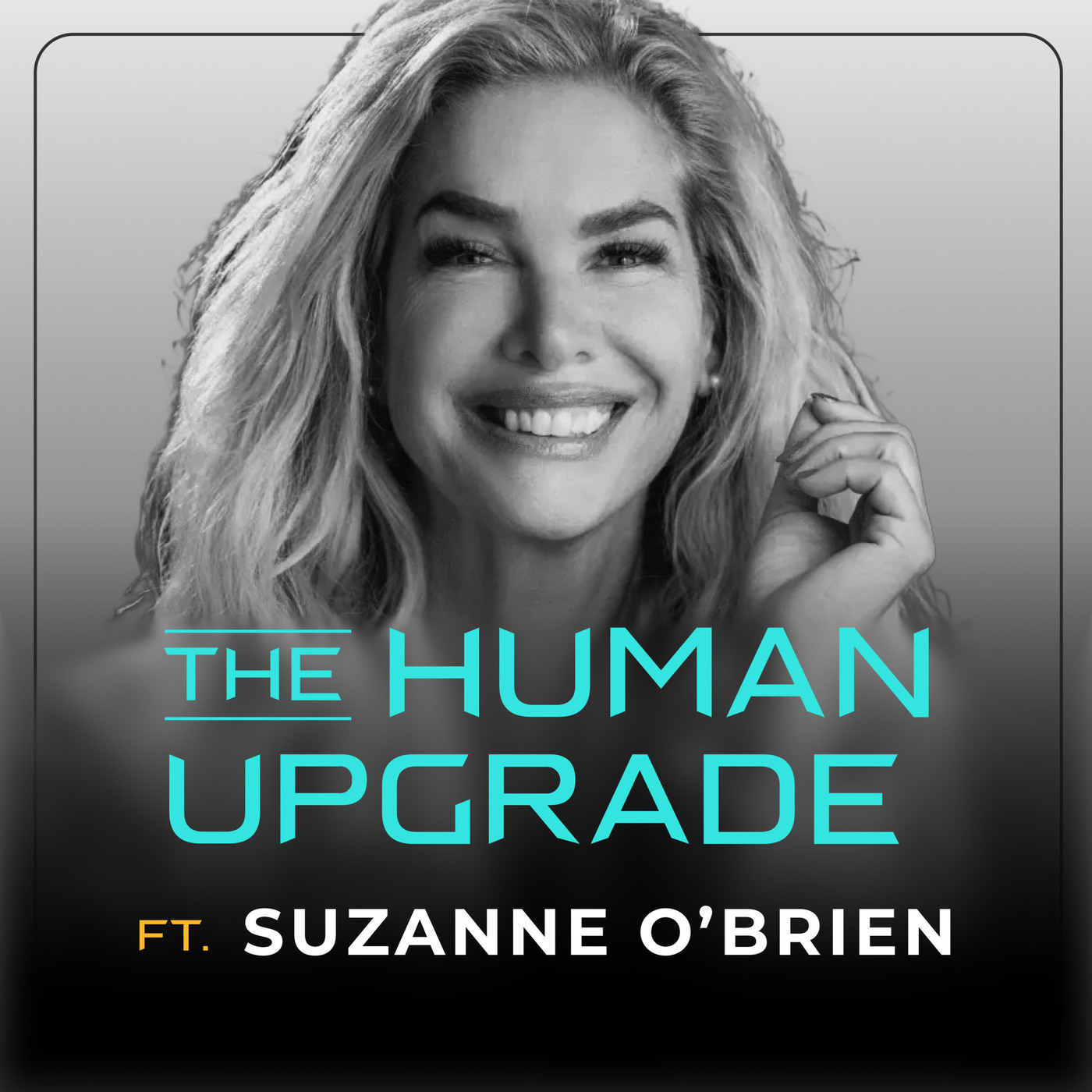
The Human Upgrade: Biohacking for Longevity & Performance
How To Deal With The Fear Of Death (Ethics Of Longevity) : 1325
00:56:47
Loading summary
Transcript163 lines
- [00:01]
A
What if there was something you could add to your water to make you perform better, have more energy and protect your cells from damage? Hydrogen is the smallest molecule in the universe and the only one that can get deep inside your cells, mitochondria, and even your DNA. It fuels energy production, crushes oxidative stress, and supports sharper brain function. Hydrogen's a gas, so you can't take it as a pill. So you either have to breathe it in or infuse it into your water. But your tap bottled or filtered water doesn't have it. That's why I use the Echo Flask. Echo Flask is a hydrogen generator that uses advanced electrolysis and a proprietary proton exchange membrane to infuse your water with pure hydrogen. No chemicals, no ph change, just therapeutic science backed hydrogen. I've noticed more energy, faster recovery, less inflammation and mental clarity that lasts all day. Go to ecowater.com dave and use code DAVE.10 for 10% off your Echo Flask. You'll feel the difference in days.
- [01:04]
B
This episode is recorded here in Austin, Texas. Not in my studio because the air conditioning broke. And this is Texas. So I'm downstairs where the second air conditioner is not broken. So hopefully you like the set because we just made it up for you. So you do work with death.
- [01:23]
C
Yes.
- [01:24]
B
But you call your company Doula Givers.
- [01:28]
C
I do.
- [01:29]
B
Isn't that about being born, not about dying?
- [01:31]
C
Yeah, there's. There's so many similarities with helping a spirit, a soul come into this world like there is leaving this world. But yet you think about it, we're doing everything to help those babies come in. Sometimes we're preparing before people were even pregnant. We're not doing nearly the same. Probably nothing for us helping souls leave this world. And it's just as beautiful and sacred and important to know what to do and to help them out of this world.
- [01:57]
B
People spend usually nine months planning the perfect birth. How long do people spend planning the perfect death?
- [02:05]
C
I'm going to try and rephrase that a little bit. So it's zero for that. And they probably spend not more than nine months on trying to outrun it.
- [02:14]
B
Ooh, yeah. So you're saying don't die, might be running away from something.
- [02:20]
C
Yeah, I think that we're told, you know, whether it's conscious or subconscious or both, to push death as far away as you can to try and beat it. I mean, think about the terminology we use in this world as medical professionals. He lost his battle with cancer. When somebody has a terminal diagnosis, doctors will say, I'm sorry there's no more I can do for you when there's so much we can do for people.
- [02:42]
B
Wow.
- [02:43]
C
So have we inadvertently set up this battle that is not a battle, number one, but that is impossible to win if it's a battle.
- [02:51]
B
Reminds me of something Mother Teresa once said during the Vietnam War, some protesters said, will you join us in a march against the war? And she said, no. What do you mean? And she said, I'll join a march for peace, but not against the war. Because when you fight against something, it just makes it stronger. So you're saying something similar.
- [03:12]
C
I'm saying something very similar. And I want to tell you there's a very gray area that. And that's why quality of life to each of us is so important to understand me subjectively, what benchmark that is. And when that time comes where there's no more quality to my life, am I willing to go through more surgeries, to go through medications like chemotherapy at that point when there's no possibility of reversing that process, That's a very dangerous place. And if we don't think about this ahead of time and we start going into a default and down that road, it can cause more pain, it can cause more suffering than I've ever seen. And then that person will have their end of life no matter what.
- [03:48]
B
Anyway, I couldn't agree more. And it does require a very different view of death. And I've. In my most recent book, I talk more about consciousness and spirituality, and we've talked to different guests about this kind of a topic. But the idea that you should spend all of your money and all of your ability to suffer in the last little while just to avoid dying, why do humans do that? Seems like it's kind of universal fear. What are we afraid of?
- [04:19]
C
Good question. So when. And I. And I mean this, it's. It's not a joke. When I. So I come from a medical family, so I was very aware growing up. My father was a doctor, my mother worked in hospital administration. So I heard about people dying. I heard about people being very sick. So it was very natural to me. And when I got into the hospital setting as a registered nurse, that's my background. When people were dying, the fear of death, the running in the opposite direction, I could not believe how palpable it was. And what happens when we're fearful? We're paralyzed. Right. We can't make any concrete decisions and anything. And the amount of suffering that I saw in addition, so saying goodbye to somebody in their physical body is going to be hard no matter what. 10,000 times more challenging when we're not prepared and we're running in the opposite direction. And I said, what is this fear? There must be something awful that's happening on the other end. So I did my homework, I went down all these rabbit holes and guess what? Of course, there's absolutely nothing. In fact, I sometimes was privileged to see the most beautiful end of lives. And I thought if people could see that, if they knew end of life could be like that, they'd never be afraid. So I'm going to tell them.
- [05:25]
B
Wow.
- [05:26]
C
Yeah.
- [05:27]
B
Don't people get triggered when you say death can be beautiful?
- [05:31]
C
Sometimes. It depends where they're coming from. But the thing is, when you started out today and you said, you know, you work in death, you know what came up for me? I work in life. I know, but I just want to say that because here's the thing, when we're talking about it, they're not exclusive of one another.
- [05:45]
B
Yeah.
- [05:46]
C
And it's the most life affirming conversation because when we talk about death, we're talking about what is this journey, what am I here for? What's the important things? What am I not doing? You know, that we get to. And that really, again, I feel like gets us to the pearls of what this human experience is that we've been gifted. And that makes me have a whole.
- [06:07]
B
Different lens on who or what benefits when people die in pain and suffering.
- [06:13]
C
So there's different levels of suffering. Yeah, so there's. Yeah, so there's, you know, the, the physical body. But I also want to point this out, which is very interesting. At the end of life, emotional pain that has not been processed. So emotional things that we've not, you know, processed, put into perspective, found forgiveness, worked on because we can store things away.
- [06:33]
B
Oh yeah.
- [06:34]
C
Everything bubbles to the top and really can present in physical pain. I've had people. I remember this one woman, she was in the hospital writhing in pain. She had so much medication on board that would have killed like three horses. And she had emotional pain that was coming up that the narcotic would not touch. And I remember this one point coming into her room and she had her eyes closed at this point. She said, I'm going home with a smile. And I just said, there's no place like home. Somehow she had been able to reconcile some of those things. But the suffering is important. And I think this leads into doing our work, making sense of things. And let's just be very honest as a collective, many people Are not. We're not doing our work right. So we're playing in this small space. We're living in fear. We have unresolved issues that we've had. And it all starts to bubble at the end now, that space of having them worked out. And this is where forgiveness plays a huge role at the end of life. End in life when this stuff is. There's a point in the journey, if I may, where we're all holistic beings, physical, mental, emotional, and spiritual as people's physical bodies. So I've been sitting at the bedside of over a thousand people as physical diminishing. The physical body's diminishing. Their spiritual body is growing. There's one point that they get this higher wisdom organically that they're able to look back at their life's journey over different things that have happened. And they literally say this, Dave, like over a night or over a nap, they go, I get it now. I understand why that happened. And it could be things that they've been holding on to anger for 30, 40 years. They're like, I understand why that happened. It was trying to provide me this. This opportunity for growth. So instead of being resentful and angry about it, they're able to forgive if it was something that happened to them or forgive if it was something. That level of suffering before we break open to that moment is incredibly important because. Yeah, well, it is not just for us, but for people left behind.
- [08:32]
B
You have this unique perspective of having been with more than a thousand people when they're dying. You know, when I do decide to go, hopefully somewhere 180 years or longer, I just want to die at a time and buy a method of my choice. I like the idea of dying where there aren't any things recording it and then doing a Tibetan sky burial. It's where they chop you into pieces and feed you to these giant crows and ravens that live in Tibet. And then when I do that, because it would just mess with all the computerized record keeping in the worst way. And wouldn't that be kind of a fun legacy? Just be like, we don't know what happened. Ah, but of course, everyone knows. They just can't prove it.
- [09:10]
C
Yeah.
- [09:10]
B
So, yeah. What's the best way to pass? Is it in your sleep? Is it, you know, with the Swedish bikini team? Is it praying? Is it on the side of a mountain? Like, is there a path that creates the best death?
- [09:24]
C
I think that the most beautiful end of life, just even organically, without the education and work that we do now have Been people who've lived fully who were able to say when their time came, okay. And I feel like that sense of a good death can happen physically, anywhere, because it's more of an energy that's been brought in, but that is really the case. So for most people, they say death is the number one fear. And for most of my patients, it wasn't the fear of death. You know what it was? It was the regret that it was the fear that I thought I had more time and now it's up and I didn't live the way and what I was supposed to be doing here. So that heavy regret is there for people who knew that life would come to an end as we know it in this journey and who lived with the gratitude every day of that awareness and presence. When the day come that came, they were able to say okay, and be able to be present with loved ones. And it's such a spiritual journey because there is something that happens at the end of life where time as you and I know it, the clock, time disappears. Where there's energy in the room, like when there's that loving vibration that almost dissolves the walls in the room, that it's such a beautiful thing. You're really at the veil. And that can be done. And I've seen it in a hospital room. Not ideal, by the way. I don't. You know what?
- [10:46]
B
I generally should stay out of hospitals if you want to live or die.
- [10:49]
C
Well, yeah, they're also very noisy and beepy. But I did. But I had seen it and it's. And it could be anywhere. And so for me, you know, resonating with nature and love and, you know, your pets and just being present in that moment. And then again, I'm told many times by patients that loved ones who have already died are back in the room with them. And I'm told they're there to help cross you over. How beautiful is that?
- [11:13]
B
All the different lineages I've studied with teach similar things like that.
- [11:18]
C
Yeah.
- [11:18]
B
You know, whether it's, you know, Christianity, they're, you know, in heaven waiting for you. But more of the shamanic and some of the Eastern traditions. Oh, no, they. They just show up.
- [11:28]
C
Yeah.
- [11:28]
B
Do you see them?
- [11:29]
C
There were two times. One was, you're going to get me. Very emotional because it was an emotional moment in the oncology unit. And again, I think this goes back to us denying that death will be a part of our journey and that dangerous space. There was a man, he was in his 80s, and he was, you know, on Chemotherapy. And his blood levels were very, very low. And I remember being his nurse that day, and I. He did not have a dnr, so he did not have a do not resuscitate. And I knew something was gonna happen. And I. His daughter was there and his wife was there, and it just wasn't good. And we got the doctor to get a dnr. But I remember walking in to do a check on him. And when I was in the room with him, he took a breath and looked up in this frozen look. And I believe he had a massive heart attack at that moment. And I saw his body leave him. Now, here's the thing that was happening. It was around lunchtime. His daughter and his wife walked in. They said, what's happening? What's happening? And I said, come tell him you love him. So they were able to sit with him as hold his hands. Now his soul had left, but he was. His body was still taking those last breaths. So they were able to be in that moment with him. And it happened another time as well, where I would. This man was transitioning. And we were actually cleaning him and turning him. And all of a sudden, there. And I said. I said, wow. Yeah, there. There. I saw it. Wow. Yeah. And again, come and tell him you love him. And so, yeah, I've been able to see some of that, but I've also been able to hear from my patients what they're seeing.
- [12:56]
B
What are they seeing?
- [12:58]
C
There was a woman. I think the most impactful story was this woman who was my age at the time. She was 44 years old. She came into the oncology unit. She had gallbladder cancer. She was doing chemotherapy, so it brittled her bones. And this was. I was doing a Friday, Saturday and Sunday shift. Friday she came in. Cause she had a fractured hip from the chemotherapy. And by Saturday at the end of the shift, I moved her from a bedside commode, which is a bedside toilet, right back to the bed. And she was short of breath. Nothing was wrong with her lungs. And so we both took that moment in. It's like we knew something was really wrong. And they did studies that night, and they found that she had blown a pulmonary emboli to her lung. A blood clot. Not a good thing. The next day I came in, got report from the nurse, by the way. They said that Maureen said when she found out she had a pulmonary emboli, she said, suzanne's gonna be really mad about this. She knew how much I loved her, which I thought was really beautiful. And it was. But it was also really serious. So Sunday in the hospital, doctors are on fragmented pain shifts. They kind of come in when they want. So I remember all day she was breathing heavy. The doctor comes in around 3 o'. Clock. I had a habit of doing rounds with doctors so I could hear exactly what they're saying. We walked through the doorway of Maureen's hospital room and Maureen says to the doctor, I just want to thank you for everything you've done for me. And I turned to look at the doctor's face and tears were coming down the doctor's face. Maureen was telling us she was going to die in that moment before any of us called it. But this is what happened. So they said at about 11 o' clock on Sunday night, Maureen woke up from a nap and said, get my sister, I'm transitioning. With all the excitement that you would hear from an 8 year old child going to Disney World. Her sister was in the lounge, she came and she goes, I'm transitioning now. What did she see? What did she know that not only removed her fear, but had her so excited of where she was going. And then they said at about 5:00 in the morning, she passed and the room was like flooded with golden yellow over the river sun. It was just. That's just one of the stories. I mean, we have hundreds of the same ones. Wow. Yeah. Talk about changing perspective.
- [15:05]
B
The universe is actually quantum. At least that's what quantum physics, hard science is showing us. Even though we don't really see it. A lot of things that we do in our life drains your energy and it disrupts your quantum energy. There are things you can do about it. Chronic stress, EMFs, environmental toxins make you feel bad. I think we all know that and we work to eliminate those or to reduce them as much as we can. But what if you could actually increase your quantum energy field so that you were more resilient to these things? It turns out you can. And there's a technology called Quantum Upgrade that comes in. It's a cutting edge quantum streaming service that provides quantum energy. Yeah, I know that doesn't sound believable, except it works. And it's not a woo woo concept. The team at Quantum Upgrade ran randomized, double blind, placebo controlled studies to get the hard data. And in one study, Quantum Upgrade as a service completely neutralized the negative effects of 5G exposure on blood flow. Another double blind study found it makes red blood cells more flexible and improves their ability to carry oxygen. It increases ATP production by up to 29%. And those are just a few of the cool things it can do. When you sign up, you can link your phone, your home, your business, even your pet with their energy source. And the cool thing is, you don't need to believe in something for it to work. Quantum Upgrade has the science, the testimonials, and now over 13 placebo controlled studies backing what they do. Even though it sounds pretty incredible, I use it because I like to follow the science. Try Quantum upgrade free for 15 days. You don't even need to anyone your credit card. Go to QuantumUpgrade IO Dave and just click Pay later at checkout. 15 days. Give it a try, see what you see. You might still be losing muscle even if you're eating tons of protein. Here's why. Your body can't store amino acids, which are the building blocks of your proteins. And get this, if you're missing just one essential amino acid, your body can't use the others. So protein synthesis stops and the rest goes to waste. So that 40 gram protein shake might not be helping you as much as you think. Perfect Amino fixes that it gives your body pure essential amino acids in the exact ratios it needs to build and repair tissues, your muscle, your bone, your skin, everything. No waste, no fat storage, and just about no calories. I use Perfect Amino when I'm fasting, when I'm training or recovering from a workout. In fact, I take it before I go to bed too. So in order to keep muscle recover faster and stop wasting protein, use Perfect amino. Go to bodyhealth.com and use code Dave. 20 for 20 off your first order of perfect Amino. The first time I came across, you know, hospice care, I didn't know anything about it. My grandfather, who was an atheist his entire life, a really advanced scientist at Los Alamos National Labs in physical chemistry, he had an autoimmune kidney condition that just came up and went into the hospital. And they told him, you know, if you work really hard, you might be able to be at home on the couch and do dialysis twice a week. And he thought about it, said, I don't want this. And he said, call the family, I'm going on the wine diet. And so everyone came and he had, you know, seven kids and so surrounded by loved ones and a hospice care worker. This is a family of non believers, right? So lots of scientists. This can't be. But somehow the hospice worker at the time was able to create that sense of peace and calm that chilled out even hyper rationalist people. And it took him about three days, but he passed like Very gently surrounded by loved ones. And it's the quintessential good death.
- [18:56]
C
Yes.
- [18:57]
B
And I remember how the hospice worker had like Navy SEAL level therapist skills to deal with a whole family who are all having their buttons pushed by death because it pushes their own mortality and all the family dynamics and all that stuff. And ever since then, I've looked at hospice care workers as some of the most compassionate, some of the most kind, but also some of the most skilled therapists that are out there.
- [19:22]
C
Yeah, I agree.
- [19:23]
B
So how do you teach people to do that?
- [19:26]
C
I don't know that you can teach it. I feel like, you know, it's something that really we kind of come in with. But I do want to say, when you say everyone's buttons being pushed, because it does, and this is really what we want these conversations to be for, is that to acknowledge that somebody's going to have their end of life is not. When it's in front of us. That's not the first time we should be there. I remember raising my son and, you know, he was very close with my parents and there were times that, you know, he's like, oh, I don't want to go to lunch today with them. And I just would say, say that, you know, one day this won't even be an option. I'm not saying that you have to. I just want you to know.
- [19:58]
B
Yeah.
- [19:59]
C
The fragility of the time we have, you know, with loved ones and also with this day today and his pers. He is such a wonderful, compassionate, connected. I mean, that was part of his journey. But again, if we deny that death is a part of the journey, so our pets die, grandparents die, even peers die. Why are we not? One of the best things we can do for our children is have them know that death is a natural part of the life's journey and not to be afraid. Right now, we're setting them up to run the other way, to be fearful. And then of course, everyone's stuff is going to bubble to the top. And these skilled hospice nurses, as you say, are dealing with different experiences for each person. But it shouldn't be that place. It should be done earlier so that we can really have a rich journey with one another, with that forgiveness, with the learning, and then create this loving ceremony and ritual helping this person that we love out of this world.
- [20:52]
B
If you could redesign the death experience in society, what would it look like?
- [20:58]
C
Let it be our greatest teacher about how to live. Let it be our greatest teacher about how to live from day one. So remove the Fear of it by telling the truth about it, but then bringing in the wisdom. And how does that apply to you? What is your. What is important for you? What is your heart saying? What are these hurts that we've been through? What can you do with them? How can we forgive and release them so you not for the other person, so that you can live in your greatest journey, that you are here for, and that we're all connected. So there's a few things that end of life patients would say, and I've worked with people from all over the world, they'd say the same things. We're all connected to this one unconditional loving energy. There is no judgment, there is no death. And that everything that happened to us happened for a reason, to help us to grow. Now when those lessons come through, when we look at that, if we knew we were all connected, not just to each other, but to the animals, to the planet, would we be behaving and doing the things we're doing today? I'm going to say no. If we knew that the ego part of the human part is the fearful wants to keep us separate so that there's one winner and one loser. If we taught about the soul part of us, the being part, to listen to that, but also that it's your highest directional, it will put you on your path to purpose. And if I knew that we were all connected, would I ever want anything more than just love and compassion for you?
- [22:26]
B
That's beautiful. You ever read Carlos Castaneda?
- [22:30]
C
I have not.
- [22:31]
B
So this is a famous set of early books about shamanic experiences in the West. A guy from LA hippie goes down to Mexico and, you know, meets a shaman and goes through pretty intense shamanic initiation. In the Jungles is one of the early accounts of psychedelic use for strange spiritual states. And it's a series of books and fascinating stuff. In the final lesson where Don Juan, the teacher, is teaching Carlos Castaneda about what's really going on. They go for a walk on this road in a remote part of Mexico. And the shaman does something. And all of a sudden this horrifying reality that there are energetic beings that feed off of human suffering becomes clear to. To Carlos. And he describes it in beautiful language, but it's this incredibly, like, horrifying, like, how can this be? And then in the book, he flings himself off a cliff and wakes up 600 miles away in his bed the next morning, completely sore and having no idea how he got there. So there's all kinds of mystical stuff in the Book. And it's maybe fiction, but it's mostly non fiction. It's fascinating and very esoteric and out there. But many of my spiritual teachers have said, well, when people are doing this deep work around resolving fear of death, around. Around deep forgiveness work, around deep inner work, the things that feed on us don't like it when we get up off the table and they mess with us. It's a part of being human. And so many people have these spiritual experiences and they never talk about them because people, they're worried. People think they're crazy or something. From where I said, if you don't talk about the things you see, you're crazy. Yeah.
- [24:30]
C
And I remember and there was this one little boy and again, you can imagine. So our little masters, right? So people that sometimes leave us earlier when in their younger years, they're teaching everyone around them. And this boy had a brain tumor. And I remember coming as his hospice nurse and he was already paralyzed. It was hitting his brain stem. And he was a small thing. And I really wanted to build trust and be there for his family. Two things that were so interesting that happened that he had a little brother who was 3, so he was 5. And I was having this meeting with the family and the father was there, the mother was there and the social worker was there. And we're having this meeting and this little boy is on the couch with his head on a pillow. And during the meeting, I didn't know he had a little brother. This little boy ran into the house, ran like this, climbed up me the whole time that he's jumping on me. His father's like, that's not mommy. That's not mommy. His mother was tall and blonde too. And this little kid just went on to and just glued on me like this, held on and he's like, that's not. He was embarrassed. The father and this little boy just looked up like this and just kind of slid down me. They know there was something in knowing. But what his brother did at the end was he whispered something to his mother. You could hardly hear him because of his tumor. And his mother said, what? And he said, I want to show her, meaning me, my secret closet. And so at this is what I think was happening for him. He couldn't show me because he started crying because of the pain when he died. And I told his grandmother this. His grandmother said, I didn't know he had a secret closet. I think that there were people coming in and out of that area of his bedroom that were helping to cross him over. And he knew I got it.
- [26:09]
B
Wow.
- [26:10]
C
So there was something that was so. And I have to tell you, this end of life went so beautiful, if you can even say that, because of, you know, the intensity, everything lined up for them that could have possibly helped it, because we're not working alone here.
- [26:24]
B
Yeah. I've seen multiple reports and some personal experiences of ancestors showing up for babies when they're born or when they're young children. Seems like until they're about five, kids can see stuff and they remember stuff, and then they just forget.
- [26:39]
C
I think if we could go on a big vision, I think that looking at what is the life's journey about, I think it's finding our way back to reawakening to the truth of who we are. We have it when we come in, we have it when we leave, and we have it when we've been. You talked about suffering today, and we have it when there are traumatic moments in our life that. That have deep suffering, deep loss, loss of a job, an illness that. That takes away what we've defined as us. And we break open now, people at the end of life, and I didn't understand this when I was a young nurse, they would say that cancer is the best thing that ever happened to me. And I'm thinking, what do they mean? And they would say, I know why I got that cancer. That's even more powerful. But saying, I know why that cancer is the best thing that happened is because what they felt defined them. The way they look, their job, you know, their role, whatever it was, was all gone now. And they found themselves. And they found themselves. It was always there. So I often think of when we little kids, we say, you know, one of the first things we teach them is, where's your belly button? Right? And they go like this. And we say, yay. Where's your center? And that five years old, if you start to lose it and we start to get those hurts, and then it's finding our way back. And then hopefully we can find that way back and crack that open before we get to the end of life. Because this journey can be amazing if you allow it to be.
- [28:03]
B
Other than gratitude and forgiveness, which we just talked about, what are the other things that help people die in peace?
- [28:10]
C
Knowing they made a difference. Knowing that they're leaving the world better in whatever capacity that means, because they were a part of it. And we all play a role. Right. We all. And again, it's not these grand things. And I want people to really understand that for me. Yes. You know, Writing a book and doing things, that's. That's a beautiful thing, but it's not really those. It's how you choose to show up in the world every single day and hold the frequency of love. And the little things that you do, you know, make a huge difference. That smile to someone on the street, a kind word, whatever it is, can change everything. And you want that sense of that you did make a difference, and you contributed to the journey to make it better before you leave. And the more that we can do that, obviously, the better. But that really does give us a sense of, okay. It was all my whole thing, too, for this. And I think this is a really great example. When I started this work as a hospice nurse creating the training that teaches families how to do it, my whole thing was, if I help one family, it's a win, because I really had a tall mountain to climb. And to this, to this moment, it's been over 350,000 people, but I still hold. If I help one person change a perspective, reduce their fear, it's a win. And we can all say if we just do one thing, and if we can do multiple, even better.
- [29:29]
B
It's so amazing that you're sharing that. I know so many influencers and people. Even Tony Robbins, great respect, been on his stage. And I'll say, I want to feed a billion people. But when you put a number on the number of people you help, it actually kind of lessens it because there's no greater moral value in a teacher saying, I helped my students in my first grade class for the time I was teaching, that is of exactly the same moral merit as feeding a billion people. It's like, if that's what you're there to do and you did it, it's not the magnitude, it's like the depth. Right?
- [30:10]
C
Yeah. So I think one of the things about life, mastery, it's really important in understanding, is to follow this. Follow this heart conscious, and don't be attached to the outcome.
- [30:19]
B
There you go. That's the hardest spiritual ego thing, less than there is.
- [30:24]
C
But it's the key, right? So that helping one person allowed me to have such momentum. Right. That I really love, because I know I made a difference. But also, I wake up every day and do a meditation, and the intention is setting the frequency, being grateful. And also, just show me where I'm supposed to go. And I am not attached to what that is or where that goes, because I know that it's so much wiser, the higher consciousness, that I can't even Conceive. And also, I'm not supposed to be attached to, and I'm just supposed to show up wherever I'm called.
- [30:56]
B
I. I've often meditated with the, like, please use me today.
- [31:00]
C
Exactly. Yeah, yeah.
- [31:02]
B
And it's. It's a very powerful practice.
- [31:05]
C
Yeah.
- [31:05]
B
And it's. I've never talked about this on the show, which is kind of surprising. I got one of those similar experiences you did where you're like, oh, you just know what you're here to do. There's really only one person that I am supposed to help. I just wasn't sure it was. So I'm like, I'll just help everyone. Literally, that's what I'm doing.
- [31:24]
C
Yeah. It's really beautiful.
- [31:26]
B
Let's work on teaching people something that's really hard to use words to describe. All the good meditation states, I use science and electrodes to teach them. After I did enough of the 40 years Zen training, this kind of emerged. So when I want to tap into that inner knowing that, like, you know, what. What am I supposed to do? What's the reality? Without thinking about it. For me, the experience of it, it actually, it sits like, up here into the left. And so I just kind of like. I guess I'll go inward, kind of like become centered in my heart. And then I just kind of put my awareness, but not my vision up here. And then I know. Right?
- [32:01]
C
Okay.
- [32:02]
B
And if I need to solve a weird medical biohacking thing for someone and nothing works for 20 years, I'm like, it's that. And then, oh, my God, it worked. And like, it wasn't me. It was an inner knowing. How do you tap into your inner knowing?
- [32:15]
C
Okay, so it's from. From a nurse background. I really love it because the body, again, you're a human being, and it's really designed that way. You have a sympathetic nervous system, a parasympathetic nervous system. These are all correlated with either the human part or the being part. So when we're trying to connect with the being part of us, that higher wisdom, how do we get connected to the parasympathetic? Right. With intention, some deep breaths go into your heart space, gratitude, presence. What am I grateful for? So really opening up that love, sending love out, bringing it in. Now you're in that space. Now you can think in terms. And I tend to flow, not push, meaning that I try to empty out and allow the guidance to come to come in. Now here's a way to benchmark it for people. If you feel you're being guided and you're not sure if it's the ego guiding you or your higher consciousness guiding you. Here's the test. First of all, how does your body feel? If you are anxious about it, if you're worried about it, if you're. That is not the being part. That is ego.
- [33:18]
B
That's the keep me safe, keep me safe ego.
- [33:20]
C
Yeah. And that's like I'm not doing it fast enough if somebody else is going to get it. You can feel that. If you feel expansive, if you feel like you're almost breathing air for the first time, if you feel a peace that almost allows you. And I've had people say this when I've become a doula giver. When I found this, I started crying. When I heard the webinar on how to care for someone who's dying, I started crying because it was so aligned with like my being or what I was supposed to do. That expansiveness, that feeling like you're part of something that's greater, that's your guidance system. So again, start with your breaths. And this is what I really love. The work that you're doing about human upgrade is that when you upgrade the human physical part, you are upgrading and connecting with the higher frequency. And the more we can do that. Watch out, guys. It is going to be a miraculous journey here.
- [34:13]
B
Anyone who starts biohacking, they're going to become a longevity person and a consciousness person because the better your cells work, the more conscious you become.
- [34:21]
C
They can't. They're not separate. Yeah, right. And so whether you realize it or not, you are lightening up. You are becoming more enlightened in your being.
- [34:28]
B
And that is don't give away the secret plan.
- [34:31]
C
Sorry.
- [34:33]
B
You'Re totally right.
- [34:35]
C
It's just so beaut. But it's so beautiful because aren't we all seeking that? Right? We all want to be happy.
- [34:41]
B
Yeah.
- [34:41]
C
And you all can be if we're able to understand how it works. But then do the work right? And it's not heavy work. Do the forgiveness work. That's probably your biggest transformational tool. Make sure that you're putting nutrients and things that are good and being gentle and kind and, and contributing on a daily basis.
- [34:59]
B
And if you're looking for that forgiveness work, if you read heavily meditated and guys, it's not going to change my life if you do or don't buy the book. Not in any way shape, but it might change yours. There's the eight step process I developed over 10 years with electrodes measuring the highest Performing people in the world to know how to turn on forgiveness reliably. But the lesson from all of this is forgiveness is a feeling in the body is not a thought. So for me, I would go through some steps the way you're talking about, and I realized you can replay any sensation your body's ever felt. So all you have to do is get one clear, direct experience of authentic forgiveness through to your bones. And it's a profound spiritual change of state. You just have to feel it one time and then you can replay it anytime you want to. And so when I want to tap into whatever kind of intuitive knowing there is, I just replay the state. And I'm good at replaying it because I've taught myself with a computer to dial in on it. And I think that's why this sort of like, huh, I'm not sure. Let me just feel into that. And then you're like, well, now I'm pretty darn sure. Let's validate that with some studies. And you're like, oh my gosh, that's something we never thought about. But that skill, it is gratitude. And then forgiveness over and over.
- [36:24]
C
If you just do those. Not just those two things are life mastery. When I was in spontaneous recovery. So there's two things about forgiveness. They've done studies on people who've had these like radical remissions from stage four cancer. And forgiveness played a role in that, right?
- [36:39]
B
Of course, yeah.
- [36:39]
C
And then when I was in a temple in Thailand, there was this incredible temple where people would go to have their end of lives and I'd be sitting in circles with people who were dying, family members. They had a four point way that they did their therapy. One was taking out all the sugar, right. And just being plant based. Number two was meditation, Three was yoga, and four was forgiveness. And I heard people. There was this one man there, he was 32 years old and he was dying of pancreatic cancer. He said being in this temple was the happiest that he's ever been in, in his life. Life. And it was because of the forgiveness, because he was able to release. And even though he was at the end of this journey, he was able to find the lightness of being, the levity, getting rid of the boulder.
- [37:26]
B
Wow. I set about learning from different masters. I'm starting in my 20s and I went to Mount Kailash, which is the holiest mountain in the world. And for Buddhists and people, the Hindu faith and the bone faith, and it's, it's a pilgrimage to get there. You Know, five days in a four wheel drive. And I found out I was there exactly 20 years after Victor Chan went to Mount Kailash, the Dalai Lama's best friend who was on the show. And it was very rugged and I was there not during the peak season. It was actually below zero. And most people had left and almost froze to death one time.
- [38:04]
C
And.
- [38:04]
B
But people go there to die. So if you're living a holy existence and you're very spiritual and of those faiths, you want to go there on this rugged, high altitude, really treacherous trail and die. And thousands of people go to this place to die. My question for you is, are there places on the planet where it's better to die than others?
- [38:30]
C
I think that setting a sacred space and when we're not preparing for end of life, we are so missing this moment because families don't know what to do. They don't know how they're racing against it. It's happening very quickly. And when you can set a sacred space for your loved one and that could be just dim lighting, quiet background music, bringing in that, you know, that solitude, frequency of love, of energy. Are there places. I think that there probably are, but I don't think you need to go there to have a beautiful. In fact, I know there's not because I've seen it before. But what is important to you? And if we think about it ahead of time, like I just resonate with obviously nature. So being in an ocean environment and some people want to be in the mountains, having not resorts, but end of life resorts or end of life spaces that are gorgeous and sacred. We have a vision of doing a doula house for, you know, the nursing home system and the aging population. We are, we have a crisis upon us. But why can't we make these holistic, beautiful places where people can come live, have their golden years and also have their end of life surrounded by love and the vibration of what we're talking about.
- [39:47]
B
There's an emerging trend towards having birth centers where there's medical, medical care, but at least there's soft lighting and we bring our children into the world gently. My, my very first book was called the Better Baby Book. It's about preconception and birth and how to set that up because frankly, you want to live a long time, have a healthy mother and father before you're conceived and you have an unfair advantage. And there's thousands of babies who wouldn't have been born without that book. And when you have the ability to deliver your child at home or in a place that is at least comfortable and ideally sanctified. It makes for a different experience, even a different life. And given that birth and death are so related, it's time for that. There are hospice centers though, that are a little bit more chill than hospitals, aren't there?
- [40:36]
C
Yeah, but there's not many. And of course, again, it's about how we get paid. Everything you can kind of trace back to the money. They're not profitable, they don't really work. But they are a better kind of energy than the hospital. However, let's talk about that period of time you said about a home birth. And there used to be something called a home funeral, right?
- [40:55]
B
Oh, yeah.
- [40:56]
C
So people died at home, but they stayed at home for their viewing, for the funeral, for the family that bathed them, for people to come in. And here's something that has been written in many different religions, is that the three day process. And there's something, I feel like that happens, that imprinting, as soon as somebody has their end of life, what directly happens after that time of death is imprinted on how well that grief and bereavement is going to go today. Most families will say, what do I do now? And call the funeral home. And the funeral home can come and that body's whisked away and they don't even know what just happened. If you slow down this time, they have said that the healing that can take place in from this grief and this heaviness to almost a celebratory. One woman described it as bliss of love energy. Her son died. This is in the book. Her son died, who was 17 years old of a motorcycle accident. And he was an amazing young man. And everyone was just devastated. They had the wherewithal to take him home and have a three day home week. From the first day to the third day, people were crying beside themselves. The third day they are singing songs, they are in jubilation. What I think's happening there is that people describe feeling the love of that person stronger than they may ever have before ever in their life. So when that spirit is in its purest form and is there, they're feeling that. They know that yes, that person has physically died, but they are there. And there's something that happens that they carry with them forever.
- [42:33]
B
Wow. It kind of reminds me of clamping the cord. So when a baby's born vaginally, hospitals will immediately clamp the cord and cut the cord, which starves the baby of blood flow and connection that it would have had otherwise. And a doula or during a Home birth, you leave it until it stops pulsing, and then you gently create that disconnection that needs to happen. And the outcomes psychologically are very different. So some things take time. And I guess the microwave instant dinner concept applied to death and removing of a body maybe isn't the right way to do it.
- [43:18]
C
It's not the right way to do it at all. I think you just said something so important. We are in the human doing, not the human being present. And this rushing and this taking notes of how many people and how much reimbursement and how quickly can we move things and how can we have. It has just killed this whole experience.
- [43:39]
B
So if someone's at home with or without hospice care, and if. If you're fortunate enough to have hospice care, you totally should do that. It's like you bring in a plumber if you have a leak.
- [43:47]
C
Sure, sure. Yeah.
- [43:48]
B
You bring in a hospice care worker if someone's dying. Because there's. There's a skill to this. Yes, but do you have to notify the coroner, call the police or an ambulance and all that stuff? Is there any law about that?
- [43:59]
C
Yeah. So this is a great question because, you know, again, I'm usually racing from behind right now. Hopefully we're going to have that change. But if I'm there with families, I tell them, I say, you know, don't rush this. Don't just take this all in. Who else needs to be here? Take as much time as you need. So it depends on the state that you live in, but up to every state, you get at least 24 hours. So what I do is courtesy, is tell the families, let the hospice nurse know that you'd like to keep the person at home for however long you can and then find out in the state again, I encourage families to make sure that they don't miss this opportunity. So it's between 24 and 72 hours. Now, this is if hospice on board. And there's many reasons to have hospice on board. If somebody dies, even if they're 99, without hospice, it goes into. You do have to have the police come in. And it's actually treated like an investigation. It is not a good thing at all. They have to just go through what they do, and it's just not anything.
- [44:55]
B
That you could wait three days to call him still. Right.
- [44:57]
C
Well, I don't know if it's like.
- [45:00]
B
Who are they going to write the ticket to? Because it wasn't my job.
- [45:03]
C
Here's the thing that I want you to know, and I'm going To give you a great resource. You own your dad.
- [45:07]
B
Exactly.
- [45:07]
C
So you own your dad. And again, we talked a little bit about not giving our power away.
- [45:12]
B
Yeah.
- [45:12]
C
We have outsourced our elderly and outsourced our dead. And one of the things, you know, if you want to say, the first thing that I say to people, and I think this is really important statement that almost shifts everything, is that death is not a medical experience, it's a human one. And when people are like, oh, wait a minute, we're treating it like a medical one, we expect doctors to fix it. It's. It's not fixable. It's to be supported. And so when we shift that. And again, you own your dead. So the National Home Funeral alliance has all of the resources, but, yeah, you can keep your loved one home. Again, if it's the. If it's Texas and it's the middle of the summer, you want to make sure you have some cooling things. But it's easy to do. And this is your loved one. And this is one of the most important spaces to not rush because you'll never get this opportunity back again.
- [46:02]
B
There are certain traditions, like in the. In Judaism, three days is standard and someone's always with the body and the mirrors are covered and all that. So I guess you could claim a religious exemption.
- [46:14]
C
Yeah, I mean, you can do that. But again, like, do we have to claim anything except for that? This is my mom.
- [46:19]
B
That's only if they try to give you a ticket because you waited three days.
- [46:22]
C
I don't think they would give you a ticket at all.
- [46:24]
B
If they do, fuck them. I mean, seriously.
- [46:27]
C
Oh, my gosh. She just reminded me I had this doula giver who was certified. She said, Suzanne, she was in the Midwest somewhere. And she said, suzanne, because of what I learned from you, she said, my brother died. And they called the state troopers. This trooper came and they said, but we're going to keep them for a while. And the trooper said, you can't keep them. They locked the state trooper out of the house. Right. And she said it was the. The best thing we did. They didn't get in trouble. But. But she said, suzanne, that was the most meaningful day and a half that we had with him. And we weren't going to let him take. But the guy was like, wait a minute. You need to really talk about this ahead of time. Because this, this is the meaning, right? This is the ceremony, and this is what you lawfully are allowed to have and should have, but also the difference that it makes for this whole Experience is transformative.
- [47:13]
B
I love the way you said that. And from where I sit, the idea of lawfully allowed to have doesn't exist.
- [47:20]
C
It doesn't exist.
- [47:21]
B
I'm allowed to have it because I'm alive. And if someone tries to make a law that disagrees with that, I will ignore it. And everyone has the right to do that. And of course you look at consequences and all that sort of stuff. But the vast majority of laws that are unjust or cause spiritual harm, when you ignore them, good things happen.
- [47:39]
C
Yeah, they do. One to three days in every state to find what yours are. And even people who someone. Maybe it's a not planned end of life traumatic. If somebody dies, is in a hospital, let's say there's an accident, you can take that loved one home.
- [47:52]
B
Wow.
- [47:53]
C
And you should consider that because that can really slow everything down and allow you to bring some ritual and ceremony into this moment, which you should be doing.
- [48:02]
B
If you had a free coupon to have your body frozen in liquid nitrogen and cryopreserved in case someone could bring you back from the dead, would you do it?
- [48:10]
C
No.
- [48:11]
B
Why not?
- [48:12]
C
Because I think that I'm just living so fully. I hope to and intentionally that I'm open to the next part of what goes on and my next level of service and whatever's meant for me. And again, it goes back to where have people been at that place of a good death. And it's really that they didn't miss the life that we're living and given an opportunity each day. Yeah.
- [48:38]
B
Because I'm really active in the longevity movement. A good number of friends have, you know, the wrist bracelet and special care to put them in liquid nitrogen. I have no interest in doing that. And I don't believe that my body is what, is what holds my consciousness. So to me I'm like, oh, I'll get another antenna later.
- [49:00]
C
That's what I believe in. Can I really, from what everyone's told me at the end of life, is that this is the hard part.
- [49:05]
B
Yeah.
- [49:05]
C
This is the challenge.
- [49:07]
B
Being in a body. Yeah. These things are very limited.
- [49:10]
C
What they're describing is almost indescribable. The love, the joy. So I am going to show up fully all the time. But do I want to preserve and come back? Not exactly. Whatever the plan is, is the plan.
- [49:22]
B
It's funny having been into the longevity thing movement for 25 years now, starting with a non profit in my mid-20s, because I'm like, wow, these people who are preventing their aging are giving me my energy and health back. So, like I learned from, from my elders. And there would be no biohacking had it not been for that kind of experience. But maybe 20% of people in the longevity movement even back then were in this radical, like, do not die at any cost. And then the rest of them were these like really wise old people who were saying, I'm managing all my aspects of aging I can. And you know, we're going to use coconut oil here because we saw the study and they're very mindful. But they weren't resisting or fighting against death.
- [50:13]
C
Right.
- [50:13]
B
They might have fought against aging, but most of them didn't even see it that way. Like, we're going to manage it, we're going to do it the right way. And all of them have this like vibrant, glowing energy that was different than you would see. And there's like a dullness that can come as you age. It's like you're kind of the lights are dimming. Their lights were not dimming even though their bodies were still aging. They just didn't age the same way. But when they left, the vast majority of them left in a place of peace. And as a young man, that was such a powerful lesson. To see the difference between the anxiety ridden, like, I won't die and there's one conference I'm not gonna point fingers. I've spoken at all the longevity things where it's very much like, we're never going to die at any cost. And like, to me, that's an anxiety vibe.
- [50:59]
C
Yes.
- [50:59]
B
And then there's other ones around, like, let's age as long as we choose. And I'm just so in that camp that a lot of the language I use around longevity and biohacking is like, let's upgrade, let's enhance. And even when I went public and was on all the TV shows saying I'm going to live to at least 180 when we go deep, it's no, I'm going to die at a time and by a method of my choosing. When I'm done, I'm done. And I have no issues with that because being afraid of death ruins your life.
- [51:27]
C
Sure does. Sure does. So two things. If you almost look at this journey like the outfit of the day, if I may. This is what people talk about.
- [51:33]
B
I love that.
- [51:34]
C
Well, yeah, I do want to put it like that because I really want people to step into this space. This is the outfit of the day that I've been given to have this experience. This is just one stop on this bigger, vast journey. Of learning. So that's a beautiful thing now because we are living so very long right. Over the last 100 years life expectancy, let's make that the best living we could possibly do. So I don't want to not be, you know, I don't want to prevent myself from having. But sure want to be 75, playing tennis without knee pain, you know, and just enjoying life and still contributing for as long as that is. Yes to that. Like, yeah.
- [52:13]
B
As a hospice worker, you've taught Buddhists in Thailand about death. They have a lot of Buddhist knowledge and rituals about death. But you've also sat with devout Christian monotheistic families. So how do you handle the heaven, hell, God, atheist, reincarnation question when you're looking at someone passing over?
- [52:37]
C
Yeah, so that's a really great question. So one of the things that I'll teach in Doula givers and for people wanting to learn is that you don't bring in your belief system into this space. Meaning that if I'm working with a family that is a Jewish family or something, somebody who practices different, I want to know how I can what their belief system is and support them. I'm not here to impose my views on them. I'm here to do a practical, unconditional, loving. Three stages of end of life. However, people who know that you've been in this space for a long time and they're frightened will ask you many times, what do you believe? And this is something that struck me right away. People who've practiced a certain religion or culture, belief system their whole life, at the end of life it became more of a spirituality and that is so powerful to understand and so beautiful. Yeah.
- [53:29]
B
One of the fascinating areas of exploration is around psychedelics and death. And there are studies and I've all chapter on psychedelics in the recent book. I'm a little more open about some of my practices, but that you give people in hospice but at the beginning stages a couple grams of mushrooms and their fear of death just evaporates. It's like it turns on the spiritual side of death so that they struggle less. Is that something you've experienced?
- [53:58]
C
Yeah. So here's the thing about this. There is such a similarity between what I have seen at the end of life and patients are saying near death experience studies and the studies they're doing with psilocybin to reduce fear at end of life, all of them say the same thing, there is no death. That it's all about love. And what I'm told happens on the MRI in These studies is that the frontal lobe goes quiet, the human part of us, and then the other is open. And so here's the thing, though. My patients, some of them with no medication, are saying the same things as they're dropping the. The suit of the day, the human, the journey. And their spiritual awareness is growing. There is truth to this, and they're not trying to sell us anything. So the fact that we don't have this information readily talked about, because isn't this the key? Isn't this what we're searching for? What's the meaning of life? How can I make this better? And the studies are all proving that. So really beautiful and very powerful.
- [54:58]
B
It most likely has to do with shutting down the default mode network part of the brain, which is. That's the sense of self. And so even something like ketamine will do that, which is a brain enhancer when you're not addicted to it and you're doing it occasionally under medical care, which is something that I do offer as a part of a neurofeedback experience at Zen, but an optional part. But whatever method meditation technique you're using, when you turn off that thing, you have a sense of oneness. And just to experience that one time when you're somewhere in your dying process going, oh, wait, maybe I don't have to freak out, because it'll. If that's what's real, I'm just not sensing it. When my default mode network is on, when I'm dead, that'll be turned off, and then I'll go do whatever I'm gonna do. It feels like that would bring a great sense of peace.
- [55:45]
C
It does. But let's not wait to the deathbed, right? Let's see if we can do it now. And I think meditation for people who are listening is another incredible way. You know, we are so overstimulated at every turn, and there's a reason that that's happening, right? So that's another podcast or a 10. But, you know, it's keeping you. It's like squirrel, squirrel. So you're never quiet enough to get into that connection and then to hear. But if you can, and you can feel the expansiveness and the peace, no matter what is happening in this outside world. Wow. Yeah, wow. What a sense of comfort. And yes, at the end of life, that's happening and what a beautiful thing. But again, I hope people can have the courage. You know, people say, well, it's. I'm risking it if I step out of my comfort zone. I'm telling you this. You're risking if you don't.
- [56:35]
B
Amen.
- [56:36]
C
You're risking if you don't.
- [56:38]
B
Do you know of the left handed Tantra path? So in the west, people are tantra. That's some kind of sex thing? Not really. It's a. That can be a part of it. But the left handed Tantra path is around finding the sacred in everything, including the scariest things, the most profane things.
- [57:00]
C
Yes.
- [57:01]
B
So you're basically sanctifying the world with that kind of practice. And that's always been intriguing to me. And this is not something that I'm planning to do or want to do, but the ancient people on that path, this is out of India, they would actually meditate with dead people or with corpses because they're saying, I am going to bring the sacred. Even in something that is scary or something that is. Is that there's an aversion to it or something that's gross. So the whole point was like, how do I bring it in the hardest, most difficult, most scary situations so that then I can bring it at all times? And it feels like being able to say, how do I bring peace when I know that the end is near? I'm like, by all tools available, by any means necessary, learn how to do that. Because it makes death good. Which is what your book's about.
- [57:55]
C
Yeah. And I think that's such a life lesson right there. Because not just at the end of life, life to surrender. Surrender what we think is the way and what we're. And if I'm feeling fear, where is that really coming from? A programmed, a false belief system. If you can just trust and again, bring that into your life now, trust in the guidance system. Because there's a much bigger plan for each and every one of us if we allow it to unfold and show itself. And then we, what I call that inspired impulse. House and inspire, guys. Then we have to take that inspired action. But surrendering is such a beautiful thing. And when we do, first of all, how freeing is that?
- [58:32]
B
Oh, yeah, yeah.
- [58:33]
C
And. And how beautiful.
- [58:35]
B
And one of the easiest ways to learn how to surrender is definitely a large dose of psychedelics with a good facilitator. Because if you try, try to resist that, it's not going to be comfortable. And the only way through is surrender.
- [58:50]
C
Yeah.
- [58:50]
B
And I, I know so many people who've done that, including veterans dealing with ptsd. I mean, you can really learn to let go of some things that don't seem possible.
- [58:58]
C
Right. With one, with one dose, from what.
- [59:01]
B
I hear, it could be a single dose.
- [59:03]
C
And what I love about it is that it goes all of the spectrum, right? So you have addiction, you have fear of death, you have, you know, anxiety and mental health issues which we have a crisis of ego identification that is rooted, deep rooted traumas that if people again can have that experience. What a beautiful thing that is. I love it.
- [59:25]
B
It really is. Well, Suzanne, your, your book is the Good Death. And I'm just going to add this to your stack of biohacks that you want to do if you can plan your birth. Oh wait, you were probably already born, you're listening to the show. So if you're gonna have kids plan their birth, make it a sacred experience. And yes, I've written a book about that. There are many new ones coming out and recognizing that that is one of the most important gifts you can give someone and the other important gift you can give them and yourself is a good death. And using those as the capstones for this time around, it sets you up for success the next time you come around if you're dumb enough to come back to this weird place. Suzanne, thank you so much for your book, guys. Suzanne o' Brien the Good Death Totally worth a read. See you next time on the Human Upgrade Podcast.
- [60:27]
D
The Human Upgrade, formerly Bulletproof Radio, was created and is hosted by Dave Asprey. The information contained in this podcast is provided for informational purposes only and is not intended for the purposes of diagnosing, treating, curing, or preventing any disease. Before using any products referenced on the podcast, consult with your healthcare provider carefully, read all labels and heed all directions and cautions that accompany the products. Information found or received through the podcast should not be used in place of a consultation or advice from a healthcare provider. If you suspect you have a medical problem or should you have any healthcare questions, please promptly call or see your healthcare provider. This podcast, including Dave Asprey and the producers, disclaim responsibility for any possible adverse effects from the use of information contained herein. Opinions of guests are their own and this podcast does not endorse or accept the responsibility for statements made by guests. This podcast does not make any representations or warranties about guest qualifications or credibility. This podcast may contain paid endorsements and advertisements for products or services. Individuals on this podcast may have a direct or indirect financial interest in products or services referred to herein. This podcast is owned by Bulletproof Media.