← The Human Upgrade: Biohacking for Longevity & Performance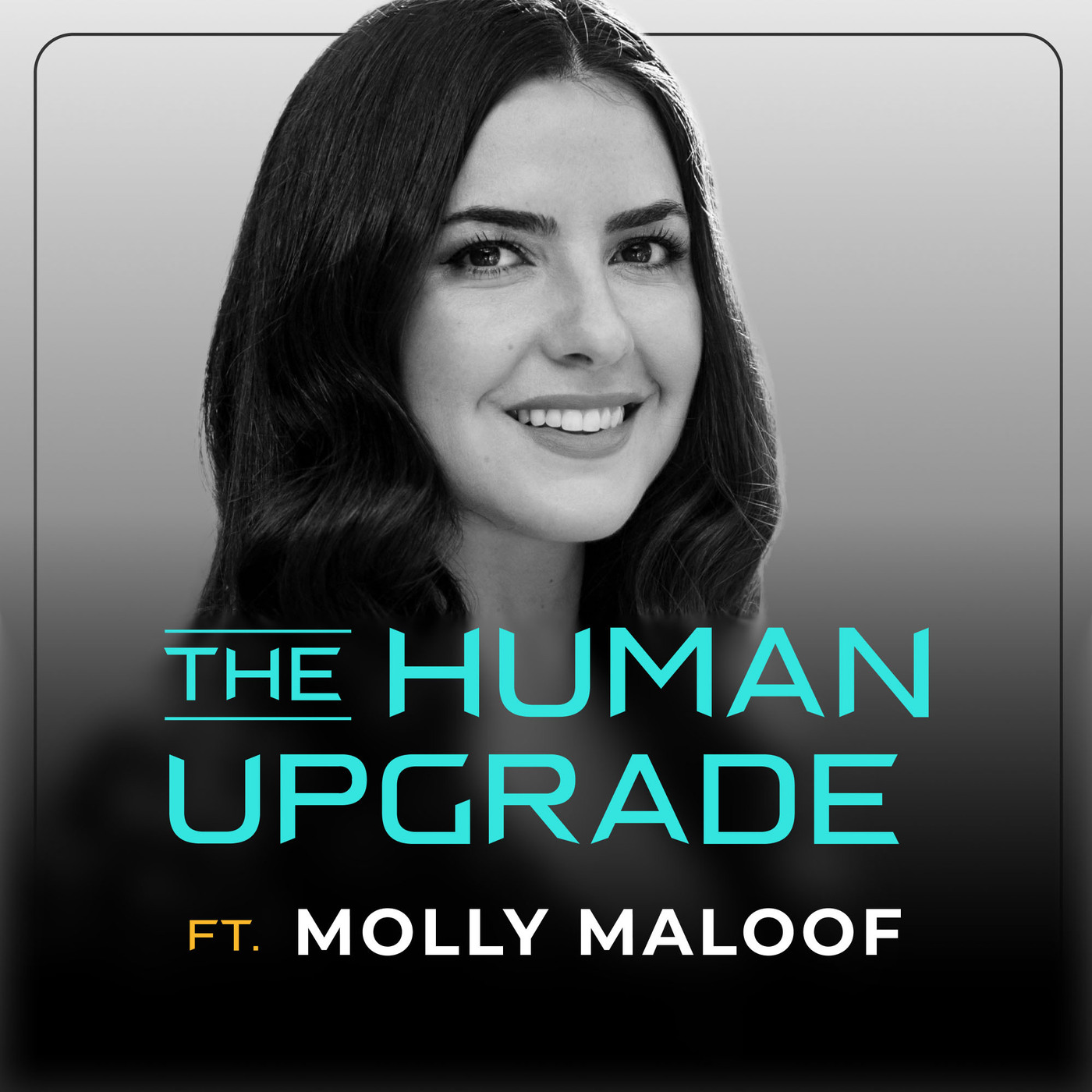
The Human Upgrade: Biohacking for Longevity & Performance
How To Hack Your Brain's Missing Youth Molecule | Molly Maloof : 1469
00:50:39
Loading summary
Transcript446 lines
- [00:00]
A
I actually believe that we're already at longevity escape velocity. You're the first person who's agreed with me on that. Everyone's like, oh, it's going to happen in two years or in five years, it's already here. We just don't see it.
- [00:09]
B
It needs to happen because we actually need to be able to treat aging as a disease.
- [00:12]
A
What are the pharmaceuticals? Peptides, Nutraceuticals. That might also help with assault Danger response.
- [00:17]
B
I've been thinking a lot about this.
- [00:18]
A
I think you're listening to the Human Upgrade with Dave, Asprey.
- [00:30]
C
And Doug. There's nowhere I wouldn't go to help someone customize and save on car insurance with Liberty Mutual. Even if it means sitting front row at a comedy show.
- [00:39]
B
Hey, everyone, check out this guy and his bird. What is this, your first date?
- [00:43]
C
Oh, no. We help people customize and save on car insurance with Liberty Mutual together. We're married. Me to a human, him to a bird.
- [00:50]
B
Yeah, the bird looks out of your league.
- [00:51]
C
Anyways, get a quote@libertymutual.com or with your local agent.
- [00:55]
B
Liberty. Liberty. Liberty. Liberty.
- [00:58]
D
DISH has been connecting communities like yours for the last 45 years, providing the TV you love at a price you can trust. Watch live sports news and the latest movies, plus your favorite streaming apps, all in one place. Switch to DISH today and lock in the lowest price in satellite TV, starting at $89.99 a month with our two year price guarantee. Call 888 ADD dish. Visit dish.com today.
- [01:28]
A
This is a special episode recorded in Las Vegas and I'm here with my friend, Dr. Molly Maloof, who's been on the show before.
- [01:37]
B
Yeah, it's good to see you. It's great to see you, Dave.
- [01:40]
A
We're going to talk about some stuff that I don't think gets enough attention in the world of biohacking.
- [01:46]
B
It sure doesn't.
- [01:46]
A
World of longevity and it's the effect of relationships on biology.
- [01:51]
B
Right?
- [01:52]
A
And like the definition of biohacking is you change the environment around you and inside of you so you have control of your state. And the problem is that part of the environment around you is people.
- [02:01]
B
Right.
- [02:02]
A
What have you researched?
- [02:04]
B
Well, I was trying to understand what was health. Right. The last decade of my life was like, I want to understand not just disease, what I learned in medical school, but what is health? How do we adapt and self manage in the face of adversity? How do we become more adaptable people? How. How do we optimize our lives, optimize our metabolism? I spent A lot of time on metabolism as, you know, continuous glucose monitoring. I was pioneering that a long time ago. But I kept on asking myself during the pandemic, why is this isolation? I'm eating the same foods, and my body is changing, and not in ways that I'm happy about. So that first taste of understanding the role of human connection was during the pandemic, during isolation. And I realized this was, like, the worst experiment we could do on humanity because we're not meant to be isolated animals. And in fact, it's in animal studies, if you want to induce depression and anxiety models, you isolate the animal. And so it's like we already knew this, and we did it anyway. And as we.
- [02:55]
A
But we were trusting the science. It's okay.
- [02:57]
B
We were trusting the science. And honestly, like, it's. You must feel so redeemed right now because you were really standing up for your beliefs and your truth, and you got punished for it pretty heavily.
- [03:06]
A
Oh, I only lost 95% of my traffic for two years, but I would do it again. It was the right thing.
- [03:10]
B
Well, you did the right thing. And, you know, I think a lot of us broke a lot of the rules and decided to, you know, meet people and spend time at parties and go to things that, you know, weren't so right. And Austin was a big. Was a big place for that.
- [03:22]
A
Oh, yeah.
- [03:22]
B
I mean, it was like the pandemic didn't exist there. It's part of the reason why I moved there.
- [03:26]
A
Yep. It's one of the reasons I moved there, too.
- [03:27]
B
It was just like freedom. But that led me to, you know, during this. During the psychedelic revolution which was happening during the pandemic, I was studying the science of love because I wanted to understand what drove female sexual dysfunction. And the three biggest drivers of sex, female sexual dysfunction, are largely psychosomatic, relationship problems, mood disorders, and trauma.
- [03:48]
A
So you're telling men that they should just say, it's all in your head?
- [03:52]
B
No. So I heard you say, mom, Definitely not. It's actually that what we think affects our physiology, and it affects our libido, and it affects the way we interact with people. And so I was studying the science of love because I wanted to understand sex, right? So I met Helen Fisher, who sadly passed away last year, but she was a pioneer in the science of love.
- [04:14]
A
And.
- [04:15]
B
And she discovered, essentially, there's three motivational drives in the human reproductive cycle. There's the sex drive, There's a romantic love drive, and the drive to attach. And they're all interconnected, but they're Driven by different systems, different neurobiological systems. So the sex drive is largely driven by testosterone and estrogen. And when we're going through puberty, we differentiate. Right. We get sex hormones, and those start changing us from. Largely when we're pediatric, we kind of look the same. Right. And then we go through puberty and we start differentiating to men and women. And. And then as people go through andropause and menopause, they start becoming the same again. So hormones are hugely influential in the sex drive.
- [04:52]
A
That's why we shouldn't go through andropause
- [04:54]
B
or it's why we really need hormone replacement.
- [04:56]
A
Yes.
- [04:56]
B
It's so crucial for relationships.
- [04:58]
A
That's the biggest thing people say, men and women. I. I got on the right hormones, and I feel like myself again.
- [05:04]
B
Yeah.
- [05:04]
A
And I will tell you, a woman over 50 on hormones in the bedroom is to be reckoned with for sure.
- [05:10]
B
For sure. I mean, I had some amazing sex therapists, were my mentors, and Sayeda Desole, and I mean, she is thriving and is absolutely just vibrant, and I think it's a testament to, like, dedicating her life to, you know, optimizing sexual health. So I was studying sexual health, and then I was studying psychedelics, and I wanted to understand, could you make a actual love drug?
- [05:31]
A
What's the best psychedelic for sex?
- [05:34]
B
I would say the gentlest one is probably two C, B.
- [05:37]
A
Okay.
- [05:38]
B
That's an interesting gentle. It's extremely. And actually used to be sold at truck stations.
- [05:42]
A
Oh, my God.
- [05:43]
B
As a drug for sexuality.
- [05:45]
E
Really?
- [05:45]
B
Yes. Before it was banned, I would have
- [05:47]
A
thought you'd say mda.
- [05:48]
B
So I think MD and MDMA have a lot of value, but they're largely oxytocin and serotonin dominant drugs, but they do have some dopaminergic activity. And norepinephrine. What we were working on was a pharmaceutical that was activating dopamine, serotonin, norepinephrine, oxytocin, and it was basically a liquid love drug. Love potion. Unfortunately, I started realizing how deeply unethical it would be to commercialize a love potion, because people started asking me, well, oh, there's this guy I really like, and can I just give it to him? And I said, oh, I got to start really thinking about this. And then obviously, what happened with the Maps Journey, and, you know, there was some trouble in their. In their. In their study, and I started realizing that these drugs, these psychedelics really are love drugs. They actually can reproduce the neurobiology of romantic love, which is driven by dopamine, which makes things significant and important, and norepinephrine, which makes you feel, like, super excited about, like, your partner, but also you. I can't sleep. I can't, you know, eat. I'm just so. I can't stop thinking about them. And then in romantic love, interestingly, initially serotonin goes down, so you. You're. You're kind of driven to your partner, so you can get more of the serotonin. And then serotonin release leads to oxytocin as well as orgasm. So the more you have sex with someone, the more likely you're supposed to. You're turning on the romantic love drive, and the more you're basically having. It's a. It's a. It's. It's biological. Biologically has engineered us for mate selection. So it's actually a physiological addiction to another person, and that's to get you to attach. And attachment is driven by vasopressin and oxytocin. And so vasopressin is what drives men to be very protective and defensive and also, you know, basically like protecting the ones that you love. But then oxytocin is what drives attachment. It drives pair bonding. It drives the birthing process. You know, pitocin is synthetic oxytocin. It's used to help with birth. And then when a woman breastfeeds, she releases oxytocin. And when you hold a baby, you literally get oxytocin. And babies are designed for you to become attached to them, so you keep them alive. So it's so crazy when you look at biology through the lens of our evolution, it's like we were designed to connect. And when you study mitochondria, you actually realize that they're social organelles.
- [07:59]
A
Absolutely. I think they're driving a lot of this.
- [08:01]
B
They drive so much of our behavior. They literally determine not just our metabolism, but where does our energy go 100%. Is it for survival? Is it for reproduction? And unfortunately, if someone's under huge amounts of stress, their libido usually doesn't follow because they're stealing those hormones to produce cortisol and to get you out of danger. So I really started understanding health more intimately when I started understanding love. And it really helped me realize, unfortunately, when I went through some toxic relationships, how love is not always a pretty thing. It can be really dangerous.
- [08:33]
A
One of my spiritual mentors just said straight up, that love is a terrible reason to have a relationship because it's easy to fall in love. Easy to fall in love. Time with them and you'll fall in love.
- [08:45]
B
Yeah.
- [08:45]
A
Even if it's not a really good partner for you.
- [08:47]
B
Right.
- [08:48]
A
Partners. This is why in India, like, you just rely on your parents to find a good partner and then you'll figure
- [08:54]
B
out if all in love, they actually have a pretty good success rate in marriages. Yeah. But I do think that shared values, shared goals, shared lifestyles, hopefully your parents
- [09:02]
A
are doing that for you too, because those, the shared goals is tough. I dated someone for the last two and a half years. We just realized we didn't have enough common shared goals.
- [09:12]
B
Yeah.
- [09:13]
A
We lovingly ended it just because, well,
- [09:16]
B
you're going to grow in different directions. The key is you have to know ideally what is your vision of your life. And ideally both of you have to have a similar vision. Otherwise you're going to go in different directions. And that is where a lot of people fall apart. But yeah, so I started studying the positive side of love and then I started studying the negative side of love. And then there's things like stalking. Right.
- [09:38]
A
And so what's the best way to stalk someone?
- [09:40]
B
Definitely you shouldn't stalk people. But what you. It's interesting to think about stalking through the lens of love because it's a person's brain that is so obsessed with someone that they are ignoring all of the social cues that say stop doing this and they're going out of their way. And this is also what explains domestic abuse and why women don't leave their abusers. Because they're attached. They're attached to these. And oftentimes what's really interesting is how much people are replaying their childhood unresolved
- [10:05]
A
trauma all the time. We see this at 40 years of Zen every single time.
- [10:09]
B
Yeah.
- [10:09]
A
People just don't know that. That's why.
- [10:11]
B
Yeah. And when you replay those scripts over and over again and you don't start realizing the patterns in your life if you don't realize there are patterns and how are you supposed to change them?
- [10:20]
A
Yeah.
- [10:20]
B
You know, and then so this led me to understanding the cell danger response
- [10:25]
A
that is behind so, so much disease. Yeah. Whether it's toxic mold or Lyme or
- [10:31]
B
a bad relationship relationship or it's like, it's usually a compounded thing. Right. It's like it's mold, it's Lyme, it's the wrong relationship, it's inactivity, it's eating the wrong foods. And it adds up to the cell going into essentially a self protection mode. It's trying to get you to complete the healing cycle. But the cell danger response is not supposed to get stuck. The problem is we get stuck in the cell danger response, and we don't turn it off. So that led me to learning about, like, programs like Primal Trust, like the Gupta program, DNRs, and even 40 years of Zen, I think, is a great example. Any type of neurofeedback that's reprogramming your stress response and actually creating a sense of inner safety.
- [11:12]
A
And it's not the cognitive stress response, it's the body stress response, which is driven by the cells.
- [11:19]
B
Exactly. You actually have to fix the cells, too. So that's what got me into understanding the PK protocol and phospholipid therapy, so crucial for detoxification.
- [11:28]
A
I get IV falsetylcholine just about every week, and I take it orally.
- [11:33]
B
Me too.
- [11:33]
A
From one of our guests.
- [11:34]
B
Yeah. So IV phospholipids, IV vitamin C, IV glutathione, or even oral versions of all of this are fantastic for helping your body remember that. This. Because the cells get stiff and they get stuck. And we don't want stiff and stuck cells. We want cells that are supple and that are fluid, and that can change. And also a huge, huge piece of healing from the cell danger response is actually changing your location. Like, if your environment is poisoning you, you have to move.
- [12:00]
A
So you have to leave California.
- [12:01]
B
I mean, I left California during the pandemic because it was, in my opinion, not pleasant. But I do think that there's a real beautiful resurgence happening in the Bay Area. And I think, you know, the AI movement for. Unfortunately, it's getting such a bad reputation, but AI has actually made me a 10x better doctor.
- [12:18]
A
Oh.
- [12:19]
B
But you have to have original critical thinking skills to begin with. If you don't have that baseline, it can really, you know, people are. There was actually. There's a. There's a first lawsuit that's come out about AI. There's a lawsuit where a son is suing OpenAI because his father became delusional talking to AI and AI was agreeing with it and confirming its delusions, and he ended up killing his wife.
- [12:43]
A
Oh, my God.
- [12:43]
B
It was tragic. And unfortunately, I think that AI for all it's good, there is this dark side of it. And I was friends with some of the people that were developing these AI friends. And I said to them, you realize you're going to make a lot of money, but you're going to ruin a lot of lives. Because what young people are doing is they are starting to become attached to these AI friends because they're not socializing
- [13:05]
A
that's so bad energetically.
- [13:07]
B
It's deeply, deeply bad for society because not only are they not socializing, they're not mating.
- [13:13]
A
And there's a co regulation that happens, we know for sure, by magnetic, probably by quantum, even when we're sitting here.
- [13:20]
B
Right.
- [13:21]
A
Like our systems are co regulated.
- [13:22]
B
Right.
- [13:22]
A
And you probably have some awareness of that because you've done all the work and so do I. Yeah, right. And you can actually learn to feel that and you can feel someone's energy and you cannot co regulate with an AI.
- [13:33]
B
No.
- [13:34]
A
And so if you feel like you're, you're doing that, you're really just using your mind and you should be using your body and that is the risk.
- [13:42]
B
I think somatic therapies are really crucial too. I think a lot of people underestimate the role of things like trauma release exercises and somatic experiencing. And just even ayahuasca and psychedelic medicine has a huge opportunity to heal, specifically through hormesis. So we know that hormesis is a huge part of biohacking.
- [14:01]
F
Right.
- [14:01]
B
It's a huge part of healthspan extension. And it's not just hot and cold, it's not just high oxygen, low oxygen. It's not just feasting and fasting and exercise and recovery. But it's also social hormesis and the way that when we go out and we interact with people, there is a bit of evasopressin released by design because we actually do need to be on guard for danger. But when you find your tribe, which I love, conferences are a perfect example of how social racism in action. Because people go and they're in a crowd and they're like, I don't know anyone here. And then they see someone they know and then they hug and they get that oxytocin.
- [14:35]
A
Oh yeah.
- [14:36]
B
And they return to safety. And that trains your brain that it's okay and it's safe to socialize. I personally believe that a lot of generalized anxiety is from people living alone. We are not designed to be social, socially isolated animals. We are not designed to live alone. We're supposed to be in tribes. We're supposed to have people around us. We're supposed to live in communities and our communities are falling apart. And we have record numbers of people who actually describe having zero confidants, zero friends. This is horrible for human metabolism.
- [15:06]
A
One of our other guests, Adam Lane Smith, he came out and just said, look, if women want to raise their oxytocin, they need to be around other women and talk and if guys want to raise vasopressin, they need to be around other men and solve problems together. Yes, but you have to have a community to do that. Yes, even one or two confidants. But if you have none, that's kind of hellish.
- [15:30]
G
Wherever you go, whatever they get into, from chill time to everyday adventures, protect your dog from parasites with Cridellio Quattro. For full safety information, side effects and warnings, visit cordelioquattrolabel.com consult your vet or call 1-888-545-5973. Ask your vet for Cordelia Quattro and visit quattrodog.com
- [15:57]
F
so you're running out of closet space. The good news, you don't need to stop shopping. You just need to start selling with the RealReal. The RealReal is the world's largest and most trusted resource for authenticated luxury resale. Whether it's that mini bag that can't even fit your phone or those boots you never fully broke in, the RealReal handles everything from photography and copywriting to shipping and pricing. So you can just sit back, get paid, and make room for things that
- [16:23]
B
actually feel like you.
- [16:24]
F
And with 10,000 plus new arrivals every single day from top designers like Prada, Celine, Louis Vuitton and Loewe, all for up to 90% off retail, you're bound to find something perfectly on brand to fill that extra closet space with. Plus, this may only you can get an extra $200 to shop when you sell for the first time. Make room for what feels like you go to therealreal.com to start selling and get your extra $200 to keep shopping@therealreal.com that's therealreal.com terms apply.
- [16:57]
B
It's hellish and it's causing mental illness. So we saw record numbers of diseases of despair. Diseases of despair like addiction, suicide, depression, anxiety, all these diseases of despair started and even domestic abuse from that isolated Covid experience. And I don't think our government really recognized, unfortunately, this how, how, how physiology works sadly. And they were so focused on the disease and not on the actual consequences of changing the social environment for people.
- [17:28]
A
Do you think we could make up a name for that disease? I think I'd call it Fauci syndrome.
- [17:33]
B
I mean, I think somebody really needs to do a serious review of the actual epidemiologic epidemiology of what's happened since the pandemic. Because I would be really curious to know the people who lived in social situations, how much, how often I'd really be curious if they actually got Covid more. I'd be curious if they got worse. If they got hospitalized more. I would guarantee just as a hypothesis, but I would be willing to bet that the people that were isolated had worse outcomes than people who were connected.
- [18:02]
A
It makes so much sense. And they just ignored all that during that time. Even though the former surgeon general came on this show and the only book he's ever written was about the epidemic of disconnection and pre pandemic.
- [18:18]
B
Pre pandemic.
- [18:19]
A
So it's not like we didn't know at high levels. It was just like some sort of mass madness came over people, and we just ignored human happiness and thriving.
- [18:29]
B
Yeah.
- [18:29]
A
For.
- [18:30]
B
It's funny, I was studying the pandemic of 1918 before the pandemic started, like, as the pandemic started. And I actually was studying viruses, strangely, in 2019. And I thought to myself, shoot, we are not. Not prepared for a pandemic. Like, we are, as a society, going to be so screwed because it's our. Our metabolism is our Achilles heel.
- [18:49]
A
It's funny because we're really well prepared for pandemics because we've lasted through all of the existing ones.
- [18:55]
B
Yeah.
- [18:55]
A
And though the Spanish flu was apparently mostly aspirin toxicity. No way this is published in the British Medical Journal or the Lancet. So the year in 1917 is when aspirin went off patent.
- [19:08]
B
Oh, my God.
- [19:08]
A
They were giving people 50 grams of aspirin.
- [19:11]
B
That's crazy.
- [19:12]
A
Which is enough to cause you to bleed out. Most of the people who died were young and healthy, and. Oh, my God. They were just overdosed on aspirin.
- [19:19]
B
Oh, my God. This is so sad. I mean, it is. It's really interesting. I was listening to a podcast. There was a doctor that went on, Joe Rogan, talking about her. Just. She was just wanting to give people drugs that worked. Yeah.
- [19:30]
A
Shocking.
- [19:31]
B
Ivermectin and monoclonal antibodies. And I got monoclonal antibodies, and it was like night and day. I felt so much better. They were giving them away in Florida, and then the government stopped it.
- [19:41]
A
Right. It was crazy.
- [19:42]
B
It was crazy. We were living in a very crazy time. But I think we're returning back to some sanity.
- [19:47]
A
And people don't trust their health daddy. Which is good, because you shouldn't have a health daddy. You're your own health daddy.
- [19:53]
B
You need to be your. That's the whole point of biohacking is that we become the, you know, the arbiters of our own destiny. Right.
- [20:00]
A
Your doctor works for you. Yeah, the other way around. And your insurance company and your boss and your government are not the people who have the decision.
- [20:09]
B
Right.
- [20:09]
A
Only you and you can decide who you trust. And yeah, you're insane if you trust the old regime. But I have to say, the, the new regime at the fda. I am shocked at how on board with biohacking they are. I know I'm having had a chance to interview the current head of the fda, I, I mean, I kind of went in a little apprehensive and I came out just reinvigorated. I'm like, wow. At least at the high levels, I'm sure the agency is going to take a lot of work. But at the highest levels, he talked about circadian disruption in kids as being worse than in convicts and how we had what the head of the FDA talking about circadian biology. This is amazing.
- [20:46]
B
It's so crucial. I mean, I think we're suffering from a real epidemic of screens, essentially creating process social connection and process sex and, you know, process relationships. Like people are literally not actually experiencing in real life the things that are necessary for health.
- [21:05]
A
So let's talk about intimate relationships. Yeah. Being necessary for health.
- [21:09]
B
Yeah.
- [21:10]
A
So are you saying that people who are single are gonna die?
- [21:13]
B
No, I mean, as a single person, you can surround yourself with people that you love and trust. You can create a loving community. And one of the beauties of like the Austin community and even I would say the Burning man community is like, human touch is kind of welcomed. Cuddling is welcome.
- [21:28]
A
I have a cuddle puddle in my house.
- [21:29]
B
It's great. It's a great way to get oxytocin and feel, to feel safe is to actually socialize. And where there's this great movement of like non alcoholic drinks moving around. Right. And it's true.
- [21:39]
A
Kava shout out.
- [21:40]
B
It's one. It's wonderful, right? Like, there's ways to socialize. And I mean, what I love is like seeing how hotels and, you know, bathhouses and sauna spaces and biohacking gems. Like you had one of the first biohacking.
- [21:52]
A
The first.
- [21:52]
B
Yeah, the first. These are places where people can go and get that social interaction and find that community gyms are a great example. Gyms are one of the. If you need friends, if you need social connection, join a gym because you will find people there that are like minded and that you can, you know, enjoy. Enjoy, you know, contact with. I do think that there is a special role for intimacy. There was a recent study that just got released, I think in JAMA last week, and it was about how they studied 70 couples. And they, they, it was a randomized controlled trial. And one group just said, do what you're doing. We're just gonna monitor you. And the other group got oxytocin and intimacy recommendations.
- [22:30]
A
Like recommendations?
- [22:31]
B
They were recommending that they engaged in more intimate contact.
- [22:34]
A
Okay.
- [22:34]
B
And they had. They measured wound healing in both groups. Oh, wow. And they found a dramatic increase in wound healing in the group that received oxytocin and physical intimacy.
- [22:44]
A
Wow.
- [22:44]
B
So it was like oxytocin truly is nature's medicine. And you can get it from just a hug, a three second hug. You can get it from cuddling, you can get it from even just going to get a massage and, or having someone like tickle your arm or even tickling your own arm. That's called, there's a term for it, Havening. Right, right. So there's ways to get oxytocin without being in a romantic relationship, but my personal preference is orgasm. So I think that's great.
- [23:11]
A
Always. If you're single, you should get a massage as often as you can afford.
- [23:15]
B
Definitely.
- [23:15]
A
Just for the physical touch. And single people can still orgasm.
- [23:19]
B
Absolutely. Totally. But it's funny, I was studying the placebo response, trying to understand why it worked the way it did. And I dug and dug and dug into literature until I finally found some evidence that suggests that it is oxytocin driven. And it's the expectation of care that creates the healing response. It's the expectation of getting. And that's why healthcare needs to include care and not just health. Because the caring element of medicine is, sadly, it's a huge problem. Like, it's doctors, nurses and staff are so burned out, they're so exhausted. And unfortunately, you have worse outcomes if you don't have a caring team around you. So it's really important to like have a social network around you because if you do get sick, you want people there because that actually will change the outcomes of your health.
- [24:06]
A
Wow.
- [24:06]
B
And not only this, they actually studied the placebo response where they gave a placebo along with a statin and it actually improved the efficacy of the statin.
- [24:14]
A
Oh, wow.
- [24:15]
B
So we should be actually giving people placebos. Like, we should be marketing placebos. I don't know why we don't. And I think that it's silly that the government doesn't do more research into this because it's free medicine.
- [24:24]
A
Well, that's why they don't do it.
- [24:25]
B
I know.
- [24:26]
A
I mean, who at the NIH is going to make billions of dollars from studying placebos.
- [24:31]
B
I don't know. I mean, I think it's funny. I think psychedelics have a potential role in two ways. I think they are potentially a like, like super placebo because there's this whole experience and ritual around a healing journey and there's expectation of I'm going to go through this journey and I'm going to come out differently. Yeah, there's this preparation, there's this experience, there's this integration. There's usually a person with you during the experience. But then there's also a new paper written by my mentor, Sue Carter, whose husband is Hugh in Porgis. So he studies stress, she studies love.
- [25:03]
A
I love him. He's been on the show twice.
- [25:04]
B
These two people are just really phenomenal thinkers. And she taught me all about oxytocin neurobiology and so she, I got her interested in studying psychedelics. So she discovered that there's a hormetic element to psychedelics because largely a lot of psychedelic journeys are very uncomfortable and scary and actually induce a fair amount of vasopressin. But then it's the end result of when you finally get to that peak experience and then you're like, oh, you have this window of awareness and you start feeling safe again. It's like a hormetic cycle, right?
- [25:37]
A
Yes. It's kind of like exposure therapy when you think about it. And that's why even one dose of mushrooms in hospice makes people less afraid of death. So a more peaceful passing.
- [25:47]
B
And it looks like their government's starting to wake up to this. I mean, in Texas they're starting to legalize. Look, at least study ibogaine.
- [25:54]
A
Yep.
- [25:54]
B
And then Colorado, New Mexico, California, they're slowly, we're seeing this awareness around psilocybin being medicine. I mean, I think psychedelics are not a panacea. I think they have a lot of potential. But what we really need is we need a broad based study on the markers that predict psychosis so that we can ideally weed people out. And there are definitively like a fair number of snips that you can look at.
- [26:18]
A
Yeah, it's funny, even something like cannabis. So when I, I first went on the Rogan show, this was right before cannabis became legal in California. And you know, the, the camera's about to start rolling and he takes like a huge hit. He's like, here, do you want some? And I'm like, no, I, I will be an idiot on your show. And I just found out in a genetic test, I'm in the bottom 4% of people who can process THC. Oh, so for me, that's not the right medicine. No. And if I do it, I just get hungry and tired after like three espressos and one hit, and it's just not worth it. It's not totally free anyway.
- [26:51]
B
No.
- [26:52]
A
So. But knowing that would I like it topically, though, for.
- [26:55]
B
For just muscle pain. It's fantastic.
- [26:57]
A
Totally. I mean, it's medically useful. A little bit estrogenic.
- [27:00]
B
Yeah.
- [27:01]
A
But I want to draw a parallel here. So in heavily meditated the. My most recent book, I talk about ways to enter these altered states of feeling. Like to kind of talk to your cell biology. And there's a chapter on psychedelics and kind of what each one does. And there's another chapter on tantra and conscious kink, because 20% of people report meeting God during orgasm at least once in their life.
- [27:25]
B
Oh, for sure.
- [27:26]
A
But you can't tell because they're laying there flopping around, but they're having an absolute healing sacred experience and healing deep trauma.
- [27:33]
B
Yeah. So I studied this, actually. I was trying to understand why PDSM healed people and. But it's thought. It's a hypothesis. But it's thought that because. And it's not. And this is not to say that everyone who enjoys kinkest trauma, because that's definitely not true. Some people just like it. But there is a fair percentage of the population that when they go into these states of domination and submission, they're able to relive trauma in a safe environment, which reprograms that memory and reconsolidates it as a safe experience. And so that your brain starts to recognize. Oh, I no longer have to recognize. That is, I don't. I no longer have to relive that traumatic experience over and over again. I get to complete the cycle of healing, and I get to experience the incredible oxytocin and endorphin rush that you get.
- [28:22]
A
Yeah. It's actually similar to the reset process at 40 years of Zen.
- [28:26]
B
Yeah.
- [28:27]
A
Where you intentionally experience an uncomfortable feeling followed by a state that cancels it out. So now the body's saying, okay, I'm re experiencing a lot of BDSM is birth trauma around in utero and around birth.
- [28:40]
B
Wow.
- [28:40]
A
And then. So for people who are traumatized, they're going through. Then the body re. Experiences being constrained, which is what happens.
- [28:47]
B
Oh, my God, that is so fascinating.
- [28:49]
A
Totally. And then. But after that, now there's this, you know, orgasmic, probably, but at least a really pleasurable thing. So then the. The system, not the brain.
- [28:57]
B
Yeah.
- [28:58]
A
I Can't have experienced this. And experience this. Therefore, the first signal is wrong and it's attenuates it.
- [29:03]
B
Yeah.
- [29:03]
A
So a lot of people get into BDSM because they're called to do that.
- [29:08]
B
Yeah.
- [29:08]
A
And then the other half of people are doing it because I call this bicep. Brief intentional conscious exposure to pain. That's why monks would flog themselves. Yogis lay on spikes.
- [29:19]
B
Oh, my gosh.
- [29:20]
A
250% improvement in dopamine receptivity. The dopamine receptors become more sensitive to dopamine.
- [29:27]
B
Interesting.
- [29:28]
A
So the monks are whipping themselves because it makes it take less willpower to be a good monk.
- [29:32]
B
Wow. I mean, I love acupressure mats.
- [29:35]
A
Yeah. And I used to sell those, like, 15 years ago.
- [29:37]
B
They are 100. One of the cheapest, most effective ways to reset your stress response.
- [29:42]
A
Yeah.
- [29:42]
B
I actually was wearing a HRV monitor, and I was using an acupressure mat, and I could definitively see my HRV improve.
- [29:49]
A
Wow.
- [29:50]
B
It was really effective.
- [29:51]
A
You know what else is in that same neighborhood is cold plunges or crack therapy.
- [29:55]
B
Yeah.
- [29:55]
A
It's brief and intentional. Uncomfortable. Blah. And you do that, and you get the metabolic benefits, but you also get the dopamine benefits. And it's not from increasing dopamine. It's increasing your sensitivity to dopamine.
- [30:05]
B
Yeah. Which we all need more turns out.
- [30:08]
A
Yeah. I named that chapter go spank yourself.
- [30:11]
B
I love that. You know, it's funny, I. I was very pro psychedelic for a long time, and then I started realizing what comes next beyond psychedelics. And it's really being able to induce these states without drugs at all.
- [30:21]
A
That's why I do neurofeedback.
- [30:22]
B
Yeah. It's. It's remarkable. I. It's funny, I. I would say there's, like, sometimes a role for a healthy cult once in a while. And like Isha by Sadhguru is definitively an example of that. It's very benevolent. But I learned all these Kriyas, and I learned all these breathwork practices, and it was like, if you do them consistently, you can actually get high on your own supply. And these are ancient technologies. These are not new. These are thousands of years old. But I was grateful to learn them. But I was like, also, I'm not
- [30:51]
A
joining your culture, but, you know, it's okay to study. Even like, Scientology has some really interesting biofeedback there. But you have to join the cult.
- [30:59]
B
No. Right.
- [31:00]
A
But you can benefit from all these different areas of. Of study and people who are trying to stack things.
- [31:06]
B
I mean, it's working for Tom Cruise, whatever he's doing.
- [31:08]
A
There you go. Right. And it's. It's an interesting thing because I've. I've done Sadhguru's inner engineering workshop and Sri Sri Ravi Shankar's I'm Art of Living. I did every morning for five years.
- [31:22]
B
Yeah.
- [31:23]
A
And the most impactful, deepest altered states I've ever been in were from neurofeedback.
- [31:29]
B
Yeah.
- [31:30]
A
One. And number two from breath work. And number three from really good sex.
- [31:33]
B
Yep.
- [31:34]
A
All right.
- [31:34]
B
Yeah.
- [31:34]
A
Psychedelics are. I guess, after that.
- [31:36]
B
Totally.
- [31:37]
A
Yeah.
- [31:37]
B
I would really love to do 40 years of Zen. I think I need to. I definitely feel like one of these neurofeedback programs, either BioCyberNot or 40 Years of Zen or like there's so many in Sedona. It's like the. Like, it's such a place for this kind of thing
- [31:52]
A
with 40 years is in one of the quotes from someone who went through it was, this is like the best plant medicine ceremony I've ever had. But there was no medicine.
- [32:00]
B
Yeah.
- [32:01]
A
Just so you know, people are entering these altered states. And so I don't actually have a preference for how someone goes there, but they're all going to the same place. Whether it's, you know, really good sex, whether you're tied up or not, whether
- [32:13]
B
it's meditating deeply for a week.
- [32:15]
A
Exactly. Be in a cave for a while.
- [32:17]
B
Yeah.
- [32:18]
A
Right. Fasting for long periods of time.
- [32:19]
B
Yeah.
- [32:20]
A
Doing any of these breathwork practices. Running electricity over your brain. Maybe the light, sound, stuff like Roxiva and all. All of these. It doesn't really matter. But you're going into this reprogramming state of your biology. And I think many, if not all of those do hit the cell danger response. So you just make them, your cells, less afraid.
- [32:38]
B
Yeah.
- [32:39]
A
What are the pharmaceuticals? Peptides? Nutraceuticals. That might also help with the cell danger response.
- [32:44]
B
I've been thinking a lot about this. I think BPC TP500. Really important for just repair. I think SS31. Because Mitochondria gets so screwed.
- [32:54]
A
Yeah. I injected some of that this morning.
- [32:55]
B
I love SS31. I think it's one of the. My top. Top five. At least I don't do. I don't do as well with MOT C. I think people with MAST cell don't do as well with it. It can be really tricky for those people. Humanin is pretty popular. All the mitochondrial peptides are very popular. But then I think even. I think it's really important to just get the brain to become more functional. So Solank and cmax, there's a lot of problems with BDNF production, there's a lot of problems with HPA axis dysfunction. So CMAX and Silank are fantastic for regulating those. I also really like epitalon, so I think telomere biology is a huge opportunity. I just met a woman named Linda at Eudaimonia and she is commercializing a drug that they've been working on for like 30 years and they're finally getting into an IND, they're finally ready. But it's actually been able to restore telomere telomerase levels to that of a, of a youthful state.
- [33:49]
A
Wow.
- [33:50]
B
So it doesn't over produce telomerase. It gets you back to your baseline of a child, like what you would be like as a kid. So I think it's going to be, I think we are really going to see true medicine for healthspan. The problem is, is that our fda,
- [34:03]
A
when you say health span, are you afraid to say that we're extending human life?
- [34:06]
B
Well, I think quality of life is so crucial and I think my general. I think being really sick and unwell and old is not a pleasant experience. I think compressing.
- [34:18]
A
Don't you, don't you want healthspan and lifespan?
- [34:20]
B
Yeah. So healthspan is about compression and morbidity to the very end of life.
- [34:24]
A
So you're gonna die at 86, but at least you'll be healthy when you die. That's the plan.
- [34:27]
B
I mean, it's been a week. That's not what I mean. It's actually about if you, when you extend health span, you extend quality of life and healthy years of life.
- [34:35]
A
It's precious.
- [34:35]
B
So super centenarians, the difference between them is not that they just live long, it's that they compress their morbidity. At the very end of life, they have the highest health span. Correct. So I think extending health span is the path to longevity.
- [34:48]
A
Completely agree. I just get frustrated when people say, oh no, we're only doing health span extension. And I think Peter Attia might be the poster child for that. And I'm like, no, I've been working for the last 28 years with people who are actively extending the length of their life and the quality of their life. That's the goal.
- [35:06]
B
That is the goal.
- [35:06]
A
Call it what it is.
- [35:08]
B
Well, it is longevity. But I think the thing about longevity is that there we have to. Actually what we need to figure out is how are we going to get people to reproduce. And who's going to take care of all the elderly?
- [35:19]
A
So this population, elderly who are young.
- [35:21]
B
That's the goal. Right?
- [35:23]
A
But it's not just the goal. If we don't do that with David,
- [35:26]
B
it's just longevity and it's not actual quality of life for longer. Then we end up with a lot of old people that are sick.
- [35:32]
A
That's not the vision being taken care of. Robots, you want to be healthy for as long as you want and die at a time and by a method of your choosing.
- [35:40]
B
There you go. Yeah, there you go.
- [35:41]
A
And. And to set our goal to anything other than that is just not okay for humanity.
- [35:46]
B
Yeah, I mean, I think I'm. I'm for quality of life for longer. And I feel like health. My. My personal philosophy is we need to figure out how to create healthy humans so that their bodies last longer, that comes first. And our braids last longer.
- [36:00]
A
It's amazing. Like you say, if someone's healthier, they'll probably live longer.
- [36:04]
B
Turns out, I mean, the real key is adaptability. Right? It's like, do you have enough adaptive capacity and bioenergetic capacity to maintain the integrity of your structure in the face of adversity? So I had the hardest year of my life last year. Oh, my gosh, it was unbelievable how many bad things happened to me in one year. And I am very fortunate that I've been able to bounce back.
- [36:26]
A
Yeah, your energy is fine.
- [36:27]
B
It's. Yeah. But like, I had a lot of. I had a strong baseline health, so most people, if they went through. I had C Diff. I had. I gave myself a stool transplant that fixed it. I had.
- [36:39]
A
Did you get the poop?
- [36:39]
B
I got it from Novel Biome in Canada.
- [36:41]
A
Okay, cool.
- [36:41]
B
They ship it to America.
- [36:42]
A
Wow.
- [36:43]
B
Yeah, it's great. And then I got. And then I had a head injury from bike accident.
- [36:48]
A
Oh, shit. Those are tough.
- [36:49]
B
And then I had wildfire smoke exposure that will mess you up and gave me mast cell. And then I had ebv. So it was like. I mean, I thought I was gonna have chronic fatigue. I was so freaked out. But I was like, no, this is not gonna. Not gonna be my story. And I did a ton of work with Katrine Valinsky. I know you. I don't know if you know her. I don't know her, but she's like the healer behind all the healers. Like, she's the person you go to when you're really screwed up.
- [37:15]
A
And, like, I want to talk to her.
- [37:16]
B
She is absolutely the hands down, best healer I've ever met in my entire life. And she, in, like, 10 days, transformed my health.
- [37:23]
A
Wow.
- [37:24]
B
Transformed me. And like, so we did. I mean, we did. It's. She basically, you go into her clinic and she works with a naturopath in Sedona, and you go through this entire process of IV therapy, HBOT if you can do neurofeedback, if you want really healthy food, lots of hikes, all the different biohacking technologies, lots of different energetic tools that you can't even. You don't even know about, like rife machines and these weird. These weird Russian technologies that just you've never seen before. And it's all designed to build your bioenergetic capacity and restore your body back to safety.
- [37:59]
A
How interesting. I've had a rife machine starting, like, 1998. I bought one, and probably my house is full of similar things because there's so much out there that's just not in people's awareness.
- [38:11]
B
Oh, my gosh. Totally. There's so much mast cell out there.
- [38:14]
A
Yeah, let's talk about that. I've done a few episodes on it, and I've had issues with mast cells probably since I was a kid.
- [38:19]
B
Yeah.
- [38:20]
A
And I have it very well managed. But mast cells for listeners, these are. Call them landmine immune cells. They sit around looking for a threat, and when they see one, they explode. And a normal landmine, if a tank rolls over it, it goes off. But if a rabbit steps on it, it doesn't. But they get sensitized by these threats.
- [38:37]
B
Yes.
- [38:38]
A
And then a puff of air sets it off, and then all the ones around it go off and you get histamine storms and a bunch of other inflammatory cytokines and miserable post Covid. Everyone with long Covid has mast cell. All the mold people. Mast cell. Right. Because the body's like, there's a threat. I can't figure out what it is. I guess I'll just crank.
- [38:55]
B
Oh, and I had mold exposure this year.
- [38:57]
A
Oh, geez.
- [38:58]
B
In Mill Valley.
- [38:59]
A
Imagine that. Mill Valley is just a mold bomb.
- [39:00]
B
It's a mold bomb. But the thing is, is that I think phospholipid therapies. I think glutathione, I think Meyers, I
- [39:07]
A
think vitamin C. Ultimately, that's a cell dangerous response.
- [39:10]
B
It is. But then I had to do. At one point, when I had the full blown mast cell, I was doing IV Benadryl, Toradol.
- [39:16]
A
Holy crap. Benadryl's hardcore.
- [39:17]
B
It's hardcore. I mean, you're really. You really pass out after that you're just tired. But, like, I think we really do need to address, like, the thing is, is that it wasn't. None of this was my fault. It was just the combination of so many different things at once that got me stuck in the cell. Danger, response.
- [39:33]
A
I think you should take responsibility.
- [39:35]
B
Look, I mean, yeah, I think certain. I actually thought. I mean, I thought it was pretty invincible, to be entirely honest.
- [39:41]
A
You got the lesson.
- [39:42]
B
I thought I was a superhuman. I mean, I was running three companies. I was teaching at Stanford. I was publishing a book. I was, like, flying very high. And then God was like, oh. Then, you know, it all started. It all started with a toxic relationship.
- [39:55]
A
That can be the tipping.
- [39:56]
B
It literally was like. But that was followed by a spiritual awakening. And then it was the deep, dark night of the soul.
- [40:02]
A
That's why you chose all that.
- [40:03]
B
I know. But then I was like, okay, God, like, what is the lesson here? And it was. The beautiful lesson was like, you really have to examine the way that you have even energetically called these things into your life.
- [40:14]
A
Your energy is very different now than the last time we talked.
- [40:16]
B
Yeah.
- [40:17]
A
You've gone through a big transition. Congratulations.
- [40:19]
B
Thank you. But that's what healing's about. And that's what, you know, that's what biohacking can do for us. Right. It's like, we're gonna be hit with challenges. That's okay. The key is, is that you wanna take such good care of your body so that when you get these massive horrible things that happen that you can bounce back.
- [40:33]
A
Yeah.
- [40:34]
B
And that you can recover. I just went elk hunting last weekend, or last week, actually, a few days ago. Did not get one. I might go back next week, but it's my second time this year, and it's a really hard sport. But we did go riding around in horseback in, like, really shitty weather.
- [40:48]
A
Wow.
- [40:48]
B
But it was really cool to be, like, riding around with my rifle on a horse through the wilderness thinking, I feel really strong right now.
- [40:56]
A
That's incredible, because a lot of people who hadn't been sick like you would still be wiped out by that.
- [41:01]
B
Yeah. Yeah. It was great.
- [41:02]
A
I have a problem. Every time I go hunting, I only see females. Last time I went after deer, I saw 17 does and no bucks.
- [41:10]
B
Well, they say they taste better.
- [41:11]
A
You're just not allowed to shoot them, is the problems.
- [41:13]
B
Well, it's all about the tag, Right? I had. I got three tags this year and three different locations. And it is really, really a hard sport, but I'm not gonna give up. It's like one of those things where you just have to keep trying and then eventually you'll win.
- [41:25]
A
Do you ever get crap from vegans?
- [41:27]
B
Yeah. But I tell them that they're killing way more animals with their lifestyle than I am.
- [41:31]
A
Yeah.
- [41:31]
B
You know, I would rather kill one animal and eat that for a year than kill thousands of squirrels and rabbits in avocado production.
- [41:39]
A
Yeah. It's so hypocritical. And having raised my own animals on a regenerative farm, there's a sacred connection. I have no issues with it. But it's funny. Still, some people, how can. How dare you hunt? I'm like, how dare you eat grass?
- [41:51]
B
I also think this is an unpopular opinion, but I think plants are somewhat sentient. Like, they have the ability to communicate with each other.
- [41:59]
A
Anyone who's done shamanic work, you can go talk to the plants and they will tell you things and. Yeah, absolutely. And some plants are very angry with the way we treat them. Like soy. Soy hates humans. It is a very angry plant.
- [42:11]
B
Interesting. Like, I don't want to comment on that, but. So, yeah. I mean, it's funny. It feels like right now in my career, I'm just starting to really finally feel like I have some sense of what health is about. And now there's this whole revolution around regenerative medicine. And I'm just so excited about this space because it feels like we're heading into a real era of medicine for longevity.
- [42:35]
A
I like the name regenerative medicine maybe even more than longevity medicine, because Me too. We're turning the clock back.
- [42:41]
B
Yeah.
- [42:41]
A
And the goal is to have the energy of youth and the wisdom of years.
- [42:45]
B
Yeah.
- [42:45]
A
And that's why I branded longevity as biohacking, to get younger people to say, well, the stuff that makes old people young makes young people powerful. So we have a common tool set.
- [42:54]
B
Totally.
- [42:55]
A
And if we can make highly resilient 19 year olds. And a lot of my contents. If I would have just known this when I was 19, I would have saved millions of dollars.
- [43:03]
B
I know.
- [43:04]
A
Suffering. Right?
- [43:05]
B
Same.
- [43:05]
A
And so now, though, young people have access to all these tools so they can stay incredibly resilient.
- [43:11]
B
Totally.
- [43:11]
A
And that gives them the energy to go build community and find their place in the world and find their mates and all that kind of stuff.
- [43:17]
B
Yeah.
- [43:17]
A
But if you're anxious, exhausted, your mitochondria crash, you're having, like, you see Stanford, 40% of students are disabled.
- [43:25]
B
What?
- [43:26]
A
It just came out. So MIT was 8%.
- [43:29]
B
That is insane. That is absolutely not okay for our country.
- [43:33]
A
No.
- [43:34]
B
We are a Sitting duck, frankly. Like, our military is really struggling because there's not enough. There's too fat to. Too fat to serve or so there's like, there's actually like a whole initiative in the military trying to get people to actually fix their metabolism issues.
- [43:47]
A
I'm actually talking to one of the guys working with the Marines about how we can build healthier environments for the Marines.
- [43:53]
B
Yeah.
- [43:54]
A
We can build healthier practices because it's ridiculous to build a military on people who are sick when it's not expensive to make them powerful.
- [44:01]
B
Totally.
- [44:02]
A
Right.
- [44:02]
B
Totally. Yeah. I think we're. I think a tide is turning. Unfortunately. It seems like there's really two groups of people right now. There's like the people that are totally taking agency over their health.
- [44:11]
A
Yeah.
- [44:11]
B
There's a lot of young people that are super fit, super strong. Like really starting to biohack young.
- [44:15]
A
Yeah.
- [44:15]
B
And then there's everyone else. And unfortunately, going to an airport these days. I love what RFK is doing with this billion dollar initiative.
- [44:22]
A
So.
- [44:22]
B
Good for putting better food and gyms and, and, and airports. They're gonna have to make a really big one though, because there's a lot of people in an airport and it's gonna be packed.
- [44:30]
A
Oh, it's going to be really packed. And I was flying out here on Southwest, which maybe isn't always my favorite airline.
- [44:37]
B
Yeah.
- [44:38]
A
But I got an aisle seat and the number of people who just smacked into me because they didn't fit in the aisle.
- [44:42]
B
I know.
- [44:43]
A
And I feel so bad because I used to be that big. I was a 300 pound guy.
- [44:47]
B
Yeah.
- [44:47]
A
I'm like, this is unnecessary. And I don't judge people or anything like that. I'm just like, wow. The amount of human suffering because they don't know what to do.
- [44:54]
B
They don't.
- [44:54]
A
And it's not a willpower thing. It's nothing like that. It's. They've been poisoned and they're consuming processed food and snacking.
- [45:01]
B
We know that. I mean, so San Francisco is apparently suing these big food companies.
- [45:04]
A
Wow.
- [45:05]
B
Or the fact that ultra processed foods are poisoning people. I think it's pretty cool. I think there's things happening. It's time for people to realize that. I mean, I feel like that movie Idiocracy was like, we're literally living in that era right now. It's crazy to me how many people don't drink water, they just drink soda. I mean, if you go to, if you go to like a typical airport, most people walking around don't have vibrant health. They look sick, they look unwell, they look like they don't have energy, they look tired, they look worn. And it's like really, it's unfortunate because it's not a good harbinger for their longevity.
- [45:40]
D
No.
- [45:41]
A
One of the biggest indicators of whether you're going to live a long time is how fast you walk.
- [45:45]
B
Yeah, right.
- [45:46]
A
Is grip strength and walking speed. And you can predict those with a longevity test looking at DNA methylation with something like 90, 95% accuracy.
- [45:54]
B
Totally.
- [45:54]
A
And you go to the airport, look at the number of young people who are walking really slow.
- [45:59]
B
So slow.
- [45:59]
A
That is a sign of, of impending doom.
- [46:03]
B
Totally.
- [46:03]
A
Right. And it's not they have to be rushed all the time. It's just like their bodies aren't working and the neurobiology isn't working. And so I'm hoping that we fix that. Are you hopeful?
- [46:12]
B
I would say that what's happening in D.C. right now is there are a lot of really smart people that are like giving up their high paying jobs to go serve. And it seems like there's enough really movers and shakers there that this administration has a chance to stem the tide of disease. And also peptides, I mean I am very much pro peptides. I think the GLPs are life changing drugs. You use them appropriately. I think there's a whole bunch of other ones that are even better. And I'm excited about retactotide coming out. And I think when people, when people start to realize how safe they are, how effective they are, it's not going to be this like cowboy medicine anymore. It's going to be actual like real world medicine.
- [46:55]
A
I've been using peptides for 15 years. Yeah, they make a huge difference. Major, you know, the right one. But there's 500 of them out there.
- [47:01]
B
There's so many.
- [47:02]
A
And it's also, I just get tired of sticking myself. So I'll do them for six months. I'm like, all right, I just need a break.
- [47:08]
B
Well, there's a lot of new delivery systems coming out. There's transdermal patches, there's micro needle patches, there's sprays or sublingual trochees. You name it. There's a new way to do it. So I'm really optimistic that, that there's quite a lot of companies working on delivery systems and we're going to see, you know, even creams that are going to be effective. So I think pharma is also picking up on all this and they're going to put a lot of money into the Space because Eli Lilly, they went up 800% because of the GLPs.
- [47:37]
A
Yeah. That was pretty crazy. And the amount of judgment about GLPs is, is funny to me.
- [47:42]
B
It's really unnecessary.
- [47:43]
A
Yeah.
- [47:44]
B
Because there's a lot of people who have full blown insulin resistance and even if they do diet and exercise, they're not, they don't know how to do it properly.
- [47:51]
A
It didn't work for me. I went to the gym 90 minutes a day, six days a week on a low fat, low calorie diet for 18 months and I never lost a pound. And it wasn't a willpower deficiency.
- [48:01]
B
No.
- [48:01]
A
And if, if I was obese like that, I would absolutely embrace GLP1s.
- [48:06]
B
Totally.
- [48:06]
A
So I had the, the guy who did the first study on using them for weight loss.
- [48:09]
B
Yeah.
- [48:10]
A
On the show before they, they popped. Because I tend to see things before they happen. And we talked about it. I'm like, these are profound longevity drugs at the right dose.
- [48:18]
B
Yeah.
- [48:19]
A
And that's just one of the probably 10,000 peptides that are out there. Not you can buy all 10,000, but the ones being worked on and with AI, I think it's going to only accelerate.
- [48:29]
B
Absolutely.
- [48:30]
A
Did you see the recent announcement that they used AI with protein folding and they 400,000 new antibiotics.
- [48:38]
B
That's insane.
- [48:39]
A
Yeah.
- [48:39]
B
And also I heard that they found some new longevity technologies. Right.
- [48:44]
A
Every day, there's new every day.
- [48:46]
B
It's a really big. I mean, actually, Sam Altman started a longevity company. They're fundraising right now. They're raising a billion dollars.
- [48:52]
A
Wow.
- [48:52]
B
Yeah.
- [48:53]
A
It's. It's one of those things where I've been saying for a long time, I'm going to live 50% longer than our current best. And it's happening so fast. I actually believe that we're already at longevity escape velocity.
- [49:06]
B
I think you're right. I think so. Yeah.
- [49:09]
A
Wow. You're the first person who's agreed with me on that. Everyone's like, oh, it's gonna happen in two years or in five years now. It's already here. We just don't see it.
- [49:14]
B
It's already here. It's just not even distributed.
- [49:16]
A
I've had gene therapy to extend my life.
- [49:19]
B
There you go.
- [49:19]
A
Different ones. I did follow statin and full satin twice and vegf. Cool.
- [49:27]
B
Yeah. It's amazing.
- [49:28]
A
Yeah. And just the, the number of things available and some people say, oh, that's only for rich people. Cell phones were only for rich people when they first came out, but it didn't take very long for them. To be in Africa for a dollar a month.
- [49:39]
B
Right.
- [49:40]
A
So all new technologies are this way. But AI and even social media are driving the demand so fast that the cycles are much faster. Where something comes out, it's very expensive and in just a couple years it drops dramatically.
- [49:55]
B
I do think we do need to have a part of the FDA that is is solely dedicated to drugs for longevity and health span. It needs to happen because we actually need to be able to treat aging as a disease.
- [50:06]
A
You know what's happening? When I talked to Marty, the FDA commissioner on stage, he literally said, why are we treating all drugs the same? We need to take the high potential drugs and fast track them.
- [50:20]
B
Yes.
- [50:21]
A
Especially longevity drugs.
- [50:22]
B
Yes.
- [50:23]
A
So they're into it and they're going to change their dumb regulatory stuff. Stuff that has put friction in the US to the point that the best longevity companies have fled the U.S. i know, they go to Abu Dhabi.
- [50:33]
B
Right.
- [50:33]
A
They go to Costa Rica because they can't do it here. But that's going to change dramatically.
- [50:37]
B
I think you're right.
- [50:38]
A
I'm so excited.
- [50:39]
B
Me too. I've actually never been more excited about my job. I've gotten really deep into precision medicine and it's honestly like the most inspiring work that I've ever done because it's like hyper personalized medicine. But also it's like this world of marrying biotechnology with biohacking. And I think it's, I used to really, I think there before the pandemic, I think it was like these two schools. It was like mainstream medicine and pharma and alternative medicine and integrative medicine and functional medicine and biohacking and supplements. And now because of the pandemic, everyone doesn't really trust anyone anymore. So it's like we're like, where does the science really lead us and what is the best tool for the job?
- [51:15]
A
You know, and there's so many new tools and it's much easier to discover them with AI.
- [51:20]
B
Yeah.
- [51:21]
A
I've been loving the personalized side of things. I'm working with Unlimited Life, where I actually do lab reviews with a major longevity doctor, Dr. Tim Cook. And great. You know, Tim. Yeah, yeah. So we're partnered in this and we, we do $40,000 worth of lab work. We send people to 40 years of Zen, but then we get to sit down with them and we know everything, all the genetic pathways, everything that's going on and the changes in people are insane.
- [51:47]
B
Yeah.
- [51:47]
A
But that's been some of the most fun I've had in the last few years. Just feeling One on one work like that. Because I'm not a doctor, but I know how to read labs. But to be able to partner with Tim and to be able to just go deep, it's. It's similar to saying, you see these people who are generally healthy.
- [52:02]
B
Yeah.
- [52:02]
A
But they just have this one thing that's blocking them. They could never find, even five years ago.
- [52:07]
B
I know.
- [52:08]
A
Find it.
- [52:08]
B
I know. It's making systems biology actually approachable.
- [52:11]
A
Yeah.
- [52:11]
B
Which is huge. So, yeah. I think it's. We're living in a golden age. We're living in the very beginning of a very new era of medicine. And it's gonna look a very. In 10 years, medicine's not gonna look anything like it looks today.
- [52:23]
A
Do you think that we'll reach a state where your doctor can write you a prescription for orgasms?
- [52:28]
B
I think you already can, like, if you really wanted to. But the problem is you might get a letter from the California Medical Board and reprimanded, so.
- [52:37]
A
Oh, they're gonna get disbanded, you know, for corruption.
- [52:39]
B
Oh, man. Well, it's been so amazing to be here with you.
- [52:43]
A
I like how you didn't bite on that last one. That was probably good for your medical license. I'm an unlicensed biohacker. I can say all sorts of things. Molly, I appreciate your work. You're super smart and you're always thinking about the future and you think about all the variables, including ones that most doctors don't think about. So thanks for your curiosity.
- [53:00]
G
Aww.
- [53:00]
B
I appreciate you.
- [53:02]
A
See you next time on the Human Upgrade Podcast.
- [53:10]
E
The Human Upgrade, formerly Bulletproof Radio, was created and is hosted by Dave Asprey. The information contained in this podcast is provided for informational purposes only and is not intended for the purposes of diagnosing, treating, curing, or preventing any disease. Before using any products referenced on the podcast, consult with your healthcare provider carefully read all labels and heed all directions and cautions that accompany the products. Information found or received through the podcast should not be used in place of a consultation or advice from a healthcare provider. If you suspect you have a medical problem or should you have any healthcare questions, please promptly call or your healthcare provider. This podcast, including Dave Asprey and the producers, disclaim responsibility for any possible adverse effects from the use of information contained herein. Opinions of guests are their own and this podcast does not endorse or accept responsibility for statements made by guests. This podcast does not make any representations or warranties about guest qualifications or credibility. This podcast may contain paid endorsements and advertisements for products or services. Individuals on this podcast may have a direct or indirect financial interest in products or services referred to herein. This podcast is owned by Bulletproof Media.