← The Human Upgrade: Biohacking for Longevity & Performance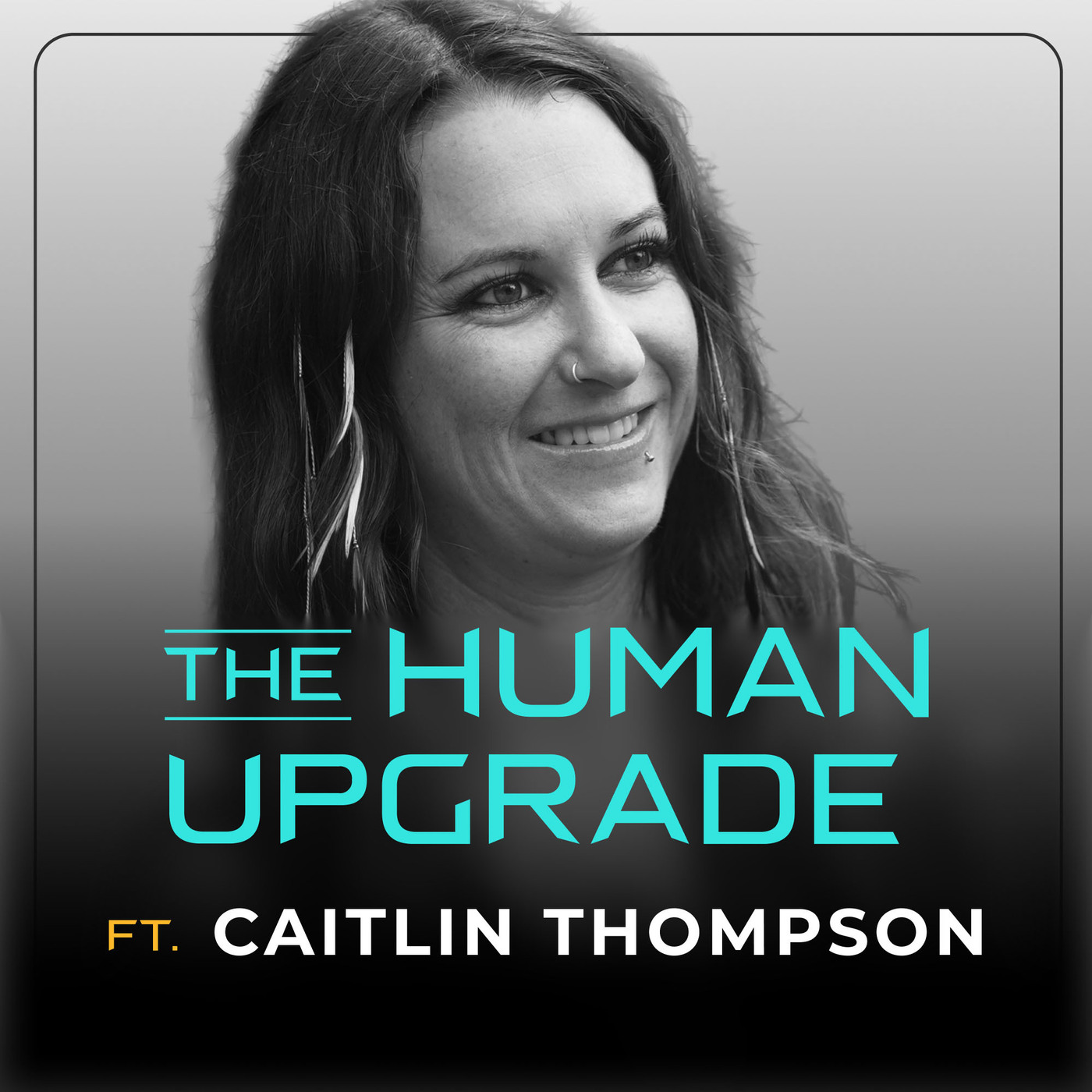
The Human Upgrade: Biohacking for Longevity & Performance
Inside Kambo: Poison, Purging, and The People Who Swear By It : 1455
00:44:06
Loading summary
Transcript159 lines
- [00:00]
A
Do you want flow state? You want high performance? Do you want healing? There are different paths to get there. We are going to talk about what happens when you use a poisonous using very ancient practice.
- [00:10]
B
There's at least 27 different analogs of peptides in eight different peptide families. Some of them have really potent opioid binding effects and vagal nerve effects. It would give them this like adaptogenic benefit where they can have heightened perceptibility and visual acuity exponentially. Set me on a path of vitality and capacity, capacity that I never even knew was possible for myself.
- [00:36]
A
You're listening to the Human Upgrade with Dave Asprey. Your hair is a sign of how healthy you are. So what actually works if you want to grow new hair? There are tons of products that sound good on paper, but they really don't do much in practice. Irestore is different because it is powerful and it's targeted and it's light therapy. Your hair follicles directly absorb the light energy, which means blood flow increases and that means dormant hair follicles can wake back up. The Elite delivers that through 300 lasers and 200 LEDs directly to your scalp. And it takes an easy 12 minutes a day. And you can wear it while you're working, while you're doing chores around the house. And the clinical results from it are amazing.
- [01:24]
C
Double blind study.
- [01:25]
A
100% of participants grew more hair. In four months, their hair count increased an average of 43.2%. And this thing really works. Plus you get a 12 month money back guarantee. Try it for a year and see what happens and you'll like it. Spring savings is happening right now, so go to irestore.com, use code Dave and get an exclusive discount on the elite. That's irestore.com code Dave. And Doug.
- [01:54]
C
There's nowhere I wouldn't go to help
- [01:57]
B
someone customize and save on car insurance with Liberty Mutual. Even if it means sitting front row at a comedy show.
- [02:03]
A
Hey everyone, check out this guy and his bird.
- [02:05]
B
What is this, your first date?
- [02:07]
C
Oh, no. We help people customize and save on
- [02:09]
B
car insurance with Liberty Mutual together. We're married.
- [02:12]
C
Me to a human, him to a bird.
- [02:13]
B
Yeah, the bird looks out of your league.
- [02:15]
C
Anyways, get a'@libertymutual.com or with your local agent.
- [02:18]
A
Liberty, Liberty, Liberty, Liberty. We are going to talk about what happens when you use a poisonous frog venom as a psychedelic using very ancient practice. And Caitlin Thompson is joining me here in the studio in Austin to talk about that. She's taken over 2,700 people on journeys and is pioneering new research into this ancient medicine and what it could mean for altered states. If you read heavily meditated. My most recent book, there's a deep chapter on psychedelics as one of the many gateways to access altered states. And there's more than one altered state that could be useful for you. Do you want flow state? Do you want high performance? Do you want healing? Do you want intuition? You want to get downloads? All these things, they're different and there's different paths to get there. And this is a medicine that I have not experienced, one of the few. So we're going to go deep on this and who knows, maybe one of these days I'll do it, but only after my next journey. Caitlin, welcome.
- [03:20]
B
Thank you so much for having me here. It's really a pleasure.
- [03:22]
A
How did you possibly get into this relatively unknown psychedelic?
- [03:27]
B
Well, I think, like many people, curiosity. I started working with Kambo in 2015, so over a decade ago. And, you know, I've always been a psychonaut. And so this medicine kind of came into my life at a time when I was highly exploratory and was already on a deep path with ayahuasca and other psychedelic medicines. And the first time I actually heard about Kambo, I was in Iquitos at some ayahuasca retreat in 2011, and someone was telling me about it and I was like, that sounds stupid, that sounds crazy and dangerous. Why would anyone do that? And I didn't think much of it. And then it kind of circled back into my radar a few years later and friend came over and was telling me how deep he'd been going with this frog medicine. And I was like, oh, wow. It was the first time someone actually described the benefits of it to me. So I went with him to this ceremony and, you know, 10 years ago, it was a different world. There wasn't a lot in the West. There wasn't a lot of people that knew how to use this medicine or knew anything about it. There wasn't nearly the resources for education that we have now. So there was a lot of kind of just renegade style things happening. This also happened to be a time in my life where I was kind of starting to figure out that I had been chronically ill my whole life.
- [04:57]
A
Oh, yeah.
- [04:57]
B
And, you know, the thing is, when you're born sick, you don't know any different. Right. But some part of me just felt like something's not right. I shouldn't have to sleep 13 hours a day and be exhausted as a 20 something year old. So I was just starting to figure this out and then Kambo kinda came and accidentally gave me healing momentum. And as that contrast increased and I was shown more and more vitamins mortality, I then discovered that I actually had lupus and Lyme disease and complex PTSD and SIBO and all sorts of, you know, chronic infections and food allergies and mast cell activation and.
- [05:39]
A
And mercury. And toxic mold too? Probably.
- [05:41]
B
Probably, yeah. Mold exposure, like, you know, the whole gamut.
- [05:45]
A
Yeah.
- [05:45]
B
Of all the things and you know, Kambo really was probably the most potent tool at that point to kind of exponentially set me on a path of vitality and capacity that I never even knew was possible for myself. So it kind of just took a hold of me, took over my life in the most beautiful way. And now I work for the frog.
- [06:14]
A
So do you think combo actually resolve your lupus?
- [06:17]
B
I never claim that it has cured any of my illnesses because, you know, health is an ongoing thing that you have to maintain. And the truth is I will always have a tendency towards autoimmunity that needs to be managed. And you know, I will always have a different level of resilience than other people in certain ways. So I wouldn't say that it eradicated my illness. You know, I can't just eat whatever I want. I can't trash my body. I still have to operate very carefully. But it gave me a life that I never could have imagined for myself. It allowed me to be actually impactful in the world, in my relationships, in my communities, and have the energy for my physical body to be able to keep up with what my, my mind and my spirit wants to create in this life.
- [07:06]
A
What a beautiful way to put it. When I was 26, I bought disability insurance because I was pretty sure that I was on a path to getting lupus. I had massive autoimmunity from all sorts of things and similar stuff to you. I thought everyone hurt when they walked because it'd been that way since I was born and arthritis as a kid. Just a long list of similar things. And for people who have pretty normal health, they wouldn't necessarily understand that, but building resilience and just in the way you put it, it lets you do what you want to do. It turns out the things that make you or me resilient, when we have maybe less resilient hardware, it works for people who have normal hardware and they become even more resilient. So that's kind of the birth of biohacking in part was born from what does it feel like to have mitochondria that are 80% not working well, that means you can feel it when you get a little bump. And then so there's a gift from that as well. And you mentioned CPTSD or complex ptsd. Is that from birth or something else? Like where'd that come from?
- [08:06]
B
You know, childhood, like every like seems like everybody else and you know, part of my work and my personal experience and how I work with my clients and my students, you know, there's really a lot of conversation about the psychosomatic effects of stress and trauma. And it sounds kind of woo woo to people, but actually mechanistically there's really solid understanding of how neurology and stress produce this cascade of physiological outcomes, especially resulting in immune dysfunction. And we have literature on it. It's actually not that. Yeah, it's not that fuzzy. So enter these tools that are, you know, like psychedelics and kambo. They really give us the opportunity to kind of re align that psycho spiritual wellness. That is essential because if you're just trying to treat someone's physiology without the deeper root piece, it's a maladaptive, you know, it's an adaptation. You'll just keep getting pulled back out of bounds over and over and over until that's resolved.
- [09:15]
A
I think you're saying something really truthful. And there's a lot of people out there, like I just have anxiety. It's like, well, you have a vagus nerve and a threat response system that's not programmed. Right. It's maladaptive and it goes down to the cell dangerous response. And I've seen different psychedelic medicines and breath work sometimes where it really shifts things for you. And I'd like you to walk our, our listeners through how do you use combo? What does it feel like? How long does it take to kick in? Just kind of walk me through a journey.
- [09:45]
B
Yeah, so I'll kind of preface a little bit maybe with like the historical origins so you understand the context of how it was used and then how it's used in modern global society. So traditionally speaking, this medicine comes from the Amazon and indigenous groups that used it for at least hundreds of years. It's not totally clear how long. And they actually primarily used it for hunting magic, not necessarily shamanic application, which is a common misunderstanding. You know, there's a lot of assumptions that people make about how the indigenous use combo and they used it really mostly for magic according to them. But really it would give them this like adaptogenic benefit where they can have heightened perceptibility and visual acuity. They can, you know, go on multi day jungle walks without as much food and water and apparently were able to hunt animals more effectively. They did sometimes use it for illnesses here and there, you know, like non venomous snake bites, malaria, you know, something called panema, which is like this dark, funky energy which I would probably equate to like baseline low level inflammation, you know, or you just feel like, you just feel like kind of now that kambo has left the jungle, it's really being applied in a completely different way, which I actually think is appropriate. You know, we need to adapt these practices to the needs of the people that are taking them. So now kambo has been kind of turned into this like neo spiritual practice where there's ritualization, there's ceremony, there's intentionality, and there's this transpersonal, like symbolic aspect that's been applied which I think is super beneficial to a lot of western societies and that are looking for kind of a spiritual connection in their culture. Again, people are using it for, you know, spiritual alignment, for trauma and for a lot of different physical ailments. It's actually incredibly valuable for things like Lyme disease and autoimmune conditions and pain and addiction, metabolic diseases, infections of all sorts, acute and chronic. Its use case is just like amazingly wide and it seems to be so incredibly effective for so many different things.
- [12:11]
A
I've definitely seen other psychedelics used just to be more perceptive of the world around you. So you can hear the monkey or whatever it is, which totally makes sense. And so when you, when you're using it, how do you administer it?
- [12:25]
B
Yeah, because I didn't get to that part, did I? Ramble, ramble. And I also want to just quickly say, technically, kambo is not a hallucinogenic or psychedelic substance. It doesn't produce any sort of effects like similar to a classical psychedelic. So that's actually a common misconception. However, I will say that it is mind expansive in its own unique way. So when it is applied, it's applied through these transdermal superficial burns made on the skin, usually the upper arm or the lower leg, but you can actually apply it all over the body and you scrape off just the top layer of skin and then you apply this frog skin secretion, this defensive sweats that they produce and apply it to the burn. And within about 30 seconds to a minute there are dozens of peptide families just kind of flowing in through the lymphatic system and going into circulation. And the effects come on rapidly, can be a little alarming. Usually you're going to feel like your heart beating faster and harder. You might get a hot flushing sensation or vibrational tingling sensations, heart beating in your temples, mucus coming out of the eyes and nose. Shaking is normal. Sweating is normal.
- [13:43]
A
Sounds fun.
- [13:44]
B
It's so much fun. Facial swelling is also common. And I say that because sometimes practitioners don't give people full informed consent, and that can be really scary for people. But they're not having an allergic reaction,
- [13:56]
A
so it's not a Benadryl thing.
- [13:57]
B
It's not like a histamine type thing. It's more of a fluids shifting. Okay. So, yeah, sometimes people get frog face, as we lovingly call it, and then if you're lucky, you will have nausea. And vomiting is kind of like a keystone element of the kambo experience. It's not mandatory. It doesn't happen for every person, but it is encouraged and celebrated. And then, you know, people can also have bowel movements. Fainting is possible and not at the same time, hopefully. Sometimes it does happen at the same time. It's messy work, I'll tell you that. Yeah. And so it's quite a physically intense, uncomfortable experience for most people, but it's short and sweet. You know, it's like 20 to 30 minutes of this really condensed experience. And, you know, it's. It's ordeal medicine in a way, where you get to really confront yourself in that ordeal, and you get to see how you're going to respond, and you can actually use that experience to train yourself to have certain skills, such as really inducing a parasympathetic response on demand in the face of challenge. And that's kind of how I like to approach how I serve. It is really using these as tools to build skills that they can then walk through the world with and actually integrate into their lives being better.
- [15:23]
A
How long is a total combo journey?
- [15:24]
B
Like I said, 20 to 30 minutes for the actual.
- [15:27]
A
But then you're done and then you go home.
- [15:29]
B
No, for the whole ceremony is like two to three hours.
- [15:32]
A
Okay. So it's not. It's not too bad. It's kind of like ketamine.
- [15:35]
B
It's short. Yeah, yeah. Efficient.
- [15:38]
A
Okay, I like that. And frog face goes away pretty rapidly
- [15:41]
B
most of the time. Yeah. I mean, sometimes it goes away by the end of the session if it's really bad. Sometimes it's two days or so of a little puffiness. But most of the time, by the end of the day, when you go to sleep, the next day, you're feeling good.
- [15:55]
A
Wow. Okay. That sounds pretty intense. What's the weirdest place you've ever applied combo on a person?
- [16:01]
B
The weirdest place we do put combo on people's ears. There's a bunch of auricular points on the ears.
- [16:08]
A
I know a friend who's done that. Okay.
- [16:09]
B
Yeah. I mean none of the places feel that weird. Like the ones that are truly weird are off limits because I don't feel that they're safe. Like I'm not going to put on the front of someone's neck.
- [16:19]
A
Yeah.
- [16:19]
B
And I'm not going to put on someone's genitals.
- [16:21]
A
Yeah.
- [16:21]
B
That would not going to put on their armpits.
- [16:23]
A
You know, those are like bacterial places.
- [16:25]
B
Exactly.
- [16:26]
A
Like, like really low back or something because there's not a lot of skin there or something.
- [16:30]
B
Yeah. I do spine treatments all the time. I love, you know, like lower, like tailbone, like you can target root chakra there and all the things that encompasses. But you do have to be careful not to have the points fall off and people's butt cracks. So that's a thing. Okay.
- [16:47]
A
Whenever I do it, I'm not entirely convinced I'm going to do my butt crack.
- [16:51]
B
So you have many options. The body is a canvas.
- [16:55]
A
I'll feel into it.
- [16:56]
B
Okay.
- [16:57]
A
Now what's the pharmacology? I feel like this isn't as well studied as something like DMT or ayahuasca or ketamine or any of the others.
- [17:06]
B
Yeah, there's actually barely any research on Kambo. That's another common misconception. You know, people love to talk about all this Kambo science and that's just not true. There was, you know, some early exploration in like the 90s by Victoria Esch Bremer, who is an Italian biochemist and he was the one to kind of sequence a lot of the peptides that were initially discovered. So I've written literature reviews on what we currently know about the peptides and I am sure that we're going to continue to discover more as we explore. But from my, you know, combing through the literature, there's at least 27 different analogs of peptides in eight different peptide families. And they all have really fascinating effects. Some of them have really potent opioid binding effects and vagal nerve effects. Others are very antimicrobial, like selectively deadly to single celled organisms. You know, viruses, bacteria, fungi, protozoa, things like that. Candida.
- [18:14]
A
That's probably why the frogs are covered in them in the first place.
- [18:16]
B
Yeah. And it's probably why that phylum medusa bicolors the species is not really threatened or susceptible to these, like, fungal diseases that a lot of other frogs are succumbing to because they have this protective antimicrobial layer. Yeah. And there's, you know, these massive, like, gastrointestinal and vascular effects from these peptides. You know, some of them have antipsychotic effects. Some of them cause, like, a bunch of, you know, bile and gastric juice secretion. And this is just what we currently know with, like, barely any literature. There's little to no human research, and there's. There's really no research that's published yet in animals even of giving, like, the whole complex cocktail. So all we have so far is literature on individual peptides given to rats or dogs or guinea pigs in, you know, very specific circumstances, which is not the same as cambo with all the peptides together, because they do show evidence of modulating and altering the activity of each other. So, you know, so far, there's two studies that I know of on humans that have been published. One of them is one of mine for my data set of my practice. And then the other is just kind of like a post survey. And then I recently just completed the first prospect of human study on cambo, probably nine months ago. So I'm in the process of trying to get that published, which is surprisingly difficult. There's a lot of stigma because it's kind of a weird topic.
- [19:50]
A
I thought you just paid, like, $2,000 and one of the many journals would just publish it because there's a bunch of scam journals, like, a lot of the research stuff.
- [19:58]
B
I wish it were that easy. I mean, I would be stoked if someone would ask me to pay only $2,000 and publish. It's.
- [20:06]
A
Yeah, it's about the quality of the journal. You want a good one.
- [20:08]
B
Exactly. And previously, I've only had luck publishing in toxicology journals. But this study, this was a psychometric outcome study. So we looked at, you know, pre and post cambo and give people all these scales to evaluate, like mood, mindfulness, pain, fatigue, life satisfaction. And there were really profound statistically significant improvements in mood and mindfulness happiness. So we didn't feel like putting that in a toxicology journal was really appropriate. We're like, no, like, all, you know, all the other papers, we have to kind of, like, beat around the bush and not imply at all that there's any benefit to cambo to get it published. But this, it's like, well, the data shows that there's benefit, so how do we deny that that's, that's the study, you know. So yeah, it's tricky and I've, I've been surprised by the hostility that I've encountered by journals sometimes and just the strange responses you get and they, they don't want to touch it. It's just such a weird thing for them.
- [21:16]
C
Modern life keeps your nervous system in overdrive. Most solutions try to change your brain chemistry. But your body also runs on electrical signals and rhythms. Your brain uses electrical waves, your heart beats in patterns, and your nervous system sends signals through tiny pulses. Light and sound are also forms of energy your body can sense. Scientists have studied them for decades because certain wavelengths and frequencies influence how cells and nerves respond. That's why I use the One Device. It combines light and sound in a wearable. It sends gentle signals your body can respond to while you work, meditate or wind down. Most wearables just track stress. The One device supports your nervous system directly without any Bluetooth or emfs. People who wear it report sleeping more deeply and feeling calmer, more focused, energized and grounded. It's wearable frequency support you can use all day long. Learn more@the onedevice.com Dave. Every time you reach for a healthy snack, you could be sabotaging your energy focus and long term health. That's because even if you think it's healthy, it probably contains seed oils, which make up 20% of the average person's daily calories. And recent studies show seed oils can cause metabolic issues and inflammation in your body. Masa decided to do something something about it. They created a delicious tortilla chip with just three organic nixtamalized corn, sea salt and 100% grass fed beef tallow and no seed oils. This is one of the few times I'll eat corn because this corn is nixtamalized, which is a process that removes mycotoxins and anti nutrients. Masa chips don't only avoid all the bad stuff, they taste incredible too. Snacking on Masa chips is nothing like eating eating regular chips. They're crunchier, tastier and sturdier than other chips, so they won't break in your guac. With masa, you feel satisfied, light and energetic with no crash, bloat or gross sluggishness afterwards. And an added bonus is that the beef tallow makes the chips much more satiating, so you won't find yourself uncontrollably binging and still feeling hungry afterwards. Ready to give Masa a try, go to masachips.com chip Dave Asprey and use code Dave Asprey for 25% off your first order. That's M A S A chips.com Dave Asprey and use code DAVEASPREY.
- [23:48]
A
You're going to love these chips. I am the new proud owner of the Wonderland Conference. Are you familiar with that?
- [23:58]
B
Yeah.
- [23:58]
A
So we're bringing that to Austin this year and it's about psychedelics and consciousness in general. So that'd be a good place to present your, your paper. We're not a medical journal, but that helps to get a lot of the scientists who are gonna be in the room there.
- [24:13]
B
Yeah.
- [24:13]
A
Just to be aware of this, because anytime there's a rich history of use of some kind of natural compound in the west, we have this idea that let's figure out the one active ingredient. I'm like, what science makes you think it's only one thing that works?
- [24:26]
B
Totally.
- [24:27]
A
Like, coffee isn't very good unless you boil it with water. You need coffee and water for it to work like. But we tested the water, it doesn't have an effect. And the coffee you couldn't like, it's just dumb. So sometimes you have to do it the way it was originally used and then see what comes out the other end. And then you can come into the individual peptides and all. But hostility towards something like that, it's actually not scientific.
- [24:47]
B
Right. I'm like, I'm sorry, I thought we were all like unbiased, neutral scientists.
- [24:52]
A
Well, who's funding you?
- [24:53]
B
Well, actually this particular study was funded by like a random like crypto millionaire that I met in Bali and he just, no strings attached, handed me all the money to do the study, which was amazing. But that was a one off, you know.
- [25:06]
A
Yeah. And I'm sort of laughing because, you know, the unbiased also means, you know, you have to please your funders. And so much of quote research is actually marketing in white lab coats. So.
- [25:17]
B
Yeah. And the way that the drug development pipeline is designed, it basically is impossible for a natural, multi component substance to be eligible to, to actually go through all the hoops and become a clinical medicine just by design.
- [25:33]
A
Right.
- [25:33]
B
So it's. Yeah, it's tricky.
- [25:36]
A
You were to imagine that you were the worst combo practitioner ever. What mistakes would you make? Like, how do people do it wrong?
- [25:42]
B
Oh gosh, don't get any training. Assume that it's as easy as it looks. Don't screen people. Just trust the spirits only. That's all you need.
- [25:53]
A
Well, quantum told you so.
- [25:54]
B
Tell them, tell them to drink as much water as possible and then they're going to show up with low level hyponatremia before your session even starts. You know, pack as many people into a ceremony as possible so that you're not supervising any of them at one time.
- [26:12]
A
With limited buckets.
- [26:13]
B
Exactly, yeah. Have them share buckets and don't escort them to the bathroom, just let them pass out, fall, hit their head, knock their tooth out, whatever. I mean, there's a lot of ways it can go wrong and luckily it's quite easy to keep it very safe. There's just a handful of things that you need to be very diligent about. But unfortunately there's no standardization of training or care in the space. And it's a big part of what I'm trying to influence is to, like, raise the standard and educate people. But yeah, it's wild, wild west. Like people are just slapping it on.
- [26:50]
A
Why don't you make a certification and offer it?
- [26:52]
B
I have this. Yeah, I have a training program.
- [26:54]
A
Yeah, I should have plugged it there. Good. I'd like set you up. You've like first slam done. Yeah.
- [26:58]
B
If you want to do it right, come to one of my trainings. They're quite comprehensive, balanced, scientifically literate and really fun.
- [27:07]
A
So is it, is it legal?
- [27:09]
B
Yeah, currently in most countries, cambo is unregulated, so it's not scheduled. This could always change. And that was the case in Australia a couple years ago. They had a death and, you know, instead of putting in safeguards, they just decided to criminalize it. There was a lot of us that spoke out against that, sent letters to the TGA and stuff, but alas, they decided not to take any of that into account and they made it illegal there.
- [27:36]
A
Sometimes I wonder if the Australian government hates its population.
- [27:40]
B
Yeah.
- [27:40]
A
Like they, they restrict access to supplements and other weird things, but Australians are super cool and they're like, they're not down for that. Like. No, we just want to be healthy. It's like the weirdest mismatch there, right? Yeah. Well, if you're listening and you're on the Australian government, Australia is awesome. And it would be more awesome if you just kind of took your boot off of people's necks when it comes to supplements and psychedelics. Just a little thing there. And by the way, masks are dumb there.
- [28:04]
B
Yeah. And you know what? The black market always finds a way. So anytime you prohibit something, you're just driving it down underground. And then you're just going to get all the crazy people doing it who aren't going to take precautions.
- [28:16]
A
You know, you Worry about like over overfishing of the frogs. Over frogging of the frogs.
- [28:23]
B
100%. Yeah. Sustainability is definitely at the forefront of my mind. And you know, I, I visit the Amazon regularly, I go down there with groups, I have relationships with indigenous communities. So I'm on the ground regularly and I do see the state of the frogs and I see when they're being over harvested, when they're not looking healthy, when their populations are lower or harder to locate them. You know, there's so many people in the world that can benefit from combo, but there are a finite amount of frogs and currently the populations are unthreatened. And there's a lot of the Amazon that is, you know, untouched that they live in. But the, the parts that people actually have access to, you know, these kind of like outskirts is where the frogs are being harvested a lot. And if Cambo continues to accelerate its growth at the rate that it is, this is going to be a problem. And so it's something that we need to hit early before it becomes like totally devastated. And that's part of why we started our nonprofit, the Institute of Cambodia Advancement and Preservation is so that we can create these conservation and sustainability initiatives, empower the indigenous. So we're working on getting some projects going now where we can actually, you know, get a baseline study going, monitoring populations and then hopefully build some breeding pools in like reserve type areas and evaluate if that's, you know, helping their populations grow.
- [29:53]
A
Couldn't you just synthesize the peptides that are in it like iboga versus ibogaine?
- [29:59]
B
So that's also something I've been working on and smashing my head against a concrete wall for the last five, six years. Part of it is, you know, I don't have institutional, I'm just a crazy unhinged individual trying to do it myself. Yeah, I've tried many, many times and had various failures. You know, the samples got stolen out of my bag or they were contaminated or the mass spec didn't quite work or whatever. Before we can reverse engineer and create a synthetic combo like substance, we have to know what's actually on these sticks of combo and it's not consistent. And you know, there's very few papers published that have actually like assayed the constituents and they don't have any closeness to each other. So yeah, that has been a multi year kind of failure after failure wow thing. But yeah, that's, that's also another direction I want to kind of help pioneer is like for sustainability we do need to create something that can Satisfy the need that Cambodia, you know, provides without it having to come from frogs. Because not everyone cares if it comes from a frog. They just want their. Their cancer cured or they. Or their lupus cured or whatever.
- [31:14]
A
It's interesting, there's a guy in Australia, just a couple weeks ago, his dog was dying of cancer and he got pissed off about it. So it biopsied it and he sent it off to a lab, got the genes and worked with AI stuff just. In fact, it was mostly Claude and engineered a custom vaccine for his dog and had it made. All this cost less than $3,500 and he gave it his dog and the cancer is 80% shrunk in a month.
- [31:42]
B
Wow.
- [31:42]
A
So AI may make it easier than it ever was before. It's one of the gifts of that. So I'm hoping that we can do it because that unlocks a lot of potential and it saves some rainforest. I take clients down in my concierge longevity group called Unlimited Life. We go down twice a year to Ecuador in the middle of the rainforest and we actually have frogs at the resort where our clients go to do longevity medicine and some other shamanic work. I'm not involving the combo, but you just, you walk past like there's a poison frog and I'm always tempted to you just go lick it. But I don't. That would probably hurt, wouldn't it?
- [32:17]
B
Yeah. I don't know what would happen. I haven't tried it.
- [32:19]
A
I have no idea why I would like it. It just sounds funny. Interesting medicine that. In fact, I didn't even write about combo in heavily meditated because it's a little bit niche. Right. And it, like I said, it's not classically a psychedelic. Then again, neither is ketamine.
- [32:31]
B
Right, right.
- [32:32]
A
But you know, we kind of clump them all together. Right. And I love it that you're doing advanced research on this to figure out like, okay, what's really going on here? Because at least 500 psychedelic compounds that are not, well, not well understood, mostly through Sasha Shulgin's work, who's pioneer in the field of psychedelics. And he just was like, well, if this is a molecule, let's make every iteration and I'll just take them all and write down what they feel like over the course of my career. And so here in Austin there are people like, ah, we have this one from his book. This isn't Dennis book either. Right. So this is one of those areas of exploration of the unknown. And it's really cool to see an indigenous practice that's being treated with respect and to be able to take it out and share it with the world. And I want to ask a couple questions about the indigenous practice. So you talked about, you know, hunting magic, so you're a better hunter when you're on it. But if you go down and you do say ayahuasca with a properly trained shaman from the Shipibo tribe or something, there's spiritual protections, there's ritual. You go to known places and you interact with energies, we'll put it that way. Is there a lore and, like, a spiritual thing? Is there like a giant frog God with a trident? Like, I have no idea. But, like, what's that side of Kambo?
- [33:49]
B
Yeah. So there is some folklore about the origins of Kambo, and it may come from the Marubo. There's a bit of fuzziness about the actual lineage of Kambo practice, but probably comes from the Marubo. And there was this shaman medicine man named Kampu, and his whole village was sick, and he tried all the tricks that he knew, and nothing was working. And there's different versions of the story. Some say he drank ayahuasca. Others say he went to trance, kind of same, same. But he woke up on the floor of the jungle with a frog in his hand and instructions on what to do with it. He applied it to his people and cured them. And then it was said that when he died that his spirit went into all the frogs. And that's where the term kambo actually comes from, because, you know, the matzes call it a kate. So, you know, there's different words dalkiet, but kambo comes from kampu. So there's that, you know, spiritual story, but other than that, it's pretty casual. You know, sometimes kind of in secret, they might do a little bit of, like, a private prayer, but when you're in it, you are just sitting on a log, puking on your neighbor's feet, maybe on a chicken. That's happened too.
- [35:08]
A
Chicken's probably like that.
- [35:09]
B
Nobody. They're like pecking the rice. Nobody is. There's no sage. There's no intention setting. There's no escorting you to the bathroom. There's not even a bathroom most time. There's no songs. Like, there's. There's nothing.
- [35:23]
A
It's a medicine. Not a capital M medicine.
- [35:25]
B
You are just on your own. And occasionally, like, you know, a matse's child might come over and, like, hold you if they. If you look like you're about to pass out, but you're largely on your own. So, like, I. I never bring people to the jungle who haven't done kambo in a ceremony because I'm afraid I'll traumatize them. I feel like they need a little bit of practice to, you know, go into that and enjoy it to the fullest. But it is so different than the. The rituals that we have around it now in the United States and around the world. And that's another thing that I really, like, want to help people understand is that traditionally there's really not a rich shamanic perspective with kambo. It's very much just like taking an aspirin and you do it and then you move on with your day and not a lot of fluff.
- [36:19]
A
That's kind of cool. It sounds a little bit tactical.
- [36:22]
B
Yeah.
- [36:22]
A
So, like, all right, I got some stuff going on. Like, let's clean that up and. All right. I've. Yeah, it's been on my list forever. So I'm. I'm going to do this sometime in the next few months, I think is most likely. And just given my history of autoimmunity and toxic mold, what they thought was Lyme, but was actually toxic mold, and long list of things like that, who knows? I'm. I'm more resilient now than I ever have been, and I've largely resolved or just have so well managed that they don't affect me. But if I could make it even more resilient, I would do that. And it sounds like the risks are relatively low, but are they zero? Like, what are the risks?
- [36:58]
B
I mean, there's no. There's no. Zero risk in life at all. You can be walking on the beach and coconut falls on your head, you
- [37:05]
A
know, but being alive is dangerous.
- [37:07]
B
The. Yeah, driving the car to the ceremony is far more dangerous than the actual ceremony. Campo as a substance is incredibly safe. I mean, I have served thousands and thousands of people in really fragile health cases, and I had zero accidents. I've never had to have any sort of medical or hospitalization intervention for anybody. And part of that is just how I serve. I'm quite conservative and attuned and cautious, but still effective. And, you know, I got wind recently that there is someone that has been kind of doing some mouse research that I'm excited to talk with them more about. And they have determined an LD50 for combo in mice for people that don't know what LD50 is. It's lethal dose that kills 50% of a population. So you administer a substance or a drug to usually rats, I'd hope. And you see at what dose? 50% of those die. Right. And so they apparently established one in rats for kambo. And I don't have the exact number, but I've been told it's very, very, very, very high. So this supports kind of what we see as practitioners that cambo is really, really safe, especially given how like outwardly violent and intense it looks because. And it can hurt people. And there are people who have been hurt by kambo. I don't want to minimize that. And the risks are real and people need to take precautions and be mindful and make proper risk reward evaluations.
- [38:39]
A
Mostly like choking on puke and falling over and passing out.
- [38:42]
B
Primarily, yeah. So like asphyxiation, actually the biggest risk is hyponatremia. So it's like drinking too much water, which is like the stupidest way to die. And it's so avoidable.
- [38:53]
A
And have electrolytes.
- [38:55]
B
Yeah, it's like just put sea salt on people's water, monitor the amount that's going in versus coming out. If people have other conditions that might put them at increased risk of, you know, malabsorption or electrolyte disturbance, just supplement electrolytes beforehand. It's not that complicated actually. And then know to look for the signs and then treat them promptly if they come up. But most of the deaths and harms associated with kambo are because of that. And part of it is also because people like kind of mix ayahuasca into the program and they love to stack all these medicines in a weekend. And you know, you're on a no salt dieta preparing for your ayahuasca ceremonies. You're purging all night, you have all this neurotransmission which is, you know, burning up ions and changing gradients. And then you do kambo like in between your ayahuasca ceremonies as a bonus add on. And that's when probably half of the cases of hyponatremia are people mixing things when they're depleted. They've been fasting, they've been on these anti salt diets. So just eat salt, it's really easy.
- [40:03]
A
Low salt diets are dangerous. And the reason I've talked with shamans about this, the reason they have you on low salt diet is to make you weak so that ayahuasca can take hold more. That's also why they have you on some plant based diets like, oh yeah, do things to weaken your spirit so you can more closely merge with the plant. Fine, I'm going to have my salt anyway because I like my brain to work. And I don't like having low blood pressure. So.
- [40:28]
B
Yeah, I mean, just kind of as a side tangent, like, you know, if you look at like the ayahuasca diet, just like you said, they're basically putting you in a state of like, neurotransmitter deficiency because you don't have like all these nutrients to create neurotransmitters. And so it, you know, you have a smoother time because you aren't as risky of having serotonin syndrome from like an abundance of monoamines flooding the system. So I think people think that they're feeling cleaner, but they're actually just depleted and not having as powerful of an experience.
- [41:02]
A
That's been my experience with it. And it's a medicine that I've said a lot of times you really want to go to the jungle or go to sacred land with really well trained people because it has a lot more complexity apparently, than kambo, which doesn't seem like it carries the same level of spiritual risk, but you have some physical risk.
- [41:21]
B
Yeah, perhaps that's true. I do think, like, the way that the indigenous use kambo is very untechnical and Kambo has become and evolved to be technical now. And I do think that there is still a lot of spiritual openness and spiritual attunement and, you know, containing that has to happen by the practitioner, but it just hasn't been developed over generations. Like in a Shipibo lineage, for example.
- [41:49]
A
Okay. Any kind of intense experience, you're going to benefit from having a facilitator who could hold space. Yeah. It's just not necessary like it is with, with Aya, where they're kind of acting like a firewall to keep stuff out. And Combo doesn't do that.
- [42:02]
B
Okay. Perhaps. I mean, again, I, you know, I've seen some weird stuff happen. I've seen things like, you know, close to an exorcism on Combo. With Combo. With Combo. Yeah. And I. I have seen a lot of, like, bizarre energies kind of come out and emerge, but they're just different and you're sensitive to them in a different way than you are on other medicines. They're just like different doors are open.
- [42:30]
A
Okay. Yeah, I'm excited to experience that and see the difference. That's pretty cool. Well, Kaelin, it's really interesting to hear you share about this and thanks for finding a corner of the realm of altered states and just doing some core research on it and working to understand it. I think it's really cool. And people can find you@compospecialist.com yeah, combo
- [42:52]
B
specialists is where you can find a lot of my educational offerings. We have online courses for people any stage of their combo journey. If you're a combo curious, if you are starting to engage with kambo, maybe you want to learn how to self administer. Maybe you feel ready to step into being a practitioner. All of that is on that. And then if you happen to get lucky enough to catch me in some part of the world where I'm actually serving, you can also visit medicinefrogcombo.com that's like my private practice.
- [43:23]
A
That is incredibly cool. Medicinefrogcombo.com and I guess if they want to work with you and combospecialist.com in order to get educated and certified. Beautiful. Appreciate you coming out to Austin and sharing your wisdom. Oh, wait. I have one more question. Is it required by spiritual law that to offer a combo you have to have a whole bunch of cool tattoos and molecules?
- [43:45]
B
Certainly not. The most important thing is your connection to the frog.
- [43:49]
A
But I'm. I'm like a good. I'm a good pattern recognition guy. And like, why do all the combo people have all the tattoos? Like, what's the connection?
- [43:56]
B
Well, I mean, if you're willing to burn yourself and have a scars. I mean, I have scars all over my body from combo. You're probably the same type of person who's interested in getting a tattoo.
- [44:08]
A
That's a fair point. By the way, Molecule tattoos. So we both have those.
- [44:13]
B
I have a bunch.
- [44:13]
A
Oh, yeah? What are they?
- [44:15]
B
I have oxytocin, dopamine, serotonin, rosmarinic acid.
- [44:21]
A
Oh, cool. I've never seen that one before.
- [44:23]
B
LSD, Harmaline and Pyridoxyl 5 phosphate, B5P, vitamin B6.
- [44:29]
A
Why are you putting that on there?
- [44:30]
B
On my leg, I have some proper combo ones. I have Deltorpin 2 and Phylumeducine, two of my favorite peptides.
- [44:38]
A
So, like your left arm, you punch people with that and they just go into trance. Just.
- [44:42]
B
This is my science arm and then this is like my spiritual, so I kind of help bridge them.
- [44:48]
A
That is so cool. Mine's just caffeine because
- [44:53]
B
that's a sacred one too.
- [44:55]
A
There's one more thing that's actually worth chatting about. So it hurts a little bit to do a combo, right?
- [45:01]
B
Yeah.
- [45:01]
A
Okay. In my last book, I wrote about something called bicep, which is brief, intentional conscious exposure to pain. Oh, and doing something that hurts for a minute, well, it actually changes. Dopamine sensor, receptivity by up to 250%. This is why monks would flog themselves, yogis lay on beds of nails, why Texans eat chili peppers, why biohackers sit in ice water, and why people with connective tissue disorders or addicts oftentimes have a lot of tattoos because they're getting that tattoo, because it hurts to get a tattoo. And it regulates them because it's not overwhelming pain, it's like pain, okay, body, hold still and just deal with this. And that changes the amount of willpower it takes to do good stuff the rest of the day or the rest of the six week period. So, like go to a Alcoholics Anonymous or Narcotics Anonymous meeting and count the tattoos. It's a way of treating yourself and people who have chronic lifelong pain, like you and I both have, Although mine's not there anymore, but it was for most of my life. Yeah, it's regulating. Right? So it's like. It's like taking a dose that somehow makes the rest of it not matter as much. So maybe there's something to that. Maybe that's why Combo called to you, because of all the autoimmunity.
- [46:17]
B
Yeah, certainly. And just on an even more meta level, I think pain is. Its function is to give us information on what's out of balance. And the meaning that we derive from pain is very much up to us in the narrative that we adopt. And so not only does it physiologically modulate our experience of pain, but also our consciousness relationship to pain. And when we do things like Combo or ice baths or hike the Himalayas or whatever, we are consciously reorienting our relationship with pain in a way that empowers us and gives us agency again, which is mandatory for healing.
- [47:02]
A
Yeah, it's kind of where resilience comes from. For me, my best way of experiencing pain is just entrepreneurship. It makes it real easy.
- [47:10]
B
Yes, I hear you, man.
- [47:12]
A
There's actually. I think it's. It might have been Elon who talked about that. I think it was saying that, you know, being entrepreneurs, like eating, waking up every morning eating ground glass or something. He's like, because only the problems come to you that no one else can solve. And another big investor said, like, the biggest predictor of success is your ability to endure suffering, because if you can make it through the hard stuff, that gives you the longevity to get to the good stuff. So there's. There's some correlation there. And I find that all meditation, altered states, work, breath work, all this stuff, it does reframe your relationship with pain. And even with death, we're like, oh, pain's a check engine light. I could probably keep driving for a while, but it's probably not a good idea. So I think there's merit for building resilient people who are not fearful and hard to program. Just saying. Yeah, I did combo. It hurt. Yeah, I won the ice bath. It hurt, but I'm okay. And it's the but I'm okay that's the exclamation point at the end, right?
- [48:10]
B
Totally. Totally. Thank you. Yeah. Thank you, Dave.
- [48:14]
A
See you next time on the Human Upgrade Podcast.
- [48:23]
D
A Human Upgrade, formerly Bulletproof Radio, was created and is hosted by Dave Asprey. The information contained in this podcast is provided for informational purposes only and is not intended for the purposes of of diagnosing, treating, curing, or preventing any disease. Before using any products referenced on the podcast, consult with your healthcare provider carefully, read all labels, and heed all directions and cautions that accompany the products. Information found or received through the podcast should not be used in place of a consultation or advice from a healthcare provider. If you suspect you have a medical problem or should you have any healthcare questions, please promptly call or see your healthcare provider. This podcast, including Dave Asprey and the producers, disclaim responsibility for any possible possible adverse effects from the use of information contained herein. Opinions of guests are their own and this podcast does not endorse or accept responsibility for statements made by guests. This podcast does not make any representations or warranties about guest qualifications or credibility. This podcast may contain paid endorsements and advertisements for products or services. Individuals on this podcast may have a direct or indirect financial interest in products or services referred to herein. This podcast is owned by Bullock Proof Media.