← The Human Upgrade: Biohacking for Longevity & Performance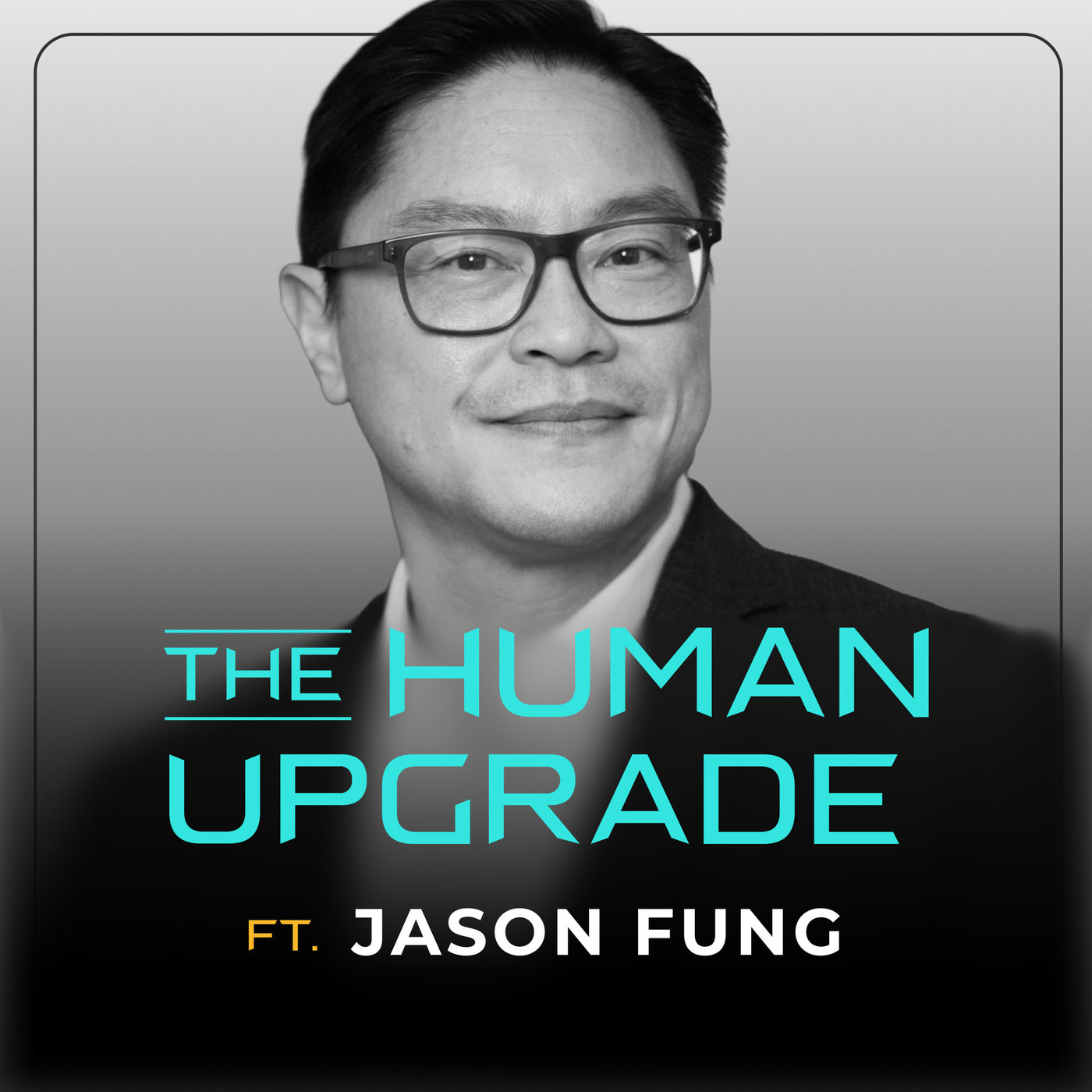
The Human Upgrade: Biohacking for Longevity & Performance
Jason Fung: 3 Rules to Lose 50 Pounds Without Ever Counting a Calorie : 1453
01:00:39
Loading summary
Transcript64 lines
- [00:00]
Dr. Jason Fung
Everything in our life becomes paired with food. And that's not by accident. It's advertising. Pretty soon you're not eating because of the physical hunger. You're eating because you've been trained to eat. Like Pavlovus dogs. You can't restrict calories. It doesn't work. You can do everything in your power. Wire somebody's jaw shut, cut out their stomach. It still won't work. But the minute you give a drug that reduces hunger, now it works.
- [00:27]
Dave Asprey
Okay, if, let's say someone's got 50 plus pounds to lose, what is the first thing you would tell them to do?
- [00:33]
Dr. Jason Fung
I have three golden rules.
- [00:34]
Dave Asprey
The first one is you're listening to the Human Upgrade with Dave Asprey. Notice your hair thinning. It starts in your scalp at the cellular level. Senescent cells, also known as zombie cells, will flood your follicles with inflammatory signals, and that disrupts the growth cycle. And then you get thinner hair and most topicals around that. But One Skin's OS1 hair goes straight to the root cause. The PhD longevity researchers at One Skin developed a patented peptide that targets the buildup of zombie cells, and they named it OS1. When you apply it to your scalp, it supports your hair's natural cycle. And there are real clinical studies backing this up. In six months, people using OS1 saw their hair get noticeably fuller. Like 40% more density and 43% thicker. Thicker. And I've used it since it was launched and noticed a huge difference. The woman who cuts my hair is like, what is going on here? And all of my friends who've used it say the same thing, like, this really works. So the studies say it works. I say it works. And the people I know and trust
- [01:43]
Sponsor Voice (One Skin and iRestore Ads)
say it works because we've all experienced it.
- [01:44]
Dave Asprey
You can get 15% off one skin at OneSkin co. Dave. That's Oneskin Co. Dave. And after you buy it, One Skin is going to ask where you heard about them. Tell them the human upgrades in you. Your hair is a sign of how healthy you are. So what actually works if you want to grow new hair, there are tons of products that sound good on paper, but they really don't do much in practice. Irestore is different because it is powerful and it's targeted and it's light therapy. Your hair follicles directly absorb the light energy, which means blood flow increases, and that means dormant hair follicles can wake back up the elite. Deliver that through 300 lasers and 200 LEDs directly to your scalp, and it takes an easy 12 minutes a day. And you can wear it while you're working, while you're doing chores around the house. And the clinical results from it are amazing. Double blind study, 100% of participants grew more hair. In four months, their hair count increased an average of 43.2%. And this thing really works. Plus you get a 12 month money back guarantee. Try it for a year and see what happens and you'll like it. Spring savings is happening right now, so go to irestore.com use code Dave and get an exclusive discount on the elite. That's irestore.com code Dave. This episode of the Human Upgrade is with none other than my friend, Dr. Jason Fung, new York Times bestselling author of multiple books like the Obesity Code, the Diabetes Code, and, well, a bunch of stuff around obesity, blood sugar regulation, metabolism and hunger. So as you can tell, we're, we're on the same team about making it so that you have lots of energy, your blood sugar works, you're not hungry all the time, and who knows, you might even be a nicer person when all that stuff works.
- [03:35]
Dr. Jason Fung
Right?
- [03:36]
Dave Asprey
Jason, welcome back to the show.
- [03:39]
Dr. Jason Fung
Thanks so much, Dave. So good to be here.
- [03:42]
Dave Asprey
All right. Why are people hungry all day even though they have all the food they could ever eat?
- [03:47]
Dr. Jason Fung
Ah, that's a great question. And I think that's actually one we don't talk about enough, right? Because, you know, when you talk about weight loss and stuff, obviously losing weight is very important for a number of reasons. But you know, the advice winds up being like, eat less, right? And it's like, okay, well, that's not very useful advice because you're not getting to the reason why they're eating more in the first place, which is that they're hungry. Right? There's like this fundamental truth. We eat because we're hungry and we stop when we're full, right? So therefore the real question is sort of not sort of the overeating question is the over hunger question, right? And why is it so much worse now than it's really ever been? Because if, you know, if you look at obesity, it's obviously skyrocketing. But nobody wants that, right? Nobody wants to be like that. So how do you solve the hunger problem? But you have to talk first about what is hunger and what are the types of hunger. And that's something that actually, you know, I read a lot of books and there's just not a lot out there about that. You know, there's really three types of hunger. So there's the sort of physical hunger. That's the hunger that we all think about. You know, your stomach's growling, you know, you feel like you want to eat something. And that actually, if you really think about it honestly is very rare these days. It's not like it's hard to get food. Food is everywhere, right? It's always in your face. Actually, you know, no matter where you go, there's food. There's, you know, you go to the hospital, there's a, you know, there's a cafeteria that used to be difficult to get food, but now there's like all these food stalls. You go to the mall, you go to the drive ins. There's, it's, it's everywhere. So it's not hard to get. And people are eating very often. So that sort of physical hunger is just not that common anymore. So therefore that's not what's obviously driving us to eat. And there's actually two other types of hunger because there's hedonic hunger. So the physical hunger is really called homeostatic hunger. Right? Homeostasis is a scientific word that means balance. So you eat because you're hungry. You stop eating when you're full. So when you eat, you actually activate satiety hormones that tell you to stop. Like you eat butter and tells, you know, at some point your brain says, okay, you need to stop. Right? That's homeostatic hunger. But there's the second reason we eat, which is that it, it tastes good, we want to, it makes us feel good, right? And that's like dessert, right? You, you finished eating, you still can eat apple pie and ice cream because it tastes good and you want it and it makes you feel good. That's comfort food that's deserved and that's called hedonic hunger. And hedonic hunger. And hedonic is a word that means relating to pleasure is eating because it's pleasurable and that going to overturn that sort of homeostatic hunger because it's just like dessert. Even though you're full, you can still keep going because you're trying to satisfy that hedonic hunger. Not the homeostatic hunger because you're bored. Yeah, it could be either bored, it could be that you're depressed, it could be you're looking for something to do. But it's actually a huge reason why we're having this problem with obesity, which is that there's a lot of hedonic hunger. And I'll just touch on the third one before I go back to hedonic hunger, which is conditioned hunger. So conditioning is a term used in behavioral psychology where you can pair two things together, right? So the classic experiment is Pavlov's dogs. If you show dogs food, they'll salivate, they'll get hungry. Now, if you ring a bell and then give them food, very soon the sound of the bell will become paired with the food. And so when you ring a bell, the dogs will start to salivate, even though, you know, if before they were trained, they would never do that, right? So you can link these two things together through pairing them repeatedly. And this is exactly what's happened in our modern day society, right? You wake up, oh, you gotta eat, right? You get coffee, oh, you gotta get something to eat. Oh, it's lunchtime, you gotta eat, right? It's after school, you gotta eat, right? Dinner time, you gotta eat. You get in the car, you gotta eat. You go to the movies, you gotta eat. You go to a sporting event, you gotta eat. You go to the mall, you gotta eat, right? Everything in our life becomes paired with food. And that's not by accident. It's advertising. It's all this stuff. And so if you get all these conditions where you're stimulating hunger, pretty soon you're not eating because of the physical hunger. You're eating because you've been trained to eat like a monkey, right? Like paphlotis dogs. And that's the real problem. And this is what they often call food noise, right? You go outside, you go for a walk, right? But then, hey, there's a billboard, hey, you get in your car, you know, you know, you feel like you need to eat something. You sit in front of the tv, hey, you feel you need to eat something, you go to the mall to get some, you know where, and, oh, you feel like you need to eat something, right? That's the food noise. And it can drive us to keep eating. Because now you're constantly stimulating hunger. And it had nothing to do with nutrients, it had nothing to do with, you know, calories and, you know, macronutrients and stuff. But, you know, when you really think about it, there's sort of those three main categories of hunger, the homeostatic hunger, which is probably, you know, not as important as it as we think it is, because that's a worldwide thing, but also the hedonic hunger and the conditioned hunger. So why is it so much worse? One of the big things in hedonic hunger is really ultra processed foods. Ultra processed foods are actually designed very specifically to give you maximum pleasure, right? It lights up your Reward systems like nothing else. And that's not by accident. It's because, you know, food companies want to sell us food. And to do that they want to make, yeah, they make it as pleasurable as possible. And then on the flip side, they minimize satiety, right? So because if you get full eating those foods, you're going to stop, right? So you have to engineer these foods so that you get this incredible hedonic hunger while minimizing satiety. And that's what they've been able to do. The third thing they've been able to do, of course, course, is advertise parrot, right? So you have all these snack foods, for example, or breakfast cereals paired with, you know, Toy Story and cars and Pixar movies, right? So this whole idea of fun. So every time you go and you see a movie, hey, you want this or you know, you want chocolate or popcorn or whatever, right? So the whole idea is that ultra processed foods can be changed in many, many different ways to maximize this. So you got like artificial flavors, artificial colors. They look better, they look brighter, right? This whole thing about food dyes, right? In the US they're all bright and stuff and that they're lead based dyes. And then in Europe they're sort of dullish, right? The Fruit Loops. You know, there's ways to do it. They have texturizers, right, to make sure it has the right mouth feel. They have emulsifiers to make sure that it is moist enough, artificial flav flavor enhancers, monosodium glutamate and you know, maltodextrin. They have things like carrageenan and xanthan gum. They give it that creaminess, right? So there's a million ways that they can give you this increase in pleasure. The other thing is that they are absorbed very, very quickly. So how quickly you absorb something plays a huge role in how addictive it is and how much pleasure you derive from something. So if you think about tobacco, for example, you smoke tobacco, you smoke cigarettes because the smoke goes from your lungs directly into the pulmonary blood vessels. If you eat tobacco like nicotine gum, it's far less pleasurable. That's why you use it, nicotine gum, to try and break that addiction. Because you're trying to still get a bit of nicotine but slow down its absorption. Same thing with heroin, you inject it directly into the veins. Cocaine you sniff into your nose. All so you can go directly from sort of into the, the bloodstream without going through the stomach, which is slow compared to some of these Other things. And it's the same for food. If you can get the food absorbed into the bloodstream right away, you get this massive spike in pleasure because it's a pleasurable activity. And so therefore what they do is these foods are very easy to eat. So with studies of ultra processed foods, you have to chew them less, right? If you have, like, when you eat them, they go through the stomach very quickly, gets into your intestines, gets absorbed very quickly. You get this massive spike in dopamine, massive spike in glucose and insulin, and not a lot of satiety because they've removed a lot of the factors that create the satiety. And therefore you can just keep going, right? You think about cheese puffs or crackers or something, you just keep going, keep going, keep going, right? Every time you get a little hit, little hit, little hit. And then pretty soon you condition it because you're, you're, because they're convenient, they're cheap, you can have your, you know, cheetah or whatever in front of tv. Pretty soon it becomes a habit. Boom, you're toast, right? Because that hedonic hunger, that conditioned hunger is all sort of baked in, right? And it's, it's the ultra processing of the food. It's not the food itself. It's not something you see on the calorie label. It's something that's deeper that you really have to understand, hey, how is this playing us, right? And that's why if you look at the United States where 70% percent of the diet is ultra processed food, it's a total disaster. Because you're basically set up for, for obesity. Not from the calories, not from the macronutrients, right? They, they know this, They've, they've played with it. They've given you fake sugars and fake fat so that there's no calories and stuff, right? But they haven't addressed this sort of ultra processing that, you know, and that's why everybody's now focused on getting people to eat, eat real food. So that's what this book talks about, the hunger code. It's really about what are the drivers of hunger, what are the types of hunger and why you really need to focus on hunger as the main, you know, underlying cause of the whole, the whole problem.
- [14:09]
Sponsor Voice (One Skin and iRestore Ads)
Is your cookware actually poisoning your food. Most nonstick pans contain pfas, or forever chemicals as they're known. Manufacturers add them so the pans will be slippery. But get this. A recent study found a single scratch on a non stick pan can release about 9,100 plastic particles. Then you get to eat them and those chemicals don't break down and your body stores them. And studies show they can contribute to immune problems, insulin resistance, even cancer. A company called Our Place makes high performance toxin free kitchenware and I've been using it for years. Their products have zero forever chemicals like PFAS and ptfes. You can cook amazing food without wondering what's in your pants except for what you're cooking. Their cookware set will upgrade your entire kitchen and your meals. The set includes two multifunctional always pans and two perfect pots in many and full sizes. And those replace a bulky expensive stack of cookware. It's just four pieces and it lets you sear, saute, fry, bake, boil, roast, steam and whatever else you can do with a pan. Our Place designed their products for performance and long lasting quality. And I've been using my frying pan for about six years now and it's still still perfect. So stop using toxic cookware and upgrade to Our Place today. Go to fromourplace.com Dave and get 10% off everything. Plus you get 100 day risk free trial and free shipping and free returns. So you can just give it a try and there's no risk. That's fromourplace.com Dave this upgraded my cooking.
- [15:38]
Dave Asprey
One of the things that makes me really happy is when supplements kick pharmaceuticals ass. And I've got something for you. It's called C15 from a company called Fatty 15. And it's more effective than metformin or rapamycin. In fact, scientists are calling this newly discovered essential fat the longevity nutrient because it's the first essential fat to be discovered in the last 90 years. C15 is unlike anything else out there because it's a true geroprotector, meaning it actually slows biological aging in studies. How does that work? By strengthening your cell membranes by 80%, activating AMPK and MTOR, which you've read about in my book. That means less inflammation and a reduction of oxidative stress by 45%. Scientists have found over 36 clinically relevant health benefits from fatty 15. Public estimates are that one in three people have low C15 levels in their bodies. And if you don't have enough C15, you have fragile cells and you age more quickly. Fatty 15 supports your cells better than omega 3s or fish oil with three times more benefits for your cell.
- [16:41]
Dr. Jason Fung
I use both.
- [16:41]
Dave Asprey
In clinical studies, 72% of fatty 15 users reported deeper sleep, better mood, healthier joints and better energy improvement in 16 weeks. It's a pretty incredible story and it's real. Better yet, they're giving you 15% off their 90 day subscription starter kit. Just go to fatty15.com Dave I remember when I was 300 pounds and I just said I'm going to eat as little as I can, low fat, low calorie and therefore low protein. And we go to the gym 90 minutes a day, six days a week. Man, I was ravenously hungry all the time. And every time I would get those hunger pains, I'd say, well, that's just, you know, fat leaving the body. Complete idiocy, by the way. But I, I believed it at the time because that was still what, what some of the guys out there will, will still tell you that that's the recipe. There are people who've never been obese and usually they're bullies at this point. But anyone who's been really fast, like, you know what, I can put all the willpower in the world into that. But eventually you always give in because it's physiologically impossible to sit there in the presence of food and for months on end just never eat anything because it literally drives you crazy. And they did some studies around World War II in caves with people and it's pretty dark stuff but, but we can't do that. So a lot of my work has been how do you turn off that hunger signal so that you don't have to rely on willpower? And probably my biggest happy moment was when one of the calorie bullies, a guy named Spencer Nadolsky, like a micro influencer bully guy, and he's like, well, some of my clients who've been able to keep weight off for five years using my starvation protocols, they started using GLP1 so they'd have less cravings. And I'm like that group, your methods don't work. And so what I found though is that there's leptin, right? So you eat some fat and then your body feels full. Butter is satisfying. Shocking. And it seems like all of us know that. But the other way to get that signal and is to, is to stretch the stomach, right? And this is a physical signal of hunger. So drink a bunch of water or eat a bunch of sawdust, which is the 1970s high fiber way of doing it. And both of those will turn off hunger. But then they seem to increase cravings later because the body didn't get energy that it wanted. So it's like the combination of energy plus leptin from getting adequate amounts of high nutrient fat and maybe some protein seems like the way to not experience hunger. Even if you eat less calories. Is that a good way of looking at it?
- [19:21]
Dr. Jason Fung
Yeah, absolutely. I mean, I think that the. The whole calorie debate is, you know, sort of, to me, anybody who is in that sort of. It's all calor. Calories. Calories just sort of doesn't get it. And as you say, there are almost always people who have almost no empathy for people who are trying to lose weight, because there's actually a huge difference between somebody who is sort of £160 and somebody who used to be £300 and now is £160. There's actually a huge difference. Right. And this is what we. You know, it's called the set point or the body. I call it the body fat thermostat. Right? It's like, where's your thermostat? Where does your body want to be? What weight does it want to be? Because that's what it defends, right? So if you're overweight, your body is set at too high a point. Right. The question is why? Right. It comes down to the hormones, right? Like, how did you mess up the hormones? And it could be from the foods you ate, but it could be through hedonic hunger, through conditioned hunger as well. But, yeah, I totally agree with you on everything you said. I mean, there's good data. Like, if you stretch the stomach, there's baroreceptors in the stomach which respond to stretch. So they get activated. They send a signal to the brain telling you to stop eating. But that's only one of many signals, right? So not getting enough. And that's. That's really the whole point. And, you know, there's a concept in the videos, the GLP1. This whole thing about GLP1s is very interesting because it does not restrict calories, right? So there are physical ways. When you think about it from a mechanistic standpoint, there are ways to restrict calories, right? You can wire somebody's jaw shut. They did that in the 60s. Did people lose weight? No, no, not in the long term. Why? Because they would get really hungry, and then they would drink milkshakes and, you know, they'd get around it. Right. And the modern version was bariatric surgery, Right? You'd basically cut somebody's stomach. So that's the size of a walnut, Right. Or you'd rewire their intestines. Did they lose weight? Not really. If you look at Brunois bariatric surgery. It peaked in 2010, right? The only reason it peaked in 2010, the only reason you were not doing more of the surgeries is because it didn't really work, right? People stopped losing weight and then they regained it. Why? Because they were hungry, right? So when you think about this whole calories hunger debate, it's like, you know, calories is the sort of downstream side of things, right? Because if you simply eat the same thing, but less, you're gonna get hungry, right? Now, you're fighting with your body all the time. Time. But what if instead you focused on the hunger, you know, with nutrients, with foods, with butter, all this sort of stuff, and you reduce the hunger? Well, the calories will naturally follow, but you're not fighting with yourself anymore, right? And that's exactly what Ozempic has done, right? It's showed us that, hey, you can't restrict calories. It doesn't work. You can do everything in your power wire somebody's jaw shut, cut out their stomach, you know, do all this stuff. It still won't work. But the minute you give a drug that reduces hunger, now it works. Of course, when you stop it and you haven't learned, you know how to eat, of course, when you stop the GLP1s, they go back up, which is exactly right. So what you're saying is exactly right. It makes complete sense. Like if you simply count your calories, cut your calories, you're not going to succeed in the long term because you never figured out the sort of underlying hunger of what was causing you to eat, right? I'm always. I'm always very interested in sort of root causes, right? And there's a concept in logic called the three whys, right? And that's to say, if you want to understand something at a deep level, you need to ask the question why three times. So if you ask the question, why did the Titanic sink? The wrong answer would be, because it hit an iceberg. He might say, well, how is that not true? Well, think about it. If that's the answer, then how do you prevent future disasters? Don't hit icebergs. Well, that's not really useful advice, right? So that's only the first why. That's the most superficial level of understanding. You might ask, then, why did it hit an iceberg? Right? That's a deeper understanding. It's like, well, because the captain couldn't turn the boat in time, right? And the third why would be, why couldn't it turn the boat in time? Because it was going too fast and that's the real answer. Because if you now tell people, slow down, slow the ships down, when it's, when you've got bad weather now you're going to prevent disasters. Just like if your car was, you know, flew off the highway on an icy stretch, you're going too fast, right? It's not because the force of gravity and the force of friction was less than the centrifugal force throwing you off. That's the stupid answer, right? And that's where calories lives. It's that first superficial, sort of don't hit icebergs advice, right? So you might say, okay, why are people gaining weight? Well, because calories in is greater than calories out, right? That's superficial. That's just moronic, right? Because it's not going to give you the right solutions. Then you say, why is calories in greater than calories out, right? That's what I'm interested in. Not that calories in is greater than calories. Why is it? But why? And it's because you're hungry. And then you get to the third question is why are you hungry? And that's the homeostatic hunger, the hedonic hunger and the conditioned hunger. So you have to attack all three things. So if you attack the hunger with, you know, you know, good, good food and butter and rich, you know, nutrient dense foods and stuff, and real foods, then you're gonna, you're gonna win because you're taking care of that hunger, that homeostatic hunger, that hedonic hunger, all of those things. If you simply focus in on the calories, that's the sort of superficial answer. And it never works. And this is what people who have lost weight successfully or unsuccessfully, they all know this. It's no secret like this calorie restriction thing. Like it's a secret like, like who hasn't done it right? How is everybody failed? That's why doctors don't even talk about that anymore because they know it fails. You can talk to your blue in the face about calorie restriction because that's what we were all taught, right? Nobody ever loses weight. It doesn't work, work.
- [25:37]
Dave Asprey
Thank you for saying that. It's the amount of suffering in my life and the amount of lives of millions of people from that, oh, you're just not trying hard enough. The amount of guilt and shame and self loathing that happens when you're overweight and it's my fault. No, these are signals your body will not ignore because it's not going to let you die of starvation. And that sort of things is happening. So the whole calorie thing, it's just mean spirited bullying from a few people who really got bullied in seventh grade and never got over it. And they're online now, so we can just drop that. So if you're overweight, like I was and like a lot of us were like, it's all right, it's not where you want to be. And there's ways to get there that don't require suffering and self sabotage. And you've done, you've written a lot of books about it. I have too. And it takes a whole community of people just talking about it. People who were overweight and are just willing to say, no, it's not that hard.
- [26:38]
Dr. Jason Fung
Yeah, it's important. I think what you're saying is really important. I think people need to know that it's not their fault. Right? And that's really like, the shame is really one thing that the calorie bros have sort of because they can't admit that their calorie restriction doesn't work, then they turn around and blame the person. Right? Like you didn't try, right? Right. But it's physiology, right? When you're trying to fight, you know, your physical hunger, your hedonic hunger, your conditioned hunger, try harder is not, you know, a solution. You need to figure out what's going on. And I always think this calorie thing is so stupid. Like, honestly, so stupid. Because, like, to them, it's the solution to every single cause of being overweight. Right? It's like, okay, so think about it this way. Like, if you know, and it's like, like to the man with a hammer, every problem is a nail, right? So if your problem is that you eat too much ultra processed foods, then the answer is eat less calories. Like, what are you talking about? Like, why aren't you focused on the ultra processed foods? If you're not getting good sleep, the solution is, and that's why you're overweight, the solution is eat less calories. Like, what are you talking about? Are you a. It's like, no, the solution is get more sleep. Right? If you're an emotional eater and you're depressed and that's why you're eating, you're trying to self medicate to feel better, and that's a legitimate reason, then the solution is eat less calories. Like, what are you talking about? You're like the worst doctor ever because you never actually looked and said, well, the problem is the emotional hunger. The problem is the depression. Let's do therapy, let's get a friend, let's do antidepressant, whatever it is, that's your problem. Problem, right? It's a complex medical solution. It's complex medical disease with lots of different causes, right? It could be that your environment is all wrong, right? Conditioned hunger. You've, you've, you're trained to eat all the time. Well, you need to untrain that there's a whole field of behavioral psychology there to help you counter, counter conditioning and extinction, right? So all of these things, but to them it's like, okay, hammer, I have a hammer. Your problem is a nail. Eat less calories. Eat less calories. Like, come on, like, that's gotta be the dumbest thing, right? Honestly, it is. And you know, it's not their fault. Because if you have, you know, suppose you have a school with a hundred children and seventy and one of them fails, you say, well, maybe this is their fault, but what if 70 of them fail? Would you say it's their fault? Or would you say it's the teacher's fault, it's the learning fault, it's the school's fault, like, obviously, right? So here we have a situation where 70% of Americans are overweight or obese. It's not an individual problem. It's not a willpower problem, it's a system problem. You let all these people eat ultra processed foods which cause all these problems. You got away from the real foods with real nutrients. You convinced them that it was all about calories, right? You banged them over the head with this calories thing. You bullied them all to death. Right? Right. And if they didn't, if that didn't get them, you, you shame them with like fat shaming. Because it's like, no, but you never gave the right advice, right? And that always bothers me because it's like, come on, I, I, I have all these people who are struggling, struggling, struggling to lose weight and all they feel is, you know, judgment, judgment, judgment. But it's not their fault, right? They were never given the right information. And that's what I always feel that you're trying to give people, right? You're trying to give them the right information, give them a path out. I think that's very important because you don't hear that from, from the medical sort of mainstream, you know?
- [30:16]
Dave Asprey
And do you think it's going to change? Is this just all going to be GLP marketing?
- [30:22]
Dr. Jason Fung
The GLP is, you know, it's a legit drug, right? There are people that are going to need it, so that's fine. But I think, yeah, I'm not opposed
- [30:30]
Dave Asprey
to them for, for longevity. And if you need to turn off your cravings, I just feel like you might want to try the techniques that you and I talk about out that are tried and true and see if that works. And if it doesn't, there's no shame in and using those things as long as you take care of your protein needs and all that stuff.
- [30:47]
Dr. Jason Fung
Yeah, exactly. I, I feel the same way. I'm not against them at all. And the thing is that the problem is, of course, then you stop them. If you haven't learned anything about diets and, you know, eating behavior and you go off of them, all that weight comes back on, right? Because you never learned how to deal with your cravings and stuff. So I feel like, like it's an opportunity to learn. But I feel like the marketing is like, just take the drug and count your calories and it's all great, right? Which is not what I think it should be. It should be like, here's, you know, some training wheels. Now go learn, you know, now that we've reduced your hunger, go learn the proper things to eat, the proper ways to eat. You know, it's like, learn all that. Like I talk about in, in my book, the hunger Code, Like a decent plan is always going to answer the who, what, when, where and how sort of thing, right? All the questions of a plan. Whereas eating less calories, it doesn't tell you like the who, the who, what, the when, the where, the why, the how, right? It could be anything other than calories, right? But it's like, who are you going to eat with? That's important, right? When I eat with my high school friends, my diet not very good. When I eat with my family, it does tend to be pretty good, right? That's just being human, right? So who you eat with is important. What you eat is important. The types of food you eat are important. Not just the calories, but the types of food, the ultra processing where you eat makes a difference. If you're eating anywhere you feel like, right in front of the tv, in front of the movies, in the car, you're going to create a lot of conditioned hunger. If all you ever eat is at a table, at a proper meal. Like a lot of other countries, right? Japan and other countries like that, like they've never think of, you know, eating on the go like we do. Well, you're gonna have a different experience because you're gonna have real food that's been prepared Properly, Right. As opposed to grabbing something from the, you know, convenience store that comes microwaved in a little plastic bag. Right, so the who, what, when, you know, when you want to try to eat early. If you're eating a big meal late, that's a problem. So all of these are important, but think about the plan. They give you. Eat less calories. Does it tell you who? No. No what? No when, no where. How? Like, how is that even a serious plan? Like you have no plan at all. It's crazy.
- [33:05]
Dave Asprey
Yeah. So of those three kinds of hunger we talked about, stack rank them in order of importance for the average person. Which is the biggest one, what's the second biggest?
- [33:17]
Dr. Jason Fung
I actually think that the social hunger, which is the conditioned hunger. So you got the physical, which is called homeostatic. There's the emotional, which is hedonic, and social, which is the conditioned hunger. I actually think social hunger is actually the conditioned hunger is the most important, I think. I mean, hedonic hunger is very close. The ultra processed foods is very close. But ultra processed foods actually cuts both the, the hedonic and the conditioned hunger. Like, if you think about social influence, it's a massively important aspect of how we behave, right? How other people behave influences how I behave to a huge degree. And that's why, you know, social media, social influencers, all of these things wind up being so important, right? Like movie stars and all this sort of stuff, because what they do influences what I do. And you see this because if there's lots of experiments, for example, if you take a military family and you move them and you look at the county that they get posted in, when they get posted to counties with high obesity rates, their weight goes up, right? You look at these social, these other studies. If your best friend becomes obese, your own risk of obesity goes up by like 117% or something crazy, like very, very high. Same with a sibling. If a sibling becomes obese, your own risk goes up by like 40% or something. Like just a massive amount, you know. So this speaks to. And you can look at countries like, if you look at Japan, for example, or Italy, both are sort of developed first world nations. They love food, right? Italians love food, but they eat real food. They eat differently, right? The social, the social interactions are different there, right? Big families lot, big table, you know, big dinners. But the thing is that there's very little obesity there there. They're actually around 25%, very, very low. Actually one of the lowest in Europe. And you might say, why? Yeah, it's because they eat real food, right? And that's important. But they also have this sort of ideal way of eating, which is that you're not eating sort of on the go, you're always eating real food. You're always eating sort of at a meal with other people, that sort of thing, right? None of this eating by yourself where you can tend to this distracted eating, mindless eating. But you take that America, that, that Italian or the Japanese person person, and you plunk them down in the usa, right, in New York City or San Francisco, their risk of obesity just skyrockets, right? But it's the same culture, it's the same people. But now the social influence of the American way of eating gets to them, whether it's Japan or Italy, right? And all of a sudden for Japan, for example, the risk you take, that Japanese person in Japan, their risk of obesity very low. You plunk them down in the United States, the risk of obesity goes up like fivefold in a generation, right? And within two generations, it's exactly the same as an American, it's like, whoa. All of that advantage of that sort of Japanese way of eating, way of living, all of that, whatever makes them less obese completely disappears. So it's not a person problem, it's not an individual problem. It's like you plunk them down in the United States and actually it doesn't matter. Every immigrant group finds us. You get people, whether you study people from the Middle east or India or whatever, in their home country, they're thin, they come here and they get fat. So it's not an individual problem. It's not their fault. It's the fault of the system, the, the ultra processed foods, the way that we eat, right? So I think that needs a lot of discussion, right? Because you can only start to rectify the solution if you identify it, right? This, this, this whole dietary guidelines, which is focused back on eating real foods, is a great start because I think that that's really going to help a lot, right? And Doug, there's nowhere I wouldn't go to help someone customize and save on car insurance with Liberty Mutual, even if it means sitting front row at a comedy show.
- [37:27]
Dave Asprey
Hey, everyone, check out this guy and his bird.
- [37:30]
Dr. Jason Fung
What is this, your first date? Oh, no. We help people customize and save on car insurance with Liberty Mutual, together. We're married. Me to a human, him to a bird. Yeah, the bird looks out of your league. Anyway, get a'@libertymutual.com or with your local agent. Liberty, Liberty. Liberty. Liberty.
- [37:46]
Dave Asprey
This message is brought to you by Avocado Mattress. And if healthy, comfortable sleep matters to you, this is one organic brand worth knowing. That's because what you sleep on actually matters.
- [37:56]
Sponsor Voice (Avocado Mattress Ad)
Most mattresses rely on synthetic foams and chemical materials that trap heat, break down over time or off gas. Avocado does it differently. Their mattresses are handcrafted with natural material, organic latex, organic wool and organic cotton designed to be naturally cooling, incredibly supportive and long lasting. They're certified organic by Gotz and meet multiple non toxic and safety certifications made for people who care about their health and the environment without sacrificing comfort. I love that Avocado proves you don't have to choose between comfortable, supportive sleep and your values. This Memorial Day, discover what it means to truly sleep well up, upgrade and save up to 20% on our award winning mattresses. Shop the Memorial Day sale now and get up to 20% off@avocadomatress.com or select retailers nationwide. That's avocadomatress.com Avocadomatress.com I haven't heard a
- [38:47]
Dave Asprey
mention of glyphosate in here. Isn't that a major part of what people when they're in the U.S.
- [38:55]
Dr. Jason Fung
i don't know that there's a lot of data specifically for that. But the ultra processed foods, there's definitely a huge link. Now the problem with ultra processed food foods is that it's very broad, right? There's lots of, lots of ways to define it and really most of the diet, right. 70% of the American diet is ultra processed foods. So it's very difficult and there's all kinds of stuff. It's actually closer to 25% in Italy. So that's, I think one of the big reasons why they have less problems. But you know, it could be that, it could be the things like carrageenan and xanthan gum and maltodextrins. It could be the way it's processed, like it's, it's very soft, it's very easy to eat eat, it's very light feeling. So they have something called vanishing caloric density, which is that when you eat something that's very light, like a potato chip or a cheese puff, it doesn't feel like you've eaten anything and therefore creates very little satiety.
- [39:50]
Dave Asprey
Right?
- [39:50]
Dr. Jason Fung
But there's a lot of calories in those, right. Potato chips or whatever. So you can keep eating them because you're not getting full. You know, portion sizes plays a role because you know, how you see foods dictates how Much you eat and so on. So there's, there's a huge, there's a huge amount of complexity, but it's good because these are all aspects that now you can sort of focus on and say, hey, this is like it could be different problems for different people, right? For one person it could be ultra processed foods. For another could be food addiction, for example. And, and therefore you must treat it differently, right? So food addiction is another topic that has really been, has had a lot of research in the last few years and it's clear that people can get addicted to ultra processed foods, right? And people say silly things like, oh, well, it's all natural. How can food be addictive? It's like, well, you know, cigarettes come from tobacco plants and you know, marijuana comes from like marijuana plants and morphine and narcotics come from poppies. It's the way you process them, right? When you process them by taking the addictive component and concentrating it, then it becomes addictive and you can do the same with ultra processed foods. So, you know, people also say things like, well, you know, you can't not eat food. I'm like, I'm not asking you not to eat, eat food. I'm asking you not to eat the food that you're addicted to. Right? And people know, like, they say they'll tell you, I'm a carb addict. I'm a, you know, I'm addicted to pizza, I'm addicted to french fries, I'm addicted to bread. You know, you hear this all the time. When was the last time somebody said I'm addicted to broccoli, right? Natural foods. I'm addicted to salmon. Like have I ever heard that? I don't think so.
- [41:34]
Dave Asprey
Can you talk more about carrageen and, or car carrageenan, some people say talk about why that causes hunger and how nasty it is.
- [41:43]
Dr. Jason Fung
Yeah, I mean, I'm not sure specifically for carrageenan, but there's a whole group of chemicals basically that are to do with sort of the creaminess, mouth feel, right? So emulsifiers and texturizers, of which I think xanthan gum and carrageenan are sort of the most common. They just basically fool you into thinking that something has this really great mouth feel so then you'll eat more of it. So there's no calories in it, of course. And, but that's not the point. It creates more pleasure because it, you know, you've got the proper mouth feel of it and therefore it's going to create more of this sort of hedonic hunger, right? But it's all fake, if you will, right? So instead of having a naturally creamy thing like avocado or something, right, You've got this fake thing which is making you creamy but with no calories, but also no satiety. And it's also not, not doing anything to satisfy your hunger. So you can just keep, keep going, right? Keep going. I remember there's this drink I used to drink years ago. It was very, very ultra processed. But I would be like, I can't believe this is so good. It's full of chemistry, right? I think carrageenan was one of those things. It was so smooth. I was like, this is amazing. This was years ago. Now I know, but it was like, I can't, I don't know how this is so good. And it's like, yeah, it's all fake. It was all just, just artificial stuff.
- [43:06]
Dave Asprey
It's kind of absurd. We're like, oh, I'm gonna trick my body into believing that I got a bunch of highly energetic food, which the body wants because the body runs on energy. And then when the body doesn't get it, it's gonna be like, hey, I, I was queued up to get what I needed and then I didn't get it. So now I'm gonna give you some signals, say something's wrong. It's called hunger. And Carageenan is particularly nasty because it also irritates the lining of the gut similar to the way gluten does. And when back when I was a vegan, I'm like, oh yeah, I'm gonna get me some Irish CMOs. It's full of minerals locked up in a matrix where they can't come out of it. So I would actually intentionally eat a whole bunch of sea moss cuz it made things all silky and smooth and it just wrecks your gut, it doesn't give you the minerals. And then it doesn't matter if it's natural sea moss or it's industrial carrageena, don't put it in your food and your gut lining will work best, better. And you're not trying to trick the body. Like if you want your body to feel full, eat some fat. And then the whole system is saying, oh, I sense fat. No, I'm not hungry. But like, oh, I thought I ate some fat and I didn't get the calories, now I'm really hungry.
- [44:15]
Dr. Jason Fung
Well, that's a great point because remember there's that fake fat olestra, right, from years ago, that thing with the. And then there was the chips with the fake fat and stuff, right? So this was a fat that your body basically didn't absorb, so it basically ran through you, right? Then there's this little problem of anal leakage that sort of screwed the whole thing. So anyway, so there's this fake fat called Lestra that. That was, I think, big in the 90s, honestly. So it was, you know, I think the potato chip companies really went crazy on this. Was promoting it, like crazy, and everybody thought it was a great idea. Did it cause weight loss loss? Not even a little bit. And, and, and what's hilarious, I think, is that some. Some other, you know, the David Bar now is full of this fake fat. I'm like, gez, did you not. Did you not remember all this stuff about Asian leakage?
- [45:11]
Dave Asprey
Maybe it wasn't the only fake thing about the David Bar, given recent events, you know, just. Just stay in here. Some things are not what they appear, but.
- [45:20]
Dr. Jason Fung
Yeah, and same thing with fake sweeteners, right? Same thing. Thing. You're getting something sweet, your bot. Your brain is primed to, I'm getting some good food here. But then you don't, right? And it's like, it's so stupid because there's all these people that are like, oh, diet sodas are great. If they're so great, why do we have an obesity epidemic, right? It's not like Diet Coke is brand new. It's been around for years. If all we had to do was eat fake fat and fake sugar, we would have solved this problem, this obesity thing, 30 years ago. It would never have gotten to this point because we had fake fat and we had fake sugar and it didn't work. Every so often, some other influencer just trots. Another calorie bully trots it out and says, oh, you can drink fake fat and fake sugar and it'll be fine. It'll be great because there's no calories. I'm like, you're really dense.
- [46:13]
Dave Asprey
I've often thought that maybe we should rename that anal leakage effect from bad advice and we should just call it Biological Lane. As a. As the name that seems like a real. A really good, scientifically valid way of making calorie bully.
- [46:30]
Dr. Jason Fung
Seems like it would. Sounds like it fits.
- [46:33]
Dave Asprey
You know, it's kind of funny because olestra is not good for you. But for people with mold illness, there's actually a usefulness of using olestra to cause bile secretion. So I actually tried to buy some of those fake potato chips so I could eat them to get rid of biotoxins so it's not like it's useless, it's just useless for weight loss. And it makes you feel bad. And, you know, it's this weird thing, oh, I have to have this mouth feel and this taste, even though I'm going to fill my pants afterwards. Like, it, it's dumb, guys. No one on earth needs that. And if you really wanted it to eat my ice cream, just take some egg yolks and some heavy cream and mix them up ideally with allulose or something or just real sugar, just not too much and eat that and wow, your blood sugar won't go up as much as your, like, olestra oatmeal, overnight oats or some crap. And you'll feel good at least. And, you know, ice cream for weight loss seems like a dumb idea and it kind of is. But if the sugar's low, it's not the worst.
- [47:37]
Dr. Jason Fung
Because it's cream, right? It's mostly cream. It's actually, you know, honestly, people have been eating ice cream for a long time, right? Yeah. And they've been able to do it. Not a lot. Like, I'm not talking about, you know, a pint every day sort of thing. Like, that's definitely gonna be a problem. But like, they have been eating ice cream for thousands of years, right? And you know, you look in Europe, like everybody, like, they, they love ice cream over there, right? Everybody thinks they have the best ice cream over there, but they've been able to do it it because you have to balance all these other things, right? It's not just calories, right? So it's the real food. Like, you've got the cream in there, so you've got the fats and you've got the, you know, full dairy fats, right. It's not like some artificial fat with artificial sugar, right? So you are, you are going to satisfy that hedonic hunger because we got real food, and then you don't have to keep eating it over and over again. I mean, there certainly are indulgences that you can have because you can also make up for it, Right. You can do fasting where you're going to be able to let your body burn off a whole bunch of, you know, energy as well. Right? Which is the calories. Right. But calories is only the energy part. It doesn't tell you anything about the hormonal part of it. Right? So how your body responds to those calories. Because, you know, the whole thing about the energy balance equation is like, they're so, you know, the Way it is the energy balance equation. So is that calories, the calories you store, which is body fat, equals calories in minus calories out, right? So that's where they all say, just eat fewer calories. That's completely wrong. Because if you eat fewer calories, you could lose body fat or you could simply burn less calories, right? Either one will.
- [49:21]
Dave Asprey
This is what happens, right?
- [49:23]
Dr. Jason Fung
Yeah, in studies, always what happens. Every study has shown that everybody who's ever tried to lose weight has shown that, right? So the point is that, you know, it's like, it's like money in your bank, right? Money in your bank equals money in minus money out. But the money you make is not the same as the money you save. They're two fundamentally different things, right? So the calories you store as body fat is fundamentally different from the calories you eat because your body can adjust how many calories you burn. So if you simply rearrange the energy balance equation and you say calories in equals body fat plus calories out, that tells you for every calorie you eat, your body could decide to either store it as fat or burn it. But which one does it do? Right? And that's all up to the hormones. So it's all up to the hormones. It's not the number of calories, it's what your body does with those calories. So food not only contains the energy, which is the calories, but it contains instructions, information of what your body is supposed to do with those calories. So natural foods will tell you, like, if you're eating ultra processed carbohydrates that you're spiking your insulin, you're telling your body to store body fat, right? If you're eating same carbohydrates, oatmeal, like, you know, steel cut. Well, insulin is not going up nearly as much. So you're gonna not store as much and you're gonna burn it, right? And you're gonna feel full, right? So if you're eating fats, right, insulin's not gonna go up as much. You're gonna feel full because you've got all these calories floating around, right? So the whole point is that, you know, by focusing only on the calories and excluding the other stuff, you're missing, like the whole story of what's happening. And it's been worked out for years. I mean, it's not like a secret. Like, you can measure. If you eat 500 calories of cookies, your insulin will spike. If you eat 500 calories of salmon, it Won't, Right. That's a measurable difference. Why would you simply ignore that and say it's irrelevant? Right. A calorie is a calorie. Like, why would you say that? Like, like that's dumbest thing I've ever heard. Like, honestly, it's just complete idiocy. These people who just talk about it's all about calories, all about calories. It's like, boy, you guys are not very bright, you know? That's all I know. I always just think that. It's like your thinking is so shallow. It's like, ooh, don't eat. You know, it's like, don't hit icebergs. Don't hit icebergs.
- [51:42]
Dave Asprey
Okay, if, let's say someone's got 50 plus pounds to lose, you don't know much else about them, what is the first thing you would tell them to do?
- [51:52]
Dr. Jason Fung
Yeah, so I have in the hunger code sort of three golden rules, which I consider sort of the most important things. And the first one is really cutting out the ultra processed foods. Because what you find when you start eating real foods, right, Is that the hunger sort of disappears, right? And I think that's what you, you found and you've talked about quite a bit, right? It's like once you go, you know, get rid of the fake stuff and eat real food, you find you don't have to eat as much much. And that's great because, you know, now you're going to work with your body instead of against your body, right? So that's sort of my golden rule number one. Number two is make sure you have an adequate fasting period. Like this is don't just eat all the time, right? Because you don't need to, right? That's the reason we have body fat, because we can store calories. Otherwise you die in your sleep every single night, right? Your body has the ability to store some of it so it can release some of it too. And most of the time, time you're snacking all the time, it's just conditioned hunger or hedonic hunger. It's not the physical hunger. You could eat twice a day and be perfectly. And never know those hunger pangs and growling stomach and stuff. It's because you're trained to eat all the time. You have this food noise. There's billboards, there's TV ads, there's product placement on Netflix, you know, you know, with all the, the foods, that's what's triggering all that, right? And that's the problem. And so you do have to Fight it. Because it's sort of ubiquitous in our society. But, you know, that's. Number two, make sure you have adequate fasting period. And number three is really redesign your schedule and your physical environment so that you will succeed, because that's important, right? The environment is so important because. And we saw this during COVID right? Everybody's suddenly working from home. If you don't have a big place or you're working at the kitchen table. Table. And guess what? Like, you're just eating all the time. Because when you're bored, you know, the pantry's right there, right? But it wasn't the willpower. It was the physical environment. You're so close to all the food. It's so right there, right? So that's really the culprit. And, you know, to blame somebody for lack of willpower is wrong, because that wasn't the problem. The problem was their physical environment. They didn't. By working from home, they didn't have less willpower. But you put them in a place where it's impossible. There's food noise. There's a conditioned hunger, right? You're at the kitchen table working, but you're conditioned to eat at the kitchen table. So all of a sudden you're like, why am I hungry? Because you're sitting at the kitchen table. Right? And that's, like. This became very obvious during. During COVID that tons of people were having issues with that.
- [54:31]
Dave Asprey
Is there a way to, like, to undo some of this conditioned hunger? Like, I can think of a couple ideas, but there must be a way to deprogram yourself from that.
- [54:42]
Dr. Jason Fung
Yeah. So there's two strategies. So counter conditioning and extinction. So counter. Counter conditioning is. Is where you pair a noxious stimulus.
- [54:54]
Dave Asprey
I knew you're gonna say that.
- [54:57]
Dr. Jason Fung
And I said. I wrote in the book, like, so luckily, extinction works equally well. So we won't be getting the electric cattle prods out, you know, because you can do that, right? So. And people have done it. So if you want, say, you have a addiction to potato chips or something like that, right? So every time you think about a potato chip, you then think of something noxious, right? Say, eating bugs or, you know, something like that. Picking up dog poo or something like that, right? You deliberately do do that. So you deliberately pair that. Every time you think of this, you think of this, right? So there are strategies that you can do that, right? And then, therefore, you get that sort of little revulsion with the dog poo, and then you think, okay, so. So that's counter conditioning, where you're pairing a noxious stimulus with what you used to think. The other one is extinction. So extinction is basically you keep doing what you're doing, but you don't do the other thing. So, you know, and, and one of the more successful strategies is not, not to go cold turkey, but to simply switch. So if you're conditioned to eating in front of the tv and a lot of people are right now, what you do is you acknowledge that you need something, but instead of eating a snack, you're going to make yourself a big pot of tea or something like that, green tea, and you have that ready for you like immediately, right? You have it all set up. So then the next time it's super easy to get it right, you make sure it's easy, easy to get right. Now you've got something in your mouth. I mean, it's the same thing with smokers, right? They always chewed gum because it, it was a substitute. You're substituting habits rather than completely going cold turkey. So that's, that's called extinction. And there, there are certainly ways to do that. Fasting is another great way because by setting yourself that rule that you're not going to eat for a period of time, you're actually going to break a lot of these really, really bad habits. And then the great thing about fasting is that you're really going to feel what that physical hunger, that homeostatic hunger feels like. And you'll realize that it actually is not a major driver of why we're eating these days. It's actually very rare. I do some of these longer fasts, like five days and stuff, and it's like, wow, I don't feel this that often really. I only feel it when I do this. Most of the days that I am around, I actually, you don't feel this, you know, this really, really hunger that, that we all imagine is driving eating behavior, but it's not. It's actually the other stuff.
- [57:25]
Dave Asprey
There was a company I invested in about 10 years ago called Pavlok, which is kind of funny. And the, the founder of Pavlok, he, he hired a woman on Craigslist to come to his house and slap him every time he wanted to use Facebook because he was like, I'm addicted. And classic example of this counter conditioning thing you're talking about about. And he's like, well, this is kind of expensive and kind of hurts. So he ended up making this little device called the Pavlock, like Pavlov plus lock. And the idea was that if you got a craving for Potato chips or cigarettes or whatever, or if you didn't go to the gym, that either you could shock yourself or he had it wired up so it would text your friends if you didn't go to the gym so they could shock you, which made it even worse. And, and, you know, it's goofy. It was a very small investment, more because it made me laugh than because I thought it was going to be amazing. But he did find profound results even in stopping cigarette smoking. Just because the nervous system hates that little tiny spark. It's like a static shock. It's not a big deal, but it's just enough to interrupt the brain before you can get into your head. And I've often thought, look, if every time you go somewhere and you're like, I have to eat a potato chip or I'm going to die, die every time you go there, shock yourself or, you know, put snow in your pants or whatever it's going to take, you know, hell, hire someone to slap you if you're into that. It doesn't matter. And it doesn't take very much of that before you go, oh, okay. I just rewired my cravings. Not my thoughts, but my cravings. So the thought is, oh, yeah, I actually do like potato chips. But you didn't get an urge to eat one, right? Now I, I think that's under underemphasized because it's not politically correct, but I think. I think we're kind of wired that way.
- [59:07]
Dr. Jason Fung
I think you're totally right. I actually don't think it takes very much. That's why I think you could actually do it yourself without even the physical, like even thinking of something bad, right? Like, that probably is enough to. It's. You're just looking for that little break, right? It's not a lot. And I think it's also due to the mindset, right? So if you think about mindset, that's really where it is, right? And everything depends on mindset. Because if you look at something like sugar, for example, you know, people used to love sugar. I mean, obviously it has intrinsic, rewarding things, right? Babies love sugar and so on. But the thing is that it. It's gone from, you know, something people want. I remember in the 80s they were talking yet cereals called sugar pop. They, they like proud of the fact they had all this sugar and cereal because it was good, good thing, right? And now it's like everybody's trying to hide the fact that they have sugar. So everybody's got like, you know, all those bars and David bars. Oh, fake sugar, fake fat and stuff. Same with the low fat, right? Everybody was all like, the mindset was really anti fat, right? Then it. Then it switched, right? Now it's like, oh, you gotta eat more of the fat. But it's a mindset because the way you look at these foods now, you're like cringing, you know, remember before, it's like, oh, you got to take the skin off the chicken breast and this and that, right? Oh, you can't eat this. You can't eat that. Avocados. Gross, right? But you can program that mindset. So this is one of the things that I think is really important about the real food movement, which is, you know, the last dietary guidelines, is that they're trying to help people reframe that, you know, so that their mindset is that, oh, this is like really fake food. That's gross, right? And I've. I've done that to some extent because, you know, because I'm very aware of all this sort of stuff now. Like, for example, when I went to the grocery store, I put it the example that there's this sour cream. And if you look at it, sour cream should really have two ingredients, like cream and bacterial cultures, right there. A lot of the sour cream, you'd be surprised, has a lot of other stuff in it, right? Milk protein and guar gum and xanthine and like just all this junk. So now when I read this, I'm like, I'm a little bit revulsed, right? But it came from my mindset, right? And my mindset is that this is very ultra processed, therefore very bad, and I'm reversing pulse by right, as opposed to just trying to not take it, which is then you get a deprivation mindset that is, you know, I want this, but I can't have it, right? You don't want that. You want to change your mindset. And that's along the same lines, right? You. You're just trying for that little break, right? To try and, you know, flip that little switch, because it's not a lot. And. And, you know, you see this in other countries where they really just abhor some of the stuff, like the stuff that Americans put in their food, right? There's. There's actually thousands. I think there's like 4,000 chemicals that are approved for use in the United States that is banned in Europe, right? So they look at it and they go, that's disgusting, right? It's like, how can you eat that, right? But it's all from their mindset. Because obviously people can eat it, right?
- [62:13]
Dave Asprey
It's funny you mentioned sour cream. I found 20 years ago, when I was really getting on this weight loss thing, the sour cream I buy, I found feel like crap when I eat it. I'd get brain fog. And I get so hungry. And then if I eat like creme fraiche or something, that's actually real sour cream, no effect whatsoever. And I just realized it's the chemicals. So when I see stuff like that, at this point, I just see it and my brain says, not food. And I drive past a Taco Bell or something or McDonald's every day, I don't actually perceive it. It's like. Like I. If unless I want dry cleaning, I don't know that there's a dry cleaning store there, I have to look it up and a friend will say, oh, it's by the McDonald's. I'm like, there's McDonald's? And it's because my brain is no longer recognized that as food, because it's not. And it took probably five years of just consistently going, why would I want to feel that way before? Something rewired internally. And it makes it really easy to walk into a 711 and say, there's no food in here and walk out with a bottle of water. Because genuinely, even if I'm hungry, there's nothing I would put in my body that I would identify as food.
- [63:10]
Dr. Jason Fung
Exactly. And that's the. The right mindset, right? But the. The behavior change follows from the mindset, right? With your mindset is that I really want this McDonald's but can't have it because it's too, you know, high and whatever, right? Then you always feel like you're missing something, right? Whereas you don't feel like you're missing something because you never perceived it. But that was all the. It all stemmed from a change in the mindset, which is so important. Like, this is what I mean. It's. It's this. This other, other aspect of eating behavior. Because if you think weight loss is all just about your diet, you're sort of already lost, right? It's all about this other aspect of eating behavior. Like whether it's, you know, the foods, the chemicals, the, you know, hedonic hunger, the social hunger, the, you know, the. All that stuff is. Is really important. The families, the friends, the social connections, all of that is really, really important. And we don't talk about it enough, you know, like from a weight loss standpoint point, because you got all these calorie bullies just yelling and it's all about calories. It's all about calories and then wondering why they're. They're. They're so unsuccessful, right? It's like, I can tell you why. It's like, because they didn't think about it.
- [64:19]
Dave Asprey
The ultimate hack for those guys is I usually just repost whatever they say, and then I use their Instagram handle as a discount code on my website, and it works every time. And I usually make another 10,000 in sales and then I donate some of the money, money to, you know, victims of childhood bullying in their name, and they usually go away and just. But it's like, guys, if you're listening to this and you probably are lame, get a therapist. It's okay. Like, like, literally, like, we're working on helping people and we don't do it by yelling at other people and shaming them because it doesn't work. Except vegans. That's okay, right? Humor, Humor. I was a vegan too, making fun of myself. You've got a lot of wisdom here. You've, you've really done a lot of work. And I appreciate you being willing to go out there, there as a doctor and just talk about, like, this is how it's really working. And there's a thread of caring about how people feel in your work that's really important because even if you lose weight and you feel like, some of the fitness influencers, especially women I've worked with, they're like, I never looked better and felt worse in my entire life and I lost my monthly cycle and I'm just feeling anxious all the time and I look great.
- [65:26]
Sponsor Voice (One Skin and iRestore Ads)
Who cares?
- [65:27]
Dave Asprey
We don't want to bring anyone there. So it's like, how do you sustainably have the body and mind you want without suffering, without undue willpower, and just by knowing what to do. So there's an easy path and then there's a self flagellation path. And I don't think we need to do that. Unless, again, you're into that. There's a chapter in our last book on why brief, intentional conscious exposure to pain, like why monks would flagellate. Do an ice bath instead. Instead it's one minute of pain and you have more willpower. But if you learn how to eat the way Jason talks about, you don't even need willpower to eat the right way because you eat to get willpower instead of spending willpower on eating. And that changes your whole life because the willpower that's left over, it goes into parenting or into your career or meditation. Or something. So thanks for sharing your work. I think it's really meaningful and I appreciate it.
- [66:14]
Dr. Jason Fung
Yeah, thank you so much, Dave. Thanks for having me on. And I appreciate what you're doing and know you've been. You've been talking for years. I mean, it's. It's been like. It's been a journey, right? It's been. You know, you get laughed at at first and, you know, every thinks you're crazy, but then, you know, in the end, it's like, people are like, hey, this actually helps, right? It's like, okay, well, there you go. Like, let's open people's mind a little. Every good.
- [66:40]
Dave Asprey
Every good thing that's ever happened in the world, the first time it was invented, it was always by someone everyone said was great, crazy. So if you're looking at this and people are saying you're crazy, either you're crazy or you're onto something. And we'll know in five years. All right, I look forward to seeing you, hopefully, at the biohacking conference at the end of May in Austin. You. Will you be coming this year?
- [67:02]
Dr. Jason Fung
Oh, no, I don't. I have. Have a few other things scheduled. Not that. Yeah, I don't.
- [67:08]
Dave Asprey
I know you've spoken there a couple times, but.
- [67:12]
Dr. Jason Fung
Yeah. Yeah. All right, amazing. Thank you so much, Dave.
- [67:16]
Dave Asprey
See you next time on the Human Upgrade Podcast.
- [67:25]
Podcast Disclaimer Narrator
The Human Upgrade, formerly Bulletproof Radio, was created and is hosted by Dave Asprey. The information contained in this podcast is provided for informational purposes only and is not intended for the purposes of diagnosing, treating, curing, or preventing any disease. Before using any product, products referenced on the podcast, consult with your healthcare provider carefully read all labels and heed all directions and cautions that accompany the products. Information found or received through the podcast should not be used in place of a consultation or advice from a healthcare provider. If you suspect you have a medical problem or should you have any healthcare questions, please promptly call or see your healthcare provider. This podcast, including Dave Asprey and the producers, disclaim responsibility for any possible adverse effects from the use of information contained herein. Opinions, guests are their own and this podcast does not endorse or accept responsibility for statements made by guests. This podcast does not make any representations or warranties about guest qualifications or credibility. This podcast may contain paid endorsements and advertisements for products or services. Individuals on this podcast may have a direct or indirect financial interest in products or services referred to herein. This podcast is owned by Bulletproof Media.