← The Human Upgrade: Biohacking for Longevity & Performance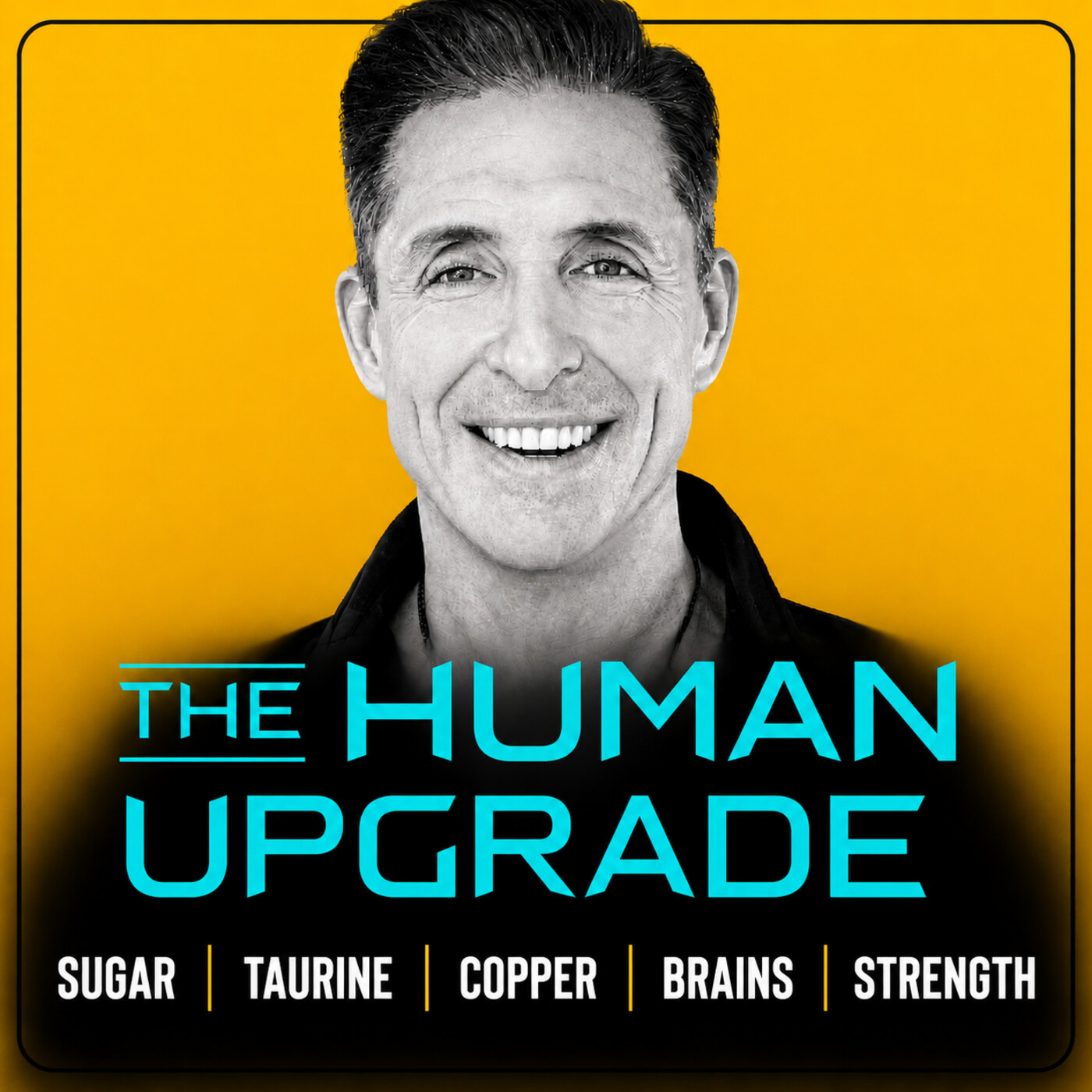
The Human Upgrade: Biohacking for Longevity & Performance
Sugar-Free Backlash, Taurine Fail, Copper Brain Therapy, Childhood Biohacking, Strength Training : 1488
00:11:33
Loading summary
Transcript8 lines
- [00:01]
A
I'm Dave Asprey. That's Dave spelled D A I V E. And this is your 10 minute weekly upgrade on the biggest stories in biohacking, longevity and the world of health.
- [00:12]
B
Let's go.
- [00:16]
A
Want to know which foods and supplements
- [00:17]
B
work best for your body?
- [00:19]
A
VIOME takes the guesswork out of it. Their full body intelligence test reads your rna, not your DNA. So you see what's happening in your body right now. While standard labs measure around 100 markers, Viome's AI analyzes over 10,000 active pathways across your gut, oral and cellular health. Then it translates that into personalized food and supplement recommendations built for your unique biology. They'll tell you what foods to eat and which ones to avoid. They even create custom supplements and oral care products based on your results. So what you're getting is what will work for your body, not someone else's. Your results update as your lifestyle changes, so your plan evolves with you. Check it out@viome.com and use code 10. Dave for 10% off. It's time to stop guessing and start knowing your body. What if the thing you thought was killing you is actually protecting you? And the thing you thought was protecting you might instead be killing you? This week's research is full of those reversals, and I think that's a sign that we need to be digging deeper. Here's your first story of the week. And it may change how we think about clearing toxic proteins from the brain. Scientists at Monash University tested a copper based compound called CUATSM in mice genetically engineered to develop Alzheimer's like disease. After 56 days, the mice had 42% less toxic. Amyloid beta performed about 44% better in spatial memory tasks and showed a 24% increase in P glycoprotein at the blood brain barrier. Now, P glycoprotein is essentially part of the brain's waste removal system. It helps pump amyloid out of the brain and into the bloodstream so the body can clear it. In Alzheimer's, that pump appears to weaken. So the problem may not just be that the brain is producing too much toxic protein. The drain itself may be clogged. This is why I've been saying for years that Alzheimer's is not one disease with one cause. It's a systems failure involving inflammation, mitochondrial dysfunction, vascular health, immune function, toxins and impaired clearance. What's especially interesting is that we've known for a long time that copper metabolism appears to be disrupted in Alzheimer's disease. The conventional response has often been to treat copper as the problem? I think that's been an oversimplification. The issue may be getting the right form of copper to the right tissues at the right time. That's exactly what makes CUATSM interesting. This isn't a compound that attacks amyloid directly. It's helping restore the brain's ability to clear its own waste. That's a much more elegant strategy. For now, support the clearance systems you already have. Prioritize deep sleep, stable blood sugar, exercise, blood pressure control, and reducing exposure to mold and neurotoxic pollutants. That's still the foundation. Your next story is going to upset both the sugar industry and the most extreme people in the sugar free movement. Recently, researchers fed mice either a low fat diet containing sucrose or a low fat diet with the sucrose removed. After 16 weeks, the sugar free mice developed insulin resistance, impaired glucose tolerance, disrupted gut bacteria, intestinal inflammation, and signs of fatty liver, even though they didn't eat more calories or gain more weight. What this shows is that when you dramatically remove one part of a diet, the microbiome can shift in ways you didn't predict. Your gut bacteria need fuel. Remove entire categories of food without replacing them and parts of the ecosystem can start breaking down. I've seen this happen in people who go extremely low carb. Their blood markers improve, but they never support their microbiome with enough fiber, polyphenols or fermented foods. On paper, they look healthier. In reality, they feel worse. The most surprising part of this study, none of this required weight gain. That's another reminder that body weight is a lagging indicator. None of this means refined sugar is suddenly fine. It's not. But elimination without replacement can be its own form of damage. Story number three gives us a surprisingly reasonable target for one of the most powerful longevity tools we strength training. A long term observational study followed more than 147,000 people for up to 30 years. The clearest reductions in overall cardiovascular and neurological mortality appeared in people doing roughly one to two hours of resistance training each week, especially when they also included aerobic exercise. What I love about this study is that it's really trying to identify the minimum effective dose for longevity. We live in a culture that constantly pushes the idea that more is better. More exercise, more suffering, more discipline. Biology doesn't usually work that way, as this audience so clearly already knows. Muscle is not just cosmetic tissue. It's a glucose sink, an endocrine organ, and one of your best forms of metabolic insurance policies. When you lose muscle, insulin sensitivity tends to get worse and injury risk rises and your ability to stay resilient declines. Now, I wouldn't take the 120 minute mark as some kind of hard biological ceiling. This was observational data. It showed that benefits appeared to level off. What it does reinforce is something I've believed for years. Consistency beats volume. If you haven't been in the gym in a few weeks and are hesitant to go back because you lost some gains, you get that out of your head. Consistency is the goal. In addition, the biggest gains came when strength training was combined with aerobic exercise. You want muscle and cardio working together. Story number four zooms out from personal choices to the environments shaping children's brains. Scientists analyze brain scans and behavioral data from more than 2,300 children who are 9 and 10 years old. The strongest predictor of differences in brain development wasn't iq. It wasn't mental health. It was socioeconomic conditions. And by a wide margin, we're talking about neighborhood quality, household income, and educational access showing up as structural differences on an MRI scan that should stop you cold. Where you grow up is literally visible in your brain. The researchers identified sleep deprivation, chronic stress, and screen exposure as the primary mechanisms. And all three are significantly more prevalent in lower income environments. Don't associate this with bad parenting or bad choices. This is about what the nervous system does when it's given a specific set of inputs. During the years it's most plastic, it adapts, and those adaptations leave a mark. Here's what I think gets missed in this conversation. We keep treating childhood environment as a social issue when it's actually a biological one. The data is showing us that opportunity, or the lack of it gets written into the architecture of a developing brain. That's not a political statement. That's neuroscience. And it means the most powerful interventions aren't necessarily medical. They're environmental. The encouraging part is that sleep, stress and screens are all modifiable, regardless of income. You may not be able to change a zip code overnight, but you can protect sleep aggressively, reduce screen exposure, increase time outdoors, and create home environments that feel safe, fun, and predictable to a child's nervous system. Those things sound simple because they are.
- [08:38]
B
Every breakthrough in human performance comes down to one thing just changing your state. And right now, the science and the technology and the ancient practices are converging faster than you realize. For 50 years, bad policy and stigma blocked scientific researchers from studying some of the most powerful tools for the human brain. And that just changed this October. The researchers, the clinicians, the guys pioneers in consciousness, tech and psychedelics are all going to be under one roof in Austin. And you can be there too. With me. For the first time ever, I'm hosting and operating Beyond Wonderland two full days where you'll learn the science and the practice of changing your state and you'll get to talk to the researchers doing it. You'll learn how these tools unlock a version of yourself you didn't know existed. You'll find talks about altered states with or without the psychedelics, A tech hall where you can try the tools yourself. Breakout sessions, breathwork, ceremony integration circles, and more. This field is moving really fast and the people who are here in Austin on October 13th and 14th with me are going to be years ahead of everyone who finds out about this later. Learn more get your ticket now@wonderlandconference.com you're losing hair on your head and collagen in your skin right now, even though you probably can't see it yet. And that process speeds up as you age and and it doesn't reverse on its own, but you can intervene at the cellular level. Studies show that specific wavelengths of red and near infrared light will stimulate your hair follicles and that does support collagen production. Irestore has been making red light therapy devices that actually work for over two decades and with their summer savings event, it's the perfect time to upgrade your hair in skincare. The Irestore Elite is their most advanced laser hair growth system using 300 lasers and 200 LEDs which helps you regrow thicker, healthier hair in about three months. And it is really easy to use. You can wear it while you're working, while you're reading or unwinding at night. And The Illumina Face Mask360 medical grade LEDs can turn red, infrared or even blue light at the same time to target all of your different skin concerns. Just 10 minutes a few times a week gives you brighter, smoother and healthier looking skin. I've been using the Irestore Elite and the Illumina Face Mask while I work at home but not on video and they fit into my normal routine with no extra time cost. I really like it because I don't lose any time when I use it. Irestore is so confident you'll love their products that they give you a 12 month money back guarantee. That's because it actually works. You will see more hair. Irestore is kicking off their summer savings event with some huge discounts on their red light therapy devices. You can save on customer favorites like the Irestore Elite helmet and the Illumina face mask. Just head to irestore.com use code Dave to take advantage of the sale. That's Davey store.com Please support the show and tell them we sent you. Give your hair and skin the upgrade they deserve so you can feel confident and refreshed.
- [11:30]
A
Your fifth and final story this week is about taurine, and it's really about how the energy drink industry hijacked a genuinely interesting compound and sold you the wrong story about it. Researchers gave physically active young adults either 1 gram of taurine or a placebo one hour before a maximal aerobic exercise test. No significant improvement in VO2 max time to exhaustion, fat metabolism or carbohydrate metabolism. Nothing moved my reaction. Good. That's exactly what I'd expect because that's not what taurine is for. Here's what Taurine actually does. It's one of the most abundant amino acids in the body, concentrated heavily in the heart, brain and skeletal muscle. It regulates cellular hydration, supports mitochondrial function, protects against oxidative stress, and plays a direct role in cardiovascular health. There's emerging longevity research suggesting taurine levels decline significantly with age and that restoring them may slow aspects of that decline. That's why it's been in my stack for years. Not because I expect to run faster an hour after taking it. Because I'm thinking about what my mitochondria are doing a decade from now. And here's the part that should make you laugh. Taurine wasn't even added to energy drinks for performance. It was added to take the edge off the caffeine to reduce the jitters and anxiety that come with slamming 200 milligrams of caffeine on an empty stomach. It's a nervous system modulator. It calms the excitatory signals that high dose stimulants amplify. The energy drink companies want you to think it is also boosting performance, but it was in there to stop the caffeine from making you feel like you were having a panic attack. The studies showing meaningful Benefits have used 3 to 6 grams daily over time, not one capsule 60 minutes before a cardio session. So don't throw out your taurine. It's a great tool. Just recalibrate why you're taking it. If you want a pre workout stimulant, that's a different conversation entirely. I've said it before and the research keeps proving it. In health, the obvious answer is usually the incomplete one. Copper dangerous, sugar free, virtuous, two hours in the gym, dedicated, poor neighborhood separate from Biology, Taurine Performance Booster. Every one of those labels was either wrong or so incomplete it was functionally useless. And in every case, people made real decisions about their health based on the wrapper instead of what was actually inside. That's the game being played on you. By pharma, by food companies, by the supplement industry, by well meaning researchers who stopped one question short. The label is always designed to make you act. The mechanism is what tells you whether that action is actually worth taking. I've been doing this for over two decades and the single biggest upgrade I ever made wasn't a supplement or a protocol. It was learning to ask one question before I did anything. Why am I doing this? Not what does the label say? Not what did my doctor tell me without looking at my labs? What is the mechanism and does the evidence support it? That's the difference between biohacking and just buying expensive placebos. The labels are marketing. The mechanisms are what matter. Stop trusting the wrapper. Start understanding what's inside. All right guys, that is your weekly biohacking roundup. Join me again next Friday for another rundown of the biggest health super stories in the news. Enjoy your weekend.
- [15:23]
C
A Human Upgrade Formerly Bulletproof Radio was created and is hosted by Dave Asprey. The information contained in this podcast is provided for informational purposes only and is not intended for the purposes of diagnosing, treating, curing, or preventing any disease. Before using any products referenced on the podcast, consult with your healthcare provider carefully, read all labels and heed all directions and cautions and that accompany the products. Information found or received through the podcast should not be used in place of a consultation or advice from a healthcare provider. If you suspect you have a medical problem or should you have any healthcare questions, please promptly call or see your healthcare provider. This podcast, including Dave Asprey and the producers, disclaim responsibility for any possible adverse effects from the use of information contained herein. Opinions of guests are their own and this podcast does not endorse or accept responsibility for statements made by guests. This podcast does not make any representations or warranties about guest qualifications or credibility. This podcast may contain paid endorsements and advertisements for products or services. Individuals on this podcast may have a direct or indirect financial interest in products or services referred to herein. This podcast is owned by Bulletproof Media.