← The Human Upgrade: Biohacking for Longevity & Performance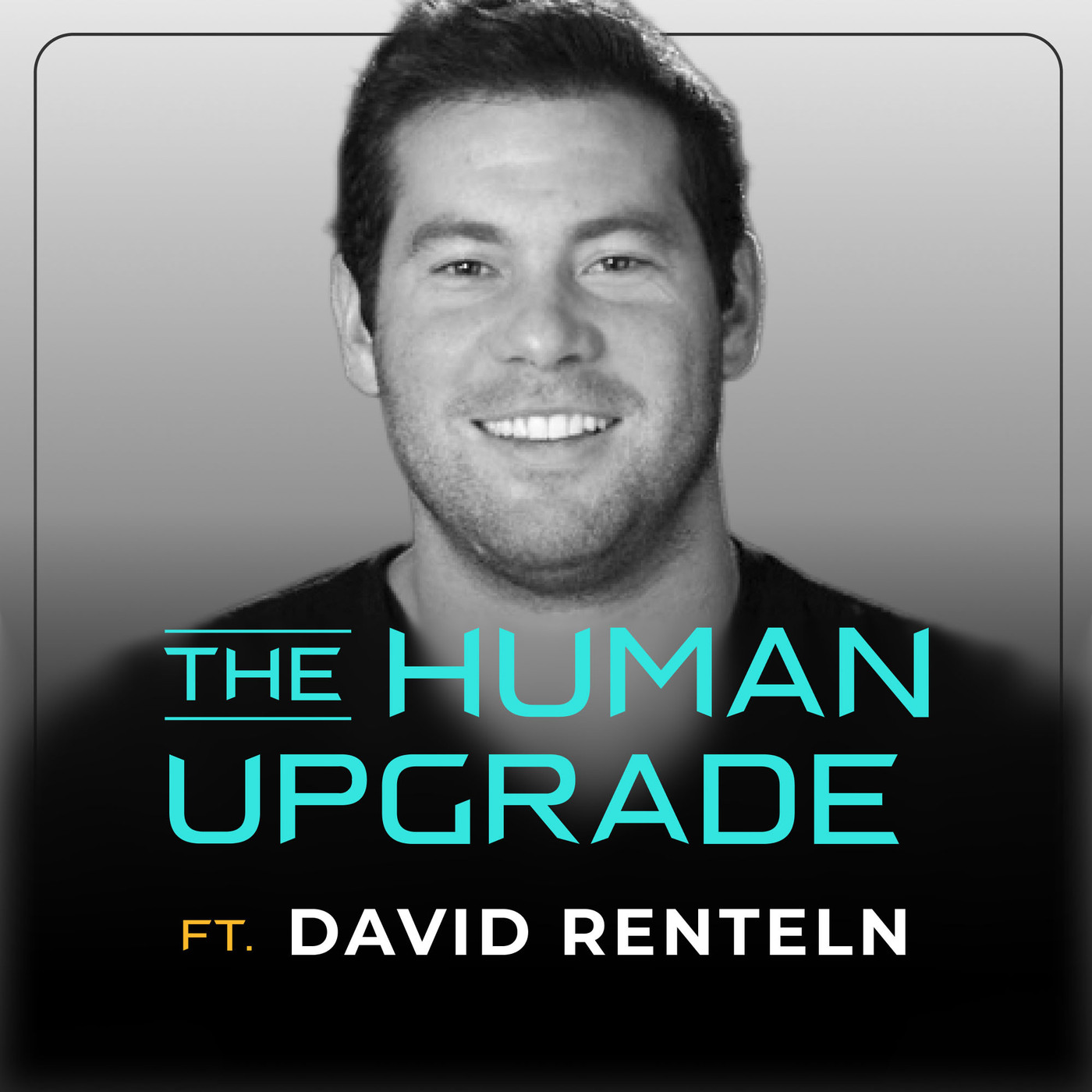
The Human Upgrade: Biohacking for Longevity & Performance
The Superbrain Drug Politicians Use To Outsmart Everyone : 1399
00:47:24
Loading summary
Transcript214 lines
- [00:00]
A
You see a lot of people in government using not a lot of folks in the Senate or Congress were vaping whereas are not seen as the same kind of stigma. RFK used pouches during his Senate confirmation hearing.
- [00:14]
B
If I was going to sit there and be asked the most asinine questions by all those senators, I would be absolutely using and he kicked ass. And I'm sure is part of that.
- [00:26]
A
There's some really new research that's come out just in the last two years about how upregulates nad in the brain and in a variety of tissue types. It gets its stimulant effects by downstream release of acetylcholine. So the main neurotransmitter involved in learning and memory. So it basically makes you smarter, helps you learn faster.
- [00:47]
B
I've gone off it probably five or six times, sometimes for three months at a time. I genuinely like my life better with you're listening to the Human Upgrade with Dave Asprey.
- [01:03]
C
Poor recovery speeds up aging when you don't recover from stress properly, your cells get weaker and accumulate damage. HeartMath changes that the inner balance coherence plus trains your body to recover at the source your nervous system. The setup is pretty simple. You connect a sensor to your ear that pairs to the HeartMath app, which guides you through an HRV exercise. In five minutes a day, your body shifts out of stress mode and into coherence, the state where recovery, focus and peak performance happen. Most devices only track recovery. HeartMath trains it. It works by targeting heart rate variability or hrv, your body's most reliable marker of resilience. Higher HRV means faster recovery, deeper sleep and stronger performance. Decades of Science prove that HeartMath works. Over 400 studies show measurable results in as little as six weeks. That means less anxiety, better sleep, more energy and sharper focus. That's why elite athletes, hospitals and the US military all use the interbalance coherence plus this is one of the things I think everyone should be doing. Don't just track recovery, train it to get 15% off. Go to heartmath.com Dave.
- [02:21]
B
David, welcome to the studio here in Austin.
- [02:24]
A
Appreciate it.
- [02:26]
B
What made you think about nicotine?
- [02:29]
A
So I was a social smoker and I got engaged to my now wife and she told me I needed to quit. So I promised I would quit. It was more difficult than I thought. And at the time one of my Lucy co founders was living doing his Ph.D. and his roommate was doing his Ph.D. on nicotinic receptors in the brain. Cool. And so yeah, 10 years ago, before anybody was talking about nicotine might actually be good for you. Certainly not bad for you. Nobody really knew about this. And so we were kind of blown away. And we spoke to his professor and did the research. And once you actually sit down and look at the research, it's extremely compelling. And so I realized I like nicotine. I don't need to stop using it. I just need to stop smoking. So we looked around for what kind of products we could use to be a delivery mechanism for nicotine, and started with an improved formulation of nicotine gum. Eventually found our way into pouches, and here we are.
- [03:34]
B
Cool. I, I like that. And I, I was attracted because. Do you guys have lozenges still? They were, they were on the menu for a while.
- [03:42]
A
They were, we, we discontinued that.
- [03:44]
B
I was like, lozenges, sorry. And what, what I wanted was things that had less artificial stuff in them and would, would still work. And so the idea here is with pouches, with gums and all, you can control the dose that you're getting, which is a beneficial thing to do. And what's your favorite? Like, how do you take it?
- [04:07]
A
Today I use primarily our two different pouch products, the Lucy pouches and the Lucy breakers. The breakers have a capsule inside that you crush. It releases flavor and liquid to hydrate the pouch. Our, our Lucy pouches are a moist form factor that's more popular in Europe. We brought that to the United States and popularized it.
- [04:32]
B
Are there microplastics in it?
- [04:34]
A
Not really.
- [04:35]
B
What does not really mean?
- [04:37]
A
I mean, they're in a plastic can. Oh, okay.
- [04:40]
B
So it's in a plastic can, but the pouches themselves are not made out of plastic?
- [04:43]
A
No. Okay.
- [04:44]
B
That's a really important thing because there are pouches out there that are made out of just full on synthetic plastics. Okay, good deal. So I wanted to double check on that, just on the air to confirm.
- [04:55]
A
All right.
- [04:56]
B
And you got into nicotine because you were smoking and you quit. What were you getting from smoking? And what do you get from using Lucy? Is this like calmness, is this energy, or is this addiction?
- [05:10]
A
I think all of the above. I think, you know, okay, that's honest. I think, you know, nicotine is a really interesting chemical because it's a short acting stimulant, but it also gets its stimulant effects by downstream release of acetylcholine. So the main neurotransmitter involved in learning and memory. So it basically makes you smarter, helps you learn faster, is pleasurable, and is also, you know, behavior reinforcing so that's one reason why you hear smokers say, you know, this triggered me or this, you know, you. You get these context clues in your environment that remind you, oh, nicotine goes with this. So that can be problematic when it's something like smoking. It could be beneficial if you're trying to use it in a targeted way to learn a new behavior.
- [06:03]
B
Why do people like nicotine after sex?
- [06:07]
A
I think that it probably is something that, you know, again, helps calm you down after a high state of arousal.
- [06:18]
B
I just had to ask you that to see what the look on your face would be.
- [06:22]
A
Yeah, I wasn't expecting to be asked that, but I stand by my answer.
- [06:26]
B
You want to know the biohacker answer?
- [06:28]
A
What?
- [06:28]
B
I was just doing research for the masterclass on nicotine, and it was something I didn't know until I dug really deep. When a guy ejaculates, our prolactin levels spike. And prolactin makes you kind of tired and lethargic, and nicotine lowers prolactin. So that means that it could even have a beneficial effect on your refractory period. But I think it's because we just naturally get this. And then you. I've never smoked, but if you use some nicotine, then it just does something to make your brain. I think it's because of prolactin. Maybe the other stimulant effects, acetylcholine, just makes your brain drop into peaceful but awake zone. So it's funny, in all the movies from before 1990, you have two people in bed smoking. You know, what they just did. But smoking in bed is dumb, and smoking in general is dumb. So there's that.
- [07:17]
A
That makes sense. I mean, prolactin, I think, is antagonistic towards dopamine too, Right?
- [07:21]
B
Exactly.
- [07:23]
A
Nicotine will. Will release some dopamine. Yeah. That's interesting.
- [07:28]
B
Yeah. It's one of those little things of. You show two people chewing Lucy in bed. We know what they just did is that.
- [07:33]
A
Yeah, yeah. That is an advertising campaign that maybe we should take into consideration.
- [07:39]
B
About to say it if you didn't. Yeah. But just a public service announcement. You should close your mouth when you chew.
- [07:46]
A
Yeah.
- [07:47]
B
How do you use nicotine gum anyway? In the right way. Because people usually don't.
- [07:51]
A
Yeah. I think that's one of the reasons why pouches became so popular, because it's so easy to use. You don't make any mistake. Right. Most people see nicotine gum, they don't read the instructions, and so they chew it really fast, releases the nicotine too fast and then you, you swallow it. You're supposed to absorb it through the gums, right? You're supposed to have an alkaline environment in the mouth that allows it to diffuse, diffuse through the gum layer. But most people say, I know how to chew gum. I'm not going to read instructions, right? And so pouches again, you just place it. It's foolproof.
- [08:27]
B
Okay? Just stick it in and it's good to go. Yeah, all right, good deal. I approve of that method. And if you're chewing the gum, you want to chew it two or three times and stick it in your gum, but then you just kind of keep chewing it because that's what you're used to. And so that's the benefit of a pouch. Okay?
- [08:45]
C
You see it in the mirror. Wrinkles, sagging, and old scars your skincare can't touch. What if you could get cosmetic surgery results at home without the pain, the risk, or the downtime? The Lima laser switches your skin into youth mode. This is clinic grade cold laser technology now available at home. It penetrates deep into your skin and triggers repair at the cellular level, not just the surface. Watch your wrinkles, scars and pigmentation fade, all without stepping into a clinic. No surgery or injections necessary. Experts around the world trust and use this. I use this. If you're serious about changing how your skin looks and feels, this is the future. Go to Lima Life and use code DAVE10 for 10% off the Lima laser, that's L Y M a Life and use code DAVE10.
- [09:38]
A
Now.
- [09:40]
B
You'Ve just had thousands of people quit smoking and switch to Lucy. What psychological or biological things shift when you stop smoking and you use an alternate form.
- [09:51]
A
In the case of oral nicotine, it is interesting because it still takes a little bit of willpower, right? So when you smoke or vape nicotine, it goes into the lungs. It gets into your bloodstream faster than if you even inject it with an oral product. It's a more gentle curve as far as how it hits your bloodstream. But then once people use the product for some period of time, couple weeks, if you relapse like I did when I was starting out, and you smoke a cigarette, for instance, you wake up the next day and you feel it in your lungs like it's a new habit, and you sort of get this negative feeling from it and you say, well, wow, why did I do that? I was doing fine. And, and so I think that it's, it's just something that requires a little bit of focus.
- [10:45]
B
Okay, got it. So you don't get the lung irritation, but you still have to break the habit of it. How long did it take you to break the smoking habit when you switched to nicotine?
- [10:56]
A
I would say couple months. I mean, I guess it depends how you. How you count whether or not you broke a habit. So, you know, not a single cigarette ever. Probably a couple months.
- [11:10]
B
Okay.
- [11:11]
A
But once I decided I was switching over, that was my new daily routine.
- [11:17]
B
Okay, so you just had a lot of willpower for it. You look like you probably go to the gym, too. So you got some willpower in there.
- [11:23]
A
I used to. I used to. Now running a company, you know, with the travel, it's very difficult.
- [11:27]
B
So the shoulders just come from bearing the weight of responsibility.
- [11:31]
A
Just, you know, years of lifting hasn't. They haven't left me yet.
- [11:36]
B
Yet. Come on, more positive. More positive. All right. If someone's never smoked and they wanted to use nicotine as a longevity aid or a performance enhancing, what's the best protocol to not become addicted? Heavily?
- [11:53]
A
I would say certainly don't use it every day.
- [11:57]
B
Okay.
- [11:58]
A
Especially if it's. If it's very serious for you to not be. Not risk being addicted, you shouldn't do it at all. And if you're trying to minimize your chances of being addicted, don't use it every day. And use a form factor that releases nicotine into your system as slowly as possible, because that negatively correlates with the euphoria that you feel. So even a nicotine patch would probably be the slowest mechanism of nicotine absorption.
- [12:30]
B
I like hape.
- [12:31]
A
Yeah, it's pretty fast.
- [12:35]
B
If you've never heard of hape, it's an Amazonian shamanic way of blowing tobacco dust mixed with some other stuff into your sinuses that pretty much makes you roll your eyes, back your head and trip balls. So it's the opposite of slow.
- [12:49]
A
Yeah, I think there's some devices where someone assists you and blows it in your nose, and then there's other. That you do it to yourself.
- [12:56]
B
Yeah, I've been trained to administer it for other people in a ceremonial context, but it's, you know, it's a thing. Plus, you get brown boogers and you cough and your eyes water, but, man, it's good. So the rapid nicotine feels freaking great. I'm not gonna lie. So would cocaine, probably. Although that's not a drug. That's in my stack of drugs that I. That I would use. But I would just say that the very fast delivery systems like snuff and things like that, they do Hit and then you seek the euphoria. That's totally true. And so where would you put like a pouch or gum at? Somewhere kind of. It's faster than a patch but slower than a pouch. Or are they about the same?
- [13:42]
A
So gum and pouches would probably be about the same as far as the pharmacokinetic curve slope. And they'd be ahead of patches, but they'd be much slower than nasal or vaping or smoking.
- [13:59]
B
And vaping is just a crappy idea, like the worst you could ever do. And don't do that. And smoking is very close behind vaping just because of the biological damage from the smoke. So sometimes people hear this and they're like, dave's sponsored by Big Tobacco. No, Big Tobacco doesn't make anything. In fact, I did invest in Lucy, though, so I guess there's a financial relationship there. But I've been using this stuff for 15 years for performance enhancement. I haven't started smoking yet.
- [14:25]
A
Well, we're also not Big Tobacco. We're an American independent company.
- [14:29]
B
Yeah, exactly. So I also have used, I've talked about quite a bit, nicotine spray and I have some new information about that. So this is made by Nicorette and it's not entirely free of some of the sweeteners I don't like, but it's very low dose of them. So use this spray. You can buy it in any country on the planet. Just about. I bought some in Romania, I bought it in Norway. Like, it's everywhere. And it's never been approved in the us. I'm like, what is going on here? So I finally found the guy who was the head of that product group at Nicorette and he said, oh, yeah, they wouldn't let it in because it was too addictive. The FDA did something right. So what it why it's still better than vaping, but they allowed that anyway. So what's going on there is speed of absorption is a variable. And the other thing is dose. Right. So even if it's relatively quick, like gum or a pouch or a lozenge, any of those forms, if you're keeping it to under 5mg per day, all the research I've done says that you're unlikely to get addicted for more than like a three day physiological and maybe up to 10. You go above 10, you're probably going to fall into addiction land. You ever seen anything around dose, not just delivery speed?
- [15:47]
A
I'm not aware of that, but it makes sense. And again, you know, if you think about the Typical amount of nicotine that you'd get in a recreational product. Two doses of a standard recreational product would put you over that. Let me try that again. Two doses of a recreational product would put you over that threshold. So, yeah, that makes sense.
- [16:09]
B
Okay, so I. My recommendations are five on a normal day, 10 on a burst day. And don't do what I do because I did one milligram a day for five years and I said, I like this stuff. I'll use as much as I want. And I've definitely gone above that level. What's the most number of pouches you've done in one day?
- [16:28]
A
I don't know if I've tracked it in particular, but I've probably done three cans a day, so that'd be 45 pouches.
- [16:37]
B
And how much is in each pouch?
- [16:38]
A
We have four 8 and 12 milligram strengths. I use the eights.
- [16:42]
B
So 45 times 8.
- [16:44]
A
Yeah. It's a lot.
- [16:45]
B
Did your brain explode?
- [16:46]
A
No.
- [16:47]
B
My God, no. That is mega dosing. Nicotine.
- [16:51]
A
Yeah.
- [16:52]
B
Are there any negative effects of that kind of dosing?
- [16:55]
A
Not that I'm aware of.
- [16:56]
B
I. I don't think I've ever done more than 100 in a day. I haven't measured that much. But I would imagine on my worst day ever, when I'm just like, running around Europe, you know, off an airplane or something, I'm probably just spraying a lot or doing, you know, extra lozenges or something, but holy crap.
- [17:10]
A
I think, you know, you can get used to the. You know, you can build a tolerance for most of these substances that can get pretty high.
- [17:17]
B
Do you ever cycle off?
- [17:19]
A
Yeah.
- [17:20]
B
So when you cycle off, do you do it slowly or quickly?
- [17:22]
A
Slowly.
- [17:22]
B
Okay. What happens if you try it quickly?
- [17:25]
A
I would probably get in a negative mood. Symptoms.
- [17:29]
B
Got it. If I cycle off quickly, I get a little cranky. But it's more the muscle tension. That's. That's the. The thing. For me, I get pretty strong muscle tension. So if I'm going to go on and off cycle, I just cycle down. I'll use a patch or just titrate myself, and then I've gone off it probably five or six times, sometimes for three months at a time. I genuinely like my life better with nicotine. Like, it's. It's a thing. Right?
- [17:56]
A
So do I. Yeah. Okay.
- [17:57]
B
Yeah. So I. I just done so much research, interviewed top guys, and I truly believe in it. And it sounds like you do, too.
- [18:03]
A
Yeah.
- [18:04]
B
You mentioned some of the neurology and you've done a lot of research on it, as have I. So let's talk about what nicotine does for your memory. Like what do you notice?
- [18:15]
A
Well, I mean, it improves your memory. And you know, there's some pretty interesting studies going on about that. There's a professor at Vanderbilt named Paul Newhouse who's doing a study, a long term study to see how giving nicotine to folks who have been affected by Alzheimer's, what the results are and has gotten some really promising data. The study's not finished yet, but a lot of the early data suggests that the cognitive decline is significantly lessened, in some cases improved, compared to people that don't use it. And there's some really new research that's come out just in the last two years about how nicotine, again, these are rats studies, so still need to translate to humans. But that the consumption of nicotine upregulates nad in the brain and in a variety of tissue types.
- [19:13]
B
Yeah, you know, I interviewed Paul, I think it was in 2017, 2016, something like that. I called him Dr. Nicotine. And here's a little clip from that. I looked around and I said, well, what's no one else looking at?
- [19:29]
C
And I said, well, I seem to.
- [19:31]
B
Remember from medical school that nicotine activates the same system. Why don't I look at that? And in those days, there was no patch, there was no gum, there was no spray or vape or anything like that.
- [19:43]
A
So we had to actually make our own nicotine for intravenous use. We had to infuse it and we.
- [19:50]
B
Actually created an intravenous formulation of nicotine.
- [19:53]
A
That we could infuse gradually into people. And we had to learn to do that. We had to learn to do it safely. And right away we began to see.
- [20:01]
B
Some hints that this was active in a very rapid way.
- [20:06]
A
Another thing that, you know, people aren't necessarily commonly aware of is Aricept. One of the primary drugs to treat Alzheimer's is an acetylcholinesterase inhibitor, meaning a drug that upregulates, promotes acetylcholine. So very similar mechanism to how nicotine interacts with the brain.
- [20:31]
B
If you're on Aricept or galantamine or huperzine A, these are relatively unknown acetylcholine boosters in some kind of gray zone nootropics that are out there. You might want to be careful with your nicotine because you're doubling down on acetylcholine. But if you're severely deficient, it might even be good for you.
- [20:51]
A
Yeah, and I've started to Take Huperzine A in the evening because there's.
- [20:58]
B
Wow, that's surprising. Normally it's stimulating.
- [20:59]
A
Yeah. But, you know, a low enough dose, but I found, you know, through the Oura ring, which I also found by going to your conference years ago.
- [21:07]
B
Oh, nice.
- [21:09]
A
It helps. Basically improves the amount of REM sleep that I get.
- [21:14]
B
Oh, no kidding.
- [21:15]
A
Yeah.
- [21:17]
B
So increasing acetylcholine before bedtime increases REM sleep. And you're probably going to bed with one of the Lucy pouches in sometimes.
- [21:27]
A
I try not to.
- [21:29]
B
That's also something that's usually not good for sleep, but I think with your level of acclimation, your brain's probably studded with things that are hungry for acetylcholine. And that could be part of why it works for you too.
- [21:41]
A
Could be, yeah. But, you know, there's also research, you know, on this phenomenon itself with Aricept and sleep architecture.
- [21:51]
B
Okay, I. I believe it. It's. It's a fascinating drug and it's just so different from tobacco. Do you ever smoke? On occasion. Now.
- [22:01]
A
No.
- [22:01]
B
No. You're just, like, done with that. Wife would kill you.
- [22:04]
A
Yeah. Yeah. I. I will have a cigar probably once every six months. Yeah, that's probably not good.
- [22:11]
B
But if you're not inhaling it and you're just putting your mouth the way you're supposed to, I don't think it's a big. I. I brought some cigars to Burning man and I smoked one, so.
- [22:20]
A
Oops. You gotta live a little.
- [22:22]
B
Yeah. And I. I just. I don't inhale into my lungs. I don't like coughing. I do that enough anyway. Is there a personality type for nicotine?
- [22:33]
A
A personality type in terms of, like.
- [22:35]
B
People who benefit most from it or people who are just going to have a bad experience?
- [22:40]
A
I think that it is a stimulant. So people who are already overstimulated maybe wouldn't benefit as much. But, you know, if you look at, throughout history, the level of the. At the population level, the amount of people who consume nicotine, it is so popular that it'd be hard to, I think, tease out a particular personality type.
- [23:10]
B
I think so, too. It's kind of like if I was caffeine on this bicep and if I was going to get another tattoo, and tattoos are not really good for you. I knew when I got that. But whatever I wanted it, I would put nicotine on this bicep because Mother Nature is just original nootropics and 90% of people drink coffee. And I think that's Global. So even if you're from India or the uk, you probably still drink coffee often enough to count. Even if you still like tea, you can go both ways. And if you look at all the great books, which ones weren't written on caffeine and nicotine?
- [23:47]
A
Probably very few.
- [23:48]
B
They're just things that make the brain do things. And I think caffeine and nicotine stack well together. But there's other things, like modafinil, for instance. I mean, do you stack nicotine with other cognitive enhancers for yourself?
- [24:03]
A
Yeah.
- [24:03]
B
What do you think stacks best with it?
- [24:06]
A
Well, I think nicotine goes with everything. It's a short acting stimulant that has a relatively unique mechanism. Right. Compared to most of these other nootropics. So pairs well with modafinil pairs well with, you know, pretty much any nootropic I've ever taken.
- [24:28]
B
Wow. I will say that that is the case as well. And. Have a little drink break, water break. And if you're on a psychedelic journey with a shaman or ketamine therapy or whatever, nicotine enhances just about every psychedelic or every plant medicine and makes the journey longer and deeper. I don't know why I just breathe.
- [25:10]
A
You got to cool it on the cigars.
- [25:11]
B
Exactly. From that perspective, we've maybe heard about ayahuascaros. These are the shamans who use ayahuasca, but there's another older form called the tobacanero. And these are shamans who just use so much native tobacco, which is much higher in nicotine than the soil stuff that we grow in the US and they do that until they go into an altered state from using it. And it's a similar type of spiritual journeying. So there is a mystical aspect to tobacco, at least that I believe is mostly derived from the nicotine in it. So I've seen it used very beneficially in plant medicine ceremonies. And I suppose it would work just as well with a gum or a pouch or any of the other delivery mechanisms out there. So.
- [26:04]
A
Yeah.
- [26:07]
B
Now let's say that question. Let's see. Part of what you're doing is you're helping people quit smoking. And every nicotine company says that. But you're a former smoker who actually had to solve the problem. Problem. So I believe you because I talked to you when you were forming the company. And so you're like, oh, I'm going to do something that actually has benefits instead of something that has net negative benefits, which is smoking. So what did you design into Lucy in order to help Break the habit of smoking.
- [26:47]
A
Yeah. So one thing that we tried to do is actually back when we were starting the company, FDA had come out a few years prior and said, using nicotine gums as an example, they said, well, instead of using this product for 3 months to quit and then stopping the product, don't worry about that. Just use the product for as long as it helps you. And also, rather than saying don't use it in combination with any other nicotine products, don't worry about that either. We've seen people, you know, reduce to quit. The average smoker needs 30 attempts to quit smoking. So we don't want people to use, you know, nicotine gum and then fail and kind of fall off like a diet and just say, well, I, you know, I failed. So who knows, 6, 12, however many months till I try again, just stick with it. And so my co founders and I were looking at this and we were saying, well, it sounds like they're basically saying, make this a recreational product. Right. It's low on the continuum of risk, and they're saying, use it how you want to use it. So there were no nicotine gums on the market back then, and there still aren't, except for us, that are actually designed to be recreational products. You know, we don't, uh, we don't have data to show that using our nicotine gum helps you quit smoking. If people want to use it that way, that's great. But what we designed it for was to be a product that could actually compete on a brand, an enjoyment level with cigarettes. So better flavor, texture, an approachable brand.
- [28:38]
B
And you don't smell like a smoker when you're done.
- [28:40]
A
Yeah.
- [28:41]
B
Okay. Why'd you call it Lucy?
- [28:44]
A
Because a loose cigarette, Lucy, is how most people get started smoking. And we were trying to think about what kind of sort of branding and marketing we could do that smokers would notice, that would catch, you know, in their minds. But people who didn't smoke already, when, you know, they wouldn't get it, maybe.
- [29:05]
B
Says something about my personality type, but I'm like, is that the one in the sky with diamonds? But I guess it wasn't that, right?
- [29:11]
A
Yeah, we've had a few people say that over the years, too. And. Yeah, no, no relation to lsd.
- [29:18]
B
I should ask you that before I invested, but.
- [29:22]
A
Too late.
- [29:22]
B
Okay. What do governments get right and wrong about regulating nicotine?
- [29:32]
A
Yeah, they get a lot wrong. So first, what they get right is it's something that should be regulated. It's a psychoactive substance. It needs to be taxed. Youth shouldn't have access to it. And we want to ensure quality controls.
- [29:50]
B
It sounds like you're just saying that so they don't come after you, right?
- [29:52]
A
No, no. I mean, I, I think, I think you want quality controls and you want to prevent youth access. But, you know, there's a lot, as I said, that they get wrong, which I'm about to expand on. Basically, most of the government regulation has put a damper on innovation. So, yeah, you. You see this with even snus in Europe. Right. One of the reasons why we have such compelling safety data, one of the reasons why we have such compelling safety data about nicotine is Swedish snus. So in Sweden, historically, people have used snus, these tobacco, pasteurized tobacco leaf packets that you put in your mouth. They're very similar. They're kind of the grandfathers or fathers of pouches. Right. As we know them today. And the European Union said, we're banning this. We don't export this to the rest of Europe. We have a tobacco product problem. We don't want more tobacco products. So, no. So then over decades, what you saw was Europe continued to smoke at the rate that it had been, and in Sweden, you now have smoking. Smoking rate lower than 3%. Similarly, in the US you see basically a lot of regulation in place to prevent bringing new products to the market quickly. And that is something that basically resulted in. In the vaping market, you had these illegal Chinese flavored vapes available in every convenience store. And only recently now, with the new administration and RFK and things that they're doing in Texas, has the government actually been able to effectively start shutting that down. But in the meantime, there was no encouragement for entrepreneurs or for the American market to actually answer this market need. And same thing with nicotine pouches. It's very difficult to launch a nicotine pouch company today. There's a lot of regulation that you need to do to essentially prove that a pouch is safer than a cigarette. And, you know, again, I think RFK is, is doing some really good work internally to accelerate kind of that potential innovation process.
- [32:25]
B
And it looks like he's using nicotine.
- [32:28]
A
He's. Yeah. He also. Yeah, he used pouches during his Senate confirmation hearing.
- [32:33]
B
I did a post about that. I'm like, thank God we have someone running HHS who knows something about nootropics and is taking care of his brain.
- [32:40]
A
Yeah.
- [32:41]
B
And if I was going to sit there and be just asked the most asinine questions by all those senators and congresspeople and all, I would Be absolutely using nicotine and modafinil just so I wouldn't just, you know, roll my eyes at them or something. So I thought he kicked ass. And I'm sure nicotine was part of that.
- [33:00]
A
So, yeah, 100%, I think. And you see a lot of people in government using nicotine pouches. Now, I think that's also a difference between what you're seeing with the government regulation and its approach towards pouches compared with its approach towards vaping. Not a lot of folks in the Senate or Congress or other areas of government were. Were vaping or at least openly vaping. Whereas nicotine pouches are not seen as the same kind of. They don't come with the same kind of stigma, which is good.
- [33:36]
B
Makes so much sense. So if everyone's using it, they'll probably make it legal. They just want to make sure they have a chance to invest in it before they make it legal. So they get all the pay they really deserve. That's how they get paid. 100,000 a year and spend eight years and are worth $100 million because they're not corrupt. Right?
- [33:54]
A
Oh, you're talking about Congress and the stock trading stuff. Yeah. I don't know how that works.
- [34:01]
B
I think the works is you send them a box of Lucy and then they call you and then they buy stock and then they pass a bill that requires the government to buy a lot of ears. I've been trying to figure that out myself, and I think that's how it works.
- [34:15]
A
Got it. Well, I guess we need to go public then.
- [34:17]
B
Well, you can sell it privately. I don't think they mind.
- [34:19]
A
Okay.
- [34:22]
B
I'm only kind of BSing here. It seems like that's what they're doing. It's a little bit slimy, but at the same time, I'm an investor, so. So let's make Lucy required by law. What do you think?
- [34:33]
A
I think that if you smoke that it would be better if you used Lucy.
- [34:38]
B
Oh, that was a. You should be a politician, man. Just kidding. There are other beneficial compounds in tobacco that regulators just basically straight up ban. And I feel like there's overregulation around human performance, human enhancement, and a lot of people just leave the US and all that investment leaves the US too. So you go to Abu Dhabi, go to Costa Rica, you know, go to places that welcome innovation and allow you to experiment and figure stuff out. Do you ever think that you're going to have to go overseas to do some of the stuff you want to do with nicotine?
- [35:15]
A
Yeah. In fact, that's, you know, primarily the way that we think about it when we want to launch a new product and we want to even just tweak or test new attributes, ways that we would improve our pouches if we could. And there's a number of markets around the world that are appropriate for that. We've actually launched pouches in Japan, which is a very small market right now, but we're doing quite well in that small market. So we're testing some new product features in that market, and if they perform the way we expect, then we'll mobilize the machinery in the US to try to bring them to market here.
- [35:59]
B
Well, I'm hoping that our regulatory people listening to this guys, take a chill pill. If people do this, it's better than smoking. Allow innovation here because it doesn't say in the constitution that the government can limit innovation or that they have any say over what you put in your body. That's all just made up nonsense. That is not in the organizing articles of the US So you guys are overstepping your bounds. You did a long time ago. I know Big Pharma made you do it, but you need to chill out because we're getting tired of it. Just saying. I didn't put words in your mouth. Those were my words. But thanks for sitting here and only looking mildly horrified. Don't worry, Lucy didn't say it. It was me.
- [36:40]
A
Yeah, well, I mean, I think the critique of Big Pharma has a lot of merit in that not every beneficial compound is going to be a Big Pharma drug. There's lots of things that we have a storied history with, like nicotine that could have benefits. There's practices like meditation that have benefits. And if something works, we should encourage that people have access to it.
- [37:08]
B
That actually leads to a conversation about addiction itself. And Gabor Mate has been on the show and we've done a lot of episodes about trauma and addiction. And there's physiological and then there's psychological or emotional addiction. And with nicotine, I think we're primarily talking about physiological addiction. Right. People aren't like, like because of trauma smoking.
- [37:30]
A
Right.
- [37:31]
B
Or are they?
- [37:33]
A
It's hard to say. I, I mean, you do see data that in areas where people are less well off, there tend to be higher smoking rates. And, and, you know, one would think that there's more trauma in those areas. So there is some correlation.
- [37:51]
B
Yeah.
- [37:51]
A
Okay. But, you know, by that same token, then if we're talking about limiting access to products that are more harm reduced, then you're actually disproportionately punishing the population that might be more traumatized. Or at the very least, is smoking at a higher rate, which isn't good.
- [38:15]
B
Some people will say, look, if you're an addict, the only thing you can do is you can just be sober, full sobriety. And on the other side, you're saying, well, replace the habit or what the habit was doing for you with something that's better for you. And that now maybe you've broken the addiction or the addiction becomes even beneficial. So, for instance, if you were addicted to crack and you could be addicted to exercise instead, the exercise addiction is better, but it's still addiction. In the case of smoking, if smoking is bad for you, nicotine is at least depending on the dose, it's probably good for you and way less bad for you. It seems like the addiction is broken from smoking, but you may still be addicted to nicotine. And is that a bad thing or a good thing? Explain your thoughts on addiction and nicotine.
- [39:05]
A
So. So I'm not an expert in addiction. Sure. But clearly you can see in groups like, you know, AA NA that smoking appears to be tolerated and coffee appears to be tolerated.
- [39:21]
B
I always wondered about that. I'm sober. As you smoke and drink coffee, they actually help with, with other types of addiction. Anything that improves mitochondrial function gives you more willpower, which is going to help.
- [39:32]
A
Right.
- [39:33]
B
But it did seem like a double standard. Right?
- [39:36]
A
Yeah, I. I'm. I'm not sure why that is. I mean, I can imagine that having extra willpower to avoid behaviors that you know are bad for you is a good thing. And obviously nicotine helps you learn new behaviors at a faster rate, so that's probably something that's beneficial there as well. But I think also just at the highest level, these, those two substances don't cause behavioral changes that are problematic. Right. You don't use nicotine or drink caffeine and then go gamble away your life savings or something. You just are more alert.
- [40:18]
B
But if you did use nicotine while gambling away your life savings, it would be more fun.
- [40:23]
A
Yeah, yeah, it would probably be that much worse. So don't do that.
- [40:28]
B
That's kind of dark. But there's a reason that there's tobacco and casinos because it does make everything more fun. I hate to say it, but it feels like that, like, even things that are boring or just hard to focus on seems to make it a lot easier.
- [40:45]
A
Well, I think also just they don't want people going outside to take a smoke break. Right. They want to keep you in there as long as possible.
- [40:53]
B
Of course. Yeah.
- [40:55]
A
So, okay.
- [40:59]
B
If you were to design the ultimate stack that you would use with nicotine, this can be behaviors, food, light, whatever, all the biohacking stuff. What goes well with nicotine? If you were to have your perfect day.
- [41:18]
A
I think that I would pulse nicotine along with, you know, at the sort of highest doses with the behavior that I am most looking to change or improve.
- [41:35]
B
So when you did something that you wanted to improve, you would do nicotine at the same time. So your body would associate nicotine with the beneficial thing.
- [41:42]
A
Yeah.
- [41:43]
B
You ever heard of Pavlok?
- [41:45]
A
Yeah.
- [41:46]
B
So you're one of the few people who has. Let's see. Manish Sethi was on the show years and years ago, and he went on to Shark Tank a long time ago and pitched this ridiculous device. It's a watch that locks on, that shocks you when you do a habit you don't want. Just a little mild shock. And he went on to Shark Tank and pitched it in. One of the sharks offered him money, and he said, oh, I would take anyone else's money, but not yours. He was kind of an ass to the shark guys, and they're like, get the F out of here. And I think he got more marketing for that than anything else. But Manish is the most ADHD guy ever. So I invested a very small amount with him because it was too funny not to invest. But I kind of like the idea of pairing a negative reinforcement. So if you say you're trying to quit smoking and go to the gym, so every time you think about smoking or whatever, you shock the crap out of yourself, and you go to the gym and you take a Lucy, like, okay, I really like going to the gym now. So you compare a negative and a positive thing. You could probably really program yourself like Pavlov pretty quickly.
- [42:54]
A
Yeah, I think so. I mean, the problem, of course, is just that life is so messy, so it's hard to have such a controlled experiment in your life. But it makes sense. The carrot and the stick.
- [43:04]
B
Manish invented that because he was addicted to social media. So he hired someone off of Craigslist to stand there and watch him use a computer. And every time he went to Facebook, she'd slap him. And literally, that was how Pavlok was.
- [43:18]
A
I didn't know that that was the origin story.
- [43:20]
B
He's absolutely crazy and hilarious. So how could you not just be intrigued, but what have you done with nicotine to train yourself to be healthier?
- [43:31]
A
Well, I think probably because I Use so much nicotine in general, the dose to me that is most effective, that I feel is the first dose that I take in the morning. And so dialing in a morning routine is probably the most effective way that I've been able to consume it. Right. So.
- [43:55]
B
So you want to meditate. You don't do it until you meditate?
- [43:57]
A
Yeah, meditate. Do some, you know, minimum viable workout. Take supplements, protein, shower, brush your teeth.
- [44:09]
B
And then you get your nicotine.
- [44:11]
A
No, no, do it, you know, do.
- [44:13]
B
The nicotine while you're doing it.
- [44:14]
A
Yeah.
- [44:15]
B
Okay. Except the brushing teeth part, it doesn't really. It's not compatible.
- [44:18]
A
Yeah. Usually it'll be out by the time that the tooth brushing starts, but. But I will take it with meditation.
- [44:26]
B
Okay. I find it helps with some meditation. Some of the really advanced forms that I do, you don't want to be on it because it suppresses the peak of certain brain waves. But for other meditations, it's actually really beneficial. And it also depends on how much you're used to taking. Well, David, it's been a pleasure having you out here, and thanks for just making a cool product and talking openly about this. I am firmly convinced that. That oral nicotine is not the same as smoking and that there are physiological benefits. I'm probably on the conservative end of the recommended use spectrum, but I'm also practicing some of the do as I say, not as I do, because after many years of being very conservative, I ramped up. And at very high doses, I do notice increases in sympathetic tone that are probably not beneficial for me. But I also have a very weird neurological and hormone system compared to most baseline humans. Like, I'm. I'm kind of tweaked and optimized in many different ways. So I know my upper limits, and they may be different for different people. Yours are astounding. Right. And so what. What I would do or what I would offer to people is, look, if you're under 20, just don't mess around stuff under 21, it's not worth it. Your brain is still forming in ways that are useful, and they're just. The benefit, isn't there? You have plenty of energy, and if you don't, it's not a lack of nicotine. You just. You need to get your shit together. Like, learn how to eat, learn how to sleep, learn how to go to bed on time, even though Mother Nature really wants you to stay up all night basically getting laid. That's why we're wired that way at that age. And I was too to be straightforward. So after that, though, you look at it as one of the many different performance enhancing and pleasurable things that you can do and you can misuse it. So I would say, especially if you're young, go slow, set aside the amount you're going to take every day and carry that with you. And when you run out, you don't take any more. Otherwise it's pretty easy to go into more and more and more. And that probably is going to serve you, especially if you're young, as you reach in 30, 35, you have three jobs and two kids or whatever's going on in your life, you might find you use a little bit more on some days and it's damn worth it. Right. And you see me traveling internationally, I'm probably going to use it a lot more than I do when I'm at home. Right. So I match it to my energy needs and all that. It's a part of my longevity and cognitive enhancement stack. And it's actually really useful. And having a lot of moral outrage and judgment about something, that's not what free thinkers do. We assess, we remove the emotion, we consider the risks and benefits and then we do what is right for us. And if someone else doesn't like it, it's their problem. So that's my advice about nicotine. What would your advice be? Just last question of the interview. Tell people, all right, what's the real deal with nicotine?
- [47:28]
A
Yeah, I would say that if it's not a substance that you're familiar with, there's no reason to start. I would say also that the continuum of risk is extremely important to know about and that everybody should know about. Right. That how you consume nicotine is as important almost than whether you consume nicotine at all. So if you're going to use nicotine, you should use it with a product that won't kill you.
- [48:01]
B
Well said, David. Thanks for making the trip out to Austin and thanks for being one of the first, first companies to straight up say, here's nicotine, here's oral nicotine, here's a better formulation and to just continuously innovate and all that. So I appreciate you.
- [48:17]
A
Thank you. All right. Appreciate it.
- [48:21]
B
There was a CTA. Oh, that said, Dave, 20%. I don't know if it was a code. I missed the last slide. So let me work that in. God, that I missed the money slide. Are we still running? Is it a code? It says use code, Dave.
- [48:34]
A
Okay.
- [48:34]
B
Oh, Is it a URL? Is it lucy.com? dave? LUCY CO. Lucy co. Dave.
- [48:42]
A
Okay.
- [48:43]
B
All right. And if you're using some sort of nasty Nicorette product or something else, or you're smoking or this is going to be part of your stack, you go to Lucy Co Dave and they'll give you 20% off. And thanks for offering that to listeners.
- [49:02]
A
No problem.
- [49:03]
B
And let's do one more in the middle. Let's see if this sounds like something you're interested in. You can go to Lucy Co Dave and David will gift you 20% off your first purchase. And I'm not saying you should start using nicotine if you're on the cognitive enhancement or prevention path of biohacking. It's something you might want to consider that. See you next time on the Human Upgrade Podcast.
- [49:37]
D
The Human Upgrade, formerly Bulletproof Radio, was created and is hosted by Dave Asprey. The information contained in this podcast is provided for informational purposes only and is not intended for the purposes of diagnosing, treating, curing, or preventing any disease. Before using any products referenced on the podcast, consult with your healthcare provider carefully, read all labels, and heed all directions and cautions that accompany the products. Information found or received through the podcast should not be used in place of a consultation or advice from a healthcare provider. If you suspect you have a medical problem or should you have any healthcare questions, please promptly call or see your healthcare provider. This podcast, including Dave Asprey and the producers, disclaim responsibility for any possible adverse effects from the use of information contained herein. Opinions of guests are their own and this podcast does not endorse or accept responsibility for the statements made by guests. This podcast does not make any representations or warranties about guest qualifications or credibility. This podcast may contain paid endorsements and advertisements for products or services. Individuals on this podcast may have a direct or indirect financial interest in products or services referred to herein. This podcast is owned by Bulletproof Media.