← The Human Upgrade: Biohacking for Longevity & Performance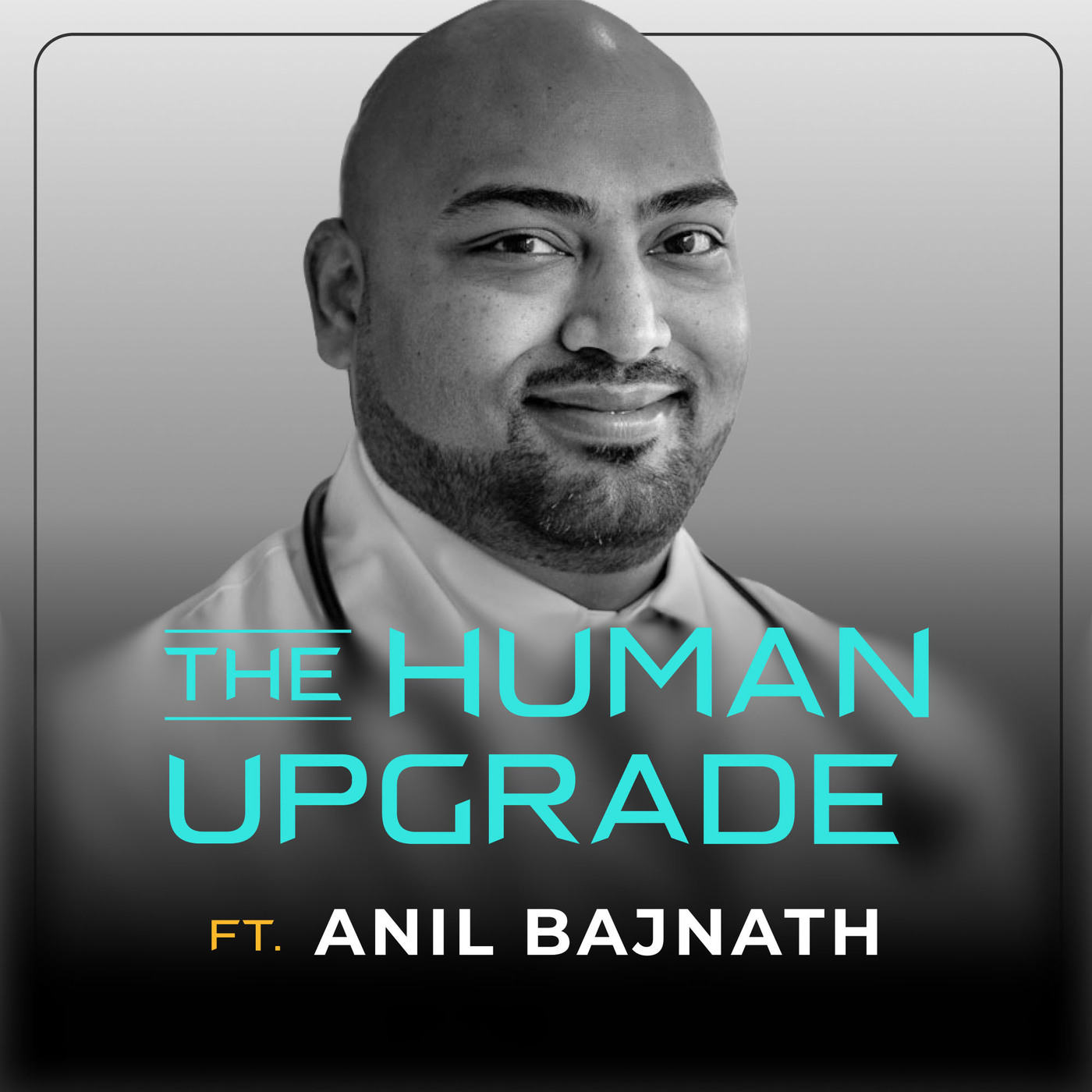
The Human Upgrade: Biohacking for Longevity & Performance
Why Are Hackers Microdosing “Sex Drugs” Now? : 1425
00:53:16
Loading summary
Transcript191 lines
- [00:00]
A
So ultimately we will get more and more quantum and it's going to change medicine profoundly. But it's going to be very weird.
- [00:07]
B
Yeah. One of the talks I'm giving here this weekend is on, you know, vagal nerve stimulation.
- [00:11]
A
Yeah.
- [00:11]
B
And you know, and how that influences the NLRP3 Inflammacel, you know, and also have an influence on NLRP3 and Lamasome biology. Very important.
- [00:21]
A
Guys, I'm going to unpack that for you really quick. NLRP3 drives systemic inflammation and fibrosis. And if you do vagal nerve stimulation, it'll have a direct effect on many longevity markers, including that one. Just go with in and type NLRP3inflammasome and then ask it some questions about yourself and you go, oh my God, this is something I didn't know about. That's a variable that affects me. And the cheat notes on that. Take some egcg. You'll like what happens. Love it. Cool. You're listening to the Human Upgrade with Dave Asprey.
- [00:54]
C
Are you ready to plug into the latest science of longevity and human performance? Come to beyond the Biohacking conference where biology, longevity and consciousness collide in real life Life. Join us May 27th through 29th, 2026 in Austin, Texas. Experience breakthrough tech, meet world class experts and connect with people who are also committed to being the best versions of themselves. Because strong community isn't optional. It's how we live longer. Register now@BeyondConference.com Live longer, live better. Live beyond. What if quantum physics could make your supplements work at a whole new level? Igniton is the only company that quantum charges their clinical grade supplements so they work better than the same ingredients without the charge. This isn't some woo woo idea. This is real physics with real results. University studies show Igniton's cognition formula improves memory, attention and mental performance more than the non charged version. And their longevity formula supports healthier aging markers like IL6, CRP and blood pressure better than the same ingredients without quantum charging. They do this with absolutely no fillers and no stimulants. Just clean inputs carrying the same kind of life force energy that ancient cultures called world spirit. Think of what Google and Nvidia do for quantum computing. Ignaton does that for your biology. I spent time in their Colorado lab. I saw the tech, I used the supplements. In fact, I believe in it so much that I invested in the company. So if you're serious about living longer and having a brain that works better, this is for you. Go to ignaton.com and use code Dave for 15% off your first order, that's igniton.com code Dave. Igniton. Born from light, backed by science. How many nights have you stared at the ceiling counting the hours until morning? Maybe you tried a sleep supplement, but it knocked you out and left you groggy like you traded one problem for another. Poor sleep doesn't just make you tired, it kills your performance, slows your brain down and speeds up aging. Kill Switch from Switch supplements solves that problem. It works with your biology instead of against it. It contains five gut friendly, extensively researched ingredients like gaba, magnesium glycinate and tart cherry extract extract to help you fall asleep naturally, stay asleep and wake up clear. And it's in the form of a delicious sugar free, no BS hot cocoa drink. Sleep tracking data proves how well it works. People consistently hit 90 plus sleep scores and more than double their REM sleep in only three days with kill Switch. If you're ready for the best sleep of your life, order now@switchsupplements.com and use code DAVE for 20% off. If you don't sleep better, you get your money back. Kill Switch works with your biology. Your body does the rest.
- [03:56]
A
This episode is recorded in Las Vegas and Our guest is Dr. Anil Bajnath and he's American Board of Precision Medicine. And the reason I want to share his genius with you in this episode is that much of the health policy in the world is based on epidemiology where we have this, well, let's study 5 million people and this narrow band in the middle which might cover 70% of people. That's what everyone has to do. But it turns out you are not normal. Some parts of you may be in that normal band and some parts you may be on either end. So this gene is screwed up over here, this pathway's over here. You have this trauma over here. So no one's average when you try and mandate average medicine. That's not what we want. And the answer is precision medicine. And we have the guy who's leading the movement in precision medicine, which means we can learn from epidemiology, but we have to understand pathways and how to apply it to you because you're not the same as anyone else on the planet. And this is going to change the face of medicine. So I'm super happy you're here.
- [04:57]
B
Thank you. It's an honor and a pleasure to be with you.
- [05:00]
A
What made you do this?
- [05:01]
B
Oh, that's a great question. You know, my story is very interesting. You know, when I was a teenager, 16 years old, long hair, hippie, worked at Whole Foods in the nutraceutical area. Right. And kind of got adopted to this entire notion of, you know, leveraging supplements and, you know, herbal medicine.
- [05:21]
A
What year was that?
- [05:22]
B
Oh, man. So that's 2001.
- [05:26]
A
Okay. This is back when Whole Foods actually had good supplements.
- [05:29]
B
John Mackey was still in power, and it was. It was led by the hippies. And, you know, it really just opened up the perspective for me of how there's other things besides, you know, traditional pharmacology and drugs and medications that could be used to help support physiological regulation. And at the time, I was wrestling in high school and merged into jiu jitsu. I love jiu jitsu. And my high school wrestling coach introduced me to a technique using dark field phase contrast microscopy.
- [05:58]
A
Oh, neat.
- [05:58]
B
Right? So when I was 18, 19, went out, bought the microscope and started analyzing blood. Right. And I know the criticisms that some conventional pathologists might have.
- [06:10]
A
You criticize something you don't understand.
- [06:13]
B
The thing is, it's just beautiful when you really take a drop of blood, put it on the microscope, and look at it in its undenatured state. It really is a window into what's going on in the circuitry as a whole. And that led me down multiple different roads, including my undergraduate degree in molecular microbiology and medical laboratory science, to kind of solidify that foundation and the laboratory side. And at the time, I also studied with Peter d' Adamo when he was doing the Institute for Human Individuality as he bridged a gap from phenomics to nutrigenomics.
- [06:46]
A
Wow.
- [06:46]
B
You know. And evolved his positioning from blood type dieting to leaning into nutrigenomic associations.
- [06:53]
A
I'm really happy that that switch happened because E. Right for your blood type is a great title. Unfortunately, it doesn't work.
- [06:58]
B
Yeah. Yeah. It was not the holy grail that it was made out to be, you know, but from a mutohematological perspective and, like, to chemistry, to me, there was some level of validity with the lectins,
- [07:09]
A
and there absolutely is. I'm a huge fan of lectins. They were the first chapter of the bulletproof diet. And so, yes, there's validity, but when people do it, they usually don't get well, because there's more than that.
- [07:22]
B
Exactly. There's so many different layers that need to be stacked onto that. And those are the omic layers that I like to use in my clinical practice. But from there, I also studied with the Germans and Swiss, with the Paracelsus Clinic, of biological medicine and Dr. Thomas Rao and did a whole bunch of other things before. And this was all before starting medical school.
- [07:43]
A
Wow. I'm surprised you made it through medical school. I had that much knowledge.
- [07:47]
B
It's been a challenge, I'm not gonna lie. You know, it's, you know, I understand where it's coming from. I really feel as though there is a biological threshold once you cross. You need to lean into pharmaceuticals and everything else and acutely manage certain things and stabilize and, you know, allopathic medicine is amazing at stopping the hemorrhage, you know, acute care.
- [08:07]
A
And this is something I wanted to ask you about. I've gotten to the point where I don't see any difference between a herbal supplement or a supplement that's categorized as supplement and a pharmaceutical or a peptide. They're all just tools that activate pathways. All of them have a downside and an upside. But I use a handful of pharmaceuticals, oftentimes at micro doses that affect longevity in a meaningful way in studies. But there's so many people saying, well, that's a drug, it's bad. What do you say to those people?
- [08:37]
B
You know, I think it deals with receptor psychinetics. And you know, when you look at homeopathy versus like even microdosing certain pharmaceuticals, it's going to modulate very specific pathways based on like the Arn Schultz principle again of receptor psychinetics. And I do think that low doses of certain things could have a bioregulatory kind of promoting benefit versus when you go in super high concentrations of things, that's when you start getting those pharmaceutical inhibitions, anti blockage, and it shuts down the receptor. So a lot of it has to do with the pharmacokinetics and dynamics of those physiological doses.
- [09:15]
A
And that's something that you're exploring within your work that not a lot of physicians are aware of yet. What pharmaceutical would have the most surprising longevity Use something no one would think that might be useful.
- [09:27]
B
You know, there's a lot of research on like metformin, you know, but we know that there's a dark side of metformin in regards to the mitochondrial blunting and, you know, exercise physiological benefits. And I really think the next horizon is going to be a lot of the peptides and small protein molecules. I don't think there's a magic bullet. I really think when you start getting into what I call deep molecular phenotyping, you're going to need to use the right intervention for the right person at the right time. Hence a Precision medicine narrative.
- [09:58]
A
It's the perfect answer.
- [09:59]
B
Yeah.
- [09:59]
A
Because there might be some people where metformin is good. I don't think it's a great longevity drug.
- [10:03]
B
Not at all.
- [10:04]
A
I started it in 2003 when the first mouse study came out. And then I met with the guys from Biomarker Pharmaceuticals who did the original research showing that metformin could. Could activate fasting pathways. And when I met with them, I told him I'd been on it for three years because of it. And. And it was in Palo Alto, and they all looked at each other and go, how old are you? And I'm like, I'm 74. And it works. No, guys, I'm sorry.
- [10:26]
B
Yeah. Yeah.
- [10:27]
A
But after a couple years on it, you just don't feel good. And it's the mitochondrial blunting and reductions in VO2 max. But even today, you have some people still saying metformin is the thing, but it might be. It just depends on what you need. And I think for 90% of people, it's probably not first line.
- [10:45]
B
No. And there's a recent completion of the Pearl trial looking at rapamycin and its safety, but the endpoints that were measured weren't the best. Yeah. And I honestly think, again, it's like you should be doing things with a very specific therapeutic order. Right. And, you know, removing those obstacles, a cure. So depending on what, where you're at in your season of life, there's certain interventions that make the most sense. But I really think, again, a lot of the longevity molecules are going to probably be buried within the peptide space, you know, and as you know, that's under fire. But I've heard that there's a couple of things in the pipeline right now with the FDA to bring it to market.
- [11:25]
A
I am actually not as worried about peptides as I was last month. I interviewed the FDA commissioner on stage about this, and he was very open and some of his deputies backstage just saying, you know, there's no reason for us to be hostile towards peptides. And they did just send 100 warning letters to pharmaceutical companies for lying in their marketing. So I think we're creating a level playing field where it's okay. It doesn't matter if it's a drug or a supplement or peptide. Like, let's just have freedom to do what we want. Especially when you're working with a doctor, there's just no excuse for hostility towards any therapy a doctor wants to use.
- [12:04]
B
Exactly. Exactly.
- [12:05]
A
So I'm. I'm more hopeful than I've ever been about peptides yeah, same. What's your favorite?
- [12:10]
B
It depends on the situation. Right. So.
- [12:13]
A
So wishy wash. It does depend.
- [12:15]
B
Well, and the thing is, I've got patients that are across the spectrum. I've got athletes. I've got, you know, the worried. Well, and then I have some older populations, and, you know, I have folks that want to, you know, just explore the senolytic avenue and some of the growth hormone analogs. So things that have really moved the needle are the standards, you know, BPC, you know, and KPV and what else? CJCmorelin and Samorelin. You'll get a palpable, you know, benefit from all of it and with a noticeable shift in, you know, blood work. So it just, again, depends on who and what the situation is. And I. And that's my stance on everything. Right. Okay.
- [12:56]
A
So for you personally, what's your favorite peptide?
- [12:58]
B
The one that I've used the most has been BPC to recover from a couple of injuries and.
- [13:03]
A
Yeah, things like BJJ. Yeah, they should call it BJJC. Yeah.
- [13:08]
B
Yeah.
- [13:08]
A
I think my favorite is probably PT141. Now we're getting.
- [13:15]
B
Yeah.
- [13:15]
A
If you're not Familiar with peptides, PT141 increases libido.
- [13:19]
B
Yes. Yes, it does.
- [13:21]
A
That's not my actual favorite.
- [13:22]
B
Stack that with a pee shot and some exosomes and shockwave and a pump, and next thing you know, you're rocking out.
- [13:30]
A
Yeah. I even started a shockwave company because.
- [13:34]
B
That's right. Yeah.
- [13:34]
A
I had massive changes in volume, size, whatever you want to say. It. It's pretty shocking when you do all that.
- [13:42]
B
Was that wasabi? Yeah, wasabi. And it's. It's very similar to the products from Germany.
- [13:48]
A
Okay.
- [13:49]
B
Yeah.
- [13:49]
A
Yeah.
- [13:49]
B
No, it's fantastic.
- [13:50]
A
Just looking to bring costs down because sometimes the German technologies are very expensive.
- [13:55]
B
Oh, I know.
- [13:55]
A
And if you're listening to going, what the heck is shockwave? It's an acoustic shockwave that causes new blood vessels and nerves to grow. So if you do it on the reproductive system in men or women, it turns out that you get a lot more blood flow and then you grow new blood vessels. And for me, the. The difference was almost 2 inches.
- [14:13]
B
Yeah.
- [14:14]
A
And I don't know if maybe bragging about that is a bad idea or something, but, you know, it was only 10%, so.
- [14:20]
B
Yeah, well, and that's the thing is
- [14:21]
A
you missed the joke. If 2 inches is 10%, then I.
- [14:25]
B
Well, I could tell you stories where the. The running joke with some of the patients that are getting some of those sexually enhancing vitality protocols is, oh, you went from, you know, a half an inch to two and a half, you know, so.
- [14:36]
A
Yeah, yeah. But to go from being a grower to also being a shower to the point that I get out of the shower and like, I didn't. You don't recognize yourself in the mirror because that's not how you've always. It was pretty weird. So sorry guys, if this is TMI for you, but this is just a conversation about what are humans capable of? Because if you're 70 and whether you're a man or a woman and your hormones are wrecked and your stuff doesn't work, quality of life goes down and even desire to live a long time goes down. So I just feel like libido and qi and life force energy are the same thing. And with appropriate hormones and all the other supports like nitric oxide, that you ought to have a healthy sex life as a marker of longevity and health.
- [15:17]
B
Well, and that falls into the vitality domain that characterized by the World Health Organization for intrinsic capacity. There's a lot of longevity folks out there and it's like kind of ill defined. But the World health organization in 2015 put together a criteria based.
- [15:32]
A
This is before they went sideways.
- [15:34]
B
Yeah, this was pre Covid, Right. This is pre Covid and basically defined healthy aging into five domains. Cognition, locomotion, vitality, psychology. And I'm blanking on one of them right now. And basically that vitality domain, I think, really captures the essence of overall wellness. And as you said, hormonal optimization, vascular tone and all those things play a very important role in healthy aging. And, you know, it's very, I think, essential to our primal being, you know, to stay to vital, you know, and
- [16:07]
A
some longevity doctors don't really address that or they just do a. A little, you know, a little thing and. Or they just get, you know, massive dose of Cialis if, if you need it. But I think supporting the systems is really important. But I do think one of the most interesting longevity uses of a drug is microdosing cialis. I take 5 milligrams every night.
- [16:28]
B
Oh yeah.
- [16:29]
A
Because I don't want to get Alzheimer's.
- [16:30]
B
Well, then it's also, you know, clinically indicated for pulmonary hypertension with obstructive sleep apnea and a couple of other indications. And it's working on that vascular tone, you know, and we were having conversation about the role of nitric oxide and perfusion and what that does and how it could lead to dysautonomia and all Sorts of different factors. So vascular tone is essential, especially in cardiac health as it relates to, you know, coronary artery, heart disease and everything else in between.
- [16:59]
A
So I'm on Dr. Daniel Amen's board of directors.
- [17:03]
B
Oh, right.
- [17:03]
A
On clinics. And the number of people who come through with just low profusion in their brain, even when they're young, and I'm one of those from toxic mold and some genetic stuff, we're learning that that's part of what makes my brain work or not. I can manage it. And I've worked with hundreds of people who are chronically low blood pressure because they don't have vascular tone. And oftentimes, I don't know, maybe they got injected against their will with something that made it worse. Maybe it's some other thing. But managing high enough blood pressure is important, and managing high blood pressure is important, and it's so personalized, which is why what you're doing with this precision medicine is so important, because you can't take two people, have similar symptoms and say it's the same cause, Right?
- [17:45]
B
Correct. Correct.
- [17:46]
A
Why do so many people have issues with vascular tone now? Seems like it's much worse than it used to be.
- [17:51]
B
You know, when you really get into the vascular biology, I think there's so many different factors that influence that. Again, I usually use a multiomic approach. So multiomics refers to the respected study of each level of scientific layer, from genetics being genomics, and then the transcriptomics study of rna, protein proteomics, epigenetics, and looking at the epigenome and the environmental influence on gene expression and metabolomics and exposomics. We're part of the human exposome project that just launched the Moonshot. I love that. Yeah. With the nih, it's very, very interesting. But essentially, I think there are multiple different compounding variables to your body's natural ability to produce nitric oxide and vasodilatory peptides. And there's also dietary insults, trans fatty acids, and all those things that shut things down. So I think vascular tone as a whole is kind of predicated based on all the different signals and inputs that we're feeding ourselves and information. And I really do believe that food is information communicating with our DNA and influencing gene expression. So, yeah, I think there's a lot of factors that influence our vascular health as a whole. And for me personally, that's been a giant struggle. I'm Indian and I've got the worst cardiometabolic genes. It's bad. I've got apob, lp, ldl, oh, you do? So those are. And some methylations deficits. I drive homocysteine. So I had to stay on top of that stuff because that really, I'm a walking, you know, vasculopath.
- [19:26]
A
This is actually going to be a really fun question. Physician, heal thyself. And I've occasionally, when you have really angry hardcore Western doctors and they're working with someone who's just not getting well, I've guided people to say, well, Doc, you're fat and you're not able to manage your own health, so can you tell me why? Like, it's not about fat shaming, it's about. And I actually asked this once when I was overweight and the doctor said, maybe you should lose weight. And I said, how? And he said, you should exercise and eat less. And I said, I've been doing this to an absurd degree for 18 months and nothing changes. And the doctor said. I said, well, why isn't it working for you either? And he said, well, I don't follow my own advice. And the reality is you can't follow that advice for a long period of time. And studies actually show this now, like a low calorie, high exercise diet is destructive and your willpower goes away. What I'm leading to, though, is every doctor I know and some of my closest friends in the world are doctors. I was married to one for a long time. Most of them have a hard time taking what they know with patients and turning around on themselves. How do you do that? I mean, do you work with another doctor? Do you use AI? Do you stand in the mirror and. And recite incantations like, what's the path for you? Because you're managing a complex case and you're doing a good job of it. What's the secret?
- [20:45]
B
My friends in my network take care of me. So all my friends are physicians, and I lean into all of them for their collective inputs. And even some of the directors here for the conference we're at are in my Rolodex of people that I weigh in on. But a lot of it has to deal with, I think, lifestyle factors. Right. And I've done my best to kind of emulate what you've done with bulletproof labs within my private little clinical practice in Hanover, Maryland. And I've got all the technologies. I have whole body photobiomodulation.
- [21:18]
A
You do biohacking?
- [21:19]
B
Yeah, exactly, exactly. And I've got the intermittent hypoxic. The celgem. Intermittent hypoxic hyperoxic therapy. I think we're one of 25 people in the US next that has that technology in the office. So I have a pulse electromagnetic field, hyperbaric, oxygen, you know, ozone, sauna, the whole spiel.
- [21:40]
A
It's a good stack. And these are the things that for you, because you're a hard case just like I am. I mean, I had everything wrong with me you could have. And if it works for us, it's going to be much easier for most people who probably don't have the same number of problems. Now, you talked about starting with genetics, and I mean, if you look at someone's DNA, you can't even tell if they're alive or dead. And so I used to be skeptical in the early days. I was probably one of the first thousand people to sequence my genome. But there was no value in the data because we didn't know what to do with it. What's changed since the early days with genomics?
- [22:16]
B
That's a great question. And I think the emphasis on DNA profiling is becoming less actionable with time. So for me, the way I clinically use genetics as a whole, I could give multiple different, you know, case examples, but is to kind of reverse engineer, you know, the polygenic risk scores associated with different pathophenotypes. So meaning they're instead of looking at a single gene in a monogenic standpoint, we're looking at a cluster of genes that influences a disease process. Exactly. And that gives a weighted value towards a predisposition towards a disease process. You know, for those who aren't familiar with genomic testing, you know, we have 23 chromosomes or 23 chapters in, in your book of life, each inherited by your biological mother and co written by your biological father. And within each chromosome, there are multiple stories of disease and tragedy and triumph. And I think it's very important to leverage that information in a responsible way so that we could get a better understanding of what kind of your deck of cards are and what you've been dealt with. And for me, I like to reverse engineer and say, okay, is there a way that we could match the symptomatic presentation as you alluded to? You know, the sensitivity to environmental factors and mold and so forth is a big, you know, case example of precision medicine from a chronic inflammatory response syndrome.
- [23:35]
A
About 28 of people have the HLA Dr. 4 mutation. That means if you get mold, you're probably going to have thick blood and chronic inflammation for correct time. Yeah, but now we know. Yeah, right. It's interesting. I just did a really advanced the intelligence DNA test and they said, oh, look, this network of genes, 2.5x higher risk of autism. And over here we have a 7x higher risk of autism. And I had Asperger's syndrome, and I was able to recover from it and in a way that, that most people say you can't do that. But I just did a whole podcast on how I did it. It was incredibly difficult. But the. And there are gifts that come with. With having a brain that evolves in that environment. But knowing that is really helpful because my biggest concern is I don't want my kids to have it.
- [24:20]
B
Correct.
- [24:20]
A
So I wrote my very first book, was based on research. What do you do before we get pregnant and during pregnancy to minimize the risk? And my kids are, as far as I can tell, neurotypical and healthy and smart and happy. And they didn't go through all the suffering I went through. And I think they would have. In fact, I know one of them has sensitivity lectins the same that I do. The other one doesn't. So one of them doesn't eat potatoes. Neither do I. Even though I like potatoes. I just don't like arthritis that I had since I was 14. And my genetics do say that that's a risk and then I can test it. Right. And just knowing this is incredible, but knowing that you have the potential in your genetics doesn't really matter unless you know that it's actually happening. And that's the next layer up from genetics, which is when you're looking at rna, correct?
- [25:05]
B
Yeah.
- [25:06]
A
And this is why I'm a big fan of viome. And so the. I've been an advisor for years and investor because they're looking at RNA in the gut instead of DNA. So talk about RNA in humans and how you measure it and what it tells us. One of the things that makes me really happy is when supplements kick pharmaceuticals ass. And I've got something for you. It's called C15 from a company called Fatty 15. And it's more effective than metformin or rapamycin. In fact, scientists are calling this newly discovered essential fat the longevity nutrient because it's the first essential fat to be discovered in the last 90 years. C15 is unlike anything else out there because it's a true geroprotector, meaning it actually slows biological aging in studies. How does that work? By strengthening your cell membranes by 80%, activating amp K and MTOR, which you've read about in my books. That means less inflammation and a reduction of oxidative stress by 45%. Scientists have found over 36 clinically relevant health benefits from fatty 15. Public estimates are that one in three people have low C15 levels in their bodies. And if you don't have enough C15, you have fragile cells and you age more quickly. Fatty 15 supports your cells better than omega 3s or fish oil with three times more benefits for your cells. I use both. In clinical studies, 72% of fatty 15 users reported deeper sleep, better mood, healthier joints and better energy improvement in 16 weeks. It's a pretty incredible story and it's real. Better yet, they're giving you 15% off their 90 day subscription starter kit. Just go to fatty15.com Dave
- [26:43]
C
staring at screens all day is wrecking your vision and your brain. You might just think it's aging, but it's not. It's a broken eye brain connection and it gets worse every hour you spend looking at a screen. If you plan to live to 180 and beyond, you need to protect your dominance sense. Now here's the good news. You can train your visual system just like you train your body or your brain. Screen Fit is a science backed method built by Dr. Bryce Applebaum that rebuilds how your brain and eyes work together. No eye drops, no appointments, no gimmicks, just 15 minutes a day to sharpen focus, reduce fatigue and protect your vision for the long haul. I saw real results in just a week. If you strive for peak performance or plan to live a very long time like I do, you want clear vision to match, go to screenfit.com Dave or use code Dave to get $200 off and try it for yourself. You'll see what I mean. Literally.
- [27:44]
B
That's a great question. Actually. I'm one of probably the few clinicians that are using it in a clinical practice and so there's a company that I use out of Boston Pro Gene DX that actually measures kind of the transcriptome. And the transcriptome is basically rna, right? So I would describe it first as if your genes are all the instruments for a symphony orchestra measuring the melody and harmony. Coming off that gene is the transcriptome. So we're not looking at the actual instrument itself, but the melody that's coming off. And certain instruments might be playing a little bit too loud and upregulated and certain instruments might be playing a little low and downregulated. And the transcriptome tells us kind of how your genes are responding to use environmental inputs. So I've historically used transcriptomic profiling in my more chronic complex illness cases where we would look at very specific key genes that influence, let's say, mitochondrial input. And we could actually measure mitochondrial large and small subunits and ATP synthase and see essentially a surrogate reflection of cell danger response. And cell danger response, as the name implies, is based on the concept of when your cells perceive danger, it responds. And the of it is downregulation and ATP production and mitochondrial output. And then, you know, there are other, you know, immunological profiles and neurological correlations that we could use transcriptomic profiling for and coagulation, there's so, you know, again with the Pro Gene DX company that I've used, it provides very important insight on assessing kind of what the real dynamics are of your gene expression.
- [29:26]
A
So that tells you whether what you're doing with biohacking, what's the definition, change the environment around you and inside you so you have control of your state. That would be epigenetics. So if epigenetic signaling is working, you'd see it reflected in the RNA that you're testing. So now you know, what's the possibility from genes and then you know what's actually happening from RNA and the transcriptomics and then what do you layer on top of that?
- [29:49]
B
Next level up is proteomics. Right. And so the central dogma to biology is DNA and RNA and RNA into protein. Right. So, you know, it's we proteomics could be pretty nebulous in regards to just like DNA in regards to what to look at. But I think from a proteomic standpoint, you know, these are proteins, right, that are manufactured and synthesized and which protein
- [30:09]
A
is the body making exactly?
- [30:10]
B
You know, I think we're going to see a couple of homeodynamic, you know, shifts based on various perturbations in the system. So any stress response to the body, you'll see a shift in the biochemistry. Right. And standard labs, you know, I think it's important to look at four major divergence of norm, and that is inflammation, oxidation, ischemia and immune dysregulation. Those are the things that is driving aging and basically needs to be identified and the root cause for that and, you know, identify, mitigate and eliminate those threats to that phenomenon. So proteomics is the next layer up and I usually get a very robust profile to look at, you know, immunological profiling. We were discussing TGF Beta 1, MMP9C4A from A inflammatory standpoint on top of your homocysteine, which could be a surrogate reflection of methylation deficits, immunological dynamics, all sorts of stuff you're a nerd.
- [31:13]
A
I love. And Nobody talks about MMP9.
- [31:17]
B
Yeah.
- [31:18]
A
And it's terribly important. I wrote about that in Superhuman, my longevity book. And last time I was here in Vegas, actually, I ate a bad oyster. And there's two kinds of bad oysters. There's the kinds that paralyze you and kill you, and then there's the kind that make you feel like you got hit by a truck for sometimes a month. And I sweated through the bed. And like, this is terrible. And the toxin that's formed by that bacteria is MMP9. And you get this horrible deep musculoskeletal pain and it literally feels like whiplash. And. Well, I knew what was happening, so that did a bunch of research. What lowers MMP9? Shockwave. So I took on my wasabi and I went to everywhere where I had musculoskeletal pain. It was gone the next day because it's crazy. But you can use physical interventions to reduce this toxic protein that builds up and if you want to age really quickly, have high levels of MMP9. The idea that this protein really matters and you can measure it, but it's usually not measured unless you're a toxic mold person or something like that. And lab tests are getting cheaper and cheaper and we're able to get more and more on a chip. So I think this will be one of those longevity markers that we track in the future that we're not tracking today. But you're the first person who's ever
- [32:31]
B
mentioned on the show and there's a whole host of others. And I really think that industry is now catching up or outpacing, I think, clinical applications. So if you were to look at like Illumina, who is one of the major manufacturers of DNA testing equipment, they have their next generation sequencer that just got released is actually measuring genome wide sequencing, transcriptomic profiles, epigenetic signatures and proteomics all on a. Not at the same time, but on a same sample. Right. So it's unfortunately batched with. It would be awesome if we could do all that in a shotgun approach. But you gotta batch it out. Genomics and transcriptomics, epigenetics and so forth. But you could do it on the same sample. And I think that's gonna be the future adoption of this molecular phenotyping is like, hey, now that we have the ability to capture this large data set on a translational level, why aren't we doing it? And that's kind of why I've led into starting The American Board of Precision Medicine as kind of an extension of, of one of the classes I teach at George Washington University INTM 6205, the omics of medicine. So I, you know, again, me having that molecular foundation. We need medicine to enter the next era and start adopting this form of n of 1 molecular phenotyping so that we could, you know, really have an impactful level on aging, longevity, disease management, whatever it is.
- [33:56]
A
Yeah, it's getting better and better every year. And the fact that you're teaching other doctors about this and making the board for it is really cool because all medicine is eventually going to go here. And I kind of feel bad for the epidemiologists because it's just not a useful way to do public health, not the way that it once was. You know, everyone should do this because the net, the net outcome is positive. It's not like that. Even putting chlorine in water, like, well, we know that causes 25 cases of cancer for every X number of people, but it's better than we're getting parasites, so we'll just do it. But you might be one of those 25 people who's at high risk from chlorine. And if we know who you are, then you better filter your water. Or maybe we just find something that works better. So it's this idea that we're not treating a population, we're treating a person, and that changes everything.
- [34:46]
B
Yeah.
- [34:47]
A
Okay.
- [34:48]
B
And then on that chlorine example, you know, that's a, that's a halogen, right? That's a free radical halogenation which is going to displace your iodine based on the, you know, stoichiometry and the electronegativity of, of that molecule.
- [35:01]
A
I, I feel really good that in the US to make sure that the chlorine isn't that big of a problem, we put bromine in our freaking flour, which is even stronger. So if the chlorine disrupted the iodine, we can disrupt the chlorine with bromine, which is even harder to get the iodine out.
- [35:15]
B
Exactly.
- [35:16]
A
You go to Europe, they use iodine in their bread instead of bromine. Why do you think the US has such toxic stuff that we do?
- [35:22]
B
I feel as though that industry has the ability to make healthier decisions about everything even. I mean, I can't even begin to tell you GMO farming and everything else and how that has a direct impact on, you know, I don't know if you've seen the research of looking at plasmid exchange from genetically modified foods with the gut microbiome taking up, you know, extra chromosomal DNA and then you're now producing an endogenous antigen that's they're turning
- [35:48]
A
up vaccines and potatoes. So I think those people need to be stopped. Yeah, right. Like this is a war crime kind of thing.
- [35:54]
B
I, I'm, I do believe in organic farming and healthy eating and as hormone free as we could be and to mitigate these environmental toxicants. But sometimes when we have this very elevated level of exposures that leads to illness and illness leads to intervention and it could become a vicious cycle, unfortunately, with multiple interested parties.
- [36:17]
A
That was a really politically correct way of saying. But the reason I'm asking is I think it's an emergent behavior. You put incentives in place and you make billions of micro decisions. And when someone somewhere is making a decision, they probably don't know that the net effect of the butterfly effect down the road is to set up the system. And then occasionally I see things like the vaccine mafia I guess is the right word, where they're approving all these and they're saying things that are not true. And we just saw the 2016 ACIP meeting where they said we have no evidence, but we're just all going to vote to approve it. And like guys, that's not how you do it. But maybe some of them were just evil and didn't care and some of them did have a financial incentive. But most of the time I don't think it's evil.
- [37:03]
B
People, sometimes there are maybe misguided, misinformed, you know.
- [37:06]
A
Yeah, it's the misinformation, which is a word I really don't like.
- [37:10]
B
So yeah, it's a tough situation because one of the things that I'm really passionate about and what I'm seeing, very clinically actionable in my practice is measuring the human exposome. And as we merge into this new initiative. So we were mentioning that there's a new human exposome project, it's an international initiative and I'm part of some high level meetings and when I'm with the leaders in the space controlling, you know, the direction of research, how do you measure the human exposome? And there's no standardized answer for that.
- [37:42]
A
It's interesting. And for listeners, the exposome is the set of everything you're exposed to over the course of your life that because of epigenetics, all of it matters and it's really hard to measure that. And years and years ago, maybe 15 years ago, Wired magazine ran an article introducing the Exposome. It's like the new word of the year or something. And I used the exposome in. Yeah. In the bulletproof diet book, talking about, well, there's all these things and here's the ones we know matter and there's probably others we don't. And some of it gets weird. Like even if you look at the exposome of a laboratory mouse, I love it when they say we controlled for all variables. And when I hear that, I go, what was the gender of the person feeding the mouse? And they say, we didn't record that. Well, here's a study that shows if a woman feeds a mouse, it doesn't get a cortisol response. And if a man does, it gets a cortisol response. Because for the entire history of mice and humans, women usually run away from mice and men stomp on them. And they know. And how they know that, who the heck knows? But it's reflected in the data.
- [38:42]
B
Interesting.
- [38:43]
A
So how do we collect that for humans? I think AI is working on it. In fact, one of the guys who was on the show a while ago when we did a an episode on the Nilian cryptocurrency, he was building an app to do that. And then the question who gets to own your expertise on data? And I think I should own my data. Not Mark Zuckerberg or anyone else or the government even. So it's a really interesting challenge.
- [39:09]
B
Yeah, I think they're really interesting proposals. I could send you a paper on multi omic profiling. Who owns the data and being able to use blockchain to kind of de identify it, and then have, you know, the owner of their own data be able to elect to share it with different institutional bodies for research and all sorts of stuff and then have it have them compensated for sharing that information.
- [39:32]
A
You know, the interesting, the reason I did that whole episode is that the problem is once you give your data to Merck, you lose it. But there's a new tech that is an extension of crypto called Nilian, allows someone else to do compute work on your data without ever actually getting the data. So they can query the data and never get it. And it's mathematically complex, but this solves the problem. So I just gave you a chance to ask questions of my data and you never got to touch it. And that's, I think, going to create something good. Or maybe there's too many commercial forces and no privacy. Anyway, there's probably a camera in here watching us measuring something.
- [40:08]
B
Oh, geez.
- [40:09]
A
Yeah, I want to get back to Something really actionable right now if you talk to a normal doctor. Blood glucose, blood pressure, and cholesterol are really the three things that are the big the big signals. What are the other big ones that we should be paying attention to?
- [40:29]
C
If your light environment isn't dialed in, your biology isn't either. And if you're not using light as a performance tool, you're leaving results on the table every single day. The right light wavelengths unlock recovery, energy and clarity in ways most people never tap into. EMR Tech's Krypton UV line puts that power in your hands. With red near infrared, uva and UVB all in one system, they have something for everyone from the compact Krypton Micro and mini to the modular 606 watt and 1612 watt. Each device lets you choose your wavelengths, your timers, and how deep you want to go with your setup. I personally use the Ultron it It's a beast. Full body coverage, built in timers, and high output light from premium components. Whether you're syncing your circadian rhythm or designing a pro level light environment, Emrtech lets you scale it your way with precise control. Go to emr-tek.com Dave and use code Dave for 40% off.
- [41:34]
A
Your face is the first thing people see, and you can work out clean. But if you still look older than you feel, especially if you're a guy, you're not maximizing your potential. Your skin is a signal of how well you're really taking care of yourself. And if it looks inflamed or tired or just old, that's what people are going to notice. Even if you're doing your best to eat well, the good news is there's a company called Caldera Lab that's here to fix that for you. This isn't your girlfriend's 20 step routine. It's skin care designed specifically for men. Which means it has to be simple and effective and backed by science. But not too much work. After using caldera lab products, 100% of men said their skin looks smoother and healthier, and 97% said they had improved hydration and texture. And 93% reported a more youthful appearance. Caldera Lab has spent years developing and testing each of their formulas with leading cosmetic chemists. So you can tell it actually works. And if they don't love it, they don't release it, which is the same way I am with my own products. Some of the products you might want to try are the Good, which is a face serum that has 3.4 million antioxidant units per drop. There's the eye serum. These are peptides that make you look fully rested even when you stayed up all night doing something you wanted to do. And the base layer, which is a stem cell powered moisturizer that isn't going to give you pimples but by clogging your pores. And all their products are cruelty free and plastic neutral. And for every product they sell, they pull the same amount of plastic from the environment. Which is good because having little bits of plastic in your mitochondria actually sucks. So upgrade your routine with Caldera Lab and see the difference for yourself. Go to caldera lab.com Dave use code Dave and they'll give you 20% off your first order. So if you're not taking care of your skin because it's just been too much work, now you have a solution. Caldera Lab,
- [43:23]
B
that's a great question. I think, you know, those are kind of standardized, tried and true. And for the general population that's not seeking health optimization, there's, it's a different narrative because those that are trying to fine tune their biochemistry, they're going to be looking at other kind of surrogate markers. So like for example homocysteine, if you were to speak to a cardiologist they're going to be like, well there was a study that said that. But modulating homocysteine and supporting it with methyl donation is not going to have any increase effects on morbidity or mortality, which is okay. So you are knowingly going to ignore this biomarker associated with oxidation of LDL and just completely ignore it. So I think that from a population based medicine standpoint and primary care standpoint, my colleagues in family medicine are doing their best to when they have only six, eight minutes or whatever it is to see the patient, examine them, get a history, update their drugs, determine how to interpret their labs and give them a drug so that they could go and see another 20 people. They're doing the best they can.
- [44:25]
A
Do we even need them anymore? Because AI can do all that better.
- [44:28]
B
I know.
- [44:30]
A
Sorry guys. Up your game.
- [44:31]
B
Well, you know, so I think that's why we need physicians that are now using have better tools and understanding of how to optimize these other endpoints. And again, it's tough. If you've ever worked in a underserved population that have all sorts of disparities, it's a different conversation. It's a completely different conversation. Whereas you and I, we're really hyper focused on the quality of water, air, our sleep and our hygienes and all sorts of things. That's a luxury for a lot of people that don't have access to that. And it's a challenging situation. But when it comes down to the health optimization standpoint, I think that once we understand we need to get a better control of those surrogate endpoints of cardiometabolic function, and we need to now start looking at how do we fine tune, I don't know, cell membrane dynamics. Right. That's another really cool area of research that I love.
- [45:29]
A
Breaking down choline.
- [45:31]
B
Yeah. Yeah. There's a fantastic lab out of Kennedy Krieger at Johns Hopkins that's tied into the Neurolipid Research Institute that breaks down a lot of these different obscure fatty acids. And we're able to identify shifts in the membrane dynamics that are really, really important. And we could start identifying deficiencies beyond omega 3 and supporting cell membrane dynamics, which I think is very important at cell communication. And just overall maintaining that electrochemical transmembrane gradient that is lost and really drives cardiac dysregulation, neurodegeneration and a bunch of others. So working up that molecular layer, cell membrane dynamics is a very important component in all of this.
- [46:15]
A
What do you think about fatty 15?
- [46:17]
B
It could be synthesized through other endpoints
- [46:21]
A
like cultured butter or something.
- [46:24]
B
So there is a biochemical upstream pathway, I can't quote it right now, that influences your body's ability to synthesize it. It's not necessarily a genetic predisposition. I think it's very interesting. Do I think it's the next Omega 3 or whatever? No. And that's pentadeca hexanoic acid. Right. And when I measure that, it could be low in certain individuals. And then again, is the reference range theoretically there? And balance? I don't know. If you speak to the researcher of Fatty 15, she thinks that it's a wider spectrum of that reference range. And I, I think it's very interesting. And then from a, you know, I've had a couple of patients that I've prescribed it to based on low blood findings at that level. And I also correlate it with the undenature peripheral blood morphology because it is associated with membrane lipid peroxidation and some levels of membrane dysfunction or spiky red
- [47:19]
A
blood cells, you're saying that low levels are associated?
- [47:22]
B
Yes, yes.
- [47:22]
A
So taking some of it can be good. Yeah, I, I found it pretty compelling. And just the idea being that you get some in food, but it's not pure. So the pharmacokinetics are different when you get a pure version of that versus a couple of those attached to a triglyceride with other. So the absorption is different.
- [47:41]
B
Exactly.
- [47:42]
A
Yeah. And this gets pretty nerdy, guys. Sorry, if you're going, these guys are speaking Greek. But this is what you want to be doing when you're working with a functional medicine or precision medicine doctor. Because, you know, maybe that's worth the investment, maybe it's not. And the flip side of all this is when you do this analysis, you can stack rank for someone. If you have $24, go here and then just go down the list. Right. And you can also say, well, an investment here of $10 is going to create a hundred units of wellness. An Investment here of $10 will only create two units of wellness. So if you have lots of money, do that. But right now, we're kind of stabbing in the dark. And it's funny, for me, the two biggest supplements that I make today from subgrade is minerals 101 and vitamin D. Yeah. And they're like the least sexy of all, but they're the most foundational that move the needle the most per dollar, which is why I make them.
- [48:39]
B
Yes.
- [48:39]
A
Like everyone needs to have adequate minerals or nothing else works.
- [48:42]
B
Correct. I agree, I agree.
- [48:44]
A
But those aren't as sexy as spermidine or fatty 15 or whatever.
- [48:48]
B
You know, it's interesting, that analogy of investment in my book that's coming out called the longevity Equation. I mention in the book this concept of biological 401k. I think that we all have our internal health savings account for which we're making daily deposits, withdrawals in different forms of epigenetic bioenergetic currency. And that could be, you know, all sorts of the signals and inputs like diet, exercise, sleep, nutrition, meaning and purpose, all the fun stuff. But we're also traveling out and being circadian rhythm and chronobiological disruption and all the different sleep deprivation or alcohol or whatever it is, walking around the casino here and secondhand smoke, all those are potential threats and make withdrawals from our 401k. And ultimately, I think this translates into health span over a lifespan and improves our epigenetic profiling. So it's about strategizing those meaningful investments into your health.
- [49:44]
A
Do you think that we're already able to extend life, at least in some people?
- [49:50]
B
I want to believe we can and I think we could with making those meaningful decisions and deposits into our biological health portfolio. I also think that Aubrey De Grey's longevity escape velocity is on the horizon. And I think that technology is, especially with gene editing and certain things with these longevity pathways holds potential. But I don't want to say, you know, you know me be. I'm trying to be politically correct here. Right. You know, why would you do that on this show? You know, I want to say that the. It's. It's on the horizon, you know, and I do think that if anybody's going to figure that out, it's going to be you. Being at the you.
- [50:33]
A
I think we're already there.
- [50:35]
B
Yeah.
- [50:35]
A
I just don't know it.
- [50:36]
B
Yeah.
- [50:36]
A
I've had three different gene therapies that affect longevity. And if it's not me, it's someone else who's alive today who's going to do 50% better than our current best, which is why I picked 180, which I thought was conservative, but I thought if I wrote a book, especially when I published Superhuman, that said hundreds of years, that people would just roll their eyes and not even be able to conceive of it. But I kind of get upset when people say, oh, we can only extend health. Spanish like, how dare you. Like, the goal is both.
- [51:09]
B
Both.
- [51:09]
A
Like, why do you have another 20 years of health span? Yeah, because extending life is the goal. And I know when we're doing work with unlimited life, which is a concierge longevity practice I work with, we have a whole bunch of proprietary data that we use to calculate your actual life expectancy. And you see it shift when people make the right changes. And so were we extending life? Well, we are delaying death, but are we going above what we. We think is Our maximum was 120. Time will tell is the only thing we can do on that.
- [51:43]
B
And let's enjoy the process getting there. Right?
- [51:45]
A
Yeah. Yeah. I do worry a little bit about, you know, spending eight hours a day on your longevity practice, because if you're doing that, that's 50% of your waking hours. You gotta add 50% to your lifespan just to make up for the time you spent tracking and hacking. And so for me, a really important variable is how much time and energy does it take to extend my life. Right. And I'd like that to be minimized so that I can do other fun things and I can, you know, be with my kids or whatever. So effectiveness and efficiency of precision medicine, that's what's exciting for me. Because if it's precise, it's effective and efficient, and if it's imprecise, then we throw more money and more time at it and we don't get the results. We want.
- [52:29]
B
I agree. Bio stacking. Right. And prioritizing the right interventions at the right time. And I think since we both have the celgem access to it, I think that's kind of where it's very important to start off with inducing some of those mitophagy signals. You don't want to go in there and just slam somebody with red light that have poor mitochondria and cell danger response taking place and all those other things. So there's a. A definite therapeutic order that should be prioritized, leveraging these technologies.
- [52:59]
A
It's funny you bring that up. When I started the first biohacking lab under Arnold Schwarzenegger's office, so many people came in and like, oh, we'll just copy the gear. I'm like, good luck with that. Because it's knowing how to use it. And right now at Upgrade labs, we use AI and a whole bunch of biomarkers, say based on your goals and based on your state, this is what to do in what order. And so that's what makes it a. A defensible business. But people get results. And then if you just go in like you said, and just do some random biohacks, it's like throwing some dice. And sometimes you'll. You'll get it, sometimes you won't. So if efficacy is really what matters and it's so measurable now compared to the past.
- [53:35]
B
And I gotta say, your bulletproof labs, I remember I was doing elective rotation UC Irvine with their Susan Sam Welly center integrative medicine in 2018. And I came out to upgrade labs for the first time I've seen it. And I was just. I love the concept.
- [53:54]
A
It's so different.
- [53:55]
B
I love it. I think it's so cool. And the location, what was it? Santa Monica, Right? Yeah. That was awesome. And then at the time, I think you were doing IVs and you were partnered with NexHealth. And then it's just amazing to see the evolution of all these organizations coming together.
- [54:12]
A
Yeah, it.
- [54:13]
B
It was enhancing the narrative.
- [54:15]
A
It was funny. I don't know if I've ever mentioned this. When I started what's now Upgrade Labs, I wanted people to see what was possible for biohacking. And I knew that I would get millions of dollars of media by doing this. So we put a million dollars into opening this location. And it was right next to the coffee shop.
- [54:30]
B
Yeah.
- [54:31]
A
What would today be called? The Danger Coffee Shop. If. If I was still opening a coffee shop. But what was really interesting is that I did. I Got all kinds of press everywhere. It was a brilliant play, but it was not a money making business. Right. And then I thought, maybe this is a business, but it took seven years to figure out how to get reliable, repeatable results from people and to make it a profitable business. And now we've got a deal in UAE in Dubai and we've got something like 35 locations either open or in the process of opening.
- [55:03]
B
Congratulations. That's amazing.
- [55:04]
A
U.S. and Canada. Yeah, it's.
- [55:05]
B
Love it.
- [55:06]
A
But it took a long. It was a really hard business. And so it's one of those. You have the idea, but it was kind of scary when people are like, I'm just going to copy this. I'm like, you're going to copy something that doesn't make any money. Right. But I think today I'm really confident because the results that you can get from doing the right biohacking techniques and giving good advice with nutrition and all that, they outperform a lot of prescription drugs. Right. And it's not like it's a lifestyle thing. These are just interventions that mother Nature can't do. There were no lasers in Mother Nature. And yes, sunshine is good for you, but it's not the same as frequency specific whole body photobiomodulation. Right. So yeah, yeah, I'm, I feel like we're maybe 10% into the, the total possible spectrum of things that we can do with those kinds of technologies. It's still very early in.
- [55:54]
B
Oh yeah. Oh yeah. Have you ever been to Bonbon, the conference out in Germany?
- [55:59]
A
No.
- [55:59]
B
That's like where I think a lot of the biohacking originating from Germans and Russians know.
- [56:04]
A
A lot of weird stuff.
- [56:05]
B
Yeah, the Russian, the Germans and Russians know. And the Austrians. Yes, the Austrians are doing some very fascinating things, especially with harmonizing the home and EMFs and things of that nature as well. You know, it's embracing, you know, outside of the biopharmaceutical model, these different technologies that move energy, you know, and are able to stimulate things. You know, how are you going to move the lymphatic or glymphatic system, you know, without a mechanical stimulation? It's not a drug or a medication. Right.
- [56:31]
A
Yeah.
- [56:32]
B
How are you going to open up those drainage channels needed to appropriately detoxify somebody? So it's like leading into these technologies have a very specific therapeutic application. And I'm hopeful that we could just see its clinical relevancy and be like, oh yeah, duh, this just makes sense. We should be using this stuff. And bulletproof labs is the first proof of concept, I think commercially, that really demonstrates how we need to leverage some of these technologies, you know, because of our fortunate toxic environment.
- [57:04]
A
Yeah. And for listeners, just for clarity, when I first opened this, it was called Bulletproof Labs and now it's called Upgrade lab. Sorry, no, no, it was called Bulletproof Labs when I first opened it because I was running Bulletproof at the time. So just in case people are going, what's the difference?
- [57:18]
B
Yeah, sorry.
- [57:19]
A
It's really interesting because you're very data driven and you kind of start with the DNA and you work your way up. And here you are talking about bioenergetics, which is something that's been maybe at the center of the way, I think about things like, well, if your mitochondria make enough energy, nothing else is going to work because everything your body does is powered by energy. So we have to address that even at subcellular biology levels and then getting into the cells and working up. But it's refreshing that after looking at all the data and going through all these things, you have a bioenergetic perspective as well as a genetic. So this full stack in precision medicine, you can't ignore any of them if you want to create full power humans. And so thank you for your unique brain and just your background. Dark field microscopy as a teenager. Like, what the heck.
- [58:04]
B
Yeah, no, thank you. And I think, you know, you mentioned, I think the missing link in the future, the next iteration beyond precision medicine is going to be quantum. Right. And that's a whole, you know, there's some, you know, studies and initiatives there, but that's going to be the web that connects everything together. On the multiomic side, it's the most
- [58:26]
A
foundational layer of reality, as far as I can tell. And so many people misuse quantum, you know, quantum marketing or whatever. Yeah. But when you get into the more esoteric stuff, humans have the ability to access quantum spaces, they're very altered states, you know, breath work and psychedelics and other things like that. Which is why I wrote my most recent book on that. Heavily meditated. And we do exist in a quantum foam. We just don't see it with our meat bodies. But when you get a PhD in Quantum Biology and understand micro tunneling is a thing, and that this is underlying all the chemical and light, all those things we think are real, well, they're all just ways of perceiving what's happening underneath it. So ultimately we will get more and more quantum and it's going to change medicine profoundly, but it's going to be Very weird.
- [59:16]
B
Yeah. No, I agree. I think Amit Waswamy wrote a book called the Quantum Physician. Quantum doctor. Right. He kind of leans into that. And I really think going back to some very basic things, like you said, breath work and all these autonomic recalibrations, and looking at one of the talks I'm giving here this weekend is on vagal nerve stimulation and how that influences the NLRP3 inflammasome. You know, and simply put, you know, basically, I don't. You probably know the mechanism already, but, you know, looking at the alpha 7 nicotinic acetylcholine receptor on macrophages that then have the signal transduction JAK stat pathways that downregulate nuclear factor kappa beta. Right. And also have an influence on NLRP3 inflammasome biology. Very important, you know.
- [60:07]
A
So, guys, I'm going to unpack that for you really quick. NLRP3 drives systemic inflammation and fibrosis. And if you do vagal nerve stimulation, it'll have a direct effect on many longevity markers, including that one. And shout out to zenbud, which is doing ultrasonic vagal nerve stimulator. That's really cool. I just did an episode with the founder and I'm intrigued by that technology and I think it's probably code Dave. It usually is. So, Anil, we're coming up on the end of the show and thank you for coming in and taking time to share your wisdom with us. You have perfect kind of brain to make a new kind of precision medicine. I can see how you're doing it, so kudos. Keep it up. I'm a big fan.
- [60:50]
B
Thank you. Same. Thank you for everything you've done. I appreciate it.
- [60:53]
A
If you liked today's episode, you know what to do. Go do some precision medicine or read a book. Heck, read heavily meditated if you haven't. And maybe I don't make any money if you buy heavily meditated, but it'll be worth it for you. And if not, ask AI something about quantum this or precision that, because what you just heard about here, just go in and type NLRP3inflammasome and then ask it some questions about yourself. And you go, oh my God, this is something I didn't know about. That's a variable that affects me. And the cheat notes on that. Take some egcg. You'll like what happens. See you next time on the Human Upgrade podcast.
- [61:38]
D
The Human Upgrade, formerly Bulletproof Radio, was created and is hosted by Dave Asprey. The information contained in this podcast is provided for informational purposes only and is not intended for the purposes of diagnosing, treating, curing, or preventing any disease. Before using any products referenced on the podcast, consult with your healthcare provider carefully, read all labels and heed all directions and cautions that accompany the products. Information found or received through the podcast should not be used in place of a consultation or advice from a healthcare provider. If you suspect you have a medical problem or should you have any healthcare questions, please promptly call or see your healthcare provider. This podcast, including Dave Asprey and the producers, disclaim responsibility for any possible adverse effects from the use of information contained herein. Opinions of guests are their own and this podcast does not endorse or accept responsibility for statements made by guests. This podcast does not make any representations or warranties about guest qualifications or credibility. This podcast may contain paid endorsements and advertisements for products or services. Individuals on this podcast may have a direct or indirect financial interest in products or services referred to herein. This podcast is owned by Bulletproof Media.