← The Human Upgrade: Biohacking for Longevity & Performance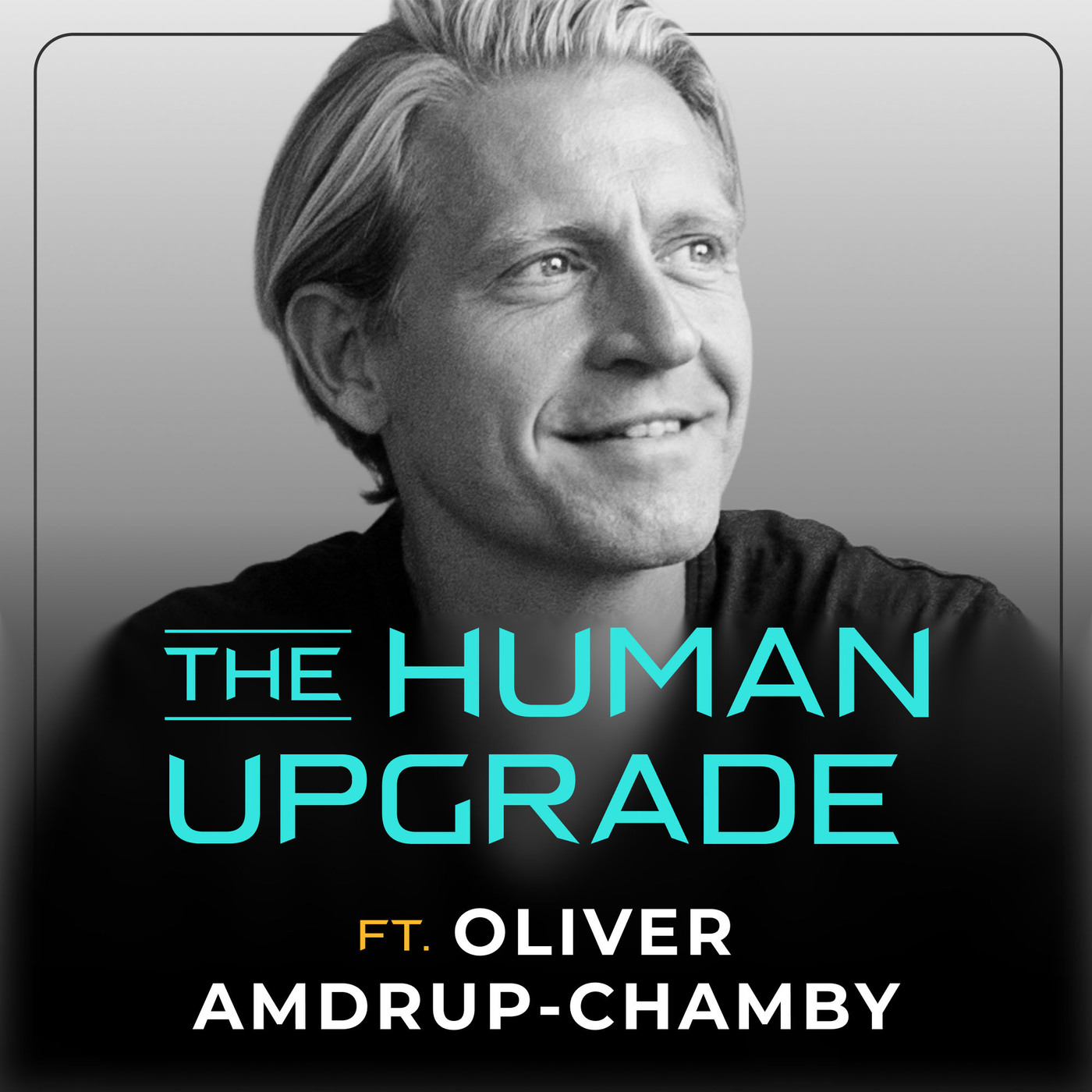
The Human Upgrade: Biohacking for Longevity & Performance
Your Organic Protein Powder Is Slowly Killing You : 1441
01:02:24
Loading summary
Transcript234 lines
- [00:00]
Dave Asprey
What has changed though, is that the, the king or the leadership has figured out that it's a lot easier to tell the peasants that their oatmeal and their brown rice protein and their vegan, whatever things are superfoods and good for them in despite the evidence. They just say that because it stops revolts.
- [00:19]
Oliver
What we tend to see the most often is heavy metals. And that's what these tests are showing,
- [00:23]
Dave Asprey
especially in the plant based ones.
- [00:24]
Oliver
They're much worse. They're much worse. I got 10 times worse than the whey base is what I was like looking at.
- [00:30]
Dave Asprey
So plants are the highest toxin, so animals won't eat it makes a lot of sense. And then if we go straight to the plant, and that's why plant protein is cheaper and it's not a superfood. It just isn't. You're listening to the Human Upgrade with Dave Asprey. Today's episode is with a true health nerd as a background in leadership at CrossFit, but more recently in longevity. And 20 years in the health industry. Going to talk about foundational supplements because there's a lot of incredibly sexy new stuff on the market and I'm probably taking it. But I've also spent $2.5 million on longevity and I take about $3,000 a month worth of supplements. And you can bet your organic pasture raised bacon that I absolutely take the foundational supplements first. Welcome to the show, Oliver. You're the founder of Puri, and I'm excited to talk about foundations.
- [01:32]
Oliver
I'm excited about being here, talking with foundations with someone like you as well.
- [01:36]
Dave Asprey
Did you come all the way out from Copenhagen to Austin?
- [01:39]
Oliver
So actually I try to spend my winters with my family in Palm Beach, Florida.
- [01:44]
Dave Asprey
That's a good choice.
- [01:45]
Oliver
It's a very good choice. Yeah. And so I came from Palm Beach.
- [01:48]
Dave Asprey
Okay. I actually got locked in once with the crown jewels in Copenhagen.
- [01:53]
Oliver
Oh, you did?
- [01:54]
Dave Asprey
Yeah.
- [01:54]
Oliver
Wow.
- [01:55]
Dave Asprey
I was out there and the alarm went off and there was maybe four people at the crown jewel. So I had two hours just with a private audience with their crown jewels. And then all these guys with machine guns came and said, oh, the alarm always goes off. Sorry about that. And I'm like, yeah.
- [02:07]
Oliver
Oh, wow. That, you know, I don't think that happens very often in Denmark. But, but, but at least you got an experience.
- [02:14]
Dave Asprey
Yeah, it was quite the experience.
- [02:15]
Oliver
Quite the experience.
- [02:16]
Dave Asprey
I love Denmark. So foundational supplements versus incredibly sexy supplements. Sure. What's an example of foundational in your world?
- [02:25]
Oliver
I think, you know, like the basic of Good health. Obviously we talk about all the different things you got to do before supplements as well. And I want to put that in there as a highlight because we think like moving real food, you know, sleep, all those things are like more foundational than supplements. But when you then go to some supplement aisle and you start adding the different things that will give you an impact on your body, those are some of the things that are hard to get from your diet. That was, would be like the primary foundation because supplement is a supplement to the diet. That's at least one part of it. That's the part we're focusing on. So, you know, to give you some examples, that could be the vitamin D, the magnesium, the creatine, the, even the protein and collagens depending a little bit on one's diet and how you're living your life. But those would be kind of the, you know, the foundations. Even a multivitamin sometimes have a reason to exist in there.
- [03:15]
Dave Asprey
Okay, so these are not the high end herbs.
- [03:18]
Oliver
No, not yet, I think. And then that, I'm not saying that's going to be a puree product because we focus on, you know, we call them the common supplements. Right, like, and try to do them uncommonly well. But I think there's definitely other things that for the individual has, you know, incredible effects. So I'm not ruling other things out. I'm just saying, like, we do the basics.
- [03:40]
Dave Asprey
Okay, I'm totally aligned with you and I want to understand something. On one plate you have a steak. On the other plate you have french fries cooked in canola oil that's been at the restaurant for a while. And you have foundational supplements. Which one do you take?
- [03:57]
Oliver
I would still take the steak.
- [03:58]
Dave Asprey
Wow. So you can skip the supplements. So they're not going to cancel out the french fries.
- [04:02]
Oliver
I would cancel all the french fries and all that because I don't think they will. They will, you know, I think they'll wreck more havoc. You can't like fix a bad diet with a band aid, right? So it's, it's, it's a mandate. Definitely. There's some, you know, incredible, like interesting science points in these basic foundations that supplements that we're also starting to see more and more come out even in the longevity space, talking about something like the omega 3 index and going from a 4% omega 3 index to an 8%. How much impact that has on longevity, for example.
- [04:32]
Dave Asprey
So talk about the omega 3 index. How do you create that?
- [04:35]
Oliver
Oh, so it, that's basically something you again can measure. So And I, we, you know, a lot of things in this space is really hard to measure. So when there's something you can measure, we always get excited because that's where we come out. Then you can actually see if the different interventions you're doing have an impact. And there's like incredibly amount of robust evidence that adding omega 3 to your diet will impact your omega 3 index. And if we go backwards and say what does the Omega 3 index look like? I think the average American are like below 4 or 5% and the optimal range is probably closer to 8%. That's what I've least like you've seen from different.
- [05:13]
Dave Asprey
And this is the amount of EPA and DHA that's present in your tissues.
- [05:18]
Oliver
Exactly.
- [05:18]
Dave Asprey
Actually in your blood for that test.
- [05:20]
Oliver
In red blood cells actually. Because then you don't just see a snapshot but. And that's actually where we played in the beginning. That was with like easier blood spot test where we got a snapshot. But that also depends a little bit on what you've been eating over the last maybe week or two or so.
- [05:33]
Dave Asprey
Yeah.
- [05:33]
Oliver
So in the, in the, in the red blood cells, if you do a real proper index, you can actually see how it's impacting you over a longer period of time. So that's really interesting.
- [05:43]
Dave Asprey
It's funny because Omega 3s get abused by the vegan movement because they say, oh, it's an omega 3. But some omega 3s are not EPA and DHA. And only it takes 45 grams of vegan omega 3s to make one gram of DHA in your body. If your body can convert it, which it won't unless it has foundational supplements present. Right, sure. Yeah.
- [06:06]
Oliver
And that's why, you know, even though you might get some DHA from algae and other salts that can be vegan.
- [06:13]
Dave Asprey
Yeah.
- [06:13]
Oliver
I like again, for the vast majority, a source like a high quality triglyceride formed fish oil is the most abundant, easy, accessible, convenient and good if you get a high quality product. And we'll definitely touch on that because I think there's so much to be said about the fish oil industry.
- [06:31]
Dave Asprey
This is something that's kind of scary because there are people who maybe over obsess on fish oil. Like sometimes I think, I think Rhonda Patrick might have missed the whole mycotoxin conversation and she might be over indexed on omega 3s because they're terribly important. But if you take way too many of them, we've seen this for a long time, you don't get good effects. So it's like having the right index. You want 8%, not 14% for sure.
- [07:01]
Oliver
That's one point. The other point is where then Omega 3 is coming from.
- [07:04]
Dave Asprey
Yes.
- [07:05]
Oliver
So we talked about the longevity side of raising it from 4 to 8% might give you according. These are like five extra years. Which is if you look at any like, like longevity supplement out there, it's like probably the best. Right. Like you could get. So from that perspective. But if you are, if you're taking a product that has high oxidation in it that's basically rancid, it might actually create inflammation instead of like, you know, dealing and helping you with inflammation.
- [07:32]
Dave Asprey
Yes.
- [07:33]
Oliver
And that's where we like, that's what we've been focusing on now for like plus 15 years. Basically.
- [07:38]
Dave Asprey
You do a lot of testing in the industry to see what's actually pure. How much of a problem is oxidation in fish oil?
- [07:46]
Oliver
I think it's a, it's a big problem. So we do like, obviously we do a lot of testing on our own products and the raw material that we can buy and all the different things we don't do as much of like our competitors on. Luckily there are organizations out there that will do these. There's the Clean Maple project doing some testing. They haven't tested fish oils. What we look most to is the international fish oil standards of IFAs that you've seen many places when you look at their testing regimen, it's an opt in program. So you got to be remindful that these are the brands that opt in to share the ELAB report on the product. And those brands you would tend to see decent oxidation measure because they actually measure for oxidation. They measure for the impurities, they measure for the content. Does it have omega 3 EBA, DHA in it also? Just like, you know, label washing or whatever you call like or and they measure the oxidation. And I think that oxidation part is critical.
- [08:45]
Dave Asprey
It's a problem in the whole supplement industry because if you test your own things, you test each batch and there's variations. And I looked at testing, oh say coffee because Danger coffee is mold free. I know because I do a lot of testing. But if I wanted to say test Starbucks, they had like $800 million worth of coffee in warehouses all over the country. Yeah. So it would take a lot of samples to get a real samp size. So just buying a bag, not only are they probably going to sue me for saying something about their coffee, even if it was true, the chances of me getting a representative sample is not real. And that's why I don't test other people's coffee. Because it's nonsense. Because I can test all of my coffee, which is what I do. How do you handle that with your own fish oil? And how do you know whether the other stuff is good or not?
- [09:36]
Oliver
So I think the first thing is, and you hit the nail here because a lot of the brands don't test anything. Every single batch of every single product. Yeah, they do like, like, like batch testing here and there. So it's like it's not a full everything is out there concept. And I think that is the key if you want, you know, you know, really to have the trust, especially when we see Marcus as oxidation. Because even in our end that we've been focusing on this for 15 years, the, you know, the different facilities we're working with know exactly that we are sharing. We will never release the product unless there's a lab report accessible through a QR code on the label. So it's on that exact batch that is bought of the finished good. It's not a test of raw materials. You see a lot of them online on websites for fish oil brands and they have like a COA on there. And it's probably not the finished good that they tested. It was like the raw material they tested. And a lot of the issue encapsulating a product like Omega 3s because of the oxidation risk is like in that process. So you want to test what the consumers are actually having at home in their and they're consuming. So we do that. And I don't think that all the brands are doing that. I'm pretty damn sure they don't actually.
- [10:47]
Dave Asprey
So, yeah, it's going to be a lot easier to get a big, basically a big drum of fish oil, test it. And then what happens in the lab and in the manufacturing, it's actually really hard to make those gel caps anyway.
- [11:01]
Oliver
It's really hard to make them. Yeah. So we've been through so many different suppliers on getting there to a level where we can see a. So the oxidation score that you would look at in something like the IFAS program, which is a higher standard of omega 3 fatty acids, the oxidation there would be measured in totox like total oxidation, which is a multiple of two different things that you calculate to find basically how much oxygen is there is an oil right now that's very simplified. But when you look at those metrics, I think some standards say above 26, that's not where it starts to be not safe from human consumptions. IFAs I think the standards are 16 is their maximum level to be 5 star certified. And there. And what we aim at internally is always below 10 and closer to 6. And actually this was a fun one because I was researching the other day and this is what I love about AI is I asked it to. You should take it obviously, always with the awareness that AI might not be calculating exactly right. But just knowing the data myself a little bit and just asking it. Could you compare our batches official to all IFRS base to the entire base of different brands in there and see if there's a difference oxidation score and then say, wow, hey, this is probably, probably why you're paying the extra dollars for the Puri product. Because what you can see here is they consistently rank like half of the oxidation compared to the other IFAs brands. So I was like, you know, I've been spot testing by going in and reading the reports ourselves and you know, our science team is doing that. But it was nice to see that, you know, okay, you can actually aggregate all this data and see that what we've been doing for so long is just, it has an impact on the finished product.
- [12:42]
Dave Asprey
It's getting better and better where you can really tell AI to go do an analysis. It wouldn't take it a long time.
- [12:47]
Oliver
Exactly.
- [12:48]
Dave Asprey
But I still, I still don't really always believe it. I, I got a text message this morning saying, I'm so sorry. I'm like, why is this person sorry? And their chat, GPT had told them that one of my close family members had died, which is not real. It did not happen.
- [13:05]
Oliver
Wow.
- [13:06]
Dave Asprey
So I'm like, thanks, Chad. Gbt. What are you cursing me now? Yeah, that's. So we'll see what happens. But I do think the research reports, when you properly structure them, it's been really helpful for me too on the neuroscience front with 40 years of Zen with upgrade labs. It's a big deal.
- [13:23]
Oliver
I can imagine. Yeah.
- [13:25]
Dave Asprey
So I gotta ask you this.
- [13:26]
Oliver
Yes.
- [13:27]
Dave Asprey
Fish oil.
- [13:28]
Oliver
Yeah.
- [13:28]
Dave Asprey
It oxidizes. We have these things called antioxidants. Why don't you just put some hydroxytyrosol, rosmarinic acid, by the way, that's olive oil antioxidants and rosemary antioxidants. Why don't you just put those in there? Right. When you open the raw materials, stir it in and just keep it stable.
- [13:45]
Oliver
So you are actually, you answer something here because it's actually interesting because we don't have a liquid fish oil here in the us we actually do have a liquid fish oil in Europe.
- [13:53]
Dave Asprey
Okay.
- [13:54]
Oliver
The reason why we did not create a liquid fish oil was that when we did internal stability test on the oil, we could see that consumers open the liquid at home, it starts to get oxygen in the way you storage it, you put it in the fridge because it's liquid. But even though you could see the rains, the oxidation was going through the roof. So it was like, hey, what can we play? Our science team was saying like, what can we do to slow that? Is there any oils out there that are stable? And we actually start playing with MCT oil. It helps a lot. We saw that. So we have a fish oil in Denmark and in Europe where we have, you know, omega 3 fatty acid mixed with a little bit of MCT oil as well. And what we saw was that over the 30 day window, it probably more than like reduced it by like a factor of three or two or three over a period of 30 days because it slowed down the oxidation in. It's not easy going. We've had so many issues in production of doing it. Like how mixing it in so it's not like a standard format. You can just go out and apply. But that's what we've been trying to do with the liquid side.
- [14:55]
Dave Asprey
Back when I was involved with Bulletproof guys, if you're listening, you haven't heard. They removed me from the company a long time ago. So nothing to do with them. But when I formulated there, I did make a fish oil that had a bunch of stabilizers in it that worked really well. And those are two of the superheroes, but they're very expensive. So then you end up with a product that a lot of people aren't going to buy. I don't believe the company makes that stuff anymore. I like your approach, which is get it encapsulated so it has no oxygen and test it extensively so that you know that the capsules didn't get damaged. So then you can take in puri. You can just take it and you know that it's safe. Do I. Do you have to keep it in the fridge?
- [15:35]
Oliver
I. So we actually we depending a little bit on where you live and how you air condition your home or where you position it, of course. But you know it will be better in the fridge. But you don't have to like what we test and the test reports we do is on living like room temperature basically. Okay, so. So that should be doable as long as you don't put it in sunlight so that it gets that.
- [15:54]
Dave Asprey
So what are the worst mistakes people make around storing their Fish oil, I
- [15:59]
Oliver
think a lot of it is actually probably so the complaints we are getting when we get complaints is often related to transportation. So it could be that you leave your package, it could be that your UPS driver or any other company out there would leave it outside your house. If you're in Texas or anywhere else where it gets really warm in the summertime, it doesn't have to sit out there in the sun for many hours before it will start going rancid. Right. So I would say one thing is if you know you're getting it in summertime and you packages sometimes get delivered outside, you know, be aware of when it's delivered so you get inside right away. That's probably one of the biggest ones.
- [16:34]
Dave Asprey
So sun baked fish oil is a bad thing.
- [16:36]
Oliver
Sunbathe fish oil is a very bad thing.
- [16:38]
Dave Asprey
Okay.
- [16:39]
Oliver
Is good for many things, but not for fisher.
- [16:40]
Dave Asprey
So I go to friends houses and they have their supplements lined up on a windowsill. Yeah. I'm like, you're doing it wrong. All of the supplements, except maybe some base minerals, hate sunlight. Exactly. Right. Yeah. Yeah.
- [16:54]
Oliver
So get them in a cabinet, like a closed cabinet or you know, in a place where, you know, that's not sunshine. Sunshine coming.
- [17:00]
Dave Asprey
I'm at my new place. I have like a vitamin dungeon.
- [17:04]
Oliver
I like to see that one day.
- [17:06]
Dave Asprey
It's just a closet. It's a closet that's all supplements. Yeah. And it's dark in there. Unless. Unless I'm, I'm, you know, doing something. Because darkness actually makes all supplements, especially fish oil, last longer for sure. Okay, good deal. What are some other foundational things that go well with fish oil?
- [17:23]
Oliver
I think what we're so something that goes well with fish oil is definitely, you know, the vitamin D. The like we have, we have like a combo pack of vitamin D, fish oil and magnesium.
- [17:34]
Dave Asprey
Okay.
- [17:34]
Oliver
And we think those are when we've seen again based on macro data not having the individual's body biomarkers ourselves. You know, those are some of the supplements that we see most people are lacking in based on macro data.
- [17:47]
Dave Asprey
I would agree. Man. The research from the Vitamin D Research Council going back to the 90s just showed me exactly how deficient we are in vitamin D. And it's almost everyone. And the darker your skin, the more likely you are to have vitamin D deficiency. And the more you live in northern Europe, the more likely you are because there's no sunshine. Or in Canada. Oh right.
- [18:13]
Oliver
For sure. And even like you can see, I'm light skinned as well.
- [18:16]
Dave Asprey
Yeah.
- [18:16]
Oliver
And even though I was Like, I've been very focused on sunbathing and getting outside, you know, like safe sunbathing, but still with no sunscreen on for a period of time so I could absorb more D vitamin in my body, I would still be deficient when I got it. So when I got my test, even at taking, I would say a regular dose, which is also interesting. But what we've seen in Europe, where we have the European food safety authorities, the doses has been increased over the last few years, especially in Denmark, of what you actually recommend people to take. So I had to go to a pretty high dose, and not something I'm recommending people to do without the blood work, but I had to go through it, I would say a really high dose to actually get my levels up to where I was not deficient any longer.
- [19:01]
Dave Asprey
This is something that I haven't talked about recently on the show. I used to just kind of beat it to death, but it's that your vitamin D receptors have a lot of genetic variation. So I'm also primarily Northern European. I've got a bunch of Basque in me and some other weird stuff. But, man, I went to Hawaii and I said, I'm going to live here for six weeks. I'm going to do three hours of sun every day with no sunscreen. So golden brown, tan, all that kind of stuff. And I didn't take vitamin D on purpose to see what happened. My levels were at like, 34.
- [19:35]
Oliver
Wow.
- [19:35]
Dave Asprey
And you want them to be about 90. And I did get some sun damage from that. But, like, what is wrong with me? Well, nothing's wrong with me except my body does not hold on to vitamin D for very long and my receptors don't take it in very well. So I take 15,000 IUs a day, and that's what my body needs, and it needs sunshine to activate it. I think most people with like the American 400 IUs, that's a nonsense number.
- [20:03]
Oliver
It's.
- [20:03]
Dave Asprey
Sure.
- [20:04]
Oliver
Yeah, yeah, we're seeing the same. And I, I have the same. So I got like a genetic testing as well and said, you know, you got to go to a much higher level to even get your body to. To get to. To 90.
- [20:17]
Announcer
Is the air you're breathing making you sick? Just because you don't see mold doesn't mean it isn't there. My friend Jason Earle has been on a mission for over two decades to help people understand the hidden role of indoor air in their health. He's one of the world's leading experts on mold and indoor air quality. And he created the Got Mold Test Kit to make professional grade air testing simple and accessible. It uses cutting edge air sampling tech that top inspectors trust and it's engineered for you at a a fraction of the cost. It takes just minutes to get samples using the patented Biovac air sampling pump. Then you send them prepaid to one of the most prestigious microbiology labs in the world. No guesswork, no paperwork and no hidden fees. You get fast results, intuitive reports and great support. And since you keep the pump, you can retest anytime for less. It even comes with a lifetime warranty. Mold may be invisible, but its impact isn't. This kit helps you understand your environment so you can take action for your health. Go to gotmold.com and use code DAVE10 to save 10% and see what's in your air. Because the best biohackers don't guess. They test ready to unlock razor sharp focus, sustained energy and next level cognitive performance. It starts with understanding how to use one of the most most misunderstood biohacking tools on the planet. The tool Nicotine. When you use the right form in the right way, it's a nootropic powerhouse. Most people are using it completely wrong or avoiding it entirely because of outdated propaganda and fear mongering. Most people hear nicotine and picture lung cancer wrong. Target cigarettes contain 7,000 chemicals. Pure nicotine in low doses works to compared completely differently. Clean nicotine enhances mitochondrial function, sharpens focus, improves reaction time and supports neuroplasticity. Numerous studies show that it improves cognitive performance and protects your brain. But you need the right form, the right dose and the right protocol. So I'm presenting this Clean Nicotine Roadmap. It's a five day program designed to help upgrade your brain and performance the right way. For five days I'll send you a power packed email. Each day you'll learn exactly which forms of nicotine to use and which ones are toxic, how to dose for your goals, and how to stack it with other nootropics for maximum effect. You'll get the science, the protocols and the resources you need to make nicotine work for you, not against you. By the end of the program, you'll have a roadmap to enhanced cognition, better focus and unstoppable mental energy. Enroll for free Sign up for my Clean Nicotine Roadmap and receive the information and biohacking resources you need to sharpen your focus and improve cognitive performance delivered straight to your inbox.
- [23:21]
Dave Asprey
I saw some really interesting theory a few years ago that said that possibly the reason that Northern Europeans are so pale. It was a vitamin D variant, but it was also something to do with letting us metabolize gluten better. Interesting, right? And that there was some kind of a genetic trade off and that there has to be a reason that we suck at vitamin D. I, I suck at both. Yeah. I don't do gluten either.
- [23:45]
Oliver
No. So, yeah, I'm sure there is. And, and that's what we're going to find over the next many years. When we get like data on everybody on genetics, we get all this stuff mapped out. That's the beauty of, of what we are seeing into in the future. So we can also, you know, customize dosage for people. Right now I'm giving people recommending like a, like a, like a flat dose to everyone despite knowing that, you know, there's definitely variations and we highly recommend people to go out and do blood work and do some analysis. But that's, that's where we're getting at.
- [24:14]
Dave Asprey
I've been recommending a thousand IUs of vitamin D per 25 pounds of body weight. And I know that in kilos that screwed everything up, but it's about 10 kilos. So it comes to way more than what any government recommends. But then I ask myself, when's the last time a government ever made an optimal health recommendation ever? They're economics based. Like, we don't want you to get at rickets because that's expensive. But other than that, we don't care if you're fat and tired and sick all the time. In fact, it's good for our, our owners, big pharma. So, yeah, it's.
- [24:47]
Oliver
Yeah, but that's a, that's definitely an interesting story. And you know, we see the same, we get like the question so much, but why is this, you know, 10 RDA on like, and you're like, isn't that way too much to do? And you like, try to eat an orange or, you know, you'll get vitamin C overload from having like, you know, lemon fruits or whatever it is you're consuming.
- [25:07]
Dave Asprey
It's really funny when you look at rda, like recommended daily allowance, you look at who's doing the recommending like, well, I went into the, the car salesman and he told me I had to get the RDA car because, well, he was recommending me some things that maybe weren't in my best interest, but were in his best interest interest. And yeah, you shouldn't trust the government to tell you what to eat. It's never worked in all of human history.
- [25:26]
Oliver
No, I think you're right, unfortunately.
- [25:29]
Dave Asprey
Yeah. Sadly. And this is true of all forms of government too. It doesn't matter.
- [25:32]
Oliver
It doesn't matter. We see the same like in Europe. Right. So I think there's things that are now starting to come, which is interesting in like, you know, more focus on like the, all the different, you know, chemicals that we're, you know, throwing into our food system and whatnot. Hopefully we're making some waves in the right direction.
- [25:51]
Dave Asprey
It feels like it.
- [25:52]
Oliver
It feels like it. Yeah. So like, I'm always positive of mindset, so I, I hope that we are, we're pushing the needle in the right direction here.
- [25:59]
Dave Asprey
Yeah. Did you hear about the, the glyphosate stuff happening in the US Right now?
- [26:03]
Oliver
Yes, unfortunately.
- [26:04]
Dave Asprey
Yeah. It's interesting because there isn't a lot of glyphosate in parts of Europe, but Italy has a decent amount of it right now. What about Denmark?
- [26:12]
Oliver
No, no, not really. So it's not something we've, we've seen that much of. But again, I often say that we might haven't seen it, but it might be coming. And we're seeing, when we do like drinking water analysis every year, the drinking water has more, more different types of pesticides in it. And so.
- [26:29]
Dave Asprey
Wow.
- [26:30]
Oliver
So we're not like, we're still going downhill even though we're a group that feels like, oh yeah, things are improving, we're doing things better. But like, as an overall human species, it looks like we're still moving downhill on the contamination parts of our life.
- [26:45]
Dave Asprey
I think we are. And I was pretty pissed when I saw the US this announcement on your strategic reserves for glyphosate and all that. But I dug a little bit deeper and I think there's actually some rational, some rational stuff there I didn't understand.
- [27:01]
Oliver
So like, yeah, from the outside, I would love to hear that.
- [27:04]
Dave Asprey
Yeah. Because I'm, I've been beating against glyphosate for 20 years and it is absolutely terrible. And the, the perspective, in fact, Bobby Kennedy just wrote like a. Of long, well reasoned. You can tell he's an attorney because it's, it's rational. And he said, look, the U. S. Food system for the last 40 or so years has been built on top of glyphosate on purpose because of, you know, prior administrations that were in bed with big pharma and big chemical stuff. So if they were to stop glyphosate production right now, there would be a collapse in the US Food supply were that dependent on it. And since China makes all the glyphosate, I think that the strategic planners were saying, well, the US Is exposed because famines are bad for people. So let's make sure that we can manufacture this ourselves and let's reduce the use of it over time as we switch to regenerative. So I find that to be rational and believable. Even though I would like to shut it off today, I would like to not create mass starvation. And it's not okay that we're doing it. So it's one of those, you got to choose the, the evil of two lessers or maybe the lesser of two evils.
- [28:17]
Oliver
I was hoping that there was like a rationale behind and I, I, I, I didn't think that they would not have. Yeah, like, because it felt such a, like a, like a wrong, like move compared to everything else that's going on right now that's been more positive in the terms of removing toxins from our diets.
- [28:32]
Dave Asprey
I, I am 100 convinced that, that Bobby Kennedy is, is working for the good guys. I mean, what a incredibly intelligent human. Just having, having spent some quality time with him one on one, I am blown away at his ability to think about lots of things and hold it all in his head. And when he came out, at first I'm like, why would you support this? And you realize there has to be a path to get off of glyphosate. Sort of like if you're an alcoholic, you don't go cold turkey because you'll end up possibly dying from the detox reaction. So they have drugs to help you taper off and. Yeah, same thing, even with nicotine.
- [29:08]
Oliver
And we see that in many, you know, verticals of industry as well that we have to, we can't just like, shut things down and, and move on. But anyway, yeah, it's, it's, it's interesting.
- [29:19]
Dave Asprey
So is there glyphosate contamination in fish oil?
- [29:21]
Oliver
This is an interesting one. I don't think so. No, in general, I don't think so. We haven't seen it in our testing at all. But I, I don't have the full data of, of what's going on out there.
- [29:29]
Dave Asprey
What other contaminants are in fish oil?
- [29:31]
Oliver
Things like PCBs, PCB, dioxin, heavy metals. But I will say something. And this is where I think the transparency project that we've pioneered with the cleanable project, that we hope many more people would actually become part of over the time, because what we saw in our facilities, we use a drop of lemon oil again into our capsuling actually as well. And at some point when we're doing our third party testing with the clingy little project, we saw that there was a residue of pesticides suddenly in our fish oil.
- [30:03]
Dave Asprey
It was from the lemon, it was
- [30:04]
Oliver
from the manufacturer that we normally we have a specific, you know, organic lemon oil that we are using because lemons are often high in pesticides. Very high.
- [30:13]
Dave Asprey
Yeah.
- [30:13]
Oliver
So, so like we specified that and they actually mixed it because that's how manufacturing works. They have several different, you know, like totally, you know, pre approved products on shelf, not approved by us, but pre approved as a general what they use in their formulation. And it just changed a little bit because they didn't have a full batch of it. And that tiny Dr. That actually spiked out on our clean label testing report. So we were like, where the heck is this coming from? There shouldn't be pesticides and fish oil residue, so where's it coming from? And we found out it was because of that. So I'm not saying that you should test and sell the fish oil for pesticides. I think that's over tester. We are the overtesters in some way. That's what we've been pretty obsessive. We're pretty obsessive. And that's how we can help steer the market as well. Because at some point we should also be able to say, okay, let's remove pesticide testing from the clean maple panel that they're running on fish oil. Because, you know, you never see it. So it's like greenwashing. Right. We don't need to put that on.
- [31:13]
Dave Asprey
It's like saying gluten free fish oil.
- [31:14]
Oliver
It's like saying gluten free fish oil. Like the stuff that you see is pretty incredible sometimes. Right? Gluten free tomatoes and whatnot in store. Gluten free water.
- [31:22]
Dave Asprey
Yeah.
- [31:22]
Oliver
I'm like, yeah, but I think we definitely got some learning out of it. And again, we can't control the panel that the cleanable projects are running. So if you're part of them, they set up obviously the panels that they want to test for. They're the experts. But for us it was like, like again, interesting knowledge of the, you know, all the scrutinization that we have to go through to secure that like that virtuosity spill over in that fish oil that some of our consumers has been consuming for 15 years. Right. Like myself included.
- [31:51]
Dave Asprey
Yeah. You're a very trusted brand.
- [31:53]
Oliver
You got to be trusted if you want to do this. And that's kind of the goal when we are playing with raw, raw natural ingredients that are, you know, you know, they will change over time. There is a lot of fluctuation in, you know, cacao beans, raw fish oil. You know, some of these things that come, come from the planet that we're working with. So that's what we've been playing with for a ton of years now. But I think it's just a starting point.
- [32:18]
Dave Asprey
Okay. It is. And it doesn't make sense to test every batch for everything because no one can afford that product.
- [32:29]
Oliver
Exactly.
- [32:29]
Dave Asprey
So choosing the high risk products is important. And it's rough because I've been running supplement companies for my God Hey. Since 2012. Yeah. That's a long time. And like I want to test everything. Oh. So sometimes I'll do an extensive test of just one batch to just like what might be in there. Yeah. But it wouldn't make sense to do that. So then you look at what are the things that are likely to be problems given everything we know. And then you test for those. And then consumers are saying, well, why is the stuff more expensive? And well, it's more expensive because that lab testing is not cheap. Like what percentage of your cost of goods is for proving? Like if you were to just guess,
- [33:12]
Oliver
I would say with the. Sometimes we can't use that raw ingredients that we actually picked.
- [33:18]
Dave Asprey
Right.
- [33:19]
Oliver
We spend a lot of money on, you know, disregarding stuff.
- [33:22]
Dave Asprey
Yeah. You could throw it away or just tell the manufacturer, I'm not buying it.
- [33:25]
Oliver
We still have to pay for it because they allocated for us. So they might have actually sell it to someone else. Because the standards we have is much stricter than industry standards. So they can use it for other brands. But we are losing a lot of money. I would say with that regards, it probably 5%.
- [33:39]
Dave Asprey
Wow.
- [33:40]
Oliver
And you know, 5% is doable. Again, we want to be the front runners and we want to be able to tell other brands, you know, do this, this and this. That's what you need to focus on. Then we will increase the quality of the category as a general. But I think that's also why I wanted let's, let's touch on protein powders for one second because there's been a lot of focus. And here we've seen these organization, Consumer Reports and Clean Label Project do category testing of protein powders.
- [34:07]
Dave Asprey
So what's wrong with protein powders today?
- [34:09]
Oliver
So I think there's several things. One is like, if you look at the average protein powder market and maybe not the one that are more highly focused on the biohacking community that are more into paying for it. But like then you would also have all the artificial sweeteners and all the weird stuff that's put into, you know, the basic protein market. If you look at let's say the high end side of the market, even like the organic, organic ones, also the vegan ones, the like plant based ones, even the whey ones and the, the meat based ones or animal based ones. What we tend to see the most often is heavy metals. And that's what these tests are showing.
- [34:46]
Dave Asprey
Especially in the plant based ones.
- [34:48]
Oliver
They're much worse, often like five times worse than the, than like ten times worse than the whey base is what I was like looking at. And maybe you know, two or three times worse than the, than the animal based. That's, that's basically roughly what the numbers are saying. But, and our goal is, you know, there's a, there's an interesting conversation in this because the industry, when these tests came out, the industry was a little like. And as a brand owner myself, and a consumer, but a brand owner myself, I totally understand like okay, wow, my product is out there and I'm like high on the test. And I'm being hold to a standard which is in this test, Proposition 65, which is a very strict standards preserving
- [35:28]
Dave Asprey
Proposition 65, if you're not aware, is the dumbest thing ever. It's a bunch of corrupt legislators in the state of California, which is the most corrupt of all the state governments. If you track back the number of people related to each other in the senior politics in California going back like 80 years. So they just decided under heavy lobbying that means bribery, influence from chemical companies that they would put out Prop 65. And because California is big enough and it's too expensive to make standards for one state versus the others. That's why every American mattress, except maybe essentia is soaked in six pounds of flame retardants. Because a chemical company that makes flame retardants basically bribed California to pass this. So Prop 65 has been coming after every kind of supplement and consumer category for no reason whatsoever. That's based in science. So those standards are kind of a problem and some of them might make sense and others are completely nonsensical. But when you hold people to that standard, bad things happen. Anyway, I got my soapbox.
- [36:37]
Oliver
I think on the heavy metal side it's a strict standard.
- [36:41]
Dave Asprey
It is strict and I like blocking heavy metals. I'm in favor of that for sure,
- [36:45]
Oliver
but I think, think there's for us as brands, like let's say we're trying to do the best for our consumers. I think holding us to like it shouldn't be unreasonable. Like again, standards shouldn't be unreasonable because then it's impossible to do. Right. Like there's, that's a starting point.
- [36:58]
Dave Asprey
It got to the point that every coffee company that didn't put a sticker on their bag that said could cause cancer according to the state of California, would get sued by an aggressive attorney. And, and the same thing's happening in protein powder right now.
- [37:11]
Oliver
The same thing's happening. But I would say that being being said, like some of these, like findings in these studies were you know, also above the EPA standards or some of the other. And again, when we look at like cumulative load of heavy metals, we want it to be as low as possible.
- [37:27]
Dave Asprey
Correct.
- [37:27]
Oliver
And I think when you're in, in something like health foods, like a supplement, like I would rather get, honestly I'd rather get my heavy metals from the, the plants that I'm growing my garden or I'm buying at the farmer's market or wherever I'm getting, you know, my food. Because I don't expect them like to have like a certification of heavy metals of the little food farm over in the corner that are selling me a sweet potato.
- [37:47]
Dave Asprey
Right.
- [37:47]
Oliver
But that being said, you know, I really want to make sure that I get to the lowest limit possible. And then we've shown that in, even in protein powder you can actually get to that if you scrutinize your supply chain.
- [37:59]
Dave Asprey
Yes.
- [37:59]
Oliver
Maybe not necessarily always in vegan cacao based protein powders.
- [38:03]
Dave Asprey
Yeah. Brown rice protein, like it's going to be high in metals. It just is.
- [38:07]
Oliver
That's the way it is. Yeah. But again, again, if you as a consumer can actually go out out and say, okay, here's the data points on my product benchmark, apples to apples. Like if you're buying a car, you can actually see, okay, this one has three times the amount of that proposition 65 in California. That's fine with me because I'm, if I just had that data, we could benchmark it. And that's what I really like about these studies. It gives some attention to it. We also see, okay, here is an issue, here's a non issue and let's not spend time on the non issue because that becomes greenwashing on Naples and whatnot because consumers are confused. You know, I have to pause myself because I want to jump into the next story. Right. Because I feel there was another Story here on GMO and organic and you
- [38:50]
Dave Asprey
know, oh, we'll get into that in
- [38:51]
Oliver
a minute, we'll get into that in a minute.
- [38:53]
Dave Asprey
But we'll stick with some more heavy metal stuff we got to talk about. So throughout history there's been this balance of high nutrient, low toxin foods. This is what the king eats. Right. And on the other end there's high calorie, high toxin foods that are cheap and that's what the peasants eat. And this hasn't changed because it's based on economics. Sure. Right. And what has changed though is that the, the king or the, the leadership has figured out that it's a lot easier to tell the peasants that their oatmeal and their brown rice protein and their vegan whatever things are superfoods and good for them in just despite the evidence. They just say that because it stops revolts. Right. So you and I are working towards a world where we have transparency and truth and we can say this food is affordable and it's higher in metals and it's better than not having any food. But we'd like to find a way to take the metals out by identifying the problem, by being truthful about it, we can clean up the whole food supply for everyone. Where everybody are on the economics thing and this whole idea of telling people that unhealthy foods that are better than starving are healthy foods, it's lying and we can't do that anymore.
- [40:12]
Oliver
No, no, but I totally agree on the part of getting to a full cleaner portfolio for everyone, for all of us. That's the goal. So yeah, we're doing a lot of testing in the protein side as well.
- [40:26]
Dave Asprey
So what are the kinds of protein that Puree makes?
- [40:28]
Oliver
We make a whey based protein on both a vanilla and a cac. The cow is harder. So we have very scrutinization system where we test raw beans before we actually start working with them ourselves in our own labs. Because we don't rely on the external testing we can get from, from the farmers even though they're organic, high quality. That doesn't mean heavy metals also. That's another mention organic. Many people think oh, it's organic then it doesn't have heavy metals. You know, actually the cleanable studies showed that organic tend to have more heavy metals in them. So that could also be because the data was skewing. Organic was more plant based and that in general has. So without having the data set to rule that out, can't say that. But that's at least the point.
- [41:13]
Announcer
Are you ready to plug into the latest science of longevity and human performance, come to beyond the Biohacking conference where biology, longevity and consciousness collide in real Life. Join us May 27th through 2020 9th, 2026 in Austin, Texas. Experience breakthrough tech, meet world class experts and connect with people who are also committed to being the best versions of themselves. Because strong community isn't optional. It's how we live longer. Register now@BeyondConference.com Live longer, live better. Live beyond.
- [41:50]
Dave Asprey
I have some good data on heavy metals and chocolate because back when I was running Bulletproof we had, I think it was maybe the first, if not one of the first zero sugar actually good chocolates. And running a chocolate company is very difficult because of it melts in transit and especially the stuff we made. But I had an employee back then, this is years ago, who despite internal written standards on metals approved using something that didn't meet the standard. And there was some public talk about I don't remember which heavy metal it was probably a mother and I was so mad like what happened? He went back and you find out you have somebody just ignored something. So even with internal controls and so I don't think they make chocolate anymore like that because it was just a hard product. But I went into the supply chain and it turns out the higher quality and healthier the tree and the older it is, the deeper the roots go. And that means that they're getting more heavy metals. So these organic trees that are fast growth, five year old trees in basically just a little bit of topsoil, they have way less polyphenols and less metals. So it's a trade off. Do you want healthy, flavorful cacao that has more metals or do you want like rapid, rapid growth, low quality cacao with less metals? It's a tough call. I don't know the right answer there.
- [43:14]
Oliver
I don't know the right answer. I think that's actually a really interesting point and that ties to another conversation that's going on that say, you know, if it's really rich in these polyphenols, it doesn't really matter as much with the heavy metals. The same goes into the fish oil like we hear that from. I think it was Rhonda Patrick mentioning that at some point like on, on like pregnant women and you know, the, the mercury in fish oil wasn't as big an issue if they actually just got DHA enough that was way more important for their, you know, brain health.
- [43:41]
Dave Asprey
Yeah, sometimes getting the good stuff is more important than avoiding the bad stuff. And just the Volume of fish oil you take is so small, unless it's really high in mercury. That small amount of mercury is not as big a deal as eating a big piece of tuna, which is going to have like 100 times more mercury than a little bit of fish oil from that same tuna.
- [43:58]
Oliver
Would totally agree. So I would say, like, that's, that's not our biggest worry either. Heavy metals and fish oil anymore. So, yeah, to that point, oxidation and actually getting enough Omega 3, which is. Yeah, you know, we're not recommending a crazy dose, but we reckon about 2000mg of omega 3 fatty acids a day. That's kind of what we baseline. Think is a good baseline for people. Yeah, but. And again, blood work might show variations for people, but that's, that's the way to start.
- [44:25]
Dave Asprey
It can. And there's a lot of. Even today, there's a lot of issues with testing for heavy metals in your body to know what you really have have. And I got a crash course in this in my mid-20s because I went to what today would be called a functional medicine physician. And I was just trying to figure out why am I fat and tired and brain fog and fibromyalgia and just all this stuff. And my levels of lead and mercury were off the charts. So when I got my first chelation treatment, I came home and my partner at the time said, oh, look, your skin is pink. It's always gray. And it was that big of a difference. And so having just learned about testing with urine testing and hair testing and all, it's really hard to know what's in there.
- [45:07]
Oliver
Sure.
- [45:09]
Dave Asprey
So avoiding it in your food as much as you can and probably taking some detoxing things on a regular basis to help shed something that's unavoidable because heavy metals are in your plastic furniture, they're in your carpet, they're in your clothes, they're in exhaust, they're in your kale. It's everywhere. So you just have to assume it's a part of life. Just like you breathe out again.
- [45:31]
Oliver
But that's what it comes back to, the body's ability to actually exist. Right. So the foundation. That's why we focus on these foundational supplements. I'll say. There's one other supplement that starts sneaking in there as well. It's becoming a foundation in the average. In the general population more. But it's been a foundation in the bodybuilding community for ages. That's correct. Medicine. Yes. So I think that's something that's just because of the, you know, the wear and tear of our brains, you know, and of our, like, healthy skeleton muscle. For people who are maybe not working out as much as bodybuilders and so on, it has a profound effect. And it's hard to get to these larger doses from food. Even in, like, the potent foods. It's like, it's really, really hard to get enough. You can produce something in your body yourself, but not for those levels that you might need.
- [46:23]
Dave Asprey
You're gonna need a kilo of red meat every. To hit your creatine goals.
- [46:28]
Oliver
Exactly.
- [46:29]
Dave Asprey
So which would be about 10 grams. And most people don't do that, although I'm willing to take. Yeah, yeah. So. So it. One of the reasons I, I started the biohacking movement the way I did is I'd spent a lot of time in the gym when I was trying to lose that hundred pounds. I started reading bodybuilding magazines and these guys were saying the exact opposite of all the stuff that I thought was healthy. Like, what do you mean? Like, like carbs can make you fat. And this is, you know, the mid-90s. And like, it's completely different thinking. But you look at the results. It turns out if you want to control your state, bodybuilders are better than almost every longevity doctor, although it's coming together today. So I wanted to create an event where I could get the bodybuilding community and they understand testosterone so well. Right. And then I could get the longevity docs and the neuroscientists and, you know, the NAS doctors and just all in a room and like, let's, let's share knowledge. Yeah. And I mean, today there's 5,000 people, by the way, biohackingconference.com guys, May 27th in Austin. And you guys are going to be there, right?
- [47:36]
Oliver
We're going to be there. Oh, yeah, we were there last year.
- [47:38]
Dave Asprey
And you'll be there. People can come and talk to you directly. For sure.
- [47:41]
Oliver
For sure.
- [47:41]
Dave Asprey
Okay. And it's Steve Aoki coming back again this year. Coming back, yeah, that was easy. But the idea here is these bodybuilders have known about creatine forever. Right. But then it's just in the last couple years, have the longevity docs really been jumping in on it? So why do you think it's so important?
- [48:00]
Oliver
I think so. I've been in the, like, pre crossfit, I started a personal training business while I was studying business. So I started international business. But my sister, she opened a regular gym outside Copenhagen and said, hey, you gotta come be a personal trainer. It's the best student job you can have because you can charge a decent hour, you work out and it's like you can have time to read and study on this side. And I was like into training and wellness. So I, you know, hey, let's go down that path. So I actually started more than 20 years ago playing with like creatine back then. It kind of dropped off a little bit as I, you know, winch it out in other ways. And now it's like totally coming back. But the reason why it's coming back to me more so than, than, than just for the. I definitely see a physical impact on my body when I take creatine. Along with my strength training. Training, I will build muscle mass, I will recover quicker. I feel generally better when I do that. So that's definitely. And I've seen that through like 20 years ish of experience. But what got me really into it again was after post a concussion around Covid I was in a car accident. I got a serious concussion. And there was one of the brain specialists said you should maybe try a larger dose of creatin.
- [49:14]
Dave Asprey
That was a really cutting edge brain doctor. That's a very recent understanding.
- [49:18]
Oliver
It's very. Yeah. So he was definitely, definitely in the, in the forefront and you know, I was ready to test everything. But when I was like, okay, he said you might need to take 20 to 30 grams a day, I was like, oh, I wish I knew the tuck. That's also why Puri started to make a creatine. Oh, is that one? Because I wish I knew exactly what was in the creatine. Is there any contaminants I should be aware of? Is there any issues? This is also not a natural like, like it's, it's, it's more lab made basically than it's like coming from a raw natural resource. So I got curious into that and I, I did a lot of other things. So I can't say that like higher dose of creatine helped my concussion. But I got out of the concussion eventually and you know, I did a
- [49:59]
Dave Asprey
lot of things mechanistically it helped because you need more ATP when you have a concussion and creatine directly increases ATP production.
- [50:08]
Oliver
And now I use like if I'm going on something like this, I have a pretty large dose of creatine in my water and I feel like again, it's super anecdotal and just me, but I feel the difference when I get a big kick of it.
- [50:23]
Dave Asprey
There are even studies now of jet lag and a Large dose of creatine cancels out the brain fog from one night of bad sleep. And I've even taught my teenagers, my daughter takes a large dose of creatine before finals and she's like dad, I need more creatine. The stuff works.
- [50:40]
Oliver
So it's very, and again we, at the beginning of this, of understanding there's a lot of data on the body side or the bodybuilding side and the training side of it and there's more and more data coming on the mental side of it.
- [50:52]
Dave Asprey
So it, I didn't realize you had the, the traumatic brain injury side of things because two of the, the biggest things that you can do would be high dose fish oil. If you're not in the bleeding stage, you have a brain bleed. Don't do that. And creatine. And so when I, I took a titanium knee to the head at high speed bleed a few years ago and I did have bleeding in the brain and I, I couldn't play like simple games like go fish and I'd swear all the time and I, I sent Tim Ferriss an angry email for something he didn't do. Like I was totally bonkers. Okay, I apologize when I became sane again. But it's, it's, it's crazy, but crazy. It was high dose fish oil and creatine and actually a lot of progesterone were some of the most important things for, for that for you? Yeah, yeah, yeah. Hyperbaric and neurofeedback, all the above.
- [51:40]
Oliver
Yeah. I, I, for me it was like also just like getting meditation breaks consistently throughout the day could actually make me still think and work during the day without like crashing at the end of the day. Coming home to, you know, three small children and you know, the craziness of that. So I still got to remember to take the brain breaks.
- [51:57]
Dave Asprey
But yeah, let's, let's hack that.
- [51:59]
Oliver
Yeah.
- [52:00]
Dave Asprey
The other thing that was really effective for me was The TrueDark glasses versus sleep. They're like noise canceling headphones for your eyes. And I didn't know at the time because we hadn't published the study, but we published in a medical journal that the true dark glasses for 15 minutes shift your brain waves to drop beta and increase alpha similar to meditation. So I was using them like noise canceling headphones for my eyes to just chill my brain out when I was getting overstimulated because I had a brain injury. So it's like calming the environment because little kids are not calm.
- [52:31]
Oliver
No, no, no, no. That was, and that's the hardest part to control because you can't really control it. And why is that? Lying on the floor and you know, meditating right now and like, you know,
- [52:39]
Dave Asprey
so, but like, let me come up and kick him in the balls as three year olds will do like they're doing.
- [52:44]
Oliver
That's going to happen. But luckily I also had a really supportive wife in that. So. So that was a good, good setup. She took the kids out a lot of the time, went to the parent, grandparents and you know, but anyway, that's a different story.
- [52:56]
Dave Asprey
But I think it's a story about why you make what you make. I think it's important.
- [53:00]
Oliver
It's that it's super important. And I think also what we've seen now some of the studies on like, you know, NFL athletes and getting them on a higher dose of creatine prior to hitting their head in all their practices and in games and so on, when we see that they tend to have shorter duration of symptoms afterwards, which is, you know, a little bit of preventative here for them. So I think again, the list kind of goes on. And you can become as someone who's also probably hit his head. No, you can be a little kind of almost, you know, you need to have your tools to prevent yourself from getting into that dark hole that like a brain concussion or can, can have.
- [53:38]
Dave Asprey
Yeah. And also just recognizing if someone in your family hits their head and they turn into a completely different person, it's treatable, but it's not their fault. They don't know what they're doing. I certainly didn't.
- [53:49]
Oliver
No. And I think I like one thing that really helped me was I found someone that would help, you know, diagnose me, which was really hard in Denmark because there was not really like, what is the issue that has happened in the brain? Because obviously you can hit your head, but it might be your vestibular system, it might be your, you know, it might be the balance. It might be so many different things that will be impacted by that injury. And I had, for me, it was actually a lot of my eyes. So I had a really hard time, you know, being in a room and you know, like driving was the worst being because you realize so many things when you drive. But I didn't think about that Anyway, getting a quick expert to help you kind of sort out what part of the brain is actually impacted by it and then work from there is really interesting.
- [54:38]
Dave Asprey
That's one of the reasons I'm on the board of directors for Amen Clinics. Daniel Amen's Work has been so profound in my own life. Even helping my motivation to start the biohacking movement was around. Oh, I have a hardware problem in my brain. It's not just a willpower problem. And having the data from one of his brain scans was really enlightening. So it kind of removed the moral component.
- [55:00]
Oliver
I would love to, to check that out, actually, because I need to do more.
- [55:03]
Dave Asprey
Oh, I'll connect him. In fact, I wonder, it might be possible to take you down the road to 40 years of Zen and to do a QEEG on you. We'll see if we can work that in today.
- [55:16]
Oliver
That would be amazing.
- [55:17]
Dave Asprey
Yeah. Okay, I'll talk with you right after this episode. Check. We'll get some, some electrical data from you.
- [55:21]
Oliver
That would be. Be nice.
- [55:22]
Dave Asprey
Yeah. So the reason all this is relevant is a lot of founders of companies, we have a reason for doing this. And for me, I don't want anyone to have the kind of fibromyalgia and chronic fatigue and brain fog and arthritis and this long list, you know, obesity, pre diabetes, I could talk for a half hour. All the crap that was off me, it was all unnecessary. It was just a lack of, it wasn't even a lack of understanding for some of it. It was a lack of distribution of knowledge. And if I'd have had the tools to be a highly resilient person when I was younger, I would have been able to take the hits. I would have understood them and recover from them with excellence. As it was, I didn't even know I was taking hits. No, I was doing the wrong things and wondering why. I feel like crap all the time and I don't want anyone to do that. It sounds like you're on a similar path.
- [56:12]
Oliver
I'm definitely on a similar journey. And I think Puri is similar to more simple. Very simple, I would say, because for, for that, that was really. It started out being like, you know, I wanted to consume a high quality fish oil. For me and the, the, the, the people that were in my gym at the time, because we were into it, we were into even like decreasing the amount of omega 6s from our diet, increasing omega 3s, that was really something we paid attention to. This is 20 years ago, right? And when we were like going through all the different brands and asking them for oxidation scores, heavy metal scores, like, we got zero data points. So we were like, hey, how come this is like the most important data points in this product category? Nobody will share it, but you can go into any store, anywhere in a pharmacy is Any kind of like high end store get the product and they have no idea. But it is a key quality measure.
- [57:00]
Dave Asprey
Yeah.
- [57:00]
Oliver
And we were like, da, that must be a brand that want to share that data and that, that's the same need as you said, like coming into creatine, coming into protein powder and new collagens and so on. So that's how it starts, right?
- [57:12]
Dave Asprey
I want to return to protein powder because there's a really interesting way to think about what proteins have more toxins than others. And it turns out a lot of things that we think don't make sense is because we don't understand the priorities of nature. And nature runs a different operating system than our conscious brains do. So what's the most important thing for nature? It's the next generation. So if you're looking at something like say a cow, okay. The inputs to a cow are plants. Okay. Plants don't want you to eat their babies and they don't want you to eat them either. But maybe they want you to eat their fruit. So if a cow is going to eat a lot of plants, those are high metal, high toxin plants by design. That's why cows have three stomachs so they can ferment the crap out. If we ate white cows eat, we would actually get really sick and die because we don't have that kind of hard hardware. So plants are the highest toxin. So animals won't eat them. It makes a lot of sense. So if you overeat this one plant, you will have weaker babies, you'll have less babies, and then the plants can grow. So it creates balance. So plants are the worst. Not that they aren't good for you in some ways, but they come with a burden. So then we have the cow. Now the cow has some toxins that make it through digestion, like heavy metals from plants, among many other things. So now is the cow's system going to put those heavy metals into the milk that it's giving the next generation? No, probably not. It's going to store those in its own tissues. And this is funny because if you look at say the whey that you make, it's the lowest toxin because it's already been filtered by the mama cow to make sure baby doesn't get that. The same thing with chicken eggs. They're much lower in toxins than chicken meat. Because. Because we don't want our babies have the toxins. And we will sacrifice, even humans do this. We'll sacrifice the mom's health to keep the baby as safe as possible. Right. And that's why we don't want to feed toxins to pregnant animals or pregnant humans. So that means milk is relatively safe in terms of toxins, even though you might be allergic to it. And then the next thing that happens is the meat. Okay. At least we had our digestion in cows and things like that to get rid of as many toxins as possible. But the meat has more to toxins than the milk. Right. And then if we go straight to the plant, well of course the plant has the most. And that's why plant protein is cheaper. And it's not a superfood. It just isn't.
- [59:40]
Oliver
Is interesting. It's an interesting conversation for sure. So.
- [59:44]
Dave Asprey
So you make a collagen too, right?
- [59:45]
Oliver
We do make a collagen.
- [59:46]
Dave Asprey
Okay. And what's special about your collagen?
- [59:49]
Oliver
I think again, it's the raw ingredient sourcing. Like we have a really high quality raw ingredients to begin with. It and it's single ingredient. So there's no flavor component, there's no nothing to it. It's just collagen. So you get like, yeah, the glycine, all the different good amino acids. And we actually have a, a whey protein mixed with collagen as well because we think that's, that's the one I would make myself at home. We were making it in, in the office. People were mixing the whey protein with their collagen. We're like, hey, why don't we have this pre mixed? So it has like a 2 3rd away and 1 3rd collagen.
- [60:18]
Dave Asprey
It, it's really special smart.
- [60:20]
Oliver
So.
- [60:20]
Dave Asprey
And I mean I, I made collagen a billion dollar industry category. It was not a performance supplement until I just started talking about the science when I was at Bulletproof. And I don't make a collagen right now because there's so many, so many high quality things out there and so many low quality things out there that I'm like, I don't need to go out in that. But I, I definitely recommend puree because you've done the work on making high quality and it's really. What animal is it coming from? That's what it comes down to.
- [60:44]
Oliver
Exactly. And you have that same QR code code on the end of the product so you can scan and see exactly what is in my collagen. And I think that's. Yeah, again, that's the transparency consumers will ask for in the future.
- [60:54]
Dave Asprey
What's the difference between non organic, non grass fed collagen and the collagen that puree makes?
- [61:02]
Oliver
So I like obviously there's the like the cow health and like the antibiotics, the potential pesticides and all that you can see in the difference of something like that. I think, think I haven't looked myself personally on if there's a difference in the amino acid profile of a like a full pasture raised, you know, cow versus a, a non pasteurized. Would you happen to know that data you've looked at?
- [61:25]
Dave Asprey
Yeah. Here's the biggest difference. The gly and glyphosate stands for glycine. So when a cow is exposed to glyphosate the glyphosate goes in and it directly attaches to collagen in the cow where the glycine molecule is supposed to be. So now you have glyphosate disrupting collagen integrity and if you're eating non grass fed collagen protein you're getting a dose of glyphosate and then your body's going to take that and it is going to break it down and it's going to try to use it to make your own collagen and you're going to get glyphosate in your collagen infrastructure. And collagen isn't just connective tissue, it's also an information carrier freeing compound in the body. So the higher your glyphosate loads, even if it's from your healthy non organic or non grass fed collagen protein, I think it's a terrible idea and I would never ever use a collagen that's from industrially fed animals because it's going to concentrate the worst things.
- [62:30]
Oliver
Interesting. Yeah but that's again we, we test for glyphosate and pesticides and everything.
- [62:34]
Dave Asprey
There you go.
- [62:35]
Oliver
And again if our one of the few. Yeah they love like finding those raw ingredients like where do we get the best things from? And that's kind of, that's been out. We don't do a lot of products. We do a few but we try to source them from that. Like, like super high quality something I would consume on a daily basis.
- [62:50]
Dave Asprey
I am happy to put puree collagen in my danger coffee. I have no issues with that.
- [62:55]
Oliver
I'll make sure you get more of it then.
- [62:57]
Dave Asprey
Yeah, yeah please, please do send it my way. And it matters more than you might think guys. There's a lot of brands. One brand raised $100 million when they saw what I was doing with Bulletproof and they're still on store shelves and it's just industrial lowquality Chicken and beef collagen. And I know it's full of metals. I know it's full of, of glyphosate and it's stuff I wouldn't feed my kids, but it's still out there. So the fact you're testing and publishing the results. Thank you.
- [63:25]
Oliver
I think. Yeah, and we'll, we'll take it and appreciate that. So. And I think that might actually be a little interesting for something like the cleanable project or someone else to test that industry as well. Yeah, I know there's been small tests here and there, but I would love to see a broader category of that as well.
- [63:41]
Dave Asprey
Cool.
- [63:41]
Oliver
Cool.
- [63:42]
Dave Asprey
Well, thank you for coming out and just going pleasure on this. And I'm hoping that our, our listeners got kind of got a picture of the complexities of building a clean brand because you and I, we want to sell it for $1 because I want everyone to have it. And we also want to pay more than $1 for testing so that we know that what we're selling is pure. So we're always doing this dance between how do we make it even better and how do we make it affordable and you're going to pay more for a high quality product. That is because it costs more to make a high quality product. And the bet behind the biohacking movement is that if you know better, you will invest a little bit more in high quality foods because the return on that investment is much higher. So you might have to drink one less drink at the bar on Friday night. And if you put that $12 or whatever it was into your protein powder, you're going to be so much better off as long as you know and this is all real. And I don't sell a collagen. I've sold a lot of it in my life. But I know and that's why I'm careful. And now that you've shared this information, now people can know. Try some period. It's expensive thing.
- [64:54]
Oliver
No, I appreciate that.
- [64:55]
Dave Asprey
Now, are you giving a discount code for our listeners?
- [64:57]
Oliver
You are. And we have the ones called Dave. So make sure you use the Dave discount code. And you can see, you know, go to puri.com that's P-U-O-R-I.com Dave. But it comes from pure origin, so it's a contraction. And that's really kind of like a guiding star for like finding that raw material that has that one is saying it's pure like the ingredient, but also all the good stuff you want in there. So that's what we're testing for so we can find, you know, the highest amount of amino acids, quality, fatty acids, but also without getting all the stuff you don't want, like the the environmental toughness.
- [65:35]
Dave Asprey
Beautiful. So if you'd like to try some of that fish oil, it's P-U-O-R-I.com Dave and you get a discount. And now you know the why, you know the who, and and I really believe if you know who's making the things that you take and why they're making it, that you can make better decisions. And this is a trustworthy brand and it's something that I do use and I think you'll like it as well. See you next time on the Human Upgrade Podcast.
- [66:06]
Dave Asprey (Podcast Disclaimer)
A Human Upgrade, formerly Bulletproof Radio, was created and is hosted by Dave Asprey. The information contained in this podcast is provided for informational purposes only and is not intended for the purposes of diagnosing, treating, curing, or preventing any disease. Before using any products referenced on the podcast, consult with your healthcare provider carefully, read all labels and heed all directions and cautions that accompany the products. Information found or received through the podcast should not be used in place of a consultation or advice from a healthcare provider. If you suspect you have a medical problem or should you have any healthcare questions, please promptly call, call or see your healthcare provider. This podcast, including Dave Asprey and the producers, disclaim responsibility for any possible adverse effects from the use of information contained herein. Opinions of guests are their own and this podcast does not endorse or accept responsibility for statements made by guests. This podcast does not make any representations or warranties about guest qualifications or credibility. This podcast may contain paid endorsements and advertisements for products or services. Individuals on this podcast may have a direct or indirect financial interest in products or services referred to herein. This podcast is owned by Bulletproof Media.