← Woman of Influence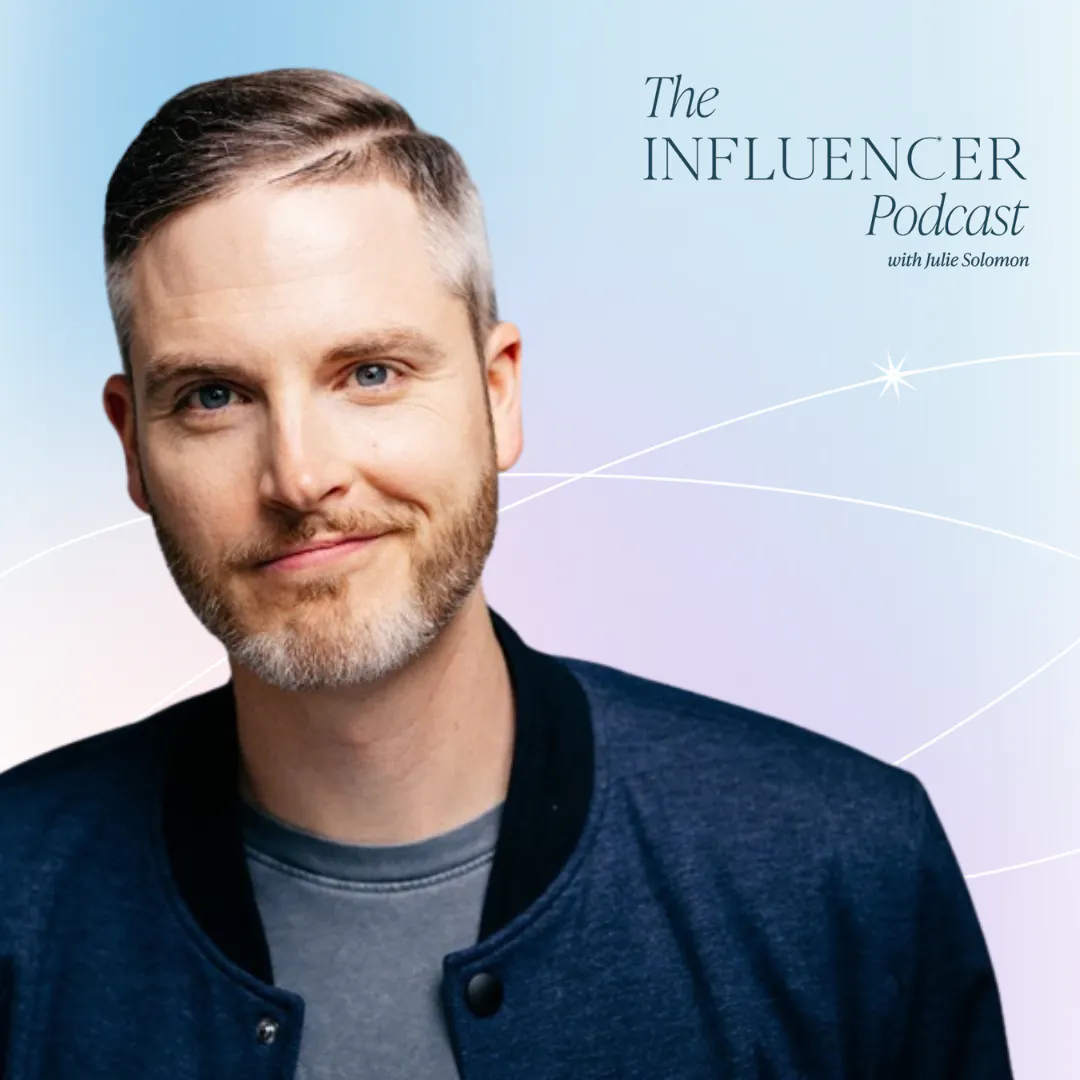
Woman of Influence
Monetize Your Passion: How to Attract Paid Collaborations Without a Huge Following
00:53:01
Loading summary
Transcript49 lines
- [00:00]
Julie Solomon
And every single time that I do this work with them, I always find, oh, the reason why you've now hit this plateau is that you're not really clear on what it is that you specialize in, or you're not effectively articulating the value of what you specialize in to your ideal audience, or you need to go back to that brand story piece a little bit more and what it is that you're discovering.
- [00:18]
Sean Cannell
Welcome to the Influencer Podcast. I'm your host, Julie Solomon. If you found yourself here, it means you are ready to unleash the powerful visionary that lives inside you, turning you into an authentic leader who creates influence, impact, and change. Let's get started. Hello, friends, and welcome back to another episode of the Influencer Podcast. Today is going to be a different but fun episode as you're actually going to hear the tables turned on me a little bit as I am actually being interviewed in this episode. So if you have been a listener for some time, you may remember the incredible Sean Cannell. So Sean is a YouTube expert that has been on the show. His episode aired last spring. So if you haven't listened to that yet, definitely go check it out. If you are someone that is looking to scale on YouTube specifically, he is the guy to teach you exactly how to do that. So at that time, I also went on Sean's episode and shared a lot about how to grow visibility, how to properly pitch yourself, how to really show up as an authority in what it is that you do. And it was such a great episode and we got such great feedback from Sean's community that I wanted to bring it here to you all, to my community. So you are going to be hearing Sean interview me and just ask me some really good questions about what does it mean to be visible in today's landscape? What does it mean to really do what, what is needed and what it takes to actually build not only the relationships that you want with maybe some ideal partners and collaborators, but actually do what needs to be done to make that happen. So we're diving into all of that today. You will not want to miss it. Let's get started.
- [02:01]
Unknown
How do you attract paid sponsorships, even if you have a small channel?
- [02:06]
Julie Solomon
A lot of times people just, they make up and tell themselves that they're just gonna sit and wait around and there's gonna be one magical day that they're gonna have the right following number and they're gonna have the right content, and then all of a sudden, these brands are just gonna fall down from the sky. But that's just not how it works. Whatever. You want to get paid double that, Start there and then you have room for negotiation.
- [02:27]
Unknown
You have five brand identity steps. I'm curious what those had.
- [02:31]
Julie Solomon
Influencers who actually don't have any following that consistently land collaborations. And they do it through one of these three ways.
- [02:40]
Unknown
So how do you attract paid sponsorships, even if you have a small channel? Our guest today, Julie Solomon, is a visibility brand strategy and brand deal coach, has had over 10 million downloads on her influencer podcast, and is an expert at helping thousands of creators quit their nine to five jobs, land paid collabs with such brands as Ulta, Four Seasons, Drunk Elephant, Uppababy, and really helps people create that creator lifestyle, tapping into the power of brand deals. But you don't need a giant audience. And there's some unique things you need to be doing to reach brands in a paid fashion. And so in this first part, we're going to be talking about how to position yourself, how to actually strengthen your brand, and then we'll talk about how to get paid sponsorships specifically for you. So, Julie, welcome to the podcast.
- [03:30]
Julie Solomon
Thank you, Sean. It's great to be here.
- [03:31]
Unknown
So fired up to be hanging out with you. And I want to, in this first part of the conversation, talk a little bit about how to build a brand that attracts sponsorships and opportunities. And so, first of all, what. What is a brand, by your definition?
- [03:44]
Julie Solomon
Yeah, so what a brand is, by my definition, I actually like to really start with what brand isn't, Because I think it's not a lot of things that people say that it is or think that it is. It. For example, it's not a logo. You know, a logo is a very useful tool for a business, but it's not the brand. A brand is not a product. A brand is not your community. A brand is not a niche. What branding really is, is a result. It is the customer's gut feeling about the product, the service, the company, whatever it is that you're throwing out at them. They're going to take all of that that you throw at them and they're going to make something out of it. But they're making it and they're creating it. So really, in a sense, brand equals your reputation. It's the perception that people have of what you throw out at them. Because I also think that when you're creating a brand, you're not really just creating one brand because perceptions can be different. You're kind of creating hundreds or thousands or millions of brands, however many customers or people that you have in your audience, and each person is going to have a different perception of what it is that you're throwing out there. So really, at the end of the day, it's the results, it's your reputation. Everyone's going to feel a little bit different about what that reputation is. And that's okay as long as you've got it corralled mostly to where you want it to go. But that's one mistake that I think most people make, is that they don't have it corralled to where they want it to mostly go or be, because most people don't really focus on the key results and steps to building a brand. So what they're kind of throwing out there in their neck of the Internet, it ends up being completely off mark.
- [05:28]
Unknown
If you were to drill down on mistakes and to do an evaluation, if you were auditing listeners right now, and so they sent you a link to their Instagram page, their YouTube page, perhaps their website. What are some of the red flags that when you consult or look at brands, and now kind of isolating down to personal brands, content creator, coach, what are some of the red flags that stand out over the years that you've noticed?
- [05:56]
Julie Solomon
Yeah, I think it really comes down to they focus on the things that are, again, more of the results, but not really the brand itself. So, you know, they'll be making a claim or they're sharing their niche, or they get really lost in the content that they should be creating, or they're making a pitch. And even though that's a lot of what we do, a brand is a result of that. And so if you don't start there, then you probably either don't know what you're doing, which is okay, because we don't know what we don't know until we do know it. Or you think you know what you're doing, but you don't. So then you get stuck because you haven't quite figured out a way to get out of your own way. And that really comes down to really understanding your audience deeply. You know, what happens in their heads when they see your content. What happens, you know, when they see your products, your work? Is it what you want them to think and feel? You know, what's the reputation that you've created through the products, the content, all that you're putting out there, the messaging and, you know, if you're creating culture and community around that, then that's great, and how that's affecting people, because all of that stuff counts. But most of the time, people don't tend to focus on that deeper piece. And I think that that's why that's so important, because they get lost in kind of the minutiae of the following or trying to grow, or trying to follow the trends or trying to do that instead of really understanding their audience deeply in making sure that what they're putting out there is what they want their audience to think and feel.
- [07:27]
Sean Cannell
If you are still listening to this podcast episode, it's probably because your social content isn't hitting the sales goals that you know that you're capable of achieving. It just doesn't feel easy. You're likely frustrated because while sales are happening for you, they aren't growing at the level you know they could be. You see others in your niche skyrocketing and you're wondering why your sales aren't reflecting the brilliance that you bring to the table. And let's just be honest, not from a place of comparison, but from a place of clarity. You know you have more expertise than most people in your space. You know the transformation you provide is second to none. So why aren't more people buying your offers after consuming your content? 9 times out of 10 the problem isn't your pricing or your offer. It's a gap in your messaging. The way you communicate with your audience is the difference between ideal clients buying from you every single day or your sales remaining static for months. The truth is, when you learn how to shift and refine your messaging, you'll have clients reaching out to work with you directly from the content you're already creating without needing constant sales calls, posting every day, or chasing after the next viral trend. This is exactly what I cover inside the Brand accelerator, which you get lifetime access to, helping you turn your content into a magnet for your ideal clients so your sales can finally reflect the expertise and transformation you offer. Let's turn your messaging into a powerful sales and brand visibility tool. Ready to get started? You can join me@juliesolomon.net TBA.
- [09:21]
Unknown
We obviously can't go to the depths of these, but you have five brand identity steps. I'm curious what those are. If we wanted to kind of go through a 30,000 foot level framework of drilling down on, empowering and strengthening our brand.
- [09:34]
Julie Solomon
Absolutely. So I first want to back up a little bit to get to the keys to branding because I think you need to understand that, at least conceptually of of how I measure the success for branding and then to the step. So you've got special specialization which is really going to support your authority building You've got visibility, which supports your recognition, and then you've got community, which supports your sustainability. And if you don't really start there, I think that you're going to have a hard time kind of sticking out among the saturation and really being able to hone in on, on who you are as a brand. Where I see most people get stuck with this as well is this idea of specific specialization versus versus niche niche. A lot of people think, oh well, you know, whether they're a content creator or course creator or whoever, I think that they get mixed up, they think they've honed in on a niche when actually they've probably more nailed down a specialization. So to me, I think the difference is your specialty is gonna be that unique style or type of work that you do. So for example, let's say that you are a yoga teacher, but you focus on Hatha yoga. So hatha yoga is gonna be your specialty and that's crucial, but it's not the same as the niche. The niche, on the other hand, is about the problem that you solve for a specific group of people. So it's gonna answer what problem do you solve and for whom. So let's going back to the Hatha yoga, you know, the problem that they may solve is, you know, finding balance and finding ease and finding some sort of stability in the day to day chaos. Or if you're a wellness coach, your niche might be helping new moms lose that last 10 pounds of baby weight, right, to allow them to have more energy. So the problem that you're solving is losing that last bit of baby weight. Your client's obviously going to be new moms. And so that's really the niche, that's the problem that you solve. And so I think for people, first, a little homework for those listening and watching is to first define your specialty. For example, if you're a life coach, pinpoint your focus area, you know, whether that's health, relationships, finances. And then within that you want to define your approach for clients. And then you want to nail down your niche by answering those two questions that I mentioned before. What problem do you solve and for who it's for? And so you kind of want to go there first. I don't want to get too into the minutiae, as you said, but once you do that, you can start to follow the steps. And so there are five steps and then they kind of result in a six step. So step one is efficiency. And this is all about how you manage your time and stay focused. Because if you don't have that foundation. You trying to build anything is going to be risky. So I always start there because most people will come to me and they're like, I just don't have the time. I don't have time to stay focused. I don't have time to build the brand. So the efficiency piece is really key. Then we go into that brand discovery, which is step two. And this is what helps you differentiate who you are and where you know your unique place in the marketplace is. A lot of. A lot of this. Step two can also be answered with that specialty versus niche piece that I was just talking about. So that's a big one. And then you go into actually developing the brand, and this is where you actually start to clarify what it is that you offer, showcasing what it is that you specialize in. To me, brand development, it really goes beyond the surface, and it starts to kind of piece together more of the strategy behind the brand that you got from the discovery piece. And I think that that's a big thing that most people like to jump. And I'll talk more about that in a moment without kind of laying that foundation. And so a lot of times people have a hard time developing their brand because they haven't quite discovered truly what that specialization and niche is. Then we go into step four, which is communication and messaging, and it's all about taking what you've learned from your discovery and your brand development and then refining that into your messaging and into your content and starting to create a strategy around it. I think for a lot of people, this sometimes is the most challenging piece of the puzzle because they aren't quite clear on who their audience is. So it makes the messaging piece a little bit more challenging, which again, that to me always says, well, you probably need to go back to your brand discovery and your brand development a little bit more and hone in on that, because that's gonna help you figure out who you're serving. And then you go to step five, which is community. And this is really the bridge that's built with the messaging that you get in that. In that step four, and really being able to start to build that community, build that authority, build that sustainability. And then all of those steps lead to the last step, which is a lot of times people's first step that they try is monetization. And while monetization can happen before you perfectly build all the previous steps, it's once that you do the work of the previous steps that I have found from my own work and from working with so many clients at this point. That's when your options at this level really unlock and you can start to see consistency and you can start to see sustainability and you can start to see predictability. Monetization and growing revenue and profit is really about understanding the different types of revenue streams available to you, how to generate them, how they all work together to feed your greater business ecosystem, and really being discerning and strategic to choose the right one for you. And I think those that just try to jump straight to monetization without doing those other steps in that order, they have a really hard time with that discernment piece and that strategic choice piece.
- [14:58]
Unknown
Wow. So the keys to branding are specialization, visibility and community. Those lay a foundation for the five brand identity steps. Efficiency, brand discovery, brand development, communication and messaging community, which leads to step six, monetization. Did I capture that right?
- [15:13]
Julie Solomon
You captured it right. So there's a lot there, which is why, why each one really does build upon each other. And again, there's ways that people piecemeal this together. There's ways that people can have success without maybe not having all of this drawn out. But again, from my experience of being in this game for almost 15 years now, there's always typically a place where someone hits a wall. And every single time that I do this work with them, I always find, oh, the reason why you've now hit this plateau is that you're not really clear on what it is that you specialize in, or you're not effectively articulating the value of what you specialize in to your ideal audience or you need to back to that brand story piece a little bit more and what it is that you're discovering. And so through the years of this, the more that we can really use these steps to build upon each other, the better off you're going to be again for sustainability, which to me is that's, that's, that's the golden nugget. That's the piece of the pie that we're all trying to get to sustainability.
- [16:05]
Unknown
We want to be built to last. I love this idea of specialization. Everybody talks about niche all the time or getting focused on your. On your topic and oftentimes feels the competition of that because of course we have an abundance mindset. There's an opportunity to, for many to flourish around one niche or one topic. But specialization really puts kind of a unique spin on that. I'm curious if you could think of any stories of your students, how this applies personally to you or perhaps in pop culture, when you think of A brand or personal brand, and you compare, helping us understand the difference between niche and like, channel topic versus specialization layered on top of that.
- [16:48]
Julie Solomon
Yeah, so great question. And I've got some examples kind of in each of those arenas, but I'll, I'll talk because I know we've got a lot of YouTubers that listen to this. So I had a client that she didn't know it at the time, but what she was specializing in was creating really kind of entertaining and more how to informato, informative travel vlogs for exotic destinations. And so she would be going, you know, all over the world and really offering insider tips and insights for people that like adventure in exotic destinations around the world. And when she came to me, she was just kind of like, well, you know, I was like, well, what, what do you specialize in? She was like, I don't know, I just make random videos about travel, about my life and the stuff that I like. And I was like, well, that lacks clarity. That fails to, like, communicate to a specific audience. Let's dive deeper here. And once we were able to get into the deepness of what she did specialize in, you know, she was able to say, well, I guess what I specialize in is really honing in on how an adventurous globetrotter can see and experience the world and how I can make that easier for them, informative for them, and just fun entertaining for them based on where I travel and the content that I'm creating around that. And so we were able to take that kind of, of poorly done, you know, way that she was pitching herself, if you will, into something that was more specialized. I think the other thing that is really interesting about specializing versus niche is that once she was able to really hone in on that specialization, it actually created so many more opportunities for her because she was able to work with brands in a bigger way. She was able to get deals to go to places around the world that she hadn't been able to go to yet. And I think a lot of times people get really scared to, quote, unquote, niche down or to specialize in something because they make up and tell themselves that they're going to be missing out. If they do, you know, they'll say things like, you know, but Sean, I'm multi passionate, you know, don't put baby in a box. You know, I want to go and experience and, and feel it all. Or they'll say something like, you know, I already work with a bunch of clients that I'm trying to make a pivot but if I do, then I'm going to lose money and it's not going to be sustainable. And so what I often say, and I love to give these examples more in pop culture is for examp example Amazon. When Amazon first came onto the scene, what did they sell? What did they specialize in selling?
- [19:13]
Unknown
Books.
- [19:14]
Julie Solomon
Books. What do they sell now?
- [19:17]
Unknown
Everything.
- [19:18]
Julie Solomon
Everything. Why? Because they became the absolute best at selling books first. Because they honed in on that. You see it a lot also in entertainment and pop culture. Let's take Lady Gaga for example. When Lady Gaga first came on the scene, you know, what did she specialize in? She specialized in singing and songwriting. And because she became the absolute best at that that she could, she's now an Academy Award winning actress. She's been nominated, she's been in top grossing films, she has a makeup line that is sold in Sephora and is doing incredibly well. She does a ton of multitude of different things, but it's because she chose to specialize and she's even talked about that in interviews. She said, my passion was always acting, but I was afraid to go there. And so I went all in on my music first and really honed in on that and then I was able to widen the net even wider. And so I do want to just share that because I think a lot of times I see it with my clients as well is that they'll get so scared to specialize, they'll get so scared to really hone in without realizing that it's that specialization that actually kind of allows you to break that wall, so to speak, and then widen the net once you've laid that authority piece. And that's what specialization helps you with.
- [20:31]
Unknown
This is interesting. Now how would you compare specialization to this idea of mastery? What it seems like, like Robert Greene wrote the book Mastery and he said mastery is not a function of genius or talent, it's a function of time and intense focus applied to a particular field of knowledge. Which is good news for us because if we identify our special specialty niche, down on it, go deep on that.
- [20:55]
Julie Solomon
It sounds, study it, experience it, teach it, apply it.
- [21:01]
Unknown
Was it the 10,000 door, the 10,000 hour rule?
- [21:05]
Julie Solomon
Right.
- [21:05]
Unknown
And then ultimately though it can like if we're that multi passionate person and we're like I do want to do, I want to do singing, songwriting, makeup, movies. And you're like, well, specialize first. And that can be the doorway that opens it up. When you think about specialization, what, what would you encourage creators in a competitive landscape about how important it is even if they already have that raw specialization to be committed to continuous improvement, leveling up their game, going even deeper in their genius, going even deeper. Is that an important thing in today's landscape?
- [21:42]
Julie Solomon
I think so. I think. I think the biggest takeaway or help that I can provide to those listening is that you're going to have your passions and you're going to have the things that light you up, and there's gonna be some of those things that you'll be able to monetize in your life, and then there's gonna be some of the things that you won't. So I think you first need to get clear on that, because there's difference. You know, I love to bake cupcakes with my son, but I'm not gonna go open a bakery. I'm not gonna start selling cupcakes on Etsy. It doesn't make me less passionate about it. It's just not where my business focus is gonna be. And so I think you first have to get clear on that. And then you have to also get really clear on what do I wanna be known for? Because that may also be different than what it is that you're passionate about or what it is that you specialize in. And so, for example, in my own journey, my background, I started in corporate America as a publicist and I specialize in PR and marketing. And that has now served me very well in the online landscape that I am today. But I didn't want to be known for that. And so when I was trying to make the pivot, what I decided was like, I'm going to have these PR clients because they're keeping my ship running right now. They're paying the bills. But I'm not going to talk about that publicly because that's not what I want to be known for. That's not what I want to pivot into specializing in. And even though I have tons of hours in PR work and that's going to serve me well and I'm going to be able to take it with me, it's not going to be the thing that I am going out and advocating and marketing and messaging about. And so I think that that question of what is. What is it that you want to be known for? Is a good one to answer for yourself. And then the other thing, and this is just very practical because we have to think in practical, practical terms, especially when we're in the building phase, is how do we make this easy? Like, what is. What is something that you know well enough that somebody would happily pay you for that is somewhat of a lower hanging fruit, meaning it's not going to cost you a lot of time, energy, money and resources to build and get going. And that's really why I, for example, the first course I ever created was a course on pitching. My background in pr, I know how to pitch. It's not like I wake up every day, Sean, and I'm like, oh, I can't wait to teach people about pitching again. But I'm passionate enough about it. It helps me to be known for it because it builds authority. I'm great at it. I can get people results on it, and people want what that is, and so they will happily pay me for it. And so I allowed that to create that foundation of specialization, which then allowed me to build the authority. And then over time, I was able to do things like launch a podcast, create other programs and courses that had nothing to do with pitching, create a mastermind, write a book, speak on stages. From there, it did start to flow. But I did have to have that foundation of specialization and authority. Otherwise why would anyone care? Why would anyone know, like, and trust me, why would anyone say, I'm gonna pick Listening to Julie, following Julie, listening to Julie's podcast over the thousands of other people that are probably sharing and teaching similar things.
- [24:44]
Unknown
Very insightful. And so this is powerful to think about specialization, to think about the foundations for branding. Before we kind of pivot into the next session, let's summarize up what we've learned here a little bit. And specifically, if we put ourselves in the perspective of the brand, what are the key factors for building a brand that attracts collaborations that you help creators find ultimately what and what. Or maybe either way, you want to take it red flags, that is what is maybe blocking brand deals from coming to creators?
- [25:22]
Julie Solomon
Yeah, I mean, well, the goal of working with brands is also kind of the goal of what influencer marketing is at its core. The goal is either conversion. They want you to help them convert, make money, or it's awareness, they want you to help their brand and business build awareness, or it's both. And so you have to make sure that you have the authority, the know, like and trust the specialization, the community that is needed.
- [25:52]
Sean Cannell
My friends, I have to let you know about a new approach to strategy that I have been doing over this last year that has helped so many of my clients this year. It is an approach that involves taking a deep dive into your business, examining every part of it, from messaging and offer flow to sales strategies, reviewing your messages, messaging, analyzing your Offer suite refining your sales strategies. We dive into all things like social content, email copy and everything in between. And we really talk about what your offer looks like today and how are we making sure that your offer are your offers and the messaging that you use to sell those offers are talking to each other. And then I dive deep into identifying ways to really amplify your efforts to ensure that not only your public facing messaging and marketing, but also all of the invisible behind the scenes strategies that you need in order to scale actually work together. So if this sounds like something that you need help with, it is going to be perfect for you. If you are an online educator, an online coach or an online creator who is looking to take your current business model and scale it to new heights. So I am saying for people that may be making, let's say anywhere around 5 to 10 to 15k a month right now, and they're wanting to hit those big numbers, the 20k, the 30k, the 50k, the 100k months, but they're sitting here thinking how do I make this happen? How do I keep keep seeing other people on the Internet do this? But I can't do this. And it really does come down to those three key things that I mentioned earlier. Your messaging, your offer suite and refining those sales strategies. And that is what is happening in my world. And so if you are interested in learning more about that, I would love for you to go to juliesolomon.net interest there's going to be a quick form there that you can fill out and from there we will see what you've got going on and see what is the best fit for you. I want to make sure to meet you where you are instead of just just throwing some kind of random program at you that may not benefit you. So that's what the form is for. It's really quick to fill out. Again, that's Julie Solomon.net interest if you are looking to scale your offers this.
- [27:56]
Julie Solomon
Year in order to then be able to offer that to a brand, so much so that they're going to see a quality ROI on that. And so the more that you can focus on, again, brand equals reputation. Building that reputation, having really amazing offers that support that reputation, having strong quality content that supports that reputation, which again goes back to the steps that we talked about, the brand, the efficiency, the brand discovery, the brand development, so on and so forth, then that's only going to allow you to have more strength to leverage when it comes to you working not only with brands, with clients, with partners, with you know, people that, you know, I'll say with like a publishing house, I don't think Harper Collins would have ever given me a book deal if they wouldn't have been able to Google me and say, hey, this woman has some authority. This woman is an expert in what she is talking about. People trust this woman. People believe in what this woman is sharing and she's got the experience to back that up. So things like that would never happen unless you have that in place. And so that's really what the brands are looking for. The can you help us build awareness? Can you help us sell?
- [29:02]
Unknown
I want to drill down now on how we could start getting brand deals. How big do we need to have our audience? Micro influencers, Nano influencers. But I also do want people to know, depending on their schedule today, that you, if they want to skip to it. In the show notes, you do have a free class. It's three steps to grow your following and land a $10,000 worth of brand deals in just 30 days. Incredible promise, especially if you have a small following with no time for content creation. So no miss free class. You can check that out. Julie is teaching that it's packed full of value and that's in the show notes. But let's hit this idea of, I think there's a big myth or a lot of a mindset that says, hey, if I don't have a million followers and I'm not a Kardashian, would a brand want to work with me? What's your answer to that question?
- [29:51]
Julie Solomon
Yeah, so, okay, let's break down. If we can kind of back it up a little bit so people kind of know maybe where they land. I would love to break down by definition, kind of where people fall in terms of, I'm going to use the word influencers for, for, for the sake of this, but we essentially have what is called the nano influencer, the micro influencer, the macro influencer and the mega influencer. So a nano influencer is someone typically, by definition it's someone with less than 10,000 followers. Micro influencer, you're going to have between 10,000 and 100,000 followers. Then you have your macro influencers, which are typically around 100k to 500k. And then you've got your mega influencers, which are 500,000 followers plus. And then I'm just going to throw another one in there. Aside above, a mega influencer would be what you would call a celebrity that, you know, they probably have millions and millions of followers. But it's not just the followers that the brand is interested in, that's kind of more endorsement, bigger product placement type things. You're thinking of the Rock, Jennifer Aniston, people like that, household names. You've got the celebrities. So that's where you know the following number typically is. And then when it comes to collaborations and really what influencer marketing is, at its core, it involves a brand collaborating with one of these influencers that we just mentioned to market one of its product or services and they want to either improve conversion, awareness, recognition, or both. Some collaborations can be less tangible than that, but typically that is what they are looking for. And so when it comes down to, okay, how many followers do I actually need in order to land a brand deal? In my world, and I've been Teaching this since 2016, I have had influencers with as little as 380 followers land paid collaborations. And I have had influencers who actually don't have any following that consistently land collaborations. And they do it through one of these three ways. And I can share those with you now. And so when it comes to like a brand partnership, the three most common types are sponsored post posts, affiliate partnerships, and ugc, which stands for user generated content. So we'll start with sponsored posts. So what this typically means is when an influencer will create content that features a brand's product or service and they'll do that in the form of some kind of high quality image, video or some other media platform. So typically what we see this happening mostly is with YouTube videos, TikTok and Reels. The compensation range for sponsored posts and it can vary big. It can be anywhere between a hundred bucks to multi, six figures per sponsored post, depending on a slew of things. Engagement, following terms. Is it more of an awareness campaign, what, what's the influencer bringing to the table, et cetera. The following threshold for this one. Typically I've seen creators with, with 500 or more followers that are considered for sponsored posts, meaning they're going to get paid to sponsor that piece of, to create that piece of content. As I said before, I've had, I've seen creators with less than 500, but typically that is the threshold. So that sponsored posts and that right there I think is very shocking for a lot of people because a lot of times people will make up and tell themselves that they need 10,000 followers to, to get a brand deal. I don't know, I think that that came from the fact that just Instagram made you have 10,000 followers in order to like share a link on a story. The day. So maybe that's where that came from, but that's not true. Now, the other two that I'm about to share, there's actually no follower threshold. So we'll start with affiliate partnerships. I'm sure a lot of those listening are probably familiar with this. This is where you essentially promote a brand's product or service and then you earn commission through an affiliate link. And again, you can earn anywhere between a dollar to tens of thousands of dollars through your affiliate link. This is more of a volume game. So even though there's no follower threshold that is requ say that obviously the more volume, the more clicks that you have on those links, the more money that you're going to make. Then you have what is called UGC User Generated Content. And this really kind of became more popular, I would say, since about the COVID era over the last four years or so. And this is where an influencer can create or really anyone. If you enjoy creating content, you can create content that features brands, product or service. And then what's unique about this one is that they actually want that content so they can share it on their platforms. They don't even, sometimes even care if you share it on yours because that's not what they're paying you for. They're basically just paying you to create advertisement for them. And the compensation range for this can be anywhere between a hundred dollars to again, hundreds of thousands of dollars for creating and promoting ugc. I have a ton of students inside my Pitch It Perfect program that have 800 followers, 7000 followers, 1500 followers that are generating 10 to $20,000 a month just on creating UGC because they've really specialized in creating quality UGC content on various platforms. Some people may focus in on TikTok, et cetera, but they have honed in on that. And with that, again, there's no follower threshold because a lot of times the brands don't care about your following and you sharing it on their platform. So those are kind of the three simplest and easiest ways to kind of break that down and what the follower threshold looks like.
- [35:31]
Unknown
Fascinating. And I'm curious in a case study of UGC that's been a big interest of the Think Media podcast lately, and you have some students that are like focused on UGC specifically. What's kind of like a case study of how people are getting in touch, finding brands and getting in touch with decision makers around ugc. I guess what I mean is, and maybe you could, you could break down this whole spectrum. There are some cases there's agencies that work with brand sponsorships and influencers. And by nature historically I've understood that to be bigger influencers that want a sponsored post, that want a sponsored video and they're at a place of influence where they don't UGC maybe usage rights cause the more mega influencer to earn more because it also is going to be used as a user generated they're going to run media on it. But I guess all that to say is if you're this creator that doesn't have much of a following because that's also unnecessary potentially at ugc, what do you have? A portfolio, some examples and then how are you finding these beyond deals?
- [36:48]
Julie Solomon
Yep. So you, you have your creative IP and you've got your content and then yes, you would want to build up a portfolio deck. So I'll give you an example. One of my students inside Pitch it perfect. She's a scuba diver. That is her niche. And I think that's also something to like just make a point of because most people say well my niche is so different and unique. So I don't think I can get brand deals. I've had over 10,000 creators go through my programs with hundreds and hundreds of different of niches. You know, everything from, you know, urban exploration to scuba diving to travel to gaming to culinary experiences. I mean you name it, it's there. So she's a scuba diver and she wanted to cause she was going to all these cool places, all these amazing coral reefs throughout the world and she wanted to create content around it. And so she started to pitch the idea of because she had an underwater camera and was really honing in and special honing in on her photography underwater. And so she started pitching UGC content content. And so now the companies, the tourism boards, the hotels aren't having to pay these massive ad agencies that specialize in that to do it. They can now pay her. And so she started to first just go on trips, create her own deck, shoot her own content. Then she started to reach out to the brands that she would want to work with and she started to, you know, whether that was Nikon. She started to organically tag Nikon in her reels and her stories even though they weren't paying her yet. She wanted Nikon cameras to know that she was using their camera to shoot the underwater photography. She started, you know, tagging Patty and you know, the, the people that were making the fins that she wore and the gear that she wore. And so as she was starting to do that, she was starting to get interest And I think that that's the other thing that a lot of times people just, they make up and tell themselves that they're just gonna sit and wait around and there's gonna be one magical day that they're gonna have the right following number and they're gonna have the right content. And then all of a sudden these brands are just gonna fall down from the sky. But that's just not how it works. And so when you're, when you're working on building this out, you have to have an end goal of, like, when you really envision this out, what does it look like for you? How do you, you know, what do you, how do you want to be spending your time? What do you want to be known for? Really start honing in on that and then start building it out and start creating a deck, start creating UGC content without getting paid for it. And that way you can showcase to these brands, hey, I created this piece of content, I put it on my feed, it got this amount of impressions, it got this amount of saves, it got this amount of shares. I created this piece of content on YouTube. Share the analytics. That's what they want to know. The numbers never lie. And give yourself, if you really want it, give yourself the gift of doing that. Not only is it going to strengthen your muscle of creating ugc, of the courage of going out and pitching brands and reaching out to them, but it's also going to allow you to showcase that you can kind of back up what it is that you're putting to the table. There's an ROI with working with you, and I think that that's a, that's something that most people don't do. They're like, they like, wait around to get the deal first when it's actually the creation of the content itself and showcasing your talents is what gets you the deal in the first place.
- [39:53]
Unknown
What are some things that you should negotiate that maybe creators new to this forget in the contract or that naturally they start getting into a deal and all of a sudden you get hit with, you know, most professional brands or have they want you to sign something. And so if you're new to this, what are some things to think through in terms of negotiation? Points. Points?
- [40:17]
Julie Solomon
Yeah. I mean, first off, everything is negotiable. So you have to remember that there's a lot of mindset that comes with negotiations. A lot of people are afraid they're going to miss the deal, and so they'll just kind of give brands whatever they want. But there's a few Things that I, I have to share about this. The first thing is you had mentioned some of those agencies and things like that before. You know, you could be a brand new influencer with not a big following and go to Aspire right now and sign up for their influencer marketing agency and maybe start to get deals. And I think that when you're building to that, it's good to have that because again, it's going to probably help you strengthen that muscle of creating content. It's going to help you, you know, build a deck, so to speak. But you're going to be missing out on two things. You're going to be missing out on building the relationship with the brand yourself and you're going to be missing out on the negotiation power. Because when you work with some of those agencies, Influence co, there's thousands of them out there. Those contracts are ironclad. You can never redline them. They usually have things like in perpetuity in the clauses. And before you know it, you're going to be like a client that I had a few years ago who did one of those deals through that agency with Pantene. And then two months later she was on a billboard on a bus in New York City. She didn't get paid for that. She got paid like 150 bucks to create one piece of content and then they used it, it, you know, in perpetuity of licensing. There were no usage rights, there were no term agreements because she signed that. And so you just have to be really careful. I think that some of those agencies and things can be great, but, but they don't give you any negotiation power. So that's kind of the first thing to think of. And the second thing, when it comes to actual negotiation, any reputable company that is doing a campaign with you should have a contract. They should have a legal team. You should not have to be creating your own terms and agreements and contracts with a brand. So that's the first thing. They should be sending you a contract. And then just like with anything, I mean, if you're not filing your taxes yourself, then you probably shouldn't be, you know, reading over contracts yourself. So take a little bit of investment to hire an attorney. There's a ton of attorneys out there now that just focus on influencer marketing. They focus on trademarks and a lot of things of that nature. So find someone that can read that to you and you yourself start to study, start to look for, you know, terms like in perpetuity, which means for life. Start to see what the usage is start to see what the terms and agreements are. You know, if they're saying, hey, we'll. We'll give you $5,000 for this campaign, but we're wanting you to do 25 reels this month, and we own the rights to them, I don't really think that that's a great of a deal. I don't care how many followers you have. And so a lot of this comes with trial and error and understanding, but that it's really about giving yourself the courage to do that. And then also, I always believe in whatever you want to get paid, double that. Start there, and then you have room for negotiation. Where most people get tripped up is that they know what they want to get paid. Let's say, okay, I want a thousand bucks for this real post. And so they throw out that number, and then, boom, they've lost all their negotiation power because now that's. That's the start. So that's another big thing. Double it. Give yourself some wiggle room. And I've had students come to me and they're like, julie, I was so terrified to double it and I doubled it. And then they just said yes without negotiating. I'm like, oh, well, then you should have tripled it. Because if they're just saying yes off the gate, then that means you probably even had more wiggle room in that budget. So that's another big one. And then the biggest takeaway that I always tell people that if it's possible, have the brand throw out the number first or at least a range. And a lot of times that can go back and forth. But if the brand will not give you, because they're the ones with the budgets, not you, they're the ones with the marketing budgets. So if they can give you a number or at least give you a range, I really love to work with ranges because then that again, gives me more negotiation to say, okay, for the top of that range, this is everything that I could do. For the bottom of that range, this is everything that I could do. What do you want? Brand? And then it gives you more opportunity to. To have that dance, if you will.
- [44:25]
Unknown
If you reach out and. And you get a no or you get silence, should you give up?
- [44:34]
Julie Solomon
No. You want no's. Nos are the best things to get. Cuz why we learn from our nose. So I actually have, you know, something in my program where I encourage all of my students to actually go out and get 50 no's, because that's going to tell me that if you've gotten 50 no's then? Because for everybody, every 10 no's you're going to get, you're going to get one yes. So if you've gotten 50 no's, and that tells me that you are pitching out a lot, and I think that that is the biggest misconception that people have is like, well, Julie, I pitched three brands this week and they all said no. So I guess I can't cut out, you know, not cut out for this. And I'm like, well, you haven't even scratched the surface with the amount of brands that you should be pitching. That's why in module one of Pitch It Perfect, we actually start with our dream list of brands. I walk my students through exactly how to figure out out who are the best brands for me to align with based on my brand values, based on my niche, based on the content that I create. Let's create our dream list and then let's go out and start hitting them. And I think a lot of times that is another thing that people are very kind of surprised by just the the volume of brands that you really need to pitch in order to see those consistent yeses. However, all of the opportunities are out there and as long as you have the right pitch formulas and you know the right strategies, it makes pitching that much easier and faster.
- [45:55]
Unknown
Man, such valuable advice. I do have a couple final questions, but I want to make sure that if it this is resonating with you and you're listening to this Think Media podcast and you're like, I want to start getting some deals. I want to go deeper with this. Julie has a free class, I believe on that you could cover what what you'll cover on that. But that includes your elevator pitch formula, right?
- [46:18]
Julie Solomon
Oh, yeah, it includes the elevator pitch formula. I'm happy to talk about that here too, but I would definitely recommend going to the class so you can see the visual. We have so many graphs and things like that on that class, so the visual really does help.
- [46:29]
Unknown
Yeah. So we'll cover as much more territory as we can here. But check out the show notes. This class is specifically three steps to grow your following and land $10,000 worth of brand deals in 30 days. We are living in exciting times, especially with UGC where if you have even no following, by getting in front of the right brands and understanding how to create the right content, you could start monetizing content creation. We've covered so much like your specialty and I love the idea of some people. Maybe it's scuba diving niche plus specialty. I'm a Specialist in making UGC content for brands in a particular arena. And then boom, all of a sudden you've got now this new school business model. That's very exciting. Taking it high level. What is the current state of influencer marketing where you see it going next as far as social platforms? In light of maybe the competition and also the opportunity, what do you think is facing us in the months and years to come?
- [47:28]
Julie Solomon
Yeah, so, you know, I was reading a big trends report a couple of months ago on the state of the industry. I love soaking in those trends whenever they come in and kind of taking what I like and leaving the rest. But one of the things that really stuck with me is one thing. This is a growing, expansive industry. It's not going anywhere anytime soon. Soon. And so you, that's a good thing. You want competition, you want a growing. What you don't want to be in is a dying industry. So it's a good thing. You know, I think the last report I read it was something like it's going to be worth, you know, billions and billions of dollars by 2027. I can't remember the exact number, but it's growing. Brands see the value in it. The market has also gotten way more sophisticated, which I think is a. As another positive. But with that that creators have to become more specialized now more than ever just because there is so much competition and there is so much sophistication now in the marketplace. Gone are the days where you, you know, I remember back in 2016, brands weren't even asking for insights or analytics. They would just be like, hey, we'll give you $2,000 to create this YouTube video. You know, and I even got paid by a brand called Mustela years ago to create a YouTube video. Shawn. I had like 15 subscribers on my YouTube channel and they paid me 2,000 dol. Gone are those days. And so it really is about honing in on what it is that you specialize in. You can have various different types of content pillars, you can have other passions, you can have other things. But what is going to be that, that secret sauce, that thing that makes you unique and different, that would have a brand say, I want to pay you. And if you can't answer that for yourself right now, like if you can't think, if a brand came to me today and said, I want to pay you and this is how much I want to pay you, and this is why we're going to pay you that much, much, start there, because you're only going to be setting yourself up for success, the more that you allow yourself to specialize in. So that's where I see the industry going. That's what I see it requiring from content creators. And I think it's just going to make it a healthier and more enriched industry.
- [49:31]
Unknown
By doing that, you have really highlighted this point of specialization. And man, like Sally Hogshead says, different is better than better. We're actually at the time of recording this coming up on our event, and one of the biggest things, things I am thinking about in, in light of fierce competition is differentiation, is thinking about man, how, how do you find that unique angle to cut through the noise and the sea of sameness? And so such valuable tips today. Julie, we've got your class linked up, but for people that want to check you out, tell us about different resources you have. If anybody wants to check out your book, tell us about what we'll learn in there and what you have going on.
- [50:10]
Julie Solomon
Yeah, absolutely. So I tend to hang out the most on Instagram, so you can find me at Jules J U L S Solomon S O L O M O N For that. I'm in my DMs. I have a really fun broadcast channel there. It's super fun. I did have a book come out back in 2022 titled get what you want how to go from unseen to unstoppable. So it really shares my own journey along with a ton of tips about how to do just that. Going from unseen to unstoppable. There's actually a whole chapter on pitching and landing brand deals if you want to dive into that. And I share a really awesome story about how I landed a $250,000 brand partnership when I had less than 10,000 followers. So that's a fun. We should. We should have a different conversation about that one. And then juliesolomon.net is my website where you can learn more about my offers and what I do there. And then of course, my podcast, the Influencer Podcast. We have been dropping an episode every week since 2017. Can't believe that we're almost up on our anniversary and we're going to keep just supporting our community in a free form that way, so you can find me there at the end. Influencer Podcast.
- [51:15]
Unknown
Julie, appreciate you so much and so grateful. You've added an insane amount of value today and I'm excited. Think media Podcast to implement. It's time to take action on this and so go pitch your next brand deal or your first brand deal. And if you want help, check out that class for some additional step by step advice, frameworks, diagrams, all of that stuff that Julie's put together. You can check that out in the show notes as well as her book and her resources Sources My name is Sean Cannell. Your guide to building a profitable YouTube channel. This is the Think Media podcast and I can't wait to connect with you in the next one.
- [51:52]
Sean Cannell
As always, thank you so much for joining me today and every week here on the Influencer Podcast. If you're wanting to dive deeper into the topics and discussions that we have here, I would encourage you to head over to juliesolomon.net and sign up for my weekly newsletter. It is in our amazing newsletter community that we are able to really support you on a much larger scale and I love to do a ton of amazing things that I send inside your inbox every single week. So just head over to juliesolomon.net you'll see a little spot there that you can add your information in and you will get on the list and start receiving all of that good stuff.