← Woman of Influence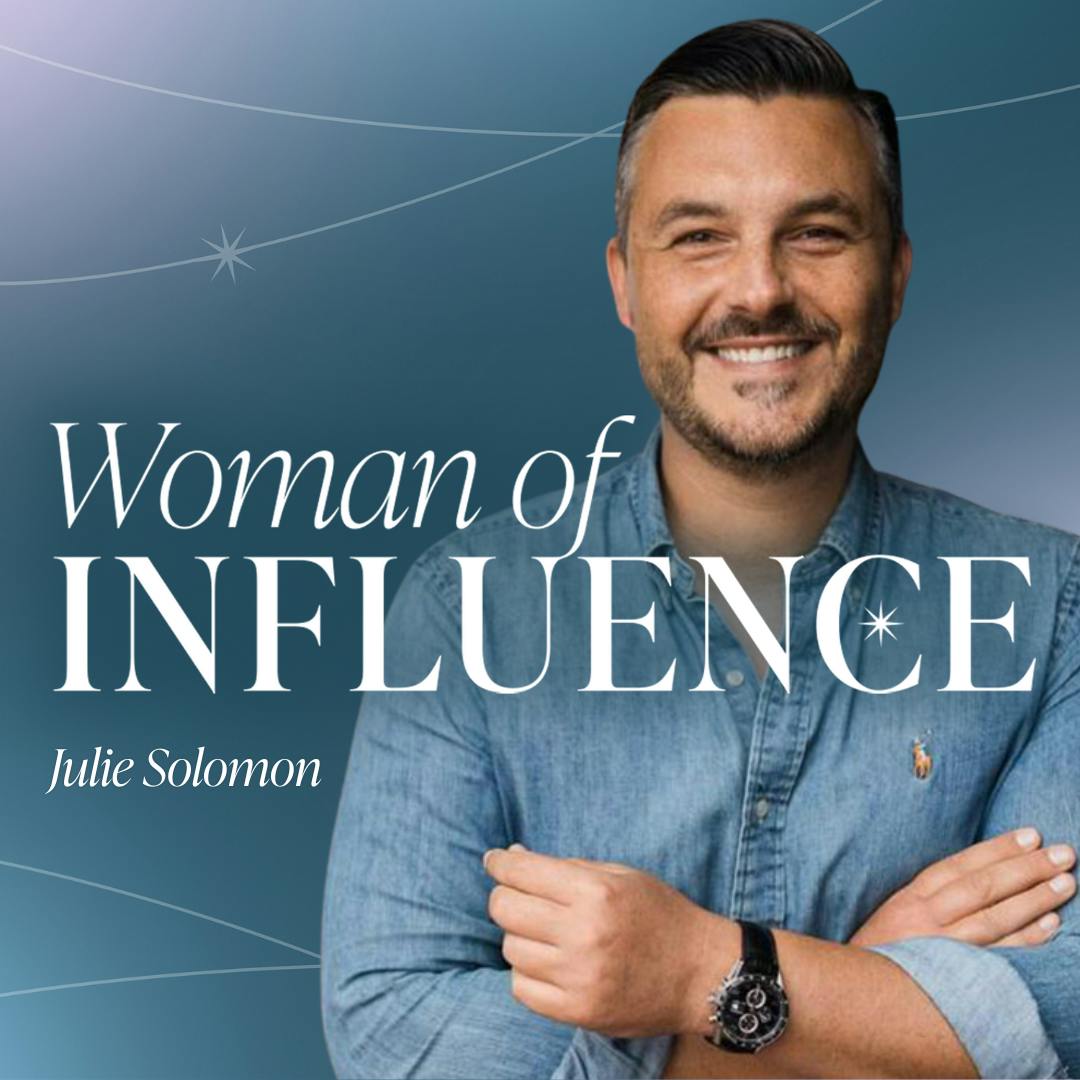
Loading summary
Transcript32 lines
- [00:00]
A
Foreign.
- [00:07]
B
Welcome to Woman of Influence. I'm Julie Solomon, and this is where high level women come to recalibrate their message, realign their leadership, and rise into the next era of impact. If you're ready to align your visibility with your true authority, if you're called to speak, speak to women at the level you now lead. If you're ready for your business to feel as elevated as the woman running it, this is your space. Because real influence isn't built in the algorithm, it's embodied in your identity. Let's get started. Hi, Colin. Welcome back.
- [00:51]
A
Thanks for having me, Julie. It's great to be back.
- [00:53]
B
It's always great to have you on. I think you've been on my podcast several times now, which is magical because my women tend to just soak up every single word that you say. So every time you have an opportunity or a moment to come back and pour into us, I always have to say yes. So thank you so much for being here. And we've got something to celebrate today. Your new book, One Presentation Away. Become an irresistible speaker and convert more clients. Who doesn't want that? So, so excited for this to be out in the world officially this month. So by the time this episode airs, this will be available to dive into. Listeners can go to one presentation away book.com. we'll be talking about it in just a bit, but Colin has bonuses and so many amazing things for you all with this book. It's really about teaching you how you are truly one presentation away from unlocking the revenue that you want, the impact that you want, the growth that you want. But we're doing it in the way that Colin does it because he has some really amazing intellectual property and just central ideas and frameworks of how he really approaches this thought process. And so if you've heard Colin on the podcast before, you've probably heard a bit about this. But we're going to be really diving into some things that I know are super important to you today based on what I know about you and how you're coming from, from this idea of speaking, which is a form of messaging. And then how do you do this on stage and how do you do this on stage that really serves you and your bottom line and your ability to create impact as a woman of influence. So we're going to dive into it. Thank you, Colin, so much for being here. First, I want to dive into how did you know now was the time to take these concepts that you've had for a long time that have been, you know, validated in the marketplace over and over again and package it in a book in a really digestible way that people could grab.
- [02:45]
A
Well, I think it was just like, it's been way too long. And so I just, I really needed to package this thing up. I mean, I've been teaching speaking and selling from stage for like full time. I've been doing it for about five years, but essentially 17 years ago was when I ran my first workshop on speaking. It was called Present with Confidence and I had like five people in the room and that was my first time I'd ever ran a in person workshop. So I've been teaching it for like 17 years and had an opportunity with Wiley and it just kind of came about. So I was excited to bring it to the world. And my wife's an author as well, so I was just like, okay, let's, you know, let's both do this. And it's, I'm basically just following what my wife does.
- [03:28]
B
Smart man.
- [03:29]
A
Yeah, good. We've got a great, good marriage, so.
- [03:33]
B
Well, something that we talk about a lot in my world is Origin Story. And from, even from the book that I wrote a couple of years ago, Colin, you know, I had a whole chapter on what my origin story was and how that really shaped a lot of how I saw the world and the decisions that I made, good or bad, and really rooting into that. And so yes, there is a time and place for an origin story. Understanding where you have come from and why you think and feel the way that you do is important, but it doesn't always necessarily help with marketing and sales and messaging. And I've been talking a lot about that over this last year with my audience of reality, really trying to help them understand why Origin story isn't necessarily going to be the thing that actually calls in the most premium ideal clients, that you want to actually get them to make a buying decision. And I know that you have a really interesting perspective on this, so I would love for you to share with us what the difference between an origin story is and what you call a conversion story and why we really need to understand the nuances of these so we can actually convert more to the level that we're looking for.
- [04:40]
A
Yeah, it was about several years ago that I was watching a lot of webinars, presenters, speakers, and there were some speakers who, when they told their story, usually at the start of their presentation, I felt a natural draw to want to work with them, find out about their offers. And then there were some speakers who shared their story and it was Kind of like a bit of a bio or it was a personal story and it was very much about them and it was nice to hear, but it didn't really like make me want to work with them necessarily. And so I started to really get curious about, you know, what is, what's, what is the difference between these types of stories. And I came up with this idea called the conversion story. And so basically what the mistake that people make sometimes is that they sometimes tell their kind of their whole journey of how they got into business or how they got into doing what they're doing. And the challenge is, is that a lot of the time it has a lot of information that isn't necessarily relevant to creating a desire for the audience to want to work with you. And so sometimes, I will say sometimes people are telling their origin story and it would fit in the context of a conversion story, but they probably just don't know it. And so what's powerful about the conversion story, this framework which we can go through, is that it'll help you to work out which story you should be telling based on which presentation you're doing, based on which offer you're trying to sell. And so you can actually have a different conversion story for each offer.
- [06:18]
B
Okay, so we have to break into that because I know that there's going to be kind of this overarching structure of a great presentation that sells. But what I'm hearing you say is that you kind of have to reverse engineer it and start from what is the offer that you're actually going to market with today and the intention of that and who it's for and, and how you're really creating impact from that place. And then that is actually going to dictate everything else that comes from that, which I think a lot of times people don't look at it from that way. Most mornings before I check my emails or open Instagram, I put on a lesson from Masterclass. It has become part of my daily ritual and lately I have been listening to Daniel Pink's class on sales. Now if you don't know who Daniel Pink is, he is the master when it comes to sales. And let me tell you, it is like having a high level mentor in your ear. His approach makes sales feel like a service, not pressure. And this is why I love Masterclass. It gives you a bite size lesson taught by world class experts. You'll learn from the names like Bob Iger, Aindra Newey and Chris Voss. Whether you want to be a leader, negotiate better, or sharpen your creativity. And what I love most is that you can download classes and watch offline, which makes travel or downtime really productive. I've applied what I've learned to my own launches, client calls, how I teach sales inside my own processes, and really how I show up in my business and outside of it. Right now our listeners get an additional 15% off of any annual membership@masterclass.com influencer. That's 15% off@masterclass.com influencer masterclass.com influencer I am so excited to share this, especially for those of you who tune into the podcast every week and are ready to actually start putting a lot of this work that you're doing into really intentional action. We just opened up something really special inside the Growth Collective, which is my messaging membership. And right now you, you can join and try it out for just $1 your first week when you use the link in the show notes. Now this is a special link just for my podcast listeners and inside the collective you'll get access to the exact frameworks my high level clients use to create magnetic content that converts. So I am talking about power and pleasure content, mirror messaging, magnetic conversion method, and so much more, all built into an easy step by step path that helps you turn your clarity into consistent sales. And if that wasn't magical, all of this has also been updated into a custom GPT prompt to make creating any kind of messaging that you need so much easier and so much faster. It is literally as plug and play as you can get. Also, every month you get access to a live group coaching call with me where we refine in real time your message together and get you out of your head and back into your heart and your momentum. So if you've been listening and thinking, okay, I know my message could be clear. I just need someone to show me how. I need this to be easy for me. I need something that can meet me where I'm at. This is your sign. Head to the link in the show notes and join the Growth collective for just $1 your first week and start that week with Clarity Connection, an incredible community and conversions today. I cannot wait to see you inside. So I would love for you to walk us through the structure of this and really, really the best way to set yourself up for a great conversion story so that you can, yeah, so.
- [09:52]
A
To think or start to look at your conversion story, first of all, you have to look at what do you help people with? So for me, I help people design presentations that sell, right? And so for me, I look at when did I experience a breakthrough in that video vehicle or in that methodology. And so, you know, it could for anyone, maybe you teach people how to use Facebook groups to grow your business. The question you would ask is, when did you experience, usually for the first time, a breakthrough in that methodology or that vehicle that helped you to see some progress? Because most of the time, if you're an expert or an influencer or a communicator, your speaker, you, you're going to have gone through some sort of transformation and you're usually helping the 1.0 version of you because you're at the 2.0 version, you're at the more kind of established, mature level at what you do. And so your conversion story is usually the first time or one of the most significant times that you saw a transformation in what you do. And so for me, it was early on in my career, I was trying many ways to grow my business and I was seeing some traction in some ways. But for me, I had one speaking engagement and it was a referral from a friend and there was like 137 people at that engagement and it was a free speaking engagement. I remember the night I'm walking up and the event organizer came to me and he's like, Colin, this is, you wouldn't believe it. This is the biggest night we've ever had in our history. We've got 137 people in the room. And that was like for me, the worst news of the night. Because I'm freaking out. I'm not a professional speaker. You know, I've only spoken at college or at school. And I got up, did my presentation. At the end I made an offer, but I didn't realize that it was an irresistible offer. So 125 people of the 130 gave me their details and I followed up, ended up signing about 10 coaching clients. So my income went from a couple hundred dollars to like 10,000 plus a month, almost what felt like overnight, right? Within about a week or two week period. And that was one of the first time for me that I realized, wow, in one presentation I can have a dramatic shift in my client base, in the trajectory of my income in my business. And so that for me, when I tell it, that's kind of a shorter version of it, but when I tell it, it's a lot more extrapolated. But that, that for me was one of the first times. I've also got other stories of me running webinars where I struggled to make any sales on webinars with a product I Thought there was something wrong with the product. And I was about to reshoot it and then I, I realized, no, hang on, maybe I'm just not good at selling this product. And so I redid the webinar. We ended up selling over 2,2100 units of it. It was a thousand dollar product over about two year period. So we did like 2.1 million in, in about two years. And that was a product that I, I thought there was something wrong with. I'm like, I don't think this thing sells. Like, I don't think people want it. But there was something wrong with the way I was presenting it. That was the issue. And so that's just another one, right? I've got about two or three different conversion stories for me, but I will say I don't tell the whole story of my entire business journey. I don't talk about where I went to university, I don't talk about when I got married. I don't go through how many kids I have. I don't go through all the different, you know, trainings that I did and certifications and the fact that I'm a CSP speaker. Because all of that stuff is just not really relevant. And so what you have to do is you have to find the story that is most relevant to the vehicle that you help people with.
- [13:26]
B
Okay, that is great. I want to drop in that like, the story that is most relevant to the vehicle that you help people with. So kind of break us down. Like, what would be the first step in doing this?
- [13:40]
A
So in terms of the structure of the story, there's usually three questions that you're wanting to answer. The first question that the audience is asking, they're not necessarily asking it out loud, but they're asking it unconsciously, which is, it's, are you like me? They're asking, like another flavor of it is, do you get me? Do you understand me now? They're not necessarily saying, are you like me? From a demographic perspective of like, are you the same age, the same race, the same gender? They're asking, do you understand what it's like to struggle in the way that I'm struggling? That's the first question that they're asking. And so your story shouldn't start in a triumphant moment. It usually should start in a place of vulnerability, in a place of difficulty, in a place that was challenging. And so you answer that first question of are you like me? And so with your story, the story arc has to answer that first question, and then it tells the story of Your journey to success. And it moves to the second question, which is. Which is, can you lead me? And the can you lead me? Question is really where you talk about the victory, the results, the impact that you've had on people's lives. And so that. That's essentially the story arc. And then it leads to the third question, which is the secret source of a conversion story, which is, is there a path that I can follow? And so if there's a. If people feel like there's a path that they can follow, then that's essentially your core premise. That's the. The key idea that you are trying to communicate, which is linked to your offer or your. Your. Yeah. Your core vehicle that you're helping people with.
- [15:28]
B
This is so good. Are you like me? Can you lead me? Is there a path I can follow? Okay, so I want. I want to break it down, and I want to get your perspective, because what I see a lot of times with. With clients of mine is they're like, okay, Julie, so when I do a webinar and I have time to prepare and I structure it out, and, you know, I've got my bullet points in my script, I can all day long, and I can sell like hotcakes. But then when I go to be interviewed on a podcast or when I go to speak at a virtual summit or when I'm asked to speak on a stage, I don't get anybody clamoring down my door to want to buy from me. I don't get any. You know, people say that I'm inspiring or that I'm informative, but I'm. I'm kind of wasting these amazing opportunities because I'm not actually getting sales from it. Why does this happen and how do we fix it?
- [16:20]
A
Well, I think that first of all, I mean, if you're getting people saying that you're inspiring, this is so cool. It's usually because you're coming from this heart of wanting to teach people and to help people, which. Which is amazing, right? Like, kudos to everyone who feels that gets that. I mean, I think I attract a lot of people like that. In fact, I attract a lot of people who are. They don't want to be the pushy, salesy, kind of intense, hard closer. Right? They say the word like, be a hard closer or close hard or whatever. People like, that's like, that's the enemy, right? I do not want to be like that. And so what they will tend to do is they'll lean in towards just, like, teaching a lot of stuff. And so they go into their course, they go into their methodology, and they teach as much as they can from what they know to help people. Now, the problem is, is that you usually very quickly overload people with too much information. So it's like kind of drink from the fire hose style. And the reason why people are overloaded is because their level of commitment to the subject matter you're talking about is actually very low at that point. So your membership, your coaching program, your clients, they can handle that level of teaching. But the people who aren't your clients yet, their prospects, they're there for a summit, they're there for a podcast. They're not necessarily committed to the subject yet. And so what you have to do is you have to, rather than just teach people lots of stuff and you do still have to teach, you also have to help them to come to a point of decision. I know for me, we just, off camera, we're talking about our move to America. I've. I live in the us I'm Australian, you can hear me. But for me, it took about three or four years for us to really move ultimately to the U.S. this was like nine years ago. And I would say for me, I researched for like three or four years, and by the end of the three or four years, I was more confused on how to do the move than I was at the start. And so what I did was my wife and I got together and we said, hey, we're going to do this seriously. And we're like, yeah. So we hired an immigration attorney, we hired an international business accountant, and we. And we just followed what they told us to do, and we paid money for it. Right? We put skin in the game. We paid money, and we basically made a decision and followed a proven path. And I share that because that is the journey that your prospects are on there. My kids call it kerfuffling around. They're kind of kerfuffling around researching, and they can research all they want, but they. It's almost like this fake sense of creating progress a lot of the time. And it's like they. They're information gathering. And this is one of the challenges with like, chat GPT and things like that. It just causes you to just get more information, get information overload that you really don't do anything with, because what you actually need is a decision. You actually need a commitment. And so making a transaction with you is actually a massive part of the transformation because it ramps up the commitment that you bring to it. And so you make the Transaction, you follow the proven pathway, which is, you know, if you're, if you've got a program, it's your methodology, it's Julie's methodology, it's my methodology. You follow the proven pathway and you're going to be, you know, a lot more position to get a result. And so to answer your question, it comes back to this idea that your audience are in information gathering mode and you need to shift them into decision mode.
- [20:06]
B
That's so good. Okay, so I know that you probably break this down in detail. I know you do in your, in your programs and in your coaching containers and I'm sure you do as well in the book. What is one great way? I mean, well, we know the difference between the information based content and the decision based content. What is one way for us? Because to me I'm kind of thinking of it as like a muscle that we would need to train. How do we train ourselves out of just defaulting to this information overload to more of this decision based content that helps get our ideal client in a decision making place so that they can decide to invest with us or not. And, and really to see our, to see us not only as an authority, but when we're, when we're up on that quote unquote stage, whatever stage that is to really see us as the only person that can help them fill in the blank, solve the problem, get the transformation. So how do we do that with that decision based content?
- [21:10]
A
Okay, so there's a few things here. And I remember, I remember I spoke at an event. It was actually James Wedmore, who is both friends of ours. I spoke at one of his events and it was a no sell event. So I couldn't do an opt in, I couldn't do an offer. There's nothing. I just spoke and at the end I came down and there was a bunch of people who were kind of lined up to have a conversation, get a photo, all that sort of stuff. And there was one woman, she walks up to me and she gives me her physical credit card and she goes, colin, I don't know what you sell, but I just know I need to buy something from you. And now I gave her back the physical credit card, which is nice of me. No, actually I'm still using it on the, for my coffee this morning. No, I gave it back. But that should be the result for me. That's my intention, right. Of what I'm about to share. So that should be the result of when you speak or go on a podcast or something like that. So there's a few things happening when you communicate. First of all, we should just look at, like, fundamental human behavior. We are moved to move towards pleasure and away from pain. And so a lot of the time, people don't put enough motivational content in their presentation. So what are some ways you can put motivational content? Well, first of all, you could break down a case study. A case study is motivational because it shows a client who's been in a similar situation as the audience, and they were in difficulty, they were in struggle, they transitioned to using some sort of strategy, and then they got some success and a payoff. Right? So it's away from pain, moving towards pleasure. So even when you just unpack a case study, that is actually moving your audience into decision mode. And so rather than going into teaching people steps on how to do something, I would recommend teach a case study and draw an insight out of that case study. Because what it's going to do, it's going to have a lesson, but it's also going to have a increased desire for the audience to want to move away from pain and move towards pleasure. Another. Another thing you can do is reframe resistances that the audience has about your topic. So a lot of the time people perceive, or we think that the only currency of value is teaching teaching content. So in other words, this is how to do it, right? That's usually the phrase you'll use before you think you're giving value. The problem is, is that if someone's not committed or they've got resistances or misunderstandings of the topic, you can give them every piece of how to content, and they're not going to do it. It's like, I mean, Julie, how many times have you had your brain picked where someone messages you? You know, probably back in the day, right, when you were kicking off, like, julie, can I. Can I pick your brain? And we're like, for sure. And we go out for lunch with them for coffee, and we buy the coffee as well. And then. And then they pick our brain for two hours, right? And then you see them two months later and you're like, oh, how. How did you go with everything? And they're like, oh, I just. I haven't had a chance to do anything yet, but I'm really intending to. And you're like, sure, yeah. Right. Because they didn't need more information. They needed. They needed a decision. And yeah. And so one piece of content is reframing. This is a really important piece of content. Reframing is kind of like taking the emergency break, we call it a handbrake in Australia, taking the E break off, right? And because all of us have these E breaks around moving forward. I'll give you an example. For example, you know, let's say you're teaching someone to, you know, to grow their brand. For you, Julie, a resistance that someone might have is just the fear of being seen, right? Is the fear of being known. It's the fear of being judged. And so unless that that is reframed, that fear is going to get in the way of taking the next step of building their brand. For me it is the fear of selling like even just their view and perspective of what selling is. And so if I don't shift that, they're not going to want to take or even speaking. Speaking. I need to frame what speaking is. So you got to think about basically what is the most difficult, uncomfortable or problems that you have with what you teach and spend a bit of time reframing that and it drops the emergency brakes for people, allows them to move forward.
- [25:49]
B
So if we're really being honest, it is getting to that season, that time of year, Black Friday, Cyber Monday, the holidays. As a business owner, it can feel like chaos. But for so many of you building product based brands, it is also your biggest opportunity of the year. And that's why having the right platform behind you is everything. Shopify is the commerce engine behind millions of businesses around the world and powers 10% of all e commerce in the US whether you're running a full scale operation or launching your very first Black Friday offer, Shopify lets you sell smarter, not harder. This season. Their AI tools help you create product descriptions and headlines, even elevate your product photos so that you can move faster and reach more people. And in the middle of the holiday rush, it is going to be so good to know that their award winning support team is available 247 this Black Friday. Join the thousands of new entrepreneurs hearing for the first time with Shopify. Sign up for your free trial today@shopify.com influencer. That's shopify.com influencer. Go to shopify.com influencer and make this Black Friday one to remember. So I have to admit I was skeptical about skims and the hype of it at first. When it first came out I was just thinking okay, another celebrity that's just slapping their name on a brand. But after years of trying bras that just weren't fitting me, as I got older, I finally gave in. And now I am literally that person who has replaced her entire drawer with skims. And I love their new Fits Everybody collection. It is so good. I love the thong. I love the panties. They're so light, seamless. I literally forget that I'm wearing anything. And the bralettes, I have been an avid, obsessed fan of these bralettes for at least four to five years now. They are flattering, breathable, actually supportive without the underwire. And it's what I wear literally every day at home when I'm working on flights. Even under dressier outfits, they just get it. Shop skims Fit everybody collection@skims.com and after you place your order, just be sure to let them know that we sent you. You can select podcast in the survey and then select our show in the dropdown menu that follows close. Oh, that's so good. I know. I'm like taking so many notes for our, for our after, after show to share with this audience because I know that this is going to hit them so beautifully on where they are. Let's talk about that a little bit. The, the, the. I want to know from your perspective, what is selling and how does one start to feel more empowered? And really, I mean, to me, I feel like if you are, if you are a leader, if you are a person of service, it is, it's our commandment to sell, I think. So how do we really get to that place where we understand what it is and what the job is and can be obedient in that, no matter what stage we're selling from?
- [29:02]
A
Yeah, and this is massive because if you have a resistance to sell, this has to be shifted because if it, if it's not, you're going to struggle, your family's going to struggle. I don't care what job, whether you've got a job or whether you're in, you know, as an entrepreneur, if you have a resistance around what selling is, then you're going to struggle. And so one way to view selling is selling is just an invitation for the next step of commitment. And so essentially what you're doing is you're inviting people into a space of a greater level of commitment. I think about it like this. Like, Julie, can you think about, you know, the listeners right now, have a think about who's someone who's made an impact on your life and you've, maybe you've bought their book, maybe you've bought one of their programs, maybe you attended one of their events and you met a really good friend because they hosted the event or maybe, you know, you joined their mastermind and they impacted your life. Like, can everyone think of someone, right? I know I could think of, you know, five or six key people and dozens of books. Imagine that. That creator said, you know what, I don't think I want to sell this. Like, I feel quite uncomfortable selling it. I'm just, I'm just not going to offer it to the world, actually. I'm just going to keep it quiet. And I'm not going to launch that mastermind. I'm not going to launch that program. I'm not going to, I'm not going to offer this book. I'm just going to keep it in the document. Imagine what would be missing in your life, emotionally, relationally, financially, if they'd kept that to themselves. Now here's the thing. You are that person for your audience. You have got books, programs, experiences, events inside of you that hold a container of breakthrough for people. And if you don't at least offer it to the world, they can always say no, right? And most people will say no, like that's normal. But there will be some people who say yes and they will be so grateful to you because without it, they wouldn't have experienced that, that transformation. I just, I was just chatting with one of my clients, her name's Megan. And when she first came to me, she was doing like launches and she was doing about 5,000, $6,000 a launch. And I just spoke to her the other day, she just did her eighth six figure launch on in her business. And she's like, Colin, like this is life changing. Like she's literally buying a brand new house. She's got a young, young child who's got severe autism. And so she needs a lot of help with it, with, with them. And, and she's like, Colin, like this has literally changed my life. And I think about, you know, how powerful that is. When I think about the fact all I did was create a space for her to enter and to commit to herself and her own goals and just helped her along that journey. And that's what we get to do for people.
- [32:01]
B
So good. And I love the reframe of that of. It's really not about you, you know, it is about the person that is meant to learn from your experience, from your, from your expertise, from your perspective that you then craft out into your unique methodology. And that's really what it's about. And I think the more that we can take ourselves out of it and stop centering ourselves so much into it, you know, the more impact that we can actually create. And to me, that really is what influence is it is, you know, helping people live out their God given potential. And we can't do that if we're always kind of getting in the way of that.
- [32:44]
A
Yeah. And I think because people see it as like asking for money. And, and what if it's not? Well, money is just one of the currencies of commitment. And so money, energy, time, like these are all currencies of commitment. Essentially what you're asking is you're saying, do you want to commit to the goal that you already have on the next level? And if you do, then there is some money, some time, some energy that has to be put on the table. And I've got a cool process that will help you to get there faster. And so it becomes an act of serving people on the next level. And that's kind of the big reframe is that selling becomes serving on the next level because you help them to go to a whole new place, they wouldn't have gone to themselves. Yeah.
- [33:32]
B
Okay, so let's talk about some strategy, if we will, or I just want your perspective. So for that, for that woman listening right now, that is like, okay, I'm buying into this. I, I see it, I know that this is what I need to crack the code. But Colin, how do I crack through the noise? How do I actually get people in 2025 to attend my webinars, my trainings? I've tried it in the past. And unless, you know, I'm, I'm pushing so much money into ad revenue to try to get volume, how do I actually get them in and how do I get them to show up? And that way I can be of service and create this impact.
- [34:11]
A
Well, I think there's a few things here I will. You know, it is tougher to get people's attention. It definitely is. Like the game has changed and I think you can no longer just go, hey guys, I'm running a webinar and you get 80% of people show up and, you know, hundreds of people on there and dozens of people buying right away. That's not the norm anymore. And really what. For me, I'm always thinking about playing the long game. And so I'm thinking about how do I. Because obviously I teach speaking and teach presenting. And so I'm thinking about how can I create an experience for people where the right person will want to take the next step. Right. And helping my clients create that. And so whether that's one webinar or a thing called a conversion event, which is just an internal event, I Think about this is that there's a great opportunity for people who have got, maybe you've got, you know, a couple hundred people on your database and they've downloaded something useful like some sort of PDF or something like that. Or maybe you've got a couple hundred people on your database and they've, they've bought like a small program or a small membership or something like that. These are people that you already have some trust and relationship with. And so there's a really cool opportunity. Rather than go to a cold audience, you just go to them and you say, hey guys, I'm pulling together a, a small workshop and it's going to be on Zoom. I literally, I ran this the other day. It was a small workshop. I just sent two emails to my list and I just said, hey guys, I'm going to run a workshop on this topic. It's good. I didn't even have a fancy opt in. There was, it was literally a Zoom meeting registration and it was a zoom meeting and I just did like a 35 minute presentation on some of the topics and then I invited people into the next step and we'll probably do about $180,000 worth of sales from that. And there was no ad spend, there was nothing. Right. And I think there's a great opportunity for people, rather than trying to get fancy, just to go to your current people, maybe you've got a Facebook group and just say, hey, I want to host something. This has been working really well with my clients. Teach something useful for a little while, do some of the infusion selling techniques that we've been talking about today and then just make an offer for the next step. And so if a few, a few strategies with that, make sure, make sure you do it live. I think there's something about doing it live, especially the first couple of times. There's some, there's something about the energy of that that works really well. Make it no replay. That I've been doing a lot more events where there is no replay. Or if you do send a replay, it's like really limited. It's like 24 hours replay. They get to watch it. Right? So make it no replay. You could do a low ticket, like $7. Even if they just spend any money, there's a lot more intent to show up. We've found with a lot of our clients, if they send a text message once or twice before, obviously you need permission for that. But if you send a text message, that can increase shop rates a lot. But the event that I ran Just recently it was like a 38% show up rate on the event and it was free and I literally had no, I didn't even have a reminder because it was just in zoom meeting. I didn't even send reminders. But the reason why is I sent it to a warm audience of mine who already trusted me. And so I think if you've already built something like that a little bit, that's a really, really cool opportunity that people overlook.
- [37:51]
B
Oh, that's so good. And I love how you just kind of brought it back to basics that it's so easy to get lost in the bells and whistles of the automations and the sequences and the funnels and the tags and the triggers and the. But just sometimes just simply meeting them where they are and providing something that allows them to make a commitment to their next step is the key that can unlock so much. And so to wrap this up, I'm wondering if this lends to my, my last question. What does it really take Colin to make six figures in one presentation? I think that people hear that a lot and they're like, oh, is this just some kind of like marketing tactic? Is this some kind of bro marketing hack? But I know it's possible. You even mentioned your client earlier that has seen this happen seven times over now. What do you think it really takes to make this happen in 20, 25 and beyond?
- [38:47]
A
Well, I will say it's very rare that someone will do that out of the gate. I've had clients do it out of the gate like their first webinar but it's usually because they've got maybe a significant following or they've got a lot of business experience in the past. So this is usually some sort of factor in that. But what does it take to make six figures? I asked that question actually probably like seven or eight years ago, which was when the first time I ran my first six figure webinar. And that question is actually really powerful. Before we even get into strategy, most people don't ask that. What they ask is how could I run a webinar? How could I run a presentation? But if you ask a different question you're going to get a different requirement. So if you ask a question of what is it? What will it take of me to run a six figure webinar? I remember the first time I really asked that and I got a very different answer because I was asking a different question to what I was making before. I was doing like $20,000 on a webinar and what showed up was I need to first of all, get serious about this game. Like, I'm not, like, I'm going pro. Like, I'm. This is, I'm not kerfuffling around. Like my kids say, I'm not amateur anymore. I'm. I'm going pro. And so for me, I had an offer that was already tested. So I usually think you're going to usually go through a beta experience. You're going to test an offer. I don't recommend personally sinking a ton of ads into a presentation if it's not tested. Sure, if you've got some budget behind and you're a significant business already, you know, 100% do that. But if you're starting out, I would usually go organic. You've got to get the conversion mechanism working. And that could even just be doing couple thousand dollars on a webinar or something like that. Once you've got it tested, think about it like a bridge. From the sense of, first of all, when you build a bridge, it's a little bit rickety, right? But after you've done it five or six times, it's like establishing the engineering of the bridge properly and you can drive bigger, bigger vehicles over it. So think about a car as maybe that's 10 grand on ads, and then you've got a truck which is, you know, maybe it's like 30 grand in ads. And then you've got like a freight train and that's 150,000 on ads. You know, that's not, that's not crazy. Like our friends. I have, you have like spent that sort of money in launches. But the reason why we can do that is because we've built a mechanism that we know works. It's not just gambling. It's actually we know what works. And so typically, in fact, this is actually one of the bonuses, I will say, for the book, I've got four people. And we break down exactly what they did and what they spent and how many people they had to make $100,000 in a presentation. And typically we're looking at about 15 to $20,000 in ad spend. That's usually like a roundabout number. They usually, most people are selling around a 2 to $5,000 product. I will say if you've got a high ticket product, like if it's a $10,000 product, I mean, you only need 10 people to buy. And so you would probably go to a sales call. But typically, if you've got a $2,000 product, you're going to get about a 3% or so conversion rate. So you're going to need, you know, you're going to need what, like a 1500, 1800 people registered. So you get that, that usually will need some, some ad spend with that. And so I usually like to break it down and go like, how many people do I need to make a 3 to 4% conversion rate on my product to hit a thousand? So let's say it's 50, 50 people buying a $2,000 product, right? And so I'm like, what is, what is 53% of 50? I don't know what it is, but let's say it's, you know, 2,400 or something. So I'm like, okay, 2400 is my big goal. And then I break it down, I go, how much will I get on ads? How much will I get on organic? And then maybe some affiliates. I will say affiliates was a big part of me doing my first six figure webinar as well. And so, and you've seen this, you would know this. Julie as well is like behind the scenes of these big promotions where people do hundreds of thousands of dollars, a lot of the time, half of it comes from ad spend, another quarter of it or a third of it comes from affiliates. And then like a third only comes from their actual organic. And so we think, oh, they're making a million dollars. No, they're probably making 400,000, which is still great. I mean that's still amazing. But it's, you have to see that in perspective. And so like I said, it's, it's like building a bridge. You've just got to keep running it a couple of times, make it secure, engineered properly. Then you can start driving bigger vehicles over it, which is more ad spend, more affiliates, that sort of stuff.
- [43:41]
B
Oh, so good. Well, Colin, I could talk to you all day about this and I know there's still so much more. We just cracked just the bit of the surface of what Colin is capable of with helping you if you want to become an irresistible speaker, if you want to convert more clients, if, if you want to be able to, all of the hard work that you're doing on your trainings or even your sales calls, if you want to be able to convert them at a higher way. Colin just has such a beautiful and unique approach in how to do this in a way that feels in alignment, impactful, and again, irresistible. So you can convert more clients. So again, one presentationawaybook.com he's got a ton of bonuses. Grab this book. By the time that this podcast releases this is the release week so we want to give Colin a huge congratulations and supporting him by grabbing a copy of this. We're going to have the link in our show notes and also in our weekly newsletter so you can grab it there. And then Colin, I would love for you just to share where people can find you, follow you and learn more about where you teach infusion selling, where you really break down these methodologies and frameworks if they want to come in and really see what it's like in your world.
- [44:55]
A
Yeah. Thank you so much, Julie. Yeah, like I said in the book, at the moment there are some limited bonuses, really cool stuff that will unpack the things that we've talked about today. There's lots of great content in the book, so definitely, definitely start with that one presentation away book.com if people want to learn specifically conversion stories. That's definitely a big topic for people and I unpack some of it in the book. But the really detailed stuff is in conversionstoryformula.com and that's probably usually the place that people start with where they get to know my stuff. And obviously just on Instagram, just Hollenboyd and if you end up grabbing the book or conversion story, whatever it is, please send me a DM on Instagram just hollenboyd with one link. I'd love to know if you came from Julie's podcast and just let me know. That'd be great to connect.
- [45:41]
B
Yes, let them know what your biggest takeaway was, what you're leaving with. And Colin is, he's the real deal so he is here to help. He will respond to those DMs and.
- [45:52]
A
It will be me.
- [45:53]
B
Yes. Well, thank you again so much for coming back. I always love having you on this podcast. You always just go deeper and share so much. You're such an open book and I appreciate your time today.
- [46:04]
A
Thanks, Julie.
- [46:08]
B
If today's episode served you, don't forget to hit subscribe, leave a review and share it with a woman you know is ready for more. You can now watch every episode every week on Spotify and YouTube and continue to listen on the platform of your choice. And if you want behind the scenes updates on business messaging, leadership, special promos, the first access to what's happening in my business, in my world. I would encourage you to join my weekly email circle@juliesolomon.net newsletter. That is where all of this goes down that is not normally shared publicly. This is where your next era begins and I'm so glad that you're here.