← Duologue with Leslie Heaney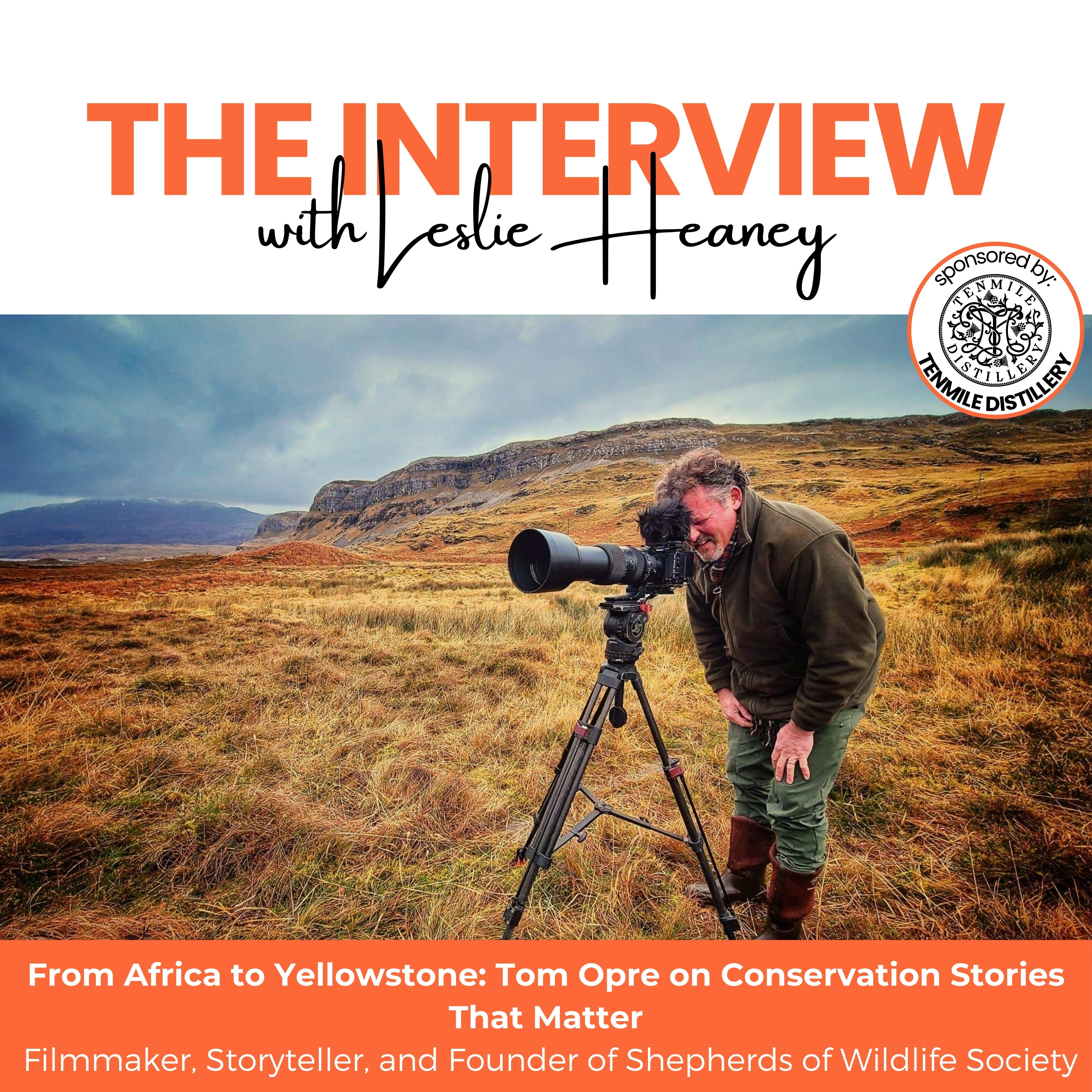
Duologue with Leslie Heaney
From Africa to Yellowstone: Tom Opre on Conservation Stories That Matter
01:13:55
Loading summary
Transcript97 lines
- [00:05]
A
Hey everybody, this is Leslie and you're listening to the interview with Leslie Heaney. This week I'm sitting down with Tom Opry, who's a documentary filmmaker and the founder of the Shepherds of Wildlife Society. Shepherds of Wildlife has a simple but bold mission which is to use documentary film to remind us that conservation isn't necessarily about rewilding of animals and land, but more is about humans proactively managing land and animals so that we have natural resources for generations. Tom has made two amazing critically acclaimed films, Killing the Shepherd, which you can watch on Hulu, and the Last Keeper, which is also available on Amazon. One about Africa, the second about Scotland, and his latest film which is being released this fall called the Real Yellowstone. We covered so much ground, Tom and I, about these films and the history of Africa and Scotland that I've broke this episode into two parts. In part one being released today, we talk about his first film, In Africa, which explores a rural village and its fight for survival, and his second film, the Last Keeper, which really explores the long standing tension between city dwellers and landowners in the north of Scotland and what the state of that looks like today in terms of conservation. So it's a fascinating conversation. We really go in depth about what is happening in Africa around conservation and also what is happening in Scotland around policy, around conservation. So it's really interesting conversation. Friday we release the episode about Montana and the real Yellowstone. Another really, really great part of this episode. I'm so excited about this week's sponsor, the 10 Mile Distillery. 10 Mile is an American single malt distillery based in the Hudson Valley about 90 miles north of New York. And it is the maker of the award winning Little Rest Whiskey made through a slow distillation process with all New York State grains by master distiller Shane Frazier from Scotland. And when I say award winning, I mean it's earned a 95 out at the whiskey competition in San Francisco and a 96 at the New York International Spirits Competition. This is delicious. If you do not believe me about how delicious this is, the good news for you is that if you're in the New York area, you can go visit this incredible and beautiful distillery yourself. It's set among the most beautiful apple orchard with beautiful views of the mountains behind. Stop by for a leisurely tour or tasting or even enjoy nice really crafted cocktail. They also have gin and vodka available. They also have this incredibly delicious Thai restaurant that is in residence there from Thursday through Sunday. To learn more about the distillery, you can Visit them at 10mile distillery.com./the interview. All orders will receive 10% off if you put in promo code the Interview at checkout. So go to www.tenmile distillery.com the interview to get that discount, that 10% off. I promise you, you will not be disappointed. So with that, here's Tom Opry. Tom, it's so great to see you. I love your studio. You said it's where you do a lot of editing for a lot of your films and stuff.
- [03:22]
B
Yeah, it's for the magic. A lot of the magic happens. Of course. You know, I like to say good things in your camera are good things out of your camera. I usually use a different word. But at the end of the day, though, this is where it all comes back to, and this is kind of ground zero for the foundation of the creation of our. Our films.
- [03:41]
A
So take us back a little bit. Tell us about why you decided to start or found the Shepherds of Wildlife Society.
- [03:49]
B
Yeah, it's a. That's a great question. I mean, you know, I've been a filmmaker. I've been carrying a camera since I was 19. My dad wrote for OUTDOOR Life and film stream for 30 years. So I've kind of been in the outdoor world for a lot. Been really blessed to be able to travel around the world and see a lot of different things. But then about 10 years ago, I kind of kind of winding out my film production career in the commercial world, and I started to see that this. There's this huge disconnect in our society when it comes to nature. I said, well, why don't we kind of create this little thing to educate this urban population about what real conservation is, what real good land stewardship is, and also bring this all back into, you know, into a different spotlight on this, because in the past, there's been a lot of emphasis on the Teddy Roosevelt conservation. You know, a lot of people talk about, you know, all the animals that were brought back from the brink of extinction. You know, all the land that we conserve that we stop from being developed, which, you know, around the world, you know, the United States has. Has. It's very rare that a country like ours has so much public land. And we manage it for the wildlife to some extent. We manage it for our own use in some cases. In some cases, we just leave it alone, which, unfortunately, the outcomes aren't as great or as positive. But, you know, it's been really fascinating to see all that. So, you know, I'm a filmmaker, so I'm trying to figure out, well, what can I do? Well, I make films. So in 2017, I gave a presentation kind of on the state of conservation in America and around the world to different wildlife NGOs and whatnot. And I had a fella come up to me from Zambia and start telling me this crazy story. First of all, he's got this crazy accent, right? And the Zambian thing, it's kind of like a cross between South African and, and English and so, you know, UK English. And so I was like, okay, so what's going on here? And he says, ah, you know, I had this, this chief, this woman come up to my. And this guy was in the import export business, but he also was involved in the saf, actually were doing hunting safaris.
- [05:48]
A
Yeah.
- [05:48]
B
And he said that this, this gal came up and this chief, and she says, I, I need you to come and help me. My people aren't doing well. We're starving. And we understand that you are someone who can be trusted. And so this, this story developed while I'm sitting in a, in a hotel room in, in actually was in. Just in the lobby of a hotel in, in Atlanta. And the next day we sat down for four hours and I kept all these notes and, and it was like, what, what's going on here? And it's this crazy story how this gal recruited this fella to come and help her people because the government didn't have the wherewithal, the resources. There was no NGOs, no UNICEF, no UN, nothing. And, and literally, kids were starving to death because their crops had failed. They're subsistence farmers and they had utilized their wildlife, you know, through subsistence poaching. And then there's a thing called commercial bushmeat poaching, which is a $2 billion black market industry in Africa. And so I ended up sitting down with Guy for about four hours, taking notes. And then the next spring, I flew to Zambia with a photographer friend of mine, Tony Bynum, out of here in Montana. And Tony's of Native American, and he's got a master's in land use and has worked in D.C. reporting directly to the director of the EPA on, on issues for Native Americans. And so I brought him with me, and he's a phenomenal photographer. And we just kind of tooled around for a couple weeks trying to figure out if there really was a story here. You know, I'd never done any long format stuff. Everything I've been doing had been that, know, 15, 20, 30, 60 seconds. My long format stuff was back when I was in my 20s. So it was like, okay, can we do A documentary here. And. And I still remember when we walked out on the tarmac. So they don't. That airport back then, it's called Lusaka. The capital doesn't. Didn't have air airways and things like that, you know, bridges and so forth. You actually got off of. Off a lap, you know, basically stairwell. And so I remember us walking out to the plane after being there for a couple of weeks, and Tony looked at me and he goes, so what do you think? I mean, this is crazy. We got to come back and make a film about this. And I'm like, yeah, I think we do. And that's how this all started.
- [07:48]
A
So you just to walk back a second. So you had sort of observed through all of your work in doing different wildlife documentaries and different shoots, that there was a disconnect between how people, particularly people in urban areas or urban suburban areas, which, as you said, is most of the US and most of the world. Right. That's where people are concentrated. Not really understanding the importance of conservation and how humans need to take an active role in ensuring that our resources, whether it's animal management, land, water management, are properly addressed and properly tended to by. By humans that we actually need to steward those resources. We can't just kind of let them sort of manage on their own because as you mentioned, they'll, you know, these species will keep multiplying and they'll be using too many resources and you have overpopulation and other issues. So you see this, you decide you want to do something. And was it this conversation with this guy in the hotel lobby in Atlanta that was the first sort of story that you thought about telling around the importance of that issue, like recognizing there's woman in Africa was having difficulty feeding her village or her people. Reach out them. And then you're like, wait a second. This is exactly what I'm talking about. This is a land stewardship problem. Or maybe you didn't know that then when you went over, you just knew this story that was.
- [09:17]
B
I've been interested. Like I said earlier, I'm pretty blessed to have traveled the world quite a bit, seen a lot of things. And my dad, being an outdoor writer, he wrote for Outdoor Life and films training for that period of time. And so I grew up in the outdoors and my dad was a union journalist, so we didn't make a lot of money when I was a kid. And I've got a younger brother, it's almost as big as me. I ended up playing college football. And. And so, you know, the food and the Diet that we had was, you know, where I grew up in the Midwest was made up of a lot of wild fish and wild game and, and it was really important to us. And so as we started on this project, it became really, I became painfully aware that the only way we were going to be able to get this thing funded was to create a non profit. So we created Shepherds of Wildlife Society, a 501C3 and basically determined that, you know, we could have a mission of reconnecting our urban society, our urban western society with nature and getting a social buy in or social acceptance of our modern conservation model and our modern stewardship models. And if we could do that, then we could really move the needle. And so that's how that started. And then of course, it's like starting any kind of business, Leslie. I mean, you know, you start off from scratch. And so I'm investing myself, my wife and I heavily into it. Not only in, in time, but treasure and, and trying to convince other like minded people to help us out. And it's, it's, it's not ever easy and it's still not easy. But we're seeing, we've been able to prove that that first film was proof, proof of concept.
- [10:46]
A
Yeah.
- [10:46]
B
And so we ended.
- [10:47]
A
Tell us more about it. So you get there, right?
- [10:49]
B
Yeah.
- [10:49]
A
You go and you're like, you meet this woman, right?
- [10:52]
B
So we meet the chief. Yeah. And of course over there, people have to understand these chiefs are gods to their people, their deity. And so when you go to meet the chief, I was instructed how to address her, how to get on one knee and hold one hand out a certain way. So she take my hand. You do not look at her directly until she addresses you. And there's a very, all this protocol that you go through in the African bush in the middle of nowhere. And so we get to meet her. It's Chief Shikabetta is her, is her name, that's her formal title. And she is, she has no education. She hadn't learned to write until she was, I think this lady was in her late 60s at this time and she hadn't learned to write until I think maybe 10 years previously. And even then it's pretty rudimentary. And she was very concerned about the fact that the, the girls in her community were not getting an education because in this subsistence community, subsistence farming community with crops that fail, they don't have crop insurance, they don't have governments that have the resources to help them. There's nobody there from the NGO communities or the Un. So they utilize the wildlife, like I said, so they utilized it. There was this area used to have phenomenal populations of wildlife, the big five. So you had black rhino and had elephant and lions and cape buffalo and all kinds of plains game and then hippos and crocodiles, all that stuff. You know, I mean, it was. I've talked to some people that spent time there in the late 70s and in the 80s, and it was just a Valhalla of African wildlife. Wow. But it's a really rugged area, and it's not. Doesn't have any infrastructure there. It's not the great Serengeti, you know, with migrations or anything like that. There's no place that really you could have photo safaris or anything like that. It's just. It's just too desolate. It just doesn't have the open areas that you have, like, say, in the Serengeti. And so these people, you know, her concern was for these. These young girls in her community, because here's what happens. And I've got three daughters. So this really hit me hard, Leslie, when your crops fail and you don't have wildlife to use because you've, you know, you've not conserved it, and so it's gone. In some cases, certain species have gone locally extinct in this area. I mean, there's no. There's no elephant, there's no rhino, and there's no certain plains game species gone. It'd be like saying whitetail deer no longer exist in New York. I mean, because this. This area is pretty big. I mean, it's not as big as New York, but it's million and a half acres in size. But, you know, if you have a daughter who's reached puberty, 12, 13 years of age, and you're out of luck, you don't have any food, and you've got eight or nine miles to feed. Because all these people all have large families, just like our ancestors did when they were subsistence farmers. It's quite okay to sell that daughter to, as a second or third wife for 30 bags of corn.
- [13:43]
A
Yeah.
- [13:44]
B
Think about it. Your back's against the wall, you got these family to feed. Your daughter's there. She's just another mouth to feed right at this point in time. And you can get 30 bags of corn, which will feed the rest of the family for the next year. And then she goes off and she becomes the second or third wife. For this gentleman who has. It's. Maybe he's fairly well off, or maybe he's made money from poaching. I mean who knows? And, and of course by the time she's 14, she has at least one child on the ground, you know, that she's born. And of course I've been talking to, to the medical professionals over there and, and at 12, 13 years of age, these young girls haven't even matured physically enough to carry a child. And many of them die in childbirth, in that first childbirth. But yeah, that their, their backs are against the wall and so that's what happens. And so the chief was really concerned about that. Plus the girls, they don't, if they're, if they're being mothers, they're not going to school, they're not learning English, they're not learning to read and write. And when I first got there and that first trip, the school was an open, thatched, rough, you know, post in the ground, thatch on the top and dirt floor. And the kids, you know, they, they, they have that colonial English background. So the schools and towns, the kids all wear uniforms and you know, have a pretty, pretty serious educational regimen that they go through with these kids out in the bush. They didn't have that, didn't have any school supplies, the teachers didn't get paid. And so it was just constant circle of poverty that goes on. And so she really wanted to change that. So that's why she reached out to this Roland Norton, the fellow that I, that I met there in, in Atlanta. And he basically said well you know, we could, we could help you here. But it was an area that the wildlife populations were so decimated that the government, National Parks and Wildlife had designated it a game depleted area. So there was nothing there. There was nobody could get a quota to go hunting in this area. So no safari operators were operating there. There was no anti poaching going on. And the community was just, I mean, just sinking fast and had been going on probably close to 20 years that this had just been getting worse and worse and worse. So yeah, so it was pretty fascinating to get there because when I first there I, I don't think I saw 10 or 15 animals the first two weeks I was there. And this area was along these beautiful rivering bottoms, this habitat that you would think you could just imagine animals and all this stuff there. It was beautiful habitat, but it didn't have any animals in it.
- [16:15]
A
Were you able to go in and not only tell the story but also to kind of give some assistance. When she reached out to this Roland Norton, you know, looking for help, was she looking for just education for the kids or was she Looking for help in trying to revitalize some of these crops so that she was able to feed more people, were able to actually live and you know, eat and live there.
- [16:40]
B
All of that in a hundred thousand times more. Yeah, I mean it was, there was a need for education, there was a need for good clean drinking water. So they needed to drill boreholes, they needed to stop the poaching going on. So the subsistence poaching, you know, they, they, what they did is the Nortons got together, they pulled some money. Roland had just recently retired from his import export business and sold his half of the company to his partner. So he had some money and he, he literally made a contribution or dedicated hundreds of Thousands of dollars U.S. which is a lot of money in Zambia to this cause. And what he did is he came up with this multifaceted economic approach, one that's weaned the people off of killing the game. Well, they need protein. So he went ahead and invested in a above ground fish farm. So they built six 30000 gallon tanks in a certain along the river there and they started raising tilapia and barbel to native fish there so that they could provide jobs for people so they could buy food but also they would sell at cost. They didn't give anything away but sell at cost fish. So now people had access to a ready protein source. They went ahead and built reservoirs or, or little ponds all over the game management area, the Loano, and stock them with fish and then taught people about fishing and conservation. So now these people are out there with cane poles and bobbers and worms and they're catching a few brown, you know, to go ahead and eat for dinner. And now if they, you'd have a few less scrupulous people that would come in with a net at night and net everything out of there. So that was an issue. Of course the game scouts would have to do that. But big thing is, is they invested heavily in their game scouts because you have one, 1.2 to 1.5 million acres is kind of their area that they're responsible for. And there was six, I think five or six game scouts to do the whole thing and they didn't have uniforms, they didn't have guns, they didn't even have, they didn't even get paid for six months at a time because the government didn't have the resources to do it. So Roland invested in that. They were able to get surplus uniforms, they were able to get the National Parks and wildlife to start doing a lot more training with their scouts and they ended up over time. Now, the big issue we talked about earlier was this thing called bushmeat poaching. It's a 2 billion dollar black market industry. And so when this area was really in its prime, these bushmeat poaching gangs came in. Highly militaristic, very dangerous, very violent came in and they built villages in the midst of the greatest concentrations of wildlife. And they didn't plant crops. They put up drying racks for meat and they went out and killed everything they could. Because bushmeat, all bushmeat is, Leslie, is just, it's just meat. It could be a primate, it could be a lion, it could be a rhino, it could be any kind of antelope species. It's meat.
- [19:34]
A
So it wasn't poaching for ivory or poaching for, you know, rhino horns for fertility. I know that there's a market in Asia for rhino horns because it's, there's a, I guess a sentiment that it's virility or something, I don't know. So it's not that it's actually for the meat.
- [19:54]
B
Yeah, it's for the meat. Now those issues, rhino horn and ivory existed there, but 20, 30 years ago, and all those animals have been shot. A long time ago that they didn't exist. There was no black rhino. This is prime black rhino habitat. There's not a single black rhino there. This is prime elephant habitat. Plenty of trees to eat. And of course, elephants are really important in rhinos, in this ecosystem because what they do we talked about everything in nature overpopulates the carrying capacity land. Well, that includes trees, right. And shrubs. Well, elephants go in and open up these areas and so they create this edge cover, which here in the United States, where do you find your white tail deer? On the edges of farms. Right. Where there's food, there's cover. And so when you start to see things, that's why we see fire. You know, fire opens up areas. And so elephants have a really important part of that process that have been going on forever and so, but they haven't been there. So you see a lot more intrusion of, of trees and shrubbery than you probably should see in an area that's healthy. And so you did have the issue with rhino horn and elephant ivory, but at this point it's just bushmeat. But the problem is so pervasive. And they use wire snares, almost entirely wire snares, though they do have homemade muzzleloaders and shotguns these, these poachers make. But the snare is the key. Thing, because one poacher can put a hundred snares out in a week. And they sit and they ring the waterways because everything has to come to water, to drink, everything. So whether they come along the river or they come to a spring or to a small stream, and wherever that exists. Now, in Africa, you will have a rainy season, which was usually in, you know, say, November, December into April, May in southern Africa, and they'll get the monsoon rains and all that, and then it greens up and everything's lush and vibrant. And then come the end of the August and in the September, and then October, November, you get to super hot, super dry. They haven't had rain for three or four or five months, six months, and, you know, everything dries up. But where you have those springs that still exist or along the major riverways, that's where those poachers will put out those wire snares. And the thing about the wire snares, it's an indiscriminate killer, and it keeps killing. So you put out 100 snares. That poacher might go and get an impala or a kudu or something, and then he'll leave and he might not come back and check on those snares ever again, and they continue to kill. And the one thing about snares that people don't really understand is that most of your antelope species in Africa don't have. The females don't have horns, but the males do. So when the males walk into a snare, say if it's a neck snare, typically their horn will hit some part of that wire snare, and it'll make a very unnatural sound to them, you know, something that they just don't hear, and they'll immediately freeze. And quite often they'll back out. And when they back out, yeah, they usually don't get caught up in it. Now, if there's a snare on the ground or something, they'll get their foot caught and they'll die. But the females and the young don't have horns. So when they go into these snares and that gets around, that pressure happens around the neck, it's the absolute that. That basic instinct to flee. And when they do, it kills them all. And so these snares have the ability, if there's enough of them out there in the landscape, to kill entire generations, all the females and all the young, for any species. And so it was pretty disheartening to see what we saw out there. But what the Nortons did by stepping up the anti poaching efforts by giving people an opportunity to have protein, you know, like giving them jobs where they could start to work on things. And of course, there was no promise that there would ever be any quota for the utilization of wildlife for a hunting season. Government says, hey, you take this on, it's up to you. But they knew that the land was fertile, they knew that the habitat was healthy. They knew that there were still some pockets of animals that had survived the onslaught of poaching. There were still lions, there were still leopards there, there were still warthogs and little pockets of kudu and impala. So that's kind of the basis for that ecosystem. And what they found over the ensuing several years, they were able to stop about 80% of the poaching. Now the bush meat poaching became an issue too, because I talked about that. Highly militaristic gangs. Yeah, they actually put hits out on Roland and his son Alistair to kill him while we're there. While we were filming over the course of this time period, we worked on the project for about three years. I mean, you have to tell you when we would come and drive in land Cruisers in certain parts of the, the lower Loano game management area. I mean, heads are on swivels and you're, you're, you know, slowing down up a hill and maybe there's a bunch of trees and rocks on either side. Perfect AMB point. And you know, you had to be careful. And I remember once I actually got embedded with the scouts to go in and pick up a firearm. They started offering basically rewards or they would give a, a poacher money if they gave up their guns or gave up snares. And so they got a phone call one day from a guy who had been a poacher who had been arrested, just came out of prison and he wanted to give up his rifle. He didn't want to be, you know, have the chance of going back to prison again. You know, we, we got off, we got down this dirt road and it's dark out there and I mean you just, I don't know, I've heard it, you know, instances where they've been ambushed. They've been talked into coming into some of these places and the boat poachers have ambushed them. Of course we, we stop, we find the poacher, he stops us on the side of the road and, and you know, as soon as we head off the, into the bush, I mean, there was about 10 or 12 game scouts in the back of this truck. And I just hear a chorus of AK47s locking and loading, like we're going to war here. And we go down about another mile or so, and the poacher gets us to stop. He'd left his gun out in the bush on the ground, out, you know, just hidden. And so we get out of the truck, and of course I. It's pitch dark, so I got to turn a light on, on my camera, thinking to myself, wow, this is great. I got all these guys walking around with. Again, they're using my light to see what's going on, because it's this great big spread out, you know, light on the ground. And I'm thinking, well, this is great. You know, I'm sure I'm going to be target number one. And somebody starts shooting at us. But, you know, we walked in there, we found the gun, and the guy gave the gun up and they paid him a thousand kwacha, which is. I don't know today's exchange rate. Back then it was, I don't know, maybe, maybe. I think it's about 18 quatches to the dollar. So it's not, you know, it's a sizable bottle money for these guys. You know, the guy was supposed to also be an informant after that. And interesting enough, they never saw the guy ever again after that night. So we don't know what happened to him or what, where he went. But, you know, the really cool thing about it is every year that I went over the course of, and I want to go once, sometimes twice. Sometimes I'd be there for 14 days, some days for 28 days. And I was. My last trip was during COVID in August, September of 2020, when we were just opening up the country for international travel. I don't want to tell you guys all the stories happened because some really awful things happened. Not to me, but I. I saw there were people that. That passed away while we were working on the production. And so it was really disheartening at times.
- [26:51]
A
People from. From the village?
- [26:53]
B
Yeah, you know, some of the game scouts, I mean, so part of the issue there is not only do they have the issue of food stability and the child brides and stuff, but disease is a real deal. And it's not aids. It's mostly malaria and sleeping sickness. This is a tsetse fly area. Sleeping sickness is a real thing. It causes your organs to crash and shut down. And one of the game scouts that I got to know over a period of time, he ended up one year in between trips, I got a Phone call and he'd passed away. And, you know, one of the, One of the chiefs, the chief, Sheikh Butta, you know, we ended up working with two chiefs, and the first chief, unfortunately, under very mysterious circumstances, left us. And so there was a lot of real hardcore left us, like died or left? She passed away.
- [27:35]
A
Passed away. What is this succession? Is it by birthright? Is it by election with village elders, or how does it work?
- [27:44]
B
Well, a little bit of both. It's birthright. So the government of Zambia keeps the pedigree, you know, keeps the, the genealogy of all the. In all the areas. And then there is a royal council that will designate who they think should be the next person based on that. That genealogy, and then they'll bring that person in. And as long as the royal council agrees on it and the government agrees that, yes, this person is qualified to be a chief based on their lineage, their genealogy.
- [28:15]
A
I see.
- [28:16]
B
Then there's a whole ceremony they go through to make him chief. So. But it is all by birthright. No different than a lot of the European stuff until they started off in each other because they had this claim to that claim.
- [28:29]
A
So over the course of the three years that you were filming this village and watching this impact that this Norton family had on this community, how did things end? And we should mention to listeners, you can watch this documentary, right? You can see Killing the Shepherd. It's on Hulu, right?
- [28:47]
B
Well, it's on a whole bunch of different. You can watch it on Hulu, you can watch it on Amazon prime, you can watch it on Tubi. And then also shepherds of wildlife.org we have a. We have the film, plus the panel discussion we did that we put together when we did the world premiere back in 2021.
- [29:02]
A
So how was it the last time you were there and how are things progressed? And.
- [29:07]
B
Well, we have. We have a. A male chief for the first time in about 40 years. And interesting enough, when I started tooling around on this project, I, I asked some of the game scouts, I said, so, what's it, what's it like to have a. A woman as chief? And I said, is this something. Because that's not normal in Africa? And they're like, oh, well, we, we like it. And I'm like, well, why do you like it?
- [29:28]
A
Because they get stuff done.
- [29:30]
B
Well, it's not like it's dumb, but it's like they. One of the scouts to me goes, hey, you know, we like it because if it's a man, he only cares about himself and what he wants, right? But a woman, she's a mother and she wants to take care of all of us. And so, yeah, it was pretty, you know, it was a little disheartening now that they have a male chief. Nothing against the chief, but yeah. And so I was there just this last June and so I saw a lot of the things that are changing. There's some threats, there's some new things going on, new developments, and it's pretty fascinating what's going on. So now we're, we're actually trying to raise some money so that we can go back this next summer and hopefully put together a film about all the updates that's going on. But one of the things is we talked about the fact that certain species of animals went locally extinct because of poaching. So now the National Parks and Wildlife have given the Norton's approval to access and trap and translocate animals from other national parks where they have a surplus of animals in areas that have tsetse flies, because you have to have that issue. They have to be immune to tsetse flies. So they're willing to allow them to come in, but we've got to raise some money for it. And it's hundreds of thousands of dollars. But the goal there is to bring back the wildlife that's gone locally extinct, tell some of those stories about where they are, where, you know, where they are today. And it's fascinating. It's just, it's life, it's real life and it's, it's not make believe Hollywood and it's, it's fascinating. So anyways, that, that's where we're going with that.
- [30:54]
A
And that was your first documentary, right, your first foray into wanting to demonstrate like the impact that humans can have in a positive way in helping to conserve the resources Right. In a, in a particular area. But then your next story was about keepers in Scotland. How did you find that story and decide to feature that as part of the work that you're doing?
- [31:23]
B
Yeah, so Africa, right? You know, it's pretty cool. I mean, you can see what's going on. Beautiful place, beautiful people, great to film, dynamic story. Of course, the wildlife populations exploded and so now they've got wildlife there, they're able to use the wildlife sustainable way. The people have their own quota, the community. So now they have their local meat source that they can get. So it's a really fascinating story, but there's a lot of people out there that say, well, there's no way that you should have people going to Africa, going hunting you know, it's. That's not right. They shouldn't do that because everything's, you know, is endangered. Well, that's not the reality there. There's. There's really not a lot of stuff that's endangered over the big scope of things. Maybe in general areas like we talked about in small areas, but there's a ton of wildlife there. There's a lot of great wildlife habitat. And the big thing, what I came to understand is about the people, Leslie. If people don't see a value, we're not going to have these resources. And so that film, Killian shepherd, ended up winning awards for social justice and indigenous and human rights. And I was like, wow, okay, this is a big diff thing. And so. All right. And of course, in the world that I live in, you know, my wife and I both like to. We're sportsmen and women. We like to spend time in the outdoors. Fly fishing and bird shooting. We run bird dogs. We do, you know, we raise our kids on a wild game here in Montana. And. But we also saw on the Internet and what's going on with this disconnect. We see a lot of hate and vitriol on social media. We saw my wife being a hunter. She was attacked. She was also Mrs. Nebraska in 2003. So, you know, and you have to have a. Have to have a cause you celebrate you. That you celebrate.
- [32:59]
A
Yeah.
- [33:00]
B
Was that. Was that, you know, the Theodore Roosevelt, the Teddy Roosevelt hunter, conservationist. That's, you know, why, like we said earlier, why we have all these wild places things.
- [33:09]
A
And so I want to do another episode with your wife on that.
- [33:13]
B
Yeah, no, she's great. So. But, you know, we had experienced in the. In the teens, the 2004, 14, 15, 16, 17, a lot of hate and vitriol towards my wife where they. Where people wanted to. To kill her. I mean, the. The Animal Liberation Front ALF, which is, according to the FBI, one of the top 10 most dangerous domestic terrorism organizations, actually put a bounty on my wife's head to have her killed. That's here in America. And so that was part of this whole disconnect that I was looking into and doing all this research. And why is it. Why do we do this? It's just crazy. I mean, it's. It's so beyond what I. I thought we were as a society. And so we do the project in Africa. We get all these accolades. I mean, it. I mean, it opened up a lot of eyes. I ended up doing screenings with the Secretary General of cites, which is the international Trade of flora and fauna in Geneva. I ended up in Westminster, I ended up in the US Capitol. I ended up all over the world talking about this. So, yeah, we see all this stuff and then I've experienced, you know, firsthand, you know, this, this disconnect with the hate and vitriol on social media. And I heard these stories about these gamekeepers in the Scottish Highlands that were being ostracized in their own communities, being ostracized in their online, you know, literally, you know, people saying they're evil and terrible people because they were managing the land, doing the conservation work to enhance the land so that the wildlife would have healthy environments to live in. And, and I'd never been to Scotland. Now I am of Scottish descent. I've got lots of relatives that are all over Scotland, Ireland and Wales. I've got a great grandmother, spoke Welsh, but, you know, I have that genealogical connection and, and I'm like, well, what's going on here? And I started talking to some people in the, in the sporting estate industry. And the stories I heard were, I mean, very similar to what my wife and I experienced online here in America. And so I'm like, huh, all right. And so we do. We do a ton of research. And I ended up meeting with a fellow named Rory Kennedy out of Edinburgh. And Rory is the. Or was at that time was the director for the Game and Wildlife Conservation Trust in Scotland. So it's a. It's a third largest wildlife charity in all of the uk, but he was their main director for their unit in Scotland and they have a pretty robust group of scientists that are studying all these issues around wildlife and habitat conservation in the United Kingdom. And he handled and oversaw everything in Scotland. And so we started to. We put a list together and, and Tony Byam and I, I had to bring Tony again because it was about land use and land ownership stuff is what we were hearing. And we got over there. I mean, it was amazing, the stories we were hearing. And it's, you know, I mean, everybody's seen, you know, the TV shows and the films about Scotland and the beauty of it, you know, the beautiful rugged granite outcroppings and mountains and the purple flowers of the year and, you know, the red grouse and the. And the monarch on the Glen Lancier's painting of the red stag, the majestic red stag and stuff. And. And so we started traveling around for about, I think we spent 10 or 12 days there. The first time, this would have been, I think, spring of, of 23. We started tooling around here. And I'm like, wow, this is kind of cool and stuff, but we started hearing these crazy stories. I mean, gamekeepers, children being threatened with having acid thrown in their face because they were the children of gamekeepers. And what it really came down to, Leslie, is, is that we spent about 140 days over the course of about 14 months. So a lot of time over there in a shorter, shorter period, because we finally started to get some funding from some folks. Not a ton, but enough to be able to be there and spend the time you needed to spend to figure out the story. And over there, you have really a small population of people that live in. In the Highlands, about, I don't know, 2, 250, 000 people. But then you have a population belt between Glasgow and Edinburgh that is about four, four and a half million people. And most of those people don't leave that area. They don't go up and hang out in the Highlands. Now you get people to drive around and camp around, but they have a thing called the. Right, the Rome, which was a real big eye opener to me, because when we first got there, we were sitting on the side of the road and there's a fence there, you know, farmer's fence, rancher's fence kind of thing. And I tell Rory, I'd like. Hey, I'd really like to go over on that hill over there and get this awesome epic shot, and da, da, da, da. And it's like, go ahead. Like, what do you mean? We have the right to roam?
- [37:37]
A
You can. You can walk anywhere.
- [37:39]
B
You can walk anywhere.
- [37:40]
A
Yeah.
- [37:40]
B
There is no private property rights, except for. I guess you're not allowed to go in people's houses or not go in there in their. Their gardens and stuff like that. But, yeah, it was crazy. I was like, what do you mean? I mean, you can go camping, you can ride a bike, you can go. I mean, you can walk off anywhere you want to. There's nothing, Anybody. Yeah, you can't hunt and fish on this private land.
- [37:58]
A
Yeah.
- [37:58]
B
But you can go access it. And it's something that came across in the last 10 or 15 years with the Scottish National Party. Given the power and really what it kind of was, the. What it came to really understand for me is that if you go far enough in any Scots history, back in their lineage, you will find the oppressed or the oppressor. And you remember, the United Kingdom hasn't had. Or Scotland hasn't had a revolution like we did in 1776. So the people that are in power. Not all of them, but, you know, people that, that have the money, you know, and have a control. A lot of things behind the scenes are people that have been in control for a long time. Hundreds and hundreds and hundreds of years. I mean, I literally trace back the issues that we were starting to look into to William the Conqueror, 1066, and feudalism. That's what he brought into there, you know, in so much as that. The word forest, what does it mean to you, Leslie, if you were to define the word force, what does it mean and where did it come from?
- [38:58]
A
Against trees.
- [39:01]
B
Wrong. The word forest means, and very simply, the king's hunting grounds. Doesn't matter what it is, it could be a desert and they would still call it the forest. Now, of course, they don't have deserts in Scotland in the uk, but that's all it means. And that is what propagated this whole concept of poaching. All right, you know, if you were out there hunting on the land as a commoner and you didn't have permission to be there, you did it under penalty of death. So it's pretty wild. So now you have this group of people that live in the cities and they're quite content to live in the city. They're not interested in living in the countryside. But if you own land, they don't like you. So there's this historic rift where these people don't like landowners because landowners historically have been the people in power behind the scenes. Now let's move fast forward to the modern ages. We have this representative democracy, right? You know, they have elections. Well, where do you get all the votes? In the cities, in the towns?
- [40:03]
A
Right.
- [40:03]
B
Well, that's where the politicians listen to those people. Well, those people have an animosity towards landowners and of course, the, the Queen of. Of England now, now the King is one of the larger land owners or a fairly large landowner. And. And they actually were able to figure out that some four or five hundred people own the vast majority of the land outside of the villages and the towns and the cities.
- [40:24]
A
Right.
- [40:25]
B
You know, so there's a lot of animosity there. But I look at it like, well, hey, at the end of the day.
- [40:30]
A
You know, is the animosity because people aren't able to buy it themselves, or is it animosity because you do have the right to roam? Right. So you do have access to it. Right. But tell me about this animosity towards the gamekeeper. Gamekeepers are seen as, well, they're seen.
- [40:47]
B
As representatives of the landowner. So as A gamekeeper. So these people have been on the land and some of these gamekeeper families, they've been on the land for hundreds and hundreds and hundreds of years working at the same estates. And so these estates. So, so basically we're going to go, I'm just gonna have a little history. So 1066, feudalism, William the Conqueror. But they still had communal grazing. And of course, you'd have the glen, which is a valley, and so there'd be an area of land that an earl or some other person of authority that would oversee that for the king. And that person's job was to maintain the area. They would receive rents from the subsistence farmer families that lived in those glens, which might equate to 8 or 10 pounds a year, cumulative amongst everyone. But again, remember, there wasn't a lot of money back then when a lot of people either. And so you have this scenario where the emphasis of having people in the landscape is, well, the earl will get a call from the king saying, hey, we got a. We got a war, or we got some conflict with so and so we got Vikings coming here, so we need to have a call on soldiers. So then the idea was to have a bunch of as many people as you could living in there so that you could get these people out, you know, the men to come out and fight whatever conflict. And of course, the war's over. Resources in this part of the world have been going on forever and they haven't stopped. There's still conflict going on in Scotland, obviously, today. So. But different reasons, but same conflict, and it's over control over resources. He institute what they call a layered system, which means landowner. And so now these landowners no longer were clans. Operations, which was. You could have. You could shoot a deer for the pot, you know, you could have communal grazing. Now you're in a scenario where the landowner has got to pay a tithe back to the king and these are his. The king's buddies. And so now they're in a scenario where it's like, okay, well, how can we generate revenue? And the Scottish Highlands are not very fertile, nowhere near like they are down in the south of England. South of England's one of the most fertile places in, in Europe. So they started hanging out with their brethren, you know, so you got the, the lairds up north in Scotland hanging out with the ones down in. In south. The south part of England. And of course the guys down the south part of England, they have really good resources, they make a lot of money and their kids are going off to Oxford, and they're going vacations in Paris. And they know they have this. They get money, whereas the Scots don't have anything. You know, they get 8, 10 pounds out of all the people that live in their glen. And so one of the industrial or industrious landowners realized in talking with their friends down south, that if they remove the people off the land and move them into cities or the towns and get them to learn a trade or a skill, they could have a real house there and they could have a job and food and whatnot. And they could put 5,000 sheep up in the glen and get £800 in rents for the year versus, say, £8. So, you know, they looked at that and they said, okay, well, let's. Let's get the people, move them in the town. Now, some landowners probably thought they were doing something good for the people. There were some landowners that were a whole lot less interested in doing what was good for the people. And so that was the start of what they call the Highland Clearances. So people were forcibly removed. In some cases, their homes were burned, Some of them were shot and killed. But a lot of people were literally marched to the docks on the wharfs and given a ticket and given passage to the new World. They ended up here in the United States, you know, which was the colonies then, or what was Canada or Nova Scotia in that area. And that's. If you've got Scottish ancestry in your. In your blood and you live in North America, there's a pretty good chance your ancestors came from this time period.
- [44:27]
A
My father's family is Scottish. And when we went to Scotland. Stop me if I told you the story, but we're in a taxi from the airport, and there's a sign that points Bathgate, the town of Bath Gate, this way. And I said, oh, that's my last name. You know, my. My maiden name is Bath Gate. And the taxi driver said, oh, it's a terrible place. Mining town, terrible. And I thought, gosh, maybe that's why they got out of there. I mean, I don't know. So I don't know what time period it was. But anyway, we got off track.
- [44:56]
B
But, yeah, so. So you have this clearances now, of course, guys, you gotta remember, this is before the Industrial Revolution. So, in fact, in 1750, the King of England went ahead and instituted a, what they call the Roy Military Survey. And he canvassed the entire country of Scotland for the amount of tree cover there was, trying to see if there was forest there that they could use for resources and whatnot and he determined, Roy determined. And these maps were digitized. You can look them up online. The Roy military expedition of 1750. And they figured that about 4 to 5% of the land mass of all of Scotland had trees on it. Now this is a place that didn't have hardly any people. You know, this is pre industrial revolution. So there is, you know, there is no smelting going on, you know, to build bridges and, and boats and ships and all this other stuff that Scotland became known for during the industrial age. But we did have a scenario there where when these people got moved off the land and you have that period, remember I talked about wildlife is all programmed to overpopulate the carrying capacity land. Okay, well let's fast forward to the mid-1800s. So you have this clearances. So you're removing people off the land. Of course the people would utilize the game animals or the salmon in the rivers, but there wasn't a lot of them. So there always is a healthy populations of animal. You could survive on the land if you had to, but you ended up with a time period between the mid-1700s to the mid or early to mid-1800s. And then 1850 you have Queen Victoria comes up to Scotland. She comes up there on vacation because she was supposed to go the continent, but there was some black plague or something going on. So her and her husband go to Scotland, go to the Highlands and they go to a place called Balmoral. Now there was no castle there. It was just a big open ground and it was full of wildlife and salmon in the rivers. And the two of them were quite keen to go hunting and fishing. And she and her husband fell in love with Balmoral. And they bought it right there, bought the whole thing. And next thing you know, she's building a castle. This is the Queen of England. And so what the Queen does, everybody else wants to do. So over here, the Queen is in Balmoral, she's built a castle. She's out doing her spocking, stalking the, the, the magnificent red stags and fishing for salmon in the rivers and, and hunting the native red grouse, which there was lots of them because nobody was pushing them and they were managing. People have been managing the land for these animals. So they do low intensity burns on little quarter half acre parcels. It makes a mosaic up on this heather Moreland. And what it does is it creates new buds of growth and it opens up areas so that the birds can see, say predators that might be stalking them. It's exactly what we do in North America in the southeastern Part of the country for wild quail. And where we do that, we have lots of wild quail. Where we don't do that, we don't have that many quail. So 1850, she's there and of course, all the people down south in England see what's going on and they're like, wow, well, we want to do what the Queen does. So they. You had this army of people that started coming up to the Highlands to do the sporting activities, the stalking, the fishing, the bird shooting, all that, because they want to do what the Queen's doing. So the train would come up every weekend loaded with all these people and the locals took a little offense to this and they started calling them Toss, you know. And, you know, it's a derogatory term. You know, it's. It means somebody from down south. It's, you know, Johnny come lately.
- [48:20]
A
How is it pronounced?
- [48:22]
B
Yeah, Toph. Yeah. So no T o T H. Toth.
- [48:28]
A
Oh, toth.
- [48:29]
B
Yeah. So I might, I might.
- [48:31]
A
I was going to try to work that in somehow, Tom.
- [48:33]
B
And so, yeah, so, but, you know, it's not. You don't go down and call somebody from downtown. That's a derogatory term. But you know what's going on. But here was the other thing that was happening. So the people that owned, the Scots that owned this land, I told you it wasn't very fertile. So they had these people coming up saying, hey, I'd like to lease your 10,000 or 5,000 acre estate. And so they would lease it because they were making good money. But here's the deal in the law there, if you lease a piece of land and you put an improvement on it at the end of your 20 year lease, these are all 20 year lease, from what I understand, 20 year lease span or lifetimes. And at the end of that 20 years, the landowner had to reimburse the leasee for the improvements. Now, some of these people down south have very, very affluent and they built manor houses, small castles, I'm sure millions and millions of pounds they paid to build these things. The landowner couldn't pay them back, so.
- [49:32]
A
They have to give them the land.
- [49:34]
B
They took over the land because they couldn't get. The landowner couldn't pay them for the improvements.
- [49:38]
A
Wow.
- [49:39]
B
So another reason for animosity. Right. So it's real out there. And so you have this going on and then. So talk a little bit more about history. So you have the age of the vet, that which is the Victorian sporting estate. Queen Victoria brings this in. All these people are managing the land, they have all these people that are from Scotland that are working for them. These are people that have been on the land managing it for wildlife for longer than the Victorian age. And but this is going on for now hundreds of years. And you now go to the modern times. So we have World War I now. This ground has evolved to be what we've seen in the movies. This is the purple heather. This is the granite outcroppings. You don't see any trees. So if you go back in history in Scotland, go back 1012,000 years, Scotland's kind of a glacial ice last, the last great ice age. Well, there's no trees, there's no animals, there's no people. Ice mile thick. So ice recedes and over the next several thousand years, it gets colonized by plant life and animal life. And some of the scientists I've talked to figures maybe 70% of Scotland was coming in our trees. I mean, they find them 10, 12, 15ft. They find the remnants of those forests in the peat so that it existed, it was there. But you get a thing called the Gulf Stream. It is a warm water current. And so what does that do? Well, Edinburgh sits at the same latitude as Anchorage, Alaska. It doesn't snow in Edinburgh. They get 60 inches of rain throughout the year. And everybody knows how rainy it is in Scotland. Yeah, yeah, yeah, okay. Well, when you had, according to the ecologists, all these trees there, and this I'm pretty sure what happened was, is that the Gulf Stream moved and started hitting this area. And when it moved to hit that area, it brought 60 inches of rain. And you got all that rain percolating through the canopy of all these trees. The ecologists over there tell me that what you get is acidification of the soil. So you literally get an iron hard pan that develops several feet down below the soil. It's all, you know, chemistry and all that stuff that works in there. And of course, a tree's roots can't penetrate an iron heart pan. So you get the de evolution or devolving of trees on the landscape, and you get this Heather Moreland, you know, upper Heather Moreland ecosystem. And that's been going on. It took about 3, 500 to 7,000 years for trees to devolve off the landscape. Now, that's in areas that aren't really steep, that's in areas that hasn't been farmed, you know, or areas that have been eroded, you know, through water action and stuff, where you don't get that iron heartband. But I actually sat down with some science. Soil scientists in the James Hutton Institute in Aberdeen. And they showed me maps of, of what Scotland and Ireland look like when it comes to that soil map. And there is iron hard pan everywhere. So go to World War I, you got this major world war going on. A lot of the keepers ended up being frontline troops in World War I. A lot of them got kill. They lost entire generations of people because they were, they were keen shooters. Right. They were out managing the land. Yeah. So they were really good in the military, but a lot of them got killed, you know, going into these machine gun, you know, you know, full on, you know, charges. And so you have a scenario where the government said, you know, we don't have any timber and we need wood. So they started planting trees in the 19 or after World War I and the government started subsidizing, paying people to plant trees on their land. Now you have an iron hard pan. Well, how do you plant trees there? Well, you can't do it unless you break up the iron hard pan. So they created something called a tree plow and they started plowing up the ground in order to plant these trees. So what did they plant? Well, they, somebody came across the North America and said, you know, there's some really good trees that grow really well. When you get 60 inches of rain, it's called a Sitka spruce. Okay. So they brought back a bunch of Sitka spruce from North America and started planting them. And this is the start of this timber industry where they plant these trees and they cut them down on 60 year rotationals. And because it rains so much and because they've broken through the iron hard pan and they stack the, they literally plant these trees like three feet apart. And you've got these monoculture tree stands, pine plantations of sick and spruce. Again World War II, they went back in the tree planting again. In the 90s, the government subsidized more tree planting. Of course the government subsidizes anything out of land. So if you've got, if you've got cheap, you only have it because the government pays you to put sheep out there. There's all kinds of crazy things that they've done over land management that the government subsidize, but they don't subsidize.
- [54:16]
A
And in Scotland is that, you know, to your earlier point, are these policies being instituted by people who don't understand land management and conservation?
- [54:25]
B
Well, I think the tree thing was more about economics and the fact that they were concerned about having material for the war efforts. And so of course, you know, trees take time to grow, you know, so it's not going to happen overnight. So that was the idea. Hey, let's create this industry so that the next time we do have a situation, we've got our own ready supply of timber, you know, that we can do whatever we need to do with. But of course, we also want to incentivize. Remember I told you it's very unfertile ground. I mean, you don't. Yeah, they've got sheep on them, but, you know, the market for sheep has just, just disappeared over the last 30, 40, 50 years. You know, it used to be people used wool to make your clothing. And of course, when we had all the wars, all the uniforms were made from wool. So you needed all these sheep on landscape. But today, wool isn't worth anything. I mean, merino wool is the only thing that's worth any money. And you can only buy merino wool in certain parts of the, of the planet because those sheep only exist in those types of environments where they need to live. But that's another whole story on itself. But so you don't have people really producing much off this land. They are utilizing it for the landowners for their own enjoyment. So they are paying their keepers to go out and manage the land for the red, native red grouse, for the native red deer and for the fishing.
- [55:34]
A
Sorry, Tom, when you're saying they're paying the gamekeepers to manage the land, is the management, does that mean sort of killing overpopulations of certain to keep the, the deer population in check? Is it the same goes for the fish or is it actually like doing burning of the land to know, as you were talking about, to kind of keep the heather grow, you know, to keep all of the native plant life also in check and to help it, help support it growing in a healthy way?
- [56:04]
B
Yeah, all of the above, Leslie.
- [56:06]
A
Okay.
- [56:06]
B
It's about managing the land. So doing low intensity burning, literally I was able to examine some of this where they took a chocolate bar and stuck it down into the heather, you know, just maybe six inches below. And then they burned a little quarter acre, very small area. And they use GPS and they mark everything else. They become experts in in control burning and literally burned the whole thing in a matter of minutes. And we pulled out the chocolate bar and it, you know, it hadn't melted at any, but it looked like it just came out of the factory. But what they're doing is they're taking out what they call rank, the rank growth. So that's the Old growth, it doesn't have as much nutritional value. And so when they do these little mosaics, you get young buds of heather growing and that's what the red grouse, their chicks like to eat. And so of course it also opens up this little quarter or half acre area so they can see predators coming on them. And they do suppress the ground predators. So what they can do by law is they suppress the rats, the stoats, which is a weasel family, and the red fox. And so they manage those animals, they don't eradicate them, but they manage those animals, those species of animals, so that they can get a certain number of birds, say, say the red grouse, so that they can have an offtake for the upcoming fall when they have their hunting season. And so, so at the end of the day they're constantly managing that. Now with a red deer, the same thing. Now some people do a really good job of it and keep it managed and some people don't do as good a job. So you end up having an overpopulation of animals which denudes the habitat, which causes problems. But for the most part that's that history of what they were doing. And so now we have a scenario where you have people that have been working the land, managing it, doing conservation wise use of a natural resource, but the people paying for it and the people enjoying that are the landowners. So it's not the people in the cities, it's, you know, it's not the people coming. So. And they would do this with their buddies, right? So you would get. A lot of the landed gentry are all people wearing pinky rings? Which, not all of them, but a lot of them that. Which means they're aristocrats, right? So they're part of this special club. And so there is a, there is a caste system, man. There's a caste system between Scottish and English, by the way. So the English look down on the Scots every day. So that's why their, their football games are pretty heated matches. So but anyway, it's the long and the short though. So this went on for this period of time. We get into the late 1900s, 19, 1990, get in the 2000 and there was this fella and some group of people got together and, and they thought, you know what, you know, one, we can't really use this land. But. And so how can we figure out how to use this land? But you know what we remember reading about, and there was a Roman chronicler that wrote about the great Caledonian forest that existed out here and, and these evil Landowners don't allow trees to grow because they're always burning. Now, they're not talking about iron harpan. They're not talking about the natural process of evolution. They're talking about their human bias that they don't like the landowner because the landowner is seeing a benefit by managing the land for their use. So now you get this group of city people who say, you know what? We think there should be trees on the ground there. Okay, all right. This concept of the great Caledonian forest. Well, we know there's evidence that there was a forest because you can see it in the evidence in the peat. But it's 8, 10, 12, 15ft down in the peat. Right. It's not on the surface. So this is something that happened a long, long time ago. Well, when I talked to you about those processes, evolution with the Gulf Stream and rain and acification of the soil. Well, they don't talk about that. What they talk about is the fact that they would like to see this land go back to this concept of this great Caledonian forest, and they're going to do whatever they can to make it work. Now they even listed the help of all the city people. Well, they go to the politicians and say, Mr. Politician, we want to make sure that these landowners can't do this practice or that practice. No more burning. Because now we have a climate conflict, climate crisis. Okay? So if we see something burning, well, that obviously has got to be lending to the problem, whether it is or not, who knows? But that's what we're going to do. And we're going to institute as many rules and regulations and laws to make it as difficult as possible for these landowners to do conservation work on the land and realize a benefit that they want to realize. And that's really what it comes down to. So now you've got these people that want to see all these trees, and of course, not all of them are, like I said earlier, are native to that. That part of the world. And of course, we're talking about a Roman chronicler that wrote about this hundreds of years after the last Roman was in Scotland. Remember, the Romans didn't take over Scotland. Hadrian's wall is about 3/4 the way up the island. And there was a whole bunch of picks, which is my ancestry, that were, you know, too difficult to deal with. So the Romans just said, hey, let's put a wall up and keep them out of here. Yeah, yeah, yeah. So. So there's a lot of stuff going on that's like, okay, what really was here? I mean, were There bears here? Yeah, I'm sure there was bears there. European brown bears. Were there wolves? Yeah, I'm sure there was wolves there. Were there beavers? Yeah, I'm sure there was beavers with all kinds of stuff that was there. If we go back far enough, I mean, heck, we go back far enough, there was dinosaurs there too.
- [61:15]
A
Right, right.
- [61:16]
B
So.
- [61:17]
A
Right.
- [61:17]
B
So.
- [61:17]
A
But that's the idea of the title, the Last Keeper, is that you're hypothesizing that this, that entire way of life and the entire system of land management could become obsolete with people trying to.
- [61:30]
B
Well, I wouldn't even say obsolete. I think absolutely, genuinely 100% eradicated.
- [61:36]
A
Yeah.
- [61:37]
B
I think people's human rights are being destroyed. I think people that have lived on the land have managed it, had made a living. So these keepers, so they work for a landowner. The landowner, as the keeper, provides them with a home, provides them with a job, a salary, provides them with a Land Cruiser with a vehicle, provides them with whatever kit they need to do that. And these jobs, as long as the keeper does a good job, these jobs are for life.
- [61:59]
A
Yeah.
- [62:00]
B
When you reach a point you can no longer be the keeper, then you're given a cottage on the estate and you are taken care of for the rest of your life.
- [62:07]
A
Right. And then you pass that down. Right.
- [62:09]
B
You can, but you can. Yeah, absolutely. Yeah. It's not necessarily, you know, a lot of kids, especially in this day and age, with all the. The strife that's going on against the keepers. Now, if you go back even 50 years, keepers were very prominent individuals in these communities. This is rural, the rural Scotland, this is not the city. So if you had a problem or you needed to get something fixed, you'd often go to the keepers in the community because they had the ear of the landlords and they became best friends with these landlords. I mean, you know, I say landlords, landowners, lairds is the word to use. And so, you know the stories you hear. And of course, some of the. I actually did an interview with one of the. So really weird, because we're. We're morphing into this thing called rewilding. So there's this concept of we want everything to go back the way it was, supposedly, and we want to make sure the landowners, you know, we're going to do whatever we can to make sure the landowners don't see any benefit to it, because we want their land. That's really what it comes down to. And so we're going to figure out every which way we can to make sure. That these people can't see a benefit on it and that we can get control over this land. Now, it's not like the government coming in and saying, hey, we're going to take it, because they do have private land. You can have deeded land and whatnot. But you're in a scenario where they make it so difficult that the landowner finally just throws up their hands and it's like, let's just sell it now. We've got a whole bunch of other stuff going on here. You know, we talked about climate, right? And it's a real thing. I mean, the climate is changing in Scotland and there's real impacts on the ground when it comes to the animals that live there. Things like ticks that are now reproducing at greater numbers and they're on the landscape earlier and earlier in the year because their winters aren't as long. In the case of the wild red grouse there, that native bird, when their chicks hatch, it's now coinciding when the hatch of the, of the ticks are. And so one blade of grass can have thousand ticks on it, these baby ticks. And when these little birds go probably there, they get these ticks all over them and they get so many ticks around that the only exposed players with their feathers are around their eyes and their beaks and these ticks are all over and they drive these birds nuts. They try to claw them off their sides of their face. They actually cause themselves to go blind.
- [64:13]
A
Oh, my God.
- [64:14]
B
So, I mean, these are real issues that we're dealing with. And again, at the end of the day, it's like, okay, so what, what is the. So Mike said we're talking a lot about this because it's really, really complex because we're dealing with people that just have this human bias who don't like the way the land has been managed and a conservation ethos that's gone on. But what they want to do is they want nature to take over, so they want the trees to be free to decide where they want to be planted. Now, mind you, we talked about that iron hard pan, right? So how do they plant trees in Scotland in these areas that are known with hard pan that haven't already been planted and have been the hard pan already disturbed? They plant trees with 40 ton trackos, right? And they drive over this Upper Heather Moreland and dig a hole every three feet. Now, in 1992, the UN treaty on biodiversity in Rio de Janeiro designated Upper Heather Moreland as an ecosystem of importance. And that it's very rare. And the majority of it exists in the United Kingdom, a lot of it in Scotland. Now, I got news for you, Leslie. If we had an ecosystem of concern here in the United States and one day we saw an army of excavators driving over them digging holes every three feet, every environmental organization in the United States would sue them before the day is out to stop it.
- [65:30]
A
Right.
- [65:30]
B
But over there.
- [65:31]
A
Yeah. What. Who is the keeper?
- [65:33]
B
Who?
- [65:34]
A
I mean, who seems like the governor? Government should be the keeper and the government is not because of it sounds like political pressure from voters who might not have all of the information.
- [65:48]
B
Yeah, the bias. Human bias. So you have a group of people who don't like another group of people, and they're going to do whatever they can to ensure that one group of people doesn't realize a benefit. So that includes getting the ear of the politicians, because where do politicians. They want to stay and they want to stay in power, right. So you have to have votes. Well, where do the people live? Between Glasgow and Edinburgh. So that's where the people are. Those people really don't have any concept of what conservation is, but they've all, not all, but a lot of them have tied into this concept of rewild. Now, rewilding in Scotland is different than what it is on the continent. In Europe, that in Europe, it's about bringing back the bison. You know, it's about bringing back these large herbivores and having these very biodiverse ecosystems. In Scotland, it's about planting trees. It's about putting up thousands and thousands of miles of exclusion fence to keep deer from eating the new trees that grow that they plant. Because at the tip of every sapling, when you plant, it has what they call the apical meristem. That is the most nutrient part of the tree. And we're a deer that's used to live in. You could happen in America. You could do this in New York or Connecticut. If you plant a bunch of trees out there and if you don't put a fence around them, what happens, folks? The deer come in and nip them off? Well, that's exactly what happened. So the timber industry doesn't like the deer, the rewilding industry doesn't like the deer. Now, there's a third party that's into this whole thing. We have this climate concern, right? And I talked about the fact that Upper Heather Moreland, these grouse moors, these, these estates, these sporting estates are not very fertile ground. They're great for growing grouse, they're great for Growing deer. They're great for having salmon, storm streams, but that's another issue too. But, yeah, they're very unfertile. And because they're unfertile, they're not valuable in the big scope of things versus, say, a farm down in a valley or down in the south of England. So you now have multinational corporations coming in and buying these estates. And they were planting trees, all subsidized by the government in order to trade carbon credits. And this is going on all over the highlands. So now you're taking an ecosystem, then the 92 treaty, UN treaty on biodiversity in Rio. So that's an ecosystem of concern. And you have a native red grouse that lives only in Heather Moreland, Upper Heather Moreland, and they don't live anywhere else. And you're planting trees on it. In most cases, you're planting trees from North America. And in fact, the ecologists tell me within 10 years, the predominant tree species, because it's reproducing, will be the sickest fruits in all of Scotland. I mean, hell of a legacy.
- [68:19]
A
It's fascinating. And so there. Is there anybody, Is there any besides you who's telling this story and getting this information out about what's happening there? Are there any, I would think environmental groups that are concerned about just the biodiversity and as you said, sort of maintaining, and particularly if it was highlighted by the UN that there would be some sort of a international concern or watchdog group or somebody that would wanna explain to the people that are there that are pushing the agenda of planting these trees every three feet and digging up the soil, that they would be out there kind of lobbying against that. Is there that dynamic going on or is it sort of.
- [69:05]
B
Unfortunately, there isn't. I think we're the only people really pointing it out. And the one thing about it is this history I talked about earlier. You know, I mean, this conflict that's gone on, I mean, these people hate each other. I mean, you know, the keepers are trying to survive. The rewilders, like I said, are doing anything they can ostracize these people, their children, everything like that, and the sea. And it really comes down to is that, you know, you and I could put our dimes together and go buy a piece of land in the. In, you know, Upper Heather Moreland. That was a grouse More. And the next day you and I would be evil. That's how. That's how deep seated this is. It doesn't have anything to do with what's right for nature, what's best for our ecosystem. Is it, you know, whether we're going to have clean drinking water, you know, whether we're going to have vibrant, healthy ecosystems with wildlife populations on them or good salmon. I mean, salmon's another huge problem they have there.
- [69:52]
A
I know just wild salmon in general is a huge problem.
- [69:55]
B
There's a. Yeah, well, especially when you, when you put out the open net, you know, salmon farms, which they, the Scottish government has allowed the Norwegian farmers to do all along the west coast of, of Scotland and their salmon stocks have just tanked because that's just a great thoroughfare or a conduit for disease and parasites. It's not the only problem, you know, I mean I'm sure there's, we've got issues over harvesting of, of, of bait fish and whatnot. You know, some of the, that food cycle that they need out in the open ocean where we've got more and more people doing deep sea trawling. I mean there's nobody pay. But the Chinese are off the coast out there you know, taking everything and anything they can. So I mean there's a lot of issues there. That's just one part of it. But you know, at the end of the day it's like, well, where are we going to end up? What is this going to be like? You know, and if you don't have people seeing a value of taking care of land, I mean, it's one thing to say I see a sunset or I see this mountain peak and that's a value to me, but the end of the day, if it doesn't generate revenue. Now here's the whole thing about rewilding. They seem to claim that people are going to pay tens of thousands of pounds to go sit out in this upper Heather Moreland. And according to the scientists I've talked to that have studied this, that if you stop managing the land, say for wild grouse, within 10 years you lose 50% of the biodiversity.
- [71:16]
A
And so because the grouse is maintaining the, the insect population. Yeah, yeah.
- [71:24]
B
There's a long history. Like in our country, our homesteaders, we prosecuted every predator there was. Right, because we competed with them. So we shot the hawks, we shot the eagles, we shot the foxes, we shot everything. There was no seasons. I mean it was just survival. And of course in Scotland they, that there was a similar mentality. And of course they instituted laws to protect raptors just like we did in the, in the 1970s, 1980s. We realized there was an issue there and we started to protect them. And there are still some gamekeepers that are you know, they, they break the law. They shoot raptors. Now we're talking about bad apples. And, you know, a few bad apples and a bushel here, not the whole thing. But it's quite easy for the rewilding community to use one big broad brush and claim that that's all keepers. And it's all in this whole narrative of demonizing these people. Now, where do you find raptors in Scotland? The only place I ever saw them was on Grouse Morph Wide, because that's eating. Because they're full of a bunch of walking McDonald's. Right, right. Well, that's where their food is. That's where they live. Where do they die? Where they live. And so that's what we've tried to do with this particular film is see what the reality is. It's about the people. It's about people seeing a benefit of nature and taking care of it. And if they do, the end results are very, very positive for us, for wildlife and for the planet. Now. So that's Scotland. And again, you can watch that film on our website, shepherdsofwildlife.org or you can go and watch that on. And I think we've got on Amazon also at the same time, so you can watch it there.
- [72:54]
A
That brings us to the end of this episode of the interview, part one of my Tom Opry conversation. Big, big thank you to Tom for joining and for sharing so much of his time with us. I learned a ton and it's a really, really important subject that I hope you learned a lot more about from listening to part one. And I hope you learn even more by listening to part two on Friday. Don't forget we talk about this on Friday, but you can watch the Real Yellowstone available all month through Tom's website, which is www.shepherdsofwildlife.org. also, a huge thank you to our summer sponsor, 10 Mile Distillery. This is our last episode with 10 Mile as our summer sponsor and a huge thank you to them. Don't forget, fall is coming up, the perfect time for Whiskey by the Fire. So be sure to check out their website, 10mildistillery.com and use the promo code. Promo code. The interview for 10% off at checkout. And as always, thank you all so much for listening and for your support of the podcast. I hope you had a great Labor Day and your fall is off to a great start. Thanks so much.