Loading summary
Transcript75 lines
- [00:05]
A
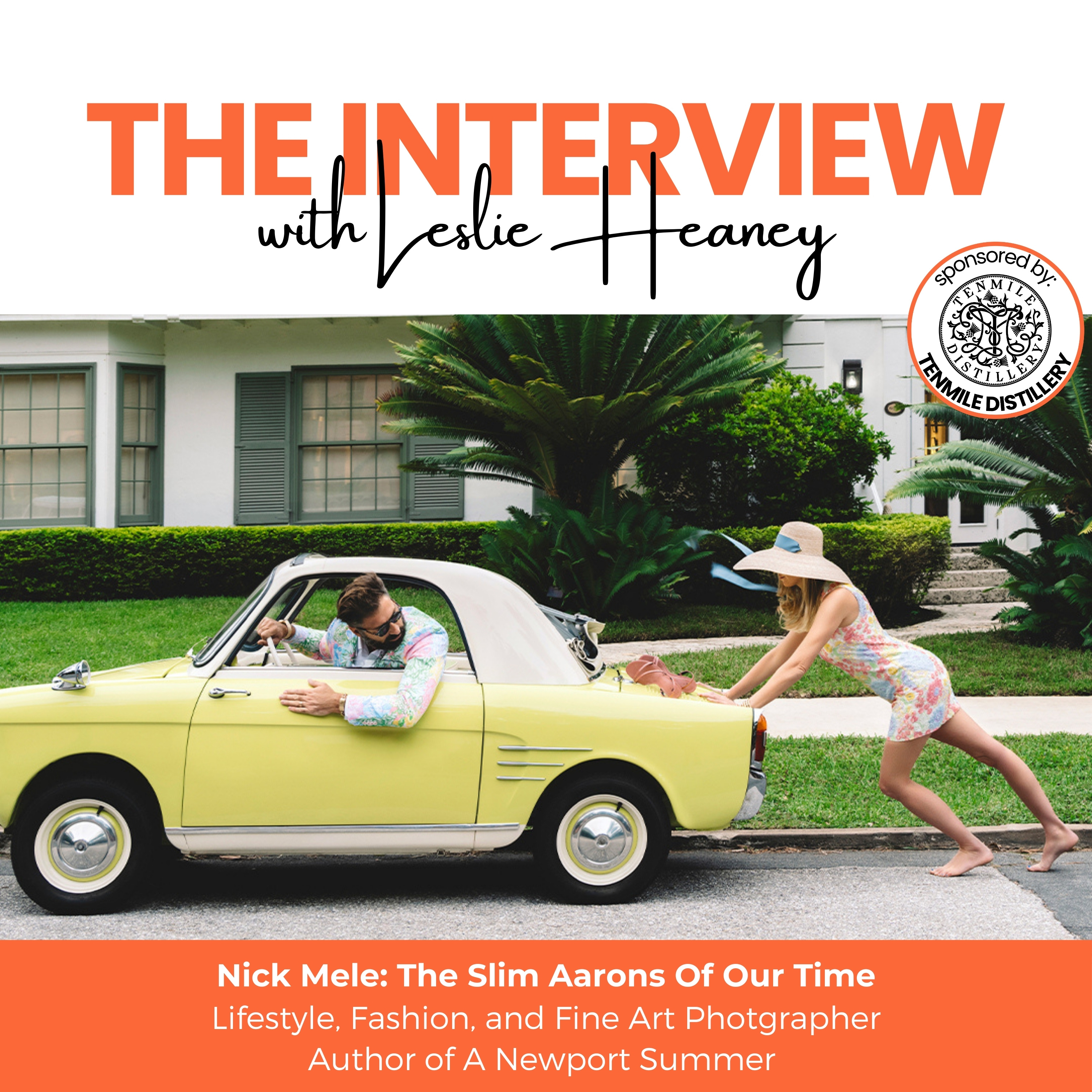
Hey, everybody, it's Leslie. You're listening to the interview with Leslie Heaney. This episode you're about to hear is part two of my conversation with acclaimed photographer Nick Mealy. Nick is known as the modern day Slim Aarons and his style is instantly recognizable. His photographs capture not just beautiful places and people, but really tell a story that pulls you right into the frame. In this episode, Nick and I talk about the winding path that led him to photography. He shares the lessons that he learned working with legendary society photographer Patrick Mullen, the role that access and really authenticity more than anything else have played in his career, and how adding humor to his work has really become his signature style. So this episode is one about creativity and resilience and finding your unique voice in a crowded field, in this case, photography. And something that Nick has done so incredibly well. I'm so excited about this week's sponsor, the 10 Mile Distillery. 10 Mile is an American single malt distillery based in the Hudson Valley about 90 miles north of New York. And it is the maker of the award winning Little Rest Whiskey, made through a slow distillation process with all New York State grains by master distiller Shane Fraser from Scotland. And when I say award winning, I mean it's earned a 95 out at the whiskey competition in San Francisco and a 96 at the New York International Spirits Competition. This is delicious. If you do not believe me about how delicious this is, the good news for you is that if you're in the New York area, you can go visit this incredible and beautiful distillery yourself. It's set among the most beautiful apple orchard with beautiful views of the mountains behind. Stop by for a leisurely tour or tasting or even enjoy an expertly crafted cocktail. They also have gin and vodka available. They also have this incredibly delicious Thai restaurant that is in residence there from Thursday through Sunday. To learn more about the distillery, you can Visit them at tenmiledistillery.com theinterview. All orders will receive 10% off if you put a promo code the interview at checkout. So, so go to www.tenmiledistillery.com the interview to get that discount, that 10% off. I promise you, you will not be disappointed. So with that, here is the amazingly talented and wonderful Nick Mealy. Before we get into the Newport piece though, I kind of want to take it back a little bit and talk about about you and, and all of your incredible photography. How did you, did you always know you wanted to be a photographer? When did you sort of start developing that interest and passion.
- [02:54]
B
I mean, I've always been into art. Growing up, I love to draw. I think somewhere in high school I started taking some photography classes and I realized I like the immediate gratification. You know, you take a picture and develop it and it's, and it's done. You know, you don't have to spend hours drawing and things like that. And so I was really into that. And then I did a little bit in college. And then when all of my friends decided to go off to New York after college to get fancy finance jobs, I had no idea what I wanted to do. And so I decided to apply to a program at the International center of Photography in New York just as a reason to go to New York. So I did a one year program there and really enjoyed it. And I still didn't know that that's what I wanted to do as a career. But I started working for Patrick McMullen, who was a kind of the event society photographer in New York City, and doing that and trying to kind of figure out what I wanted to do with the rest of my life. The problem is my parents, you know, were of that generation that says, you know, do what you love. Really? Yeah, you know, do do whatever your passion is and stuff like that. And they failed to impart on me that I actually needed to make money at some point.
- [04:15]
A
I mean, how amazing though that you were able, you're like one of the, the rare few that's able to actually do that. Like your parents were onto something where, you know, do that and doing something you love and that you're so good at.
- [04:28]
B
Yes and no. I mean, it's a, it, it's a, that's a great gift. But at the same time, you kind of lack the urgency that is necessary at some point that you actually have to pick something and stick to it and really dedicate yourself to a craft or whatever it is. And I think if I could give any young person advice, it's pick something, really give it 100% of your effort. And if you find it's not working, you don't like it, you can switch lanes. But my problem was, especially in my 20s, is that I didn't really ever pick one thing. I had a million things that, oh, maybe I'll do this and maybe I'll do that. And so I never gave anything 100% effort. I gave everything about 15, 20% effort. And so nothing ever quite stuck. So I actually spent most of my 20s kind of floating. Even went back and got my MBA because I just really didn't know. I think photography scared me as I don't know how I'm actually going to make a career out of this. So maybe I should try this. Maybe I should try this. So it really wasn't until I hit 30 and I had kind of run out of all my savings and I couldn't get a job doing anything. I ended up bartending and waiting tables. And so I was a 30 year old with a wife and a kid on the way waiting tables. And I had, you know, an undergraduate master's degree from Georgetown and a master's degree from icp. And I, you know, I, I was working behind a bar and I thought, God, this is really going to be a failure to launch if I don't figure anything out. And so I went back to photography, which was my original kind of passion. And really that's when I gave it 100% of my effort and that's when things actually started to work and succeed.
- [06:24]
A
So did you go back, was that when you went back to work with Patrick McMullen or did you at that point decide you were going to try to go out on your own?
- [06:33]
B
No. So I was working with Patrick right out of college while I was at ICP and right after, and it was kind of, you know, that was the easy, low hanging fruit, I guess, as far as photography work that I knew was there. You know, I, I'd kind of met Patrick a handful of times. I knew a bunch of people who worked in his office and you know, I liked going to parties. So yeah, it seemed natural and, and easy. So I, I was doing it just as a way to, to, to do photography, but I didn't really, I never really loved event photography. I ended up doing it for quite a, quite a while on my own and with Patrick, but it wasn't really for me. But I did learn a lot from Patrick and it was great. But honestly, it didn't pay great. It wasn't my passion, but it was a great learning experience.
- [07:29]
A
What would you say? I mean, talk about sort of like the lessons that you learned from him or from other photographers of kind of, because I think you're so talented in kind of capturing these rare moments. Did that come through experience your eye? Was that something that you got direction on from working with Patrick or from, from other photographers that you kind of follow and admire?
- [07:51]
B
Well, it's, it's funny because in preparation for our interview, I, I listened to a bunch of your other podcasts and I listened to your podcast with Douglas Friedman. Oh, yeah, it was Great. And I found myself being very jealous because he talked about how when he first started his career, he, he worked for all the, he assisted all these other photographers and learned a ton. And I think that especially in, in when he was doing it in the 90s and kind of when I was started, that was really the way to do it. That was, you know, the only, you know, kind of, the only way you kind of figured out the business. And nowadays there's so many, so many ways in, but, and so much you can learn online. But I was too scared I think, to do that. I didn't, I didn't really try to approach very many people. It was basically just Patrick. And I find myself being jealous of, of Douglas because I think he probably learned a ton of stuff that I never learned and I kind of wish I knew at this point. So a lot of what I, I do has been self taught, has been through experience, has been kind of trying different things. But as far as, as far as Patrick, what I learned from him and for your listeners who don't know Patrick McMullen, he's kind of during the 70s, 80s, 90s, early 2000s, he was the New York City event society photographer. You know, I think he started off kind of shadowing Andy Warhol and from there he was the guy, if you were having a party in New York, you hired Patrick and, and if you wanted to be kind of recognized as part of New York society, you sought out his photographers to get your picture on his website. And the thing that Patrick had, which I think a lot of event photographers don't have, is he just had this ability to just make everybody feel comfortable. He would get strangers and grab them and oh, you're beautiful, you're great, you guys would look great together, get together, let me take your picture. And he just had no fear to really go up to people and talk to them. And that was his real talent. I don't know that he was some fantastic technical photographer, but he was just so good at a party, making people feel comfortable in front of the camera and also acting like he was at the party. He was not a hired photographer. He was just a guest who happened to have a camera.
- [10:29]
A
Yeah, yeah, yeah. You know, he captured though he was, as you said, he would kind of bring people together and grab you together with a group for a picture. And it kind of made it a little, you know, it wasn't, it wasn't sort of planned. Right. It was a little more on the fly or spur of the moment. Right.
- [10:46]
B
And I think what really I really took out of that is that people want. There, there wasn't some great secret to, to event photography. A million people could, could, could take pictures at a party, but they wanted Patrick.
- [11:03]
A
Right.
- [11:04]
B
What I learned from that is it's a little bit of a cult of personality. Yeah, they wanted Patrick because they liked Patrick, they enjoyed his company, they thought he added something to the party, to the scene. And so I think I realized early on that the business of photography isn't just being able to take good pictures. It's how you interact with your clients, it's how you interact with the people around you. It's what you bring to, to set and it's how you make your subject feel. And you know, I, I look at so many, I don't really do event photography at all anymore, but I look at, at so many event photographers and they're dressed in all black and they're kind of fading into the background and trying not to be noticed too much. And I never wanted to be that. I hate, I hated the idea that the, the thing that worried me about being a photographer is I never wanted to be seen as kind of less than, as the help almost. You know, you look at a party, you see the bartenders and the waiters and like the photographer can oftentimes just be seen as an extension of that. And I, I never wanted to be that in any facet of photography. I. So when I would go to, to an event, I would try if there was a dress code, if it was black tie, if it was, I would dress exactly how the, the, the guests were dressing. And I would, I would try and dress even better so people would, would even notice me. I would be in bright blue blazers and cool shoes and I would stick out from the crowd and people would come up and talk to me. Oh, you should be in front of the camera and all this stuff.
- [12:51]
A
Yeah, yeah, yeah.
- [12:51]
B
And A, I thought that was great because it means I'm memorable and if people see me on multiple occasions, they'll start to put a face to the name. But B, you know, I would, I would get a drink from the bar. I would have to get a drink from the bar because I'm actually terribly shy and it took me forever to get used to going up to strangers and asking to take their pictures. So for the first however many years, I was shit faced at most of these parties.
- [13:18]
A
Probably doing great work by the way, because you were like totally, you know, relaxed and part of the party. Right?
- [13:24]
B
And I would, yeah, I would eat the hors d' oeuvres I would talk to, you know, as long as I got the job done, I, you know, I would feel free to, to mingle and do my thing. And I think that's kind of what makes a great party photographer in a lot of ways.
- [13:42]
A
Well, if you think about there's Patrick McMullen or Mary Hilliard or Julie Scarritt or people that know the people at the party, you have that kind of relationship. And it does make for, I think, a better picture at the end because the person that's having their picture taken is excited to see the photographer. And it makes, I think for a better, like a better picture in a lot of ways. So you're 30, you decided you're gonna go back to photography because you loved it and you realized like you have a baby on the way and this is, you know, you're gonna give it your all. What was your first step? Were you thinking about taking sort of more portrait pictures of people? Were you thinking about interiors? Where was your head at?
- [14:23]
B
Well, so I've always loved people. For me it's always about, been about taking pictures with people in, in the scenes. But at that point I would take any job I was offered. At that point it was just about making money that wasn't, you know, behind a bar. So it would be food photography, party photography, portraits, anything, you know, with an eye on the type of photography I, I wanted to do. So it was, you know, I would do all that for money. But I knew where I wanted to go. I knew I didn't want to be a wedding photographer. I knew I didn't want to be really an event photographer. I knew that I kind of wanted to do something a little bit more elevated. Maybe it was fashion, maybe it was lifestyle for magazines, but you know, I kind of had a sense of, of where I wanted to be and that was my goal. And we had just moved back from la, so after business school I went out to LA thinking I'm going to get into the movie business, I'm going to do film finance. And didn't really love the people in la. Didn't had a tough time kind of breaking into the, to the business. And I was so far away from the East Coast. I'm in the east coast, kids, all my friends and family were back on the east coast. And so we spent about a year out there and we came home with our tails between our legs and we came and spent a year or two in Newport. I'd never lived in Newport year round. I grew up in D.C. i only spent the summers here, and so we spent about a year or two here in Newport and it was terribly depressing.
- [16:01]
A
I'm only laughing because I myself, I went to St. George's so I'm very aware of the Newport winter.
- [16:09]
B
Yeah, Newport is great till about January, and then January to June is gray and depressing and half the restaurants and bars are closed and you just want to kill yourself. So I was bartending at a bar here that's no longer around called Asterisks and Obelisk.
- [16:28]
A
Oh, yeah.
- [16:30]
B
And kind of. I was living above my parents garage with my wife and my parents were like, you got to get out of here. You're. You need to figure something out. So I was like, I was applying to a bunch of jobs and nothing was working out. And so, all right, I'm going to really do photography. Should we move back to New York or the New York area? Because I didn't want to raise kids in New York. So should we move to like, Connecticut and I can commute into New York and try and do it there, or should we move to Palm Beach, Florida, where I kind of spent a lot of my vacations growing up in winters. And I kind of knew I could get event photography work. I knew some people and I thought it might be kind of an interesting thing. And so we decided on that and it was actually the best decision I could have made. I was in the right place at the right time for Palm beach and for my photography. I have a style, or I've developed a style that's like you said, very much kind of slim errands esque. And I've always kind of documented that luxury lifestyle in these resort sort of towns. And I've always, for a long time, been very interested in the sociology behind these places and these people having grown up in it and, and been around it and, and that sort of thing. So I had a style that very much fit the Palm beach vibe. And as luck would have it, there had been kind of a resurgence in the last, you know, 10, 15 years of interest in kind of that slim errands style and vibe and a nostalgia for the, for, for the 70s and the 60s and that era, that kind of golden age of luxury. And then Palm beach really kind of started to take off as I was there, you know, it was a lot of young people started moving down there.
- [18:23]
A
What time is this, Nick? What. What year are we looking at?
- [18:26]
B
This would be 2014.
- [18:29]
A
Okay.
- [18:30]
B
And just a lot of young people, for whatever reason, started moving down there. And Palm Beach Started getting a little bit hipper and more restaurants, and there were more. It was just a much more vibrant place than it had been when I was growing up. And then Covid hit, and it became the place to be. Yeah, all these eyes were on Palm beach and all these brands wanted a piece of it and restaurants and stuff like that. And at that point, by Covid, I was. Had kind of developed, you know, myself into a big fish in a small pond. I was every. You know, if you asked anybody, oh, you should hire Nick. Nick's the guy. So all these brands and people that were coming down there started hiring me. And because they wanted that vibe, they wanted that authentic Palm beach look. And so I think I did a lot better than if I had moved to New York. And I was just one of a thousand photographers trying to make it in New York City without a kind of. Without a voice and identity. And what I've realized over the last 15, 20 years of doing this is that you really. Especially nowadays with everybody having access to a camera in their pocket and everybody being able to take a beautiful picture, the barrier to entry to being a photographer is practically gone. You used to have to spend all this money on equipment and know how to use it and stuff like that. So now anybody can take a pretty picture. I could go on Instagram and throw a stick and find somebody who could take a great photo. Yeah, you have to. Nowadays, if you want to get hired and you want to be successful, you have to have a voice. You have to have a point of view. You have to have a brand. You have to.
- [20:16]
A
So interesting. Yeah, you're actually telling a story like you're. All of your photographs tell a story. And to your point, I never actually thought about that. You're right. It's so accessible. People take a great kind of, like, picture of a landscape or a sunset or a group of people, but that's not where your talent, your value at. You're coming at it from actually, like, creating a. Creating, as you use the word, vibe, but creating a vibe, but creating, like a window into, like, a life or a feeling. Right. I mean, the pictures that you took, like you did those collaborations with Brunswig and Fee, right, for their law menagerie, like Fabric Line and the Colony Hotel. And there's real. It's almost like you're reading a book or looking at a movie in a way, too, with those pictures, because they're telling kind of a story and evoking a certain feeling from the person who's viewing them.
- [21:07]
B
Well, it's funny. When I was in photography school, I was taking a lot of portraits and I was really kind of. I was photographing my grandmother a lot and a lot of her older grandam type friends in places like Newport and things like that. But I was doing these real close ups. I thought, oh, how interesting are their faces with the R and the jewelry and stuff like that? And they were good. But I think someone said, well, why, why don't you pull back a little bit? And I realized the spaces that they were in were just as interesting as these people and that, that there are these fabulous rooms and things like that and, and that told more of a story. If you can do, you know, an environmental portrait and, and kind of get, get more of the vibe, then that was more interesting. And then so I started looking at it as almost like you were looking at a, a scene from a play or a movie and, you know, every element kind of added to it. Especially if you're photographing someone who's not that interesting in of themselves, like the space maybe can speak more to them, make it a little bit more interesting. And then creating kind of a scene where people are like, oh, well, what's kind of going on here? Or who is this person? I want to learn more. You know, that's kind of how it started. And then when I first started my career, I wasn't really working at all. I didn't have that much to do. So I, But I still wanted to take pictures. I'm like, well, what could I take pictures of? And I just had, you know, a son and my wife and I'm in this fabulous location, locations. And I was looking at Instagram and there were these people on Instagram and they were showing these fabulous lifestyles and these great places like Newport and things like that. And they were, they were shooting kind of a vibe, a lifestyle that I knew very well. But I was, I would look, I'm like, well, I know that house. That's not their house. Yeah, those are, those aren't the, you know, the people that, that's not. So they were almost, you know, they were shooting in front of other people's houses or renting houses or renting cars and creating this lifestyle that was very real to me, but clearly not fake to them. And so they were kind of fabricating this, this, this fabulous life to look great on Instagram and stuff like that. I'm like, well, I can do that. I know the people who live there. That's.
- [23:39]
A
Well, actually, I mean, in your case, you talk about your Grandmother, some of her friends. And those rooms and those spaces, the access that you have through your relationships and growing up and things you're giving people kind of a behind the curtain view of places that many people. Rooms, people haven't seen or experiences, particularly in Newport. I actually interviewed Trudy Cox last week. We talked about the history of Newport and the Gilded Age a little bit. But some of those rooms, types of rooms like that, still exist in private hands. Right? Which is sort of. We're going to talk about your book, right? A Newport Summer and Palm Beach Living. But part of those books is you kind of. You getting. Giving people a look behind the scenes into some of those spaces and people.
- [24:22]
B
Well, that. I mean, that all ties in, I think. Again, another thing I tell young photographers and that I realize is that it's a very. It's a very competitive field, photography, so you have to lean into whatever competitive advantages you have. You know, I realized for me, my competitive advantage was access. You know, I had access to people and places that most people would never get to see or photograph. And most of these people wouldn't feel comfortable around them. I. I knew that they had a comfort level with me. And whereas most people, they might say, oh, no, I don't want my picture taken, they. Because they've known me their entire lives, or they knew my parents or I'm a friend of a friend, they feel a comfort level that I'm not going to paint them in a bad light or try to expose them or something like that, or expose them. They trust me. And there's a lot of, you know, kind of negative connotations around wealth and things like that and. And luxury. And people never want to be. They never want to be in a position where they're being criticized or looked down upon, and I want to celebrate it. This is. This is really where I grew up and how I grew up and the people I grew up around. And I have a lot of reverence for it, and I want to show what I love about it. And I think going back to what I was talking about at Instagram, like, I never. I would look at these people and all this stuff, and I would be like, it's almost toxic positivity, this idea that life is perfect and my life is so great, how great everything and how rich I am and how fabulous my house is. And I hated that, that, you know, I think that no matter how much money you have or the way you live, people deal with a lot of the same problems and life isn't perfect. And raising Kids is hard and it's really ghost to kind of show off and say, like, look how great my life is. So I always wanted to, to show it with a little bit of a wink and a nod and a little tongue in cheek and, and say, you know, this is all a little ridiculous. It's fabulous and it's great, but it's all a little silly. And, and, and so I, like I said, I, I wasn't really getting any work at that time. And so I had these kids and a wife and access to fabulous places. So I just started photographing my family in places like Newport and Palm beach and creating these scenes. And that kind of showed off like we're not great parents sometimes and you know, we forget, you know, that our kids are unattended and they've crawled up on something expensive and they're about to kill themselves. You know, like my two boys. I took a photo where one of them had put the, the other one in a pot on the stove and was decided he was going to bake, you know, his little brother. And you know, that's what every, you know, older brother wants to do when the new one comes along. So it was, I would, you know, create these kind of these scenes and this sort of thing that people really took to and enjoyed that it was funny and self deprecating and people really started to respond to kind of the humor and the whimsy in my work more than anything else. And so I really leaned into that as well because that was a competitive advantage and that was something that I enjoyed. So I started to try and bring that humor into all of my work. And then that when I finally decided to get into fine art and sell my prints and things like that, I was creating things that specifically kind of emulated the photography I did with my family, but made it more accessible to everyone and really kind of tried to create scenes that people could lose themselves in and these humorous, luxurious scenes.
- [28:22]
A
I'm so excited about my latest sponsor, Cozy Earth. Cozy Earth's bamboo sheets are temperature regulating and guaranteed to give you the best night's sleep you've ever had. They're made from viscous from bamboo and they naturally wick away heat and moisture from your body, allowing you to sleep several degrees cooler. Now, for ladies of a certain age like myself, who may be experiencing night sweatshirts, those several degrees cooler make all the difference. They alleviate your symptoms and they help you sleep through the night. My Cozy Earth sheets have literally changed my life and my husband's too. We just arrived at our Summer rental and we have a temperamental nest thermostat in our room. So I've been tossing and turning just dreaming about my cool Cozy Earth sheets back at home. Cozy earth sheets not only keep me cool and allow me to sleep like a baby, but they're also the softest sheets I have ever owned. I it feels like you are sleeping on a cool cloud. I truly I could not love this product more. Another amazing thing about cozy earth sheets is that you get a free 100 night sleep trial so you can try them for 100 of the hottest nights this summer. And if you're not in love with them, you can return them hassle free. But trust me, you will not want to return these sheets. So upgrade your summer and your life frankly and go to cozyearth.com use the code interview at checkout for 40% off temperature regulating sheets, apparel and more. Trust me, you're going to feel the difference the first night. That's cozyearth.com, use the code interview for 40% off sleep cooler lounge lighter. Stay cozy. Well, they're almost like, you know, sort of like paintings in a way. And I mentioned like telling a story. But you really like the scenes. Like if you look at your website for example, like the landing page got the picture of the. I don't know who it is cause their back is to. I'm sure it is in the caption somewhere. But you know, he's at a dining room table reading the paper and his horse is in the dining room. Right. Like the whimsy of that. Obviously he's a rider. Maybe he's in Virginia. I can't recall where it was taken but so speaking of the horse, this is just me. I've always been curious about this. You've got for the Brunswick project. You had a monkey like on your shoulder. You had a camel through a window. You had an alligator for the colony. Shoot, like just as a sidebar, just because I'm curious, you get the guy that does the petting zoo that comes or is there like a Jack Hanna outfit that comes and does the animal handling? Because I mean having a monkey on your shoulder, I was like, wow, Nick, that's really. This could be like an outbreak situation. I mean, how do you is it, you know.
- [31:02]
B
Yeah, I don't know when along the way I kind of became the animal guy. It just sort of happened. I think it started with the colony. I've always loved the idea of subverting normal expectations, you know, so putting things where you wouldn't expect Them. And you know, and like I said, if you expect these people to be good parents, maybe show them being bad parents, if you expect, you know, if you expect somebody to, to have a normal pet, maybe they have an alligator instead. And also it goes back to stories I, I heard growing up of these fabulously wealthy people who would be incredibly eccentric and have strange pets and have strange things like that. You know, I actually in Newport growing up, I lived right down the street from Doris Duke. And she had three camels on her property. Yes, you had three camels on her property in Newport, Rhode Island. And you would walk the cliff walk and you would look through the gate and you would see these camels just roaming around in Newport, Rhode Island. And so to me, that was so fantastic and so eccentric and so great and so fit into what I was trying to capture and show. And so when I finally decided to dive into, to find art, I decided to start at the Colony. I love the Colony and I love Sarah and Andrew who own it. That becomes two of my closest friends in the world. And so I said to her, you know, it's a pet friendly, it's a dog friendly hotel. I'm like, well, what if the people staying there didn't have a dog? What if they had an alligator? You know? So I thought that would just be great for, for this idea I had. And so I have a great producing partner named Kristen. And she, I put her on it and she found a guy who had a ton of animals. And we rented an alligator for $2,000 an hour. The most expensive model on set.
- [33:00]
A
These are the details that I'm getting at because, you know, we had, there's that guy that would come to Newport to the club that Nick and I go to there. And he was later arrested, actually. I don't know, that's a sidebar. But, you know, they would do animal night or pet night or whatever, and the alligator would come out, you know, and they duct tape the thing. And I'm thinking you must have had like a similar outfit in Palm beach bring in some guy from the Everglades.
- [33:22]
B
Yeah, we found that guy. And that guy ended up having a ton of animals. A camel and all these other things and a monkey and stuff like that. And so I started bringing these animals into the, into the scenes, you know, especially you, you, you talk about the Brunswick and Fee thing. Their, their, their product line that we were launching was called La Menagerie. You know, the Menagerie. And it was all very much maximalist kind of animal print type things. And so I thought, well, what if the campaign is this family living with a bunch of exotic animals.
- [34:00]
A
Which, by the way, as you pointed out, happen in Newport, like, at any time.
- [34:04]
B
Yeah, totally. So, I mean, pretty. Pretty soon, you know, this is another barrier to entry, like I talked about with photography, that, you know, not everybody is going to go out and hire animals and spend money, but pretty soon, you know, with AI, anybody's just going to be able to say, hey, oh, yeah, put an elephant in my backyard. That's gonna ruin anything that makes me special. Pretty soon.
- [34:28]
A
No way. No way. But the Newport piece. So you mentioned the seeing the camels through the gate, and I think sort of that kind of exemplifies maybe a little bit of the spirit of what you and Ruthie Summers, who was the writer, I think, on the project of a Newport summer, and you were the photographer for it, and you guys did it together, but you were sort of trying to capture that, right? The sort of the view behind the curtain in Newport. A little bit.
- [34:57]
B
Yeah. I mean, yes and no. I don't. I don't like that kind of term, the view behind the curtain or anything like that, because we weren't trying to really expose anything.
- [35:05]
A
Right.
- [35:06]
B
Trying to give, like.
- [35:07]
A
Yeah.
- [35:07]
B
An inside view. You know, I. I tell people this is, you know, this is Newport, Rhode Island. But this is my Newport. This is how I see Newport. This isn't how everybody sees Newport. This isn't like the guide to Newport. This is. This is my love letter to the new.
- [35:25]
A
Yes.
- [35:27]
B
How I grew up and how I loved it and how how I really kind of. Kind of experienced Newport. And it really sprung out of the fact that I. I've just been taking pictures here, basically since high school, documenting my friends and family and, you know, partly to document, but partly just because I had a camera and I wanted to take my friends and. And I wanted to take pictures of my grandmother and my parents and. And things like that, you know, and over time, I kind of started to realize, like I said earlier, that it was a view that not everybody got to see. It was kind of a competitive advantage. And so I started to lean into that. But it started out as just me, you know, with a disposable camera, taking pictures of my family and friends. And over time, you know, 10, 15 years, I had developed this whole catalog of photos. And, you know, some of it was personal, some of it was jobs that I had been hired, things like that. And. And Ruthie Summers, who was a fabulous decorator. I don't think she's really decorating much anymore. But she was, had amazing taste and was good at her job and had, had bought some of my stuff for her projects. She kind of came up to me and you know, we, you know, we should do some stuff like this, you know. And we did a story that ended up in the New York Times magazine about kitchens in Newport, Rhode Island.
- [37:03]
A
Oh yeah, I actually, I remember that. Yeah.
- [37:05]
B
All these fabulous houses in Newport have these old kitchens that haven't been updated since the 50s, you know, because they're functional and it's not many nowadays. Everybody spends time in their kitchen. It's kind of the entertaining hub and a lot of houses. But for forever that was just, you know, for the chef, that was for the, you know, the people who worked in the house. Nobody actually like hung out in the kitchen. Even if you didn't have help. That's just where you cooked. And then you, you spent time in the dining room, in the living room. So all these kitchens in Newport just hadn't been updated in forever. And they were these fabulous kind of vintage things with appliances that were still from the 50s and 60s and worked better than modern appliances.
- [37:51]
A
So we owned Barton Googleman's house, Starboard house and our stove, the Mantises now own it, but was 95 years old for real and totally functional. It was like at a salamander stove. I mean it was gigantic. It was like this dark metal 95 year old stove.
- [38:12]
B
Yeah. Nowadays your washing machines always, I mean your dishwasher is always breaking down and your oven needs to be fixed and things like this. All these appliances lasted forever. And actually that was as far as Ruthie told me was a drawback to us selling the story because so many of these design magazines advertise with all these appliance companies and things like that and we had all these old.
- [38:40]
A
Oh, that's interesting.
- [38:41]
B
So yeah, didn't want to kind of show off these, these dated kitchens. So it finally.
- [38:47]
A
Appliances that you don't have to replace because that's how it's going.
- [38:51]
B
So. So it ended up in the New York Times Magazine and I really enjoyed working with Ruthie. She kind of brought a perspective that I didn't have at the time and actually kind of pulled me back in. Whereas I said earlier that, you know, in photography school I really pulled out in my portraits to show more of the things. She kind of reminded me that the details are fabulous and.
- [39:14]
A
Yeah.
- [39:15]
B
Whereas not in portraits but in interiors and things like that. I really got into photographing the, the details and the cracks in the Walls and the things that made Newport so fabulous. And so we, we did that story and we pitched a couple of other stories, but then we're like, why don't we just do a book?
- [39:36]
A
Yeah.
- [39:36]
B
And so we went out and, and, and pitched a bunch of publishers and, and, and we met with Von Dome and they, and they loved the idea and they had never done a book with people in it before. They, they were strictly interiors books, but they kind of really loved my photos and liked the idea. So they were like, all right, we'll take it. Take a chance on it. And so, you know, I had shot 15 years worth of stuff, but at that point we started to put it together and how's this going to be edited and form a story? And we decided on it being like a summer's worth. So every chapter was June, July, August, September. And Newport has kind of a different vibe in each of those months. And so we kind of tried to, to cater to that where, where June is kind of slower and foggy and people are just sort of getting there and, and, and opening their house for summer. And then July is really when everybody's super excited to be there. Fourth of July, and it's really everyone getting to know each other again and having parties and whatnot. And then August is more. The galas and the boat races and the. All the. Sort of the folk festivals and coaching and all that sort of stuff. And then September is kind of winding down again and is a little bit slower. And it's where, you know, it's kind of the sunset of the season. And so we really kind of tried to frame the book that way and we had an idea of what was missing. And so Ruthie and I went out and kind of tried to find. Fill in the holes and shot more portraits and shot more houses and details and parties. And, you know, I really love this book because it really just. It's. It's not just interiors, it's not just portraits. It's not candids. It's everything. It's details. It just really kind of gives a vibe of. Of what, what Newport is for someone who grew up here and coming here and, and, and is in, you know, kind of the parts of Newport that not everybody gets to see. Behind the hedgerow, if you will.
- [41:47]
A
So let's talk about. So you. I loved how you. Yeah, I was. You describe it as a love letter. And so let's. I want to dive in now to like, some of the places and things that you like. Other parts of Newport that you, that you love. And why you love them. And for people that are trying to. Who want to see your work or get to like see some of the, you know, different types of photographs we've described. You have so many representations on your website and also people. Things that people can buy and you know, photograph prints of yours and other things that you're doing. And speaking of that, you're doing this collaboration called Paw's Life Play Games Society Social. And I love, I love the table, I love the game. Like the furniture is just such a. So well designed, it's so attractive in some cases such a throwback. We have a house down in Antigua and there's a. The chair that you have sort of the rattan blue painted chair. We have those exact chairs that were there from the person that owned it like 50 years. I mean, anyway, it's amazing. But you. Yours look a lot better and are much more chic than ours. Ours are sort of, you know, like falling apart at the seams. But it's just a, it's just, it's. That's such a cool collaboration. How did that come about? Were you.
- [43:01]
B
Yeah. Now please check it out. For those of you listening, it's Society Social is this fantastic brand. It's owned by Roc Owens and her family. And I can't speak more highly about her or, or her company. And I've been following them for years on Instagram. They started out. She started out making fantastic bar carts, which you don't. It's kind of a niche item and you don't really see a lot, you know, anymore. But she was, you know, these really intricate throwback bar carts and I was obsessed. And then she did a collaboration with the Colony Hotel and did all of their furniture when they redid their hotel a few years ago. And so I got the opportunity to meet her and we hit it off immediately. And I've really, in the last couple years, since I started the fine arts side of my business, have really started to want to expand into more of a lifestyle brand. Kind of a la Jonathan Adler type thing. And so doing a collaboration with Society Social made total sense and they're really up for that sort of thing. And they asked what kind of firm furniture I would be interested in designing or collaborating on and I said game tables because yeah, I thought it's one of those things that you don't really see anymore. But I grew up around all the time and, and had a real affection for and so I thought if we could do a really cool game table similar to what I grew up with Where. With hidden compartments and things like that. That would be great. And so we kind of went back and forth. I told her what kind of my vision, and they brought a design and I said, well, I like this and I don't like that, and can we do it more like this? And so it was really kind of a collaborative process. More on their end, more input on mine and design on theirs, but. And they did a fantastic job. And so they created a game table and chairs and some little rattan benches and. And there's a. There's a whole. And. And these gaming table. These gaming chairs as well, which we had the idea for, because nowadays everybody's playing video games and there are these things that have developed called Video game chair. Gaming chair.
- [45:16]
A
Yeah. Yeah.
- [45:18]
B
So hideous.
- [45:19]
A
Yeah.
- [45:20]
B
So I said, let's do kind of a chic version of that. And so we created these little chairs that sit on the ground that are perfect for a kid's room or a den or something like that that you can sit on, on the floor so you're kind of closer to the screen. And all the furniture is totally customizable with different fabrics and paint colors and things like that. And so we did this great collaboration where we went and I did the. The photos for the campaign and we're selling the furniture together and.
- [45:53]
A
Yeah, I love, love what you did. The furniture is so great. It's really great. And I love sort of how you set it up. You mentioned how you can customize it and they could. It's terrific. So is that where you're thinking? My next and final question for you, Nick, is kind of what's next for Nick Milan? I think the. Is that what your vision is? You're thinking more about getting into kind of the lifestyle brand or in addition to the photography piece?
- [46:18]
B
Yeah, I mean, I love photography. That's always going to be my main focus. But I do a few different types of photography. I do commercial photography. I work for a lot of big clothing brands like Lily Pulitzer and Vineyard Vines and. And J. McLaughlin and things like that. Roberta Roller Rabbit, Love Shack, Fancy, those sort of brands. But that's not really my passion. And I do a lot of interior photography, which ties into. I mean, I love fabulous interiors, so I work for a lot of great interior designers and magazines and things like that. But I've really been kind of shifting my focus more towards the. The books, but also fine art and really selling my prints and really being able to create these scenes and then sell them and go out and we sell them. I had a big show at Bergdorf Goodman last summer, two summers ago and last winter. And they still carry my stuff in retail. And I have a bunch of different. I sell direct to consumer on my website, but it's also in person in a lot of retail outlets and sites like Cherish and Artsy and things like that. And so I've really kind of shifted my focus to that, but also towards building myself up as a brand in and of itself and as a tastemaker and doing these collaborations with Brunswick and Fee and Society Social and aligning myself with other brands that are really great. And, you know, I think eventually I'd love to have my own wallpaper line and my own sort of things like that and, and kind of. I think what I bring to the table, which is great, is that I can create or endorse a product or collaborate on a product, but then I can also imagine the campaign and shoot the campaign and.
- [48:06]
A
Yeah, yeah.
- [48:07]
B
I'm not just adding. I'm not just adding a face and a name to these collaborations. I'm adding an actual creative output to it.
- [48:16]
A
You know, your voice and your eye to it. And kind of capturing. Yeah, yeah.
- [48:20]
B
And kind of integrating the, integrating the products and the things that I really love and my taste into. Into my photography. You know, I. So that's really kind of where my head is at. You know, I'm in the process of doing kind of a fine art collaboration with Lily Pulitzer where I'm integrating their vibe and their clothes into some of the scenes I'm envisioning in. In places. And, and ideally we're going to put out a. Put out a kind of series of, of photographs together that.
- [48:53]
A
Oh, I can't wait. Is that. Are you working on that right now?
- [48:56]
B
I'm working on that now. You know, we haven't, we haven't ironed out all the details, but I've, you know, started shooting it and I have a great commercial relationship with them, shooting a lot of their campaigns and things like that and the team, there's. So we're kind of aiming that towards the end of this year, early next year, and kind of pushing out those prints together as a team.
- [49:19]
A
I can't wait to see it, Nick. I can't wait to see it. It's going to be awesome. I love everything that you do. I love your photography. I love just your unique eye and whimsy and your perspective that you bring to the work that you do. And I am so grateful to you to, you know, taking the time to give people that are listening all the listeners sort of this kind of inside, unique perspective of someone who loves Newport and has grown up there. And anyway, so nice to see you and thank you so much.
- [49:49]
B
And thank you, Leslie. Let me know when you're up here, okay?
- [49:53]
A
I will, I will. Nick. Take care. Have a great weekend.
- [49:56]
B
You too.
- [49:56]
A
Bye. That brings us to the end of this episode of the interview. A huge thank you to Nick Mealy for joining. I so enjoyed learning more about Nick's incredible career and I'm sure that you all did too. Also, a big shout out and thank you to our summer sponsor, 10 Mile Distillery. I don't even like whiskey, except I love their whiskey because it's so delicious and the bottle is so beautiful on my bar. So run, don't walk. And check out their products on their website, www.tenmiledistillery.com. don't forget to use the promo code the interview at checkout for 10 off. Also a shout out to our sponsor, Cozy Earth. They have incredible sheets and pajamas, everything that you need really for back to school for all of your college kids or even for yourself for a little fall refresher. And they're giving listeners of the interview 40% off. So be sure to check out their website and all their amazing products. And don't forget to put the promo code the interview in at checkout for 40% off. And as always, thank you all so much for for listening. I really appreciate your support of the podcast. If you enjoyed this episode, please rate or review us on Apple Podcasts or Spotify or wherever you get your podcasts. We'll be releasing a new episode coming up this Wednesday, so until then, this is Leslie and thanks for joining the interview.