← Duologue with Leslie Heaney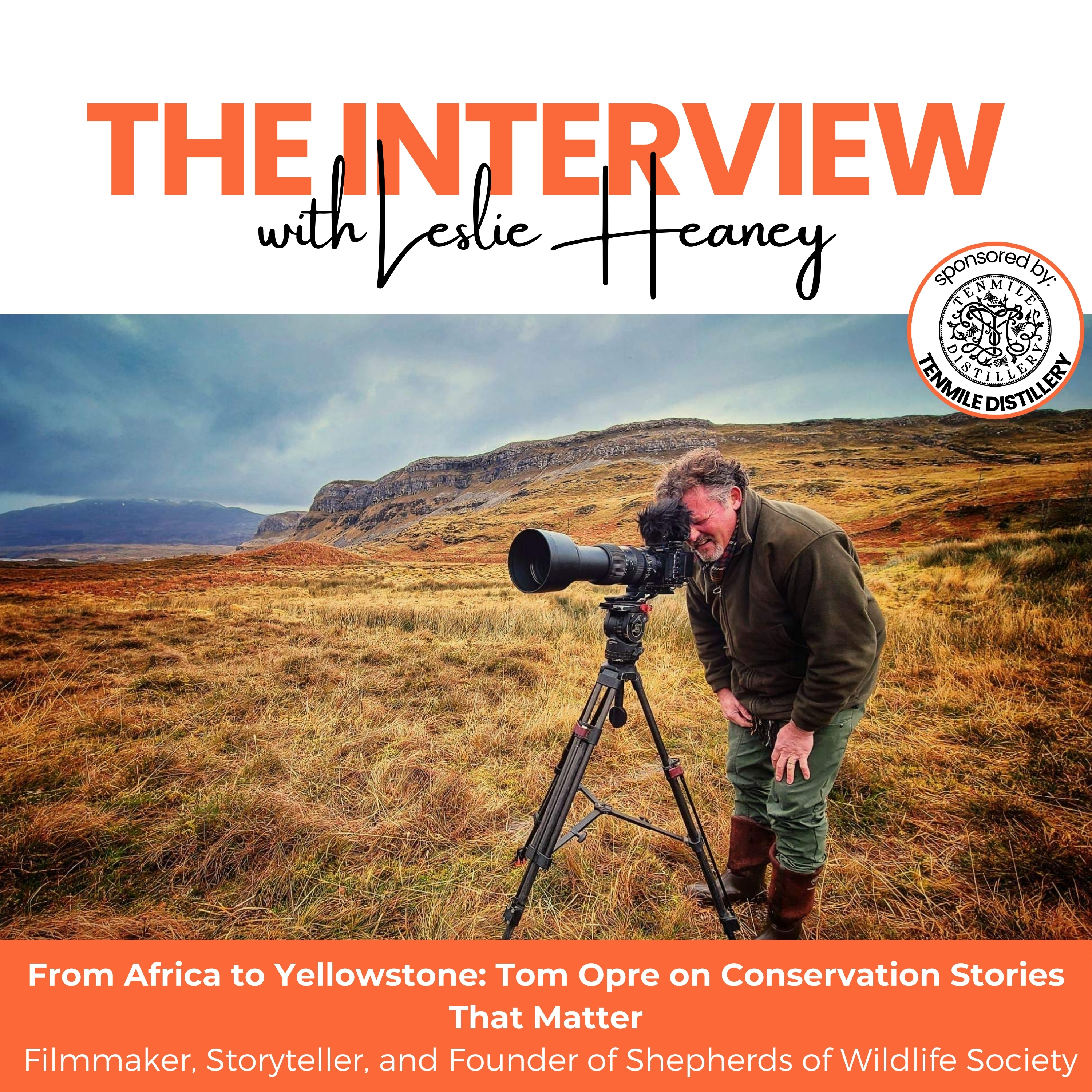
Duologue with Leslie Heaney
Pt. 2 From Africa to Yellowstone: Tom Opre on Conservation Stories That Matter
00:54:28
Loading summary
Transcript71 lines
- [00:05]
A
Hey, everybody, this is Leslie and you're listening to the interview with Leslie Heaney. Here's part two with documentary filmmaker and founder of Shepherds of Wildlife Society, Tom Opry. In this episode, Tom and I talk about his most recent film, the Real Yellowstone, in which we really explore the sacrifice of progress in Montana and the importance of conserving the rancher's way of life, both for wildlife and land habitat conservation. And don't forget, Tom is offering listeners the opportunity to watch this film for free through his website through the end of the month. You can learn more about the film and access it through his website, shepherdsofwildlife.org I'm so excited about this week's sponsor, the 10 Mile Distillery. 10 Mile is an American single malt distillery based in the Hudson Valley about 90 miles north of New York. And it is the maker of the award winning Little Rest Whiskey made through a slow distillation process with all New York state grains by master distiller Shane Fraser from Scotland. And when I say award winning, I mean it's earned a 95 out at the whiskey competition in San Francisco and a 96 at the New York International Spirits Competition. This is delicious. If you do not believe me about how delicious this is, the good news for you is that if you're in the New York area, you can go visit this incredible and beautiful distillery yourself. It's set among the most beautiful apple orchard with beautiful views of the mountains behind. Stop by for a leisurely tour or tasting or even enjoy an expertly crafted cocktail. They also have gin and vodka available. They also have this incredibly delicious Thai restaurant that is in residence there from Thursday through Sunday. To learn more about the distillery, you can Visit them at 10miledistillery.com all orders will receive 10% off if you put a promo code the interview at checkout. So go to www.tenmile distillery.com the interview to get that discount, that 10% off. I promise you you will not be disappointed. And with that, here is part two with Tom Opry.
- [02:22]
B
Living in Montana. Been here for almost 30 years, raising four kids here, my wife and I, I mean, this is God's country. We love Montana. It is not the Yellowstone that you watch on television, folks. And so I watched the first couple versions of that and of course I've been around the farming and ranching communities. I'm a sportsman. I do a lot of fly fishing. We spend a lot of time traveling around Montana and we love it. We love the people. The people here are second. They're very Special people here. And so when I watched the first couple episodes of the television show Yellowstone, I was like, huh? Is that how they're portraying us? And then the kind of. The last straw for me, Leslie, is when they started using the names of people that I'm friends with, farm ranchers that have been here on the landscape for 100, 150 years. And they started using some of their names in the scripts and insinuating this or insinuating that as using their names.
- [03:13]
A
As having them be real characters in.
- [03:16]
B
The show or just like the such and such family does this or the such. And I'm like, wait a minute. No, they don't do that. This is BS and like, I don't know how they got away with it, but it was in there. And I was like, oh, man. And so we came out with the film the Last Keeper. I ended up being down in. In a. The Madison Valley on a friend of mine's ranch, screening the film with a bunch of other friends there and ranchers and. And we're trying to raise some money so we can keep promoting these and producing these films. And so they're like, well, why don't you do something about all of us? And so, you know, we started filming about two and a half years ago on the Real Yellowstone. Very, very provocative title. Right. And believe it or not, I've filed for the trademark on it. No one's ever created a. A television show, a book, or a film called the Real Yellowstone, so we filed for a trademark. So far, so good. We haven't been told.
- [04:01]
A
No, Taylor Sheridan hasn't come after you yet because.
- [04:04]
B
No, no, as a matter of fact, I wish he would because if he did, I could sell a million of our digital cinema tickets. Because everybody know what he's bitching about. No, I. Nothing against Mr. Sherrod Eye. He's done a phenomenal job of bringing awareness to a lot of issues that we do here in the Rocky Mountain west and abroad for. Would welcome the opportunity to work with him on some of these projects because I think he's got a. He has the ability to help get that message out, which is important.
- [04:28]
A
Sure.
- [04:28]
B
You know, and I only brought that.
- [04:30]
A
Up because, you know, that Rip created a coffee line and he promoted it on the Today Show. Remember, he was on TV and the logo for it looks very similar to the Yellowstone ranch logo. And so he. And let's just say Rips Coffee is no longer a. Yeah.
- [04:50]
B
Well, you can see our movie poster behind me, and it says the real yellow.
- [04:55]
A
Yeah, yeah, yeah.
- [04:56]
B
It's pretty obvious what we're doing here. So yeah, again it's about rural communities, about the relationship with the land. In this case it's multi generational ranching families, farming families and other people that have that connectivity, that are doing good land stewardship, good wildlife conservation. And so. And it's all the issues that we deal with that, that come with that because even you are doing a good job quite often there's unintended impacts and unintended consequences. And like we talked about child brides in Africa. Now I'm not saying we have a similar thing, but there are things that are just as powerful that happen here where we have conflict because of, we've got lots of, of grizzly bears here in Montana, where I live, I get grizzly bears that come through my yard. I've got young kids running around, I've got bird dogs running around. And we have to be very conscious of that. There's one lady that we feature in the film, a rancher on the Rocky Mountain front that her now 16 year old daughter never ever been able to play outside because they are covered up with grizzly bears over the last 20 years. And so again, everything.
- [05:58]
A
Is that a stewardship issue or a conservation issue that there's.
- [06:01]
B
Well, I think it's tied to that because we've had. Because we didn't manage grizzly bears very well in the 1970s, we, we added them to the endangered species list, which means the federal government manages and we don't allow the bears to be utilized at any kind of, in any kind of way. They, they're free to do whatever they want. So now we have some unintended consequence. Of course everything's programmed to overpopulate the carrying capacity of the land. Now when Lewis and Clark came here, the grizzly bears were out on the plains, out on the prairies because that's where the wildlife was. That's where the bison were, that's where the elk were, that's where the antelope were, the deer, all that and that. And, and they've got that clearly written in their diaries. And so what happened is when you get this influx of ranching and farming and the opening of the west, right, and all of a sudden you got fences when you never had fences. And then of course you got these railroads and we never had rails, then you have roads. Well again we pushed all that wildlife, including grizzly bears, they just got away from humanity and they moved up into the mountains. And then we had some areas that were pretty inaccessible. Mountain wise, you Know the Rocky Mountain front. You got the Bob Marshall wilderness, Glacier National Park. That is the largest untracked wilderness in the lower 48. There's no roads through either one of them. Yeah, there's park's got a few roads, but you know, you got a monstrous area there. So these animals moved into these areas to get away from people. And eventually, since those lands weren't farmland, they weren't ranch land, nobody bothered them too much. And so you've got these predators on the landscape. Their population grows. Now because we protected them for the last 35, 40 years, their population grows. Even though grizzly bears take a while to grow, they, they take a little bit longer than most, you know, omnivores to, to grow quickly. And so they do get to a certain mount, they move out into areas where there's food, where there's cover, where they're safe. So they follow the river bottoms out of the mountains and they go down there because there's food. And remember, they're omnivores so they don't have to kill animals to survive. They can eat. Most of them eat vegetation, vegetable matter most of the time. And so they'll go along and they'll do that. But of course, if they come along, a herd of cows and there's a bunch of calves sitting there and they just came off their winter hybrid, you know, they've just been, you know, sleeping all winter long in hibernation. And here's a bunch of calves and they can, I mean they have unbelievable olfactory nerves. They can smell dead animals five miles away and they smell these calves that have been born and all the afterbirth that's around, the coyotes start congregating around. Everybody's kind of sitting there going, okay, who's going to get on this first? And next thing you know, these grizzly bears just walk in and just start snatching and eating these things. It's, you know, it's veal, right? You know, I mean, these are brand new calves. And so the rancher's sitting there going, well, I can't do anything about this because they're protected on endangered Species act.
- [08:38]
A
Tell me, without going too far off piece, what is your opinion of the reintroduction of gray wolves into the West? Have you heard about this?
- [08:49]
B
Oh, you've hit another, another interesting point.
- [08:53]
A
I mean, we didn't get into this.
- [08:54]
B
In this film, but yeah, you know, I've interviewed people that have been on the landscape for 150 plus years. Matter of fact, there's a gentleman down in Gardner Montana I interviewed that his, one of his family members was the first white child recorded, you know, born in the Montana territories. And he actually showed me pictures of his great grandfather riding underneath the arch and Gardner when they commemorated the national park there, Yellowstone with president Theodore Roosevelt on horseback.
- [09:26]
A
Wow.
- [09:27]
B
And so the guy's got a lot of history and he talks about the fact that his family was involved in eradicating the last few wolves that were in Yellowstone national park in the early 1930s, in 1930, 1931. And what he tells me, what they were taken out of, There was about 30 wolves in total and that what they called them were the Rocky Mountain timber wolf. So it was a fairly small, you know, compared to the northern version, the gray wolf, a much smaller wolf that hunted in, you know, pairs, not huge packs. And back in 95, the u. S. Government, the federal government brought into Yellowstone gray wolves that they trapped and translocated from northern Alberta which hunt in large packs. They hunt large herds of caribou in the, in, you know, in hundreds of thousands, sometimes herds of over a million in these areas across the northern part of, of Canada. It's not to say that gray wolves didn't come on down and hunt, you know, something, you know, bison or bears or, you know, whatever was down here back, you know, 300, 500, 600 years ago. I'm sure that's the case because they can travel and cover a lot of ground. But that that wolf's species, subspecies that was living in that greater Yellowstone ecosystem, there's only 30 of them that he took out approximately 30 according to this fellow. And it was a different type of wolf. And you can have different types of wolves. Like we said, the DNA in a grizzly bear from here is exactly the same DNA in a brown bear in Alaska. But a brown bear that lives on the coast eats salmon. And they eat so much salmon, Leslie, that they have enough fat on them to hibernate for two winters. Now, our grizzly bears can't do that down there because they don't have the same food source. But they're exactly the same thing, but they're different. So when you, I forget the terminology, but there's a terminology that scientists used to describe animals that live in the northern latitudes. You will find that they are much more robust in body size because they have to be able to live in much colder climates. So when you find a white tailed deer in keys, in the keys, in the, in the Florida Keys, they call it the key deer. It's like £30. If you go to northern Alberta or northern Saskatchewan. And you find a whitetail deer up there. A whitetail buck might be £400, right hoof. And it all has to do with where they've evolved and lived with. It's exactly the same DNA, but it's a different subspecies because it's evolved in that, in that habitat with those types of environmental issues that has allowed it to be what it is today. So, so that's the situation. We're dealing with the wolves and the wolves are. You know, this last, last year was working on this project. I was down in the tom liner basin, which is outside of the paradise valley, right up against Yellowstone national park. And one of the ranch managers, they had a problem. Every day they were losing a calf to four wolves. And this went on for like a month. Now, I talked about grizzly bear predation on that. So if you, if you're a small cow calf operator, and here's one thing you have to understand, these little operations, and some of them are big, a lot of them are small. And one of them that we featured in the film, this is Trina Jo Bradley and her husband. And they, they, they got a small operation. They might have, you know, 100 calves on the ground in the springtime. Well, about half of them are male, half are female heifers and steers. Well, it's the, it's the, it's the steers that you sell that you keep until the fall, and that's what goes off to the market. It's a, it's a commodity. So at the end of the day, whatever they weigh, they, when they get to the stockyard, and whatever the commodity price is, what they get paid for those, let's just say there's 50 of them. So let's say it's $1,000 a piece. So now they're going to get $52,000 a piece. They're going to get $100,000. That producer gets one check, that's it. They don't get paid again the rest of the year. So they have to live for the entire year, 365 days to the next year until they take the next crop of cattle and sell it market. Now, they could sell a cow here and they, they could substitute a cow with a young heifer. You know, I mean, they could do, they could do things like that. But that's kind of the basis for the business model. So let's say that you've got a hundred cattle out there and that say 10 of your, your mat. Your steers get eaten by wolves or other predators. Grizzly bears, well, let's say it's worth 2,000 a piece, which they are today. Well, now they're going to be getting 80,000, you know, I mean we're going to get less than that. All I'm just saying is that there's going to be that twenty thousand dollar difference. And I, and I like to point out to people like, hey, even I didn't fully grasp that until I started working on this, this real Yellowstone project. Because at the end of the day, how many of us can afford to take up 10, 20, 50 thousand dollar hit in our paycheck? I mean, just boom, it's gone. There's nothing you can do about it. You can't protect the resource because you have the endangered species act. So protect it means, you know, lethally removing the problem or conditioning.
- [14:27]
A
They manage it, they manage it with fencing or.
- [14:29]
B
Well, so, you know, what they do here is they will do a combination of things. We have one family that actually has a summer grazing allotment on forest service ground in very remote part of southwestern Montana. It's one of the largest concentrations of grizzly bears in the lower 48. And they do outriding and they do a form of regenerative ranching where they use electric polywire with solar panel chargers. You know, that'll put a charge through the wire to kind of keep the, the cattle in smaller areas where they can ride around and monitor them. I mean they're literally protecting them like a guard dog. You know, some people do use dogs, you know, especially if they got sheep and things like that. Some people use llamas, but quite often these things can get attacked and killed by these predators too. But the problem with the grizzly bear, I'm a sportsman. I spent a lot of time in the outdoors. I have been charged, I have not been attacked, but I have been charged on multiple occasions. And you want to talk about, get your attention when you've got a 4 or 5, 600 pound animal with big old sharp teeth and long ass claws, excuse the French there, But they start coming at you and they're chomping their teeth, it literally puts the hair on the back of your neck. Yeah, I can't imagine it is such a primal thing. If you've never experienced that. Be careful judging people who have because it is a serious, serious deal. I, I would think the only thing that'd be similar to it is maybe being in a gunfight or, or a knife fight or being in a, in the military in a battle where people are trying to kill you because that's what it is. You know, whether whatever the motivation is, that animal is there to protect its space, it could be protected young, which is. That's viable. We get that. It's a lot of the reason why we have a bare human conflict here. Of course, that's. We're back to that, that conflict thing. The more animals on the landscape, the more people on the landscape, the more head going on, the more conflict goes on. Okay, well, I can tell you right now, wildlife loses on human wildlife conflict because we kill it. I don't want to see that. I want to see us have these healthy, vibrant populations. But because we don't manage grizzly bears in the lower 48 by managing mean the wise use, the conservation of them, which entails sustainable use. Glutanic. Now you go to Alaska, we don't see headlines every week or every month of people being maimed or killed or having this interaction where you have real conflict between humans and bears. Does it exist? Yes, but nowhere near like it does here in Montana. And Alaska has less people than we do in Mon.
- [16:54]
A
Is that because the grizzlies there are eating the salmon and there's an endless supply and they're in different locations or what is the. What do you attribute that to?
- [17:03]
B
Bear are on the menu. There has been a very active hunting season for bears. And so I did an interview some years ago with the late valorous guy. He's one of the founding fathers of scientists, one of the founding fathers of the North American conservation model. And when we talked about this problem we have with bears and that human wallet, I don't want to see conflict. I don't want anybody to have to kill a bear or do something, you know, because it's gotten into somebody's chicken coop or killed their dogs or heaven forbid, killed some human being. You know, at the end of the day, I want them to be free and I want them to have these healthy lifestyles, but I want them to respect us. And that's the key thing we don't have. Whereas you go up into Alaska, you know, if you were to go and go bear hunting, and I've been a part of some of this in my life and I've seen what happens if a bear smells. Remember we talked about that nose being incredible human being in the valley. They are exit stage right. Let's get out of here. Because we know that humans are dangerous down in the lower 48. Bears here are the king of the jungle. They are the boss. They have no Fear of us. They could care less about us if you get in the way. They're going to take you to the point now where we have hunters out hunting to fill their freezers to put food and feed their families that are being attacked and killed by grizzly bears who want to take over their kill. These are hunters that have actively gone out, shot elk. They're out there skinning, gutting it, whatever they're doing, prepping it to be able to take it home and put it in their freezer and they're being ambushed by bears and killed.
- [18:33]
A
So when you're so in this film, right, you, you talked about kind of highlighting, you know, the, the lifestyle of this small rancher, right. And the challenges they face by having so many grizzlies there and having their livelihood be attacked by, literally attacked by the wildlife there. So that it's affecting their ability to, to sustain their lifestyle and feed their families. What other tensions? There's also the tension between, if the show Yellowstone is any indicator. Right. Between land management. Right. And the resources of the land itself. Whether that's for, for farming or I guess maybe even just grass that would be, you know, the kind of grass that, that cattle would want to graze on. That kind of land management, the tension of that and development. Right. So there's, there's man, very, very serious, and then there's man versus development. Can you talk about that a little bit and how you.
- [19:30]
B
Yeah, no, 100%. So not only do we have these issues with wildlife, right. But we have these issues that are all people oriented, right. So there's this. We talk about urban people, right? They don't have an idea kind of what goes on on ranching. They watch TV shows, they think that we take people out to the train station. We don't like them, they crossed us the wrong way. They still think that we're having wars with our Native American friends. It's just the reality there is that part of what I tried to do with this film is make our audience understand that these ranchers and farmers are people too. They have the same issues that people in cities have. You know, am I going to have a job? Am I going to be able to buy what I need to survive? Am I going to be able to raise my children, my kids going to be able to get an education? Will my kids be able to follow in my footsteps? And something that I'm proud of, that my family has been proud of for generations, those are all real issues. And so can they stay on the land for another generation? Well, you're alluding to all these issues that these people are dealing with. So we talked about the wildlife. Well, of course, if you do a good job of managing the land. And so we really get into this regenerative ranching. So what is it? It is this concept, and I'll use a very loose definition of managing the land to mimic mother nature, what it's done historically. So in the case of Montana, we had tens of thousands, hundreds of thousands, maybe millions of bison on the landscape for a very long time. And these landscapes, this upper grasslands, our prairie ecosystems, evolved with intense grazing. Large herds of bison coming in and wiping places out and moving for movement. For movement. So what some of the ranchers have figured out how to do here is to take, say, a thousand head of cattle and put them on a hundred acres, which isn't a lot of space, and put an electric poly wire around them and have them there for 24 hours. And so there's no selective grazing. They have to eat what's there in order to eat and that. And that's what they do. They eat, eat that. They also defecate, and they also break up the ground with their hooves. So everything. And then it rains, and you take the animals off for two years, and what happens is the land comes back much more healthy, much more robust. Better moisture retention in the vegetation, you know, better nutrients, better everything.
- [21:45]
A
It's almost like fertilized, right? You're fertilized.
- [21:48]
B
Yeah, but you're watering it.
- [21:49]
A
You're. And you're aerating it naturally. Right?
- [21:52]
B
It's just like going to the gym as a human being, lifting weights, breaking down the muscle fiber. Then eating and drinking well and resting, rest. After that hard work, what happens to your muscles? It comes back stronger. You become Arnold Schwarzenegger without the steroids. But, you know, but that's what nature does. And it's amazing that if we pay attention, we use our eyes and see what's going on. So what my film does in this is that not only do we humanize these people with the issues they deal with every day, that the same ones we all do that live in the city, but we also put them in a situation where they are really embracing the people that rise to the crop. In my film are these people that are embracing these natural systems and how these things have worked over the millennia, because not only do you end up having more cattle on the landscape because you can have a higher carrying capacity, but the coattail effect of this is the benefit to wildlife, which is what we're concerned about and making sure these ecosystems are healthy so the wildlife populations grow because there's more habitat that and there's better food for them. And so now one of the outcomes of that is now we have people who want to go access the wildlife. They want to be able to hunt the wildlife. Of course, we have private property and then we have people that have ranches that have public in holdings. Because a lot of this ground is so big that you may have land that's owned by the forest Service or state forest service grounds that are within some of these ranches. Well, you can't access them without permission from the landowner. And so some of these landowners get permission, some don't. And the ones that don't.
- [23:24]
A
Oh, to manage, you're saying to allow either hunters or the forest Service to go in and manage the land itself in the way you're talking about.
- [23:33]
B
Yeah, the hunters are getting access to be able to say, hunt the elk. So now we've got some conflict because you've got people that want access to that resource and they want to figure out how to get it. In some cases, they're resorting to leasing helicopters, running helicopters, and flying in and landing on some of these ranches that already have systems in place for resident hunters to be able to access them through state programs where they get state pays the landowners access, gives them, you know, hey, you will pay you so much money to give access to these people to your lands. And it's conflict. So there's a lot of interesting things in this film that would just. Even people that are farmers and ranchers go, I didn't know that.
- [24:14]
A
What about the conflict that was highlighted in the show of developers wanting to come in or gentlemen ranchers, you know, coming in and just sort of wanting the. To have the coffee on the front porch and to look at the beautiful mountains. And they're not actively engaged in either ranching or in land stewardship and conservation. Like what is the impact of that?
- [24:37]
B
So you're talking about the trophy ranch craze. All right, so what that is is so you have. These ranches are working ranches, these are families have been on for, for a long time. It's a hard scrabble, tough life. You know, one of the ranchers told me, and we, I think we've used it in some of our trailers, that we're the largest set of the poorest multi millionaires there is.
- [25:00]
A
Right. They're so land rich. Right?
- [25:02]
B
Land rich, cash poor. Right. You know, they work their butts off. It's a passion they would never walk, mostly people never walk away from it. But now land values have gotten to be so high and we have people that have made so much money making Acme widgets or boats or cars or something else somewhere else or oil wells or whatever it is that they're willing to come in and buy up these ranches in order to have that Montana Yellowstone experience. Right. To have that trophy ranch. It is a recreational activity. The whole, that's the whole emphasis behind buying these ranches. And a ranch, in order for it to be a working ranch, a rancher can't pay more than what the cattle can pay for it, Right. So it's like you're going to do a land development, right? So if you're going to pay a million dollars for a piece of land and you want to develop it, well, you're not going to pay more than what you can actually pay for. You're going to pay it and only get back $500,000 because you're going to go out business, right? So these ranchers can only afford to buy so much land knowing how much the price of a commodity called beef is. And it's all set, you know, by a handful of corporations and packing houses that determine what the values are going to be. And that's the rub. So these people are trying to live this hard scrabble life. They're passionate about it. And then somebody walks in and says, huh, you got X amount 10,000 acres. How about if I give you $10 million? Now that land would only pencil out as a cow calf operation, as a working ranch at about 6 to $800 an acre. So do the math. We've got people paying upwards of $25,000 for one acre of land on a 10,000 acre spread.
- [26:46]
A
Yeah.
- [26:47]
B
So you do the math. People are spending. A matter of fact, there was a ranch 2. I won't get into names, but there's a couple Texan oil guys that own about 300000 acres in central Montana and they just sold it to a, to a hedge fund multi billionaire. They're all billionaires for almost a billion dollars.
- [27:05]
A
Yeah.
- [27:05]
B
So this is real. So if you're trying to make a living on the landscape and you're living this hard scrabble life and your kids decide, hey, you know, and of course every family has more kids, right? So if you got two brothers and they have four kids each, there's 8K landscape. Well, if they have four kids each now you got, you know, exponentially starts growing, growing, but they all, it gets to the point where the ranch can't handle that. So then you only end up with a few kids that work the ranch and the other kids get to come back and maybe they get a little stipend every year or something or maybe they get to run a few cows on or something. But they got to go find a living, they got to go learn something other way to make a living. Right. It's not going to do the ranch.
- [27:38]
A
I know that most of our beef comes from these big cattle. You know, farms that are, you know, done in the same kind of a.
- [27:45]
B
Well, industrialization is what we're talking about.
- [27:47]
A
Right, Exactly. They're not sort of done in the kind of the natural, more sort of free range way that we're talking about with these cattle that are up in Montana. But by people going in to do that and having ranchers not farming the land and rotating it the way you were talking about earlier, right. Where they put the cattle in one area and then concentrate. What is the ripple effect or the potential ripple effect of that if that continues?
- [28:14]
B
Well, it's really complex. You got a couple of major things going on here. You've now removed a working ranch and made it into a playground. So they're still going to run some cattle on it because they need the tax write off. But you don't have that impact on the land. So it's going to impact the wildlife, it's going to impact the land. You know, the whole ecosystem is impacted. Unless they're going to stick to what the working ranch did it now that it's capable. And there are people that do that. Guys like Ted Turner, you know, he's got Lion D ranch outside of, of in Gallatin county, outside of Bozeman. 190, 000 acres. And I hate to think of what that ranch would be like today if he hadn't bought that and run his bison on there. That which feeds all the Ted's Montana, you know, restaurants, you know, you'd be full of subdivisions and golf courses. You know, I mean, we, we affectionately call Bozeman Bose Angeles.
- [29:02]
A
Yeah.
- [29:03]
B
Urban sprawl. And that's for a reason.
- [29:04]
A
There's, there's the Yellowstone resort there, you know, the private club there.
- [29:09]
B
And south of there. Yeah, yeah, towards.
- [29:11]
A
Yeah. But I'm just saying in Montana there are these, you know, this investment coming in and people coming in. And so.
- [29:18]
B
Yeah, so you have that. But that's one issue. So that affects Walla. The other issue we have is when you take this land out of production, you know, you Remember the United States, we're one of a handful of countries in the world that's completely self sufficient when it comes to food production. Yeah. So we take a ranch out of production or take a bunch of land out of this. How is that going to impact us down the road? And there's one thing we haven't talked about. When you get a chance to watch the film though. There's a non profit called American Prairie that has moved in about 20, 25 years ago into north central Montana. And their whole goal is originally was to create the very first private national park. Now I don't know about you, but private national parks and oxymoron in my. Yeah, dictionary. And, but they have this concept that they want to bring back and create the, an actually an area, a land mass that's larger than Yellowstone and Glacier national parks combined. And they want bison to be free across this ground. They want to go back to the way it was before Lewis and Clark came on the landscape and they want to have grizzly bears and wolves manage the bison.
- [30:22]
A
So is that sort of part of what you would call like this rewilding movement that's happening globally? It sounds like, but without perhaps necessarily the, the science behind it or the kind of the thoughtfulness around. As you said, like how far do you go back? Do you go back? Do you go back when dinosaurs.
- [30:40]
B
The thing is, is that ground's been, is, you know, Native Americans have been on the ground for at least the last 10,000 years, at least since the last, last ice age. And so that land has been burned, it's been actively utilized and people have hunted on it since the beginning of time. And, and of course that organization, when it first came out here, they were able to get their claws into a few very wealthy wealth, wealthy families, including the Mars Candy fortune. And they were able to use that money to start buying up some of these ranches which in the long and the short of it is we're talking about an area that's sandwiched between the Charlie Russell National Wildlife Refuge, which is the byproduct of Fort Peck Reservoir. So in the 1940s, the US government decided to dam up Missouri river, created this great big long, I mean hundreds of miles of reservoir. They took the land around it and created a natural, a national wildlife refuge, which by the way, they don't manage it for wildlife. So it's one of the least, probably least biodiverse parts of Montana. And then the land around it, especially to the north of the river there, during homesteading days, it was so unfertile. The homesteaders, which, the way Homesteading act worked, if you, if you were able to get a piece of land and you could show that you could make a go of it, you could grow a crop on it, you could grow livestock on it, the government would give it to you as an incentive to go and start, you know, opening up the West. Well, this land, much of it is just, just rolling prairie and it's nothing but sagebrush. And there's really no, there's no springs or, you know, water on it or anything like that. It's a big, open, rolling flats. And so it's not very fertile. And so the, the early pioneers, the early homesteaders ended up, you know, if you didn't make a go of it, it went back to the government. And so the Bureau of Land Management now manages about 2 million acres. That's all land that was originally given back to the government in the early 1900s. And in the areas between there and the, in the, where the, the river bottoms or creek bottoms, you know, not the Missouri river, but these little drainages and where springs are, was fertile and people made a go of it. So there's about a million acres of deeded private land that's all mixed all into all this. And so American Prairie's plan originally was to come in and buy up all that deeded ground, because all the deeded ground comes with grazing allotments that live in perpetuity attached to the deeded land of all the Bureau of Land Management public land. So what it meant is you could go buy a 5,000acre ranch, and in this area, you're not going to probably make a living off of it because that's not enough ground to have enough cattle on it, because the carrying capacity, but, but it might come with 5, 10, 30, 40, 50,000 acres of government land that you could run cattle on certain times of the year for certain periods of time, and that would allow you to have more cattle on the landscape, so allow you to actually make a living. And so that's been going on since the 1930s, 40s, and also we're now working on about 100 years of that. And American Prairie was able to look at that, designate those lands, see that it's a hard scrabble life, and start offering dollar signs in front of these people saying, hey, we'll buy this. And their whole idea was that they wanted to save the prairie, you know, kind of create the, the American Serengeti with some of the wording they used in their early marketing. And advertising. But unfortunately what the ranchers told me is that when they were sitting there at their house on Sunday evening, up rolled a black suburban and a cloud of dust, very dusty in that part of the world. In this cloud of dust, out jumped a bunch of people in three piece suits telling that they were here to save, save the prairie. And of course these people take great pride in how they manage their lands. And their first question was save it from who? So now you want to talk about the recipe for ostracization. That's exactly what they did. And so now that we've got a war going on in central Montana about the American prairie and what they're doing now, now, now I have to tell you because my films are not propaganda. I, I'm a journalist. I get all opposing viewpoints and sometimes multiple viewpoints on one subject because I'm not looking to create property. I want people to be educated. I want you guys to be, I want you to watch these films and go, wow, I didn't realize that. But I want you to make really good educated decisions. And as you can tell as we talk about these things is that I'm not an expert in anything but I happen to know a lot about a lot of things and that's what we all need to do. We don't need to be an expert any of this because there are people that do these things. And quite frankly, at the end of the day it's way better if we use our eyes and we see what's going on and we figure out what we need as a society and we try to find some common sense solutions, common sense being the key thing. And there's nothing common about common sense. So. But, so in the case of prairie.
- [35:14]
A
Yeah, we have bumper stickers made, Tom.
- [35:16]
B
Yes, exactly. Somebody a lot smarter than me told me that. So.
- [35:20]
A
But I was going to. You just touched on it, but I was going to ask you sort of what, what your hope is, you know, for people to take away from not just the real Yellowstone, from the last keeper and from killing the shepherd. You want to kind of have people just have a better understanding of what's going on or looking at some of these issues in a more holistic or multifaceted way. That there's just not, it's just not one story. Right. It's just not about a rancher killing a grizzly bear or planting trees in Scotland. That this is really something that we all need to care about and understand more about so that we're able to kind of make more informed Opinions and important cases make more informed policy or.
- [36:03]
B
Develop more informed policy 100%. I mean, at the end of the day, we are not going to have healthy ecosystems, we're not going to have vibrant wildlife populations, we are not going to have healthy forest, we are not going to have things as simple as clean drinking water for all of us. If we don't start figuring out that the people that take care of these rural landscapes, not the city people, the rural people, if they don't see a benefit to it, then they're not going to be doing the good work in conservation and land stewardship. And we need to celebrate that. We need to celebrate the rancher, we need to celebrate farmers that do the right farming. Now that's another whole issue too. But, but when it comes to the utilization of wildlife, we need to celebrate the hunter. The hunter who does things for the right reasons in the right ways is the reason why we have these animals on the landscape. And because we have 8.1 billion humans on the planet, if we don't have those people out there taking care of those resources, this human tsunami, which I'm firmly believe is on its way, they may be the last bulk work against that tsunami. We may lose all of these things. I mean we've seen all kinds of science fiction stuff where the whole planet's like industrialized, you know.
- [37:20]
A
Right.
- [37:20]
B
You know, we've seen all stuff. Could it happen? Yeah, look at the age of AI now, I mean, I don't know about you, but all of a sudden, you know, AI somebody says, well, we can make it in charge of this and we can make it into a machine and we can let it fly around with a bomb in it. Well, I don't know. I watched Terminator, I worked on when I was in my film business. I did Iron Eagle 3 and the Carico, which was the production company, was just producing at the same time Terminator 2. And they took out 30 pages of our script. So because they were over budget so bad, they had to pay for all this special effects and stuff and but boy, man, that got my attention. I'm just a simple country boy and you know, with a camera in my hands. And so I think though that we need to be really aware of the decisions we make make. We have to be aware that at the end of the day our decisions have downstream impacts and that maybe things aren't what we're sold. Now there are opportunities, there are people out there, there are organizations, there's non profit organizations that spend their entire lifetime propagating crisis why? Because you can't have an entity, you can't have these non profits without a crisis, and you can't exist without money to pay salaries. So I see this all the time. In fact, in Scotland, I interviewed the CEO of the John Muir Trust. We'll go into names, you can look them up online. Interesting fellow, you know, he's a hunter, you know, very interesting fellow. And, you know, we sat around the first day getting to know each other over coffee and up on this mountain, and he's like, yeah, you know, talking about how he wants all these trees to grow here and all that, you know, and, and he told me that he wanted to have, you know, the largest landowner in Scotland is a, is a, is a Danish clothing multi billionaire worth about $12 billion. And he owns over 200,000 acres, which is the largest land holding of, you know, in total of any single private individual in the country. They call him the Green Laird. So he buys these estates and he rewilds them and, and basically shuts down the sporting estate, fires everybody off of it, and then plants trees everywhere. And in this particular CEO of the John Muir Trust. Now, if you remember John Muir. John Muir, father of the, you know, the Wilderness Society, he was out there with Theodore Roosevelt in the early 1900s at Yosemite when they were able to create that park. This fellow told me that he was very much in support of these foreign billionaires buying up the Scottish Highlands. And I said, well, why is that? He says, well, it's because they have the money to build the infrastructure, to put the asphalt parking lots in, to put the trails in, to build the, the lodges and the restaurants and all that stuff, because nobody else has any money to do that over there, and the government's not paying for it. And, and I said, really? Huh? So you're the CEO of what again, John Be Trust, huh? Yeah. Okay, here. The CEO of what? John Mir Trust. Yeah, I know, I heard that. Have you ever read any of John Muir's writings? Oh, well, you know, John Muir, absolutely. Aboard the human footprint, let alone a damn asphalt parking lot in a lodge. And he literally admitted to me, to my face, that they had nothing to do with his ideology. That tells me they're just nothing but a fraud. God. Yeah, it's real. And that guy's got all kinds of problems. He's in the headlines all the time. I mean, I mean, so anyways, it's really complicated, but we do have people out there that have pretty nefarious motives. And again, even, even in the pro sustainable use I. I recognize there are groups out there that could care less about what nature is or what conservation is or anything. They're all about their egos. You know, there's a real problem with that. And so I hope that what we can do, though, is reach that. There is a 60 to 80% of our population here in America that understands that sustainable use is something that's allowed for these things to exist. It is important for our ecosystems, it's important for the healthiness of our. Of our habitats. And, yeah, we got some issues with it, but at the end of the day, we're doing a pretty good job. And of course, the, the rewilders in Scotland, I did get attacked here and there for giving them a voice, believe it or not. But interesting enough, I had a few question my credentials as a filmmaker, and my. My response was, well, well, my family started out in the 1600s here in North America, and my relatives, my ancestors pretty well mucked this place up. But wiser heads prevailed in the late 1800s, and our modern conservation ethos was spawned. The wise use of a natural resource. Yeah, and I have to tell you guys, I think we've spent the last 80 to 100 years or more doing rewilding here in North America. It isn't perfect, but we've done a pretty good dang job. And whereas you guys have been at it for about 20, 25 years, you might want to pay attention to what we're doing over here, what works, what doesn't work, and stop worrying about, you know, who has what or who doesn't and do what's right for the land.
- [42:17]
A
And it sounds like some of the history or the undercurrents of the history there, kind of those tensions informing that policy when in fact, you know, kind of wanting to take it over again and what those different estates may have represented at one time and having that hangover kind of dictate what's going on over there. Okay, so for people, we talked about where people can see the last keeper and killing the shepherd. Let's talk about where people can see the real Yellowstone. How can we.
- [42:46]
B
So right now we're in the middle. I just did our 20th screening last night in Missoula, Montana. So we. We started screening about a month ago in Bozeman. We're trying to build up some grassroots energy, taking the film to rural communities all over the western United States. But we're starting to get phone calls from the Hamptons. We're getting phone calls from Atlanta, Pittsburgh, Dallas, Fort Worth. We're going to See where this goes, because I, I love it. You know, we got people that are really interested in what we're doing. This helps us get that message out about what Shepherds of Wildlife is, which our whole deal is about reconnecting our urban society with nature, making sure they understand what modern conservation is, what they understand that good land stewardship is. And so that's great for us. Now we also have right now a shepherdsofwildlife.org we have a, we call digital cinema event till September 15th. You can go to our website, you can buy a Digital cinema ticket. It's our one fundraiser that we do for this project. So if you guys want to buy a ticket, we'll email you a link to it. We've got a video player. You can use your email address with your ticket and you can watch the film on any mobile device. And if you got your mobile device set up so you can stream it to your smart TV or projector, which, if you know how to do that, that's great. I don't know how to do it very well. It sometimes works and sometimes doesn't, but anybody's got a mobile device can watch the film. Now, where are we going from here? We do a 55 minute version for PBS. So we're working with Wyoming PBS, they're our partner there, our presenting station. So the film will eventually roll out onto PBS throughout the end of this year. And we do a 30 minute educational version for the corporate boardroom classroom and at political screenings. And we're now been booked on political screenings throughout the end of this year. We're going to be in Washington D.C. we're going to be in Uzbekistan at the end of November for the big international CITES conference where we actually showed Killing the Shepherd three years ago in Panama City in Panama. And so, and then we've got a bunch of presentations with state legislators, with governors. I just had last month 16 state directors of departments of AG for 16 states in the western part of the United States all watch the film with me. And so, you know, that's really what this is all about. We need people to talk about the film, to get online, get on our social media show Birds of Wildlife. We're on Instagram, we're on Facebook, Tom Opry, Opre. I'm on Instagram, Facebook, Twitter or whatever it's called X. But yeah, we just need people to talk about it, watch the film. If you post a question on any of our social media feeds or send a pm, I answer all of them. I can't do What I can do without all of yours help, without people getting behind this movement, because really what this is about is about making sure we leave the planet better than we found it. Because let's face it, folks, there's. There's a lot of pressures and there's more human beings on the planet than there ever has been before. Do I know what's going to happen? No. But I've got four kids, and I want to make sure that their great grandchildren can see the wonderful spectacles of nature we have. And I want to make sure they got clean drinking water. And I think we all can agree on that 100%.
- [45:34]
A
Tom. Well, I really just applaud you for taking your talent in filmmaking and, and putting it towards such an important cause of educating all of us about the importance of conservation. And I learned so much about sort of the distinction between conservation and preservation and how some of these practices or the practice of actively conserving is how we are going to go about preserving these resources.
- [45:59]
B
Well, it's an investment, right? You know, we get people like, there's people that buy hunting tags for, say, wild sheep that I know one gentleman paid over a million dollars just for the right to go hunt a sheep. Sheep. And people like, well, that's crazy. But that's that angel investment, you know, that's that investment in our ecosystems. When you start thinking about we're drinking water, well, we've got snow and mountains, right? Well, what lives up on the top of those mountains? Wild sheep. And there's an organization called the Wild Sheep foundation that their whole mantra, their whole slogan is put another sheep on the mountain. But the sheep is that canary in the coal mine. You know, once we lose the sheep sleep, what's going to happen to our drinking water? That's how serious this is. And we really have to make sure that we, that we. That we start to appreciate these people that are putting their money where their mouth is and putting their boots on the ground, and they're out there affecting real change in a positive way on these ecosystems, because it impacts all of us. Because here in Montana, the water is above my house, it's raining and snowing on the mountains right here. Where does it end up? It goes through Montana, goes all the way to the Mississippi, goes through all those states down there, there, and ends up down there in, you know, in New Orleans, and then all the way out into the Gulf of America or Gulf, whatever it is these days. And the reality is, though, but it impacts so many people, whether it's being used for Farming or used for industry or just used for drinking water. And people have to understand, like, outfits, like, there's an outfit called Ducks Unlimited that's been around for a long time. Oh, yeah, 1930s. And, you know, I've always told those guys, you guys got to start thinking outside the box. And so what does a. A duck marsh do for humans? Well, they're able to conserve and preserve the. That land so it doesn't get maybe you know, drained for farming practices and destroyed or developed. But all the ducks live in there, and the duck populations in North America are actually doing really well, have been for decades now. But also, all the other animals that live in that ecosystem are doing really well. It's very healthy. But what is the most important thing Ducks Unlimited does for us? It preserves the water, human drinking water, because where does that percolate from? Into our aquifers? It comes through our swamps and marshes. And so that's the kind of terminology, that's the. That's what we want to talk about, because people don't realize that maybe they're. That organization is singled out as someone that just wants to go shoot a duck. You know, a bunch of Elmer Fuds, right?
- [48:18]
A
Yeah.
- [48:19]
B
That's so much more complex than that. Just like the Wild Sheep foundation, you know, we. We start to think about these people that are very, very, very affluent that are saying, I can't afford to go on a sheep hunt. It's way too much beyond my means financially. But at the end of the day, though, there's a bunch of people that do it, and that. That pays for the conservation of these ecosystems that. That no other species pays for like that. And so I think people have to start thinking much broader, much bigger, and just understand that there are a lot of things going on that you may not understand, but if you open your eyes and you pay attention and you. You listen to and watch films like the films we're producing, it's going to give you a lot better opportunity to make a really smart decision. And at the end, I hope we all end up in the same boat doing the same thing so that we really do leave the place better than we found it.
- [49:04]
A
Oh, well, thank you, Tom. I really so appreciate you sharing all of your work with us. And I. I don't know how to put the movie onto the smart TV either, but I know someone in my house does. So we're going to do a full digital screening.
- [49:21]
B
And if you guys have somebody wants to underwrite. So here's one thing for your viewers. Yeah, I have movie, willing to travel. We just need to find underwriters so that we can make some money for the cause. And I'm happy to travel anywhere in the world where we can make enough money for the cause, because this is my life. And. And if we want to get in front of as many people, I mean, I've had people call me from Swiss Switzerland, saying, hey, we rent out a whole ski resort movie theater, and we invite people to come watch a movie for free. Can you come? And I'm like, yeah, we can raise some money, like I said. And the same thing. I have some people in Washington, D.C. we really want to do this. And that was great. And I happen to know a lot of politicians because of this. And again, you know, for us, it's important to get to those decision makers because they're the ones that make policy, right? They write the laws, they enact the policies and the regulations and all that. That. And unfortunately, most of them don't live in Montana. And even in Montana, the majority of the people live here are not rural. They're urban. They live in cities and towns. And so we have a problem even within our state legislature where very few of them are rural. They're almost all urbanites. And they make decisions along the same line of what they experience, what they see every day. But they're only in that. In that city. So. So it's important there. But we also understand that these. These legislators and these. These politicians in D.C. they want to get elected, so. Well, we want to make sure that all you people that vote for them know the truth. Yeah, that's wonderful about what we're doing here. It's so easy. And I mean this from my heart, Leslie. This is so easy to tell the truth.
- [50:53]
A
I love that. I love that is a bumper sticker. And common sense is not common. It's my. It's my other takeaway bumper sticker from. From our conversation. But I really applaud you, Tom, for what you're doing. It's really important work that you're doing, and I'm really, really grateful to you for taking the time to. To share it with my listeners and any. Any people that are viewing. I will give all the information about how to buy the tickets and. And everything, you know, both on the podcast and Instagram and all that good stuff.
- [51:23]
B
Yeah, we're good till September 15, and then you can still watch Killing the Shepherd and. And the Last Keeper on our website. Now, it's the same player, but it actually has the panel discussions that we do after the World premiere. So Scotland last year in Edinburgh, we had several people come out that are kind of pseudo personalities, celebrity type people that came out, kind of gave their first impressions and asked me questions. And we did the same thing in Bozeman last month. I had some really fascinating people come out there from the journalism side, the AG side, the sportsman side, cowboys, all that kind of stuff, kind of talking about. About, you know, just kind of giving their perspective and their first reactions to the film, which I think is really valuable because people, it's really, I mean, again, we're just trying to learn. And so when you have the different perspectives out there, I think that it's not just me saying, well, this is what I think, or people asking me questions from the peanut gallery. You know, it's. It's like, hey, there's somebody actually has some pretty cool knowledge and has.
- [52:14]
A
Yeah. Has that direct experience.
- [52:16]
B
Yeah, yeah. So those are really great options. If you go to shepherds of wildlife.org and go ahead and click on it, there will be tickets. Tickets for those films, too. You can watch. But the real Yellowstone's only going to be available until the 15th of September, and then it will be taking it off. And we're kind of keeping things kind of tight to the chest just because there's a lot of interest in the film and we want to put it on Amazon. We can do that any day of the week. But going on, going on Netflix would be a big, big deal. And yeah, you know, they put skin in the game, and when they put skin in the game, that changes where you go, changes who sees it. And all of a sudden it's available to their, whatever, how many hundreds of millions of people. And again, our goal, our mission is to reach all those people and educate them and hopefully inspire them. I appreciate you having me on your, on your podcast and talking.
- [53:02]
A
Thank you so much. I love what you're doing. I think it's so important and I'm so glad. Whatever small part I can play and just kind of bringing a little attention to it. That brings us to the end of part two of my episode with Tom. Oprah, Pray. A huge, huge thank you to Tom again for joining. I hope you all enjoyed learning more about land conservation in Africa and Scotland and Montana. I know that I did, as always, a big, big thank you to Ten Mile Distillery for being our summer sponsor. This is their last episode with us. We really appreciate their support. And I just wanted to remind everybody that it's fall's coming up, which is the perfect time for whiskey by the fire. And for great Thanksgiving presents and Christmas presents, Hanukkah presents, any kind of holiday present 10 miles your place. So be sure to check out their website, ww.tenmiledistillery.com and use the promo code the interview at checkout for 10% off. Thank you all so much for listening and for your support of the podcast. Hope you had a great Labor Day weekend. Your falls off to a great start. We're going to be taking a little bit of a break, which I'll tell you you more about through social media and through another episode, but we're taking a break, doing a rebranding and a refresh, and I'm really excited to share what's next for the podcast. So until then, this is Leslie and thank you so much for listening and for all your support of the podcast.