← Duologue with Leslie Heaney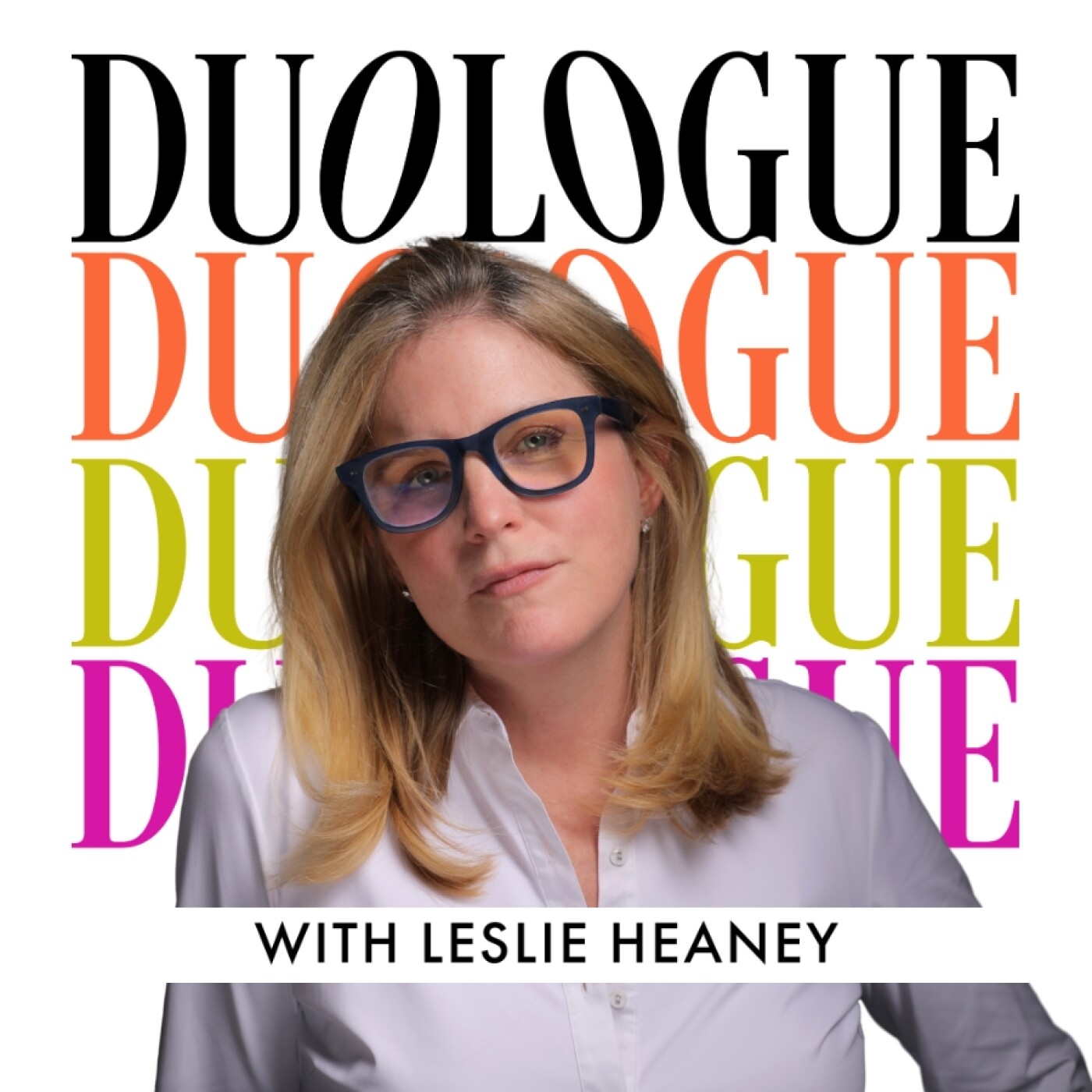
Duologue with Leslie Heaney
Rewire Your Brain for Creativity in 5 Minutes with Blythe Harris & Mallory May
00:39:52
Most people don't think of themselves as creative. In fact, research shows that about 75% of adults self-identify as non-creative. But what if the problem isn't that they lack creativity — it's that they've been defining it wrong? Blythe Harris, co...
Loading summary
Transcript98 lines
- [00:03]
Leslie Heaney
Hey everybody, it's Leslie and you're listening to Duologue with Leslie Heaney. So to cap off Mental Health Awareness Month this May, I am so thrilled to be joined by Blythe Harris and Mallory May, who are the co founders of the Daily Creative and co authors of their best selling book by the same name. These two female founders started Daily Creative after they saw the transformative effects of their own and their family's creative practice during COVID At that time, though, they were already incredibly successful creatives professionally. Blythe had spent 17 years as co founder and chief creative officer of Culture shaping jewelry company Stella and Dot, and Mallory herself was a very successful jewelry designer and illustrator. After their own experience adopting their own creative practice during COVID they did some research and discovered the incredible wellness benefits around it. Doodling or taking a nature walk and intentionally noticing one color. I mean, there are so many different exercises that can be class classified as low stakes creative exercises. And they discovered doing, as they said, a deep dive, that there are great physical and psychological benefits similar to meditation, like lowering your stress levels, improving your memory, and serving as a healthy source of dopamine, unlike my unhealthy habit of real scrolling. So in this episode, we not only talk about the physical and mental health benefits of adopting a creative practice, but we also talk about how creativity was a lifeline for Blythe after a catastrophic accident and how their practices and their exercises through Daily Creative have really transformed their lives and the lives of their friends and coworkers. After this conversation, I now have markers and scrap paper on my kitchen table. So if you're ready to be inspired and learn how to improve your mood and your mental health, this episode with Blythe Harris and Mallory Mae is one you don't want to miss.
- [02:05]
Leslie (Host, interviewer)
Well, I am so happy to be having this conversation with the two of you. And I think I first came across Daily Creative on Instagram and then somehow saw Mallory that we had a connection through Elizabeth Weed. Yeah, life looks so familiar and I'm like, I think I might know where we actually grew up together in the same summertime. So anyway, it's really sort of come full circle, but I think what you're both doing is so important and such a great conversation for us all to be having about, you know, the importance of us all incorporating some kind of creativity into, into our lives.
- [02:42]
Blythe Harris
Yeah, we, we agree. We're so passionate about this and thank you for giving us the opportunity to be on this because we want to spread this to as many people as possible.
- [02:53]
Leslie (Host, interviewer)
I know, and, you know, the thing is, it's also so exciting that not only is the book best selling, but it's also like, is being reprinted, I think. I mean, it's very hard to get, which is so exciting. People are really, this. What you're doing is really resonating with so many people. But tell me how, and tell us how sort of how you two got together initially, and then how did the book come about?
- [03:16]
Blythe Harris
This really happened very organically. Mallory and I are like besties. We met through her husband, Curtis, and we have been raising kids and doing art together for years. And so really, we've been on these sort of creative journeys, both as mothers and as artists and as our sort of professional careers wound down, or at least for me, when I was deciding to leave Stell and Dot, and I was realizing through that experience how much creativity and practicing creativity makes a difference in people's lives, even for people who think of themselves as creative. We sort of came together and really had the idea to create what we were originally calling more of a movement about helping people access their innate creativity, even people who didn't think of themselves as creative.
- [04:15]
Mallory Mae
Yeah, you know, it sort of came to a head during the pandemic because we one took an art class together, and it was what we looked forward to every single Friday. We couldn't wait. And it was a virtual class, and we, you know, it just was getting creative with a group of people made us both so happy. And Blaise also, at that point, had started doing some of the exercises with her kids because they were on Zoom School.
- [04:37]
Leslie (Host, interviewer)
Right.
- [04:38]
Mallory Mae
So I think the idea. Things that we already knew started to swell, and then it just, you know, came together in a way where we realized, like, we could really share this with the world and, you know, and help people.
- [04:50]
Leslie (Host, interviewer)
And, you know, I think I had read that that it was. You both were, you know, it was Covid, and you were. By the way, what a great idea. I don't know how it actually practically rolled out. If they're like, this Friday, bring your watercolors and your. Whoever, you know, it was taught.
- [05:03]
Mallory Mae
But that's exactly how it rolled out, pretty much. Yeah.
- [05:07]
Leslie (Host, interviewer)
But what a great outlet for you both. But you both had careers that were creative. Right. And even though there were moments, I think, in your.
- [05:15]
Leslie Heaney
In your lives where you weren't sort
- [05:17]
Leslie (Host, interviewer)
of, you know, professionally intentionally creative. But Blythe, you mentioned your work with Stella and Dot and Mallory. You had, you know, been a jewelry
- [05:25]
Leslie Heaney
designer and an illustrator.
- [05:27]
Leslie (Host, interviewer)
So was it that those things were kind of missing in your life? Because, Blythe, you were saying you kind of were winding down, or was it that you were just looking for a different type of artistic expression?
- [05:38]
Blythe Harris
So for me, I had been a chief creative officer and co founder of Stell and Dot for 17 years, and I'd started out in a very creative capacity. But obviously, as a business grows, as a creative leader, a lot of your time, A lot of my time was spent managing a team. And so one of the things I observed in that role, again, was the impact of bringing other parts of the organization into creative exercises, like not just the creative team, and how much that sort of lit an inner spark in people. And so I just started to notice this threat of, wow, creativity is really important for everybody, not just those who self identify as creative. And then during the pandemic, I sort of pivoted to spend obviously more time at home, more time with my kids. And my kids really struggled with Zoom School. Like, they both just hated Zoom School. They had a lot of anxiety before getting on Zoom in the morning. And so, drawing from my experience as a creative leader and as practicing art, I started making up these sort of five minute, very accessible, easy exercises for them to do before they jumped on Zoom School that were, like, fun and didn't feel like homework or work. And I noticed such a marked change in their mood almost immediately, and then throughout the day that I went into sort of a black hole on researching the benefits of creativity. And I was really amazed to discover that the benefits of creativity are similar to meditation. There's incredible wellness benefits, including lowered stress, more of a sense of presence and joy, you know, better memory, all these cognitive benefits. Yet so many people self identify as not creative. So Mallory and I, again, were taking this art class at the same time and tapping into this whole creative community. And we just started talking back and forth about the idea of how we could bring creativity to more people.
- [07:48]
Leslie (Host, interviewer)
And then, so Mallory, you know, Blythe was just talking about those five minute exercises with her kids. Did you two sort of get together? And Blythe, you said, okay, we did these 10 things that worked really well as sort of a creative exercise. And then how did you kind of come up with the different exercises?
- [08:05]
Mallory Mae
Well, I think. I mean, first, I just want to say Blythe was such the visionary behind this. She actually has done a TED talk on creativity and has been like, really tapped into the concept for way before she even left Stellentot. And, you know, when we got together and she had been doing these exercises and we were Very happily taking art classes, which we have been for so long. We kind of came up with the idea of like, what can we do where we can spend as much time with like creatives artists and make art ourselves. And daily created was kind of born out of that. And it, you know, I guess it took a while for it to get to the place where it is now where we are really focused on these kind of 5 minute mini C exercises, which I'll let Blythe explain. But we started making, you know, creating the exercises almost from the start and they've really evolved over time. And now we just have, you know, so many different ones.
- [09:01]
Blythe Harris
And I think one of the inspirations for the five minutes was wordle, like what can we create that's as easy for people to adopt as a practice as something like wordle where you can do it sort of with almost even half attention, like drinking your coffee and it feels so low lift and accessible that there's no impediments to actually doing it. And you know, we live in such a short attention span world that we wanted to make it very succinct and to not feel like another thing you had to do or should do, but something that was incredibly easy to fold into an existing habit. Like drinking your morning coffee.
- [09:41]
Leslie (Host, interviewer)
Yeah, I love that. And I think I heard you say at some point, Blythe, you know, it's not a talent, it's a habit. And just the idea of just incorporating that into, into your routine and then seeing the benefits of, you know, of that for yourself, whether it's, you know, you being having a meditative state or just starting your day off with, with kind of a different, different perspective. But when you were applying those practices for your employees or your colleagues, you know, did you see that didn't identify as creative? Because I think you said somewhere like 75% of people don't see themselves as creatives.
- [10:14]
Blythe Harris
Yeah.
- [10:15]
Leslie (Host, interviewer)
What sort of response were you seeing from. From the non creatives creating? Were they just, just lighter? Were they better brainstorming sessions? Like what kind of after effects?
- [10:28]
Blythe Harris
I think the first thing I noticed was just more of a sense of community. And we've kind of seen this throughout the journey of the book that creativity can be a powerful tool to bring people together. And so people felt like they were participating in sort of the fun part of the company. We actually just, we did a workshop at Rothy's, the shoe brand recently and saw the same thing. The planning department came in, you know, the financial planning department. They were almost the most engaged with activities. And I think one of the unlocks is with this type of daily creative practice is that it doesn't require technical drawing ability. Like these exercises we're doing. They don't ask. They kind of eliminate the barrier that a lot of people have in their head, which is I can't draw something that looks like it does in real life. So people tend to conflate, whether they're creative or not, with whether they have technical drawing ability. And you remove that and you just say, hey, let's experiment with color or let's do a doodle and like, you know, fill in the gaps or something that is structured and accessible, but still gives them freedom within a constraint to sort of exercise their own agency and practice creativity. There's just a little spark in their eye that like, comes alive and. And then people start to have fun. I think as adults, we're not given that many opportunities to play and it's so important for mental health. And it just really creates bonding and again, gives people that little internal spark.
- [12:10]
Leslie (Host, interviewer)
Yeah, I don't know where I read this, but there was some. There's some saying that like, we should all be living like, like we're in preschool. Just the idea of like, like there's nap time, but there's. Yeah, yeah, creative time. Right. Where you're actually just, you know, when you're not expected to have the technical skill or you're not. You're not embarrassed really about it. You're just kind of going through the exercise of. Of creating something, whatever it is, collage or whatever it is.
- [12:36]
Mallory Mae
It's like play, play, like creative play. And I would say the. Another. Another kind of impediment to remove is. Is not thinking about the. The end game. Like just creating to create and not think. Not because you're making something, because you are just making and playing.
- [12:53]
Blythe Harris
Exactly.
- [12:54]
Leslie (Host, interviewer)
Yeah. But Mallory, you. So you, like, professionally, you kind of made that leap, right? You were in the art world and then at some point you decided that you actually wanted to be the other side of canvas. I guess.
- [13:08]
Mallory Mae
I mean, I was. I was the kid from like a very young age who was drawing on any piece of scrap paper in the house. So I always had that leaning. And when I look back, I kind of think it was how I learned as a child to self regulate or to feel calm or to, you know, just kind of get. Get myself in a good headspace. But when I was working professionally, I was. A colleague of mine was working on a project for a book and they needed an illustrator and I Kept inserting myself into the. Into her meetings and she's like, what? What are you doing? And I suddenly was like, I think I want to do the illustrations. And so she said, submit them. Just do it. And so that gave me the courage to just take a risk. And I did. And they actually chose me. And I did like 60 illustrations for the book. And that gave me the courage to kind of actually take a leap out of a more corporate environment, which I loved. And it was an amazing experience, but it put me into a more creative field, which, you know, I'm forever grateful for.
- [14:05]
Leslie (Host, interviewer)
That's so. And Blythe, you had an absolutely life changing experience in an accident that, that, you know your path. You were. Well, I can't. I know you were sort of very into the outdoors and you were living in San Francisco and then you had this horrible, horrible accident that kind of, I think, physically, you know, made it so that you were, you know, kind of left with the inability to physically do a lot of things. And one of the things you turned to was art or doodling or just kind of way to get your brain off of your circumstances. But this is an incredible experience that you had. A really life altering event.
- [14:49]
Blythe Harris
Yes, I. I did. And I feel lucky because sort of halfway through college I discovered that I loved to draw. And I actually double majored in art. And then when I graduated, I was working for a creative agency in downtown San Francisco. And as, as you said, I was crossing the street one day walking my bike, and an 18 miller truck came off the highway and ran over my bike, trapped me under the truck, dragged me. I was pronounced dead and then revived. So I had this. And then I was in a coma. And then I was in a wheelchair. Actually not even a wheelchair, a gurney for a year. So I was at this point where everything I sort of had identified myself as like, very sporty and always going on adventures and rock climbing and was kind of taken away. So what I was left to sort of lean on was my internal world, my imagination. And luckily I had dipped my toe into making art or creativity. And that really became sort of a lifeline for me. And what I love about creativity for anyone is I feel like it is totally sort of commingled with identity formation. And so when I lost all those sort of external markers of my identity, you know, through my physical incapacitation, I was really forced to lean on sort of my internal world and more of the intrinsic elements of my identity and creativity gave me a vehicle to sort of express myself and sort of grow and also process that experience in more of an abstract way, which was incredibly helpful for healing. So I think that as I sort of went on and into my career, that was always in the background for me, which was how important creativity was as a tool to sort of rebuild or build identity. And, and so that definitely has informed a lot of our work. Now with Daily Creative
- [17:12]
Leslie (Host, interviewer)
taking a quick
- [17:12]
Leslie Heaney
break for a word from our sponsor, Cozy Earth. I don't know if you're like me, but I've been spending a lot of time this May spring cleaning and my favorite thing to wear while I'm doing it are Cozy Earth's beautiful cozy bamboo viscous lounge sets and their clogs. Not only are they both incredibly comfortable,
- [17:30]
Leslie (Host, interviewer)
the lounge set feels like you're wearing
- [17:31]
Leslie Heaney
a cloud and the clogs feel like you're walking on one. But they're also really elevated. They're attractive enough that I can run errands in them and meet friends for coffee. And their lounge set is also super breathable, so it gets softer for me after every wash. And their clogs are not only so, so comfortable, but they also have some support in them, which is great for my tired old lady feet. This outfit combo is what all of us need this spring, ladies. And what's so special about both of these pieces is that your purchase is risk free. You get a hundred night trial. So if you don't love their lounge sets or clogs as much as I do, you can return them no questions asked. And they also come with a 10 year warranty which is amazing. So Cozy Earth products are built to last. So to spend your spring in luxury, head to cozyearth.com and use my code DUOLOG for 20% off your purchase at checkout.
- [18:21]
Leslie (Host, interviewer)
That's Duolog D U O L O
- [18:24]
Leslie Heaney
G U E And if you get a post purchase survey, don't forget to mention you heard about Cozy Earth here on the Duologue podcast. Cozy Earth comfort lives here
- [18:36]
Leslie (Host, interviewer)
by the way. I never knew that story Blythe. Somehow I never knew that that happened to you and I just was just admire your, your courage and your strength and how you navigated through that. And I was thinking about the year and it sounds Maybe that was 1996 or 97 sometime in there maybe I'm trying to think of.
- [19:00]
Blythe Harris
It was 95. I graduated in 95 and it was the that following fall October 95.
- [19:07]
Leslie (Host, interviewer)
Right. So you're not, you're not on your iPhone. You're not like nothing dreaming like you're, you're In. You're in that gurney and you talked about, like, your friends where, like, you're coming to the bar and you're, you know, you're doing all these things, which is just. I, I love that, by the way, as an aside. But, you know, you really, you really did turn, you know, turn to that outlet, right? As a, As a real form of expression and a lifeline. I was just thinking about what felt like being you during that time. And it's just so, so extraordinary, kind of how you took that experience and turned it into something so beautiful and accessible for others and giving other people the opportunity to see the strength in that, in being creative and finding art in that way.
- [19:55]
Blythe Harris
What I want people to know, too, is I wasn't like Frida Kahlo, like, painting masterpieces from my gurney. I was doodling. I was just doodling repetitive motion, like, things, like throwaway things. I wasn't making art with a capital A, but I was using the practice of creativity to sort of process things. And I didn't even know what I was doing. I had to go back and ask my mom what I was doing. But I just want people to know the message, like, you don't have to be an artist or be making these, like, works of art to use creativity as a tool for mental wellness or, you know, use it in that way.
- [20:34]
Leslie (Host, interviewer)
Well, I love the meditation piece, the meditative state. Like, I. When you brought up doodling, or I read you were talking about doodling, I, thinking of myself, like, in certain math and science classes, just, like, doodling. Just getting into the zone. Because it was. I was not, as, you know, engaged with the subject matter, but it did, it does put you into that kind of a state, right?
- [20:57]
Mallory Mae
Yes, it does increase focus. I mean, doodling a lot of, you know, I used to do it in class all the time, but for me, it actually increased focus. It, you know, it was, like, helpful with, like, memory and recall. Like, it was just a way that I learned how to do it. So I think it gets a bad rap, but it is very meditative, and it is something that you can do that has similar effects to meditation and then maybe some others as well, especially
- [21:23]
Blythe Harris
if you have adhd. My daughter has adhd. I'm sure I have adhd, although we were never diagnosed. But it actually helps you focus. Like, it's one of the prescribed activities to do while you're listening in class, like, if you do have adhd.
- [21:39]
Leslie (Host, interviewer)
Yeah, it's so funny. I, I now my. I've. Two of my three children have it and I. When I, when they're doing their testing and I'm looking at their assessment.
- [21:49]
Mallory Mae
Totally.
- [21:51]
Blythe Harris
Yeah, I, I was too. I was like, oh, I know where you got that.
- [21:55]
Leslie (Host, interviewer)
I'm so sorry. I'm so sorry. Yeah. Giving it to you. But. But I'm sorry I interrupted. You were saying that, that it is one of the. It's a tool for kids that do that kind of helps bring them into focus a little bit. The doodling.
- [22:09]
Mallory Mae
Yeah, yeah, for sure.
- [22:10]
Blythe Harris
And we have lots of exercises around doodling in, in the book and also, you know, the exercises we do online and on our substack. We're huge doodling fans and there's so many different ways that you can use doodling to, to gain all the benefits of. Of create creativity.
- [22:30]
Leslie (Host, interviewer)
So let's talk about the other. Like what, what class or what could we classify as like in the creative category? I think I read cooking is also one. Right. For people that are looking to have a creative outlet and maybe are not doodlers. Like, like the three of us are. What criteria does a science kind of support as something an activity? Being creative, like flower arranging could be creative or.
- [22:54]
Mallory Mae
We were just talking about that. Yeah, for sure.
- [22:56]
Blythe Harris
Yeah.
- [22:57]
Mallory Mae
Flowering is a great one.
- [22:59]
Blythe Harris
So the research is sort of structured. There's like the four Cs of creativity. There's big C creativity, which is like Picasso or Einstein. That is like cultural shifting, breakthrough creative ideas. Then there's pro C creativity, which Mallory and I both were professional creatives. And that is like, you know, being a creative director or musician or you that, that is your job is to be creative or lead a creative team. Then there's little C creativity, which is any sort of creat of hobby you might be engaging with. Gardening, cooking, singing, being in a band. You know, there's such a wide range. And one of the things we try, we've tried to do with Daily Creative is expose all the different ways you can be creative. But what's really interesting is recent research has really focused on this concept of mini seed creativity. And that's what daily Creative is about, which is practicing creativity for even a few minutes a day has incredible wellness benefits, regardless of output. So if you're cooking or gardening, there's still sort of an end result and those are amazing. But even if you're not doing that, just practicing, you know, any of the exercises in the book or that we talk about just for a few minutes a day will actually deliver similar benefits as meditation. And Mallory, I don't know if you want to Talk about some of the other benefits and the study and.
- [24:26]
Mallory Mae
Oh, yeah, well, I mean, I was actually going to add to what you were saying is that in the book, there are some exercises that are doodling, there's some that are more writing or writing down words, but there's a huge benefit to just noticing. And when, you know, you can. If you go out on a walk and decide to just pick one color and just try to find examples of that color on your walk, even that is a great creative activity. It's engaging your senses. It's getting your brain kind of focused, you know, out of your phone or off of listening to something and focused and kind of pulling you into the present moment. Even that can be creatively beneficial.
- [25:03]
Leslie (Host, interviewer)
Yeah, Well, I like the. It's sort of like arts for art, whatever. That's art. Art for art's sake. Right. Not having. You know, I like that distinction you're describing and sort of having it be the little C where there isn't some final product that you're working towards. It's more just engaging in the practice or the habit of being creative without having there be some product at the end or something that has to be finished. Because it sounds like that's really what brings you into that meditative state more than maybe some other forms of creativity than the big Cs. The little C is, I think you
- [25:37]
Mallory Mae
can still get into a flow there, but it definitely removes the barrier or the fear in terms of starting.
- [25:44]
Leslie (Host, interviewer)
Right. Oh, it's the flow. It's all about the flow, right? Yes, well.
- [25:49]
Blythe Harris
And as Mallory said, the fear of not being able to do something well gets in people's way a lot. You know, I think perfection. We think of perfectionism as like, almost like a creativity killer. Like, and a lot of people get tripped up by, if I try something, it's not going to look good or it's not going to taste good or it's not going to, you know, perform well. And so the mini C creativity just removes the focus on the output, which is what allows many people to access it. But you can get the benefits of creativity from any of the other hobbies, too, the cooking, the gardening. But it's interesting as we've brought this work to even groups of working professional creatives. They've said, even though my job is a creative director and I'm being creative all day, there's a different benefit I get to just carving out five minutes to play creatively with zero stress on output. It just. It's sort of a different level of flow. And just relaxation. And it's also a really nice antidote to all the focus on the finished product on social media. So you know, all the Pinterest and the Instagram where you're looking at all these beautiful finished products everywhere and it's all about external validation. And what is the beautiful shiny product? It's a really nice counterpart to carve out five minutes of your day to just focus on process without focusing on the end result.
- [27:22]
Leslie (Host, interviewer)
Yeah. But I would think it also would have great benefits for people that are feeling depressed or just down. Just knowing that you can kind of just do something meditative but also where it's low stakes. Right. You're not asking, asking someone to produce something. They're just able to kind of just express themselves and take a moment.
- [27:42]
Mallory Mae
Yeah. I mean it's, it's backed by science. If you can, you know, do something creative and get your mind off it, it stops the rumination. It actually does help.
- [27:50]
Blythe Harris
Yeah. And it also releases healthy dopamine. You know, there's sort of social media and scrolling gives you sort of a cheap dopamine hit which then you know, your baseline drops below where you were before. But things like exercise and also practicing creativity give you healthy dopamine release which is incredible for mental health. And engaging in this sort of activity is also really great in any sort of life transition or pause. Like it's, it's great, you know, when you're changing careers or graduating from school or you know, you're a new empty nester. We just recently did something with Naharu. It's power pause community, which is a community of new moms. So it's really great when you are in a pause and you want to explore your identity and engage in self discovery and you also just need a mental health outlet.
- [28:48]
Leslie (Host, interviewer)
That is really, really interesting. And did I read something about midlife too like. Oh yeah, yeah. I mean the pause is, it is the hot topic, no pun intended. And I can see just sort of, you know, in that middle, you know, you talk about reflection and just sort of taking stock of where you are or where you're headed. I, you know, it sounds delightful to just take some time to be creative and use that time as a time for self reflection and, and discovery.
- [29:16]
Blythe Harris
Yeah, it's one of the great things that comes out of the pause. You know, there are so many messages about what sort of you lose during the pause and menopause. I actually think this is a huge thing that you gain, which is time to pause and sort of explore other elements of your identity and explore your creativity. And you know, you have a whole 50, whatever years of wisdom sort of and life experience that can feed that identity and your point of view. And so it's a really great time to engage in this.
- [29:53]
Leslie (Host, interviewer)
So let's talk about that too because you have brought Daily Creative, has brought this practice to different corporations and sort of guided professionals through this process. And then you've also kind of, you have recommendations around having like a dinner party where you're just being creative.
- [30:13]
Blythe Harris
That's honestly been one of the most rewarding things about seeing the book launch is the reason why it's sold out is because people are buying multiples to do it as groups. They're doing it with their families, like they're doing it with their teens as a way to keep them off their phone. They're doing it with their aging parents. I'm actually going up to my mother in law's nursing home next week and doing it with a group of elderly people because it's so good at preventing dementia. And so I don't know if you want to talk about the dinner parties, but it's just such a fun way to bring people together. Yeah.
- [30:47]
Mallory Mae
And I think that the experience of doing it together, it opens up a whole new window as well because you're kind of bonding. You get past that embarrassment or not wanting, feeling like you don't want everyone to see what you're doing to it being fun and funny and you're all experiencing that kind of moment of play together at the same time and it makes it even better.
- [31:09]
Leslie (Host, interviewer)
So I saw that, I saw some pictures of one of them, I think Blythe, maybe it was at your house. You had crepe paper down the, down the middle.
- [31:16]
Blythe Harris
Yeah, yeah.
- [31:17]
Leslie (Host, interviewer)
Hours. And like so are people, do they just start doodling and because I always feel like I could see myself being like, oh, I love what you did. You know, you kind of like naturally to kind of share their feedback. But yeah, it's. But that's probably counterproductive or you know, to the exercise, right?
- [31:36]
Blythe Harris
Yeah, I mean there's always going to be some of that. And that honestly just adds to the fun, I think. You know, we've thrown a few daily creative supper clubs or dinner parties and they're always so fun. And for that particular one you're referencing, I actually took over my book club and I was like, we're going to do something a little different. And half the people were like, oh God, I'm not creative. I don't really want to do this. Like, when they came in there, they literally would be like the first thing they said when they looked at the table. And all I did was set a table and I put like a long sheet of paper down and then mason jars of markers out. And then we had some exercises from the book and so people could kind of do them at their own pace. And then once they started doing them, they started having fun and they were really sort of excited. And I think one of the things that people need is they need like a container or a structure to work within so that it's not like you have to sit down and you have to like draw something intimidating. So the exercises are pretty easy and self contained. And so it's really amazing seeing everybody's different take on sort of what to do. Like, even if it's something as simple as just experimenting with color combinations. And then they all ended up getting into it and having a great time.
- [32:57]
Leslie (Host, interviewer)
I've seen it like a lot of, you know, putting different things together, you know, and I think that's just such a, you know, I was watching you do it and I thought, God, that looks like so fun. Why did I throw out the, you know, that button or whatever? It was like, oh, oh, you know, figuring out kind of how you can, I don't know, just make things from things that you, you know, might otherwise not see the opportunity in. But you, it seems like Blythe, you keep like a scrap, fabric scrap thing or, I don't know, I'd see like your paper. You've just.
- [33:31]
Blythe Harris
Yeah. So one of the ways Mallory and I always like, talk about how to remove impediments if you have art supplies just out on the table. Like, I always keep like a jar of mark, a mason jar of markers on our dining room table and then a stack of scrap paper from the printer. Like the printer gone wrong. And one of the things about keeping these sort of low stakes materials around is people feel more freedom to just sort of doodle or, you know, play around on the back of a scrap paper. Same thing with. You were talking about collaging. If you have a bunch of scraps that you're going to throw away anyway, it, again, it lowers the stakes. So it just makes it less pressured. Like you can play around with that. You're going to throw it away anyway. Who cares?
- [34:16]
Leslie (Host, interviewer)
No, I love it. I mean, it's really inspiring. What is your. I mean, how do you both feel about people's, you know, reception toward the book and toward the practice? It's got to be so rewarding to see people taking to it so with such enthusiasm.
- [34:33]
Mallory Mae
And it feels great. I mean, I think in some ways it's kind of our goal of the book was to give as many exercises as possible. And there is kind of an arc if you follow the book. But our hope is that people will do the exercises, go through it and find something that you really like and develop a habit with that. So it could even be what I mentioned earlier, noticing color. Maybe you find yourself on a walk to school and you're noticing color and that's because you've been practicing it at home or, you know, making color stripes or using markers or the, you know, having scrap paper and kind of making little collages just while you're on a phone call. But it. The hope is that once you kind of develop these habit, you're. You're. One, getting in touch with yourself and kind of in touch with like, things that you're drawn to, things that you like. And two, you're taking that time and kind of doing this meditative act that is. Makes you feel great. It makes you feel more relaxed and you're experiencing the benefits just by showing up.
- [35:35]
Leslie (Host, interviewer)
Yeah, no, for sure, for sure. So what's next for you? I mean, are you two. What's the next collaboration between. Do we have. Do we have. What are we thinking about here? I mean, I'm sure there's going to be so many other daily creative things coming out of the book and things that you both are excited about doing.
- [35:57]
Blythe Harris
I think we're just really focused right now on sort of trying to get this message to as many people as possible because we really do feel like the world would be a better place if everybody could tap into their creativity. And we're just going into different groups of people. Like I mentioned the nursing home, also working with an organization that works with high school kids just to try and give them sort of analog options, you know, instead of being on their phones. We're doing a lot of events this summer, so we're just sort of using it as a tool to bring people together right now. But of course we're. We have a million different ideas on where this could go and things we want to do and other books we want to write. And so stay tuned.
- [36:44]
Leslie (Host, interviewer)
I can't wait to see ladies. I'll be watching to see what happens this summer. I mean, I think it's sort of a daily created dinner party might be in my future. And I love the idea of just keeping it, making it sure it's accessible. So it is Easy for you to incorporate it into your daily practice. Well, I've got my to dos. I mean, I wanted to buy like 15 books to give it to people and you guys are sold out. But I think as soon as it's in stock again, I'm getting my. My copy. So I'm.
- [37:14]
Mallory Mae
It should be any day, hopefully. Yeah.
- [37:17]
Blythe Harris
Thank you so much.
- [37:18]
Leslie (Host, interviewer)
How exciting is that?
- [37:19]
Blythe Harris
Well, in the meantime, Leslie, we have a substack where we release an exercise every week if you want to join.
- [37:26]
Leslie (Host, interviewer)
I. Oh, I think I'm. I think I'm always substack and I. Perfect Instagram.
- [37:30]
Blythe Harris
Yeah.
- [37:30]
Mallory Mae
And it's free. It's free. We. And we. We have a substack that. Where we share like a weekly creative exercise or a dose of creativity in some way. And, and we also have on our website, like, if you want to learn how to begin, like, how do you start in different ways. And also like the creative dinner parties, like all sorts of.
- [37:50]
Leslie (Host, interviewer)
And corporate retreats on your website, but helping get that organized.
- [37:55]
Mallory Mae
And you can print some of the blank pages. So in the book there are some exercises that have a grid or other graphics that are in order to do the exercise. So we have printout. You can print those out from the website as well if you want to repeat the exercises or if you can't get the book right away.
- [38:13]
Leslie (Host, interviewer)
I can't wait. I can't wait. This is really exciting. I'm really excited about incorporating this into my. My pause literal. Thank you both so much for joining. It was so great to see you, Blythe. It's been, you know, I don't know, I know, maybe 30 years. God help us. And Mallory, it's really nice to meet you.
- [38:34]
Mallory Mae
So great to see you and really
- [38:37]
Leslie (Host, interviewer)
appreciate you both being on and I'm really excited for everyone who's listening to be able to have access to all of your wonderful tools and guidance and ways we can all be more creative. So thank you.
- [38:48]
Mallory Mae
It's an honor. Honored to be here.
- [38:49]
Blythe Harris
Thank you so much.
- [38:50]
Mallory Mae
Thank you.
- [38:50]
Leslie (Host, interviewer)
Thanks.
- [38:51]
Blythe Harris
So nice to see you again, Leslie.
- [38:54]
Leslie Heaney
That brings us to the end of this episode. A huge thank you to Blythe Harris and Mallory Mae for joining. I loved every minute of my conversation. Conversation with them both and I'm so grateful to them for opening my eyes about the importance of incorporating a creative practice into my daily life. I'm only a couple of weeks in, but it really has been such a wonderful way to just relax or as they say, get in the flow. So I'm really grateful than both for
- [39:18]
Mallory Mae
showing me the way.
- [39:20]
Leslie Heaney
Also, a huge shout out to our sponsor, Cozy Earth. Don't forget to check out all of their amazing products just in time for summer on their website and you can use our promo code Duologue at checkout for 20% off. And if you enjoyed this episode, please rate or review us on Apple Podcasts, Spotify, or wherever you get your podcasts. It really makes a huge difference to the podcast and we really appreciate it. So we're releasing another new episode next Wednesday and until then, this is Leslie and thanks so much for listening to Duolog.